My baby monitor hums a lullaby at 2 AM. I hear a rocking chair creak. The camera shows my daughter's room empty, every night.
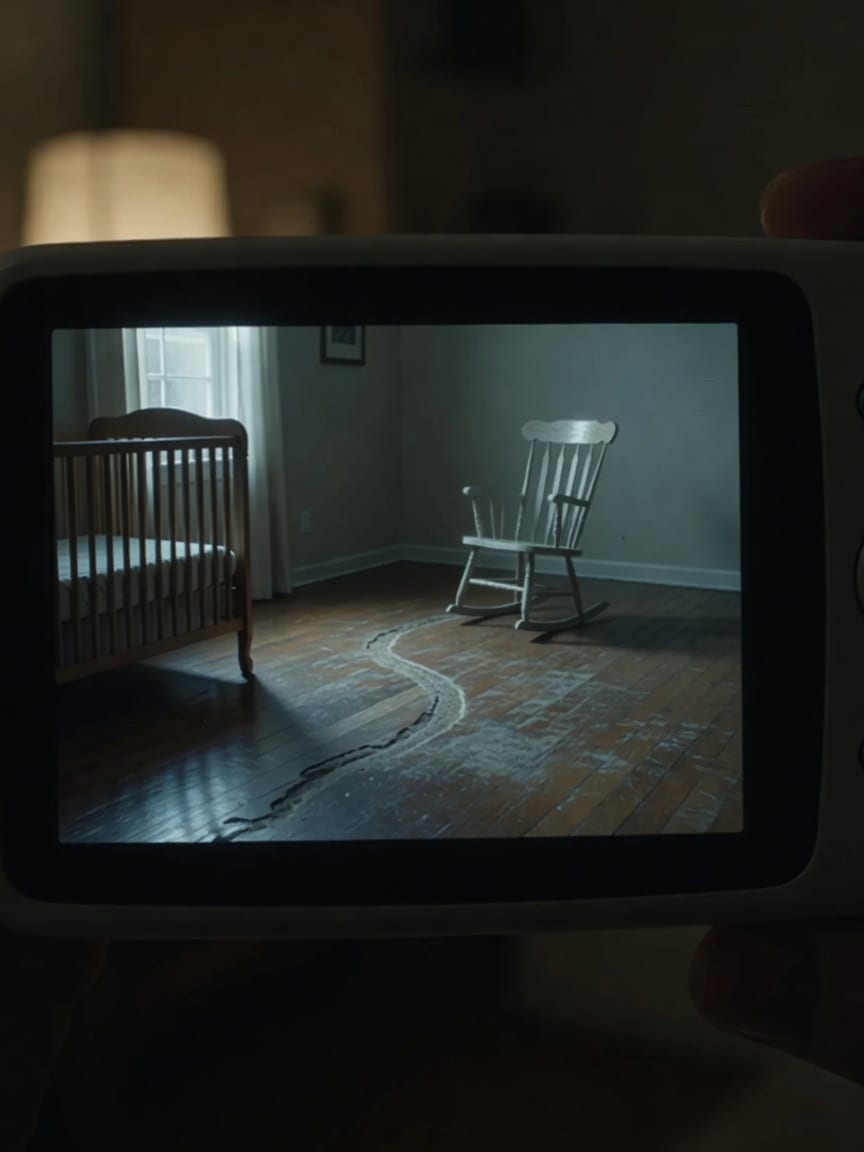
The first time it happened, I blamed our new Wi-Fi. It was 2:14 AM. Lily was a year old, and since we'd moved into this house a month ago, she’d been sleeping through the night.
I woke to a soft, almost ethereal hum drifting from the baby monitor beside my bed. Not Lily’s cry, but a woman’s voice, low and gentle, singing a lullaby I didn't recognize. And then, a rhythmic creak. A rocking chair.
I picked up the monitor, its tiny screen displaying Lily’s crib. She was asleep on her back, arm thrown over her head. The room was perfectly still, bathed in the dim glow of her nightlight. No rocking chair.
We hadn’t bought one yet, although I’d considered it. The camera showed the room empty, exactly as I’d left it. But the humming and creaking continued, clearly audible, right into the monitor's microphone.
It sounded so close, as if someone were sitting right beside Lily’s crib.
I frowned, checking my phone. No strange apps running in the background. My husband, Daniel, was away on a work trip, so it was just me and Lily.
I opened the monitor app on my phone, just in case, but it showed the same empty, silent room. The sound wasn’t coming from a physical source in the room, yet it was in the audio feed.
My heart started to thrum. I got out of bed, creeping down the hallway. The door to Lily’s nursery was slightly ajar. I pushed it open slowly. The room was dark, quiet. Lily still slept, undisturbed.
I walked to her crib, leaned over, and listened. Nothing. Just the soft whir of the white noise machine. I even checked the corners of the room, behind the changing table, the closet. Empty. No rocking chair.
Back in bed, the monitor still hummed. The lullaby, note for note, followed by the gentle creak, precisely between 2 AM and 3 AM. Then, as if on cue, at 3:00 AM exactly, it stopped.
The silence that followed was heavy, almost physical. It had been happening every night for a week now. Every single night, the exact same hour, the same tune, the same creaking, from an empty room.
I started checking everything. I moved the baby monitor to the other side of the room, then to the hallway, but the sound persisted, localized always to Lily’s nursery.
I even asked Mrs. Henderson, our next-door neighbor, if she ever heard anything strange late at night. She looked at me with a sympathetic smile, 'Just the usual quiet, dear. This street’s always been peaceful.'
Her answer just made the pit in my stomach twist tighter. The sound was coming from inside our house.
One afternoon, determined to finally organize the last neglected corners, I attacked the storage cupboard under the stairs. It was a dusty, cramped space, full of forgotten boxes. I hadn't touched it since we moved in.
As I pulled out a stack of old paint cans, my hand brushed against something stiff behind a loose floorboard at the back. It felt like paper. I wedged my fingers into the gap and pulled.
It was a brittle, yellowed newspaper clipping, folded precisely in half, its edges crumbling in my fingers. The headline, stark and bold, dated sixty years ago, read: 'Sutton Child Disappears From Local Home.' My breath hitched.
The address listed beneath it was ours. The accompanying photo, grainy and faded, showed a young woman, her face hollowed with grief, standing on the steps of a house I recognized instantly. Our house. Bridget Sutton.
The newspaper clipping sent a cold dread through me, colder than the usual unease of the 2 AM lullaby. Bridget Sutton. Her house. Our house. I remembered the attic.
We’d barely glanced at it during the chaotic move, just confirmed it wasn't actively leaking. It was one of those forgotten spaces, left to the dust and ghosts of previous owners.
The next morning, the moment Lily was down for her nap, I climbed the steep, creaking stairs to the attic. The air was thick and stale, laden with the scent of aged wood and forgotten things.
Dust motes danced like tiny, desperate stars in the single, high window. I aimed my phone’s flashlight, its beam cutting a stark path through the gloom.
I pushed aside a stack of old trunks, their leather cracked and peeling with age, each one heavier than it looked. Beneath them, shrouded in thick cobwebs that clung to my hair like fine thread, sat an antique rocking chair.
Its dark wood was thick with years of dust, a solid, forgotten sentinel.
But on the right armrest, precisely where a hand would rest, a smooth, polished indentation gleamed faintly in my light, as if someone had just risen from it, leaving a fresh, unsettling trace in the grime.
The discovery of Bridget Sutton’s name, tied to this house and a missing child sixty years ago, felt like a punch to the gut. I researched her relentlessly, my fingers flying across the keyboard late into the night.
Online archives confirmed Bridget Sutton had indeed lived in our house. Public records about her child's fate were vague, heartbreakingly brief: 'missing, presumed deceased.' No body. Just a void.
An old property listing, thankfully digitized, mentioned the rocking chair I’d found in the attic. It was part of the house's original furnishings, passed down through owners, a piece of the structure itself.
The dread deepened with every click, every new detail.
It wasn't just the rocking chair, I started to realize. The house had other 'routines.' A specific floorboard on the landing always creaked at exactly 6:00 AM, a distinct, complaining groan, even when no one was near it.
I’d wake before my alarm just to listen for it. Sure enough, there it was, a ghost of someone’s morning start.
And sometimes, usually around midday, a faint, sweet smell of stew would waft from the kitchen, though I hadn't cooked anything remotely like it. It was like a forgotten memory, a sensory intrusion, subtle but persistent.
I’d stand there, sniffing the air, trying to rationalize it away. A neighbor cooking? No, the smell was too distinct, too inside. I even waited, watching the clock, for the creak, for the smell.
They appeared, always at the same time, a ghost schedule playing itself out around me. I started mapping these occurrences, jotting them down in a notebook. A pattern was emerging, far more intricate than just the 2 AM lullaby.
My inquiries at the local historical society about the Sutton family were met with polite but firm resistance.
I’d walked in feeling a mix of desperation and a need for clarity, armed with my newspaper clipping and my list of eerie observations.
An elderly woman with a neat bun and sharp, knowing eyes, Mrs. Vance, sat behind the counter. I explained what I’d found, what I was hearing. She looked at me, her gaze uncomfortably steady.
'Some houses,' she said, her voice dropping to a low, almost conspiratorial whisper, 'they keep things. Best not to disturb them.'
She offered no further help, just a weary, almost resigned expression that suggested she knew more than she was willing to say.
Later that week, I found a small, folded note tucked under my front door. It wasn't in the mailbox, not taped, just sitting there. My heart jumped.
It was written in an old-fashioned script, the ink faded, the paper brittle and thin, just like the newspaper clipping. It read: 'The lullaby is not for you. Do not listen.' The note was unsigned.
A prickle of fear ran down my spine. Someone was watching me. Someone knew.
That night, the 2 AM lullaby played on the monitor, as usual. The soft hum, the rhythmic creak. I lay awake, staring at the ceiling, listening. The warning in the note echoed in my mind.
Then, just before the lullaby faded at 3 AM, I heard it. A soft, almost imperceptible click from downstairs. It sounded like a door being quietly latched from the inside. A lock turning. I lived alone with Lily.
Daniel was still away. My blood ran cold. I threw off the covers, grabbed my phone, and rushed downstairs, every floorboard complaining under my bare feet. I checked the front door, the back door, the cellar door.
All were locked, just as I’d left them before going to bed. The house was sealed tight. The click must have been my imagination, or the old house settling, I tried to convince myself. But I knew it wasn't.
I couldn't sleep. The polite brush-off from Mrs. Vance, the cryptic note, the phantom click – it all pushed me past fear into a chilling certainty.
I went back to the historical society the next morning, leaving Lily with a friend. I strode straight to Mrs. Vance. 'I need to speak to someone who knows this house,' I said, my voice sharper than I intended.
'Not just the Suttons, but the history. All of it.' Mrs. Vance, seeing the unshakeable determination in my face, sighed. 'My husband, Elliot, he's the real archivist,' she conceded, her voice still low. 'He knows the house.'
She directed me to a dusty back room, crammed with shelves overflowing with ancient books and files. Elliot Vance, a man with kind, tired eyes etched with what looked like decades of quiet understanding, sat hunched over a microscope.
I presented him with the newspaper clipping, my voice steady despite the tremor in my hands.
I described the 2 AM lullaby, the rocking chair, the exact timing, the smooth armrest in the attic, even the faint smell of stew and the 6 AM creak on the landing.
Elliot listened, his gaze fixed on my face, nodding slowly.
'Bridget Sutton,' he began, his voice soft, almost a murmur, 'she lost her child. A crib death, they said at the time, but the body was never found.
After that, every night, she would sit in that rocking chair, in the nursery, and hum that lullaby. Precisely from two to three in the morning. She did that every night, without fail.
Until she passed, years later, in the same house.'
He paused, then continued, 'The house, over time, seems to absorb and replay such profound routines. It’s a form of residual haunting, Mrs. Harlow, but more like a memory imprinted on the very structure. The house remembers, and it continues.'
He gestured to a faded photograph on his desk. It showed Bridget Sutton, younger, her face soft, holding a swaddled baby. In the background, in what was unmistakably Lily's nursery, stood the rocking chair. The rocking chair.
The chilling coherence of it all made the hairs on my arms stand on end. Every detail, every unsettling noise, every phantom smell, every precise time, clicked into place around Bridget Sutton and her unbearable grief.
The house wasn't just old. It was remembering.
Reeling from the confirmation of Bridget’s routine, the way it all clicked, I pressed Elliot further. 'But the worn path? The exact times? The way it feels… active?' I thought of the click, the note.
'It feels like more than just a memory, Mr. Vance. It feels like it's doing something.'
Elliot’s expression darkened, the weary lines around his eyes deepening. He leaned back in his chair, a faint creak echoing the phantom ones in my house. 'There's more to it than just a memory, Mrs. Harlow.
Some patterns, once set, repeat. Over generations.'
He stood, his movements slow and deliberate, and led me through a narrow corridor to a secure, climate-controlled vault. The air in there was cold, dry, sterile. Rows of metal shelves held hundreds of similar brittle envelopes and leather-bound ledgers.
He pulled out one such ledger, its pages yellowed and thin with age, smelling faintly of dust and something indefinable, like forgotten time. He opened it to an entry from nearly a century ago, a date long before Bridget Sutton.
He pointed to a faded script, detailing a similar 'disappearance' of a child from the very same address – our address. The entry mentioned 'unexplained nightly sounds' and 'a mother’s inconsolable grief.'
The dates, the times, the 'routine that continues' – it was all there, a chilling echo across decades.
Elliot, his face etched with a weary resignation I now understood, slid a thick, brittle envelope across the polished desk. It was unmarked save for a faded, typewritten label: 'Sutton, Bridget. Case: Recurring Pattern.'
He met my gaze, his voice barely a whisper. 'Some things, Mrs. Harlow,' he said, 'simply... continue.'
I tore open the envelope Elliot Vance had given me, my fingers fumbling with the brittle seal. Inside were not just Bridget Sutton’s records, but a series of meticulously documented files for the house we now lived in.
Each file detailed a family, stretching back over a century, all with one chilling commonality: the unexplained disappearance or death of a young child, always linked to a recurring nightly routine, often involving a lullaby or a specific sound, between 2 AM and 3 AM.
Elliot explained that the historical society, through his work and that of his predecessors, had been passively monitoring this 'recurring pattern' for decades.
Documenting each incident without intervention, not out of malice, but out of a bureaucratic helplessness against something they couldn't comprehend or stop. The house, he said, doesn't just remember; it reenacts, it draws, it claims.
The worn path on the floorboards I'd seen leading from the main hallway directly to Lily's nursery – it was an almost invisible, deeply ingrained indentation, matching where one would walk repeatedly, precisely to a rocking chair in that room.
It was not from recent traffic, but a physical trace of this 'routine that continues.'
The specific creak of the landing, the exact timing of the lullaby – these were not just echoes, but active manifestations of the house's retained memory, a cycle that seeks to complete itself with a child.
The horror wasn't a monstrous reveal, but the meticulous, bureaucratic coherence of it all, laid out in black and white, confirmed by decades of institutional records. It was a predator, a pattern, and Lily was next.
The truth detonated in my mind, a silent, internal scream. I rushed home, my thoughts racing, a frantic whirlwind of names and dates and chilling repetitions.
The house was not just haunted; it was a predator, an insidious pattern that had claimed children for generations, and Lily was now its focal point. I burst through the front door, calling for Daniel, my voice ragged.
He was in the kitchen, making dinner, confused by my sudden, wild-eyed panic.
'We have to leave,' I gasped, thrusting the envelope of files into his hands. 'Now. Tonight. The house… it's not safe for Lily.'
Daniel, initially rational, tried to soothe me, but as he quickly scanned the documents, his face drained of color. The meticulous details, the consistent pattern, the stark records – they swayed him.
He looked up, his eyes wide with a dawning horror. 'My God, Claire,' he whispered.
As we hastily packed, the house seemed to resist us. Doors stuck, refusing to open or close easily. Lights flickered erratically, plunging rooms into momentary darkness before snapping back on.
The floorboards, usually quiet save for the 6 AM creak, began to groan and pop with unusual frequency, not just at dawn, but throughout the evening, a symphony of complaint.
It felt like the house itself was waking up, aware of our attempt to break its cycle.
I made a desperate decision. I marched straight to Lily’s room, unplugged the baby monitor, and carried it out to the driveway.
With a cry, I smashed it against the concrete, the plastic casing shattering, the tiny screen cracking into a spiderweb.
It was a futile gesture, I knew, but a symbolic break from the device that had been the conduit for its haunting lullaby.
As I strapped Lily into her car seat, her sleepy eyes blinking up at me, the air grew heavy and cold, pressing down on my chest. I glanced back at the nursery window, now dark.
In the dim light, I saw nothing, but I felt an immense, silent pull, a deep, persistent hum from within the empty room, calling, not for Lily, but for the routine, for the pattern to continue.
We got in the car, leaving behind most of our possessions, leaving the house to its silence. The house stood silent, watching us go, a dark, hungry shape against the twilight.
Claire and Daniel moved out that very night, leaving most of their possessions behind. They found a small rental across town, a new, bright house that smelled only of fresh paint and possibility.
The house they left stands empty now, the 'For Sale' sign quickly taken down after only a few weeks. The historical society, under Elliot Vance's quiet insistence, had marked the property file with an internal 'Do Not List' flag.
No new families moved in. The lullaby, Claire knew, still plays between 2 AM and 3 AM, note for note the same, from the empty nursery, into the empty house.
Months later, in our new home, Lily sleeps soundly in her crib. I still wake at 2 AM, every night, a phantom dread tightening my chest. I don't need a monitor to hear it anymore. The silence is louder.
Sometimes, late at night, I still hear the faint creak of a rocking chair from the empty room next door.
If this one got to you
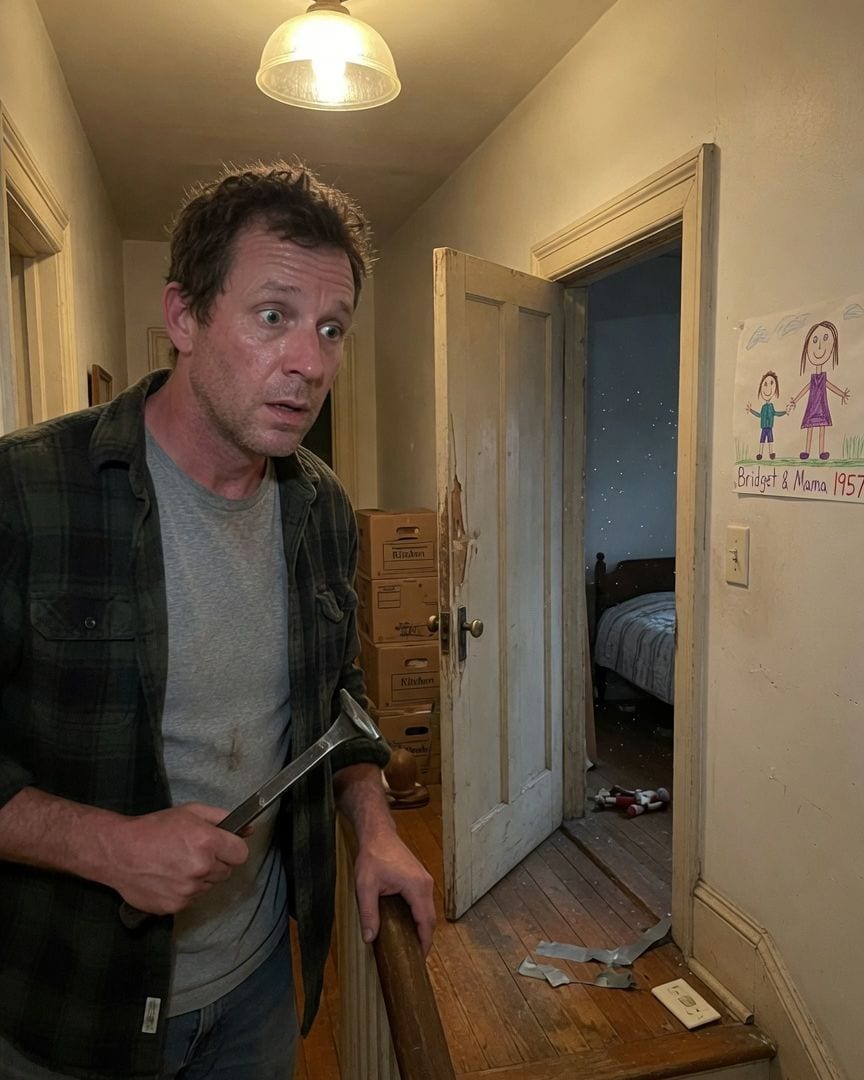
My landing light switches itself off at 9:40 every night. I've watched the switch flick down under nothing, the tape peeled back. The house holds its breath.
My great-uncle's old house was a quiet gift, a place to finally settle. But as I unpacked, a strange worn path on the floorboards led me to a small, barely visible door, perfectly blended into the wall. It was undeniably locked, and felt like a deliberately obscured secret.
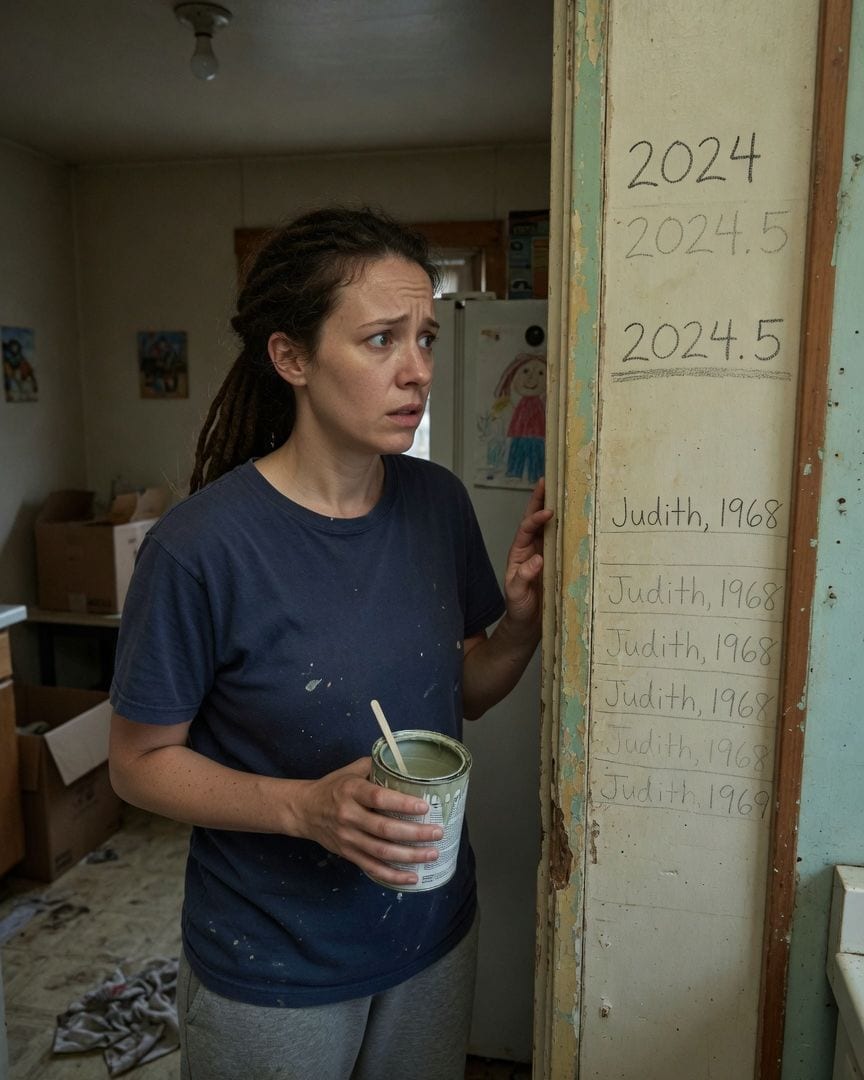
A child's height marks grow on my kitchen doorframe, dated this year, in a house where I live alone.
I moved into my new house, ready for a fresh start, and found a child's old height chart on the kitchen doorframe. The last mark was dated 1968, but a week later, a new one appeared, dated this year, in the exact same looping handwriting. I live completely alone.
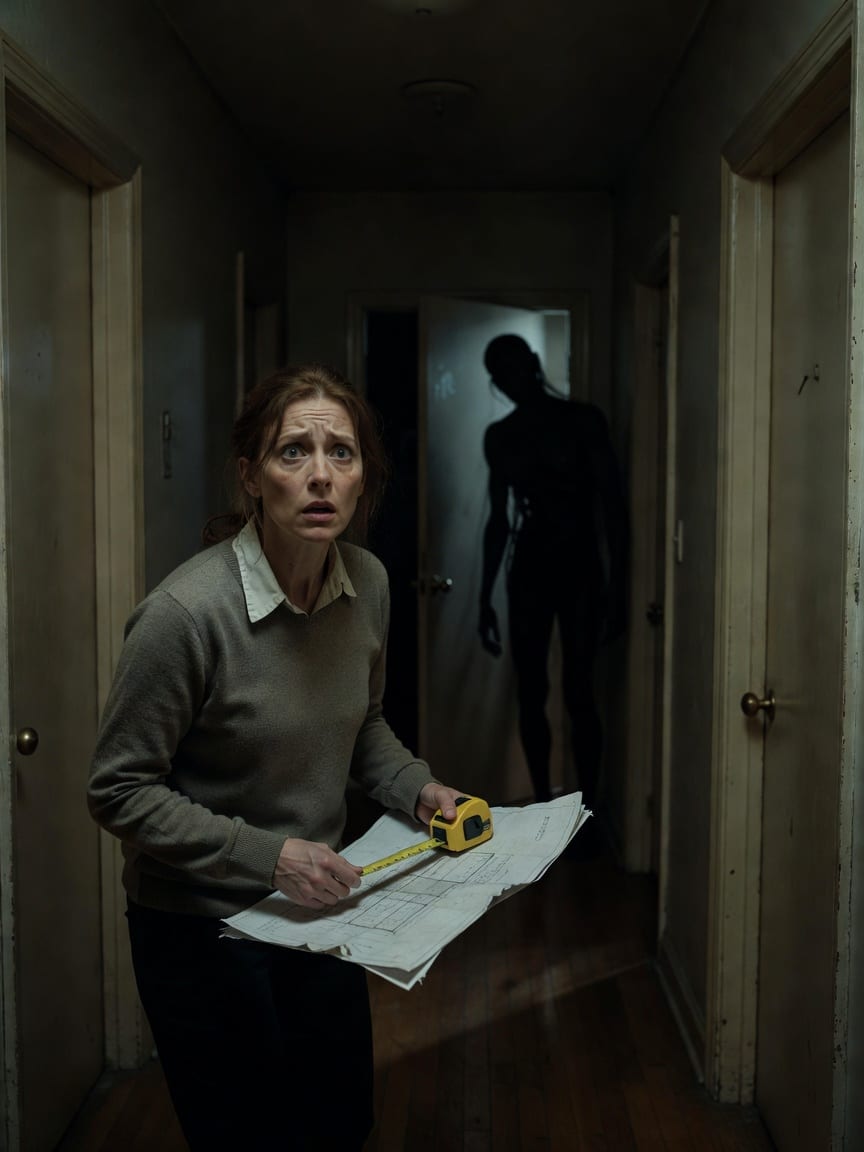
My front door has a dented gate and a dead hydrangea. I walked past it six times, trying to reach the corner shop just a hundred yards away. The pavement kept bringing me back to my own porch, and the shop's light never moved.
My morning started like any other, a quick walk to the corner shop from my home at Number 14, Elm Terrace. But after walking what felt like two minutes, I found myself back at my own front door, the shop no closer. I tried six times, faster and slower, but my street kept compressing, refusing to let me leave.
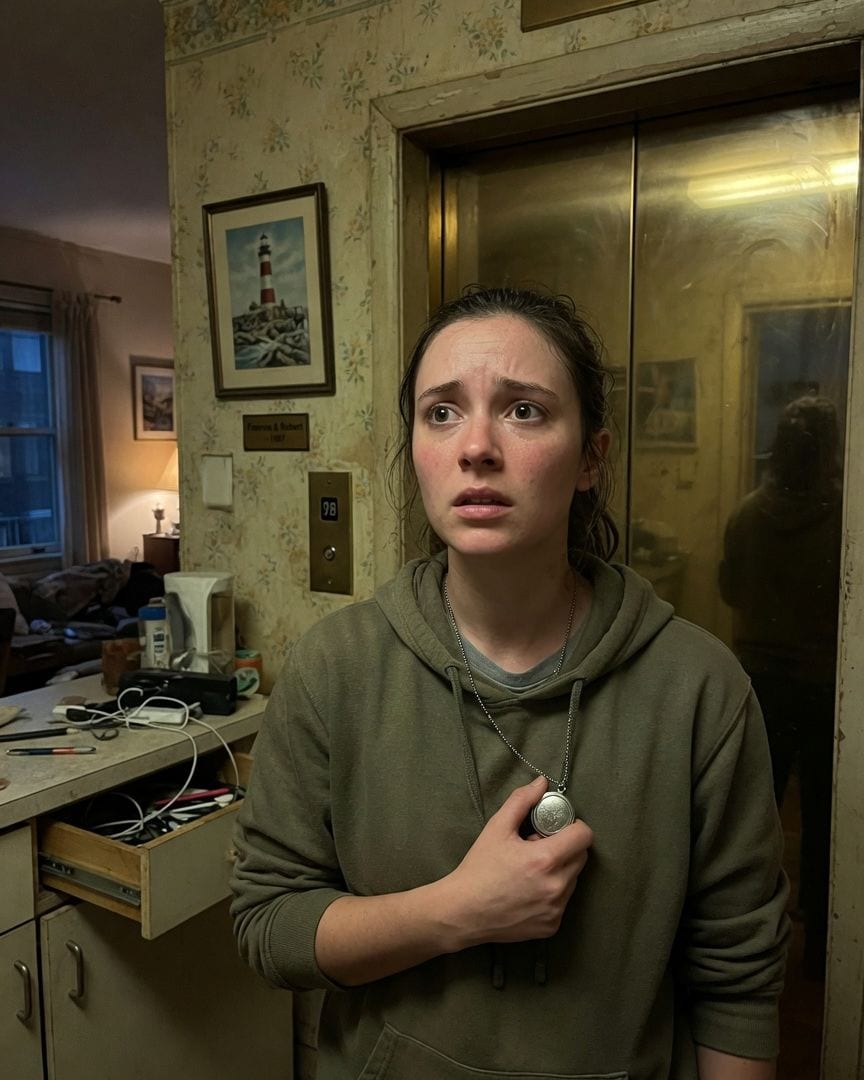
My aunt rode the elevator up, humming, at ease. She hadn't stepped in one since 1994, and told the story of why to anyone who'd listen.
My Aunt Frances stood beside me in the hospital elevator, humming a low tune. It felt deeply wrong; she hadn’t set foot in one since a traumatic incident in 1994, always taking the stairs. Now, after five days missing, she was completely at ease, denying she’d ever feared something so silly, her eyes holding an unsettling calm.
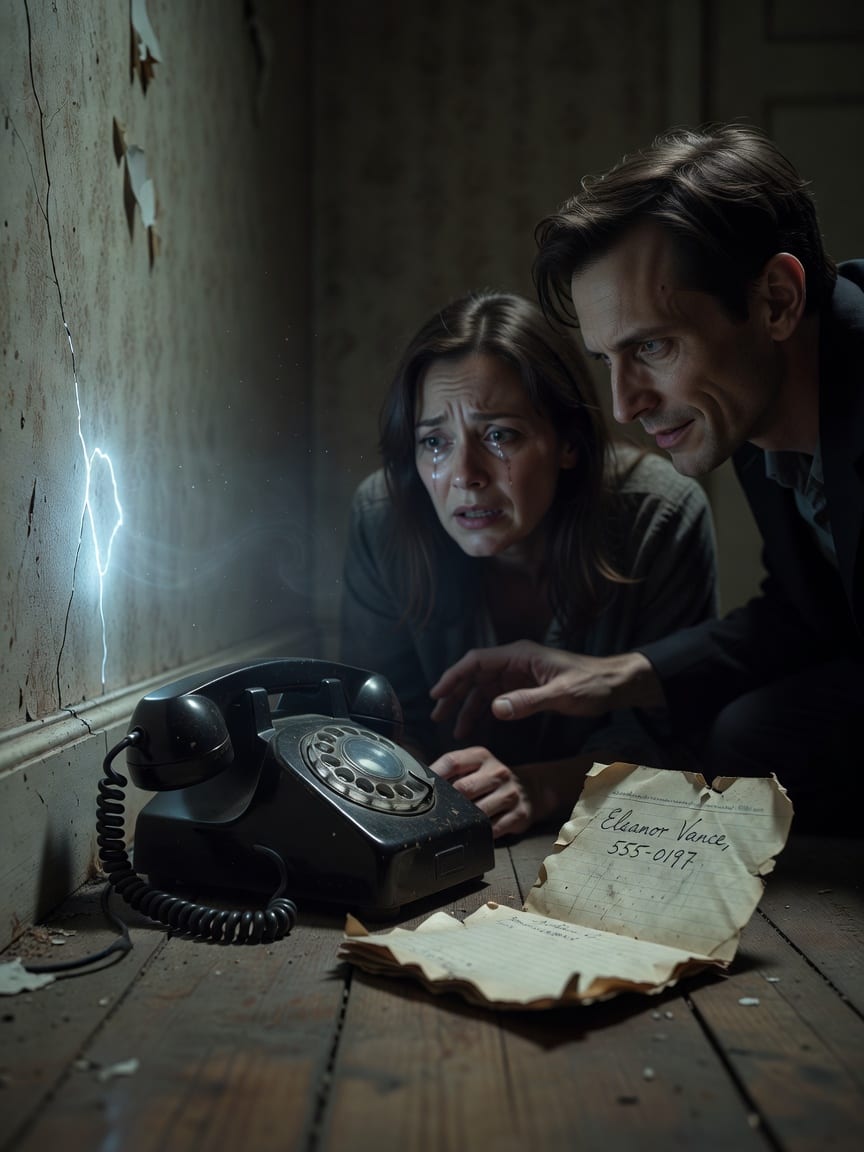
My house's walls ring when I dial a phone number from a 1974 directory. My neighbors said that directory was trash.
I was sifting boxes in my new house when I found an old 1974 telephone directory for my street. It listed my address, 12 Elm Street, under the name "Mr. & Mrs. Sheppard." On a whim, I called the faded seven-digit number. My cell phone rang, but a low, muffled sound also vibrated from the wall beside me.
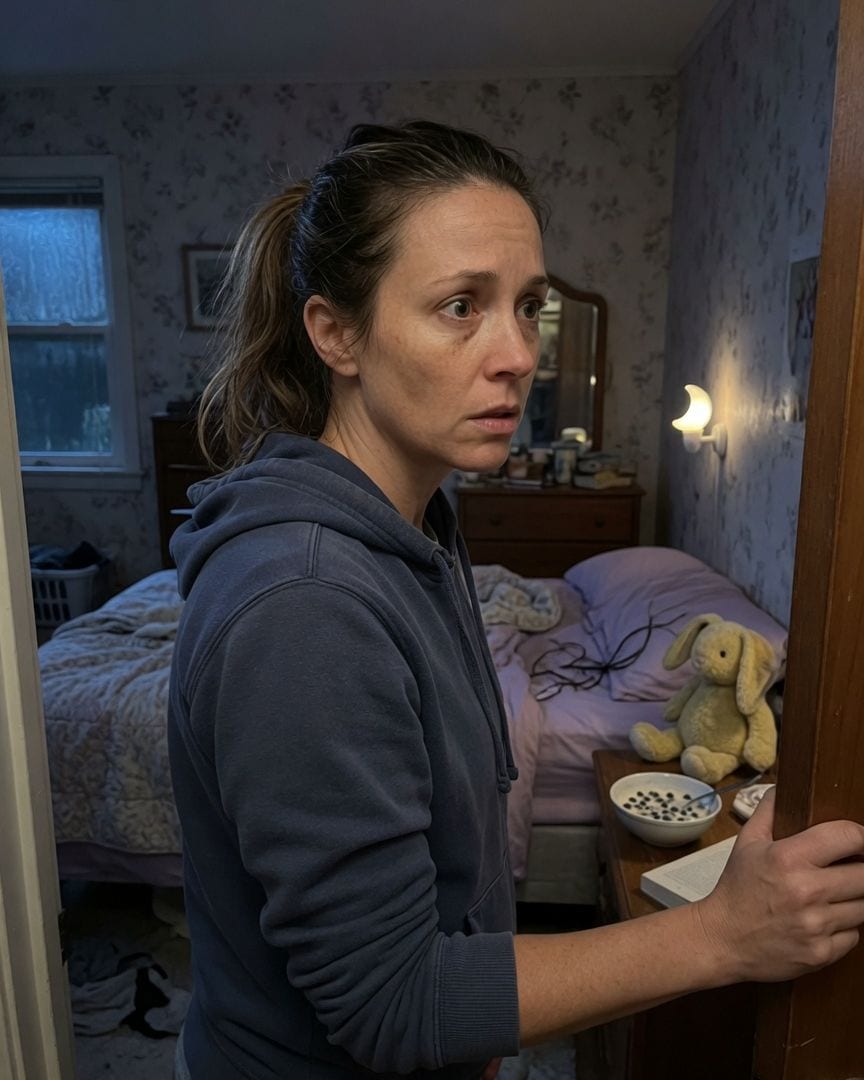
My daughter came home, then described a dream I'd had the week she vanished. I told no one that dream. She asked what it meant.
My daughter, Camille, returned home after four terrifying days missing. As I tucked her into bed, she quietly recounted a vivid dream about a drowned orchard and a heavy wooden door. It was *my* dream, a private terror I had told no one.