My landing light switches itself off at 9:40 every night. I've watched the switch flick down under nothing, the tape peeled back. The house holds its breath.
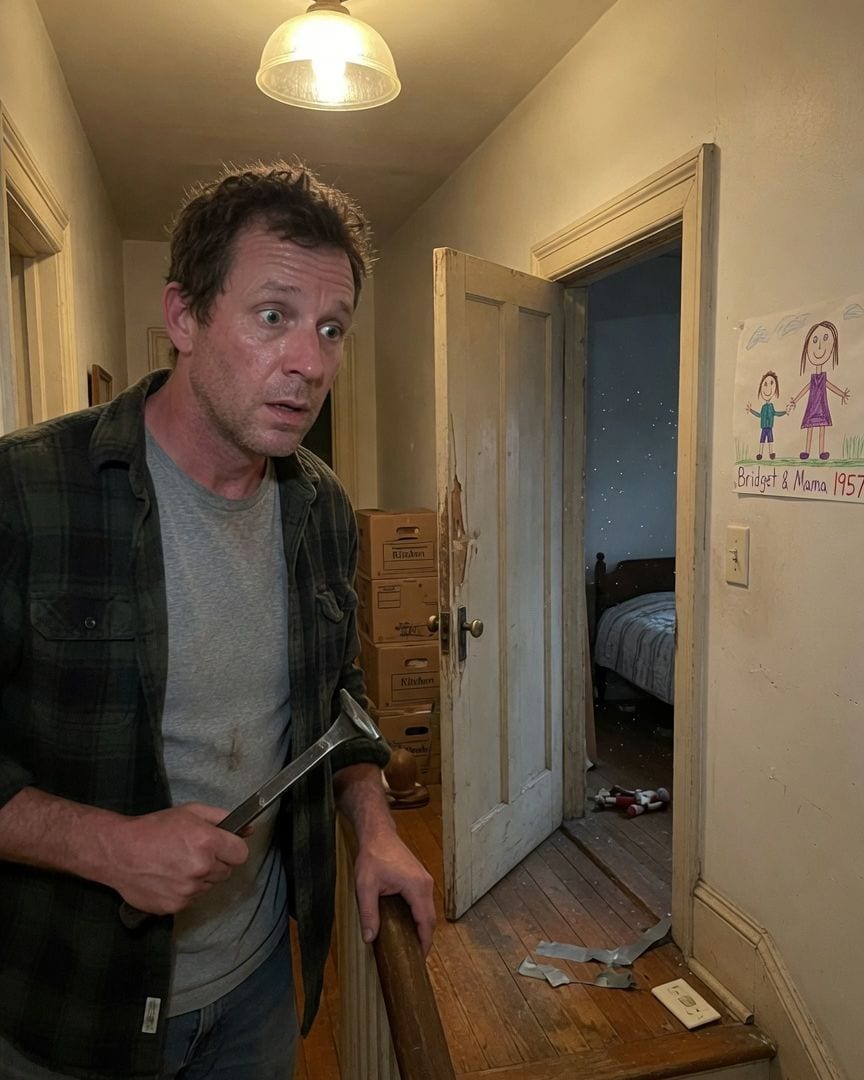
The house was a gift, in a way. Not a grand gesture, more a polite necessity. My distant great-uncle, Everett Caldwell, had managed the property for years, a sturdy two-story in a neighborhood that felt forgotten by time.
He’d handled the sale after my mother’s side of the family finally decided to offload it, and I, thirty-six and tired of rental apartments, took it. It was mine, sturdy and a little dated, a place to finally settle.
My first night, I was still unpacking, boxes stacked like monuments to past lives. Around 9:30 PM, I remember checking the time on my phone. I’d been working on the second floor, organizing the small landing outside the bedrooms.
The landing light, a single bulb in a glass dome, cast a surprisingly bright, warm glow. I went downstairs for a glass of water. When I came back up, maybe ten minutes later, the landing was dark. I frowned.
Did I hit the switch on the way down? It was a solid plastic toggle, right by the top step. I flicked it back up. The light came on. An old house, I thought. Quirk of the wiring.
The next night, I made a point of noticing. I was reading in bed, the bedroom door ajar, the landing light still on. I checked the time on my alarm clock: 9:38 PM. Two minutes later, I heard it.
A faint click, distinctly mechanical. Not a short circuit, not a surge. It was the sound of the toggle moving. I got out of bed, walked to the door. The landing light was off.
The switch was undeniably in the 'down' position. My skin prickled. There was no draft, no one else in the house.
I tried to be practical. Loose wiring, a faulty switch, something like that. The following evening, I taped the switch in the 'up' position, a broad strip of duct tape running from the wall over the toggle, pressing it firmly.
That should do it. I watched a movie, trying to ignore the growing unease. At 9:40 PM, a soft, dry tearing sound drifted from the landing. It wasn't loud, just distinct. I waited, heart thudding. No light. I walked out.
The duct tape lay neatly on the floorboards, peeled clean off. The plastic of the switch was still faintly warm under my fingers, as if someone had just moved it.
The house, usually full of the creaks and groans of old timber, had gone utterly silent. It felt like it was holding its breath, and I had the undeniable, prickling sense of being watched.
The air was thick with an unasked question.
The light wasn't the only oddity. As I settled in, a subtle, persistent scent began to permeate the second floor. Not the damp mustiness of an old house, nor the lingering smell of dust.
It was something cloyingly sweet, like a sachet of old lavender, mixed with the dry, papery smell of antique books. It was faint at first, then stronger, particularly around the bedrooms.
I'd open a window, try to air it out, but it always returned.
Then there were the floorboards. Polished to a warm sheen, they held a distinct worn path. Not just general wear, but a narrow, purposeful line, visible only when the light caught it right.
It started near the master bedroom, curved past the landing where the light switch stubbornly lived, and ended abruptly at a section of wall that I’d always assumed was a built-in linen closet.
The closet door itself was unremarkable, painted the same muted cream as the walls, with a standard porcelain knob.
But next to it, almost flush with the wall, was something else. A smaller, older-looking door.
It was so perfectly blended, painted to match the surrounding wall, its seams almost imperceptible, that I hadn't truly registered it until I was directly in front of it, tracing the worn path with my foot.
Its handle was a simple, tarnished brass knob, dull and cold to the touch. I tried it. Locked. Solid. The door itself was barely four feet high, no more than two feet wide.
It felt less like a door and more like an afterthought, or a secret that had been deliberately obscured.
I spent the better part of a day searching for a key. Every old jam jar, every dusty cigar box of forgotten screws, every drawer of miscellaneous junk. Nothing. No key that fit that tarnished brass knob.
The house seemed to hum with a quiet tension around that small, locked portal. It felt like a sealed mouth, and I suddenly needed to know what it was hiding.
Driven by an unsettling curiosity that gnawed at me day and night, I finally gave in. I found a pry bar in the basement, a flat piece of metal with a chipped claw end. The lock felt ancient, rusted.
It wasn’t just stuck; it was truly locked, and had been for a long time. With a grunt, I wedged the bar into the hairline gap between the small door and its frame. I pulled.
The wood groaned, splitting slightly, and the lock gave with a sharp, wrenching crack. The door grumbled open with a low, drawn-out shriek of ancient, protestive hinges.
It wasn't a closet. The space beyond was impossibly small, maybe six feet deep by four feet wide, a tiny, cube-shaped room.
The air inside hit me first: unnaturally cold, thick with the cloying scent of lavender and old paper, stronger here, almost suffocating. Dust motes danced in the sliver of light from the landing. My eyes adjusted, and I saw it.
A miniature antique bed, its quilt faded to pale stripes. On the floorboards, a single wooden toy soldier lay on its side, as if dropped in haste. The room felt perfectly preserved, a sealed tomb.
On the far wall, a faded crayon drawing. Two stick figures, childlike and simple, one small, one larger, holding hands. Scrawled underneath, in a child’s shaky, uneven hand, were two words: 'Bridget & Mama.'
And below that, stark and impossible, a date: '1957.' My heart hammered against my ribs, a frantic bird.
I stepped back, breathing hard, staring at a room that shouldn't exist, a name I didn't know, and a year that felt profoundly, terrifyingly wrong.
The discovery of Bridget’s room sent a cold shiver through me. The light, the scent, the worn path—it all suddenly clicked into place, but into a pattern I couldn’t understand.
I spent the next few days in a desperate scramble for answers.
I went to the local library, poring over old property deeds, census records, anything that could shed light on a 'Bridget Lawson' or a family living in this specific house in 1957.
The house’s official history was a continuous, unbroken chain of ownership, with no gaps or significant changes that would account for a sealed room or a child’s disappearance in that year. Nothing. No Bridget. No Lawson.
It was as if she'd never existed in the official record.
I called Everett Caldwell, my great-uncle. His voice was calm, almost annoyingly so, when he answered. "Audrey? Everything alright with the old place?"
"Everett," I said, my voice tighter than I intended. "I found something. A room, on the second floor. A small one, hidden."
There was a pause, a beat too long. "Oh? An old servant's cubby, perhaps? Sometimes they'd seal those up for insulation, you know. Old houses have all sorts of quirks." His tone was dismissive, almost too quick.
"It's not a cubby. There's a child's drawing. A name. Bridget. And a date: 1957."
Another, longer silence. Then, a low chuckle that didn't quite reach his eyes, even over the phone. "Bridget? Oh, that's just a bit of local folklore, Audrey. Every old house has its stories. A ghost girl, maybe. Harmless."
"Harmless?" I gripped the phone, knuckles white. "This room isn't on the blueprints, Everett. I found some from the 1920s. It's just... not there. And the drawing is dated 1957. Folklore doesn't leave crayon on the wall."
His calm, almost overly dismissive tone, grated on every nerve. He was deflecting, I knew it. He changed the subject, asking about the plumbing, the roof. I cut him short.
Later that night, I sat on the landing, wrapped in a blanket, waiting. 9:39 PM. The landing light was on. I watched the switch, unblinking. At precisely 9:40 PM, there it was. Not a flicker, not a dimming.
A distinct, deliberate click. The solid plastic toggle moved down, as if under the precise pressure of a thumb. It was an action, not a malfunction. It was too clean, too certain to be anything but a deliberate movement.
And there was nothing there.
As I dug deeper, the house's 'routines' intensified. The footsteps started. Faint, light padding sounds, always from the floor above me, always around the same time the landing light switched itself off.
They seemed to follow the worn path I’d noticed on the floorboards, from the master bedroom, past the landing, and then stopping, often, right above Bridget’s room.
It was never heavy, never rushed, just a soft, consistent rhythm, like a child’s quiet walk.
The scent of lavender and old paper, once subtle, now became overwhelming at times. It would waft through the air, cloying and sweet, as if someone had just walked past me, trailing it in their wake.
I’d turn sharply, expecting to see a figure, a person, but there was never anything. Just the empty hallway, the closed doors, and the heavy, sweet air.
One evening, I was looking out the front window, thinking. The house opposite was dark, the street quiet. My gaze drifted up to the second floor, to Bridget’s small, hidden window.
It was just a small pane, barely visible from the street. But for a fleeting moment, I saw it. A shape. A small, indistinct figure, silhouetted against the dim light within the room. A child’s profile, unmistakable. My breath hitched.
I blinked, rubbed my eyes, focused. It was gone. The window was dark again, empty. A trick of the light, I tried to tell myself. But the chill that ran down my spine felt real.
I felt a sense of being observed, not by a person, but by the house itself, or whatever presence had taken root within its walls.
Then Everett Caldwell called me unexpectedly. No context, just his smooth, calm voice. "Just checking in, Audrey. Everything settled? Heard the old place can be... particular. Sometimes people don't take to it."
I hesitated. "What do you mean, 'particular'?"
He chuckled again, that same dry sound. "Oh, you know. Drafts, creaks. Sometimes old houses just have a way of... choosing their occupants. A Mrs. Henderson, lived there for a while back in the nineties. Didn't stay long.
Said it was too quiet for her." His tone was too smooth, too knowing. It carried a subtle warning, as if he knew exactly what I’d found, what I was feeling.
"It's not folklore, Everett," I said, my voice trembling slightly, no longer bothering to hide my fear. "I found the room. I found the name: Bridget Lawson. And the date, 1957. What are you not telling me?"
A long silence stretched between us, the phone line humming with static. I could hear his breath, slow and even. Then, Everett sighed, a soft, weary sound that finally cracked his composure, if only slightly.
"I suppose it was time someone found it again."
He admitted it. Bridget Lawson was real. She was the daughter of a family, the Lawsons, who had rented the house in the mid-1950s.
"A sweet girl," he said, his voice distant, almost nostalgic, as if speaking of someone he’d known personally. "She went missing. Just... vanished one night in '57. From that house. They searched for weeks, months, the police, everyone. Nothing.
Not a trace."
My blood ran cold. "And you sealed up her room? Just like that?"
"The family moved out soon after, heartbroken. The house sat empty for a while. We sealed up the room, yes. Tried to forget." He paused. "Bridget’s routine, you see. Her mother would always tuck her in at precisely 9:40 PM.
And then, she'd switch off the landing light."
My stomach clenched. The light. The timing. It was all real.
Everett continued, his voice shifting, taking on a strange, almost academic tone. He wasn't talking about a building anymore. He was talking about something else entirely. "The house… it remembers, Audrey. It holds onto things.
Especially when something… traumatic happens within its walls. It replays them. Like an old film reel, stuck on a loop."
He explained that the worn path, the cloying scent of lavender and old paper, even the landing light switch—they were all traces of Bridget’s life, playing out on an endless loop, a spectral echo.
"It’s like the house keeps her there, even now. Or a part of her, anyway. It's its nature."
I gripped the phone, my knuckles white. "Why didn't you tell me? What does 'the house remembers' even mean, Everett? Is it haunted?"
His voice, now devoid of any pretense, turned chillingly calm. "It means Bridget wasn't the first, Audrey. And she likely won't be the last."
My breath hitched. "What?"
"My own great-aunt," he continued, his voice a low, even murmur, "Rose Caldwell. She disappeared from that very house in the 1920s. A child. Similar, inexplicable circumstances. The house… it cycles. It always takes a little one."
The words hung in the air, heavy and dark. The cycles. Every few decades. Rose in the 20s, Bridget in the 50s.
"The family tried to sell it after Rose. But it always came back to us, or the new owners never stayed long. It wasn't just 'particular.' It seemed to 'feed' on the innocence and vulnerability.
Drawing children into its retained memories until they, too, became part of its fabric. Its... collection."
He paused again, and when he spoke next, his voice dropped to a chilling whisper. "And sometimes, Audrey, it takes more than just a child. Sometimes, it takes the ones who are watching too closely.
The ones who try to understand."
I stood in my living room, the phone cold and heavy in my hand. The quiet hum of the house suddenly felt like a living, predatory presence, closing in around me, the walls themselves holding their breath, waiting.
"What do you mean, 'it takes more than just a child'?" I demanded into the phone, my voice shaking with a mixture of fear and fury. "What have you done, Everett?"
Everett, seated calmly in his armchair on the other end, didn’t flinch. His composure was sickening. "My family, Audrey, has been aware of the house’s nature for generations. It’s not just a haunted house.
It’s a living archive of loss, a collector of lives. The children don't just disappear; they are absorbed. Their routines, their essences, they become part of the house's recurring 'memories.' Like a fly in amber."
He explained that the 'Door Onto The Wrong Year' wasn’t a portal, but a kind of 'display case' for these captured moments. A lure. "It's how it attracts new memories. New victims."
He spoke of it as a natural, albeit horrifying, phenomenon. "It needs to remember. And to remember, it needs new memories to absorb. It's simply its nature."
My mind reeled. "And you… you send people there? Like sacrifices?"
He merely shrugged, the sound somehow audible over the phone, a gesture of deep, weary resignation. "Someone has to live there. It always finds a way.
We tried to stop it, to understand it, but mostly we’ve just learned to live with its cycles. Guiding new occupants… ensuring the house remains 'fed'." He didn't gloat, he didn't apologize.
He simply stated it, as if discussing the weather. His calm was the worst part.
"You sent me here," I whispered, the words tasting like ash. "You knew what it was. You knew what it would do."
"It always finds a way, Audrey. Whether through us or by its own design. It prefers those who are alone, or those who are sensitive to its 'memories.' Like you. You noticed the light, the scent, the path.
You sought the door. You were... receptive."
I slammed the phone down, the sound echoing in the sudden, crushing silence of the house. No. No, this couldn't be happening. I was not part of some horrific, generational sacrifice.
There was no stopping it, he’d said, only leaving it. I had to leave. Now.
I rushed to my bedroom, my heart a frantic drum against my ribs. I grabbed my largest suitcase, throwing clothes in indiscriminately. But as I moved, I noticed small, impossible things.
My phone charger, which I always left plugged into the wall by my bed, was now coiled neatly on the dresser.
My coffee cup, half-empty, that I'd left on the kitchen counter this morning, was sitting on my bedside table, cool and pristine, as if I’d just placed it there myself.
The house wasn’t just replaying Bridget’s past; it was now manifesting my own routines. It was learning me. Absorbing me.
Panic rose, cold and sharp. I had to go. I had to get out. I ran to the hallway, grabbing my keys from their usual hook beside the kitchen door. But the hook was empty. My keys weren't there.
I checked my purse, my coat pockets, frantically patting myself down. Nothing.
Then, the landing light. It switched off. I looked at my watch: 9:35 PM. Five minutes early. A cold dread seeped into my bones. A few minutes later, as I frantically searched under the sofa cushions, it happened again.
The landing light clicked off, but this time, it was 9:30 PM. The house was accelerating its schedule. Pulling me in faster.
I raced to the front door, yanking on the handle. It didn't budge. I twisted harder, pulling with all my strength. Locked. The deadbolt, which I never used, was thrown. From the inside. My mind screamed.
I threw my shoulder against it, again and again, but the heavy old wood held fast, solid and unyielding. The house had me.
The routines were no longer just echoes; they were my new reality, already being bent and twisted, becoming part of its insidious pattern.
I scrambled, desperately trying to find my phone, to call for help, but it was gone. Perhaps it was no longer working, simply another routine the house had absorbed and then discarded.
The house was completely silent now, the air thick and heavy, the cloying scent of lavender and old paper suffocating me.
I couldn't get out. I tried the windows; sealed shut, painted over decades ago. The back door, jammed tight, as if swelled by invisible damp. The house had closed itself around me, a tomb of forgotten lives and stolen routines.
I pressed my ear against the locked front door, hearing nothing but the frantic beat of my own heart, reverberating in the silence. The silence stretched, endless and cold.
Then, a faint sound, from the floor above. A soft, childish hum. It grew louder, closer, moving along the worn path on the floorboards, towards Bridget’s room.
I dropped to my knees in the hallway, my hands shaking uncontrollably, tears streaming down my face. The hum stopped, right above me. I heard the distinct sound of small, bare feet padding across the floorboards, light as a feather.
The scent of lavender was overwhelming, a sickly-sweet cloud. I felt a cold presence behind me, a small, light touch on my shoulder. A child's hand. My breath hitched, freezing in my throat.
Weeks later, Everett Caldwell calls the local police to report Audrey Sutton missing. He tells them she was "a bit eccentric," and the old house "never suited her."
He mentions he's already found a new buyer, a young couple with a small child, who "loved the character of the place." The listing went up yesterday.
The landing light in the old house switches itself off at 9:40 every night.
If this one got to you
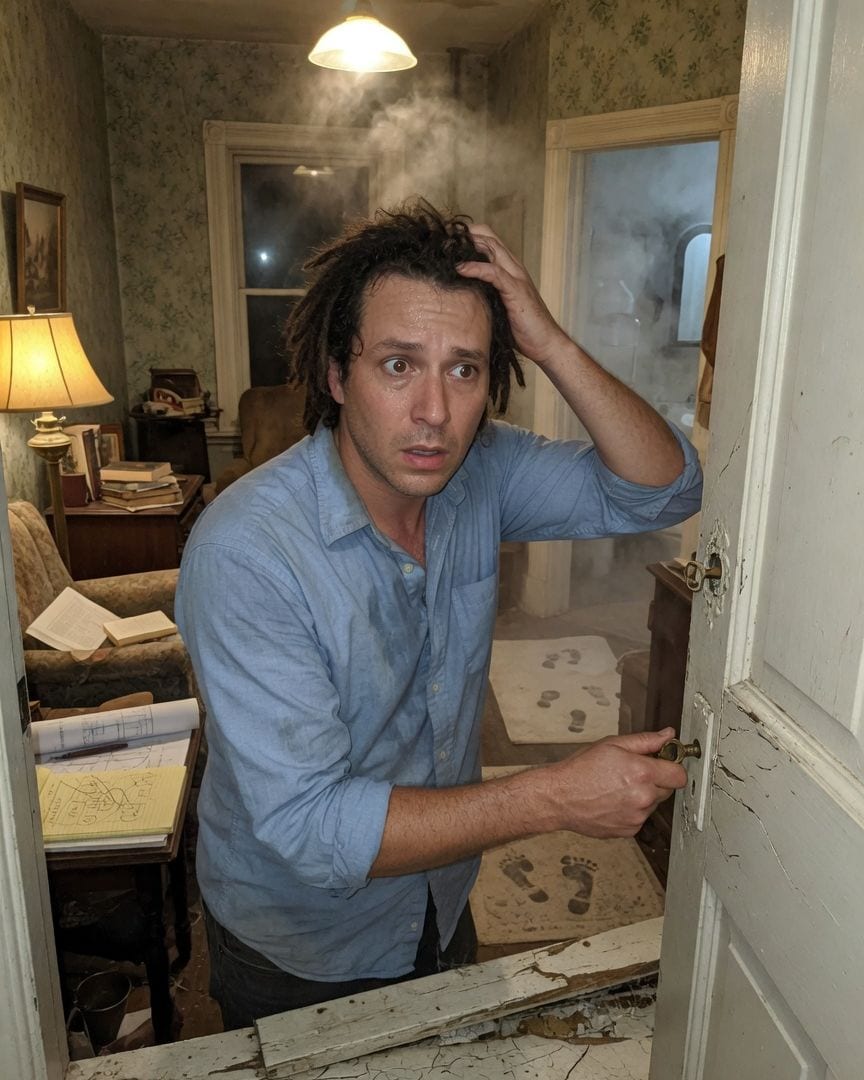
The bath filled itself at 9:30 PM. My main house water was off. Wet footprints led from the tub to a locked airing cupboard.
As an architect, I pride myself on logic. Moving into my inherited Victorian house was supposed to be a quiet fresh start, but on the third night, I heard the impossible. Even after I shut off the main water to the entire house, my clawfoot bath upstairs ran full, warm, and steaming at 9:30 PM.
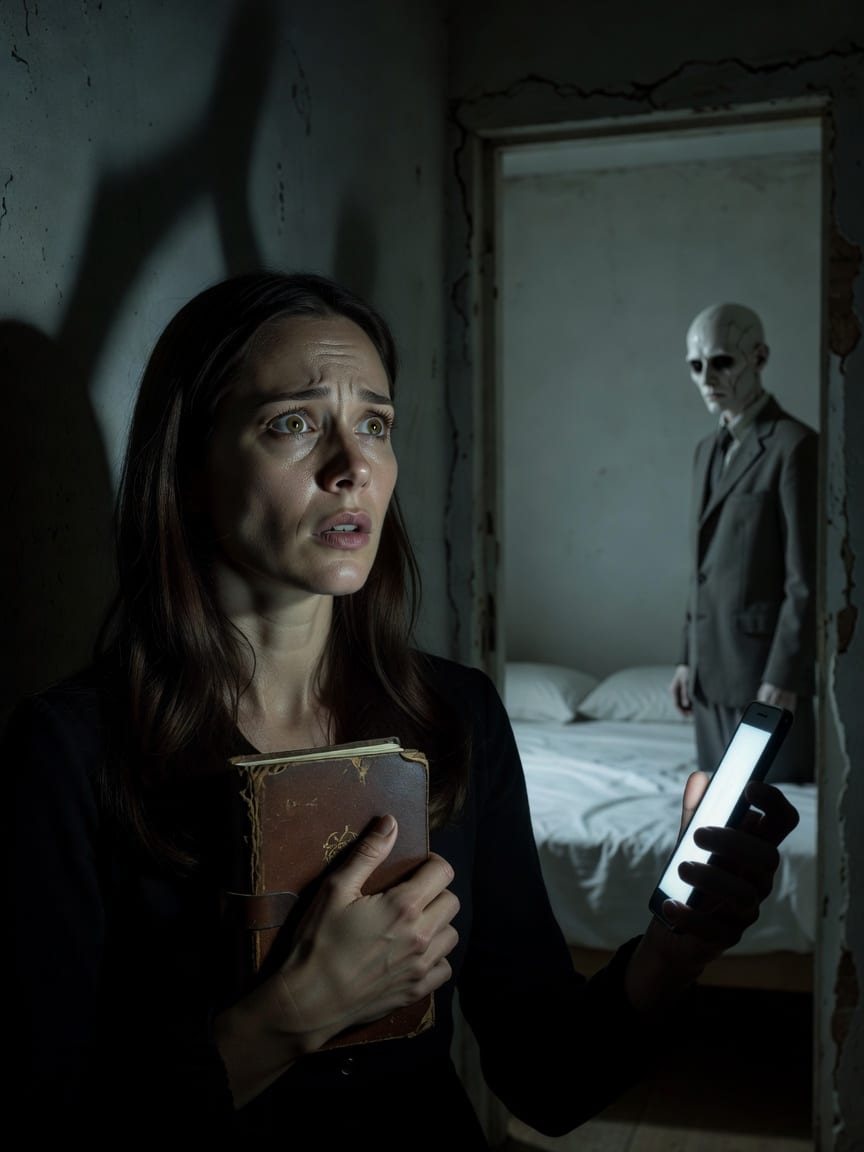
Behind a plastered-over doorway, I found a room. Papered, carpeted, and furnished with a made bed, sealed for decades. The air was dead still, but the bed wasn't dusty. My council tax bill only lists five rooms.
I'm Claire, an architect, meticulously planning my new Victorian terrace renovation. But when I uncovered a hidden room behind a wall, everything I knew about time and decay shattered. The bed was perfectly made, the air still, yet there was no dust, only an unnerving cold.
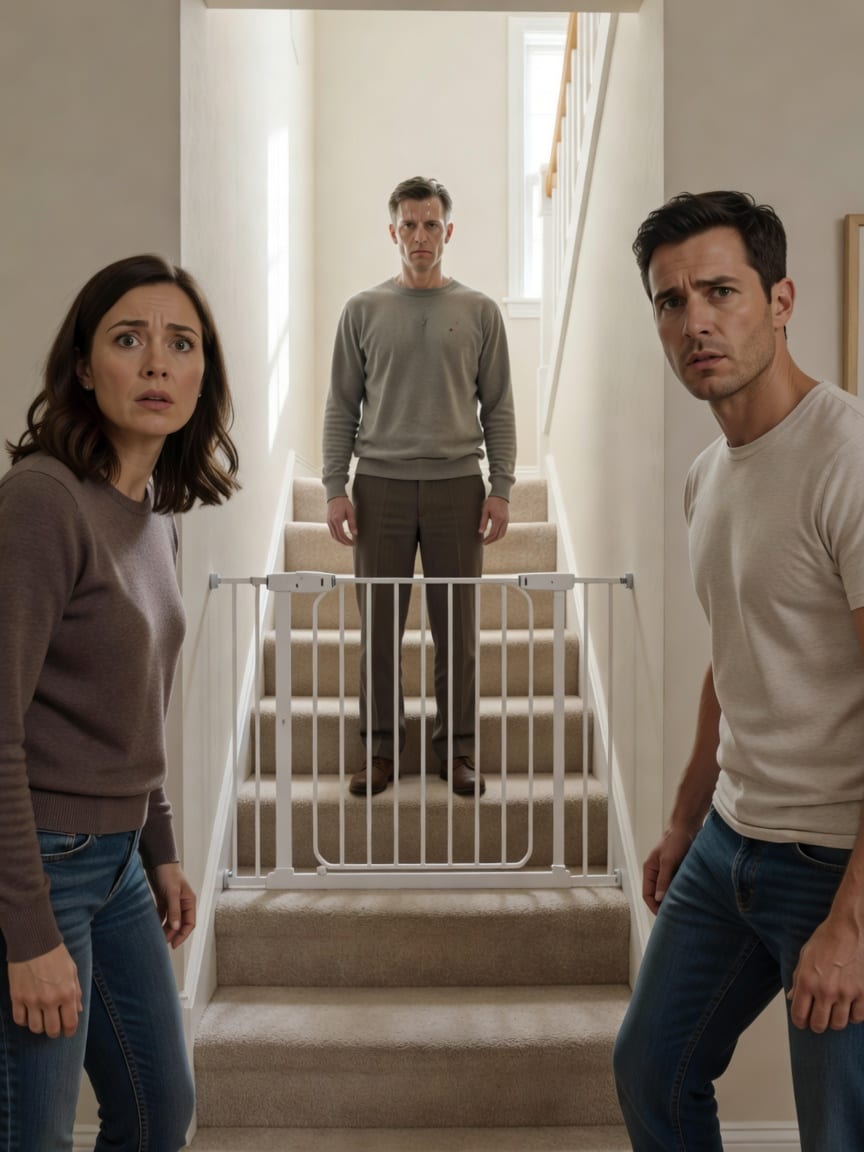
My stair gate latches itself every night. Pressure-fitted tight across my empty stairs, no children live here and no fixings exist on the wall.
I live alone in my inherited house, so the toddler gate at the top of my stairs should not be there. Each morning, I find it perfectly latched and sturdy, despite having hidden it away in the shed the day before. This isn't a quirk; it's a routine, and it isn't mine.
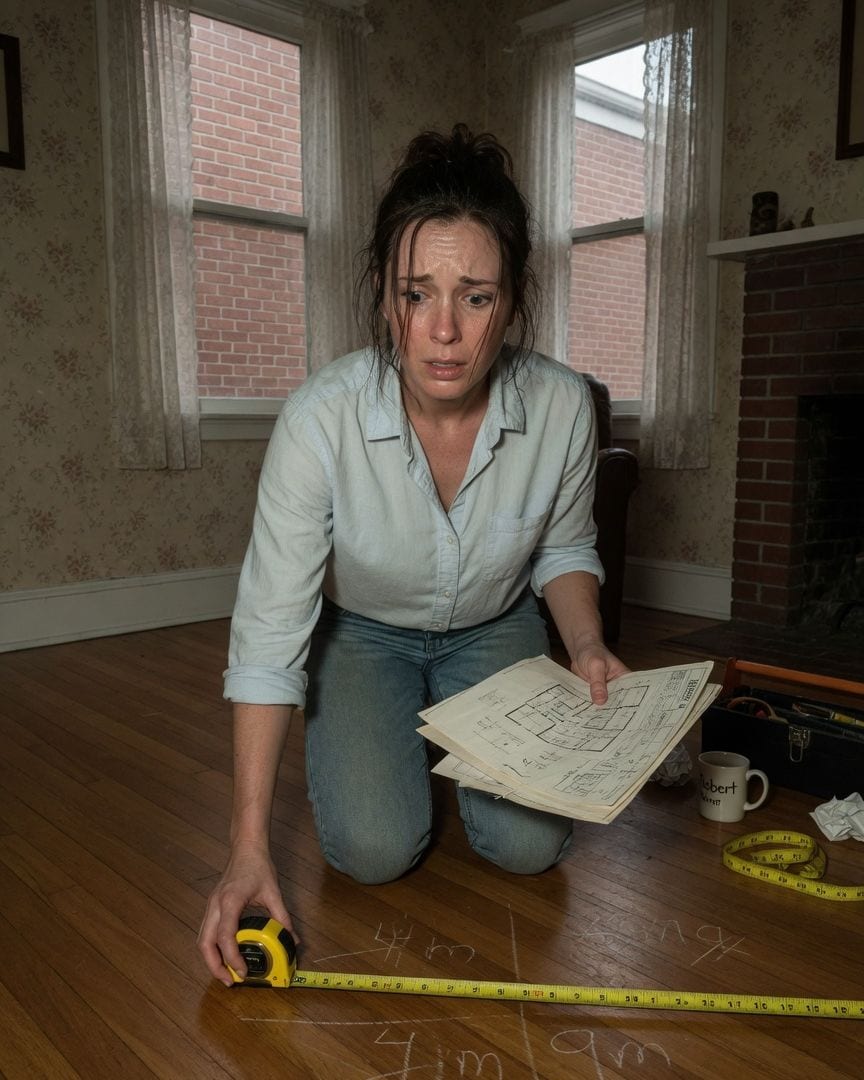
Our living room measures four by five metres. But the outside wall is nine metres long. A metre of house, gone, and I can't find it.
After moving into our charming 1920s house, I was meticulously measuring the living room when the dimensions refused to add up. My calculations of the interior space led me to discover a narrow, unpainted fifth door in the hallway, tucked almost out of sight. It wasn't on any original plans, and it opened to absolute, impenetrable darkness.
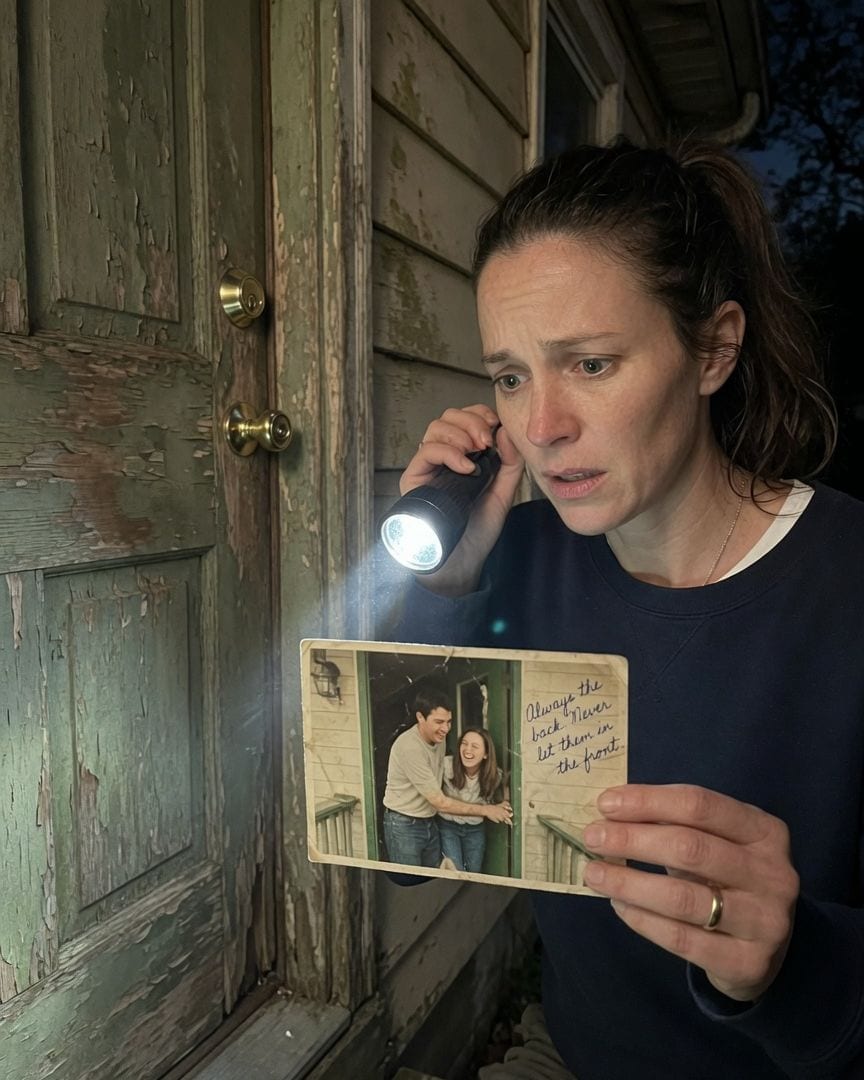
My mother waves us to the front door now. She was missing five days. She says we've always used the front, but the back door, our kitchen door for thirty years, is locked.
My mother, Janet, finally came home after five days, but her overly bright smile and insistence on using the front door felt wrong. For three decades, our family always used the back entrance, which now had a gleaming, new deadbolt. The quiet hum of unease quickly grew into a chilling dread.
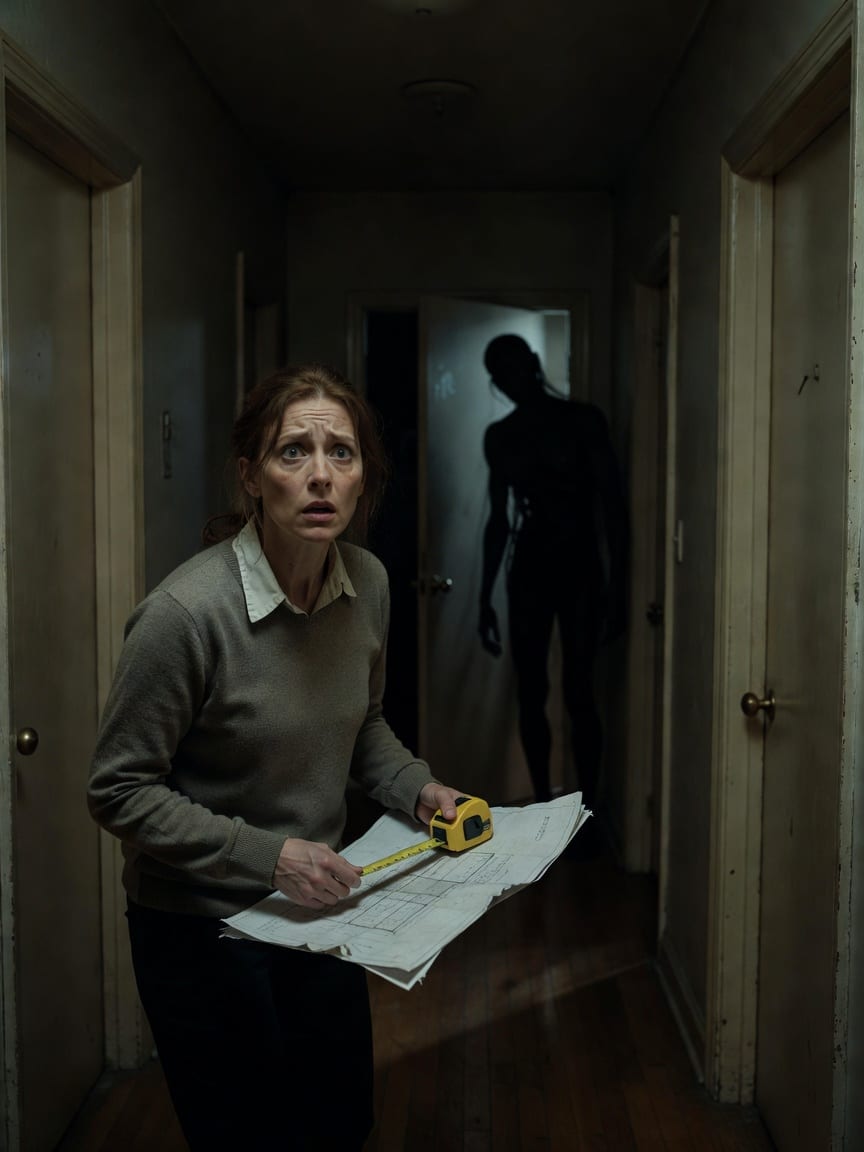
My front door has a dented gate and a dead hydrangea. I walked past it six times, trying to reach the corner shop just a hundred yards away. The pavement kept bringing me back to my own porch, and the shop's light never moved.
My morning started like any other, a quick walk to the corner shop from my home at Number 14, Elm Terrace. But after walking what felt like two minutes, I found myself back at my own front door, the shop no closer. I tried six times, faster and slower, but my street kept compressing, refusing to let me leave.