My stair gate latches itself every night. Pressure-fitted tight across my empty stairs, no children live here and no fixings exist on the wall.
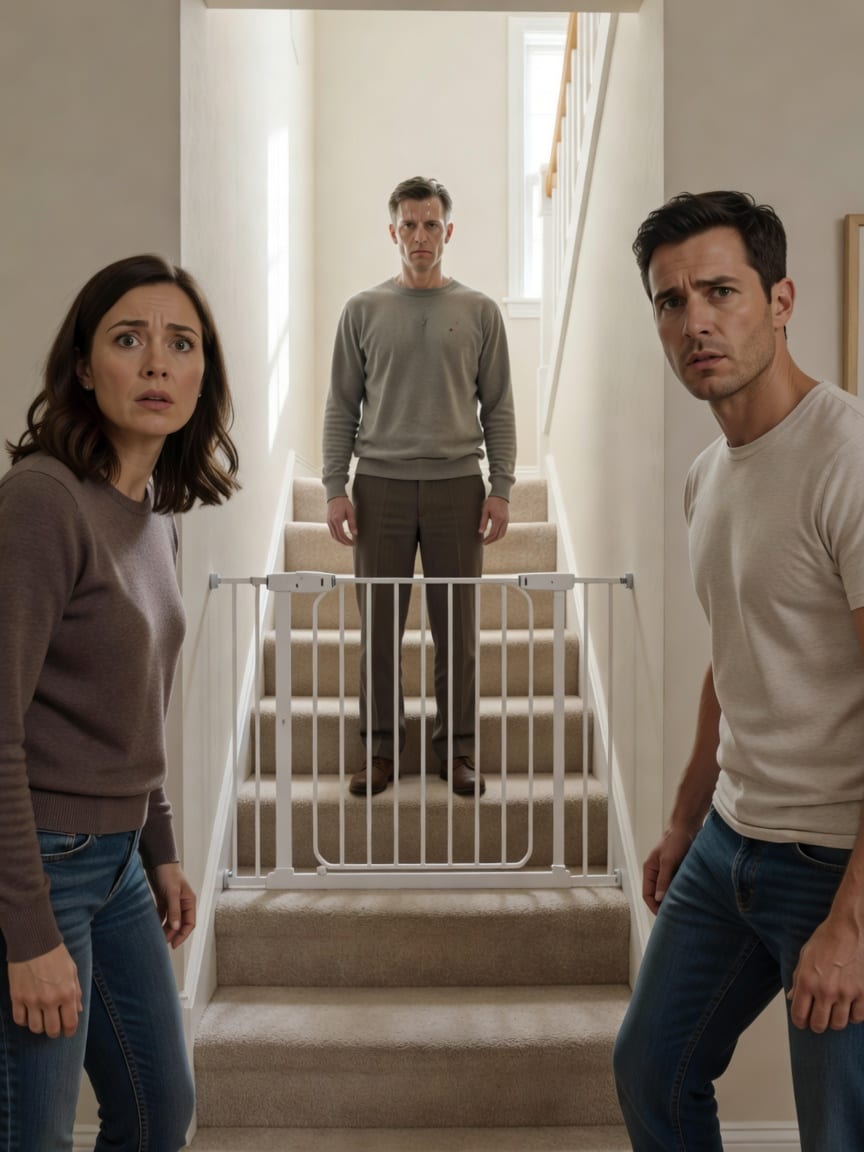
I woke to the familiar click. That distinctive spring-loaded snap that meant the stair gate was up. Again. I pushed myself out of bed, a sigh already forming, a bitter taste in my mouth.
Yesterday, I’d leaned the damn thing against the back wall of the shed, behind a stack of old paint cans, specifically to avoid this. It was a toddler gate, white plastic, pressure-fitted tight at the top of my main staircase.
Perfectly latched, sturdy enough to hold a charging two-year-old. But I lived alone. In an inherited house, yes, but empty. No children, no pets, no reason for it to be there.
I walked to the landing, staring at it. The morning light caught the white plastic, gleaming, a silent sentinel across my empty stairs.
I’d run my hands over the plaster walls countless times, searching for screw holes, for old marks, for anything that would explain how it latched so perfectly, so firmly, into a frame that bore no visible fixings. Nothing.
Just smooth, painted plaster, recently painted before I moved in, not a single blemish.
I’d even called Lydia Porter, the realtor who’d handled the sale for the previous owner. She’d laughed it off, a forced, light sound. “Oh, that old place has quirks, dear. Settling. Old houses do that.” A quirk. Right.
I’d taken it down again, slowly, yesterday, testing the tension of the springs, convinced it must be some overlooked mechanical memory, a ghost in the plastics.
I’d leaned it further into the darkest corner of the shed, buried it, made it impossible. Yet, here it was. Just sitting there. I stared at it, a knot tightening in my stomach, cold and hard. This wasn't a quirk.
This was a routine. And it wasn't mine.
The gate was just the start. Small things began to accumulate, forming a pattern that hummed beneath the surface of my new life.
Every morning, precisely at 6:00 AM, a faint, sweet smell, like warm milk or baby formula, would drift from the empty nursery upstairs.
It would hang in the air for a few moments, then vanish, leaving me sniffing the air like a madwoman. I’d checked the floorboards, the vents, the walls. Nothing. No spills, no leaks, no sign of anything rotting.
Just the clean scent of plaster and fresh paint.
One evening, I found a single, worn wooden block, painted with a faded red 'R,' sitting precisely in the middle of my living room rug.
I was certain I’d vacuumed clean that morning, the carpet fibres showing distinct lines from the rollers. There was no way I could have missed it. I picked it up, feeling the smooth, worn wood under my thumb.
I placed it on the mantelpiece, prominently, next to a photo of my parents. The following day, it was gone from the mantelpiece. I found it again, next to my bed, on the bedside table.
My rational mind scrambled for explanations: old house settling, drafts, residual smells from previous tenants, my own increasing forgetfulness. But the precision, the repetition, the sheer defiance of logic, gnawed at me.
The nursery, stripped bare when I bought the house, felt heavy, as if resisting its emptiness. It wasn’t a cold space, but a dense one, thick with an unseen presence.
Pushing aside a loose floorboard near the window, a task I’d put off for weeks since noticing it creak, I noticed a small cavity beneath. I’d meant to nail it down, seal it up.
My flashlight beam pierced the darkness, revealing not dust or insulation, but something small, dark, and oddly shaped. I reached in, my fingers brushing against soft, then hard, then soft leather. I pulled it out.
It was a tiny, scuffed leather shoe, clearly for a toddler. One of those old-fashioned ones, with a buckle. Too small to have been Frances Blackwood’s, the woman who owned the house before my parents. This was older. Much older.
My breath hitched. This wasn't a quirk; this was an artifact. This was evidence.
My fingers trembled as I pulled the tiny, worn leather shoe from beneath the loose floorboard.
The leather was cracked in places, a dark mahogany colour, the buckle tarnished with age, but it was unmistakably a child's shoe, meticulously preserved by the cavity. A faint, almost ghost-like scent of old lavender clung to it.
I turned it over in my hand, the weight of it suddenly immense, a small anchor in my palm. Something crinkled inside.
Reaching in, my fingers stiff, I extracted a small, brittle piece of paper, folded into a tight square. It felt like tracing paper, thin and delicate, crackling softly as I handled it. With agonizing slowness, I unfolded it.
It was a child’s crayon drawing: a stick figure with a huge, smiling head, crude, but joyful. Beneath it, written in shaky, uncertain letters, was a name: 'Rose.' And beneath that, in a different, more careful hand, a date: '1969.'
The year hit me like a cold wave, colder than anything I’d felt in the house so far. This wasn't just my house, or even the house of someone recently departed.
This was a house that remembered a child named Rose, decades ago. And the memory was still here.
The drawing of Rose, dated 1969, became my obsession. I spent hours online, hunched over my laptop, sifting through local archives, property records, and old newspaper databases. My house, the Vaughn residence, had been sold several times since the '60s.
No 'Rose' appeared in any family tree I could trace for the immediate former owners, or even my parents’ generation. But the name 'Blackwood' surfaced once, attached to the property in the late 1960s.
No further details, just a name on a ledger.
The routines in the house, meanwhile, intensified. The faint lullaby, barely audible at first, now seemed to emanate directly from the empty nursery, a gentle, repetitive hum that made the hairs on my arms stand up.
It was a simple, repetitive melody, like something a mother would hum to a restless child.
The rocking chair, which I'd moved into the nursery from the attic weeks ago, thinking it would make a nice reading nook, began to rock subtly on its own. A slow, rhythmic creak, matching the tempo of the unseen song.
I visited the local historical society, a dusty building smelling of old paper and wood polish.
I sought out Desmond Carter, a retired archivist with a reputation for knowing everything about the town's past, whether it was officially recorded or not. I presented him with the drawing and the shoe, carefully omitting the more unsettling details.
No point in sounding crazy yet.
Desmond, a portly man with thick glasses perched low on his nose, peered at the items skeptically. “Old child’s things, Miss Vaughn. People leave things behind. The date… could be anything. A child’s scrawl isn't history.
Could be the year the child was born, not the year it was drawn. Could be an old calendar. Don't go imagining things.” He spoke of common superstitions, of old houses having 'character,' a dismissive tone in his voice.
But his eyes lingered on the date, a flicker of something unreadable passing through them before he looked away. A flash of regret? Or just annoyance at my persistence? I felt a growing certainty: Desmond knew more.
He was just choosing not to tell me, hiding behind the guise of a weary old man. The house was not just remembering; it was trying to tell me something specific, something Desmond was trying to keep buried.
The feeling of being watched became constant. It wasn't menacing, not exactly, but an insistent, mournful presence. It was like a quiet sigh on the back of my neck.
I found myself avoiding the third stair from the top on the main staircase. The wood there was noticeably more worn than the others, almost smooth, as if a small, repetitive weight had scuffed it over decades.
I’d catch glimpses of movement in my peripheral vision – a flash of pale fabric, a fleeting shadow – always disappearing when I turned my head directly. A trick of the light, I told myself, every single time.
But the pattern was too consistent.
One afternoon, while gardening, yanking out stubborn weeds that thrived despite my best efforts, my neighbor, Lydia Porter, leaned over the fence.
Lydia, who’d lived on the street for decades, had a knowing, almost complacent look on her face, as if I was exactly where she expected me to be. “Settling in, dear?”
Lydia asked, her voice calm, a gentle, almost saccharine sweetness to it. “That house… it has a way of settling you in, doesn't it?”
I wiped dirt from my hands. “It’s… interesting. I’m finding a lot of history. I found some old things. A child’s drawing from 1969.”
Lydia’s smile didn’t falter, didn’t even twitch. It was fixed, serene. “Oh, yes. Rose. Poor little thing. Her mother, Frances, she was so careful. Always had that gate up, you know. Top of the stairs.
Never went anywhere without putting it back up. But some things, you know, they just happen.” Lydia’s tone was unnervingly placid, as if discussing the weather, or a minor local gossip. “Some things just… keep happening.”
The casualness of her words, the absolute lack of surprise, chilled me to the bone. Lydia didn't seem disturbed. She seemed… resigned. As if she’d seen this before. As if she expected me to see it, too.
I realized the danger wasn't just in the house itself; it was in the quiet acceptance of the people around it. They knew. And they were letting it continue. The house was not just remembering; it was anticipating.
I returned to Desmond Carter, this time with a stack of printouts. Vague property transfers, census records that hinted at a 'Blackwood' family, and the insistent, re-appearing stair gate itself, which I’d photographed at dawn.
The white plastic, glaring in the early light, latched tight across my empty stairs. I laid the child’s shoe and drawing on his desk, not bothering to hide anything now.
“Mr. Carter,” I began, my voice steady despite my racing heart, “Lydia Porter mentioned ‘Rose.’ She said her mother, Frances, was 'so careful.' And you know something about it. What happened in that house in 1969?”
Desmond sighed, a long, weary sound, like air deflating from an old tire. He picked up the drawing, his thumb tracing the crude crayon lines of 'Rose.' “Some things are best left alone, Miss Vaughn. Old tragedies.
Best not to disturb them.”
I leaned forward, my knuckles white on the edge of his desk. “The house won’t let me leave it alone. The gate. The smells. The lullaby. It’s a routine. A routine that continues, over and over again.”
He looked at me, his expression finally shifting from dismissal to something akin to regret, a deep, sad weariness. “Frances Blackwood,” he said, his voice low, almost a whisper. “She was… meticulous. Obsessive, some would say.
Her daughter, Rose, was everything. Frances had routines for everything. Bathtime at seven. Lullaby at eight. And that stair gate. Always up. Always latched, the moment Rose wasn't in her sight. Like clockwork.”
He pushed a button on his ancient computer, and an old microfiche image flashed onto a screen, grainy and sepia-toned. “Local paper. October, 1969.”
I leaned closer, my breath catching in my throat as I read the headline, my blood turning to ice: 'Tragic Fall Claims Child’s Life: Rose Blackwood, Age 2.'
The article detailed how, despite the mother’s 'unwavering vigilance' and the 'securely fastened stair gate,' Rose had somehow fallen down the main staircase, suffering fatal injuries.
It mentioned the mother, Frances, was inconsolable, recounting her routines, her desperate efforts to protect.
I felt a sickening click in my mind, a terrifying puzzle piece snapping into place. The gate. The third stair, worn smooth. The lullaby. The formula smell at dawn. They weren't just random occurrences, or residual echoes.
They were Frances Blackwood’s desperate, protective routines, replayed by a house that had witnessed her failure, her ultimate inability to save her child.
The house wasn't just haunted by Rose; it was haunted by Frances’s grief, her futile attempts to prevent the inevitable. The routines weren't malicious; they were an echo of a mother’s unending, broken care, repeating forever.
The truth about Rose and Frances left me reeling. I returned to the house, the quiet hum of its routines now feeling like a suffocating shroud, pressing in on me from all sides.
I walked into the nursery, the rocking chair swaying gently in the dim light, a slow, rhythmic creak. The soft scent of baby formula was now undeniable, thick in the air, cloying.
My eyes scanned the walls, the place where Frances had tried so hard to protect her child, a place that had failed so spectacularly.
Behind the rocking chair, where the wall met the floorboards, I noticed a faint, almost invisible seam in the old wallpaper. It wasn't a trick of the light; it was deliberate.
My fingers probed, and a section of the wall, disguised as an ordinary panel, gave way with a soft click, swinging inward a fraction of an inch. It was a hidden compartment, narrow and deep, shrouded in cobwebs and dust.
My heart hammered against my ribs, a frantic drum against my bones. I reached inside, my hand brushing against something soft, then hard. I pulled it out.
It was a small, leather-bound book, its cover faded to a dull brown, its pages yellowed and brittle. Not a child's book, but a diary.
My breath hitched as I saw the name inscribed on the first page, in elegant, looping script: 'Rachel Davenport.' And beneath it, a date from the mid-1990s. This wasn't Frances Blackwood's diary. This was someone else's.
Someone who had lived in this very house decades after Rose’s death.
I flipped through the pages, my eyes scanning for familiar words, for anything that might connect to my own growing terror.
And then I saw them: entries describing the stair gate, the lullaby, the smells, the routines—all identical to my own experiences. The final passage, scrawled in a frantic, almost illegible hand, froze my blood: 'It happens every time.
It's almost the day again. I can't leave. The house won't let me.'
I devoured Rachel Davenport’s diary, each word a cold confirmation of my worst fears. Rachel, like me, had been a new occupant, initially charmed by the house, then increasingly unnerved by the precise, recurring routines.
Rachel’s entries detailed the stair gate appearing nightly, the insistent lullaby, the specific worn spot on the third stair, the phantom smell of baby formula at dawn. It was a mirror of my own descent.
But then the diary took a darker turn. Rachel wrote of feeling an inexplicable compulsion to maintain these routines, as if the house itself was guiding her, forcing her into Frances Blackwood’s role.
She described the dread that mounted as 'the anniversary' approached – the exact date of Rose’s death, which she had also uncovered in her own desperate research. The house, Rachel realized, wasn't just remembering; it was re-enacting.
It was trying to recreate the conditions, drawing the current occupant into the mother’s desperate, doomed vigil.
Rachel’s last coherent entries spoke of the house ‘trapping’ her, intensifying the routines, making it impossible to leave as the fatal day drew near.
She wrote of feeling herself become Frances, reliving the meticulous care, the agonizing hope, and the final, shattering loss. The house was a loop, a cycle of grief and re-enactment, and I was now caught in its accelerating current.
The anniversary of Rose’s fall, Rachel’s diary confirmed, was tomorrow. My hands shook as I closed the book, the implications crashing down on me. I looked around my living room, the familiar objects now imbued with a sinister, terrible purpose.
The house wasn't trying to protect Rose; it was trying to relive the tragedy, and it needed a mother to play the part. And I was it.
Panic seized me, sharp and cold. The anniversary was hours away. I had to escape. I grabbed my car keys, my phone, Rachel’s diary, clutching it like a lifeline.
I ran for the front door, slamming my hand against the doorknob. But it wouldn’t turn. The door slammed shut with a resonant thud, rattling the framed photos on the wall.
The deadbolt clicked into place with an audible snap, a sound that echoed like a gunshot in the sudden, profound silence. I yanked the handle, twisting it frantically, but it was locked tight. “No!”
I screamed, my voice raw, ragged, echoing in the sudden, profound silence.
The lullaby from the nursery began to play, louder now, a mournful, insistent drone that filled the house, pressing in on my ears.
I turned, desperate, and saw the stair gate, once again, latched across the top of the stairs, its white plastic gleaming, mocking. The air grew heavy, thick with the cloying, sweet scent of baby formula, almost suffocating, stealing my breath.
The house was actively resisting me. It was not going to let me leave.
I tried the back door, but it too was jammed, immovable, as if rooted to the frame. The third stair creaked, then the second, then the first, a phantom descent coming closer, closer.
I could hear the distinct sound of a small, rhythmic bounce from the nursery – a child's ball. The routines were not just memories; they were physical barriers, sensory assaults, designed to keep me within the cycle.
Designed to make me Frances.
I ran to the kitchen, seeking a window. Any window. The glass was cold, unyielding. The sounds intensified: a child's faint giggle from upstairs, a mother's soothing, wordless voice, overlapping the lullaby.
The house was trying to pull me deeper, to make me accept the re-enactment, to become Frances. I refused. I would not be another victim in its loop. I would not fall into that damn cycle.
With a surge of adrenaline, a primal scream tearing from my throat, I grabbed a heavy iron skillet from the rack above the stove. I swung it, smashing it with all my strength against the kitchen window.
Glass shattered inwards, a violent, freeing sound, diamonds of light glittering as they fell. The lullaby shrieked, then abruptly cut off. The air cleared, the cloying scent vanishing.
Without a second thought, I scrambled through the broken pane, cutting my arm on the jagged edges of glass, but not feeling the pain. Not caring.
I landed hard on the overgrown grass of the backyard, Rachel’s diary clutched tight in my bleeding hand. I didn’t look back. I just ran, leaving the house and its insistent, tragic routine behind.
Sarah was found by Lydia Porter, bleeding and disheveled, stumbling down the street, crying incoherently. Her frantic story of the house, the gate, the diary, was met with quiet concern, then gentle dismissal.
The diary, despite its chilling contents and Rachel’s frantic warnings, was deemed the product of a stressed mind, a breakdown. The police report noted a broken window and a lacerated arm, but no signs of forced entry.
Just a new homeowner struggling with an old property. Sarah refused to return, selling the house remotely, taking a significant loss. She moved across the country, seeking a distance that physical miles couldn't quite provide.
The house, after a brief, unsuccessful attempt at resale due to 'structural issues,' remained empty.
Neighbors occasionally reported strange things: lights flickering in the nursery at odd hours, a faint, sweet smell on the breeze, the inexplicable sound of a lullaby carried on the wind. But no one else moved in. The routines continued, waiting.
Years passed. Sarah built a new life, far from the house, far from the memory of Rose and Frances and Rachel. She never spoke of it, not really.
But every so often, late at night, a specific scent would ghost past her, or she’d hear a faint, almost imperceptible creak from the hallway, and the knot of dread would return.
She never checked local news, never looked up her old town, determined to sever all ties. But one day, a random social media ad for 'Historic Homes for Sale' popped up on her feed, featuring a familiar address.
Her old house. The listing was new, updated. She clicked on it, a morbid curiosity she couldn't suppress, a pull she couldn't fight. The photos were bright, inviting, showcasing the refurbished interiors.
The nursery was staged with a small crib, a mobile, and a neatly placed rocking chair, white and freshly painted. Her eyes scanned, searching, dread coiling in her gut. And then she saw it.
In the background of a photo of the main staircase, just barely visible, was a pristine white stair gate, latched tight across the top. Beneath the listing, a single, anonymous comment had appeared, posted just hours ago.
It simply read: 'The gate is up again.'
The gate is up again.
If this one got to you
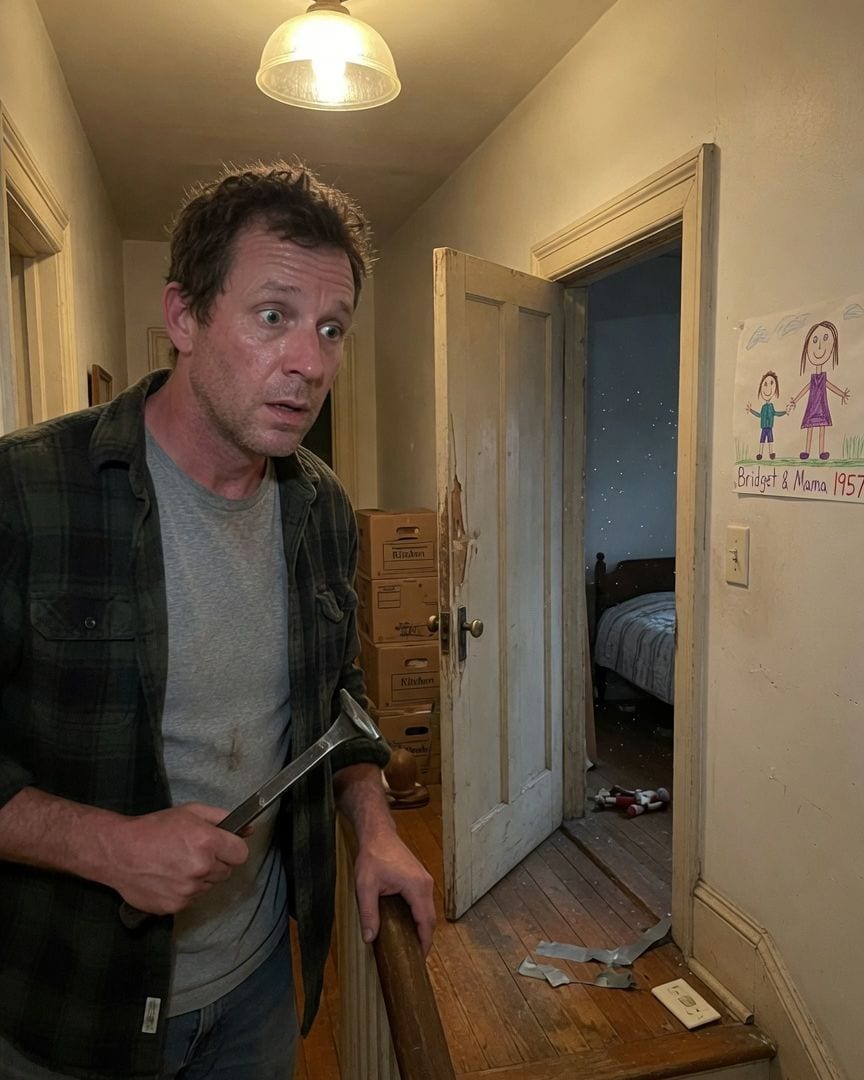
My landing light switches itself off at 9:40 every night. I've watched the switch flick down under nothing, the tape peeled back. The house holds its breath.
My great-uncle's old house was a quiet gift, a place to finally settle. But as I unpacked, a strange worn path on the floorboards led me to a small, barely visible door, perfectly blended into the wall. It was undeniably locked, and felt like a deliberately obscured secret.
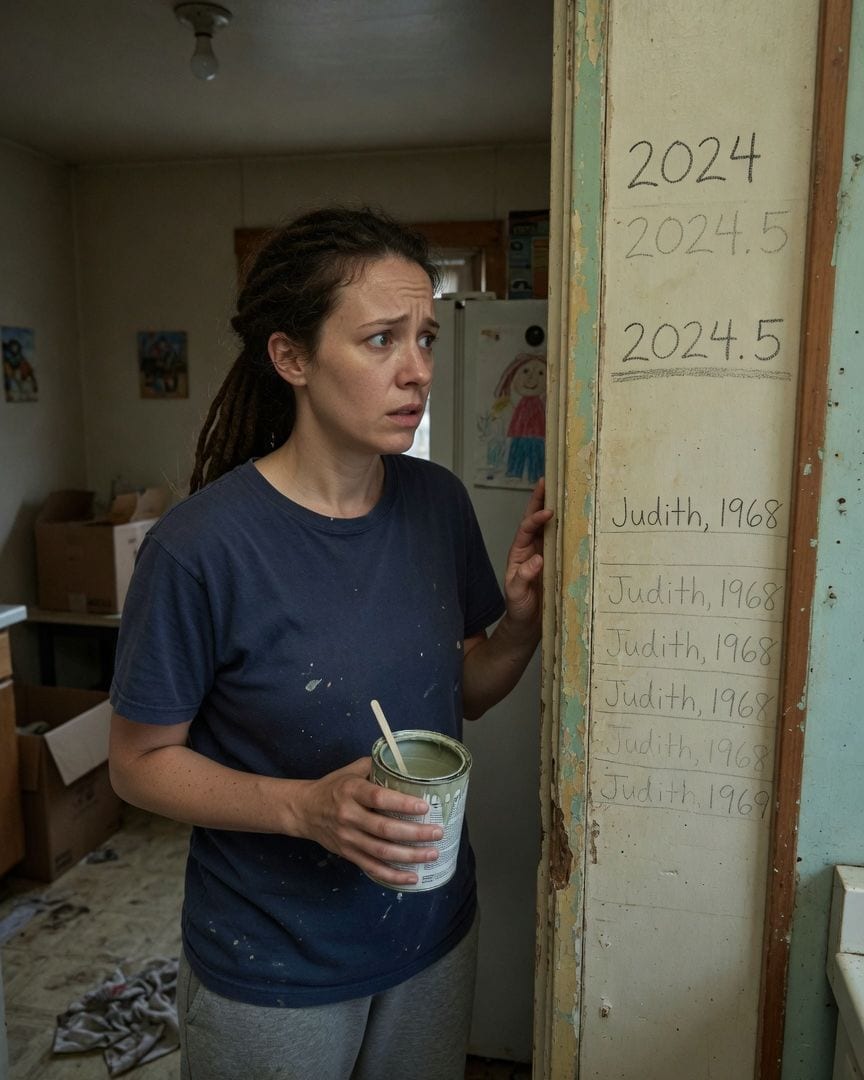
A child's height marks grow on my kitchen doorframe, dated this year, in a house where I live alone.
I moved into my new house, ready for a fresh start, and found a child's old height chart on the kitchen doorframe. The last mark was dated 1968, but a week later, a new one appeared, dated this year, in the exact same looping handwriting. I live completely alone.
My front door has a dented gate and a dead hydrangea. I walked past it six times, trying to reach the corner shop just a hundred yards away. The pavement kept bringing me back to my own porch, and the shop's light never moved.
My morning started like any other, a quick walk to the corner shop from my home at Number 14, Elm Terrace. But after walking what felt like two minutes, I found myself back at my own front door, the shop no closer. I tried six times, faster and slower, but my street kept compressing, refusing to let me leave.
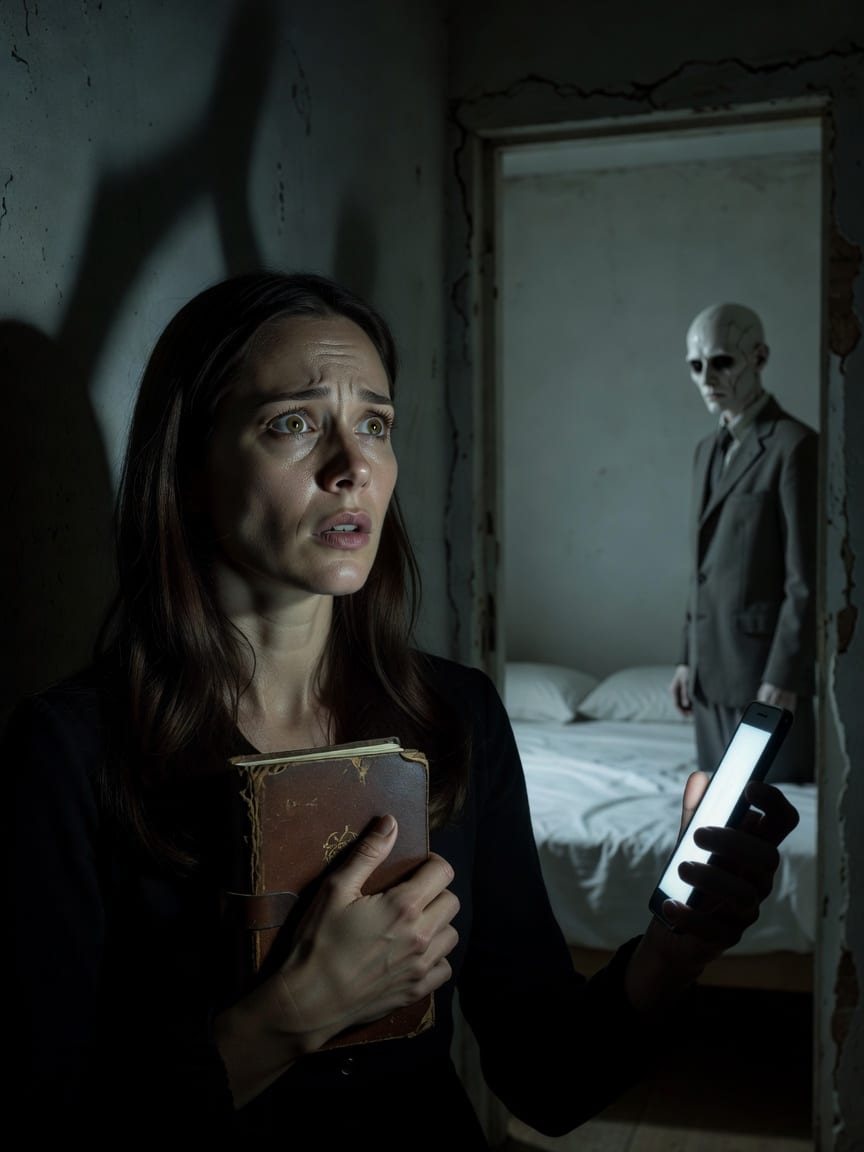
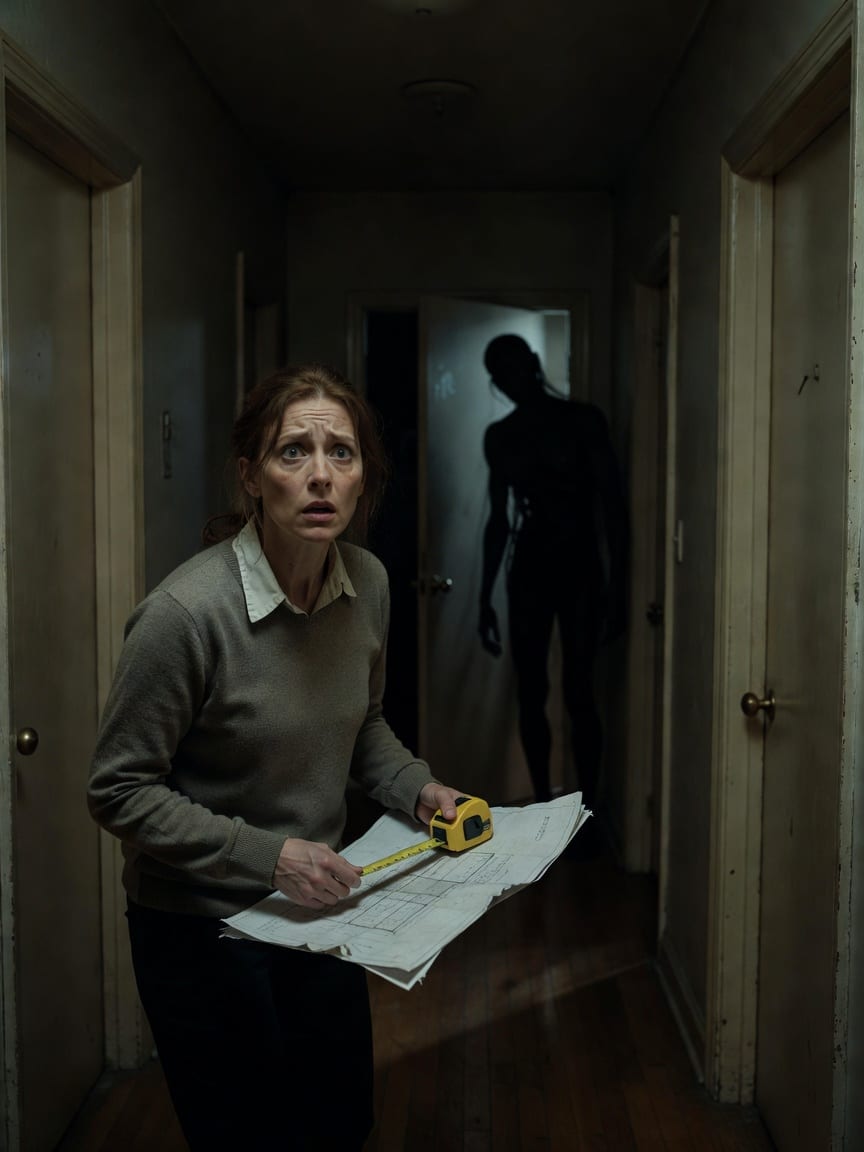
Behind a plastered-over doorway, I found a room. Papered, carpeted, and furnished with a made bed, sealed for decades. The air was dead still, but the bed wasn't dusty. My council tax bill only lists five rooms.
I'm Claire, an architect, meticulously planning my new Victorian terrace renovation. But when I uncovered a hidden room behind a wall, everything I knew about time and decay shattered. The bed was perfectly made, the air still, yet there was no dust, only an unnerving cold.
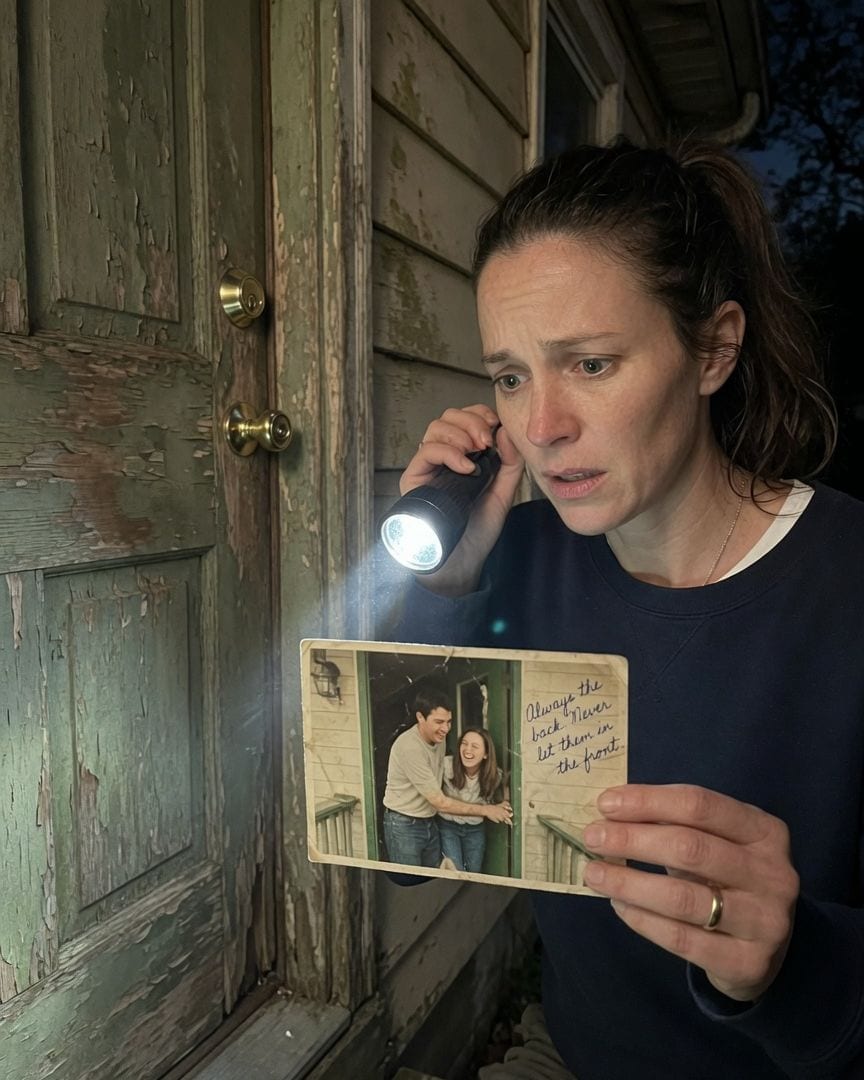
My mother waves us to the front door now. She was missing five days. She says we've always used the front, but the back door, our kitchen door for thirty years, is locked.
My mother, Janet, finally came home after five days, but her overly bright smile and insistence on using the front door felt wrong. For three decades, our family always used the back entrance, which now had a gleaming, new deadbolt. The quiet hum of unease quickly grew into a chilling dread.
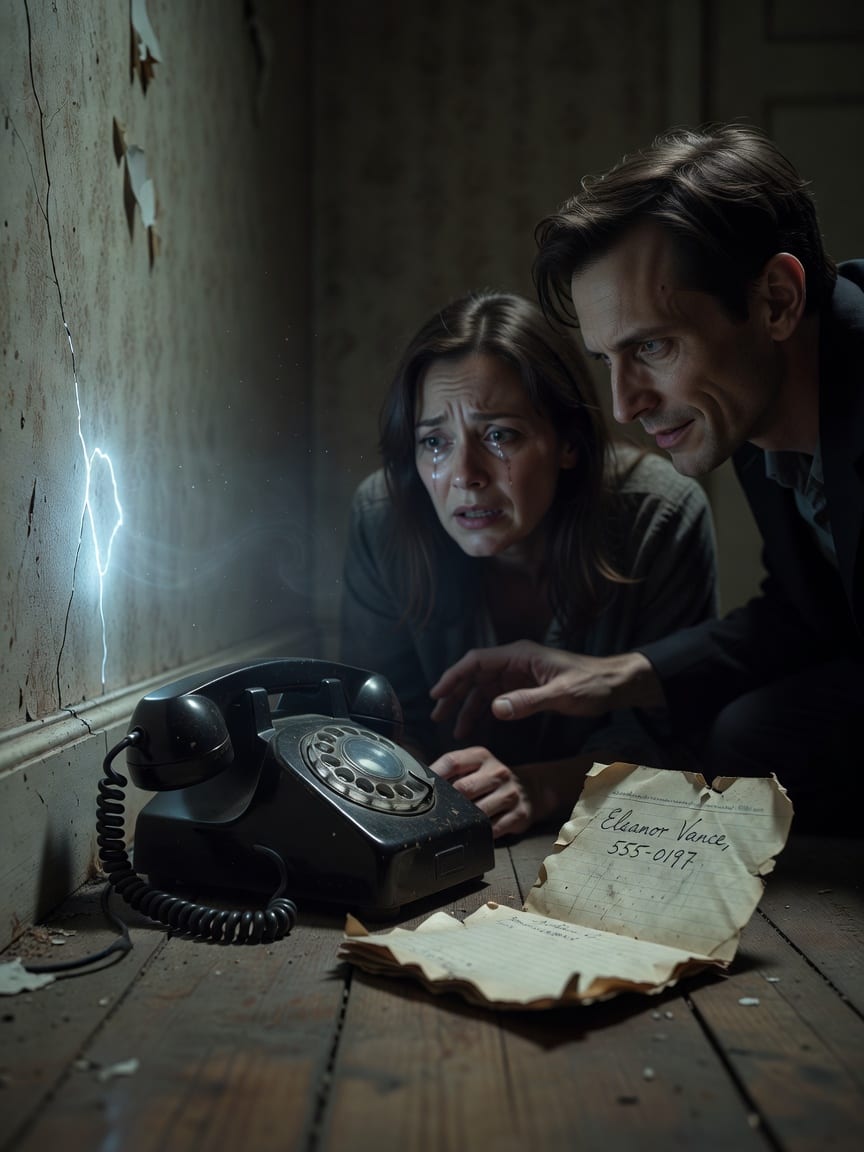
My house's walls ring when I dial a phone number from a 1974 directory. My neighbors said that directory was trash.
I was sifting boxes in my new house when I found an old 1974 telephone directory for my street. It listed my address, 12 Elm Street, under the name "Mr. & Mrs. Sheppard." On a whim, I called the faded seven-digit number. My cell phone rang, but a low, muffled sound also vibrated from the wall beside me.