My church hall always has ninety-seven chairs. The diagram shows ninety-six, and the extra one faces the wall where a cross won't rub off.
The fluorescent lights in St. Jude’s church hall hummed, a low, steady thrum against the rhythmic sweep of my mop.
It was Monday, 6 AM, and my routine was as precise as the lines on the laminated diagram taped to the supply closet door. Ninety-six chairs, arranged in eight neat rows. That’s what the diagram promised.
That’s what I set up every Sunday after service, meticulously aligning each one.
But for weeks now, every Monday morning, I’d found ninety-seven.
The extra chair was always in the same spot, pushed slightly back from the last row, facing the rear wall where the old, faded cross hung. Or rather, where a small, faint cross was marked on the diagram.
It didn't hang there in reality, of course; it was just an indentation on the paper, a scratch.
I’d tried to rub it off with my thumb once, thinking it was a smudge, but it was embedded, a faint, almost invisible etching.
At first, I told myself I was miscounting. Maybe I was tired. So I’d count again. Ninety-six. Then I’d find it. The extra chair.
Always the same standard folding chair, indistinguishable from the others, yet utterly wrong in its placement and persistence. A silent sentinel, defying logic. I’d tried moving it, stacking it with the others. It didn’t matter. Next Monday, it was back.
I started to wonder if Daniel, the new cleaner for the sanctuary, was playing a prank. But Daniel was a good kid, a bit shy. He barely spoke. He wouldn’t mess with my chairs.
My rational mind kept searching for a mundane explanation, but each time, it fell apart. Ninety-six, I’d count. Ninety-seven, I’d find. The cross mark, an indentation on the brittle paper under the laminate, refused to be explained away.
And that chair, sitting there, always just beyond the expected, had started to gnaw at me.
That evening, the extra chair felt like a physical weight in my purse. I couldn’t leave it at the hall.
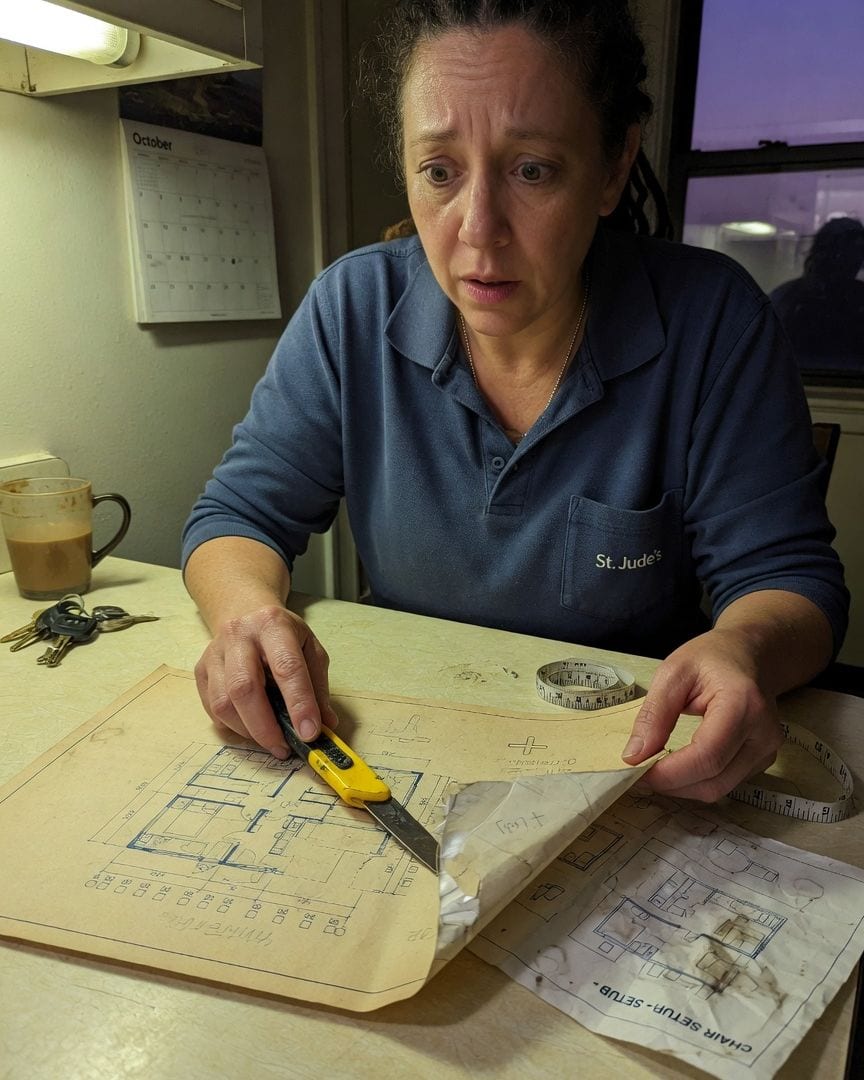
I’d carefully peeled the laminated diagram off the closet door, brought it home, and spread it across my kitchen table, under the harsh glow of my own overhead light. My apartment felt too silent.
I got out a measuring tape, the one I used for curtain hems, and measured the hall’s dimensions from memory, comparing them to the diagram's scale. I double-checked the chair counts. Everything aligned perfectly. Except for that persistent ninety-seventh chair.
And its cross.
I picked at the corner of the laminate, thinking maybe it was just a cheap copy. But the paper underneath wasn't modern printer stock.
It was yellowed, brittle, with thin, hand-drawn lines showing through the faded blue ink of the floor plan. This wasn’t a copy. It was an original blueprint, old, laminated for preservation.
The kind you’d frame and hang in a museum, not tape to a closet door.
The cross. I looked at it again, really looked. It wasn't an indentation from a clumsy pen. It was etched into the paper itself, a deliberate mark.
My fingers traced the faint lines, feeling the tiny valleys in the brittle fibers. A chill prickled my arms. If this blueprint was so old, what else was hidden in its faded lines?
What secrets of St. Jude's, or its past, were embedded in its very fabric?
The mundane explanation – a careless miscount, a forgotten chair, a smudge – had evaporated like morning mist. Now, a new, unsettling curiosity was rising in its place.
I needed to find out who made this diagram, and why that cross was there. It wasn’t a smudge. It was a scar.
The next morning, I was at St. Jude's before dawn, the sky still a bruised purple. I had a small utility knife clutched in my hand, its blade a cold sliver against my palm.
I went straight to the supply closet. In the dim light filtering through the high windows, I found it – a barely visible tear in the laminate, right near the top corner of the diagram.
It was small, a hairline fracture in the plastic shell, but it was there.
My heart hammered against my ribs, a frantic bird trapped in my chest. With trembling fingers, I inserted the knife blade into the tear, carefully, slowly, trying not to damage the fragile paper underneath. I started prying the plastic away.
The laminate peeled back with a soft, tearing whisper, a sound like old paper sighing. My breath hitched.
There, beneath the cross, etched into the brittle paper itself, were a series of faded, almost illegible letters. I leaned in, my eyes straining in the dim light, tracing the faint indentations with a fingertip. It was a name.
A woman’s name, barely discernible, but undeniably present.
The name, after a painstaking hour of deciphering in my kitchen with a magnifying glass, appeared to be 'Chloe Beaumont.' Beaumont. My own surname. I stared at the faint, looping script, a cold knot tightening in my stomach.
A coincidence, I tried to tell myself. Just a coincidence. But the unease deepened, coiling into a tighter, colder knot.
I knew I needed to talk to Simon Rutherford, the church elder. He was a man carved from old oak, solid, quiet, who carried the weight of St. Jude's history in his quiet demeanor.
I found him in the vestry after morning prayers, folding hymnals with meticulous care. I laid the peeled blueprint on the polished oak table between us, pointing to 'Chloe Beaumont.'
Simon, usually so composed, paused. His hands, gnarled with age, stopped mid-fold. A flicker of something unreadable, like a brief shadow, passed through his eyes. He cleared his throat. "Chloe Beaumont," he murmured, his voice surprisingly soft. "Yes, a cleaner.
Long ago. A bit peculiar, I recall hearing. But a good worker." He dismissed the extra chair as "an old superstition, something the older parishioners used to joke about." His placid calm felt too deliberate, too rehearsed. He knew something.
Unconvinced, I began researching. The local library became my second home. Days turned into nights of poring over microfiche archives, dusty church records, old newspapers.
I looked for Chloe Beaumont, for anything unusual, for anything at all connected to St. Jude’s that might explain her name on that blueprint. Nothing concrete.
A few mentions of a cleaner named Beaumont in the 1950s, but no further details.
One evening, leaving the library, my mind heavy with unanswered questions, I drove my usual route home. Elm Street, then Willow. The turns were familiar, ingrained.
But as the streetlights began to feel wrong, too bright, too familiar, a cold dread began to prickle. I recognized the old oak tree at the intersection. The faded sign for the Corner Mart.
And then, there it was, directly ahead, the familiar stone gates of St. Jude’s.
I’d somehow circled back.
My odometer showed I’d driven miles. My fuel gauge had dipped. But I was here. I stared at the church, my heart thudding. It was impossible. I tried again, taking different, deliberate turns, focusing, mapping my route in my head.
Left, then two rights, then a street I’d never taken before. The scenery blurred. The speedometer climbed. But each attempt, each new street, inevitably led me back to the church. The road, impossibly, returned me.
The impossible drives solidified my dread. This wasn't just about a chair. This was about the very fabric of space, twisting around me. I intensified my archival research, now focusing on 'local disappearances' or 'peculiar incidents' near St. Jude's.
I hunched over microfiche readers, squinting at faded reports. I uncovered a handful of newspaper clippings from the 1950s and 60s – vague reports of individuals vanishing without a trace, often dismissed as runaways.
Nothing concrete, but the recurring theme of unexplained absence, always within a few miles of St. Jude’s, chilled me to the bone.
One afternoon, returning to my car in the library parking lot, I found a small, folded note tucked under my windshield wiper. My hands trembled as I unfolded it.
The script was neat, almost antique in its precision: 'SOME THINGS ARE BEST LEFT UNDISTURBED.' A cold dread washed over me, a physical wave of nausea. I scanned the empty parking lot, my heart hammering like a trapped bird.
There was no one. Just the quiet whisper of the wind around the empty cars.
Later that week, Simon Rutherford paid me an unexpected visit at home. He arrived with a store-bought apple pie, his face impassive. His conversation was ostensibly neighborly, discussing the weather, the upcoming church bake sale.
But his eyes kept drifting to the stacks of local history books on my coffee table, the open notebooks filled with my hurried scrawl.
"Still digging into St. Jude's past, Monica?" he asked, his voice soft, almost a whisper, as he accepted the cup of tea I offered. He sat stiffly on my sofa, the pie box on his lap.
"Some histories are heavier than others. Best not to carry too much." He offered a faint smile, a polite gesture, but it never reached his eyes. His gaze was ancient, distant. He knew.
He knew I was digging, and he knew what I was getting close to. The pie tasted like ash in my mouth.
I couldn’t bear the weight of it anymore. The returning road, the anonymous warning, Simon's unsettling visits – it all screamed for an answer. I confronted him after Sunday service, the peeled blueprint clutched in my hand.
The church was emptying, the last few parishioners gathering their belongings, their chatter echoing in the high ceilings.
"Who was Chloe Beaumont, Simon?" I demanded, my voice tight, barely controlled. "Why is her name etched under that cross, in the exact spot the extra chair always appears?"
I told him about the impossible drives, the note, the suffocating feeling of being watched, of something wrong.
Simon’s calm façade, usually so impenetrable, finally cracked. Not with fear, not with anger, but with a profound, ancient weariness. He sighed, a sound that seemed to carry generations of burdens.
He led me to a quiet pew near the altar, away from the last lingering churchgoers.
"St. Jude's… it's built on a difficult place, Monica," he began, his voice low, as if speaking a secret only to the stones around us. "The old ones, they called it a 'thin spot.' The geometry here, it's not always...
fixed."
He explained that the hall occasionally 'folds' in on itself. Not physically, he stressed, but dimensionally. Things, sometimes people, would simply cease to align with the rest of the world.
The extra chair, he revealed, was a kind of anchor, a marker. "It represents the space that's missing, or the person who fills it in another configuration."
The cross, he said, was a warning, a symbol etched by those who knew, to mark the recurring point of anomaly. "It’s where the fold begins, where the world is thinnest."
He then stood, walked to a locked cabinet in his office adjacent to the vestry, and retrieved a heavy, leather-bound ledger. Its pages were brittle, its script meticulous and archaic.
He opened it, turning pages with extreme care, until he found a specific entry. He pointed to it. Dated 1957. My breath hitched. 'Chloe Beaumont. Cleaner. Noted extra chair. Failed to return from duties.' Below it, other names. Similar fates.
Spanning generations. The pattern was undeniable, horrifying in its consistency.
Simon's finger moved down the brittle pages of the ledger, past other names and dates, each a chilling echo. "Chloe wasn't the first, Monica. Nor the last." His finger stopped on an entry from 1902.
The script was even more faded, the ink almost lost to time, but the name leapt out, stark and cold, making my blood run to ice: 'Monika Beaumont.'
The entry detailed an eerie, chillingly familiar sequence of events: 'Noted an extra chair. Inquired of old diagram. Expressed concern over certain local disappearances. Observed by others to be increasingly preoccupied with the hall's peculiar geometry.'
It was my story. My name, a slight archaic spelling, but undeniably mine. Every detail, every step I had taken, every question, was written there. Over a century ago.
Simon looked up, his eyes filled with a profound, ancient sorrow that mirrored my own dawning horror.
"You see, Monica?" he whispered, his voice barely audible, swallowed by the sudden, cavernous silence of the church. "You were always inside it. This place... it remembers. And it repeats. You were never just investigating.
You were always part of the pattern."
Simon closed the heavy ledger with a dull thud that resonated in the silent office, a final, horrifying period mark on the story of my life. "It's not just a flaw, Monica. It's a hunger."
He spoke of the hall as a spatial predator, not sentient, but a recurring topological anomaly with a cyclical appetite. "Those who notice the geometry, who try to understand it, they become part of it."
He explained that the extra chair wasn't merely a placeholder. It was the nexus, the very point where the world fractured. Those drawn in didn't simply vanish or die; they became the 'extra' element.
They became the missing room, the turn in the road that returns you to where you started. They became the chair itself, or the space it occupied, forever folded into the hall's impossible dimensions.
The cross, he revealed, was a family mark, passed down through generations of Rutherford caretakers.
"My ancestors built this church, Monica. And they learned its secret the hard way. We are the keepers of the ledger, the watchers, tasked with warning, but never interfering. Because to interfere is to become another entry."
He looked at me, his face etched with ancient grief, a look that said he’d seen this countless times. "Chloe Beaumont, Monika Beaumont... and now you. The pattern is absolute. You followed the script, just as they did.
The moment you saw that cross, the moment you counted ninety-seven chairs, you were already being drawn in. There's no escape from the script once you start to read it."
I stumbled backward, my mind reeling, rejecting Simon’s horrifying truth. My throat felt raw, constricted. "No," I choked out, a thin, desperate sound. "No, I can't be."
I turned and fled, blindly, out of Simon's office, through the empty nave, the silence of the church pressing in on me, amplifying the sound of my own ragged breaths. I burst out into the late afternoon light, gasping.
My hands shook so violently I could barely insert the key into my car's ignition. It rattled, a terrible, desperate sound. The engine roared to life, a sudden, welcome burst of mechanical sound.
I slammed the car into reverse, tires squealing on the gravel, then sped out of the church parking lot, not looking back. I drove, not towards my home, but away, anywhere, taking random turns, pushing the speed limit.
Left, right, straight, another left. The speedometer climbed, the scenery outside my window blurring into a desperate smear. But a cold, sickening certainty began to settle over me, tighter than any seatbelt. I recognized the gas station on the corner.
The old oak tree. The familiar bend in the road.
I was back. Back at the church gates.
I screamed, a raw, primal sound that tore from my chest, and spun the wheel, accelerating again, driving with a desperate, frantic energy, refusing to accept it.
Mile after mile ticked by on the odometer, the fuel gauge slowly dropping, confirming I was moving, going somewhere. But the world outside my window kept repeating itself, a cruel, mocking loop.
The same streets, the same houses, always ending, inevitably, at the stone gates of St. Jude's. The geometry had closed around me completely. There was no escape.
The dread was absolute, the trap inescapable, and I was merely driving circles around my own doom.
Monica's car was found two days later, parked neatly by the roadside a few hundred yards from St. Jude's gates, out of fuel. Her purse, phone, and keys were inside, untouched.
The police investigated, finding no signs of a struggle or foul play, eventually filing it as another unexplained disappearance. The local news ran a brief story, quickly forgotten.
Simon Rutherford, interviewed by local authorities, expressed his sorrow, remarking only that Monica had been a dedicated cleaner and a quiet soul.
His gaze, however, often drifted towards the church hall, a silent, heavy burden in his eyes, as if he saw something there that no one else could.
A new cleaner started at St. Jude's the following week, a young man named Daniel Coleman, 26. He learned the routine quickly, setting out the ninety-six chairs from the laminated diagram every Monday.
He was a meticulous worker, proud of his efficiency. But every Monday morning, before he started, he would always find ninety-seven chairs.
The extra one, always facing the wall, in a spot he tried repeatedly to scrub clean, where a small, faded cross refused to disappear.
He would count them, frown in confusion, then count them again, muttering about 'someone messing with me.' He would then begin his work, carefully arranging the chairs from the diagram, always ending with ninety-six.
He never thought to look under the laminate.
And the room was always just large enough for ninety-seven.
If this one got to you
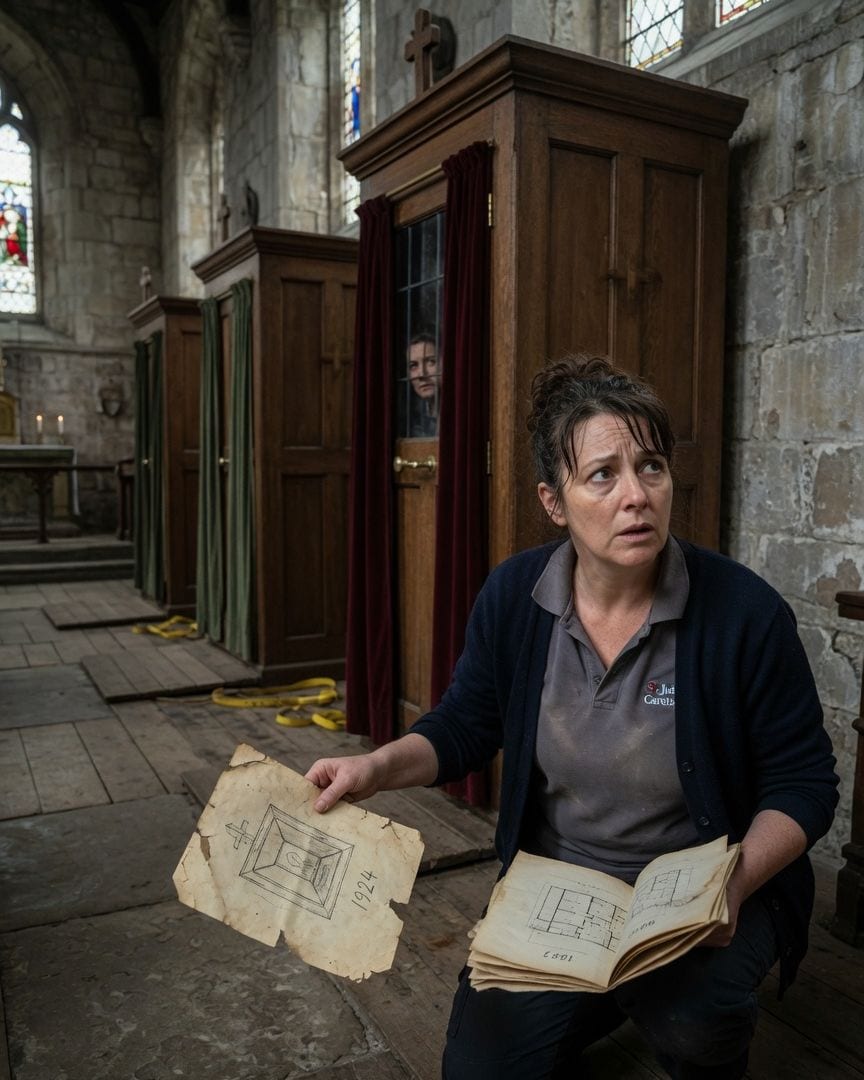
My church has three confession boxes now, but the north transept wall is bare stone. Twice, I heard two voices inside it, when I’m the only one with a key.
As caretaker, my nightly ritual at St. Jude's always included counting two confession boxes. But last night, a third impossibly solid box stood on a wall that had always been bare stone. It wasn't there yesterday, and from its closed curtain, I heard two hushed voices murmuring inside.
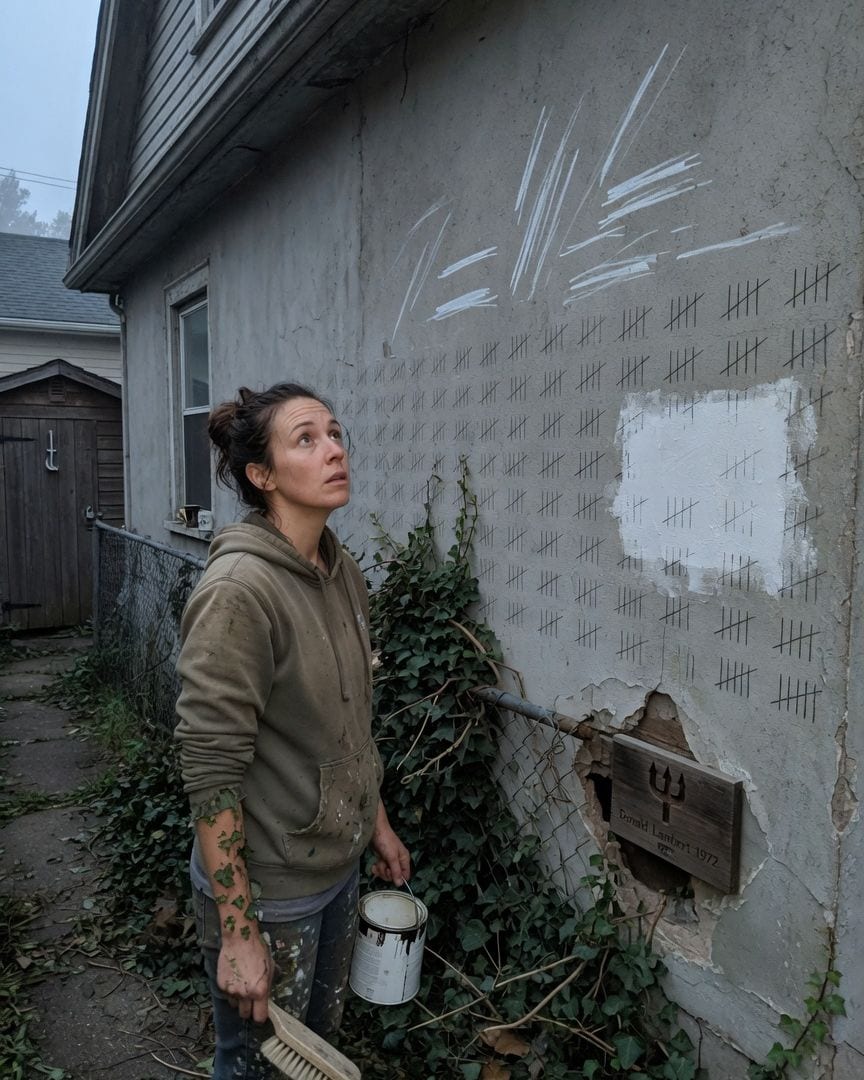
My north gable gets a fresh, stark white mark every dawn. It appears impossibly high, always above the last, and my ladder is locked in the shed.
I finally cleared the dense ivy from my new house's north gable, revealing hundreds of faded tally marks. The next morning, a stark white stroke appeared, impossibly high on the wall, two feet above where I could reach. My ladder was locked in the shed.
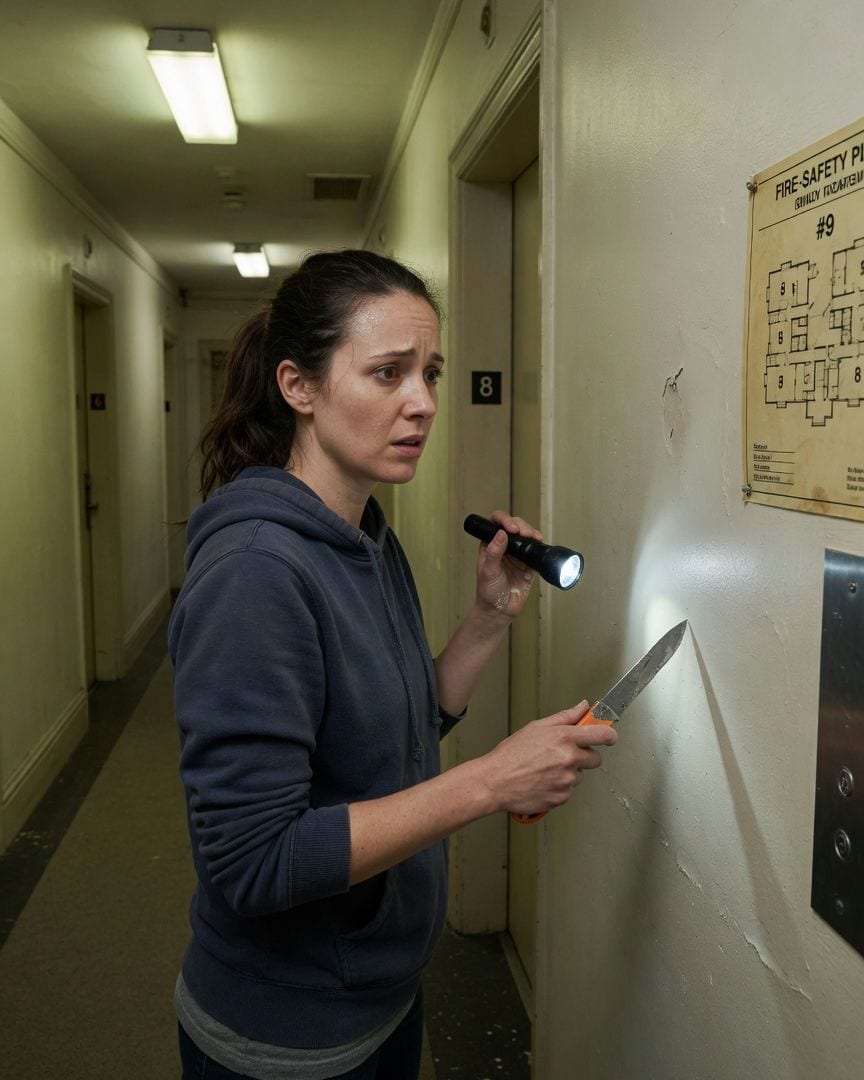
That blank wall in my hallway has a hidden metal plate. Tonight, after eleven years, it just clicked.
For eleven years, my apartment building's fire plan has shown nine apartments on my floor. But I've only ever counted eight doors, the space for the ninth a blank wall. Now, I've found a hidden metal plate behind the plaster, and from deep within, I just heard a soft *click*.
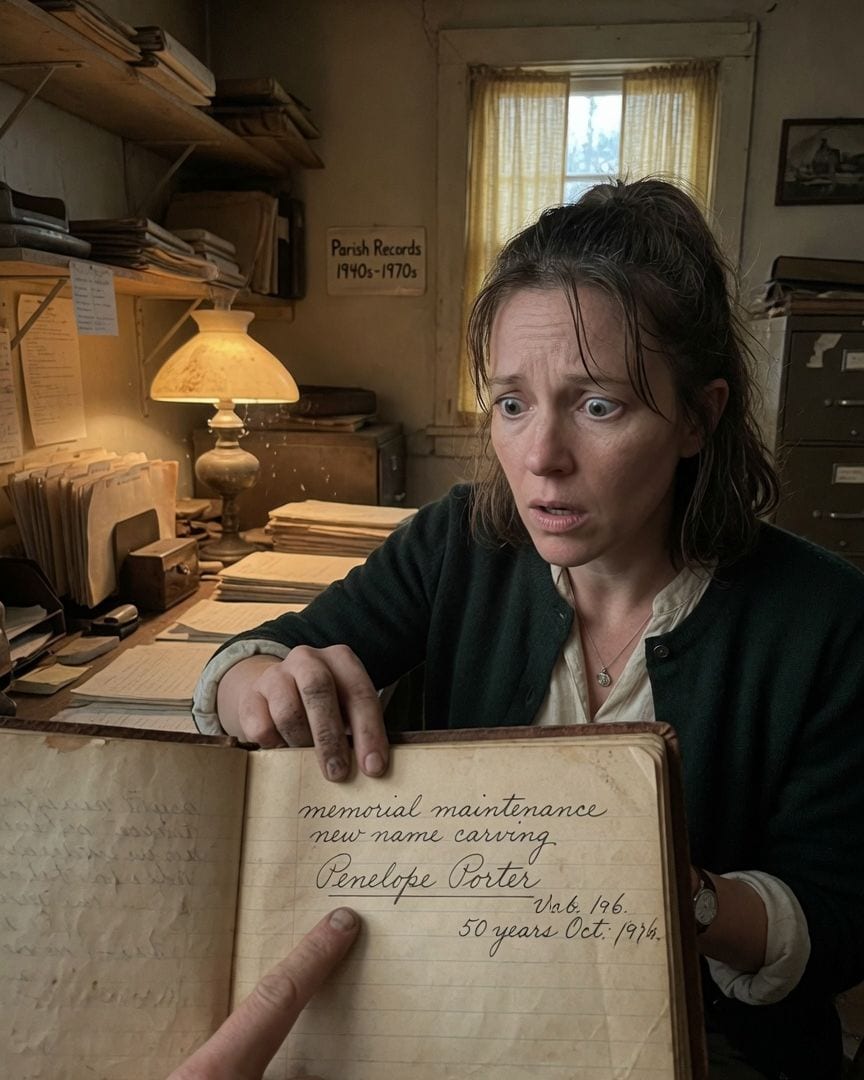
My name is carved on the war memorial with this coming Tuesday's date. The cut is fresh, but the stone inside matches fifty years of age, and a ledger says it was carved exactly fifty years ago.
On a sunny autumn Tuesday, my oldest friend, Gary, urgently called me to the village war memorial. There, carved beneath the names of the fallen, was 'PENELOPE PORTER' with a date from this coming autumn. The fresh carving of my name, dated for a Tuesday yet to arrive, felt like a cold jolt, an impossible message from the stone itself.
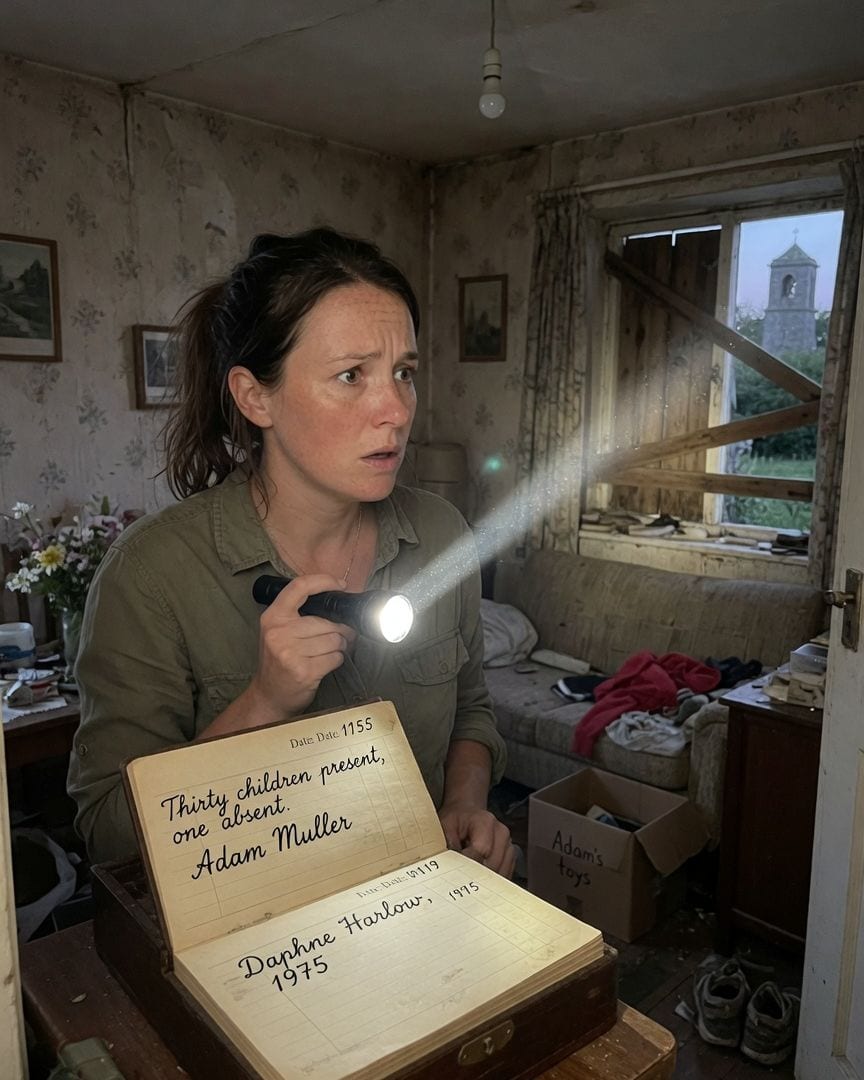
My son rang the old school bell. The attendance register, visible through the boarded window, now shows today's date and his name marked 'absent'.
We moved to a quiet village for peace, but my six-year-old son Adam found the old, boarded-up schoolhouse. Locals warned us, "Never ring the old school bell." That Tuesday, Adam rang it. Later, I saw his name on the school's long-closed attendance register, marked 'absent' in impossibly fresh ink from today.
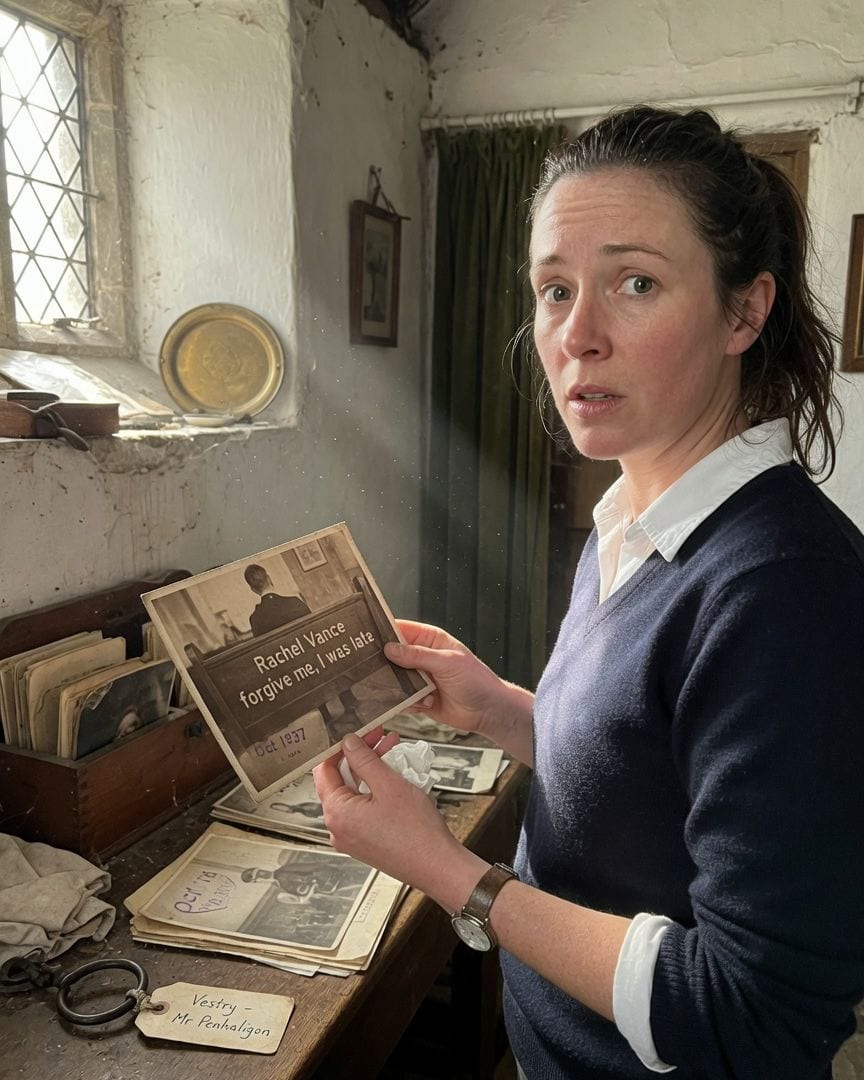
My full name is carved into a church pew from the 1600s. Under it: "forgive me, I was late." The verger says it's older than anyone remembers.
On a quiet morning in a centuries-old church in Zennor, I found my name carved into a 17th-century pew. The ancient timber bore the words ‘Rachel Vance’ and ‘forgive me, I was late’. But a photograph from 1937 revealed the carving was already there, decades before I was born.