My name is carved on the war memorial with this coming Tuesday's date. The cut is fresh, but the stone inside matches fifty years of age, and a ledger says it was carved exactly fifty years ago.
It started with a sunny autumn Tuesday. The air was crisp, the kind of day that makes Sancreed feel like a postcard. Gary Donovan, my oldest friend and the village’s only stonemason, called me at work.
Said I needed to get down to the war memorial. Sounded urgent, not like him.
I met him there twenty minutes later. He was standing in front of the granite slab, a deep frown etched on his face, tracing something with his finger.
The memorial is old, a solemn tribute to the village’s fallen from the Great Wars. Beneath the last name from 1945, there was always just blank stone. Until now.
“Penelope, what the hell is this?” Gary asked, not looking at me. His voice was low, strained.
I walked closer, my gaze drawn to where his finger pointed. There, cut into the grey granite below the last etched name, was ‘PENELOPE PORTER’. And beneath that, a date: October 17th. This coming autumn. This coming Tuesday.
A cold jolt went through me. “Gary, what? Is this some kind of sick joke?” I looked around, half expecting to see someone pop out from behind a tree. “Who would do this?
Who knows my full name and that date?”
Gary finally looked at me, and his eyes were wide, genuinely disturbed. “It’s not a joke, Pen. I wish it was.” He ran his hand over the new carving again. “The cut itself? Yeah, it’s fresh.
Days old, maybe a week at most. Whoever did it used a good chisel, deep and clean.” He paused, then dropped his voice, leaning closer. “But look inside the letters. The stone in there…”
I leaned in, squinting. The granite inside the freshly carved letters wasn’t light, raw stone, as it should have been. It was dark, a deep, fifty-year grey, precisely matching the weathered patina of the surrounding memorial.
It was like the carving had been there for decades, but also, impossibly, just appeared.
Gary pulled his hand away as if the stone had burned him. “It takes fifty years for granite to grey like that, Pen. Fifty years of sun, rain, and cold. This… this doesn’t make sense. It’s fresh, but it’s old.”
He shook his head, utterly baffled. “I’ve never seen anything like it.”
The next few days were a blur of phone calls and dead ends. I tried to find a mundane explanation. I called the parish council first.
Mrs. Henderson, the clerk, was polite but firm: no new carving had been commissioned, certainly not on the war memorial, and definitely not for someone still very much alive.
I pressed her, asked if any rogue masons had been hired, if there was any record of memorial maintenance. Nothing.
I spoke to local historians. They found the idea amusing, then disturbing when I described Gary’s assessment. They had no knowledge of any unusual traditions or requests regarding the memorial.
I even called the local newspaper archives, hoping for a story about a public art project or a strange prank from years gone by. The archivist, Mr. Davies, spent an hour looking. He found nothing.
No mention of my name, no cryptic notes, no stories about mysteriously appearing carvings.
Frustration simmered into something colder. The local explanations were failing, and the memorial stood in the village square, a silent, grey testament to an impossibility.
I decided to try the old parish office, a dusty room in the back of the church hall, rarely used. Maybe some forgotten record, a misfiled note, an old, eccentric instruction.
The air in the office was thick with the smell of old paper and dust motes dancing in the weak sunlight. I started with the ledgers from the 1940s, cross-referencing names, dates, and maintenance logs. Hours passed.
My fingers grew grimy. Just as I was about to give up, disheartened, my hand brushed against a thin, leather-bound book tucked away on a bottom shelf, dated exactly fifty years ago.
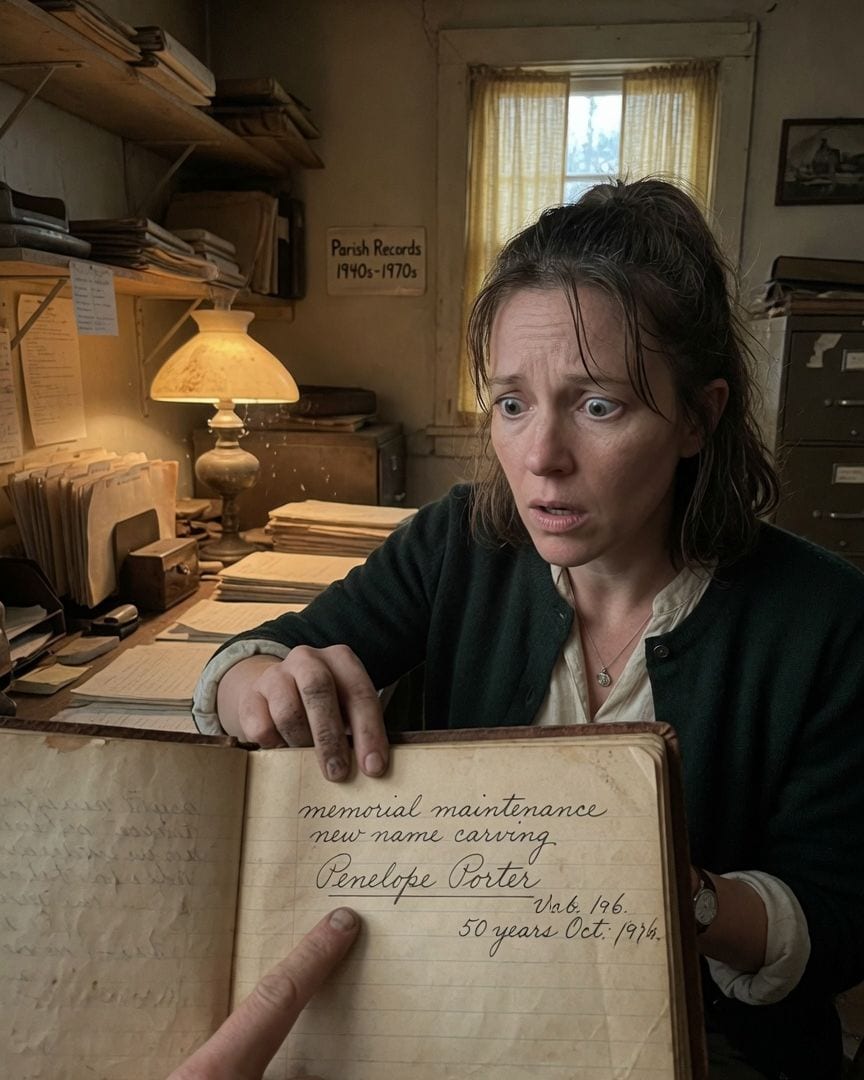
I opened it, flipping through the brittle pages, detailing parish expenses. Most entries were mundane: 'coal for vicarage,' 'roof repair,' 'bread for communion.' Then, my eyes caught a heading: 'memorial maintenance.'
And beneath it, for a date exactly fifty years prior to my own carved date—a specific Tuesday in autumn—an entry written in faded, looping script. My breath caught in my throat. It read: 'new name carving.'
And listed next to it, plain as day, was the name: 'Penelope Porter.'
But that wasn’t right. The actual memorial, for that year, had a different name. A private, killed in action in 1945. Not a Penelope Porter.
I stared at the faded ink in the old church ledger, my finger tracing the name ‘Penelope Porter’ beside a date from exactly fifty years ago, the same impossible autumn Tuesday now carved on the memorial.
A profound, icy dread settled over me, the sense of being singled out, the feeling of an unseen presence watching me from across the decades. The room, once merely dusty, now felt heavy, charged with an unspoken, ancient knowledge.
I closed the ledger, my hands trembling, the silence of the archives amplifying the sudden thrumming in my ears.
The discovery in the ledger propelled me into a deeper investigation. The rational part of my brain screamed it had to be a coincidence, a clerical error, a shared name.
But Gary’s face, the impossible greyed stone, and now this… it gnawed at me. I began researching the ‘Penelope Porter’ from fifty years ago, determined to find a reasonable explanation. The internet offered nothing.
Local records were sparse for that time.
My search eventually led me to Ruth Novak.
Someone at the village shop, after I asked about old Sancreed families, had mentioned she was the last living link to a branch of the Porters, a distant relative of the original Penelope.
Ruth lived in an ancient, crooked cottage on the very edge of Sancreed, nestled against the gnarled woods. The air there felt different, cooler, even on a sunny afternoon.
Ruth, a woman easily in her seventies, with sharp, knowing eyes and a network of fine wrinkles, answered my knock with a suspicious glance. Her house smelled of dried herbs and damp earth.
I explained my unusual quest, showed her photos of the memorial, then the ledger entry. She barely reacted to the first, but her eyes lingered on the faded script of the second.
“The old ways,” she murmured, her voice raspy, almost to herself. She offered me tea, then sat, stirring her own cup slowly. “The calling of the land. It’s deeper than you know, child. Always has been.”
I tried to get her to elaborate, but she spoke in riddles, about things ‘growing out of the soil’ and ‘what the land remembers.’ She seemed to imply a deeper, cyclical force at play.
“The land always claims its due, one way or another,” she said, her gaze drifting out the window toward the woods. “Some are chosen. Always have been.”
“Chosen for what?” I asked, my voice tighter than I intended. “Ruth, who was Penelope Porter, fifty years ago? And why is my name carved on the memorial now, with that same impossible date?”
I pushed the photos of the memorial and the ledger toward her again.
Her composure cracked then, just slightly. A flicker of something – fear? – in her eyes, quickly masked. She took a slow sip of tea. “Some questions are best left unasked, child.
What the land demands… those who are chosen… it’s not for us to understand, only to… acknowledge.” She wouldn’t say more, just shook her head, a weary, knowing look settling over her face.
I left feeling more unnerved than enlightened, but certain Ruth knew something. More than that, she seemed to know me.
Days later, the unease intensified. I was walking through the bustling village market, trying to shake off the lingering sense of dread, when a woman I didn’t recognize stepped directly into my path.
She was perhaps in her mid-forties, with tired eyes but an unnervingly solemn expression.
“Penelope Porter,” she said, her voice quiet but clear, cutting through the market chatter. She spoke my full name, the complete one, with an unsettling intimacy, as if she’d known me for years.
“I am truly sorry for what’s to come.”
I froze. “I’m sorry, do I know you?” I asked, my heart beginning to thump. “How do you know my name?”
She didn’t answer. Her face was etched with a strange, sincere sorrow. She held my gaze for another moment, then, without another word, she turned and disappeared into the stream of people.
I stood there, stunned, watching the spot where she’d been. By the time I recovered, she was gone. I tried to find her, pushing through the crowds, but she simply wasn’t there.
Shaken, I hurried home. That evening, as darkness fell, my landline phone rang. It’s an unlisted number I rarely use, mostly for spam calls that somehow find their way to it. I almost didn’t answer. But something compelled me.
I picked it up. “Hello?”
A calm, measured voice on the other end said, “Penelope Porter.”
Nothing else. Just my name, spoken with that same unsettling intimacy the woman in the market had used. Then, a click. The line went dead.
The receiver felt like a block of ice in my hand. The dread, which had been a low hum, suddenly became a living, breathing thing. It wasn’t just an old carving, an impossible date, a strange ledger entry anymore.
I wasn’t just an observer. I was the target.
I immediately returned to Ruth Novak’s cottage, the chill of the evening clinging to my clothes. The tiny bells on her door chimed as I let myself in, not waiting for an invitation.
Ruth was sitting by the hearth, her back to me, the crackle of the fire the only sound.
“Ruth,” I began, my voice trembling, barely holding it together. “There was a woman in the market today. She knew my name, my full name. She said she was sorry for what’s to come.
And then my unlisted phone rang, and a voice just said my name and hung up.” I felt frantic, my words tumbling out. “This isn’t a prank, Ruth. Someone knows my name, knows my date. What is happening?”
Ruth didn’t turn around immediately. She just sighed, a deep, rattling sound that seemed to carry the weight of years. Finally, she slowly turned in her chair, her face grim, no longer offering evasions. She looked utterly drained.
I laid out all my evidence on her small, ancient table: the blurry photo of the impossible carving on the memorial, the handwritten copy of the ledger entry, my phone with the unanswered call log. “It’s all connected, isn’t it?”
I demanded, the last shred of my composure fraying. “The fresh cut, the greyed stone, my name in a ledger from fifty years ago, the other Penelope Porter, the apology, the call… Tell me.”
Ruth looked at the photos, then at me. Her voice, when she spoke, was barely a whisper. “Certain names, Penelope. Certain families. They are… chosen. By the land itself.” She waved a dismissive hand at my photos.
“It’s not malicious, not in the way you mean. It’s a cycle. An ancient taking, tied to the very soil of Sancreed. It’s always been here.”
She explained that the carvings, the impossible ones like mine, weren’t human acts. “They are the land’s way of marking its choice. They appear instantly, in a moment. The greyed stone… that’s not age, child. That’s a sign.
A sign of the deep roots of the cycle, how long it has been connected to this place, to your bloodline.” She paused, her gaze steady on mine. “The taking is always on that specific Tuesday in autumn.
Not violent, no. A disappearance. A merging. A removal from this world, into another, or into the land itself.”
“And the apology? The phone call?” I whispered, a chill creeping through my veins.
“Those who have witnessed the cycle before, or whose families have been touched by it, they are… compelled,” Ruth said, her voice flat, almost robotic. “They deliver the warning.
It’s a ritual, a passing down of knowledge, generation to generation, of the marked families. A courtesy, you might say, to acknowledge the inevitable.”
Ruth Novak, her face pale but resolved, reached for a dusty, leather-bound book on a high shelf. It was thick, heavier than it looked, and its cover was worn smooth in places from countless hands.
“This is the true record,” she said, her voice now firm, handing it to me. “Look at the autumn entries, fifty years apart.”
My fingers trembled as I took the book. The leather felt cold, ancient, almost alive. I opened it, the pages rustling with a dry, papery whisper.
Inside, meticulously handwritten entries detailed births, deaths, and unusual ‘departures’ in the village, spanning centuries. The script changed subtly over the years, but the intent was clear.
I began to flip through, my eyes scanning the dates, my heart pounding a frantic rhythm against my ribs. There it was. A chilling pattern.
Names, often with unusual surnames, or phonetic echoes to my own, or Ruth’s own, disappearing on specific autumn Tuesdays. Precisely fifty years apart. Each entry was vague, unsettlingly so. ‘Departed.’ ‘Vanished.’ ‘Merged.’
My breath hitched with each discovery, each confirmation of what Ruth had just told me. It wasn’t a coincidence. It wasn’t a prank. It was a recurring, horrifying truth.
Then, my gaze fell on an entry from exactly fifty years ago, dated the same autumn Tuesday now carved on the memorial. The one Gary had pointed out. The one I had seen in the ledger.
My eyes locked on the stark, terrifying line. It read:
‘Penelope Porter. Taken.’
The blood drained from my face. The pages swam before me, the words a cold hammer blow to my chest. It wasn’t just a pattern that touched other families; it was my pattern, my lineage.
And the apology from the stranger wasn’t a warning of something that might happen, but an acknowledgment of what will.
“My name? Taken?” I whispered, the ancient register still open in my hands, the terrifying words staring up at me. My voice was thin, reedy, barely my own.
Ruth confirmed it, her voice heavy with sorrow, her eyes fixed on the flickering fire. “The Penelope Porter from fifty years ago was your great-aunt, a distant cousin. She vanished without a trace, just like others in our lineage.
The names aren’t always identical, but they’re echoes, a ‘calling’ to a specific bloodline.”
She reiterated that the carvings, the apologies, the calls—they were all part of the ‘marking’ process, not human acts. “The greyed stone isn’t human work. It’s how the land itself acknowledges the chosen.
The ‘taking’ is not violent, not like you understand it. It’s a disappearance, a merging with the land, a removal from their world. A sacrifice the land demands, ensuring its fertility, its peace, its… continued existence.”
Ruth then looked directly at me, her gaze piercing. “I myself received an apology in advance many years ago, when I was younger. But I was spared.
I wasn’t the primary ‘mark’ in my generation, though I was close enough to be warned. My grandmother, she passed down a small, dangerous secret. A way to temporarily deflect the attention, to break the cycle, if only for oneself.”
My specific Tuesday was only hours away. The sun was already beginning to set, casting long, menacing shadows through Ruth’s cottage window. My blood ran cold, then hot with a desperate, primal will to survive.
“The secret,” I demanded, my voice raw. “Tell me.”
Ruth hesitated, her face a mask of conflict. “It’s incredibly dangerous, child. You challenge something ancient, something that has always simply… been.” But she saw the fierce resolve in my eyes, the terror, the desperation. Finally, she sighed.
“A ritual of ‘rejection.’ It must be performed at the memorial, on the night before the marked date. You must physically deface the carved name.
It’s a direct challenge to the presence, to the land itself, to what marks the stone.”
Armed with Gary’s smallest stonemason’s chisel and hammer—tools I’d borrowed under the pretense of wanting to learn a new skill—I crept to the memorial under cover of darkness. The village was asleep, silent except for the rustle of leaves.
As I approached the granite slab, the air grew heavy, thick with an unseen presence. A low, resonant hum vibrated through the ground, up through the soles of my shoes.
I felt an immense, ancient pressure settling around me, a cold awareness that prickled my skin.
I found my name, glowing faintly under the dim streetlight. My hands trembled, but I raised the chisel, placing its tip against the first letter.
As I brought the hammer down, the stone resisted, almost vibrating beneath the tools, the sound of the strike muffled, swallowed by the heavy air.
A deep, resonant whisper, using my full name – Penelope Porter – emanated from the granite itself, not angry, but impossibly calm, attempting to dissuade me, to pull me into its embrace.
It was a voice from deep within the earth, ancient and vast.
I pushed through the terror, forcing myself to strike again, and again. The whisper grew in intensity, weaving through my mind, a seductive promise of peace, of belonging.
The very ground seemed to breathe around me, a cold wind whipping my hair, even though no breeze stirred the trees.
With a final, desperate strike, my last reserves of strength, I managed to chip away a significant portion of my name, blurring it, defacing the clear letters. A jagged scar now marred the smooth granite.
I barely made it home, collapsing into bed, physically and emotionally drained. The hum was gone. The pressure had lifted.
I fell into a deep, dreamless sleep, waking up the next morning, my specific Tuesday, feeling a profound sense of emptiness, but also a fragile, hard-won freedom.
I drove back to the memorial. My name was still visible, but clearly defaced, chipped away, the date remaining beneath it like a grim trophy. Later that afternoon, Gary called, his voice bewildered. He’d seen the memorial.
“Someone tried to remove your name, Pen,” he said. “But the greyed stone… it still has its impossible age. I can’t explain it.” He just repeated that, over and over, his voice a drone of incomprehension.
I never told anyone the full story, not really. How could I? Who would believe me? I carry the weight of what I know, forever changed.
I moved away from Sancreed a few months later, seeking a quiet anonymity in a city far from any ancient, hungry land.
But every autumn, on that specific Tuesday, I feel a faint chill, a ghost of the presence that once reached for me, a phantom hum in the air. I know I escaped, but I also know the pattern continues, somewhere.
Someone else, in another village, another bloodline, is being marked.
I sometimes wonder about Renee, the stranger who apologized, and if they too found a way out, or if they were simply a messenger, part of the cycle, forever bound to its grim rhythm.
The old stone memorial in Sancreed stands, quiet and unchanged, its granite listing the fallen. Below the names of 1945, a partially defaced carving still reads 'Penelope Porter,' with a date from a past autumn.
Every fifty years, the parish records show a brief, unexplained entry for a 'taking,' always on a Tuesday in autumn. And sometimes, a stranger will apologize to someone they've never met, by name, for something that hasn't happened yet.
Is that so?
If this one got to you
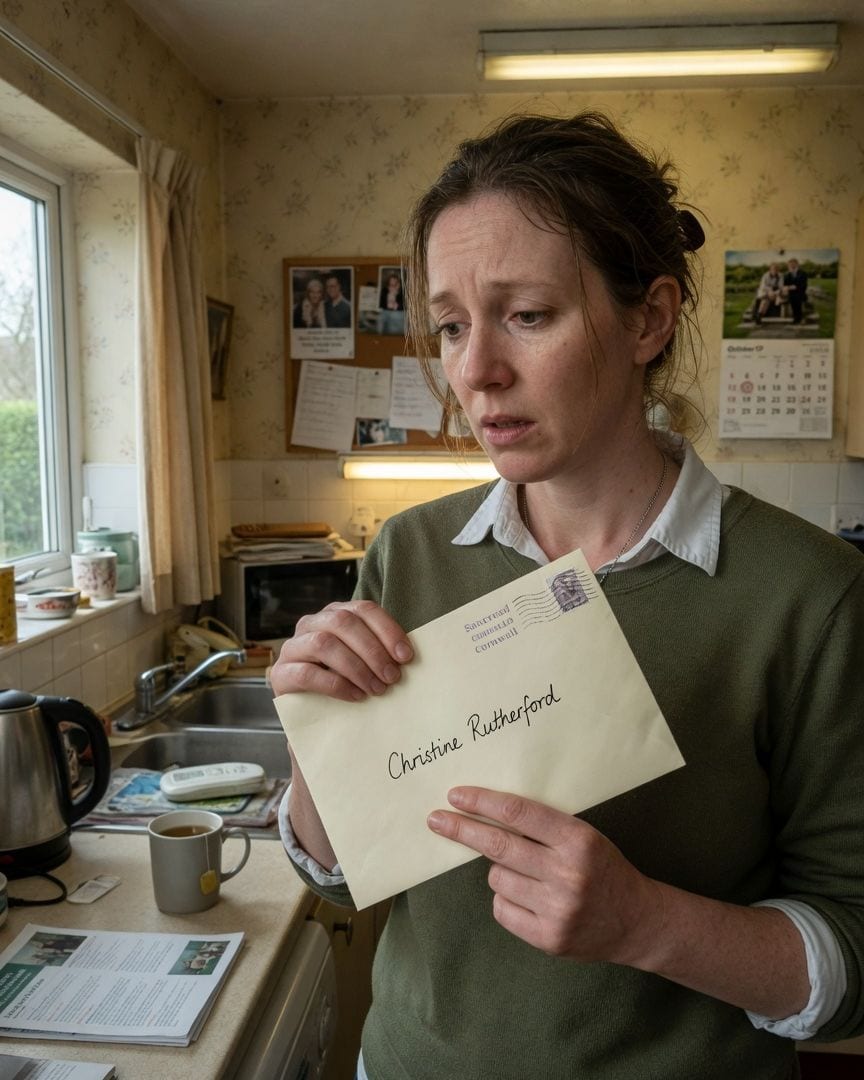
My name was carved on the village war memorial. Below it: 'October 17th'. The fresh cut looked fifty years old.
I drove to Sancreed to meet my friend Kenneth, a stonemason, who had called me with an urgent tone I'd never heard before. He met me at the village war memorial, a granite obelisk listing the fallen, and pointed to a fresh carving. Beneath the last name of a 1945 soldier, my name, 'Christine Rutherford', was etched, followed by 'October 17th' — a date this coming autumn.
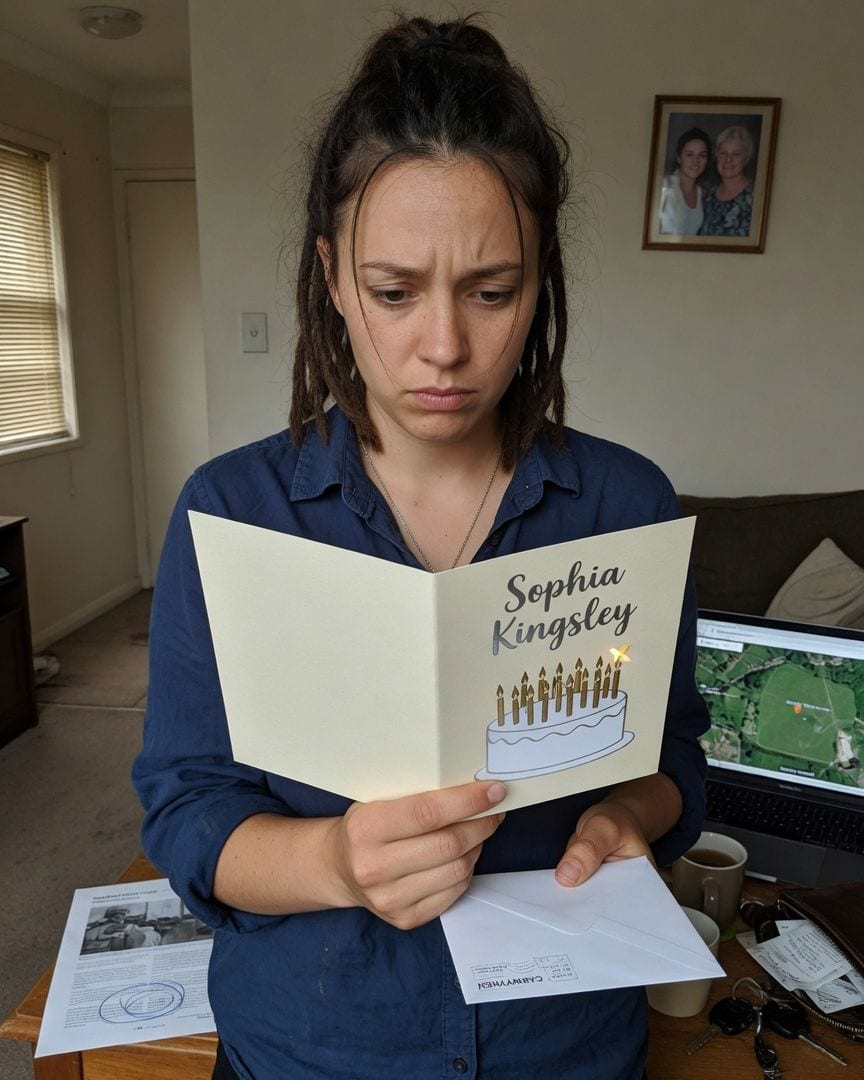
An empty field sends my birthday cards. This year, one candle was crossed out.
My birthday card always arrived a day early, a familiar comfort for five years. This year, a tiny silver 'X' marked one of the thirty candles, and the postmark read 'Carwynnen.' It was an empty field miles from anywhere, with no post office, and no one to send a card.
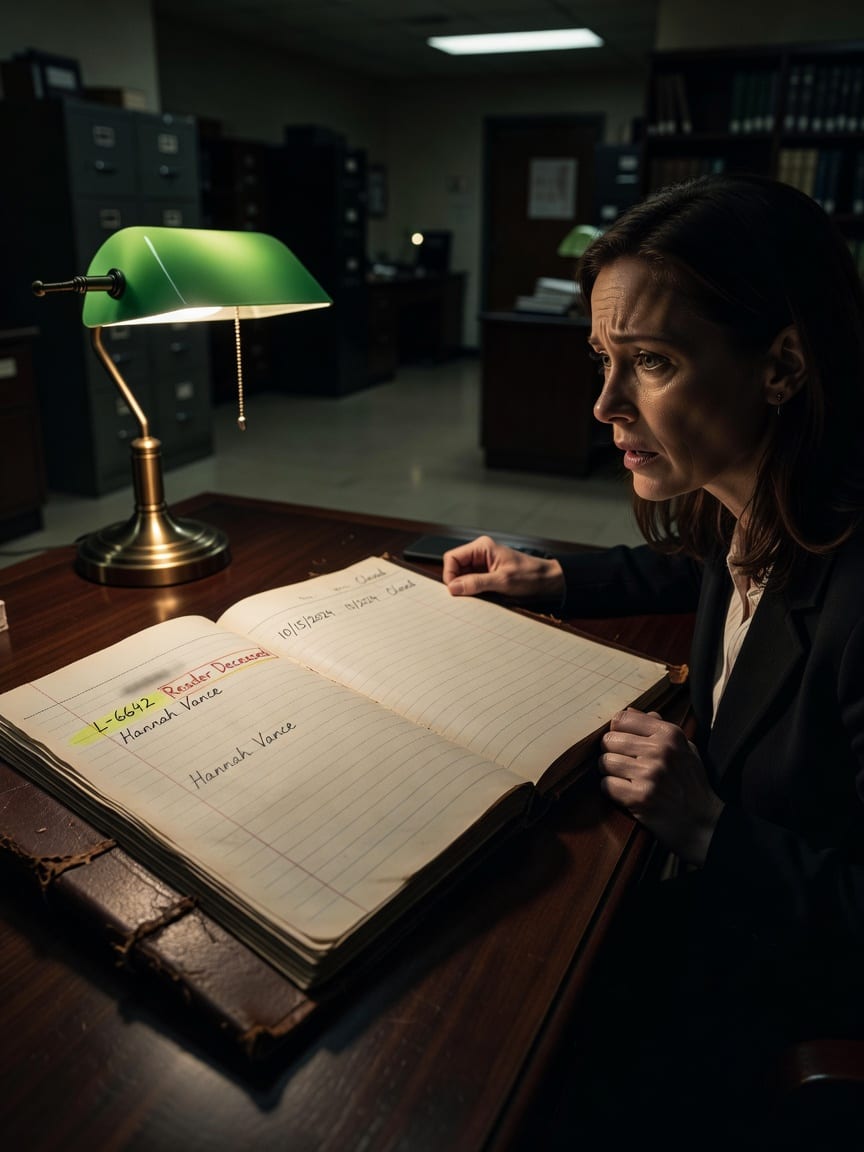
My library card number L-6642 was issued to me at seven — and the ledger shows that number has marked a reader 'deceased' every twelve years since 1949.
Returning my late father's library card to the old town library felt like a small act of closure. But the senior librarian's ancient ledger revealed a chilling pattern of 'reader deceased' entries tied to specific card numbers and borrowed books. My unease turned to cold dread when I secretly found my own name penciled in, marked for a future 'reader deceased' entry.
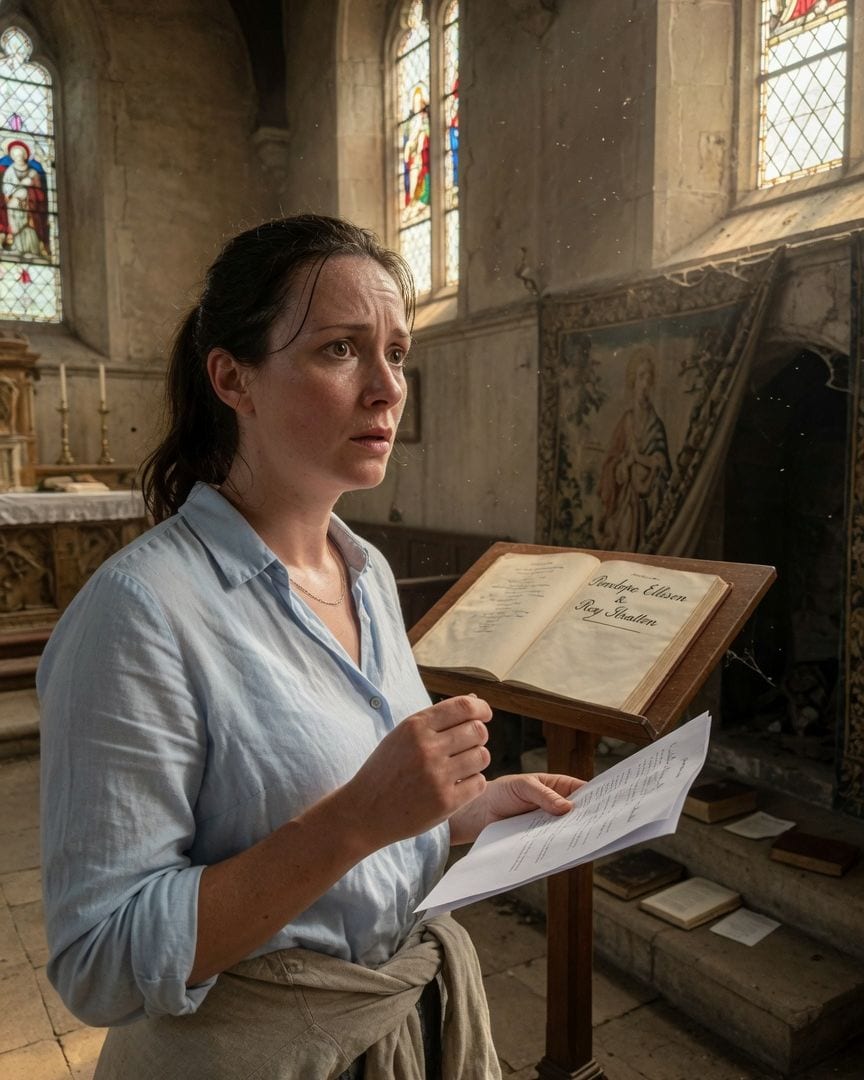
The church's banns book shows a wedding notice, republished every three weeks. Same names, fresh ink. The marriage was never solemnised.
As a newcomer to Marne, I noticed the curate quickly hide a page in the church's banns book. It showed a wedding for 'Penelope Ellison' and 'Roy Stratton' with fresh ink, yet I could find no record of them anywhere in town. The curate's dread-filled warning to leave "some things undisturbed" made the phantom names feel chillingly real.
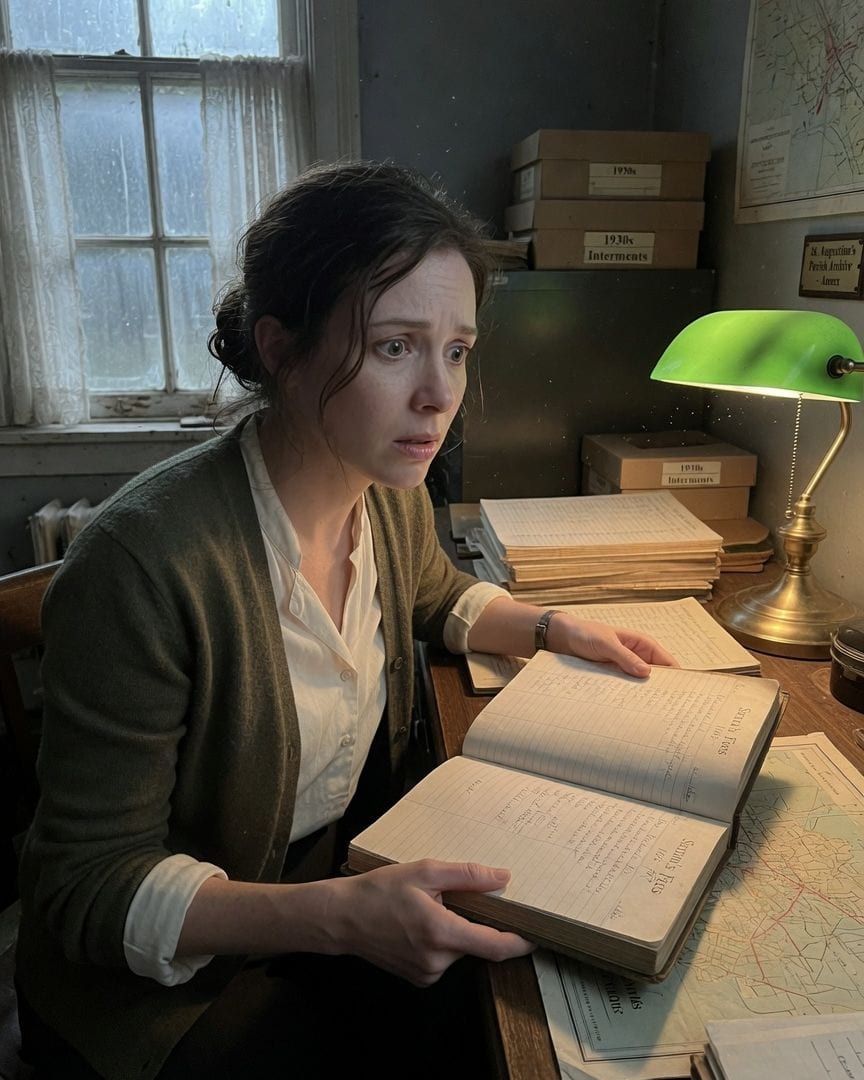
Our churchyard closed in 1974. But the sexton's book shows new graves every month, paid by families whose names are on stones from the 1930s.
As Oakhaven's new archivist, I expected a quiet life of dusty ledgers and ancient records. But a current entry in the sexton's fee book listed a "new burial plot" paid last month for Theresa Romano, who died in 1931. The town ordinance closed the churchyard to new burials in 1974.
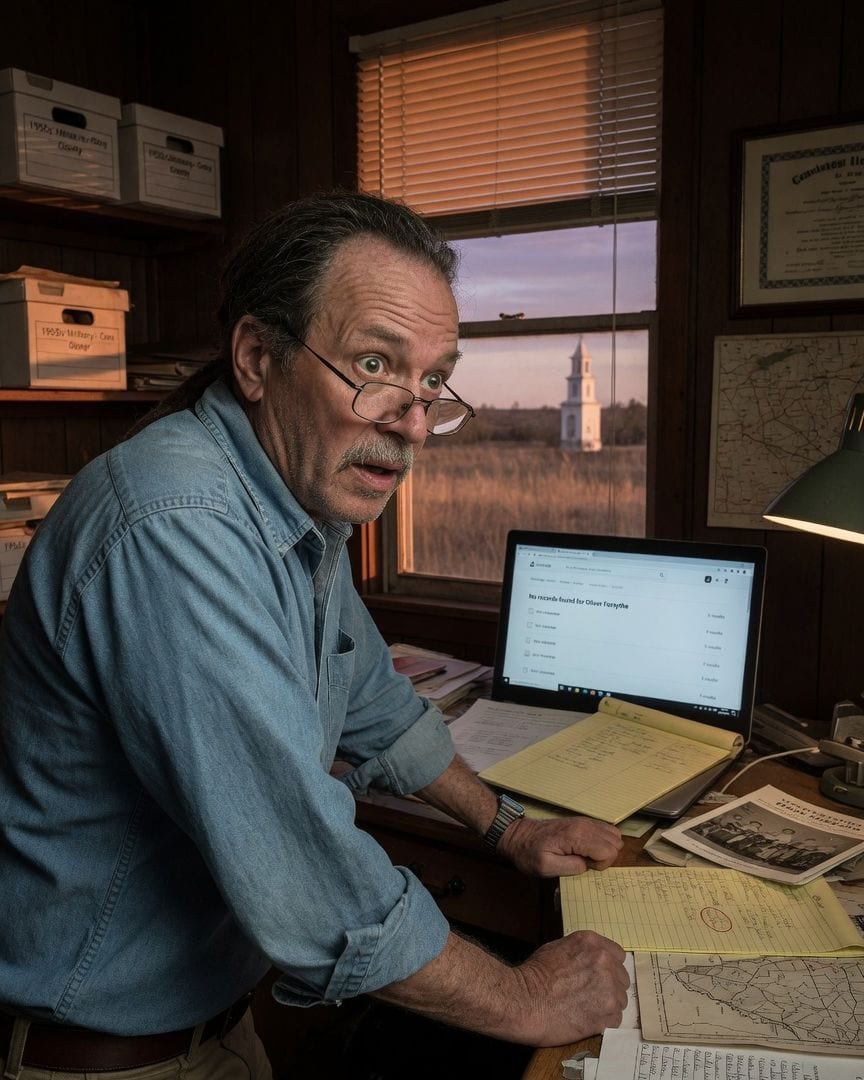
On his final project, a historian found forty-one Cold War headstones, all with names but no death dates.
Approaching retirement, lineage historian Owen Sarkis took on one final project: solving the mystery of the 250th Chemical Company, a unit that vanished after a single 1955 parade. His search led him down Carolina backroads to a lonely, weathered chapel, behind which lay forty-one identical gray headstones in neat rows. Each stone bore a name, but chillingly, not one had a date of death, a silence louder than any inscription. Then, on one stone, he found a small, industrial metal plate bearing a cryptic code and a symbol he recognized from a declassified document on 'unconventional materials handling.' The true nature of these 'graves' began to curdle in his mind, suggesting something far colder than death itself.