An empty field sends my birthday cards. This year, one candle was crossed out.
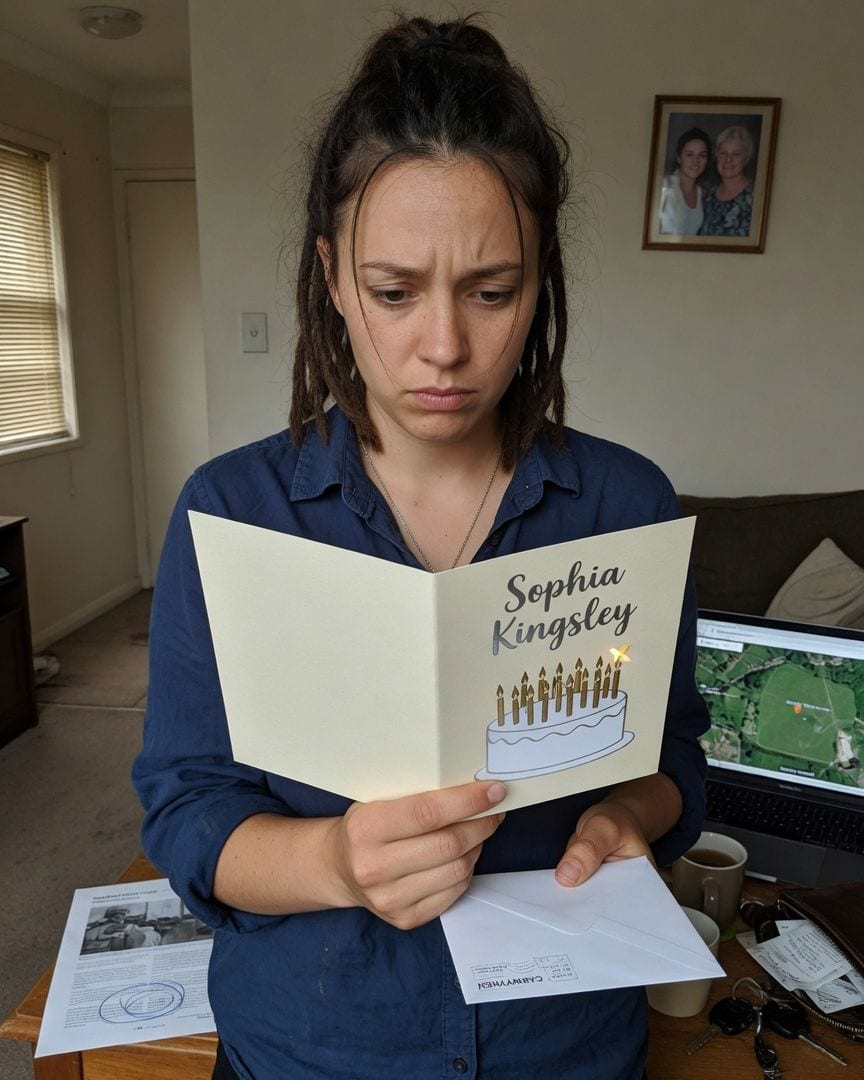
The envelope felt familiar, almost comforting, lying on my doormat. June 9th. A day early, just like it always was. Five years now, the card arrived the day before my birthday, without fail.
I picked it up, ran my thumb over the thick paper. My name, ‘Sophia Kingsley,’ elegant in silver ink, stared back from the front.
Inside, the usual illustration: a simple white cake with thirty lit candles, the flames rendered in shimmering gold. But this year, something was wrong.
Faint, almost imperceptible against the glossy paper, a tiny silver ‘X’ had been drawn over one of the candles. Just one. My rational mind tried to explain it away: a printing error, a child’s doodle.
But the precision of the mark, the perfect, almost delicate cross, and the way it shimmered faintly, exactly like the silver of my name, made those explanations feel flimsy. I flipped the envelope over. No sender’s address, as usual.
But the postmark, clear and stark, read ‘Carwynnen.’ Carwynnen. I knew that name. It was an empty field, miles from anywhere, with nothing but a crumbling stone monument. No houses, no post office, no one to send a card.
The crossed-out candle on the cake, an impossible mark from an impossible place, snagged in my thoughts and refused to let go.
I stared at the card for a good ten minutes before finally tucking it into my purse. This wasn’t a prank.
The silver ink wasn't just a pen mark; it felt embedded in the paper, like it was part of the original design. I needed to know who – or what – was sending these.
The post office seemed like the logical first step, however futile it might feel. Ronald Larsen was behind the counter, exactly where he always was at 10 AM on a Tuesday. I slid the card across. “Morning, Ronald.
Can you tell me anything about this postmark? Carwynnen?” He picked it up, turned it over, and peered at the stamp through his bifocals. His brow furrowed for a second, then smoothed. “Huh. Yep, that’s Carwynnen alright. Specific grid reference.
Don’t get a lot of mail from that one, I’ll tell ya. Rural quirk, maybe. Some farmer dropping off his mail at a roadside box that happens to be on that grid.” He shrugged, handing it back.
“Nothing unusual about the stamp itself. Legit.” Ronald’s nonchalance did nothing to quell the growing knot in my stomach. A farmer? In an empty field?
I thanked him, trying to keep my voice even, and walked out into the sharp morning air. Back at my apartment, I pulled up satellite maps of the area. Ronald was right about the grid.
The map showed vast green, crisscrossed by faint dirt tracks. In the middle, a tiny, almost imperceptible grey speck. The monument. Nothing else. Not a single building for a mile in any direction.
I typed ‘Carwynnen Stone’ into the search bar, feeling a faint tremor. It led me to the local historical society’s digitized archives.
Tucked away on a back page of an old pamphlet, a single paragraph referred to the ‘Carwynnen Stone’ and vague, local superstitions about ‘marked names’ whispered in connection with the site. The pamphlet dismissed them as quaint folklore.
There was a blurry, distant photo of the monument, almost swallowed by overgrown grass. I zoomed in, but it was too indistinct to make out any detail. But the words, 'marked names,' echoed in my head.
The unease was a physical presence now, cold and sharp in my chest. I drove. The road to Carwynnen was narrower than I remembered, winding through dense woods that eventually gave way to open fields.
The air grew still as I got closer, heavy and silent, as if the very sound was being swallowed by the land. I parked on a verge, got out, and walked across the damp grass. The field was vast, desolate.
In the distance, half-hidden by a rise, I saw it: the fallen monument. It was much larger up close, a grey slab of rough-hewn stone, half-buried, weathered by centuries of wind and rain. The surface was cold under my palm.
I ran my hand over it, feeling for any anomalies, any rough patches that might indicate a mark. My fingers snagged. I knelt, pushing away handfuls of damp moss and clinging dirt. Faint lines emerged, shallow carvings.
Geometric patterns I didn’t recognize, ancient symbols that looked almost like a forgotten language. And then, my breath caught. Etched into the stone, clear despite the erosion, were letters. My full name. ‘Sophia Kingsley.’ Below it, a date.
Not a birth year, not one I recognized, but a specific day and year that predated my own existence by decades.
The sheer impossibility of it, my name on that ancient stone, left me winded.
I took dozens of photos, the camera flash stark against the grey rock, trying to capture every angle of the carving, the strange symbols, and that impossible date. The date, a precise day and year, kept nagging at me.
It was too specific to be a coincidence. I called Edith Porter the moment I had signal, my voice trembling. Edith worked at the local historical society archive, she’d know how to make sense of this.
I rattled off what I’d found, the monument, my name, the date. “Sophia, slow down,” she’d laughed, but I could hear the intrigue in her voice. “Your name on a historical marker? That’s wild.
Probably a descendant or a local namesake.” But even as she said it, I knew it wasn't right. The date. The exactness of it all. Edith, bless her, agreed to help. We met the next day at the archive.
The air was thick with the scent of old paper and dust. We spent hours sifting through parish records, land deeds, census documents, trying to find a Sophia Kingsley born on that date, or living near Carwynnen. Nothing. No match.
“This is frustrating,” Edith murmured, pushing a pile of brittle microfiches aside. “It’s like that specific name just… doesn’t exist in our public records for that period.”
She got up, moving towards a rarely accessed section of the stacks, muttering about 'unindexed local curiosities.' After a while, a triumphant, if dusty, Edith emerged, clutching a thick, leather-bound ledger.
Its cover was cracked, the gold tooling faded, and it smelled faintly of earth. The title, in ornate script, read: 'Registry of Names and Claims, Carwynnen Parish.' “Found this tucked away,” she said, dusting it off.
“It’s not an official record, more like… a private journal from some old local society. Hand-bound. No reference to it in the main catalogue.” She carefully placed it on the reading table.
It was unlike anything I’d ever seen: filled with elegant, archaic script, listing names, dates, and alongside some, small, intricate symbols. It was a record that, by all accounts, shouldn’t have existed in any public index.
Edith carefully turned the brittle, cream-colored pages of the 'Registry of Names and Claims.' The silence in the archive was usually comforting, broken only by the rustle of paper and the occasional distant hum of the ancient HVAC system.
Today, it felt different. Heavy. The air seemed to grow colder as Edith flipped through the ledger, the faint scent of damp earth emanating from its pages. And then, there it was. An entry.
The elegant, looping script spelled out 'Sophia Kingsley.' Below it, the exact date I’d photographed on the Carwynnen monument, clear as day. My breath hitched. And next to the name, a small, intricate symbol. Unmistakable. A crossed-out candle.
The same tiny 'X' I'd seen on my birthday card, rendered in the same faint, shimmering silver ink. A chill ran through me, a coldness that wasn't just in the air.
The fluorescent lights directly above our table flickered erratically, plunging our corner of the archive into momentary shadow, then snapping back on, too bright. We both jumped.
From deeper within the stacks, a faint, scraping sound echoed, like something heavy being dragged across the concrete floor. Edith’s head shot up.
“Just the old building settling,” she said, trying for a nonchalant tone, but her eyes darted nervously towards the shadows. “Or pipes.” She pulled the ledger closer, her hand hovering over the name. “This… this is a lot, Sophia.”
Later, as I was packing up my bag, the incident with the lights and the sound still prickling at the back of my neck, I looked at the ledger one last time.
My eyes fixated on the spine, right next to the entry for 'Sophia Kingsley.' There, a fresh, faint scratch mark. It was thin, jagged, almost imperceptible against the faded leather, like someone had traced it with a sharp, fine point.
It was too precise, too new to be normal wear and tear. A memory flashed: the monument, the ancient stone, a tiny, jagged imperfection on the edge of the carved 'S' in my name.
The scratch on the ledger perfectly matched it.
My heart was hammering against my ribs. I picked up the ledger, clutching it. This wasn't some historical oddity. This was a direct link. I found Eric Bishop in his office, tucked away at the back of the archive.
He was the head, a stoic man usually immersed in rare manuscripts. I held out the ledger, my hands shaking slightly. “Mr. Bishop, I need to talk to you about this.” He looked up from his desk, his expression unreadable.
I laid the ledger open to the 'Sophia Kingsley' entry, then pushed my phone across the desk, showing him the photos of the monument, the carved name, the date, and finally, the faint, jagged scratch on the ledger’s spine.
Eric picked up the ledger. His usual calm facade began to crack. He traced the silver-inked name with a long, thin finger. “Ah,” he said, his voice lower than usual. “The Carwynnen Registry.” He closed it with a soft thud.
“An old curiosity, Sophia. A local superstition. Nothing to concern yourself with.” He tried to dismiss it, but his eyes, usually so sharp, wouldn't meet mine. “No, it’s not,” I insisted, pushing the phone closer.
“My name is on the monument. With that date. And this scratch on the ledger matches a mark on the stone. And the crossed-out candle, it’s on my birthday card.” The last part came out in a rush.
Eric’s gaze finally locked onto mine. His eyes held a flicker of something ancient, something cold and profound. He sighed, a slow, deliberate sound. “It is… far more than a curiosity, Sophia. This ledger. It is an unofficial, sacred artifact.
Kept hidden for generations by a local, secret society. We call ourselves ‘The Guardians of Carwynnen.’” He leaned forward, his voice dropping to a near whisper, yet it filled the room.
“Your name, ‘Sophia Kingsley,’ is a recurring entry within its pages. The cards you receive? They are a traditional ‘acknowledgment.’ Sent not by me, not directly by us, but by the society, as a… observation.
Of those ‘claimed’ by the land itself.” My stomach dropped. “Claimed? What does that mean? And the crossed-out candle?” Eric’s voice was unnervingly even, almost reverent. “The crossed-out candle indicates the final cycle of observation has begun.
It marks a transition. And yes,” he looked at me, a profound, unsettling certainty in his eyes, “I am one of them. A Guardian. And your arrival, your curiosity… it only confirms what we already knew. The time has come.”
Eric’s calm, almost serene explanation was worse than any anger or threat. He opened the ledger again, not to my entry, but further back, turning pages with practiced reverence. He pointed to other 'Sophia Kingsley' entries.
Each one was clearly marked, dated. And the pattern was chillingly precise. “Look,” he murmured, his finger tracing the lines. “This one, 1893. This one, 1923. Another, 1953.” He looked up, his eyes holding that ancient, unnerving knowledge.
“Each entry is exactly thirty years apart. A perfect, terrifying cycle.” My gaze darted between the dates, a cold dread spreading through my limbs.
Each name, each date, each with that small, silver-inked symbol of a crossed-out candle next to it. Generations of Sophia Kingsleys. All claimed. All observed.
His finger glided down the page, past several entries of my name, a lineage I never knew I was part of, each one marked in the same shimmering silver ink.
He stopped at the most recent 'Sophia Kingsley' entry, dated just before my own birth. It, too, had a crossed-out candle. Then, his finger tapped the page just below it.
There, a new, blank line stretched across the page, clean and pristine, waiting. He looked up at me, his gaze unblinking. The air in the office seemed to thicken, pressing in.
“The last one was thirty years ago,” he quietly stated. His voice was calm, utterly devoid of malice, which only made it more horrifying. “You just turned thirty. Your card arrived early because the cycle is complete.
The next entry is for you.”
“The next entry is for me?” My voice was barely a whisper, trembling with a fear that rooted me to the spot. “What does that even mean, Eric? What do you mean, ‘claimed’? What happens?”
Eric leaned back in his chair, his hands resting on the ancient ledger. His serenity was profoundly disturbing. “You imagine harm, Sophia,” he said, his voice soft, almost pitying.
“But those ‘claimed’ by Carwynnen are not harmed in the way you understand it. Not physically. Instead, their consciousness is gradually absorbed by the land itself. They become… part of it. They become ‘watchers.’
Their physical forms eventually fade, return to the earth, but their essence, their being, it joins the land. They become guardians themselves, in a deeper, metaphysical sense.” My mind reeled. Absorbed by the land? Becoming a ‘watcher’?
He continued, oblivious to my horror. “The cards, they are not a threat. They are a precise countdown, an ancient ritual of acknowledgment from the land itself. The crossed-out candle signifies that the ‘transition’ has begun.
The land is ready to receive its new ‘Sophia Kingsley.’” He reached into a drawer, pulling out a small, sepia-toned photograph. It was old, faded. A blurred gathering near the Carwynnen monument, shrouded in mist.
Among the indistinct figures, one woman stood out. Her face was indistinct, hazy, but her posture, the gentle curve of her smile, and the faint silver streaks in her hair were eerily familiar. An impossible, gut-wrenching familiarity.
“That was the previous Sophia Kingsley,” Eric murmured, his gaze fixed on the photograph. “From thirty years ago. She was quite the gardener, they say. Very attuned to the earth.”
The photograph, the smiling, indistinct face that was somehow my own, was too much. “No!” I screamed, pushing back from the table, the chair scraping loudly against the floor. “No, I won’t allow it!
I won’t become ‘part of the land’!” Eric simply watched me, his expression unchanging, a faint, sad smile playing on his lips. He rose, approaching me slowly, extending a hand to my arm.
It was a gesture he clearly intended as comfort, but his touch, as his fingers brushed my skin, was unnaturally cold, like rough stone. I recoiled violently, wrenching my arm away as if burned.
I stumbled backward, knocking over a stack of old, leather-bound books that crashed to the floor, scattering dust. I didn't wait.
I spun around and fled the archive, the ancient ledger’s open pages, the chilling photograph of the previous Sophia Kingsley, and Eric’s knowing, unblinking eyes burned into my mind.
I ran without looking back, out the door, into the street, the cold, heavy air of the archive clinging to my clothes. I understood now. Escape wasn’t about outrunning a person or a threat. It was about outrunning a cycle.
It wasn’t the Guardians who sent the cards; they merely observed the process. The cards, the claim, the cycle – it all came from the land itself. And it had finally reached for me.
I left town that day. Abandoned my apartment, my job, my entire life. I drove until the landscape blurred, until the smell of the ocean replaced the scent of damp earth.
I changed my name, moved to a different state, tried to build a new existence far from Carwynnen. Every year, as June 9th approached, an inexplicable, cold dread settled deep in my bones.
I avoided all mail, disconnected from social media, cut ties with old friends. I moved often, always looking over my shoulder, always waiting for a sign.
But the feeling persisted, a quiet hum beneath the surface of my new, carefully constructed life. A certainty that I was still being watched. Still being counted.
One year, on June 9th, a small, unmarked envelope appeared on my new doorstep, tucked beneath a potted fern. There was no postmark, no return address. Just the faint, familiar scent of damp earth.
Inside, nestled on a bed of dried moss, was a single, silver candle, extinguished. I knew it wasn't over. I knew it would never be over.
I closed the door, the cold dread a familiar companion now, almost a part of me.
I walked to my kitchen, placed the candle on the counter, and began to hum a tune I didn't remember learning, a quiet, ancient melody.
My gaze drifted to the window, to the distant, rolling hills, and a faint, almost imperceptible smile touched my lips, a smile that wasn't quite my own.
A week later, Edith Porter tried calling Sophia again. No answer. She left another voicemail, asking if Sophia had received her birthday card.
If this one got to you
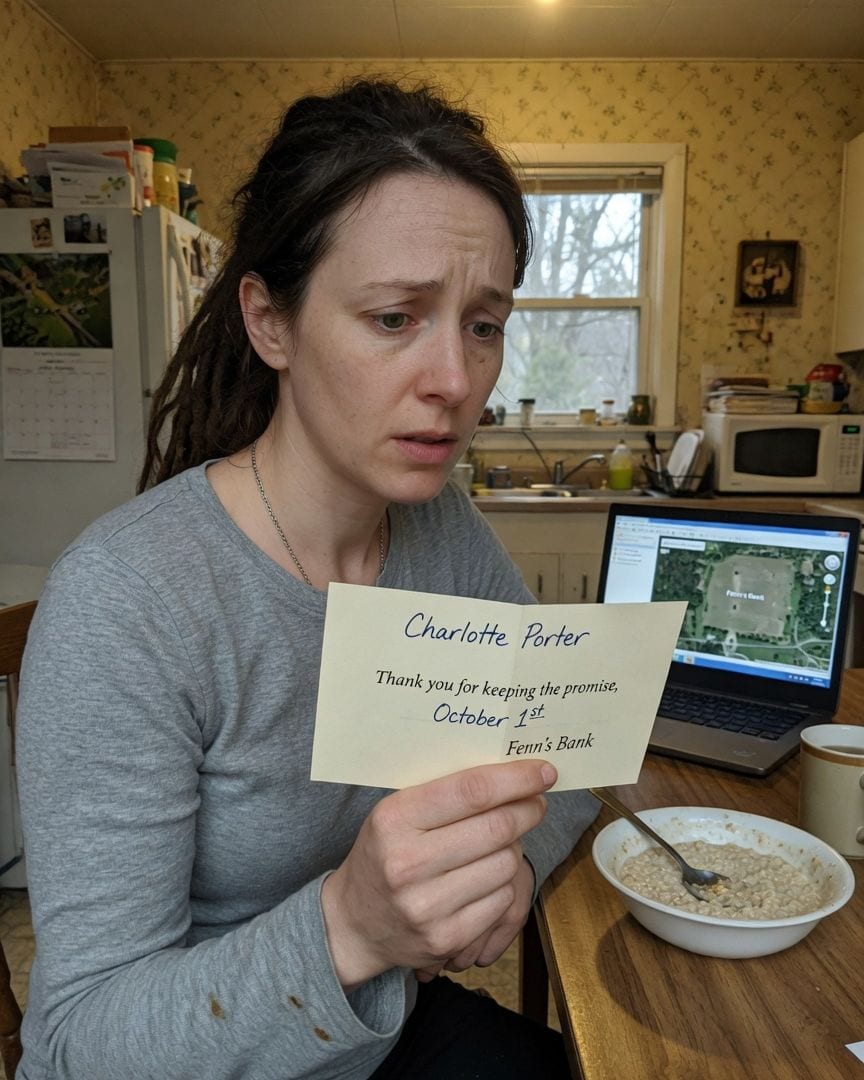
My initial, C. Porter, is carved into an ancient stone in a desolate bog. It's been there for centuries.
I keep receiving strange thank-you cards for a promise I don't recall, all addressed from 'Fenn's Bank,' a desolate peat bog miles from town. My growing unease drives me to visit the site, where I find my family name, and then my own initial, carved into an ancient stone.
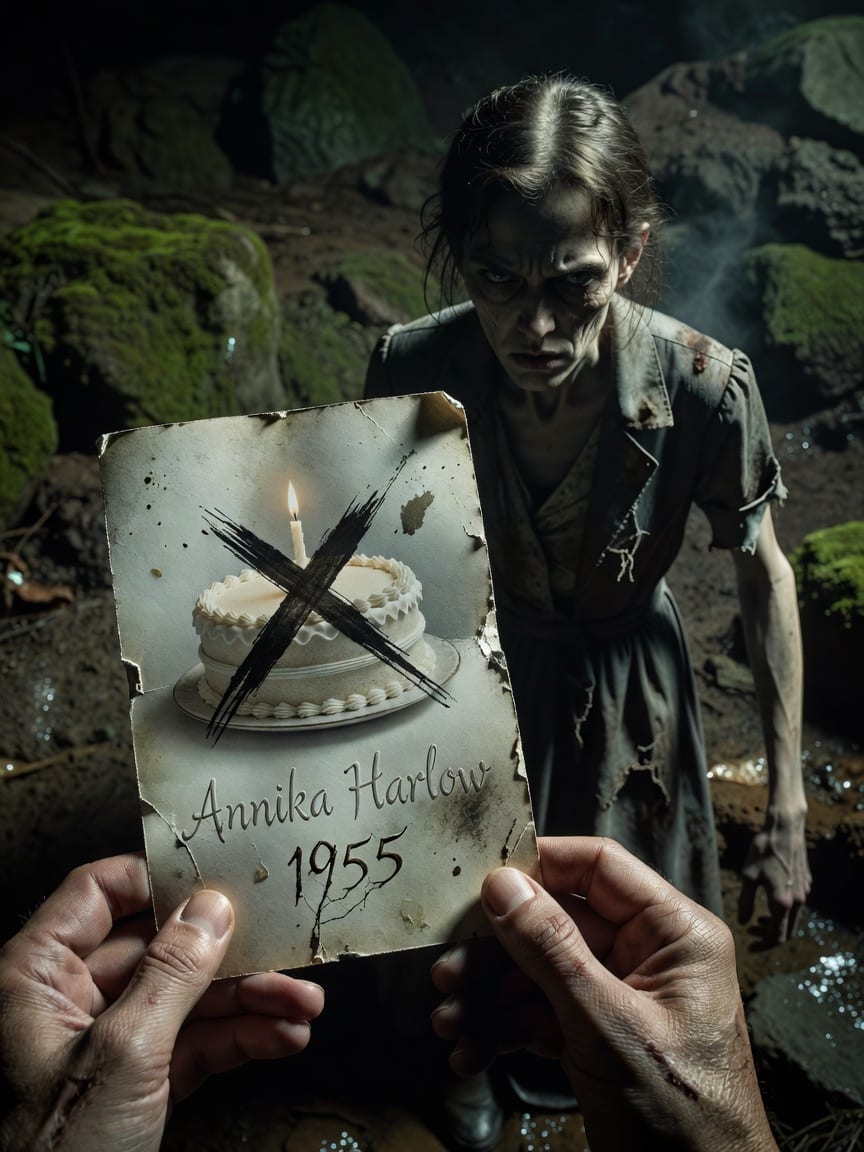
My birthday card arrived a day early, as always. Same cake, same silver name, postmarked from an empty field. This year, one candle was crossed out.
For five years, a strange birthday card has arrived a day early, postmarked from an empty field. This year, the generic cake on the card had one candle neatly, unmistakably crossed out with a sharp black 'X', unsettling my otherwise pragmatic life.
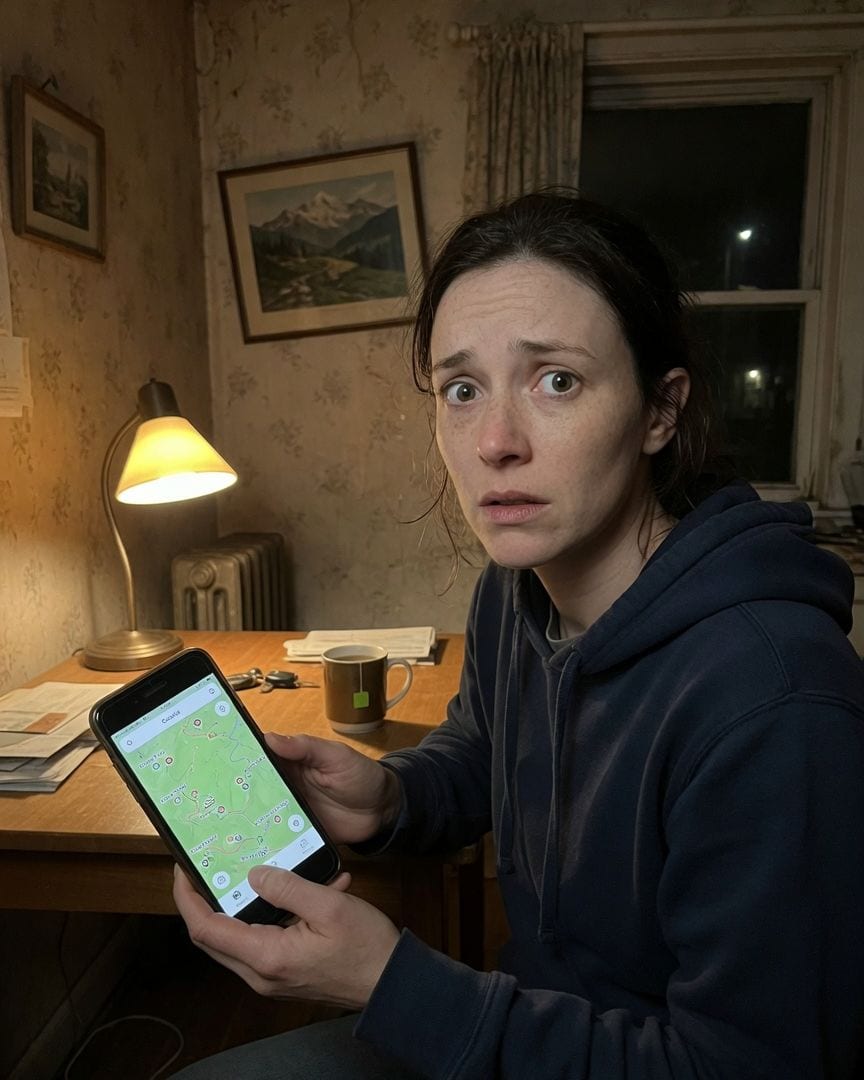
My hiking app scrubbed the hill's name from the map, on a phone that's been in airplane mode for two days.
I just moved to town and hiked a local hill, 'Cathan Tor,' according to my phone's app. But when I mentioned the name to the mechanic, he froze, dropped his wrench, and whispered, 'Don't say that name, Colette.'
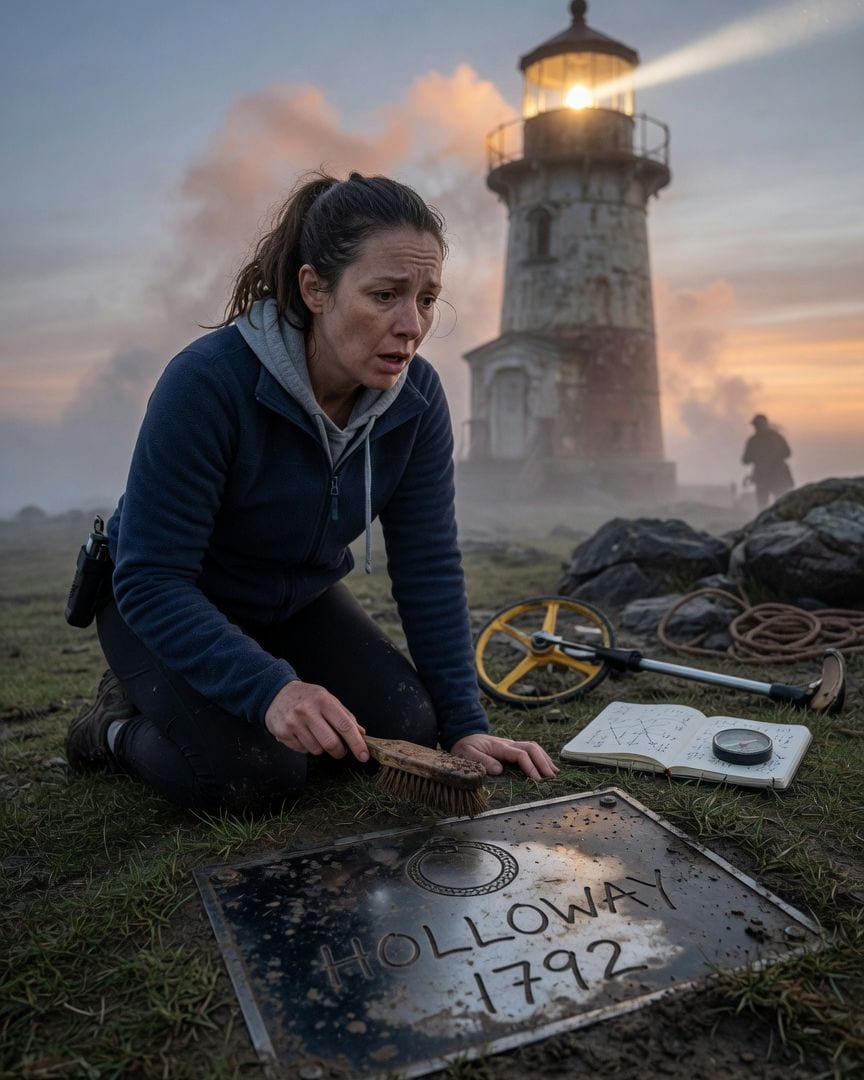
My coastal path just kept curving me back to the lighthouse. Nine miles walked, the same fisherman coiling rope, but I never left.
My morning ritual is a brisk walk along the coastal path. But last Tuesday, after what felt like an hour, I found myself back at the lighthouse, having walked miles to nowhere. My step-counter read 4.5 miles, yet the same fisherman was still coiling the same rope right where I started.
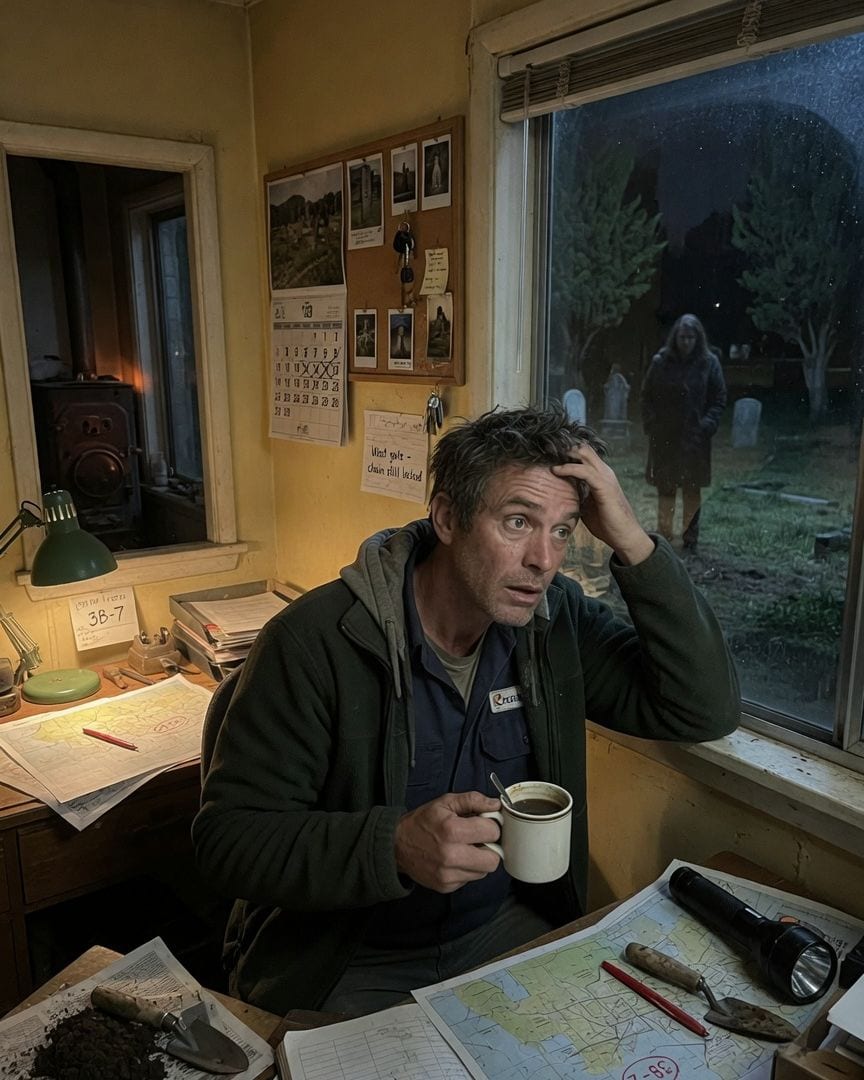
My cemetery lodge overlooks a woman visiting an empty grave near 3 AM most nights. The west gate she uses has been chained shut since autumn, its lock untouched.
As the cemetery's night caretaker, I'm used to the quiet hum of the lodge. But for three weeks, a woman has appeared nightly at plot 3B-7, a silent mourner in the deep night. What chills me is how she leaves: walking straight through the west gate that's been chained and padlocked shut for eight months.
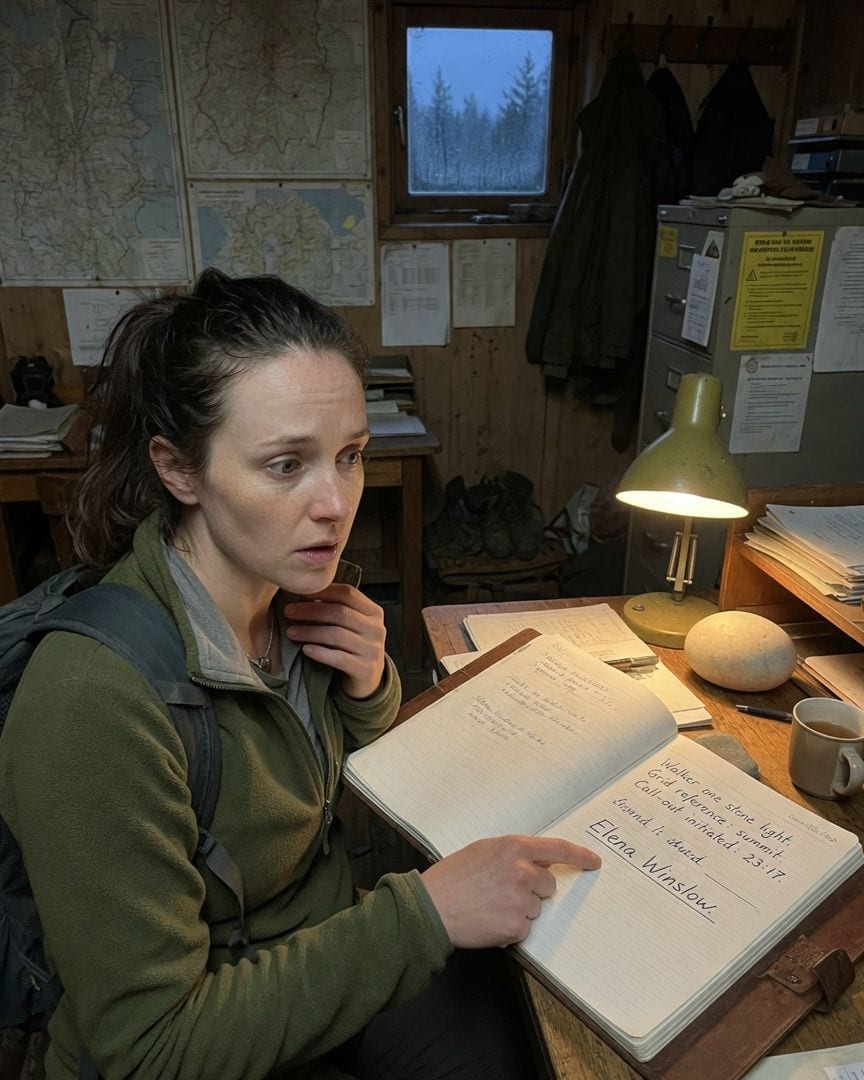
My pocketed mountain stone meant a rescue logbook recorded a call-out that night for me — a shout that never went out.
After an exhilarating climb on Cadair, I took a small, smooth white stone from the summit cairn, despite a warden's warning. Back at the station, a logbook entry shocked me: my name, dated last night, for a rescue call with an impossible detail: 'Walker one stone light'.