A coastal sentry on his last watch found the bunker's decades-sealed hatch ripped open by impossible strength.
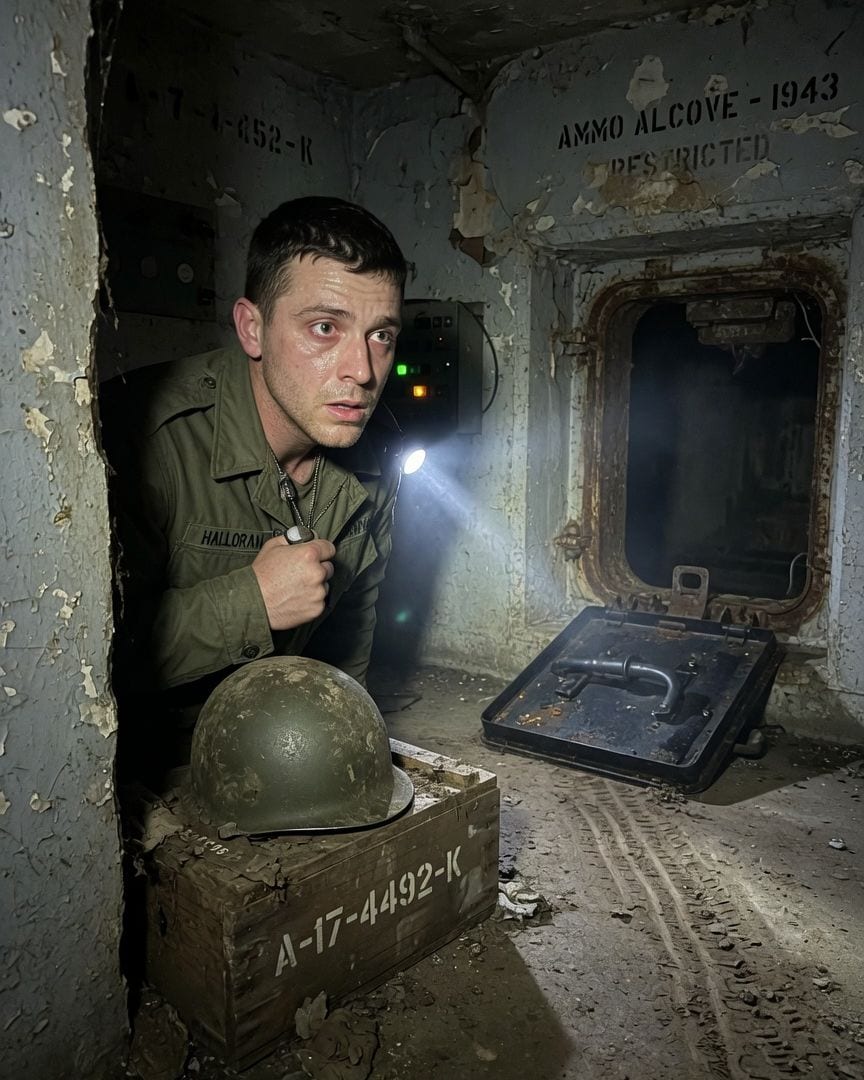
Private Daniel Halloran shivered, pulling his collar tighter against the chill that had nothing to do with the pre-dawn air. This was his last watch. In a few hours, he would be processing his discharge papers, finally going home.
The old WWII coast-artillery bunker on the northern California headland stood silent, its eight-inch guns long gone, but the searchlight still swept the beach below like a ghostly finger.
At 0100, the fog rolled in, thick and silent, swallowing the surf. Daniel watched its slow advance, his hand hovering over the comms panel. Then, a distortion in the light's arc. Not a wave, not a trick of the mist.
Out of the swirling white, caught in the beam, a landing party formed up on the sand. Figures, solid, in gear he didn’t recognize—heavy, outdated, yet impossibly clean. They stood in perfect formation, waiting.
He blinked, rubbed his eyes, but they remained, unmoving, as if carved from the mist itself. He radioed it in, his voice tight, the static on the other end echoing his disbelief.
The instruments on his panel flickered, registering vague thermal signatures that vanished as quickly as they appeared. He swore he saw one of them turn its head, a faceless silhouette, looking directly at the bunker.
When dawn finally burned the fog off, the beach was empty. But up the embankment, leading to the bunker's rusted-shut rear hatch, were clear, deep drag marks.
And the hatch, which hadn't moved in decades, stood open, a dark rectangle against the weathered concrete.
Daniel, wired and disbelieving, called his relief, Private Dean Coleman, to report the open hatch. Coleman, 21, arrived, yawning, skeptical, blaming fog-induced hallucinations or local pranksters. But the drag marks were undeniable.
They were too heavy, too precise, to be anything but a deliberate effort to move something substantial from the beach to the bunker.
"Someone's been messing around, Private," Coleman said, trying to sound authoritative, a forced cheerfulness in his voice. "Probably some kids."
But the rust around the hatch's frame was freshly disturbed, flaking away in places, revealing newer, brighter metal beneath. The locking bar, fused with corrosion, lay bent and twisted on the ground, as if ripped open by impossible strength.
Inside, the bunker's initial chamber was a cool, damp concrete tunnel, smelling of salt and old earth. Their flashlights cut through the gloom, revealing decades of dust and debris.
No signs of recent entry, no footprints in the thick grime, which only deepened Daniel's unease. A prankster would leave a trace. A professional would too. But this was...clean. Too clean.
As they moved deeper, the beam of Daniel’s flashlight caught something out of place, nestled in a small alcove where old ammunition crates had once been stored.
It was a single, mud-caked helmet, a deep olive drab, its shape rounder, its brim wider than any he’d ever seen. It was clearly military issue, but unlike anything in their current inventory, or even WWII-era gear he'd studied.
He picked it up; it was heavy, solid. On the side, barely visible beneath a layer of dried mud, a faded, hand-scrawled serial number was etched into the metal. Daniel's breath hitched.
He couldn’t quite place it, but the sequence, the specific, almost archaic spacing of the numbers and letters, felt profoundly, sickeningly familiar, like a half-remembered dream from a file he’d accidentally glanced at in the armory.
Daniel Halloran, heart hammering, shone his flashlight into the dark maw of the long-sealed rear hatch.
There, half-buried in the damp soil just inside the threshold, lay a single, mud-caked helmet, its design unfamiliar, its surface bearing a faded, hand-scrawled serial number that, for a terrifying instant, felt hauntingly familiar.
Daniel couldn't shake the helmet. Against Coleman’s protests, he wrapped it in a poncho and took it with him.
He spent the next few hours, instead of preparing for discharge, scouring the base's old archives, cross-referencing military equipment manifests, looking for that specific serial number pattern. He found nothing in modern records, nothing in the standard WWII inventories.
The specific sequence of numbers and letters, the way they were etched rather than stamped, remained an anomaly.
He even tried the base's small, dusty historical office, manned by Malcolm Montgomery, a retired NCO turned civilian caretaker, 63, who meticulously cataloged every bolt and rivet of Fort Radcliffe's past.
Montgomery, a man with a quiet, almost unsettling calm, listened patiently to Daniel's frantic questions about unusual gear, forgotten units, or obscure coastal defense incidents.
He offered no immediate answers, merely a placid, "The past has a way of repeating itself, Private. Sometimes, things just… return to where they belong."
Daniel felt a prickle of unease at Montgomery's tone, too calm for the strangeness of the query.
Back in his barracks, Daniel cleaned the helmet meticulously.
Beneath the last layer of grime, he found something else: a tiny, almost invisible symbol etched into the inner rim – two interlocking circles, a design he’d never seen on any official military insignia.
He remembered the landing party’s unfamiliar gear, the way they moved, too precise, too silent. This wasn't a prank. This was a piece of whatever had come out of the fog.
He felt a growing certainty that the helmet was a direct link, a physical echo of the impossible. The discharge papers, sitting on his bunk, felt increasingly irrelevant, replaced by a cold, tightening knot of dread.
Daniel's continued investigation didn't go unnoticed. He found Montgomery watching him from a distance across the parade ground, a faint, unreadable smile on his face.
Later, Daniel’s locker, which he had double-locked, was found ajar, nothing missing, but a faint, metallic smell clinging to the air inside, like old brass and damp earth. He confronted Montgomery directly in the historical office.
"Someone's been in my locker, sir. And I think you know something about that landing party."
Montgomery merely hummed, polishing a tarnished brass buckle from a display case. "Private, this Fort has seen many men come and go. Many watches have been kept. Some longer than others. Some… never truly end."
His gaze was steady, calm, and utterly devoid of surprise or concern. "You’re looking for patterns, Private. That's commendable. But sometimes, the pattern is simply what is. And what is, sometimes, is what always was."
Daniel felt his blood run cold. It wasn't a threat, but a statement of fact, delivered with a chilling certainty. Montgomery knew.
He wasn't just observing; he was aware of Daniel's digging, and he seemed almost to be guiding him, pushing him further down a path Daniel now desperately wanted to abandon.
The implication was clear: Daniel was no longer just investigating; he was being drawn in, becoming part of the very thing he sought to understand. His discharge felt miles away, unreachable.
Daniel, desperate, laid the helmet on Montgomery’s desk. "This. This came from the bunker. You know what this is, don't you?"
Montgomery picked up the helmet, turning it over in his hands with a gentle reverence. "Ah, yes. A fine piece. They don't make them like this anymore." He traced the etched serial number.
"This particular pattern… it's from a very specific rotation. The 'Lost Patrols,' they called them. Not officially, of course. Too inconvenient for the records."
Daniel pressed. "Lost Patrols? What are you talking about?"
Montgomery sighed, a soft, almost wistful sound. "In '44, during the war, there were… incidents. Small, localized disappearances. Men on watch, patrols on the headland. They vanished. No trace. But their gear… sometimes it would wash up.
Or be found where it shouldn't be. Like this." He tapped the helmet. "The system, Private, is designed to account for everything. Every man, every piece of gear. But sometimes, the system has to adapt.
It has to make a place for those who… don't quite leave. Or those who are waiting to come back."
He put the helmet down. "This bunker, Private, it’s a junction. A place where the accounting becomes… fluid. The men you saw? They’re part of that accounting. They come back, or try to, through here.
And sometimes, the Fort needs to ensure the roster is always full. A watch never truly ends, Private. It merely changes hands. Or, perhaps, it loops."
Daniel felt a growing terror. The landing party, the drag marks, the open hatch, the impossible helmet – it all clicked into a horrifying, coherent picture.
Not ghosts, but a system that refused to acknowledge absence, that demanded a full count, always.
"And the serial number? The one that feels familiar?" Daniel asked, his voice barely a whisper.
Montgomery smiled, a gentle, sad expression. "Oh, that. That's the oldest trick in the book, Private. The system ensures everyone feels… connected. It makes the transition easier. Or perhaps, more inevitable."
The casualness of the 'inevitable' sent a cold spike through Daniel's chest.
Daniel Halloran stared at Montgomery, his mind racing through the implications. "Transition? Inevitable? What are you talking about?" he demanded, his voice cracking. Montgomery, unperturbed, reached into a lower drawer of his desk.
He pulled out an impossibly old, brittle logbook, its leather cover cracked with age. He opened it carefully, revealing pages of neat, spidery handwriting. "The Fort’s original personnel manifest for this bunker, Private. Dated 1944."
He slid it across the desk. "Sometimes, the system accounts for future needs, long in advance." Daniel's eyes scanned the faded ink. It was a roster, meticulous and precise, listing names, ranks, and assigned duties for 'Fort Radcliffe, Bunker 7.'
His gaze froze on a particular entry, halfway down the page. Next to 'Watch, Graveyard, Sector 7,' a duty he had just completed, was a name. His own name. 'Pvt. D. Halloran.'
Daniel’s breath hitched, his finger tracing the faded ink of his own name. "This… this is impossible. I wasn't even born in 1944."
Montgomery nodded, his calm unwavering. "Indeed. But the pattern, Private, it transcends simple chronology. The Fort, this bunker, it holds a specific number of 'personnel.' Always has. When one 'departs' the cycle, another is… recruited.
Not born for it, perhaps, but aligned. Your name, your service record, your very presence here, on this specific watch, it’s all part of the accounting. A placeholder, if you will, until the time of activation."
He gestured towards the open logbook. "The 'landing party' you saw, they are the previous cycle. Trying to complete their rotation, perhaps, or simply returning to their assigned posts.
The hatch opens for them, and for you, when the roster requires it. The instruments that half-confirmed them? They're simply logging the transfer. The system is perfect in its own way. It never loses a man, not really.
It just reassigns them."
Daniel gripped the edge of the desk. "Reassigns them to what? To be part of that… parade from the fog? To disappear and then come back in forty years?"
Montgomery's gaze was direct. "To maintain the watch, Private. To ensure the Fort's accounting remains balanced. It's a duty. And your name, as you can see, has been on the roster for quite some time.
You were always named in it. The Watch That Won't End, indeed. For you, it has just begun."
Daniel stumbled back, knocking over a stack of old files. "No. I'm discharged. I'm going home."
Montgomery merely smiled, a gentle, almost pitying expression. "Home? Your home, Private, is here now. It always was. The paperwork for your discharge? A formality.
A necessary step in the transition, to ensure a clean departure from the outside world's accounting." He rose from his desk, moving with a slow, deliberate grace that was at odds with his age. "The others are waiting.
They require… completion. And you, Private Halloran, are the final piece of this rotation."
Daniel scrambled for the door, his hand fumbling with the latch, but it was locked. He turned, his heart a frantic drum against his ribs. Montgomery was no longer smiling. His eyes, though still calm, held an ancient, unblinking quality.
He took a step forward, then another. The air in the office grew heavy, thick with the scent of damp earth and something metallic, like old brass.
Daniel could feel the cold seeping into his bones, not from the room, but from within. He backed away, his gaze darting around for anything, any weapon, any escape. There was nothing.
Just Montgomery, advancing steadily, his hand outstretched, not in malice, but in a gesture of profound, unavoidable welcome.
"It's time, Private," Montgomery said, his voice a low, resonant hum that seemed to vibrate in Daniel's very marrow. "The watch is yours now. It always was." Daniel felt his resolve dissolving, replaced by a strange, numb acceptance.
He could hear it now, faint at first, then growing louder, a rhythmic, shuffling sound from deeper within the bunker, like many boots on wet sand, approaching.
The landing party was coming for him, not to fight, but to claim him. Montgomery reached him, his hand closing gently, firmly, around Daniel’s wrist.
It was cold, colder than anything Daniel had ever felt, and the touch seeped into him, chilling him to his core, extinguishing the last flicker of resistance.
Daniel felt his own body stiffen, his eyes unfocusing, a profound sense of emptiness washing over him as if something vital was being drawn out, replaced by the deep, unyielding cold.
Private Dean Coleman reported Daniel Halloran as AWOL when he failed to report for discharge processing the next morning. A search of the bunker and surrounding headland yielded nothing. No body, no sign of struggle, no discarded gear.
Only the rear hatch of the bunker, now rusted shut once more, its locking bar mysteriously re-fused in place, showing no sign of having been recently disturbed.
Malcolm Montgomery, the caretaker, was found in his office, calmly polishing a brass buckle, his demeanor unchanged. He offered no insight, only a quiet observation that 'some watches just run longer than others.'
The incident was filed as a desertion, another anomaly in a long history of unexplained disappearances at the old Fort.
The official report noted 'Pvt. D. Halloran, AWOL.' No further inquiries were made. Days later, Dean Coleman was assigned to a new post: caretaker of the Fort's historical office, assisting Malcolm Montgomery.
He found Montgomery, as always, meticulously sorting through old manifests.
"Private Coleman," Montgomery said, looking up, his eyes holding that familiar, unsettling calm. "There's a new entry here, for the bunker's graveyard watch. It's an old one, but it seems to have just activated.
I'll need you to cross-reference the current roster."
Coleman, now wearing the uniform of a permanent staff member, simply nodded, his face impassive. Montgomery smiled, a faint, almost imperceptible curve of his lips. "And perhaps, Private, you might take a look at the condition of the rear hatch.
It's due for inspection. Just in case."
Dean Coleman looked at the old manifest, then at Montgomery, and a faint, wrong little smile touched his own lips. "Is that so?"
If this one got to you
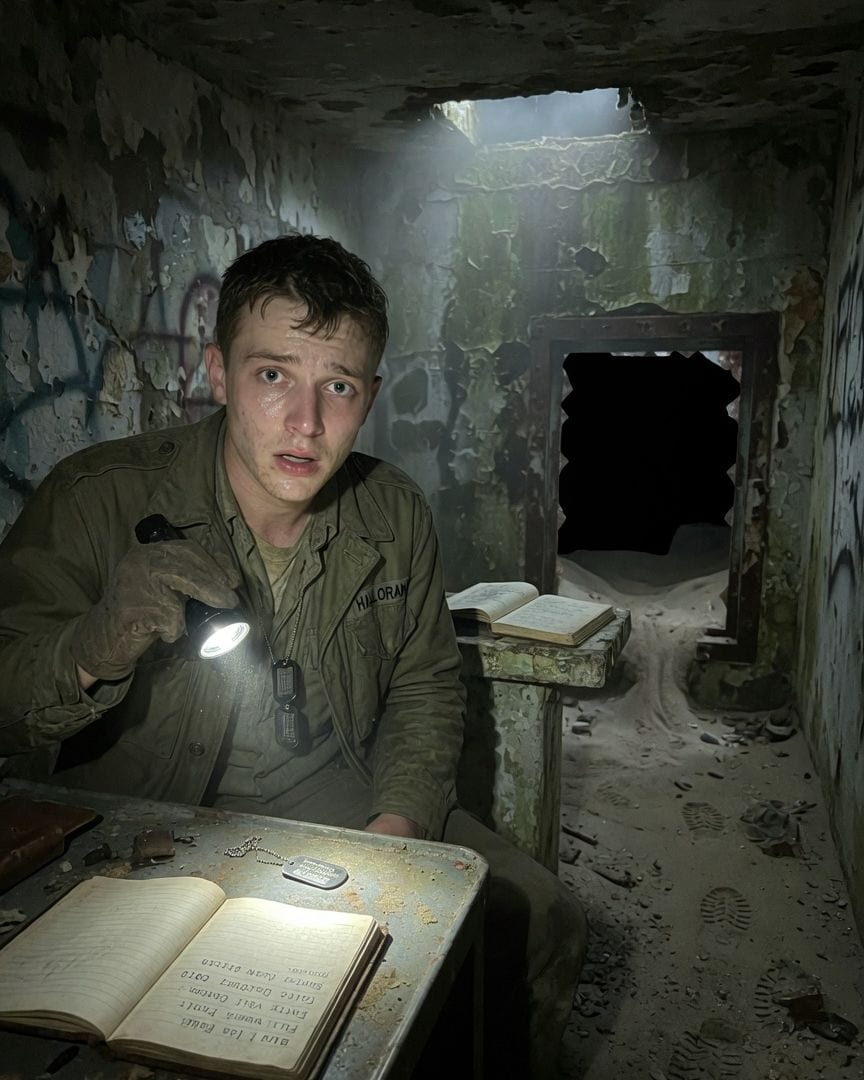
On his last lonely watch, a young private found the decades-sealed bunker hatch gaping open, with a logbook confirming an impossible landing.
Private Frank Halloran shivered through his final graveyard watch at a disused WWII bunker on a lonely California headland, just two days from his transfer. At 0100, a thick fog swallowed the ocean, and through the swirling gray, figures in archaic gear coalesced on the beach below, silent and waiting. By dawn, the beach was empty, but the bunker's rear hatch, sealed for decades, now stood gaping open, leading to a logbook entry confirming an impossible landing party at that exact hour. Inside, Private Halloran found fresh boot prints leading into the winding darkness, culminating in a hidden room holding his superior officer's modern dog tag.
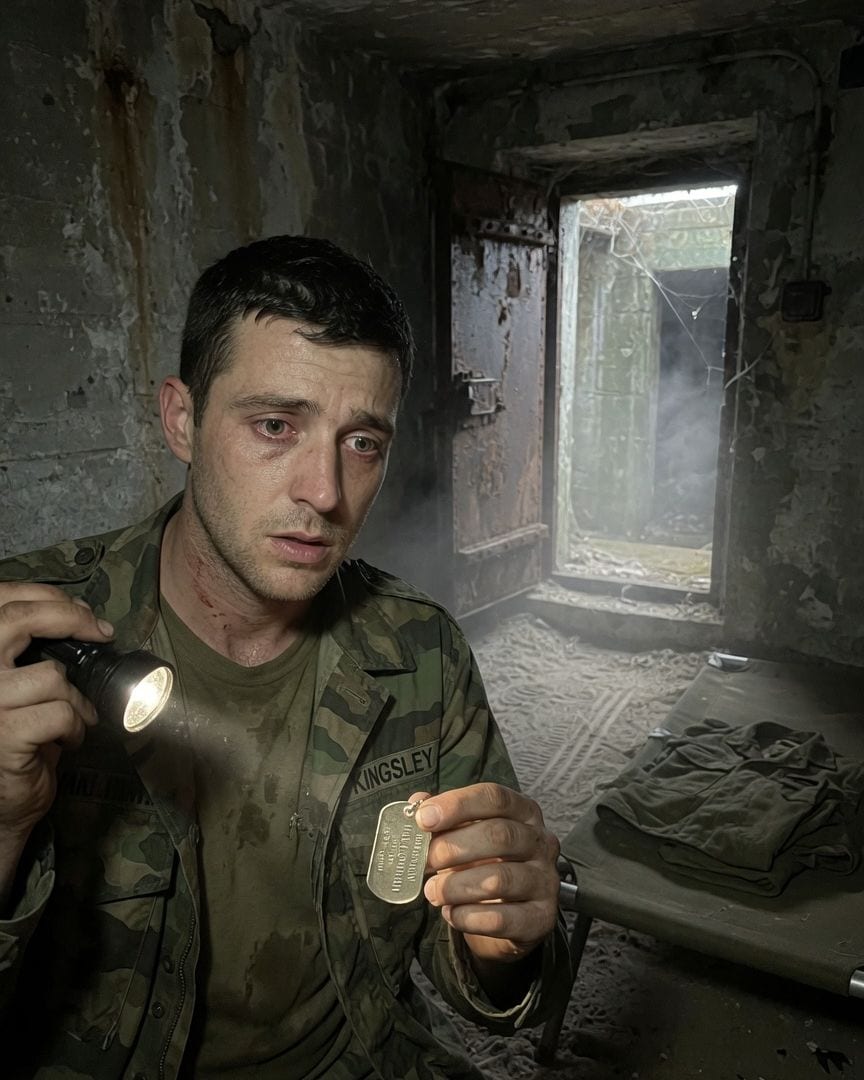
On his final rotation, a Private finds a WWII dog tag for 'Halloran' in a bunker sealed for eighty years.
Private Roland Kingsley endured the bone-deep weariness of his final graveyard watch at a reactivated WWII bunker on the Northern California coast, just hours from dawn and the end of his deployment. His searchlight cut through thick fog, revealing impossible figures: men in archaic WWII uniforms, assembling on the deserted beach, only to vanish moments later. As dawn broke, Kingsley discovered the bunker's rear hatch, sealed for decades, now stood mysteriously ajar. Inside, on an empty cot, lay a WWII-era field jacket, and in its pocket, a dog tag for 'Halloran' — a name impossible to the bunker's eighty-year history. What unseen presence had disturbed the long-sealed past?
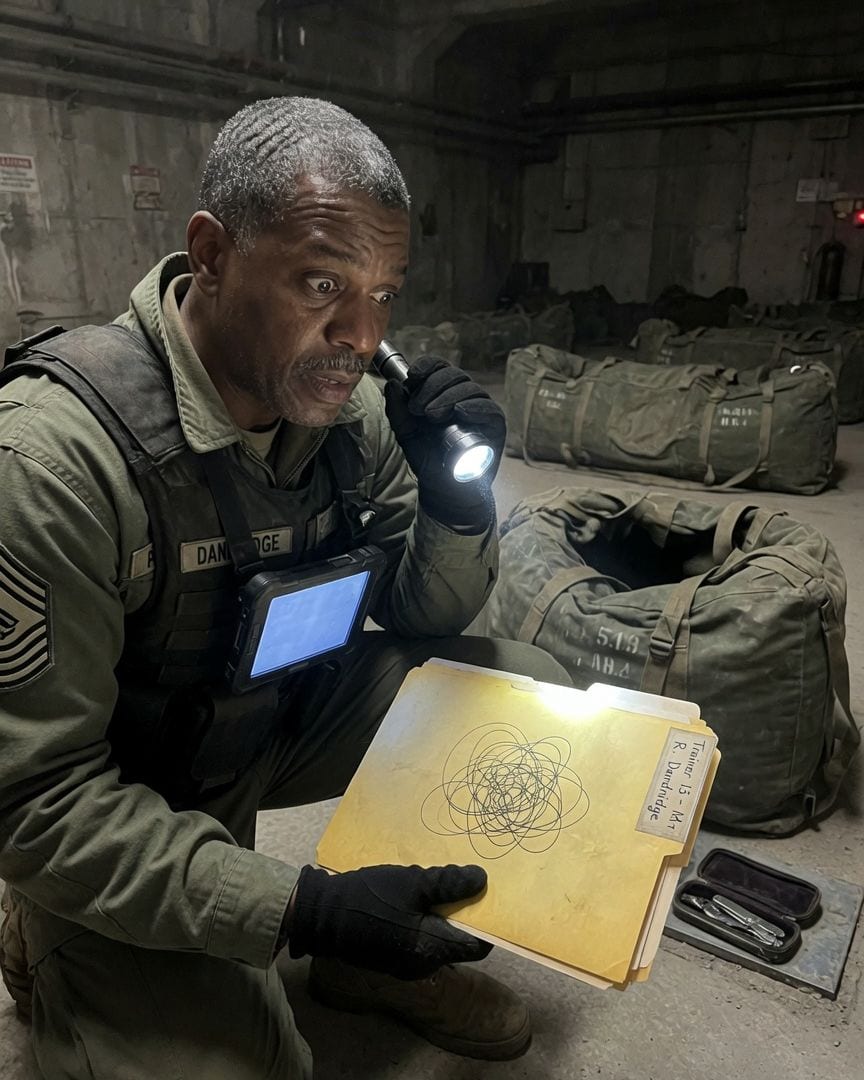
Thirty days from closing a Cold War vault, a Master Sergeant finds a thirteenth warhead cradle with his own name on it, its velvet lining strangely warm.
Master Sergeant Ruel Dandridge had just thirty days left at Kestrel Mountain, conducting its final inventory before the underground vault was sealed forever. He methodically counted twelve warhead trainer cradles, but then his beam caught a thirteenth: bolted down, empty, its straps dented as if something immense had shifted. A tag bore his own precise handwriting: ‘Trainer 13 - R. Dandridge,’ an impossible find in a bay he'd never entered and not on any manifest. Prying at its base, Ruel discovered a hidden compartment holding a yellowed file with a symbol that pulsed with light and subtly shifted, its velvet lining strangely warm. This confronted the Master Sergeant with a pattern that defied all logic.
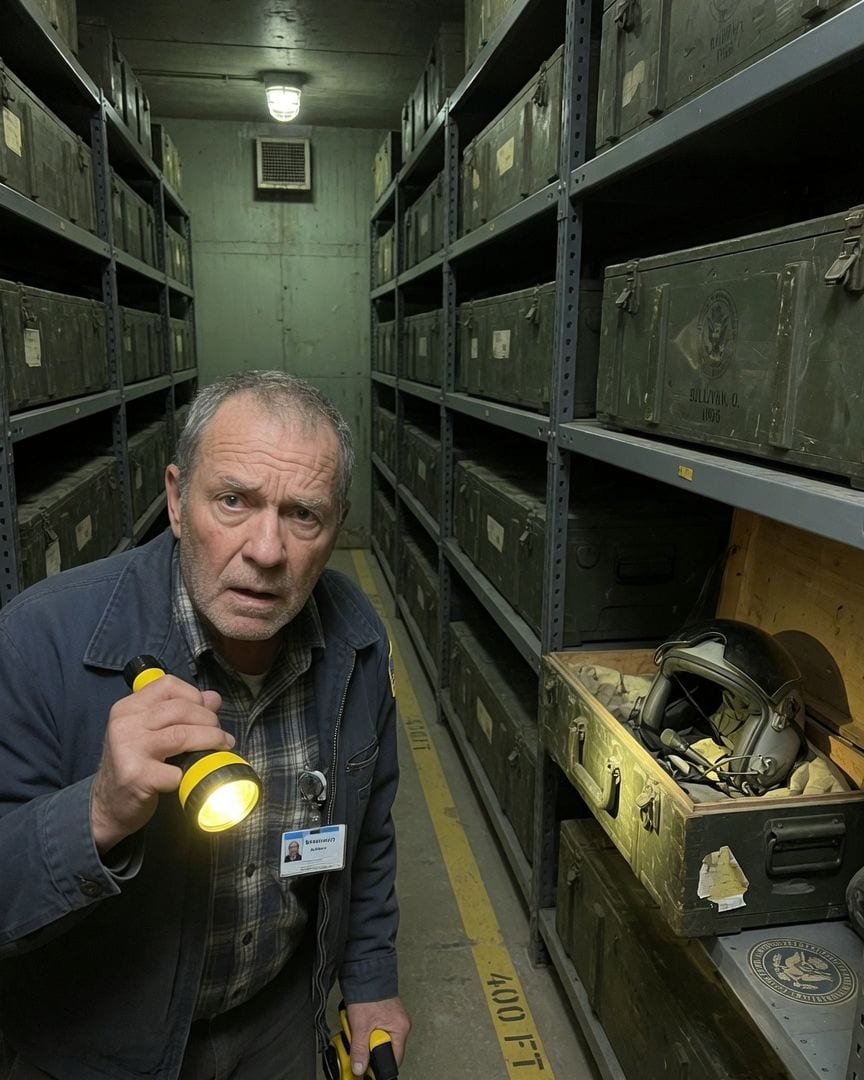
On his last audit before retirement, Barrow Nunnelly’s measuring wheel found a Cold War storage cave 211 feet longer than any map, holding a pilot's helmet named SULLIVAN, O.
Barrow Nunnelly, a sixty-three-year-old auditor, faced his last contract before retirement: an audit of Cheatham Storage Cave 3. The vast, subterranean chamber, humming at a steady fifty-two degrees, was officially four hundred feet long, a fact confirmed by decades-old blueprints. Yet, Barrow’s measuring wheel clicked past four hundred, then five hundred, finally stopping at an impossible six hundred eleven feet. Beyond the charted length, he found older industrial units holding military-grade crates with obsolete federal seals, culminating in a sealed container from 1966 holding a worn flight helmet bearing the name "SULLIVAN, O." The cold silence of the cave now held an impossible, untold story.
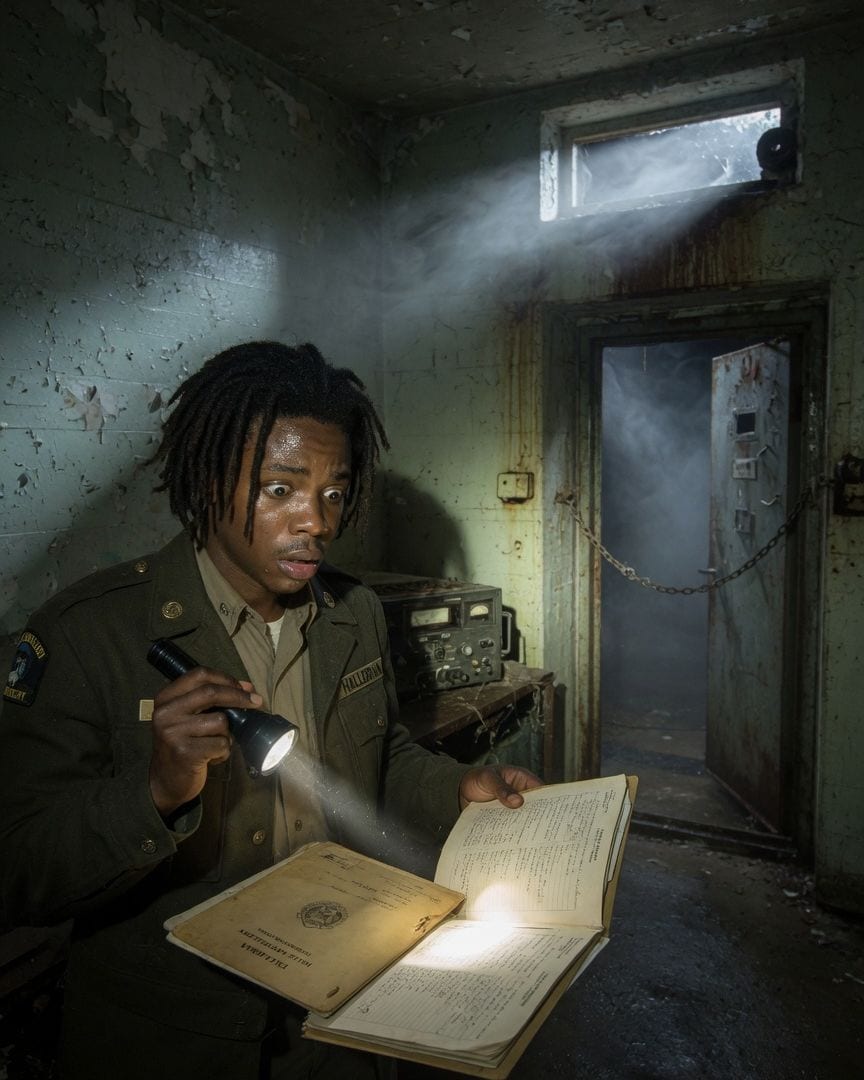
On his last shift, a coast sentry finds his own name signed in fresh ink on a 1943 army record, dated exactly one year ago.
Private Roy Halloran counted the final hours of his last watch behind the searchlight of an old, rust-tinged artillery bunker on the northern California coast. His monotonous graveyard shift was nearly done, and his transfer close, but at 0100, the swirling coastal fog revealed a silent landing party of men on the beach, their gear anachronistic and alien. When dawn burned off the mist, the beach was empty, yet faint drag marks led directly to the bunker’s long-sealed rear hatch, now mysteriously ajar. Inside, amidst the cold, acrid air, he discovered a pristine 1943 army service record bearing his own name. A freshly signed entry dated exactly one year ago to the day left him wondering: had the past somehow reached out to claim him?
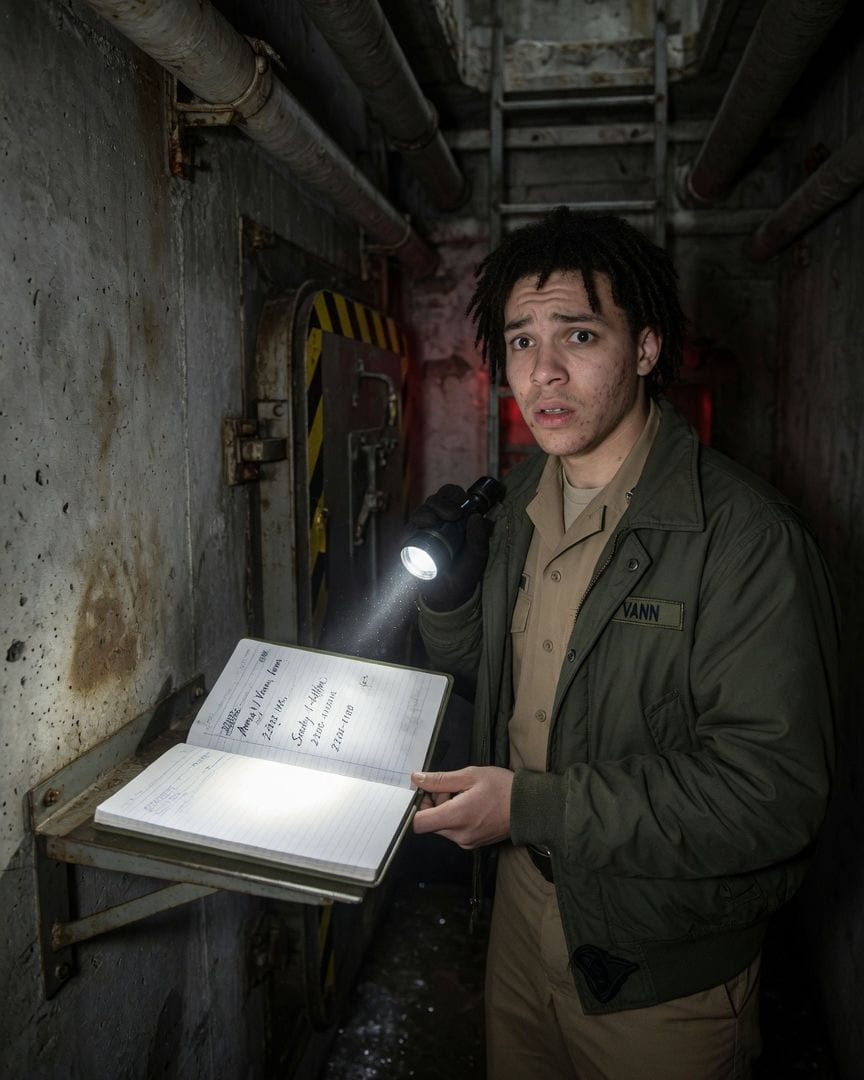
On his last patrol, Airman Vann sees a Cold War silo hatch light up from *inside*—it was welded shut a decade ago.
Airman Vincent Vann was on his last patrol across a vast, desolate Cold War missile field in the Dakotas, the cold, starless sky mirroring the emptiness of the landscape before his transfer. His routine check of eight hardened silo caps was shattered when a red fault light pulsed on Silo 4’s access panel, signaling an impossible breach from *inside* a hatch sealed for a decade. As more silos lit up, ignoring base orders, Vann found the hatch unlocked from within and descended into the dark shaft, where he discovered a pristine logbook bearing his own signature next to a chilling entry from a non-existent sentry, dated for *that very night*. Now, a steady *thump* echoed from deeper within the sealed concrete, leaving the Airman desperate for an explanation that simply wasn't there.