My cold kitchen range glows with coals at 6 AM, kettle singing. It's been disconnected for decades.
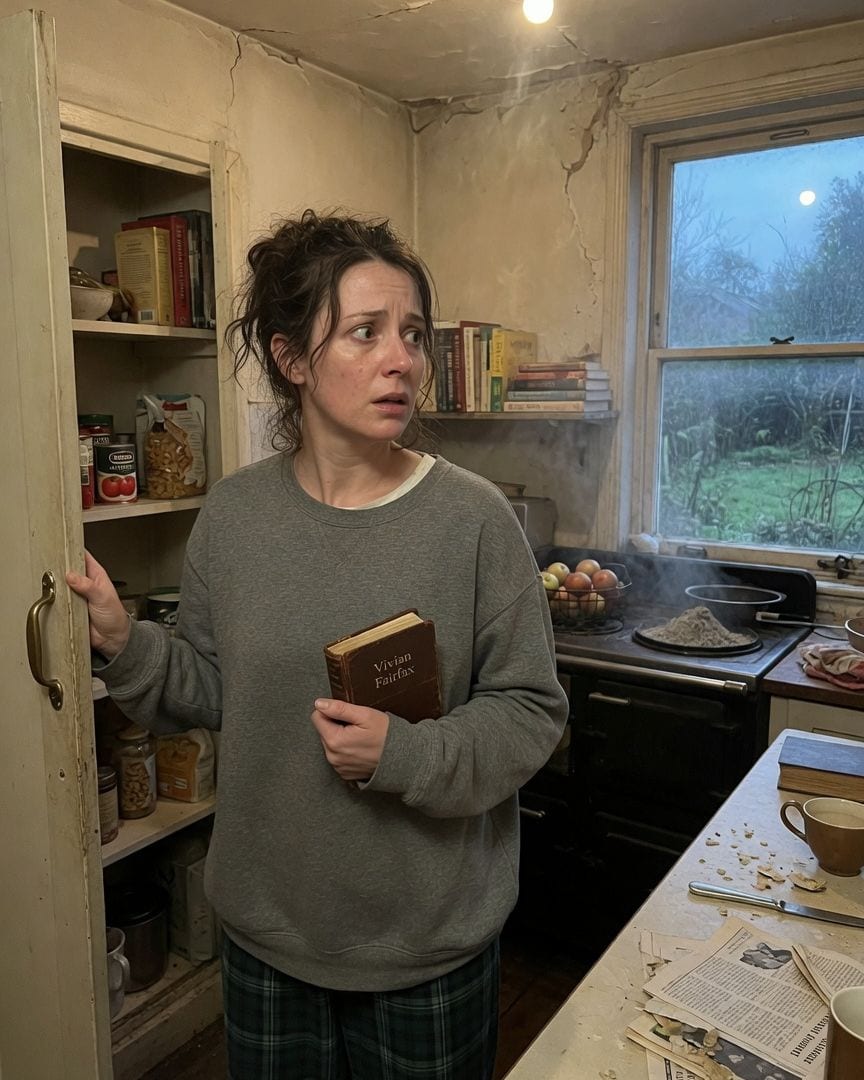
I woke that morning, October 2023, the house still holding onto the last vestiges of night’s chill.
I’d moved in just a few weeks prior, embracing the quiet, the creaks, the promise of a fresh start in an old place built in 1905. The kitchen, with its big window overlooking the overgrown garden, was my favorite spot.
It still had the original cast-iron range, disconnected from the mains gas in 1990, a relic I used as an extra countertop for cookbooks and a basket of apples.
But as I shuffled in that Tuesday, still half-asleep, a different kind of warmth hit me. It wasn't the weak sunlight struggling through the clouds. It was the range. I blinked, rubbed my eyes.
The heavy black iron was radiating heat, a deep, comfortable warmth that chased the chill from the room.
A faint, ruddy glow pulsed from behind the grates where a firebox should be, and on the trivet, a kettle — one I’d never seen before, an old porcelain model with a chipped handle — began to sing a low, soft tune.
The scent was unmistakable: woodsmoke, sweet and comforting, laced with the sharp, familiar aroma of brewing tea.
I stood there, frozen, the warmth growing. My brain tried to make sense of it, tried to tell me I was still dreaming, that the steam I thought I saw rising from the kettle was just my imagination.
But the low hum of the kettle was too distinct, the heat too real against my skin. I took a shaky breath, the tea-scent filling my lungs. Then, as quickly as it had come, it vanished.
I blinked once more, and the glow behind the grates was gone, replaced by a heap of grey, dead ash. The kettle was silent, cold to the touch.
The iron range was cold again, the kitchen returned to its normal, pre-dawn chill. Only the lingering scent of woodsmoke and tea remained, a phantom memory that made my stomach clench with an impossible dread.
It happened again two days later, and then once more the following week. Always around 6 AM, always the same warmth, the glow, the inexplicable singing kettle. My rational explanations – residual heat from... what? A trick of the light?
– crumbled each time. There was no explanation. The mains gas had been capped thirty-three years ago. There was no flue for wood, no connection for anything. It simply defied logic.
Driven by a need to find something concrete, I started meticulously inspecting the kitchen. Every pipe, every connection, every inch of plaster.
I ran my hand along the wall behind the old pantry door, a door I barely used, its shelves too narrow for modern groceries.
That’s when I felt it: a small, almost imperceptible crack in the plaster, half-hidden by a layer of old paint. It felt hollow behind it.
I grabbed a butter knife and carefully, painstakingly, worked at the crack. Bits of plaster flaked away, revealing a tiny, dust-choked cavity. It was small, maybe eight inches square, perfectly hidden. My heart hammered as I reached inside.
My fingers brushed against something stiff, wrapped in brittle, yellowed newspaper. I pulled it out.
It was a small, leather-bound book, clearly very old. The newspaper it was wrapped in dissolved in my hands, dated 1983. On the cover of the book, embossed in faded gold script, were two words: ‘Vivian Fairfax’.
Inside, the pages were filled with elegant, looping handwriting. It was a recipe book, but more than that.
It detailed meal preparations, baking schedules, and careful notes about the ‘perfect time for morning tea’ – often around 6 AM – specifying "the wood-fired range" and "the blue enamel kettle."
There were even notes about "lavender shortbread" and "lightly burnt toast" to accompany the tea. My hands trembled as I read, the impossible memories of the phantom scents rushing back. Vivian Fairfax. Who was she?
And why was her routine echoing in my disconnected kitchen?
A strange compulsion settled over me after I found Vivian’s book. I felt drawn to the pantry door, almost involuntarily, precisely at 6:05 AM, the time Vivian had meticulously noted for ‘tea served’.
My hand reached for the handle, cold metal against my palm. I pushed the door open, fully expecting to see my own modern shelves, stacked with pasta and canned goods.
But I didn't.
For a split second, an impossible, vibrant scene unfolded before me. It wasn’t my pantry. It was a kitchen. A different kitchen.
The floor was covered in worn linoleum, the walls adorned with an old-fashioned floral wallpaper I could almost smell. A heavy, dark cast-iron range, far larger than my own, dominated the far wall, a faint warmth radiating from it.
And there, on a pristine white tablecloth, was a small, flowered teacup, a wisp of steam rising from its surface.
The scent was a dizzying mix, hitting me full force: lavender, sweet and cloying, overlaid with the sharp, unmistakable smell of lightly burnt toast.
Then, as quickly as it had appeared, it was gone. The image snapped away, replaced by my own familiar, sparse pantry shelves. I stood frozen, my hand still gripping the cold pantry door handle, my breath hitched in my throat.
My eyes were wide, staring at the faint, lingering afterimage of that completely different kitchen – an older, warmer space, almost identical to my own in layout, but for the dark wood cabinetry, the mismatched, chipped tiles, and the gas lamp flickering on the wall where my modern LED strip should have been.
The vision through the pantry door had left me profoundly shaken. Vivian Fairfax. Her recipe book. The ghost kitchen. I knew I couldn't dismiss it as a trick of the light or a sleep-deprived halluc any longer.
My rational brain had run out of road.
I started actively researching the house's history. The local library became my second home. I poured over dusty property records, old town directories, microfilm of newspapers stretching back to the early 20th century.
That's how I confirmed it: my house, built in 1905, had indeed been owned by a Vivian Fairfax. She’d lived there from the 1950s right up until 1985. The year stood out like a sore thumb.
I also started spending more time in my garden, casually striking up conversations with Patricia Maddox, my elderly neighbor. Patricia, a sharp woman in her early seventies, had lived on the street for decades. She remembered everything.
At first, she was guarded, offering only pleasantries about the neighborhood. But after a few weeks of carefully steered conversations, she warmed up, and the gossip started to flow.
"Poor Vivian Fairfax," Patricia said one afternoon, leaning on her fence, her eyes fixed on my kitchen window. "She just... vanished one day in the mid-eighties. Mid-1985, I think it was. Left everything behind.
Cupboard doors open, kettle still on the stove, or so they said. Like she just walked out in the middle of making tea. Never a trace." Patricia sighed, shaking her head.
"Odd woman, always kept to herself after her husband passed. But she had her routines, you see. Never missed her morning tea, always on that old range of hers. Loved to bake, too.
The smell of her lavender shortbread used to drift across the street."
A cold knot tightened in my stomach. Vivian Fairfax. 1985. The unwavering routines. The love for baking. The reliance on the old range. Her detailed notes about the 'perfect time for morning tea' in the recipe book.
The chilling accuracy of every detail. The uncanny echoes of the woodsmoke, lavender, and burnt toast that I'd smelled in my own kitchen. The pantry door's fleeting vision, now undeniably aligning with Vivian's era. It was all real. Too real.
The feeling of being watched intensified. It wasn’t just Patricia, though her gaze often lingered a little too long on my kitchen window when I was doing dishes.
It was a colder, more pervasive sensation, like the house itself was observing me.
After another brief ‘flash’ through the pantry door – this time, I saw Vivian's floral teacup, empty, on the table – I found something tucked under my front door.
It was a small, folded note, resting on the welcome mat. The paper was brittle, yellowed at the edges, like it had been handled by countless hands, or simply aged for decades.
The script was shaky, old-fashioned, not at all like Vivian’s elegant handwriting. It felt… older. My heart hammered against my ribs as I unfolded it. The words were stark, written in faded black ink:
Don't follow the routines. Break the cycle. They will find you.
There was no signature, no date, no indication of who had left it. The paper felt ancient in my hands, almost crumbling when I gripped it too tight. Someone knew.
Someone knew what was happening in this house, and they were trying to warn me.
The feeling of being watched escalated into a prickling certainty, a cold presence that seemed to press in around me, especially when I was near the kitchen, near that impossible pantry door.
The air in the house seemed to thicken, a quiet hum I'd never noticed before now a constant, low thrum against my eardrums.
I didn't hesitate. I walked straight to Patricia Maddox’s front door and knocked. When she opened it, I shoved the note into her hand. Her face, usually so animated, went completely pale.
Her eyes scanned the old paper, then snapped back to mine, wide with an emotion I couldn't quite decipher. Fear? Recognition?
"Patricia," I said, my voice barely a whisper. "Who left this? What does it mean?"
She tried to push it back, tried to stammer out something about pranks, but her hand was shaking too hard. "I… I don't know, dear. Just some kids."
"Don't lie to me," I pressed, my own voice surprisingly firm. "You know something. I’ve seen things in that house. I’ve smelled things. And that note… it's ancient."
Patricia looked at the note again, then back at me. She seemed to deflate, her shoulders slumping. "Alright, dear," she said, her voice barely audible. "Come in. You deserve to know."
Inside, her living room was warm, filled with the scent of potpourri and old books. She sat me down on a floral sofa. "Vivian Fairfax didn't just 'vanish'," Patricia began, her voice low. "That's what the police said, of course.
No forced entry, no struggle, no body. But people knew. She became… withdrawn. In the years leading up to it, she'd whisper things. About the house remembering, she'd say. About the door showing things." Patricia looked at me pointedly.
"You've seen it, haven't you?"
I nodded, unable to speak.
"Well," she continued, "I was the one who left you that note." She pointed a shaky finger at the paper I still held. "I found a similar one, almost identical, years ago.
Tucked into an old book that used to belong to another occupant of your house. A Mrs. Eleanor Yates."
My breath hitched. "Eleanor Yates?"
"Yes. She lived there before Vivian. In the 1940s. Disappeared in 1947, leaving her young son an orphan. Same story. No trace. No body. Just gone." Patricia’s gaze was fixed on some distant memory.
"The Yates family reported strange occurrences, too. The kitchen range, they said, would light itself, coals glowing when no one was home. The smell of tea, always tea, even when the house was empty. Just before Mrs. Yates vanished."
Patricia leaned forward, her voice dropping to a conspiratorial whisper. "The house, dear, it takes them. It takes them and makes them part of itself."
I felt a cold dread spread through me, numbing my limbs. The range. The smells. The door. It wasn't just some random haunting. It was a pattern. A cycle. It had claimed Vivian. And Eleanor before her.
The house wasn’t remembering; it was doing something.
Armed with the names and dates, I returned to the library, to the microfilm archives, with a desperate, sickening certainty.
Patricia's words echoed in my ears: The house, dear, it takes them. I found the articles detailing Vivian Fairfax's disappearance, confirming every chilling detail Patricia had shared. A missing persons report, then fading interest, then nothing.
Scrolling further back, the reports of Mrs. Eleanor Yates's vanishing in 1947 were exactly as Patricia described: "Local Matriarch Disappears Without Trace." No body, no leads, just a house suddenly empty, a child suddenly orphaned.
My fingers trembled as I scrolled through the brittle digital pages. But then, a smaller, almost overlooked article from 1910 caught my eye. The headline was terse: "Local Family Sells Home After Unexplained Disappearance of Matriarch."
And the address beneath it… was mine. The details were sparse, just a few lines about the matriarch of the Davies family, gone without a trace, prompting the family to sell the property in haste.
The pattern was horrifyingly, sickeningly clear. Every thirty to forty years, another woman, another disappearance, another empty house.
I stared at the faded microfilm image of the 1947 newspaper clipping: 'Yates Disappearance Echoes Local Mystery.' Below the headline, a photo.
It showed Mrs. Eleanor Yates, a kind-faced woman with soft eyes and a gentle smile, standing in a kitchen. My kitchen. It was undeniably the same space, though much older, with darker wood and different tiling.
And in her hands, she held a steaming kettle, a blue enamel one, just like the phantom kettle I had found singing on my own cold range this morning.
The microfilm image of Eleanor Yates, holding that kettle in my kitchen, had cracked something fundamental inside me. It wasn't just ghosts. It wasn't just a haunting. It was a system.
Patricia's words, the warning note, Vivian's recipes – it all clicked into a terrifying, coherent whole. The house didn't just "remember" past residents; it actively absorbed them, their routines, their lives, and then replayed them with increasing intensity.
The old range, the phantom smells of tea and lavender, the singing kettle – these weren't random echoes. They were anchors, manifestations of the house's "retained memory."
The "Door Onto The Wrong Year" – my pantry door – wasn't just a transient glimpse into the past. It was a funnel. The house, on a recurring cycle, drew in its occupants.
It made them part of its living memory, replaying their most ingrained routines. Vivian Fairfax, Eleanor Yates, and the unknown matriarch from 1910, and likely others before them – they weren't ghosts.
They were echoes, trapped within the house's temporal fabric, their energy fueling its continued existence. They were the playback, the constant, low thrum I'd started to notice.
The warning note, "Don't follow the routines. Break the cycle. They will find you," now made horrifying, personal sense. By engaging with the recurrences, by even observing them, I was strengthening the house's hold.
I was becoming the next subject in its cycle. The house needed a "live" occupant, someone vibrant and present, to manifest its past, to complete its loops.
And it was slowly, insidiously, pulling me into its fabric, just as it had done to Vivian, to Eleanor, to all the others.
The cycle, I realized, seemed to culminate around winter, when the house was coldest, when the need for warmth, for the ritual of the morning range and tea, was strongest. And winter was here.
It was a cold winter morning, piercing and grey, just past 6 AM. I stood in my kitchen, a profound sense of déjà vu washing over me, a physical pull towards the pantry door.
The old range wasn’t just warm; it was brightly lit, coals blazing behind the grates, radiating an almost oppressive heat.
My own kettle, forgotten, sat cold on the counter, but from the range, the clear, bright song of a phantom kettle rose, competing with the overwhelming scent of lavender and heavily burnt toast.
The pantry door, usually closed, was already ajar. And through the gap, the full, vibrant kitchen from Vivian's 1978 era was laid out before me. It wasn't a flash this time, but a continuous, living scene.
Vivian Fairfax herself stood with her back to me, humming softly, her grey hair pulled back in a neat bun, arranging delicate teacups on a floral tray. She was solid, real, completely unaware of my presence. A perfect, terrifying echo.
My heart hammered. This was it. I knew what I had to do. I had to break the pattern, disrupt the routine. I remembered Vivian's recipe for a specific, strong-smelling spiced tea – something designed to be overpowering.
I grabbed my own kettle, filled it with water, and deliberately, with shaking hands, placed it on my modern electric hob, not the range. I fumbled for my spice rack, pulled out cloves, star anise, cinnamon, grinding them fiercely.
The pungent, sharp aroma filled my kitchen, clashing violently with the sweet lavender and stale toast emanating from the pantry door.
The vision through the pantry door flickered, like a faulty projector. Vivian paused, her humming stopped. A subtle tremor ran through her, a momentary stiffness in her movements. She turned her head slightly, as if hearing a distant, discordant sound.
I fought the powerful, almost magnetic pull of the house, a cold presence that seemed to wrap around me, urging me closer, urging me to conform.
I forced myself to spill a handful of the strong, crushed spices onto my clean kitchen floor, deliberately breaking the 'cleanliness' and precision of Vivian's meticulous routine.
The other kitchen shimmered violently. Vivian's form wavered, becoming translucent, then opaque, then almost transparent. There was a sudden, sharp crack, like breaking glass, that seemed to reverberate through my bones.
And then, abruptly, the vision through the pantry door snapped back. My own modern, spice-strewn kitchen. The range was cold. The phantom kettle was silent. The air, though still thick with the sharp, fresh spices I'd spilled, was strangely quiet.
The cloying scent of lavender and burnt toast was gone.
I packed a single bag that same afternoon. I left the pantry door wide open, a silent defiance against the house’s unseen pull. I never returned.
The house sat empty for months after that, the ‘For Sale’ sign in the yard quickly becoming weathered and faded, like an old photograph. Patricia Maddox, from her kitchen window, watched the house.
I caught her eye once; there was a quiet, almost knowing satisfaction in her gaze. I made sure to send her a brief, anonymous note, tucked under her front door: ‘The cycle is broken. For now.’
I live in a small, modern apartment now, far from anything with history, especially old houses. I avoid anything antique, particularly kitchen appliances.
Sometimes, I still wake at 6 AM, a phantom scent of woodsmoke in my nostrils, a memory of brewing tea. But it fades.
I know I escaped, but the memory of the door, of the women trapped within, never truly leaves me. I often wonder who bought the house next, if they like waking to the smell of old tea.
I know the house is still there, waiting.
Months later, a young couple, excited new homeowners, smile for a photo in their new kitchen. The man, a keen cook, points proudly to the restored antique range.
The woman, laughing, holds a kettle, ready to make their first morning tea. They have no idea what time the range usually lights itself. They will learn.
If this one got to you
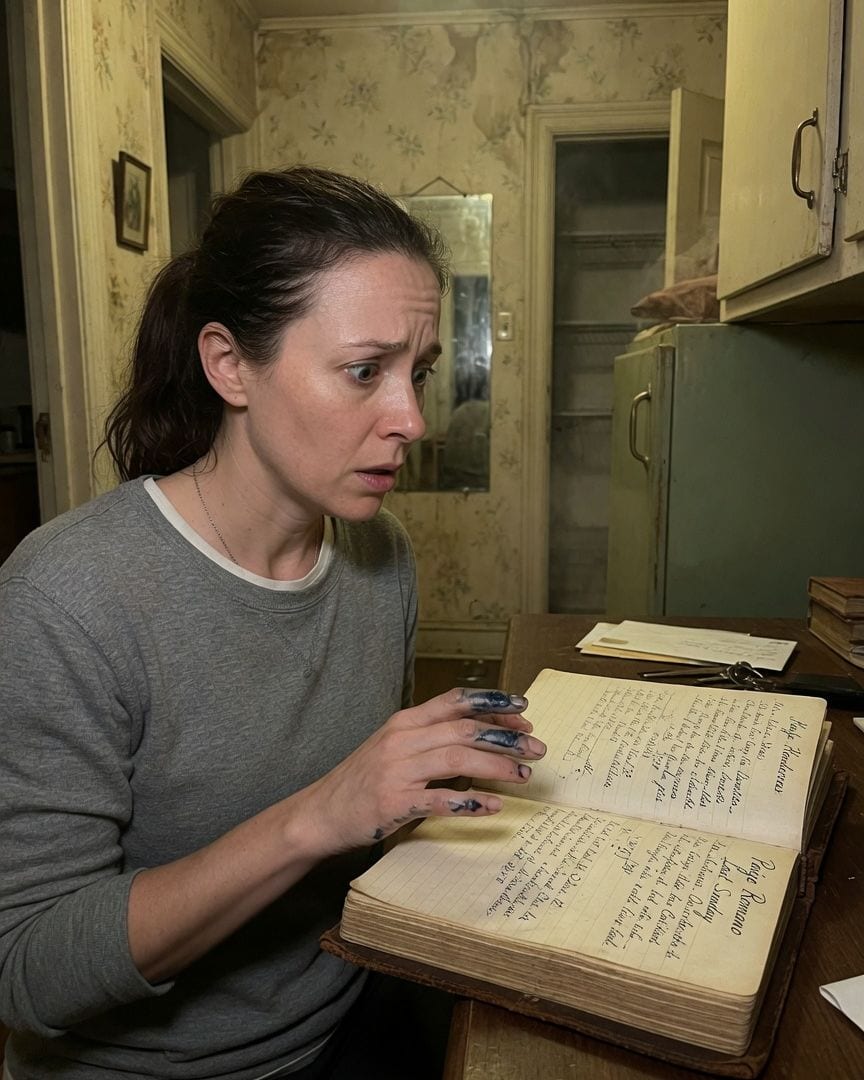
My visitors' book records guests who arrive in the future. Last Sunday, my own name appeared at the bottom, the ink still wet.
I bought an old house last March, complete with a dusty, leather-bound visitors' book. It seemed a charming relic, until I found new entries appearing, dated months into the future, the ink still wet. Then, my own name, Paige Romano, appeared, dated 'Last Sunday,' with a bead of ink shimmering at the 'R'.
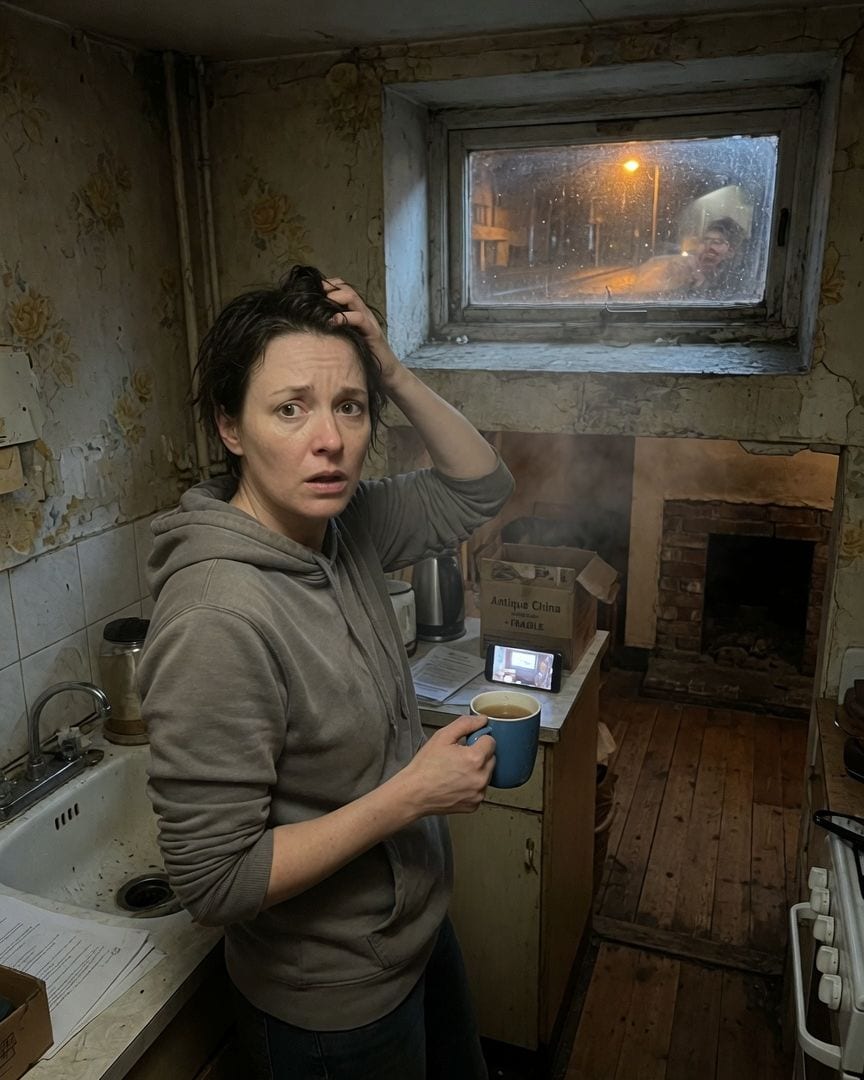
My basement window shows a gaslit kitchen moving at midnight, hams hung from the ceiling. My own kitchen is dark.
Settling into my new basement flat, I was making tea late one night when I glanced out my kitchen window. Instead of the concrete well, I saw a gaslit kitchen with an enormous cast-iron range, a young scullery girl, and cured hams hanging from the rafters. The vision was too sharp, too real, and the smell of coal smoke lingered long after it vanished.
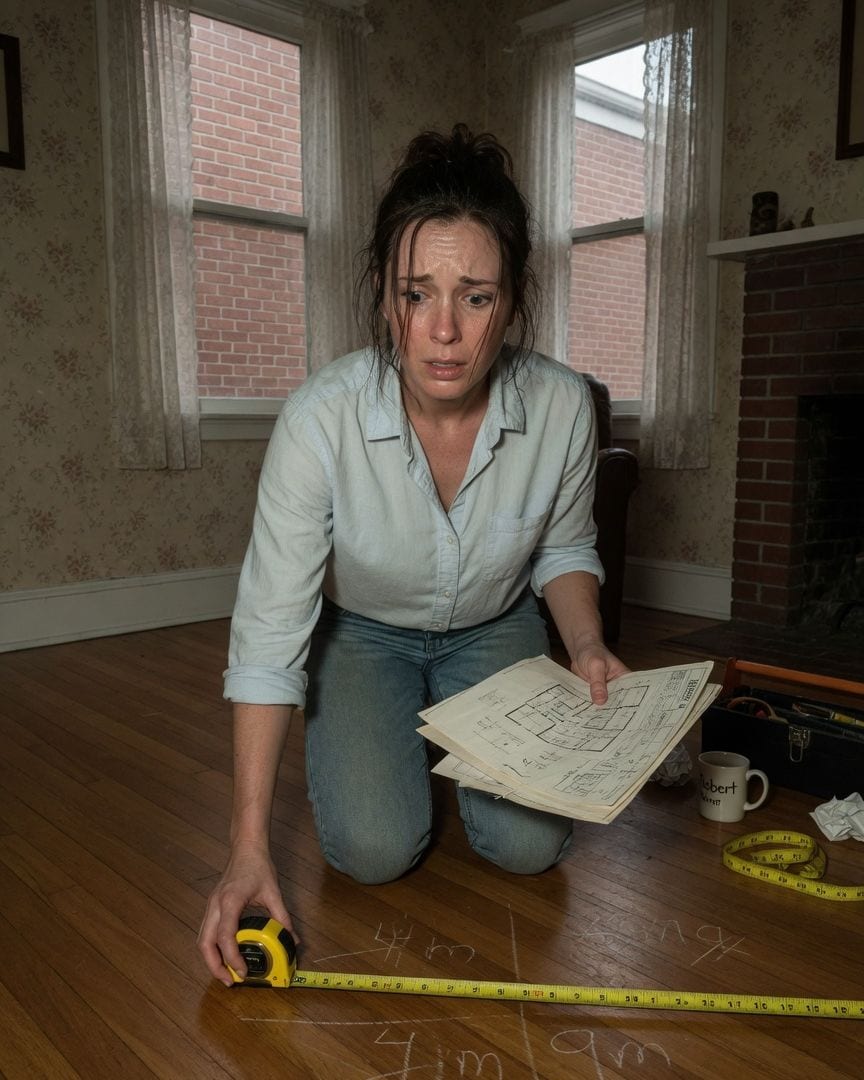
Our living room measures four by five metres. But the outside wall is nine metres long. A metre of house, gone, and I can't find it.
After moving into our charming 1920s house, I was meticulously measuring the living room when the dimensions refused to add up. My calculations of the interior space led me to discover a narrow, unpainted fifth door in the hallway, tucked almost out of sight. It wasn't on any original plans, and it opened to absolute, impenetrable darkness.
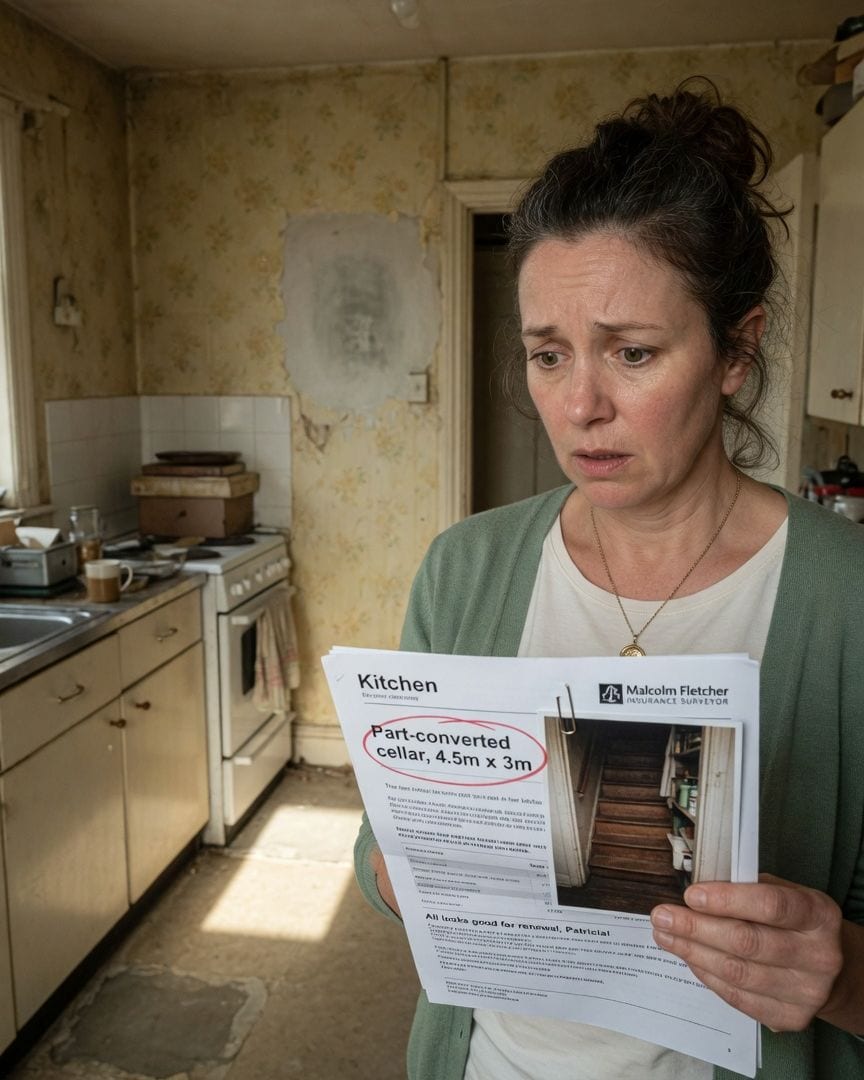
My house has a cellar in the insurance report. Concrete slab kitchen floor for a decade. The surveyor's photos show steps down from a pantry door we don't own, light on below.
My insurance report arrived with photos of a cellar and pantry under my kitchen. I stood on my solid concrete floor, certain no such rooms existed. But the report insisted they were there, geotagged to my address at 14 Willow Lane.
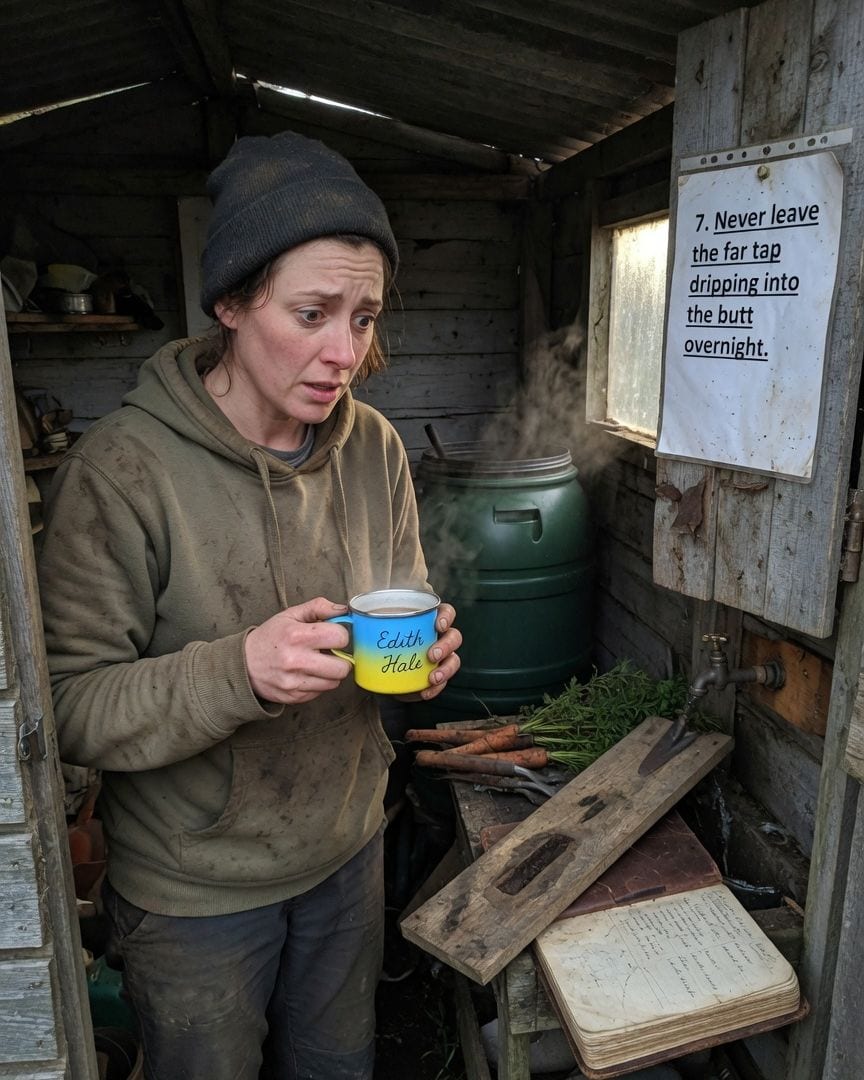
The one night I left the tap dripping, my allotment water butt was full to the brim and warm to the touch — with a child's unrusted tin cup floating on top.
Moving to Blackwood, I hoped my allotment would be a fresh start. But the shed's rulebook warned, 'Never leave the far tap dripping.' One morning, my water butt was full and steaming, an unnerving warmth rising from it. Inside, a child's tin cup floated, unrusted, etched with the name 'Edith Hale'.
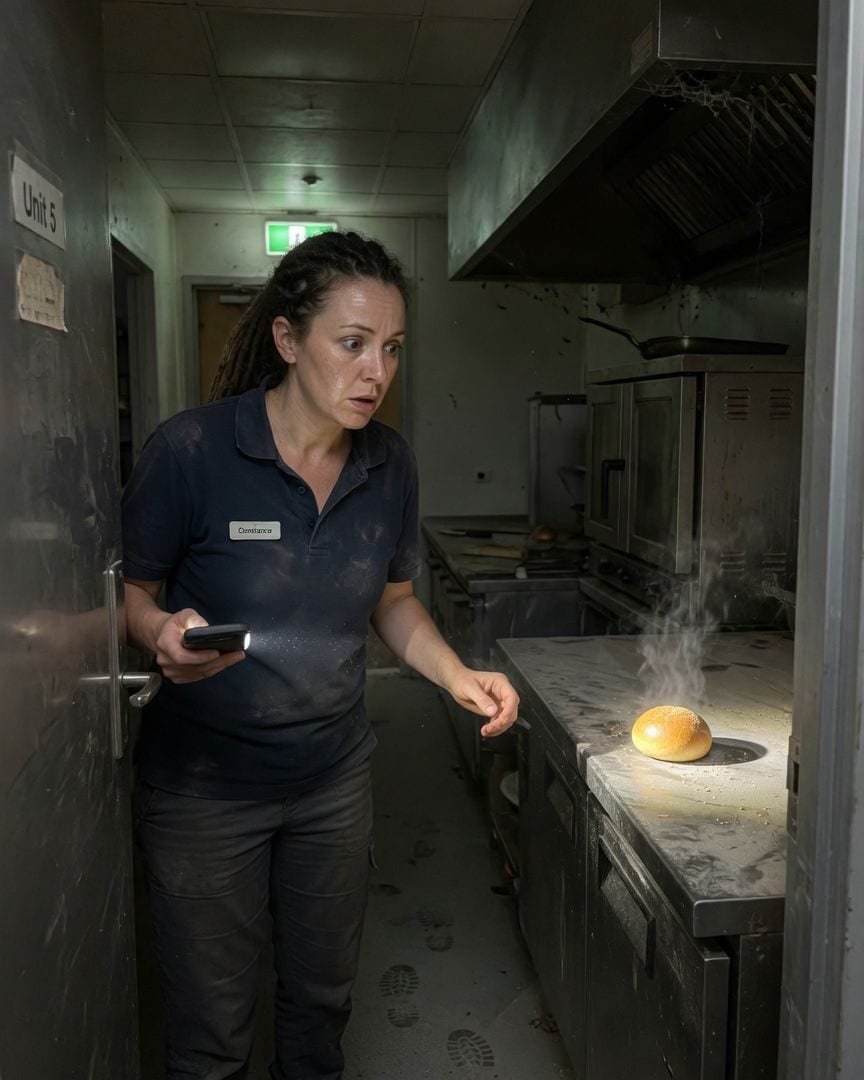
My night baker Karim always gave me a warm roll at 4 AM. His unit has been vacant, gas shut off, for two years.
I work the night shift in a quiet commercial kitchen, my routine marked by Karim from Unit 5, who always delivers a warm, golden-brown roll. It's a small comfort during the long hours. But the building manager insists Unit 5 has been vacant for two years, its gas shut off long ago. Still, a warm roll appeared under my door this morning.