My night baker Karim always gave me a warm roll at 4 AM. His unit has been vacant, gas shut off, for two years.
The hum of the industrial ovens always used to be a comfort. It was the soundtrack to my life for eight hours a night, six nights a week, tucked away in my corner unit of the commercial kitchen building.
Just me, the dough, and the low thrum of the machinery. My shift started at 9 PM. Most people were long gone by then. A few other night shift workers came and went, but nobody really stayed like I did.
Except Karim. Karim from Unit 5.
Every night, around 4 AM, just as I was getting to the final proof, I’d hear a gentle tap at my door. A few seconds later, a warm, perfectly golden-brown roll would slide under the crack. Always.
Then Karim’s voice, a soft, accented murmur, would follow. "For the long hours, Constance. Keep you going." We’d chat for a few minutes through the door – his kids back home, the latest football scores.
He was a quiet man, but his rolls were incredible, and his presence was a small, steady light in the vast, empty building. It was our ritual.
Last Tuesday, the exhaust fan in my unit started rattling something fierce. Figured it was about time to complain about rent again, so I called Steve Novak, the building manager. He showed up that afternoon, a clipboard under his arm.
While he was up on a ladder, trying to tighten something, I asked him about Unit 5. "Still no word on Karim’s lease, Steve?" I knew he was always tight-lipped about other tenants, but I was curious.
It felt like Karim had been there forever.
Steve froze, then slowly lowered himself. He looked at me with this blank stare, like I’d just spoken in a foreign language. "Unit 5? That’s been vacant for two years, Constance. Gas shut off before that."
He even checked his clipboard, running a finger down a column. "Yep. Last tenant moved out in… May two years ago."
The words just hung there in the silence, thick and heavy. The rattling fan seemed to mock me. Vacant. Two years. Gas shut off. But Karim had given me a roll this morning. A warm one.
My mind started scrambling, trying to fit the pieces together. Maybe Steve was mistaken. Maybe Karim was a new tenant Steve hadn't added to his ledger yet? No, Steve was meticulous. Maybe Karim was… squatting? The building was secure, though.
Cameras everywhere. Card access on every door. It made no sense. But the roll. The warmth. The conversation. It had to be real.
After my shift, the thought gnawed at me. I couldn't just leave it. I found Steve’s master key ring on his office desk – he was always forgetting it – and pulled off the one labeled 'Unit 5'.
The building was completely silent now, the air conditioning units a low, distant drone. Every step I took echoed in the deserted corridor.
The door to Unit 5 was plain metal, indistinguishable from any other. My hand shook slightly as I slid the key into the lock. It clicked with a hollow sound, amplified by the quiet.
The door creaked inward, protesting on dry hinges.
And just like Steve had said, it was vacant. Thick with dust, every surface coated in a fine, undisturbed layer of grey.
Cobwebs, delicate as spun sugar, stretched from the ceiling to the stainless steel ovens, which sat cold and silent, their glass doors opaque with grime. No sign of use, no recent activity, just the oppressive silence of a forgotten space.
The air was stale, heavy, and cool, without the usual warmth of working machinery.
I walked deeper into the ghostly kitchen, my boots disturbing the dust, leaving fresh tracks. The silence pressed in around me, making my own breathing sound too loud. It was exactly as Steve had described.
Every logical explanation I’d tried to conjure died in that cold, empty room. My stomach tightened. As I neared the main baking counter, a long, steel expanse running along the far wall, I froze.
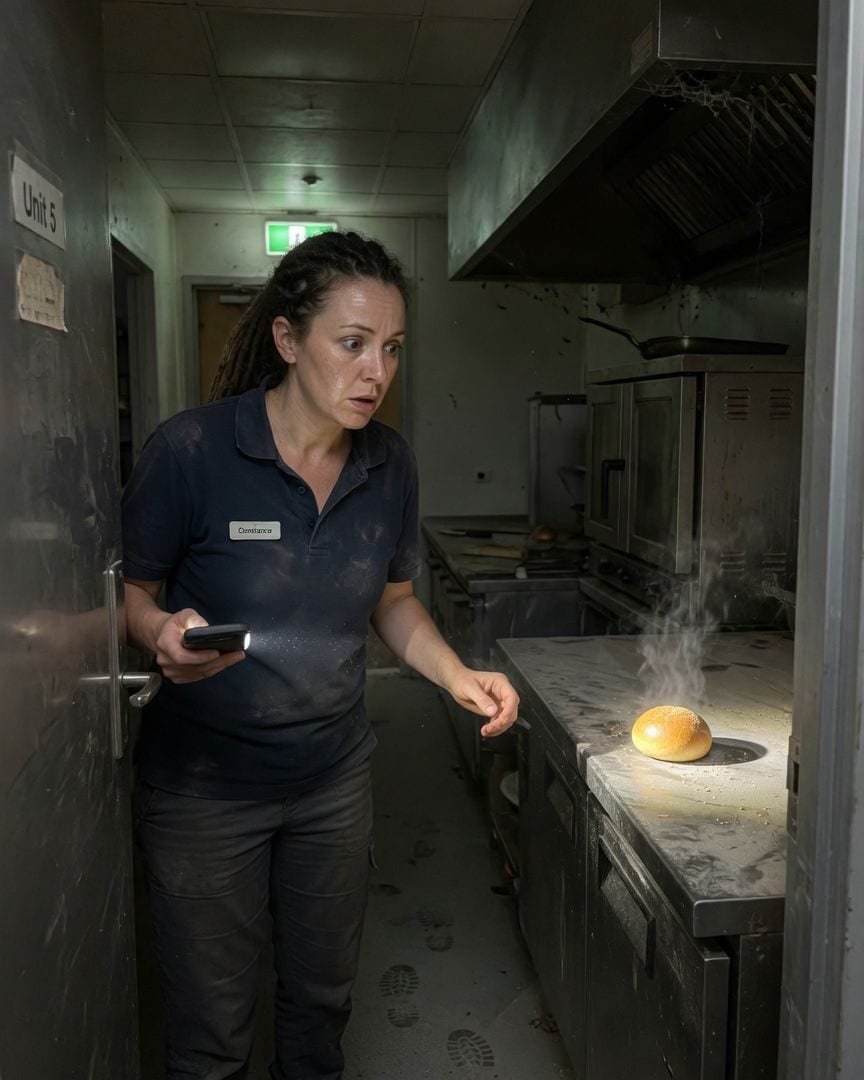
Amidst the undisturbed layer of grime and dust, perfectly centered on the counter, sat a single, golden-brown roll.
It was still warm to the touch.
The warmth from the roll seeped into my fingers, a jarring impossibility in that cold, silent room. My heart hammered, a frantic drum against the sudden, dizzying silence.
I had picked it up without thinking, my brain still trying to reconcile the impossible. A fresh, warm roll, baked where no one had baked for two years, in an oven that had no gas.
I spun it in my palm, my breath catching in my throat.
Then, my gaze dropped to the ancient, grimy oven door directly behind the counter. It was caked in the same thick, grey dust as everything else. But there, near the bottom right, was a distinct, blurred impression. A handprint.
Faint, almost invisible, but undeniable. I pressed my own palm to it. It was still warm. Not just vaguely less cold, but undeniably, recently warm, radiating a gentle heat that pricked my skin.
The warm handprint haunted me. I couldn’t get it out of my head. The next few days off, I spent them at my apartment, not sleeping, just staring at my ceiling.
Then I got up and went to the public library, digging into old city records, cross-referencing Steve’s building logs that he'd grudgingly given me digital access to after I told him my "curiosity about the building's history" was for a "blog."
Lease agreements, tenant logs, utility bills – anything that mentioned Unit 5. I poured over them, eyes burning from staring at the screen.
There was no 'Karim' listed. Not for the last two decades, nor the one before that.
The records showed a series of short-term leases for various night shift businesses: a laundry service that operated between midnight and 6 AM, a medical supply delivery hub that packed orders from 10 PM to 7 AM, a call center with graveyard shifts.
All of them had ended abruptly, some mid-contract, all within a year or so of starting. No reason given. Just "lease terminated." The only constant was Unit 5’s confirmed vacancy for the last two years, gas lines capped and inspected.
My own logical brain tried to scream "carbon monoxide leak!" but the reports for my unit and the common areas were always clear. The warm handprint was still the problem.
Late one night, back on shift, the building felt different. Quieter, somehow, despite the hum of my own ovens. I was kneading a batch of sourdough, lost in the rhythm, when I heard it.
A faint, rhythmic thudding from Unit 5. Thump-thump. Thump-thump. Like dough being kneaded. It was impossible, I knew, but it was there, a ghost sound. I paused, holding my breath, straining to hear. It stopped.
My own heartbeat pounded in my ears. I went back to my work, trying to dismiss it. Fatigue, probably. The building acoustics played tricks.
Then, a new smell began to filter into my unit. It wasn’t the familiar scent of my own baking.
It was an aroma of spices – cardamom, anise – distant, but growing stronger, mingled with the unmistakable scent of freshly baked bread. It was distinctly the smell of Karim’s rolls. The kind he always made.
My hands, sticky with flour, froze on the dough. My skin prickled. The oven timers, usually a soothing countdown, now felt like an accusation.
Driven by the phantom sounds and smells, by the impossibility of the roll and the handprint, I started searching online forums for 'commercial kitchen building [city name]'. Most were mundane threads about parking or shared equipment.
But then, on an obscure local history forum, I found it: a thread titled 'The Night Shifts'. It was years old, almost a decade, but active.
One user, 'D. Ingram', had posted cryptic warnings about "things that stay" and "routines that echo." Her posts were vague, almost poetic, talking about "the deep grooves cut by time and repetition" and "the whispers in the quiet hours."
My fingers trembled as I typed out a private message. I detailed my experience: Karim, the rolls, the vacant unit, the warm handprint. I even attached a blurred photo of the handprint I’d taken.
The reply came quickly, less than an hour later. It was short, a single line: "Some things are better left alone, dear. You've noticed, haven't you? It's watching you notice."
The message chilled me to the bone, a cold dread seeping into my bones.
After that, the prickling sensation on my neck during my shifts became almost constant. I'd feel it, the sense of eyes on me, from the shadowed corridors outside my unit door, from the darkened glass of my own oven.
My reflections in the stainless steel surfaces seemed to ripple, distort, just for a split second. The hum of the ovens no longer felt comforting; it was a low, watchful drone.
I started jumping at every creak, every clang of the pipes. Once, I swore I saw a shadow flit past the gap under my door, too low to be Steve, too quick to be anything.
I was alone in that building, yet I wasn’t.
Ignoring the warning, and propelled by a desperate need for answers, I tracked down Dorothy Ingram. Her name was on a building deed from the seventies, which I’d found in the city archives.
The address led me to a quiet, unassuming cafe on the edge of the city. She was sitting by the window, a woman with kind but weary eyes, nursing a cup of tea.
She looked up as I approached, a faint, unsettling recognition in her gaze.
"Constance, is it?" she said, her voice soft but firm. "I knew you'd come."
I sat down, my heart pounding. She initially tried to dismiss my questions as "old building stories," folk tales passed around by the night shift workers. But I pressed, describing Karim, the rolls, the vacant unit, the warm handprint.
I laid it all out, the impossible details, the things that couldn’t be explained. Dorothy listened, her face growing grimmer with each detail. Her composure, carefully maintained, began to crack.
She sighed, a long, deep exhale, her gaze distant, fixed on something I couldn't see. "The building… it's always had its night people. Routines, you see. They get stuck. Imprinted."
She pushed her tea cup around in a slow circle on the saucer. "The isolation, the repetition of night work, especially in that building… it acts like a kind of resonance chamber.
The energy of it, the constant doing of the same thing, night after night, it leaves a mark. A deep one."
"Karim," she continued, her voice dropping to a near whisper. "He was a real baker. A good man. Worked Unit 5 for years, decades ago. Algerian, wasn't he? Had those bright eyes and a laugh that could fill a room.
He missed his kids back home terribly. Talked about them endlessly. Said he saved every penny for them."
The pieces clicked into place with a horrifying, sickening certainty. Karim wasn't a squatter. He wasn't a ghost, not in the way I understood them. He was an echo, a routine, a longing, solidified.
His constant, repetitive work, his deep, unwavering sadness for his distant children – it had left an imprint so profound, it had taken on a life of its own. It had become a living, breathing routine.
Dorothy took a slow, deliberate sip of her tea, her gaze now fixed on me. "But it's not just echoes, dear. They feed. They grow stronger. Your own routine, your own quiet work, night after night in that building...
you're making a new one."
A cold dread spread through me, chilling me to the very core. "A new one?" My voice was barely a whisper.
Dorothy nodded, grimly. "It's already started with you, dear. You've noticed, haven't you? It's watching you notice." She gestured with a slight tilt of her head to the darkened cafe window directly behind me, reflecting the street outside.
My blood ran cold. I turned, my movement jerky and slow, my heart pounding in my chest.
In the glass, I saw not my own clear reflection, but a blurred, almost identical figure standing directly behind me, its head tilted, mirroring my own sudden movement.
I stumbled back from the window, my chair scraping loudly on the cafe floor. The figure in the glass flickered, blurring again, then resolving into my own reflection, perfectly clear, showing only the empty space behind me.
But I had seen it. I knew I had. Dorothy watched me, her expression unreadable.
"What did I see?" I whispered, my voice hoarse.
Dorothy sighed, her eyes filled with a profound sadness. "The building, Constance. It’s an old place, built on certain ground, isolated, designed for solitary, repetitive work. It acts like a kind of psychic amplifier.
The human mind, especially when focused on a routine, especially in isolation, can leave energetic imprints. Not just memories, not just shadows. But a kind of residual charge, a pattern. And those patterns, if nurtured, can begin to manifest."
She leaned forward, her voice hushed. "The repetitive, solitary nature of night shifts — bakers kneading, guards pacing, cleaners scrubbing — they cut deep grooves. These imprints start as echoes, faint and intangible. Like Karim.
His longing for his children, his absolute devotion to his baking, it was so potent. His routine was so fixed, so constant. Unit 5, being particularly isolated in the building's layout, became a focal point. A nexus."
"But they grow," she continued, "by feeding on the routine of current tenants. Your own work. Your predictable movements. Your quiet focus. It gives them substance, pulls them from echo to presence.
They grow stronger, more solid, until they can physically interact. That roll, Constance. That warm handprint. Those were Karim, reaching through, his routine manifesting, strengthened by your presence, your routine, your noticing."
My mind reeled. It explained everything. The records. The impossible warmth. The smells, the sounds.
"And they don't just mimic," Dorothy added, her voice dropping to a chilling whisper. "They eventually seek to replace or absorb the living person. They become 'The One Who Was Always Here,' indistinguishable from the original. Almost.
There's always a subtle wrongness. A flicker in the eyes. A gesture not quite right. A laugh too hollow. That blur you saw, behind you, in the window... that's the new one. Your one. It's learning your routine.
It's watching you notice it."
I didn't go home after that. I drove straight back to the commercial kitchen building, Dorothy's words echoing in my head. The air in the corridor leading to my unit was thick and cold, pressing down on me.
From Unit 5, the sounds were no longer faint. It was a frantic, rhythmic thudding, a frenzied kneading, almost a roaring. A monstrous hunger. It sounded like something trapped, desperate to get out, or in.
I walked into my own unit. The familiar space felt alien, charged. I looked at my own oven, the one I used every night, the one where I baked the bread that fed my routine. The presence was here.
Not just in Unit 5, but in my space, waiting. Learning. Growing. It wanted my routine. It wanted me.
My hands found a heavy rolling pin, cold and solid. Not to fight. Not to destroy it. But to sever. To break.
With a desperate cry that ripped from my throat, I brought the rolling pin down, smashing the thick glass door of my oven. The sound was deafening, a cascade of shattering glass and twisting metal.
Again and again I struck, the blows echoing in the silent building, until the oven was a mangled wreck of sharp metal and splintered ceramic, its interior exposed and ruined.
I smashed the timer, ripped out the temperature knob, tore at the wires. It couldn't work anymore. My routine, broken. My ritual, undone.
Then, I dropped my apron, letting it fall onto the cracked tile floor, a forgotten skin. I threw my keys onto the floor beside it, the metallic jingle loud in the sudden silence.
Without looking back, I walked out of the commercial kitchen building. As the heavy fire door slammed shut behind me, the sound reverberated through the empty corridors.
And beneath it, furious, echoing from deep within the building, I heard it: another crash. Exactly like mine. As if another oven, exactly like the one I’d just destroyed, had been violently obliterated.
I moved out of the city within the month. I found a new job, working daytime hours in a brightly lit bakery, surrounded by people, never again taking a night shift.
I learned later that the old commercial kitchen building was eventually condemned, deemed structurally unsound, and torn down for a new development, its foundations dug out and replaced. No one ever mentioned 'The Night Shifts' again.
I never worked alone again, not really. I still feel a cold, hollow ache whenever I catch the scent of fresh, warm bread, a phantom limb of dread.
Sometimes, when the light catches just right, I still see her reflection, a flicker in the glass, walking behind me.
If this one got to you
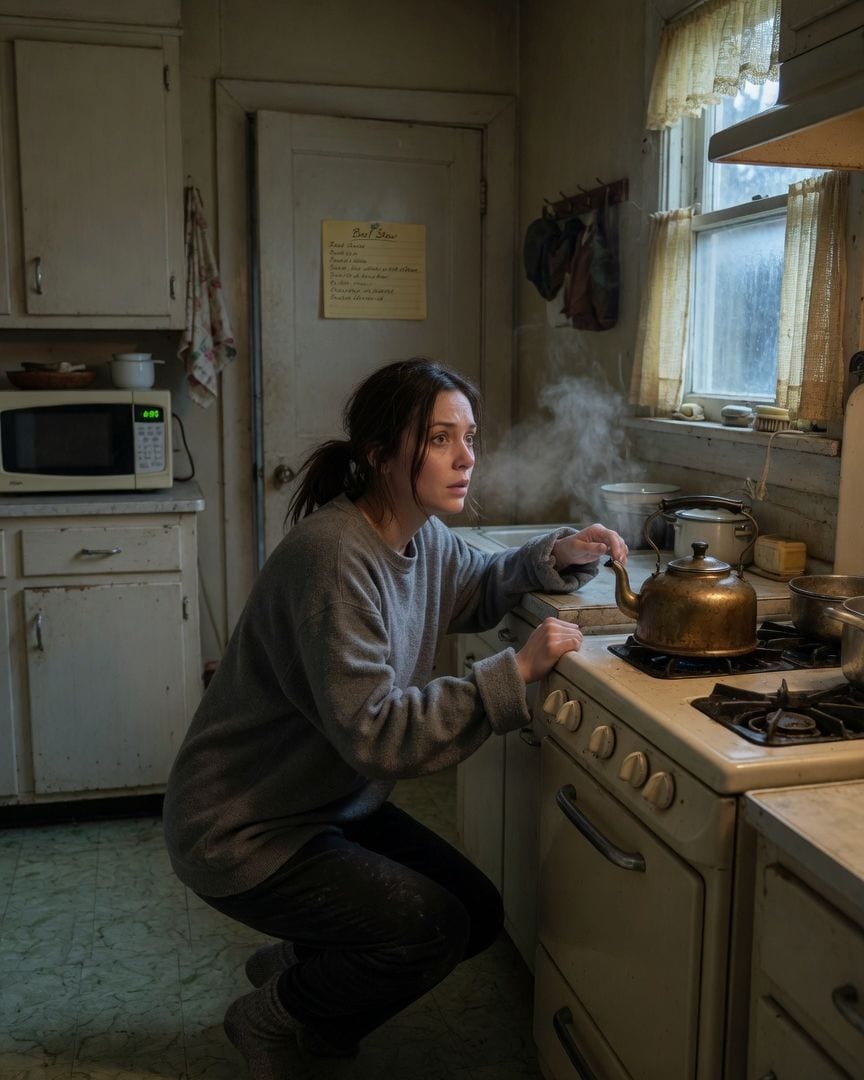
My front step is scrubbed white every Monday before dawn, wet stone and a bar of yellow soap left on the sill. I live alone. I've never scrubbed a step in my life.
Every Monday morning, before dawn, I find my front step scrubbed sparkling white. I live alone, haven't scrubbed it in years, and my security cameras show no one. Yet the damp stone always bears faint knee-prints and hand-marks, appearing as if by unseen hands.
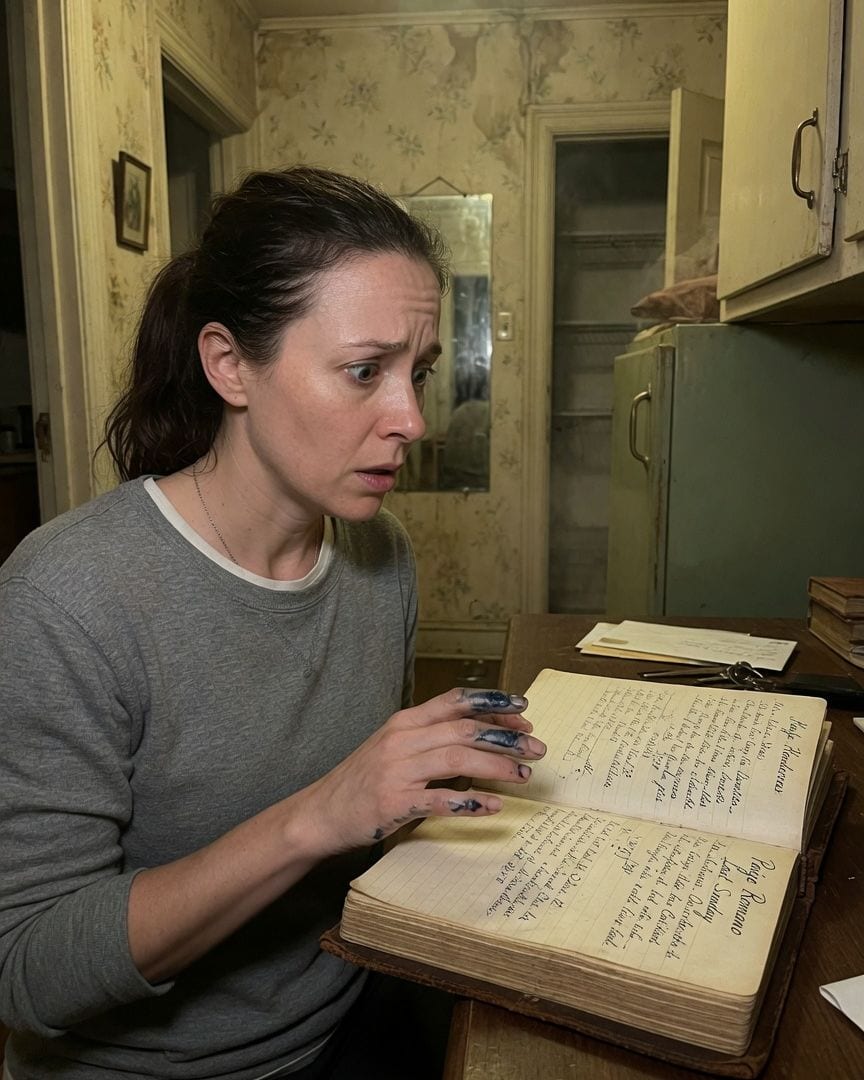
My visitors' book records guests who arrive in the future. Last Sunday, my own name appeared at the bottom, the ink still wet.
I bought an old house last March, complete with a dusty, leather-bound visitors' book. It seemed a charming relic, until I found new entries appearing, dated months into the future, the ink still wet. Then, my own name, Paige Romano, appeared, dated 'Last Sunday,' with a bead of ink shimmering at the 'R'.
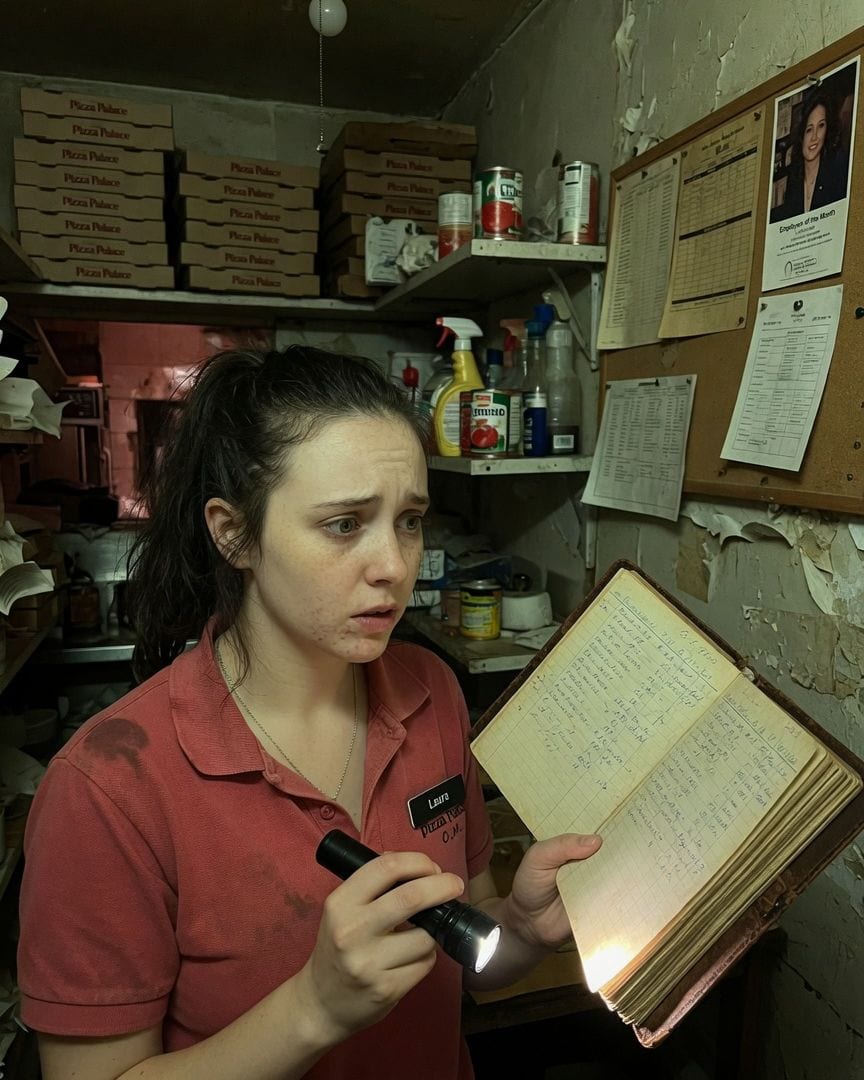
My 1:30 AM pizza caller always says 'you're a lifesaver.' The address on Lantern Street burned down years ago, and no orders exist.
I'm Laura Vance, working the night shift at Pizza Palace, taking routine late-night calls. But for months, a specific 1:30 AM order to 'Lantern Street' has felt wrong. My boss discovered the address burned down five years ago, leaving only a blackened shell.
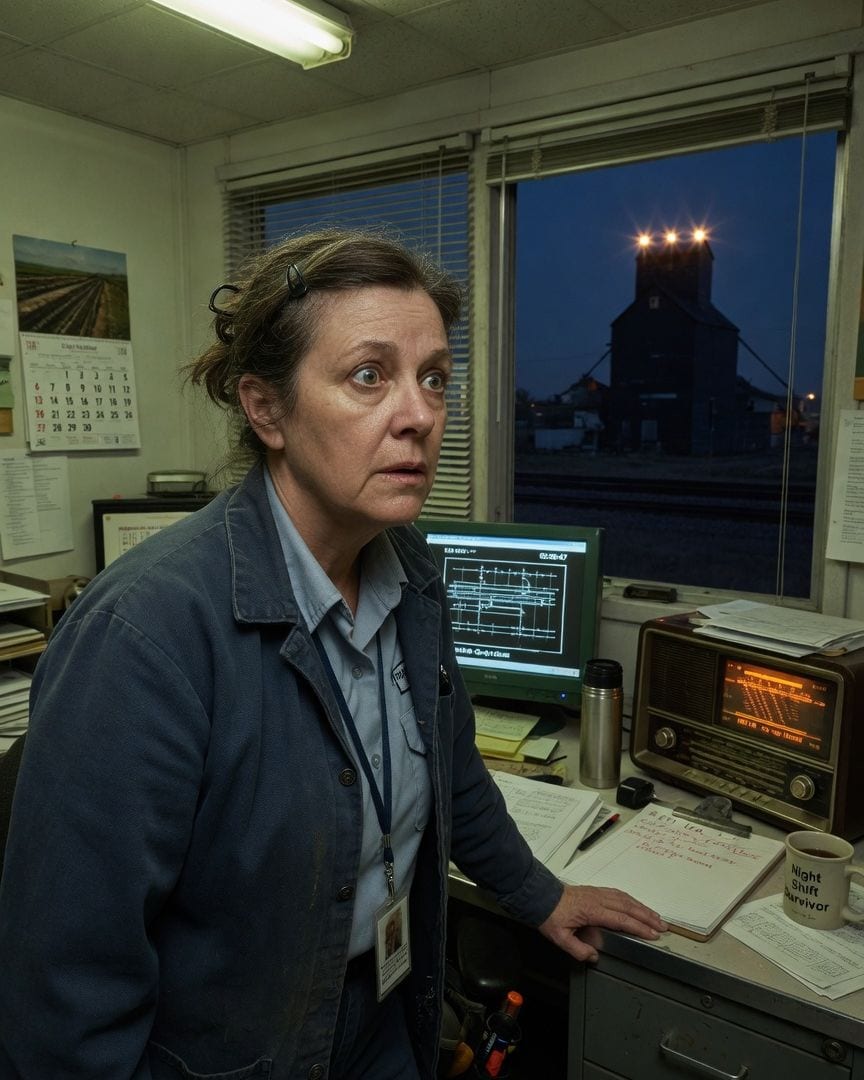
The grain tower light flashed three times at 2 AM, signaling me clear. The bulb was removed six years ago.
Every night, I work the lonely shift at the transport hub. For fifteen years, an old grain elevator, automated and unpowered with its light bulb physically removed, still flashes a 'Clear' signal across the tracks at 2 AM. Recently, the impossible flashes have grown sharper, stirring a deep unease from a place that should be completely silent.
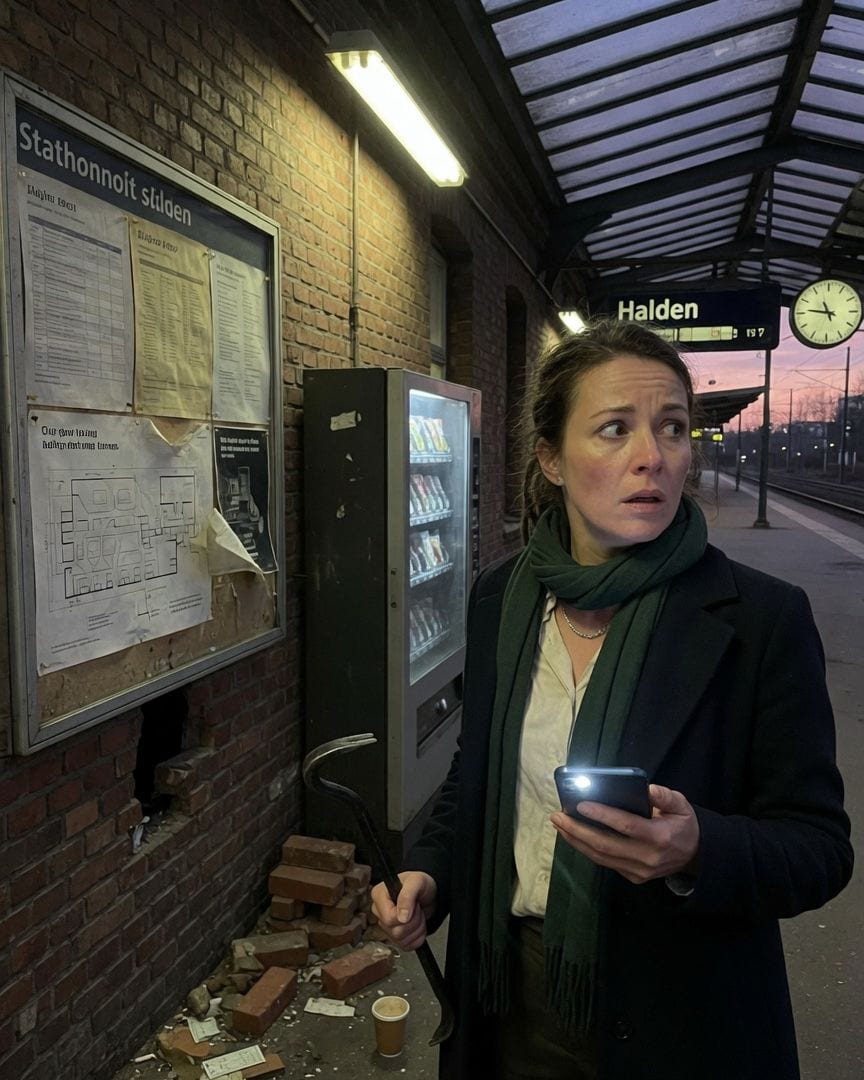
My train ticket took me from Halden to Marsh Cross, but the doors opened back on the Halden platform. The same guard checked the same clock. The fare was taken. Marsh Cross was never announced.
My usual forty-minute train journey to Marsh Cross was supposed to be uneventful, like dozens before it. But when the doors hissed open, I was back at Halden platform, my ticket stamped 'used' and forty minutes gone. The guard and station clock were exactly as I’d left them, as if I’d never departed at all.
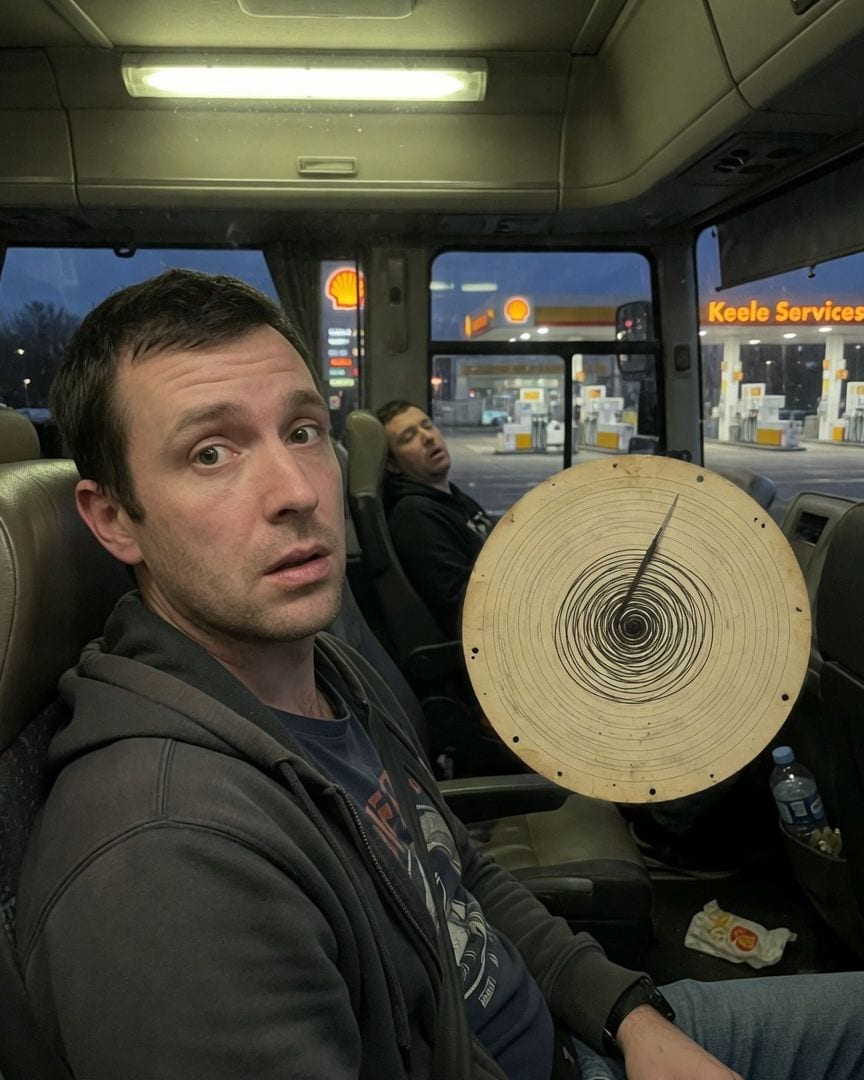
My coach stopped twice at Keele services this morning. Same pumps, same lit sign, the driver's log disc spinning a tight circle, never leaving the one place.
I was on an overnight coach, tired and stiff, when I first woke at Keele Services at 3:20 AM. An hour and a half later, I woke again to find us still there, the driver's log disc spinning a perfect, impossible circle of stasis.