A Cold War declassification reviewer watched a hitchhiker cover miles in minutes across 1970s photos. The missing final shot's index sheet had 'ACQUIRED' written on its reverse.
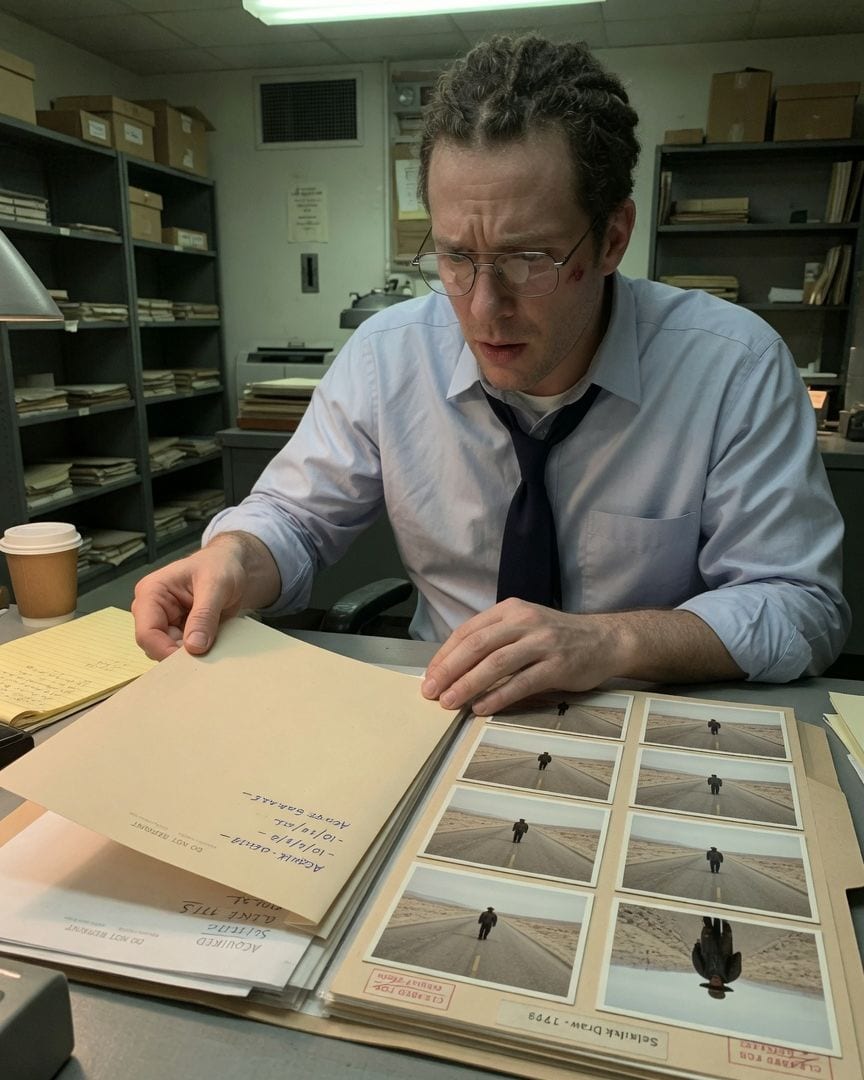
Corwin Ashby, a declassification reviewer, sat in the hushed, climate-controlled archive, the scent of old paper and ozone thick in the air. He pulled the Selkirk Draw file, a stack of 1970s photographs already cleared for public release.
He expected mundane desert landscapes, perhaps an old military installation. Instead, he found nineteen identical shots of a desolate stretch of two-lane road in central Nevada. Each image, taken minutes apart, showed the same empty horizon, the same cracked asphalt.
But in the first photo, a lone figure, a hitchhiker in a long, dark coat, stood at the absolute edge of the frame, a distant, almost invisible smudge.
In the next, he was noticeably closer. In the one after, closer still. By the nineteenth exposure, the man was directly under the lens, his coat filling the bottom third of the frame, the gravel at his feet impossibly sharp.
Corwin’s breath hitched. He checked the index sheet. There was a twentieth exposure listed, and it was missing. The note beside it read: DO NOT REPRINT.
Corwin’s methodical nature rebelled. A clerical error? A lost print? He cross-referenced the file against the shipping manifest. All photographs, including the missing twentieth, were accounted for upon initial receipt decades ago. He pulled up the original processing logs.
The camera used was a fixed-mount aerial survey unit, not a handheld. The 'hitchhiker' should have been a static object, or at most, moved a few feet.
But the sequence showed a progression that suggested impossible speed, covering miles in minutes.
He magnified the nineteenth photo, studying the hitchhiker's face. It was obscured by the brim of a hat, but the posture, the way the coat hung, it felt… too still, too perfect, for a person caught mid-stride.
He searched for a companion file, any related incident report. Nothing. The Selkirk Draw file was an isolated anomaly, a single, baffling entry in a sea of routine declassifications. He leaned back, the silence of the archive pressing in.
The rational explanation—a processing error, a double exposure—failed to account for the clear, impossible progression. Someone had seen this, logged it, and then deliberately removed the final, crucial piece.
The fluorescent lights hummed with a low, unwavering drone that suddenly seemed to press on his eardrums.
Unable to dismiss the file, Corwin carefully removed the index sheet from its protective sleeve. He ran his fingers over the 'DO NOT REPRINT' note, feeling the faint indentation of the old typewriter ribbon.
He turned the sheet over, hoping for a production stamp, a technician's initial, anything to explain the anomaly.
Instead, on the reverse, tucked away in a corner where it wouldn't be seen unless specifically looked for, was a hand-written annotation in faded blue ink. It was not part of the official record, not indexed, not classified.
It read: 'ACQUIRED - 10/14/78 - Unit 731-Gamma'. The word 'ACQUIRED' resonated with a cold, hollow dread, implying the hitchhiker wasn't just an image, but a physical thing, taken.
Corwin felt a prickle of unease crawl up his neck, a sensation of being watched even in the empty archive, the air growing unaccountably cold against his skin.
The 'ACQUIRED' note became Corwin's obsession. Unit 731-Gamma yielded no results in the declassified military records. It was either a defunct unit, a code, or still deeply classified.
He started cross-referencing the date, 10/14/78, against other classified archives, particularly those related to unusual aerial phenomena or unexplained disappearances in the Nevada region. Weeks blurred into a meticulous, frustrating hunt.
He found a single, heavily redacted radar log from a remote Air Force base, dated 10/14/78.
It noted an 'unidentified contact' moving at impossible speeds near the Selkirk Draw, initially tracked by two separate stations, then abruptly vanishing from all scopes. The official explanation, appended years later, cited 'atmospheric interference and equipment malfunction.'
The sheer audacity of the dismissal, given the dual-station confirmation, struck Corwin as a lie.
He also started noticing a pattern: other files, seemingly unrelated, containing brief, almost identical mentions of 'unaccounted personnel' or 'unusual ground-level activity' in isolated areas, often followed by a rapid reclassification or outright removal from public access.
The Selkirk Draw file was not unique; it was one thread in a vast, carefully woven tapestry of omissions. He began to feel a subtle shift in the archive's atmosphere, a sense of quiet scrutiny.
His usual lone lunch breaks were sometimes interrupted by Maxwell Caldwell, his section chief, making casual inquiries about his 'progress with the backlog.'
The archive's usual soft hum seemed to deepen, a constant, low thrum against the soles of his feet.
The scrutiny grew more pointed. Caldwell's questions became less about 'progress' and more about Corwin's specific research areas. "Anything interesting in the Nevada files, Corwin? Lot of old desert mirages in those."
Corwin offered vague, non-committal answers, but the feeling of being observed persisted. One afternoon, he found a small, unmarked folder tucked into his personal audit tray, distinct from his usual assignments. Inside was a single, photocopied page.
It was a fragment of an internal memo, heavily redacted, but the few visible words chilled him: '...containment protocols... Subject Zero-H... unauthorized inquiry...'
Below it, a handwritten note in a precise, almost elegant script, not Caldwell's, read: 'You're getting close, Mr. Ashby. Some things are best left filed.'
The message was clear, a direct warning. Corwin felt the hairs on his arms stand on end. He was no longer just auditing files; he was being assessed.
He remembered Cecilia Merritt, a retired archivist who had worked in this very section since the late 60s, known for her encyclopedic memory of the 'deep stacks.'
He knew she was a risk, but also his only hope for an unvarnished truth. He decided to seek her out, knowing he was now moving from observer to observed, and perhaps, to prey.
The fluorescent lights above him seemed to flicker with an almost imperceptible irregularity, casting faint, uneasy shadows that danced at the periphery of his vision.
Corwin found Cecilia Merritt in a quiet botanical garden, tending to a patch of roses. Her eyes, though aged, were sharp and knowing. He showed her the Selkirk Draw photos, then the 'ACQUIRED' note. She didn't flinch.
"Zero-H," she murmured, almost to herself. "They called it Subject Zero-H."
Corwin pressed, his voice low. "Who are 'they'? What was 'acquired'?"
Cecilia sighed, her gaze distant. "The Office of Special Records. Formed right after Roswell, but operating long before that. They don't 'declassify' anything, Mr. Ashby. They manage the narrative. The hitchhiker... it wasn't a hitchhiker. It was a manifestation.
They appear, they move with impossible speed, and they draw attention. Sometimes, they draw people." She described the phenomenon as a recurring, non-human entity, appearing in desolate places, always moving towards an observer, never speaking.
"The 'ACQUIRED' note," she continued, "means they managed to contain it, or at least, its immediate impact. For a time. But these things... they don't stay contained."
She explained that the 'DO NOT REPRINT' was a standard directive for any 'Zero-H' incident where the visual evidence was too clear, too undeniable. The radar logs, the 'unaccounted personnel' files – it all clicked into place.
The institution wasn't just covering up; it was actively managing the appearances of something inherently unmanageable, a pattern stretching back long before Corwin was born. The dread was in the coherence, the terrible, meticulous order of it all.
A cool breeze rustled through the rose bushes, and Corwin felt a shiver that had nothing to do with the temperature. The quiet garden, for a moment, seemed to hold the weight of decades of impossible secrets.
Cecilia gave Corwin a cryptic warning: "They don't like loose ends. And they certainly don't like new entries in old files."
Back in the archives, Corwin felt a renewed urgency. He searched for the 'Office of Special Records' Cecilia mentioned, finding only a ghost entry in a defunct government directory.
He then used his access to dig deeper into the 'Subject Zero-H' designation. He uncovered a series of internal directives, heavily compartmentalized, dating back to the 1950s.
One particular document, marked 'RESTRICTED - EYES ONLY - PROTOCOL RED-7', detailed specific 'Containment Protocols for Unauthorized Inquiry.' It described methods for 'neutralizing and reassigning' individuals who 'demonstrate persistent interest in classified Subject Zero-H incidents.'
His heart hammered against his ribs.
He scrolled down, his finger trembling, past sections on data scrubbing and personnel relocation. Then he saw it: a list of 'Monitoring and Disposition' identifiers.
And there, stark and undeniable, was his own employee ID number, listed under a recent date, next to the words: 'Initiate Protocol Red-7 on discovery of unauthorized access.'
The sterile hum of the archives suddenly felt like a distant, menacing drone, a premonition of what was to come. The file wasn't just old. It was still being written. And Corwin Ashby was its newest entry.
Corwin felt a cold, paralyzing certainty. His initial audit, his 'unauthorized inquiry,' had triggered the very protocols he was now reading.
The institution wasn't just covering up the entity; it was actively monitoring anyone who got too close to its truth.
He scrolled frantically through the 'PROTOCOL RED-7' document, finding entries detailing 'reassignment' of past inquirers: some to remote, dead-end posts, others simply vanishing from the records.
He found a chilling addendum: 'For persistent or high-level unauthorized access, Subject Zero-H may be deployed for direct containment.'
The implication was horrifying: the very entity the institution was supposedly containing, was also its weapon. The Selkirk Draw hitchhiker, the impossible speed, the 'ACQUIRED' status – it wasn't just a capture; it was a deployment.
The institution had known for seventy years, not just about the entity, but how to use it.
Corwin realized with sickening clarity that his 'discovery' was merely the institution allowing him to find what they wanted him to find, to bring him into their active file. Every clue, every breadcrumb, had been carefully laid.
He was not an investigator; he was a target, drawn in by the very 'wrongness' he sought to understand. The horror was in the perfect, chilling coherence of it all.
The climate-controlled air in the archive felt suddenly stagnant, heavy, as if the oxygen itself was being slowly drawn out of the room.
The archive's lights flickered. Corwin heard the faint, distant hum of the ventilation system change pitch, growing louder, more insistent. He knew it wasn't a power surge. It was a signal.
He had to get out, but the 'PROTOCOL RED-7' detailed how the building's exits would be sealed, communications jammed. He scrambled to export the documents, anything, onto a portable drive, his fingers fumbling with the unfamiliar interface.
A shadow fell across his desk. Maxwell Caldwell stood there, not with his usual benign smile, but with an expression of cold, detached authority. "Mr. Ashby. We've been expecting you to reach this point."
Caldwell held a tablet, its screen displaying Corwin's current location, a red dot blinking on a floor plan. "Protocol Red-7, initiated."
Corwin lunged for the exit, but Caldwell moved with an unexpected speed, blocking his path. The hum in the building intensified, a low thrumming that seemed to vibrate through the very floor.
Corwin felt a strange, cold pressure building in the air, a sense of vast distance collapsing. The lights flickered again, plunging the section into momentary darkness, then returning.
Caldwell was still there, but his eyes seemed to hold an unnatural stillness. Corwin felt a profound sense of disorientation, as if the space around him had subtly shifted, stretched. He looked past Caldwell, down the long aisle of files.
At the far end, where the shadows were deepest, a tall, dark figure stood. It was impossibly thin, its long coat indistinguishable from the gloom.
It moved, not walking, but seeming to glide, covering the vast distance of the archive aisle with a speed that defied physics. The hitchhiker. It was here. Caldwell smiled, a thin, satisfied curve of his lips.
"Welcome to the file, Mr. Ashby. You've been signed."
The next morning, the archive's security logs showed no irregularities. Maxwell Caldwell reported a minor system glitch overnight, easily resolved. Corwin Ashby’s workstation was empty. His personal effects were gone, his audit tray cleared.
His section was marked 'Transferred to Special Projects - Remote Assignment.' No further questions were asked. The Selkirk Draw file, along with all related 'Subject Zero-H' documentation, was re-sealed, re-classified at the highest level, and returned to its designated vault.
The file was closed, its contents once again buried, its secrets preserved. Another entry, another name, now part of the silent, ongoing record.
Corwin Ashby's last access attempt to the classified network timed out, his screen freezing on a blank login prompt. He looked around the small, windowless room, the air recycled and thin.
The stack of files on his desk was identical to the one he’d just finished, its yellowed paper smelling faintly of dust and ozone. He reached for the next file, his hands moving with a precise, almost mechanical efficiency.
He opened it, revealing the first of nineteen photographs of a desolate stretch of two-lane road in central Nevada.
In the first photo, a lone figure, a hitchhiker in a long, dark coat, stood at the absolute edge of the frame. He knew the sequence by heart. He knew the twentieth exposure was missing. He knew the note.
And he knew what came next. There was a faint, almost imperceptible humming in the walls. He picked up his pen, ready to begin.
Maxwell Caldwell, back in his office, received a secure message: 'Ashby, C. - Protocol Red-7: Complete. Subject: Reassigned to Archive Audit, Sector Gamma. Processing initiated.' Caldwell nodded, a slight, knowing smile playing on his lips. He closed the message.
The file was still being signed.
If this one got to you
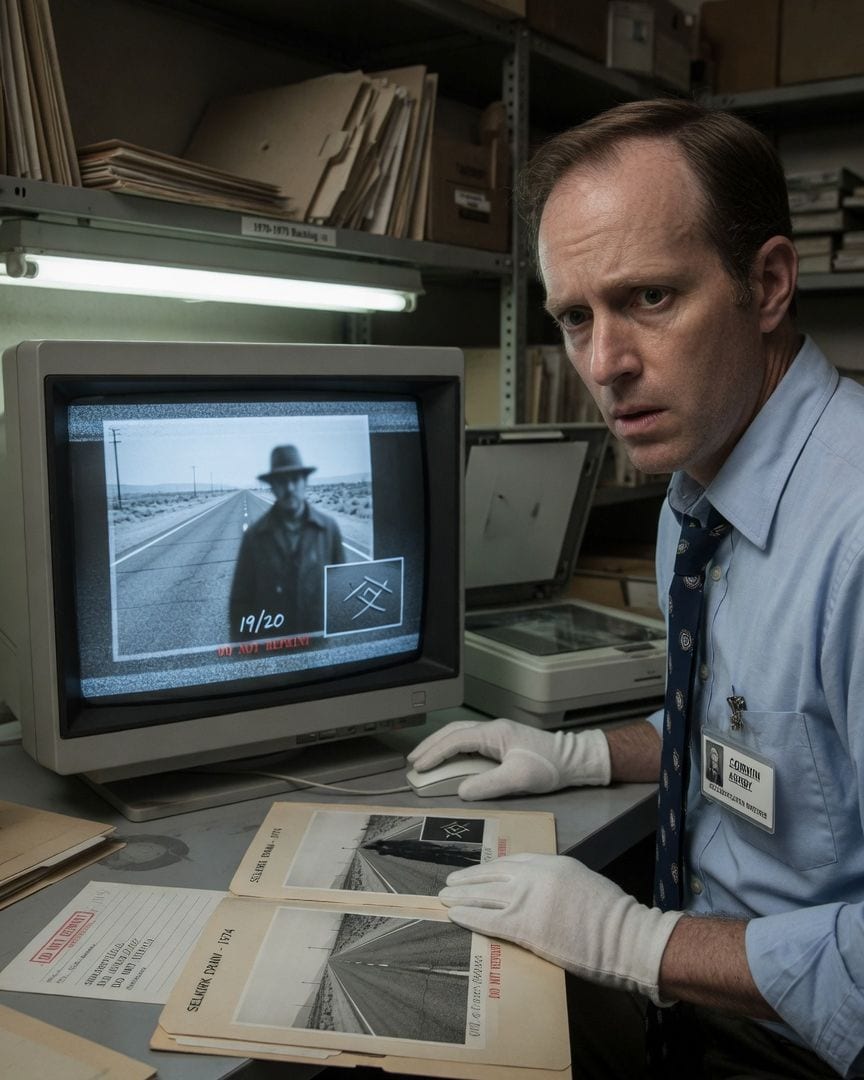
A declassification reviewer scans a Cold War photo, and the hitchhiker's blurred eyes in the image shift, looking straight out at him.
Corwin Ashby, a declassification reviewer whose life revolved around meticulous order, pulled a dusty file from a 1974 backlog. Inside, nineteen black-and-white photographs tracked a lone hitchhiker on a desolate Nevada road, each image showing him steadily nearing the camera until his face blurred inches from the lens. The twentieth photo was missing, but its slot bore a stark 'DO NOT REPRINT' stamp and the unsettling handwritten notes: 'SUBJECT ACQUIRED' and 'DO NOT VIEW.' As Corwin tried to digitally enhance the final available image, the hitchhiker's blurred eyes in the photograph seemed to shift, looking directly out of the frame.
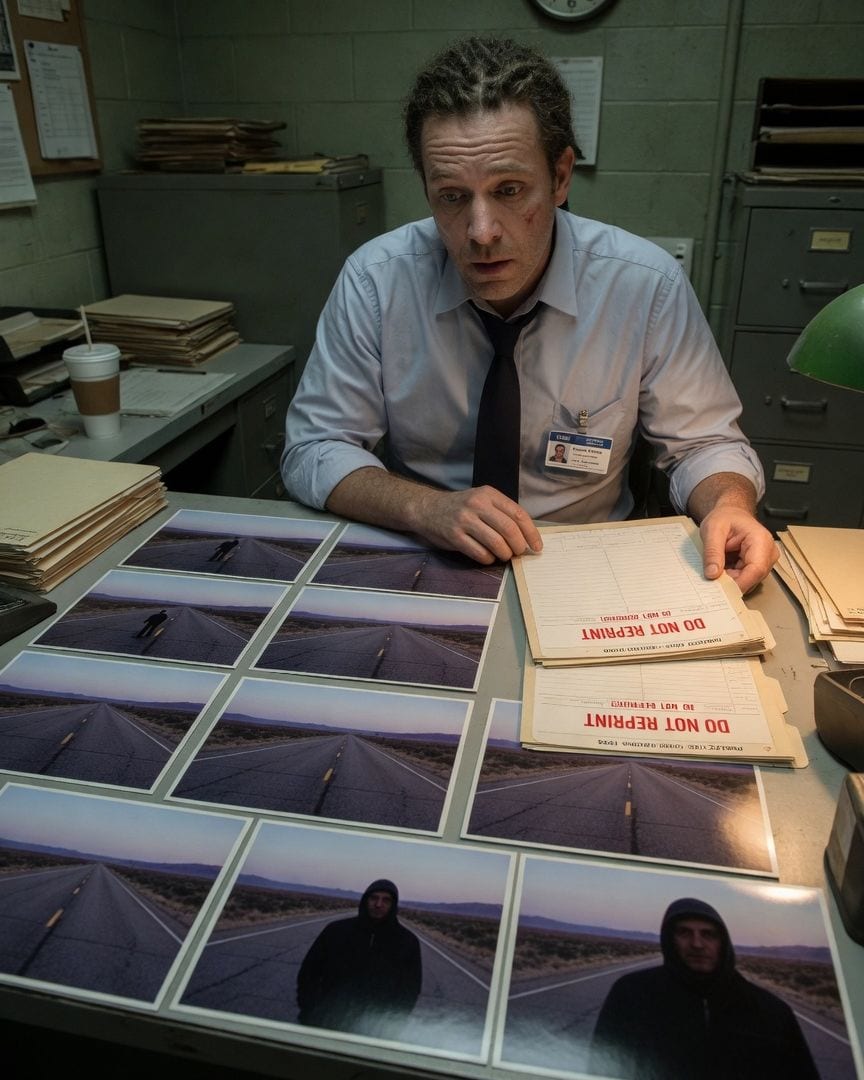
A records reviewer, trusting order, found a Cold War file: a hitchhiker appeared closer in nineteen photos, but the last was gone, stamped 'DO NOT REPRINT'.
Reviewer Corwin Ashby, whose professional life was built on faith in official records, pulled a Cold War-era file from the backlog, expecting routine images. Instead, he found nineteen glossy prints of an empty Nevada highway, each showing a lone hitchhiker advancing impossibly fast towards the lens. The twentieth photo was missing, replaced by a stark 'DO NOT REPRINT' stamp. Corwin's search for an explanation led him to a second, identical file from 1958, revealing the same impossible sequence and another vanished photographer. What secret did these missing photos hide?
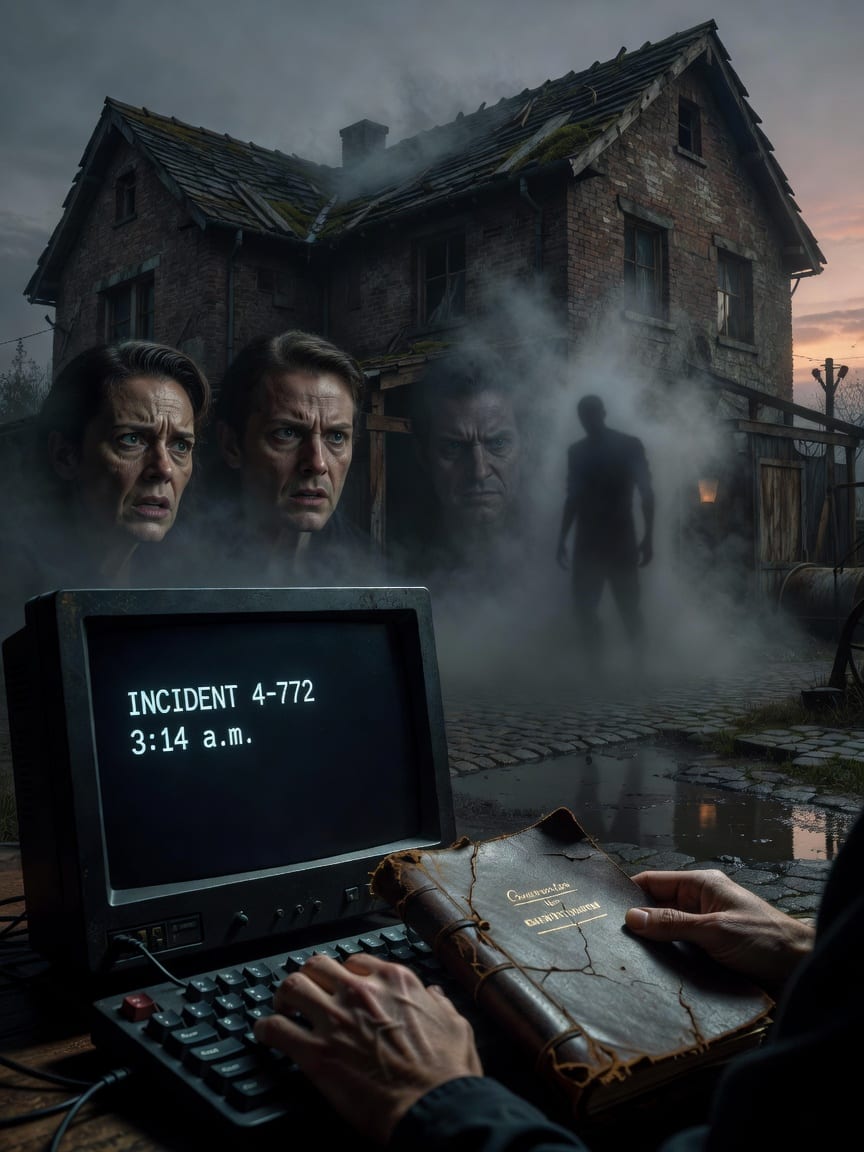
My screen showed Incident 4-772: a fire at the old rope works, 3:14 a.m. It was logged again for 1980. Then 1967. And 1993. Same incident, same time, same building. Each report ended with the same three words: 'expect recurrence.'
As a new archivist, I usually found my work digitizing old fire service records monotonous, until I found a heavily redacted line in a 1961 site assessment. Faint letters beneath the black bar slowly revealed my own family name, DRUMMOND, dated years before I was even born.
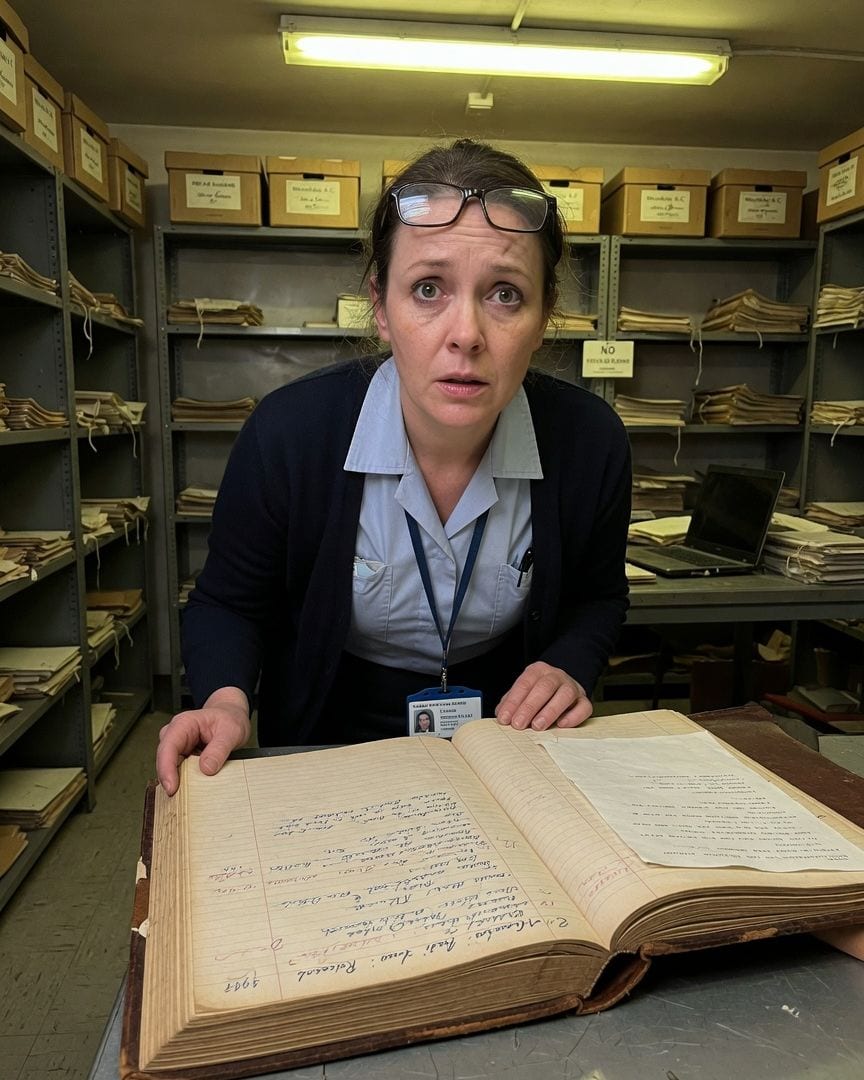
My ambulance trust's incident log shows callout 22-014 to 6 Cathcart Row at 2:40 AM. Every four years, the same call, same address. Always 'patient not found'.
My job involves tedious data entry for ambulance calls, but Incident 22-014 was different. It appeared every four years, always at 2:40 AM, always closed as 'patient not found.' Digging into the dusty physical archives, I found an entry from 1961 for the exact same incident, but its resolution read: 'Subject Secured. Relocated to "Holding".'
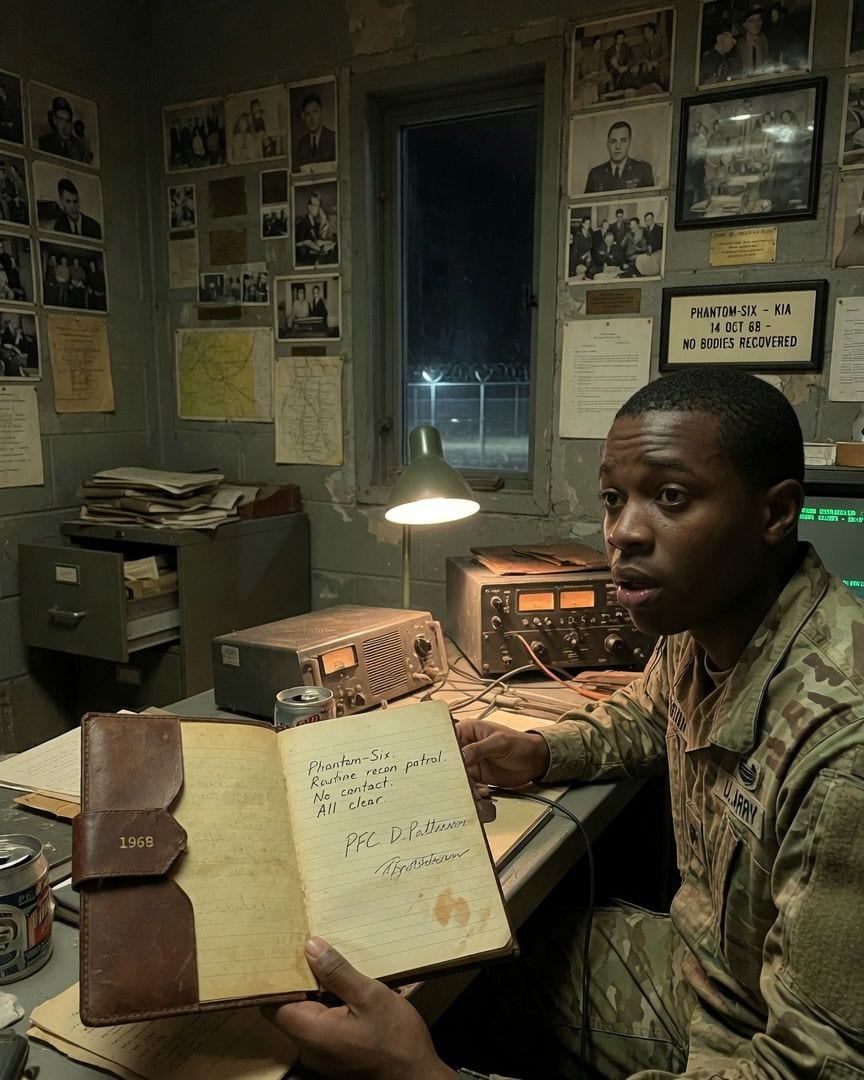
A DMZ specialist finds a 1968 Cold War logbook entry, signed by a lost soldier, its ink shimmering faintly.
Specialist James Farr, on a long night shift at a desolate Korean DMZ outpost, meticulously monitored his console, a squared-away soldier accustomed to the quiet hum of equipment. His focus shattered when a faint, static-laced whisper ghosted from a dead channel, calling out 'Phantom-Six' — a unit lost near this wire in 1968. The urgent voice then specifically mentioned his tower window light, asking him to turn it off before it drew fire. Later, an old logbook from 1968 revealed an entry dated three days *after* Phantom-Six was officially lost, signed by one of the vanished soldiers, its ink subtly shimmering with an unnatural gleam.
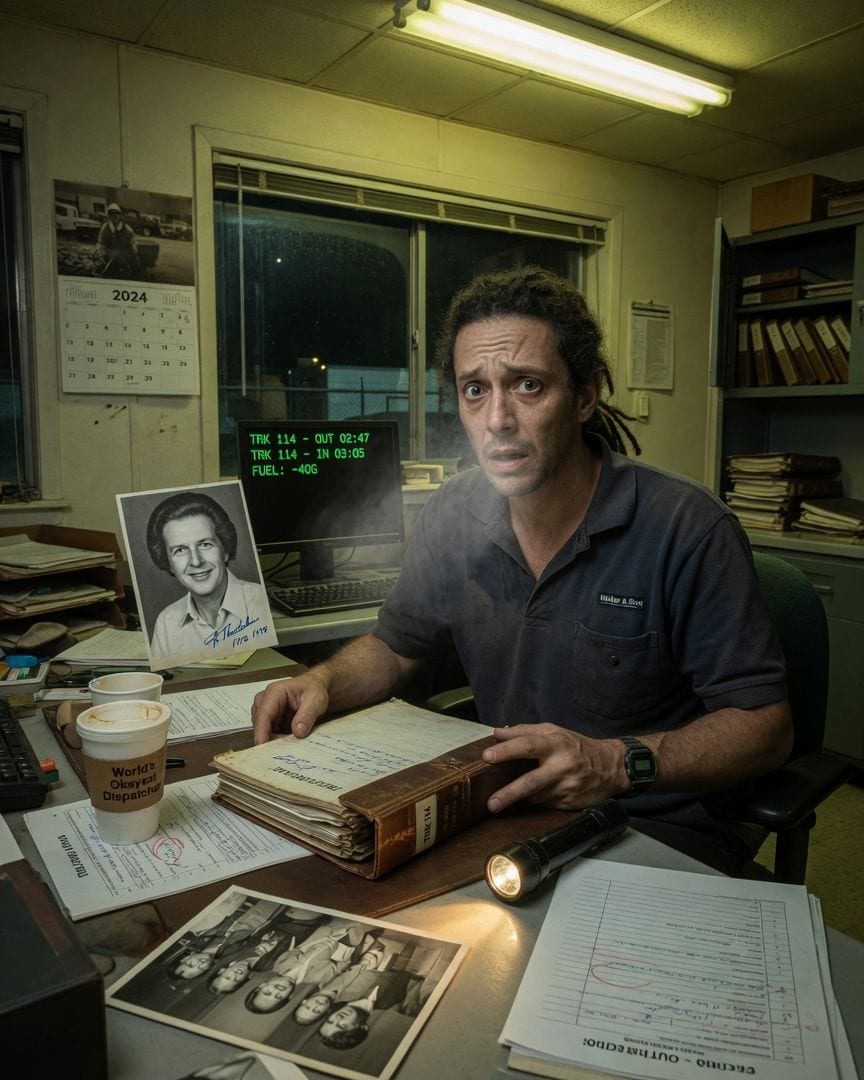
Truck 114 logged forty miles gone last night. It was on the lift, no wheels, and I was the only dispatcher.
My shift in the freight yard dispatch office was quiet, just routine monitoring. But then the CAD system logged Truck 114 moving out for a forty-mile run. That truck was impossible; it had no wheels and was on blocks in maintenance all week.