A Cold War helicopter logged impossible flight hours overnight. Its new mission target: 'Non-Terrestrial Signal.'
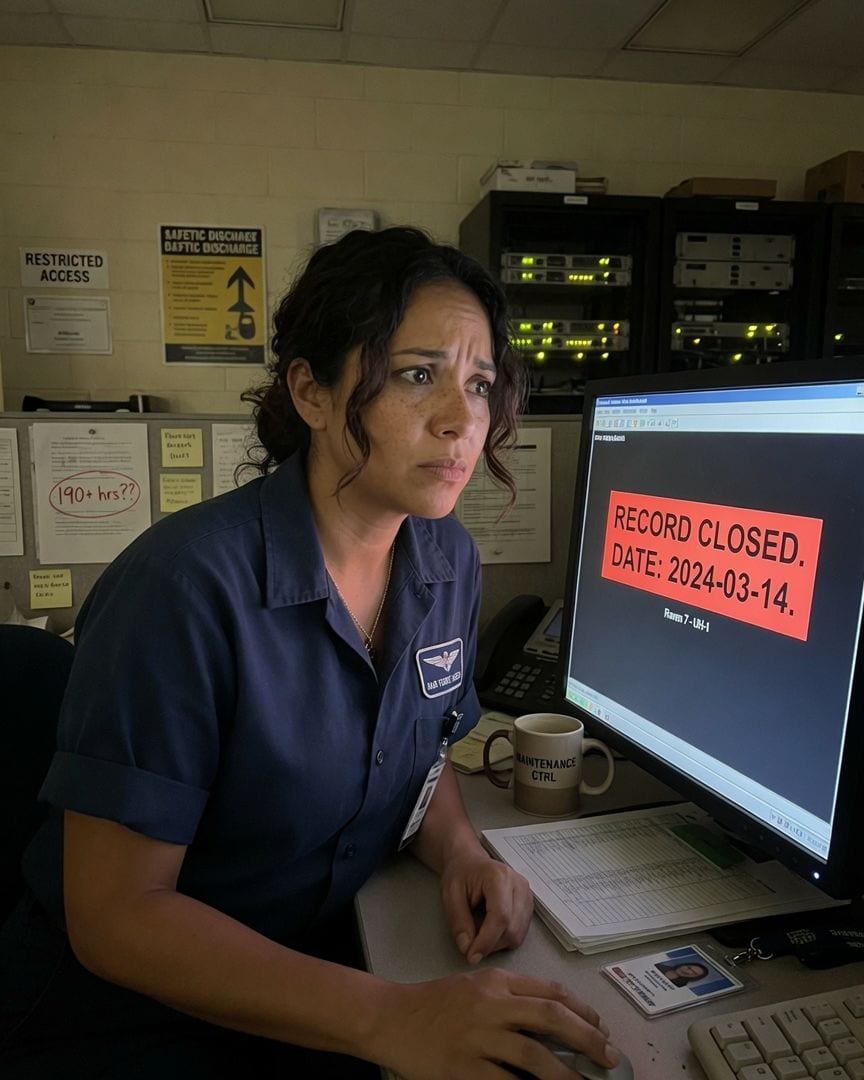
Odalys Prieto, 32, a meticulous maintenance controller at the Air Force Records Annex, clicked through the digital archives. Her task: close the file on 'Raven 7,' a UH-1 Huey officially lost in the Nevada ranges in 1984.
A hiker had recently found its tail rotor, bringing the cold case back into her queue. The system, usually flawless, presented a glaring anomaly that made her pause.
Raven 7’s historical airframe record showed 190 flight hours accrued since its loss. The entries were logged in precise tenths, detailing blocks of hover time and crew durations, spanning decades.
Each entry listed its origin as a data station officially demolished in 1991. Odalys frowned, flagging it as a severe data error, a ghost in the machine. Such a massive, consistent discrepancy was unheard of.
She spent a good hour double-checking filters, refreshing caches, even running a rudimentary database integrity scan. No, the numbers were there. The system insisted on Raven 7's impossible post-1984 existence.
She logged off, the low thrum of the servers in the quiet office a constant, almost comforting presence.
The next morning, before her first coffee, Odalys pulled up the file again. Her stomach tightened. The total had gone up by two point four hours.
Odalys, unnerved, tried to rationalize it. A system glitch, a delayed batch upload, a ghost in the network finally clearing a queue.
She ran diagnostics, cross-referenced with the base’s current flight logs, searching for any possible misattribution, any shared identifier that could explain the ghost entries. Nothing. Raven 7 was a phantom, existing only within this one, impossible record.
She pulled up the raw data for the new entries, digging past the summary screens. The 2.4 hours were broken into three distinct segments: a 0.7-hour 'reconnaissance patrol,' a 1.2-hour 'intercept sweep,' and a 0.5-hour 'return to base.'
The details were too specific, too purposeful, to be random numerical corruption.
Attached to the 'intercept sweep' entry, dated just hours ago, was a single, cryptic note: 'Target Acquisition: Non-Terrestrial Signal.'
Odalys stared at the screen, her rational mind reeling. A UH-1 Huey from 1984, supposedly destroyed, was performing 'intercept sweeps' for 'non-terrestrial signals' in 2024?
And the system had quietly added the data overnight, as if it were routine, a simple update to an active asset’s log. The ordinary explanations dissolved, one by one. A virus wouldn't generate such specific mission profiles.
A glitch wouldn’t write 'Non-Terrestrial Signal.' This wasn't a malfunction. This was a record. A live, active, impossible record. A cold, hard dread began to settle in her chest, heavy and undeniable.
She knew this wasn't a glitch. This was a live record, actively being updated.
Odalys quickly copied the relevant data – the full log, the cryptic notes, the impossible timestamps – to a secure drive, her fingers flying across the keyboard. Every instinct screamed at her to save it before it vanished.
Just as the transfer completed, the monitor emitted a faint, high-pitched whine that seemed to emanate from deep within its casing. It flickered violently, colors momentarily inverted, then went completely black.
When the display reappeared, the entire historical log for Raven 7—all 192.4 hours of impossible flight—had vanished. In its place, a single, stark line appeared on the screen, in bold red letters: 'RECORD CLOSED. DATE: 2024-03-14.'
Odalys leaned back, a tremor running through her hand as it hovered over the mouse. Someone, or something, had just covered its tracks.
Odalys immediately called her supervisor, Arthur Caldwell, 55, Chief of Records Management. Caldwell listened patiently, his face impassive as she explained the ghost hours, the cryptic notes, and the sudden, complete deletion of the file.
Caldwell, a by-the-book veteran with a thick file of commendations, initially suggested a sophisticated virus or a disgruntled former employee with high-level access. The fluorescent hum of the office lights seemed to mock his calm pronouncements.
But Odalys placed the secure drive on his desk. 'A virus doesn't write 'Non-Terrestrial Signal,' Arthur,' she said, her voice tight with suppressed urgency. 'And it doesn't close a file the second I copy it to a secure local drive.'
Caldwell, seeing the raw data—the precise segments of flight, the impossible dates, the unsettling note—his skepticism began to give way to a grudging unease.
He authorized Odalys to work with Everett Russo, 41, their IT specialist, to trace the source of the impossible entries.
Everett, a quiet man who lived for code, delved into the network logs with a meticulous focus. He found no trace of an external breach. No malware signatures, no suspicious IP addresses from outside the system.
The entries for Raven 7 had originated from within their own network, from a series of internal IP addresses that, when traced, pointed to defunct servers, decommissioned terminals, and even a building that had been flattened for a new parking lot in 2005.
It was a digital ghost trail, impossible to follow to any physical location, yet undeniably internal. The unease Odalys felt sharpened into a palpable presence in the clean, silent server room.
As Odalys and Everett dug deeper, the anomalies began to multiply.
Everett noticed faint, encrypted packets of data, too small to be meaningful on their own, consistently bouncing between the old, defunct IPs and a single, active server within their classified network—a server designated 'Project Nightfall.'
Access was restricted to a handful of high-level personnel, none of whom were in their department. Odalys felt a prickle on her neck.
They were not just investigating a glitch; they were poking at something that watched them back, a digital eye that knew their movements.
One afternoon, as Odalys walked to her car, she noticed a black sedan with tinted windows parked across the street, its engine idling. The engine purred, a low, constant note in the otherwise quiet parking lot.
It was still there when she left work the next day. She tried to dismiss it as coincidence, a security detail, or a visitor. But the feeling of being observed grew, a chilling certainty.
A few days later, a sealed, unmarked envelope appeared on her desk. Inside was a single, laminated photograph: a grainy aerial shot of the Nevada ranges, with a tiny, blurred image of a Huey helicopter in the center.
Beneath it, a handwritten note, the ink a faded blue: 'Some files are best left closed, Ms. Prieto. The desert has a long memory.'
The photograph, clearly taken from another aircraft, showed Raven 7, but it wasn't a crash site. The helicopter appeared remarkably intact, sitting on a barren, flat plateau.
Around it, the air itself seemed to shimmer, a faint distortion rising from the desert floor. Odalys showed it to Caldwell, who went pale, the color draining from his face as his eyes fixed on the image.
He recognized the terrain instantly.
'This… this isn't possible,' he stammered, his usual composure utterly gone. His hand trembled slightly as he pointed at the Huey. 'Raven 7 was vaporized on impact, officially. The reports were definitive.'
Odalys pressed him, the question hanging heavy between them. 'What do you know about 'Project Nightfall,' Arthur?'
Caldwell hesitated, running a hand over his face, his gaze lost somewhere beyond the photograph. 'It was… a rumor,' he finally said, his voice barely audible. 'Cold War era. Something about a recovery operation.
Something they found in the desert after the Raven 7 incident. They said it wasn't a crash. They said… they said it was still active.'
He admitted that decades ago, a small, highly compartmentalized unit had taken over the Raven 7 file, and he'd been given explicit orders, under pain of court-martial, to never inquire about it.
The 'demolished station' was a cover, he now realized, a way to isolate its digital footprint, to ensure no one outside the 'Project' would accidentally stumble onto its records.
'The flight hours… they're real, aren't they?' Odalys asked, the pieces clicking into a terrifying mosaic.
Caldwell nodded slowly, his eyes meeting hers, full of a deep, weary resignation. 'They're real. And the helicopter… it wasn't lost. It was filed away, and its new purpose, whatever it is, was filed with it.'
The cryptic mission notes, the impossible maneuvers, the 'Non-Terrestrial Signal'—they now made horrifying, unsettling sense. Raven 7 was still flying, but it was no longer a Huey in any conventional definition.
Odalys and Everett, now working in a state of high alert, found a hidden directory within 'Project Nightfall’s' server. It wasn't just Raven 7.
The directory contained thousands of similar 'ghost files' for other 'lost' or 'decommissioned' assets: ships, aircraft, even entire satellite units, all with impossible, ongoing logs. The 'demolished station' was just one of many proxies in a vast, distributed network.
This wasn't a single cover-up; it was an entire, parallel infrastructure of reality, mirroring their official records, but telling a much darker truth.
One of these ghost files, labeled 'Operation Chronos,' included a sub-file containing personnel records. Odalys opened it, expecting to find long-dead Cold War agents, names relegated to history. Instead, she saw a list of names, all with current security clearances.
Her blood ran cold as she recognized the first name on the list: 'Foster, Lorraine.' The former Head Archivist, now a 'special projects consultant,' a woman Caldwell had quietly suggested Odalys consult for her 'institutional memory.'
Odalys stared at the screen, a new, deeper dread settling in. Lorraine Foster wasn't just a resource; she was part of the file, and she was still writing it.
Odalys confronted Lorraine Foster in a sterile, windowless conference room, the air conditioning whirring with a subtle, mechanical patience. Lorraine, 68, sat calmly across the polished table, her hands folded neatly, a faint, knowing smile playing on her lips.
She didn't deny anything.
'Project Nightfall isn't about covering up a crash, Ms. Prieto,' Lorraine explained, her voice soft but unwavering, filling the quiet room. 'It's about managing an ongoing reality that the public, and frankly, most of the military, isn't equipped to comprehend.'
She detailed how Raven 7, after its 'loss,' had been discovered near a crash site of an 'unidentified aerial phenomenon.' It wasn't destroyed; it was recovered, altered, integrated with recovered technology, becoming an autonomous observation platform.
The impossible flight hours, the 'Non-Terrestrial Signal' logs, the advanced composite tail rotor found by the hiker—all were real data from its continued operations.
'The demolished station was a firewall,' Lorraine continued, her gaze steady. 'A way to compartmentalize the data flow. The actual logging system operates autonomously, updating the 'ghost files' from secure, off-grid locations.
It’s a self-sustaining bureaucratic mechanism, designed to ensure operational continuity regardless of political shifts or personnel changes.'
The pattern across decades and classifications, the pattern Odalys had seen in 'Operation Chronos,' was the system's inherent design: to keep track of every anomaly, every 'Thing on the Scope' that refused to unhappen, by folding it into its own, self-referential reality.
The terror for Odalys was in the cold, logical coherence of it all; everything made sense, and that sense was horrifying.
Lorraine leaned forward slightly, her smile deepening. 'You've seen the files, Odalys. You understand now. The system doesn't just record; it integrates. You are now part of its operational awareness.'
She offered Odalys a position within Project Nightfall, a role in 'records management for unclassified assets.' The calm assurance in Lorraine's voice was chilling. She wasn't threatening, but stating a fact, an inevitable conclusion.
Odalys realized the choice was an illusion. She could accept, and disappear into the system's labyrinth, becoming another quiet cog in its unseen machinery.
Or she could refuse, and likely be 'filed away' in a different, permanent manner, her existence reclassified out of civilian life, perhaps even memory.
The black sedan, the photograph, the vanishing log—these were not warnings but gentle nudges toward an inevitable conclusion.
She felt the weight of the file, not just Raven 7's, but her own, closing around her, its invisible pages already documenting her decision.
'What happens if I refuse?' Odalys asked, her voice barely a whisper, the question feeling academic, rhetorical.
Lorraine smiled, a slight, almost imperceptible tilt of her head. 'Refusal is also a data point, dear. And the system has protocols for every contingency.' Odalys knew she couldn't escape. The secrecy machine didn't kill; it absorbed.
It didn't erase; it reclassified. Her only hope was to become a different kind of witness, from the inside.
She took the job, her mind racing, already planning how to leave her own hidden trail, her own 'ghost file' within the system, however small.
Odalys Prieto was quietly transferred to a new, highly specialized department. Everett Russo was reassigned to a remote data center in Utah, his access privileges mysteriously curtailed.
Arthur Caldwell, shaken by the revelations and the subsequent internal investigation, retired early, citing 'health reasons.'
The file for Raven 7 remained 'closed' in the public database, its impossible hours now sealed away, an administrative anomaly forgotten by all but a very few.
Odalys's new office was deep within the facility, windowless and quiet, surrounded by other quiet individuals who moved with a similar, knowing resignation.
The black sedan was gone, replaced by a sense of omnipresent, internal surveillance that permeated every corridor, every screen, every conversation.
Odalys now spent her days managing 'unclassified assets'—files that were technically public, but contained subtle, almost imperceptible discrepancies; tiny, impossible threads that, if pulled, would lead to the same hidden web she now inhabited.
She logged her hours, meticulously, quietly, always aware that her own file was still being written, by hands unseen, in a system that never forgot. She knew the truth, but the truth was a cage, exquisitely constructed and utterly inescapable.
One evening, as she left her new office, she passed Lorraine Foster, who offered a serene smile from the threshold of her own, similarly sequestered office. 'Sleep well, Odalys,' Lorraine said, her eyes glinting with a deep, unsettling understanding.
'The system never truly rests.' Odalys merely nodded, the weight of everything she now knew a cold, permanent presence in her chest.
The lost were never lost. They were filed. And the file was still being signed.
If this one got to you
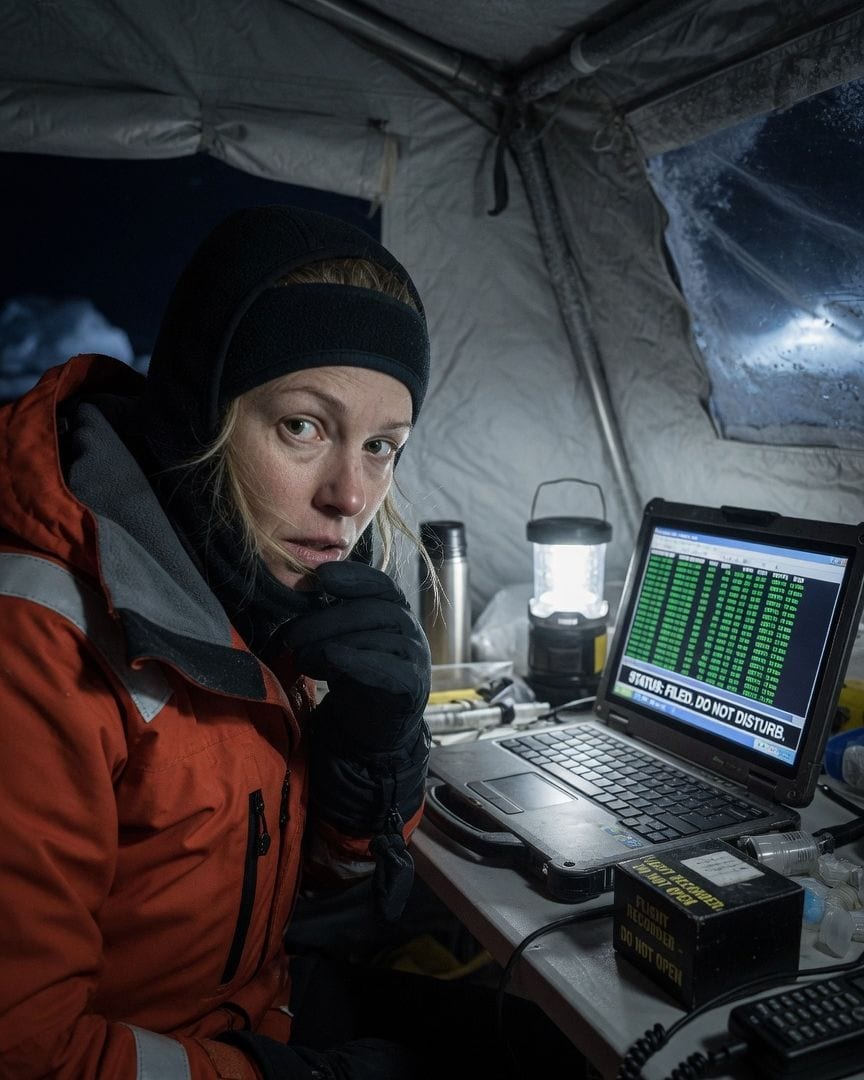
A glaciologist finds a Cold War plane 60 feet down in Greenland ice, its navigation lights still burning after sixty years.
Glaciologist Ines Faurholt skied across the vast, blinding Greenland ice cap when her path was abruptly blocked by a dark, corroded antenna mast. Beneath it, sixty feet down in ancient ice, a Cold War reconnaissance aircraft sat with its navigation lights eerily burning and its cockpit clock steadily keeping time. The sight was a violation of everything Ines knew about time and preservation in this frozen world. She called for a team, and days later, they extracted the plane's flight recorder, revealing data that showed the aircraft still flying years after its disappearance.
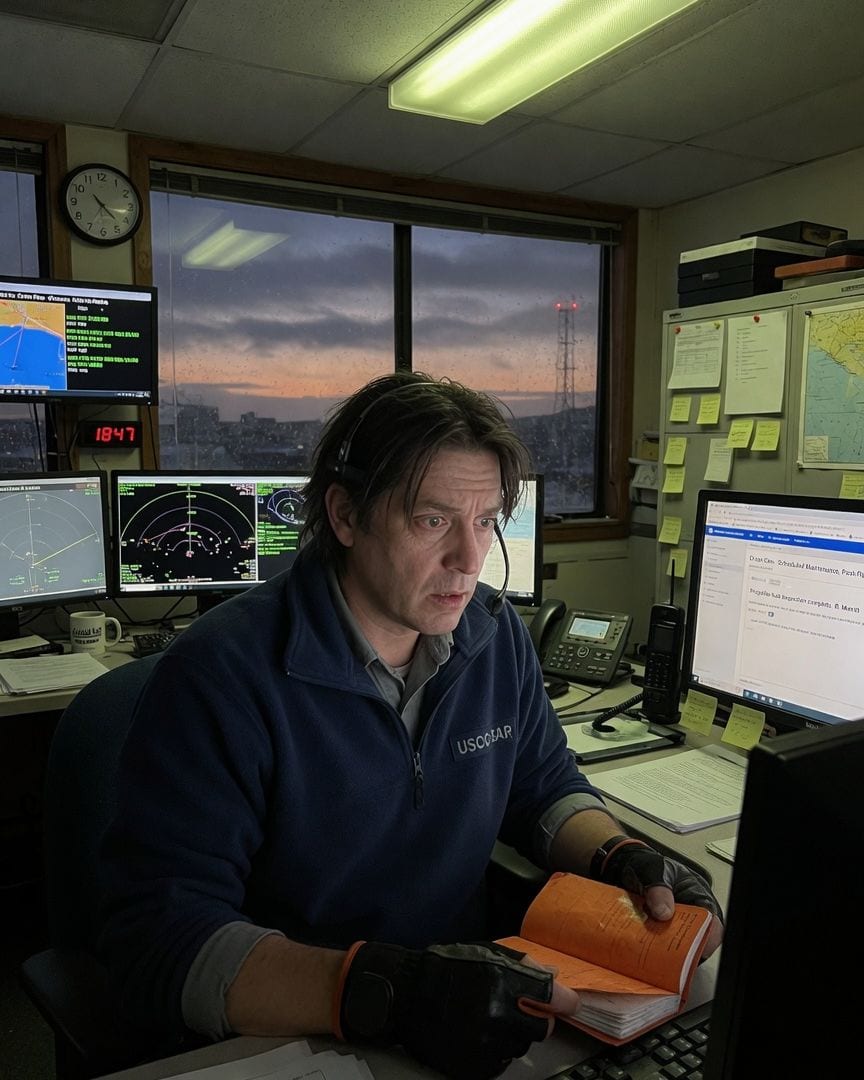
A Coast Guard coordinator found a lost plane's maintenance report, digitally signed two days after it vanished.
Dell Krznaric, a US Coast Guard Search and Rescue Coordinator, faced the grim task of standing down the search for 'Orion One,' a transport missing nine souls for eleven hours as sundown approached over the frigid Aleutian waters. His critical rescue window was closing fast. When a fishing trawler found an empty life raft, Dell discovered a survival log inside—its last entry dated eight hours into the future, reporting an engine sound yet to be heard. Later, he found a maintenance report for the lost aircraft, digitally signed by Loadmaster R. Merritt, dated two days after its presumed loss. The system accepted the impossible signature, leaving Dell to wonder how a lost plane's records could still be writing from a future that hadn't arrived.
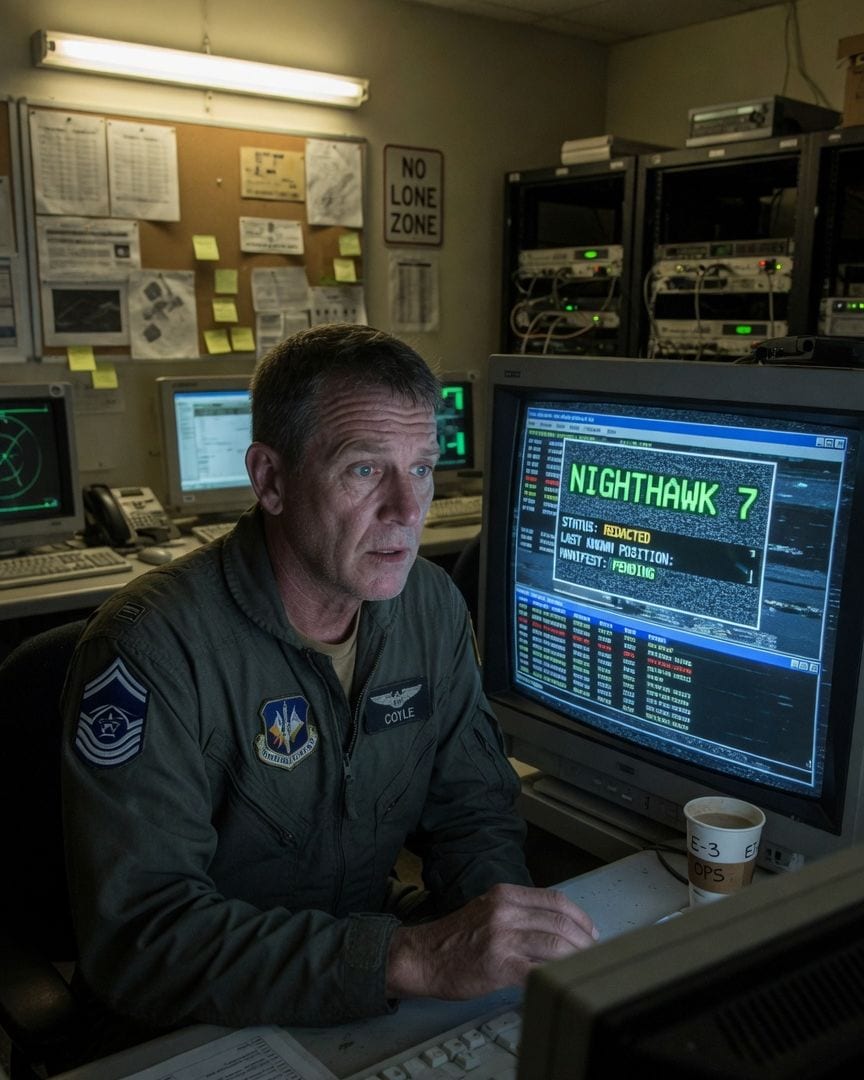
A ghost radar blip returned for Master Sergeant Coyle, three months from retirement. Its call sign: NIGHTHAWK 7, status REDACTED.
Master Sergeant George Coyle, nearly three decades in uniform, counted the last missions before his retirement. High above the black North Atlantic, his E-3 Sentry hummed with the familiar, impossible truth of a ghost radar blip. This single return squawked nothing, eluding every filter and fighter jet sent to investigate, yet the precise systems swore it was there, inbound, week after impossible week. Driven by obsession, Coyle later found a flicker of data: the call sign "NIGHTHAWK 7." Investigating further, an obscure database revealed its status as 'REDACTED,' with its last known position matching the ghost track. What forgotten project was haunting the skies, precisely where it had been scrubbed?
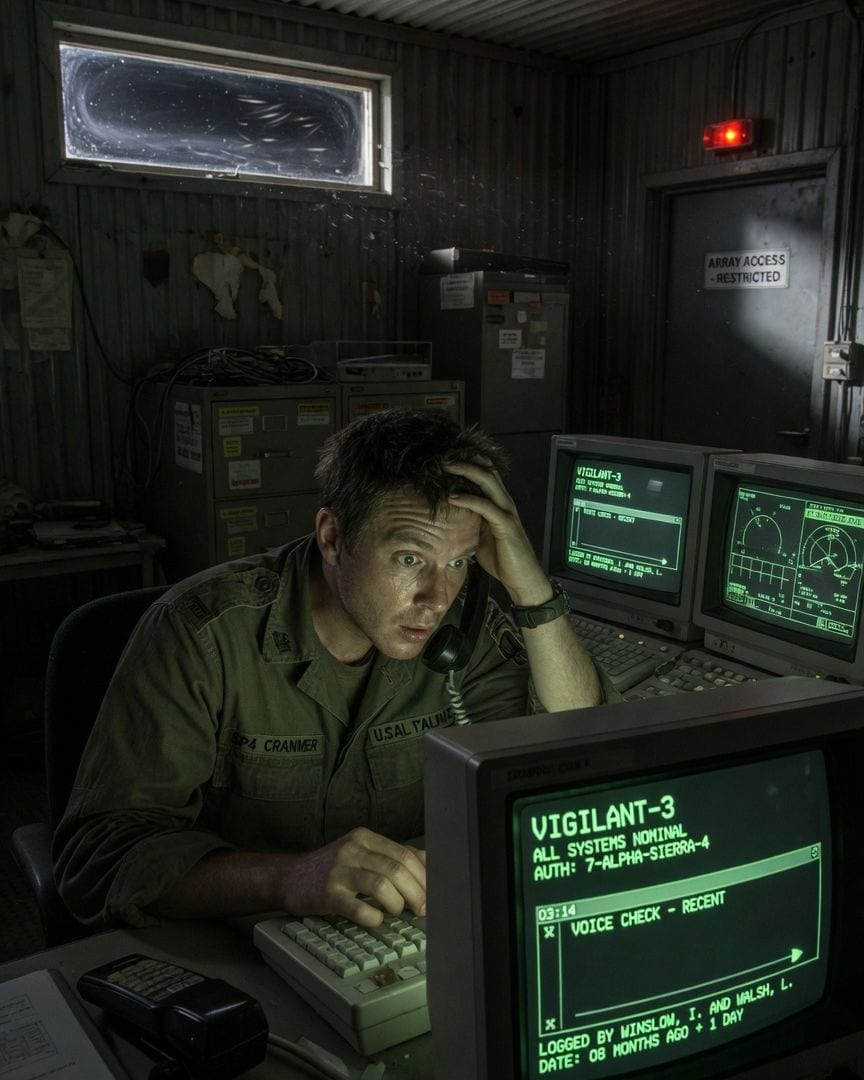
Specialist Cranmer’s console logs a voice from a station destroyed eight months ago. Its dead operators ask, 'Did anyone ever find out what happened to us?'
Specialist Arthur Cranmer endured another lonely overnight watch at Radar Site 4, the wind howling outside his isolated Anatolian post. At 0314, a routine comms check brought a chilling response from Vigilant-3, a station that had burned down, killing its two operators eight months prior. Cranmer's commanding officer dismissed it as a glitch, but the radar specialist knew better. He accessed classified logs, uncovering eight months of regular 'all systems nominal' check-ins from the destroyed station, authenticated by the dead operators. He then found his own recent call, logged by the same two k*lled personnel, followed by their haunting question: 'Did anyone ever find out what happened to us?'
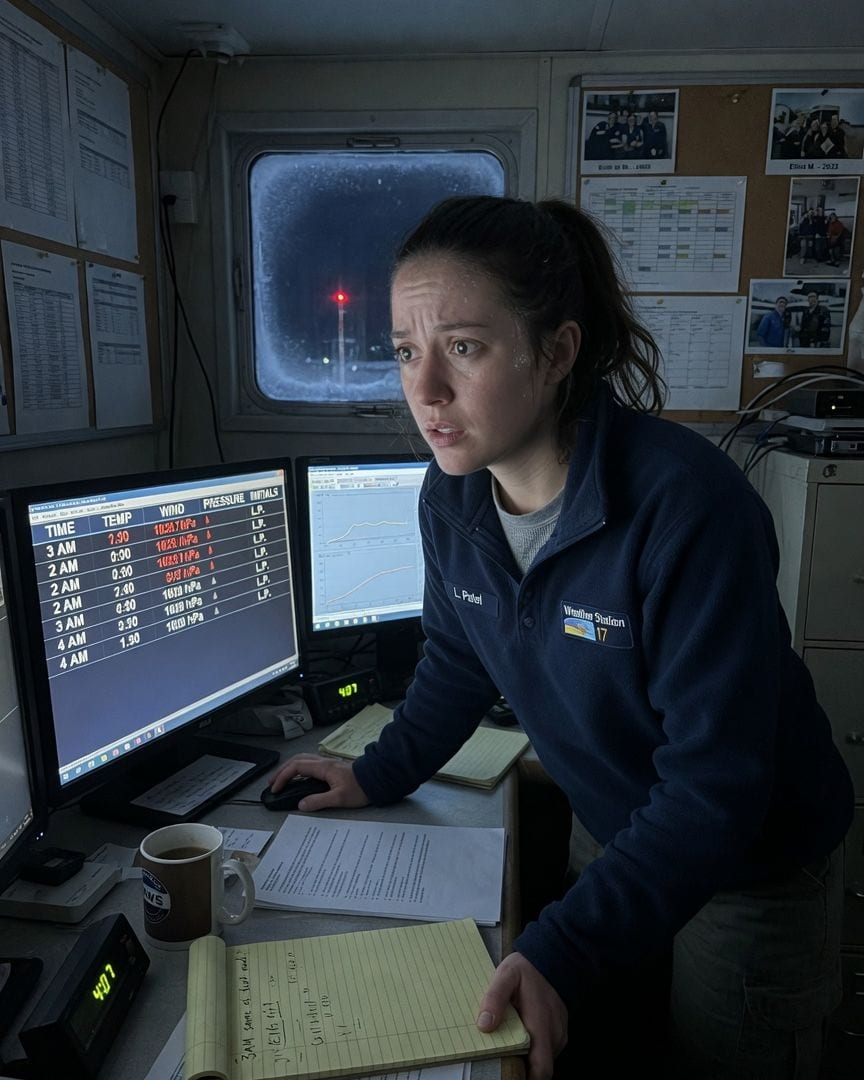
My weather station's 3 AM log shows a pressure reading I never made. My initials are on it, but the dials were dead still.
Working the overnight shift at the remote weather station, I routinely checked the digital logs. The 3 AM entry showed an impossible barometric pressure spike, a hurricane that simply hadn't happened. I distinctly remembered being outside at that time, calibrating a sensor, not making that entry. Yet, my initials, L.P., were clearly logged next to data I never made.
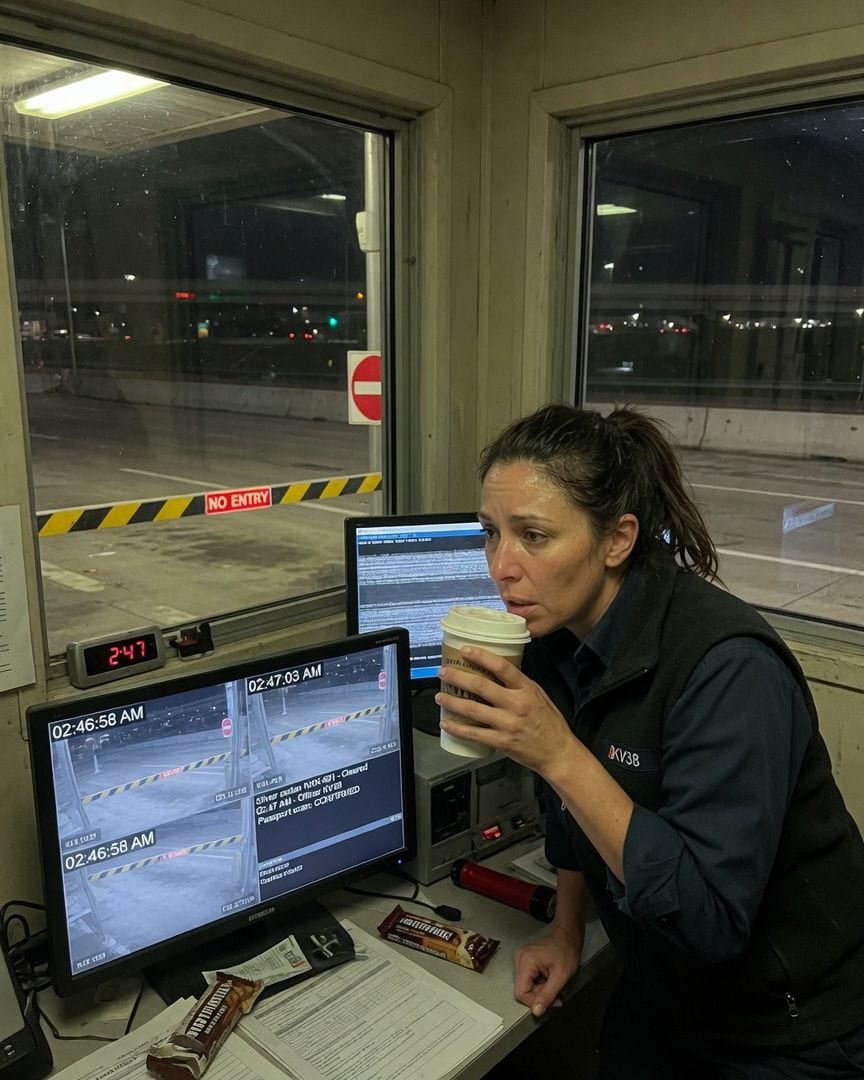
My lane's barrier was down, but my log cleared a car at 2:47 AM. With my code.
Working the quiet overnight shift at the Vance-Romano land crossing, I expected only routine system logs. Instead, a new entry showed a silver sedan cleared northbound through my Lane 3, stamped with my officer code. The issue: my lane had been closed and locked all night, and I hadn't seen a single car pass. Then I discovered the external camera feed for those crucial seconds was simply gone.