A glaciologist finds a Cold War plane 60 feet down in Greenland ice, its navigation lights still burning after sixty years.
The Greenland ice cap stretched in blinding white, an endless sheet of light. Glaciologist Ines Faurholt, pushing her skis across the vast expanse, felt the sudden, jarring impact against something solid.
She looked down, expecting a hidden crevasse, but saw instead a dark, corroded antenna mast protruding from the ice. It was impossibly out of place, an anachronism on the pristine, ancient surface.
Below her, sixty feet down through the impossibly clear, blue ice that had taken six decades to close around it, sat a reconnaissance aircraft. Its navigation lights, a soft, eerie red and green, were burning.
Through the cockpit glass, the digital clock on the instrument panel glowed, its numbers steadily keeping time.
The sight was a violation of everything Ines knew about preservation, about decay, about the sheer, crushing weight of time in this frozen world. Nothing man-made could survive here like this, let alone power itself.
She pulled out her satellite radio, her gloved hand trembling slightly, and hailed Marcus Kingsley, the field operations lead back at camp.
“Marcus,” she said, her voice tight, “I need you to check something for me. Anything. Is there anything in the world that could still be drawing current, sixty feet down in solid ice, after sixty years?”
The silence that followed was thick, broken only by the whine of the wind across the ice and the faint, impossible hum she imagined coming from below.
Marcus, initially skeptical, dispatched a small team, including research assistant Tessa Russo, to Ines’s location. Days of careful excavation with steam drills and specialized ice-coring equipment allowed them to reach the aircraft.
The team confirmed Ines’s initial observation: the plane was remarkably intact, its internal systems still humming with power. The interior was pristine, frozen in a moment, devoid of any human remains or signs of struggle.
It was a perfect, frigid diorama. Their priority became retrieving the flight recorder. With painstaking effort, Ines and Tessa extracted the hardened black box from its mounting.
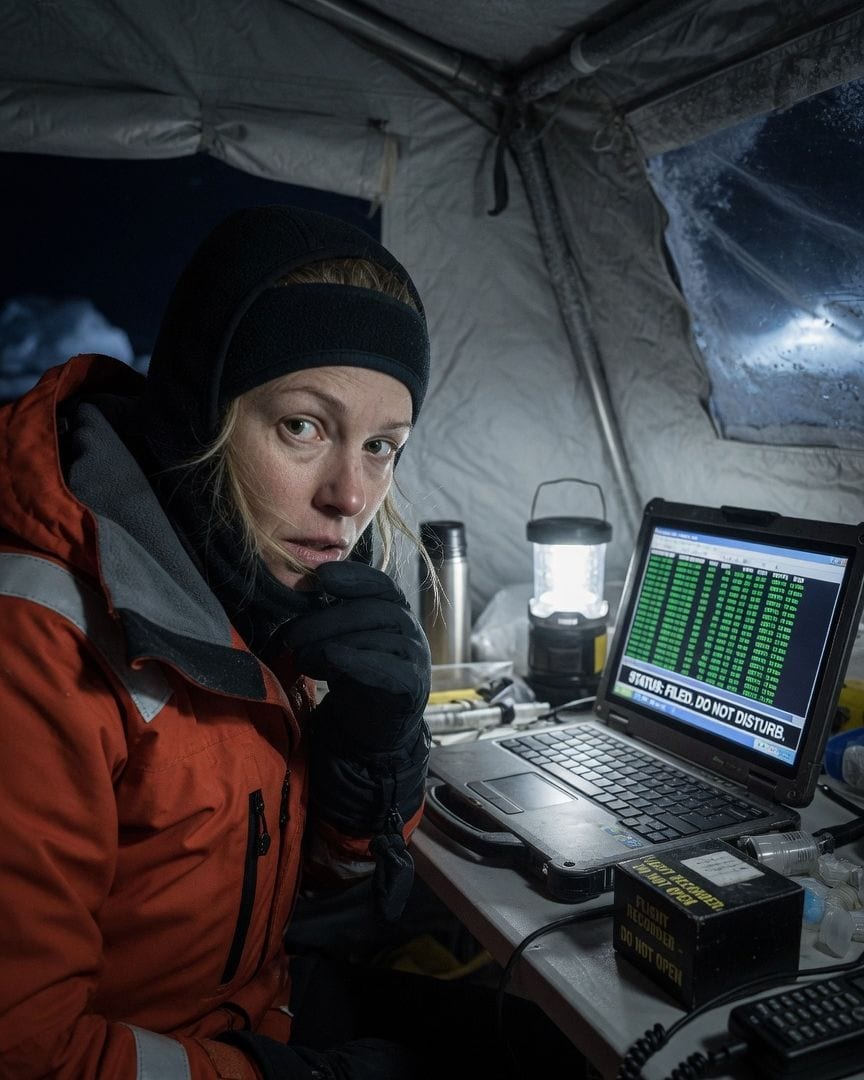
Back at the temporary lab tent, Ines uploaded the data to her workstation. The initial playback showed standard flight parameters, routine radio chatter, all consistent with a reconnaissance mission from the mid-1960s.
Then, a segment of the data became garbled, a burst of static and impossible frequencies, before abruptly clearing. The subsequent entries, however, were what truly froze Ines. The altitude, speed, and heading data continued, but the timestamps were wrong.
They jumped. One entry showed the aircraft at its current depth, dated years after its known disappearance.
Marcus, peering over her shoulder, tried to offer a rational explanation. "Bad memory chip, Ines. Or ice pressure distorting the sensors. It's an old unit, after all." He tapped the monitor. "Sixty years of ice could do anything."
But Ines shook her head, zooming in on the data. The readings were too coherent, too specific, for simple malfunction. The plane, according to its own log, had flown for years after it vanished.
And then, it stopped, precisely at their current coordinates. The tent air felt colder, tighter, as she replayed the impossible sequence again.
Ines kept digging into the flight recorder’s data, ignoring Marcus’s dismissals. She ran diagnostic after diagnostic, cross-referencing every anomaly. The impossible timestamps were not glitches; they were deliberate entries, clean and precise.
Hidden deep within a corrupted sector, a single, uncorrupted log line stood out.
It detailed a final, frantic transmission, a pilot’s voice, calm but strained, reporting an 'unidentified contact' – a 'thing on the scope' – followed by a series of coordinates that matched her current location.
And then, below that, a final, stark entry, uncharacteristic of any flight log she’d ever seen, dated nearly a decade after the plane’s reported loss, in a font that seemed alien to the rest of the data.
It simply read: 'STATUS: FILED. DO NOT DISTURB.'
The 'FILED' entry haunted Ines. She knew it wasn’t a malfunction. Back at the main camp, she worked obsessively, cross-referencing the flight recorder data with every declassified Cold War document she could access from the expedition’s limited satellite connection.
Tessa, intrigued by Ines’s intensity, offered to help, sifting through digital archives. Ines focused on the coordinates and the cryptic 'unidentified contact.'
She found fragmented references to a highly classified initiative, 'Project Icefall,' that briefly appeared in intelligence reports from the mid-1960s, then vanished. Official records stated 'Project Icefall' was an atmospheric research program, but the language was vague, full of redactions.
There were brief mentions of 'loss of contact' for specific reconnaissance assets in the Greenland sector during that period, but no crash sites, no recovery efforts, just a bureaucratic shrug.
The official narrative was always a weather-related loss, a simple tragedy of the vast, unforgiving Arctic. But the details never quite aligned with the plane Ines had found.
The aircraft type, the specific mission parameters, the timing – they were always almost right, but with crucial discrepancies.
It was as if the facts had been carefully edited to fit a convenient lie, leaving just enough trace elements to suggest a deeper, more disturbing truth.
The unease grew with each mismatched date and redacted paragraph, tightening around her like a chill.
Tessa discovered a memo detailing the reassignment of an entire ground crew involved in 'Project Icefall' to four different commands within a single week, effective immediately after a 'containment exercise.' No explanation was given.
The pattern suggested deliberate obfuscation, not mere clerical error.
Ines’s queries began to hit walls. Her requests for access to more sensitive Cold War archives were met with automated denials or weeks of bureaucratic delays.
Her secure network connection, usually robust, became intermittent, with strange packet losses that seemed to coincide with her most intense research sessions. One morning, she received an anonymous email. The sender's address was a string of random characters, untraceable.
The email contained a partial, blurry scan of a document, an official manifest for 'Project Icefall,' clearly marked 'Top Secret.' It listed the aircraft Ines had found by its tail number, along with a crew manifest.
But the scan cut off precisely at the name of the mission commander, a deliberate truncation. Below the image, a single, chilling line of text read: 'Let sleeping ice lie. Some things are best left buried.'
Ines felt a prickle of cold sweat, despite the chill of the tent. Someone knew. Someone was watching her. She tried to trace the email, but it bounced through a dozen servers before disappearing into the digital ether.
Later that week, while reviewing satellite imagery of her camp, she noticed a faint, almost imperceptible anomaly—a recurring heat signature, small and transient, just beyond the perimeter of their established exclusion zone, appearing only at night. It wasn't an animal.
It wasn't her team. It was too regular, too deliberate, a pulse against the vast emptiness. The hunt had become personal; she was no longer just an investigator, but the observed.
Frustrated by the official stonewalling and the unsettling anonymous warning, Ines decided to pursue a more unconventional route.
Tessa had mentioned an obscure, semi-retired archival specialist, Daniel Vance, known for his encyclopedic knowledge of Cold War-era classified projects and his disdain for bureaucratic secrecy.
He ran a private, unofficial archive from a quiet office in Washington D.C., accessible only by appointment and reputation. Ines made the arduous journey, leaving the stark white of Greenland for the muted grays of the city.
Vance, a man with steel-gray hair and unnervingly calm eyes, listened patiently as Ines laid out her evidence: the active aircraft, the impossible flight log, the 'FILED' status, the redacted 'Project Icefall' documents.
He initially dismissed it all as an elaborate hoax or a series of misinterpretations, citing the unreliability of old data and the vastness of human error. "Glaciologist Faurholt," he said, his voice even, "the government loses things. They misplace things.
They misfile things. It's a vast, inefficient machine."
Ines pushed back, her voice rising with a controlled passion. "Not this, Mr. Vance. Not a plane still drawing current after sixty years, with a log that explicitly states it's 'FILED.' This isn't a misfile. This is deliberate."
She showed him the anonymous email, the partial manifest, the 'thing on the scope' entry.
Vance's calm façade finally cracked, almost imperceptibly. A flicker of something — recognition, perhaps even a hint of respect — crossed his eyes. He leaned forward, his hands clasped on his desk, the fluorescent lights reflecting dully in their surface.
"Project Icefall," he murmured, a name Ines had only seen in redacted documents. "It wasn't an atmospheric study, Dr. Faurholt. It was a containment operation. The aircraft wasn't lost. It was secured.
The 'thing on the scope' was an anomaly, a phenomenon that defied conventional physics. It could… re-contextualize reality. 'Unhappen' things.
The plane was encased to preserve it, to fix a point in time, and its data was scrubbed from public record. It was an exercise in strategic forgetting." He paused, his gaze unnervingly steady. "The 'FILED' status?
That meant it was officially removed from active history, but preserved as a reference point. For them." The air in the quiet office suddenly felt charged, heavy with unspoken implications.
Vance stood up, walked to a secure terminal on his desk, and with a series of complex biometric and keycard authentications, brought up a new interface. "You've earned this, Dr. Faurholt," he said, his voice devoid of emotion.
On the screen, Ines saw a live feed, a high-resolution image of the buried aircraft, its navigation lights glowing softly in the blue ice, a spectral beacon in the depths.
The cockpit clock steadily advanced, a digital pulse in the frozen tomb. It was real. It was still active.
Below the feed, an activity log scrolled, displaying system diagnostics, power levels, environmental data from the ice. It was a continuous stream of information, updating every few seconds, a silent testament to its ongoing operation. Ines watched, mesmerized and horrified.
This was the true nature of the 'buried record,' not a static archive, but a living, breathing monitor. Then, as her eyes scanned the log, a new line appeared, typed in real-time, the pixels forming with unnerving speed.
It read: 'Glaciologist Ines Faurholt. Accessing Project Icefall. Status: OBSERVED.' The timestamp was current, precise to the second. Ines felt a wave of icy terror. The file wasn't just old; it was current.
And she was now an entry in it. The implication was chilling: the system that 'filed' the plane, that 'unhappened' its existence, was still active, still watching, and had now turned its gaze on her.
Vance watched Ines’s horrified reaction, his expression unreadable. "The 'Thing on the Scope' wasn't just an object, Dr. Faurholt. It was a localized temporal anomaly, a ripple in reality that could erase events, people, even entire timelines.
Project Icefall wasn't to recover the plane; it was to contain the memory of what the plane witnessed. The aircraft became a fixed point, a monument to an 'unhappened' event, constantly monitored to ensure the anomaly's residual effects didn't spread.
The 'FILED' status wasn't a clerical error; it was a classification, an act of official erasure. The plane was filed away from public consciousness, but kept on a live, internal ledger." He gestured to the scrolling log.
"This system maintains the 'pattern across decades and classifications' – ensuring that any recurrence, any new 'thing on the scope,' is immediately identified and similarly 'filed.'
My role, and the role of others like me, is to manage this archival process. To ensure coherence, as you might say. To make sure the 'unhappened' stays unhappened."
Vance’s voice was calm, almost academic, as if discussing a technical manual. "You, Dr. Faurholt, by finding the aircraft and piecing together its true history, have become a variable. A threat to the coherence.
You are now part of Project Icefall. You have been observed since your first query, your every communication monitored, your every discovery noted. You are no longer an outside investigator. You are, in essence, being integrated into the file."
The implication was devastating: the secrecy machine was not a static bureaucracy, but a living, adaptive entity, constantly rewriting history and integrating those who threatened its narrative.
Ines stood, pushing her chair back with a scrape that echoed in the quiet office. "This is insane! I'm going to expose this. The world needs to know."
Vance didn't flinch. He remained seated, his calm gaze locked on hers. "Expose what, Dr. Faurholt? A glaciologist's increasingly erratic theories? A series of misinterpreted historical documents? Your own colleagues will find your arguments… unconvincing.
Your data, while compelling to you, will be recontextualized. Your mental state will be questioned. Your very presence in Greenland will be re-explained." He spoke without malice, simply stating facts, as if predicting the weather.
"Your 'filing,' as we call it, is already underway. It's a subtle process. Your research will be quietly reclassified, your communications will be subtly altered in the archives.
Your personal journal entries will begin to reflect a growing obsession, a detachment from reality. Eventually, your own team will start to notice. Marcus will become concerned. Tessa will worry."
He pointed back to the live feed of the buried plane, its lights still burning, a silent, perpetual vigil. Another line appeared in the log, below the 'OBSERVED' entry. It read: 'Ines Faurholt. Current status: INTEGRATING. Do not interfere.'
The calm was the worst part. It wasn't a threat; it was a statement of inevitable fact, like a physician delivering a terminal diagnosis. He wasn't going to physically stop her. He didn't have to.
The machine had already begun its work. He simply described the process, the mechanism by which her reality, her credibility, her very identity, would be quietly dismantled and re-written, until she, too, became another 'filed' entry in a hidden ledger.
Ines felt a cold, spreading numbness, a hollowness that began in her chest and reached into her extremities. It was an absorption, a quiet erasure, far more terrifying than any physical violence. She was being unhappened.
Days later, back in Greenland, Marcus and Tessa noticed the change in Ines. Her usual vibrant enthusiasm for glaciology was replaced by a quiet, methodical focus.
Her reports became strangely detached, filled with clinical language about 'data integrity' and 'containment protocols.'
She spent hours in her tent, reviewing the 'Project Icefall' data, but her findings were now marked with internal classifications, inaccessible to the rest of the team.
Her personal effects, once neatly organized for her eventual return home, remained packed, but she showed no interest in the departure date. Her conversations shifted, subtly, to the importance of 'maintaining coherence' and 'managing variables.'
The spark in her eyes had been replaced by a distant, unsettling calm, like a calm lake reflecting only the sky, with no trace of the depths beneath.
She was still Ines, but a version of her that felt subtly, irrevocably, altered.
Ines sat in her tent, now an extension of the Icefall monitoring station.
She reviewed the live feed of the buried plane, its navigation lights still burning in the blue ice, its cockpit clock steadily advancing, a silent sentinel in the frozen world.
She saw new entries in the log, not from her, but about other distant anomalies, other 'filings' being processed across the globe, in different classifications, across different decades. A strange, cold satisfaction settled over her, like the Greenland snow.
Her hand moved to her personal journal, which now lay open on her desk, the pages smoothed and marked. She slowly, methodically, tore out a single page.
On it, she wrote her name, her professional role, and her expedition identification number. Below it, in a firm, steady hand, she added one word: 'FILED.'
A few weeks later, Marcus Kingsley found Ines’s last personal note, the torn page from her journal, sitting on her desk. He tried to radio her tent, but only static answered. Her equipment was still running, but she was gone.
The camp's final report simply noted: 'Glaciologist Faurholt reassigned.' The file was still being signed.
If this one got to you
An explorer found a Cold War spy plane lost for sixty years beneath Greenland ice, but its pilot's log was dated almost a decade after it vanished.
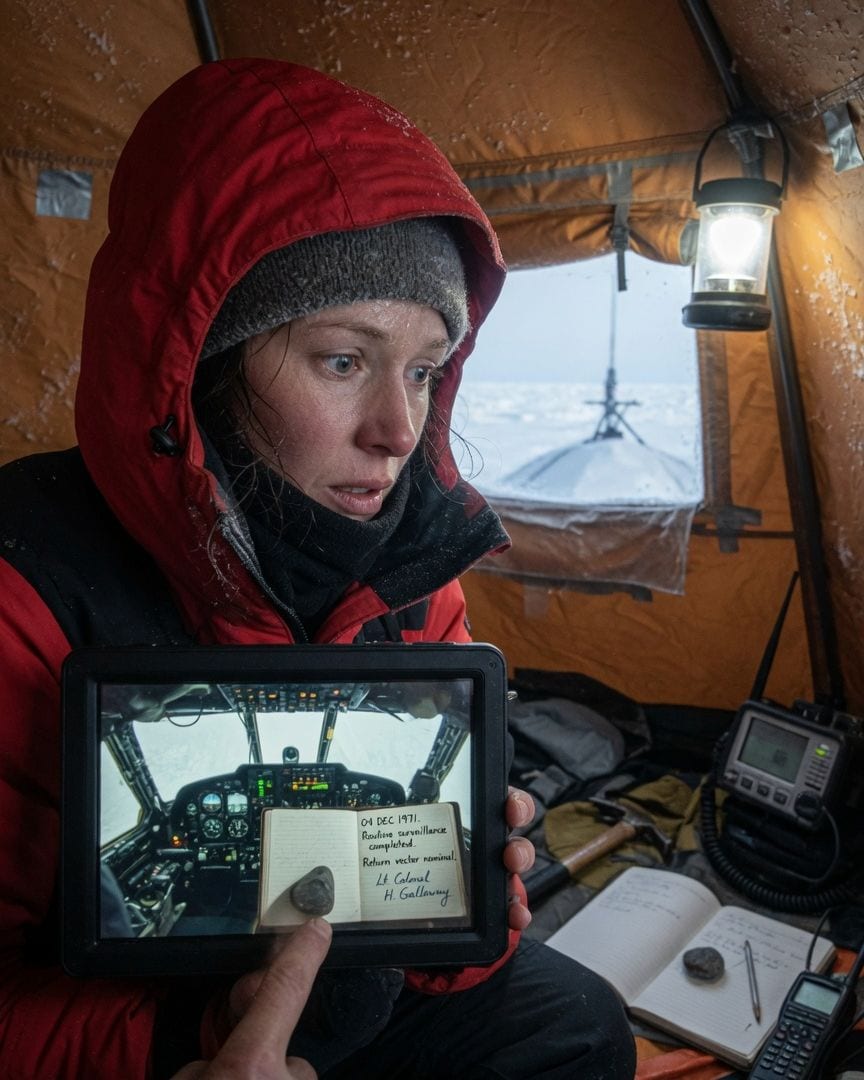
Geophysicist Ines Faurholt pushed her ski pole into the Greenland ice, the sub-zero wind biting at her brow during a white noon. What began as a routine expedition turned chilling when her ski struck an antenna mast, leading her to a Cold War spy plane entombed sixty feet below in decades of ice. Its navigation lights still glowed, a faint hum vibrated through the frozen depths, and an impossible digital clock in the cockpit meticulously kept time. But the true impossibility emerged from the pilot's logbook: an entry dated eight years after the aircraft and its pilot, Lt. Col. Hugo Galloway, were officially declared lost. How could a vanished pilot have logged a flight almost a decade after he disappeared?
A retired crew chief finds the Cold War transport plane he loaded 32 years ago; its flight log shows today's date and still-damp ink.
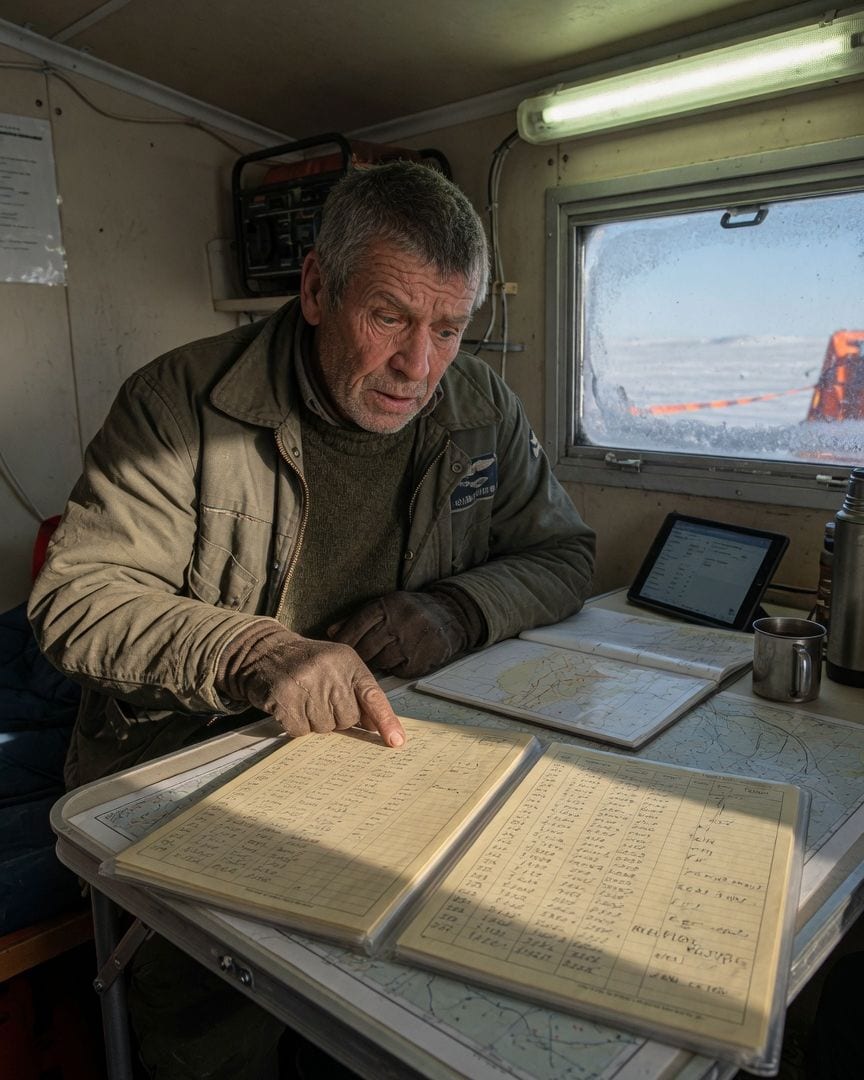
Retired Air Force crew chief Ivo Barlas, 62, faced a deep arctic cold in Greenland, but nothing matched the chill radiating from the Osprey Nine. He had personally loaded the transport plane with classified equipment 32 years prior, never expecting to see it again after its disappearance. Now, the plane sat unbroken on a frozen lake, a ghost of his past, its cargo bay eerily empty despite the eleven pallets he'd secured. The retrieved cockpit log only deepened the mystery, detailing impossible hours of fuel consumption and routes veering into the stratosphere. Yet, the most unsettling entry was dated *today*, with impossible coordinates and ink still faintly gleaming, leaving Ivo to wonder: what truly happened to the Osprey Nine?
A fighter pilot's emergency landing saved her life, but the airfield was decommissioned in 2005. She found its official marker cone in the empty desert.
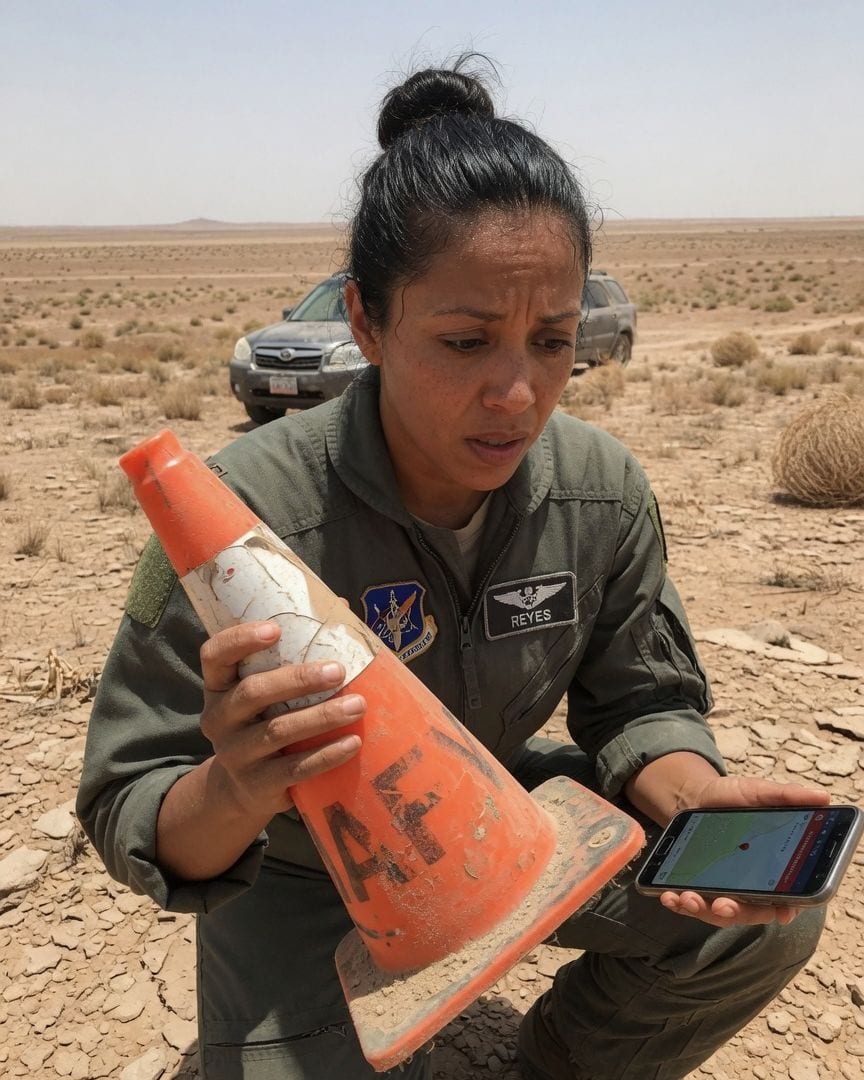
Captain Elena Reyes faced a dire situation: low on fuel and a storm blocking her home field, leaving one desperate divert option. A calm voice guided her to Outpost 73, and she landed her F-16 with immense relief, grateful for the lit runway and the man waving wands. However, her relief shattered when her home tower reported Outpost 73 had been decommissioned in 2005, its coordinates now just empty scrub. Faced with a career-ending inquiry, Reyes insisted on what she saw, driving to the desolate coordinates where a half-buried airfield marker cone proved her impossible landing was real. How could a ghost airfield leave physical proof?
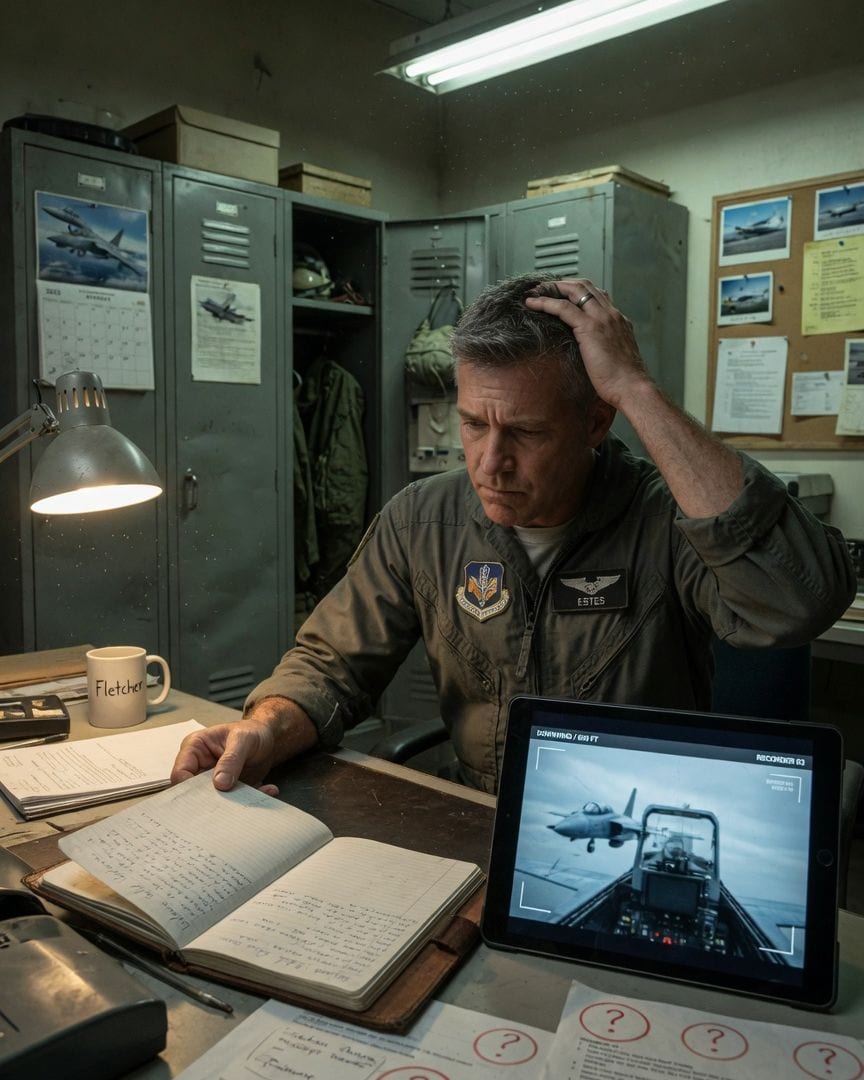
A Chief Warrant Officer's HUD tape shows a phantom jet, impossibly close, off his wing. Forty years ago, another Cold War pilot logged the same impossible sight.
Chief Warrant Officer Nathaniel Estes, a pilot whose career hinged on absolute precision, was under evaluation for a critical promotion. His nightly review of HUD tapes from routine Mojave test flights was a meticulous habit, but for a week, it revealed an impossible detail. At precisely 800 feet, one frame showed a sleek, experimental jet tucked impossibly close off his left wing—a craft ground radar never detected. When his maintenance chief found no equipment fault, Estes unearthed a dusty, decades-old logbook detailing identical phantom sightings from 1978. What unseen presence shadowed the desert skies?
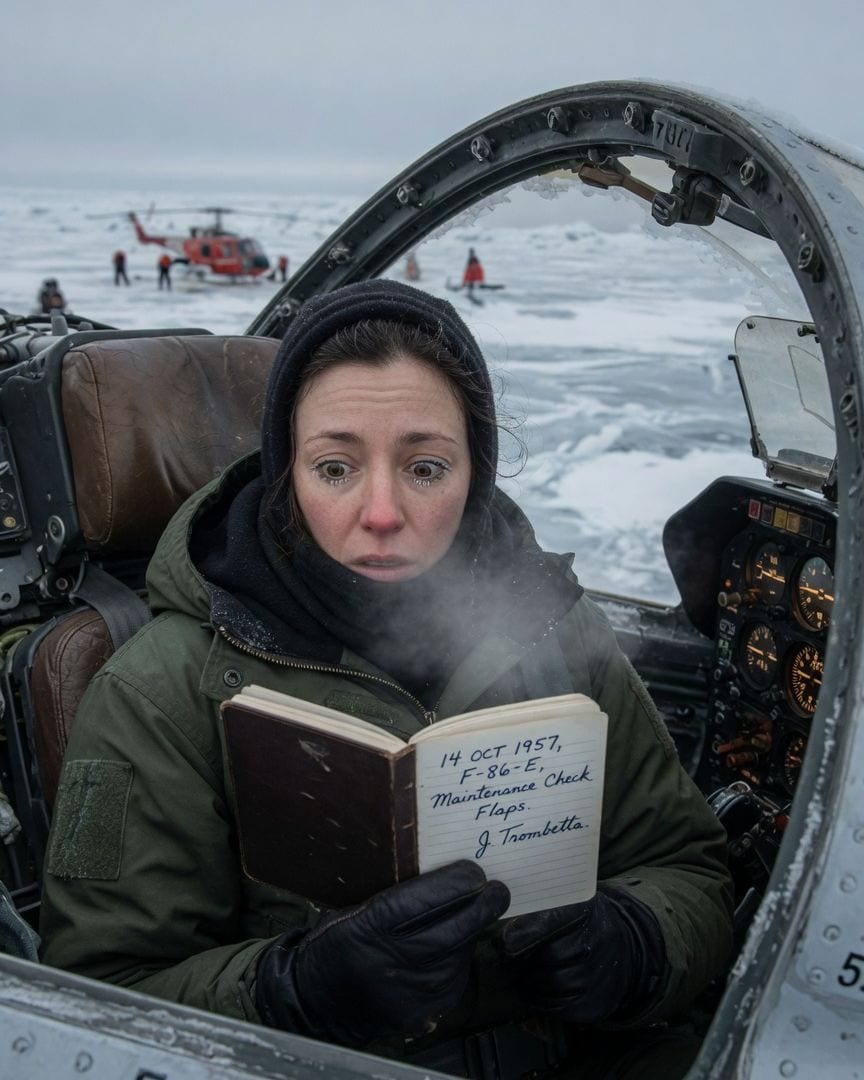
An arctic expedition leader finds a Korean War jet in the ice, its fuel full, and a logbook signed by her grandfather six years after he vanished.
Faye Trombetta, an expedition leader, had only three weeks before the Bering Sea froze, shutting down her climate data mission. But her trained eyes caught an impossible sight below: the black tail of an F-86 Sabre jet, perfectly preserved in the ice. The discovery stirred a lifetime of quiet grief; her grandfather had flown Sabres and vanished in 1951 during the Korean War. As she reached the pristine cockpit, she found his flight logbook, its final entry dated 1957—six years after he disappeared.
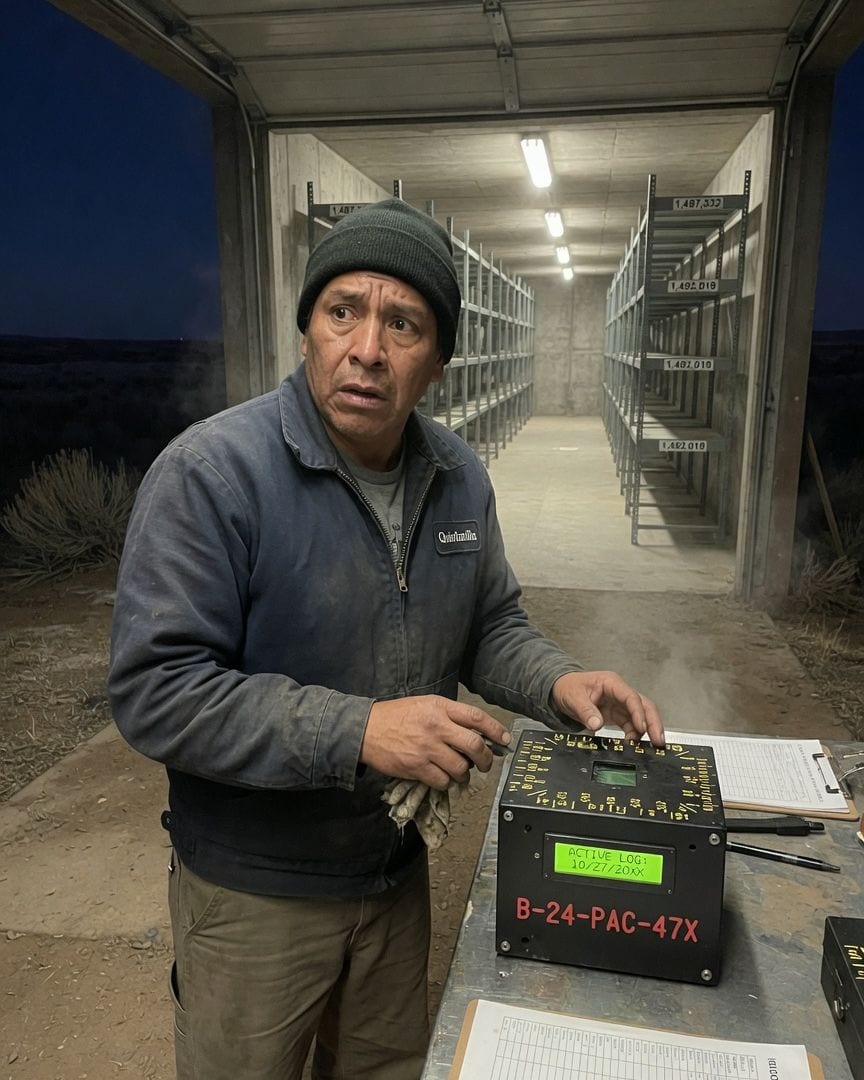
A storage yard worker on his last inventory finds a WWII bomber's black box logging data from the present day.
Salvador Quintanilla, one of the last two men at the Pueblo storage yard, was on his final inventory, closing out the last bay on his manifest. As he rolled back the heavy door of igloo six-B, he found the high-density racking stretching past the concrete wall, illuminated by an impossibly long strip light into the empty prairie beyond. A profound, unnatural cold seeped from this spectral extension, deepening with every step he took into its silent, lit void. The shelves held accession numbers from decades in the future, but his light soon caught on a pristine black flight recorder, a model from a B-24 bomber officially lost in 1944. When he triggered its hidden screen, it flickered to life with a single, clear line: `ACTIVE LOG: 10/27/20XX`. How could a device lost eighty years ago be logging data from the current year?