A Cold War officer’s recovery manifest held a code for an item that didn't exist, and there were others.
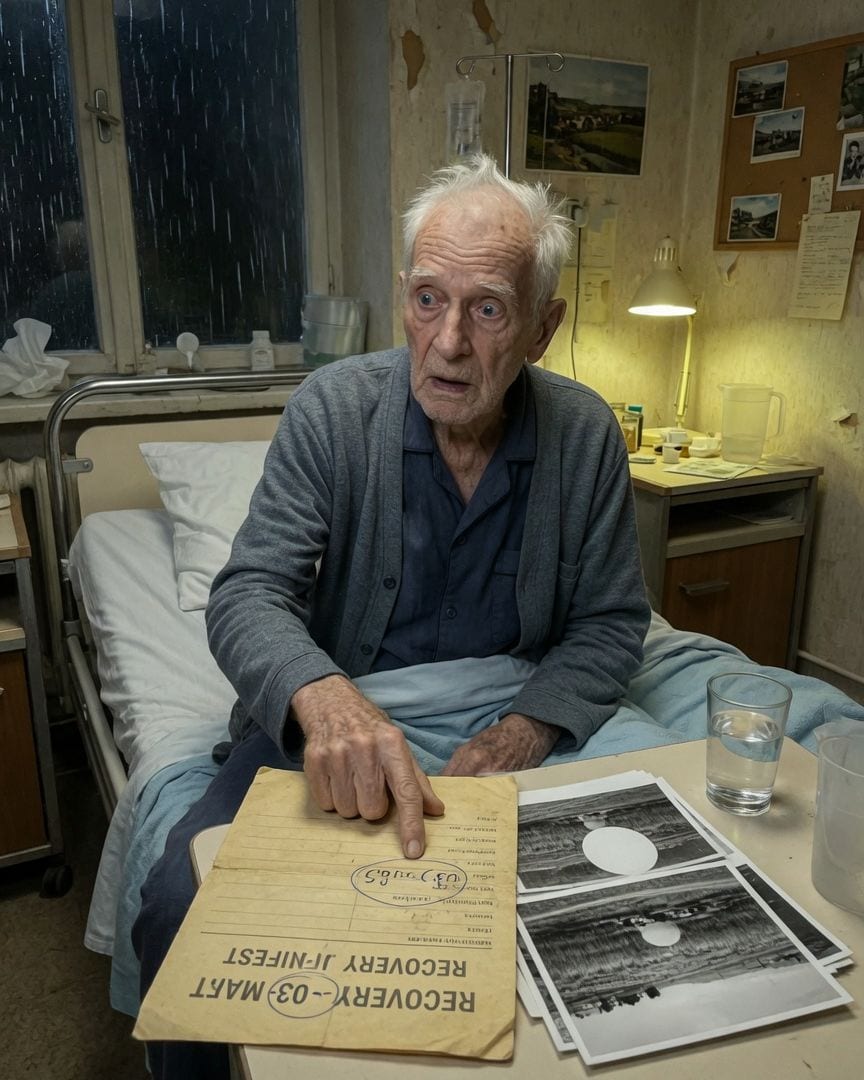
Hank Delacroix, frail in his hospice bed, began to speak. The room smelled of antiseptic and old paper, a contrast to the story he was telling his daughter, Eleanor.
He described the Bavarian rainstorm of 1954, the kind that came down in sheets, erasing the world beyond the low-boy truck’s headlights. He had been twenty-two then, a Warrant Officer, driving that truck.
In the bed, his hand, spotted with age, lifted slightly, mimicking the heavy, olive-drab tarp that had covered their cargo. They called it a 'recovered target sleeve,' a term that had always felt too flimsy for the object it concealed.
He remembered the rain, how it had drummed against the thick canvas, a steady, relentless rhythm. But the water hadn't run off like it should have. Instead, it clung to the fabric, forming shimmering pools in impossible depressions, defying gravity.
It had stretched the tarp taut in places, then sagged in others, a surface tension that felt utterly wrong, as if the water itself had forgotten its nature.
Hank had watched it for hours, fascinated and unnerved, the water shimmering with the headlights' reflection, a liquid skin that wouldn't drain. He gestured weakly to a stack of faded aerial photographs beside his bed, secured with a rubber band.
Eleanor picked them up. Each one showed the same impossible white circle in a vibrant green rye field, year after year, a stark, unnatural void. It had been sixty feet across, unyielding, and nothing had ever grown there.
Hank recounted the official version of events: the farmer, a stocky man named Herr Gruber, compensated and relocated not once, but twice, his new properties always far from any 'environmental remediation' sites.
The 'target sleeve' itself, he explained, had been quietly whisked away by men in unmarked vehicles, swallowed by the bureaucracy.
He directed Eleanor to his worn leather satchel by the bed. She retrieved his personal copy of the recovery manifest, a yellowed, stiff document, creased along ancient folds. The paper rustled dryly as she laid it on the bedside table.
Hank’s finger, thin and tremulous, pointed to a section detailing the object's dimensions and weight—impressive figures, but unremarkable in context. Then his finger landed on a seemingly innocuous string of alphanumeric characters beneath the 'item description' box: 'TS-Bavaria-03-A-1954.'
Eleanor squinted, initially dismissive. 'Standard military inventory code, isn't it? Like a parts number for a recovered drone or something.'
Hank shook his head, a slow, deliberate movement that spoke of long-held certainty. 'I spent years trying to cross-reference it,' he rasped, his voice filled with an old frustration. 'Every known classification system, every secret project I could access. Nothing.
The code was unique. Alien, even. A number that didn't fit.' He described how the official documentation was meticulous, almost overly so, every box filled, every signature crisp, every detail accounted for.
Yet this one code, this 'TS-Bavaria-03-A-1954,' felt like a deliberate placeholder, a precise, sterile label for something utterly unacknowledged.
It was a blank space in a universe of exhaustive records, a coded designation that implied a context that simply did not exist anywhere else.
Eleanor looked at the manifest again, a prickle of unease starting to form beneath her professional skepticism. The document hummed with the weight of that single, unexplained string of characters.
Hank pushed the manifest closer to Eleanor, the movement rattling a glass of water on his bedside table. His voice was strained, barely above a whisper.
'Look at the '03' in the code,' he urged, his frail finger tapping the number. 'It's too low. Too low for a single item's serial number if it were the only one.
They usually start higher, a hundred, a thousand, to allow for a series.'
He shuffled through the stack of aerial photos, the rubber band snapping against his thin wrist. He pulled out a grainy black-and-white image from 1961, seven years after the incident.
'And look here,' he said, his voice gaining a sudden, fierce energy. He pointed to the edge of the persistent rye circle, almost imperceptibly small on the photo. 'See that faint, almost imperceptible line? It’s a track.
Like something was moved into the circle, not out of it.' His eyes, usually clouded with age, were wide and sharp, fixed on his daughter.
Hank held up a blurry section of the 1954 recovery manifest, his frail finger tracing a series of alphanumeric characters beneath the 'target sleeve' entry.
He looked at Eleanor, his eyes wide with a dawning, terrible understanding, whispering, 'It was never just one. There were others. Always others.'
Energized by Hank’s revelation and fearing for his fading health, Eleanor plunged into research from her small, temporary apartment near the hospice.
The smell of old paper from Hank’s manifest seemed to cling to her, even in the sterile digital world of declassified archives.
Using her skills as a former research assistant, she started trawling for similar coded designations or unusual land transactions that mirrored Herr Gruber’s Bavarian case. Hank, propped up in his bed, became her living index.
His memory, razor-sharp on these specific details, directed her searches, guiding her through obscure military classifications and forgotten departmental acronyms.
She worked through long nights, the screen of her laptop a luminous window into a hidden world. Gradually, scattered references began to emerge. 'TS-Nevada-07-C-1968,' 'TS-Arctic-12-B-1975,' 'TS-Patagonia-04-F-1983.'
Each file, though sparse and often heavily redacted, contained the same unsettling pattern: a sudden, unexplained acquisition of remote, often barren, land.
The official reasons given were always vague, couched in euphemisms like 'environmental remediation' or 'geological survey,' echoing the cover story from Bavaria.
Eleanor noticed peculiar, almost poetic entries in the logs, sometimes just a single line appended to a decade-old document. 'Crop cycle interrupted, Phase II initiated,' read one. Another, chillingly, stated: 'Local population re-education, satisfactory completion.'
The official explanation for each new circle or anomaly almost worked, a thin veneer of bureaucratic logic, then didn't.
What truly stopped her cold was a consistent, glaring anachronistic detail threaded through multiple cases: maintenance logs for equipment that hadn't been invented yet, or payroll entries for personnel whose service records had officially ended decades prior.
It was as if these files were alive, continually updated by some unseen hand, the ‘File That Kept Writing’ in miniature, across dozens of disparate cases and locations.
The sheer volume of it, the quiet persistence, settled a cold weight in her stomach.
As Eleanor delved deeper, the subtle pressures began to mount. One afternoon, a request she submitted for a specific file on a 'TS-Nevada' incident was met with a polite but firm 'unavailable' message on her screen.
Moments later, the archival system itself crashed, a cascade of error messages, then rebooted, wiping her current search history. Her browser, too, had somehow reset, logging her out of her secure government access.
It was like a silent, invisible hand had reached through the fiber optics to slap her wrist.
Back at the hospice, Samuel Kingsley, the administrator, made an unannounced visit to Hank’s room. The air in the small room seemed to grow heavier as he entered.
Kingsley, a man with an unnervingly calm demeanor and a perfectly pressed uniform, stood beside Hank’s bed, his hands clasped behind his back. His gaze shifted between Hank and the few personal effects Eleanor had brought.
'Warrant Officer Delacroix,' Kingsley said, his voice even, 'I wanted to inquire about Ms. Vance's visits. And your… reminiscences.'
He spoke in an unhurried, almost soothing tone about 'patient welfare' and 'maintaining a peaceful environment,' but Eleanor felt the unspoken accusation in every carefully chosen word.
His eyes, though mild, seemed to take in every detail, every tremor of Hank’s hand, every flicker of emotion on Eleanor's face.
The room, usually smelling faintly of lavender and disinfectant, now carried a faint, almost metallic tang, a coldness that seemed to emanate from Kingsley himself.
Later that evening, making a quick trip to the nurses' station for Hank’s evening medication, Eleanor noticed something amiss. Hank’s physical file, usually a neat, slender binder, now had a new, stapled addendum tucked inside the front cover.
It was a single page, dated today, marked in crisp, official script: 'Review of Patient Interactions: Vance, E. Inquiry into historical records noted.' The threat was unspoken, but the message was clear, chillingly so: their digging had been observed.
The 'secrecy machine' was not only aware, but it had already filed them.
Eleanor confronted Hank with the strange entries she’d found and Kingsley’s unsettling visit. The digital archive’s forced reset still stung, but the physical addendum in Hank’s file felt like a declaration of war.
Hank, his face grim and etched with newfound urgency, nodded slowly. 'They're not just records, Eleanor,' he rasped, his voice raw. 'They're procedures. Operational manuals. The 'target sleeves' aren't just things they found; they’re things they manage.'
He gestured for the dates she had compiled, a long list of anachronistic entries across various 'TS' files. Eleanor handed him her tablet. Hank’s finger hovered over the glowing screen. 'See the pattern?'
he asked, tracing lines connecting seemingly disparate dates. 'They correlate with specific celestial alignments. Meteor showers, solar flares. Not always exact, but close enough to be undeniable.' A shiver ran down Eleanor's spine as the implication sank in.
'These things… they don’t just land. They arrive. And they keep arriving.'
Hank explained that the 'relocation protocols' for farmers like Herr Gruber, and the more sinister 're-education' entries Eleanor had discovered, weren't about cleanup or compensation. They were about containment.
They were about integrating local populations into the larger 'management' process, turning unwitting witnesses into compliant, or at least silent, components of the system.
He recalled a brief, hushed conversation he’d overheard in 1954, just before the 'target sleeve' was loaded onto his truck.
Two men in crisp uniforms, their voices low, had spoken of 'phase transitions' and 'resource allocation' specifically for the Bavarian site.
The rye circle, he now understood, wasn't just a scar in the landscape; it was an active conduit. A rooted presence that kept opening, drawing something in.
The 'target sleeve' Hank had seen in 1954 was just the visible tip of an ongoing, deeper interaction, a continuous, recurring phenomenon. And the files, the ones Eleanor was now digging through, weren't just historical archives.
They were living, breathing administrative tools, continually updated, expanding to encompass anyone, anything, that came too close. The room felt suddenly very cold, the antiseptic smell replaced by something metallic and distant, like ozone after a storm.
Eleanor, shaken by the scope of Hank’s revelation, returned to her laptop in her apartment. The quiet hum of the machine was no comfort.
She accessed Hank’s original 'TS-Bavaria-03-A-1954' file one last time, a desperate need to find any other anomalies, any further proof of the 'active management.' The coffee she'd made had gone cold, a bitter taste in her mouth.
She scrolled past the initial recovery reports, the relocation papers for Herr Gruber, the decades of 'site monitoring' entries.
Each line was dry, technical, devoid of emotion, yet now it read like a testament to a vast, patient, and terrifyingly efficient process. Her finger hovered over the mouse, the cursor sliding down the screen.
She saw an entry dated 1998, a routine 'site assessment.' And then, below it, stark and impossible, a new line appeared. It was dated today.
A cold dread washed over her, making her hands tremble, so much that the mouse slipped from her grasp. She grabbed it, forcing herself to focus, to read the official text glowing on the screen.
'Requisition: Relocation Protocol, Subject: Delacroix, H.' Her eyes darted to the next line, equally fresh, equally chilling. It wasn't about the object. It was about her. 'Interview, Subject: Vance, E.'
Eleanor stared at the screen, a new entry glowing starkly against the decades of archived text.
Her breath catches as she read the recent date and the chilling, official phrasing: 'Relocation Protocol, Subject: Delacroix, H.' and, directly below it, 'Interview, Subject: Vance, E.' She looked up, her eyes meeting Hank's, a silent scream in her throat.
The requisition for Hank and Eleanor, stark on the laptop screen, detonated the full, horrifying truth. Hank lay back against his pillows, his breath shallow, but his eyes were clear, almost luminous with understanding.
'They weren't just covering up, Eleanor,' he whispered, his voice barely audible above the hum of the hospice’s medical equipment. 'They were collecting. Processing. And anyone who touches it, anyone who knows too much, they get filed too.'
He explained that the initial 'recovered target sleeve' he had witnessed in 1954 was merely the first stage of a recurring phenomenon.
The rye circle, he confirmed, was not just a landing site, but its permanent anchor point, a persistent tear in the fabric of the world.
The strange way the rain had clung to the tarp all those years ago was the object's inherent defiance of natural law, a property the institution had long since learned to 'manage,' to contain.
Hank confessed that he, as the young warrant officer, hadn't just been a driver or a witness. He was an unwitting 'operator.' His actions, his very presence at the recovery site, had been recorded and factored into the ongoing 'protocol.'
He remembered every detail: the mud on his boots, the taste of the rain on his lips, the cold metal of the truck's steering wheel. All of it, a data point.
He realized with a chilling certainty that the farmer's 'relocation' wasn't an act of compensation for lost crops or damaged land.
It was a form of preventative filing, a careful removal from proximity to an active site, a subject deemed 'processed.'
The entire institution, the 'secrecy machine,' wasn’t just hiding an event from the past. It was actively administering a continuous, non-human presence on Earth, a patient, bureaucratic management of the alien.
And anyone who became aware of it, anyone whose path intersected with a 'target sleeve' or a 'rye circle,' was folded into its vast, unyielding bureaucracy. The realization settled over Eleanor like a shroud, heavy and cold.
The walls of the hospice room, once a place of safety for her father, now felt like the padded cells of a larger, invisible prison.
Eleanor, desperate, pushed the wheelchair’s brakes release and tried to get Hank out of the hospice.
Her heart hammered against her ribs as she struggled to push his lightweight chair towards the main exit, its wheels squeaking softly on the polished linoleum floor. The air in the corridor felt thick and cold.
Just as they reached the double doors leading to the lobby, Samuel Kingsley stepped calmly into their path, flanked by two anonymous, well-dressed figures in dark suits. They were built like brick walls, their faces expressionless.
The automatic doors, which moments ago had slid open for a visiting nurse, now remained stubbornly shut, reflecting Kingsley's placid face.
'Warrant Officer Delacroix,' Kingsley said, his voice devoid of menace, almost polite, 'your file requires an update. And your daughter's, of course.' He made a slight gesture with his hand, an almost imperceptible signal to the men flanking him.
Hank looked at Eleanor, a profound sorrow in his eyes, but a quiet acceptance had settled over his features. 'I was always in the file, Eleanor,' he said, his voice surprisingly steady, considering his frail condition.
'From the moment I touched that tarp, from the moment I saw the circle. They just… activated my entry when I started to remember.'
Eleanor screamed, a raw, primal sound that echoed in the quiet hall. 'You can't just take him!' She tried to push past Kingsley, but one of the men in suits gently, firmly, placed a hand on her shoulder.
It wasn’t violent, but it was absolute.
Kingsley offered a faint, unsettling smile, a small, cold ripple across his calm face. 'No one is being 'taken,' Ms. Vance. We are merely ensuring the integrity of the protocol.
Your father is a valued, if unwitting, part of a very long-standing process.' The other figure gently took the handles of Hank's wheelchair.
Hank turned his head to Eleanor, his last words a warning, spoken with fierce clarity: 'Don't look for me. Don't look for the others. Just… stay out of the file.'
The wheelchair rolled silently away, the two dark figures flanking it, disappearing down a sterile corridor. The automatic doors to the lobby remained closed.
Eleanor was escorted from the hospice, not roughly, but with an unwavering certainty that left her reeling. Her mind spun, a kaleidoscope of images: Hank’s knowing eyes, Kingsley’s placid smile, the quiet hum of the laptop screen.
Hank was gone, absorbed into the 'protocol.' No police report could be filed, no missing person's case opened; simply a quiet, official transfer she couldn’t trace, couldn't even prove.
The hospice continued its operations as normal, the fluorescent lights humming, Samuel Kingsley still at its helm, his calm demeanor unbroken, perhaps even more composed than before.
The rye field in Bavaria, half a world away, remained undisturbed. Its 60-foot circle, a permanent, barren scar in the vibrant green, continued its silent vigil.
The only remaining tangible trace of Hank's story was the stack of faded aerial photos she had managed to carry out, clutched tight in her trembling hand.
And the chilling, recent entry in the digital file, which she found herself locked out of entirely once she tried to access it from home.
The screen simply returned a blank white page, an empty space where Hank’s name had been.
Weeks later, Eleanor received a small, unmarked package in the mail. It was a plain brown box, taped shut with heavy-duty packing tape, no return address.
Her hands trembled slightly as she opened it, the mundane sound of the tape tearing jarring in the quiet apartment. Inside, nestled amongst plain packing peanuts, is a single, crisp aerial photograph.
It was a satellite image of the Bavarian rye field, dated just yesterday. The circle is still there, stark and white against the new green growth, utterly unchanged, utterly unyielding.
Eleanor turned the photo over, her breath catching in her throat. On the back, in a neat, official hand, are two lines. They were coordinates, precisely noted. And below them, a single, stark word: "Active."
She dropped the photo, her hands trembling, the image of the permanent circle burning in her mind.
A quiet, unassuming package arrived at Eleanor Vance's door. It contained a single aerial photograph of a distant field, a fresh date stamped on its back. The file, it seems, is always open.
If this one got to you
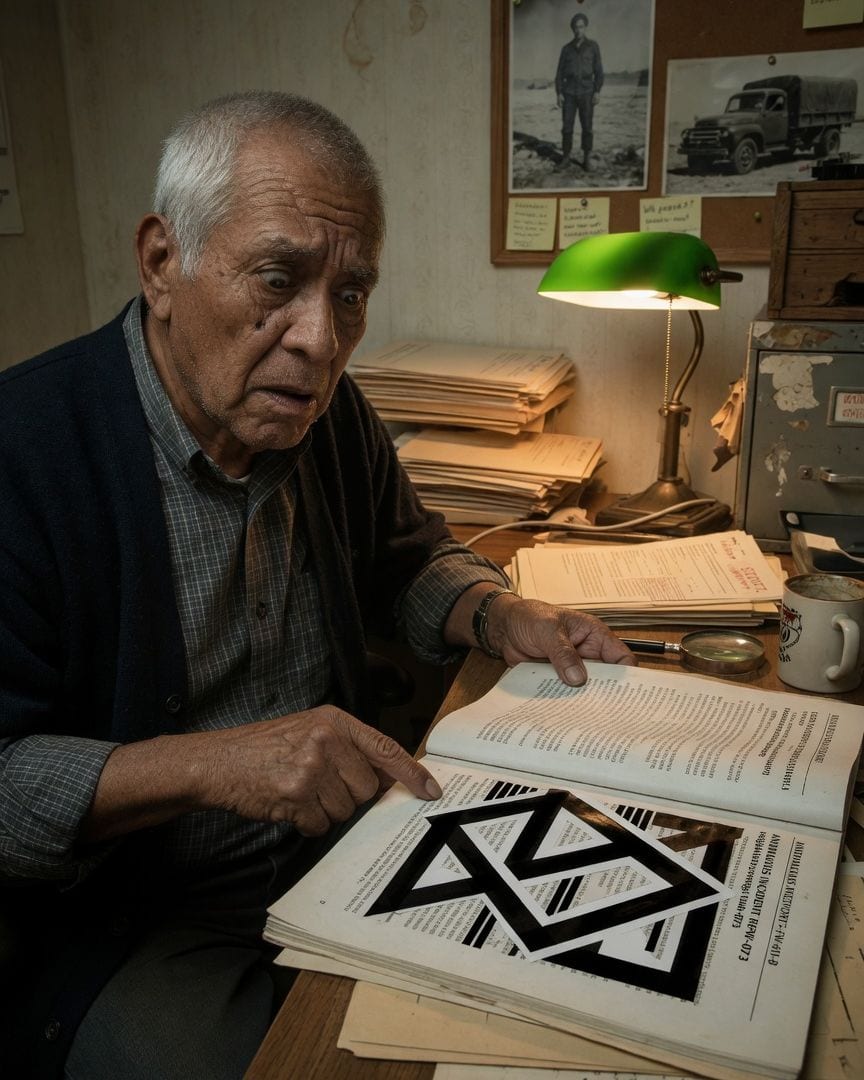
A young Private Reyes guarded a Cold War crate. Fifty years later, he found its report redacted into a symbol he'd seen *through* the wood.
Private Tomas Reyes, a young man of 21, stood alone on the desolate Utah salt flats, rifle heavy, guarding a single wooden crate. The base was long closed, and he had no record of actually being posted, only a vague order to "Don't ask questions." Fifty-one years later, as a retired man, he meticulously cross-referenced declassified documents, searching for answers about that night. He found a ghost control number and an incident report with redactions that formed a distinct, unsettling geometric symbol. It was a shape he suddenly remembered seeing, not on the crate, but impossibly, *through* its wood.
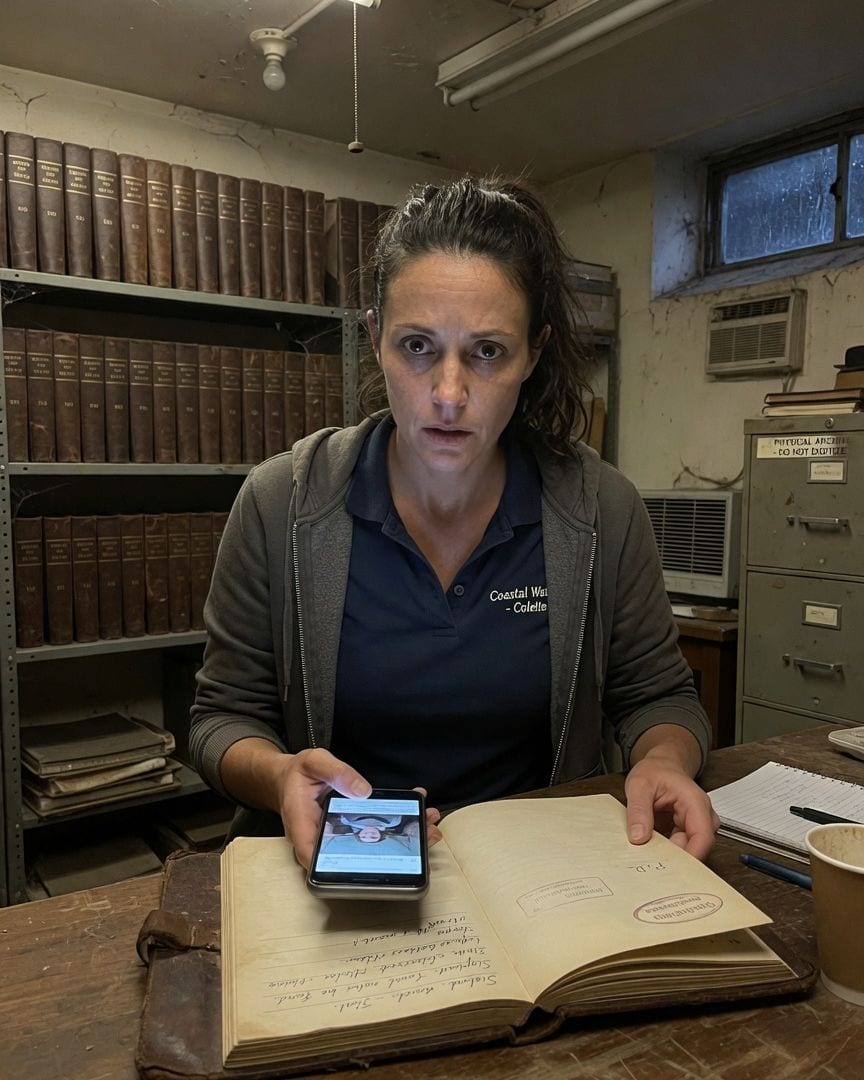
My coastguard log noted Sighting 9 again tonight, a light where no vessel showed. The old logs carry Sighting 9 off Skerry Point at 3:14am every tenth year since 1954, always 'nothing found,' always 'send no boat.'
On my watchtower night shift, the radar screen glowed green and the ocean was quiet. Then, a familiar light appeared off Skerry Point, exactly on cue, just as it had every tenth year for decades. But digging deeper, I found a hidden stamp in an old logbook: 'Operation Skerry. Status: Complete.' It left me with a chilling sense of finality.
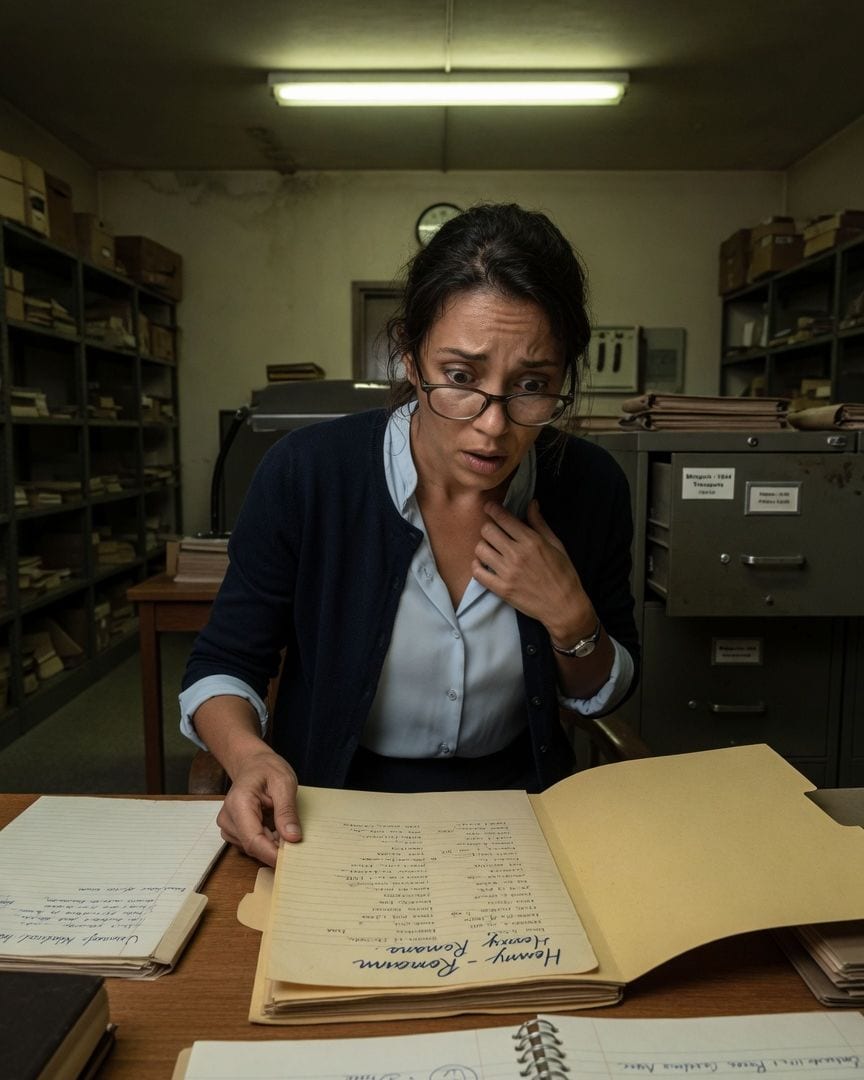
A records reviewer found a 1944 ferry manifest with an impossible 42nd name. The same dark ink marked a phantom crewman on a Cold War flight log.
Delphine Arceneaux, a dedicated records reviewer, had just minutes left in the stale reading room to finalize her review of a 1944 Mirepoix Ferry manifest. Her job was to confirm every detail of the forty-one passengers who boarded a boat that never arrived. But as the clock neared six, a forty-second name materialized on the faded paper, stark in a dark, unfamiliar ink. 'Henry Romano,' it read, with the impossible notation: 'BOARDED AT MIDSTREAM.' How could anyone board a ferry in the middle of a river?
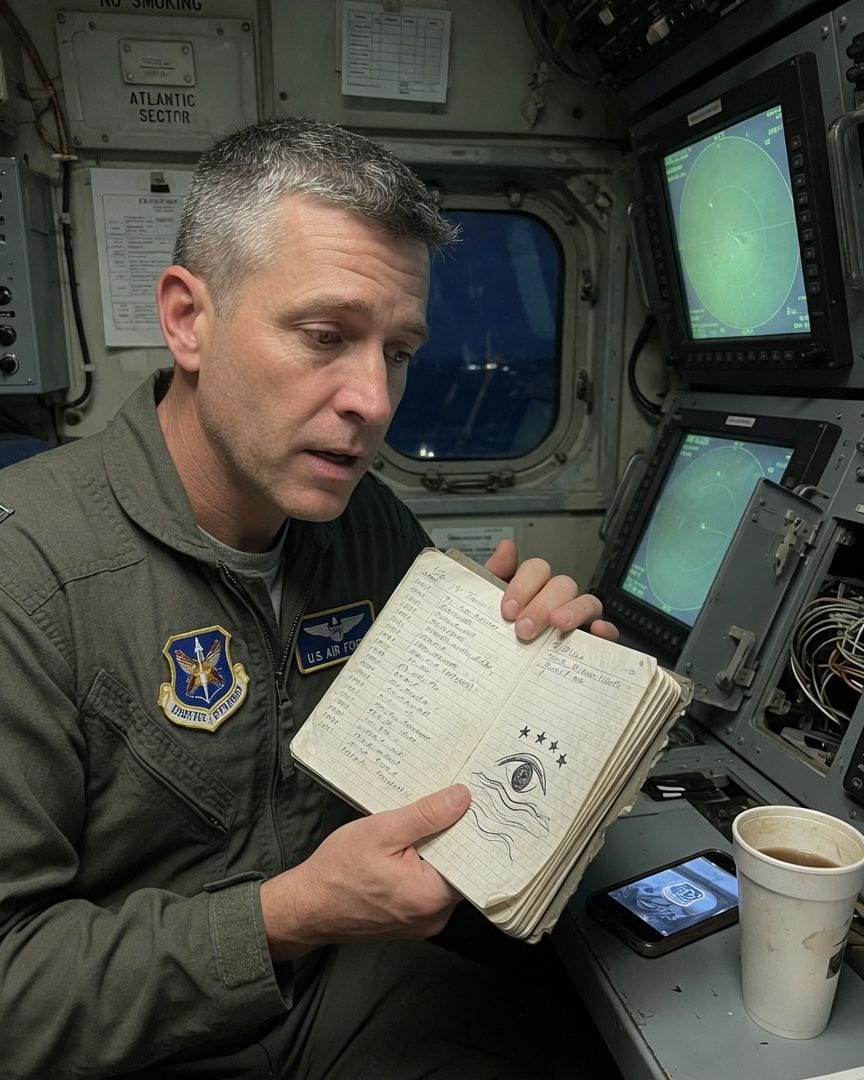
Weeks from his transfer, Master Sergeant Coyle found a Cold War logbook behind his console detailing the exact phantom blip he saw, documented since 1983.
Master Sergeant Everett Coyle yearned for his impending transfer, a clean break from the endless North Atlantic patrols. He had eighteen years of operational experience with the E-3's systems, but one anomaly, a silent blip he called 'The Traveler,' defied every explanation. Fighters found only empty sky, yet the track always returned, perfectly on schedule. During a routine console check, Coyle's fingers brushed against a hidden, spiral-bound notebook. Inside, meticulously handwritten entries detailed his exact phantom blip, recorded by other hands, spanning back to 1983, along with a chilling note: 'They say it's just a ghost. But it keeps trying to answer.'
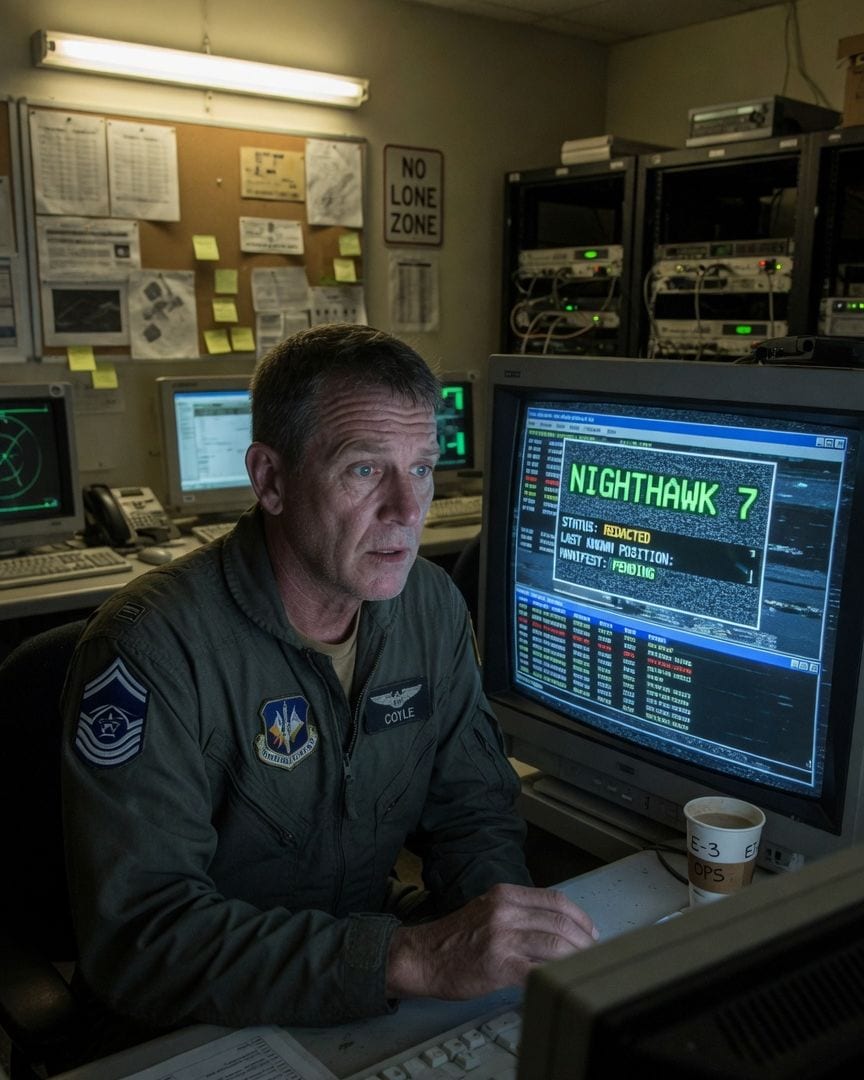
A ghost radar blip returned for Master Sergeant Coyle, three months from retirement. Its call sign: NIGHTHAWK 7, status REDACTED.
Master Sergeant George Coyle, nearly three decades in uniform, counted the last missions before his retirement. High above the black North Atlantic, his E-3 Sentry hummed with the familiar, impossible truth of a ghost radar blip. This single return squawked nothing, eluding every filter and fighter jet sent to investigate, yet the precise systems swore it was there, inbound, week after impossible week. Driven by obsession, Coyle later found a flicker of data: the call sign "NIGHTHAWK 7." Investigating further, an obscure database revealed its status as 'REDACTED,' with its last known position matching the ghost track. What forgotten project was haunting the skies, precisely where it had been scrubbed?
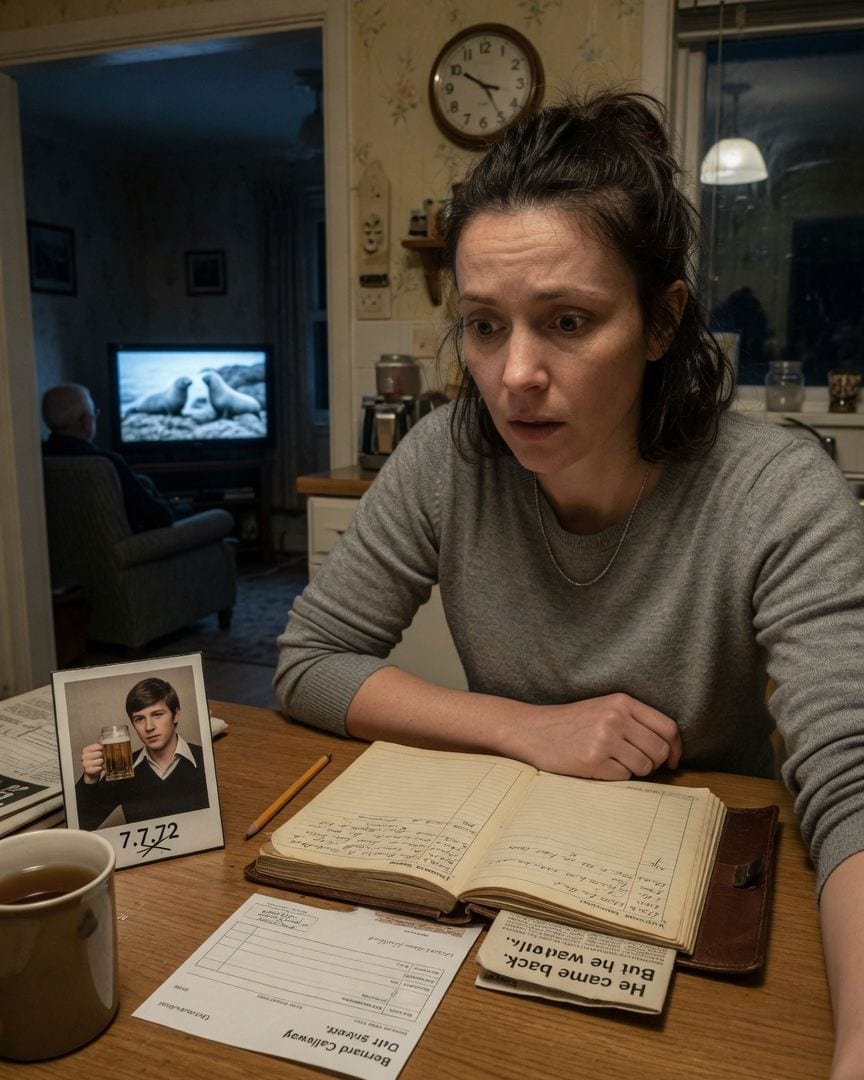
My father's bank slip had uncrossed '7's. He swore he never had that habit.
My father, Bernard, returned three months ago, a miracle after being presumed lost at sea. But a bank statement revealed a disturbing detail: the '7's in his signature were uncrossed. For decades, he'd meticulously crossed every '7', yet now he denied ever having the habit.