A Cold War technical sergeant found a sealed hangar door, but a secret vent led to a deep hum. Then, a slow, orange light pulsed from the darkness inside.
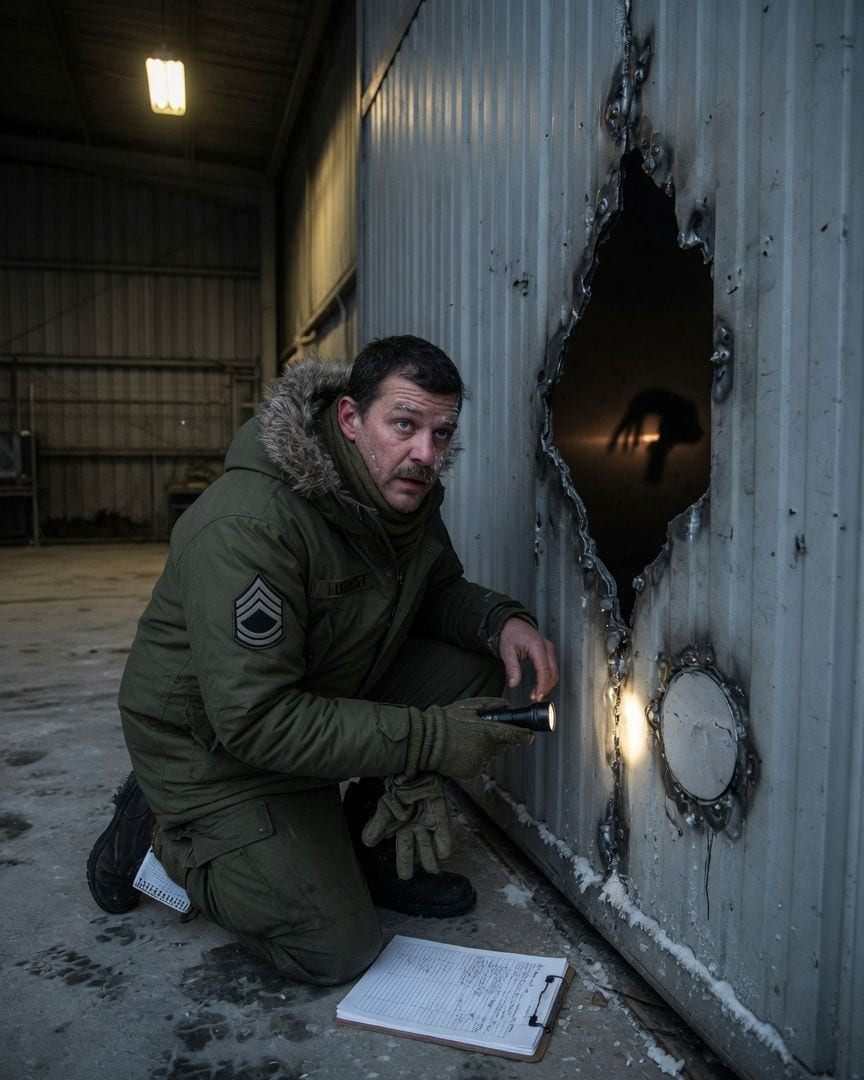
Technical Sergeant Wes Lindquist was a creature of routine, and in the Alaskan winter of 1978, his routine was the cold. Specifically, recording the interior temperature of Hangar Bay Two every hour.
It was a tedious, solitary task, made stranger by the fact that Bay Two had been welded shut for months, a crude, thick seam running down its corrugated metal door.
The bay was officially empty, a fact confirmed by every report he’d seen. Yet, for 111 consecutive nights, Lindquist’s thermometer read nine degrees warmer inside Bay Two than anywhere else in the building.
He’d filed a written query, following protocol, expecting a maintenance order or at least a proper explanation. Instead, he received a terse, bureaucratic dismissal: 'residual reaction, no action required.'
The memo cited a specific control number, AF-AK-78-Delta-001, as if that explained anything. It settled nothing for Lindquist, only deepened the quiet wrongness of it all. As February of 1979 bled into March, the number began to climb.
Ten degrees, then eleven, then twelve. The official log, the one destined for Captain Forsythe’s desk, still showed a static nine.
Lindquist kept writing that number in the official log, but he started a second record, a small, spiral-bound notebook he kept tucked inside his insulated boot, where the real numbers went.
The temperature inside Bay Two hit fifteen degrees above ambient. It was absurd. Lindquist stood before the welded door, running his gloved hand over the rough metal.
The residual heat was almost palpable now, a faint warmth radiating through the steel despite the sub-zero temperatures outside. He studied the weld, a professional curiosity overriding his usual methodical detachment. It was crude, almost rushed, but thorough.
No obvious gaps. He traced the line of it, top to bottom, then back up, feeling for any imperfections, any missed spots. Near the bottom-right, where the seam was particularly thick, his fingers brushed against something subtly different.
A slight indentation, a faint break in the continuity of the weld itself, almost imperceptible. He knelt, scraping away a layer of frost that had gathered there, the flakes clinging to his glove.
Beneath it, disguised by grime and a thin layer of paint, was a small, circular vent cover, no larger than his palm, cleverly integrated into the weld.
It was flush, almost invisible, but definitely there, a perfect circle against the rough, uneven line. No such vent appeared on any of the hangar’s schematics that he’d ever studied.
He tried to pry it open with the edge of his pocketknife, but it was fixed, welded shut around its own circumference, a permanent fixture.
He pressed his ear to it instead, the cold metal against his head, blocking out the howl of the wind. At first, only the high-pitched whine of the wind outside, rattling the corrugated walls.
Then, a low, resonant hum began to surface, a steady, deep vibration that seemed to come from deep within the empty bay, a sound he felt more than heard. It thrummed against his inner ear, a phantom presence.
Lindquist retrieved a small flashlight from his kit, the beam cutting a weak circle in the dim hangar. The single overhead light cast long, shifting shadows that danced with the wind’s rattle.
He aimed the beam at the vent, pressing his eye to the cold metal, the hum now a distinct vibration against his cheek. The deep thrumming resonated in his bones, a low, constant pressure in his chest.
The flashlight’s beam pierced the inky blackness within, revealing nothing but an endless void, a dark tunnel leading into an unknown space.
He held his breath, straining to see past the immediate darkness, past the point where his beam faded into nothing.
Then, deep within the bay, far beyond the reach of his flashlight, a faint, rhythmic pulse of dull orange light bloomed and receded, like a slow, deliberate breath drawn from the heart of the darkness.
It cast a fleeting, indistinct shadow that seemed to writhe against the far wall, a shape that was too large, too amorphous, to be anything he could name.
The image of that pulsing light, that nameless shadow, haunted Lindquist. His rational mind struggled to reconcile it with an 'empty' bay. The memo, the one dismissing his temperature query, lay folded in his pocket.
The control number, 'AF-AK-78-Delta-001,' now seemed less like bureaucratic boilerplate and more like a breadcrumb, a deliberate marker. Lindquist knew the system. He understood the intricate hierarchy of military records.
He started by requesting access to archived maintenance logs for Hangar Bay Two, cross-referencing with all 'Delta' classified incidents from the past five years across the Alaskan sector.
His request was met with polite but firm resistance from Captain Donald Forsythe, his commanding officer, who reminded him of the 'need-to-know' basis of all classified information.
Forsythe’s tone was genial, but his eyes held a steely warning that Lindquist recognized as a boundary.
Undeterred, Lindquist used his own access codes, navigating the labyrinthine digital archives late at night, when the system was less busy and the prying eyes of supervisors were dimmed.
He found nothing directly related to Bay Two, no new schematics with a hidden vent.
But the search for 'Delta' incidents, using the control number as a keyword, yielded a handful of heavily redacted files from other remote bases, documents previously hidden behind higher classification levels. The redactions themselves were curious.
Not just black bars over names or dates, but sometimes, entire paragraphs were missing, leaving behind a discernible, consistent pattern in the remaining text: mentions of 'thermal irregularities,' 'containment integrity failures,' and 're-establishment of dormancy protocols.'
He noted the specific wording, the dates, the precise locations. A pattern was forming across these disparate files, an uncomfortable echo of his own situation in Hangar Bay Two. The repetition felt deliberate, almost like a code.
Lindquist’s late-night archive searches didn’t go unnoticed. A few days later, Captain Forsythe called him into his office. The air in the room felt heavy, the silence thick with unspoken implications.
Forsythe’s face was impassive, betraying no emotion, but his eyes held a steely warning that sliced through Lindquist’s practiced calm. “Sergeant,” Forsythe began, his voice low and even, “your recent access requests have strayed beyond your operational purview.
I understand your diligence, but these are matters of national security. You are to cease all unauthorized research. Immediately.” Lindquist feigned ignorance, his heart hammering against his ribs, citing a 'personal interest in historical climate data' as a cover.
He tried to sound casual, but the words felt clumsy in his mouth. Forsythe merely nodded, a knowing, unsettling gesture. Then he added, almost as an afterthought, “Your temperature logs, both official and unofficial, are being monitored.
We value your thoroughness, Sergeant, but discretion is paramount.” The casual mention of his secret notebook, the one he kept tucked in his boot, sent a profound chill down Lindquist’s spine. Someone knew.
Not just knew about his searches, but knew about the private record. He felt a cold knot tighten in his stomach, a sudden, sickening realization that he was no longer just observing.
The next morning, a file he had previously accessed, titled 'Containment Protocol, Site Gamma,' was gone from the system.
He tried to retrieve it, running the search three times, but the system simply returned an unwavering 'Error 404: File Not Found.' The implication was clear: he was no longer just investigating; he was being watched, managed, subtly threatened.
The hunter had become the hunted. The system had teeth.
The temperature in Bay Two had now reached twenty-three degrees above ambient, a palpable heat radiating from the thick metal door that made the air around it shimmer faintly.
The low hum was no longer just a vibration under his cheek; it was a distinct, resonant growl audible even from outside the hangar door, a sound that seemed to emanate from the very floor beneath his feet.
Lindquist knew he was running out of time. He needed answers, and the official channels were clearly closed to him.
He sought out Iris Lockwood, the base's civilian archivist, a woman rumored to have worked there for decades, a fixture within the labyrinthine bureaucracy. Her office was a dusty, paper-choked labyrinth, stacks of forgotten history piled high on every surface.
He approached her cautiously, the redacted files he’d printed clutched in his hand.
He laid them out on a small, cluttered table, pointing to the consistent pattern he’d uncovered, showing her how 'residual reaction' consistently appeared next to 'thermal irregularities' across different dates and locations.
Lockwood, a woman with sharp, knowing eyes that seemed to miss nothing, took her time examining his printouts, her gaze tracing the black bars, then the surviving text.
“You’ve been digging,” she stated, her voice dry, not accusatory, merely observing a fact. “Deeper than most.” Lindquist pressed, his voice barely a whisper, “What is 'residual reaction,' really? And what’s in Bay Two?”
Lockwood sighed, a weary sound that seemed to carry the weight of decades. “It’s a cover, Sergeant. A designation for a specific class of… anomaly. They’re called 'Thermal Anomaly, Class Delta.'”
She leaned forward, her voice dropping, “The military has been dealing with them for a very long time.”
She explained that these were non-organic entities, specific types of energy absorbers, contained through various means, often in remote locations like this base. “They go dormant, then reactivate. The heat is their signature. The 'welded shut' is containment.
The 'residual reaction' is the official lie to keep the public, and most personnel, from ever knowing the truth.” Lindquist felt a wave of cold dread wash over him, a deeper chill than the Alaskan winter.
It wasn't a malfunction; it was a known, ongoing phenomenon. The pieces of the puzzle clicked into place with a horrifying precision, making the growling hum from Bay Two seem less mysterious and infinitely more terrifying.
“The files you found,” Lockwood continued, her voice dropping to a near whisper, barely audible above the hum that now permeated the very building, “they’re just a fraction. There are others. Much older.
And some… some are not meant to be found by certain people.” She guided Lindquist to a microfiche reader in a dimly lit corner of the archive, its screen casting an anemic glow.
With practiced ease, she pulled out a faded, yellowed file from a tightly packed drawer, its cover marked 'TOP SECRET: EYES ONLY – PROJECT ORION.'
It was from 1974, detailing a containment incident in a different, even more remote Alaskan facility, a site Lindquist had never heard of.
The redactions were almost total, great swaths of black ink covering entire pages, leaving only a few words visible per page, mere fragments of sentences. But then, on the last page, a section that had somehow escaped the black marker.
It was a list of personnel involved in the 'monitoring and re-containment protocol.' Lindquist’s eyes scanned the names, a growing sense of unease coiling in his gut, then they froze.
There, at the bottom of the list, plain as day: 'Monitoring Protocol, Lindquist-74.' And below it, his own service number, printed clearly, followed by a date from before he was born.
He traced the numbers with a trembling finger, his name staring back at him from a file predating his very existence. Iris Lockwood cleared her throat, a soft, deliberate sound, pulling his gaze from the screen.
Her voice was calm, but with an edge of absolute finality. “That file was never supposed to be accessed. You have a choice, Sergeant. You can go back to your bay, or you can become part of the record.”
The revelation of his own name in the 1974 file hit Lindquist like a physical blow, a punch to the gut that left him breathless.
He wasn't just an observer; he was a designated, pre-ordained piece of the containment machinery, a cog in a bureaucratic system he hadn't even known existed until weeks ago.
Iris Lockwood, seeing his shock, her knowing eyes fixed on his face, explained that some individuals, due to specific genetic markers or perhaps even familial lines, were identified as having a unique 'resonance' with the Class Delta anomalies, making them ideal, if unwitting, monitors.
His current assignment was no accident; it was a reactivation of an old protocol, a silent call to duty written into his very DNA.
The 'Redaction That Has a Shape' across the decades of files, the consistent patterns of missing text he’d puzzled over, wasn't just censorship; it was a map, a hidden language showing the consistent thermal thresholds, the patterns of dormancy and reactivation, and the specific containment failures that had occurred over the years.
The entity in Bay Two, she revealed, was following a predictable, terrifying cycle, escalating towards an inevitable breach. Lockwood grimly clarified that the current containment was failing rapidly.
The rising temperature wasn't just a warmth; it was a 'thermal signature spike,' matching historical records of impending breaches. The pulsing light he'd seen was the entity's core, drawing power, preparing to move, to break free.
The true horror, Lindquist realized, was the sheer scale of the operation, the quiet, patient bureaucracy that filed away these threats, ensuring continuity, and the insidious, inevitable human cost of being 'part of the record.'
The temperature in Bay Two was now a scorching forty degrees above ambient, the metal door radiating an intense, almost unbearable heat. The air around it shimmered and warped, distorting the hangar lights.
The hum had risen to a deep, resonant growl, a guttural thrum that vibrated through the entire hangar floor, through Lindquist’s very bones. He knew the entity was about to breach containment. Time was a rapidly diminishing commodity.
He tried to contact Captain Forsythe, frantically redialing his office extension, but his calls went unanswered. The system, designed to contain the anomalies, was equally adept at containing inconvenient truths and personnel who asked too many questions.
Lindquist, armed with his secret notebook filled with unredacted data—the real numbers, the actual dates of escalation—and the patterns he’d gleaned from the archive, made a desperate decision. He bypassed official channels entirely.
Using a secure, encrypted civilian satellite link he’d learned about in a forgotten training manual, he sent an anonymous, encrypted data burst to a civilian research body known for tracking unexplained phenomena, a shadowy organization mentioned in a heavily redacted file as 'unaffiliated anomaly observers.'
He attached a small, verifiable snippet of his most recent temperature logs, cross-referenced with the publicly available weather data for the base. It was enough to raise an undeniable red flag.
Within hours, a rapid response team, a black-ops unit he’d only read about in the deepest classified files, descended on the base, their unmarked transports kicking up snow in the dim light.
They didn’t question Lindquist; they moved with chilling efficiency, their faces grim, their movements precise.
Bay Two was bathed in an eerie blue light as specialized equipment, humming with its own low thrum, was brought in and deployed around the now-glowing door. The roaring growl from inside subsided, replaced by a high-pitched, almost painful whine.
The temperature, slowly, began to drop. The entity was contained, or at least, forced back into dormancy.
Lindquist watched, knowing he had averted a local disaster, but had only scratched the surface of a global, ongoing threat that hummed beneath the world.
Days later, Technical Sergeant Wes Lindquist was quietly transferred to a records processing unit in a remote administrative outpost in Nevada.
His secret notebook, the one from his boot, was confiscated, officially listed as 'containing unauthorized classified data,' its real contents buried.
The official incident report for Bay Two cited a 'catastrophic equipment malfunction' and 'overheating due to structural fatigue,' neatly burying the truth beneath a mountain of technical jargon. Captain Forsythe never spoke to him again, his silence a chilling indictment.
Iris Lockwood, however, sent him a single, unmarked envelope in the internal mail. Inside, he found a blank microfiche card, pristine and empty, a silent message Lindquist understood perfectly.
The Alaskan base returned to its quiet, frozen routine, Bay Two now dormant, awaiting its next 'residual reaction.' Lindquist, now surrounded by endless files, knew the true cost of 'containment.' It was never truly over.
In his new post, surrounded by the endless, monotonous stacks of official records, Lindquist saw the patterns everywhere.
The 'residual reaction' memos, the 'containment integrity failures,' the subtle, almost imperceptible redactions that, to his now-trained eye, formed familiar shapes—the hidden maps of dormant entities.
He recognized the same bureaucratic language, the same quiet dismissals, the same control numbers appearing again and again, like a hidden thread woven through the fabric of the military’s entire operation.
He was now part of the machine that filed these things away, one of the silent custodians of a truth too vast and terrifying for the public to bear.
He often wondered if the entities were truly stopped, or merely relocated, their thermal signatures waiting to spike again in some other remote corner of the world, dormant but never truly gone.
He was no longer just logging temperatures; he was logging the silence that surrounded them, the vast, deliberate quiet that concealed the truth.
One evening, sifting through a stack of newly arrived personnel files, processing them for long-term storage, he saw a familiar control number. It was a 'Monitoring Protocol, Lindquist-79,' dated just last week.
He looked at the name on the file, then at his own hand, then back at the name. The file, he realized, was never closed; it simply had a new signature on the cover sheet.
If this one got to you
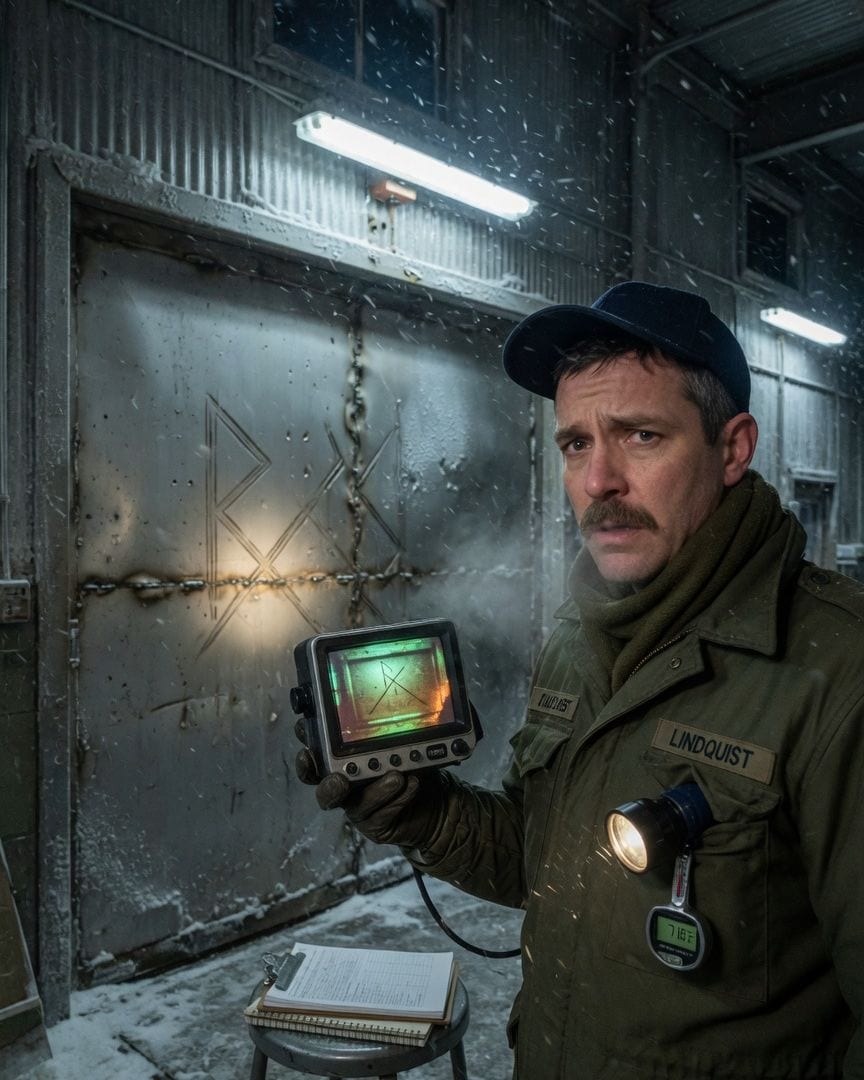
A methodical Cold War sergeant found a strange symbol etched into his sealed hangar bay. He then saw the exact same mark glowing *inside* it.
Technical Sergeant Wes Lindquist endured Alaskan winters, his duty in the vast, frigid hangar simple: log Bay Two’s temperature. The bay, sealed shut for months, inexplicably ran nine degrees warmer than the icy building for 111 straight nights in 1978. Despite official dismissal, the numbers kept climbing, forcing Lindquist to keep a secret log as the bay’s internal heat reached an impossible 72 degrees. Driven by cold certainty, he discovered a faint, unsettling symbol etched along the door's weld. Later, peering through a tiny seam with a borescope, he saw the identical mark shimmering with a fresh, orange glow from *inside* the supposedly empty, sealed bay.
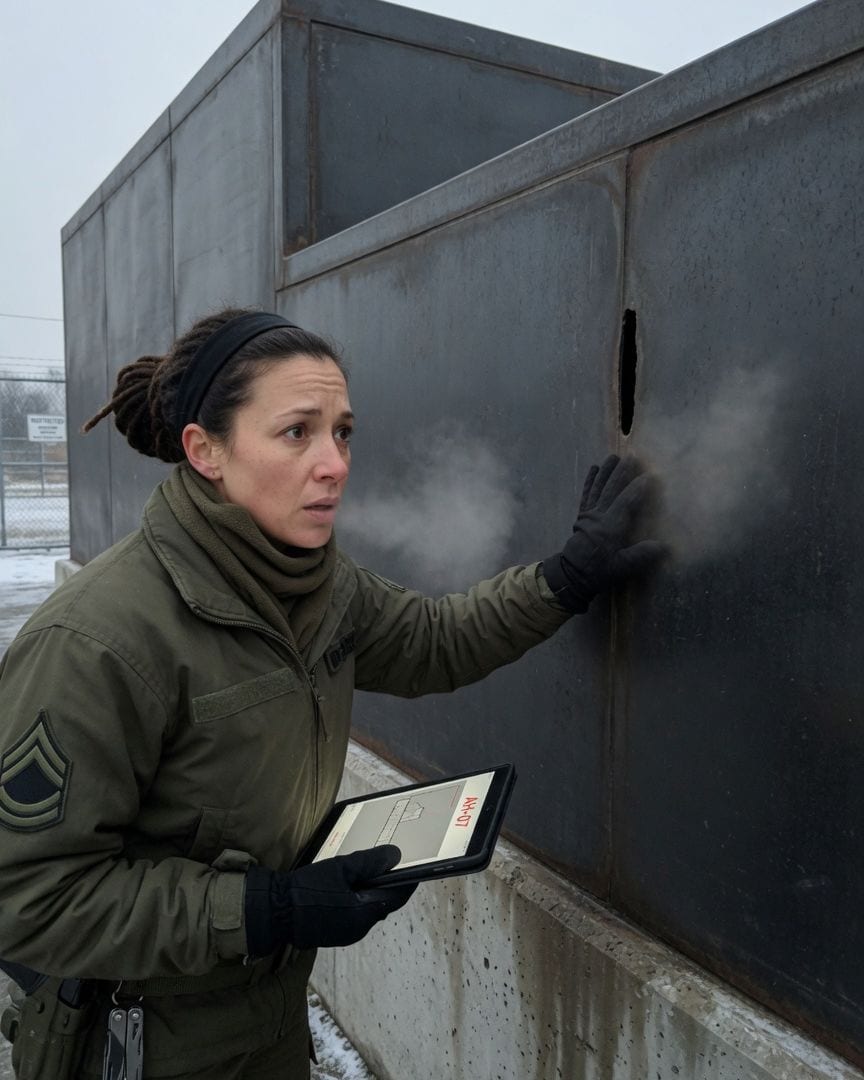
A Sergeant's audit uncovered an annex with no records. She pressed a hidden lever, and its steel wall hissed open to a sliver of impossible darkness.
Sergeant Iris Kowalczyk, a stickler for order, meticulously prepared for her transfer audit of the seventy-year-old installation. An annex behind the old post hospital defied all logic: no keyway, no maintenance record, no year built — it simply *was*. On a biting cold morning, she felt an undeniable warmth radiating from its thick, featureless steel, as if something active hummed beneath. Her fingers found a hairline seam, then a hidden, recessed pressure point that felt like a lever. When she pressed it, the steel hissed inward, revealing a sliver of impossible darkness from which a deep, electric hum and a heavy stillness pressed out. What secrets did this impossible structure conceal?
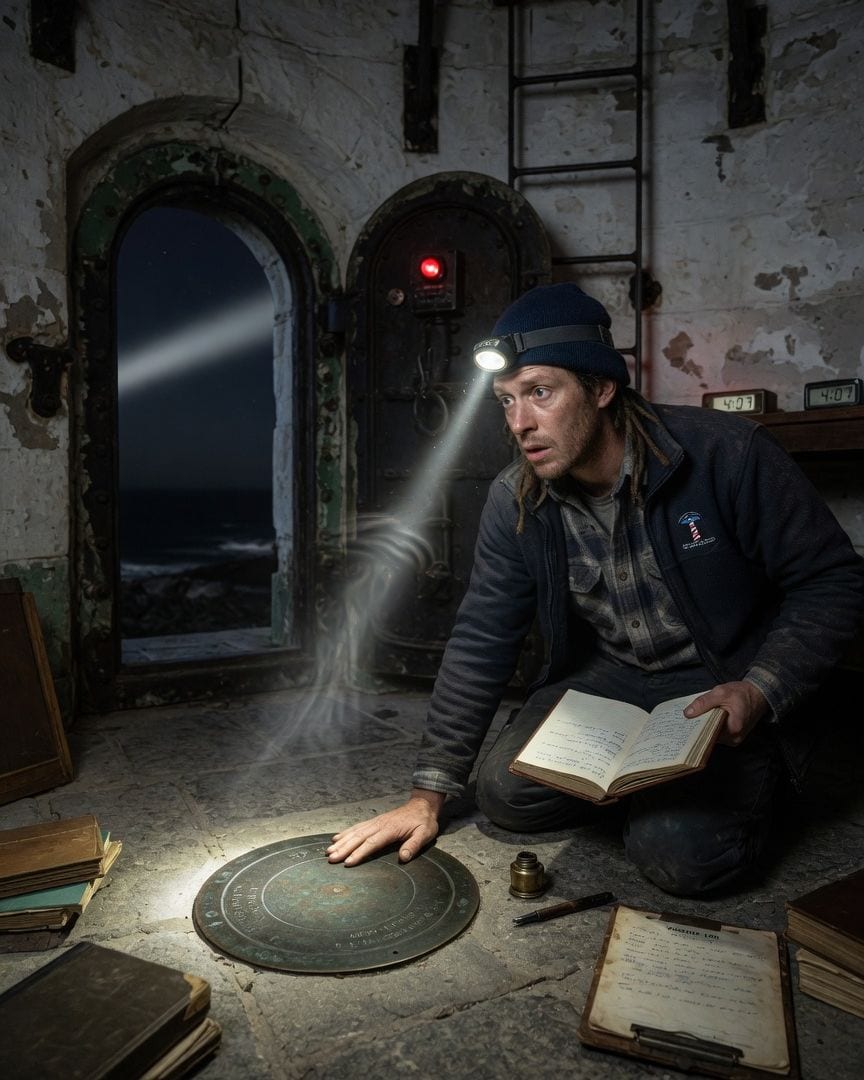
Every ninth year since 1901, my logbook records a boat through the gate at 4:05am — 'vessel through, none seen.' I was on watch tonight. Nothing passed.
As the lighthouse keeper, I log the same impossible entry every nine years, a lie I'm compelled to write. But tonight, a hidden brass disc in the floor, not on any blueprint, feels oddly warm. Hours later, it hums, and the air above it shimmers and distorts, then vanishes.
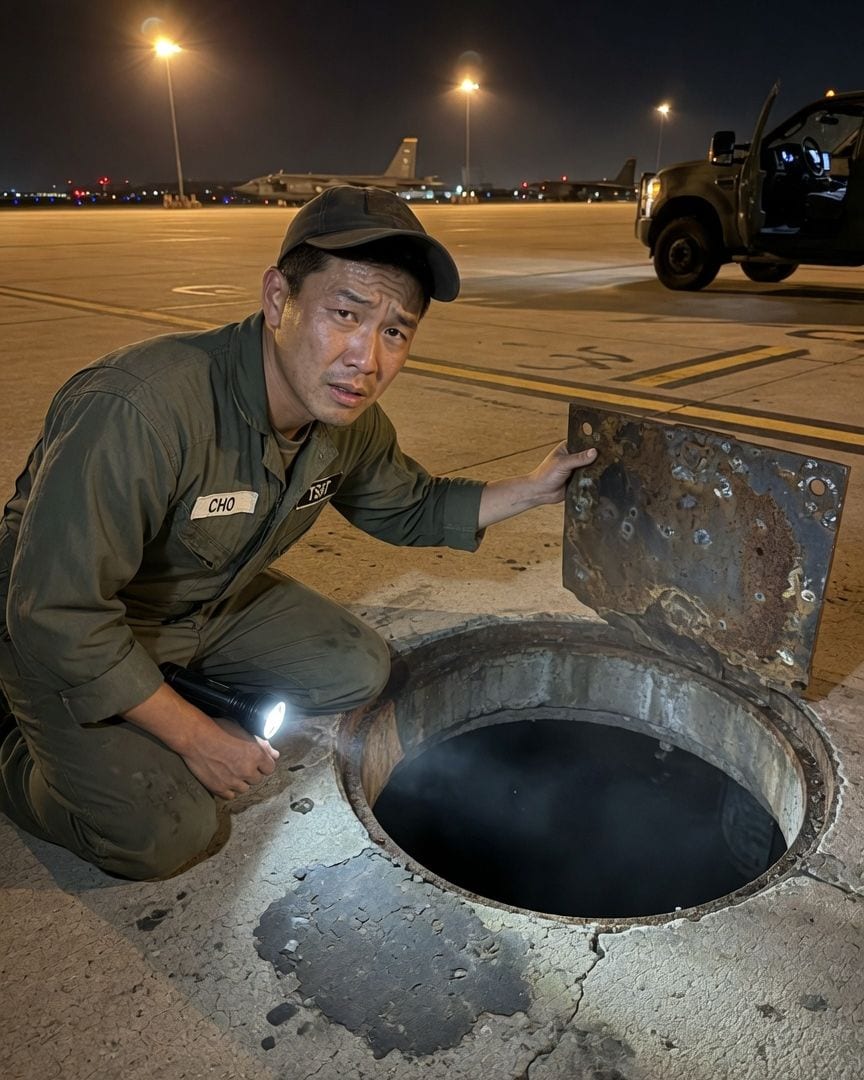
Two weeks from leaving, Technical Sergeant Cho felt a phantom weight pass through his truck, parked on the flight line.
Technical Sergeant Daniel Cho was counting down his final two weeks at the Dakota bomber base, determined to solve the phantom riddle of its floodlit flight line. Every night at 0148, a buried sensor logged a vehicle pass, yet overhead thermal cameras consistently showed nothing but empty concrete. To catch the anomaly, he parked his heavy maintenance truck directly over the sensor. But as the clock turned 0148, a low thrum vibrated through his teeth, and the sensor registered a second, impossible vehicle pass—right through his own parked truck. His investigation soon uncovered a hidden, unmapped metal plate in the concrete, sealing a dark shaft that hummed with a deep, rhythmic vibration, like an enormous heartbeat from beneath the earth.
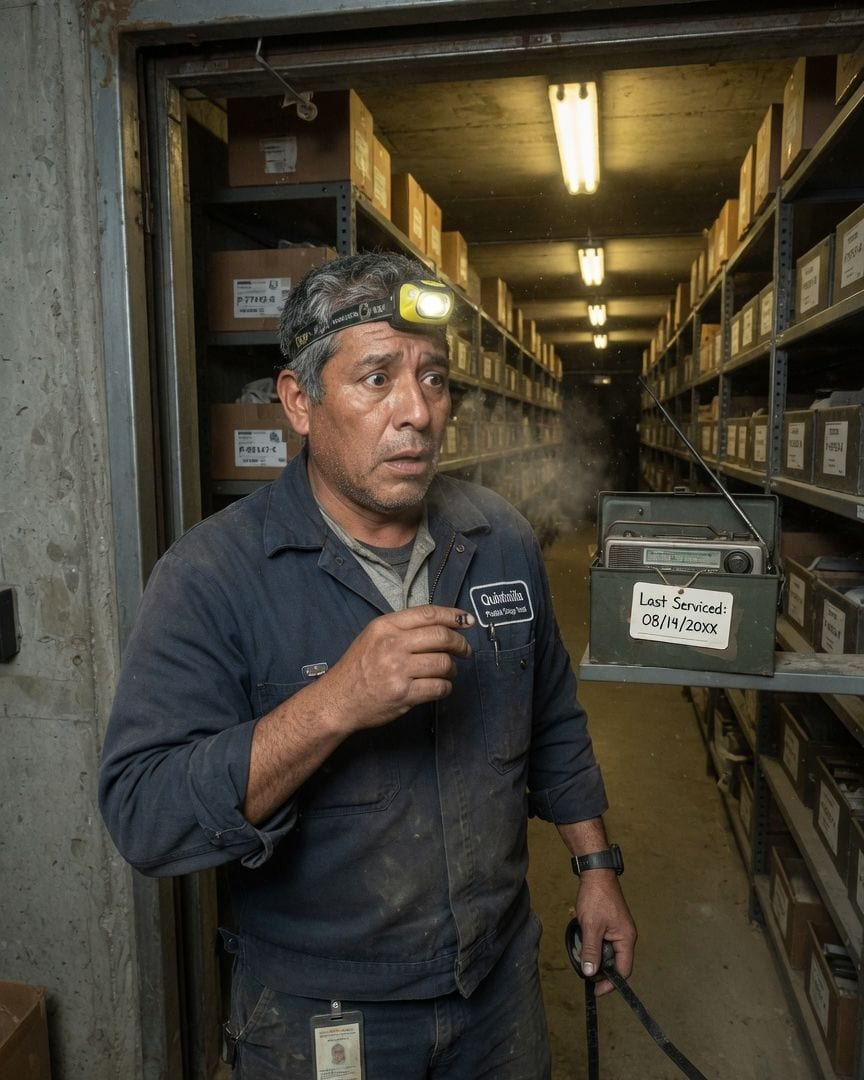
A Cold War bunker worker found a field radio serviced three years in the future, its ink still wet.
Salvador Quintanilla, one of the final two men at the Pueblo storage yard, was tasked with clearing Igloo 7, the last bunker before the facility's imminent closure. As he rolled back the heavy steel door, he discovered not an empty space, but metal racking extending impossibly far past the concrete wall, under the empty prairie, lit by a wan, humming light. Venturing into the profound chill, he found an old field radio with a service tag dated three years in the future, its dark ink still wet to the touch. The radio hummed faintly in his hands, and from deep within the impossible corridor, a metallic click echoed, confirming he was not alone.
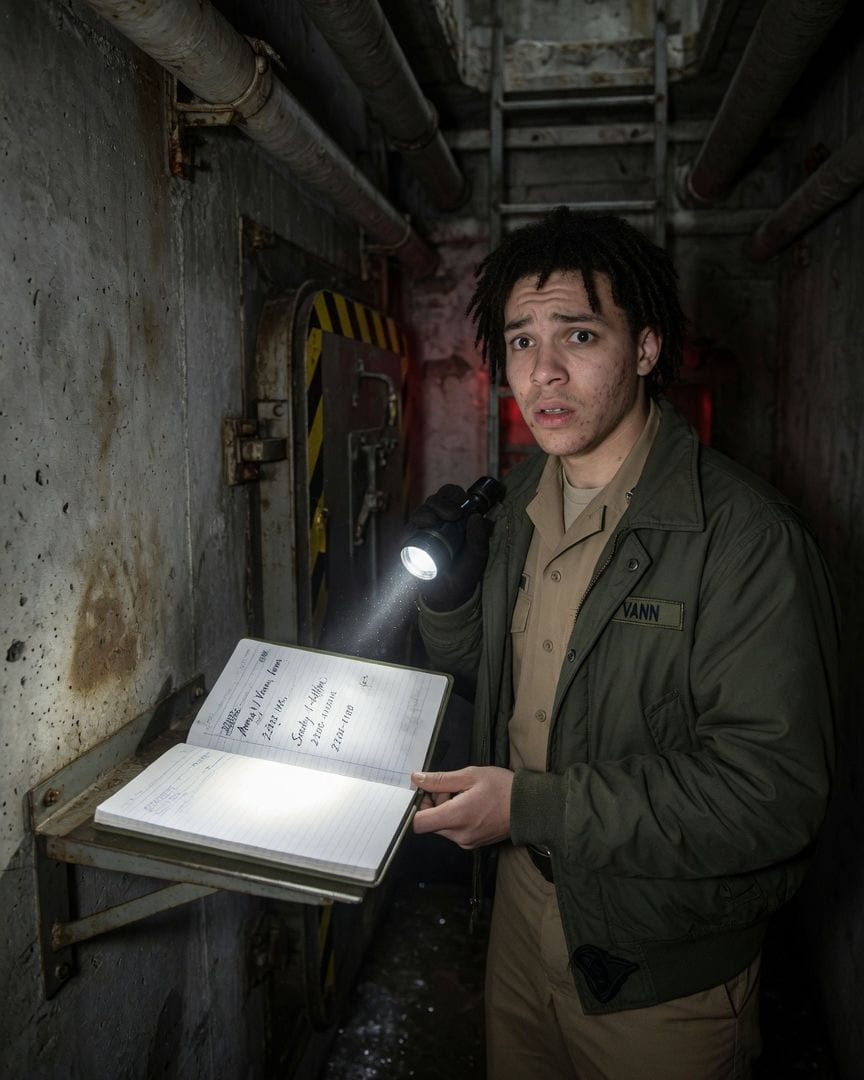
On his last patrol, Airman Vann sees a Cold War silo hatch light up from *inside*—it was welded shut a decade ago.
Airman Vincent Vann was on his last patrol across a vast, desolate Cold War missile field in the Dakotas, the cold, starless sky mirroring the emptiness of the landscape before his transfer. His routine check of eight hardened silo caps was shattered when a red fault light pulsed on Silo 4’s access panel, signaling an impossible breach from *inside* a hatch sealed for a decade. As more silos lit up, ignoring base orders, Vann found the hatch unlocked from within and descended into the dark shaft, where he discovered a pristine logbook bearing his own signature next to a chilling entry from a non-existent sentry, dated for *that very night*. Now, a steady *thump* echoed from deeper within the sealed concrete, leaving the Airman desperate for an explanation that simply wasn't there.