 Declassified
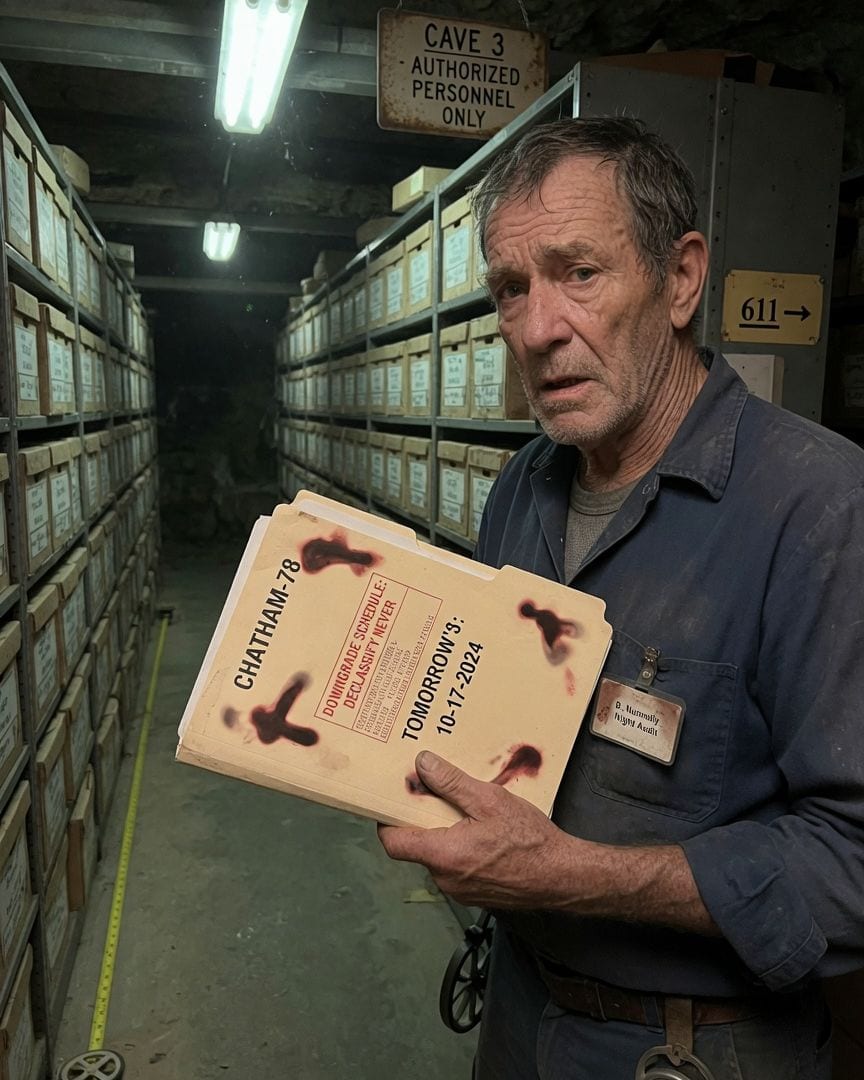
Barrow Nunnelly, a methodical sixty-three-year-old burdened by a bad back, undertook the colossal task of auditing the Cheatham storage caves, which hadn't seen a full inspection since 1968. His measuring wheel in Cave 3, officially four hundred feet long, clicked to a stop at an impossible six hundred eleven, confirming an extra two hundred eleven feet of shelving that simply didn't exist. Among these newly discovered, deeply unsettling Cold War files, Barrow found documents with strange, organically curved redactions and an alphanumeric code from no known office, all stamped with a chilling classification: 'DECLASSIFY NEVER.' Yet, beneath that, printed in crisp black ink, was an official date that hadn't happened yet. It was tomorrow.
11 min read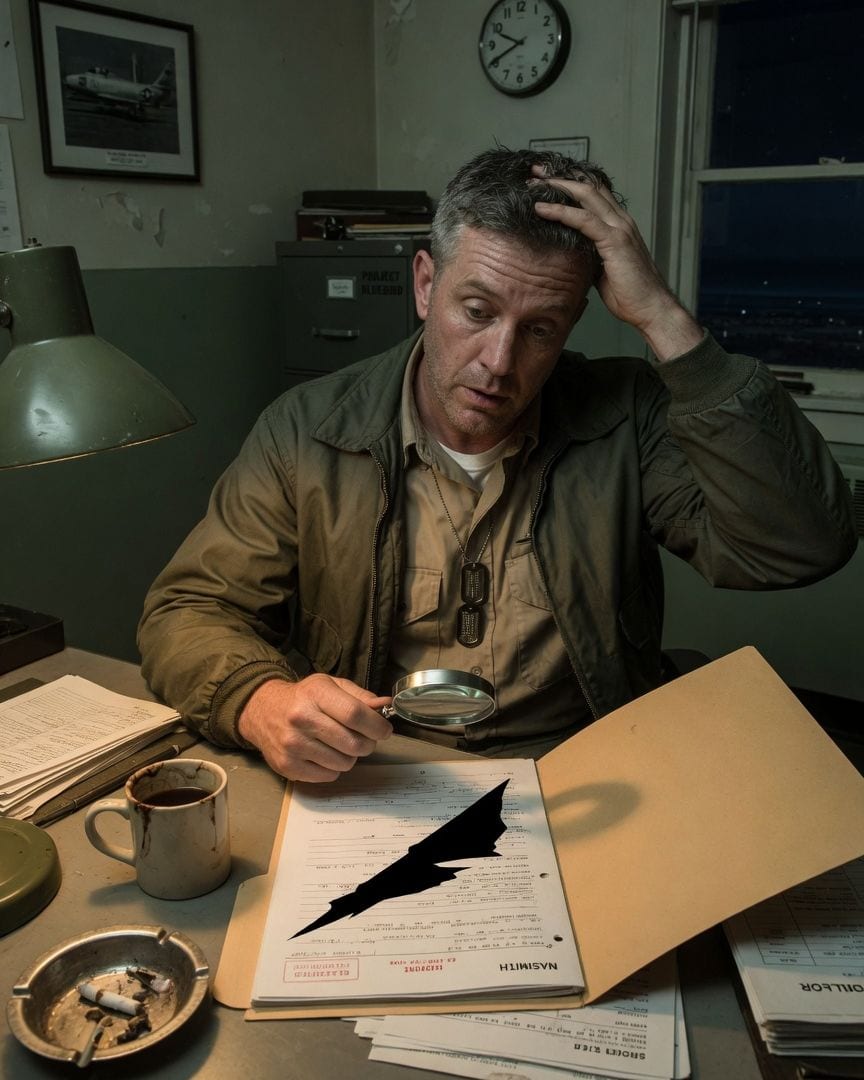 Declassified
Colonel Ward Naismith, an F-86 Sabre pilot, found himself haunted by an impossible pursuit over Lake Michigan in 1953. His flight lead's chilling whisper—that the silent, house-sized mass they chased wasn't fleeing but waiting—burrowed deep into his mind. Weeks later, reviewing the incident's classified file, Naismith discovered it was missing a page. But the true dread came from the final page: a block of blacked-out text, not a simple rectangle, but a jagged, geometric shape that felt unnaturally smooth, hiding a faint, ghosted control number beneath its surface.
9 min read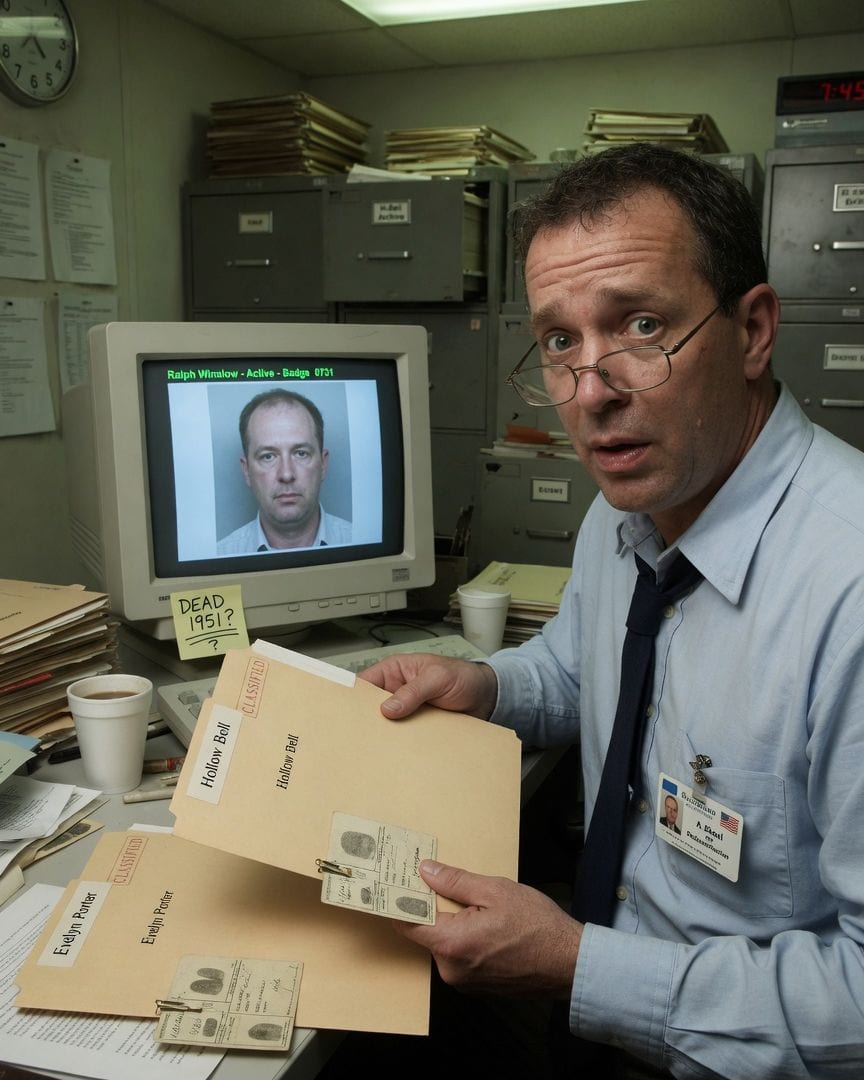 Declassified
Anton Skeel, a declassification reviewer, hoped his tedious work on old Cold War files would finally lead to an early retirement. He stared at a folder for 'Hollow Bell' containing a fingerprint card from 1958 for a man named Ralph Winslow, who was reported dead in 1951. Out of professional pique, Skeel ran the prints, only to find Ralph Winslow currently employed and badged into the building that very morning. The employee photo, however, was a complete stranger, attached to a file that insisted the man was both seven years dead and decades active. Now, a second impossible file has surfaced, revealing another 'returned subject' reported lost at sea, whose photo also belongs to a stranger.
9 min read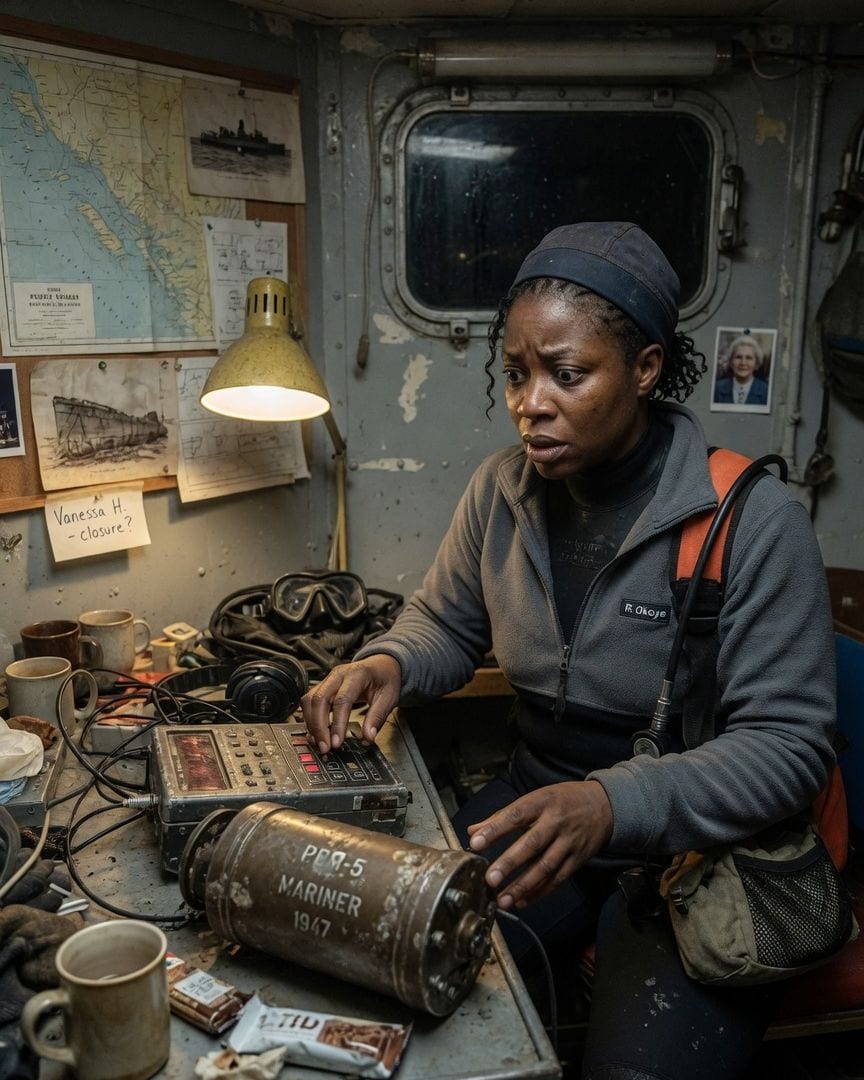 Declassified
Salvage diver Ruthann Okoye plunged into the murky, cold Puget Sound, hoping to find closure for a pilot's granddaughter exploring a 1947 patrol bomber wreck. As her lights cut through the gloom, she discovered the bomber's bomb bay doors wide open and its ordnance racks meticulously empty. Her dread deepened finding all six arming pins neatly collected in a canvas bag, implying precise, unhurried removal before the plane went down. But the true unease arrived with the flight recorder, where the pilot's calm voice stated, 'Transfer confirmed,' just before an unsettling mechanical thump-thump-thump began. What was transferred from a plane supposedly lost in a gale?
11 min read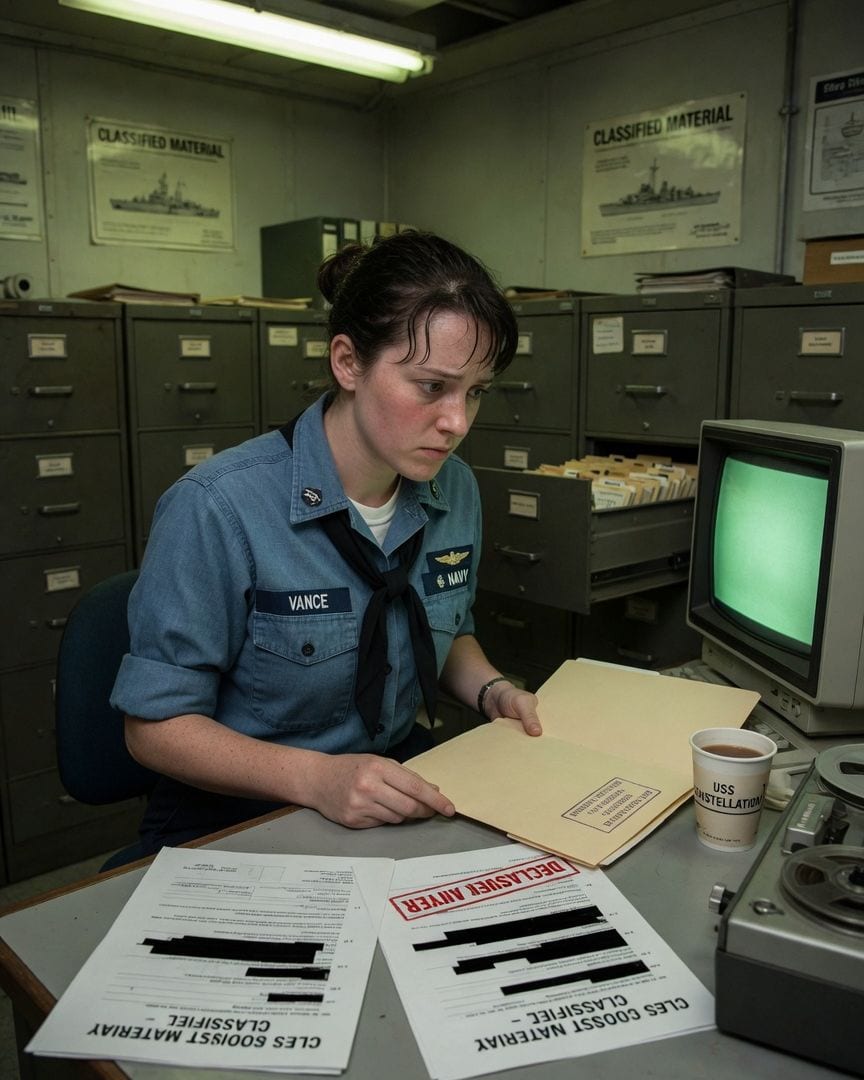 Declassified
Radarman Second Class Peggy Vance, 22, began her first night alone in the carrier's dim green radar room off San Diego, the ship gently rolling. She tracked an impossible contact: a shape without wings, falling from sixty thousand feet to the deck in under four seconds, baffling the pilot. The next night, her incident tape was gone, the slot relabeled, and the official log dismissed the event as a "weather balloon" that couldn't be found. Peggy soon uncovered a deliberate pattern: conflicting, heavily redacted reports, each copy hiding what the other revealed, confirming a layered deception. What secret was so vital it required such an intricate, impossible lie?
13 min read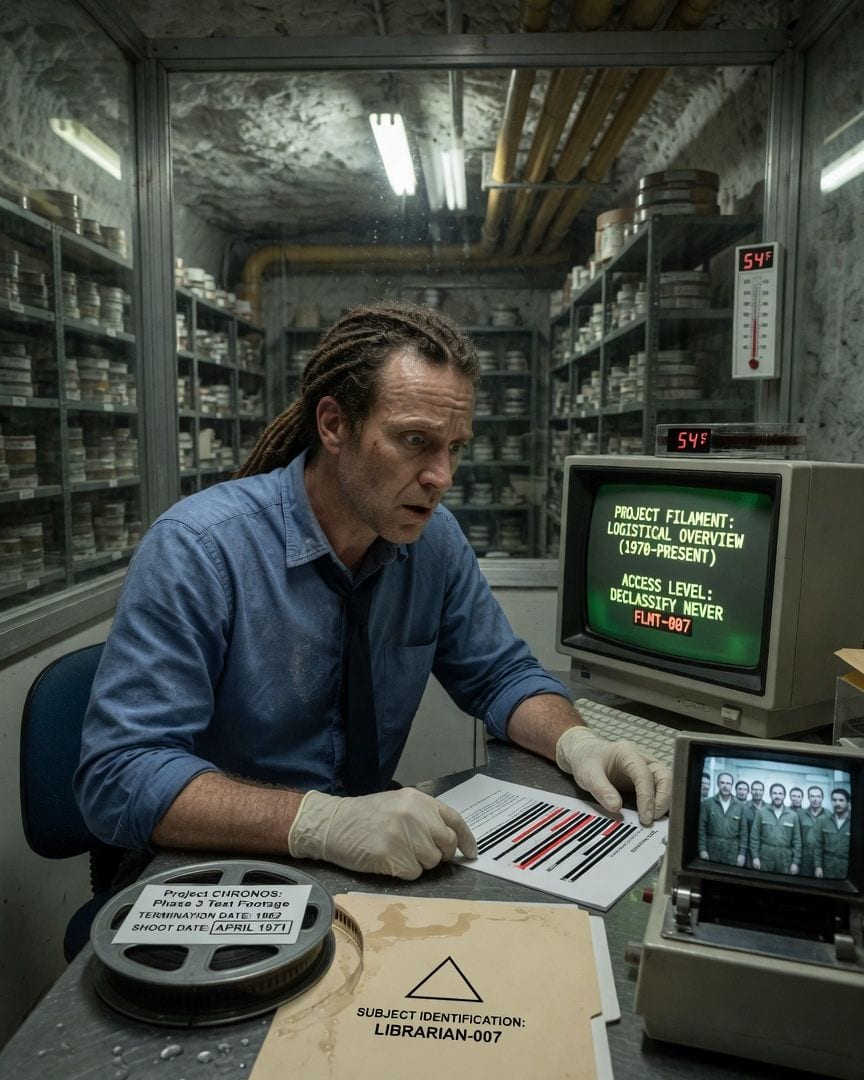 Declassified
Hosea Pike, an archivist in a vast Kansas salt mine vault, meticulously maintained records in a perfectly dry, controlled environment. His brow furrowed when his gloved hand closed around a film reel weeping cold condensation, its metal chilled like well water. The label stated 'Project CHRONOS: Phase 3 Test Footage,' terminated in 1962, yet stamped beneath was an impossible shoot date: April 1971. What could explain a film shot nine years after its project's official end?
11 min read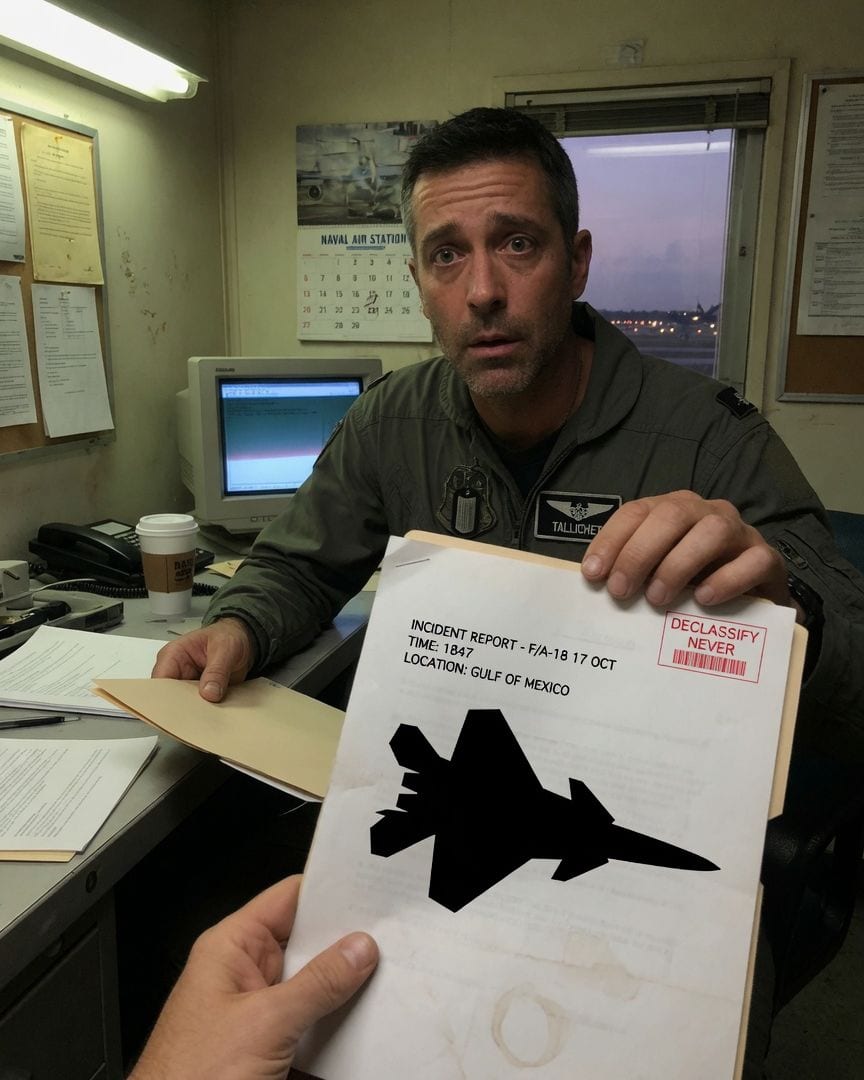 Declassified
Captain Yves Tallichet landed his jet, his hands shaking from an impossible encounter in the sky. He'd seen a dark, seamless shape mirror his F/A-18, defying all known physics. Days later, seeking answers in his official flight report, he found a precise, angular blackout over his observations. A senior records clerk confirmed the redaction was permanent, flagged "DECLASSIFY NEVER." But the true dread came when the digital file showed "Page 1 of 12," yet his physical copy held only six. What happened to the other pages?
11 min read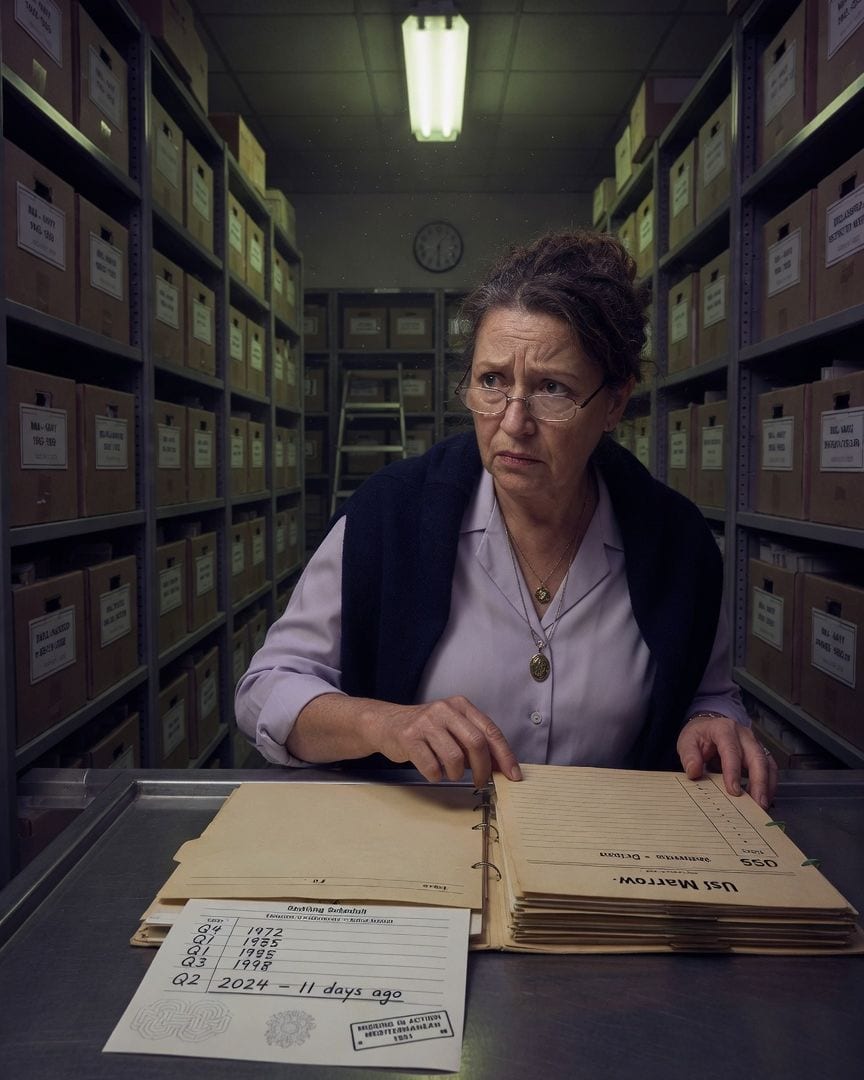 Declassified
Marguerite Ansell, an archivist, faced her final week before retirement in the National Archives. Dust motes danced in the anemic fluorescent light as she navigated endless rows of forgotten history, counting down to quiet days. Her last routine task, auditing 'missing in action' files, led her to the oiler Pell Marrow, officially lost in the Mediterranean in 1951. Inside its yellowed folder, a crisp, newer fueling schedule revealed quarterly updates, running relentlessly forward to an entry just 11 days old: someone was still filling the Pell Marrow’s tanks. As she found similar active schedules for other 'lost' assets, each bearing a peculiar, unknown fractal stamp, a cold dread settled: what agency kept these ghosts of the Cold War afloat?
10 min read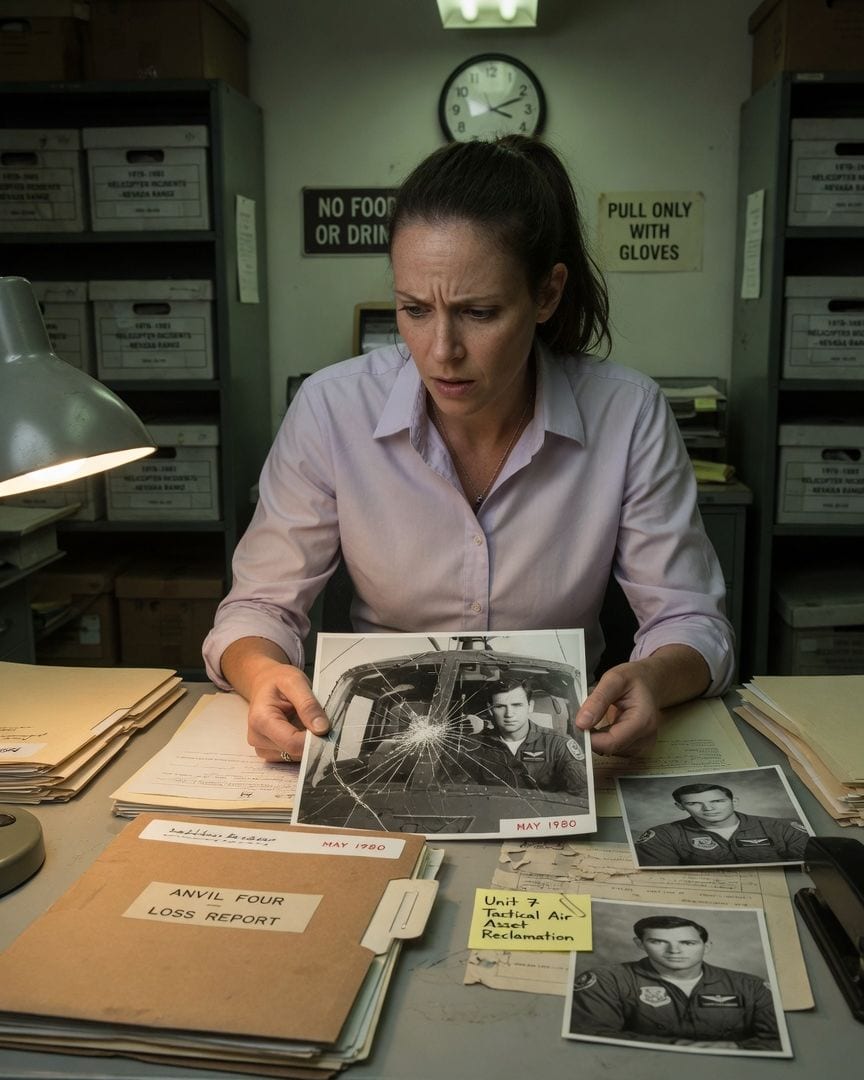 Declassified
Archivist Josie Ilnicki meticulously handled a forty-year-old file, a routine request carrying the weight of a widow's grief for helicopter Anvil Four, vanished decades ago. Inside the standard folder, she found a maintenance sheet inexplicably dated eight months after the aircraft's documented total loss and disappearance. The sheet included a photograph of a man in the cockpit, his face obscured, later identified as Benjamin Mitchell, the pilot listed as Killed In Action. But the uniform in the photo bore a unit insignia not authorized until three years after Mitchell's official death, pressing an impossible truth into the sterile archive air.
12 min read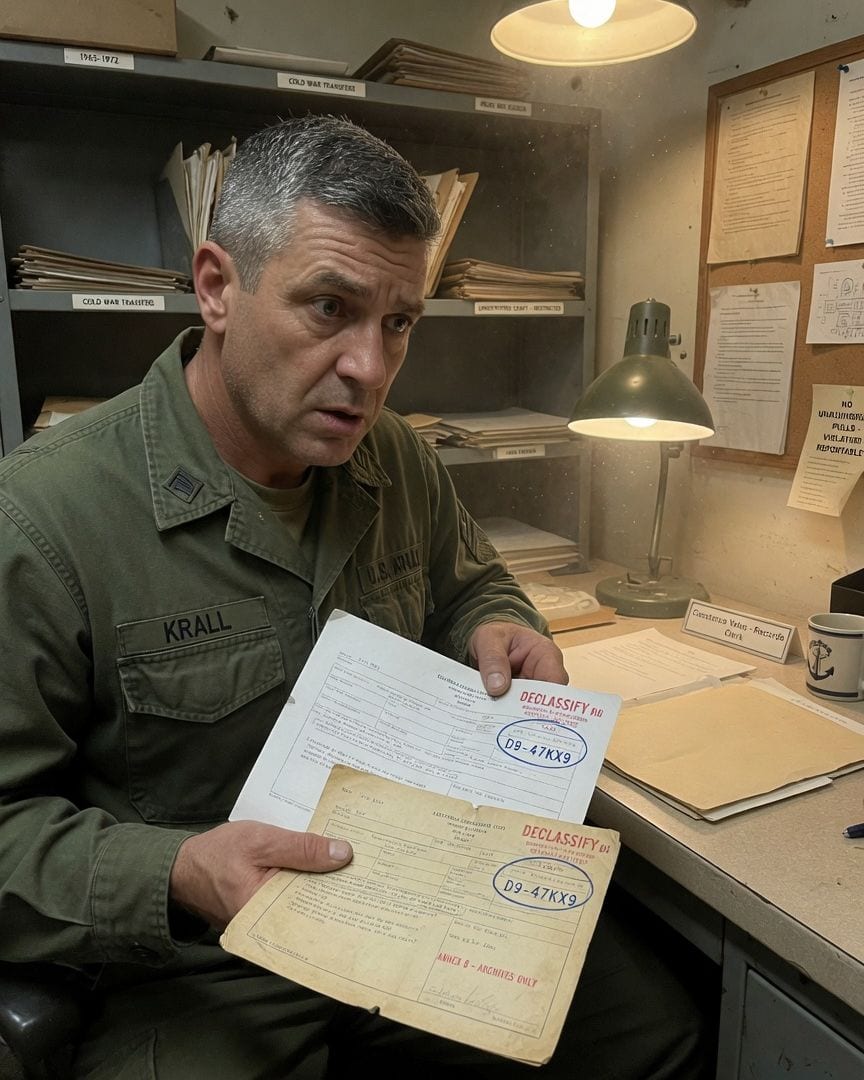 Declassified
Staff Sergeant Ivo Krall endured his last assignment before separation, eager for a quiet life in a week. The North Atlantic pitched violently, but a sealed container he was escorting refused to move; as the ship rolled thirty degrees, the dull gray box remained unnaturally plumb, defying physics itself. Krall couldn't shake the impossible sight, and back at base, he found its control number returned "UNASSIGNED" and was stamped "DECLASSIFY NEVER." The true chill came when he discovered an identical transfer log from 1967, detailing the same impossible cargo with the exact same control number. Could the same impossible object truly appear decades apart?
13 min read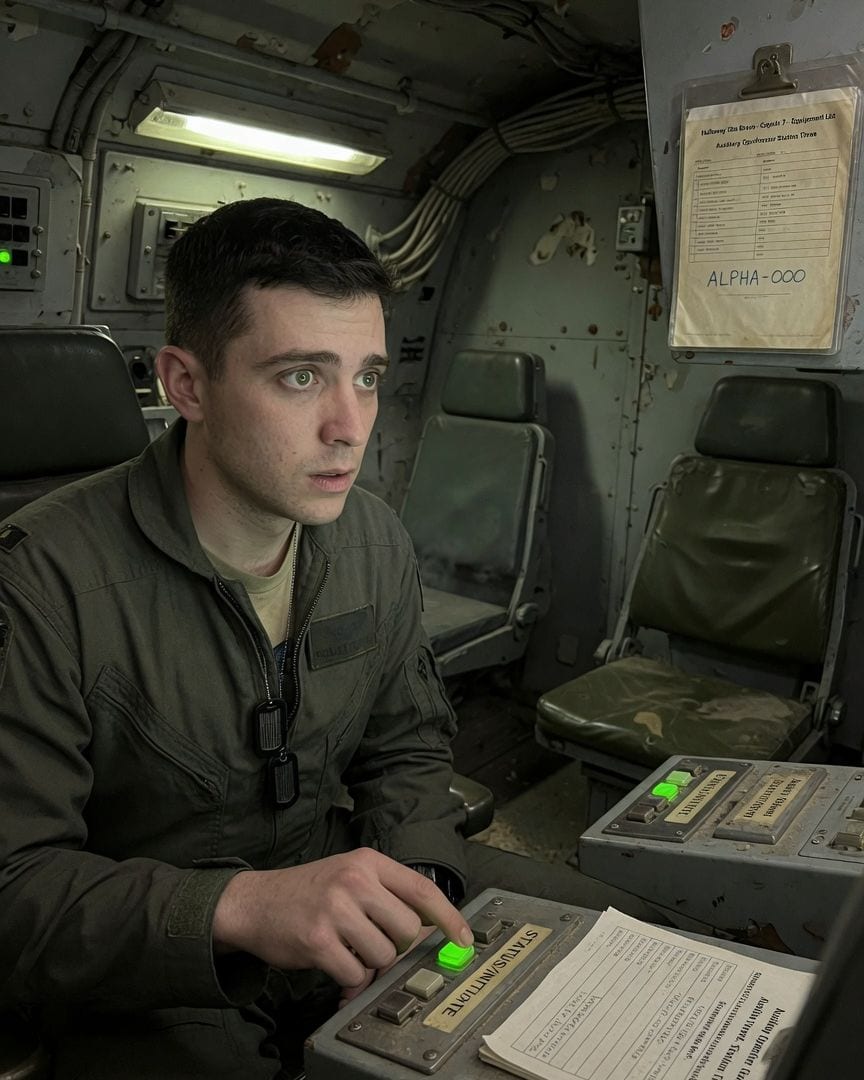 Declassified
Airman First Class Dov Kestrel was counting down the final 72 hours of Halloway Site Bravo, on his last alert watch before the facility sealed its doors for good. The capsule was built for two, but a third, unused chair always sat in the corner. Then, at 0300, a soft sigh came from that corner, as if someone invisible had just settled into the vacant seat. When Dov checked the third chair, its console felt faintly warm, and a maintenance log showed a recent entry signed by someone who wasn't there.
9 min read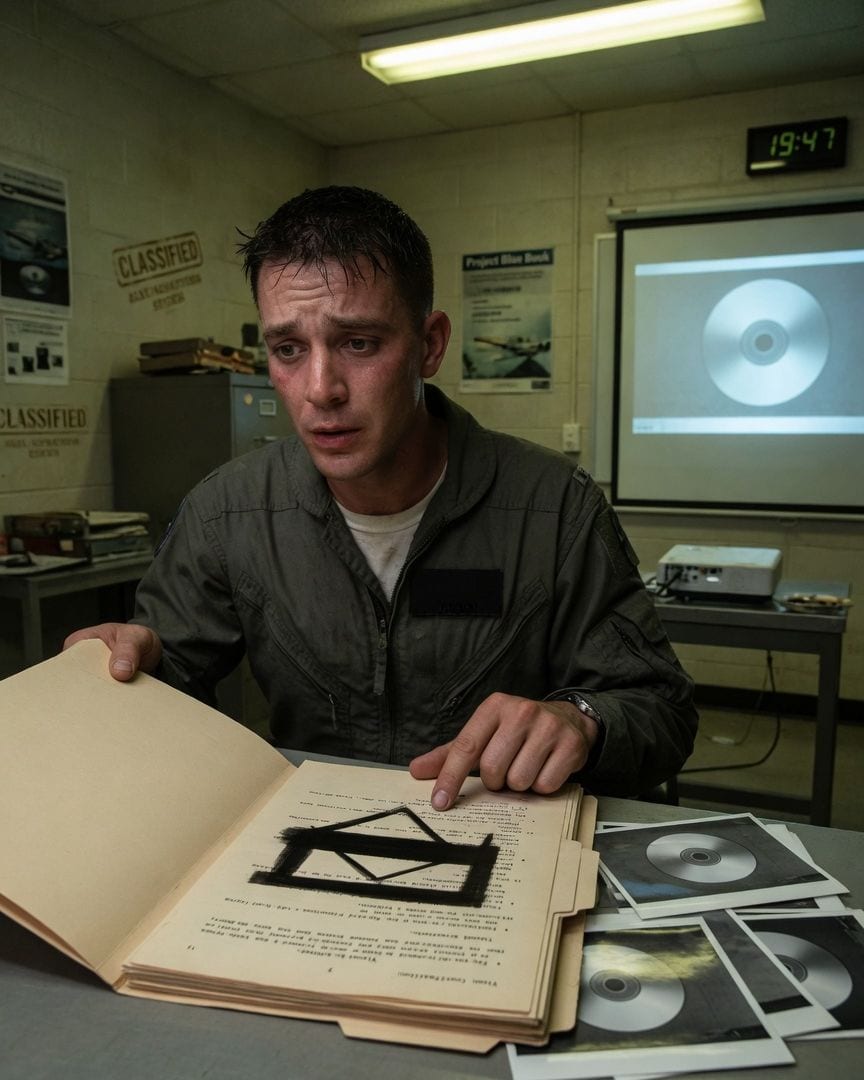 Declassified
Captain Merle Vachon had one last intercept before he could return home to his newborn daughter Nora. High over the Nevada ranges in his F-86 Sabre, he encountered a disc that moved with impossible, silent displacement, defying all known physics. Days later, the official gun camera film showed the object impossibly close, directly contradicting Vachon’s own telemetry and eyewitness account. But the true chilling detail emerged when he found a perfect diamond shape outlined by redacted black ink within his classified incident report.
12 min read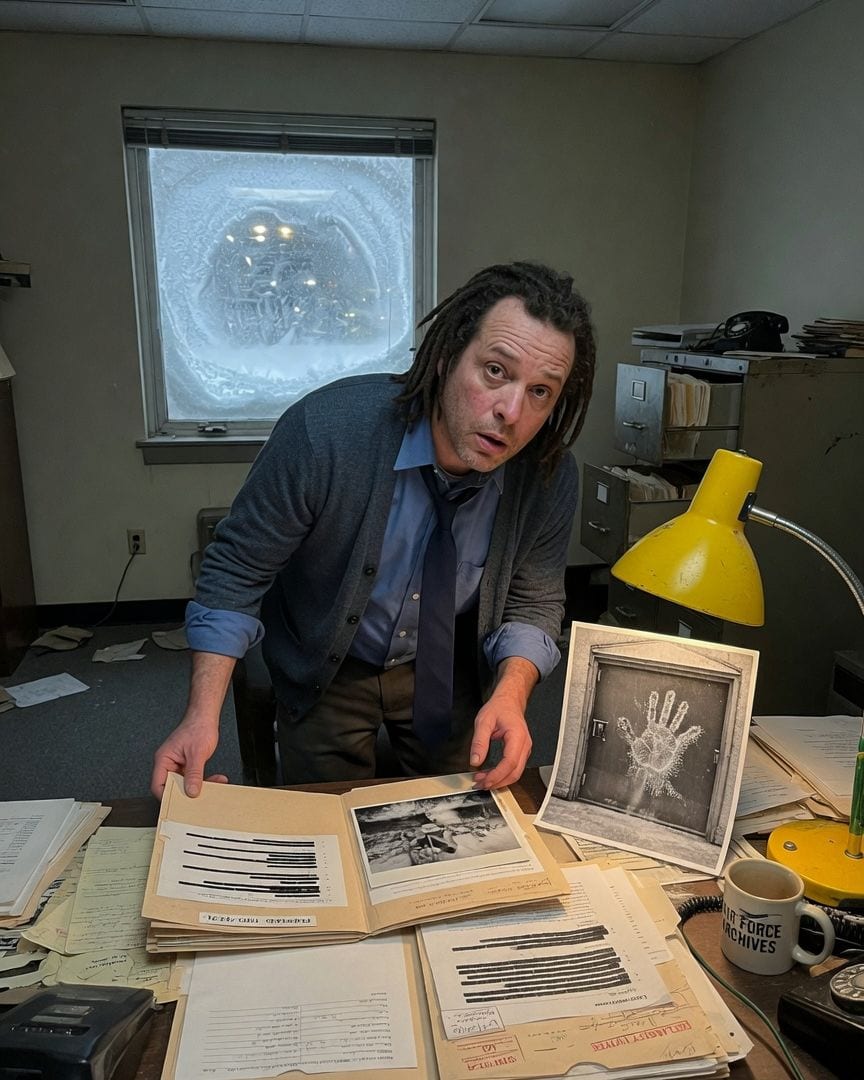 Declassified
Declassification reviewer Josiah Kemp sat in his office, the only window a blur of snow, sifting through an old government file from 1954. The Perrin Field file detailed a hangar door frozen shut from within at an unheated facility empty for two years, a detail that snagged his professional skepticism. But then he saw a grainy photograph: a six-fingered handprint mapped in frost on the *outside* of the hangar's observation port, pressed impossibly from the empty darkness *inside*. As Kemp's rational mind scrambled, he found another copy of the report, its redactions falling in wildly different places, revealing details meant to be hidden forever.
12 min read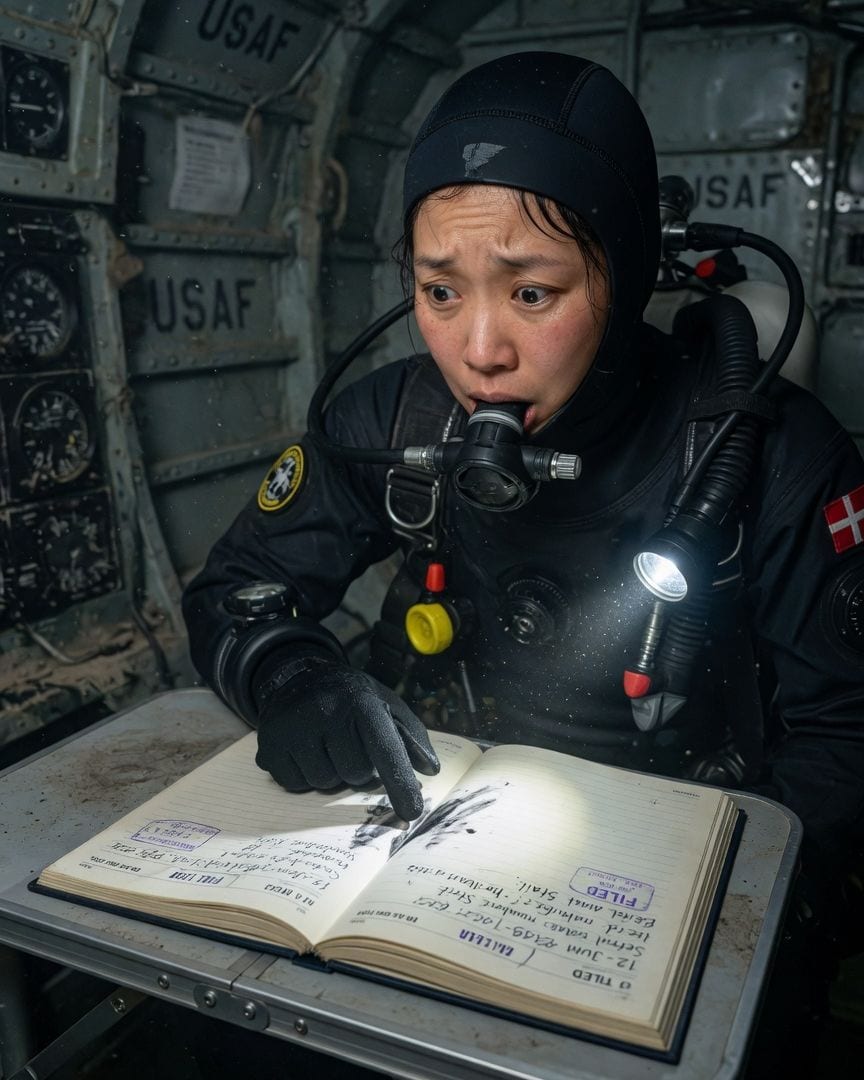 Declassified
Yuki Ammann descended into the crushing dark of the Denmark Strait, her nine-hour bottom window stretching ahead. She hoped for a glimpse of the lost B-52 bomber her father spoke of, a relic of a vanished crew. Instead, her sonar painted a perfect profile: a pristine B-52, sitting upright on the continental shelf, dry inside. A logbook lay open on its flight deck, the last entry dated today, June 12, 2024. The ink was still wet. Could her father’s stories be more than just sailor’s myths?
11 min read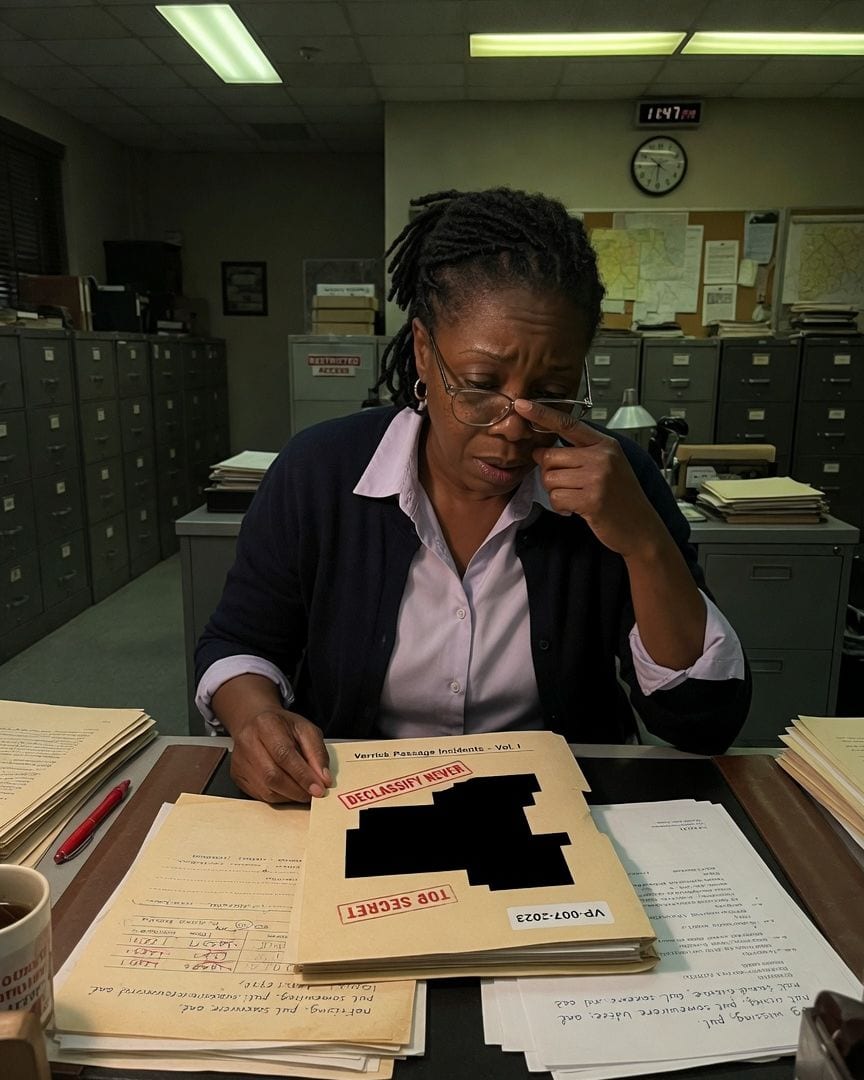 Declassified
As a declassification reviewer for the National Archives, Ione Fash faced a Sisyphean task: finding a way to downgrade records detailing the disappearances of fourteen men over eighty years. The constant hum of the office was her only companion as she meticulously examined files marked 'DECLASSIFY NEVER'. She pulled out nine witness statements, each from a different town and year, only to find them all written in the exact same distinct, looping script. Then she saw it: a control number on a file supposedly closed in 1978, dated '2023', and with no originating office in the entire archive system. Who was still signing these impossible files?
10 min read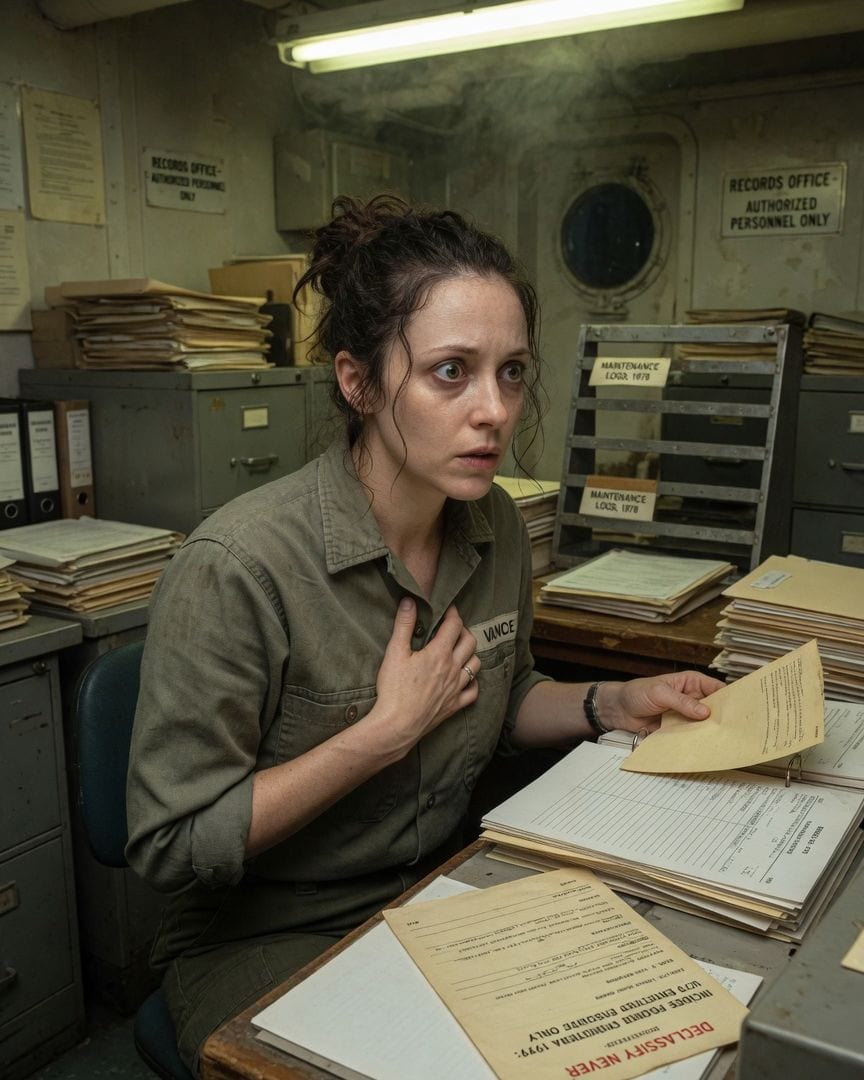 Declassified
A young radar operator, Peggy Vance, faced her first night alone in the USS Enterprise's Combat Information Center, the massive carrier steaming silently off San Diego. Her green-lit scope revealed an impossible contact: a craft dropping sixty thousand feet in under four seconds, then holding station just two hundred yards off the bow. Despite her detailed log, the tape reel vanished and official records showed no incident. The ship's history had been tampered with.
11 min read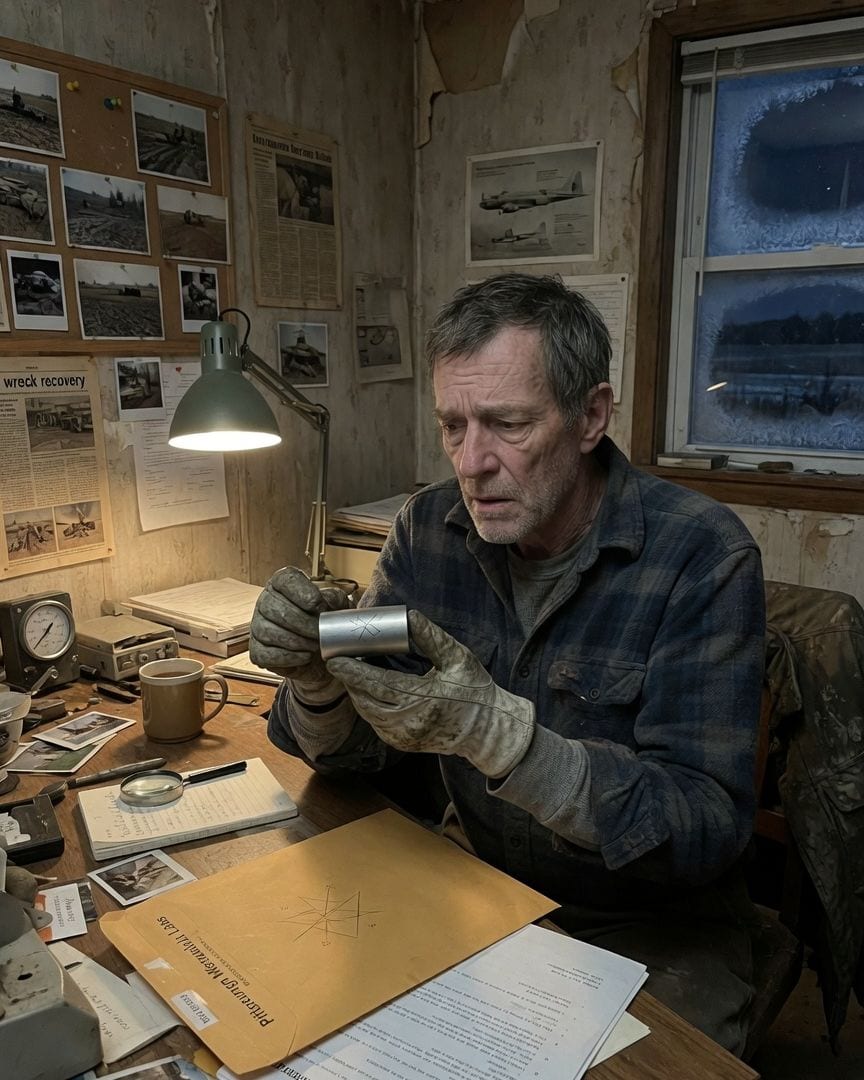 Declassified
Wreck-hunter Anselm Roeder, 56, carefully navigated his custom truck through the frozen, muddy fields of a rural Pennsylvania valley. He had spent a week tracking a farmer's odd report of 'bad ground,' now confirmed by his radar: an immense object buried twelve feet down. In the sharp winter air, his team finally unearthed the mud-caked wing of a B-17 bomber, remarkably preserved since 1944. But as Anselm knelt, he heard a faint, steady hiss from an oxygen bottle, impossibly charged, and then found a small, smooth metallic cylinder, too perfect for eighty years underground, bearing a symbol from a redacted Cold War file.
11 min read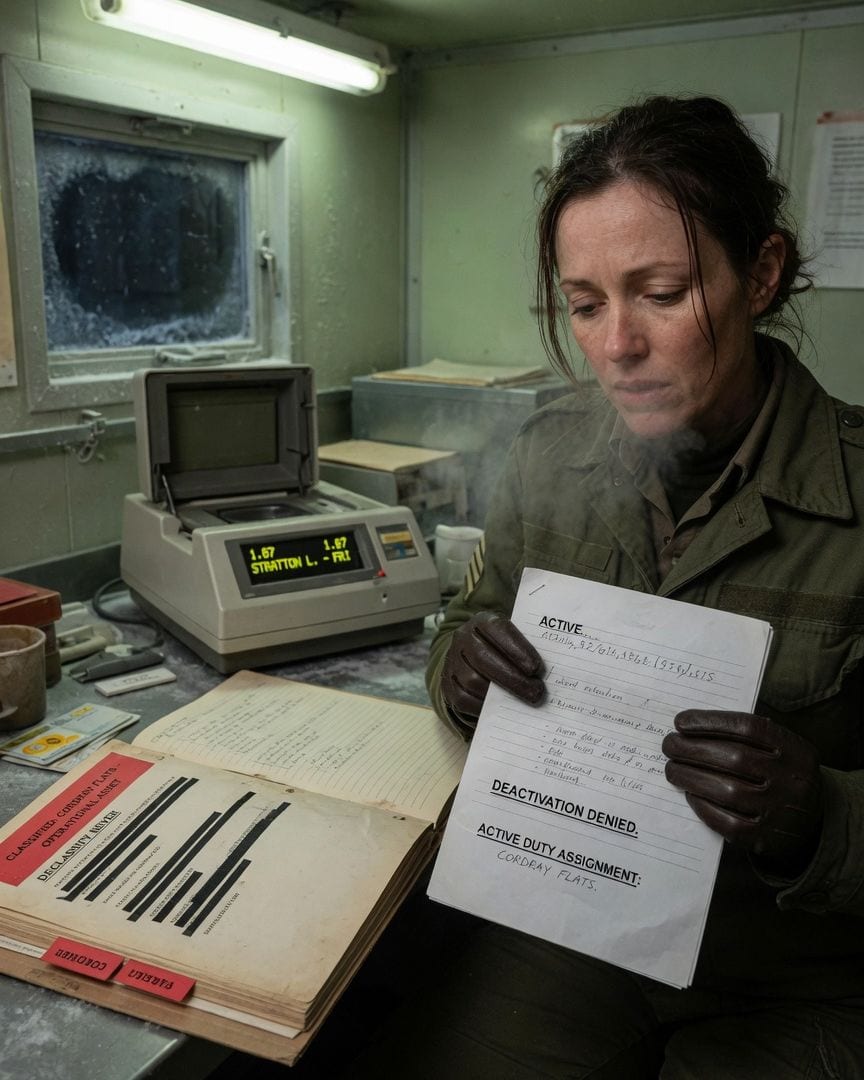 Declassified
Corporal Hettie Vance moved like a ghost through the cold, empty Cordray Flats in the winter of 1988. The decommissioned range was quiet, her film-badge processing a rote exercise, until the 141st badge appeared. It belonged to Leonard Stratton, a research assistant who'd died in 1987, yet the scanner showed a full working exposure. Hettie found its date wheel manually reset for the coming Friday, and a secret file later confirmed an impossible directive: 'ACTIVE DUTY ASSIGNMENT: CORDRAY FLATS.' Who reset the badge, and for what purpose, on a range supposedly abandoned?
12 min read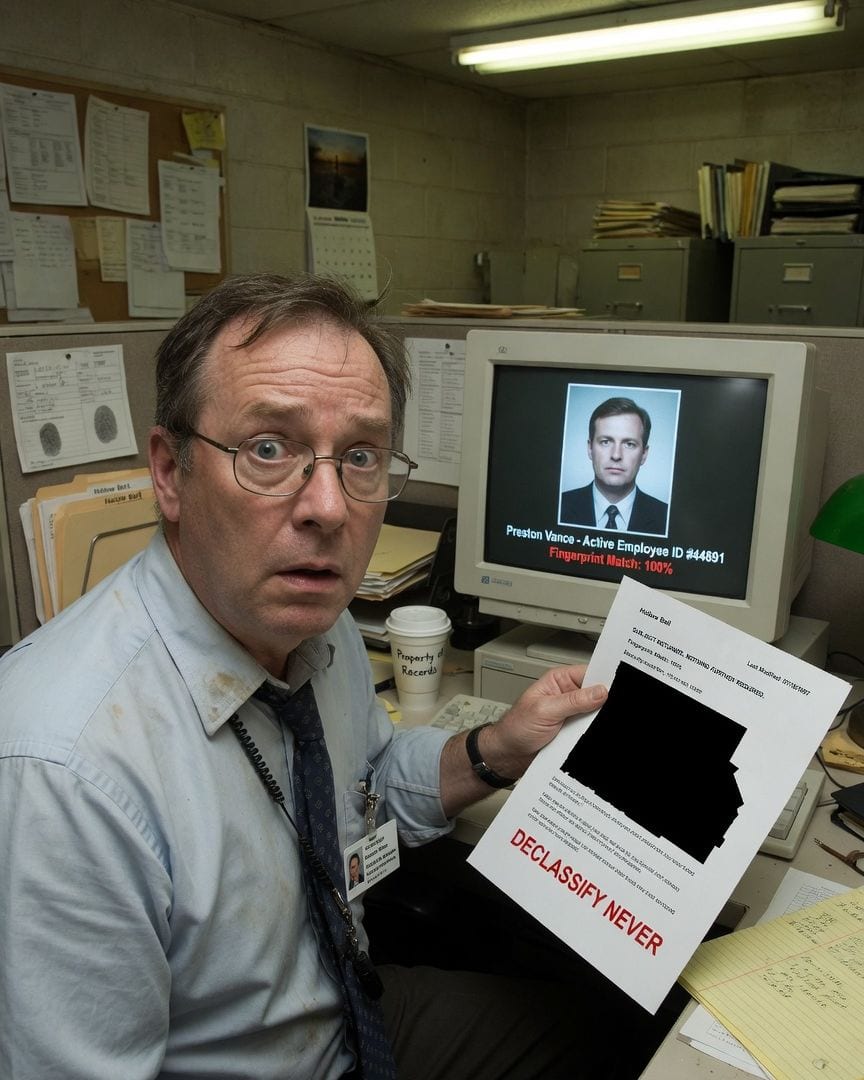 Declassified
Anton Skeel, a government records reviewer nearing retirement, anticipated a quiet end to his career. His days were spent in a dull, windowless office, sifting through the lingering paperwork of a bygone era. But a file labeled 'Hollow Bell' stopped him cold: it held fingerprints from a man, Preston Vance, reported dead in 1951. Anton's system then matched those prints to an active employee, badged into his very building that morning, whose personnel file showed a stranger's face and a section with a 'DECLASSIFY NEVER' redaction. Who exactly is Preston Vance?
12 min read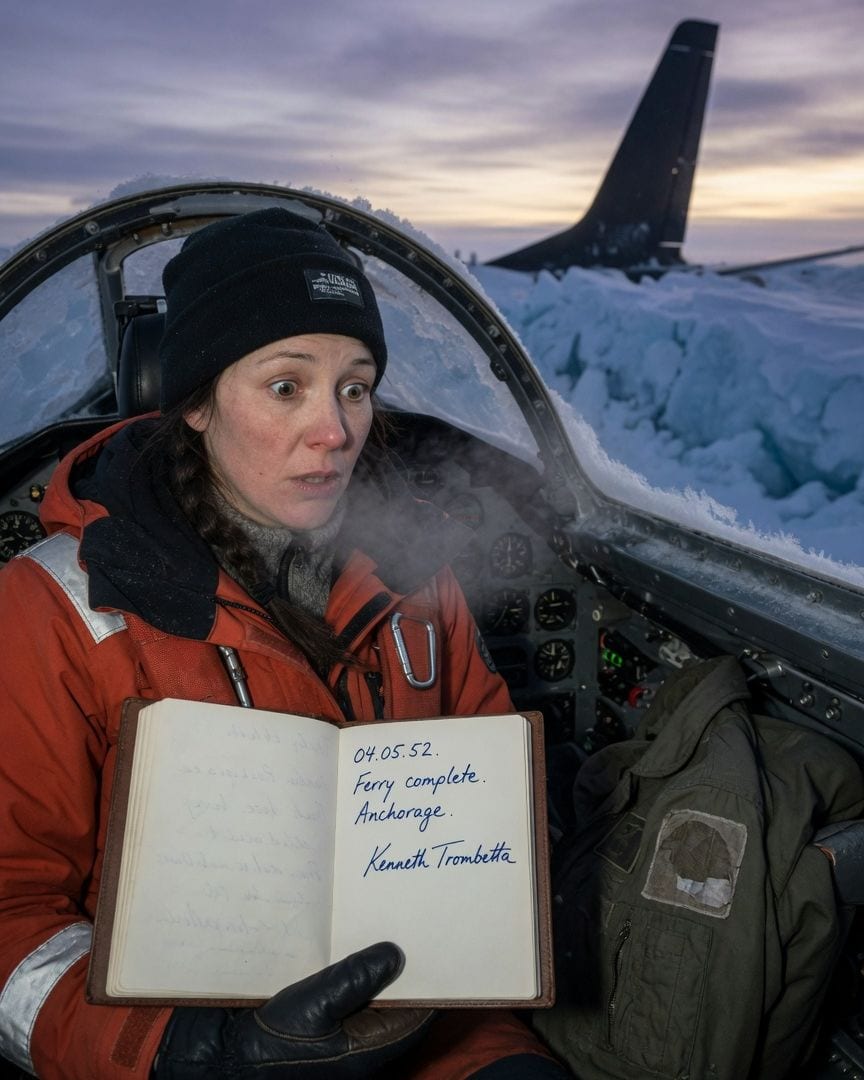 Declassified
Geologist Faye Trombetta had only a two-week window on the Bering ice before the pack closed, but she found more than ice cores. A black fin of metal, impossibly upright, rose from a pressure ridge: the tail of an F-86 Sabre jet, like the one her grandfather vanished in over that very sea. Approaching, she found the jet impossibly preserved, gleaming under the weak Arctic sun, its cockpit pristine and smelling faintly of new leather. Her heart hammered as she saw the tail number matched her grandfather's lost aircraft, then discovered his own unmistakable signature in the logbook on an entry dated three days after he was declared missing.
9 min read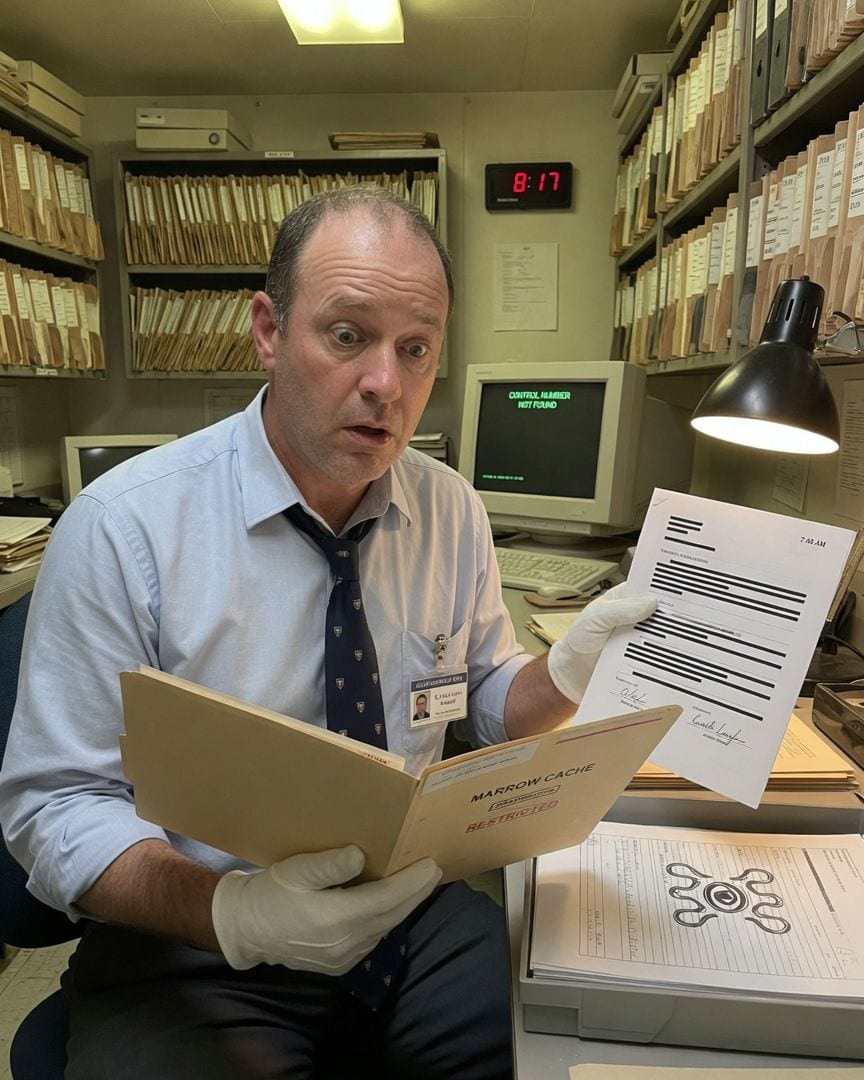 Declassified
Corwin Vale, lead records manager for Fort Ruthven, lived by routine, his world precise and ordered. This morning, however, that order shattered when he found the Marrow Cache file's extension signed at 7:48 AM. Corwin had not clocked in until 8:00 AM, and the vault logs showed no other entry. As he reviewed the heavy file, he discovered its control number did not exist in any database. Then, deep within the redacted pages, a strange, geometric symbol pulsed faintly, an alien glyph etched into the classified paper. What impossible secret did the file hold?
10 min read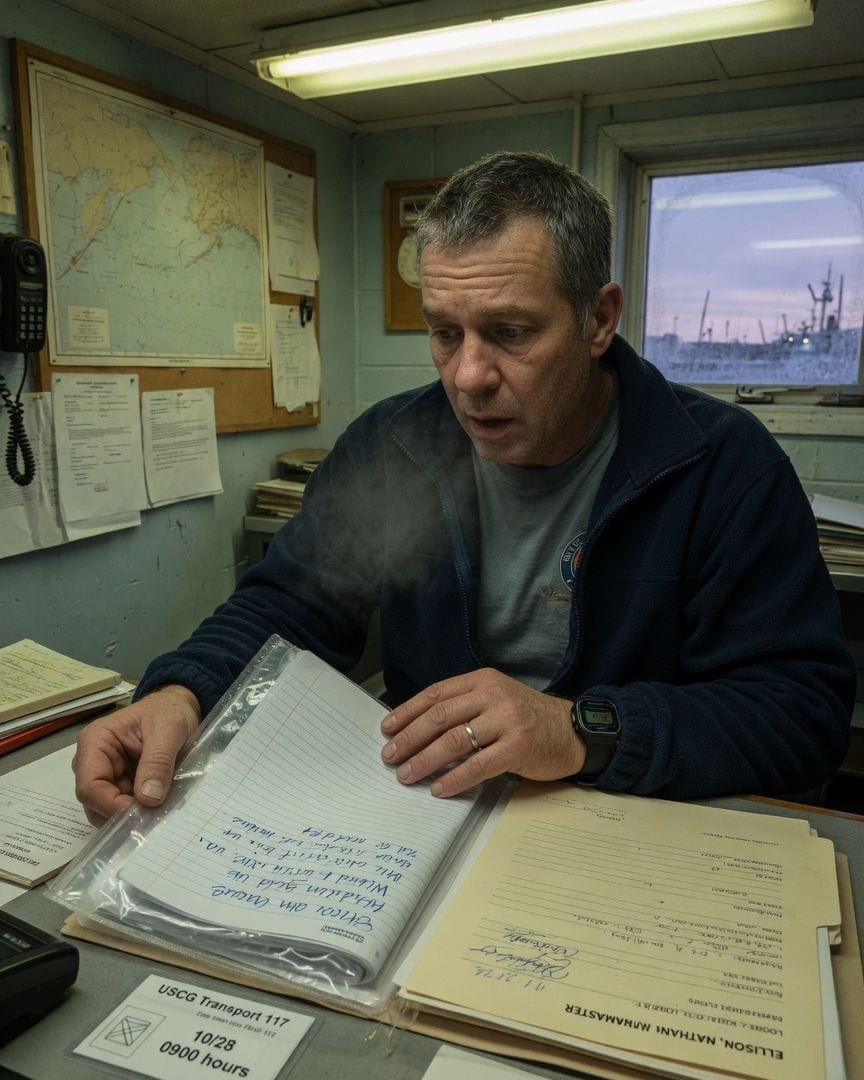 Declassified
Dell Krznaric, a Coast Guard officer, felt no peace as the Aleutian sundown bled purple. The search for USCG Transport 117 had just yielded an empty life raft, recovered from the vast, indifferent Bering Sea. Inside, Loadmaster Ellison’s meticulous survival log detailed hourly positions, but Dell’s eyes snagged on an entry dated eight hours into the future. Then, a second, hidden document in the pouch revealed an impossible date: a full week from now. How could a lost crew log events that hadn't even happened yet?
10 min read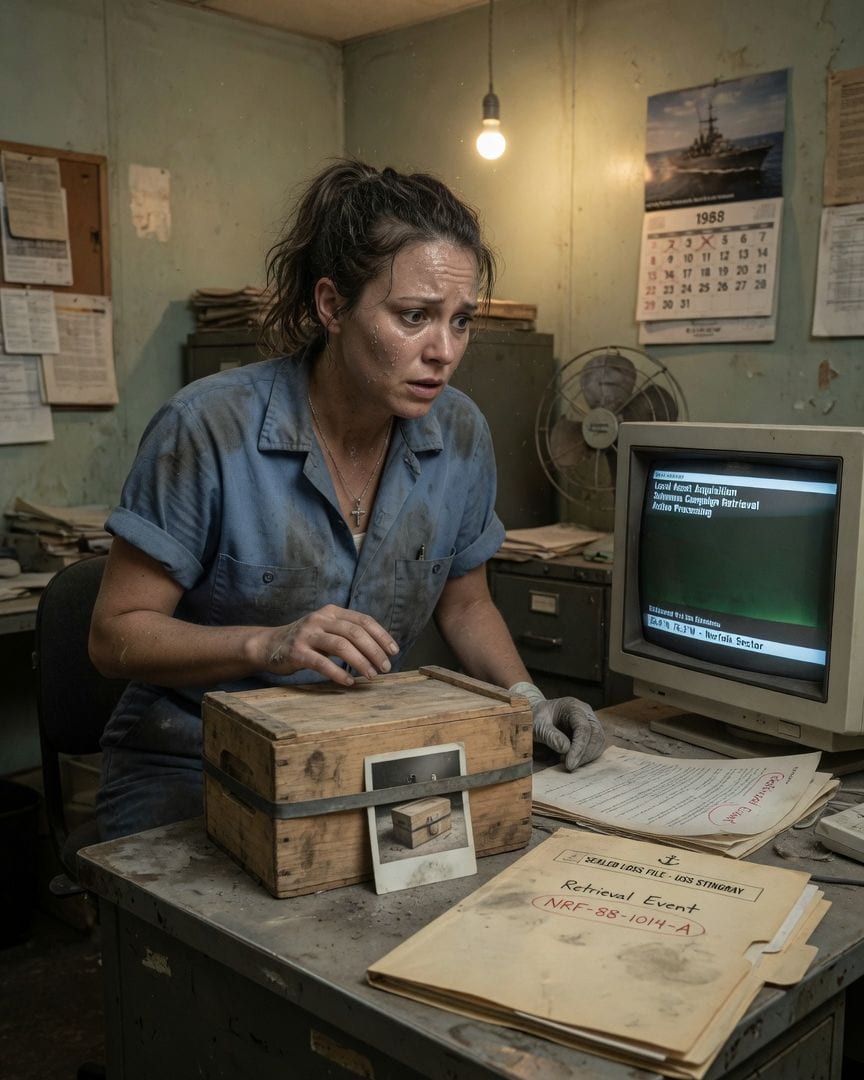 Declassified
In 1988, Callista Rhue toiled in a humid Norfolk records depot, her monotonous job sifting through the charred remains of a 1943 fire that had supposedly incinerated everything. She unearthed a cool, unmarked wooden crate that should not have survived, finding a faded 1944 Polaroid of the very crate tucked into its lead band. Inside, a 'sealed loss file' for the USS Stingray, a minelayer vanished in the Solomons, contained an impossible 'Retrieval Event' dated 1988. Callista's database search for the anomaly then pointed not to the distant Pacific, but to active processing for the lost vessel on a remote Norfolk coastline, just miles from the depot. What had truly vanished, and what had been found?
12 min read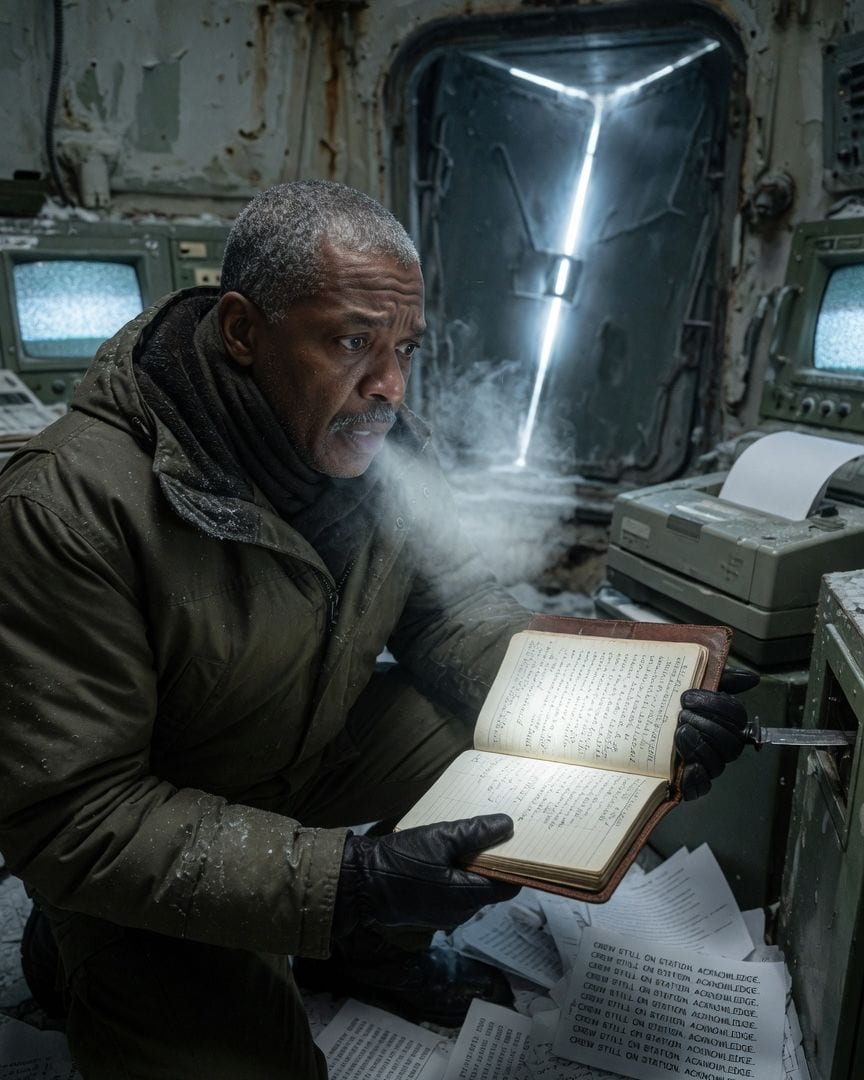 Declassified
Colonel Ren Marsalis braved the brutal North Dakota winter to inspect a decommissioned Cold War missile silo, a squat concrete structure half-buried in the frozen earth. The eight-ton blast door, a monolith whose hydraulics were scavenged in 1985, should have been sealed shut. Instead, an eleven-inch gap bled an unnatural bluish-white light. Inside, two console screens glowed without power, radiating an impossible warmth, while an emergency printer spewed four hundred feet of paper onto the deck. The repeating message chilled him to the bone: CREW STILL ON STATION. ACKNOWLEDGE.
11 min read