In her last week before retirement, an archivist discovers a Cold War oiler, lost in 1951, still has fuel logs updated just 11 days ago.
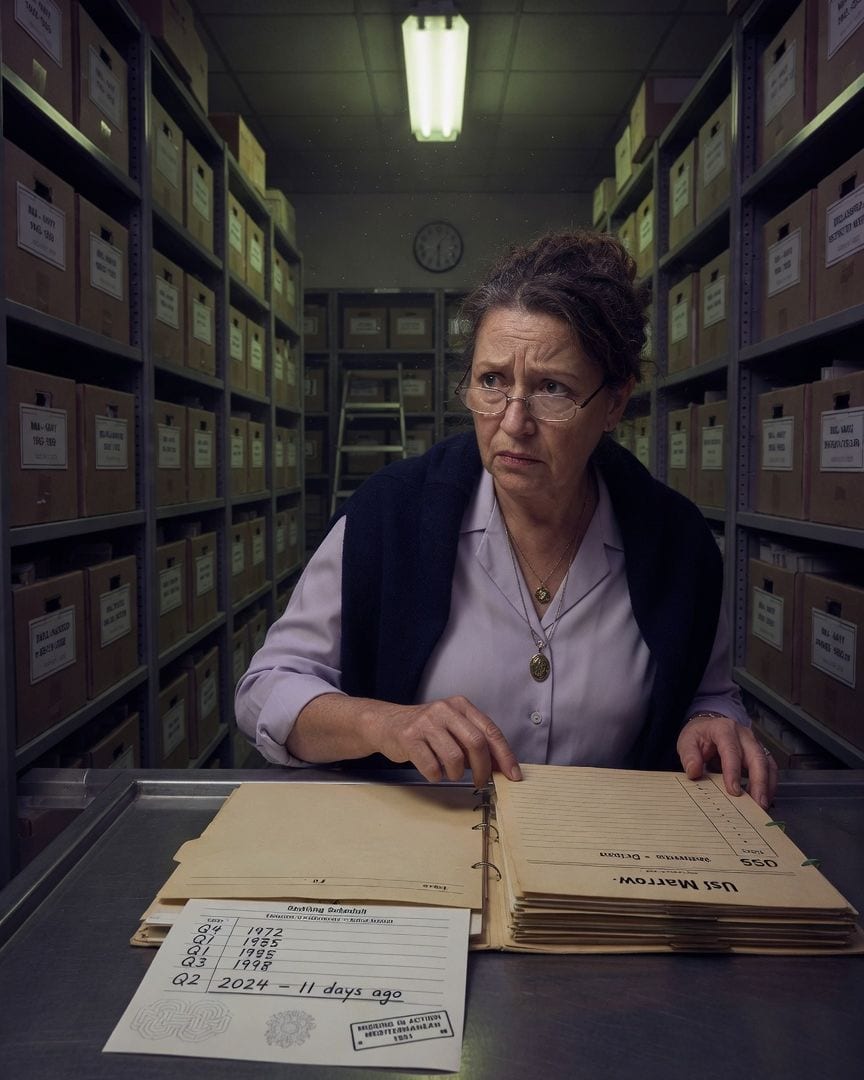
Marguerite Ansell felt the familiar ache in her knees as she navigated the labyrinthine aisles of the National Archives. Dust motes danced in the anemic light from the overhead fluorescents, illuminating endless rows of steel shelving.
It was her last week before retirement, a bittersweet countdown to quiet days and crossword puzzles.
Her final task was a routine audit of 'missing in action' files from the mid-20th century, a last dance with the ghosts of forgotten bureaucracy.
She pulled the file for the oiler Pell Marrow, officially declared lost in the Mediterranean in 1951. The folder was heavy, its cardstock cover yellowed, the metal staples rusted green at the corners.
Inside, nestled amongst brittle newspaper clippings and faded telexes, a single sheaf of paper felt oddly newer, its edges crisp. It was a fueling schedule. Not the original 1950s log, she noted, but a subsequent document, updated quarterly.
Marguerite’s brow furrowed, a faint line etched between her eyebrows. She traced the pencil marks with a careful finger: 'Q4 1972', 'Q1 1985', 'Q3 1998'.
The handwriting shifted over the decades, evolving from a neat copperplate to a hurried ballpoint scrawl, then to a precise, almost clinical script. But the schedule ran forward, relentlessly, quarter after quarter, decade after decade.
Her finger stopped on the last entry, stark and clear against the cream paper: 'Q2 2024 – 11 days ago'. A chill, sharp as a draft from an open window, ran up Marguerite's arm.
Somebody was still filling the Pell Marrow’s tanks.
Marguerite’s rational mind immediately sought explanations. A clerical error, a misfiled document, a forgotten update by some long-dead clerk with a dark sense of humor.
The archive’s fluorescent lights hummed a low, unsettling drone, and the stale air around her felt suddenly colder. She pulled the Marrow’s original manifest and cross-referenced the control numbers.
The file was undeniably authentic, its loss officially processed, its crew marked 'presumed lost at sea.'
Yet, the active fueling schedule listed specific tonnage receipts, verified by stamped signatures from ports that had ceased to exist decades ago, swallowed by coastal erosion or rebranded beyond recognition.
The ink on the recent entries, though a different hand, had a peculiar, almost deliberate precision, as if etched rather than written.
She noticed a subtle, embossed stamp on the schedule pages themselves, not the usual Navy seal, but a complex, almost fractal design.
It resembled a labyrinth rendered in miniature, intricate lines folding into themselves, forming a pattern that looked vaguely official but belonged to no known agency in the archives’ comprehensive directory.
It was a detail too specific, too meticulously rendered to be a simple mistake. This wasn't a misfile; it was an ongoing record, updated with intent, and the dread began to settle, cold and heavy, in her gut.
She found a similar, fainter imprint of the same fractal design on the Marrow’s official cover sheet, previously overlooked as a smudge.
Alongside it, tucked into a corner beneath a faded library stamp, was a series of seven digits, a control number she didn't recognize as standard.
Driven by a growing unease, Marguerite requested a broader search: any 'missing' naval assets with unusual post-disappearance documentation. The system churned, a laborious clanking from the server racks in the distance, then spat out three more files.
The USS Vance, a destroyer escort lost in the Pacific in 1944. An Air Force C-119 transport, vanished over Alaska in 1962. A Coast Guard cutter, the USCGC Brooks, disappeared off the Grand Banks in 1978.
Each file, like the Marrow’s, contained an active, updated operational schedule. And each bore the same peculiar, fractal-like embossed stamp. But what truly froze Marguerite was the cover sheet of the Vance's file.
Beneath the stark 'DECLASSIFY NEVER' stamp, a series of blacked-out lines formed a distinct, unnerving shape, and a control number, identical to the one she'd found hidden in the Marrow's file, was visible in a small, unredacted corner.
The 'DECLASSIFY NEVER' stamp and the recurring control number were a stark, terrifying pattern.
Marguerite spent the next two days, her retirement date looming, pulling every file she could find bearing that unique fractal stamp or the specific seven-digit control number. Her usual methodical pace had given way to a frantic urgency.
She enlisted Nora Kowalski, a bright, curious junior archivist who saw the world in algorithms and databases, under the guise of an 'obscure historical cross-referencing project.'
Nora, oblivious to the true nature of their task, was a whiz with the older digital databases. Together, they unearthed dozens more cases: merchant ships, reconnaissance aircraft, even a small submarine.
Each had been officially declared lost—some in the Atlantic, some in the Siberian wilderness, others simply vanished from radar—yet their files contained active logs. Fuel consumption, crew rotations, cargo manifests, maintenance schedules—all updated quarterly, some into the present day.
The handwriting on these later entries was consistently the same precise, distinctive script Marguerite had first noticed in the Marrow’s file, almost a printer’s font rendered by hand.
It was a vast, silent fleet, a ghost air force, operating in plain sight, hidden only by the very system designed to record its absence.
The sheer coherence of it all, the meticulous record-keeping, was far more chilling than any random anomaly. The air in the archives, usually still and heavy, seemed to press in on Marguerite, growing denser with each impossible discovery.
Marguerite’s unusual access requests and her collaboration with Nora didn't go unnoticed. Eugene Brooks, her section chief, a man usually buried in budget reports and the daily crossword, called her into his office.
The door closed with a soft, unnerving click that seemed to echo in the quiet room. His demeanor was calm, almost too calm, his hands clasped on the polished surface of his desk.
'Marguerite,' he began, his voice low, 'your access logs are flagging some unusual activity. Multiple high-classification requests, cross-referencing sensitive historical data. It's raising some red flags with central IT.'
He paused, his gaze unnervingly direct, sliding over her face like a digital scan. 'It's your last week. Don't make waves. These things… they're best left buried.' He offered a thin, unconvincing smile, a polite mask over something else.
Later that day, Marguerite found a subtle, almost invisible scuff mark on the side panel of her workstation, just above the power button, as if someone had hastily removed a small, rectangular monitoring device.
The tiny scratch glinted under the fluorescent light, an undeniable mark where no mark should have been. Her sense of being observed intensified, morphing into a cold certainty.
She felt the weight of unseen eyes, not just on her work, but on her, personally.
The file, she realized, might not just be a record of the past; it might be an active, living thing, and she had just announced her presence within it.
The next morning, Marguerite confronted Eugene. She found him at his desk, staring blankly at his monitor, a half-eaten Danish beside his keyboard. 'Who is updating these files, Eugene? And why are they still active?'
Her voice was steady, betraying none of the fear coiling in her stomach. Eugene sighed, running a hand over his thinning hair, avoiding her gaze. 'Marguerite, you're a good clerk. Too good. Some things are… above our pay grade.'
He tried to dismiss her with a wave of his hand, a familiar gesture of bureaucratic evasion, but Marguerite stood her ground.
She leaned across his desk, detailing the recurring control numbers, the fractal stamp, the impossible active schedules for vessels lost decades ago. His composure finally cracked. His eyes, usually placid, widened with a fear that mirrored her own.
'It’s a system, Marguerite,' he whispered, leaning forward, his voice barely audible above the hum of his computer fan. 'It’s always been here. Embedded. It takes what it needs, and the record… the record is how it keeps track.
It’s not a cover-up, it’s an operation.' He then abruptly announced he had a 'sudden meeting,' almost tripping over his chair in his haste to leave.
On his desk, crumpled under a stack of old reports, he had 'accidentally' left a memo. Marguerite snatched it up.
It was from a decade ago, a directive to 'ensure all Project Nightingale assets remain classified 'DECLASSIFY NEVER' and their operational logs updated quarterly by designated Section 7 personnel.' Project Nightingale. The name resonated with a chilling finality.
The pattern snapped into sickening focus: the institution wasn't just hiding these 'lost' assets; it was actively managing them, and Eugene was a terrified, unwilling cog in its silent machine.
The very air in the office felt brittle, ready to shatter.
Marguerite, heart pounding, returned to her desk. Project Nightingale. The name alone confirmed Eugene’s terrified admission. She knew she had to find more, to prove it, before her retirement—before she was silenced. Her fingers flew across the keyboard.
She bypassed the usual search protocols, digging into obscure audit trails, looking for any mention of 'Nightingale' or 'Section 7' in recent system activity. She followed a faint digital breadcrumb, a ghost in the machine, until she found it.
Deep within a rarely accessed system administration log, a sub-folder, hidden under layers of encrypted code. She clicked it open. The folder contained only one file. Its name was not a project code or an asset identifier.
It was her own employee ID, followed by her full name: 'ANSELL, MARGUERITE.'
Inside, meticulously detailed, were entries logging every single step of her investigation over the past three days: every file she'd accessed, every query she'd run, every conversation she'd had, even the time she'd spent talking to Nora about the 'obscure historical project.'
Each entry was timestamped, precise to the second. Her breath caught in her throat, a cold, dry gasp.
The last entry, dated just an hour ago, included a short, precise note in the same distinctive, unknown hand she’d seen across decades of operational logs: 'Ansell. Query initiated. Observing.'
The word 'Observing' pulsed on the screen, a silent, chilling promise.
Marguerite realized the true horror: Project Nightingale wasn't just an operation that repurposed 'lost' assets; it was a self-sustaining entity that absorbed anything, or anyone, that stumbled into its path.
The 'missing' ships and planes were just the visible tip of an iceberg, a network of resources and personnel silently managed by an institution so deeply embedded, it used the official archives as its own operational ledger.
Every clue clicked into place: the fractal stamp, the specific control numbers, the 'DECLASSIFY NEVER' tags, the consistent handwriting—they weren't just signs of a cover-up, but the signature of a vast, patient machine.
The dread wasn't just about what was lost; it was about what was found, and then filed. She had not merely discovered a secret; she had become a data point, an anomaly detected, and now, a candidate for 'integration.'
Her own file, still being written, was a pre-emptive obituary, a record of her impending absorption into the very system she had sought to expose. The quiet hum of the servers seemed to take on a predatory tone.
Marguerite’s mind raced. Escape wasn't just about leaving the building; it was about escaping the digital filing system that now contained her.
She furiously tried to copy the 'ANSELL, MARGUERITE' file, to email it, to print it, to leave any trace. The system, once so pliable to her senior access codes, now resisted her at every turn.
Her screen flashed with unhelpful, damning messages: 'Access denied,' 'File corrupted,' 'Insufficient permissions.' She was locked out, locked in. A cold sweat slicked her palms. This was it.
She typed a single, desperate message into an obscure, unmonitored internal chat system, a message meant for Nora, a final breadcrumb: 'Nora, Project Nightingale. Check Vance file, control number x-77-beta. They’re still active. And they’re watching.'
She hit send, knowing it was likely futile, but it was all she had left.
The archive office was silent, save for the ceaseless hum of the servers, a sound that now felt less like machinery and more like a steady, waiting breath.
Then, the faint, rhythmic creak of the main office door opening, followed by the soft, deliberate tread of footsteps approaching her aisle. They paused just behind her, a silent presence.
Marguerite froze, her fingers still hovering over the keyboard, the 'ANSELL, MARGUERITE' file glowing ominously on her screen.
Three days later, Eugene Brooks was seen methodically clearing out Marguerite Ansell's desk.
Her personal effects were packed into a small box—a framed photo of her cat, a well-worn ceramic mug, a half-finished crossword puzzle—her retirement forms processed without a hitch, a congratulatory email sent to her now-inactive address.
Nora Kowalski, after receiving a cryptic, untraceable message that simply read 'ACKNOWLEDGED' in response to her own unread message, quietly began cross-referencing files for a specific control number, her curiosity piqued by the sudden, unexplained absence of her mentor.
The archive office hummed along, undisturbed, as if Marguerite had simply vanished into the quiet efficiency of bureaucracy, another name filed away.
Weeks passed. The National Archives continued its quiet, methodical work. The Pell Marrow’s quarterly fueling schedule was updated, as it always had been, with a new entry for Q3 2024.
The handwriting was the familiar, precise script Marguerite had first noticed, almost like a machine’s output. But a new detail had appeared.
Across the bottom of the page, beneath the tonnage figures, a faint, almost imperceptible detail in the ink's pressure, a slight tremor in the final stroke, suggested a new signature. A different hand, newly integrated, now diligently signing the logs.
Nora Kowalski, scanning the old chat logs for any mention of the 'Vance file,' found Marguerite's last, desperate message. It had been read. And marked 'Acknowledged.'
The new entry's signature, faint and precise, was unmistakably Marguerite's.
If this one got to you
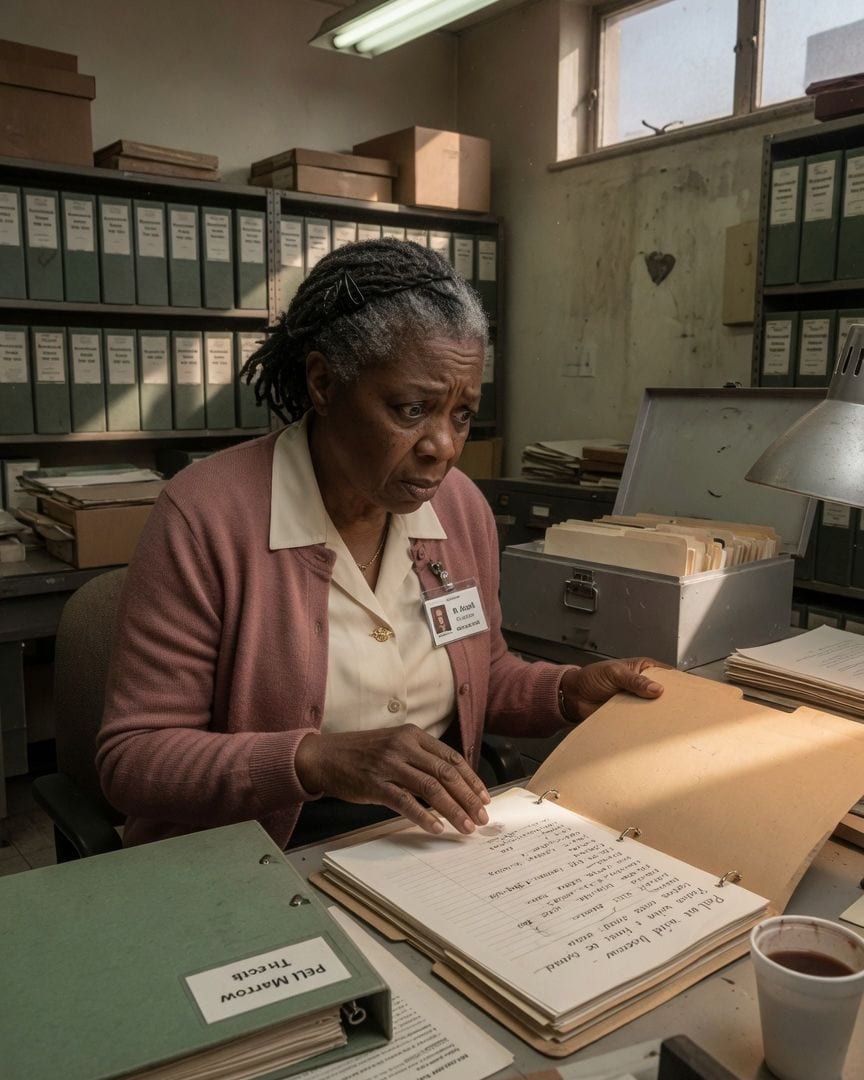
A records clerk's archive file for a Cold War reconnaissance plane lost in 1968 showed it flew yesterday to her own building.
Marguerite Ansell, a records clerk nearing her final week before retirement, meticulously audited Cold War-era files. In the cool, dusty archive, she pulled a file for an oiler declared missing in 1951. Inside, she found a fueling schedule with entries stretching into the present, the last dated just eleven days ago. Then, a second lost ship revealed a similar impossible log, and a cold certainty began to bloom in her chest. Deep in the shadows, Marguerite found an unmarked steel box containing a file for a reconnaissance plane lost in 1968. Its flight log showed a final flight yesterday, to the precise coordinates of her own archive building.
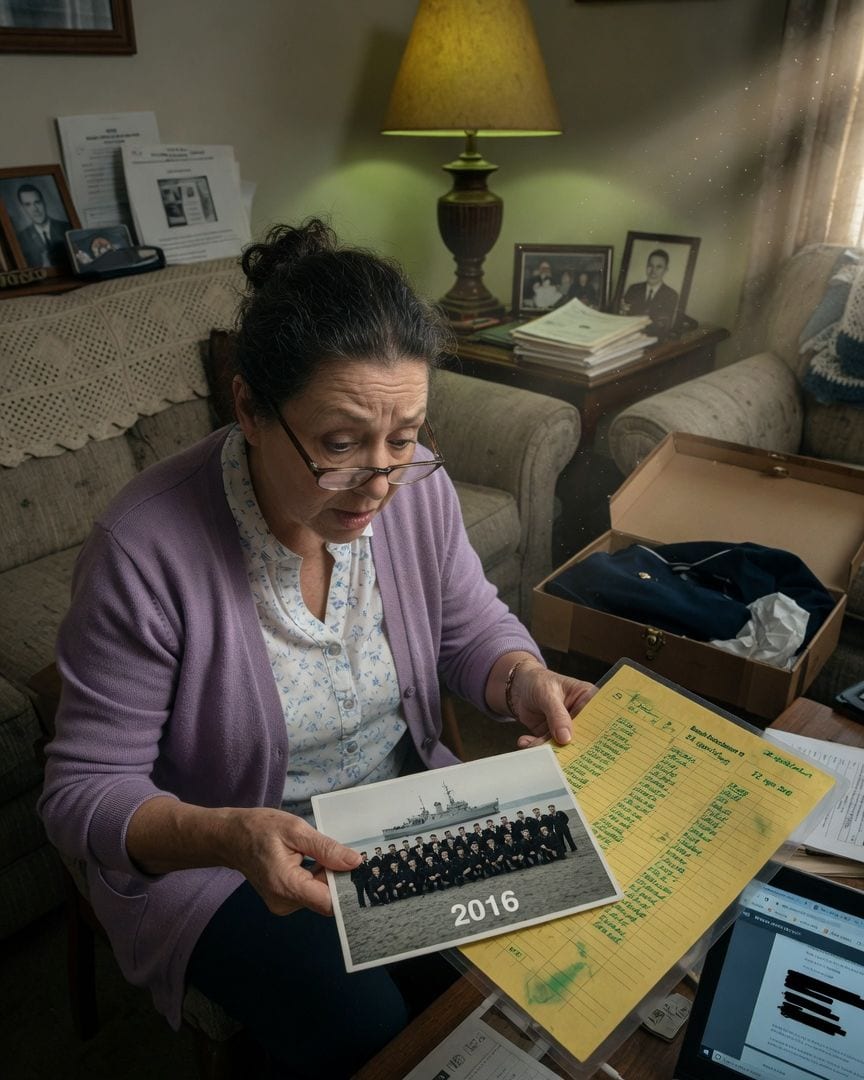
Marisol Frayne unlatched her husband's old footlocker. A photo inside showed his ship, pristine in 2016, three years after the Navy declared it lost.
Marisol Frayne, 62, finally unlatched her husband’s old footlocker in 2024, eleven years after the Navy declared his ship, the Kaskillan, lost at sea. Dust motes danced in the afternoon light as she lifted the lid, releasing the scent of old canvas and cedar. Inside, beneath his perfectly folded dress blues, she found a photograph of David and his crew standing before a pristine Kaskillan. Her breath caught: the photo was dated 2016, three years after the official reports claimed the ship vanished with all hands. Marisol's methodical search then revealed official logs showing a K-class vessel designation active in 2016, leaving a chilling void where her husband's fate should have been.
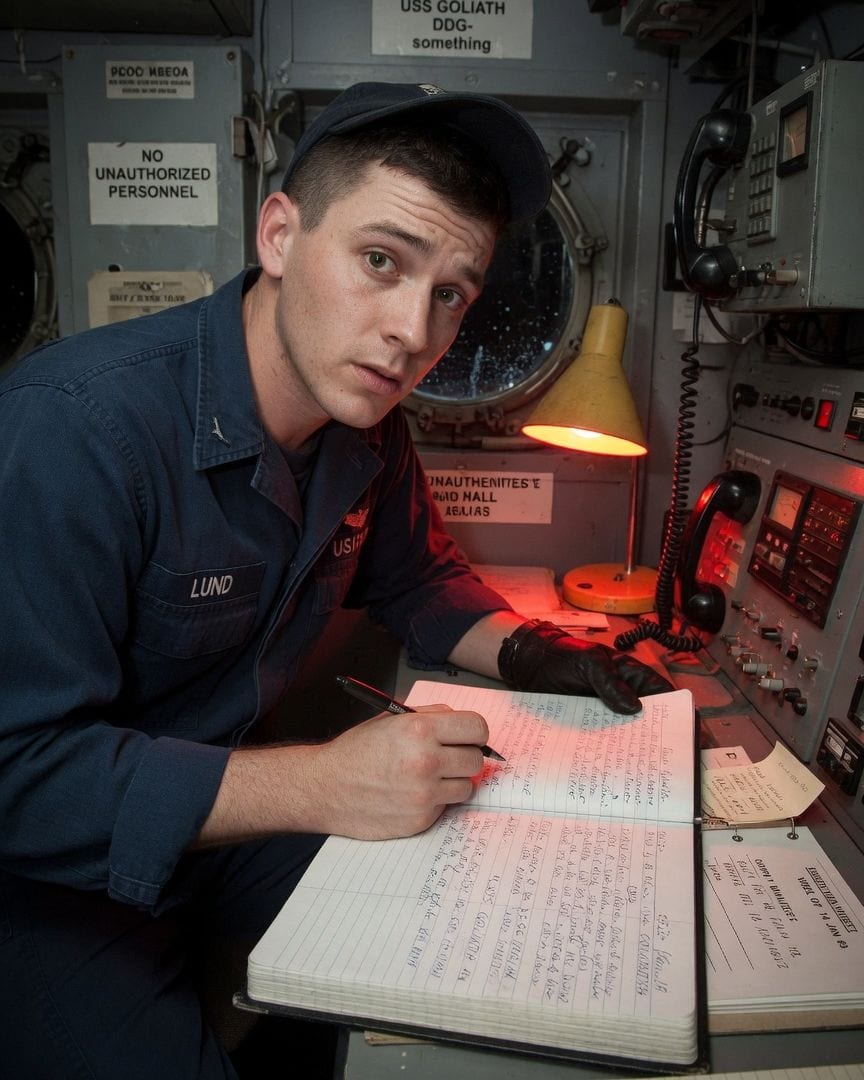
Petty Officer Lund heard his own captain's mayday: the Cold War USS Goliath was sinking, two hundred miles astern.
Petty Officer Marco Lund kept a lonely vigil in the USS Goliath's radio room, the destroyer battling the North Atlantic in deep winter 1983. Suddenly, a garbled mayday broke through: his own ship, his own captain, reporting they were going down two hundred miles astern. Though the bridge confirmed the Goliath was fine, the same chilling call came again an hour later, stronger and from the exact waters they had just crossed. Deeply unsettled, Marco began searching ship logs, eventually discovering a phantom entry: an identical mayday, logged a week prior, pressed into the very paper beneath his own.
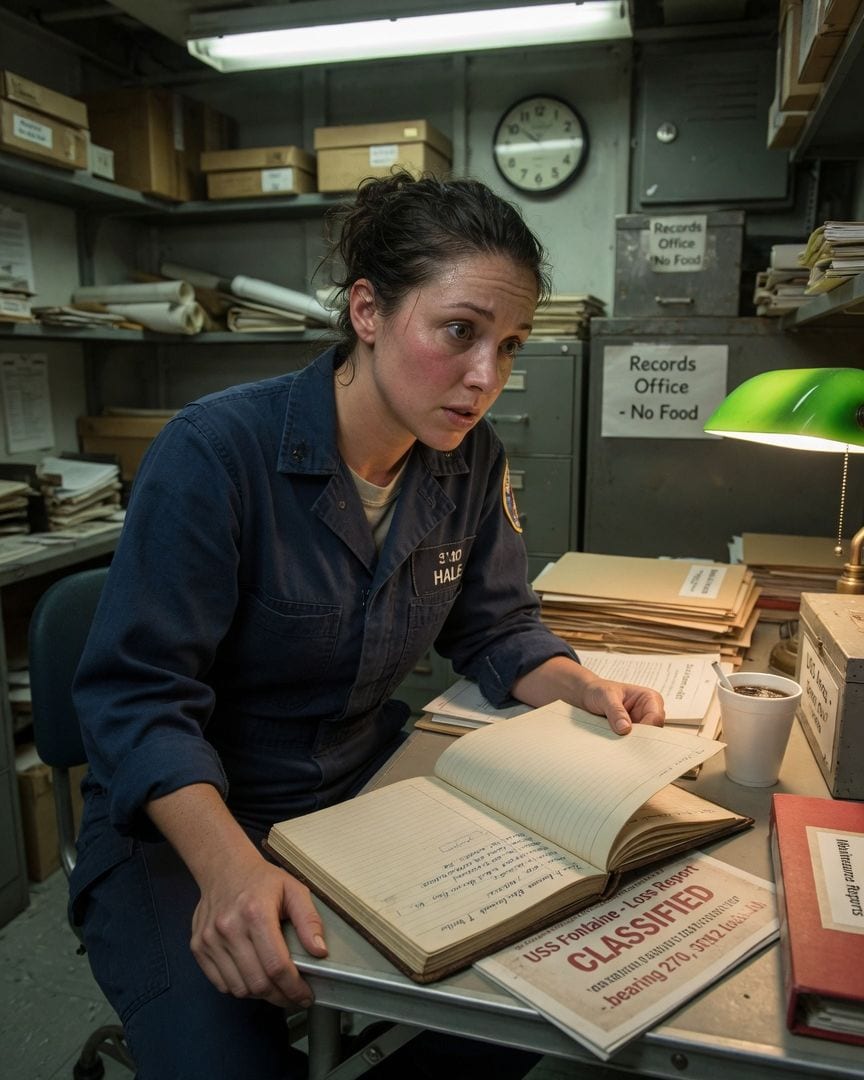
Petty Officer Hale needs a spotless record for her transfer. But the USS Ares sonar logs show an identical, impossible contact, logged to the minute, years apart, and tied to a classified loss report.
Petty Officer Sarah Hale needed a spotless record for her coveted shore duty transfer, a posting she'd worked five years to secure. Alone in the USS Ares sonar shack, three days out from San Diego, her midwatch was broken by an impossible contact: a close, slow echo holding perfect pace, invisible to radar, then vanishing. Her heart hammered, not from fear, but from the data's impossibility. When she found an identical entry in her own log from just one week prior, the cold dread tightened its grip. But the true chill settled when she unearthed decades of similar records, signed by other sonar officers, all showing the same impossible contact at 0212, off the port beam, for nineteen minutes, on the same ship, stretching back years—a persistent echo tied to a classified loss report.
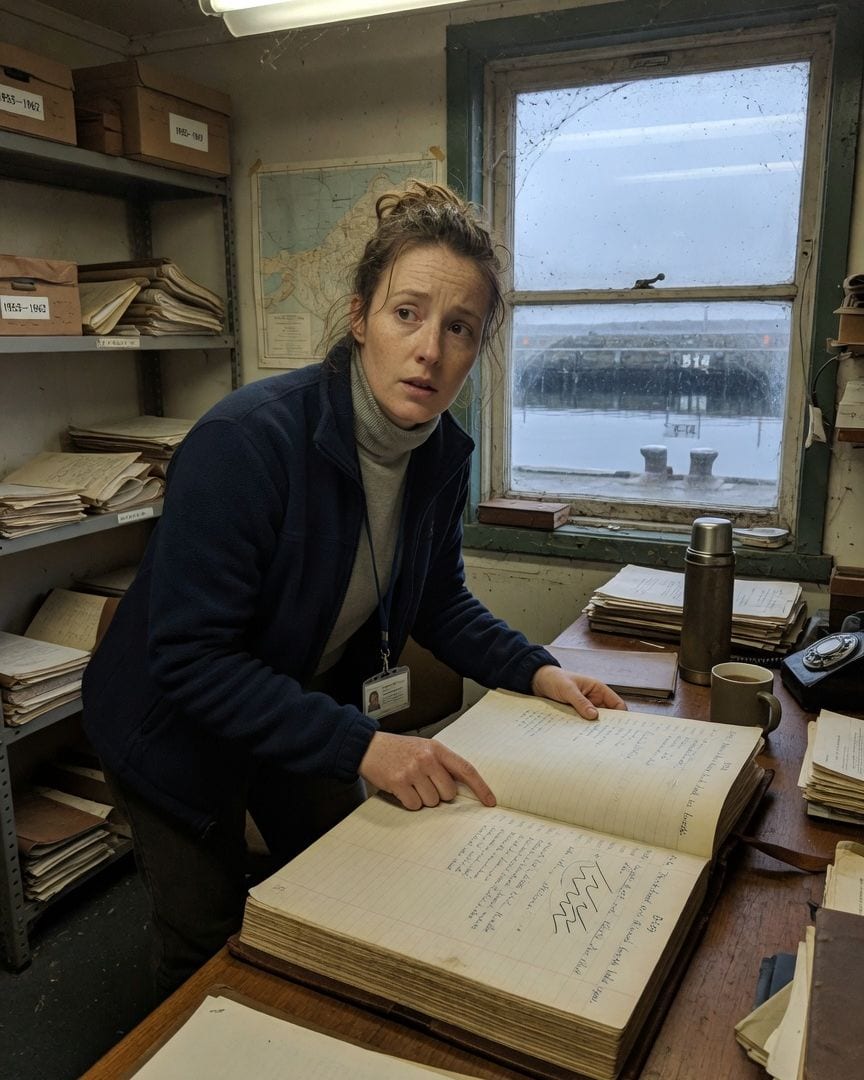
My harbour ledger shows Berth 14 let to a trawler every few years, but it's always empty. Each entry reads 'not returned to sea, berth held open'.
My job as Harbour Master's Assistant is managing the berth ledger, tracking every vessel. But Berth 14 holds a strange paradox: my book says it's let, yet it's always empty. Each entry for that berth closes with the same cryptic note – 'not returned to sea, berth held open' – a pattern stretching back to 1955.
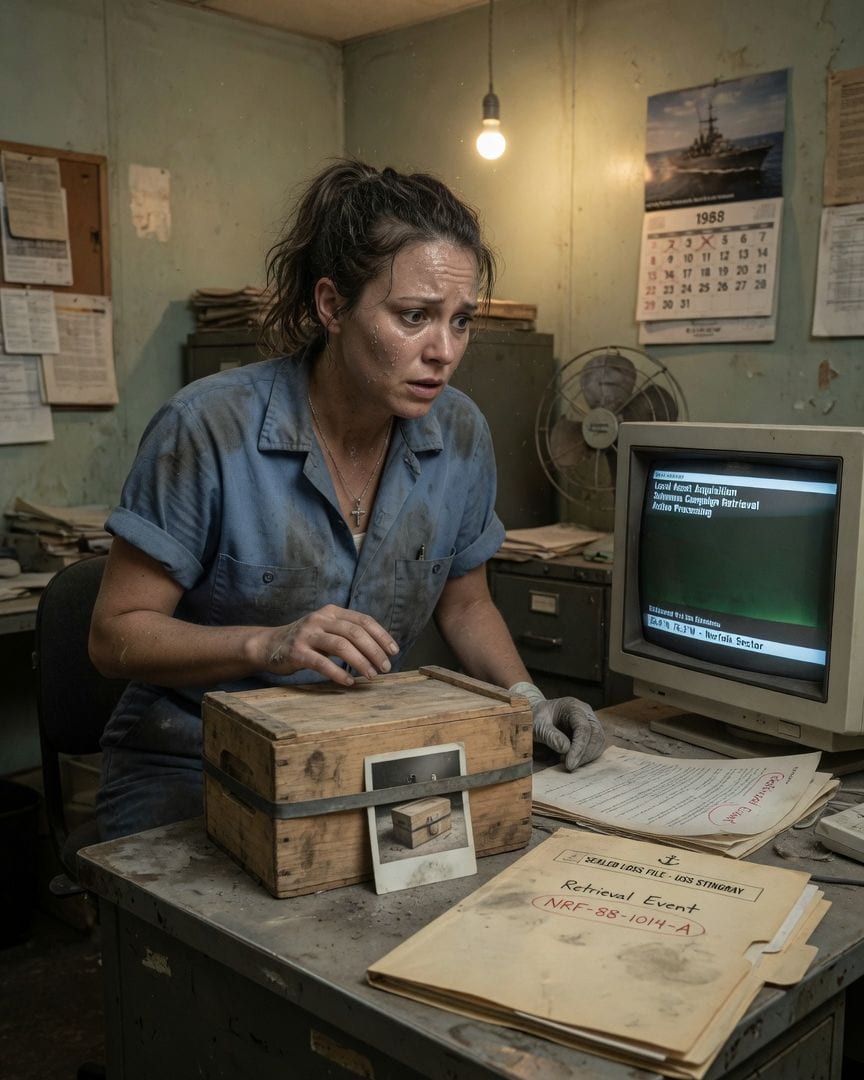
A records depot worker unearths a lost 1940s ship file, then finds a control number from 1988, linking the vanished vessel to the Norfolk coastline.
In 1988, Callista Rhue toiled in a humid Norfolk records depot, her monotonous job sifting through the charred remains of a 1943 fire that had supposedly incinerated everything. She unearthed a cool, unmarked wooden crate that should not have survived, finding a faded 1944 Polaroid of the very crate tucked into its lead band. Inside, a 'sealed loss file' for the USS Stingray, a minelayer vanished in the Solomons, contained an impossible 'Retrieval Event' dated 1988. Callista's database search for the anomaly then pointed not to the distant Pacific, but to active processing for the lost vessel on a remote Norfolk coastline, just miles from the depot. What had truly vanished, and what had been found?