A records depot worker unearths a lost 1940s ship file, then finds a control number from 1988, linking the vanished vessel to the Norfolk coastline.
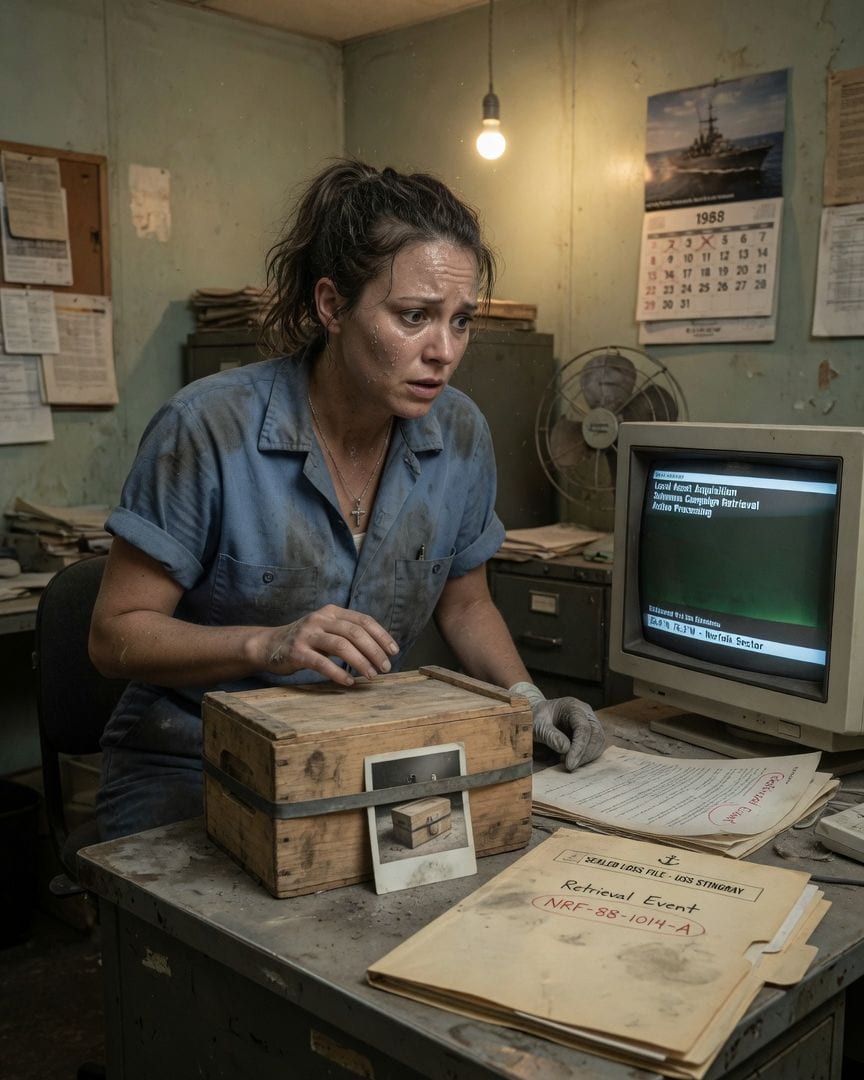
Callista Rhue, 28, wiped sweat from her brow, the dust of the Norfolk records depot thick in the humid 1988 air. For weeks, she’d been sifting through the remains of the 1943 tier, supposedly incinerated in a fire deemed 'total.'
Her job was to haul out the ash by the barrel, a grim, monotonous task that left her skin gritty and her clothes permanently stained. Her hands, calloused despite the gloves, brushed against something solid beneath six inches of soot.
It was a wooden crate, cool to the touch, unmarked save for a dull, tarnished lead band encircling its middle. It shouldn't have been there. Nothing, by all official accounts, had survived the 1943 fire in this section.
She knelt, digging away the caked ash to free it, her muscles protesting. The crate felt surprisingly light when she finally managed to heft it, pulling it clear of the debris.
As she wiped it down, she noticed a small, faded photograph tucked into the lead band, almost adhering to the metal. A Polaroid. Her breath hitched.
Inside the crate, secured with official seals, was a 'sealed loss file' for the USS Stingray, a minelayer declared missing in the Solomons Campaign.
But it was the Polaroid that froze her: it showed the very crate she held, sitting in ash under a bare hanging bulb, exactly as she had found it, banded in 1944.
The image was a still echo of her own present, captured decades ago.
Callista carried the crate back to her small, organized office, the cool weight of it a strange counterpoint to the heat of the depot.
The fan in the corner barely stirred the air, but she felt a chill creep up her spine as she placed the wooden box on her desk.
She carefully broke the seals, noting the official stamp—a stylized anchor with a numeral she couldn't quite decipher, partially smudged. The file for the USS Stingray was thick, filled with classified reports, manifests, and casualty lists.
The minelayer, according to the records, had simply vanished during its deployment, leaving no wreckage, no distress signal, no trace beyond the official declarations of loss.
She scanned the dates within the file, all consistent with the early 1940s: 1943, 1944, a few reports from early 1945. Everything felt chronologically sound, confirming the documented disappearance.
Then, buried deep within a logistics report, almost an afterthought on a page detailing fuel consumption, she found it: a 'Retrieval Event' listed, not a 'Loss Event.' Adjacent to it was a control number, stark and precise: 'NRF-88-1014-A.'
NRF for Norfolk. But '88'? It was 1988. The number implied a classification in the current year, for a ship lost over forty years ago. Callista frowned.
It had to be a clerical error, a typo, a modern form mistakenly inserted into an older file by some previous, careless clerk. She checked the surrounding documents, turning pages carefully, but they were all dated 1943-1944.
The number refused to be an anomaly. It was too specific, too perfectly formatted, like a signature. She tried to find another instance of 'NRF-88' in the entire file, but there were none. It stood alone, a single, impossible anachronism.
Driven by a need to rationalize the impossible, Callista logged into the depot's internal database. The green text glowed on the black screen. She typed in 'NRF-88-1014-A,' half-expecting an error message, a confirmation that it was a phantom number.
Instead, a record appeared. It wasn't for the USS Stingray, but a generic entry for 'Local Asset Acquisition.'
Most of the data fields were blacked out, a heavy, solid block of redaction that made the screen look like a fractured pane of glass.
But the remaining unblacked lines, oddly shaped, referred to a 'Solomons Campaign Retrieval' and then, chillingly, provided a set of grid coordinates not for the distant Pacific, but for a remote, uninhabited section of the Norfolk coastline, only a few miles from the depot.
The entry was marked 'Active Processing' and the file status read 'Open.' Callista leaned closer, a cold dread seeping into her.
The blacked-out lines had a peculiar, almost organic curve to them, as if they weren't just covering text, but outlining something that resided just beneath the screen's surface.
The 'Redaction That Has a Shape' haunted Callista. It felt less like a censor’s mark and more like a void cut directly from the data.
She spent the next days quietly searching the database for other 'NRF-88' control numbers, finding none that matched the format of the one tied to the Stingray.
She broadened her search, looking for any files marked 'Active Processing' or containing similar, oddly shaped redactions. The database hummed, its internal fans whirring a dull, constant drone, as she fed it queries.
Slowly, painstakingly, a pattern across decades and classifications began to emerge. Not a common occurrence, by any means, but a distinct one.
Files related to other unexplained losses—a bomber that vanished over the Atlantic in 1952, a submarine that submerged and never resurfaced in 1968, a freighter that simply disappeared from shipping lanes in 1974—all held similar, specific redaction patterns and cryptic 'Retrieval Event' notations.
These files also contained references to 'containment protocols' and unusual material compositions, sometimes mentioning lead, just like the band on the crate.
Callista tried to discuss her findings with her supervisor, Eugene Carter. She presented her evidence calmly, a printout of the Stingray's anomalous control number and screenshots of the redactions.
He listened, his expression unreadable, his hands folded neatly on his desk. The fluorescent lights hummed above his perfectly coiffed gray hair.
Then, he calmly dismissed her concerns as 'overactive imagination' and 'clerical anomalies,' advising her to focus on the ash removal, a task he called 'essential to historical preservation.'
His composure was unsettling, too perfect, like a mask that never quite slipped. She then sought out old depot records, physical ones, beyond the digital system.
She found microfiche reports detailing other 'fires' at the depot, always in specific tiers, always declared 'total' losses. But the details were sparse, almost intentionally vague, like footnotes to a story that no one wanted to tell.
As Callista dug deeper, a subtle shift occurred. Her access to certain older digitized records became sluggish, sometimes blocked entirely by 'system maintenance.'
The air in the depot, usually thick with dust and the smell of old paper, seemed to grow heavier, pressing in on her.
She felt eyes on her, a prickling sensation that made her glance over her shoulder in empty corridors, where the shadows stretched long and thin, like fingers.
One evening, staying late to examine an old, un-digitized fire report on a dusty microfilm reader, a security guard, William Sinclair, appeared silently in her office doorway.
He was a new hire, barely a week on the job, his uniform still crisp.
'Ms. Rhue,' he said, his voice flat, devoid of inflection. 'Supervisor Carter asked me to remind you that your shift ended an hour ago. And that personal research on company time is… discouraged.'
His gaze lingered on the open ledger on her desk, an old, leather-bound book detailing the depot’s prior fire incidents. The fluorescent lights overhead flickered, making the shadows in the room deepen and recede like a slow breath.
Callista quickly closed the ledger, her pulse quickening. The fire reports she found on the microfiche were far more detailed than the 'total loss' summaries she'd seen in the main database.
They contained maintenance schedules, internal memos, and, most damningly, lists of specific inventory items that had been removed from the tiers before the fires, not destroyed by them. The dates and item numbers were precise, undeniable.
The 'fires' were not accidents; they were scheduled purges. The realization hit her with the force of a physical blow, leaving her breathless. The depot wasn't just covering up losses; it was orchestrating them.
Callista knew she couldn't confront Carter directly; his placid demeanor concealed something unyielding and dangerous. She needed an outside perspective, someone detached from the current system, someone who had seen the older, less-redacted records.
She remembered Margaret Foster, a retired supervisor whose name appeared on several older, less-redacted documents as the approving officer.
Callista found Margaret living in a quiet, tidy house near the coast, surrounded by decades of personal effects, each one a testament to a long, lived life. The air smelled of tea and lavender.
After some polite conversation, circling around the edges of her anxieties, Callista carefully brought up the depot fires, the strange files, the impossible Polaroid. Margaret’s face, initially kind and crinkled with age, hardened slightly, her eyes losing their gentle warmth.
'You're asking about the… collections,' she said, her voice low, almost a murmur, as if the words themselves carried a risk.
Callista pressed, explaining the 'Retrieval Event' designation and the lead bands she'd found. Margaret sighed, a deep, weary sound that seemed to carry the weight of years.
'The fires,' she finally admitted, her gaze fixed on a distant point beyond Callista’s shoulder, 'they weren't accidents. They were… clean-up operations. Scheduled purges.' She explained that the depot wasn't just a storage facility.
'It's a processing center,' Margaret whispered, leaning forward, her voice barely audible above the distant sound of waves. 'For things that don't just get lost. They get… filed.'
The lost ships, the vanished planes, the missing personnel—they weren't lost to the sea or sky. They were taken by something else, something that left specific traces.
The depot's purpose, she revealed, was to categorize and manage these 'acquisitions,' to process them into the system.
The lead bands, Margaret confirmed, were not for preservation, but for containment, an attempt to dampen whatever residual 'energy' the processed items retained, a faint, lingering echo of where they had been.
The Polaroid, she explained, was a 'confirmation of processing,' a timestamp of the acquisition's formal entry into the system, a receipt of sorts. Callista felt the world tilt on its axis, her understanding of reality fracturing.
The impossible control number, the peculiar shape of the redactions, the systematic removal of items before the fires—it all snapped into horrifying focus. It wasn't a conspiracy; it was a vast, silent, institutionalized horror, a bureaucratic machine processing the unexplainable.
Margaret, visibly distressed by dredging up old memories, her hands trembling slightly, retrieved a small, leather-bound ledger from a locked drawer in her antique desk.
It was old, its pages brittle and yellowed with age, filled with elegant, precise handwriting that spoke of a different era.
It was a master index, she explained, of 'retrieval events,' a comprehensive record of the entity's activity and the depot's response.
Most of the entries were heavily redacted, blacked out with the same distinctive, organic shape Callista had seen in the database, like inkblots that pulsed with an unseen meaning.
But the unredacted dates confirmed a chilling pattern: the 'events' were cyclical, occurring with increasing frequency over the decades. The air in Margaret’s quiet living room seemed to grow cold, pushing against Callista.
'They call it Operation Sentinel,' Margaret whispered, her voice cracking, barely more than a breath, the words a raw confession.
She ran her finger down a page, her hand trembling, until it stopped at the very last entry, written in a stark, different hand, hastily scrawled and less elegant than the others.
The entry was only partially redacted, almost as if the black ink had run out mid-sentence. Callista leaned closer, her heart pounding against her ribs, a frantic drum. The visible text referred to a 'local asset acquisition.'
And next to it, not a name, but a number. Her own employee ID number. Followed by a date: today's date. Margaret's eyes, wide with a terror that mirrored Callista's own, met Callista's.
'The file is still being written,' she whispered, her voice barely audible. 'And you're next.'
The full horror detonated in Callista's mind. It wasn't just a record-keeping system; it was a mechanism. The depot wasn't just covering up; it was an integral part of the process, a faceless institution facilitating the 'acquisitions.'
The 'Redaction That Has a Shape' was less a cover-up and more a signature, perhaps of the entity itself, or the institution's way of marking its involvement in the transaction.
The cyclical fires were not accidents, but scheduled purges, eliminating evidence of previous 'collections' while making room for new ones.
Callista's employee ID on the ledger meant she wasn't just an observer; she was now an item on the inventory, marked for 'retrieval.' The USS Stingray, the vanished bomber, the lost submarine—they were not just 'lost.' They were filed.
And the filing system was still active, still signing off on new acquisitions. The dread was in the coherence, the sickening way every impossible detail, every contradiction, every anomaly now clicked into place, forming a complete, terrifying picture.
The entity was real, the institution knew, and Callista was trapped between them. Her rational mind, which had sought order, now faced an order far more terrifying than chaos.
The depot, her workplace, a place of quiet bureaucracy, was a quiet, bureaucratic abattoir.
Callista returned to the depot, the master ledger clutched in her hands, its brittle cover digging into her palm. Her heart was a frantic drum against her ribs.
She found Eugene Carter in his office, calmly reviewing documents, his face as placid as always. The fluorescent lights overhead cast a sickly yellow glow on his polished desk.
She slammed the ledger onto his desk, the old leather thudding loudly in the otherwise silent room. 'My ID number,' she stated, her voice trembling but firm, 'On your list. Today's date.'
Carter looked up, his expression unperturbed, a faint, almost imperceptible smile playing on his lips. He didn't deny it. 'An unfortunate oversight, Callista,' he said, his voice smooth, devoid of emotion, like oil on still water. 'You've seen too much.
You understand now, don't you? It's the cost of doing business. For national security.'
He offered her a 'transfer,' a promotion to a new, highly classified department, implying she could join the system, become a part of the silence, a new filer of the damned.
Callista saw it for what it was: an offer to become another cog, to be complicit in the horror. She refused. 'This stops,' she declared, her voice finding a surprising strength, a defiance she hadn't known she possessed.
She pulled out the Polaroid, the impossible photograph, and a handful of the most incriminating redacted documents she had meticulously printed.
She had already prepared a package, addressed to a reporter she knew, and sent it via a public mailbox on her way back to the depot, an act of desperate rebellion.
Now, she aimed to destroy the ledger, to halt this specific 'filing' for herself, to erase her entry from their terrible system. As Carter lunged for the book, his composure finally cracking, Callista triggered the depot's fire suppression system.
Alarms blared, a piercing shriek that vibrated through the floorboards, and a fine mist of flame retardant began to fill the room, obscuring Carter's vision and buying her precious seconds.
She smashed the old ledger against the corner of the desk, shattering its brittle spine, scattering its pages like dried leaves. The chaos gave her the window she needed.
She bolted from the office, leaving Carter coughing in the mist, the shredded ledger pages floating around him, settling like snow.
Callista vanished.
The reporter's story, based on the package she sent, was published weeks later—a sensational piece about 'unexplained government files' and 'anachronistic photographs,' quickly dismissed by the authorities as a fringe conspiracy theory and heavily censored by 'national security' concerns.
The Norfolk records depot underwent an immediate 'restructuring,' with Eugene Carter quietly promoted to a senior, off-site position. Margaret Foster was placed in an assisted living facility, officially due to 'declining health.'
The shredded ledger pages from Carter's office were meticulously collected, pieced back together, and then, according to internal reports, 'digitally preserved' before being 'accidentally lost' in a server crash.
The 1943 tier, once thought cleared, was officially declared 'permanently sealed' due to 'structural instability.' The doors of the depot, however, remained open.
Months passed. Callista lived under a new name in a different state, constantly looking over her shoulder, every shadow a potential threat, every official car a harbinger.
The dread of what she knew never left her, a cold certainty that permeated her new, quiet life, like an unshakeable chill in her bones. She worked a mundane job, avoided cameras, and spoke to no one about her past.
One morning, she saw a small article in a local paper: 'Unexplained Fire Damages Military Records Depot in Arizona.' The report stated the fire was 'total,' destroying an entire tier of 1950s-era documents. Callista felt a familiar chill.
The pattern continued, across decades and classifications, across states. The institution was still at work, filing its 'losses,' purging its tiers. She knew the fires were never total. Just selective. Just scheduled.
And somewhere, a new crate was being banded, a new Polaroid developed, another file being opened. The archives, she knew, were still being signed.
If this one got to you
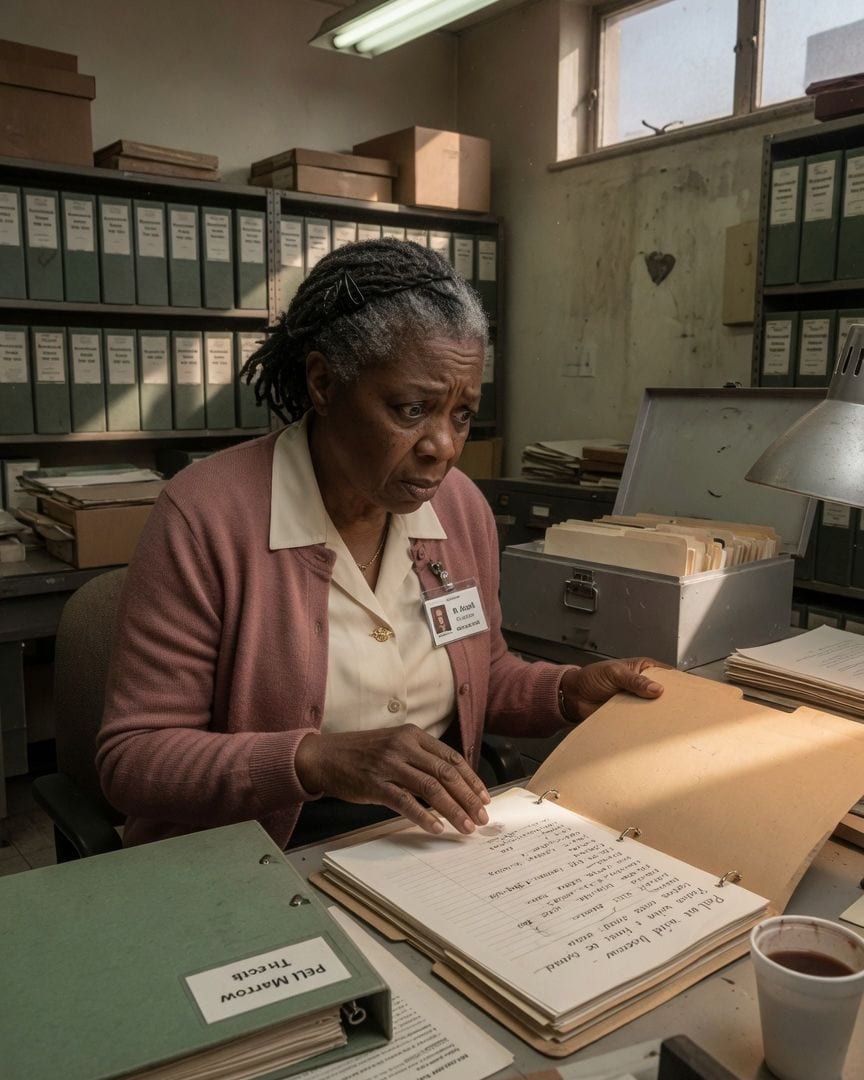
A records clerk's archive file for a Cold War reconnaissance plane lost in 1968 showed it flew yesterday to her own building.
Marguerite Ansell, a records clerk nearing her final week before retirement, meticulously audited Cold War-era files. In the cool, dusty archive, she pulled a file for an oiler declared missing in 1951. Inside, she found a fueling schedule with entries stretching into the present, the last dated just eleven days ago. Then, a second lost ship revealed a similar impossible log, and a cold certainty began to bloom in her chest. Deep in the shadows, Marguerite found an unmarked steel box containing a file for a reconnaissance plane lost in 1968. Its flight log showed a final flight yesterday, to the precise coordinates of her own archive building.
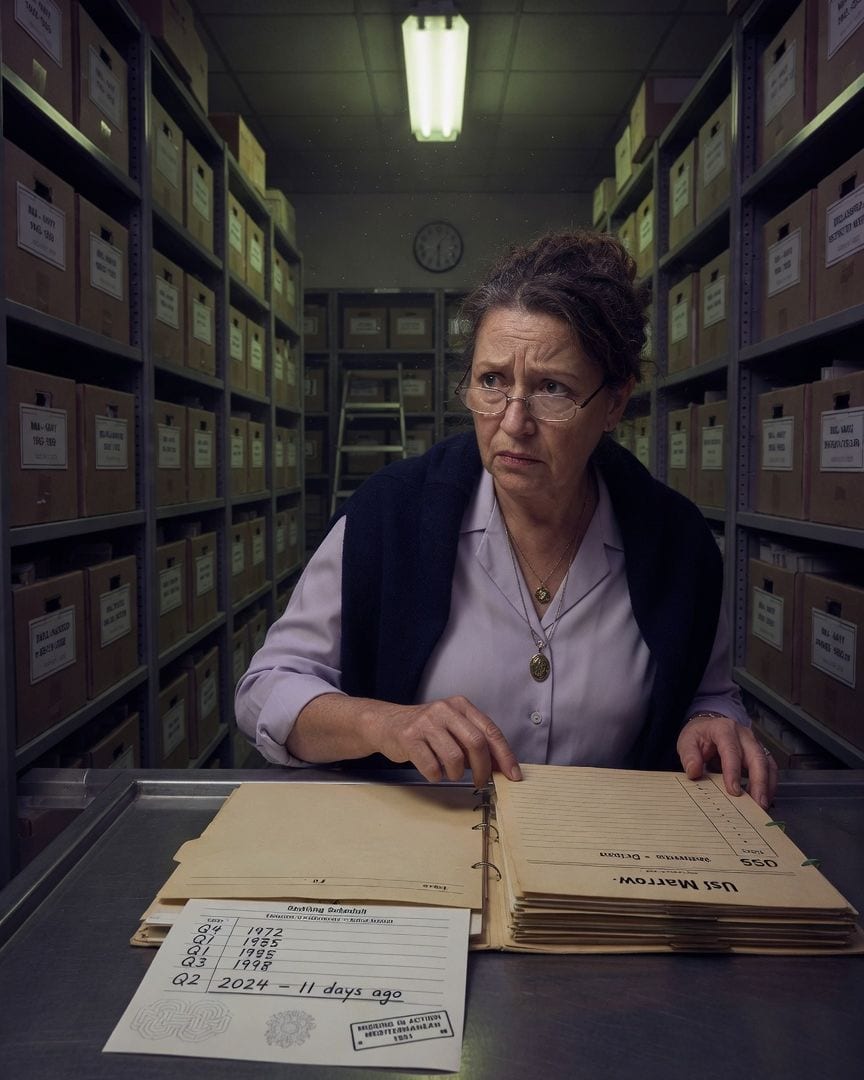
In her last week before retirement, an archivist discovers a Cold War oiler, lost in 1951, still has fuel logs updated just 11 days ago.
Marguerite Ansell, an archivist, faced her final week before retirement in the National Archives. Dust motes danced in the anemic fluorescent light as she navigated endless rows of forgotten history, counting down to quiet days. Her last routine task, auditing 'missing in action' files, led her to the oiler Pell Marrow, officially lost in the Mediterranean in 1951. Inside its yellowed folder, a crisp, newer fueling schedule revealed quarterly updates, running relentlessly forward to an entry just 11 days old: someone was still filling the Pell Marrow’s tanks. As she found similar active schedules for other 'lost' assets, each bearing a peculiar, unknown fractal stamp, a cold dread settled: what agency kept these ghosts of the Cold War afloat?
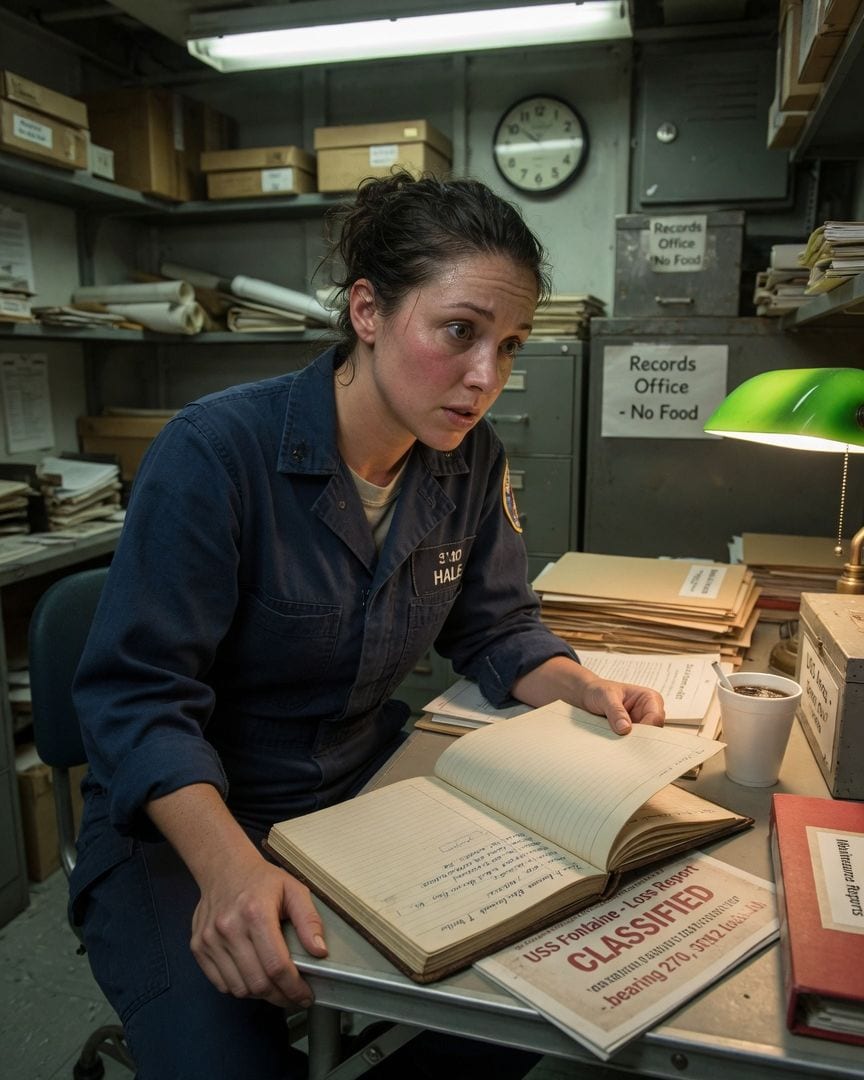
Petty Officer Hale needs a spotless record for her transfer. But the USS Ares sonar logs show an identical, impossible contact, logged to the minute, years apart, and tied to a classified loss report.
Petty Officer Sarah Hale needed a spotless record for her coveted shore duty transfer, a posting she'd worked five years to secure. Alone in the USS Ares sonar shack, three days out from San Diego, her midwatch was broken by an impossible contact: a close, slow echo holding perfect pace, invisible to radar, then vanishing. Her heart hammered, not from fear, but from the data's impossibility. When she found an identical entry in her own log from just one week prior, the cold dread tightened its grip. But the true chill settled when she unearthed decades of similar records, signed by other sonar officers, all showing the same impossible contact at 0212, off the port beam, for nineteen minutes, on the same ship, stretching back years—a persistent echo tied to a classified loss report.
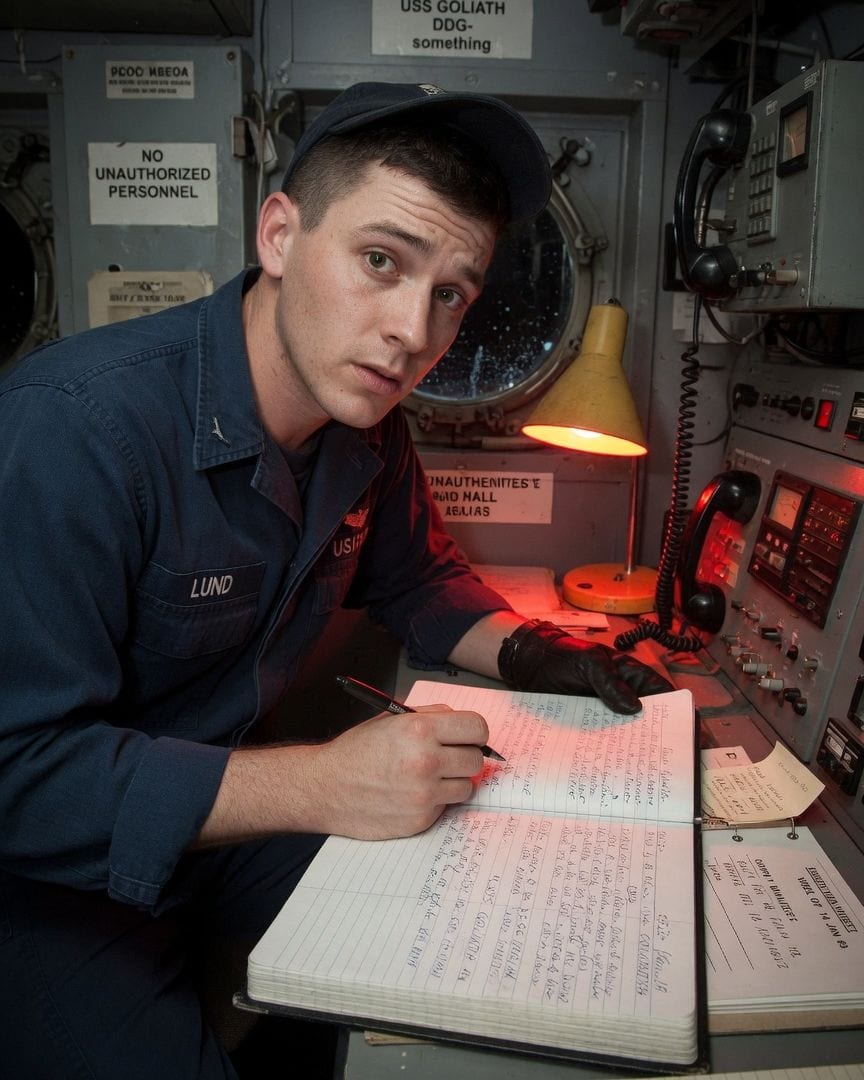
Petty Officer Lund heard his own captain's mayday: the Cold War USS Goliath was sinking, two hundred miles astern.
Petty Officer Marco Lund kept a lonely vigil in the USS Goliath's radio room, the destroyer battling the North Atlantic in deep winter 1983. Suddenly, a garbled mayday broke through: his own ship, his own captain, reporting they were going down two hundred miles astern. Though the bridge confirmed the Goliath was fine, the same chilling call came again an hour later, stronger and from the exact waters they had just crossed. Deeply unsettled, Marco began searching ship logs, eventually discovering a phantom entry: an identical mayday, logged a week prior, pressed into the very paper beneath his own.
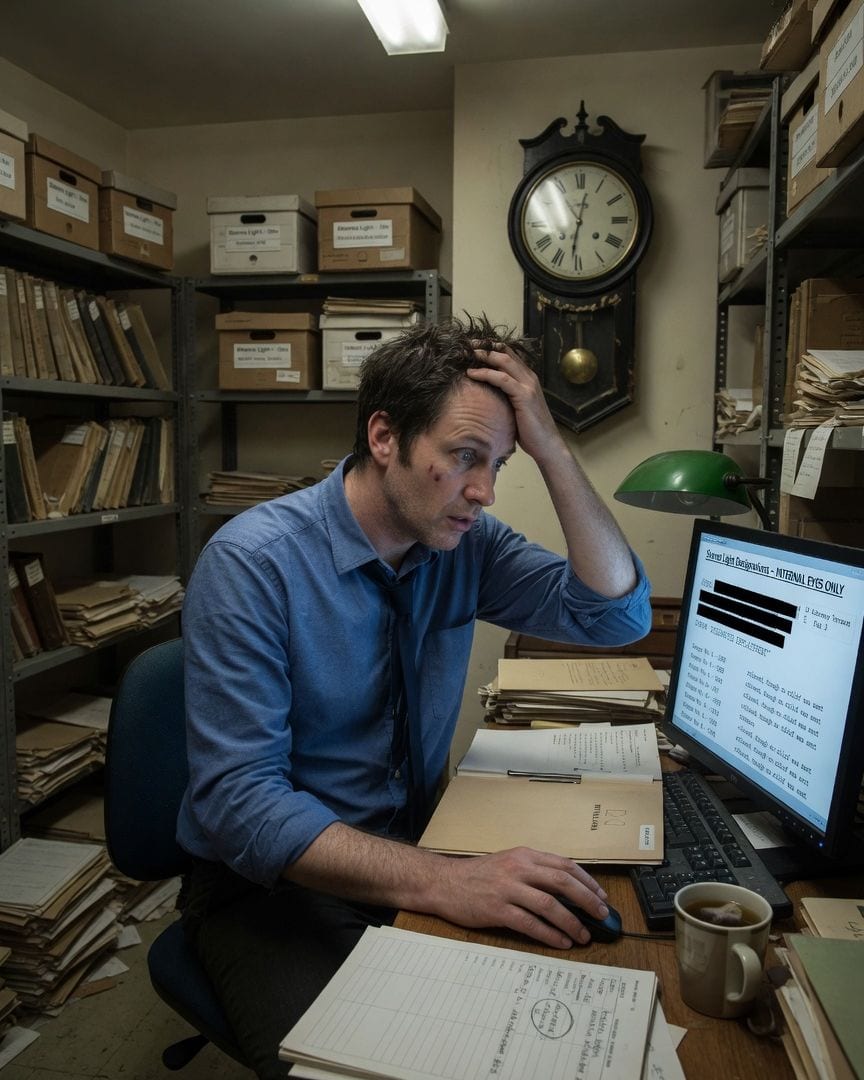
I found my street address in a century-old lighthouse file, printed decades before I lived there.
As a maritime archivist, my world revolves around forgotten lives and dusty ledgers. But the Skerne Light files broke that quiet rhythm, revealing a chilling pattern: 'Keeper number 6' relieved, though no relief was sent, repeating for decades. Now, an internal document with a strange code has led me to a redacted entry, revealing my own street address, decades before I ever lived there.
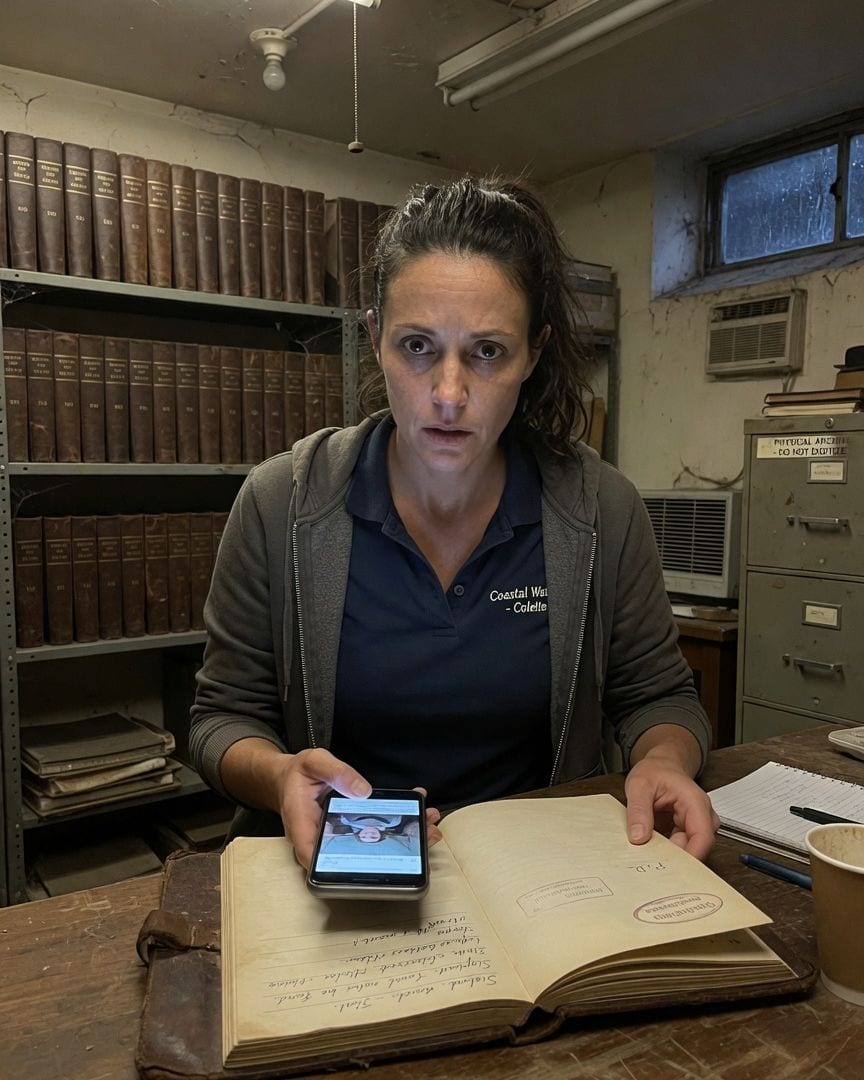
My coastguard log noted Sighting 9 again tonight, a light where no vessel showed. The old logs carry Sighting 9 off Skerry Point at 3:14am every tenth year since 1954, always 'nothing found,' always 'send no boat.'
On my watchtower night shift, the radar screen glowed green and the ocean was quiet. Then, a familiar light appeared off Skerry Point, exactly on cue, just as it had every tenth year for decades. But digging deeper, I found a hidden stamp in an old logbook: 'Operation Skerry. Status: Complete.' It left me with a chilling sense of finality.