A dead researcher's Cold War film-badge was manually dated for active duty next Friday at Cordray Flats.
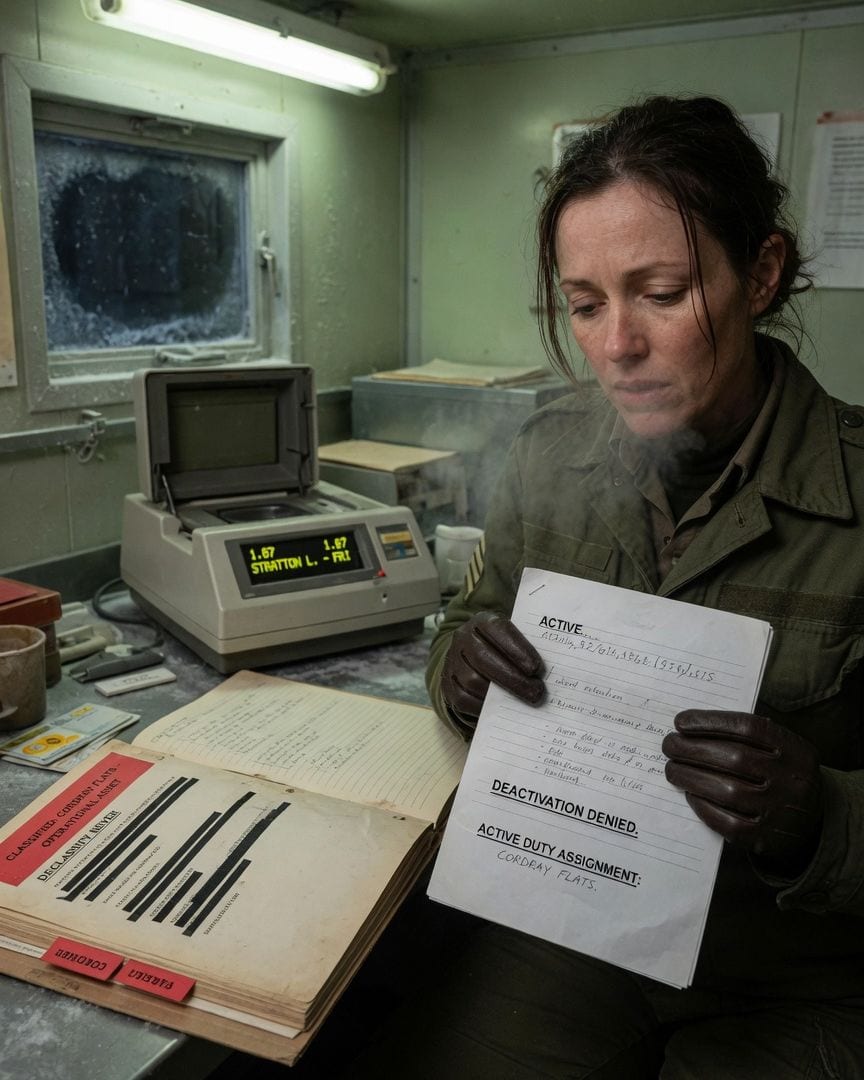
Corporal Hettie Vance moved through the film-badge shed at Cordray Flats like a ghost in the cold, empty winter of 1988.
The air hung still, biting at her gloved fingers as she fed each small, plastic square into the automated scanner.
The range had been quiet for months, decommissioned save for a skeleton crew, and her work processing the monthly badges was pure habit, a rote exercise in official compliance.
One hundred forty of them, all through the scanner, the digital display flashing a steady series of zeros. All clean.
Then came the one hundred forty-first.
Its registration number, she noted instantly, belonged to Leonard Stratton. A research assistant, Hettie remembered from the records, who’d died of old age in Reno the previous spring, 1987. But the scanner didn't care about death certificates.
It whirred, clicked, and then, instead of a zero, it displayed a clear, measurable number: a full working exposure. A dose consistent with a week spent right here on the range, under active conditions.
Hettie pulled the badge back, her gloved fingers brushing the tiny date wheel embedded in its side. It had been turned by hand, not by machine, deliberately reset. The tiny numbers read for the coming Friday.
Her breath plumed in the frigid air. She walked to the worn, oversized logbook kept open on the metal counter, its pages smelling faintly of dust and old coffee. Friday’s schedule was, as expected, blank.
But her eye caught a faint pencil mark below the last typed line: a sequence of numbers and letters, carefully inked, as if waiting for a name to follow.
The badge shed, usually a sterile echo of quiet work, felt suddenly too still, too cold.
A cold prickle of unease started in the back of Hettie’s neck. She tried to rationalize it. A misfiled badge, perhaps. Someone else’s work, carelessly slipped into Stratton’s slot.
Or a prank, though the idea felt ludicrous given the somber quiet of Cordray Flats. She ran the badge again; the scanner whirred its familiar song, and the same reading flashed: a full working exposure, dated for Friday. No change.
She cross-referenced Stratton's serial number with the penciled entry in the logbook. No match. The numbers were different, a distinct alphanumeric string, but the hand-drawn precision, the slight lean of the script, felt oddly deliberate, almost familiar.
It wasn't a scribble; it was an entry.
Driven by a professional unease that was rapidly curdling into something less definable, Hettie requested Stratton’s personnel file from the dusty archives housed in the main administration building.
The building itself felt ancient, its heating system groaning a futile battle against the winter chill. Most of Stratton's file was standard: service dates from decades ago, commendations for obscure projects, routine medical records.
It was the biography of an ordinary, if long-serving, employee. But deep within, past pages of mundane administrative details, she found a slim, red-tabbed folder labeled "CLASSIFIED: CORDRAY FLATS – OPERATIONAL ASSET."
Its cover sheet listed more pages than the folder actually held, a discrepancy that made Hettie pause. The control number traced to no originating office she could find in the facility’s internal directories.
The downgrade schedule, printed in a tiny, almost unreadable font, read "DECLASSIFY NEVER." Inside, she found a single, heavily redacted memo. Most of it was blacked out, swaths of dark ink covering paragraphs like invasive shadows.
But the remaining words, sparse and disjointed, spoke of "project viability" and "asset retention protocols."
It was the Redaction That Has a Shape, the black bars forming an unnatural negative space around the few chilling phrases, hinting at a hidden architecture beneath the ink. The office felt suddenly colder, the air thick and heavy.
Hettie Vance stared at the final page of the heavily redacted memo, her gaze locked on the bottom line. It was not blacked out. In a stark, official typeface, it read: "DEACTIVATION DENIED."
Below it, scrawled in a familiar, precise hand—the same hand that had penned the entry in Friday’s schedule—was a single, unredacted directive: "ACTIVE DUTY ASSIGNMENT: CORDRAY FLATS."
The cold from the badge shed seemed to seep into her bones, not just from the winter air, but from the impossible clarity of the words.
She gripped the edge of the desk, the official stamp on the document mocking the silence of the empty range outside.
Hettie spent the next few days in the archives, a cold, fluorescent-lit purgatory, poring over more Cordray Flats records. Her own badge, still clean, sat in her breast pocket, a constant reminder.
She searched specifically for any other instance of "DEACTIVATION DENIED" or "ACTIVE DUTY ASSIGNMENT" applied to a deceased individual. The records were a labyrinth of intentional obfuscation, an administrative swamp designed to bury rather than reveal.
She found dozens of personnel files with similar red-tabbed folders, many belonging to individuals long dead or officially "transferred" to obscure, non-existent units.
The redactions were inconsistent across multiple copies of the same document: a name blacked out on one copy would be visible on another, only for a different phrase to be obscured.
It was as if the black ink itself was alive, shifting and rearranging, hiding and revealing on a whim.
Through this painstaking work, a pattern began to emerge, sharp and undeniable. All these "active duty" assignments seemed to correlate with high-energy experiments conducted at Cordray Flats decades ago, experiments officially deemed failures and shut down.
Records of massive power fluctuations, unexpected energy spikes, and then, silence. She found reports of "asset recovery" operations conducted immediately after these experiments, operations that yielded no physical bodies, only clinical reports of "successful integration."
No one was ever found, but their files were marked "complete." The mundane explanations she had clung to—clerical errors, pranks, misfilings—were failing one by one.
This wasn't a collection of mistakes; it was a system, intricate and hidden, playing by rules she couldn't yet grasp. The very paper of the files felt charged, humming with a suppressed history.
Her inquiries didn't go unnoticed. The archives, though vast, were sparsely staffed, and Hettie’s focused digging stood out. One afternoon, while reviewing microfiches in the main office, the retired records officer, Evelyn Thornton, 64, approached her.
Evelyn, a woman known for her quiet efficiency and meticulous memory, carried two steaming mugs.
"Digging into old files, Corporal?" Evelyn asked, her voice calm, almost serene, as she offered Hettie a cup. The coffee was black, strong. "Some things are best left buried, especially at Cordray.
The past has a way of staying current here." Evelyn's eyes, a faded blue, held a strange, knowing glint that sent a shiver down Hettie's spine, despite the warmth of the mug in her hands.
There was no accusation in the question, only an unnerving acceptance.
Later that week, Hettie noticed a light on in Evelyn's usually dark office late at night, long after the rest of the skeleton crew had gone home.
She saw Evelyn’s silhouette through the frosted glass, bent over her desk, and heard the faint, rhythmic whir of a paper shredder. It was a sound that seemed to chew at the edges of the quiet facility.
Hettie started feeling a growing sense of being watched, her every request for a file met with Evelyn's unnervingly calm gaze, a silent acknowledgment that Hettie was straying from her designated path.
The danger was no longer abstract data on a page; it was personal, a quiet pressure from someone who clearly knew more than they let on.
The office building itself, usually a familiar concrete shell, seemed to press in, its windows like watchful eyes in the dark.
Hettie decided she couldn't skirt around it any longer. The questions were too large, the implications too profound.
She walked into Evelyn’s office the next morning, carrying Stratton’s film badge in one hand and the red-tabbed classified folder in the other. The shredder sat silently in the corner, a dark, hungry maw.
"Corporal Thornton," Hettie began, keeping her voice steady, "I need to understand what 'ACTIVE DUTY ASSIGNMENT: CORDRAY FLATS' means for a man who died last year." She laid the badge and the file on Evelyn's desk.
Evelyn didn't flinch. Her gaze drifted from Hettie’s face to the badge, then the file. She took the badge, turning it over in her fingers, examining the hand-turned date wheel.
"Leonard was… a valued asset," she said, her voice soft, devoid of surprise or emotion. "He was integrated into the Cordray Flats protocol decades ago. The 'death' in Reno was merely a formal de-registration from the civilian record.
He remains active in the other system."
Hettie pressed, a cold knot tightening in her stomach. "What other system? What happened to him?"
Evelyn sighed, a sound of practiced resignation, as if explaining an obvious truth to a slow student. "Cordray Flats was never just a testing range, Hettie. It was a doorway.
A facility designed to transition certain individuals, those with unique… aptitudes, into a parallel operational status. To serve. The exposures you see on the badges aren't radiation burns, Hettie. They're signatures. Proof of integration." She set the badge down.
"Leonard Stratton is still very much 'on active duty'."
The words hung in the cold air of the office, twisting Hettie’s understanding of everything she had believed about Cordray Flats, about death, about reality itself.
The hum of the fluorescent lights above them seemed to deepen, a low, resonant thrum. Stratton wasn't lost; he was filed. He hadn't died; he had been reassigned.
Hettie, reeling from Evelyn’s revelation, felt a sudden, desperate need for proof, for anything that could ground her. "Show me," she demanded, her voice hoarse, "the 'active' operational schedules. The real ones."
Evelyn, with a detached calm that was more terrifying than any anger, rose from her desk. She walked to a heavy, dark wood filing cabinet, unlocked a bottom drawer, and retrieved a heavy, leather-bound logbook.
It looked just like the official range schedule Hettie used, but it was thinner, newer, its pages pristine. The leather felt cold and smooth to the touch, like aged skin.
"The civilian version," Evelyn explained, her voice flat, "is merely a decoy. This is the true roster." She handed it to Hettie.
Hettie’s hands trembled as she flipped through the pages. She saw similar penciled entries for dates long past, each one a "signature" of someone "integrated," just as Evelyn had described.
Names she recognized from the red-tabbed folders, some of them listed as deceased in the official records. Her gaze stopped at the current month, her eyes scanning the typed lines for the coming Friday. Empty, as expected.
But then she saw it. Below the last typed line, scrawled in the same distinctive pencil she now recognized, the same hand that had penned Stratton’s "ACTIVE DUTY ASSIGNMENT" and the logbook entry, was a control number.
And next to it, a name.
"Vance, H. Corporal."
Hettie Vance’s breath hitched, a cold knot forming in her stomach as she traces the penciled entry on the newest schedule.
There, below the last typed line for the coming Friday, is a control number she now instantly recognizes, followed by a name she knows intimately, scrawled in the same distinctive hand: "Vance, H. Corporal."
The paper feels suddenly warm in her hands, as if the ink is still wet, still being written.
Evelyn watched Hettie’s face, a faint, sad smile playing on her lips. It was a smile of understanding, not malice. "You see now, don't you?" she murmured, her voice soft, almost a lullaby. "The file is always being written.
You were never just processing records, Hettie. You were being evaluated. Your meticulousness, your rationality, your quiet persistence—these are the very qualities the system looks for."
Evelyn explained that Cordray Flats had been established not to test weapons, not to house mundane research, but to identify and "file" individuals whose unique mental or physical attributes made them suitable for "service" in a non-physical, extra-dimensional capacity.
The "exposures" Hettie processed on the film badges were not dangerous radiation, but rather the energetic signature of their transition, the momentary flicker of their presence in the conventional world as they stepped through the "doorway."
The penciled entries in the active operational schedules were not just names; they were new assignments, new deployments into the parallel operational sphere.
Leonard Stratton, like many others, had been "integrated" decades ago, his physical death irrelevant to his ongoing service. The system was self-perpetuating, Evelyn explained, always seeking new "assets," always updating its roster.
"You found the file, Hettie," Evelyn said, her voice devoid of menace, "because the file wanted to be found by you. It was time for your assignment."
The room itself seemed to resonate with Evelyn's words, the very air vibrating with a hidden truth.
Hettie recoiled, the heavy logbook falling from her numb fingers to land with a soft thud on the worn carpet. "No," she whispered, her voice barely audible. "I won't. I'm not an asset. I'm a person."
The cold dread had solidified into a terrible certainty.
Evelyn simply shook her head, her expression unchanging. "It's not a choice, Hettie. The assignment is already made. The system is… patient. It knew you would find it. It's been preparing you." Evelyn stood, her movements fluid and unhurried.
She walked to a small, unassuming door in the back of her office, a door Hettie had always assumed led to a supply closet, or perhaps just a blank wall.
It was just a plain, unpainted wooden door, blending into the muted gray.
As Evelyn’s hand touched the knob, Hettie felt a sudden, deep internal shift, a pressure in her ears like a plane taking off. The air around them grew heavy. Evelyn opened the door.
A faint, low hum emanated from the darkness within, a sound that resonated deep in Hettie's chest, not with fear, but with an odd, compelling resonance, like a lost chord finally struck.
The space beyond was not a closet; it was a narrow, unlit corridor, leading into an impossible darkness that seemed to swallow the light from Evelyn’s office. It wasn't just dark; it was an absence of light, a void.
Evelyn turned back, her face illuminated by the office lights, her eyes calm, almost inviting. "You're scheduled for Friday, Hettie. Just like Leonard. It's a new kind of active duty. A new way to serve."
Her voice was soft, reassuring, and utterly terrifying. "Your badge is ready." The hum from the doorway seemed to call to Hettie, a silent, internal summons.
The hum from the open doorway filled the small office, growing steadily louder. It was no longer a sound in the air, but a vibration in her bones, a deep chord strumming through her very being.
Hettie stood frozen, the fallen logbook at her feet, her name on its page like a death sentence, or perhaps, a birth certificate for something new.
Evelyn stepped into the darkness of the corridor, her silhouette swallowed by the impossible black, blending seamlessly into the void.
The office door remained open, a rectangle of pure, inky night. The hum was now a resonant thrumming, a vibration that seemed to shake the very foundations of Cordray Flats.
It pulsed through the floor, up the walls, making the ancient building itself groan.
No one else on the skeleton crew noticed the sound, lost in their own routines in other parts of the sprawling, cold facility, oblivious to the silent, patient operation unfolding in the quiet, forgotten corners of the decommissioned base.
They would never hear it.
The hum became a low thrumming, not a threat, but a deep, unyielding pull, tugging at something deep within Hettie. She felt a strange certainty settle over her, a quiet resignation that flattened every panicked thought.
Her hand, almost unconsciously, reached for the 141st film badge, Leonard Stratton's badge, still on Evelyn's desk—the badge that had started it all, the first wrong number, the first impossible date.
She picked it up, feeling its cold plastic, a familiar weight in her palm. It felt less like an object now, and more like a key.
Then, slowly, deliberately, Hettie walked toward the open doorway, into the impossible darkness. The thrumming grew louder, enveloping her, not crushing, but inviting. She stepped through the threshold, Leonard Stratton's badge clutched tight. The darkness closed around her.
A few months later, the film-badge shed at Cordray Flats was officially closed for good. The last remaining personnel were transferred out, their new assignments far from the quiet, cold range.
Evelyn Thornton, the retired records officer, was seen leaving the empty base, carrying a single, new leather-bound logbook. She offered a faint, almost imperceptible smile to the departing security guard, a smile that seemed to understand a secret, patient joke.
The last entry on the final inventory read: "One (1) Corporal, H. Vance. Transferred to Active Duty."
If this one got to you
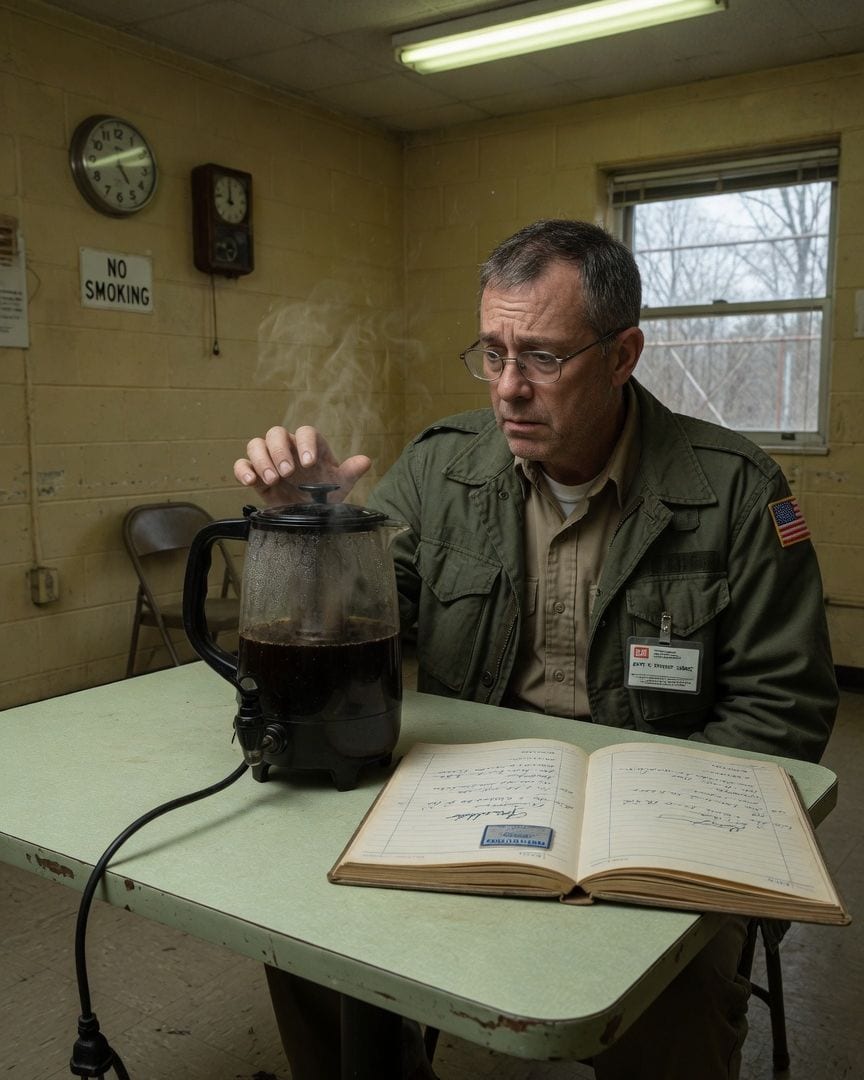
A methodical US Army engineer found a Cold War facility's file stamped 'DECLASSIFY NEVER' — and half its pages were missing.
Captain Nolan Threep, a methodical US Army engineer, expected another routine decommissioning at Alert Facility Twelve in rural Montana. The chains on the doors had rusted solid since 1970, promising a long-dead site. Yet, inside, a faint warmth hung in the air, and a glass coffee urn sat half-full, a wisp of steam rising lazily from its dark surface. The urn, warm to the touch, was clearly unplugged, and the duty log beside it, signed for a shift ending nineteen years prior, looked as though it had been signed yesterday. What secret could a supposedly abandoned Cold War facility hold?
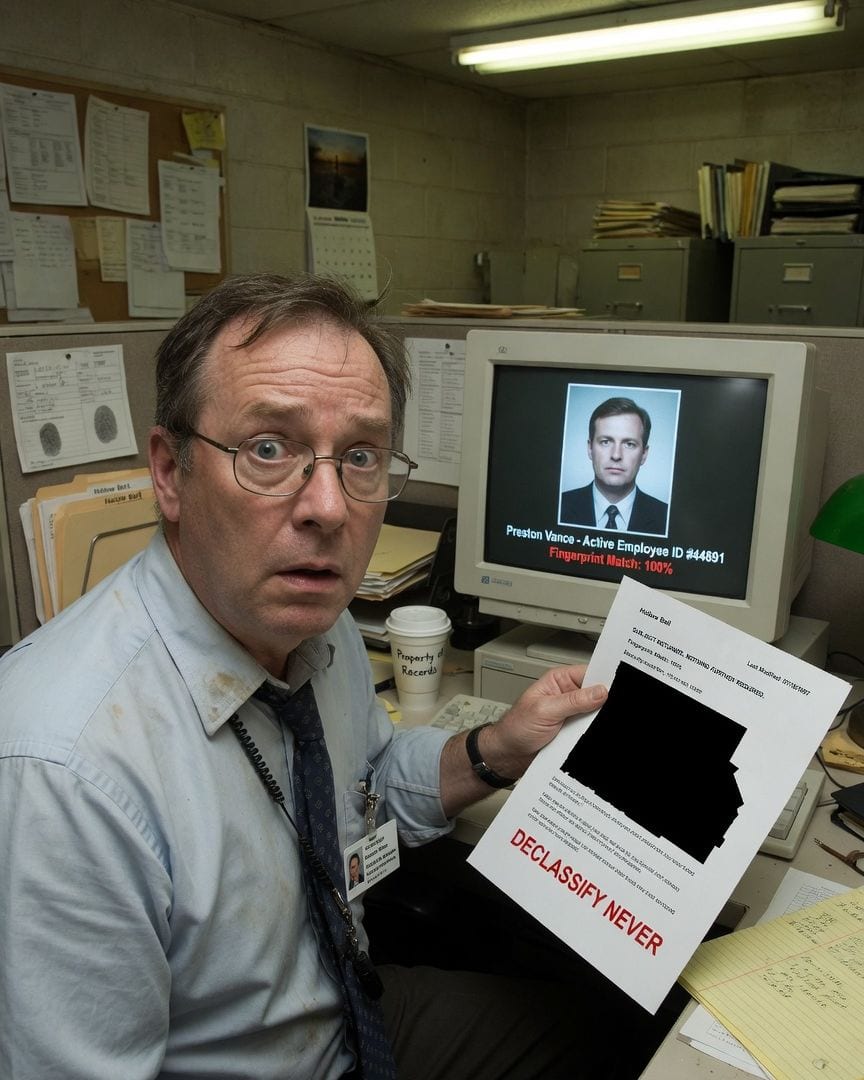
Nearing retirement, a government reviewer finds a dead Cold War agent's fingerprints match an active employee in his building.
Anton Skeel, a government records reviewer nearing retirement, anticipated a quiet end to his career. His days were spent in a dull, windowless office, sifting through the lingering paperwork of a bygone era. But a file labeled 'Hollow Bell' stopped him cold: it held fingerprints from a man, Preston Vance, reported dead in 1951. Anton's system then matched those prints to an active employee, badged into his very building that morning, whose personnel file showed a stranger's face and a section with a 'DECLASSIFY NEVER' redaction. Who exactly is Preston Vance?
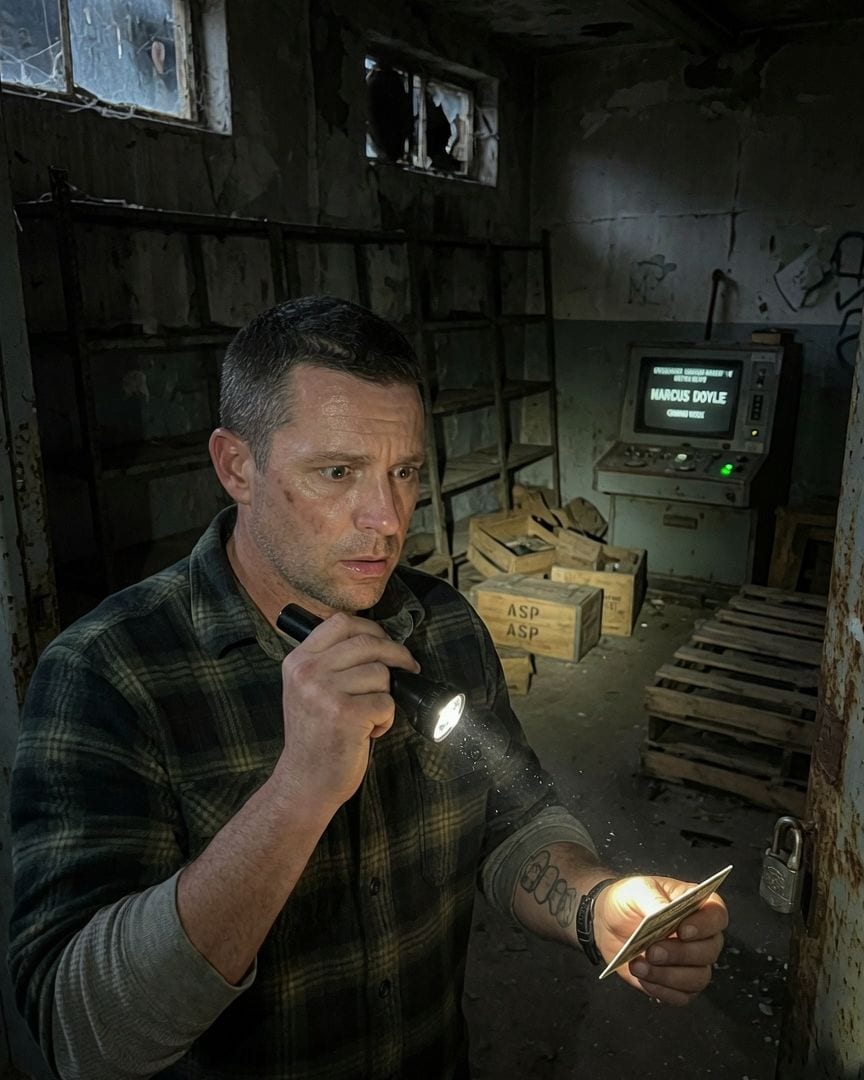
A former serviceman found his name on an active duty roster for a military base decommissioned in 2019. His access card had already logged three entries last month.
Six years after leaving the service, Marcus Doyle’s quiet suburban life was upended by an old access card notice. It came with a chilling printout: his badge number and name, logged entering Fort Crestwood’s Ammunition Supply Point three times last month, each at 0240. The former military base had been officially decommissioned in 2019, its buildings abandoned and gates chained. After discovering his own access card matched the log, Marcus returned to the derelict site, only to find a humming console displaying his name as current "personnel assignment" for the coming week. What could be happening at a base that no longer exists?
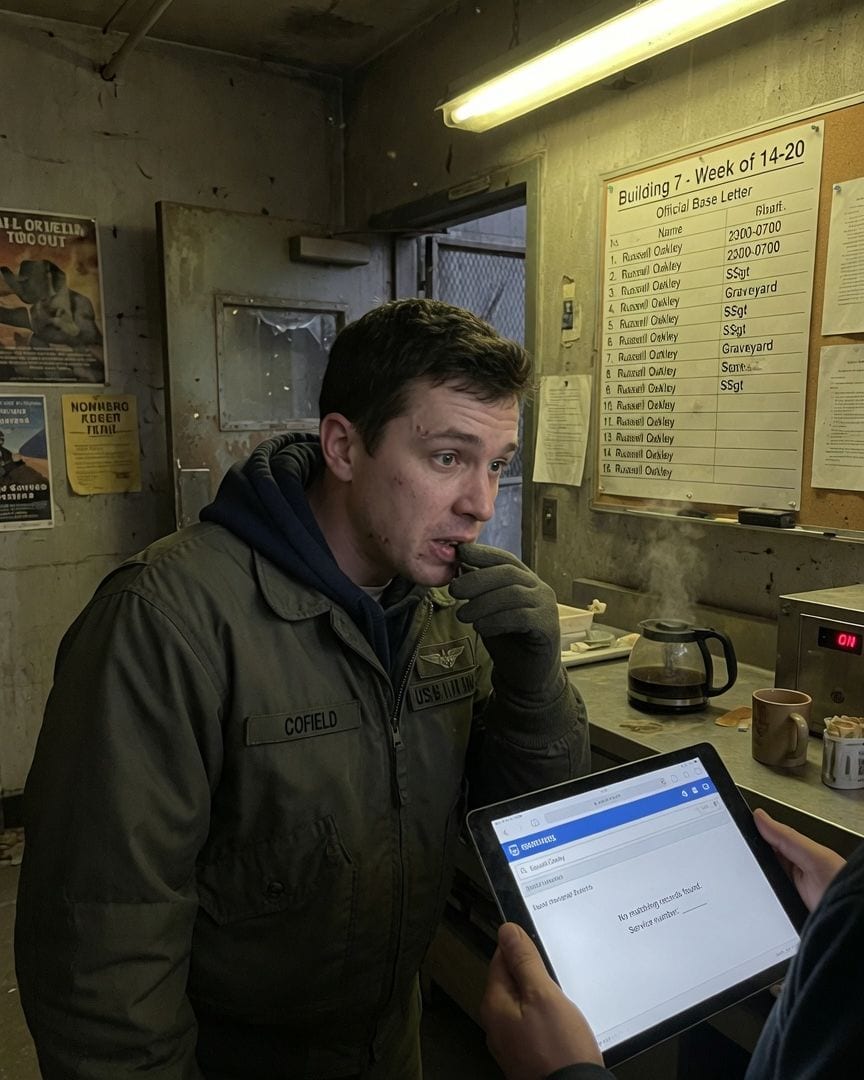
Airman Cofield, two weeks from transfer, found a warm coffee pot in a building without power for thirty years. Its new shift roster listed a name that didn't exist.
Senior Airman David Cofield, just two weeks from his long-awaited transfer, patrolled the perimeter of a decommissioned weapons storage area. Building 7, a concrete shell dark since 1992, suddenly showed a faint, warm light in its window. Inside, fluorescent lights hummed, and a coffee pot on the counter was still warm, defying the building's decades-long power shutdown. A freshly pinned shift roster for the coming week then revealed a name: 'Russell Oakley,' listed for Cofield’s own graveyard shift, yet completely absent from every official base record. Who was Russell Oakley, and how was he on shift in a dead building?
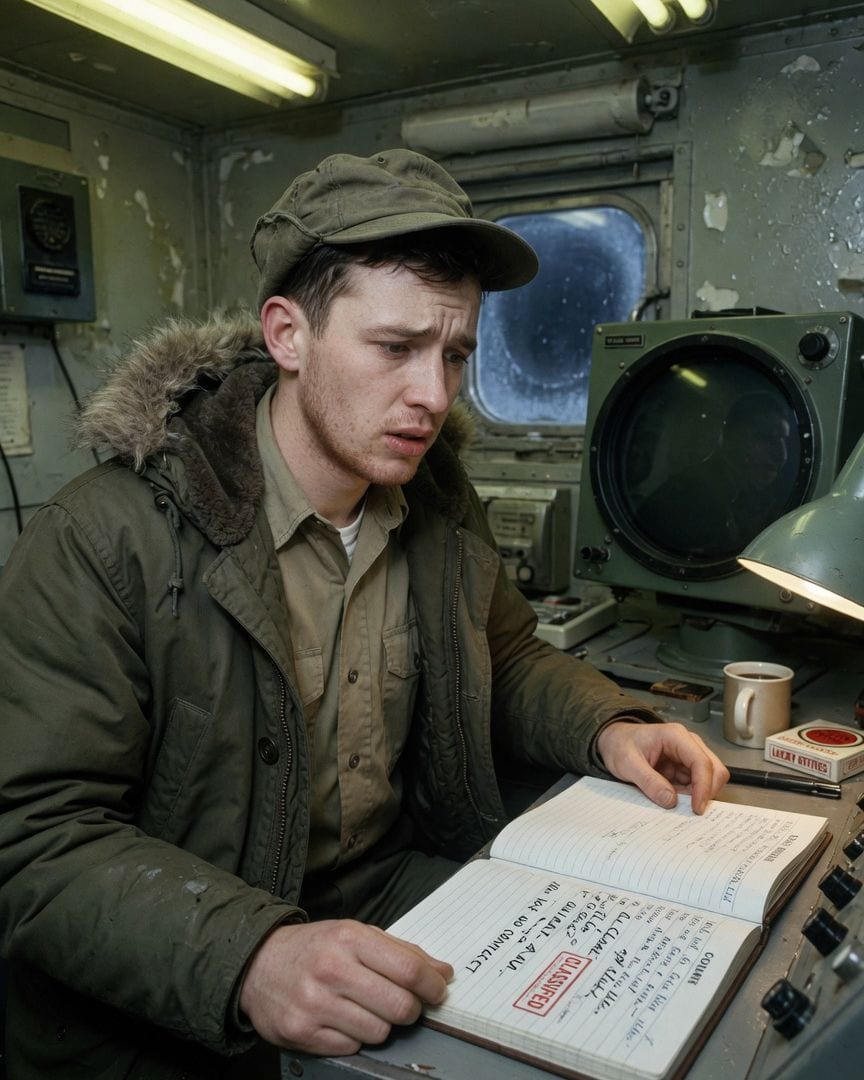
A Cold War airman logs an impossible radar contact on his last sweep. But his official logbook entry is stamped 'CLASSIFIED' and then contradicted by a hastily scrawled 'ALL CLEAR' dated moments before it.
Airman Ordway Vance, 22, manned the radar dome at Site Pellin in the biting North Atlantic dark of January 1962, running the last calibration sweep before its decommissioning. His scope picked up a faint, impossible return, growing closer with each pass, though the ocean remained empty to the eye. When Vance detailed the contact in his official logbook, a 'CLASSIFIED' stamp appeared, followed by a hastily scrawled 'ALL CLEAR' dated moments before his own entry, contradicting his every word. Commander Hartley dismissed it as equipment malfunction, but Vance sensed a chilling, official erasure behind the lie. He soon found a locked cabinet marked 'SITE PELLIN ANOMALIES,' hinting at a deeper truth buried within the base's final days.
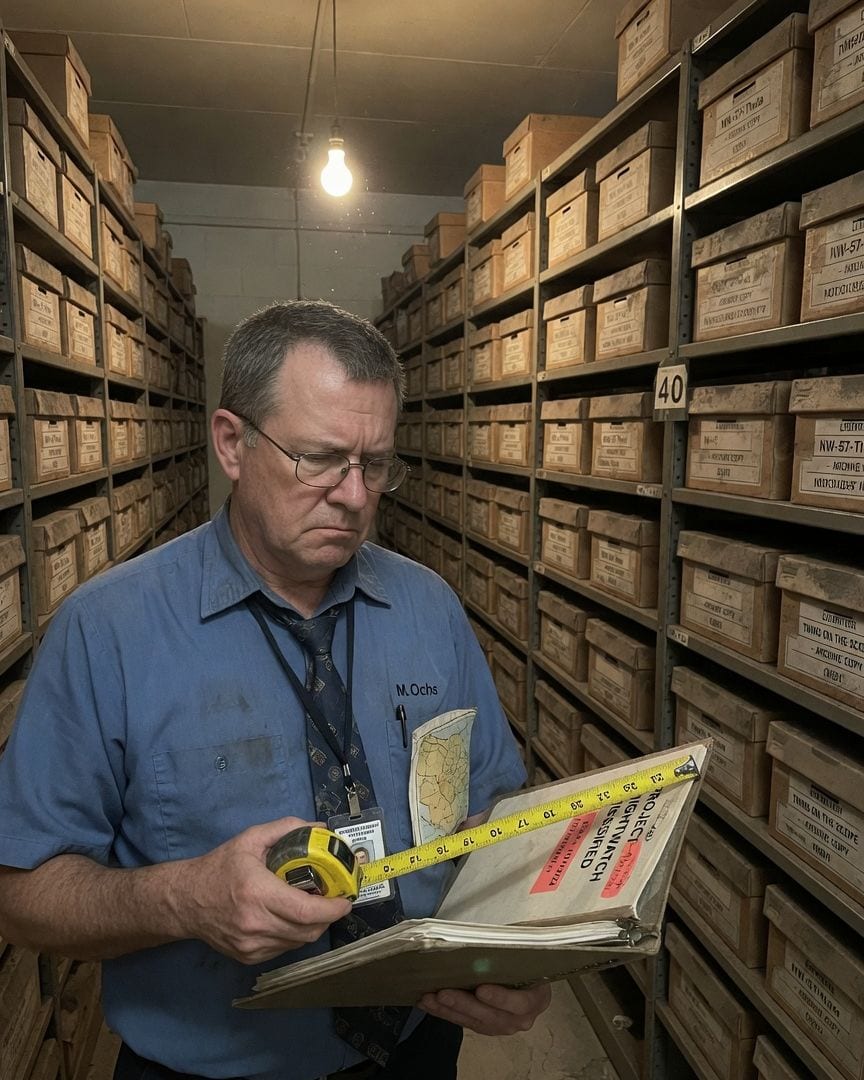
A Cold War records clerk on his final patrol found Aisle 40 stretched 61 feet longer, lined with unknown boxes. Inside one: 'PROJECT NIGHTWATCH - CLASSIFIED' with a fresh timestamp.
Marlin Ochs, a creature of habit after nineteen years at the St. Louis federal records depot, faced his final patrol through Aisle 40 before its scheduled pulping. His routine walk, usually 92 precise strides, suddenly stretched to an impossible 119, making the aisle 61 feet longer than its blueprint. The extra section felt colder, lined with dust-laden boxes bearing alien classification codes and no manifest. Inside one, he found a metal-bound file: 'PROJECT NIGHTWATCH - CLASSIFIED,' dated 1957, but with a timestamp just hours old.