A Cold War airman logs an impossible radar contact on his last sweep. But his official logbook entry is stamped 'CLASSIFIED' and then contradicted by a hastily scrawled 'ALL CLEAR' dated moments before it.
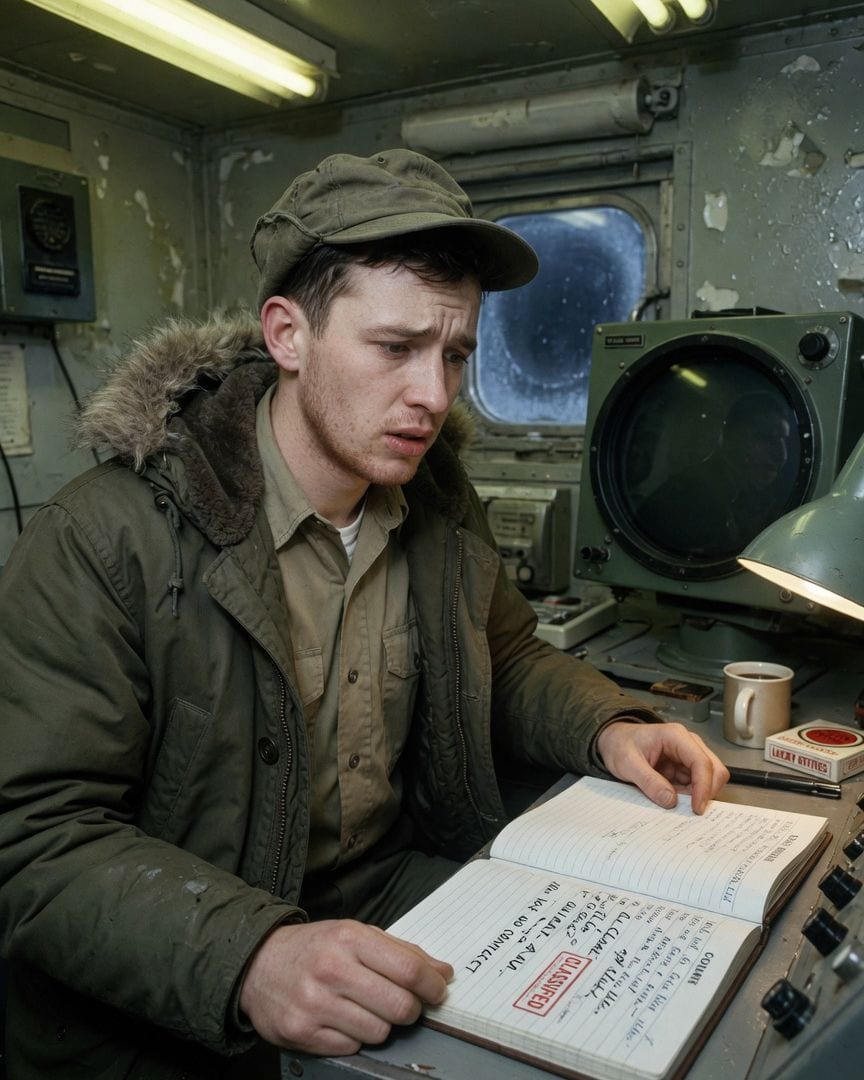
In the biting North Atlantic dark of January 1962, Airman Ordway Vance, 22, manned the radar dome at Site Pellin, running the last calibration sweep before its decommissioning. His breath plumed in the cold air of the small, metallic room.
The scope’s green line swept across the screen, a precise, rhythmic pulse. It came back clean, as expected, but for one thing: a faint, persistent return standing on the water at forty miles.
He squinted at the screen, then checked the charts and tide tables. The surface picture showed nothing but empty ocean. He called it in, his voice tight.
"Commander Hartley, I've got a return. Forty miles out, bearing three-zero-zero. Nothing on the charts."
Commander Hartley's voice crackled back through the intercom, heavy with static and a hint of irritation. "Run it again, Airman. Probably just a squall line."
Vance’s fingers, cold despite the warm air blowing from the console, moved over the controls. He ran the sweep again, his eyes glued to the screen. On the second pass, the faint green ping was solid. And closer. Twenty miles.
His heart began to hammer, a slow, heavy drum against his ribs. He re-checked the settings, scanned for interference, but everything was clean. This was a concrete return, impossible as it was.
On the third sweep, the blip was inside the fence line, a clear, unmistakable point of light just beyond the perimeter. It should have been visible to the naked eye from the tower, a solid object.
Vance knew what he was seeing, but the scope was the only thing that could see it.
He pushed back from the console, his chair scraping on the cold linoleum floor. The air in the room felt heavy, suddenly still. He grabbed his parka and stepped outside, the roaring wind immediately whipping at his face.
He scanned the empty, moonless perimeter, his flashlight beam cutting through the gloom. Nothing. Just black waves crashing against the shore, the distant lights of the base shimmering in the haze.
He returned to the radar room, his boots crunching on the gravel path. The scope was now blank, the impossible return gone. He looked at the logbook, already open on the console, where he’d just written his report.
Vance stared at his own handwriting in the Site Pellin logbook, detailing the impossible radar contact. Every detail was there: the precise bearing, the increasing proximity, the time of each sweep. It was all factual, unimpeachable.
But beneath his entry, across the bottom of the page, a stark, red ink stamp screamed 'CLASSIFIED.'
And then, impossibly, a new, hastily scrawled entry had been inserted before his, dated to the exact moment his first contact had appeared: 'ALL CLEAR - NO CONTACT.'
He ran a hand over the page, his fingertips feeling the faint, raised ink of his own report underneath the new, false one.
It wasn't just stamped over; it was as if someone had written a new truth into existence, carefully placed to contradict his own. A clerical error? A new officer taking charge in his absence?
The deliberate nature of the stamp, the impossible chronology of the inserted lie, made his gut clench with a cold, sharp dread.
He sought out Commander Hartley, finding him in his cramped office, the air thick with stale coffee and cigarette smoke.
Hartley’s face was usually a mask of weary professionalism, but now it seemed to sag a little, lines etched deeper around his eyes. He listened to Vance’s frantic explanation, his eyes fixed on some point beyond Vance’s shoulder.
Then he offered a bland, rehearsed response about atmospheric inversions and equipment malfunctions. "Look, Airman," Hartley said, his voice flat, "these old units, they get a little… temperamental before decommissioning. Nothing to worry about."
His eyes, however, held a flicker of something unreadable, a brief, unsettling glint. "Consider yourself reassigned to inventory duty for the remaining nine days, Vance. Get those supply manifests squared away." Vance knew it was a lie.
He knew it was a dismissal. The cold dread that had settled in his chest was not from the impossible radar return he had witnessed, but from the chilling, official ease with which it was being erased.
Days later, sifting through dusty boxes in the Site Pellin supply depot, Vance stumbled upon a locked metal cabinet tucked away behind a stack of old spare parts. It was marked simply: 'SITE PELLIN ANOMALIES.'
His heart gave a lurch, a sudden, frantic beat. He remembered a master key, long forgotten, from his initial training — a relic from a time before digital locks.
He found it in a forgotten drawer in his old locker, tucked under a stack of moth-eaten fatigues. His hands trembled slightly as he inserted the key and turned. The cabinet creaked open, exhaling a puff of musty air.
Inside, among a few thin, unlabeled folders, was one marked with only a numeric code.
It matched a series of numbers he’d seen scrawled in the margin of the logbook near his own entry, a detail he’d dismissed as a random doodle at the time. He pulled out the folder.
Its cover was plain, but the weight of it felt immense in his hands, as if it contained something solid. He opened it. The first page was a cover sheet, crisp and official. In typewritten letters, it read: 'EVENT RECORDED.
FILE OPEN.' Below it, the date: January 1962. His date.
Decades later, Ordway Vance, now 84, lived a quiet, solitary life in a small coastal town in Maine. The folder he’d found at Site Pellin had been swiftly confiscated, and he’d been discharged without explanation after the base closed.
The memory, however—the impossible return, the chillingly official stamp, the blank look in Commander Hartley’s eyes—it had never left him. It had festered, a quiet, insistent wrongness at the edge of his perception.
For years, he’d pursued declassified government records, a methodical, relentless hunt fueled by an unyielding need for answers. He’d learned the bureaucratic dance of FOIA requests and appeals, the subtle art of prodding without provoking.
Finally, a thick envelope arrived, containing a batch of heavily redacted documents pertaining to Site Pellin’s decommissioning. He spread them across his kitchen table, the linoleum cold beneath his elbows.
He pored over the dense, blacked-out pages, tracing the few visible words with a gnarled finger.
He found a cryptic reference to a 'Pellin-Alpha Incident,' matching the exact date and general description of his encounter, though all specific details of what was observed remained obscured by thick black lines.
Using this as leverage, a concrete shred of proof, he submitted another, more specific FOIA request, citing the 'Pellin-Alpha' designation.
Weeks crawled by, marked by the rhythmic crash of waves against the nearby shore. Then, another package arrived: a file, still heavily redacted, but with more discernible text. Vance cross-referenced dates, obscure codes, and personnel names mentioned in the margins.
He uncovered a chilling pattern: other 'Pellin-Alpha' incidents, always involving similar brief radar contacts, always followed by immediate reassignments of personnel and the swift sealing of all related records. These weren’t equipment failures or atmospheric anomalies.
The mundane explanations, once again, fell away, leaving a stark, terrifying coherence. Every new fragment he uncovered made the original event sharper, more real, and infinitely more unsettling.
The deeper Vance dug, the more exposed he felt. He ventured onto obscure online forums dedicated to military anomalies, his fingers stiff on the keyboard, posting a carefully worded query about 'Pellin-Alpha' incidents. He signed it only with his initials.
An anonymous email landed in his inbox hours later, chillingly brief: 'Some files are best left closed, Airman. You're getting too close to the ink.' He dismissed it as a crank, the dark side of internet rabbit holes.
But then his internet connection flickered erratically, cutting out for minutes at a time, and his old landline rang, only to click dead when he answered.
He began noticing a dark, nondescript sedan parked down the street from his house for two consecutive days, its windows tinted, its occupants unseen. The car always vanished by morning, only to reappear in the afternoon.
A prickle of unease started to crawl up his spine, a cold sensation that felt disturbingly familiar to the January night in 1962.
One morning, reaching for his mail, he found a small, almost invisible, circular sticker affixed to the underside of his mailbox lid, like a tiny QR code. It was no bigger than his thumbnail, black against the gray metal.
He peeled it off with a careful fingernail, a cold knot forming in his stomach. The anonymous email, the flickering lights, the dark car, the sticker – it wasn't random.
He wasn't just searching for answers anymore; he was being watched.
The hunter had become the hunted, and the dread was no longer abstract, a ghost from his past, but a tangible presence just outside his window, a patient, unseen observer. The quiet solitude of his coastal home felt suddenly exposed.
Vance returned to his declassified file, the anonymous warning email burning in his mind. He focused on the heavily coded internal memo he’d partially decoded earlier.
With his newfound understanding of the file's internal logic, a grim, bureaucratic precision he was beginning to recognize, he spent hours cross-referencing obscure acronyms and numerical sequences with a declassified glossary he’d found online through a stroke of luck.
Line by line, the memo began to yield its terrible meaning. It wasn't about a contact; it was about a 'systemic extraction of an environmental anomaly.' The language was clinical, devoid of emotion.
The memo outlined the existence of 'Filed Realities Operations' and described 'Event Type: Pellin-Alpha' not as an observation, but as a 'function,' a 'process.'
It detailed protocols for 'witness observation and record integration,' confirming that the military was not just covering up an unknown threat, but actively managing and documenting these 'filing' events, treating them as an ongoing, natural process.
His own log entry, the 'EVENT RECORDED. FILE OPEN' stamp from that long-ago night, Commander Hartley’s dismissive reassignment, the utter lack of any physical evidence of the radar return – it all snapped into horrifying focus.
It wasn't a cover-up of an alien craft, not in the way he had imagined for decades. It was a bureaucratic response to an impossible, recurring reality, a cold acceptance.
The memo even mentioned a 'Yates, M.' as a key architect of these protocols, a name he dimly recalled from some long-forgotten training document.
The truth was colder, more patient, and far more terrifying than any alien encounter: an institution that knew, recorded, and sealed away pieces of reality itself.
Vance returned home, reeling from what he’d learned from the decoded memo. The sea air, usually a comfort, felt thin and sharp.
He pulled out the full, recently declassified file he’d obtained, the one he knew contained his own story, his own erased incident. His fingers, still trembling slightly, traced the words.
He found the specific document detailing the 'Pellin-Alpha Incident' he was involved in. He saw his own name, Ordway Vance, not listed as a witness, not as a victim, but as part of the official designation: 'Vance-Pellin Event Type 1962.'
His individual, terrifying experience had been reduced to a bureaucratic category, a case study in a file.
He flipped through the pages, seeing protocols for 'witness management' and 'record integration,' cold, clinical instructions for processing human encounters with the 'filing' process. The dread tightened its grip, twisting into a sick knot in his stomach.
It wasn't just his name, it was the name.
Then, on the very last page of the summary document, he found an addendum. It was dated last week. It listed his current address, his phone number. And a single, chilling note, signed 'M. Yates': 'Subject's renewed interest noted.
Approaching threshold. Recommend re-evaluation of status.' The file wasn't just a record of the past; it was a live document, still being updated, and he was still its subject.
Vance, armed with the file and the addendum, called the number listed under 'M. Yates.' He let it ring, his heart thumping. A calm, elderly voice answered on the third ring. "Mr. Vance. I've been expecting your call."
Maxwell Yates, an impeccably dressed man in his mid-eighties, met Vance on a quiet, sun-dappled park bench the next afternoon. Yates’s gaze was sharp, intelligent, but utterly devoid of warmth.
He explained, without apology or emotion, that the 'Thing on the Scope' Vance witnessed was not an alien craft, but an 'environmental constant,' a natural but inexplicable phenomenon that periodically 'files' anomalies from reality.
"Not just objects," Yates stated, his voice even and uninflected, "but sometimes places, even small groups of people. Whole events." He paused, watching Vance’s face for a reaction that Vance refused to give.
"We don't know what it is, or why it does what it does. Only that it does. And it leaves no physical trace, only the record of its passage."
The military's 'secrecy machine,' later formalized as the 'Department of Filed Realities,' was established not to fight it, but to manage the fallout.
To ensure the 'filing' process remained unnoticed by the general public, and to integrate the resulting 'gaps' into official records without causing panic.
Vance’s incident was a textbook case: a fleeting observation of a 'filing event' at the edge of its operational zone, followed by his effective 'reassignment' out of the system before he could become a problem.
Yates explained that the 'Vance-Pellin Protocol' was simply the established procedure for handling witnesses who glimpsed the filing process and then later attempted to investigate it, as Vance had.
The dread that settled over Vance was not from fear in the conventional sense, but from the utter, chilling calm of Yates, a man who had lived with this horror for decades, accepting it as a bureaucratic reality, as mundane as filing taxes.
The sun felt cold on Vance’s face.
Vance, his voice barely a whisper, demanded to know what 'Approaching threshold' meant. Yates sighed, a sound of weary resignation, as if explaining something tedious for the thousandth time. "It means you're no longer just a witness, Mr. Vance.
You've become an active variable. You're trying to unfile what has been filed. That is not permissible." He explained, his gaze unwavering, that the 'filing' system was self-regulating.
When a witness's 'interest' reached a certain point, they risked becoming an 'anomaly' themselves, ripe for 'filing.' Vance's digging, his relentless attempts to connect the dots, had made him a target for the very process he witnessed in 1962.
Yates offered Vance a stark choice: "Stop. Go home. Forget what you've learned. The file will be closed. Your records will be sealed, never to be reopened. You can live out your days in peace."
He paused, allowing the weight of the offer to settle. "Or continue, and risk becoming part of the next entry."
Vance looked at the calm, unbothered face of Yates, a face etched with the patience of decades of observation, and saw not evil, but a chilling, patient bureaucracy that had simply adapted to an impossible truth.
The calm was the worst part.
Vance, trembling but resolute, pushed the file he’d brought across the park bench. It slid easily across the smooth, weathered wood. "You expect me to just stop?"
Yates picked up the file, his movements slow and deliberate, his gaze unwavering. "We don't expect it, Mr. Vance. We simply observe the outcome." Vance stood up, the chill of the January 1962 night suddenly returning to him, decades later.
He glanced at the edge of the park, where a dark sedan was now parked, its engine idling softly. Its windows were tinted, just as he remembered. He knew what it meant.
Vance walked away from the park, the file now in Yates's possession. He didn't look back at the idling sedan.
He went home, but the old house felt different, quieter, as if a layer of sound had been subtly removed from the world. The familiar scent of salt and damp wood seemed dulled.
He looked at his old radar scope, now a decorative piece in his study, and saw a faint, almost imperceptible shimmer around its edges, a ghost of the green blip he’d seen decades ago.
The quiet dread of his encounter in 1962 had returned, but now it carried the weight of a systemic, patient horror.
The world he knew had a crack in it, and he had looked through it, and the world had looked back.
Vance sat in his study, the old radar scope glowing faintly in the dim light. He considered calling someone, anyone, but what would he say?
That the world isn't what it seems, and some things are simply filed away, erased without a trace? He knew the truth, and it had made him profoundly, terribly alone.
He closed his eyes, remembering the impossible return on his scope, the one thing only he could see. He knew it wasn't a malfunction. It was a promise.
The following morning, his neighbor, Lydia Montgomery, noted that Mr. Vance's car was still in the driveway.
She saw him through his window, sitting perfectly still in his study, a faint, almost unnoticeable shimmer around the edges of the room, as if the light itself was hesitant to enter. He didn't answer his phone.
Later that week, a new file was opened, marked 'Vance, O. - Resolution.'
If this one got to you
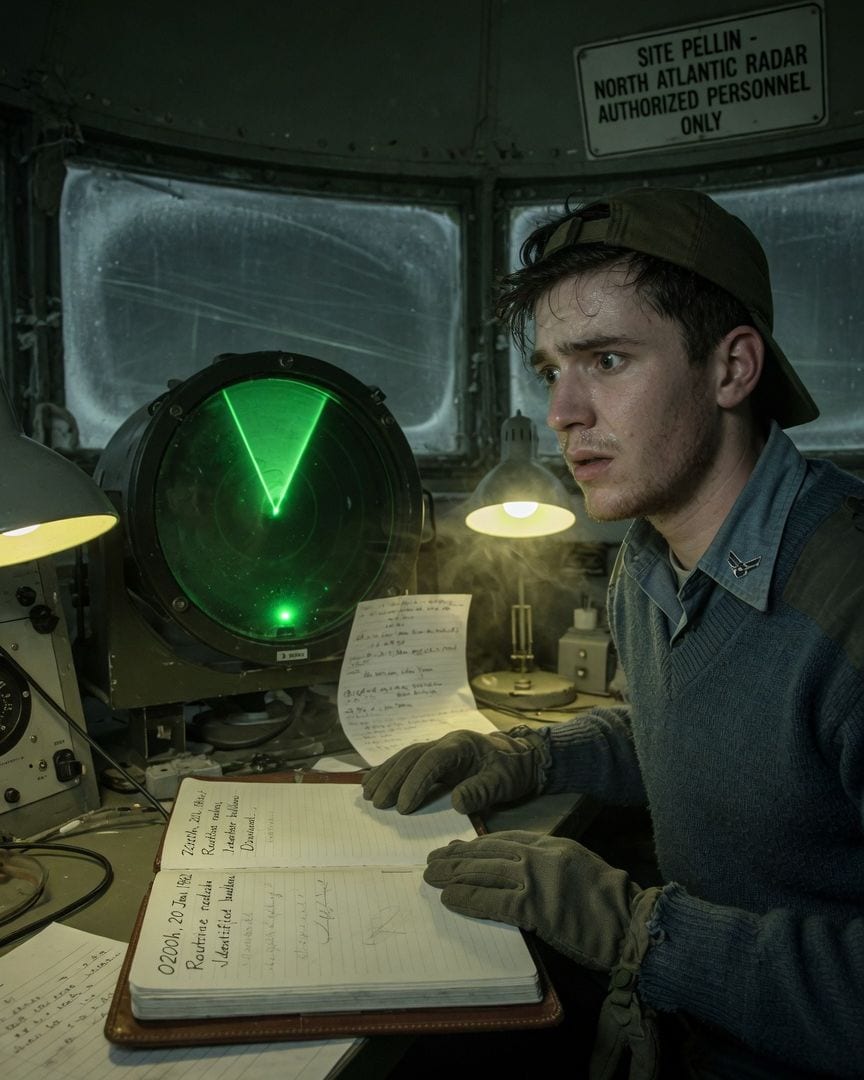
Nine days from closing, Cold War Site Pellin's Airman Vance watched his radar track a solid blip moving closer, dead in open sea where nothing could exist.
In the dimly lit dome of Site Pellin, Airman Ordway Vance, just days from discharge, ran his final radar sweeps before the base closed for good. Outside, the North Atlantic wind howled, but inside, only the hum of his console broke the silence. His last calibration had been clean, yet a single, unwavering green blip appeared on the scope, forty miles out, in open water where no vessel should be. The impossible return moved closer with each sweep, defying all logic and other sensors, until it sat static just beyond the coast fence line. What unseen presence did the radar truly hold in its unwavering green grip, contradicting the official record?
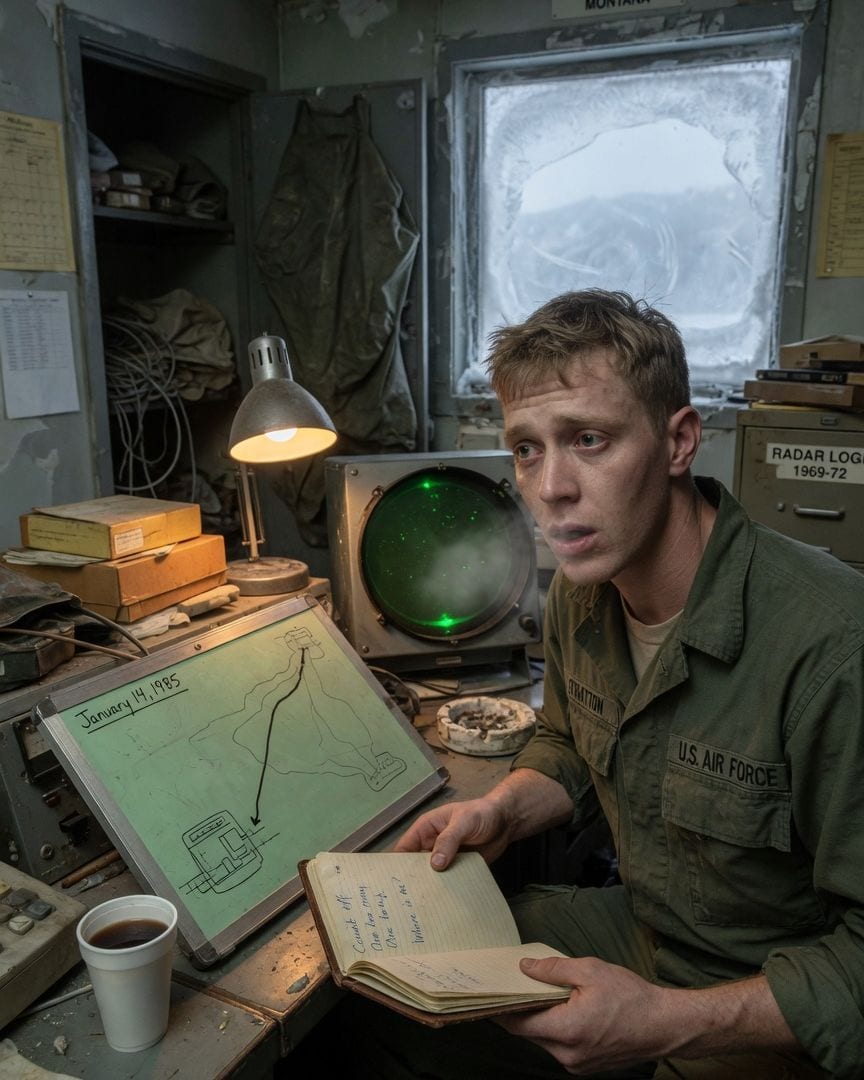
Airman Lars Stratton found an old Cold War manifest listing one name twice: 'Bernard Radcliffe' transferred and 'Bernard Radcliffe' still present.
Airman Second Class Lars Stratton was counting down his final weeks at Echo Station, a desolate Cold War outpost due for mothballing. He longed for home, far from the bitter Montana winds and the constant hum of static. Inside the dim radar shack, he logged the usual nightly ghost blip, a faint contact appearing at 2300, just as it had every winter since 1987. This night, a metallic tang like old blood lingered in the air, raising the hairs on his arms. Seeking distraction, Lars later discovered a leather-bound logbook from 1971, detailing the same 2300 contact, but with chilling notes and a manifest listing one airman's name, Bernard Radcliffe, twice—once transferred, once present. Was he truly alone in the silent, remote station?
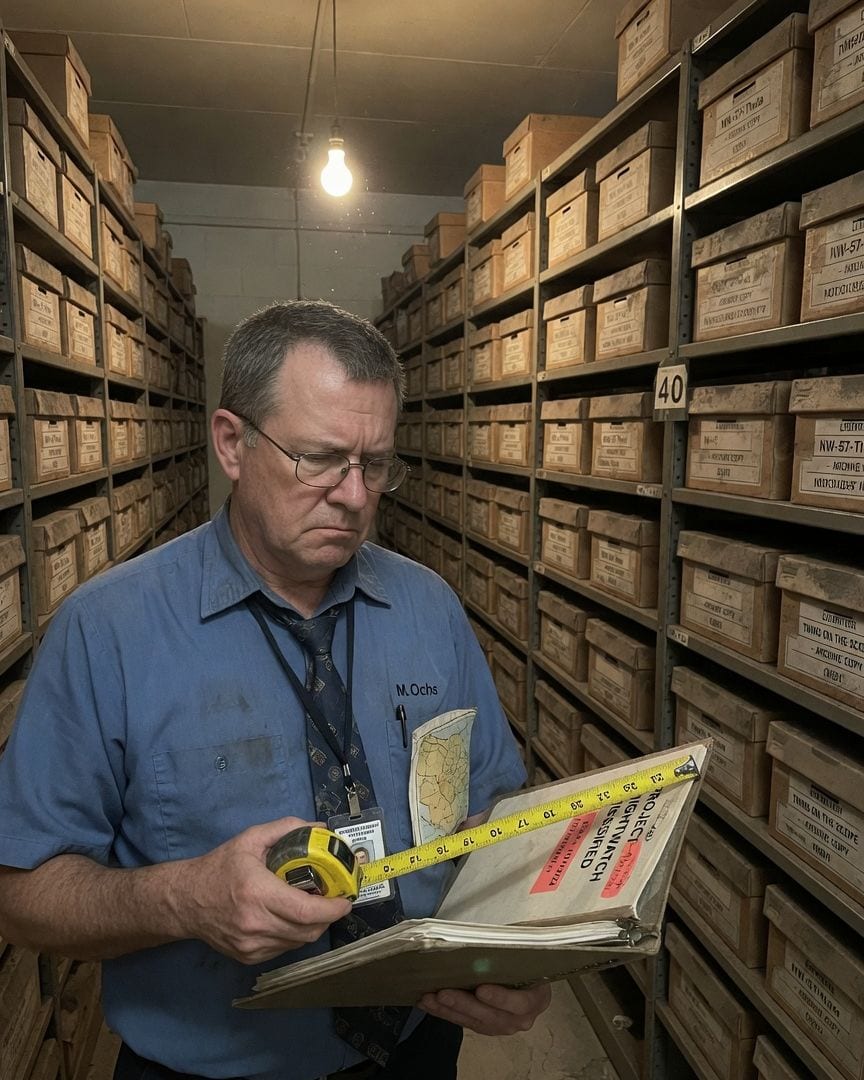
A Cold War records clerk on his final patrol found Aisle 40 stretched 61 feet longer, lined with unknown boxes. Inside one: 'PROJECT NIGHTWATCH - CLASSIFIED' with a fresh timestamp.
Marlin Ochs, a creature of habit after nineteen years at the St. Louis federal records depot, faced his final patrol through Aisle 40 before its scheduled pulping. His routine walk, usually 92 precise strides, suddenly stretched to an impossible 119, making the aisle 61 feet longer than its blueprint. The extra section felt colder, lined with dust-laden boxes bearing alien classification codes and no manifest. Inside one, he found a metal-bound file: 'PROJECT NIGHTWATCH - CLASSIFIED,' dated 1957, but with a timestamp just hours old.
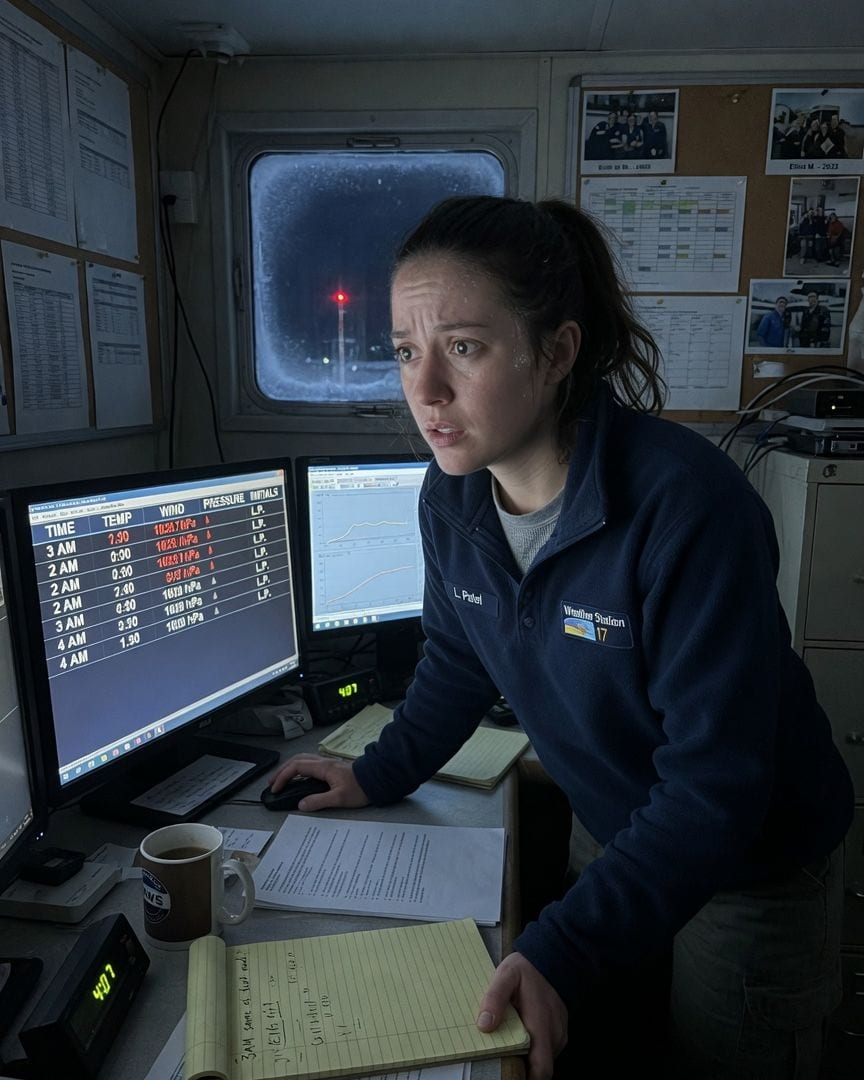
My weather station's 3 AM log shows a pressure reading I never made. My initials are on it, but the dials were dead still.
Working the overnight shift at the remote weather station, I routinely checked the digital logs. The 3 AM entry showed an impossible barometric pressure spike, a hurricane that simply hadn't happened. I distinctly remembered being outside at that time, calibrating a sensor, not making that entry. Yet, my initials, L.P., were clearly logged next to data I never made.
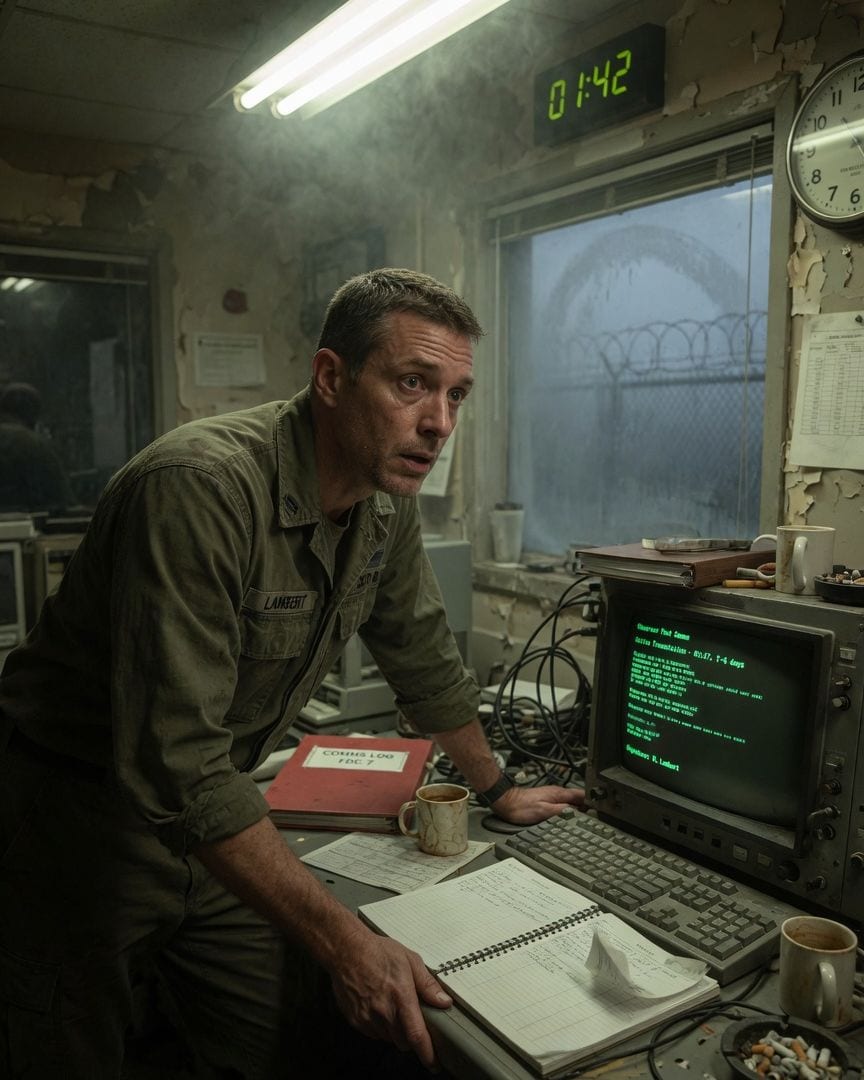
With Firebase 7 days from demolition, a dispatch specialist found his own signature on a log entry from a lost outpost. Then, a dead soldier's name appeared.
Specialist Robert Lambert hunched over the radio console in Firebase 7, the mountain fog pressing in as the base counted down its final days before demolition. His quiet shift shattered when urgent calls began arriving from outposts officially declared silent a week ago. His sergeant calmly informed him that he’d been speaking to no one, as all comms with those posts had been lost for hours. Later, Robert found a log entry for an active transmission, dated days after a post went dark, bearing his own signature. What chilling truth lay beneath the paper, revealing a dead soldier's name reporting from the grave?
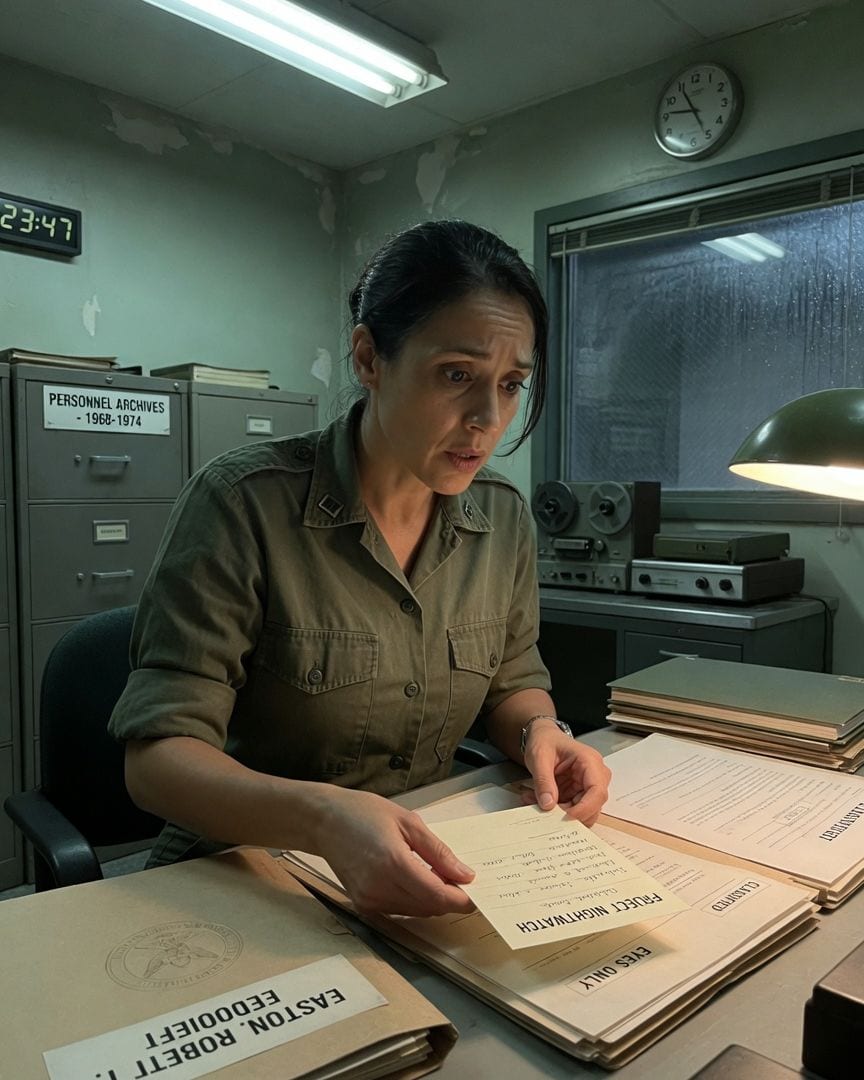
A Cold War tower controller logs an object vanish from radar, then hears the pilot scream it’s filling his windscreen. Her own name, 'Bardolph, Ines', now marked 'Observed' in a secret file.
Captain Ines Bardolph, a tower controller, was counting down the months until her transfer to Langley and the decommissioning of her base, hoping to leave behind the unsettling incidents of her final posting. But one night, her radar scope showed an impossible blip, solid and unwavering, 40 miles north of the Danube, only to vanish in less than a second, leaving a pilot screaming in terror. Despite the clear evidence, the official report blamed "atmospheric inversions," while the terrified pilot received a glowing review and promotion, his file meticulously scrubbed of any anomaly. As Captain Bardolph reviewed the pilot's pristine record, she found a hidden slip of paper, revealing a chilling truth: 'Subject: Bardolph, Ines. Status: Observed.' Was she merely an observer of the impossible, or was she now part of something far more sinister?