A methodical auditor measured his storage cave 211 feet too long, finding Cold War files inside stamped with tomorrow's date.
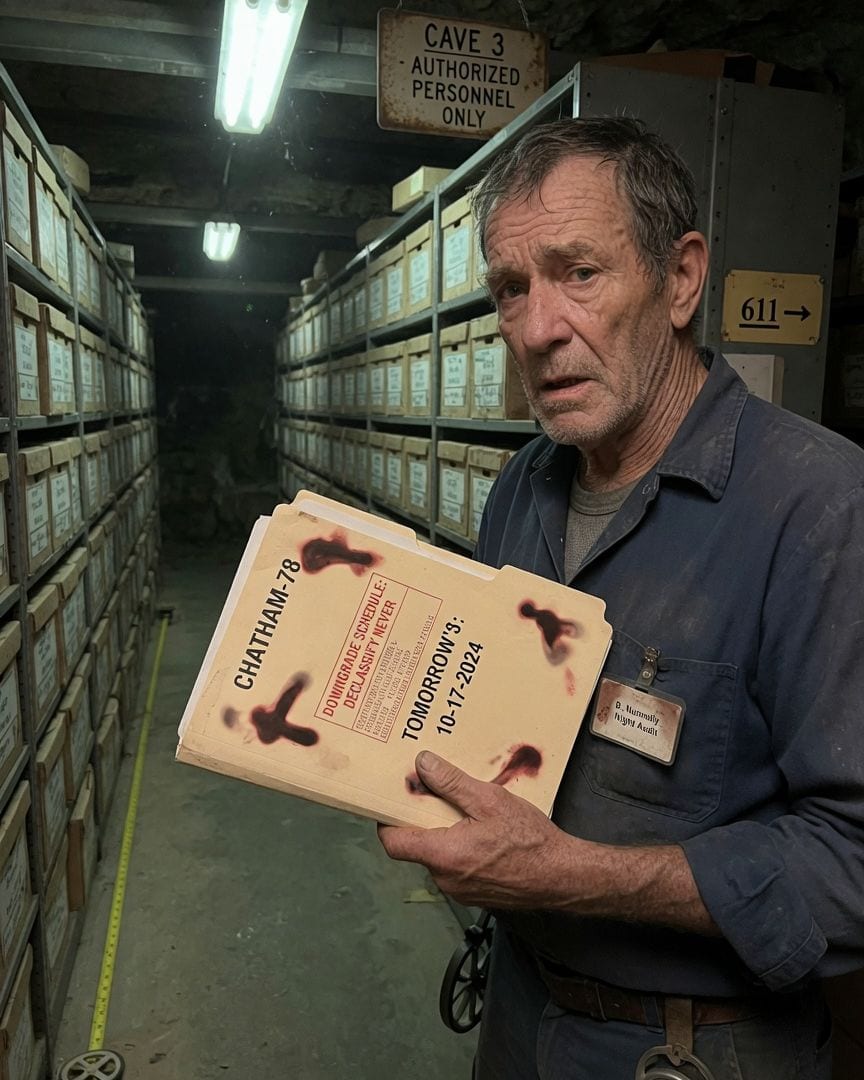
Barrow Nunnelly, sixty-three and burdened by a bad back, took the contract at the Cheatham storage caves. The air inside hung at a steady fifty-two degrees Fahrenheit, thick with the scent of old paper and fine dust.
The caves hadn’t seen a full audit since 1968, a detail that resonated with Barrow’s methodical nature. His first task involved Cave 3. The official chart showed its length at a precise four hundred feet.
Barrow unwound his measuring wheel, its click-click-click echoing in the damp silence. He reached what should have been the end, but the shelving, loaded with rows of file boxes, kept going into the gloom.
He walked the entire length, the wheel spinning, until it clicked to a halt at six hundred eleven feet. He walked it again, just to be sure.
Then, he called Everett Brooks, a younger man from the day shift, to verify. Everett walked it, his face carefully neutral, and his wheel also gave six hundred eleven.
He wouldn’t say another word about it, just went back to his duties, leaving Barrow with a puzzle.
The endless shelving, loaded and labeled, perfectly matched the official inventory list—every box accounted for, for a length that simply did not exist.
The impossible length gnawed at Barrow. He tried to reconcile it, flipping through blueprints and old inspection reports in his temporary office. Nothing offered an explanation.
He returned to Cave 3, determined to find a discrepancy in the inventory that would explain the extra two hundred eleven feet.
He started at the four-hundred-foot mark, where the cave should have ended, and began examining the files on the newly discovered shelves. These boxes were different.
Their labels were starker, often just a single project code like 'CHATHAM-78,' and the paper stock felt subtly alien, almost too smooth beneath his calloused thumb.
He pulled one down. The cover sheet listed a page count, but the folder was conspicuously thin, almost empty. Inside, the document was heavily redacted, thick black ink obscuring most of the text.
But what caught his eye first was the stamp on the cover: 'DOWNGRADE SCHEDULE: DECLASSIFY NEVER.' Beneath that, a complex alphanumeric control number traced to no known originating office in any of the directories he possessed.
He tried to rationalize it as a misfile, an old, forgotten project, something left over from the Cold War, but the sheer volume of these 'impossible' files, stretching for over two hundred feet, defied any mundane explanation.
The unease settled deep in his bones, a cold weight heavier than his bad back.
Barrow held the 'CHATHAM-78' file, his thumb tracing the thick, black redactions. They weren't the neat, rectangular blocks of standard censorship.
These lines had a subtle, organic curve, almost like the outline of a human form, or perhaps a large, indistinct object. He squinted, trying to make sense of the peculiar, almost deliberate shape.
The cold in the cave seemed to deepen around him, and a low hum vibrated faintly through the concrete floor. As he stared, a faint, almost holographic shimmer appeared within the blacked-out area, briefly tracing the strange, unsettling outline.
It was gone in an instant, a trick of the light, he told himself, but the image lingered. But then, his gaze snagged on the bottom of the cover sheet.
Beneath the 'DECLASSIFY NEVER' stamp, an official date was printed in crisp, black ink. Not a classification date. Not an archive date. It was tomorrow's date.
The next morning, Barrow returned to Cave 3, the date on the file an unsettling weight in his mind. He spent hours trying to trace the control number from 'CHATHAM-78.'
It led to a labyrinth of dead ends: old offices that had been shuttered for decades, or numbers that, when cross-referenced, simply looped back to the same impossible sequence, like a broken record.
He began systematically pulling other files from the two-hundred-eleven-foot section, finding more with similar stark labels, 'DECLASSIFY NEVER' stamps, and those unsettling, organically-shaped redactions. A recurring phrase appeared in the sparse, unredacted text: 'subject relocated' or 'asset transit.'
There were no details, no destinations, just the clinical pronouncement of movement. He tried to speak with Everett Brooks again, casually mentioning the extra length of Cave 3.
Everett's eyes, usually placid, darted towards the entrance of the cave, then back to Barrow. He mumbled something about a bad memory, about 'how these old places play tricks on you,' and quickly found an excuse to leave.
His evasiveness only deepened Barrow's suspicion. The rational explanations—misfiled documents, Cold War era anomalies—were dissolving, replaced by a chilling sense of purpose behind the impossible records.
Barrow began keeping a log of the files he examined, noting the dates, the codes, and the precise, unsettling shapes of the redactions.
He found similar shapes across different 'project' files, spanning from the late 1950s to what appeared to be the present day. The consistency was terrifying.
Barrow started working late, staying long after the day shift had left, the only sound the hum of the ventilation system and the distant drip of water echoing through the passages.
He needed the silence to focus on the growing stack of anomalous files. One evening, as he moved deeper into Cave 3, his flashlight beam suddenly cut off, swallowed by a deeper shadow near the mouth of the cave.
He called out, his voice sharp in the echoing space, but received no answer. The silence that followed was heavy, watchful, pressing in on him from the dark shelves.
He walked cautiously back towards the main office, his heart thudding against his ribs, each beat a hollow thrum in the quiet. The light in his small, temporary office was on. He hadn't left it on.
Inside, nothing seemed disturbed, but his own personnel file, issued when he took the contract, lay open on his desk, turned to his service record.
He felt a cold dread, a prickling sensation on the back of his neck, as if an unseen gaze lingered there. Someone knew what he was doing. Someone had been watching him.
The next morning, a single, typewritten note was slipped under his office door. It was short, anonymous: 'Some things are filed, not lost. Don't look for the destination.' The words were clipped, official, but carried an undeniable threat.
The files weren't just a puzzle anymore; they were a warning. He was no longer just an auditor; he was a target.
Barrow confronted Lorraine Lambert, the records manager, a woman whose neat grey bun and sensible glasses usually projected an air of unflappable order.
He laid out photocopies of the impossible files on her desk: 'CHATHAM-78,' a 'Project NIGHTFALL' from 1958, a 'Case BLUEWATER' from 1982.
He pointed to the 'DECLASSIFY NEVER' stamps, the impossible control numbers, the page counts that didn't match the thin folders. Lorraine initially dismissed them as misfiles, Cold War era errors, even forgeries.
Her voice was strained, too quick, a veneer of composure already cracking. 'Old records, Mr. Nunnelly. The system isn't perfect.' Barrow pushed back, his voice low and steady, a calm he barely felt.
'The system isn't perfect, Ms. Lambert, but it's consistent. Look at the redactions. The same shape, every time. And the cave. It's six hundred eleven feet long, not four hundred. The inventory agrees with the shelves, but the blueprints don't.'
Lorraine's carefully constructed composure shattered. Her face paled, the color draining from her cheeks. She looked away, towards the towering steel filing cabinets lining her office, then back to Barrow with haunted eyes.
'There are… stories,' she admitted, her voice barely a whisper, as if the words themselves might alert something. 'Whispers about 'special projects' and 'anomalous storage' from before my time.'
She spoke of her predecessor, Gerald Pennington, who had retired abruptly years ago, never speaking of his time at Cheatham again.
'He once said something odd,' Lorraine mused, a faraway look in her eyes, 'about the inventory never lying, but not always telling you what it's for.'
She then pulled out a locked drawer, retrieved a single, brittle, hand-drawn map of the caves from the 1950s.
It was old, yellowed, and crudely rendered, but it clearly showed Cave 3 extending beyond four hundred feet, with a section simply labeled 'UNKNOWN.' The dread solidified in Barrow's gut, cold and heavy. The truth wasn't a clerical error.
It was a foundation.
Barrow left Lorraine's office, the old map clutched in his hand, a heavy weight that seemed to grow colder with every step. He found Gerald Pennington's last known address in the archives, an abandoned house on the outskirts of town.
The front door hung ajar, revealing a dusty, still interior, as if time had stopped the moment Pennington walked out.
Inside, among stacks of old newspapers and forgotten furniture draped in white sheets, he found a small, rusted strongbox tucked beneath a loose floorboard in the study. He forced the lock, the sound echoing hollowly through the empty house.
Inside were not valuables, but a collection of old files, personal copies, identical in their unsettling nature to those in Cave 3. One was a detailed report titled 'Cheatham Anomaly 1968,' detailing a series of 'relocations' from that year.
He saw a list of names, and next to each, the familiar, unsettling redaction shape. As he scanned the list, his breath caught.
A name jumped out at him, a name from his own family history, a distant relative, a great-aunt, who had vanished without a trace decades ago.
And then, attached to the report, a small, handwritten note from Pennington: 'The auditors are always the first to notice. And the last to be filed.'
Barrow looked down at his own official contract, still clutched in his hand, and saw a faint, almost transparent, version of the signature redaction shape subtly overlaid on his own signature, a chilling confirmation of his unwitting complicity.
Pennington's strongbox held more than just files; it contained his personal journals, meticulously kept over decades. Barrow devoured them, his flashlight beam sweeping across the brittle pages in the dim, dusty house, the horrifying truth unfurling page by chilling page.
The extra 211 feet of Cave 3 wasn't just storage; it was a dimensional anomaly, a 'transition zone' harnessed by a clandestine government program in the early Cold War.
The 'files' were not records about the lost, but active 'keys' or 'imprints' to their presence within this expanded, impossible space.
The redaction shape, Barrow now understood, was the program's signature, the footprint of the 'filing' process, an imprint left on those who passed through.
The inventory list, which always perfectly matched the impossible shelves, wasn't a description of the contents but the contents themselves, manifested as records. The program's initial goal was control: to 'file away' sensitive assets or threats.
But over generations, the system evolved, becoming self-sustaining. It now sought out those who interacted with its records, especially those who tried to understand its true nature.
Pennington realized this, tried to warn others, then fled, leaving his records as a desperate, coded message. The pattern across decades and classifications was the system's slow, inexorable expansion, filing away anyone who got too close.
His great-aunt, long 'lost,' had been an early subject. Pennington's note about auditors was a direct warning: the system marked those who audited its impossible contents for eventual 'relocation.'
The date on the 'CHATHAM-78' file, tomorrow's date, now made chilling sense: it was the scheduled filing date for the file's next subject — Barrow Nunnelly.
The truth ignited a desperate urgency in Barrow. He shoved Pennington's journals and his own damning evidence into his worn briefcase, his hands trembling. He had to get out, to escape the creeping cold of the caves.
As he moved through the main cavern, the lights flickered erratically, casting long, dancing shadows that stretched and shrank with each stutter.
The temperature plummeted, and a frigid gust of air, smelling faintly of ozone and old dust, swept through the passages, raising gooseflesh on his arms.
Faint whispers, like voices struggling through static, emanated from the shelves of Cave 3, growing louder, coalescing into indistinct words. The air grew heavy, oppressive, pressing down on him, making each step a labor.
He reached the main exit, but Everett Brooks stood there, blocking the narrow passage. Everett's face was impassive, his eyes fixed on Barrow, devoid of recognition or emotion. He didn't speak, just watched, a silent, knowing sentinel.
Barrow realized Everett was not a guard; he was another 'filed' individual, or a facilitator, silently maintaining the system. He turned, adrenaline surging through his aching body, and darted towards a rarely used service tunnel, a desperate hope flickering.
The tunnel stretched before him, its concrete walls subtly elongating, the perspective warping, pulling away into an impossible distance.
He kept moving, his bad back screaming, the whispers growing louder, almost forming coherent words – his name, his service number, his personal details.
He saw the faint, shimmering redaction shape coalesce in the air ahead of him, blocking the tunnel, larger now, unmistakable. Panic seized him.
He threw himself into a small, disused side passage, barely squeezing through a rusted grate, scraping his shoulder. The whispers screamed his name just as he slammed the grate shut, sealing himself off from the impossible.
He escaped, but knew he could never go back. The proof he carried would damn him if he ever tried to share it.
Barrow Nunnelly vanished from the Cheatham contract records. His truck was found in the caves' parking lot, keys still in the ignition, a week after his last shift.
No one reported him missing for weeks; he was a contract worker, and his family lived hours away in a different state. Lorraine Lambert simply reported the contract as unfulfilled, marking it closed in her meticulous system.
Everett Brooks continued his day shift, quiet as ever, moving among the endless shelves, his face always neutral.
The Cheatham storage caves continued to run at a steady fifty-two degrees Fahrenheit, the whispers within its impossible depths unheard by anyone else, its secrets undisturbed.
Life went on, oblivious to the space that had silently expanded, and the people it had silently absorbed.
Barrow Nunnelly sent a single, thick envelope to a regional journalist once, full of photocopied files, strange maps, and rambling journal entries.
It was dismissed as the work of a paranoid old man, filed away in a cold-case folder labeled 'Cheatham Anomaly.'
Sometimes, late at night, a records clerk tracing an old control number in the national database finds a single, new file in the Cheatham system.
It’s always empty, save for a single, faint, shimmering redaction that has the unmistakable shape of a man with a bad back.
A few days later, a local librarian found a forgotten briefcase on a park bench. Inside were yellowed journals, impossible maps, and a file with a familiar, unsettling date.
It sat in the lost and found for a month, then was moved to general storage. The file is still being signed.
If this one got to you
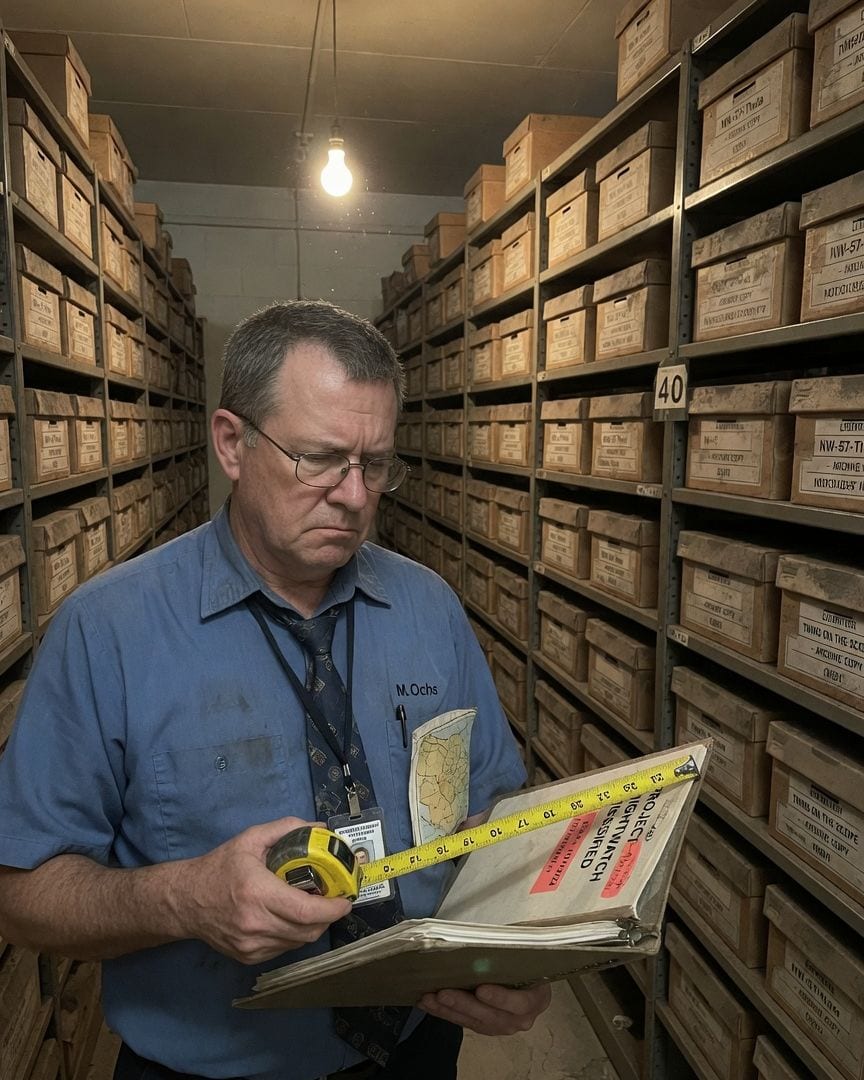
A Cold War records clerk on his final patrol found Aisle 40 stretched 61 feet longer, lined with unknown boxes. Inside one: 'PROJECT NIGHTWATCH - CLASSIFIED' with a fresh timestamp.
Marlin Ochs, a creature of habit after nineteen years at the St. Louis federal records depot, faced his final patrol through Aisle 40 before its scheduled pulping. His routine walk, usually 92 precise strides, suddenly stretched to an impossible 119, making the aisle 61 feet longer than its blueprint. The extra section felt colder, lined with dust-laden boxes bearing alien classification codes and no manifest. Inside one, he found a metal-bound file: 'PROJECT NIGHTWATCH - CLASSIFIED,' dated 1957, but with a timestamp just hours old.
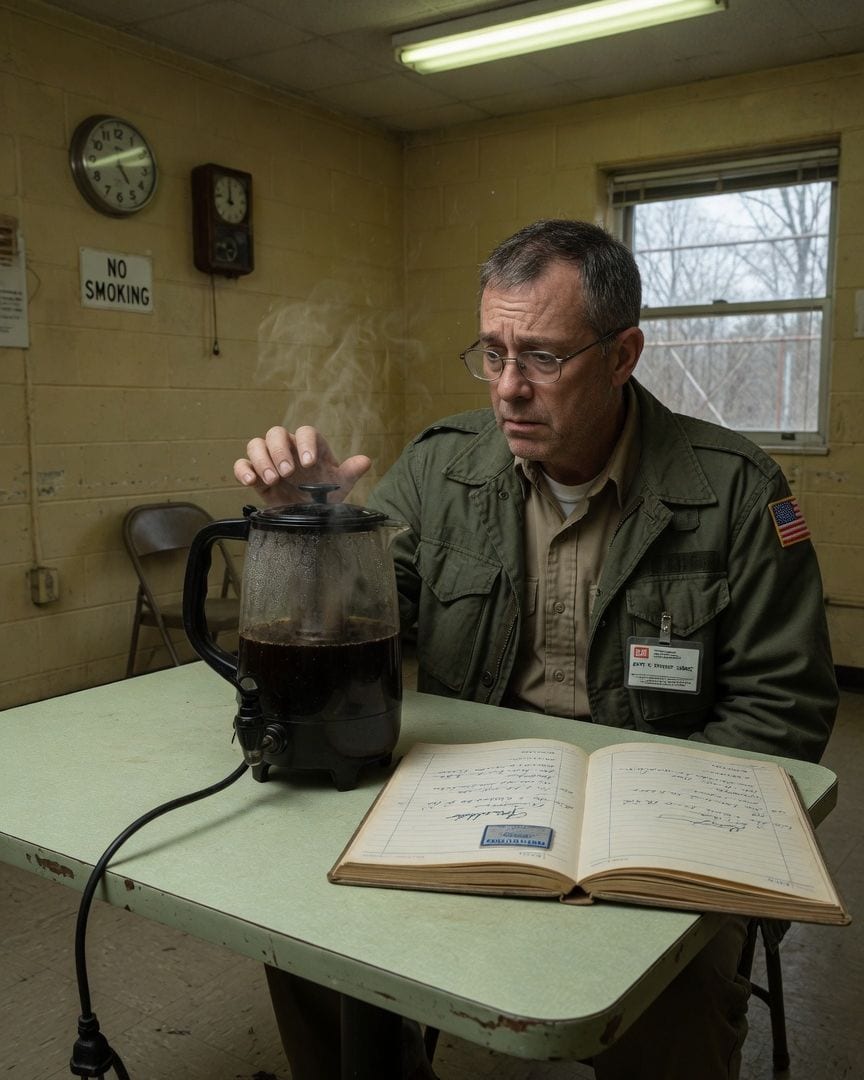
A methodical US Army engineer found a Cold War facility's file stamped 'DECLASSIFY NEVER' — and half its pages were missing.
Captain Nolan Threep, a methodical US Army engineer, expected another routine decommissioning at Alert Facility Twelve in rural Montana. The chains on the doors had rusted solid since 1970, promising a long-dead site. Yet, inside, a faint warmth hung in the air, and a glass coffee urn sat half-full, a wisp of steam rising lazily from its dark surface. The urn, warm to the touch, was clearly unplugged, and the duty log beside it, signed for a shift ending nineteen years prior, looked as though it had been signed yesterday. What secret could a supposedly abandoned Cold War facility hold?
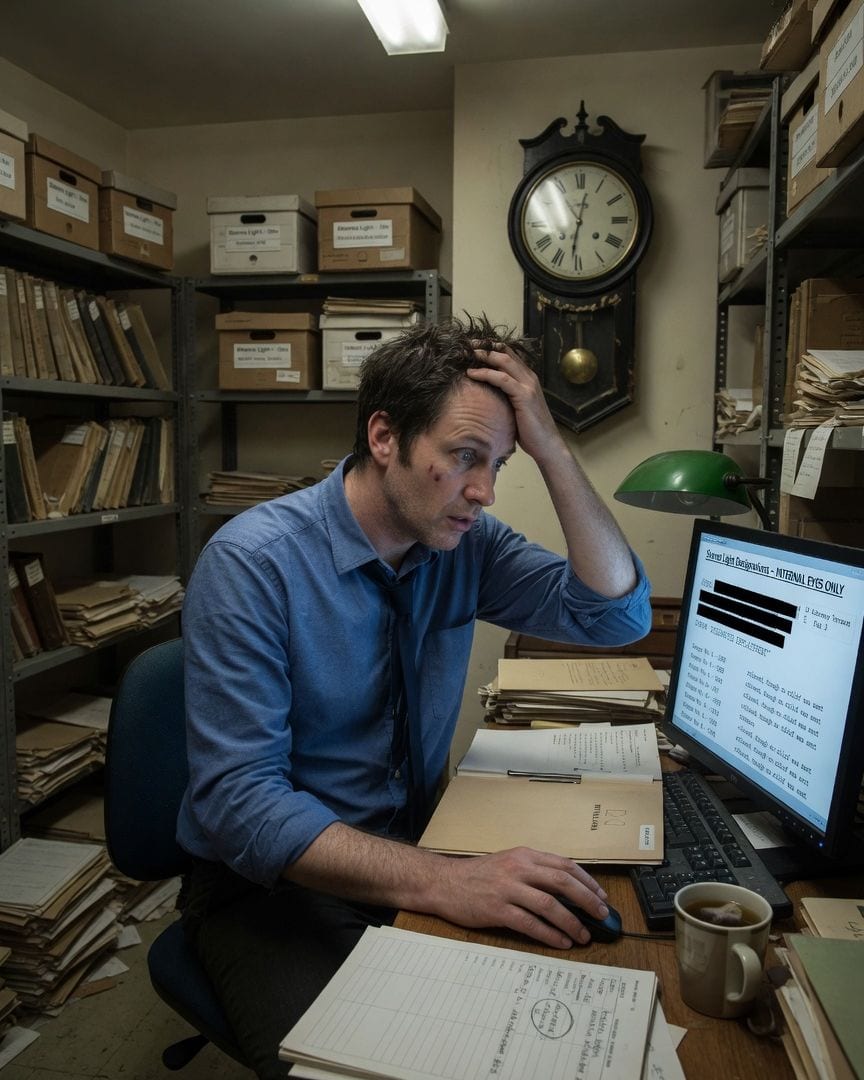
I found my street address in a century-old lighthouse file, printed decades before I lived there.
As a maritime archivist, my world revolves around forgotten lives and dusty ledgers. But the Skerne Light files broke that quiet rhythm, revealing a chilling pattern: 'Keeper number 6' relieved, though no relief was sent, repeating for decades. Now, an internal document with a strange code has led me to a redacted entry, revealing my own street address, decades before I ever lived there.
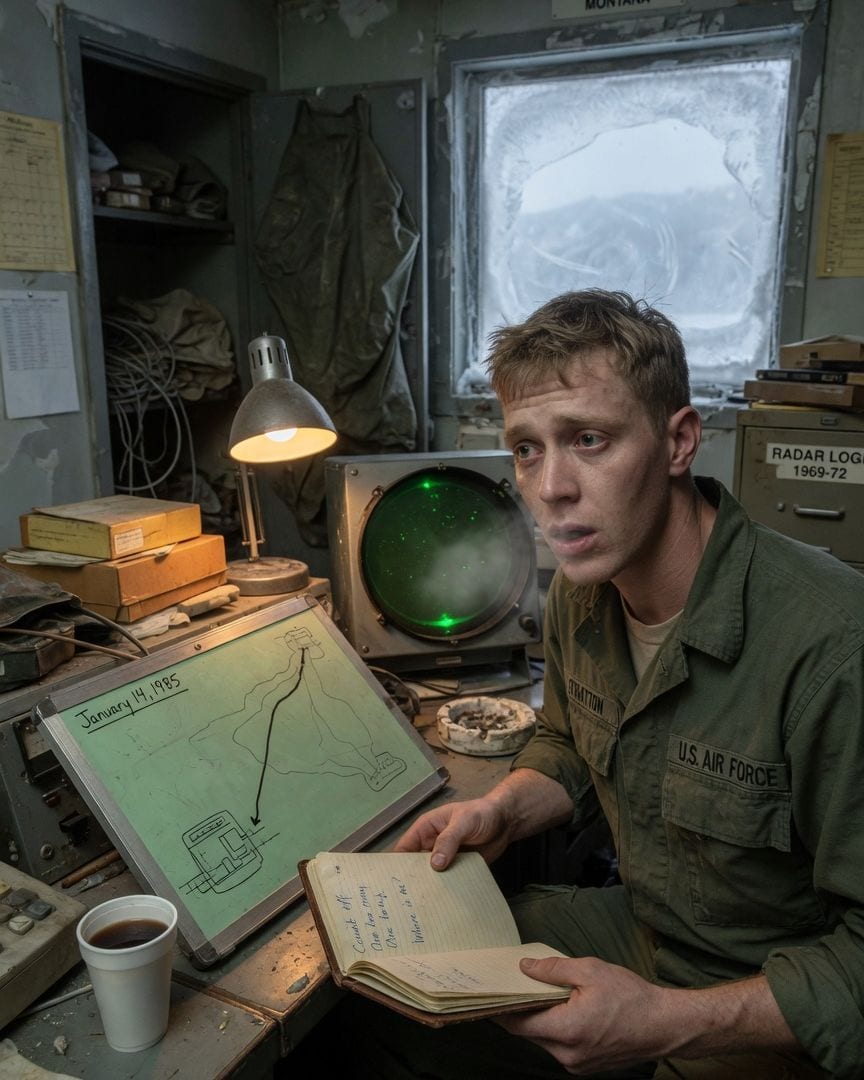
Airman Lars Stratton found an old Cold War manifest listing one name twice: 'Bernard Radcliffe' transferred and 'Bernard Radcliffe' still present.
Airman Second Class Lars Stratton was counting down his final weeks at Echo Station, a desolate Cold War outpost due for mothballing. He longed for home, far from the bitter Montana winds and the constant hum of static. Inside the dim radar shack, he logged the usual nightly ghost blip, a faint contact appearing at 2300, just as it had every winter since 1987. This night, a metallic tang like old blood lingered in the air, raising the hairs on his arms. Seeking distraction, Lars later discovered a leather-bound logbook from 1971, detailing the same 2300 contact, but with chilling notes and a manifest listing one airman's name, Bernard Radcliffe, twice—once transferred, once present. Was he truly alone in the silent, remote station?
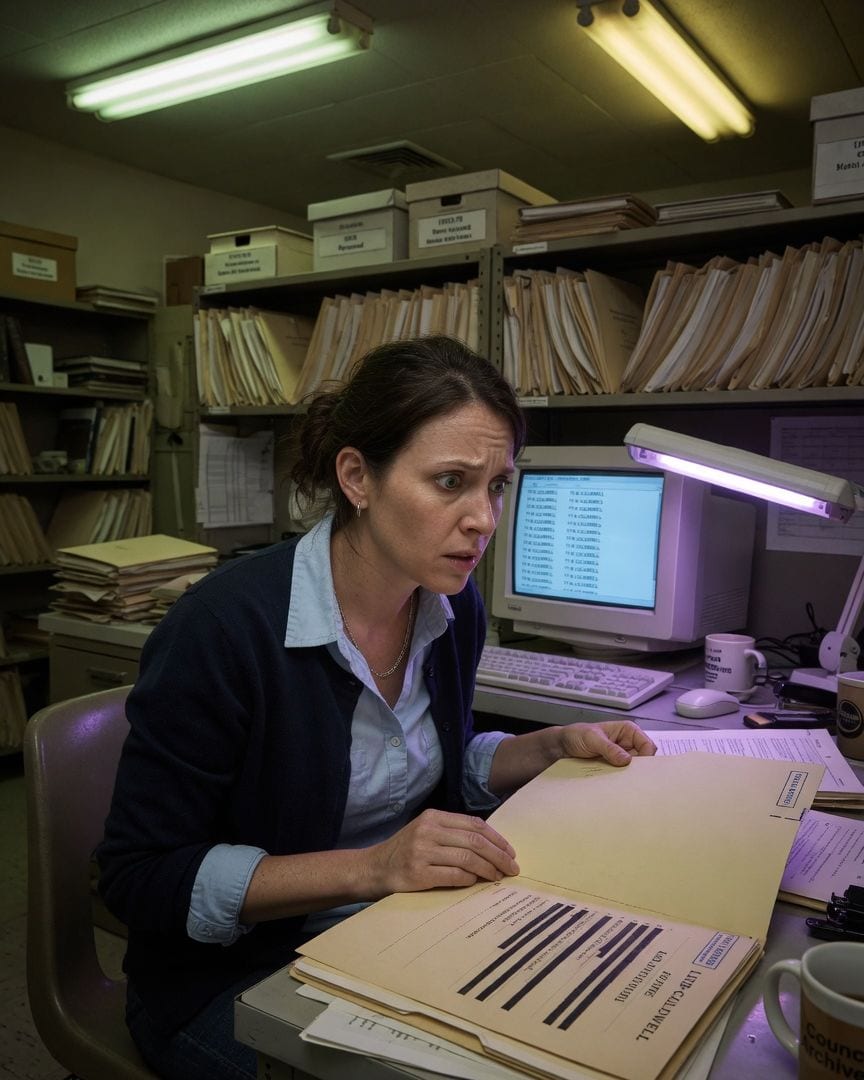
My employer's security file holds a vetting report on me dated nine years before I ever applied. It has my full name and my parents' address — with only one line, the source who referred me, blacked out.
Working a routine data audit, I pull my own security file. The issue date is nine years before I even applied for the job. Then, hidden within an old archive file, I find my current address etched under a blacked-out line.
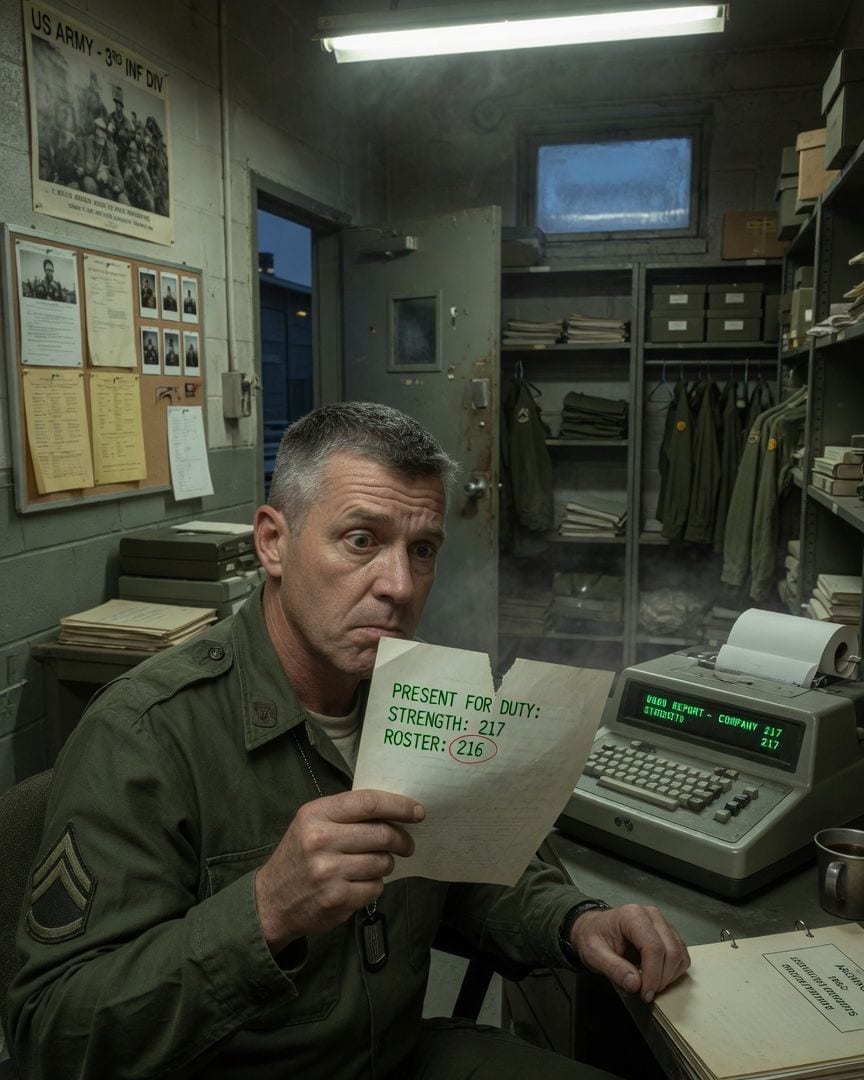
Sergeant Halloran is three months from a promotion, but his Cold War morning report shows 217 men. He counted only 216. A cold, hidden log from 1963 records the same impossible count.
Sergeant First Class Joseph Halloran, three months from a promotion and stateside transfer, faced the chilly 0600 darkness of his West German garrison in 1987, his career built on impeccable order now threatened. For a week, his morning reports had defied him: a meticulous physical count of 216 shivering soldiers always resulted in the Teletype machine blinking 217. His exhaustive double-checks confirmed no error, yet the impossible 'plus one' persisted, leading him to a distinctly colder section of the supply room. Behind ancient manuals, a hidden alcove revealed a worn leather log, where a Sergeant Hayes in 1963 had recorded the identical, chilling discrepancy.