My conservatory disappeared. A woman sat on a bench where my sofa should be, back to me, in a long pale dress.
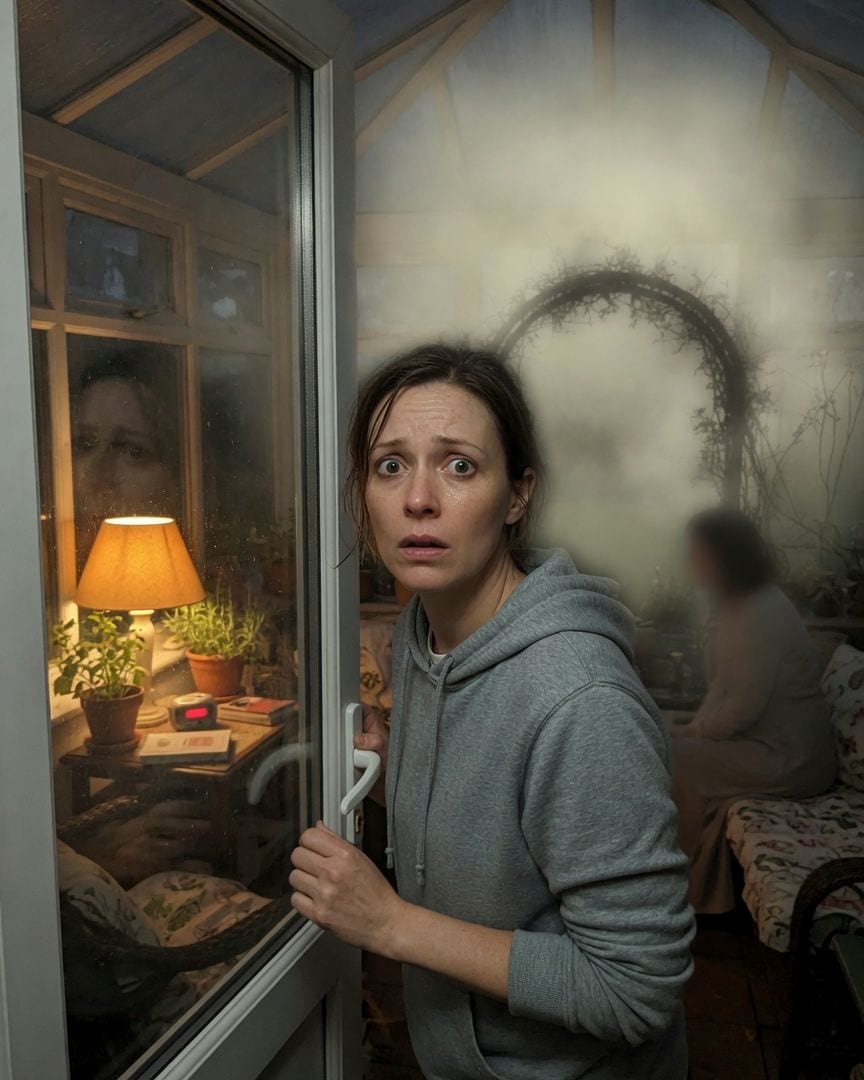
The fog came in thick and fast that evening, wrapping around the house like a cold, wet blanket.
I was in my conservatory, a space I’d added just last year, enjoying the quiet hum of the mini-heater and the soft glow from my reading lamp.
Outside, the fog pressed against the glass, making the garden disappear into a milky white void.
I must have stared at it a moment too long, because one second the glass panes were there, reflecting my own startled face, and the next they simply… dissolved.
It wasn't a shattering, or a trick of the light. They simply weren't. Instead of the familiar sight of my potted herbs and wicker armchair, the space beyond the threshold was suddenly a wet lawn.
A rose arbour, heavy with dark, leafless vines, curved over a weathered garden bench. And on that bench, her back to me, sat a woman.
She was wearing a long, pale dress, almost white against the muted greens and grays of the fog, and she was sitting exactly where my modern sofa should have been. My breath hitched. The air was suddenly cold, impossibly cold.
I didn't think, I just reacted. I slammed the conservatory doors shut with a violent thud.
The glass was back, solid and reassuring. The wicker furniture, my plants, my own reflection staring back from the panes, wide-eyed and pale. The fog was still pressing against the outside, but the impossible garden, the woman, were gone.
I told myself it was the fog, a trick of the light, a momentary disorientation. My mind trying to make sense of the obscured view.
But the image of her, so still on that bench, lingered behind my eyes like a burned-in photograph.
I walked through the house, trying to shake the unease. The floorboards creaked underfoot, a familiar sound. As I ascended the stairs, I instinctively stepped over the third stair, a habit I’d developed since moving in but couldn't place.
It’s always felt a little loose, a little… off, compared to the others. I found myself in my living room, the armchair by the window looking strangely inviting.
But as I approached it, I noticed the cushion had a surprisingly deep, worn indent, as if someone had sat there for decades. I live alone. The house was quiet, but for a faint, lingering scent of old roses.
Not the sharp, green smell of a fresh bloom, but something softer, sweeter, almost dried. My own roses weren't in bloom.
The next morning, the memory of the vanishing conservatory still nagged at me. I tried to rationalize it away again: exhaustion, a trick of the light, perhaps even a brief, vivid dream.
Yet, the image of the woman on the bench felt too real, too clear to be a figment. I made coffee, the automatic kettle clicking off at precisely 6:00 AM.
It was a schedule I hadn't set, but which had become my own since I moved in. Comforting, in a way, to have that small ritual.
I walked back to the living room, intending to sit in my armchair, but paused. The worn indent, usually just a minor peculiarity, now seemed stark, almost an imprint of a body that wasn't mine.
Who sat here so consistently, for so long, to leave such a mark? I ran my hand over it, a faint chill emanating from the fabric despite the morning warmth.
Then I turned my attention to the conservatory, half-expecting some lingering anomaly, some smudge on the glass where the illusion had been. Everything appeared normal, perfectly solid, filled with my own plants and furniture, catching the weak morning light.
But as my gaze drifted to where the phantom bench had been, on my modern, floral-patterned sofa, a small, impossible object caught my eye.
It was a delicate bone china teacup and saucer, a faded floral pattern adorning its surface, utterly out of place. It wasn’t mine. It was antique, with a thin gold rim that glinted faintly.
I reached for it, my fingers brushing against the cold porcelain.
The cup felt impossibly old, a relic from another time, yet it sat on my sofa, in my conservatory, an undeniable, physical trace of the impossible vision from the night before.
The rational explanations suddenly felt paper-thin, crumbling under the weight of this single, tangible object.
I picked up the teacup, my fingers cold against the smooth china. The floral pattern was faded, a style from generations past, delicate bluebells and tiny forget-me-nots.
It was perfectly preserved, almost pristine, but the very air around it felt heavy, laden with history, as if it had been waiting for me to find it.
I turned it over, searching for a maker's mark, something to explain its sudden, impossible appearance. Instead, on the underside, barely visible, was a faint, elegant cursive inscription: the initials 'F.H.' followed by a precise, etched year: '1953'.
I stared at the date. My house was built in the 1920s, but 1953 is decades before me, before my parents were even born.
It’s a date that shouldn’t be here, a name that means nothing to me, yet it sits in my hand, undeniably real, undeniably from the time of the vanishing conservatory, a chilling link to the woman on the bench.
The teacup became my obsession. I couldn't shake the image of the woman, the cold fog, or the impossible date etched into the porcelain.
I scoured local archives, old property deeds, anything that might link 'F.H.' and '1953' to my address. The local library yielded little, a few outdated maps and census records, but nothing concrete. Then I tried the Historical Society.
They had a small, dusty section on local residents from the mid-20th century. There, amidst forgotten names and occupations, I found a brief mention of a Frances Hughes. She had resided at my address in the 1950s.
The record was sparse, simply stating she 'resided' there until 1953, with no clear forwarding address or death certificate. The house was sold shortly after. A cold knot tightened in my stomach. Frances Hughes. The woman on the bench.
I decided to visit Samuel Crane, an elderly estate agent whose family business had been in the town for generations. His office smelled of old paper and lukewarm tea.
He was initially dismissive of my questions about old residents, citing privacy regulations and the general futility of digging up the past. But I pressed, describing the teacup, the initials, the date. Samuel’s face, usually jovial and ruddy, stiffened.
He remembered the house, of course, noting it had a reputation for 'quick sales' in the decades following the 1950s.
He talked around the subject, mentioning 'local eccentricities' and 'old wives' tales,' but I saw the flicker of unease in his eyes.
Finally, he admitted that Frances Hughes was an 'unusual case.' A quiet woman, he’d heard from his grandfather, who simply 'left town' without a trace.
He offered it as fact, but his tone, the way he avoided my gaze, told me he never truly believed it. I pushed harder, asking about the house’s layout in the 1950s.
Samuel sighed, a defeated sound, and pulled out an old, faded blueprint from a flat file. It showed a small, original garden room at the back, where my conservatory now stands, with a distinct rose arbour and a small bench.
The hair on my arms stood on end. It was all real. Every detail matched.
As my investigation deepened, the house's 'routines' intensified. The kettle now whistled precisely at 6:00 AM every single morning, whether I had set it or not. I'd come downstairs to find it silent, steaming, having just clicked off.
A faint, almost imperceptible scent of stew, followed by the heavy, cloying perfume of old roses, now wafted through the house at odd hours, particularly in the late afternoon, exactly when I might settle down with a book.
I found myself constantly checking over my shoulder, not for a physical presence, but for an echo, a lingering sense of being observed, as if the very walls were watching me, waiting.
One evening, while searching through an old, built-in bookshelf that came with the house – a heavy, dark oak piece – I found a slender, leather-bound book of poetry, its pages brittle with age.
I picked it up, feeling its weight, its history. Tucked between two pages, a single, yellowed slip of paper. The handwriting was spidery, the faded ink barely legible, but clear enough to read: 'Don't break the pattern.
It only makes it worse.'
The message wasn't addressed to me, but the warning felt acutely personal, a direct response to my digging, to my questions about Frances Hughes. The paper crumbled slightly at the edges as I held it, threatening to disintegrate entirely.
It was a message from someone who knew, someone who had experienced this before and tried to warn. The house wasn't just replaying the past; it was protecting it, ensuring its continuation.
The unease in my gut shifted from academic curiosity to a chilling, personal threat. I quickly closed the book, the warning resonating in the sudden, oppressive silence of the room. Someone knew. Someone tried to warn.
And now, the house itself seemed to be warning me.
I returned to Samuel Crane, the mysterious note clutched in my hand. I laid it on his desk, carefully, beside my hastily compiled research on Frances Hughes.
Samuel picked up the note, his hand visibly trembling as he read the faded script. He sighed, a deep, rattling sound that seemed to pull at something inside him.
"I knew I shouldn't have kept this old place running," he muttered, gesturing vaguely to his dusty office, piled high with files. "Some things are better left buried."
I pressed him, demanding to know what he’d been hiding, what his family knew. He looked at me, a flicker of fear in his eyes.
He admitted his grandfather, the original Crane Estate agent, handled the sale of the house after Frances Hughes vanished.
He walked to a locked filing cabinet, the old metal groaning as he opened it, and pulled out a heavy, leather-bound ledger, its pages fragile with age.
"Frances Hughes," he said, his voice barely a whisper, "she didn't just 'leave town.' She was here, in this house, one evening in 1953, and then she wasn't. No body, no trace, just gone."
He flipped to an entry, a faded newspaper clipping pasted onto the page: 'Local Woman Vanishes Without Trace.'
My mind raced, every detail I'd observed suddenly snapping into place. The teacup, the date, the woman on the bench – it all clicked.
Frances Hughes was not a ghost; she was a victim of the house, a person whose last moments were now echoing through time, forcing me to witness them.
Samuel pointed to a specific detail in the clipping, an interview with a neighbor who mentioned Frances's 'unwavering routines' – her 6 AM kettle, her afternoon tea on the garden bench, her avoidance of the 'creaky third stair.'
The mundane 'wrongness' I'd observed, the habits I’d unknowingly adopted, suddenly gained a terrifying new meaning. They weren’t random quirks; they were Frances Hughes’s life, playing out again and again.
Samuel looked at me, his eyes filled with a grim understanding. "The house… it remembers her. Or rather, it remembers what happened to her."
He closed the ledger with a thud, the sound echoing in the quiet office, a final, definitive period on a horror story.
I felt a cold dread settle deep in my bones. The house wasn't just haunted; it was a trap, replaying a tragic loop, a narrative of disappearance.
Samuel Crane, his face pale and drawn, pointed to a small, almost invisible footnote on the archived property transfer document for Frances Hughes's sale in 1953.
It was a barely legible, handwritten annotation in the margin, dated from his grandfather's time: 'See also Davenport, E. 1883.'
My breath caught in my throat. "Davenport?" I asked, my voice thin, almost a gasp.
Samuel nodded, his gaze fixed on the old, brittle document, as if afraid to look away. "Eleanor Davenport. Another owner. Her house was sold abruptly, too. In 1883."
He ran a trembling finger over the dates on the page, tracing the grim lineage. "1883… 1953…" He looked up at me then, his eyes wide with dawning horror, a mirror of my own. "Exactly seventy years. A cycle.
It's happened before, Evelyn. Not just once, but twice. And you… you bought the house in 2018. The conservatory was added in 2019. The fog… the woman… you've just started the next one."
He pushed the document across the desk, his hand shaking so violently he had to pull it back. I stared at the dates, the chilling pattern undeniable, a seventy-year gap between each unexplained disappearance.
The house wasn't just remembering one life; it was repeating a pattern of taking lives. And she is now at the beginning of the next cycle.
The full, terrifying truth detonated in my mind: the house was not merely haunted, but a living, cyclical entity.
It trapped its occupants in a recurring loop, forcing them to re-enact the final days of those who had vanished within its walls, every seventy years.
My conservatory, added in 2019, had inadvertently become the perfect stage for the current recurrence, mirroring the original garden room where Frances Hughes and, presumably, Eleanor Davenport before her, were last seen.
The 'routines'—the 6 AM kettle, the worn third stair, the specific armchair, the faint, sweet scent of old roses—were not random echoes or peculiar coincidences.
They were the house's compulsive attempts to guide me, to subtly push me into repeating Frances's actions, leading me inevitably to the same vanishing point.
The faded note, 'Don't break the pattern. It only makes it worse,' now made chilling, absolute sense: the house desired the cycle to continue, to feed on the repetition, perhaps.
To break it would be to resist its fundamental nature, to risk an unknown, potentially more terrifying consequence. I realized I was not just an observer; I was the intended next participant.
The house had been slowly, methodically, weaving me into the fabric of its past, preparing me for my role in the next 'performance.'
The dread was in the coherence; every small, wrong detail now clicked into place, fitting into a horrifying, predetermined pattern. My home, my sanctuary, was a meticulously constructed trap, and I had walked right into it, precisely on schedule.
I knew, with absolute certainty, that I could not follow the pattern. I would not be the next one. Another foggy evening descended, thick and suffocating, just like the first.
The house groaned around me, a deep, resonant sound like old timbers shifting under immense, unseen pressure. I felt a powerful, almost physical pull towards the conservatory.
The scent of old roses was overwhelming now, sickly sweet, filling every corner of the house, pressing in on me.
I walked to the conservatory doors, my heart hammering against my ribs, a frantic bird trapped in a cage. Outside, the glass blurred, dissolving into the milky white mist.
For a chilling moment, I saw it: the rose arbour, the weathered garden bench. The woman in the pale dress was there, her back to me, sitting in the exact spot my sofa should have been.
This time, as I watched, the woman slowly, inexorably, turned her head.
Her face was indistinct, blurred by the fog and the passage of years, but her posture, the slight tilt of her head, conveyed a profound, imploring sadness, a silent plea. It wasn't menacing, not exactly, but deeply unsettling.
I felt an intense, almost irresistible urge to step out, to offer comfort, to understand her silent grief. It was the house, pulling me, trying to complete the cycle, to draw me into the waiting fog.
I clenched my fists, digging my nails into my palms until I felt the sharp sting. I remembered Samuel’s terrified whisper, the dates, the seventy-year cycle. I would not be the next.
I took a shuddering breath, then, with a force I didn't know I possessed, I yanked the heavy conservatory doors shut, the latch clicking with an echoing finality.
I backed away slowly, never taking my eyes off the glass, until I was deep within the safety of my 2019 living room.
The house shuddered then, a low, guttural rumble that shook the foundations, vibrating through the floorboards and up into my bones. The cloying scent of roses vanished as abruptly as it had appeared.
The oppressive pressure lifted, leaving behind a vacuum. I had refused the call. I had broken the pattern, at least for myself. The silence that followed was absolute, profound, and heavier than any sound.
The routines stopped. The kettle remained silent at 6 AM, a normal, ordinary appliance once more. The worn patch by the third stair seemed to fade, becoming just another imperfection in an old house, no longer a phantom tripping hazard.
The armchair indent became less pronounced, as if the phantom weight had finally lifted. The oppressive sense of being watched dissolved into an ordinary quiet, the kind I had always expected from a home.
I knew I couldn't stay. I put the house on the market, pricing it fairly, not rushing the sale, but knowing I had to leave.
I never mentioned the recurrence, never hinted at the secrets in the walls or the cold spots in the conservatory. The house sold, eventually, to a young couple, eager to start a new life, oblivious.
I moved to a new town, miles away, leaving the house and its deep, unsettling memory behind me. I built a new life, far from the house that remembered. I rarely thought of it, not consciously.
But sometimes, on a particularly dense, still, foggy morning, even miles from that place, I still catch the faint, sweet, unmistakable scent of old roses, just for a moment, carried on the air.
If this one got to you
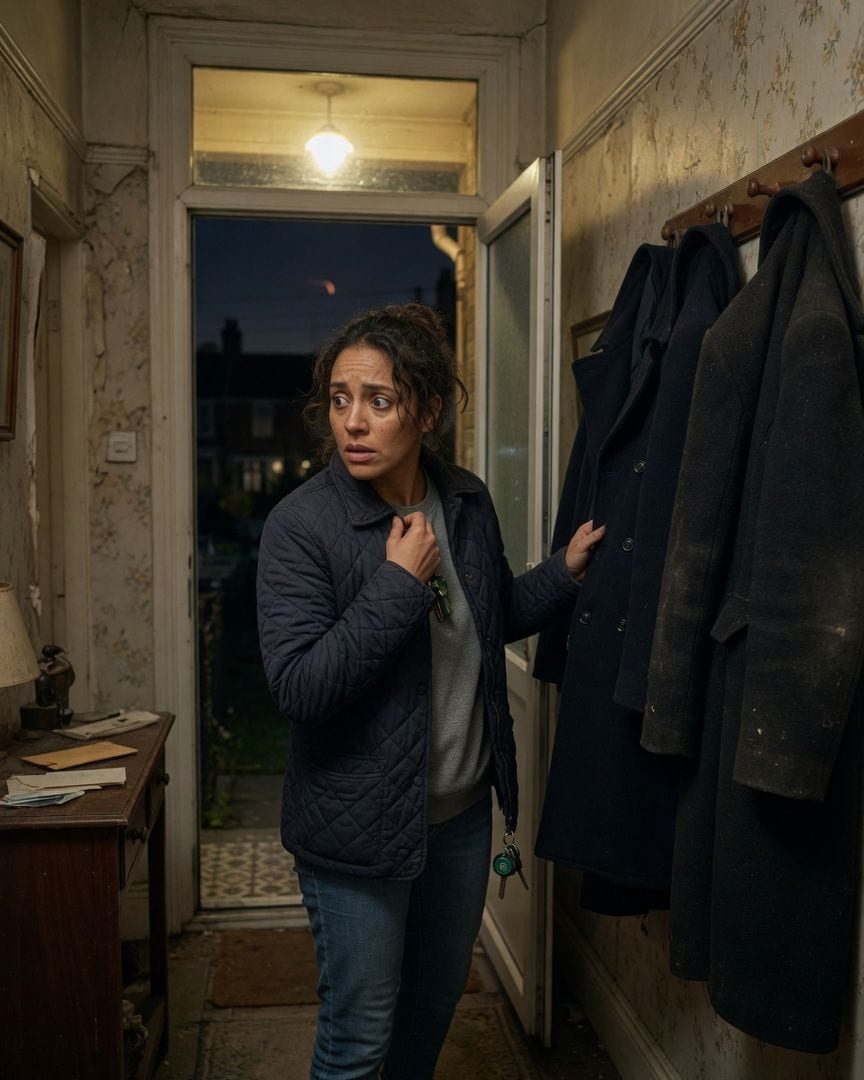
My tiled path was new, my front door green. Then three dark coats hung in my hallway.
After a late night watching the lunar eclipse, I returned to my Victorian house, only to find the path and front door inexplicably changed. Though the house seemed to revert to normal, strange things started appearing: a kettle warm from boiling, a distinct impression on my armchair. Then, an antique, lavender-scented handkerchief appeared on my bedside table, an undeniable presence in my private space.
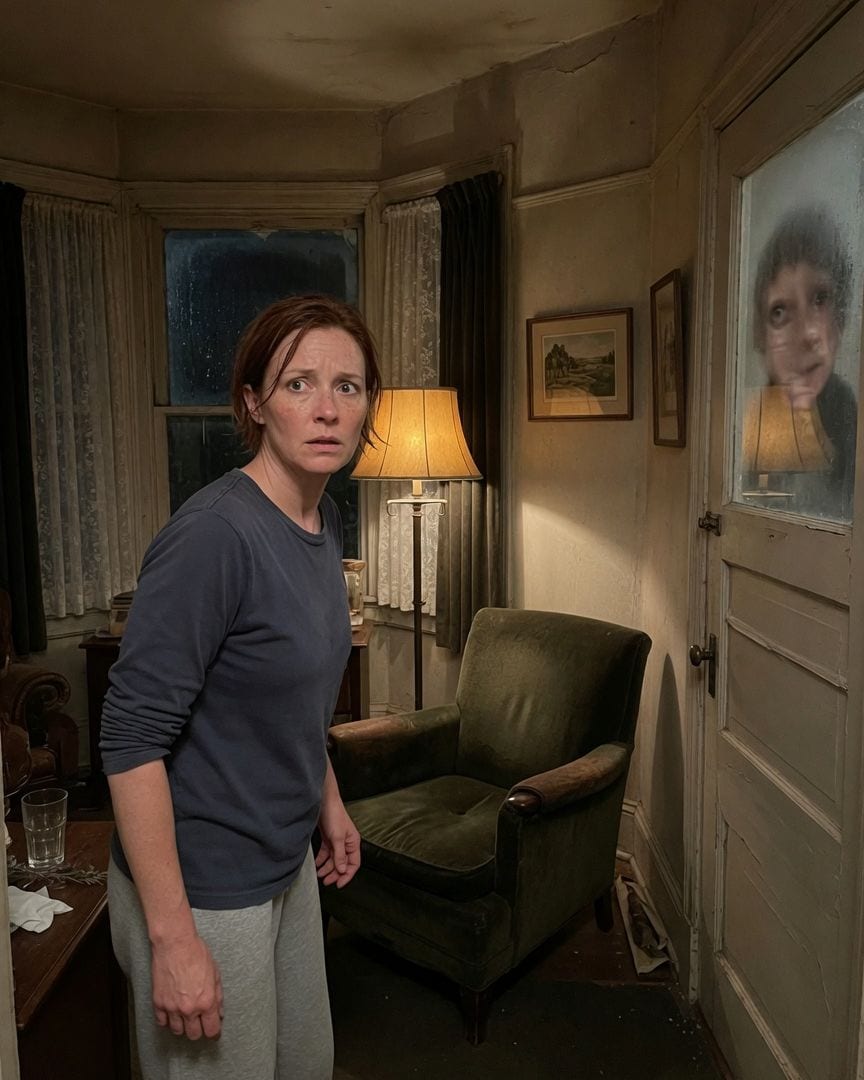
The armchair by the bay window was warm last Tuesday at 9pm. I’ve never sat in it, and the cushion was still settling from a weight that wasn't mine.
I bought this old house for quiet, and most days it's exactly what I needed. But there’s an antique armchair in the living room, deep green velvet, with a permanent hollow from years of use. I’ve never sat in it, yet last Tuesday, I found it radiating a distinct warmth, the cushion slowly settling as if someone had just left.
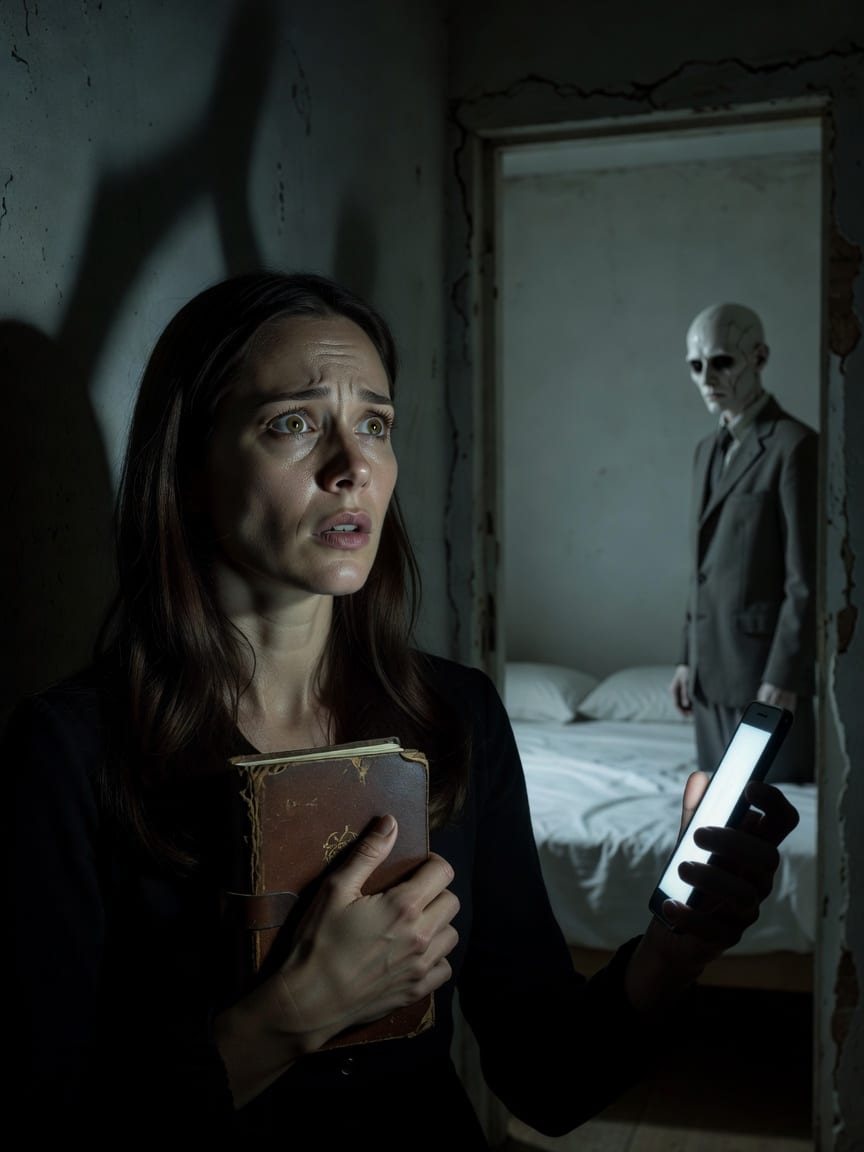
Behind a plastered-over doorway, I found a room. Papered, carpeted, and furnished with a made bed, sealed for decades. The air was dead still, but the bed wasn't dusty. My council tax bill only lists five rooms.
I'm Claire, an architect, meticulously planning my new Victorian terrace renovation. But when I uncovered a hidden room behind a wall, everything I knew about time and decay shattered. The bed was perfectly made, the air still, yet there was no dust, only an unnerving cold.
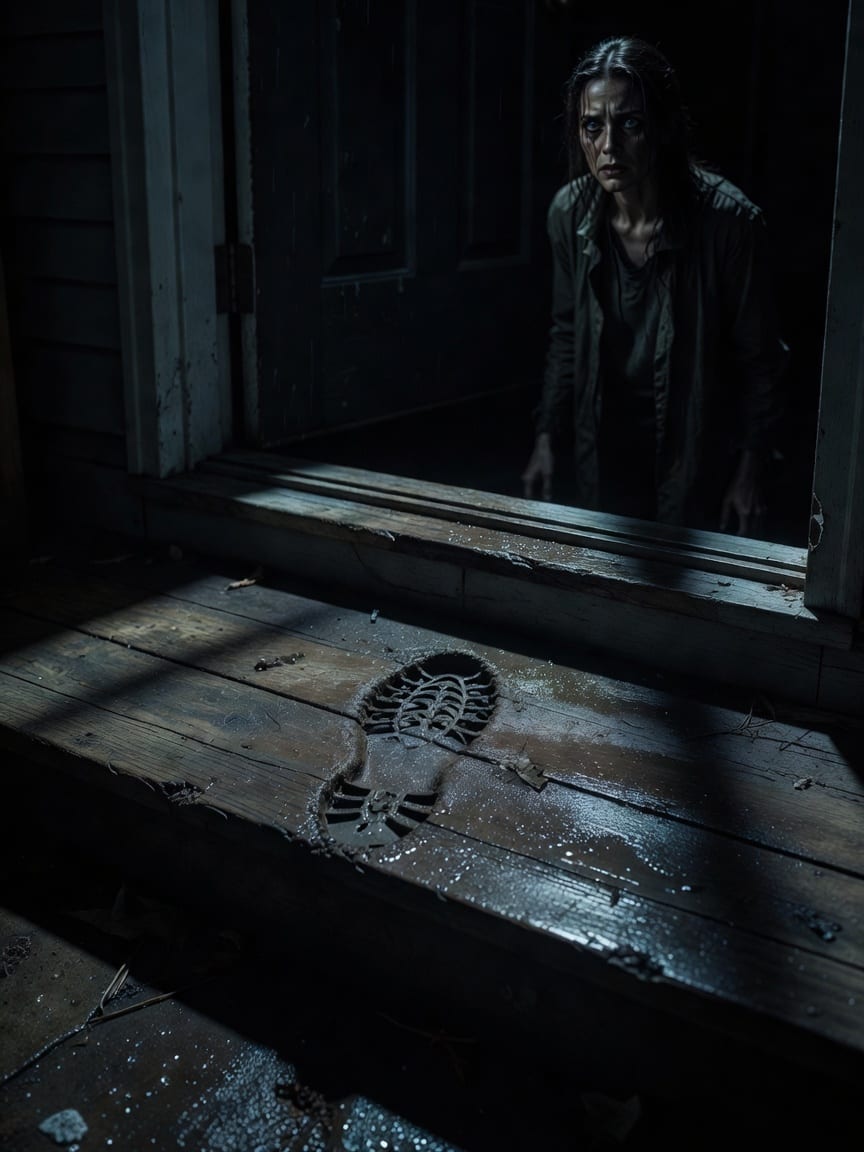
My landlord's only rule: never let the outside tap run after sundown. Last week it dripped. This morning, wet bootprints ringed the back step from the tap to my door, all the same size. The tap was off.
We'd just settled into Waterside House, with its strange landlord rule about the outside tap. After the washer broke, I found perfect, wet bootprints leading from the tap to our back door, but the tap was cranked completely off, tighter than I could manage.
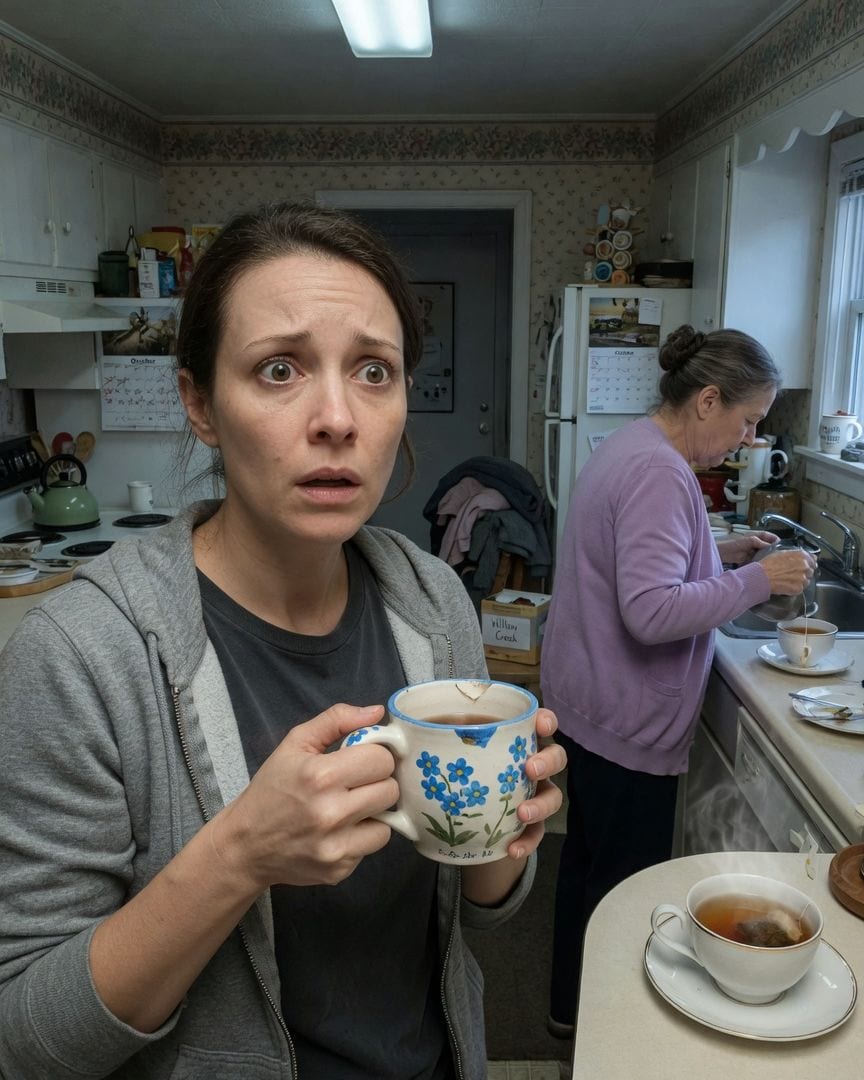
My mother came back remembering my secret childhood runaway night. She slept through it.
My mother returned from Willow Creek, after five days unaccounted for. She seemed herself, until she casually mentioned her lifelong preference for Earl Grey tea. But Mom, Judith Kingsley, had only ever consumed black coffee for sixty-eight years, calling tea 'dishwater drink.'
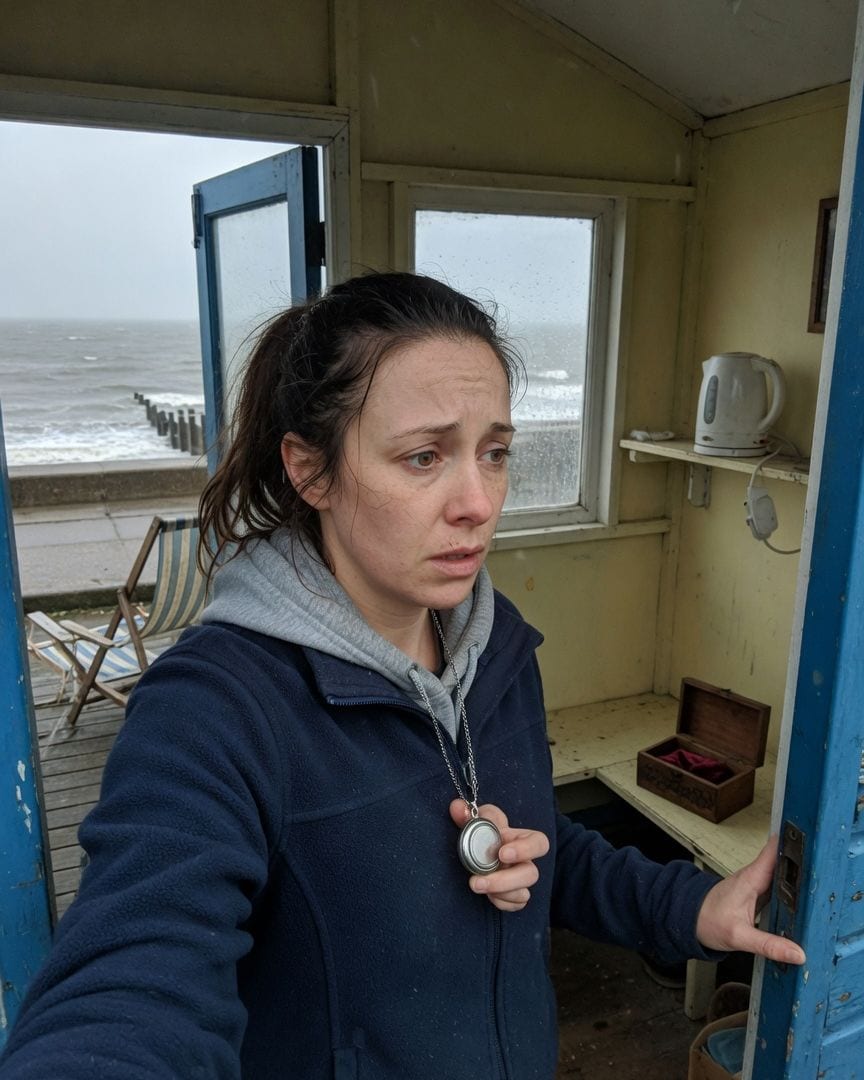
My beach huts run 1 to 60. On Sunday, past 60, was a Hut 61, weathered, with a kettle warm inside, and no record of it ever existing.
I've managed the sixty beach huts on the promenade for five years, knowing every detail. But one Sunday, a new one appeared: Hut 61. Inside, the air was warm and a kettle still steaming, as if someone had just stepped away, yet my booking book holds no record of it.