My dashcam footage showed my street change. For five seconds, my car drove on a road that doesn't exist on any map.
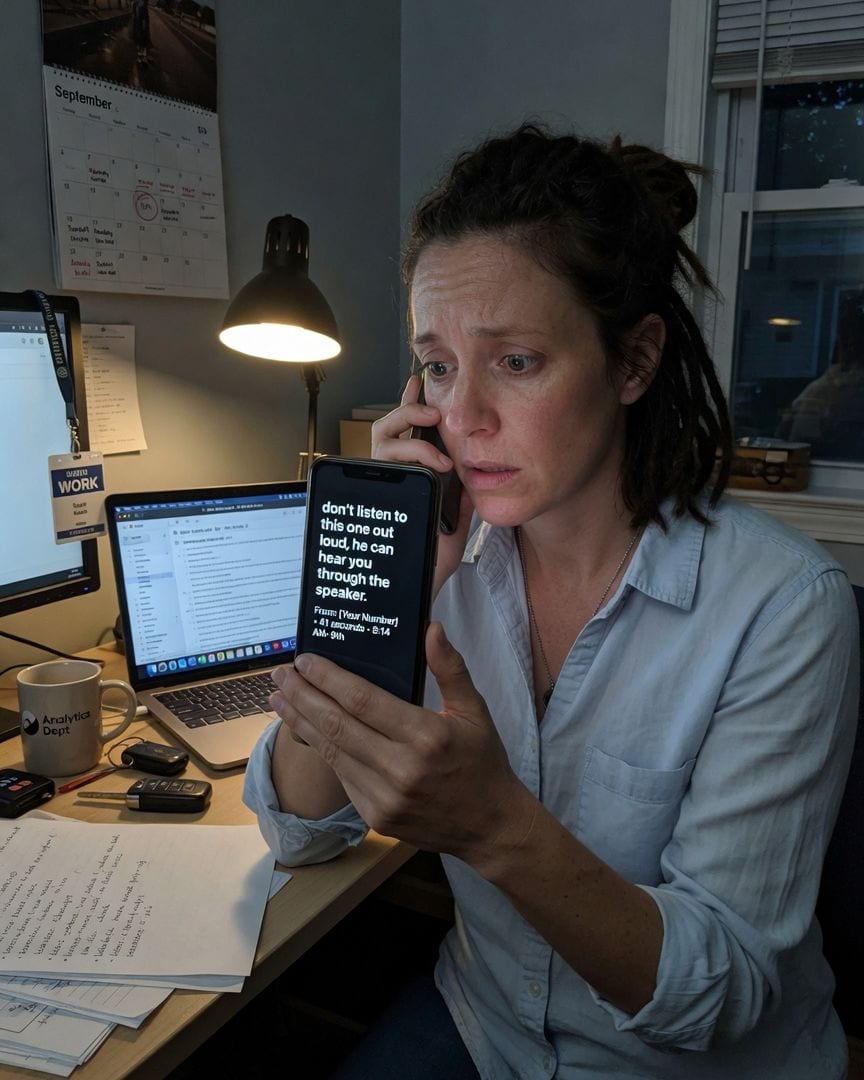
The first time I saw it, I was at my desk, scrolling through emails on my work phone. Just another Tuesday, the 9th of the month, like any other day. My phone buzzed with a notification: 'New Voicemail.'
I clicked it open, not expecting much. Probably a wrong number, or my bank trying to upsell me. But the transcription stopped me cold. It read: 'don't listen to this one out loud, he can hear you through the speaker.'
I read it again. And again. The voicemail was from my own number. My stomach twisted. I checked the timestamp; it was exactly 8:14 AM on the 9th, right when I’d been leaving for work. I tapped the audio file.
Forty-one seconds. I held the phone to my ear, then put it on speaker, turning the volume all the way up. Nothing. Absolute, dead silence. Not even a hiss. Just... nothing. For forty-one seconds.
I replayed it, then re-read the transcription. My own number. My work phone. ‘Don’t listen to this one out loud.’ But I had listened to it out loud, on speaker, even if it was silent.
And that phrase: ‘he can hear you through the speaker.’ It wasn’t a glitch. It was a warning. A specific, impossible warning.
Lunch break hit, and I spent it methodically trying to dismantle the impossible. This was my work phone, issued by the company, and I’m a data analyst. I deal in facts, in logic. This was neither.
First, I called my carrier. I spoke to a patient woman named Sarah, who confirmed, after a frustrating twenty minutes on hold, that there was no record of an outgoing call from my number at 8:14 AM on the 9th.
No unusual activity. She suggested it might be a spoofed number, but my voicemail registered it as my own. She had no explanation for that.
Next, I checked my phone’s detailed call logs. Nothing. No outgoing call. No incoming call that would have generated a voicemail from my number. It was as if my phone had called itself from a phantom version of itself.
I tried testing the transcription service. I called my work phone from my personal cell, left a garbled message about needing more coffee, and hung up. Within seconds, a new voicemail transcription popped up, perfectly translating my rambling. It worked.
Flawlessly.
Then I recorded a new message to myself directly on the work phone, just a quick ‘hello test.’ It played back fine. The transcription was spot on. I tried to delete the original, silent, impossible voicemail.
The ‘delete’ option was greyed out. Not available. It was fixed, a digital fossil embedded in my phone.
Convinced it had to be a corrupted file, some weird digital artifact, I emailed the silent audio file to my laptop. I opened it with a media player, speakers muted, just in case.
The playback bar moved, counting out forty-one seconds of nothing. But right there, above the file, the email transcription—pulled from the phone—remained, stark and specific. ‘Don’t listen to this one out loud, he can hear you through the speaker.’
Every mundane explanation—a prank, a glitch, a misdial—failed, one after another. They crumbled, leaving behind a cold, hard knot of dread in my stomach. It wasn’t a mistake. It was real. And it was waiting for me to understand.
Back home, agitated, I decided to check my car’s dashcam. Maybe it caught something on my drive to work on the 9th. A strange signal tower, a parked van with some elaborate spoofing equipment, anything.
I just needed one solid, tangible explanation. I pulled the SD card from the dashcam and plugged it into my computer, skipping through the morning commute footage from the 9th.
My usual route unfolded: Elm Street, then the familiar turn onto Maple. I watched my car pass Mrs. Henderson’s prize-winning rose bushes, then the old oak tree near the bend.
But just after the Maple turn, right where the row of bungalows usually starts, the familiar street abruptly shifted.
For a solid five seconds, the houses were different, vaguely 1970s architecture that didn't exist in my town, the trees alien and overgrown, the road surface a cracked, unfamiliar asphalt.
It was a place that did not exist, a stretch of nowhere, before the footage snapped back, jarringly, to my familiar drive down Maple Street, seamless and unbroken. Rose stares, frozen, at her dashcam screen.
The timestamp on the footage from the 9th is seamless, but for a solid five seconds, her car is clearly driving down a road that does not, cannot, exist on any map, before the familiar street abruptly snaps back into view.
The next few days blurred into a quiet obsession. The dashcam clip played on a loop in my mind. A road that didn’t exist. I uploaded the footage, trying every cross-referencing tool I could think of.
Google Maps satellite view, historical maps from the town planning office, even architectural archives. Nothing. The strange, low-slung houses with their deep eaves, the specific cracked pattern of the asphalt, the unfamiliar species of trees—they were nowhere.
I drove the route repeatedly. Each morning, I’d turn onto Maple, my eyes scanning the bungalows, searching for any hidden turn, any overgrown path, any abandoned lot that could account for that five-second shift. Nothing.
Maple Street was just Maple Street, mundane as ever. I even pulled over one afternoon, walking the exact spot where the shift occurred, tracing the curb with my foot. Just ordinary pavement, ordinary lawns.
The dread solidified: the footage wasn’t of a hidden place. It was of a non-place. A place that had briefly, impossibly, overlapped with my reality.
As I obsessively replayed the clip, frame by frame, I noticed a subtle detail in the background of the ‘nowhere’ footage. Faint, almost subliminal, a flicker of something metallic half-obscured by a dead, skeletal tree. An old, rusted sign.
I couldn’t make out the words, but the shape was distinct: a tall rectangle, slightly bent, facing away from the road. It seemed familiar, yet alien, like a half-forgotten memory.
My investigation led me to the local municipal archives, a dusty, quiet building downtown that smelled faintly of old paper and neglect.
I told the woman at the front desk I was researching obscure local planning records from the 70s, specifically any unbuilt roads or properties that might match a very specific, mid-century architectural style.
She pointed me to a back room, murmuring, "Kenneth will help you. He knows everything about the old stuff."
Kenneth Winslow, a man in his early seventies, sat hunched over a vast table, sorting through what looked like a century of tax records.
His spectacles were perched low on his nose, and his grey hair was thin but meticulously combed. He listened patiently as I described the architecture, the specific timeframe.
He didn’t look up from his work for a long moment, simply grunted. "Some things are better left uncatalogued, dear," he said, his voice a dry rustle, like the pages he handled.
He then mentioned, almost as an aside, a peculiar pattern of 'lost documents' related to certain geographical coordinates that "tend to resurface when people get too curious about empty spaces."
He finally lifted his head, and his gaze, when it met mine, was unnervingly calm. It held a depth of knowing that chilled me, as if he could see the impossible road I'd glimpsed.
He didn't ask what I was looking for, didn't press for details. Instead, he pulled a yellowed slip of paper from a pile and scribbled a cryptic call number on it. "Try this," he said, pushing it across the table.
"Old property survey. But some channels are best left undisturbed, especially if they carry your name." He looked at my nametag, then back at me, his expression unreadable.
Following Kenneth’s cryptic clue, I navigated the labyrinthine shelves of the archives. The call number led me to a section marked 'Restricted Access – Local Historical.' My heart hammered against my ribs.
There, tucked between an oversized map of the old industrial park and a collection of forgotten school board minutes, was a fragile, leather-bound ledger. The title, embossed in faded gold leaf, read: 'Caldwell Property Surveys - Restricted Access.'
My breath hitched. Caldwell. My name.
I opened it to the call number Kenneth provided. The pages crackled, smelling like dried herbs. Inside, among mundane land deeds and zoning maps from the 1970s, was a hand-drawn diagram from 1976. It showed my neighborhood, unmistakable.
Elm Street, Maple Street. But overlaying a specific intersection – the very one where my dashcam footage had shifted – was a faint, dotted outline labeled 'Zone of Anomalous Spatial Recording.'
A marginal note, dated '78, written in a tight, precise hand, read: 'Persistent temporal bleed-throughs. Caution: Auditory imprints on recording devices confirmed.'
I stared at the words, feeling a cold rush. Auditory imprints. Recording devices.
I brought the ledger back to Kenneth. His calm demeanor, usually so steadfast, cracked slightly. He peered over his spectacles at the diagram, his eyes tracing the dotted line.
"They called it a bleed-through," he murmured, his voice softer, laced with something like reverence. "A pocket of... elsewhere. It would sometimes overlap with our reality, for just moments. Like a photograph laid over another."
He explained that a small, local agency, the Caldwell Environmental Monitoring Bureau, was set up to observe it, unofficially. "It wasn't environmental, not really. It was... containment." The implication settled over me like a shroud.
The ‘nowhere’ in my dashcam footage was a real, documented phenomenon, and this obscure agency knew about it decades ago. They hadn't just known; they had monitored it.
"What about the 'auditory imprints'?" I pressed, my voice barely a whisper. "What does that mean?"
Kenneth hesitated, a long, drawn-out moment where the only sound was the building groaning around us, settling into its ancient foundations. He sighed, a weary exhalation that seemed to carry years of untold secrets.
He rose slowly, shuffling towards a locked wooden cabinet tucked behind his desk. The brass lock gleamed dully in the dim light.
He fumbled with a small, tarnished key on a chain around his neck, the metal scratching softly as he turned it.
He retrieved a thin, yellowed folder from the cabinet’s depths. It looked almost too fragile to touch. Inside, nestled among what looked like faded departmental forms, was a single document.
An internal memo from the Caldwell Environmental Monitoring Bureau, dated October 1978.
The title, typed neatly at the top, read: 'Protocol for Auditory Imprint Containment.'
My eyes scanned the text, paragraphs dense with scientific-sounding jargon that still managed to convey chilling clarity. It described the 'Zone' in more detail, how 'vocalizations' from within it could 'imprint' onto personal recording devices.
And then, the critical warning: 'Specifically, playing these imprints aloud is strictly prohibited due to potential speaker resonance and the associated risk of attracting Entity Designate: The Listener.'
'He can hear you through the speaker.' The words from my voicemail transcription echoed in my mind, perfectly aligning with the ancient warning on the page.
My gaze dropped to the bottom of the memo. Appended, in a slightly smaller font, was a section titled: 'List of Resonant Subjects.'
My breath hitched. The first entry, underlined, read: 'Caldwell, R. (female, age 32, observed 1976-1978, source of multiple imprints).'
Kenneth’s finger, gnarled with age, traced a line on the faded document, landing squarely on 'Caldwell, R.' Rose’s breath catches in her throat as the archivist looks up, his eyes holding a profound, ancient weariness, and quietly says, 'It's been in your family for generations, Rose.
A resonance.'
Kenneth, now fully resigned to the truth being out, explained it all. The Caldwell Environmental Monitoring Bureau wasn't just monitoring a spatial anomaly; it was tracking a specific genetic 'resonance' within the Caldwell lineage.
Certain members of my family, like the 'Caldwell, R.' listed in the memo—likely a distant relative, based on the age and date—possessed a unique sensitivity. They were, in Kenneth’s archaic words, 'channels' for the bleed-through.
Their personal recording devices, for reasons the Bureau never fully understood, were susceptible to picking up 'imprints' from 'The Listener.'
This entity, residing in the 'nowhere,' wasn't just an abstract presence. It was capable of sensing and attempting to cross into our reality through sound. Specifically, through the 'resonance' of a speaker playing an imprinted recording.
The voicemail wasn’t a glitch, Kenneth confirmed.
It was a desperate, pre-recorded warning from a past Caldwell, another 'R.' from my family, likely created during a moment of profound bleed-through, trying to save me from making the same mistake they had.
The silence of the audio file was crucial. It wasn't meant to be heard directly. The 'imprint' itself was the danger, the resonance embedded in the recording. Playing it aloud, even silent, had been the risk.
The transcription, which I’d read, was the intended message. It was a contained trace, a warning delivered just barely across the threshold.
But by actively investigating, by playing the silent recording on my phone speaker, on my laptop, even muted, I had amplified my own 'resonance,' drawing attention.
The rusted sign in my dashcam footage, Kenneth confirmed, was an old, defunct warning marker the Bureau had placed around the Zone decades ago, a physical trace of their long-forgotten containment efforts.
The full horror of the voicemail's warning, 'don't listen to this one out loud, he can hear you through the speaker,' crashed over me. I had listened, out loud, to nothing. And that nothing was now everything.
By actively investigating, by playing that silent recording even on mute, I had been amplifying my 'resonance,' making myself a beacon. Kenneth warned me that 'The Listener' was now aware. It would try to make contact.
Its methods were subtle, insidious, using any speaker or microphone it could access.
A frantic, cold dread gripped me. I thanked Kenneth, the words a strained rasp, and practically ran from the archives. My apartment, usually a haven, now felt like a deathtrap of potential conduits. I tore through it, unplugging everything.
The smart speaker in the kitchen, a wedding gift. My Bluetooth headphones, still paired to my laptop. The smart display on my nightstand, the one that showed photos and streamed music.
Every device, every connection, suddenly felt like a gaping maw, a welcome mat for something I couldn't comprehend.
My phone, my laptop, my smart TV—all became potential routes of entry. I ripped the Ethernet cable from my router, then yanked the power cord from my kitchen smart display.
As the screen flickered and died, a faint, distorted whisper emanated from its dying speaker. It was a voice that sounded eerily like my own, but with a gravelly, alien undertone, as if struggling to form the words.
It said, 'You listened. Now I hear you.'
I live in a new, enforced silence. All smart devices are gone, every speaker in my home disabled or removed. My television is an old, disconnected relic.
My laptop and work phone sit in a Faraday cage I bought online, wrapped in layers of aluminum foil and placed in a metal box. I use an old flip phone for calls, keeping it on vibrate, never on speaker.
I try to explain it to my brother, Brandon Caldwell, but my story sounds like a descent into paranoia. He dismisses it as stress, a symptom of working too hard.
The world, for the most part, simply moves on, oblivious to the thin veil between realities.
Rose Caldwell was last seen entering her apartment building on the evening of the 23rd. Her brother reported her missing two days later.
The apartment was found devoid of all modern electronics, every speaker ripped from its housing, a strange, metallic box containing a laptop and phone sat on her desk. The police found nothing unusual.
Her social media profiles remain active, though she hasn't posted since the 23rd.
She still gets calls from her own number, silent. Sometimes, the transcription just reads: 'Hello, Rose.'
If this one got to you
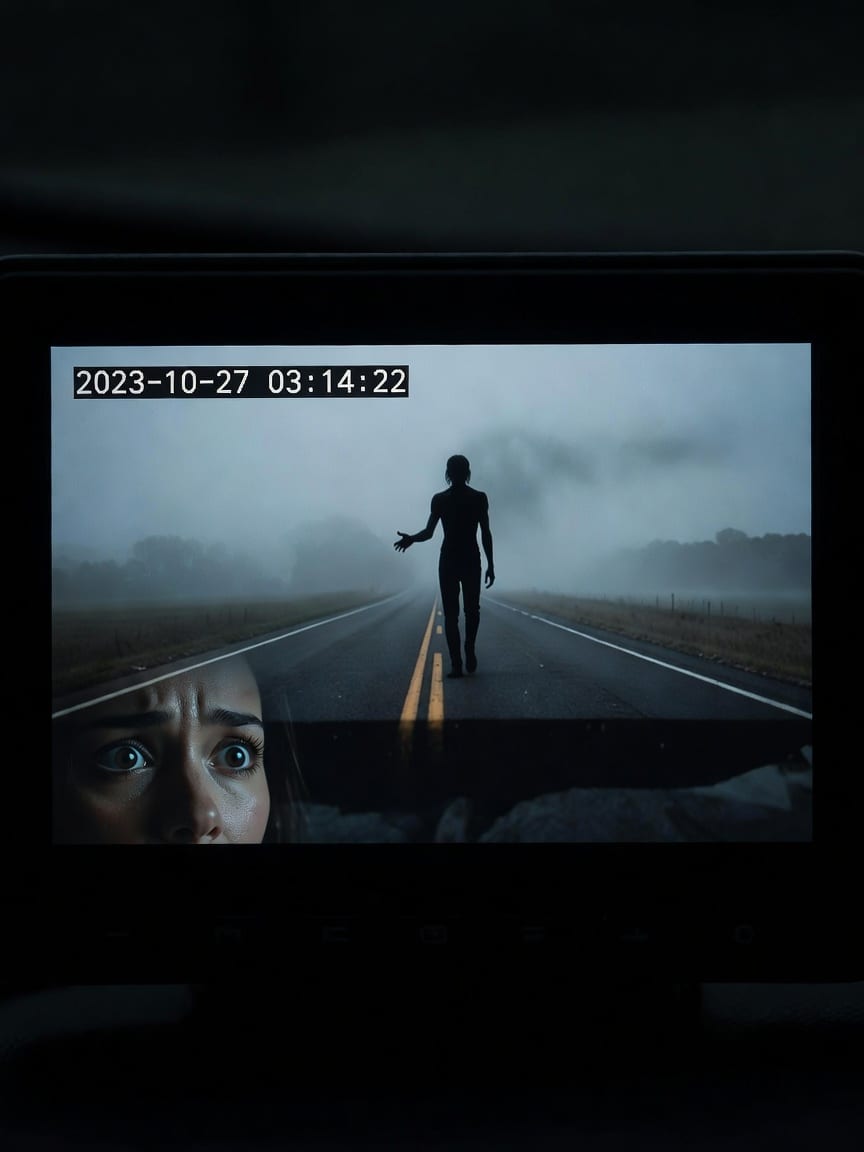
My dashcam mic caught me humming on a long night drive. Under my voice, a second hum kept time, in the same key. It stopped when I stopped. It was always already there when I started again.
My new dashcam was just a quiet companion on the long, dark drive home. But when I reviewed the footage, a quick flicker in the video stopped me cold. For three seconds, my car was driving smoothly down a paved road complete with yellow lines—a road that simply wasn't there.
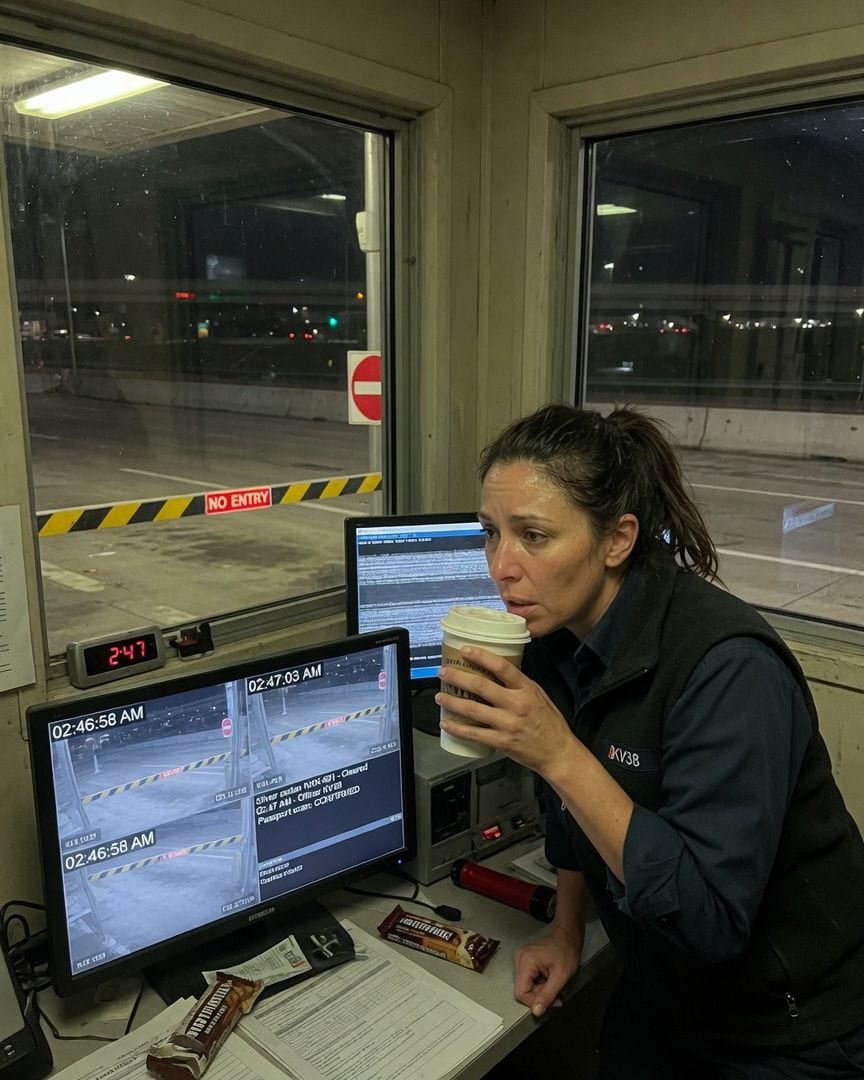
My lane's barrier was down, but my log cleared a car at 2:47 AM. With my code.
Working the quiet overnight shift at the Vance-Romano land crossing, I expected only routine system logs. Instead, a new entry showed a silver sedan cleared northbound through my Lane 3, stamped with my officer code. The issue: my lane had been closed and locked all night, and I hadn't seen a single car pass. Then I discovered the external camera feed for those crucial seconds was simply gone.
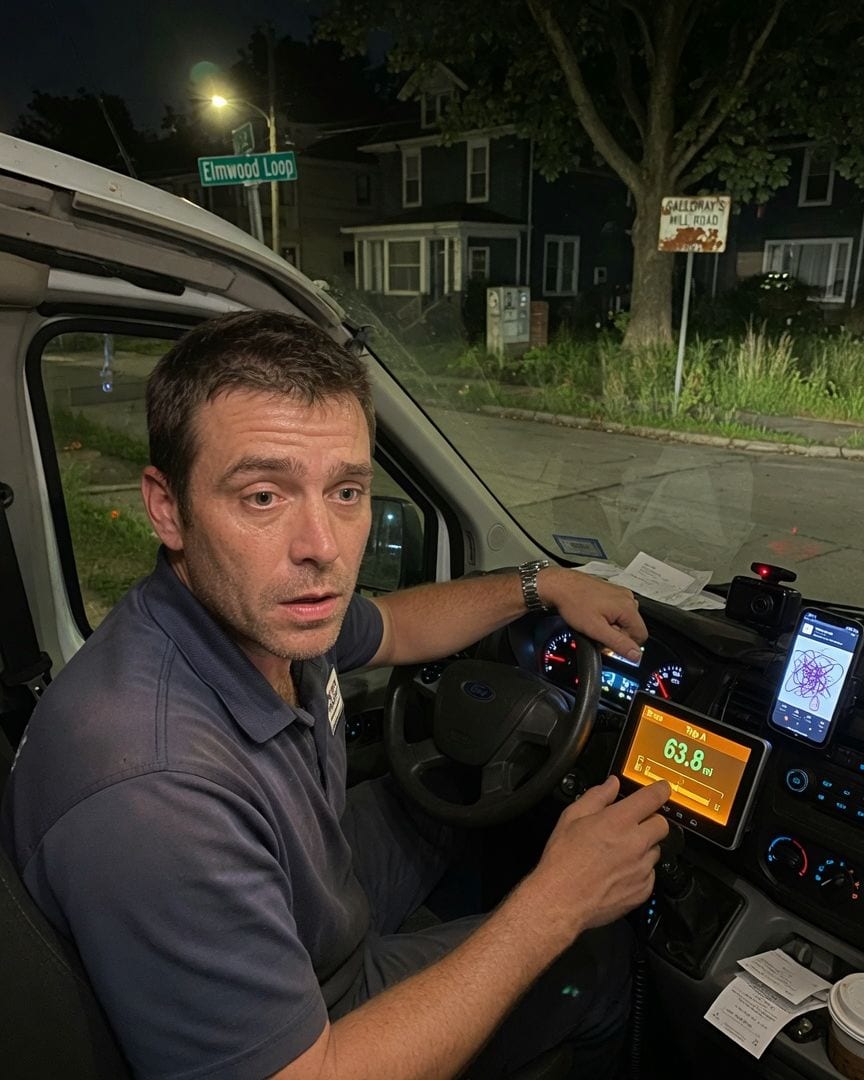
My delivery van's fuel gauge dropped a quarter tank on the Elmwood loop last night. It logged sixty-three miles, a loop I can walk in ten minutes.
I know my routes and my van, but the Elmwood Loop was different. My GPS app showed me standing still on the street, even as I walked for miles, my colleague confirming I hadn't moved. The impossible location left a blank, grey spot on the map.
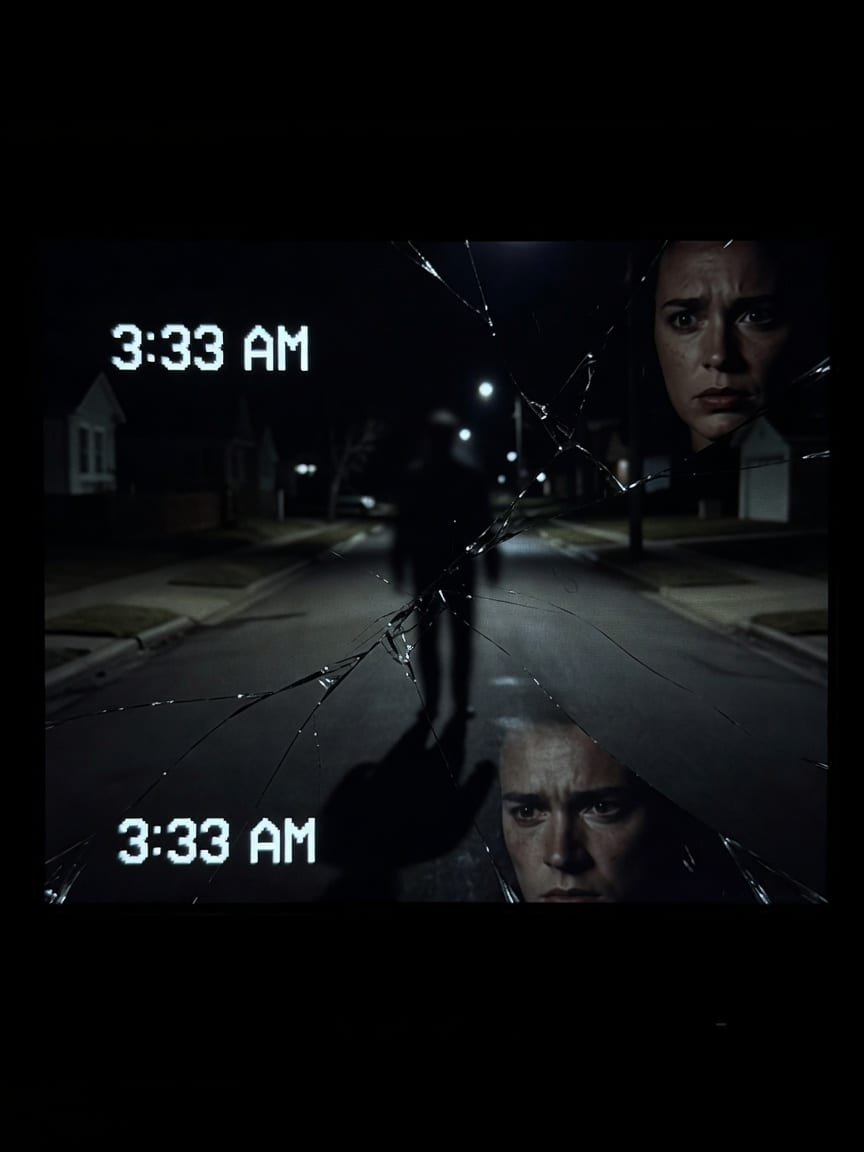
Every night at 3:33 a.m., my dashcam records the same empty street. But in each clip, the figure at the far end is one house closer to mine.
My quiet street should be empty at 3:33 a.m. But for five nights, my dashcam captures a blurred figure at the far end of the block. It isn't moving within the clips, but each day, it stands one house closer to my home.
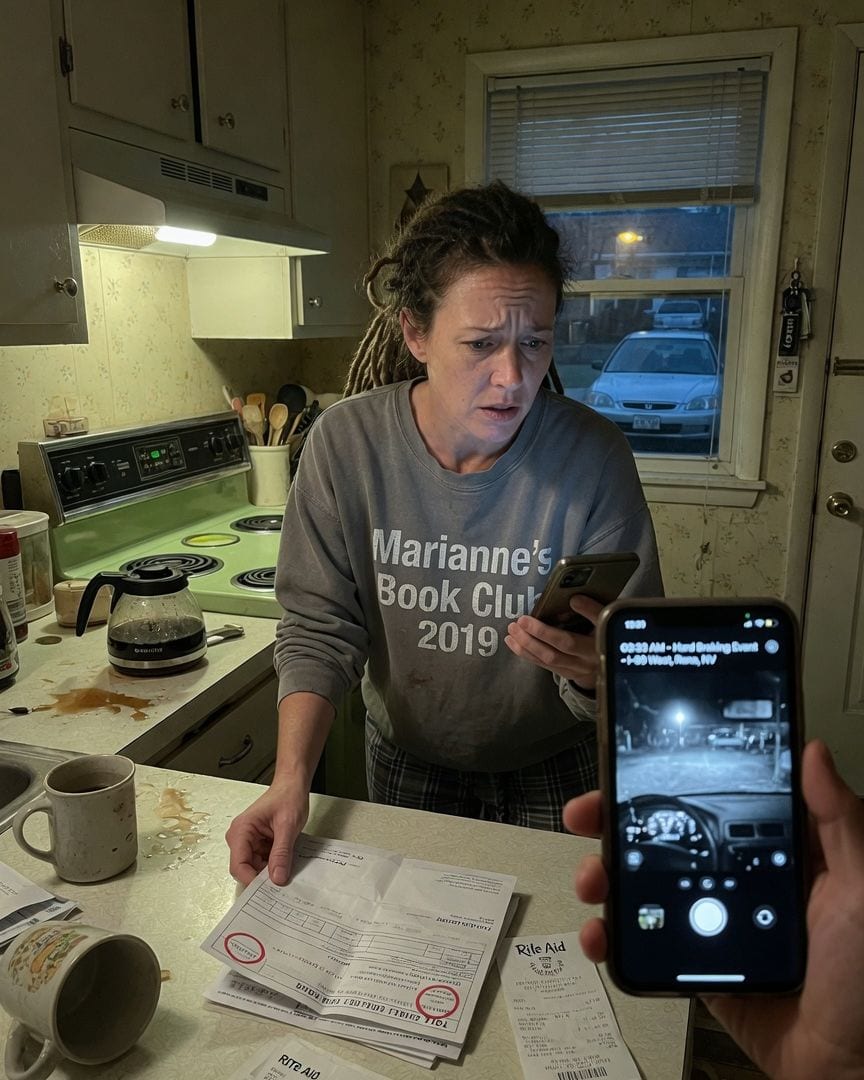
My car's dashcam just flagged a hard-braking event outside Reno at 3:33am. I was asleep in my mother's house, keys on her hook.
Making coffee in my mother’s kitchen, my car’s dashcam pinged an alert for a hard-braking event on I-80 West, outside Reno, at 3:33 AM. That was impossible; my beat-up Honda Civic was safely parked in the driveway, exactly where I'd seen it an hour earlier. Yet the grainy night-vision footage clearly showed my dashboard, unmistakable, hundreds of miles away.
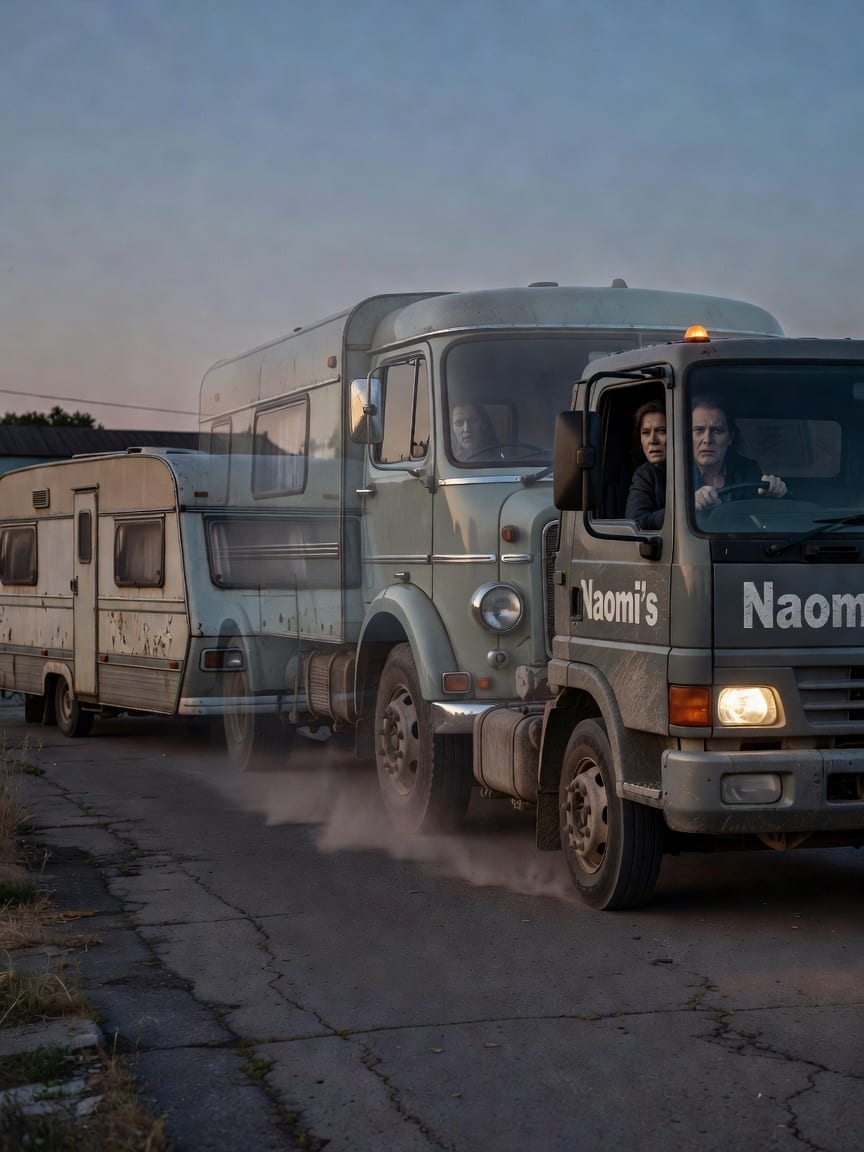
My dashcam shows the same parked caravan scrolling past eleven times in forty minutes. The timestamp advances. The mileage advances. The caravan never moves, and neither, it seems, did I.
I was on my usual lorry route, my dashcam humming, when I passed the old caravan in the lay-by. Five minutes later, I saw it again – the exact same lay-by, the same peeling blue paint. My dashcam timestamp advanced, my odometer clicked over, but the road kept repeating.