My delivery van's fuel gauge dropped a quarter tank on the Elmwood loop last night. It logged sixty-three miles, a loop I can walk in ten minutes.
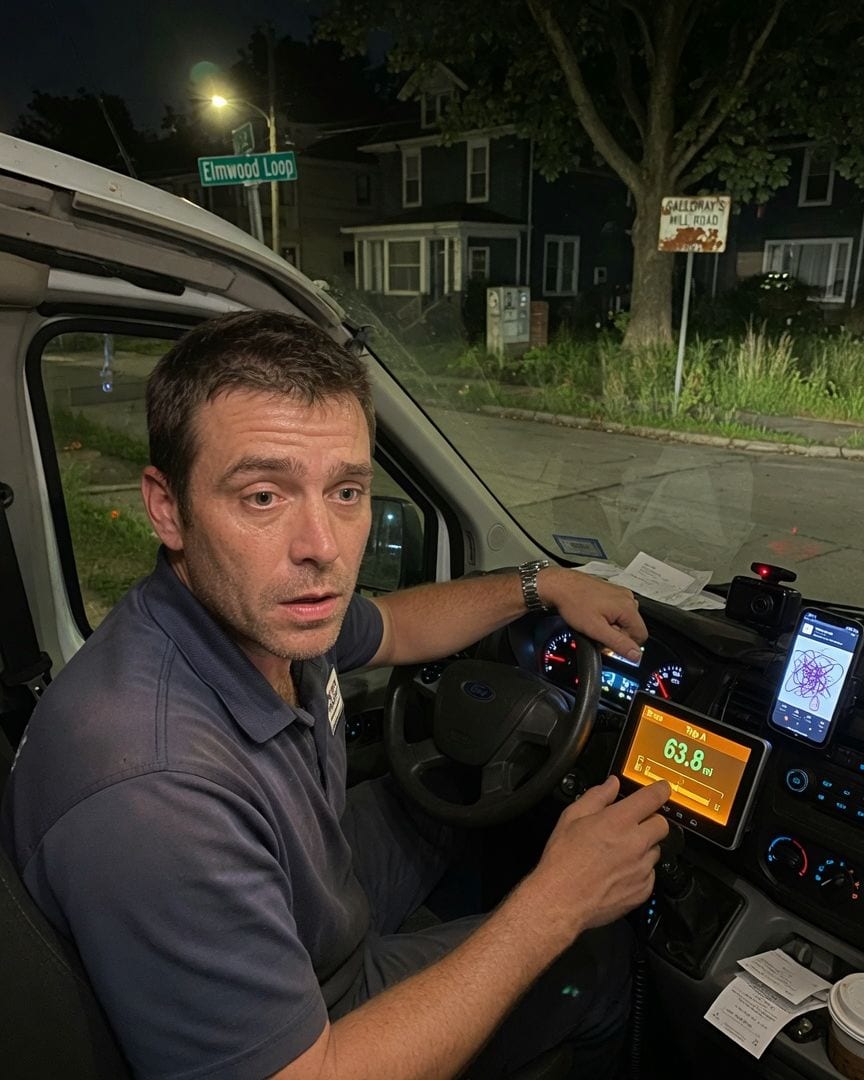
The numbers didn't make sense. I’d just finished my usual evening run on the Elmwood Loop, a small residential street on the edge of town.
It’s maybe half a mile around, takes me ten minutes to walk it if I’m really sauntering. My delivery van, a beat-up Ford Transit, sips fuel, especially on a short hop like that.
But when I pulled into the depot, the fuel gauge needle had dropped noticeably – almost a quarter of a tank. My trip computer, which usually clocks mileage to the decimal, flashed 63.8 miles. Sixty-three miles. On the Elmwood Loop.
I stared at it for a good minute, then tapped the display, convinced it was a glitch. Faulty sensor. Overheating. Something. I restarted the van, the gauge jumped slightly, then settled back to its impossible reading.
The fuel light hadn't even flickered, but a quarter tank was a quarter tank. I know my routes, and I know my van. I’ve driven that loop a thousand times. The memory of the drive was hazy, a little disorienting.
Had I been tired? I remembered seeing the "Elmwood Loop" street sign more than once. Maybe three times? That was normal on a short loop. But now, thinking back, it felt like more.
A strange echo in my memory, like watching the same commercial too many times.
I tried to rationalize it away. Maybe I’d picked up a phantom signal, a GPS blip, or the sensor was just on its last legs. But the quiet certainty of the arithmetic gnawed at me. Sixty-three miles. A ten-minute walk.
The numbers refused to reconcile, sitting there on the display like an accusation. I knew what I had to do. I’d go back tomorrow night, after my shift, and prove it was nothing. Just a broken sensor.
Or maybe, just maybe, I needed new glasses.
The next evening, I parked a block away from the Elmwood Loop. My phone was mounted on the dash, running a GPS tracking app, and my personal dashcam, usually reserved for road trips, was angled to catch the street signs.
I took a deep breath, and started the van. This time, I paid attention. Every turn, every house, every crack in the pavement. It was quiet, residential. Just a regular street.
But as I drove, a familiar unease began to creep in. The "Elmwood Loop" sign, painted on a small wooden post, appeared. I noted it. Then, a few moments later, there it was again. A different angle, same sign.
I slowed down, frowning. I swore I’d just passed the big oak tree on the corner. Now, there it was again. And again. I gripped the wheel, my eyes flicking from the road to the dashcam screen.
It was recording, the red light solid. The GPS app was ticking away, logging my position. I passed the oak tree for what felt like the fifth time in a minute.
The streetlights started to hum, a low, vibrating drone that seemed to fill the quiet street.
Later, safe in my driveway, I reviewed the footage. My hands were shaking slightly. The dashcam feed showed me driving past that same specific oak tree, not five times, but seven times within a span of forty-five seconds.
The timestamps on the footage weren't right either. They skipped, then repeated, like a broken record, creating a temporal echo where seconds were recycled. I pulled up the GPS log. It was a mess.
The van wasn't moving in a neat circle. It was a jagged scribble of impossible zig-zags, sometimes showing my vehicle perfectly stationary for minutes, even as the video clearly showed me driving forward.
I tried to plot the recorded data on a map, but it formed an incomprehensible tangle, a knot of overlapping lines that defied all geometry. The map program kept spitting out errors.
I typed "Elmwood Loop strange mileage" into Google. Nothing. No news, no local quirks. Then I tried "Elmwood Loop lost road" and found an obscure local history blog.
Under a post about old town boundaries, there was a single, archived comment, from years ago, by an account called 'Old Mill Hand': "Elmwood's lost road, a place that never stays put. Best left alone."
The following evening, I wasn't just driving. I was walking, phone in hand, GPS running. Russell Mercer, my colleague, was a block away in his own van, ready to call if my tracking app showed me doing anything weird.
He didn’t have to wait long.
"Lars?" Russell’s voice was strained through the phone, crackling with static that made the hairs on my arms stand up. "What are you doing? My phone says you’re not moving, man. You’re just… standing there on Elmwood Street."
But I was moving. My feet were hitting the pavement. I was walking, step by step. The disorienting repetition was back, stronger this time.
The same crack in the sidewalk, a distinct, star-shaped fissure, passed under my left foot, then my right, then my left again, far too quickly. I paced. I counted my steps.
I knew I’d covered more than a mile, maybe two, in a straight line, but Russell insisted I hadn't budged. He was watching his screen, sounding genuinely freaked out.
Frantic, I pulled up my own GPS app. It wasn't tracking me at all. Just a blank, grey spot on the map, an impossible location. My heart hammered against my ribs.
I looked up, spinning slowly, trying to reorient myself in the repeating landscape. And then I saw it.
Through the passenger window of my van, which I'd left parked by the curb, half-buried in a tangle of overgrown weeds, was a rusted, archaic signpost. The paint was almost entirely flaked away, but a few faint, black letters remained.
'Galloway's Mill Road'. A place that hasn't existed for seventy years, wiped clean off every modern map.
The old signpost for Galloway's Mill Road haunted me. It wasn't just the rusted metal or the impossibility of its presence; it was the name. My name. Galloway.
I tried to push it aside, but it clung to my thoughts like burrs. The next day, I didn't drive my usual routes. I spent hours online, digging. Old town records confirmed the mill's demolition decades ago.
The land, once a sprawling property around a grist mill, had been absorbed into what was now the Elmwood Loop residential area.
I found faded blueprints, their property lines confusingly drawn, a peculiar, almost jagged boundary right where my repeating loop seemed to manifest.
The internet wasn't enough. I needed physical records, maps. I drove to the town’s small historical society, a quiet brick building that smelled of old paper and dust.
Inside, I found Eileen Walsh, a sharp-eyed woman in her seventies with wispy grey hair, volunteering as an archivist. I explained the discrepancies, carefully omitting the dashcam footage and the GPS tangles.
"Just some weird mileage," I said, "and a street that seems to go on longer than it should."
Eileen listened, her expression unreadable. Not skeptical, not believing, just… watching. Her eyes, magnified by thick glasses, seemed to bore right into me. She led me to a tall, oak cabinet filled with ancient, hand-drawn survey maps.
Her fingers, gnarled with age, traced a section of the Elmwood area. "Some places," she said, her voice low, a dry rustle like turning pages, "have a way of forgetting themselves, or being forgotten on purpose."
She pointed to a faint, spidery inscription on one map, right by the peculiar boundary line: 'Mill site – known for 'ghost roads'.'
My throat felt tight. "Ghost roads?" I asked, a prickle of unease spreading down my spine.
Eileen shook her head, her gaze distant. "Old folklore. Nothing for a modern man to worry about." But her eyes, though, they told a different story. They were too knowing, too calm.
I couldn't let it go. I returned to the archives every day for the next few days, picking at Eileen. I asked about disappearances, about anything unusual connected to the old mill site. She remained tight-lipped, but her demeanor shifted.
She started giving me subtle warnings, her voice always quiet, almost conversational, but with an edge that raised the hair on my neck. "Some things are better left buried, Mr. Galloway.
The past has a way of repeating itself if you dig too deep." She’d pause, her eyes sweeping over the quiet, dusty room, as if checking for listeners.
The room itself seemed to hold its breath, the old wooden floorboards groaning underfoot like something sighing.
One evening, after leaving the archives, I found a crumpled, anonymous note tucked under my windshield wiper. It was a cheap, yellowed paper napkin, the kind you get from a diner.
The handwriting was shaky, almost illegible, but the message was clear: 'STOP LOOKING. LEAVE ELMWOOD ALONE.' I scoffed, crumpling the note in my fist. A prank. Or maybe Eileen's subtle way of warning me off, escalating her message.
But the dread, a cold, persistent knot, settled in my stomach anyway.
Later that night, as I was trying to sleep, my phone vibrated. Unknown number. I picked it up, expecting Russell, but the text message was short, blunt. 'The loop knows when it's being watched.' My heart hammered. This wasn't Eileen.
This was different. A cold sweat broke out on my forehead.
I got out of bed, dressed, and drove. Not to Elmwood Loop, not yet. Just a general route, trying to clear my head. But I couldn't resist.
I found myself driving past the Elmwood Loop again, this time without stopping, just rolling by slowly. It was late, past midnight, the streetlights casting long, distorted shadows. And there it was.
In the deepening twilight, above the asphalt, I saw it—a faint, almost imperceptible shimmer in the air, like heat haze rising from hot pavement, but the night was cold. It wavered, a distortion in the very fabric of reality.
I felt a profound sense of being observed, not by a person, not by an animal, but by the very space itself. The street, the air, the darkness. It was watching me.
Convinced now that I was being targeted, that whatever was happening was far beyond faulty sensors or old folklore, I drove straight back to Eileen’s house, not caring that it was past nine.
She lived in a small, neat bungalow near the archives. The porch light was on. She opened the door, her eyes widening slightly when she saw my face. I showed her the crumpled note, described the text message.
My voice was hoarse.
Her calm facade finally cracked. Her lips thinned, and she led me inside without a word, past a sitting room crammed with books, and into a back room.
It was another archive, dustier than the public one, smelling faintly of mildew and forgotten things. She pulled out an old, brittle photo album and a stack of yellowed newspaper clippings tied with twine.
The air in the room felt heavy, dense, as if resisting the light from the single bare bulb.
"This isn't folklore, Mr. Galloway," she said, her voice barely a whisper, an ancient rustle. "This is history."
She slid a yellowed clipping across the table. Mid-Century Disappearance Shocks Elmwood. The date was 1950. It detailed the sudden, inexplicable disappearance of several local residents who had been picnicking near the old mill site.
The article mentioned 'an inexplicable spatial anomaly' and 'a road that led nowhere,' a detail I’d dismissed as florid journalism at the time.
Another clipping, from 1975, described a similar incident: a car found abandoned on a 'stretch of road that seemed to extend endlessly.'
Eileen pointed to details in the articles. The 'disorienting repetition,' the 'feeling of lost time,' the 'impossible mileage.' The fuel gauge, the trip computer, the repeating street signs—every clue, every impossible detail now clicked into place with terrifying precision.
It wasn't a glitch. It was a pattern. The realization hit me like a physical blow.
"The loop isn't just a road," I said, my voice hoarse, barely audible over the thumping in my ears. "It's… a trap."
Eileen nodded slowly, her gaze fixed on the old clippings, her eyes mirroring some ancient sorrow. "And it comes back, Mr. Galloway. Always. Especially when someone starts to notice it." The silence that followed was louder than any scream.
The truth hung in the air, heavy and cold. The door to the archive room, which she had left ajar, suddenly creaked shut with a soft click, as if the room itself was sealing us in.
Eileen’s hand trembled as she slid the aged photo across the table. It was a group of people from the 1950 picnic, the one from the newspaper clipping.
Sunlight filtered through the leaves of what looked like the oak tree I’d seen so many times. Several faces were circled in red. “These are the ones who vanished,” she whispered, her voice thin, fragile. “Local families.
Most of them never found.”
My eyes immediately locked onto one face. A young man, smiling faintly, standing near a dirt road that looked eerily, sickeningly similar to my Elmwood Loop. He was holding a small, hand-carved wooden bird, clutched in his left hand.
The sight of it sent a cold, sickening lurch through my gut. I recognized the man's features, the set of his jaw, the way his hair fell across his forehead. It was him.
Or rather, it could have been him, perfectly. A ghost from the past, staring back with my own face.
I looked down, my gaze dropping to the faded, handwritten name beneath the photo. 'Patrick Galloway.'
My breath hitched. The room, the world, seemed to spin on its axis. Patrick Galloway. My own family name. Staring back at me from seventy years ago, a victim of the very loop I was caught in.
I wasn't just investigating a recurring horror. I was part of its history.
I stared at the photograph, my own face, my own name, an echo across seventy years. Eileen placed a hand on my arm, her touch surprisingly firm.
"The anomaly," she explained, her voice gaining a quiet authority, "it’s not random, Mr. Galloway. It's tied to a nexus point, a specific energy, perhaps from a past trauma at the old mill site. And it doesn't just 'trap' people.
It seeks them out. People with a connection to the land, to the original families, they become… anchors. Catalysts."
She revealed that the Galloway family had a deep, ancestral tie to the mill property, going back generations. Patrick Galloway, my great-uncle, was one such anchor, pulled into an earlier cycle, absorbed by the loop. Eileen’s gaze was unflinching.
"Your interest, Mr. Galloway. Your presence. It's not just curiosity. It's activating the loop. You're drawing it in, just like he did."
My mind raced, every impossible detail snapping into place. My van’s fuel, the impossible mileage, the repeating street signs – the loop wasn't just a place.
It was a parasitic entity, feeding on the time and energy of those it pulled in, perpetuating itself through a terrifying cycle of recurrence.
The 'lost road' wasn't just folklore; it was a manifestation, a physical symptom of this deeper, recurring fold in reality. Every clue, every impossible discrepancy, now made a terrifying, coherent sense. I wasn't just an observer.
I was the next iteration of the cycle. I was an anchor.
Armed with Eileen’s grim knowledge, I knew I had to break the cycle. Or at least this iteration of it.
She handed me something small, heavy, and cold: an antique brass compass, its glass yellowed with age, an old family heirloom that had belonged to Patrick Galloway.
"He thought it could help him navigate impossible places," she said, her voice thin. "The key is to find the true nexus point within the loop, the 'still center' where the fold originates."
I drove back to the Elmwood Loop. My hands gripped the steering wheel, the compass digging into my palm.
As I entered the loop, the familiar disorientation began, the street signs repeating, the world around me subtly blurring at the edges. The van’s engine note seemed to deepen, to hum with an almost vocal strain.
The compass needle, which had been spinning wildly, suddenly locked. It pointed due north, then shifted, slowly, deliberately, pointing towards a specific, unassuming patch of overgrown weeds by the roadside.
The same spot where the old 'Galloway's Mill Road' sign had appeared.
I parked, the van shuddering as if resisting, and got out. The shimmer in the air was more pronounced now, almost a visible distortion, like a heat haze on a cold day.
The air grew cold, heavy, pressing in on me. I felt the loop's resistance, a disorienting pressure pushing me back, whispering thoughts of endless repetition, of giving up.
The faint, high-pitched whine that had been a subtle background noise became a roaring presence in my ears. I pushed through it, step by agonizing step, towards the nexus point.
I concentrated, focusing all my will on breaking the pattern, on unraveling the fold. I planted the compass firmly in the ground at the very center of the weeds, its brass case glinting in the faint light.
The ground shuddered beneath my feet, a deep, resonant rumble that vibrated up my legs. The shimmer intensified, flaring outwards, then collapsed inward with a sound like tearing fabric, like a hundred bedsheets ripping at once. The roaring stopped.
The world snapped back into place, sharp and clear. The impossible repetition ceased. The loop was gone, leaving behind only an ordinary, slightly overgrown patch of roadside. Just another street.
The Elmwood Loop is just a regular street again. My van’s fuel gauge reads correctly now, the needle firmly where it should be, and the trip computer logs normal mileage.
The old 'Galloway's Mill Road' sign is gone, vanished with the anomaly, leaving only a small, disturbed patch of earth. Eileen Walsh simply nodded when I told her what had happened, a weary understanding in her eyes.
The antique compass, she said, was lost to the earth, part of the process.
I feel a profound exhaustion, a sense of having been stretched thin, then snapped back into place. The knowledge of what I faced, what I am, settles deep within me.
I try to resume my normal delivery routes, but the world feels subtly different. I notice details I never did before, small inconsistencies in the landscape, a tremor at the edge of my vision.
I still drive my routes, still deliver packages, but my eyes are open now.
I see the faint, almost imperceptible blurs at the edge of my vision, the moments when a street sign seems to waver or a familiar building appears slightly off-kilter, a shadow stretching too far.
The Elmwood Loop is quiet, but the world isn't. I know now that the spaces that forget themselves aren't confined to one street. I’ve learned to spot the subtle tell-tales, the tiny geometric lies hidden in plain sight.
I drive past a stretch of highway I’ve done a thousand times, and the exit sign for 'Larkin's Crossing' seems to stretch, just for a moment, an inch too far to the left, and the feeling of endless road washes over me like a cold wave.
He knows it wasn't the only one. He knows he’s seen it before.
If this one got to you
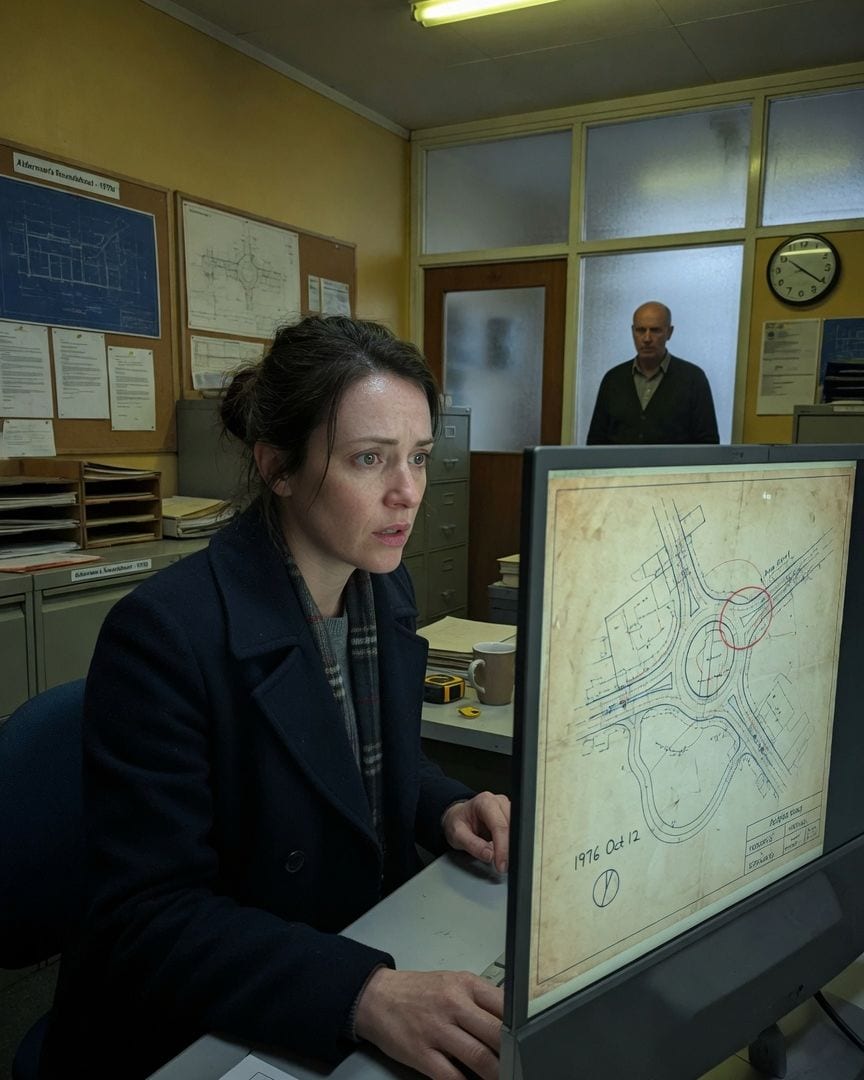
My roundabout exits kept returning me to the start, fuel dropping with each lap, the same flagpole turning past my window.
Driving home, I took a familiar exit off the Alderman's roundabout, a route I'd driven hundreds of times. But the curve felt wrong, and each exit I took poured me back onto the same island, adding miles to a journey that hadn't happened. My instruments later confirmed the road itself was a Möbius strip.
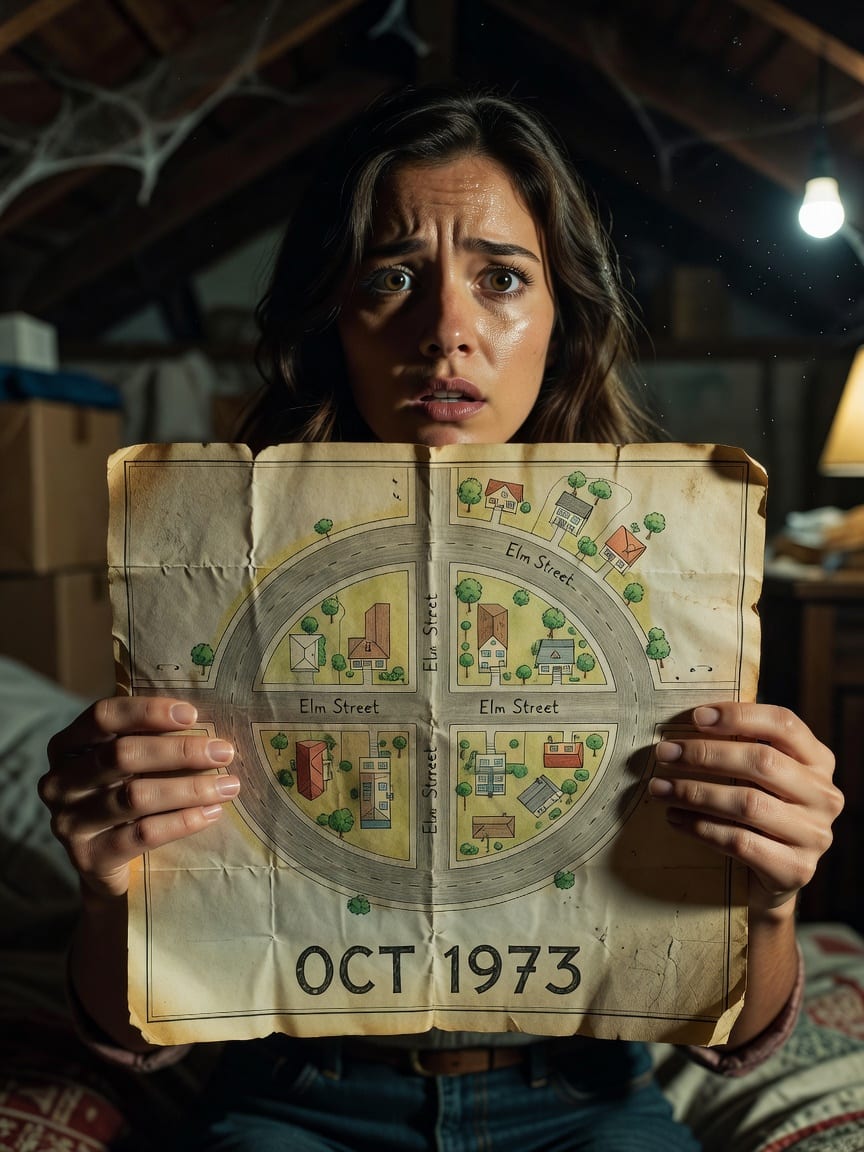
Our removal van's tracker logged 71 miles, looping back to our old flat. The men swore they unloaded somewhere. The map showed only the same postcode, over and over.
We were moving to our new house on Elm Street when the van's GPS tracker showed our movers circling our old address for 71 miles. I dismissed it as a glitch, until I found an old journal in the attic. Inside was a hand-drawn map of Elm Street, labeling our new road as an impossible loop, dated 1973.
My dashcam footage showed my street change. For five seconds, my car drove on a road that doesn't exist on any map.
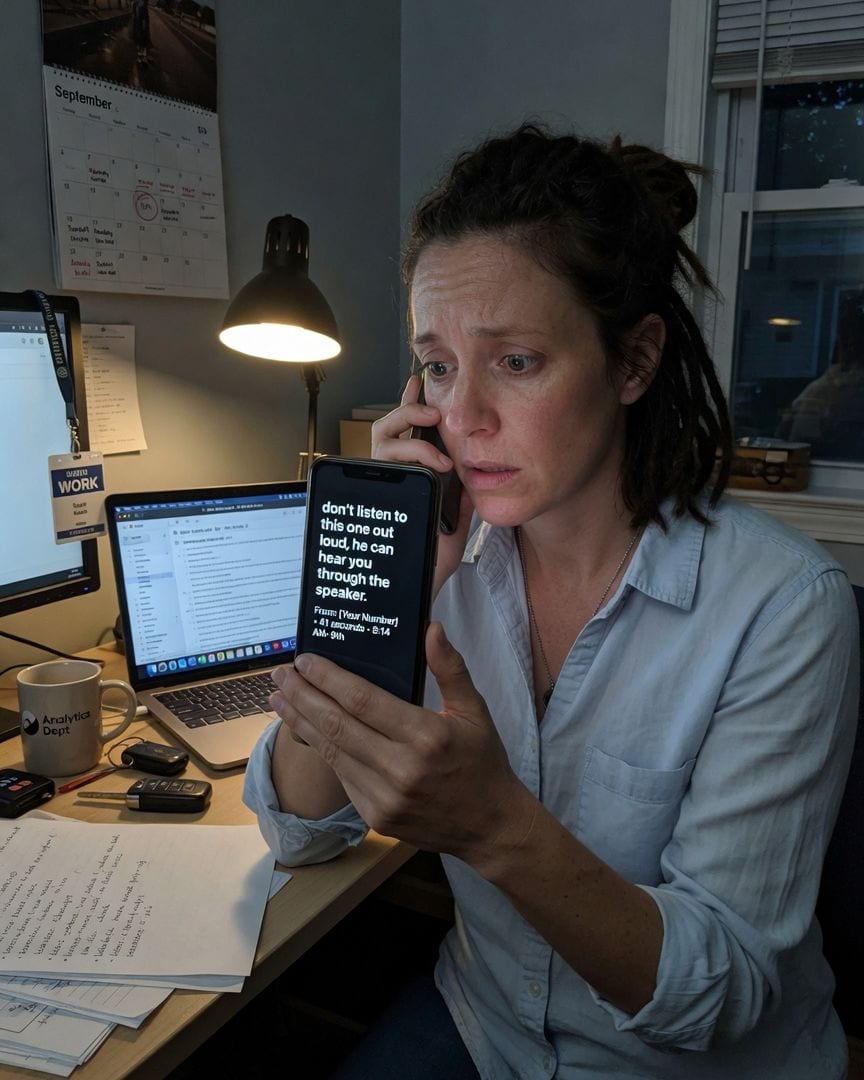
It was a normal Tuesday until my work phone received a new voicemail. The transcription warned, 'don't listen to this one out loud, he can hear you through the speaker.' But the message was from my own number, and the audio was forty-one seconds of absolute, dead silence.
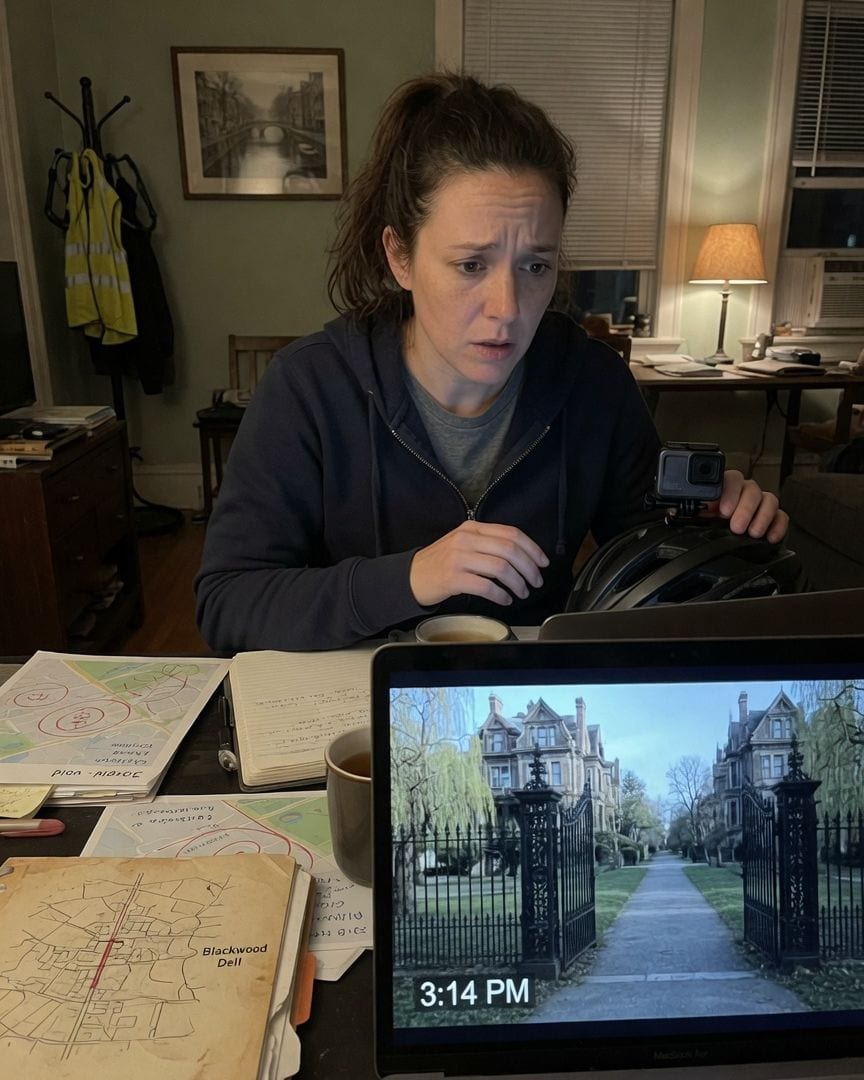
My bike camera shows a long avenue of tall gated houses. That road isn't on any map I can find.
My bike camera is usually just for practical facts, recording every detail of my rides. But when I reviewed Sunday's footage, a thirty-second segment showed something impossible: a long, silent avenue lined with grand, unknown houses. This road appeared exactly where my familiar canal path should have been—and it isn't on any map.
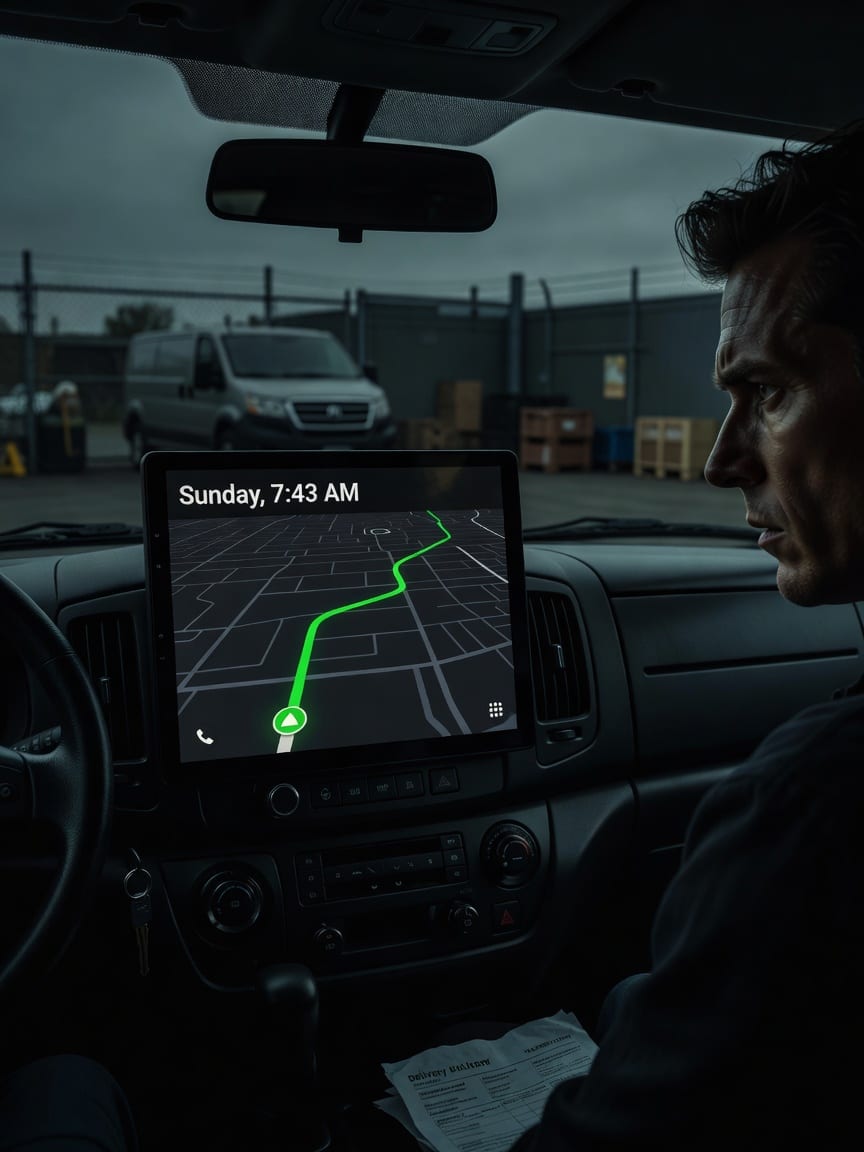
My delivery van drove 130 miles last Sunday, stopping for four hours in another state. It never left our locked yard. The GPS log drew the whole trip, timestamped to the minute.
I was just doing my job, sitting in the dispatch office with my manager Joel, when he pulled up the GPS log for my delivery van, Unit 74. It showed a 130-mile round trip to Delaware, engine on for four hours, with a distinct stop, all while my van was locked in the yard and I was home. The camera footage confirmed it hadn't moved an inch, yet the system insisted it had traveled hundreds of miles.
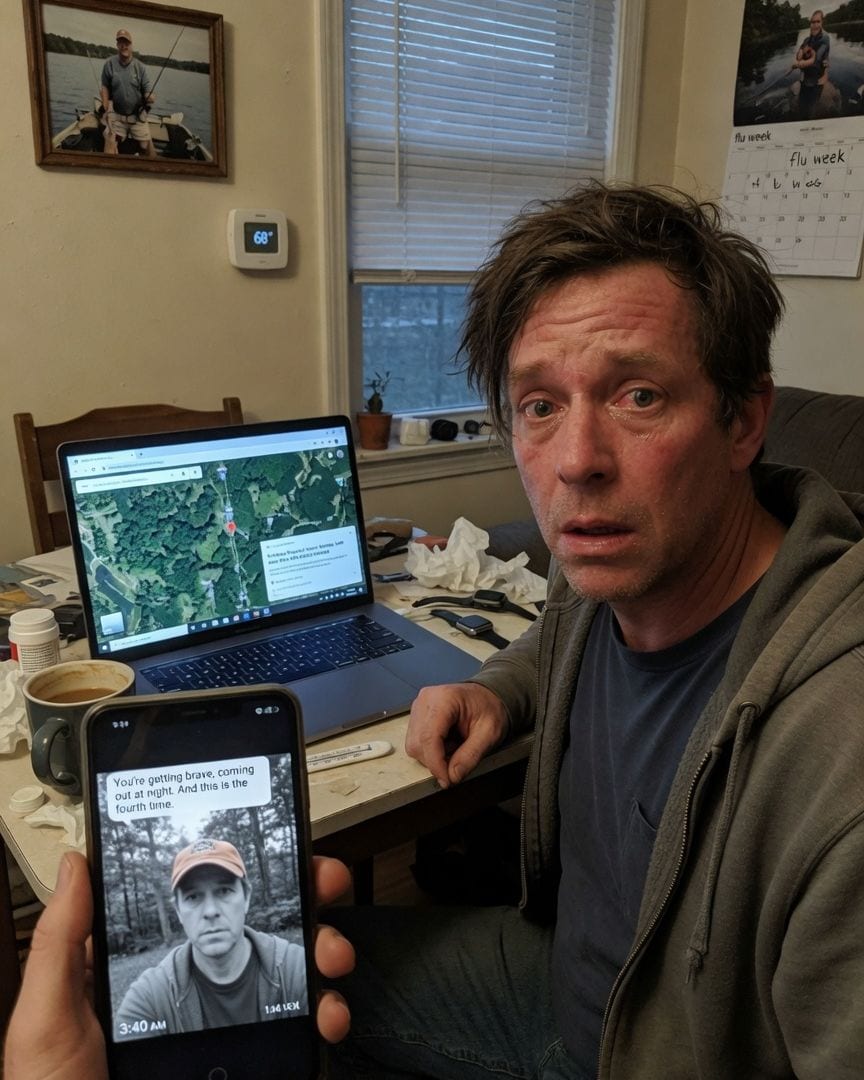
My brother-in-law's camera caught my face in Montana at 3:40 AM. I was asleep in Ohio, but it's the exact orange cap I lost, and he's seen me there four nights running.
I was just making coffee when my brother-in-law sent a photo from his Montana hunting land. It showed my face, wearing my lost baseball cap, timestamped 3:40 AM. I was home in Ohio, sick in bed, and hadn't been to Montana in years. And this was the fourth time.