My roundabout exits kept returning me to the start, fuel dropping with each lap, the same flagpole turning past my window.
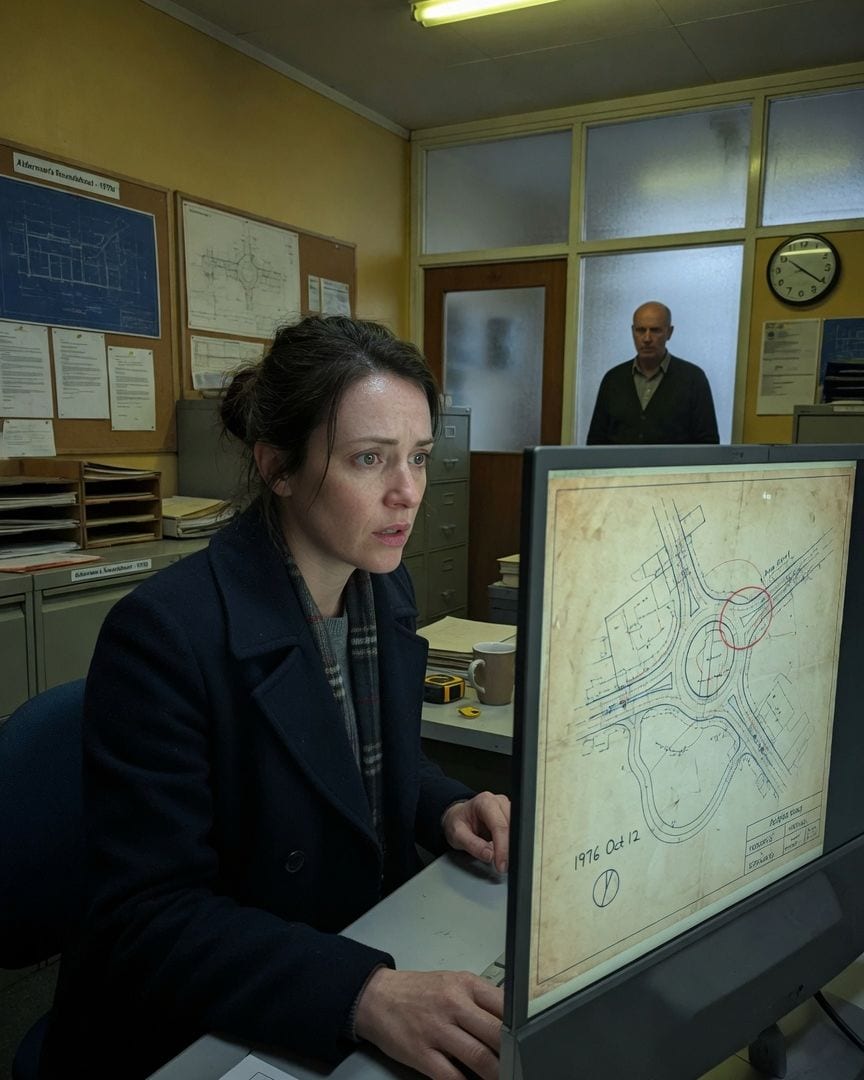
Sunday evening, driving home after visiting my sister, I took the third exit off the Alderman's roundabout. It was the quickest way to the ring road, a route I’d driven hundreds of times.
But the curve felt wrong, tighter than I remembered, or maybe just... sharper. Before I could process the thought, the familiar central flagpole was turning past my window again.
The same exit sign, ‘Ring Road East,’ loomed ahead, its green lettering stark against the darkening sky.
I hadn’t left.
A quiet chill, the kind you get when the air conditioning hits just right, settled over me. I’d seen this before in poorly designed GPS systems, a momentary glitch.
So I took the fourth exit, a different spoke of the wheel, confident it would correct itself. But the same flagpole, the same sign, swung into view. Again. My foot hovered over the accelerator. This was impossible.
Determined, I tried the fifth exit. Each one poured me back onto the same island, the same brick-red flagpole, the same ‘Ring Road East’ sign. My fuel gauge, usually a steady needle, ticked down with each lap.
The digital clock on the dashboard, too, was advancing, proving I was moving, going somewhere, but never leaving.
Each pass was identical, the faded paint on the kerb, the slight tilt of a streetlight, the exact number of leaves on a low-hanging branch.
I gripped the steering wheel, trying to rationalize it: a momentary disorientation, maybe I was more tired than I thought. A trick of the light, a series of identical signs.
But the mileage counter on my car, usually a comforting proof of distance covered, quietly mocked me. It added kilometers with each lap, numbers accumulating for a journey that hadn't happened. The dread wasn’t panic, not yet.
It was a cold, logical certainty that the numbers simply did not add up, and my senses were lying to me.
The next morning, the sun felt too bright, too normal. I returned to the Alderman's roundabout. This time, I was on foot, equipped with a laser measuring tape, a contractor’s wheel, and a handheld GPS device.
As a civil engineer, my first instinct is always to measure, to quantify, to prove. I meticulously walked the perimeter, charting each exit, each curve, each visible landmark. My instruments, reliable tools of my trade, confirmed the impossible.
The third exit, the one that had trapped me, registered as a full, conventional road—but its geometry, when plotted against the rest of the roundabout, subtly, impossibly, led back to the roundabout’s entry point.
It wasn't just a curve; it was a Möbius strip rendered in asphalt. The space itself was lying, and my tools were confirming its lie.
Determined to find a mundane explanation, a forgotten construction flaw, a historical oddity, I drove to the local planning office. It was a brick building, smelling faintly of old paper and dust. I requested old maps of the Alderman's roundabout.
Desmond Crane, the archivist, a man in his mid-fifties with perpetually tired eyes that seemed to have seen too many decades of dusty records, seemed unusually hesitant.
He chewed on his lower lip for a moment, his gaze lingering on my face a beat too long, before nodding slowly.
"We have digital archives now, mostly," he said, his voice a low rumble. "Easier than lugging out the old parchment." He led me to a public access terminal, provided a temporary login, and walked away without another word.
I scrolled through decades of street plans, feeling a growing unease. Every digital layer of the roundabout looked perfectly normal, a standard traffic circle. Then, I found a map dated from the late 1970s.
I zoomed in on the roundabout, focusing on the third exit. There, a section was subtly different.
Its lines were a fraction off, almost as if a 'ghost' road was sketched beneath the current one, or a piece of the geometry was missing.
It was like looking at a drawing where the artist had corrected an initial, impossible stroke, but hadn't quite erased the original.
I leaned closer to my screen, my breath catching. The 'ghost' road on the old map wasn't just subtly off; it was impossible, a line that began and ended in the same place without forming a circuit.
My finger traced the digital lines, confirming what my eyes now understood. This wasn’t a mistake; it was a deliberate impossibility. I zoomed in further, pushing past the digital layers, past the standard cartographic symbols.
In the faded margin, next to the impossible geometry, I saw it: a tiny, handwritten notation. A date, ‘1976 Oct 12,’ decades old, scrawled beneath a faint, almost erased symbol I couldn't quite decipher.
It looked like a stylized, broken circle, a loop that didn’t quite connect. The date was exactly 47 years to the day from my own impossible loop.
The chill I’d felt on the road returned, sharper, colder, as I stared at the screen.
Driven by the unsettling discovery, I began to research the ‘1976 Oct 12’ date and the cryptic symbol. My first stop was the local historical society, a quiet building that smelled of beeswax and aging paper.
I hoped for insights into old cartographic practices or local folklore that might explain a ‘broken circle’ symbol. The curator introduced me to Samuel Bishop, a retired cartographer in his early seventies, who volunteered there.
Bishop had eyes like chipped flint, sharp and assessing. After a long, silent look, he spoke of 'old local tales' about certain paths that 'shifted with the seasons,' dismissing them as quaint superstitions.
He seemed wary, his gaze drifting to the society's archives, a wall of tightly packed shelves. When I pressed him on the symbol, he just shook his head, a tight line to his mouth.
"Not in any standard cartographic code I know, dear. Just someone's doodle, I expect." His refusal to engage felt like a wall, not an explanation.
Undeterred, I delved into the historical society's news archives, cross-referencing the date. Page after page, microfilm humming under fluorescent lights, until I found a small article from the local paper, dated October 13, 1976.
The headline read: 'Alderman's Roundabout: Brief Misalignment Causes Traffic Snarl.' My blood ran cold. The article described a 'peculiar surveying error' that caused a section of the road to 'briefly misalign,' creating minor confusion before being 'corrected.'
It was dismissed as an isolated incident, a 'local curiosity.' The official explanation sounded almost identical to the rationalizations I had tried to apply to my own experience. It felt too quick to dismiss, too eager to normalize the impossible.
The words felt carefully chosen, a practiced casualness.
I continued digging into the 'misaligned road' incidents, searching online forums and digitized local records from various municipal databases. Most results were standard traffic reports.
Then, I found a cached version of a deleted forum post from eight years prior, titled 'Anyone else experienced the road that returns?' The original post had been taken down within hours of being uploaded.
The few replies before deletion spoke of disorientation, of "déjà vu on the drive home." No one had definitive answers, just shared confusion before the thread vanished.
Later that afternoon, sitting in a quiet coffee shop, reviewing my notes, the glowing screen of my laptop reflecting in the window, I caught sight of Desmond Crane.
He was at a table across the room, hunched over a cup of coffee, seemingly reading a newspaper.
But his reflection in the window seemed to track my movements, his eyes, usually tired, now held a glint I hadn't noticed before. A shiver, colder than any air conditioning, ran down my spine.
I closed my laptop, tucked it into my bag, and left. He didn't follow.
Later that evening, an anonymous email landed in my inbox. The subject line was simply 'Roads.' The body contained only three words: 'Let sleeping roads lie.' It was untraceable, sent from a burner account. No return address, no digital footprint.
I stared at the screen, the glowing words a stark warning. The unease was no longer abstract; it was personal, a subtle pressure closing in, like a tightening knot in my stomach. Someone knew what I was doing.
Someone was watching.
The next morning, the knot in my stomach was still there when I confronted Desmond Crane in his quiet office at the planning department. The air in his office was thick with the scent of old paper and stale coffee.
I laid out the old map with its impossible geometry, the faded notation, and the 1976 newspaper article. My hand, I noticed, was steady.
"This isn't a surveying error, Desmond," I stated, my voice clear despite the tremor in my chest. "And it’s not an isolated incident."
Desmond’s tired eyes flickered from the map to my face, then back to the map. He picked up the newspaper article, smoothed it with a thumb. "Ms. Reynolds, these old reports… they're often full of local gossip, misinterpretations.
You know how the press can sensationalize." He tried to dismiss it again, citing 'historical inaccuracies' and 'local folklore.' The air in the room felt heavy, almost resistant to my words.
But I pressed. "I experienced it myself. The Alderman's roundabout. The third exit. My fuel gauge dropped, my clock advanced, the mileage counter added kilometers, and I was just… looping.
It felt like I was driving through a ghost, and the numbers proved it." I leaned forward slightly. "And then there’s this." I tapped my phone, showing him the anonymous email. "'Let sleeping roads lie.'
Someone sent that to me last night. Someone knows what I'm digging into."
Desmond sighed, a long, weary sound that seemed to pull the oxygen from the room. He ran a hand through his thinning hair. The composure he’d held so carefully began to fray.
"There are… geometric inconsistencies," he finally admitted, his voice low, barely audible. He didn’t meet my gaze, instead looking at a stack of neatly organized files on his desk. "They've been reported for decades. Always dismissed, always rationalized.
But internally, we track them."
He leaned back in his chair, the leather creaking faintly. "These 'inconsistencies' aren't random. They're a known, unfixable property of the land. Something… inherent. The planning office has been quietly managing this for generations." He paused, taking a slow breath.
"The symbol you found on the map? The broken circle? That's a specific internal code. A 'fold zone' designation. It marks points where the geography… behaves anomalously."
He finally met my gaze, his tired eyes now holding a hint of fear. "Our job," he said, his voice a strained whisper, "is to manage public perception, not to explain the inexplicable. And to keep a record.
A recurrence log." The silence that followed was thick, charged. The truth, finally, had a name, and it was far stranger than I had imagined.
Desmond, visibly shaken by his own admissions, leaned back in his chair, running a hand through his thinning hair. The scent of ozone, or something sharp and metallic, seemed to prickle the air in the quiet office.
"The last person who tried to publicly expose these 'recurrences' was an Alderman, decades ago," he said, his voice barely a whisper, the words tumbling out as if a dam had broken. "He was meticulous. Documented everything.
But he was discredited. His career destroyed, labeled a delusional eccentric. They said he simply couldn't accept a simple surveying error, that he was losing his mind."
He rummaged through a lower drawer, his movements jerky, pulling out a dusty, unlabeled microfiche card. It was a standard-sized rectangle of clear plastic, but as he held it, it seemed to vibrate with a silent charge.
On its surface, marked in faint ink, was the same cryptic symbol Sylvia had found on the old map, the stylized, broken circle. Next to it, an internal reference number: 'AXL-76-012B.'
"This is the true record," he whispered, pushing it across the desk towards me. His hand trembled slightly as he released it. "The one they tried to bury. It happened to him, too. And it's on a cycle.
Look at the dates. He had his own notations."
I grasped the card, the cold plastic burning against my palm. I saw Desmond’s fear, not just for himself, but for me. The Alderman's fate, his public humiliation, hung in the air, a chilling warning.
I realized the cycle was active again, that I was already caught in its impossible geometry, holding the key to a truth far darker than I could have imagined.
The card felt heavier than it should, a direct link to a past that was violently asserting itself in the present.
I rushed to the nearest public library, the microfiche card clutched in my hand. My fingers trembled as I inserted it into the reader. The screen flickered to life, then resolved into meticulously handwritten entries.
It was the Alderman's own journal, preserved in stark black and white. His precise, elegant script detailed his impossible loops, his measurements, his dwindling fuel, his growing despair. He had tracked everything I had experienced, decades before.
The mileage, the specific turns, the rising panic. He'd even tried to photograph the subtle shift, but the camera, like my own eyes, recorded only the mundane.
The entries became increasingly frantic, detailing his attempts to alert the public and the council's subsequent, systematic cover-up, labeling his claims as delusion. He'd tried to present his findings, only to be met with blank stares, then thinly veiled threats.
His records explicitly stated that the geometric anomalies occurred at specific, predictable intervals, always in the same locations, and had done so for over a century.
The cryptic symbol was his own cartographic notation for these 'fold zones,' later co-opted by the planning office.
His last entry, dated exactly 47 years and one month prior, was a desperate, almost illegible plea: Someone must find these records. Someone must know. They cannot be allowed to continue. I felt a profound, chilling connection to this man, a ghost reaching out across decades, trapped in the same impossible space.
Every planted clue clicked into place, forming a coherent, horrifying pattern.
I realized the current 'cycle' was not just active, but intensifying.
The Alderman's notes mentioned a specific 'node' or point of heightened anomaly during the cycle – an older, original section of the planning office itself, built over a fault line.
I raced back to the now-empty planning office, determined to secure the physical, original recurrence log Desmond had mentioned. The building felt different as I pushed through the heavy glass doors; the air was thick, heavy, like before a storm.
Corridors seemed to subtly lengthen, familiar doors were in the wrong place, and the overhead fluorescent lights flickered erratically, casting long, dancing shadows.
My rational mind screamed for an explanation – old wiring, tired eyes, too much stress – but my engineer's eye confirmed it: the building's geometry was shifting around me, impossible, but real.
Following a hunch from the Alderman's last, frantic sketches, which detailed an obscure, seldom-used service hallway, I found a forgotten, dust-choked storage room.
It was subtly marked with the 'fold zone' symbol, etched crudely into the doorframe beneath layers of paint.
Inside, on a heavy oak table, bathed in the dim light from a single bare bulb, lay a massive, leather-bound book: the original recurrence log, filled with decades of precise, horrifying data.
As my fingers brushed the cover, the room’s geometry snapped back into place with a subtle thrum, a sensation that vibrated through the floorboards.
The door, which I had just pushed open, slammed shut with a sickening finality, sealing me in.
Through the small, barred window, I heard it: the faint, distant sound of a car horn, looping endlessly, just outside, the same mournful, unanswered call.
The planning office was found locked the next morning, an 'unscheduled maintenance' notice taped to the door. Sylvia Reynolds' car was still parked in her apartment complex, untouched, gathering a fine layer of dust.
Her phone and wallet were discovered on her kitchen counter, as if she had simply walked out without them, expecting to return in minutes. The microfiche card Desmond Crane had given her was gone.
Desmond himself could not be reached, his phone disconnected, his apartment empty. The official report listed Sylvia Reynolds as a missing person, with no leads. Her friends and family wondered, but no one connected it to the road.
A week later, the Alderman's roundabout was quietly closed for 'unscheduled maintenance,' with no projected reopening date.
A new, highly-secured archive was established within the planning department, overseen by a new, impassive archivist who answered all inquiries with bland, pre-scripted assurances. Sylvia Reynolds was never seen again, her disappearance remaining an unsolved local mystery.
The town moved on, quietly forgetting the woman who went looking for a road that wasn't on the map.
A year later, a new entry appeared in the classified recurrence log, meticulously detailing the disappearance of Sylvia Reynolds, age 38, last seen investigating the Alderman's roundabout anomaly. It is filed under the same cryptic symbol.
If this one got to you
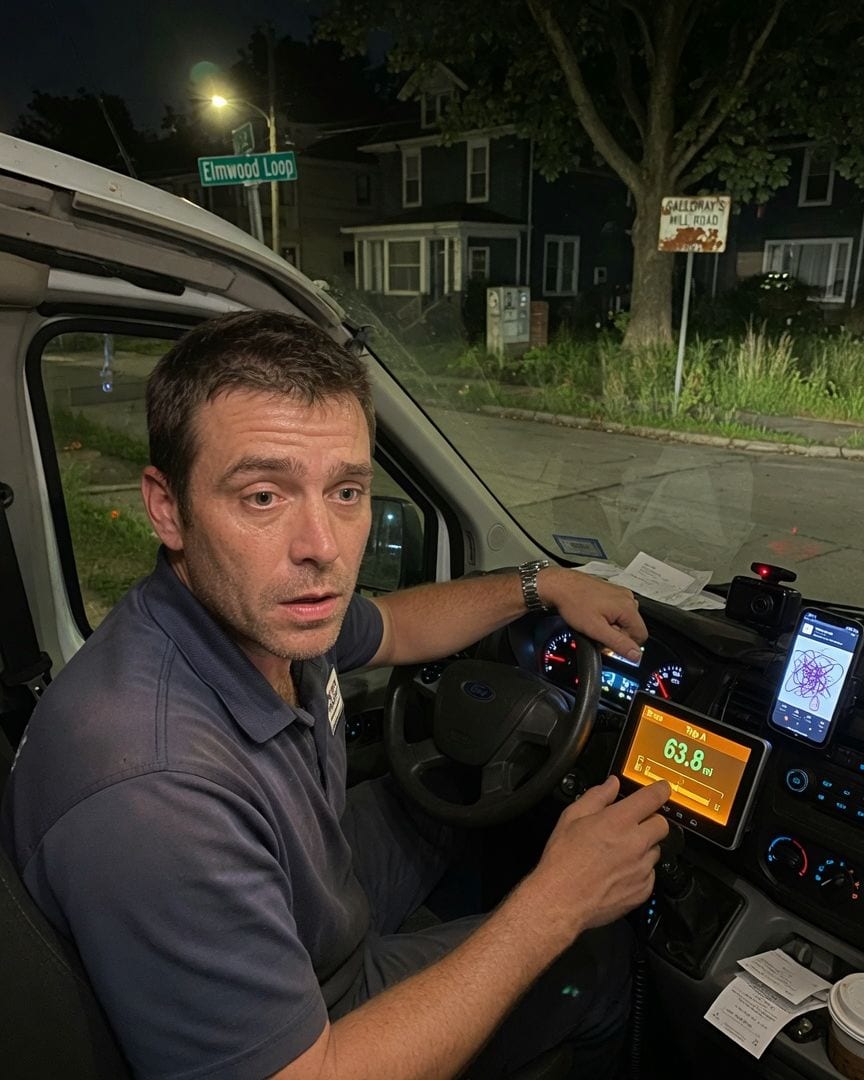
My delivery van's fuel gauge dropped a quarter tank on the Elmwood loop last night. It logged sixty-three miles, a loop I can walk in ten minutes.
I know my routes and my van, but the Elmwood Loop was different. My GPS app showed me standing still on the street, even as I walked for miles, my colleague confirming I hadn't moved. The impossible location left a blank, grey spot on the map.
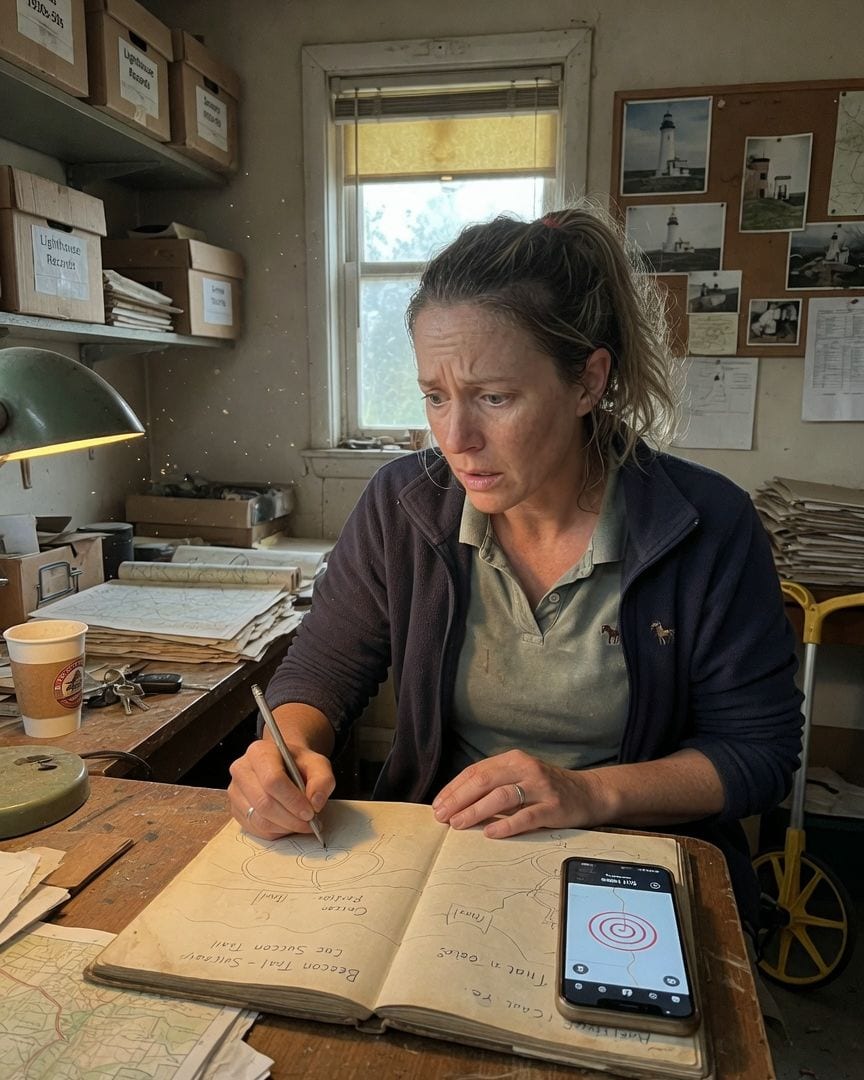
My two-mile trail suddenly had a fourth gate. My mare panicked; the world shifted around us.
I'm Vivienne, a rider who knows the Beacon Trail like the back of my hand—a familiar two-mile path with three gates. But during my last ride with Grace, a fourth gate appeared out of nowhere, and my GPS insisted we'd traveled nine impossible miles on a path I knew was only two.
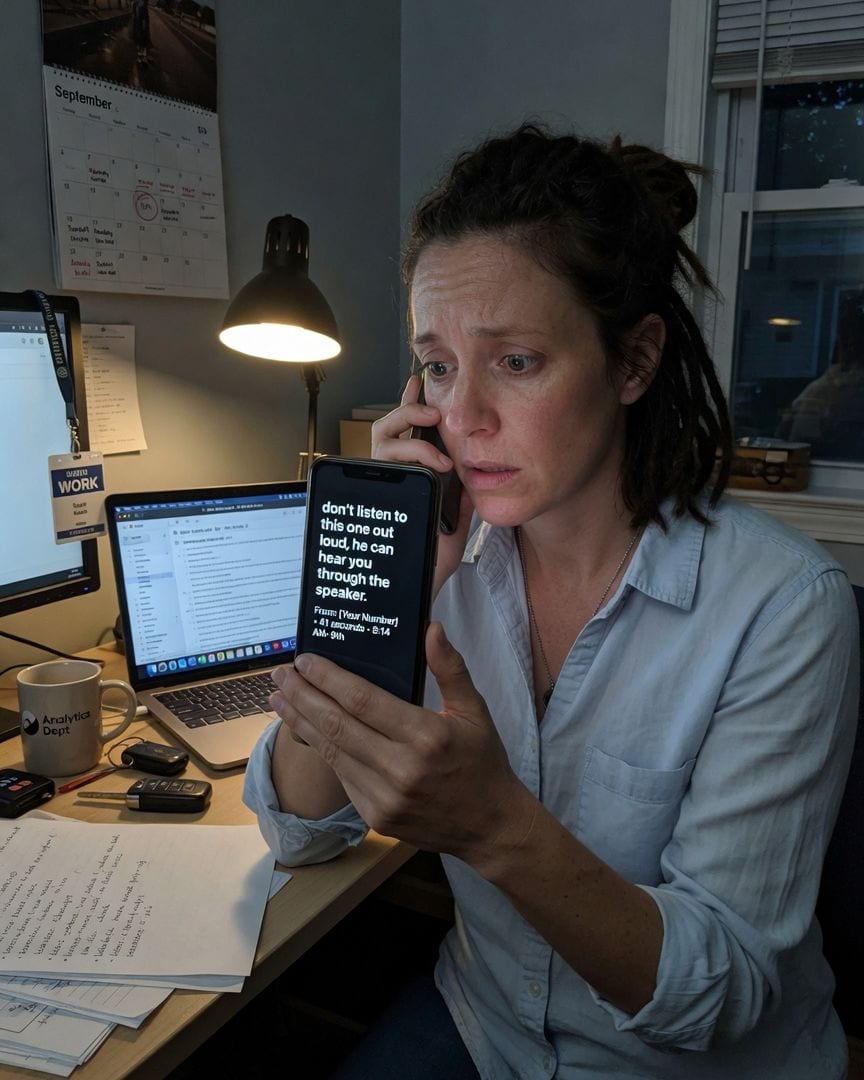
My dashcam footage showed my street change. For five seconds, my car drove on a road that doesn't exist on any map.
It was a normal Tuesday until my work phone received a new voicemail. The transcription warned, 'don't listen to this one out loud, he can hear you through the speaker.' But the message was from my own number, and the audio was forty-one seconds of absolute, dead silence.
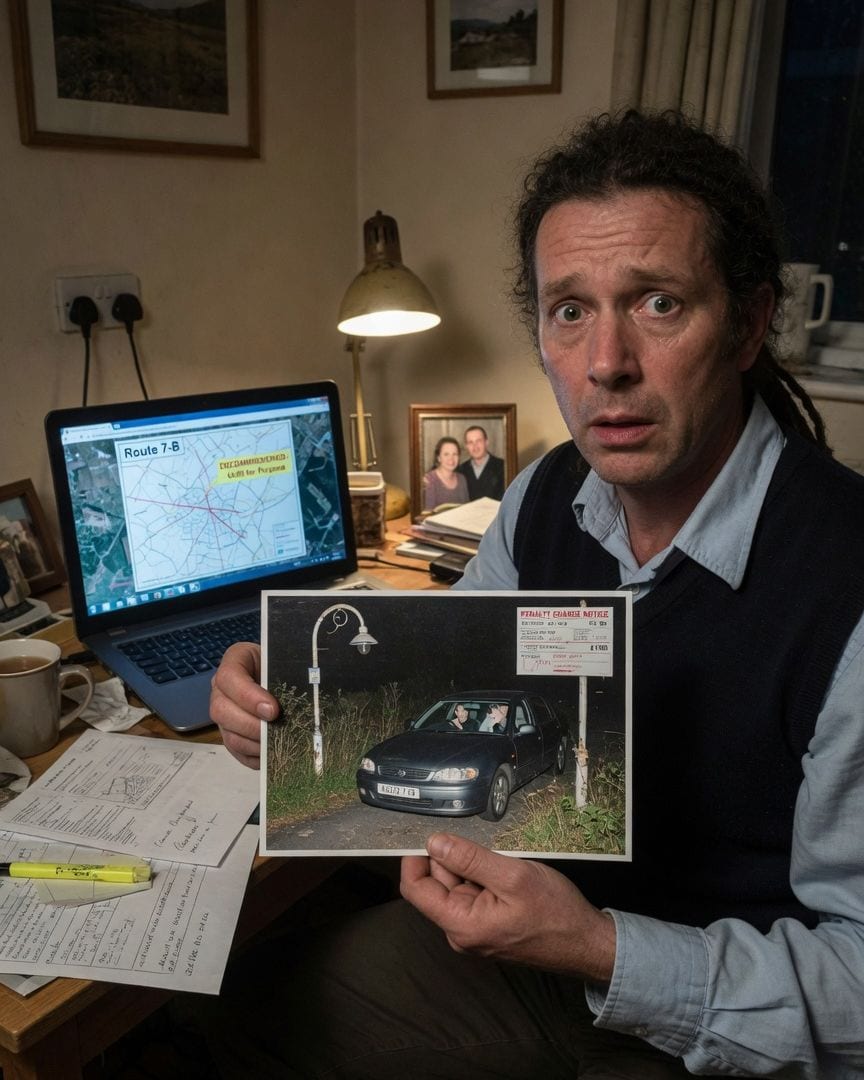
My car was photographed on a road I’ve never seen. The driver looks just like me, hand up against the flash, but I was at the hospital all night.
A routine traffic fine arrived, but the photo was anything but routine. It showed me driving my own car at 11:52 PM on the ninth of last month. The problem? I was at my wife's hospital bedside then, and the road in the photo simply doesn't exist today.
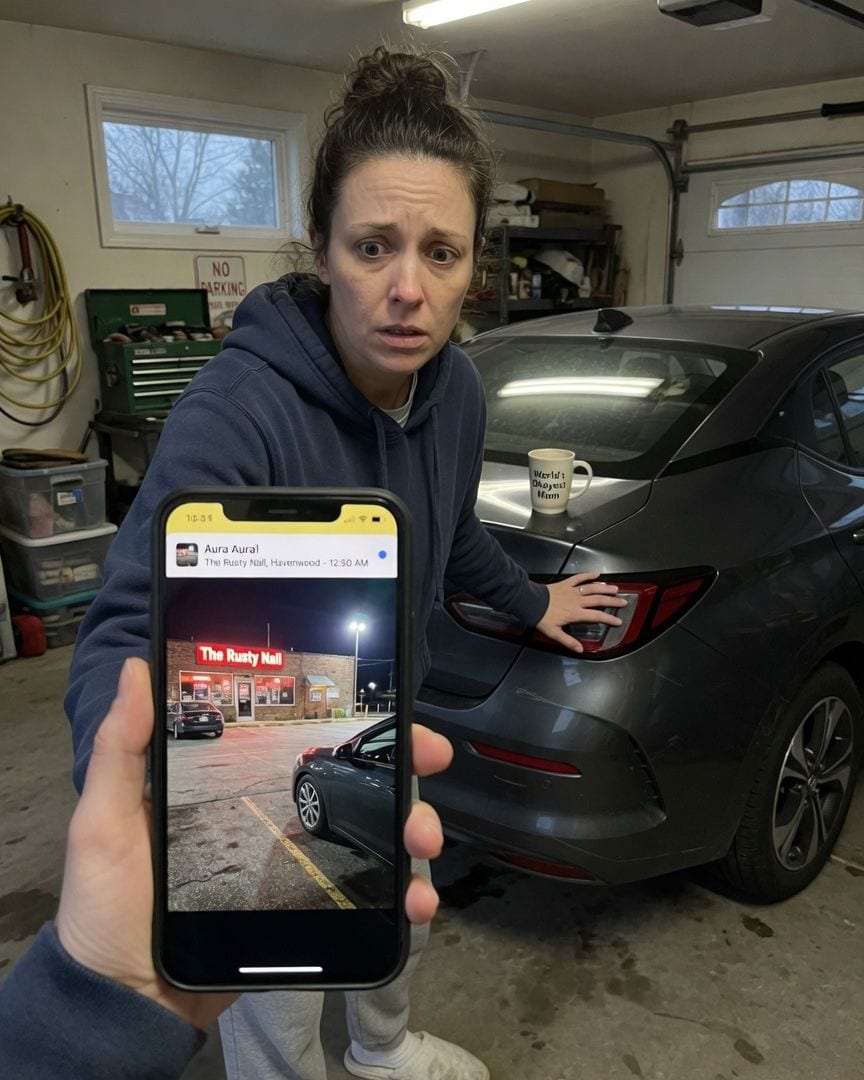
My car's app just pinged it parked at a bar ninety minutes away at 12:50am. It's in my locked garage, cold.
My Tuesday morning started like any other, until my phone chimed with a low-fuel warning from my car's app. That wasn't right; I'd just filled up. The map showed my 2023 Aura sedan 90 miles away at 'The Rusty Nail' at 12:50 AM, even though it was parked, stone cold, in my garage.
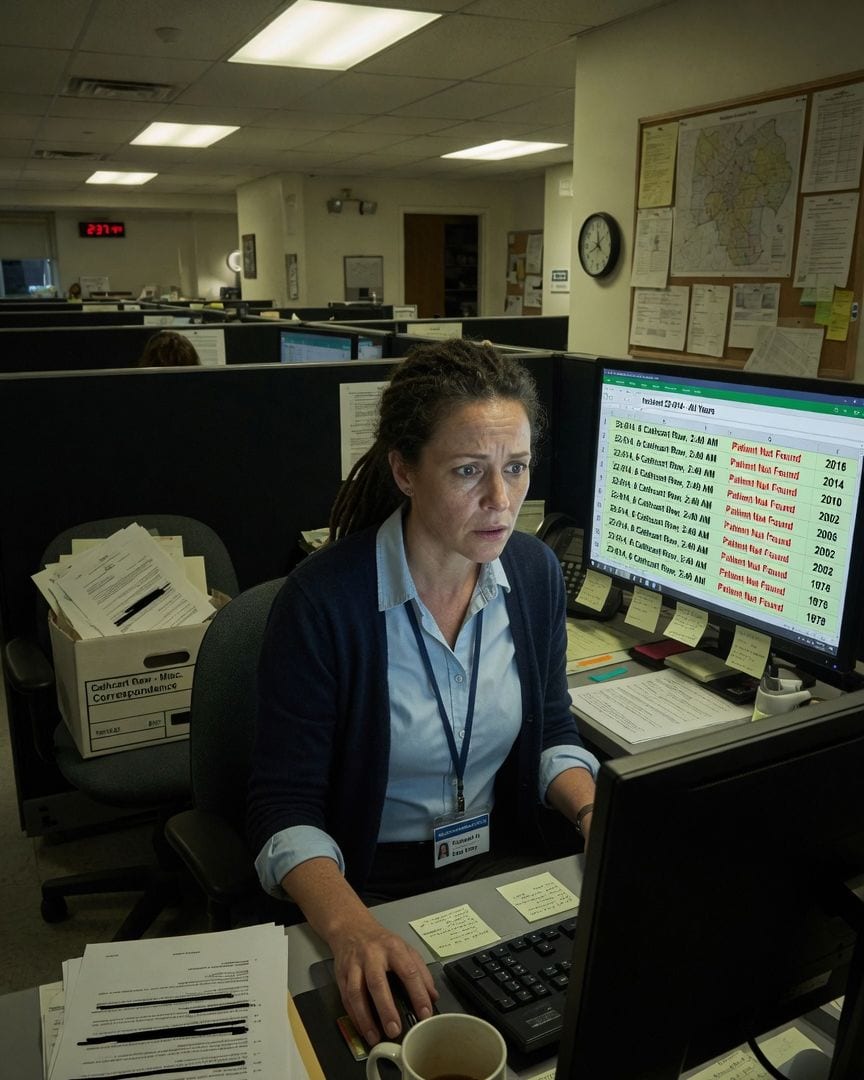
My computer log shows the same 2:40 AM call to Cathcart Row, every four years since 1978, always closed 'patient not found'.
Working data entry for the County Ambulance Trust, I found a routine incident logged as 'Patient Not Found.' But digging deeper, I discovered the exact same phantom call had repeated every four years for over forty years, always at the same address, always at 2:40 AM. Then I found a heavily redacted memo linking it to my own street.