My car was photographed on a road I’ve never seen. The driver looks just like me, hand up against the flash, but I was at the hospital all night.
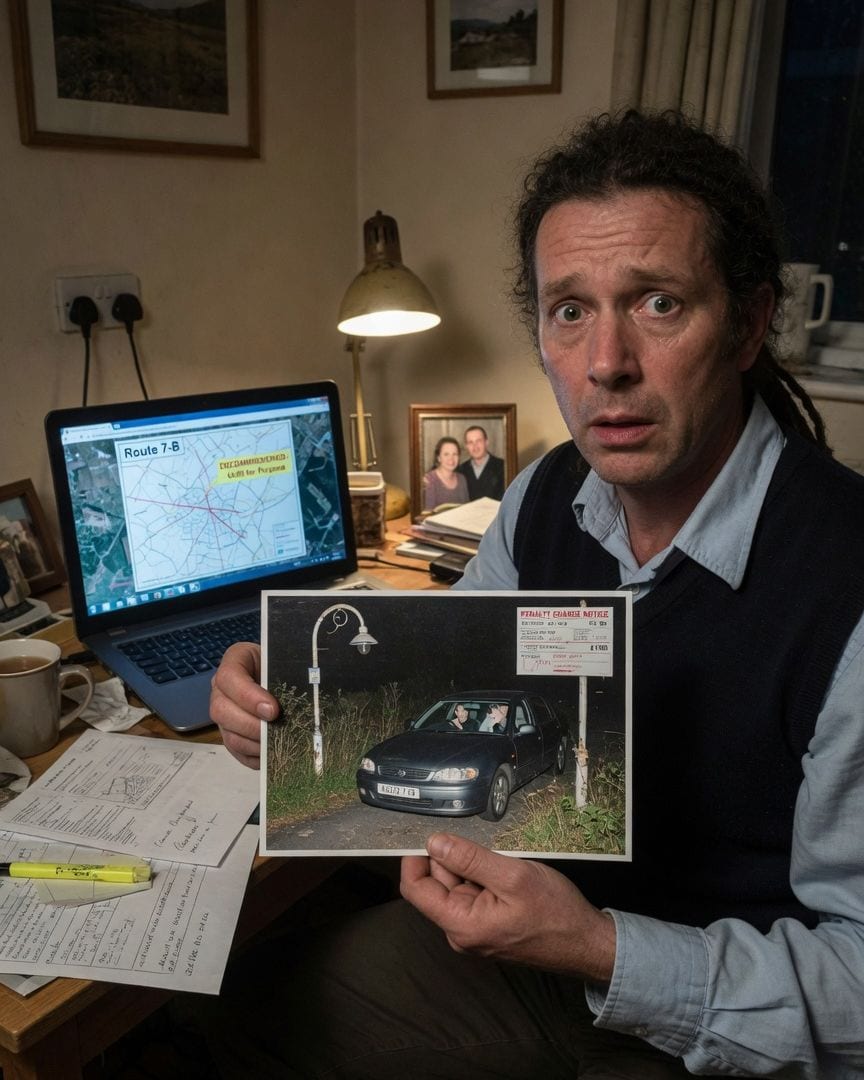
The fine arrived on a Tuesday morning, a standard council envelope, nothing to suggest it held anything out of the ordinary. A traffic violation: speeding, 11:52 PM, the ninth of last month, on the bypass junction.
My breath hitched, but it wasn't the £100 that stopped me. It was the photo.
There it was, grainy and stark, my dark grey sedan caught mid-motion. The license plate was undeniably mine. And behind the wheel, illuminated by the camera’s flash, was a driver with one hand raised, shielding their face.
But the angle of the jaw, the shape of the ear, the way the hair fell, just a little too long on the nape – it was me. An exact, horrifying copy.
I remember the ninth of last month with a clarity I usually reserve for anniversaries or disasters. My wife, Vanessa, had been admitted to the hospital that afternoon, a sudden, frightening turn with her pancreatitis.
I’d spent the entire night by her bedside, holding her hand, watching the minutes tick by on the digital clock above her door. I’d seen the 11:52 PM flash up, then 11:53.
My car, I knew with absolute certainty, had been parked in our driveway at home, locked, the alarm set.
I pulled up the hospital's visitor log on my phone, scrolled through to the ninth. My name, Warren Norwood, signed in at 5:17 PM, signed out at 6:38 AM the next morning. No mistake.
Then I looked at the photo again. The car was a phantom, a ghost of itself, on a stretch of road I didn’t recognize, certainly not the modern bypass junction it claimed to be.
The background was wrong, a blurred tangle of overgrown verge and a distinctive, slightly bowed lamppost I’d never seen before. A perfect, impossible copy of me, driving my car, at a time and place I simply hadn't been.
My initial calls to the council were met with polite incredulity. The camera was calibrated, the photo’s metadata impeccable, the plate scan confirmed. Mr. Norwood, your car, your fine.
I drove to the bypass, GPS active, scrutinizing every turn-off, every obscure lane. Nothing. The road in the photo, with its strange overgrown verge and that peculiar lamppost, simply wasn’t there.
The dread was a cold, quiet thing, starting in my gut and spreading.
Frustrated, I turned to the local library, hoping for some obscure historical detail that might explain a previous road layout, a temporary diversion, anything.
Christine Mercer, the archives clerk, was a woman with a no-nonsense bun and spectacles perched on her nose. She initially dismissed my query as a 'glitch in the system,' a common enough complaint, she said.
But as I described the specific curve of the road, the peculiar angle of the lamppost in the photo, something in her expression shifted, a flicker of recollection in her steady gaze.
After an hour, buried under layers of dusty municipal records, she called me over. On a large, hand-drawn surveyor’s map, dated 1968, was a section labeled 'Route 7-B.' It was an early bypass proposal, abandoned decades ago.
The layout, the junction, even the distinctive lamppost marker – it matched the traffic camera photo with chilling, impossible precision. Across the section of Route 7-B, a bold, red stamp read: 'Decommissioned - Unfit for Purpose.'
The road he was fined for being on, which didn't exist today, was once a real, but abandoned, project.
Back home, the silence in the living room felt heavy. I meticulously scanned the old map and, with a shaky hand, overlaid it onto a current satellite image of the area on my computer.
The phantom road from the traffic camera photo, the decommissioned Route 7-B, aligned perfectly. It ran directly underneath a modern retail park and a new housing estate – buried, forgotten, paved over.
The dread tightened its grip, twisting something cold and hard in my chest.
But then, as I zoomed in on the scanned image, searching for any other anomaly, I noticed a small, almost imperceptible detail in the margin of the old map, next to the 'Unfit for Purpose' stamp.
It was a faded, handwritten notation, barely legible, squeezed into the corner: 'See Langford, F. File 1968. 'The Echo.''
My research into 'Langford, F.' led me to Felix Langford, a name that appeared in several archived council documents from the late 1960s, always associated with civil engineering and planning, particularly for the bypass projects.
A quick online search confirmed a Felix Langford, now retired, living in a quiet, unassuming house on the eastern edge of town.
I rehearsed my cover story in the car on the way there: a local historian researching the town’s infrastructure development.
Felix Langford, an elderly man with sharp, intelligent eyes that seemed to miss nothing, and unnervingly steady hands, opened the door. He listened patiently as I described my fabricated interest in Route 7-B. His calm was absolute.
He didn't seem surprised, or even curious, about my specific focus on an abandoned road project from half a century ago.
He merely invited me in, to a living room that smelled faintly of old books and something metallic, like ozone.
He confirmed his involvement in the original bypass plans, speaking of Route 7-B with a detached, almost academic air. 'Ah, Route 7-B,' Felix mused, his voice soft but clear, as he settled into a worn armchair. 'A fascinating project.
Decommissioned, of course.' He paused, his gaze fixed on some distant point beyond my shoulder. 'We encountered… certain anomalies. Residual patterns. A specific kind of intersection, you see.'
He offered no further explanation, merely observing me with an unnerving, knowing stillness. The silence stretched, the ticking of a grandfather clock in the corner suddenly amplified.
I left with more questions than answers, the casual mention of 'anomalies' echoing in my mind, a tiny, chilling bell.
The next morning, an anonymous email landed in my inbox. The subject line was blank. The body contained a single attachment: a blurry, low-resolution photo.
It was a long-shot, taken from across the street, showing me closing Felix Langford’s gate, walking towards my car. There was no text, no sender information, just the image. A cold knot formed in my stomach.
Someone knew I was digging.
Later that day, reviewing my dashcam footage from the visit to Felix’s house, I noticed a glitch. A momentary skip, a flicker of static, just as I had driven past Felix’s street.
The familiar hum of my engine cut out, then returned. I rewound, played it again. The skip was barely a second long, almost imperceptible.
But beneath the familiar hum of the engine, for that fleeting instant, there was a faint, almost subliminal audio track. A murmur, like a distant, distorted conversation.
And then, impossibly clear, a soft, distinct whisper, barely audible above the static: 'Norwood.' My name. The dashcam was clearly on, recording only the interior of my empty car. I lived alone.
I played it again, and again, the whisper chilling me to the bone, a thin, cold thread winding around my chest.
I returned to Felix Langford’s house that afternoon, without preamble or pretense. My heart hammered against my ribs, but my voice was steady.
I pushed the traffic camera photo across the coffee table between us, then played the dashcam audio from my phone, isolating the whispered 'Norwood.' Felix examined the photo, his expression unchanged, a faint, almost imperceptible nod.
He listened to the whisper, his head tilted slightly, as if to better discern a distant sound.
'I see you’ve been thorough, Mr. Norwood,' Felix said, his voice calm, utterly devoid of surprise or concern. 'It's as I suspected.'
He explained that Route 7-B was built on a unique geological seam, a place where, under specific conditions, the past could briefly 'bleed through' into the present. He called them 'temporal echoes.'
The traffic camera, an older model, was occasionally sensitive enough to capture these fleeting manifestations. A cold draft seemed to slide under the door, raising the hairs on my arms, though the window was shut tight.
'The driver in your photograph,' Felix continued, 'is not you, Mr. Norwood. It is a… passenger. Something that uses these echoes. It takes on a familiar form, a local face, to pass through, largely unnoticed by ordinary perception.
A mimicry, a temporary vessel.' He explained the whisper on the dashcam as 'residual audio from the other side of the bleed-through,' a 'traveler' attempting to mimic a familiar sound, perhaps even a name, as it learned.
Felix calmly stated that his 'file' from 1968, 'The Echo,' was his meticulous documentation of these occurrences, and he had been quietly monitoring them for decades, ensuring they didn't cause widespread panic.
He spoke as if describing a natural, if unusual, phenomenon, utterly devoid of fear or judgment.
Felix rose and went to a small, built-in bookshelf, returning with a dusty, leather-bound ledger. He opened it to a page marked 'Current Manifestations.' It was filled with meticulous, handwritten entries: dates, times, local coordinates, and brief descriptions of vehicles.
Next to several entries, Felix had sketched rough, almost impressionistic faces. My blood ran cold. I saw one that was unmistakably my own face, dated two weeks before the traffic fine incident.
'A strong, new resonance,' Felix murmured, almost to himself, his finger tracing the sketch.
Then, without a word, he turned to an earlier section, a page dated from the late 1990s.
There, among sketches of other local faces, was a drawing of a woman, driving a car that matched Vanessa’s old model, a rusty blue Civic, on an entry for Route 7-B.
The face was unmistakably Vanessa, my wife, years younger, but clearly her. The notes beside it read: 'Recurrent manifestation. Strong resonance. Proximity seeking.'
I stared at the entry, my wife’s face staring back from a record that should not exist, from a time before I even knew her.
I pointed a trembling finger at Vanessa’s entry in the ledger. 'My wife? What do you mean, 'recurrent manifestation'?'
Felix, still unperturbed, explained that certain individuals possess a unique 'resonance' with the 'Echo' – a subtle energetic signature that makes them, or their likenesses, more susceptible to being 'borrowed' by the 'travelers.' His voice remained calm, almost clinical.
'They are not malicious entities, Mr. Norwood,' Felix clarified, leaning forward slightly. 'But opportunistic. They use the resonance as a beacon, a familiar form, to navigate the unstable passages.
Your dashcam audio, the whispered name, was likely a traveler attempting to mimic, to refine its chosen form.'
He elaborated that once a resonance was established, it tended to recur, often strengthening over time. Vanessa’s earlier appearance in the ledger indicated she had a pre-existing, potent connection to the phenomenon.
My recent incident, Felix explained, placed me firmly on the 'list' as well. The Echo wasn't just a road; it was a specific kind of conduit, and some people were more attuned to it than others.
'It's not about being taken,' Felix said, his eyes meeting mine with unnerving directness, 'it's about being seen, being used as a temporary vessel.
The true horror isn't the physical threat, but the implication of something else walking in your skin, leaving traces you can't explain.'
I demanded to know what happened to the 'originals' when their likenesses were taken, if there was any lasting effect.
Felix calmly replied that the originals were generally undisturbed, unaware, but that repeated 'borrowings' could sometimes lead to a subtle 'thinning' of their presence, a quiet detachment, as if a piece of them was occasionally elsewhere.
He closed the ledger, then opened it again to a new section, titled 'Persistent Echoes.' He pointed to a fresh entry, dated just a few days ago.
It was a sketch of Vanessa’s face again, but this time, the car was unmistakably mine, the dark grey sedan, and the location was much closer to our home, almost on our very street.
'The resonance is strengthening,' Felix observed, his voice flat, devoid of emotion, as if reading from a weather report. 'It’s seeking proximity.'
He wasn't warning me; he was merely stating a fact, observing a pattern, as if Vanessa and I were specimens under glass. The old house felt suddenly vast, its silence pressing in, heavy and knowing.
I realized then that Felix would not help me stop it, only record it. His calm was the worst part.
I stood abruptly, pushing my chair back with a scrape that echoed too loudly in the quiet room. I didn't say goodbye. I ran from the house, fumbling for my phone as I scrambled to my car.
My mind raced, images of the ledger, of Vanessa’s face, flashing behind my eyes. I called Vanessa, my voice a frantic whisper, the words tumbling out. 'Pack a bag, anything you can. Meet me at the car.
We have to go. Now. Don't ask questions, just trust me. We have to leave.'
Vanessa, bless her, didn’t argue. Twelve hours we drove, stopping only for gas, our conversations terse, hushed. We ended up in a small, anonymous town nestled deep in the mountains, hundreds of miles from our old life.
We sold our house remotely, never once looking at the listing photos.
I deleted every digital record of the fine, the old map, the dashcam audio, but the images of Felix’s ledger, especially Vanessa’s face from decades ago and then days ago, were burned into my memory.
I compulsively checked every local map, every online traffic camera feed I could find, my eyes scanning for any familiar curve of road, any fleeting, impossible image. They were still out there, those cameras.
We tried to build a new life, a normal life, but the quiet dread never truly left us. It hummed just beneath the surface, a low-frequency vibration.
Months passed. We settled into a routine, a fragile sense of peace. One evening, Vanessa was humming a tune I had never heard before, a strange, lilting melody that seemed to come from nowhere.
She stopped, turning to me with a faint, almost imperceptible smile.
'What was that?' I asked, my heart sinking.
She shrugged, a slight tilt of her head. 'Just something I heard. It sounded familiar.'
If this one got to you
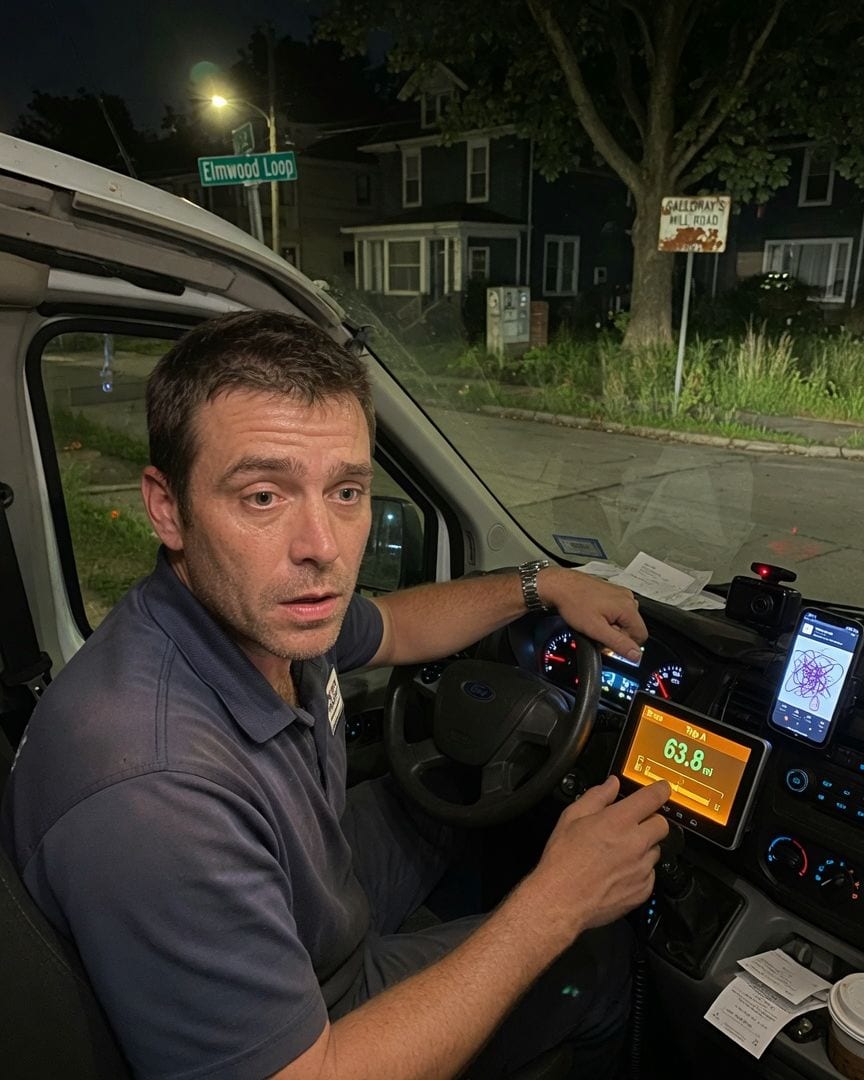
My delivery van's fuel gauge dropped a quarter tank on the Elmwood loop last night. It logged sixty-three miles, a loop I can walk in ten minutes.
I know my routes and my van, but the Elmwood Loop was different. My GPS app showed me standing still on the street, even as I walked for miles, my colleague confirming I hadn't moved. The impossible location left a blank, grey spot on the map.
My dashcam footage showed my street change. For five seconds, my car drove on a road that doesn't exist on any map.
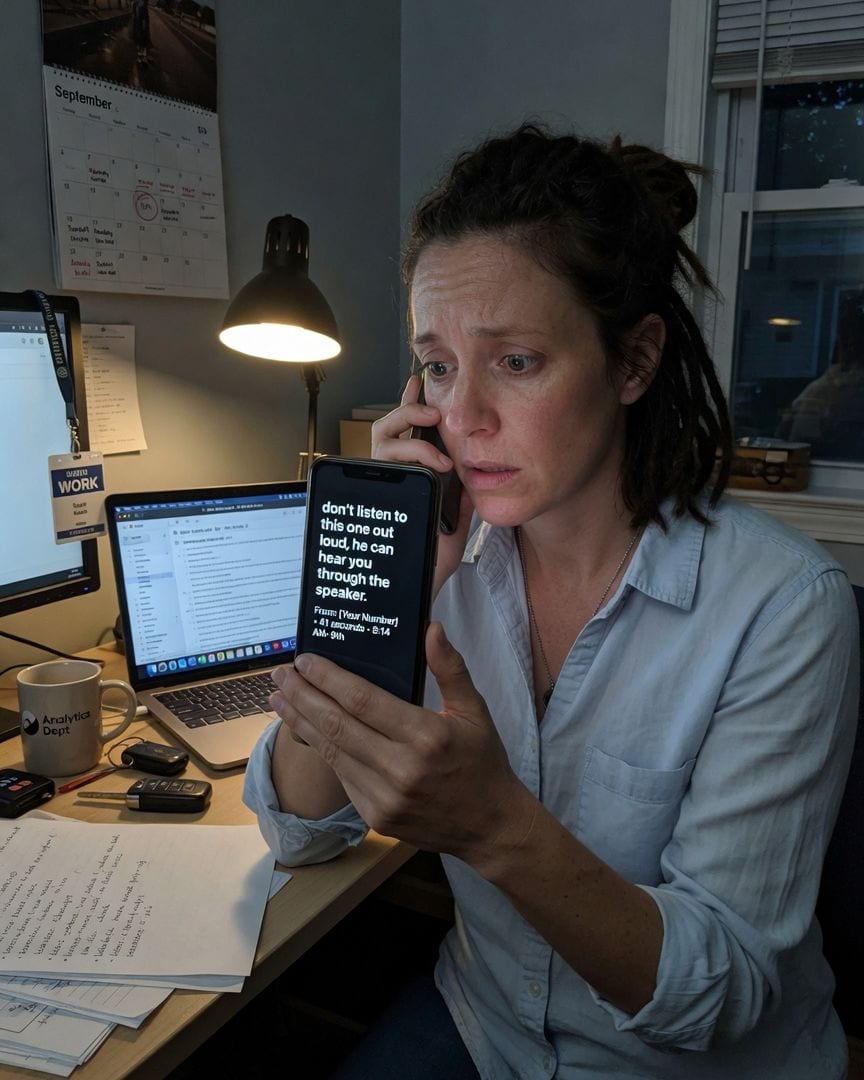
It was a normal Tuesday until my work phone received a new voicemail. The transcription warned, 'don't listen to this one out loud, he can hear you through the speaker.' But the message was from my own number, and the audio was forty-one seconds of absolute, dead silence.
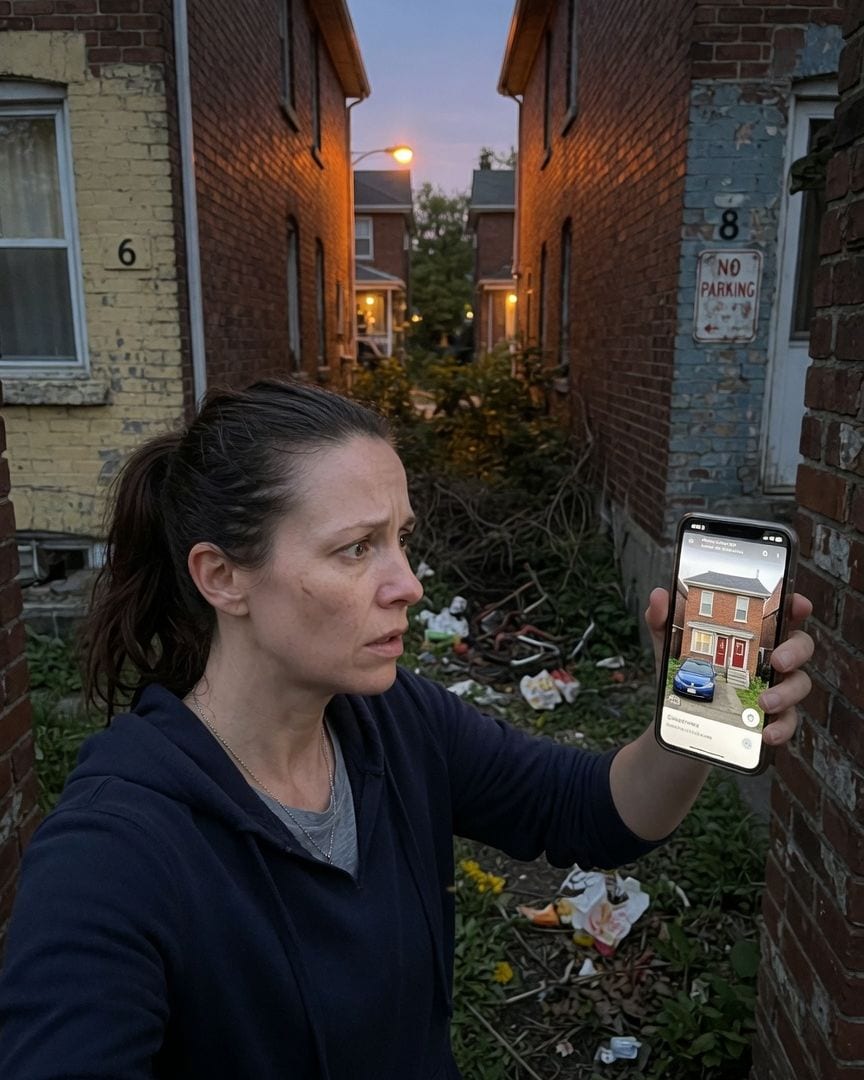
My childhood street's online map showed a number 7 house. I drove over that night. There is no number 7, just the ginnel I grew up with.
Scrolling Google Street View of my childhood neighborhood, I found an impossible house. Between my old house and number 6, where only a narrow ginnel should be, the screen showed a fully formed number 7. It had drawn curtains, a freshly painted door, and a blue car dated 'last month,' yet every other map showed an empty gap.
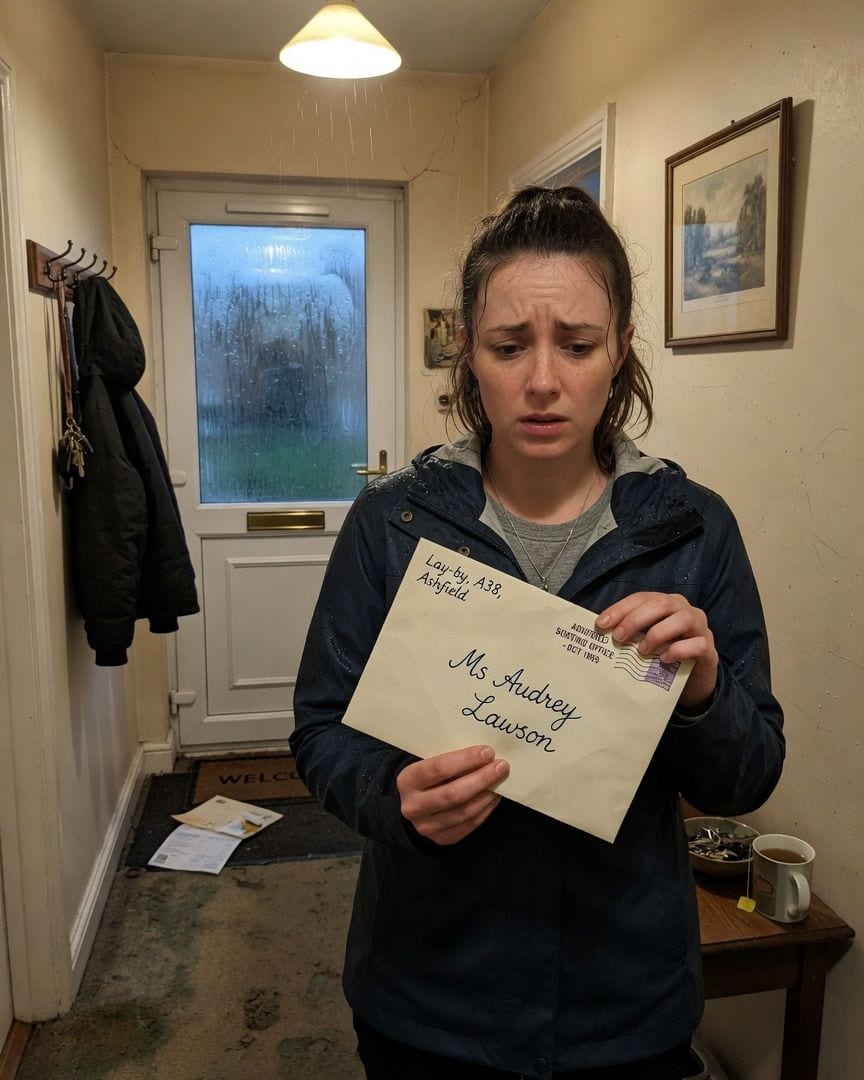
My condolence card arrived for a death that never happened, postmarked from a sorting office that closed before I was born.
My first envelope arrived on a Tuesday, nestled with bills. It bore my full name and a return address for an A38 lay-by that held only a crash barrier. But the postmark read ASHFIELD SORTING OFFICE – OCT 1985, an office decommissioned before I was even born.
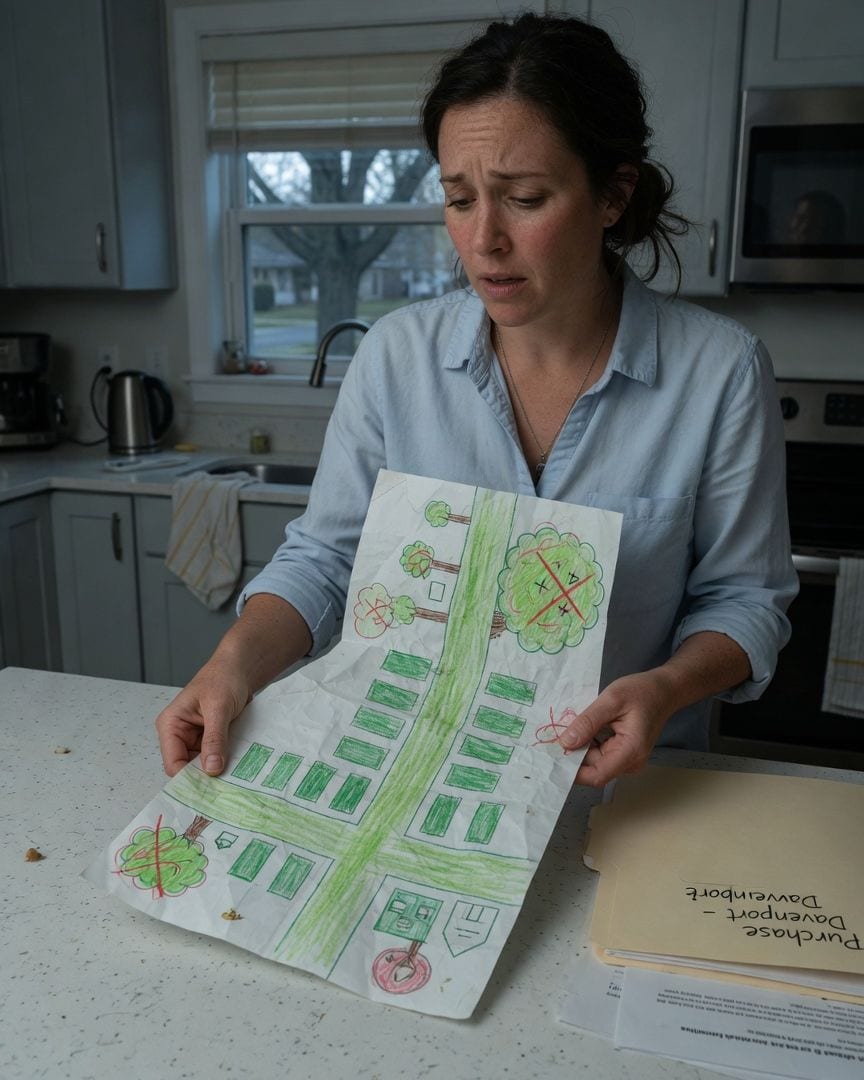
A hand-drawn map keeps arriving through our letterbox — every space on the lane marked green, except the one spot under the old lime tree, alone in red. The agent made us swear we'd never park there.
My new house came with a strange local quirk: weekly maps slipped through my letterbox, each one marking a specific parking spot with an angry red X. A legal addendum about the spot, and my neighbors' evasiveness, made me uneasy. But nothing prepared me for the ancient, identical map I found, which marked my own house with that terrifying red X.
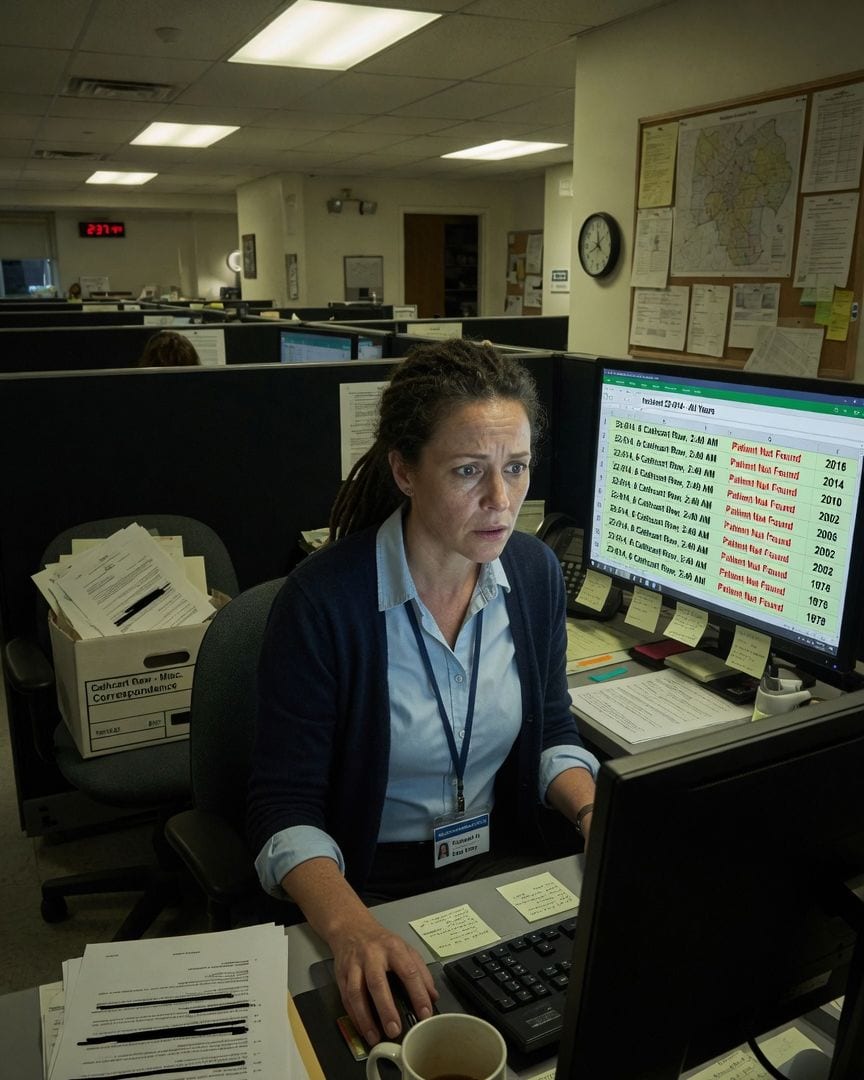
My computer log shows the same 2:40 AM call to Cathcart Row, every four years since 1978, always closed 'patient not found'.
Working data entry for the County Ambulance Trust, I found a routine incident logged as 'Patient Not Found.' But digging deeper, I discovered the exact same phantom call had repeated every four years for over forty years, always at the same address, always at 2:40 AM. Then I found a heavily redacted memo linking it to my own street.