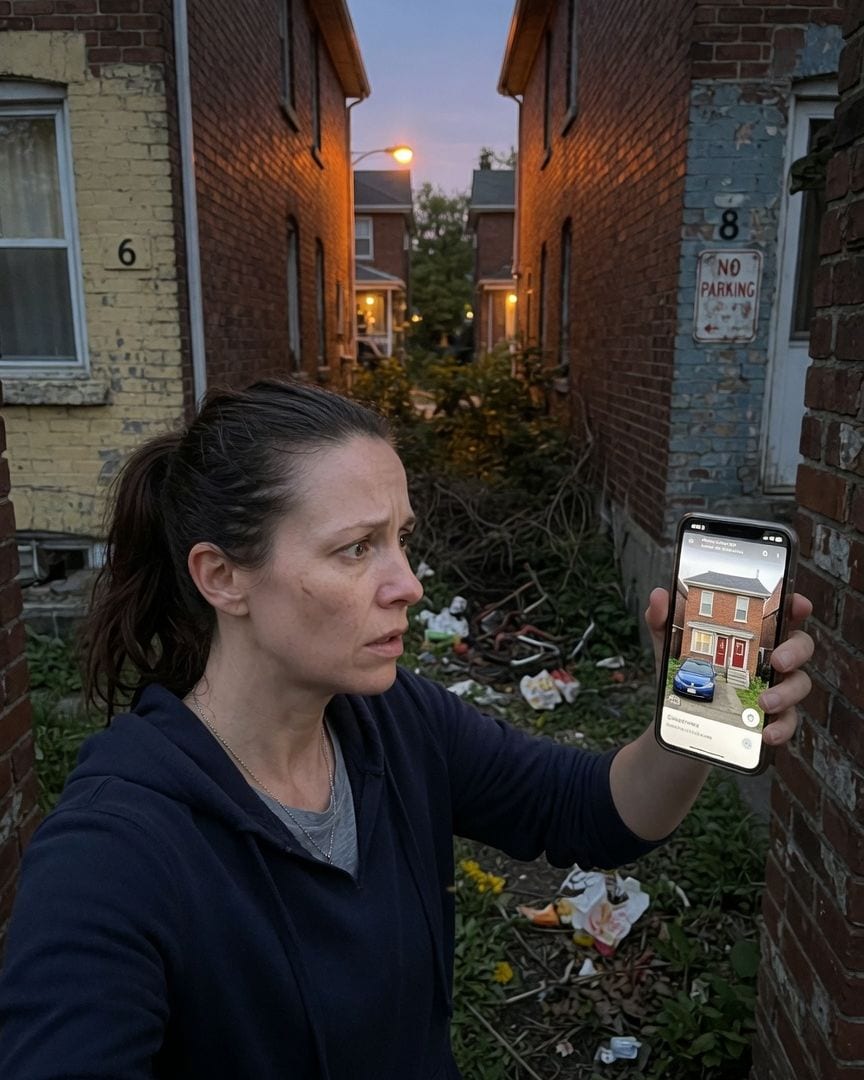
My childhood street's online map showed a number 7 house. I drove over that night. There is no number 7, just the ginnel I grew up with.
I leaned closer to my laptop screen, a faint frown creasing my brow. I’d been scrolling Google Street View of my childhood neighborhood, a nostalgic trip down memory lane.
I dragged the little yellow figure down Calloway Street, past Mrs. Henderson’s prize-winning roses, past the faded paint of old Mr. Davies’ fence. I paused, my finger hovering.
Between number 6 and my old house, number 8, where I knew there was only a narrow, overgrown ginnel, the screen showed a fully formed, charming little house: number 7.
It had neat drawn curtains, a freshly painted front door, and a familiar blue car in its tiny driveway. The images were dated 'last month.'
I blinked, scrolling back and forth, convinced it was a glitch, a mapping error. But the brickwork of number 6, the cracked pavement of number 8 – they were undeniably hers. Every detail matched, except for the impossible house.
My chest tightened with a quiet, disorienting unease. I pulled up satellite view, then another mapping service. All showed a clear, empty gap, the ginnel. But Street View, my Street View, insisted on number 7.
It was too real, too concrete to be dismissed as a simple digital artifact. The details were too specific, too mundane. I grabbed my car keys, a cold certainty settling in my gut.
The evening air was cool and crisp as I drove the familiar route to Calloway Street. I parked a block away, my heart thrumming with a strange mix of apprehension and disbelief.
As I approached numbers 6 and 8, the ginnel was there, exactly as I remembered it: a narrow, shadowed passage between two brick walls, choked with weeds and forgotten toys. No house.
I walked the short distance, peering into the ginnel, then at number 6, then at 8, trying to reconcile the physical reality with the digital image burned into my mind.
I pulled out my phone, holding it up, trying to match the perspective from the online map. The screen showed the phantom #7, perfectly aligned with the empty space. I took photos, comparing them side-by-side.
The angles, the late evening light, the specific pattern of the brickwork on number 6 – they matched my phone’s camera roll perfectly, except for the glaring, impossible absence of the house.
I walked around the entire block, my steps slow and deliberate, searching for any sign of recent construction or demolition, a freshly cleared lot, a new foundation. Nothing. The street was quiet, the houses familiar.
The air felt normal, the sounds were normal, but the numbers, the geometry, simply refused to add up.
I zoomed in on the car in the Street View image, noting the faint outline of a specific bumper sticker on its rear. A small, local detail, almost imperceptible.
Back in my car, the engine idling, I scrolled through the Street View images again, my earlier disbelief replaced by a cold, prickling certainty.
I zoomed in on the house at number 7, specifically the blue sedan parked in its driveway. It was a late-model compact, unremarkable in every way.
But on the rear bumper, barely visible through the digital haze, was a distinct sticker. Not a sports team, not a political slogan, but a small, unassuming oval: 'Calloway Street Historical Society.' My own town's obscure local history group.
The image was dated last month. I lived alone, I reminded myself, in an apartment miles away now.
The Historical Society's building was just a few blocks from Calloway Street, a dusty, quiet place I'd only visited once as a child.
The car, the house, the sticker – it was all too specific, too grounded to be a mere glitch.
A shiver ran down my spine, not from cold, but from the sudden, chilling implication that this wasn't just a digital error, but a very real, very present wrongness.
I stood in the narrow ginnel between number 6 and 8. The evening light was fading, casting long, distorted shadows. My phone was still open to the street view, the screen a glowing rectangle in the gloom.
It showed the phantom house number 7, solid and real. The blue car sat in its driveway, its license plate readable, reflecting a faint, impossible shimmer in the evening light.
The next morning, I found myself standing outside the Calloway Street Historical Society, a small, brick building tucked behind the library. The air inside smelled of old paper and dust.
I approached the counter, where a polite elderly woman, Iris Lambert, was meticulously cataloging old photographs. I, trying to sound casual, asked about 'house number 7 on Calloway Street.' Iris looked blank.
I pulled out my phone, showing her the Street View image of the impossible house. Iris peered at it through her bifocals, then dismissed it with a wave of her hand. 'Oh, that's just a digital artifact, dear.
Or a developer's render. We've never had a number 7.' I pressed on, mentioning the car's bumper sticker. Iris’s eyes narrowed slightly. 'Well, that is peculiar.
Only person who'd know anything about Calloway Street's truly old oddities would be Robert Sterling. He's been a member forever, lives just a few streets over.' I thanked her, then drove to the address Iris provided.
Robert Sterling, a man in his late seventies with a calm, almost weary expression, was trimming hedges. I showed him the Street View. He nodded slowly, not surprised. 'Ah, number 7,' he said, his voice quiet. 'It's back, then.'
He didn't offer more, just a knowing, almost pitying look. I felt a surge of adrenaline.
I tried to leave, to drive home, but after several turns that should have taken me to the main thoroughfare, I found myself inexplicably back on Calloway Street, passing Robert Sterling's house again.
My fuel gauge had barely moved, but the odometer had logged ten miles of impossible travel. The road had returned me, quietly, precisely to where I started.
I tried to shake off the unsettling drive, the quiet horror of the Road That Returns. I returned to my own house, unnerved by Sterling's unperturbed reaction.
I spent the evening hunched over my laptop, researching online, frantically searching for 'Calloway Street ghost house,' 'disappearing house,' 'impossible geometry.' Hours passed.
Finally, deep in an archived local community forum from 1983, I stumbled upon a thread titled 'The Phantom House of Calloway.' The posts discussed a peculiar house that had briefly appeared at number 7 on Calloway Street, then vanished.
Most commenters dismissed it as a shared hallucination, a local prank, or faulty memory. But one comment, posted by a user named 'OldManBob,' stood out like a beacon: 'Just like last time. People forget. But it always comes back.'
I felt a prickle on my neck, a sudden cold rush. I checked the user's profile – inactive for decades, but the registration date and mention of local landmarks aligned perfectly with Robert Sterling's age and residence.
I knew, with a chilling certainty, that OldManBob was him. Later that night, as the house settled into silence, a single, unread message appeared in my social media inbox.
It was from an anonymous account, no profile picture, no other activity. The message contained just eight words: 'Some things are best left alone. You’re driving in circles, Emily.'
The dread was no longer abstract; it was personal, a cold hand on my shoulder in the dark.
The next day, I returned to Robert Sterling's house, the forum post open on my phone, the anonymous message a cold weight in my pocket. 'OldManBob?' I asked, my voice tight, the question hanging heavy in the air.
Robert sighed, a long, tired sound that seemed to carry the weight of decades. He invited me in, his gaze steady, devoid of surprise. He didn't deny it. He sat in his armchair, folded his hands, and began to speak.
'Number 7 has always been a… feature of Calloway Street, Emily. It comes and goes, always in the same spot, always the same house. My grandfather saw it. My father saw it. I've seen it three times now.'
He spoke with an unsettling calm, as if discussing the weather.
He explained the subtle shifts in the surrounding street, how it 'pulls you back' if you try to leave when the house is 'present,' confirming my unnerving experience of the Road That Returns.
'The street wants its secrets kept,' he said. I asked why no one else seemed to remember, why there weren't more records. 'They do, for a while,' he answered, his voice low.
'Then the memory fades, or they convince themselves it was a dream, a trick of the light. The street smooths itself out, makes everything seem normal again.'
He mentioned that the house always appears for a specific duration, then disappears, 'like a tide, predictable if you know the rhythm.'
I realized the online photo, dated 'last month,' meant it was currently 'present,' even if I couldn't see it now. The implication of the cyclical nature, the Road That Returns, and the fading collective memory made my skin crawl.
It wasn't a glitch, or a ghost. It was a pattern, an inherent, almost geological truth of this one impossible place.
Robert Sterling, his face unreadable, rose from his armchair and walked to an old, heavy oak chest in the corner of his living room. The wood was dark and polished, worn smooth by generations of hands. 'Proof, you want?'
he said, his voice flat, devoid of emotion. He retrieved a locked wooden box, smaller, but equally aged.
He opened it, revealing dozens of meticulously hand-drawn maps of Calloway Street, some yellowed and brittle with age, others newer, their lines crisp and clear.
Each map precisely marked the location of the ginnel and, critically, the intermittent appearance of 'House #7' with specific dates written next to it, spanning back over a century.
The dates formed a clear, recurring, almost rhythmic cycle of manifestation and disappearance. He then pulled out a thick, leather-bound ledger, its pages smelling faintly of mildew and old paper.
He opened it to a page filled with neat, looping script, a family tree of Calloway Street residents, cross-referenced with various notes and observations. My finger, trembling slightly, traced a name, then another, then a date: 'Alice Oakley, 1991. Vanished.'
My own surname, staring back at me from the page, tied to a disappearance that had happened the very year I was born.
I stared at the ledger, my own surname next to 'Vanished,' a cold knot forming in my stomach. Robert Sterling pointed to the entry. 'Your grandmother's sister, Alice Oakley.
She lived at number 6, right next to the ginnel, just like your family did later. She was obsessed with the house, too. Tried to 'fix' it, she said. Tried to stop it from going away.'
He explained that while the street usually allowed memories to fade, some people, like Alice, became too deeply entangled. When the house vanished, sometimes, a person who was too close, too invested, vanished with it.
'Not physically, not like a kidnapping,' Robert clarified, his voice a low monotone. 'They're just... gone from the timeline. No one remembers them. No records. It's like they never existed.
My family's job, for generations, has been to observe, to document, and to warn. But not to interfere. The street doesn't like interference.' He gestured to his maps.
The cyclical appearance of the house, he explained, was simply a phase of the street's 'breathing,' a natural, inexplicable distortion that had always been there.
The car in the Street View, the bumper sticker – it was a faint echo, a brief, visual bleed-through from the house's current 'presence,' a momentary overlap between realities.
Alice, he said, had tried to fight the cycle, to force the house to stay. The ledger entry was a testament to the street's ultimate, quiet power to reclaim its secrets, and those who sought to uncover them too deeply.
A profound, cold dread settled deep in my bones. This wasn't a problem to solve; it was a fundamental, unchangeable reality, a law of physics unique to Calloway Street. 'So what do I do?'
I asked, my voice barely a whisper, the question feeling futile even as I spoke it. Robert looked at me, his eyes full of ancient weariness, a resignation born of generations of quiet observation. 'You stop looking. You forget.
Or you become another entry in the ledger.' He explained that the 'Road That Returns' was the street's way of testing, of drawing in the curious, of keeping them close.
If you accepted it, if you stopped fighting it, it would eventually let you go, your memories fading like everyone else's.
If you pushed, if you tried to intervene, to force it to be something it wasn't, it would take you. He pointed to a blank space on one of his oldest maps, right where number 7 would be.
'Sometimes, the house isn't there, but the pull is. Strongest just before it appears, and just before it goes.' My mind raced. The Street View photo was dated 'last month,' and the house wasn't visible now.
It meant the cycle was ending, the house transitioning out of visibility, and the street's 'pull' would be at its most dangerous, its most insistent. I knew I needed to leave, to sever my connection, to actively choose to forget.
I stood, my legs unsteady, the weight of Alice Oakley's fate a chilling warning. Robert watched me, a silent guardian of an impossible truth.
I walked out of his house, got into my car, and deliberately drove away from Calloway Street, not looking back, not checking my rearview mirror.
I focused on the turns, the traffic, the mundane details of the city, trying to erase the street from my mind, to make myself uninteresting to its impossible geometry.
I spent the next few months deliberately trying to forget. I moved apartments to a different part of the city, changed my routine, and meticulously avoided any news or online searches related to Calloway Street.
I never drove down that road again, actively taking detours that added significant time to my commute, just to avoid even its periphery.
The vivid memory of the phantom house, of Robert Sterling's calm revelations, faded around the edges, becoming a disturbing dream, a story I'd once read. The online street view eventually updated, showing only the ginnel, as it should.
The 'Calloway Street Historical Society' bumper sticker on the phantom car, however, remained a vivid, unsettling detail I couldn't quite shake, a tiny, impossible pinprick in the fabric of my sanity.
I found myself subconsciously measuring distances, double-checking addresses, a quiet vigilance against any further geometric anomalies.
I sometimes found myself pausing before my own front door, a faint, irrational urge to measure the distance to my neighbor's, to count the windows, to confirm the precise geometry of my new, normal life.
The rational part of me knew it was over, that I had escaped.
But a quiet, persistent dread remained, a knowledge that some places simply exist outside the rules, and that I had once stood on one, looked into its impossible heart.
I had survived, but a piece of my clarity, my certainty in the world, was forever gone. I knew what was there, and what would be there again, even if no one else did.
The world was less solid now, its foundations subtly shifted.
Emily Oakley never spoke of Calloway Street again. Her friends, especially her partner Isaac, noticed she sometimes seemed distant, her eyes holding a strange, knowing quality, as if she possessed a secret understanding of the world's hidden seams.
One evening, Isaac Radcliffe found her staring at a blank wall in their new apartment, a small, almost imperceptible smile playing on her lips. 'Everything alright, Em?' he asked, his voice soft.
She turned, her gaze clear but unfathomable, a quiet acceptance in their depths. 'Yes,' she said. 'Just remembering a place that isn't on the map.'
If this one got to you
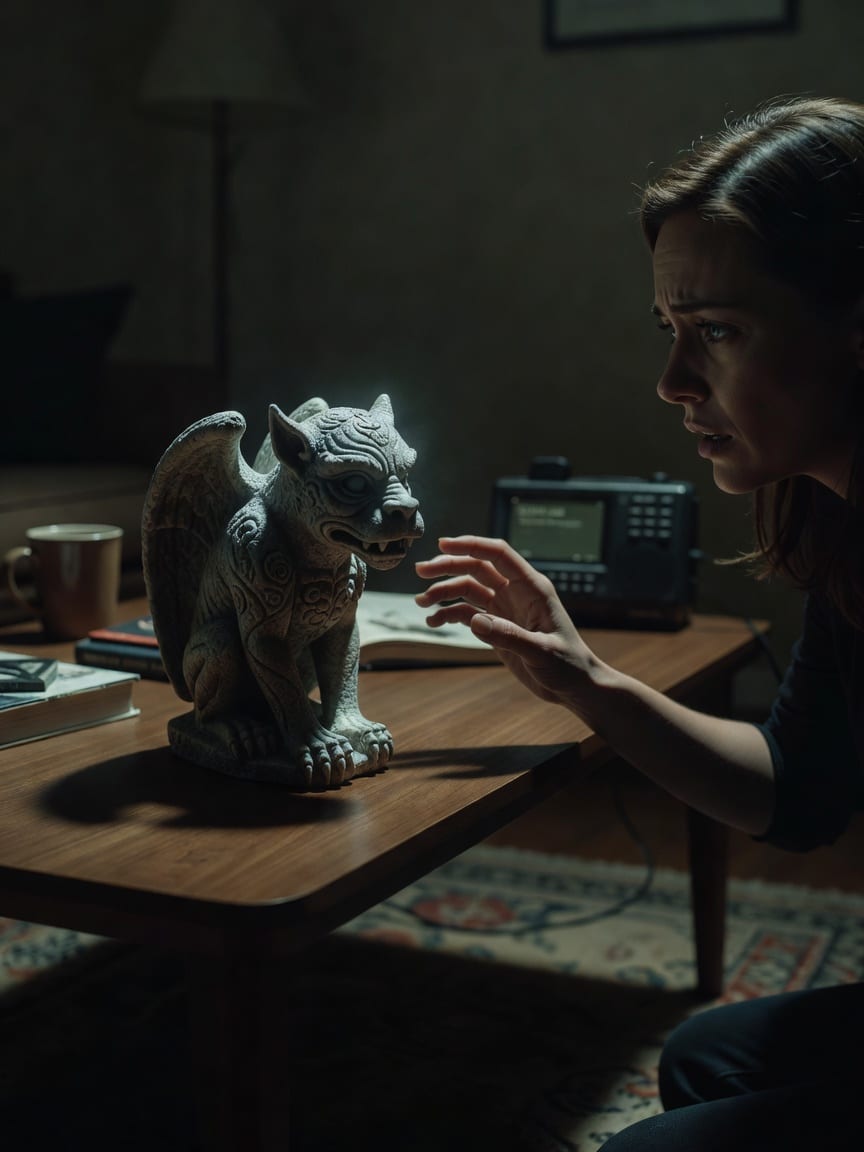
My radio scanner spoke my address at 2 AM. A flat voice read local homes, all with past dates. Mine was the only one in the future.
It was two in the morning, and my quiet house was filled with the usual hum of my weather scanner. But the static broke, replaced by a flat, synthesized voice reading a list of local addresses and dates. My hand froze when it spoke my own address, 181 Foster Drive, followed by a date: October 27th. That date was three weeks from now.
My dashcam footage showed my street change. For five seconds, my car drove on a road that doesn't exist on any map.
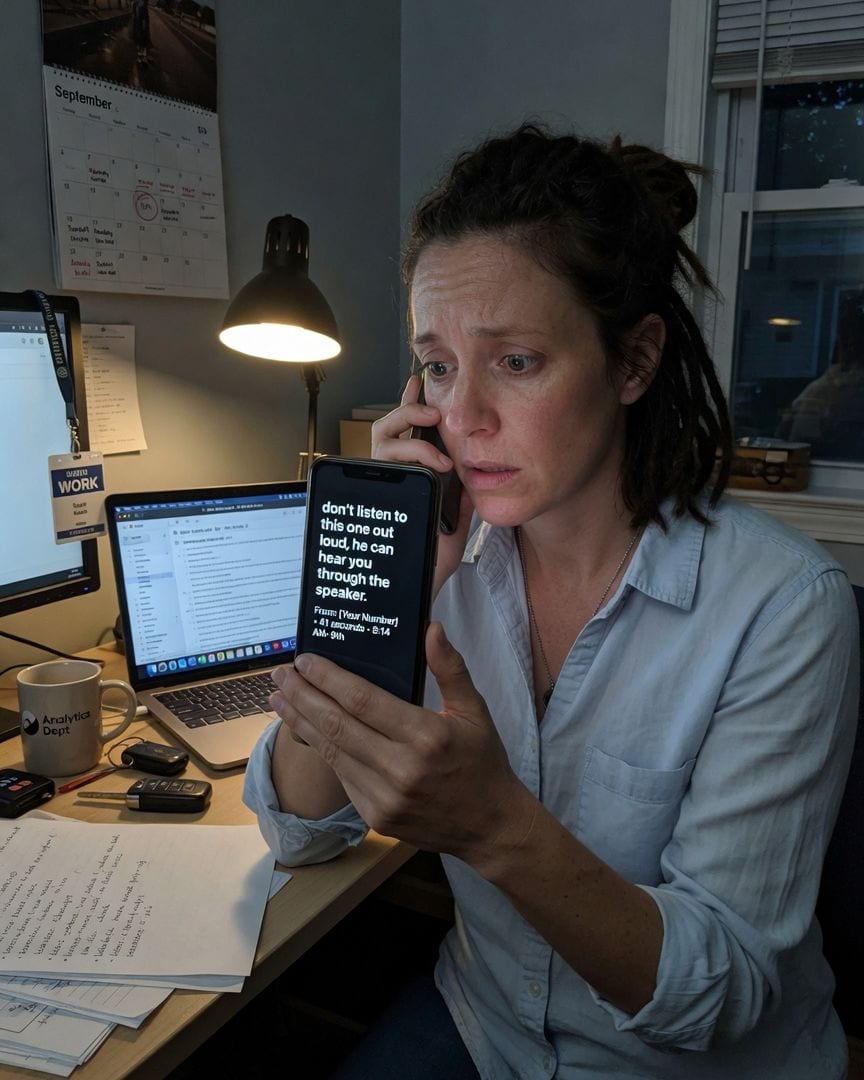
It was a normal Tuesday until my work phone received a new voicemail. The transcription warned, 'don't listen to this one out loud, he can hear you through the speaker.' But the message was from my own number, and the audio was forty-one seconds of absolute, dead silence.
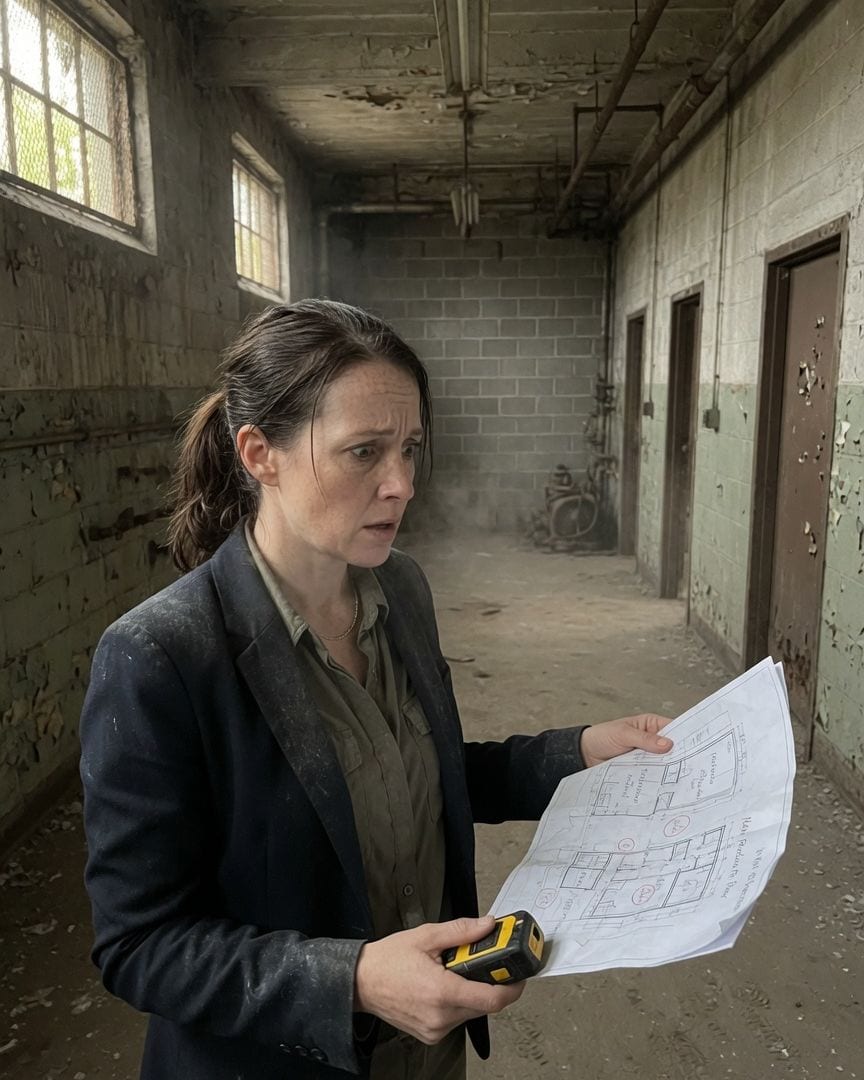
One room is missing from this factory floor. My blueprints show four, but I only found three doors.
Intrigued by an abandoned industrial complex, I secured its old blueprints and entered the cold, silent building. Pacing a long corridor, I meticulously counted doors, comparing them to the detailed plan. The blueprint clearly showed four distinct rooms, but the corridor's length, and my own count, revealed only three doors.
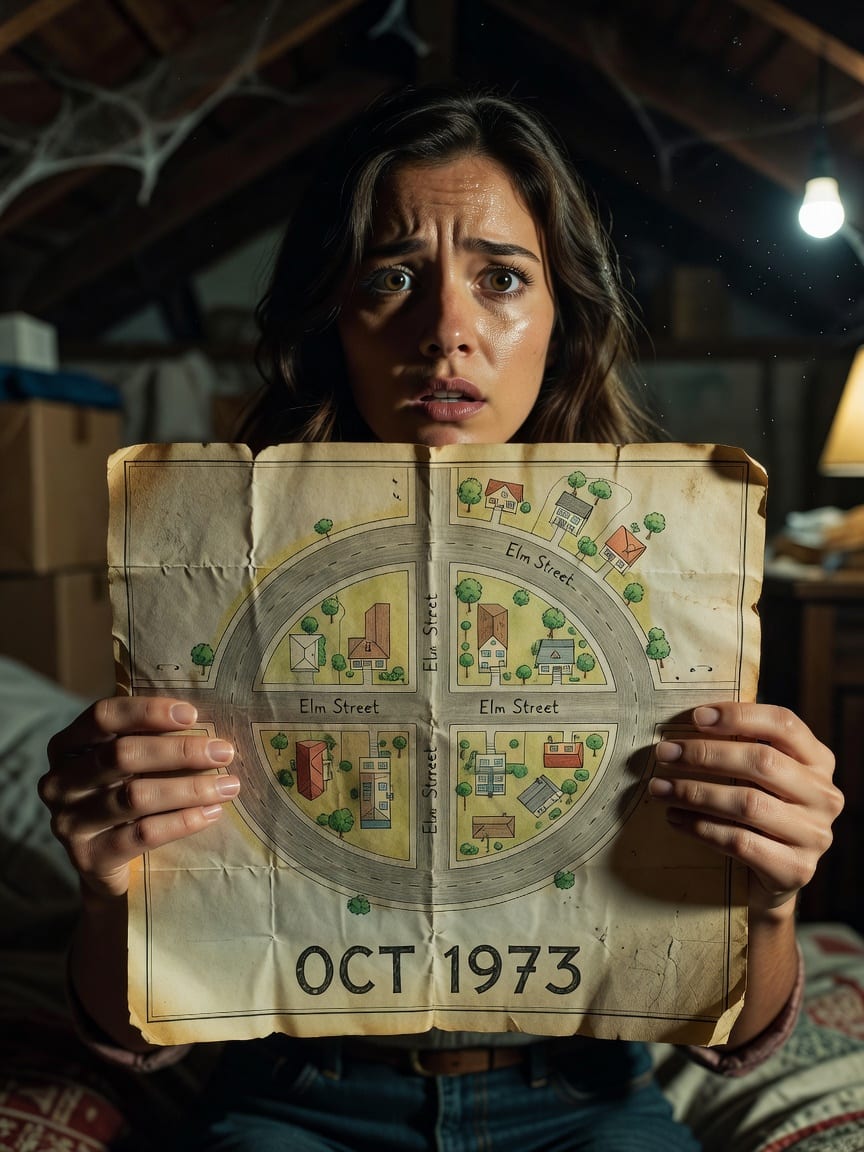
Our removal van's tracker logged 71 miles, looping back to our old flat. The men swore they unloaded somewhere. The map showed only the same postcode, over and over.
We were moving to our new house on Elm Street when the van's GPS tracker showed our movers circling our old address for 71 miles. I dismissed it as a glitch, until I found an old journal in the attic. Inside was a hand-drawn map of Elm Street, labeling our new road as an impossible loop, dated 1973.
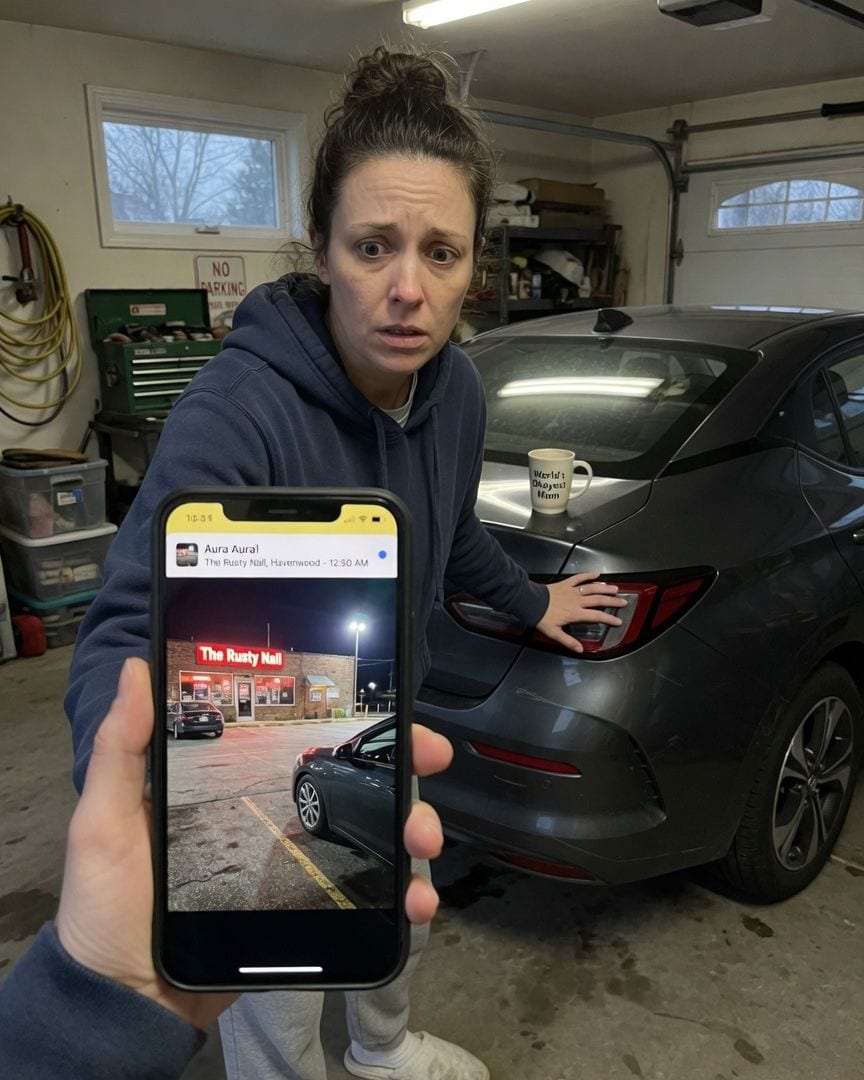
My car's app just pinged it parked at a bar ninety minutes away at 12:50am. It's in my locked garage, cold.
My Tuesday morning started like any other, until my phone chimed with a low-fuel warning from my car's app. That wasn't right; I'd just filled up. The map showed my 2023 Aura sedan 90 miles away at 'The Rusty Nail' at 12:50 AM, even though it was parked, stone cold, in my garage.
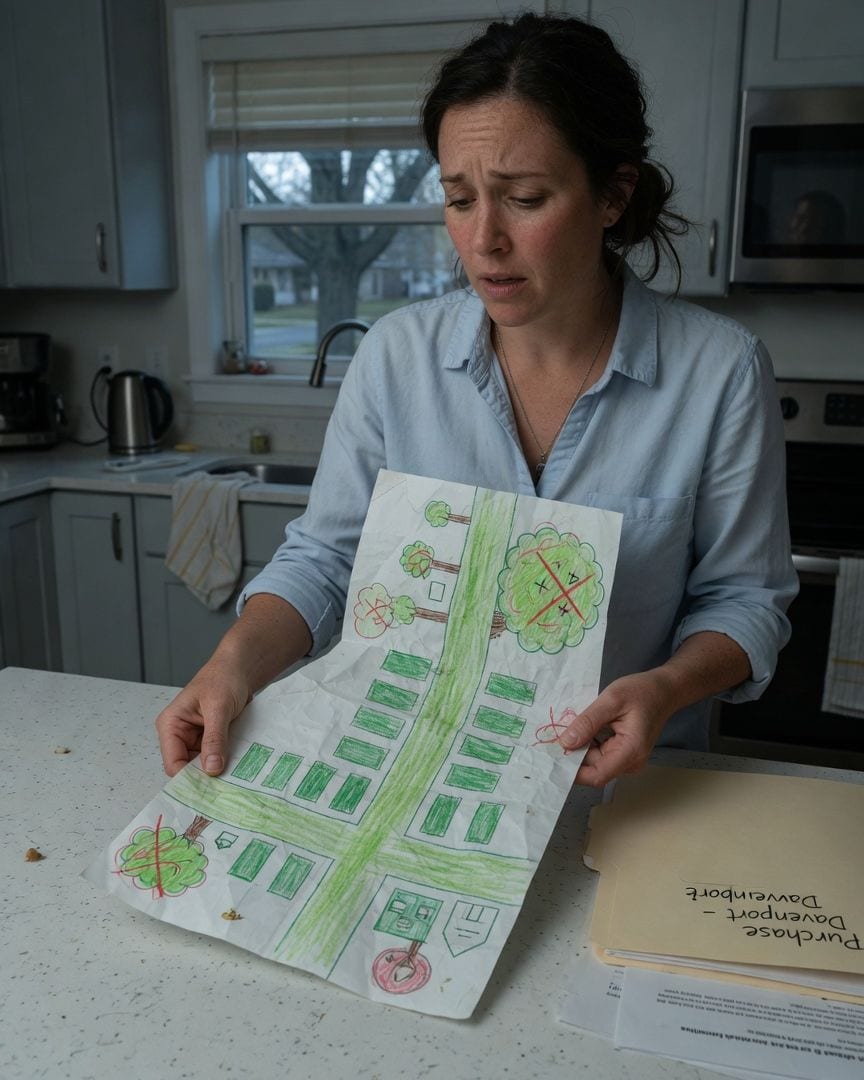
A hand-drawn map keeps arriving through our letterbox — every space on the lane marked green, except the one spot under the old lime tree, alone in red. The agent made us swear we'd never park there.
My new house came with a strange local quirk: weekly maps slipped through my letterbox, each one marking a specific parking spot with an angry red X. A legal addendum about the spot, and my neighbors' evasiveness, made me uneasy. But nothing prepared me for the ancient, identical map I found, which marked my own house with that terrifying red X.