My two-mile trail suddenly had a fourth gate. My mare panicked; the world shifted around us.
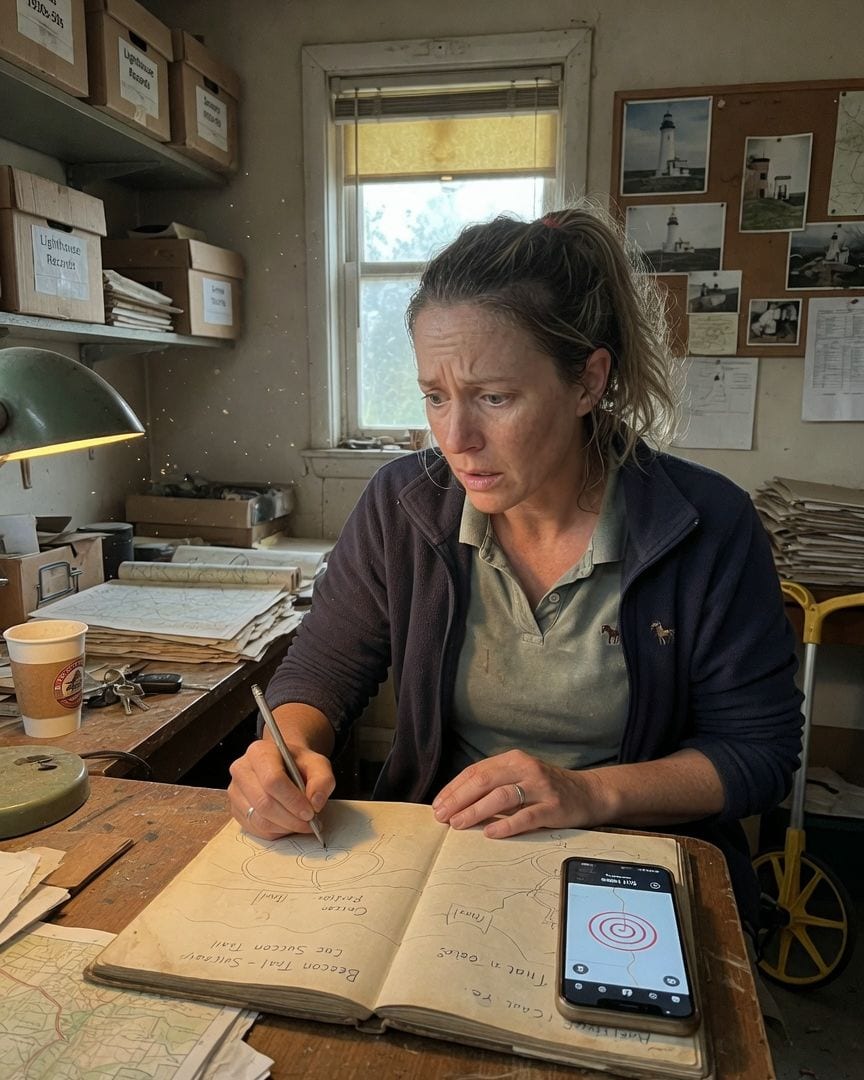
I’m Vivienne Oakley, 34, and I’ve been riding horses since I could walk. My mare, Grace, an eight-year-old beauty, and I have traversed the Beacon Trail a thousand times.
It's a simple, two-mile bridleway that snakes out to the old lighthouse beacon and back. Three worn wooden gates punctuate the path, a comforting, familiar rhythm to our morning rides.
We’d pass the first, then the second, then the third, and soon the whitewashed beacon would gleam in the distance.
Wednesday was different. The ride started like any other. The morning air was crisp, the scent of pine and salt sharp in my lungs. Grace’s hooves beat a steady rhythm on the packed dirt.
We passed the first gate, then the second. The third gate, with its splintered post, creaked open and shut behind us. I saw the beacon, a stark white pillar against the pale sky, just ahead.
We rode for another few minutes, the sound of the ocean growing louder. But then, as we turned a bend in the path, preparing for the gentle descent towards the lighthouse, a fourth gate appeared.
It was old, weather-beaten, just like the others, but it wasn't supposed to be there. And when Grace stepped through it, the landscape shifted.
The beacon, which had been directly in front of us, was now behind us, a distant memory through the trees. We were back at the first gate.
The exact same splintered post, the familiar view of the trail stretching away from the ocean. Grace shied violently, her breath coming in ragged, panicked puffs, refusing to settle. Her eyes rolled, wide and white, at something I couldn't see.
I, a creature of logic and precision, pulled out my phone, heart hammering.
My riding app, usually so accurate, stared back at me with a quiet, insistent lie: nine miles traveled on a track I knew, beyond a shadow of a doubt, was only two.
The next morning, I walked the Beacon Trail alone. No Grace, just my phone in hand, GPS running, a measuring wheel clicking out its precise revolutions beside me. I was determined to find the glitch, the mistake.
I counted the gates, paced the distances, comparing them to old survey maps I’d downloaded onto my phone. Each gate was exactly where it should be. The distances between them were precise, matching the paper records down to the foot.
The path was two miles, exactly. I reached the beacon, its whitewash glinting under the pale sun, and turned back, retracing my steps. I reached the spot where the phantom fourth gate had appeared. There was nothing there.
Just a gentle curve in the path, exactly as it should be. Yet, as I stood there, the GPS on my phone flickered, jumping wildly for a second.
The air around me seemed to ripple, a subtle distortion, like heat haze off asphalt, but it was a cool morning. Then it settled back, the path ahead looking perfectly normal, a familiar two-mile loop.
But when I got home and reviewed my GPS track, it showed a distinct, impossible convolution. A spiraling loop that branched off the main path, doubling back on itself, perfectly matching the phantom nine miles I’d supposedly ridden.
There was no extra gate, no physical anomaly, only the data’s unwavering insistence that something had been profoundly, geometrically wrong. I spent the rest of the day online, digging.
I searched through historical records of the trail, any mention of a 'fourth gate' or a longer path, but every map, every deed, confirmed the simple, straightforward two-mile loop. It was as if my experience simply hadn't happened.
Frustrated, I drove into town, parking my truck by the small, dusty local historical society. I pushed through the heavy wooden door, the air inside thick with the scent of old paper and dust motes dancing in the sunbeams.
I hoped for some obscure map, some forgotten document that would explain the impossible GPS log. After hours sifting through brittle documents, my fingers gritty, I found it.
Tucked into an old surveyor's diary from the 1940s, its leather cover cracked with age. It was crude, faded, the ink bleeding slightly into the yellowed paper, but it was unmistakably the Beacon Trail.
And there, scrawled in faint pencil, was a fourth gate, nestled within an impossible, perfectly circular loop. It branched off the main path and then rejoined it, exactly where my GPS had shown the anomaly.
The loop was an intricate geometric lie, a detail that couldn't exist, yet it was right there, inked into history decades before I was born.
I traced its impossible curve with a trembling finger, the paper thin and cold against my skin.
I laid the brittle, old map on my kitchen table, then opened my laptop, pulling up my riding app data. I painstakingly overlaid the faint lines of the drawing onto my recorded GPS track.
The impossible loop from the map fit my nine-mile path with chilling precision. It wasn't just a coincidence; it was a blueprint, decades old, predicting an event that had happened just days ago.
I showed the map to a few long-time residents, hoping for recognition, for an explanation. Mrs. Henderson, behind the counter at the general store, peered at it over her reading glasses, then merely shrugged.
"Oh, that's just some old-timer's doodle, dear," she said, her eyes a little too blank, her smile not quite reaching them. "The Beacon Trail’s always been two miles."
Other locals offered similar dismissals, attributing it to a cartographic error or a bad memory. But the precision of the match nagged at me.
I started digging deeper, spending days in the library, sifting through microfiche archives of the local newspaper.
I found scattered, half-forgotten reports from decades past: 'Local Man Lost on Beacon Trail, Found Disoriented,' 'Missing Rider's Horse Returns Riderless,' 'Strange Disappearance Near Lighthouse.'
Each incident was attributed to mundane things like heavy fog, poor visibility, or too much drink. But the dates, when cross-referenced, showed a disturbing pattern: roughly every forty years, these 'disorientations' clustered around the same autumn weeks.
My own incident, and the map from the 1940s, fell perfectly into this cyclical recurrence. The local dismissals felt less like ignorance and more like willful blindness, a collective shrug at something they simply didn't want to acknowledge.
One afternoon, as I was leaving the historical society, a stack of old town records clutched under my arm, I caught sight of an elderly man watching me from the porch of the general store. Albert Winslow.
A local fixture, usually he sat there, whittling wood, barely looking up. Today, his knife was still, his gaze fixed on me. He didn't wave, didn't smile, just watched with an unnerving stillness that prickled the hairs on my arms.
Later that week, I returned home to find the old hand-drawn map, which I’d carefully left weighted down on my kitchen table, subtly moved. A corner was folded differently, a faint crease where none had been. I lived alone.
The next day, after buying groceries, I found a small, unmarked envelope tucked under my windshield wiper. My hands trembled as I opened it.
Inside, a single, faded newspaper clipping: 'Mystery of the Beacon Trail Lingers,' it read, detailing a disappearance from 1904. Underneath, scrawled in neat, cursive handwriting, was a single word: 'Careful.' The warning was clear, personal, and profoundly unsettling.
Someone knew I was digging, and they were close. The air in my small kitchen seemed to tighten around me, suddenly cold.
I found Albert Winslow on his porch the next morning, just as the dew was burning off. He was back to whittling, wood shavings curling off his knife.
I walked right up to him, holding out the clipping and the note. He didn't flinch. His gnarled fingers continued their slow, steady work.
"You're asking questions that don't want answers, girl," he said, his voice raspy, calm, and utterly devoid of surprise. "The trail has its ways."
I pressed him, laying out my evidence on the small table between us: the GPS logs, the old map, the newspaper clippings about the disappearances. I talked about the 40-year cycle.
Albert listened, his pale eyes unblinking, fixed on a point beyond me. The whittling stopped. The air in the room felt suddenly thick, as if the space itself was compressing around us.
"It comes and goes," he finally admitted, his gaze now locking onto mine. "The path. Always has. Some call it a fold, some call it a hunger. It needs its due."
He explained that the 'extra' miles were not just an illusion, but a real consumption, a draining of something unseen, something essential.
"My family has always watched it," he said, nodding towards his house, a weathered farmhouse that had stood on this land for generations. "Kept records. Not for stopping it, mind you. Just for understanding the pattern.
When it wakes, when it sleeps." He rose, slowly, his joints creaking, and went inside. He returned a moment later with a thick, leather-bound ledger, its pages yellowed with age, its cover soft with handling.
He opened it to a page filled with careful, spidery script, detailing dates and observations. I leaned closer, my heart thumping against my ribs, a cold dread solidifying in my chest.
"It's been active this cycle," Albert murmured, his voice low, "since late September. Just like the last." He pointed to an entry that detailed a similar geometric anomaly, a precise match to my own experience, dated just last Wednesday.
The cold dread solidified into something far more coherent, far more terrifying than a simple ghost story.
Albert Winslow watched my face, his expression impassive, as I read the ledger. His finger, calloused and stained with wood dust, moved down the page, past entries describing lost dogs and disoriented hikers, each one a small chill.
Then it stopped at a specific notation from forty years prior. "October 14th, 1984," I read aloud, my voice barely a whisper, the words catching in my throat.
"Oakley's mare, Grace, returned from the Beacon Trail, nine miles logged on a two-mile loop. The geometry returned." My breath hitched. My own horse, Grace, was eight years old.
This 'Grace' was a mare from my family line, the same name carried down through generations. The entry detailed the exact impossible geometry I had experienced just days ago, my family name explicitly linked.
My own experience wasn't just a recurrence; it was a re-enactment, a part of a pattern my family had unknowingly sustained for generations.
I looked up at Albert, his face impassive, and realized the chilling implication: I hadn't stumbled upon the anomaly; I, and Grace, had always been inside it.
Albert explained, his voice flat, matter-of-fact, as if discussing the weather. "The path, it feeds on… presence. On being walked, ridden. And some lines, some bloodlines, they draw it out more strongly.
Your family, the Oakleys, they’ve always had a way with horses, and a way with this land. Grace, her lineage… she's a bell, ringing for the path."
He went on to describe how the path’s geometry would subtly shift, creating the 'extra' distances, not as a trick of the eye, but as a real, temporary expansion of space, a mechanism for its consumption.
"It takes a little, each time," he said, gesturing vaguely with his whittling knife, "a little of the journey, a little of the life. If it doesn't get it, it takes more. It gets... impatient."
He showed me earlier entries in the ledger, detailing years when the trail went unridden by the 'right' families, entries that spoke not just of 'disorientations,' but outright vanished people, entire families, never seen again.
The impossible map from the archive, my GPS logs, the scattered newspaper reports of lost travelers – it all clicked into a horrifying, coherent pattern.
The dread was not just the wrongness of it, but its cold, logical purpose, its quiet, consistent hunger. I felt a profound chill that settled deep in my bones.
It wasn't a monster in the woods; it was the woods itself, the very fabric of the land, and I was its unwitting shepherd, bound by blood.
I stared at Albert, a knot of cold understanding tightening in my stomach. "So, what do I do?" I asked, my voice barely audible, small in the sudden silence between us.
Albert merely shrugged, a faint, sad smile touching his lips. "You do what your family has always done. You ride. Or you don't. But if you don't… the path will find another way to feed. It always does."
He wasn't suggesting I stop riding; he was explaining a grim, unavoidable truth. The choice wasn't about defeating a monster, but about managing an ancient, indifferent hunger that stretched back generations.
I thought of Grace, my beautiful mare, her intelligence, her willing spirit, now complicit in this silent, spatial theft. I could sell Grace, leave this town, try to outrun the pattern.
But Albert's calm certainty echoed in my ears: "It always does."
The horror was the implication of complicity, of a fate woven into my very lineage, not a battle, but a quiet, unending surrender to a geometry that refused to be contained.
The path wasn't just on the map; it was in my blood.
I sold Grace to a quiet farm upstate, far from the coast. I moved out of my family home, renting an apartment in a city hours away. I stopped riding, stopped hiking, stopped trusting maps.
The Beacon Trail, to anyone else, was just a pretty, two-mile path, occasionally prone to fog. The local paper ran no more stories of 'lost travelers.'
Albert Winslow continued to sit on his porch, whittling, watching the world with calm, knowing eyes. The ledger remained in his keeping, its entries waiting for the next cycle.
I tried to resume a normal life, but the world now seemed subtly off-kilter. The familiar lines of my city apartment building, the steady rhythm of traffic outside, they offered no comfort.
A flight of stairs felt too long one day, an impossible number of steps stretching between floors.
A hallway in my apartment building, which I'd walked a hundred times, seemed to stretch an impossible distance before a door, the carpet pattern subtly blurring as I walked.
I found myself counting steps, measuring distances with my phone, an obsessive habit I couldn’t break.
Every block I walked, every corner I turned, I was checking, double-checking, my mind mapping out the spaces, trying to catch the shift, the bend, the impossible expansion before it happened.
Sometimes, when the silence was deepest, especially late at night, I felt a faint, almost imperceptible pull, a whisper from the direction of the coast. A cold breath, like the one that had distorted the trail that morning.
I never looked. I couldn't. But I knew, with a cold certainty that settled deep in my bones, that it wasn't over. It had just changed its appetite. And I was still, somehow, connected.
Vivienne Oakley lived alone, rarely venturing outside the familiar grid of the city. Her old Facebook profile, once filled with photos of Grace and the open trail, remained untouched.
Occasionally, neighbors reported odd spatial distortions in her building – a hallway that seemed to lengthen, a door that took too long to reach. The geometry was always hungry, and it had simply followed.
If this one got to you
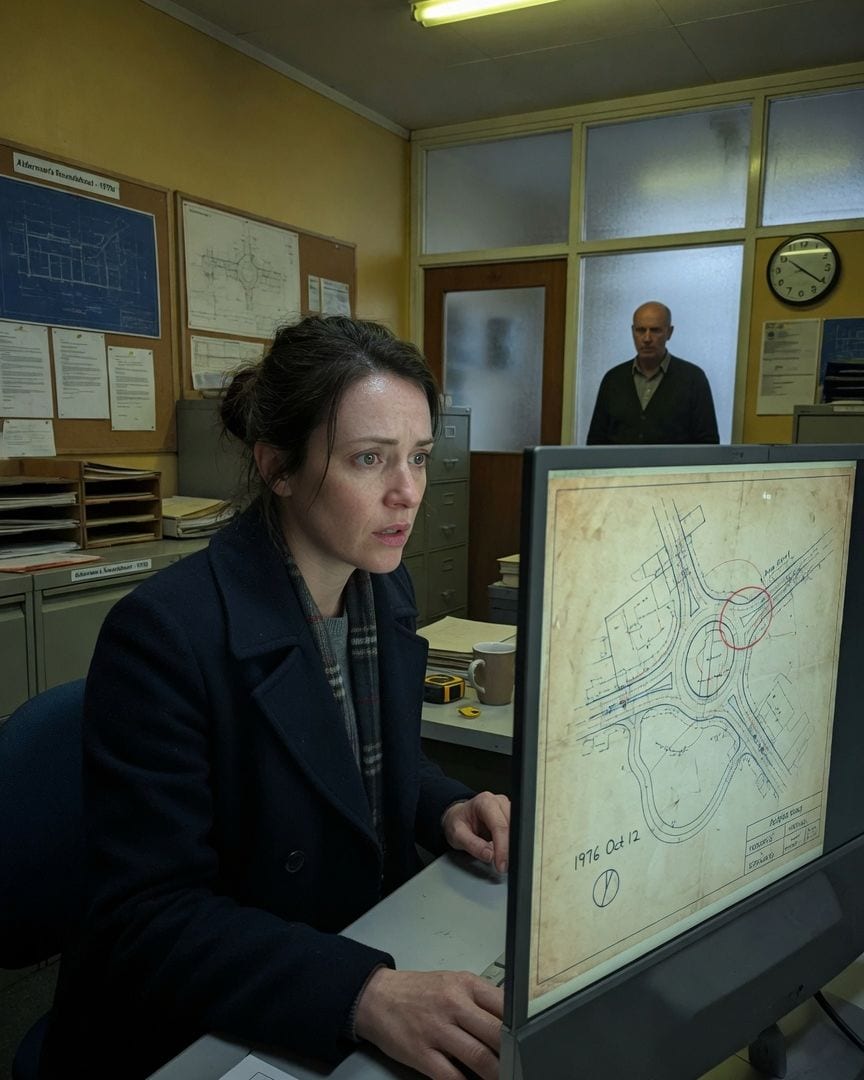
My roundabout exits kept returning me to the start, fuel dropping with each lap, the same flagpole turning past my window.
Driving home, I took a familiar exit off the Alderman's roundabout, a route I'd driven hundreds of times. But the curve felt wrong, and each exit I took poured me back onto the same island, adding miles to a journey that hadn't happened. My instruments later confirmed the road itself was a Möbius strip.
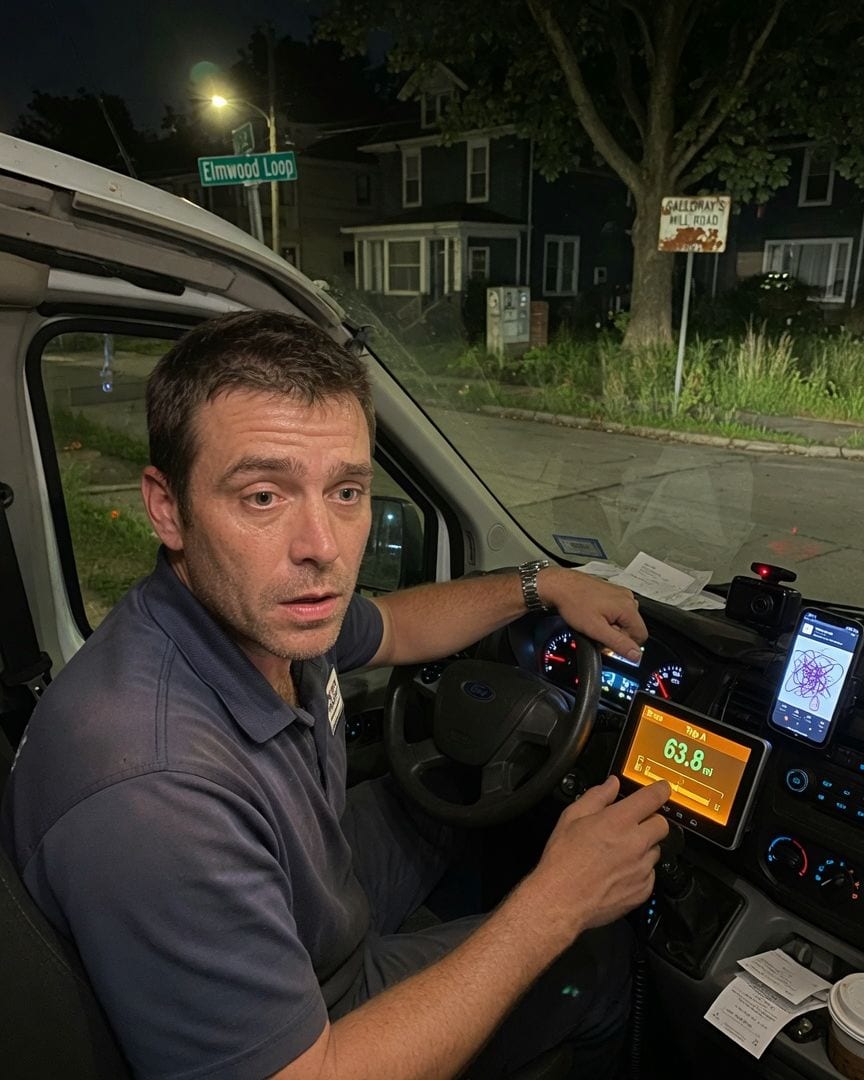
My delivery van's fuel gauge dropped a quarter tank on the Elmwood loop last night. It logged sixty-three miles, a loop I can walk in ten minutes.
I know my routes and my van, but the Elmwood Loop was different. My GPS app showed me standing still on the street, even as I walked for miles, my colleague confirming I hadn't moved. The impossible location left a blank, grey spot on the map.
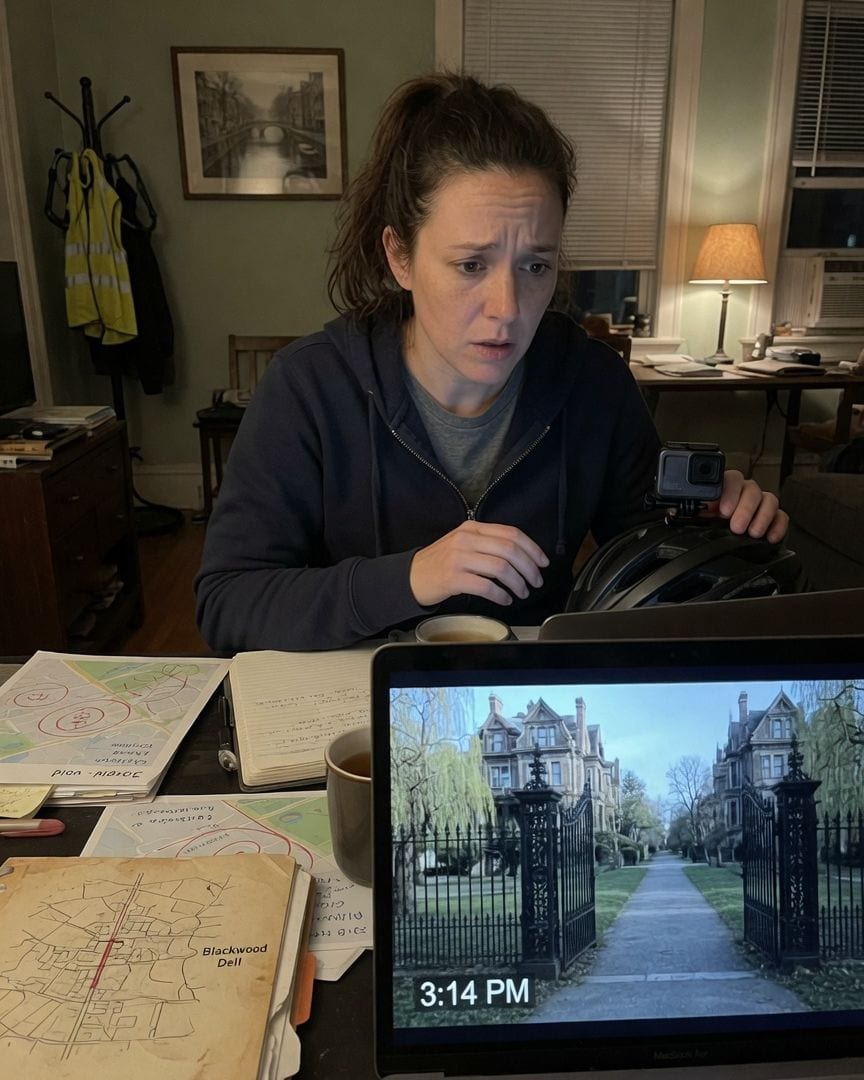
My bike camera shows a long avenue of tall gated houses. That road isn't on any map I can find.
My bike camera is usually just for practical facts, recording every detail of my rides. But when I reviewed Sunday's footage, a thirty-second segment showed something impossible: a long, silent avenue lined with grand, unknown houses. This road appeared exactly where my familiar canal path should have been—and it isn't on any map.
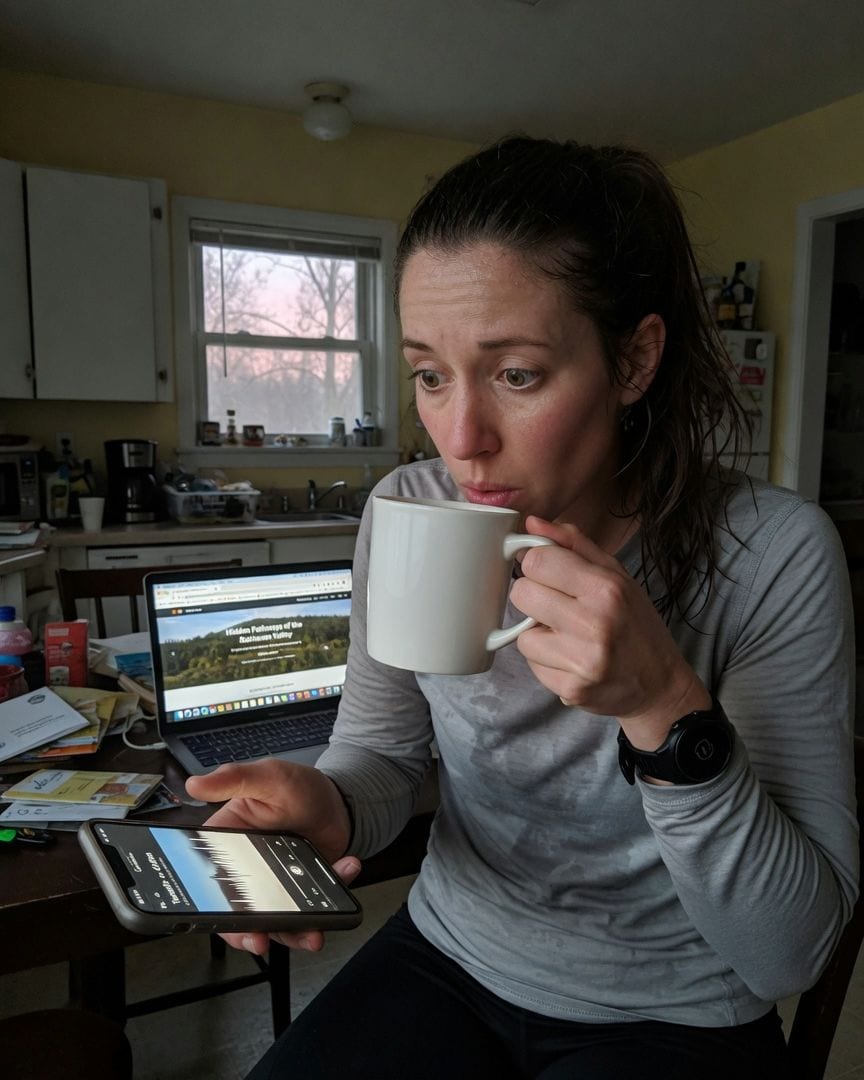
My running watch caught footsteps and a low voice right at my shoulder, saying 'keep going, don't turn around.' I was completely alone on the towpath.
My morning runs on the old canal towpath were my sanctuary, always deserted. My new running watch recorded thirty seconds of audio from that solitary path. But playing it back, I heard a second set of footsteps and a low voice, inches from my ear, saying, 'keep going, don't turn around'.
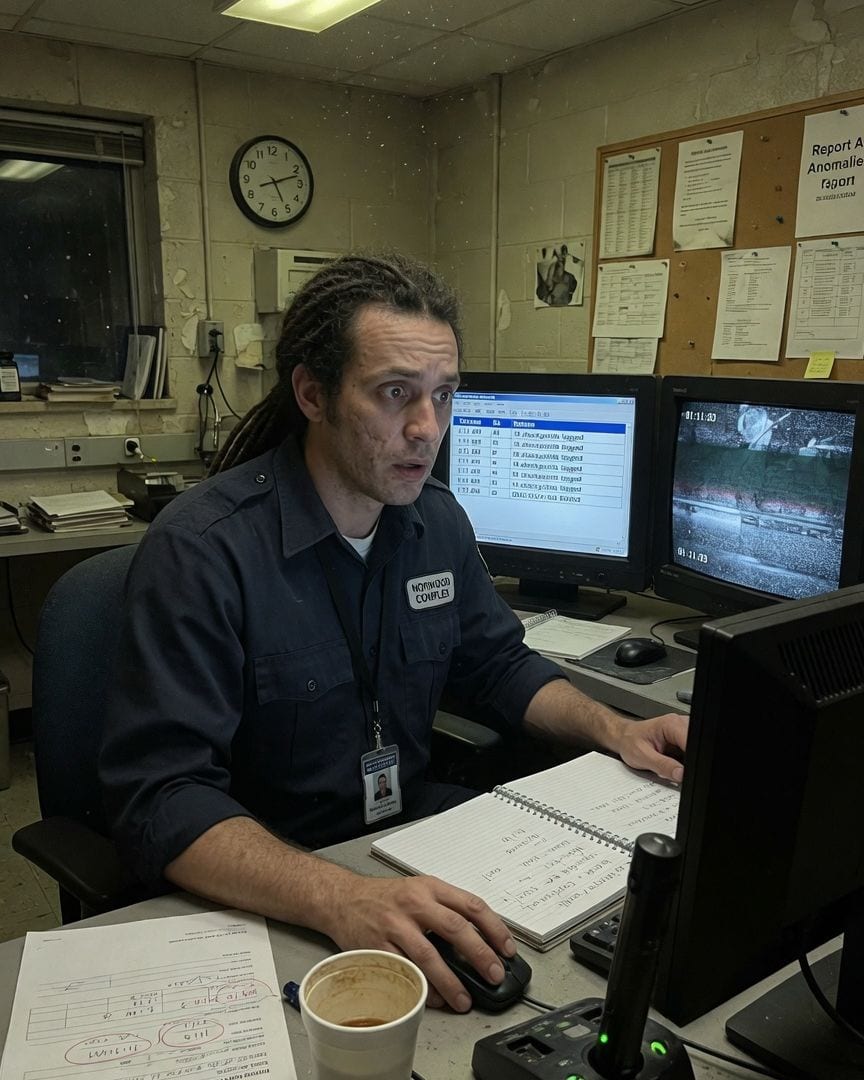
Three years ago, my security wand logged a full patrol at 1:11 AM. I was working in Arizona.
My night shift at the Norwood Complex involved the usual routine: plugging in my security wand and catching up on incident reports. But the morning's security log for that Friday showed an impossible full building sweep at 1:11 AM. All fourteen checkpoints were logged as hit by my wand, in under four minutes, a route that normally took me at least twenty.
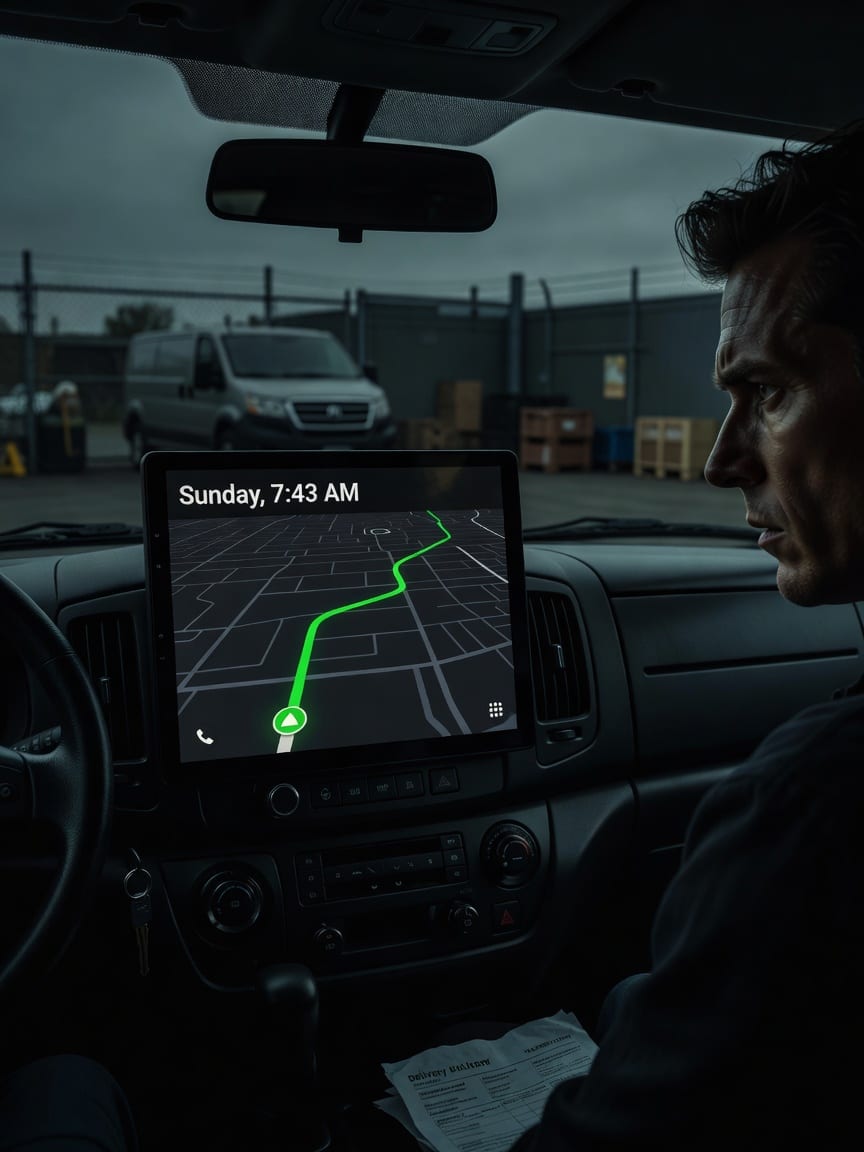
My delivery van drove 130 miles last Sunday, stopping for four hours in another state. It never left our locked yard. The GPS log drew the whole trip, timestamped to the minute.
I was just doing my job, sitting in the dispatch office with my manager Joel, when he pulled up the GPS log for my delivery van, Unit 74. It showed a 130-mile round trip to Delaware, engine on for four hours, with a distinct stop, all while my van was locked in the yard and I was home. The camera footage confirmed it hadn't moved an inch, yet the system insisted it had traveled hundreds of miles.