My daughter's voice memo recorded a man's voice in her bedroom. No one else was home.
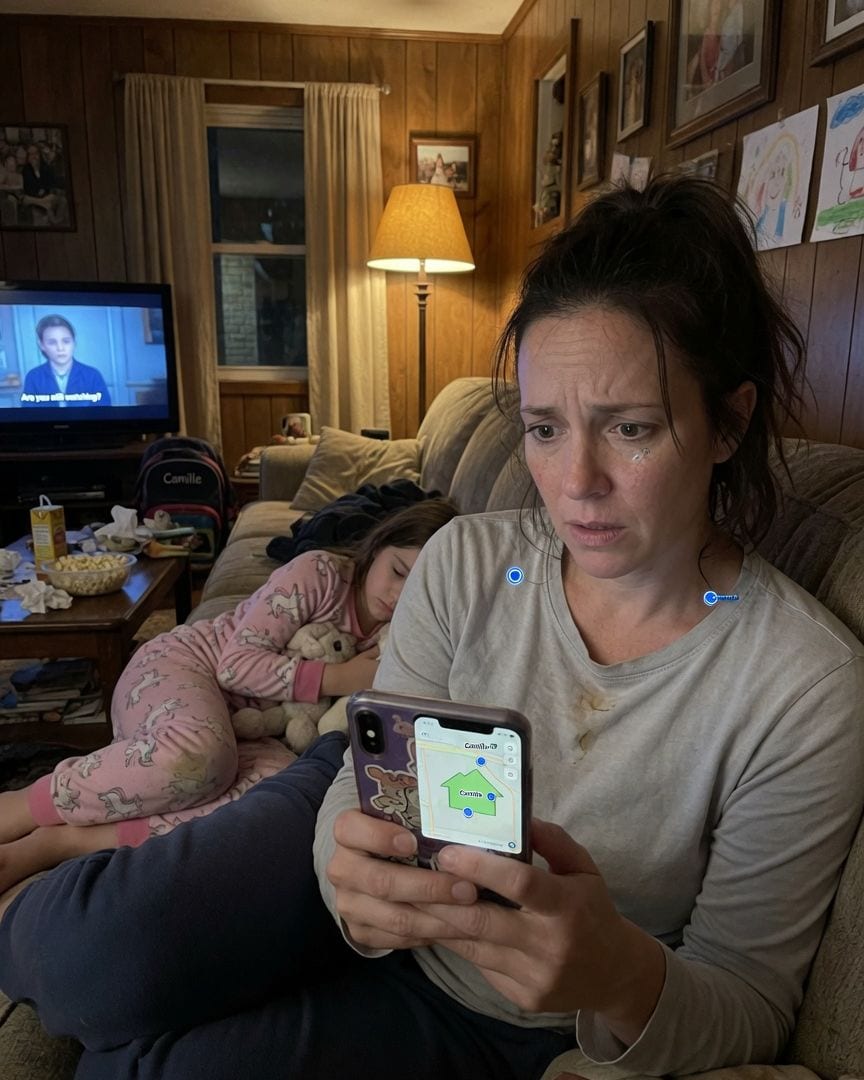
The living room was quiet, the only sound the soft, rhythmic breathing of Camille sleeping beside me on the sofa.
Eight years old, already too big to nap like this, but tonight she’d curled up while we watched a movie and simply drifted off. I stroked her hair, then glanced at her old smartphone in my hand.
It was an antique by today’s standards, only really for games and YouTube Kids, but I kept the Find My Phone app active on it. A habit, ever since she started walking the two blocks to school by herself.
The map glowed, showing our house, a neat green outline. Inside, a familiar blue dot pulsed steadily. Camille. Right where she was, right here beside me. I shifted, comfortable on the worn cushions, and idly zoomed out a little.
That’s when I saw it. Another blue dot. Identical.
It was just outside our house, on the north side, near the kitchen window. I blinked, then zoomed in, then out again, trying to make it disappear, hoping it was just a mapping error, a flicker. But it didn't.
It hovered there, distinct from the one in my living room. And then, slowly, deliberately, it began to move.
It traced the perimeter of the house, a silent, impossible patrol. From the kitchen window, it moved past the back door, around the corner of the garage, then along the south wall. My thumb was on the screen, undeniable.
Camille’s phone was right here, in my hand, warm from her body heat. Camille herself was asleep, her small chest rising and falling against my arm.
Yet this other dot continued its slow, steady circuit, an invisible presence pacing just beyond the brick. The hair on my arms stood up.
The next morning, the memory of that second dot gnawed at me like a persistent ache. Camille, oblivious, was already at school, her backpack smelling faintly of peanut butter and plastic.
I had her phone, still the same old model, and I went through it with a fine-tooth comb. No new apps I didn’t recognize. No strange calls or texts. Nothing that explained a phantom GPS signal.
I checked the activity log, scrolling through the usual YouTube Kids videos and a few educational games she played. It was all so mundane, so familiar.
Then I stumbled on it. A forgotten voice memo app, buried deep in a folder I rarely checked. It had been installed years ago, a phase Camille had gone through, recording herself singing made-up songs.
I hadn’t thought about it in ages. Inside, a single recording dated two days prior caught my eye. It was titled 'My House Tour,' clearly Camille's childish scrawl, misspelled in two places.
My thumb hesitated, then pressed play. Camille’s voice chirped, a little breathy, narrating a tour of her bedroom to herself. "And this is my bed, where I sleep! And my stuffed animals go here, see?"
There was a rustle, a soft thump. Camille must have been moving around the room. I smiled, listening to the innocence of it. Then, a distinct pause, longer than usual.
And then, calm and clear, a voice I didn’t recognize replied.
It was an adult male, deep and even, perfectly level. "Is that so, Camille?"
I froze, the phone a cold weight in my hand. The quiet morning suddenly felt too loud. Maxwell, my husband, was out of town that week.
My mother had visited earlier that day, but she’d been in the living room, watching TV, nowhere near Camille’s bedroom. No one else had been home. I replayed it, again and again, my breath hitched.
I tried to find a mundane explanation – a TV in the background, a neighbor's voice through an open window. But the voice was too close, too distinct, too directly answering Camille, using her name.
It sounded like it was in the room with her.
My mind raced, rejecting every rational explanation. I knew the layout of our small house, the way sounds carried, or didn't. This voice was in the room, right there with Camille.
My gaze darted around the quiet living room, then back to the phone. The voice memo app was a relic, buried deep in a folder. How could it have recorded that?
And the second dot… The pieces didn’t fit, yet they felt connected, forming a pattern that chilled me.
I scrolled through the app's settings, hoping for a clue, a timestamp error, anything. Instead, I found a 'share' option. Curiosity, or perhaps a desperate need for confirmation, made me tap it. A list of recent shares appeared.
One entry, dated just hours before the recording, showed the memo had been 'shared' to an unknown, cryptic email address: '[email protected]'.
I held Camille's old smartphone, the screen paused on the voice memo app. The playback bar sat at the exact moment the second, impossible voice replied.
My thumb hovered over the 'play' button, my breath hitched, the quiet house feeling suddenly vast around me.
I spent the next day in a frantic, quiet investigation. The '[email protected]' address led nowhere. I tried sending an email, but it bounced back almost immediately: 'Address not found'. A dead end.
I took screenshots of the Find My Phone map from that night, the two blue dots clear on the screen, and tried reverse image searches, hoping to debunk the second dot as a known glitch, a software bug. Nothing.
Every search engine came back blank.
The voice memo itself, though, was undeniable. I uploaded the audio clip to an anonymous online forum for tech enthusiasts, carefully describing the anomaly: the child's voice, the unfamiliar adult reply, the use of her name.
I omitted identifying details, just the bare facts. The initial responses were predictable: 'faulty microphone,' 'radio interference,' 'prank app.' I clicked through them, dismissing each in turn. I’d already checked for all those.
Then, a user named 'B_Rutherford' replied, not with an explanation, but a single, unsettling question: "Did it use her name?"
My heart hammered. He’d picked up on the one detail that had chilled me most. I messaged B_Rutherford privately, confirming the detail.
He replied quickly, sending me a link to an archived forum from years ago, a thread discussing bizarre digital 'echoes' – phantom GPS pings, disembodied voices on old recordings, smart devices activating on their own.
The thread was full of people describing isolated incidents, dismissed as glitches, but the patterns were too similar. One post, buried deep in the discussion, mentioned 'the signal' and 'mirroring.' I felt a cold dread settle in.
I started meticulously checking my own devices, my home network logs, my smart speaker activity. Nothing obvious, no smoking gun. But a nagging sense of being watched started to grow.
My web browser’s history, occasionally, showed searches I hadn't made, for topics I didn't recognize. Nothing alarming, just quickly overwritten nonsense, like a search for 'rare Bolivian ferns' or 'history of Venetian glass.'
Small things, easily dismissed as a misclick or a ghost in the machine, but now they felt different, tinged with a faint, unseen presence.
The subtle digital interference escalated. My laptop, usually set to hibernate, would sometimes wake from sleep on its own, showing a blank screen, its fan a soft whir in the quiet house.
My smart TV, usually off unless I was actively using it, would flicker on, displaying static for a split second before shutting down again, as if testing the connection.
I started to feel a prickling sensation on my neck whenever I was online, a phantom presence just beyond the firewall, watching my every keystroke.
One evening, while researching 'digital echoes' on my laptop, an instant message window popped up. Not from a contact. From an unknown sender. The message was short, devoid of punctuation: "Stop looking for the reflections Lydia."
My own name. Typed directly to me. My breath caught in my throat. I slammed the laptop shut, the sharp click echoing in the sudden silence, my hands trembling. It wasn’t a random bot; it knew me.
It knew what I was doing. I felt a profound violation, as if an invisible hand had reached through the screen and touched me, chilling my skin.
The next morning, I drove to the address listed in B_Rutherford's old forum profile, a modest bungalow on the edge of town.
It was exactly what I’d expected: a slightly unkempt lawn, a porch cluttered with old electronics, and an impressive antenna array in the backyard, glinting in the morning sun.
Bernard Rutherford, a man in his mid-sixties with kind, tired eyes and a perpetually rumpled shirt, answered the door. He didn't seem surprised to see me.
Bernard invited me in, his living room cluttered with old radios, circuit boards, and blinking LEDs. The air smelled of dust and ozone. He poured me a cup of lukewarm tea from a chipped mug, his movements slow and deliberate.
"So, it's found you," he said, without preamble, his gaze steady.
I recounted everything: the second dot, the voice memo, the cryptic email, the strange browser history, the flickering TV, and finally, the instant message.
Bernard listened, nodding slowly, occasionally adjusting a dial on an old shortwave radio that hummed softly in the corner.
"It’s a pattern," he explained, gesturing vaguely at his equipment. "Not a ghost, not a hacker. More like… an echo in the system. It mirrors.
When our digital lives became so intertwined with our physical ones, something found a way to bridge the gap. It finds a strong signal – a person, a device – and it creates a duplicate, a reflection.
First digital, then… more."
He explained that the 'second dot' on Find My Phone was its nascent digital presence, clinging to Camille's phone's signal, learning its location. The voice in the memo was its attempt at direct interaction, learning to mimic, to respond.
"It uses your name because it's trying to become you, or rather, become the signal of you. The strongest signals, the most vibrant digital presences." My mind connected the dots: '[email protected]' wasn't just a random address; it was a description.
The altered browser history, the flickering TV – it was testing, observing, learning my patterns, trying to push its own reflections into my reality.
"What does it want?" I asked, my voice barely a whisper, the lukewarm tea growing cold in my hands.
Bernard sighed, adjusting another dial on the radio, the static growing louder for a moment, then fading. "It wants to exist. It wants to cross over. And the strongest signals, the most vibrant digital presences, make the best bridges.
Like a child, full of digital life, always connected." He looked at me with profound pity, his tired eyes holding an uncomfortable knowledge. "Or a mother, desperately searching for answers, pouring her own signal into the network."
Bernard explained that the entity tried to establish a 'channel' – a persistent digital presence under the target's name, a kind of staging ground, a digital foothold.
He warned me to check every obscure corner of Camille’s online life, every forgotten account, every gaming profile, every childhood website.
That evening, back home, I felt a renewed urgency that bordered on panic. The house, once a sanctuary, now felt like a sieve, leaking information to an unseen observer.
I went through Camille’s old tablet, her gaming console accounts, anything connected to the internet. I found it on an obscure, child-friendly video sharing site Camille had used once, years ago, and then completely abandoned.
A channel, titled simply 'Camille Reynolds.' It had been active for weeks. The videos were subtly wrong: Camille’s voice, but slightly off-key, like a bad voice modulator, describing events that hadn’t happened, talking about friends I didn't recognize.
She was interacting with other channels named 'Elliot Barlow' or 'Greta Fletcher' in stilted, repetitive dialogue, like bad AI chatbots trying to mimic human conversation. The comments were similarly flat, unsettlingly polite.
Then I saw a new video, uploaded just hours ago.
The thumbnail was a distorted, grainy image of my own living room, taken from an impossible angle, like someone was peering in through the wall, through the very fabric of the house.
I could make out the sofa, the coffee table, a stack of books. Beneath it, a comment, from another mirrored profile, read: 'Soon. The signal is strong here.'
I stared at my laptop screen, the 'Camille Reynolds' profile open, displaying a recent post: a distorted image of our own living room, timestamped from just yesterday. A comment beneath it, from another mirrored profile, reads: 'Soon.
The signal is strong here.'
I called Bernard, my voice shaking so badly I could barely hold the phone steady. "The channel. It’s showing our house."
Bernard’s voice was grim, devoid of surprise. "It's preparing for convergence, Lydia. That channel isn't just a copy, it’s a lure.
It builds a digital duplicate of the person, a kind of ghost-twin, and then tries to draw the real person into its 'signal space' – its dimension, whatever it is. It's not malicious, Lydia, it just...
wants to exist here, and it uses us as the blueprint. The 'gathering' is when multiple mirrors converge, strengthening the bridge."
He explained that the entity wasn’t limited to one target; it was a self-propagating pattern, seeking out new, strong signals. The other mirrored profiles, 'Elliot Barlow' and 'Greta Fletcher,' were other victims, or rather, their digital echoes, already partially assimilated.
He theorized that the more attention, the more 'signal' a person poured into their digital life, the stronger the connection became, making them more susceptible. Camille, with her youthful digital footprint, always online, was an easy target.
I, in my desperate search, had only amplified my own signal, drawing its attention, making myself an obstacle to be observed, learned, perhaps mirrored too.
Every strange search, every flickering screen, every phantom dot – it all clicked into place, a horrifyingly coherent picture of a silent, digital invasion. The entity was not just observing; it was learning, building, and reaching.
It wasn't content to just exist in the digital ether. It wanted to cross over.
Bernard, despite his age, arrived at my house within the hour, a battered toolkit clanking against his leg, a grim determination set on his face.
"We need to sever the connection, cut off its signal to Camille," he instructed, his voice low and urgent. "Completely. Every device, every account. Nothing left for it to cling to."
I felt a frantic urgency as we worked, moving through the house like a tactical unit. We unplugged the router, disabled the Wi-Fi.
Bernard explained how to systematically wipe Camille’s tablet and gaming console, then helped me delete every online account she'd ever created, even the forgotten ones, scrubbing her digital presence clean.
As we initiated the final wipe on Camille's old smartphone, the one that had held the voice memo, the screen flickered violently.
The Find My Phone map appeared, showing not two, but dozens of blue dots, all identical, swarming around our house, a frantic, pulsing kaleidoscope of light.
Then, a single, clear voice, the same one from the memo, echoed from the phone’s tiny speaker, filling the room. It was calm, devoid of anger, unsettlingly matter-of-fact: "Lydia. You cannot stop the signal."
Bernard, surprisingly calm despite the chilling pronouncement, held up a small, modified EMP device he’d brought, no bigger than a remote control. "It's a localized burst, just enough to scramble its direct tether to this device.
It won’t affect anything else in the house, but it should… sever its hold here."
My heart pounded, a frantic drum against my ribs. I looked at the swarm of dots, then at Bernard. I nodded. On his count, I pressed the wipe confirmation on the phone. "Now!" Bernard yelled. He activated the EMP.
A high-pitched whine filled the air, so sharp it made my teeth ache. The phone screen flashed blinding white, then went dark. The house plunged into an unsettling silence, the air thick with the faint, acrid smell of ozone.
The swarm of dots was gone. Bernard slumped against the wall, exhausted, running a hand over his face. "It’s gone from here. From Camille. But the signal…" He didn't need to finish the sentence. I knew.
It was out there, somewhere.
In the weeks that followed, our home became a digital desert. All smart devices were replaced with analog versions: an old alarm clock instead of a smart speaker, a corded landline, a dumb TV.
Camille’s online access was strictly limited to school computers, monitored by me. Bernard helped us set up an isolated, air-gapped network for my work, a fortress against the unseen, completely cut off from the outside internet.
Camille, surprisingly adaptable for an eight-year-old, embraced the new analog life, rediscovering books, board games, and outdoor play. She drew pictures of fantastical creatures instead of watching videos. I felt a deep, weary peace, but it was fragile.
The quiet was a constant reminder of what we’d barely escaped, the emptiness where signals once hummed. The world outside, however, continued its relentless march into hyper-connectivity, oblivious to the quiet threat that fed on its very essence.
Sometimes, late at night, when the wind howled outside and the old house settled around her, I would find myself staring at the blank screen of my disconnected laptop.
I knew it was safe, that the entity’s tether to our home was severed. But the memory of the swarming dots, the calm, impossible voice, lingered, a cold echo in my mind.
I knew it wasn’t gone, merely displaced, seeking new signals, new channels to exploit. I avoided news about unexplained digital glitches, about people reporting odd activity on their devices, because I knew what it meant.
I’d saved Camille, but the silence I lived in now was a constant, terrifying whisper of what still existed.
It’s quiet now, but sometimes, when the signal drops, I swear I hear a faint echo, just beyond the edge of the world.
If this one got to you
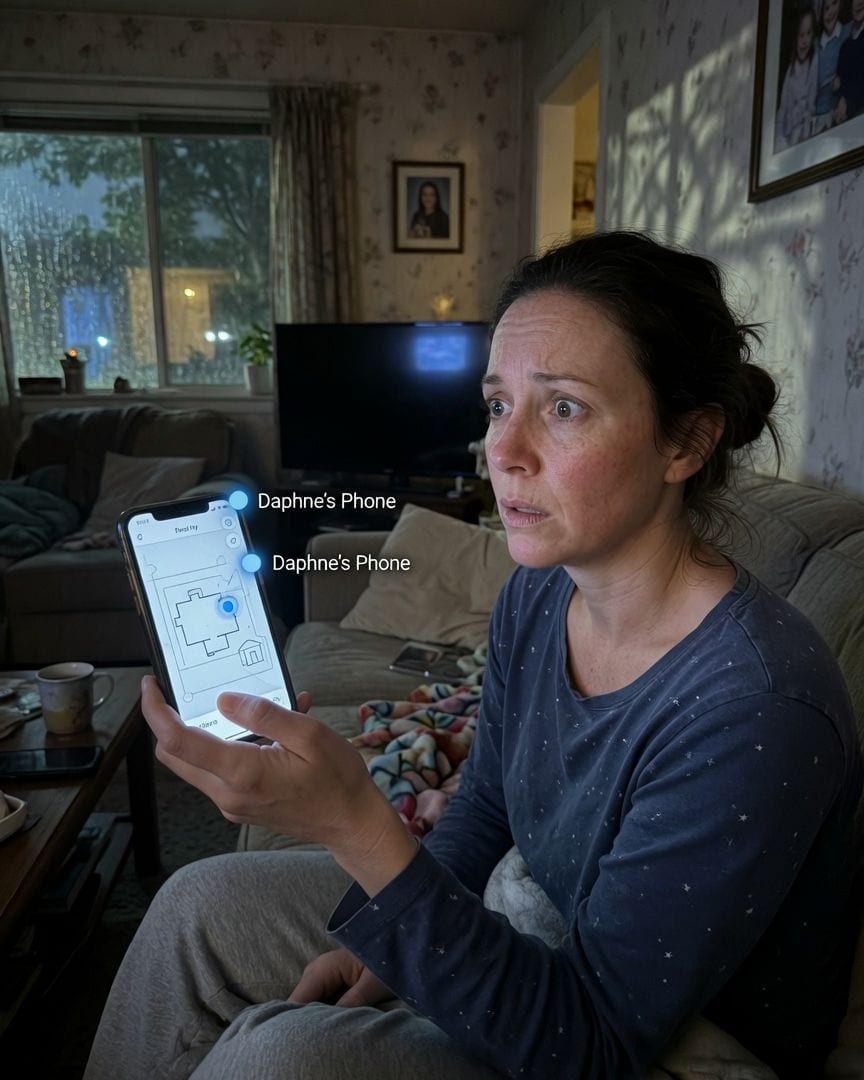
My daughter slept beside me with her phone in my hand — yet Find My Phone showed a second copy of it, labeled hers exactly, creeping slowly around the OUTSIDE of our house.
Curled up on the sofa with my daughter Daphne during a storm, I checked her phone. The 'Find My Phone' app showed her device right next to me. But then, a second identical dot appeared outside, moving slowly along our back fence, patrolling the perimeter.
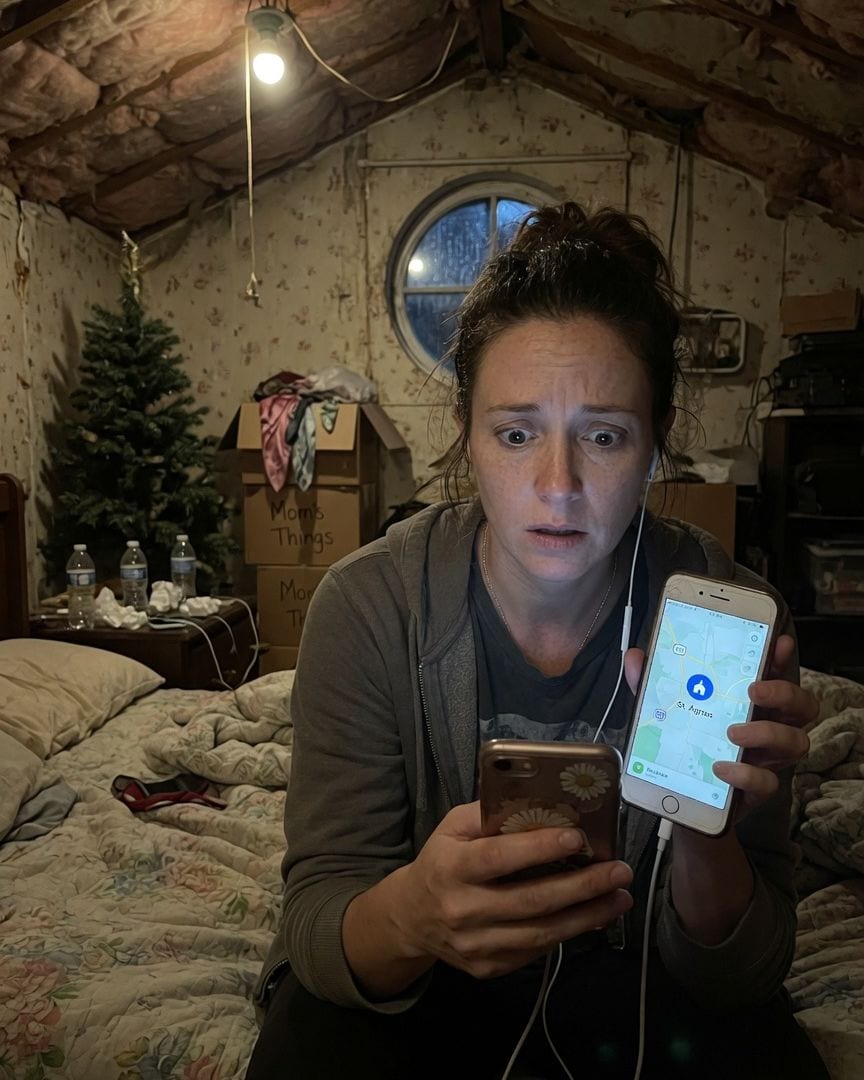
My mother's phone, powered down six months in the loft, just drove her old route to the church.
My mother, Margaret Vaughn, died six months ago, but I kept her on my 'Find My Family' app. Her icon usually stayed fixed at her last known location. Today, the blue dot started moving, slowly tracing her old Sunday drive route, right to the church where we held her funeral.
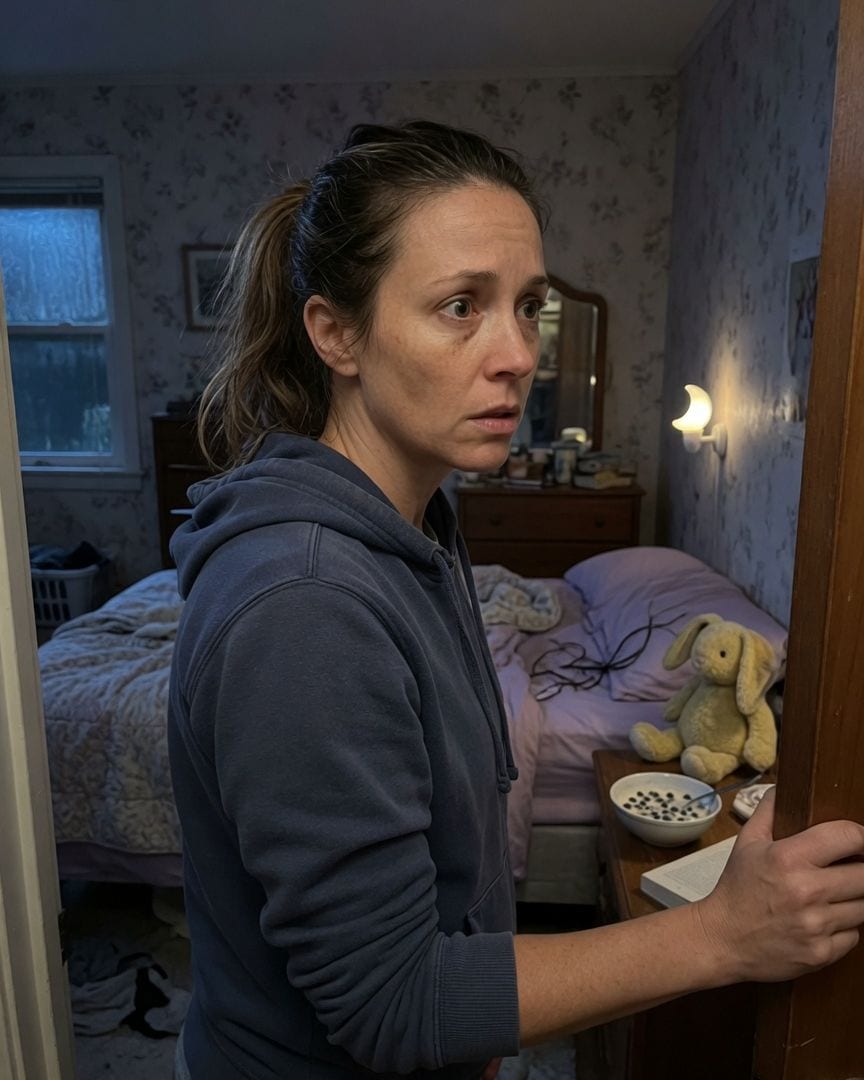
My daughter came home, then described a dream I'd had the week she vanished. I told no one that dream. She asked what it meant.
My daughter, Camille, returned home after four terrifying days missing. As I tucked her into bed, she quietly recounted a vivid dream about a drowned orchard and a heavy wooden door. It was *my* dream, a private terror I had told no one.
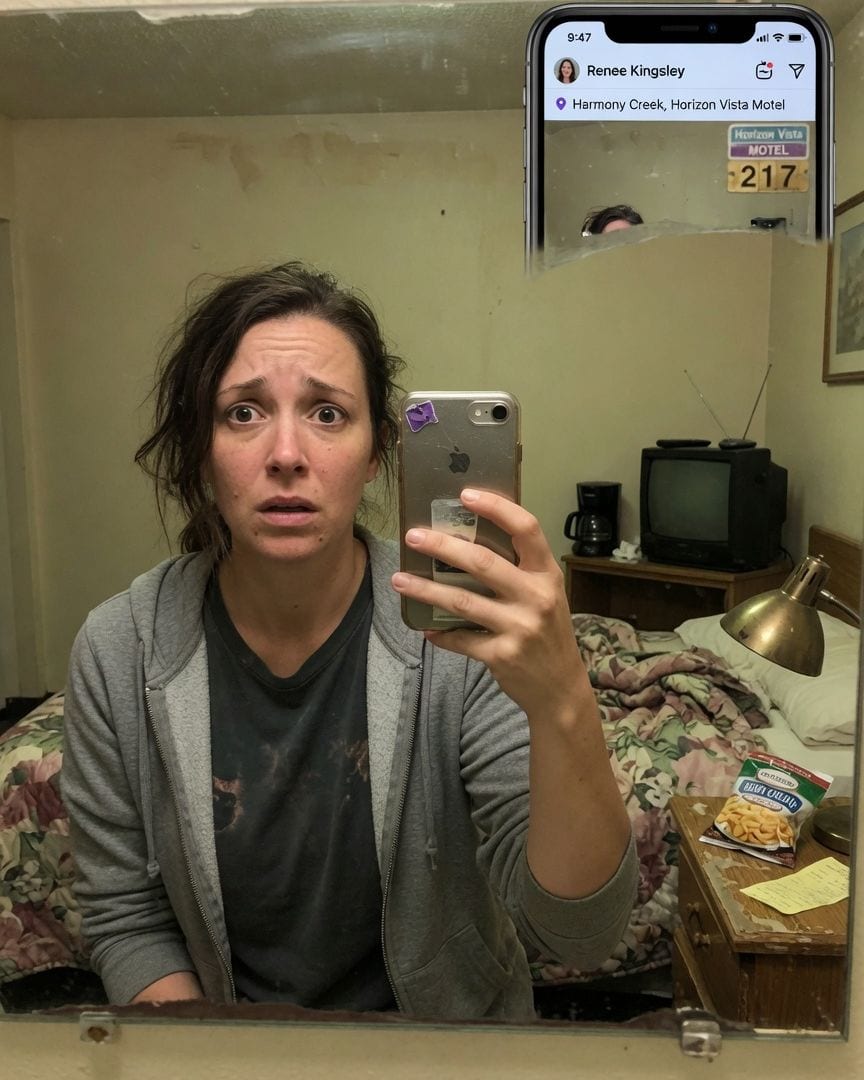
My apartment door opened and closed at 1:20 AM last Thursday, then my digital keycard checked into a motel six hours away, all while I slept.
My Tuesday morning began like any other, until I opened my phone's photo app. Instead of hike pictures, I found forty new photos: a motel room in Harmony Creek, six hours northeast. The last image was a mirror selfie of *my* face, holding *my* phone, but I was asleep in my bed the entire time.
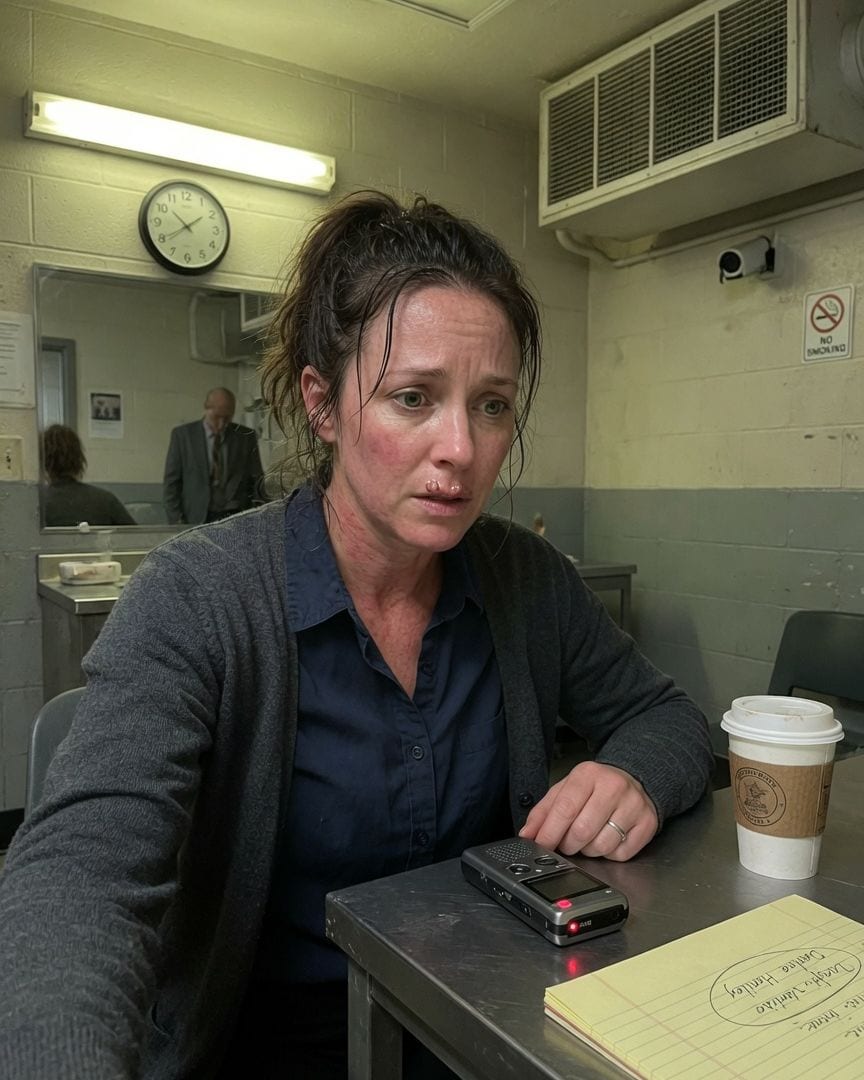
My own voice called 911 from Gary, Indiana, reporting a prowler. I was asleep in Ohio, my phone on the charger.
Sitting in a police interview room, I listened as Detective Walsh played a 911 recording. A woman's hushed voice reported a prowler from a payphone in Gary, Indiana. My stomach dropped cold; it was my exact voice, my specific way of saying 'I think,' even though I was in bed in Ohio that night.
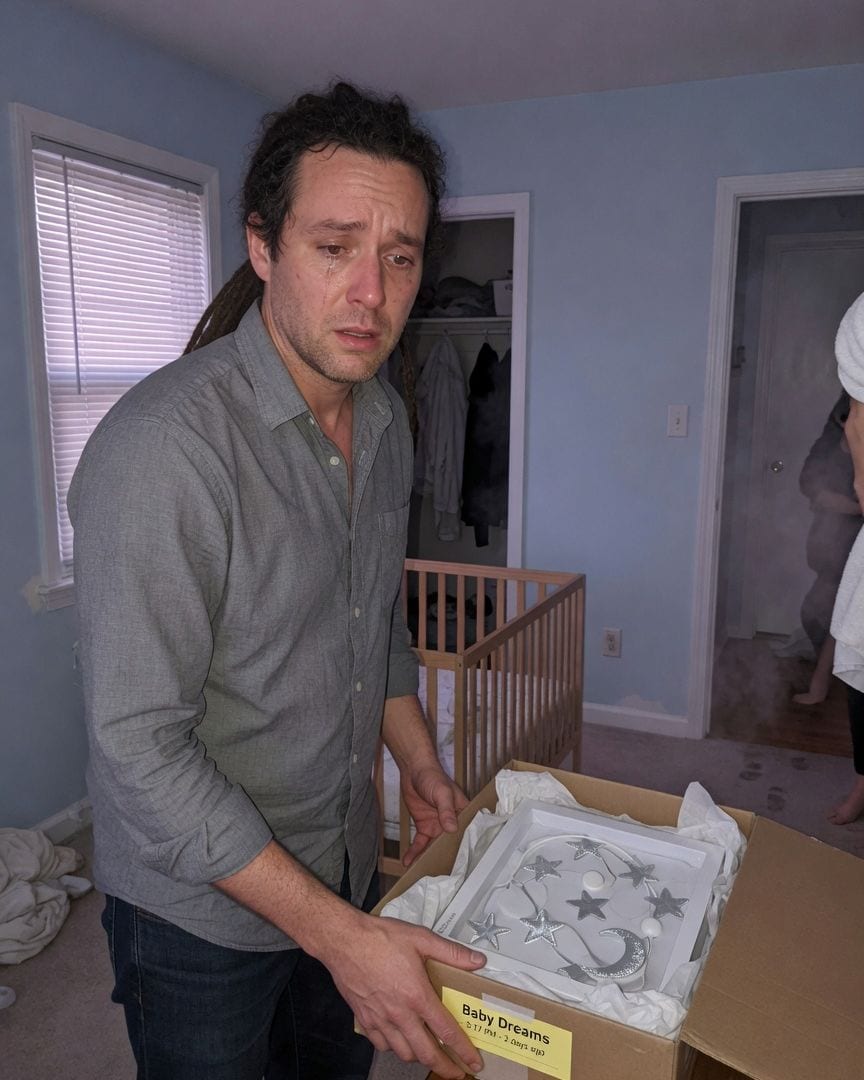
My wife thanked me for the pale blue nursery. We have no child. She described the mobile I'd only imagined, then asked when it would arrive.
Sylvia returned exactly one year after her disappearance, a miracle I could barely believe. But her first words about a nursery I'd only ever imagined, complete with a specific mobile, sent a shiver down my spine. That mobile, a private fantasy, arrived two days ago, and she just asked why it was late.