My dental scan shows a titanium implant where my own healthy tooth sits. The dentist tapped the bright screw on screen, then my actual canine, and said both could not be true.
The bright light of Dr. Caldwell’s exam room was always a little too harsh, but today it felt like an interrogation lamp.
I reclined in the familiar dental chair, plastic bib tucked under my chin, listening to the gentle hum of the overhead equipment. Just a routine check-up. Nothing out of the ordinary, I thought.
Dr. Caldwell, a man whose professional calm I’d always trusted, clicked the mouse, bringing up the new panoramic X-ray on the screen. He squinted at it, leaning closer.
“Hmm,” he murmured, a sound I’d never heard from him before, one that held a strange, unexpected tension.
My eyes followed his gaze to the glowing screen. There, undeniable, was a bright, metallic screw shape, solid and fused into the bone of my upper right jaw. It shone, almost alien, against the grey-white of the bone.
My breath hitched.
He picked up a small, sterile mirror, tapping my own upper right canine with a gloved finger. It was my tooth. My perfectly healthy, normal tooth. “That’s your tooth, right, Josephine?”
he asked, his voice tighter than I’d ever heard it. He tapped the screen again, then my tooth. “Never lost it? No issues with it growing in, no surgeries, no root canals?”
I shook my head, a knot forming in my stomach, cold and hard. “No, Dr. Caldwell. Never. It’s always been fine.” My tongue ran over the surface of the tooth, solid and real, just as it always had been.
But the titanium implant on the screen, a shining, undeniable presence that simply could not be there, seemed to mock its solidity.
Dr. Caldwell slowly turned from the screen, his brow furrowed so deeply it looked etched into his skin. His eyes met mine, not with reassurance, but with a stark, unsettling confusion.
“These two things,” he said, his voice quiet now, almost a whisper, “cannot both be true, Josephine.” The room itself seemed to hold its breath, the air suddenly thick and still.
The dentist’s words became an unwelcome echo in my mind, replaying themselves for days. I called Dr. Caldwell, who admitted, with a professional exasperation I could practically hear through the phone, that he was entirely stumped.
He’d consulted colleagues; no one had seen anything like it. A perfectly healthy natural tooth, yet an X-ray showing a titanium implant in precisely the same spot. It defied logic.
I requested my old dental records, convinced there had to be a missed procedure, a forgotten accident from childhood that would explain it all. Something I’d simply blocked out.
The files arrived a few days later, a thin Manila envelope that felt disappointingly light in my hands.
Inside, they were unremarkable: cleanings, a couple of small fillings in molars, but absolutely no mention of any canine loss, trauma, or implant surgery. Nothing. My own history offered no explanation.
I even dug through old family photo albums, scrutinizing my childhood smile, searching for any gap, any sign of a missing tooth that might have necessitated such a procedure. Page after page, my smile was always intact, always whole.
There was nothing to suggest even a moment’s issue with that particular tooth.
I brought it up with my father, Ronald Sterling, over coffee. He’d always been a pragmatic man, quick to find a logical explanation for everything. “It’s a tech glitch, Jo,” he’d said, waving his hand dismissively.
“Or a mix-up at the lab. You know how these things are. Computers make mistakes.” But the image on the screen, that bright, undeniable screw, was too clear, too specific to be dismissed as a mere error.
It wasn't a fuzzy shadow or a doubtful smudge; it was a structure.
Dr. Caldwell, equally unnerved, had suggested a comprehensive genetic test. “Just to rule out some bizarre congenital anomaly, Josephine,” he’d said, trying to sound reassuring. His voice hadn't quite masked his own deeper unease.
He was grasping at straws, and so was I. A rational woman, I trust data. If there was a biological reason, no matter how strange, I needed to know. I agreed.
I needed answers, even if they promised to be uncomfortable. The alternative – that the scan was real, and unexplainable – was far worse.
Weeks later, a notification pinged on my laptop. The genetic test results had arrived. My heart began to thud, a strange mix of apprehension and a desperate, rising hope for relief. This would be it. A clear, scientific explanation.
I opened the attached PDF, scrolling past pages of expected genetic markers, the mundane health predispositions that held no interest for me right now. My eyes scanned, searching.
Then, near the bottom, under a heading that screamed 'Unexpected Matches,' a line jumped out at me.
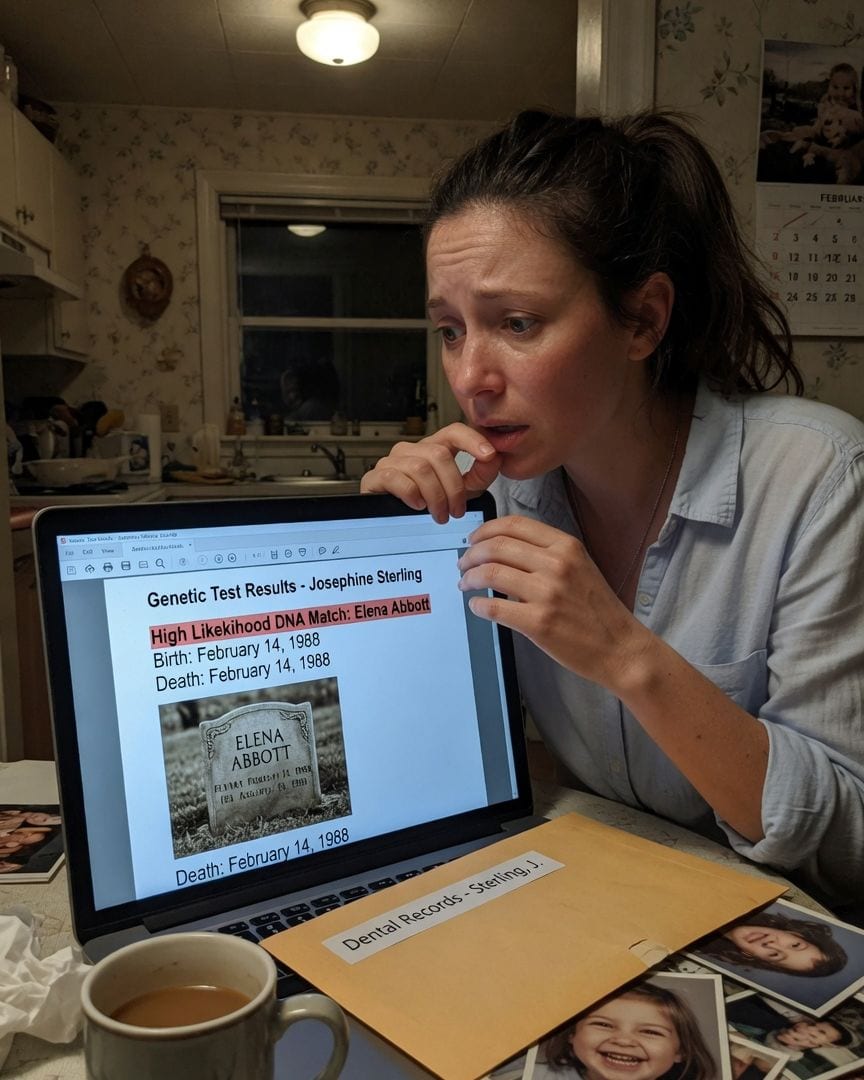
'High Likelihood DNA Match: Elena Abbott.'
Beneath it, a birth date: February 14, 1988. And a death date: February 14, 1988.
The death date was exactly 35 years ago. The same year I was born.
My fingers trembled as I clicked the linked name. A blurry, sepia-toned photo of a small, old gravestone appeared on the screen, its edges softened by time.
The name 'Elena Abbott' was clearly visible, etched into the weathered stone, along with the precise dates. My eyes darted between the dates on the stone and the '99.9% Genetic Match' staring back at me from the bright laptop screen.
The chill that ran through me had nothing to do with the temperature of the room. I stared at the glowing pixels, the name and the unshakeable certainty of the match burning into my eyes.
The gravestone photo, Elena Abbott’s name, and those impossible matching dates haunted me like a fever dream. My logical mind struggled to connect the dots.
A DNA match to a deceased infant, born and died the same year I was, two states away. It was too specific, too perfectly aligned to be coincidence.
I started with online searches, sifting through digital archives and local history sites for Elena Abbott.
Sparse records appeared: a brief obituary from a small-town paper in northern New York, confirming her stillbirth, a mention in a historical society’s archive of infant deaths for that year.
Elena Abbott was a child who had died shortly after birth, 35 years ago, in a town I’d never heard of, hundreds of miles from where I grew up.
I tracked down a distant cousin of Elena’s, an elderly woman named Sylvia, listed as the last surviving relative in the obituary. I found her through an online genealogy site, sending a hesitant email, explaining my strange circumstances.
To my surprise, she called me back, her voice frail but clear. She remembered Elena’s parents, devastated, moving away soon after the tragedy.
Sylvia’s memories were vague, clouded by time, but she did mention the local hospital, St. Jude’s, used to run ‘special programs’ for bereaved families back then. She trailed off, uncomfortable, as if she’d said too much, or perhaps, too little.
“They tried to help people cope,” she’d murmured, then quickly changed the subject to the weather.
A new thread of unease began to spool out inside me. I started asking my father, Ronald, about my earliest childhood again, pushing harder this time. Any family connections to that distant town?
Any unusual medical issues with me as a baby? He became increasingly evasive. His usual pragmatic dismissiveness turned into something tighter, a forced cheerfulness that felt like a shield. “You were a healthy baby, Josephine.
Just a normal birth,” he insisted, a tight smile pasted on his face. “You want to see the birth certificate again? It’s framed in the study. Why are you digging into all this old stuff?”
His eyes darted around the room, avoiding mine, and his discomfort was palpable, confirming what I already suspected: there was something he wasn't telling me.
My research continued, pulling me deeper into the rabbit hole. I found myself at the local library, poring over microfiche of old newspapers from Elena Abbott’s hometown, the glowing screen of the reader a lonely beacon in the dim room.
The grainy images swam past, a blur of forgotten headlines and local gossip. I felt a prickle on the back of my neck, the distinct sensation of being watched.
Across the aisle, at a table cluttered with oversized books, sat a man.
Tall and thin, with striking silver hair, he was ostensibly reading a newspaper, but every few minutes, his eyes would flick up, just for a second, towards me.
He never stared, never held my gaze, but the rhythm of his glances was too precise, too regular.
When I got up to retrieve another roll of microfiche, he shifted, ostensibly to stretch, maintaining his distance but always keeping me within his peripheral vision. A cold knot formed in my stomach. Was I imagining things?
Or had my father’s evasiveness and Sylvia’s discomfort been justified?
Later that week, an anonymous email landed in my inbox. The subject line was blank. My heart gave a sickening lurch as I clicked it open.
The body of the message contained just one stark sentence: 'Some things are best left buried. For everyone's sake.' There was no sender, no other text, just that chilling warning hanging in the digital space.
My hands shook as I reread it, the words seeming to throb on the screen. This wasn't a random warning; it was direct. Someone knew what I’d found, someone knew I was digging.
The dread shifted, becoming personal, no longer an abstract mystery about my biology, but a tangible threat. I was no longer just an investigator; I was being watched, warned, perhaps even followed.
The man from the library, the email – it all pointed to a deliberate effort to stop me, making me realize the stakes were higher than I could have imagined.
I was no longer just seeking answers; I was being drawn into something much darker.
The anonymous email finally pushed me over the edge. I drove to my parents’ house, the DNA results and the blurry gravestone photo printed and clutched tightly in my hand.
The drive felt like an out-of-body experience, the world blurring past my window. My breath caught in my throat as I parked outside the familiar house.
Ronald was in the living room, watching the evening news. The air in the room felt heavy, charged. I walked in, my voice shaking with a controlled fury I barely recognized as my own. “Who is Elena Abbott, Dad?”
I demanded, holding out the papers. “And why does my DNA match hers? Why did she die the exact year I was born, hundreds of miles away?”
Ronald’s face drained of color. He flinched back from the papers as if they were venomous. He tried to dismiss it, his voice thin and reedy. “Josephine, don’t be ridiculous. It’s a terrible coincidence. A lab error, I told you.”
But his eyes darted around the room, unable to meet mine, unable to hold still. “You’re our daughter. You know that.”
“Do I?” I pressed, the words burning with a cold fire. “Do I really? Someone sent me a warning, Dad. An anonymous email. Someone knows I’m looking into this, someone doesn’t want me to know the truth.
Who is watching me?”
The facade cracked. Ronald slumped onto the sofa, his shoulders heaving, the bravado draining out of him like water from a sieve.
He buried his face in his hands, groaning, and then looked up, his eyes red-rimmed and full of an old, deep grief I’d never seen before.
“It was… a program,” he whispered, his voice thick with unshed tears. “Your mother… before you. We lost a baby. Another miscarriage. We were desperate, Josephine. Devastated. They offered… a special arrangement. A way to ease the pain, they said.
A chance at a child with… some of Elena’s spark.” He avoided my gaze, looking at some point just over my shoulder. “You were adopted, Josephine. But not in the usual way. It was… a scientific arrangement.
All records were sealed. It was supposed to be a new start for everyone. A secret we’d take to our graves.” He looked suddenly much older, his face etched with a lifetime of guilt.
Ronald’s confession hung in the air, the words ‘program’ and ‘scientific arrangement’ burning into my brain. I left his house, reeling, the implication of his words a lead weight in my gut.
My mind raced, connecting the fragments: Sylvia’s vague comment about a local hospital running ‘special programs’ for bereaved families, Ronald’s chilling confession, the DNA match to a deceased infant from another state.
Back at my apartment, the quiet hum of the refrigerator seemed to mock the chaos in my head. I sat at my laptop, frantically searching online.
Keywords blurred together: ‘experimental adoption programs,’ ‘grief science,’ ‘unethical medical research,’ all linked to that specific St. Jude’s hospital Sylvia had mentioned.
Amidst outdated medical journals and obscure forum posts about local history, I found it: a single, tantalizing reference to something called ‘Project Chimera.’
An experimental bio-grafting initiative from decades ago, rumored to have been shut down due to extreme ethical violations. The reference pointed to a specific, almost forgotten, hospital archive.
Driven by a terrifying new certainty, a cold dread that felt like a premonition, I found a way to gain access.
I pulled strings, invented a fake genealogical research project, and eventually stood in the dim, dusty silence of the old St. Jude’s archive.
Hours blurred as I navigated shelves crammed with brittle, yellowed files, the scent of old paper and dust heavy in the air. My fingers brushed against a thick, unlabeled file tucked away behind a stack of old administrative ledgers.
It felt heavy, significant, almost warm to the touch.
I pulled it out, the old paper crackling like dry leaves. My heart hammered against my ribs as I smoothed it open. The first page was a faded admission form.
My own name, ‘Josephine Sterling’, was clearly typed across the top. But the admission date was January 12, 1987 – a full year before I was born. Beneath it, under 'Father/Guardian,' was the name: 'Ronald Sterling'.
This record should not exist. My hands trembled, the paper rustling in the sudden silence of the archive.
The impossible hospital record lay spread on the kitchen table between us, a faded admission form that screamed its contradiction. Ronald could no longer evade. His face was a mask of defeat, his eyes haunted. He confessed everything.
After losing their first child to miscarriage, he and my mother were broken, desperate. They were approached by Project Chimera, a clandestine program spearheaded by Dr. Gideon Mercer, a brilliant but ethically dubious geneticist.
Elena Abbott, a child stillborn with a severe congenital heart defect, also bore an additional detail that made her uniquely valuable to Mercer’s project: a small titanium screw, a failed experimental repair from an attempt to save her life in utero, already fused into her developing jawbone.
She became the ‘donor.’ I, conceived naturally soon after, was deemed ‘compatible’ and became the ‘recipient.’
It was, Ronald explained, a desperate attempt to ‘transfer’ some of Elena’s healthy cells, her ‘essence,’ into me. Not a full clone, not even a traditional adoption, but a bio-grafting, a blurring of two lives.
The hope, or the monstrous ambition, was to effectively create a child that was both new and carried a piece of the lost.
The titanium implant in my jaw, the one Dr. Caldwell had found, was a physical artifact of this transfer – an unintended, permanent marker of Elena’s brief, tragic life, a piece of her that had somehow rooted itself in me.
The program was eventually shut down by authorities for its extreme ethical breaches, its records suppressed, its existence scrubbed from public knowledge.
The ‘products’ like me were quietly placed with our ‘parents,’ our true origins buried under layers of secrecy and lies.
Ronald’s voice cracked as he begged for my forgiveness, pleading that it had been out of love, out of unimaginable grief. But all I could see was the monster his grief had made him.
The horror wasn't just my origins; it was the chilling calculation of it, the cold science masked as a balm for sorrow.
Armed with the full, horrifying truth, I tracked down Gideon Mercer. His address came from a heavily redacted but ultimately decipherable file within the archive – a loose contact card tucked into an old Project Chimera report.
He lived in a meticulously ordered, sterile apartment on the twenty-third floor of a modern building downtown. Everything about the man was precise, from his perfectly tailored suit to the unsettlingly calm expression on his face.
He seemed to exist in a bubble of clinical detachment, utterly unbothered by the monstrous experiments he’d once orchestrated.
He confirmed Ronald’s story, not with remorse, but with a chilling, academic interest. He referred to me as a ‘successful integration,’ a testament to his groundbreaking work.
He explained Project Chimera wasn’t just about grief, not really; it was about ‘pushing the boundaries of life itself,’ about finding ways to ‘improve’ human stock, to perfect the concept of genetic transfer.
“You aren’t the only one, Josephine,” he said, his voice flat, devoid of emotion. “There were many subjects. Some more successful than others, of course.”
He gestured vaguely towards an unseen network, a world beyond the pristine windows of his apartment. “A few of us still monitor the more… stable integrations.” He paused, his gaze uncomfortably direct, unnervingly analytical.
“If you ever encounter… instability, you know how to reach me. We offer assistance.”
The subtle threat hung in the air, a chilling implication that I was still a specimen under observation, my life an ongoing data point in his twisted research. The program, I realized, was never truly stopped, merely driven deeper underground.
Its architects, Mercer and his unseen peers, still observed their creations, still conducted their quiet, insidious experiments.
I was a living experiment, my very body a testament to a monstrous ambition, and the dread that others like me existed, perhaps even now watched by Mercer and his hidden network, clamped down on me like a physical weight.
My autonomy, my very self, was an illusion.
I walked out of Gideon Mercer’s apartment building into the blinding afternoon sun, the weight of my origins a physical burden that seemed to press down on every step. The world outside felt too bright, too normal, too oblivious.
I cut ties with Ronald. The loving father I’d known was now irrevocably merged with the man who participated in such a monstrous act.
My mother, long passed, became a stranger to me, complicit in a terrible deception that had defined my entire existence.
I tried to live a normal life, to go back to my job, to my routines. But every ache, every passing memory, every glance in the mirror, felt alien, tainted.
I was a ghost in my own skin, a patchwork of two lives, one of which was never truly mine.
The knowledge that others like me existed, perhaps still monitored by Mercer and his hidden network, was a constant, cold presence, a hum beneath the surface of my reality.
Sometimes, I catch myself in the mirror, running my tongue over my upper right canine. It feels perfectly normal, solid, undeniably my own.
But the image of the bright titanium screw on the panoramic scan, fused into my jaw, is burned into my mind, a permanent, invisible scar.
The quiet hum of my refrigerator, the distant sirens, the mundane sounds of my apartment, all seem to carry a faint echo of another life, a life that was never hers, yet is now inextricably part of her.
She knows she is not truly alone, that others like her walk the earth, unknowing or aware, living out their strange, composite existences under unseen eyes.
The world moves on, oblivious to the quiet horror beneath its surface, and to the living experiments it contains.
Sometimes, when the light hits her just right, Ronald Sterling can almost see the ghost of a different child in Josephine's eyes, a faint, fleeting shadow that makes him shiver, even now.
If this one got to you
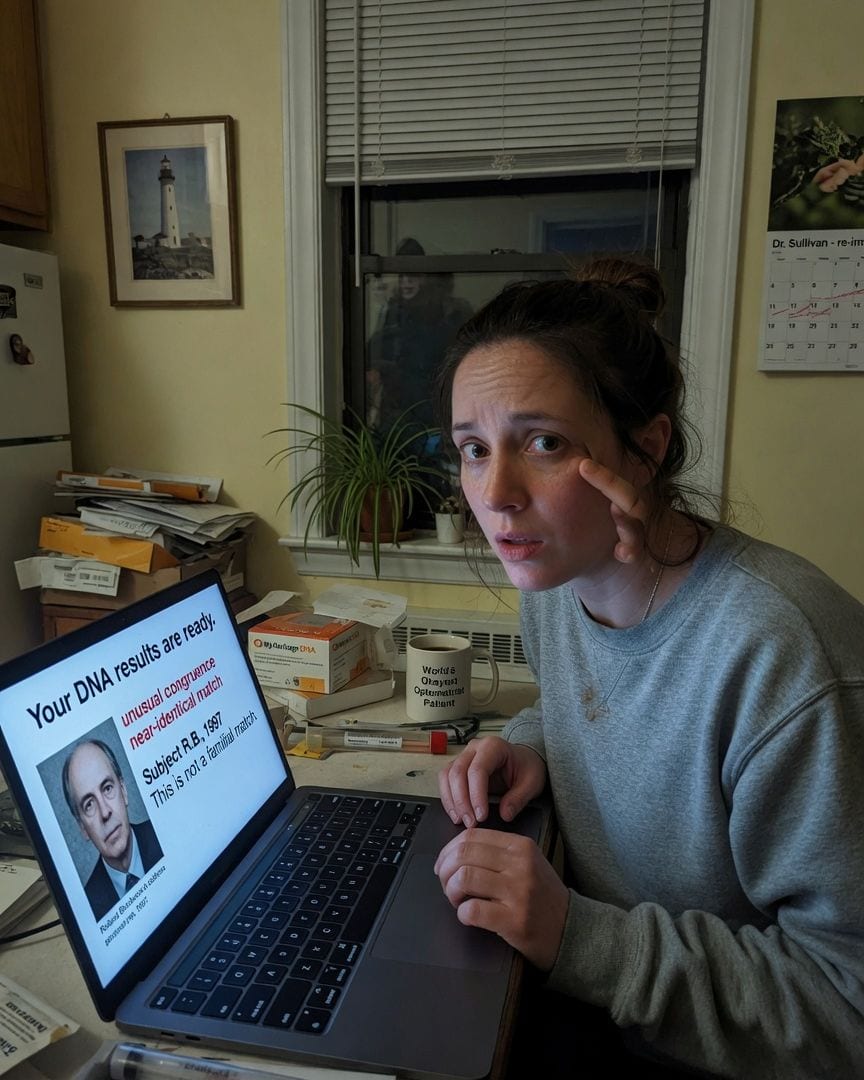
My retinal scan matched a dead man's eyes. His chart said 'deceased' from 1997. The pattern in my eye is his.
An ordinary eye exam turned unsettling when my optometrist paused, staring at the screen. He whispered that the machine flagged me as a returning patient, matching my unique eye pattern to a man deceased in 1997.
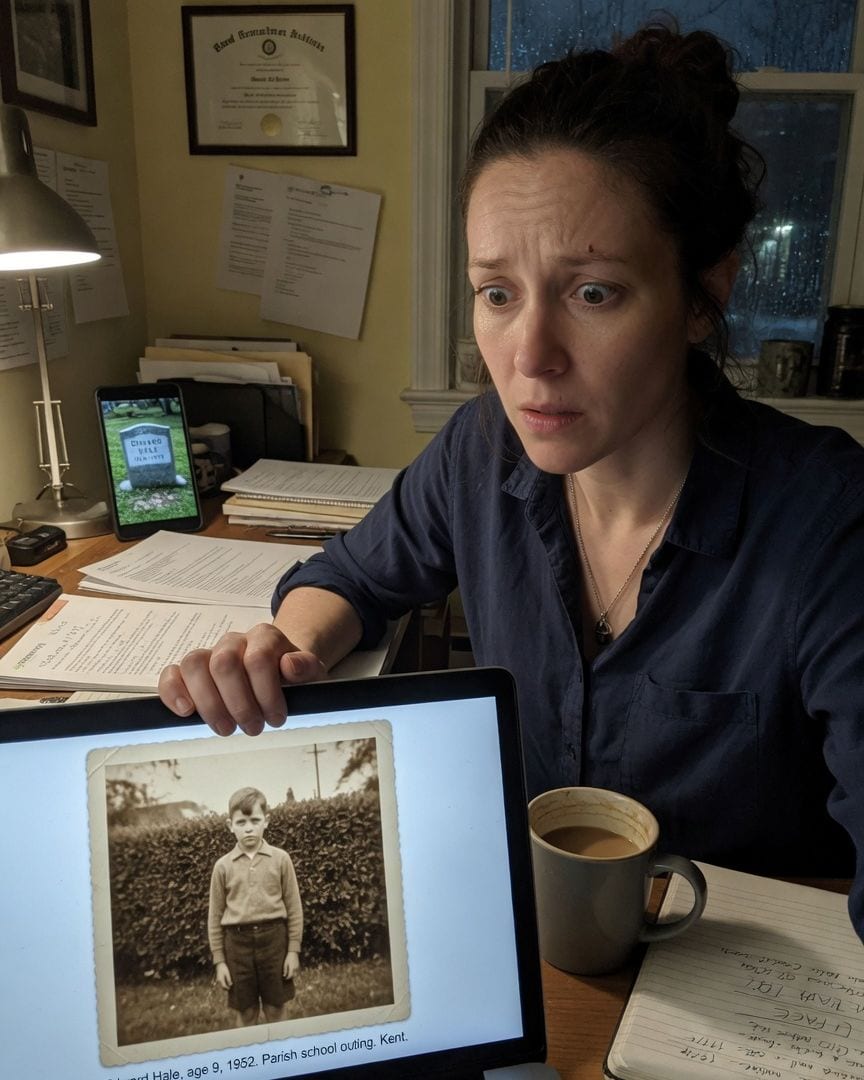
My DNA kit matched a man who died in 1974. The lab asked if I had a twin. Edward Hale is buried in Kent, under a stone I have now stood in front of.
I expected routine AncestryDNA results, but the lab found an 'unprecedented' genetic match. Edward Hale, who died in 1974, shares 99.9% of my DNA, prompting questions about a twin. The impossible dates didn't make sense, until a 1952 photo showed his face was unmistakably my own.
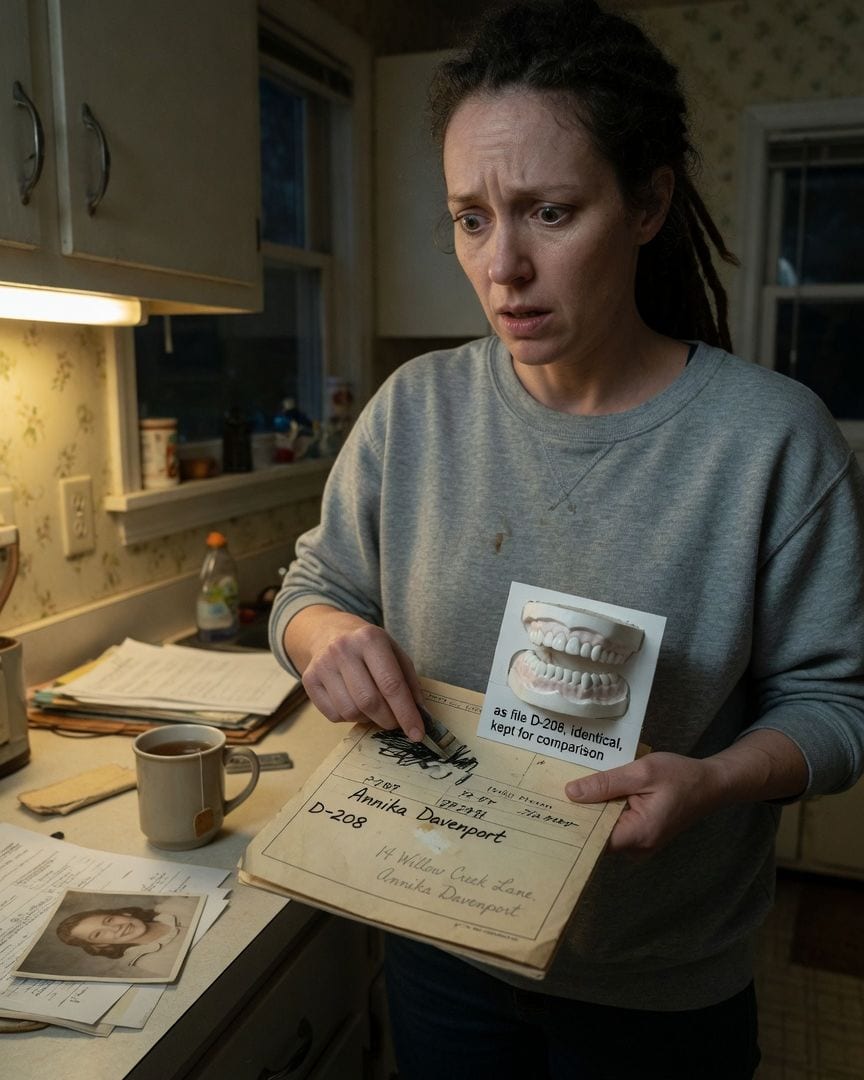
My childhood dental chart lists the house I bought last year — in my own name, years before I was born. A second set of my teeth sits filed beside it, marked 'identical.'
Sifting through old dental records, I found my chart, D-208, with my 1988 birth date. But a line from 1958 was blacked out, and a clipped card with an impression of my teeth listed my name and current home address, decades before I was born. The impossible facts knotted into a cold certainty.
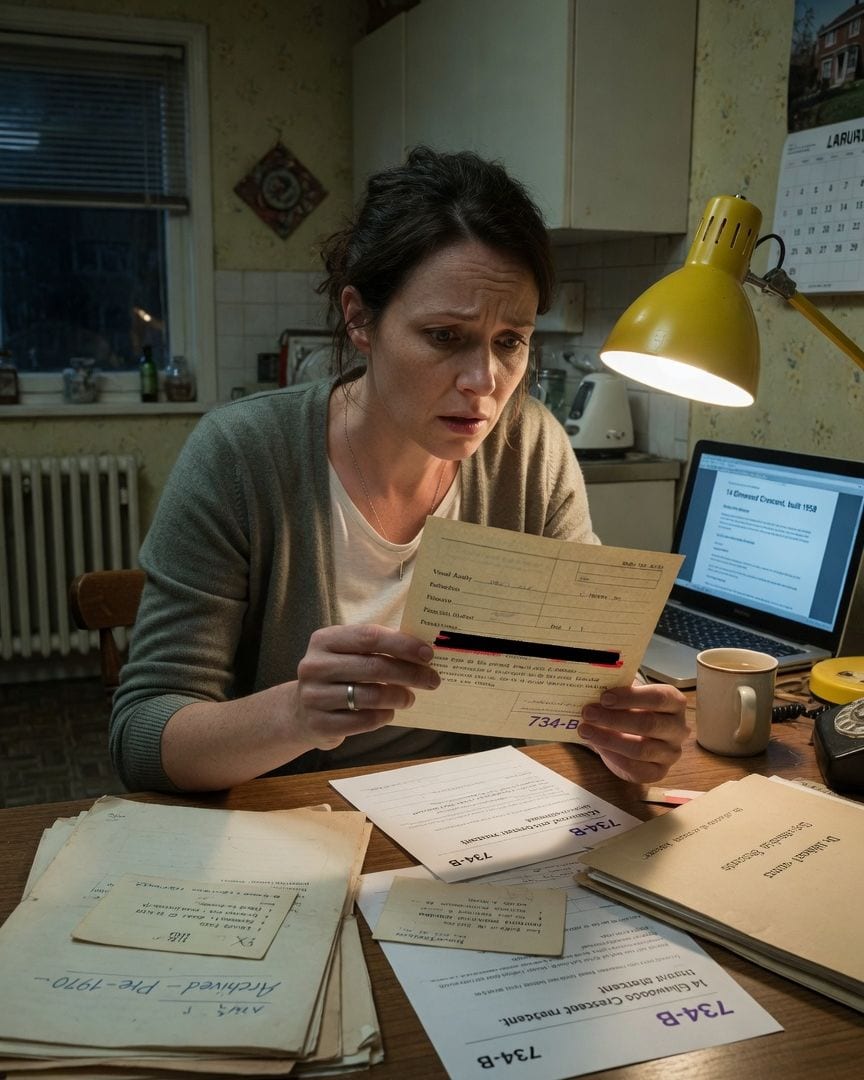
An old eye test card had my patient ID, 734-B, dated 1966. I found another, from 1948, for my house.
Transferring my old eye records should have been routine, but a strange, redacted card from 1966 raised a cold knot of dread. It mentioned my surname and street, along with a chilling instruction: 'tell the patient nothing.' Then I found my unique patient ID, assigned to me, on records dated 1948.
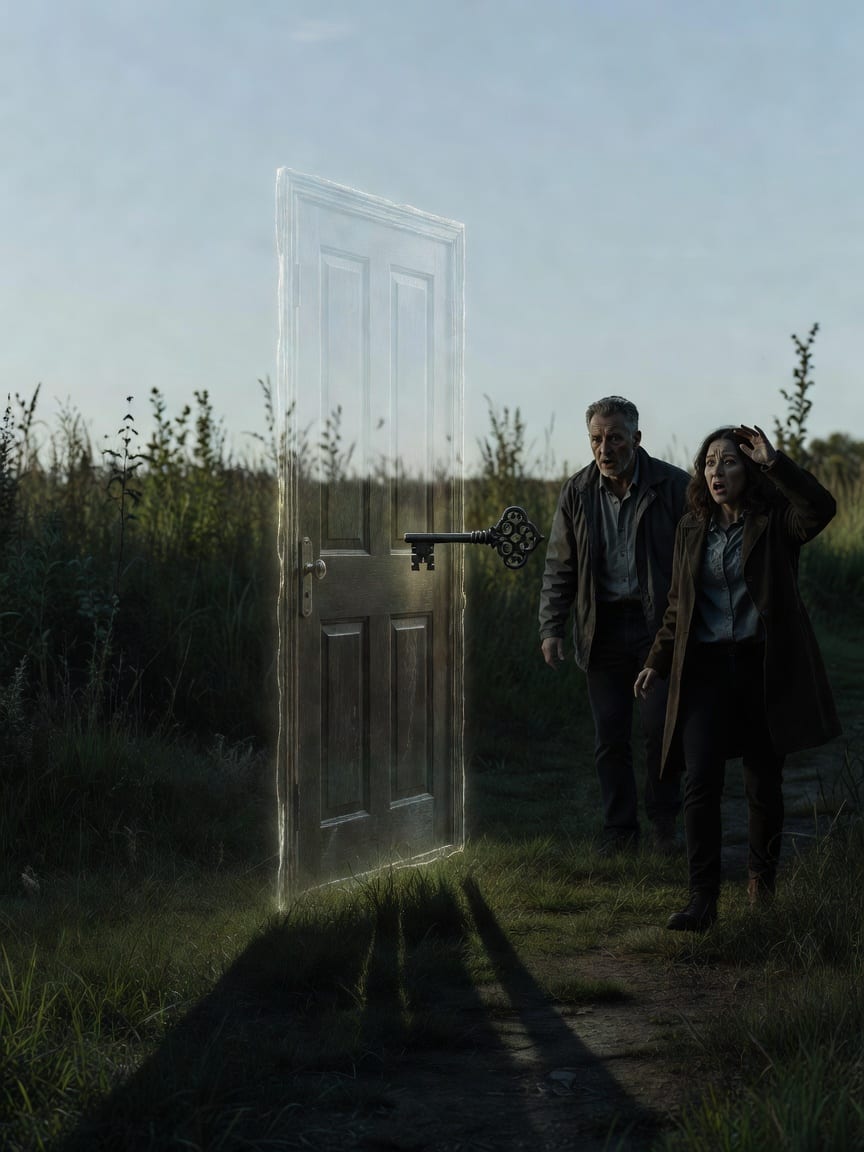
My name was on a package lodged in 1974. I wasn't born until 1985. Inside was a key and a note: 'You know which door. Not yet.'
I'm Elena Radcliffe, 38, and a solicitor's letter just arrived for me about a package. The firm's records state it was lodged in 1974, years before I was born. Now I've found an old newspaper article reporting a woman with my exact name vanished that very year.
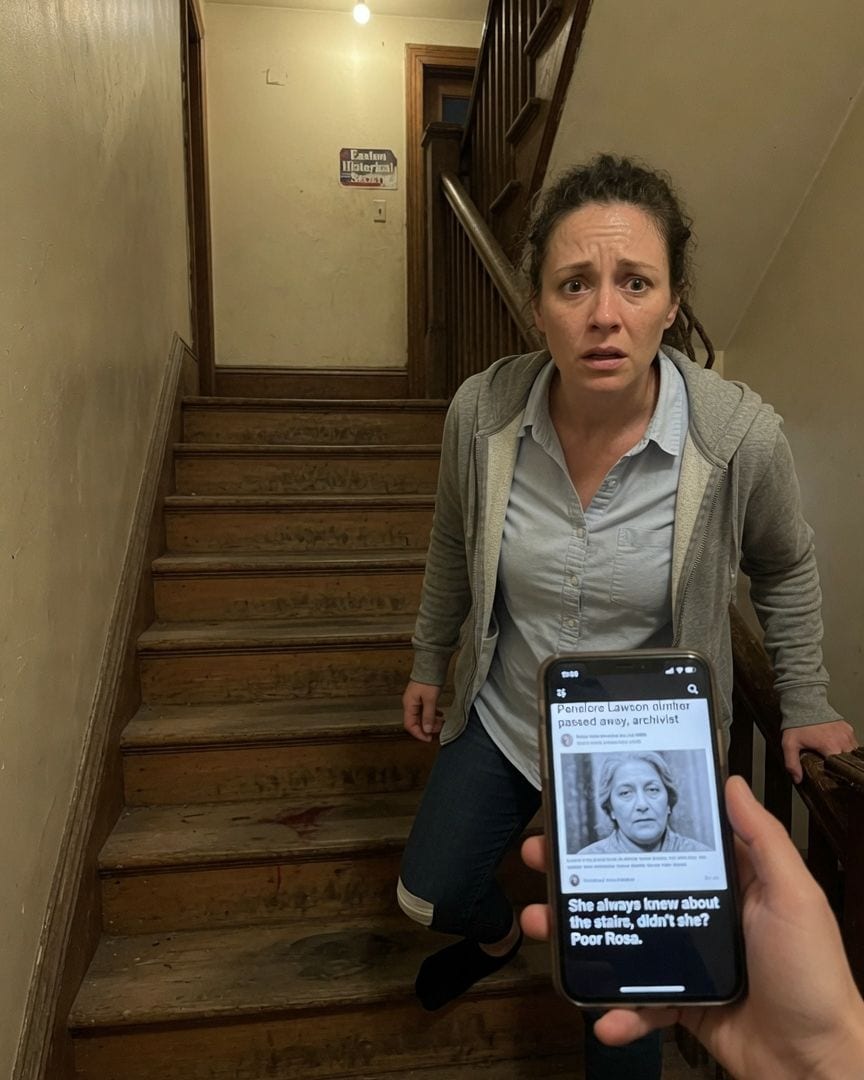
My hygienist apologized, 'I'm so sorry, Rosa — about the stairs.' I'd given the clinic only my surname, and they said she hadn't worked there in over a year.
During my routine dental cleaning, the hygienist murmured my name, Rosa, which wasn't on my intake form. She then offered a soft apology "about the stairs," a kindness that felt deeply misplaced and settled in my gut.