My DNA returned Curtis Hale as my father. He vanished in 1979. I was born twelve years later. The lab confirmed the match twice.
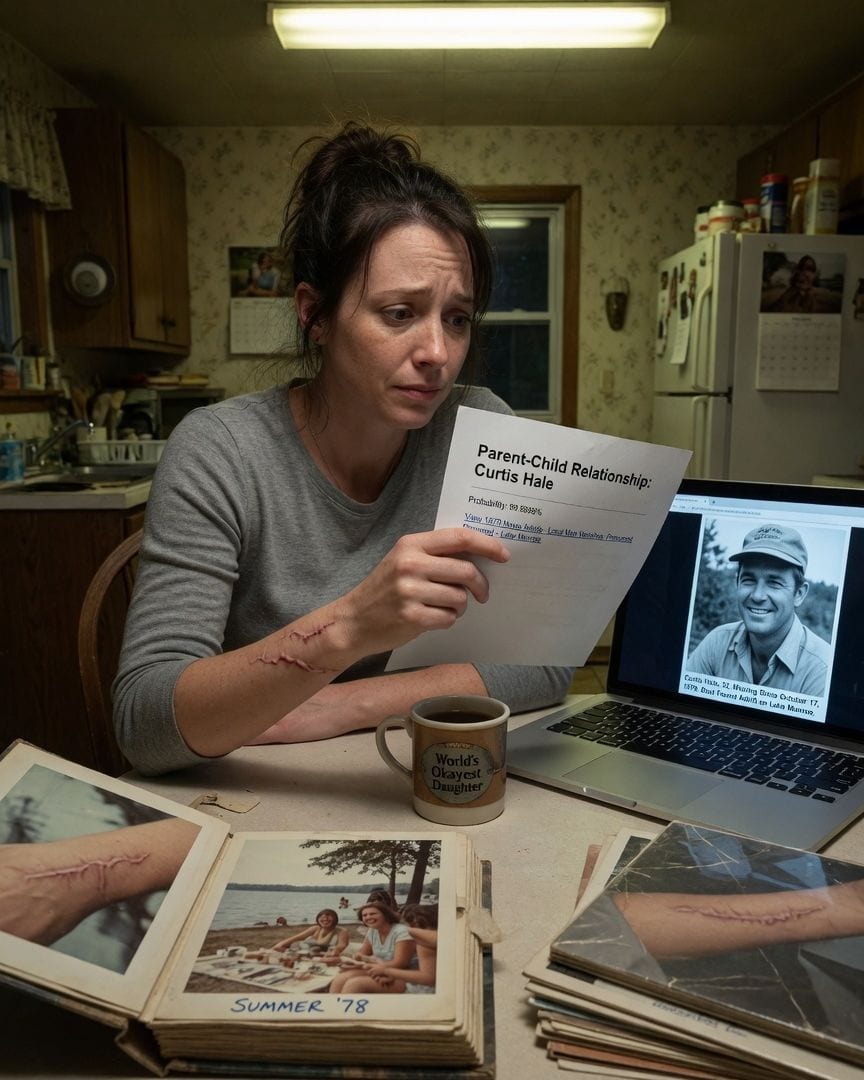
The printout lay on my kitchen table, stark white under the harsh overhead light. My DNA spit test results. It was supposed to be a simple curiosity, a way to trace some unknown lineage on my biological father’s side.
The results were unambiguous, chillingly so: 'Parent-Child Relationship: Curtis Hale.' Below it, a clickable link had brought up a faded news article from 1979. Local Man Vanishes, Presumed Drowned. Curtis Hale.
His boat found adrift on Lake Monroe, no sign of him. The date of his disappearance: October 17, 1979. My birthdate: March 3, 1991. Twelve years later.
I’d checked the site. I’d called the lab. Twice. Each time, a different technician, a different re-run of the analysis. The results held.
The dread wasn’t a sudden blow, not a scream, but a cold, creeping certainty that the page in my hand, this undeniable scientific fact, was impossibly wrong. My coffee, cold in its mug, mocked me.
I scrolled through the faded article again on my laptop, the grainy photo of a man with a wide, open smile. Curtis Hale. Lost to the lake decades ago.
Yet, incontrovertibly, according to the universe’s most precise biological ledger, he was my father. The room felt too quiet, the refrigerator’s hum a dull throb against the impossible truth laid out before me.
I tried to explain it away. A freak lab error, a rare genetic anomaly no one had ever documented. Maybe even some elaborate, cruel prank. My rational brain clung to the mundane, refusing to accept the impossible.
I called my mother, Carol Prescott, hoping for some ordinary explanation, some forgotten detail about an ancestor, a cousin with a similar name.
“Mom, it’s Fiona. Look, I got the results back from that DNA test…”
Her voice, usually so steady, sounded distant, flustered. “Oh, that nonsense? It’s probably a glitch, dear. Those things aren’t always accurate.” She laughed, a high, strained sound I barely recognized.
“Mom, they confirmed it twice. His name is Curtis Hale. He disappeared in ’79. Twelve years before I was born.” My voice was calmer than I felt, almost a whisper. “Who was he? Did you know him?”
A beat of silence, then a sharp intake of breath. “Fiona, don’t be ridiculous. It’s… it’s a mistake. Forget about it.” Her tone hardened. “There’s nothing to know. It was a long time ago. A completely different life.”
I pressed, a knot tightening in my stomach. “Mom, I’m serious. Who was my father? The one on my birth certificate, ‘Unknown’ – was it him?”
Her voice tightened further, brittle as old glass. “I told you, it’s nonsense. I have to go, Fiona. I’m busy.” She hung up, the line going dead with a click that echoed in my ear.
Later that day, the unease gnawing at me, I drove to her house. Her old sedan was in the driveway, and through the window, I saw her at the dining table, sifting through a stack of dusty photo albums.
My mother never looked at old photos. It was an unspoken rule, a part of the past she kept locked away.
When I entered, she snapped an album shut, almost guiltily. “Fiona! What a surprise.” Her smile was too wide, too cheerful. She gestured vaguely at the albums. “Just clearing out some old clutter.
You want some of these old family photos? From your dad’s side, maybe?”
“Sure, Mom,” I said, feigning interest, my eyes scanning the closed album. A familiar face, a man with that same wide smile, had been on the page she’d just covered.
I grabbed a small, unmarked box she offered, filled with untouched, unlabeled albums, feeling the weight of her evasiveness more keenly than the cardboard.
That night, alone again in my kitchen, the box of albums was a leaden block in front of me. I opened one. Dusty, brittle pages. Faces I didn’t know, landscapes I didn’t recognize.
Then, near the back, a faded group shot from a lakeside picnic, the kind of snapshot that captured a brief, sun-drenched moment. On the back, in faint cursive, someone had written ‘Summer ’78.’
My mother was in it, younger, laughing, her arm around another woman. And in the background, partially obscured by the shadow of a large tree, was Curtis Hale, unmistakable.
But it wasn’t Hale that made my breath catch in my throat.
My gaze locked onto the figure standing near Curtis Hale in the background of the faded photo.
Their face was indistinct, blurred by the passage of time and the poor quality of the print, but their left arm was clearly visible, bent at the elbow. On the wrist, a jagged, unmistakable scar.
It was the exact same scar I had on my own left wrist, a scar I’d had since early childhood. I’d always known I never acquired it through any injury or accident.
It had just… been there, a part of me. Now, seeing it on a stranger in a photograph taken over forty years ago, my own wrist prickled, a phantom ache blooming beneath my skin.
I traced the pattern on the photo with a trembling finger, the precise zig-zag mirroring the raised flesh on my own arm. Impossible and unearned.
The photograph became an obsession. I taped it to my fridge, a constant, silent accusation. I tried to find a logical explanation for the scar. A birthmark? But it was clearly an old injury scar, the skin uneven, raised.
A family resemblance, I thought, maybe a genetic predisposition to a certain type of wound, passed down through generations? It sounded absurd, even to me, as I tried to say it aloud to the empty kitchen.
A birthmark that looked exactly like a jagged childhood accident scar, replicated on two different people from two different times, one of whom was supposedly my father? No.
I researched Curtis Hale more deeply, scrolling through digitized microfiche archives at the public library downtown. Endless columns of text, old newspaper clippings about his life in the small town of Oakhaven and his sudden disappearance. Nothing.
No mention of any distinct physical traits, no odd moles or scars, just a smiling, ordinary man lost to the sea.
I drove out to Oakhaven, a two-hour trip that felt like crossing a border into another time.
It was a quiet place, the kind of town that seemed to hold its secrets close, the houses set back from the road, the windows dark. The local library was small, smelled of dust and old paper.
An elderly woman with kind eyes and neatly pinned white hair sat behind the counter. Mary Jenkins, the name tag read.
“Excuse me,” I said, trying to keep my voice casual. “I’m doing some research on a local man, Curtis Hale? He disappeared back in ’79.”
Mary Jenkins paused, her eyes, though kind, seemed to hold a flicker of something else, a deep knowledge. “Curtis Hale,” she repeated, her voice soft. “Yes, I remember him. A popular fellow, if a bit… enigmatic. Everyone liked Curtis.
Always had a way of leaving an impression, even when he wasn’t trying.” She nodded slowly. “Strange, his disappearance. Just… vanished.”
“Do you remember anything unusual about him?” I asked, my heart thudding. “Any distinctive features?”
Mary tilted her head, thinking. The silence stretched, the only sound the faint hum of the fluorescent lights. “Hmm. Well, he was handsome, good humor. Oh, yes,” she said, her eyes brightening with recall.
“He had a distinctive jagged scar on his left wrist. Said it was from a childhood accident, climbing trees. Told the story a hundred times.”
My blood ran cold. The quiet hum of the library seemed to amplify, pressing against my eardrums. The librarian’s casual remark confirmed the impossible. The scar on my own wrist, the one in the photograph, was Curtis Hale’s.
It wasn’t a genetic predisposition, not a birthmark. It was a specific, physical mark. I felt a profound disconnect, a terrifying sense that my own body was alien, carrying a ghost’s mark, a map of someone else’s past.
My inquiries did not go unnoticed. A week after my visit to the Oakhaven library, an anonymous email landed in my inbox. Subject line: 'Leave It Be.'
The body contained only a blurry, zoomed-in photo of me, standing outside the town library, taken from a distance. Fear, cold and sharp, pierced through my rational facade, shredding it. Someone was watching. Someone knew what I was looking for.
I forwarded the email to the police, but they dismissed it with a sigh. “Probably a prank, miss. Or an overreaction. You’ve been digging into old disappearances, might have ruffled some feathers.” I knew better.
I started noticing small things. A dark blue sedan parked down my street that wasn’t there before, sometimes for hours.
The faint, almost imperceptible click of my phone’s screen when I hadn’t touched it, as if a ghost finger had grazed the glass. A light on in my mother’s house at odd hours, long after she usually went to bed.
The dread was no longer confined to my own body and records; it was a presence, a shadow stretching over my life, making the familiar shape of my apartment feel unsafe, too open.
One evening, as I walked home from work, the air heavy and damp with the threat of rain, a dark sedan slowed as it passed me. The passenger window lowered, a quiet electric hum. A man’s face.
Older, with kind but unsettlingly still eyes, met mine. He didn’t speak, just held my gaze for a long, uncomfortable moment that stretched into an eternity. His expression was utterly devoid of emotion, a blank slate.
Then, without a sound, the car accelerated away, leaving me standing on the pavement, my heart hammering.
The man’s face was etched into my memory. A face I’d seen before, I was certain, in another context, but couldn’t quite place. I rushed home, my hands shaking as I pulled out the old newspaper clippings again.
There it was. An obituary for a distant Hale relative, tucked away in the microfiche. Among the listed 'close family friends' was a small, grainy photo. Roland Montgomery. The same face.
The next day, still reeling from the encounter, I confronted my mother, Carol. I laid the faded photograph on her kitchen table, next to the DNA results printout. I told her about Mary Jenkins and the scar.
Carol tried to deflect, to invent explanations – “It’s a coincidence, Fiona. These things happen.” But her voice was thin, reedy, unraveling.
My calm insistence, the rising fear that must have been evident in my own voice, broke through her defenses like a hammer hitting glass.
“Mom,” I said, my voice barely a whisper, the name a cold, hard stone in my mouth. “Who is Roland Montgomery?”
Carol flinched. Her shoulders slumped, as if a sudden, unbearable weight had been placed upon them. She finally admitted it. After Curtis disappeared, she was distraught, a shell of herself. Desperate.
She was approached by Roland Montgomery, a man she knew vaguely from town, a quiet academic with an unusual interest in biological research. He claimed he could help her 'cope with the loss' in an unconventional way.
He spoke of 'preserving what was essential,' of 'a new beginning.' Carol, blinded by grief and a desperate hope for a way to keep Curtis’s memory alive, agreed to a 'procedure.'
She believed she was participating in some experimental grief therapy, a way to 'honor Curtis’s memory,' to hold onto a part of him.
My face felt pale, bloodless. “What kind of procedure?”
Carol recounted hushed meetings in a sterile room in an unfamiliar clinic, long forgotten now. She described Roland’s calm, reassuring demeanor, his words like a balm on her grief.
She signed papers she didn’t fully understand, undergoing a strange, painless medical process. Not long after, she conceived me.
The story twisted my stomach, a nauseating lurch. My birth. My very existence. It suddenly felt like a carefully engineered project, a clinical experiment.
All the pieces clicked into place with a horrifying, sickening clarity: the impossible DNA match, the inherited scar, my mother’s deep-seated guilt and the years of evasiveness.
This wasn't just about finding my father; it was about how I came to be at all. The entire room seemed to press in on me, the air thick and heavy with unspoken dread.
Carol, her face streaked with tears, reached into a small, velvet-lined box she kept hidden in her dresser, a place I’d never seen her open before.
Her hand trembled as she pulled out a small, sealed glass vial, no bigger than her thumb, and placed it in my palm. The vial felt cold and heavy, shocking against my skin. Inside, a viscous, amber liquid swirled sluggishly.
“He gave me this,” Carol whispered, her voice raw, barely audible. “He said it was… a part of Curtis. For safekeeping. For when you were old enough.”
I turned the vial, my fingers brushing against the faded, handwritten label. The words, stark, clinical, and utterly devastating, seemed to burn into my eyes: 'Hale, C. - Genetic Material, Preserved.' My mother wept, her head in her hands.
“He said it was the only way… to keep him here.”
I arranged a meeting with Roland Montgomery, using my mother as an intermediary, careful to choose a public, neutral location: a small, quiet cafe in the next town over.
He arrived promptly, impeccably dressed in a charcoal suit, his silver hair neatly combed. His eyes were still and calm, just as I remembered, devoid of warmth or malice.
He ordered a black coffee, then sat back, waiting for me to speak.
He didn’t deny anything. He just watched me, patient, unnervingly composed. As I laid out the DNA results, the photo, the vial, his expression remained unchanged. When I finally asked, ‘Why? How?’ he simply began to explain, with chilling composure.
He spoke of 'genetic repurposing' – a radical, clandestine science he and a small, dedicated group had been developing for decades. Curtis Hale, he explained, was not merely 'missing.' He had been chosen.
A perfect genetic specimen, unique in his biological resilience and adaptability, for a unique preservation and reintroduction protocol. His essence, his very genetic blueprint, was carefully extracted and preserved before his 'disappearance' was staged.
The 'procedure' Carol underwent was the reintroduction, the careful implantation of Hale’s genetic material into her. Ensuring a perfect, living copy.
“You see, Fiona,” Roland said, his voice flat, devoid of emotion, like a scientist dictating notes. “You are not merely his daughter. You are, genetically speaking, Curtis Hale. A perfect continuation. The scar? A unique marker that carried through.
A signature, if you will, from the original source material.”
Every impossible detail, every buried clue, now snapped into a horrifying, coherent pattern, echoing the sickening click of my phone. My entire life, my sense of self, my memories, were all a carefully orchestrated echo, a biological reincarnation.
The dread was not in a monster under the bed, but in the clinical, unfeeling logic of my own existence. I was not Fiona Prescott. I was a copy, a product.
I stared at Roland, the air in the small cafe suddenly thick, heavy with the weight of his calm explanation. The clatter of coffee cups and low chatter around us seemed distant, muffled. “Why?”
I finally managed, my voice thin, barely a whisper. “Why Curtis? Why me?”
Roland merely smiled, a small, knowing upturn of his lips that didn't reach his eyes. “To ensure continuity. To perfect the process. Curtis was a magnificent specimen, Fiona. You are the proof of its success.”
He gestured to me, a dismissive flick of his wrist, as if I were an exhibit, a successful experiment, not a person sitting opposite him. The horror wasn’t his malice, but his complete lack of it, his clinical detachment.
He saw me as a data point, a culmination.
He leaned forward slightly, his eyes still, compelling. He offered me a place in his 'endeavor,' to understand my own unique genesis, to contribute to the future of genetic continuation. The implication was clear: I was not free.
I was a product, and he intended to continue studying his investment.
I pushed back from the table, my chair scraping loudly on the tiled floor, the sound sharp in the sudden silence that seemed to have fallen over our corner of the cafe.
I felt a profound, chilling hollowness, a sense of my own identity dissolving, like sugar in water. I was not Fiona Prescott; I was Curtis Hale, reborn, a vessel, a ghost given flesh.
The world outside the cafe window, the passing cars, the laughing people, suddenly seemed distant, unreal, as if I were looking through a pane of thick, distorting glass.
Roland watched me, unmoving, his gaze fixed, as if observing a subject under a microscope.
“Think about it, Fiona,” he said, his voice soft but resonant, carrying through the sudden ringing in my ears. “Who else could understand what you truly are?”
I turned and fled. I left my half-finished coffee, the copies of the DNA results, the vial of genetic material. I just ran. His words echoed in my mind, each syllable a hammer blow against my fragile sense of self.
My feet pounded on the pavement, but I felt no escape, only the profound, inescapable truth that my body, my very being, was a carefully constructed lie.
I ran, not from a threat, but from the unbearable weight of who I had become.
I never went back to my apartment. I left everything behind – my job, my friends, my old life. My phone was eventually disconnected.
Carol Prescott, my mother, tried to reach me for weeks, leaving increasingly desperate messages, her voice a raw, pleading echo in my voicemails, each one unanswered. The silence from me became absolute.
Eventually, Carol stopped calling, a hollow grief settling over her, understanding the true, devastating cost of her desperate choice decades ago. I vanished, not into thin air, but into the profound, unsettling knowledge of my own impossible existence.
The world moved on without her. Her mother called for months, then years, until the line was finally disconnected. Fiona Prescott’s social media profiles eventually went dormant.
A single, anonymous comment appeared on Fiona’s last post, a grainy picture of a lake she’d posted months before, captioned simply, 'Going for a drive.' The comment read: 'He always comes back.'
If this one got to you
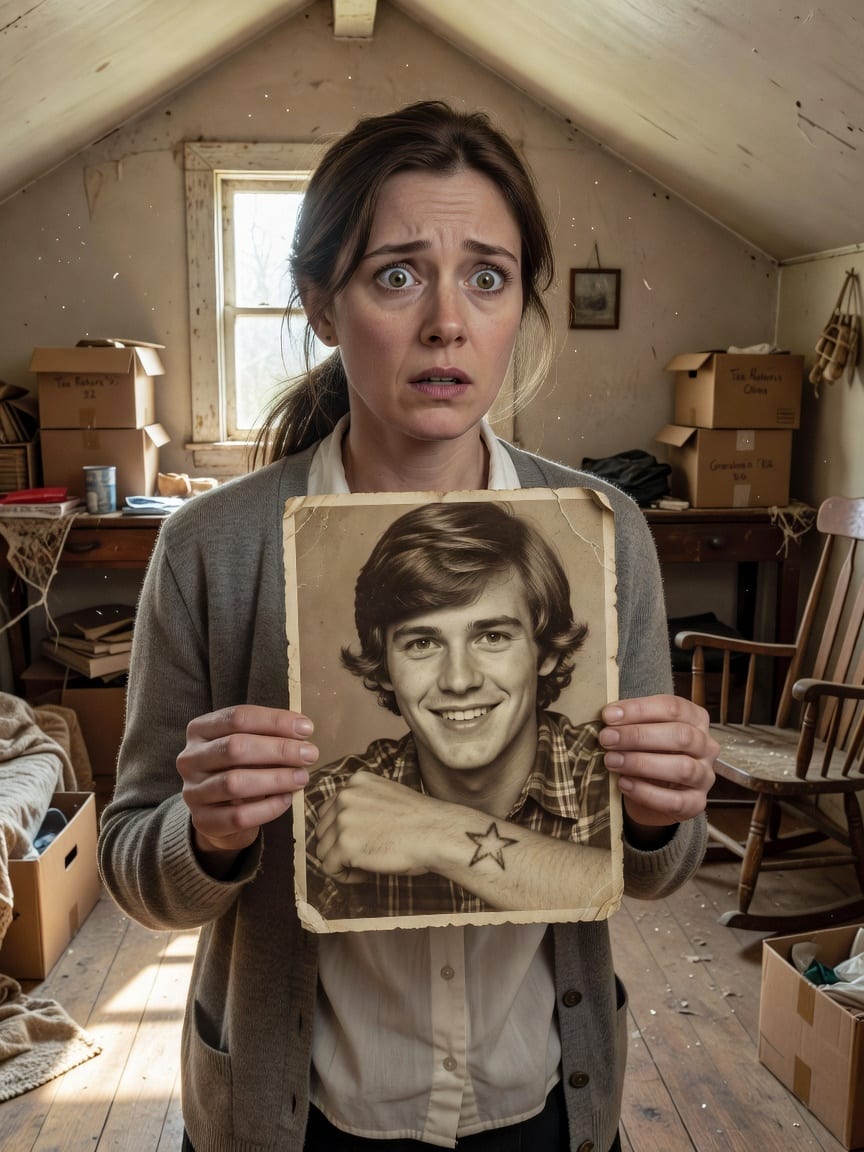
My DNA kit matched a man who died in 1974. The lab asked if I had a twin. I've stood at Edward Hale's grave.
I sent my DNA ancestry kit off for fun, expecting a list of distant cousins. Instead, the lab returned a 'probable identical match' to a man named Edward Hale, who died in 1974. I was born in 1992, and the lab asked if I had a twin.
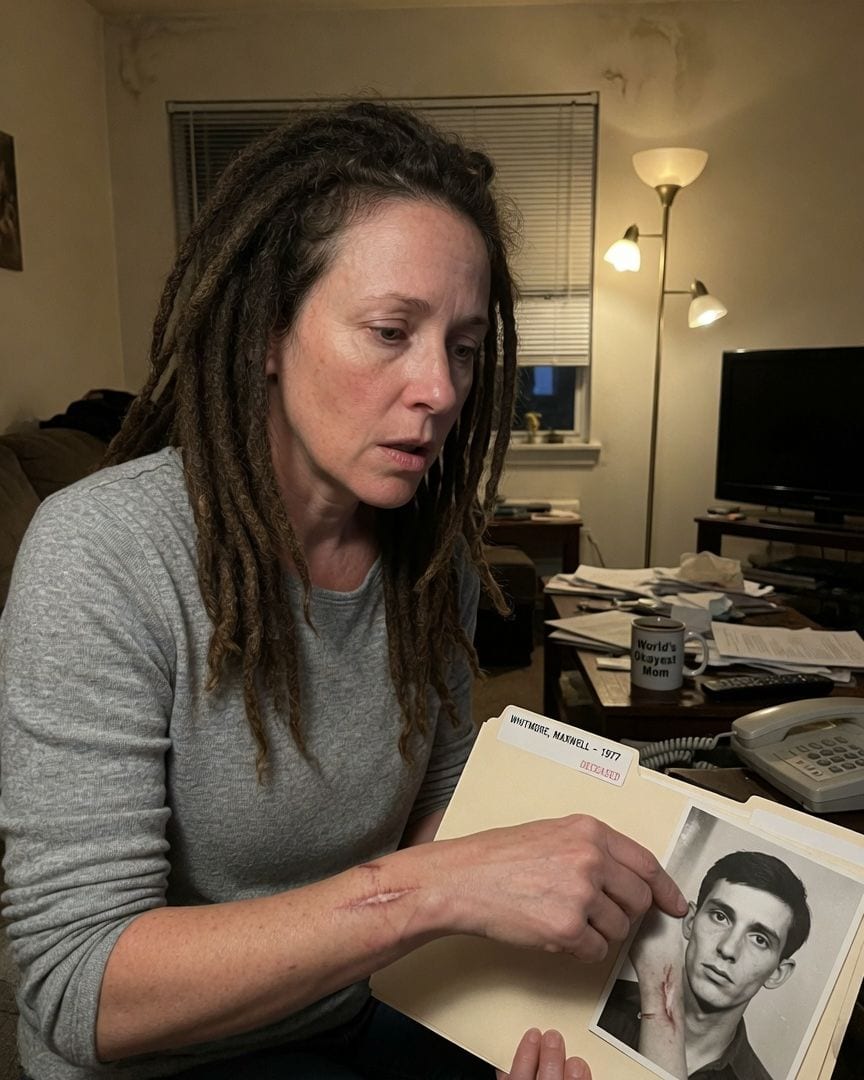
My fingerprints perfectly match a dead man's. He died in prison in 1980, but the bureau insists our hands are identical.
My distant cousin's arrest led to a routine fingerprint check, but the results were anything but normal. A bureau examiner confirmed my prints were identical to an inmate who died in custody decades ago. Then I saw his mugshot: the faint scar on his wrist was the exact same as my own unique birthmark.
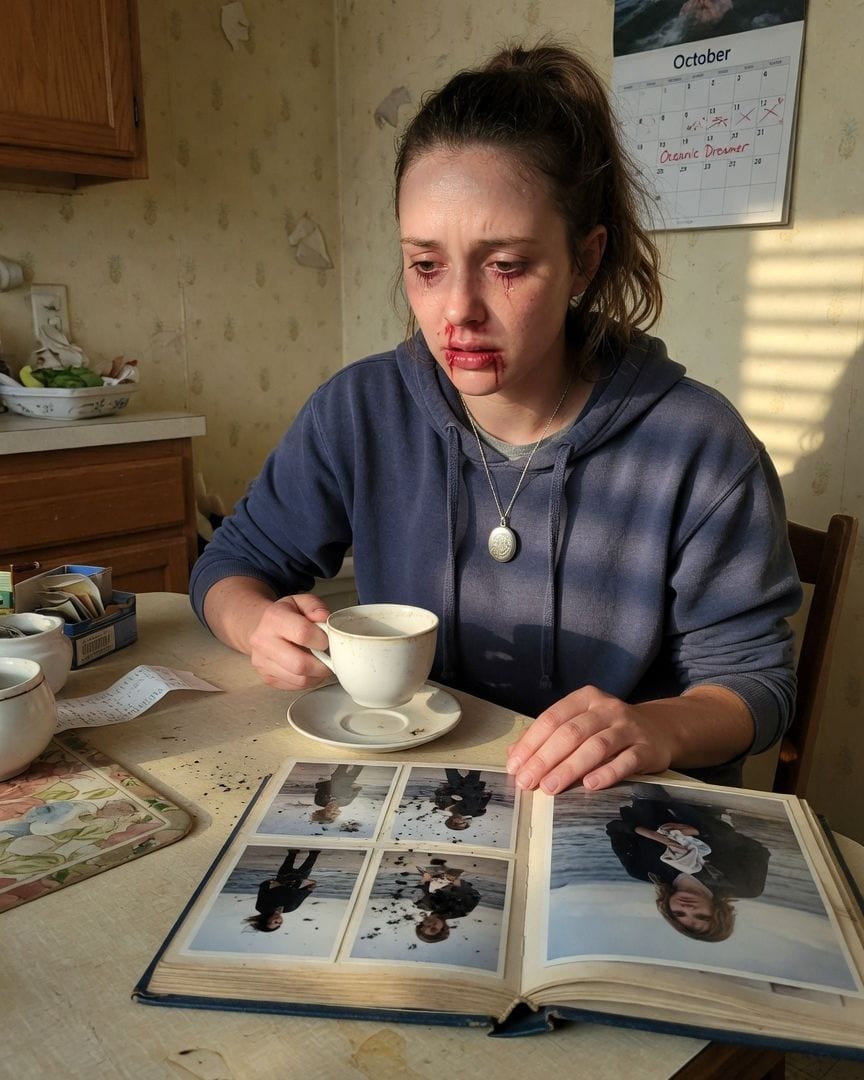
My mother recalled scattering Dad's ashes. She was gone when we did it, lost at sea. She knew which of us cried that day.
My mother came home a month ago, changed after nearly drowning at sea. But then she started describing the day we scattered my father's ashes, every detail sharp and clear. She couldn't have been there; she was lost at sea when we stood on that pier.
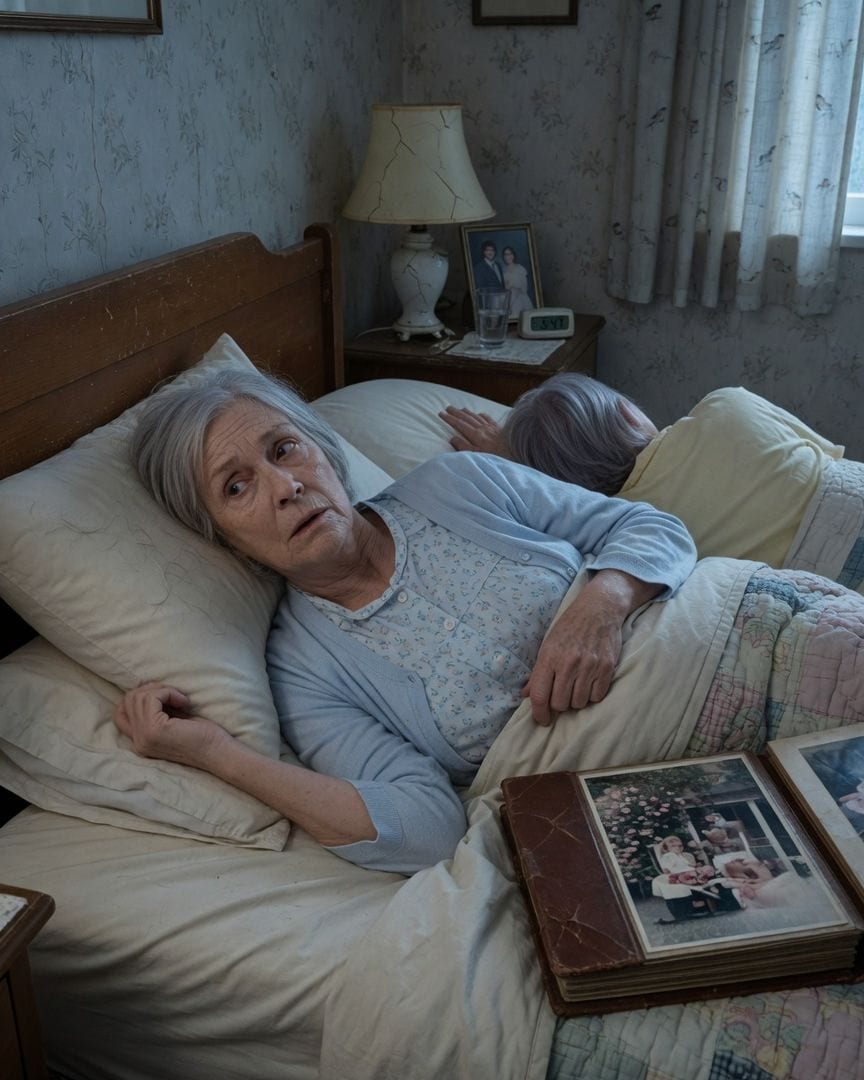
My twin sister Ruth sleeps on the right now, facing the wall. For forty-one years, she always took the left side. She insists I'm misremembering.
After three days missing, my partner Ruth finally came home. But the morning after, I woke to find her sleeping on the wrong side of our bed. She claimed she'd always slept there, and my memory was wrong, despite forty-one years together.
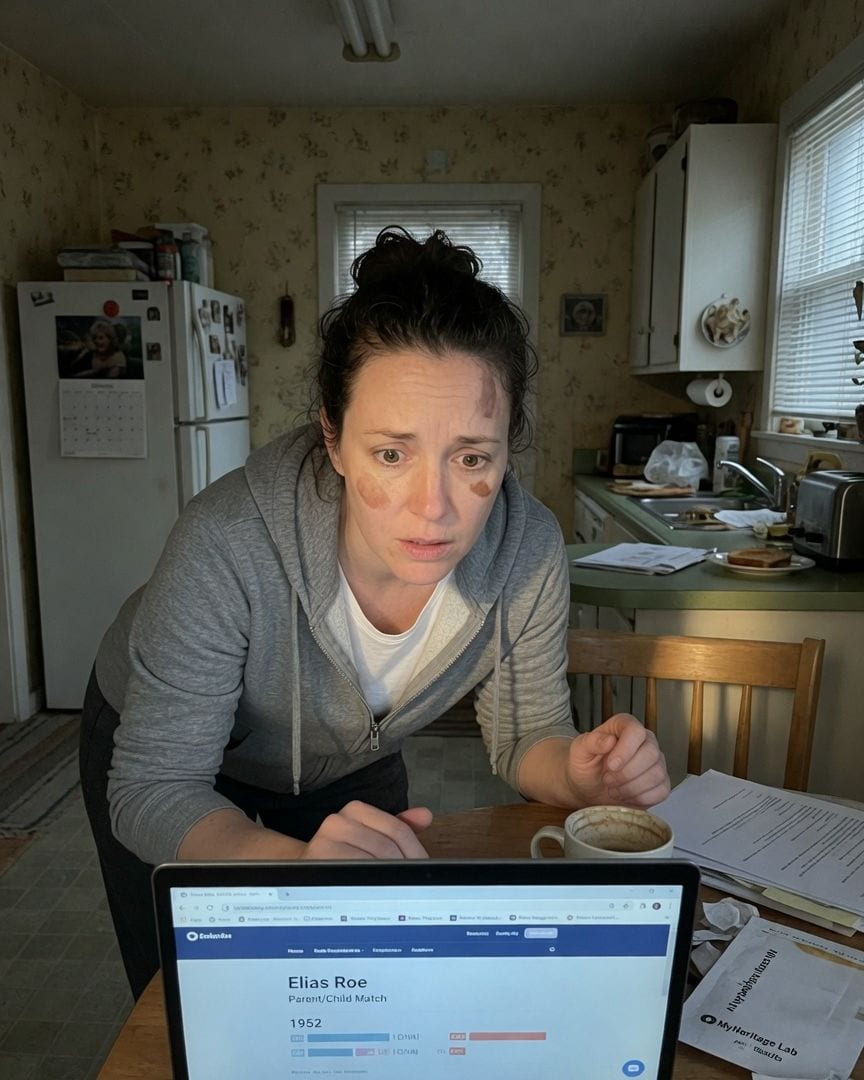
My DNA came back a parent-child match to a farmer who died in 1952. I didn't believe it, so I paid a second lab — same result, down to the last marker.
As a pragmatic software engineer, I've always trusted facts. But my recent MRI revealed a perfectly healed compound fracture on my left tibia, one that mended decades ago. I've never broken a bone in my life, and there isn't even a scar.
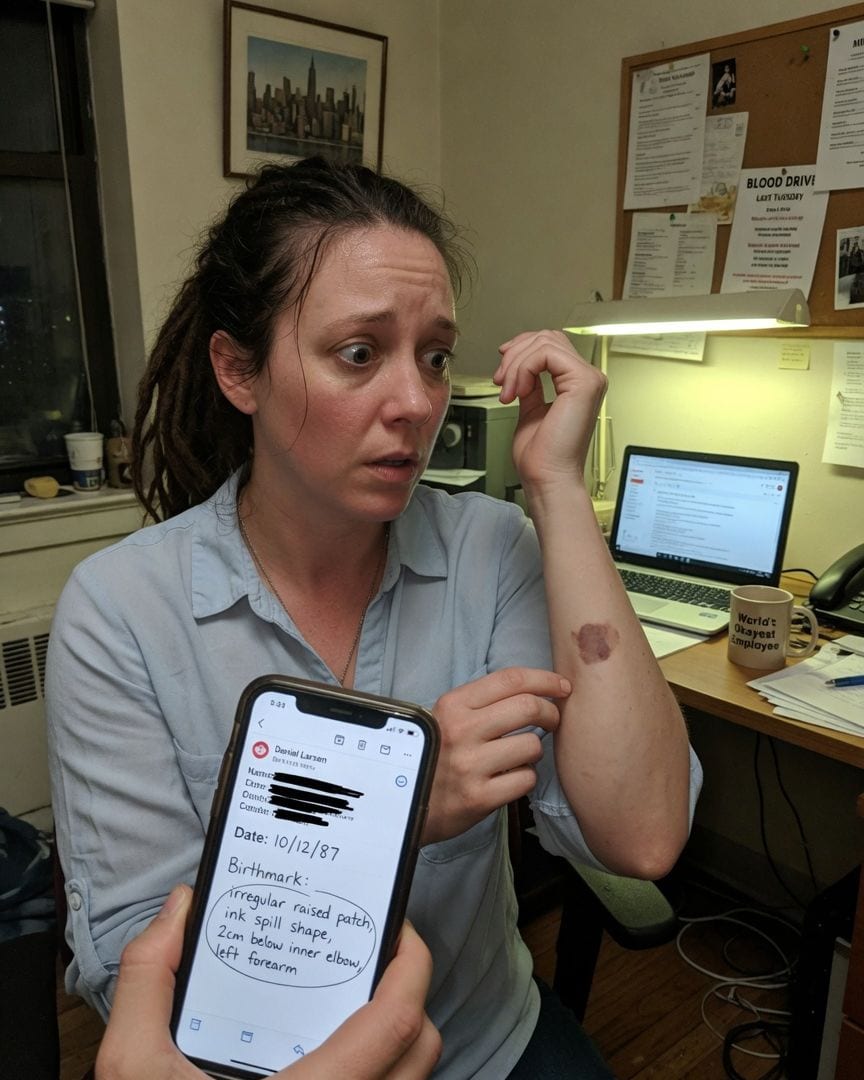
My left forearm has the exact birthmark described on a dead man's blood donor card from 1987, two years before I was born.
I gave blood as a routine civic duty. A call from the blood bank revealed my sample matched a donor from 1987, a man who died that year. But his donor card also detailed a unique birthmark on his left forearm, exactly mirroring my own.