My left forearm has the exact birthmark described on a dead man's blood donor card from 1987, two years before I was born.
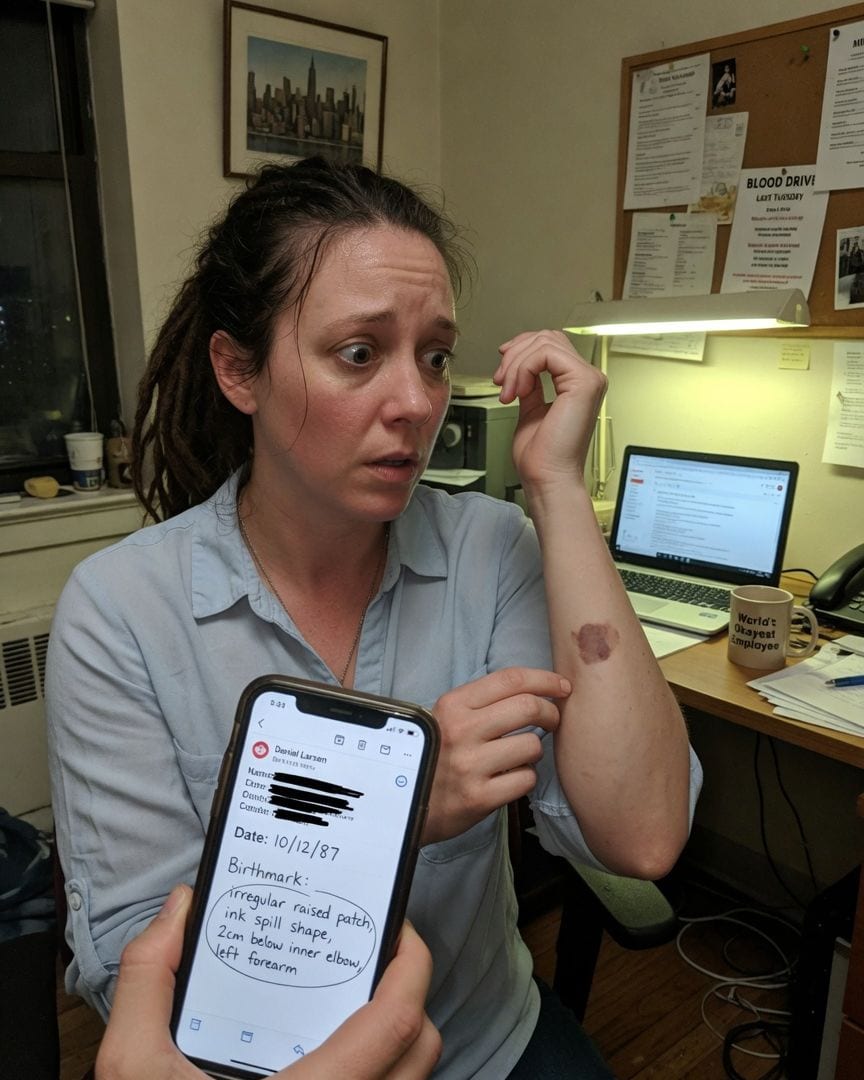
I gave blood at the office drive last Tuesday, just a routine civic duty. Two days later, my phone rang.
It was Philip Ellsworth from the blood bank, his voice measured, professional, yet carrying a faint edge of something I couldn't quite place.
He told me my sample cross-matched to a labeled unit still in their long-term freezer, drawn from a donor in 1987. Same rare Bombay phenotype, same markers.
He paused, a beat of silence that stretched uncomfortably, then quietly added that the donor's card listed a man who, according to their records, died that same year. I'm Nancy Vaughn, 35, and I was born in 1989.
The math didn't just not add up; it was impossible. My mind immediately jumped to clerical errors, a mix-up, anything but the unsettling truth of a ghost in my own blood.
I tried to sound reasonable, my voice tighter than I intended, asking if there'd been a database glitch, a mislabeled unit. Philip was polite but firm.
He assured me their system had triple-checked the match due to the rarity of the blood type. The air in my small office felt suddenly heavy, pressing in on me. It was, he insisted, an exact match. My blood.
His blood. From before I was even alive. The fluorescent lights hummed with an almost aggressive static.
I pressed Philip for more information, my voice tight, bordering on frantic. Who was this Daniel Larsen? What exactly did 'same markers' mean?
He was hesitant, citing privacy regulations, but I pushed, explaining the sheer impossibility of the situation, the way my world had just tilted on its axis. "This isn't just a mix-up, Mr. Ellsworth," I remembered saying, "This is...
I need to understand." Finally, he relented slightly, his professional reserve cracking just enough. He offered to email me a redacted photocopy of Daniel Larsen's donor card.
"There's also something else," he said, his voice lowering to a near whisper, as if sharing a secret. "Our system notes a unique, non-medical identifier on his card.
A small, distinctive birthmark on his left forearm, described in unusual detail for a blood donor form. It was quite specific." As he spoke, an involuntary shiver ran down my spine, tracing a cold path up my back.
I was on speakerphone, pacing my apartment, the floorboards groaning faintly under my steps, and without thinking, my right hand drifted to my own left forearm. There, just below the elbow, was a birthmark.
A small, oddly shaped patch of darker skin I’d had my entire life, one I’d never given a second thought to. I tried to dismiss it, to rationalize, the frantic voice in my head shouting down the growing unease. Coincidence.
A common shape. Millions of people have birthmarks. But the specificity in Philip’s voice, the 'unusual detail,' clung to me like a damp cloth. I asked him to describe it exactly.
He did, reading from the card: "Irregular, slightly raised, resembling a faded ink spill, about two centimeters below the inner elbow joint." My fingers, cold and clumsy, traced the exact spot on my own skin.
The dread was a cold, creeping fog, seeping into the corners of the room.
Philip described the birthmark from Daniel Larsen's donor card in painstaking detail – its size, its irregular shape, even the slightly raised texture. I listened, my heart hammering against my ribs, my gaze fixed on my own left forearm.
I pulled back my sleeve completely, as if seeing it for the first time, as if it might have changed since I last looked. The mark was there, exactly as he'd described, every minute detail matching. My breath hitched.
It wasn't a common shape. It was distinctive. Then, with a soft chime, the email with the blurred photocopy landed in my inbox.
I clicked it open, zoomed in, past the heavily redacted personal details, to the handwritten date on the donor card: 1987.
I stared at the birthmark on my arm, then at the image on the screen, the impossible connection burning into my mind, a brand on my consciousness.
The birthmark was a physical anchor to the impossible. I couldn't unsee it. Every time my gaze fell on my left forearm, it was there, a dark, irregular shadow of Daniel Larsen.
I needed answers, something more than Philip’s professional bewilderment.
My next step was the local historical society, a dusty building filled with microfiche machines that whirred like disgruntled insects and the overwhelming scent of old paper and something faintly metallic, like forgotten pennies.
I spent hours sifting through archived newspapers, the harsh light of the microfiche reader making my eyes ache, searching for Daniel Larsen. The world outside felt distant, muffled by the heavy walls.
Eventually, buried deep in a collection of local papers from 1987, I found his obituary. It was brief, tucked away on a back page, mentioning a sudden, unspecified illness.
It listed no immediate family but referenced a 'distant cousin, James Vance,' and a vague address for a family estate on the outskirts of town. A thread, however thin.
I kept digging, a strange compulsion driving me forward, past the growing fatigue. Then, I stumbled upon a smaller article, a human interest piece from a community paper, profiling local hobbyists. The headline was unassuming: "Local Artisan Crafts Custom Locks."
Daniel Larsen, it declared, was an 'inventor of curious mechanisms,' known for his intricate, custom-made locks and keys. The article featured a grainy, black-and-white photograph of him.
He was younger, with a serious but kind face, holding a particularly elaborate, almost sculptural key, its design both alien and strangely compelling.
It wasn’t like any key I’d ever seen – a complex blend of polished brass and what looked like dark, inlaid wood, with a series of tiny, almost imperceptible grooves and notches.
As I read the description of its "impossibly complex internal mechanism," a peculiar sense of familiarity washed over me.
It was a faint echo of understanding about its construction, a fleeting intuition of how its parts fit together, though I’d never seen anything like it before.
It was like recognizing a half-forgotten dream, a memory just beyond the reach of conscious thought. The unease solidified, shifting from abstract impossibility to a tangible, unsettling trail. My fingers twitched, as if remembering the feel of crafting something similar.
The Vance estate, when I found it, was a secluded, imposing property, framed by ancient oaks whose branches clawed at the gray sky and a wrought-iron fence consumed by ivy.
It looked untouched by time, almost forgotten, as if it had settled into the earth and simply ceased to change. A profound silence hung over the place, broken only by the rustle of leaves in the wind.
I drove past slowly, the tires crunching faintly on the gravel, trying to gather the courage to approach. My car felt small, vulnerable, against the looming backdrop of the house.
As I rounded a bend in the long, winding driveway, I saw him: an older man, stoic and unmoving, standing at an upstairs window. James Vance, I presumed.
He wasn't startled; he simply watched me, his expression unreadable, almost calm, as if he'd been expecting my arrival for days, or even decades. The sight sent a fresh wave of dread through me, cold and sharp.
His eyes, even from that distance, seemed to bore into me, dissecting my intentions. I didn't stop.
I kept driving, the feeling of his gaze a physical weight on my back, a shadow extending from the house to cling to my vehicle.
Later that evening, an anonymous email landed in my inbox. The sender was 'unknown,' the subject line blank. My laptop screen seemed to glow with an unnatural intensity as I read it.
The body contained a single, stark sentence: 'Some locks are best left undisturbed.' No other text. No digital footprint that I, with my limited tech skills, could trace. Just that quiet, chilling warning. It wasn't a threat, not overtly.
It was a statement of fact, delivered with the serene confidence of someone who knew exactly what I was looking for, and exactly what I had found. The digging had been noticed.
I was no longer just investigating; I was being observed. The light from my screen seemed to dim, casting long, wavering shadows across my apartment walls.
Despite the anonymous warning, the words seemed to burn behind my eyes, pushing me forward instead of holding me back. I couldn't stop. The next morning, I drove back to the Vance estate, determined.
This time, I walked up to the heavy oak door, its surface rough and cold under my knuckles, and knocked. The sound echoed hollowly into the cavernous silence beyond. James Vance himself opened it.
He showed no surprise, only a faint, almost welcoming smile that didn't quite reach his eyes. His gaze was steady, calm, unsettling.
He invited me into a dimly lit, dusty study, the air thick with the scent of old books and something else, something metallic and faintly sweet, like aged copper. The room felt colder than the rest of the house.
He didn't deny anything. "So, you've found us," he said, his voice soft, unhurried, as if we were discussing the weather. He motioned to an ancient, leather-bound ledger resting on a mahogany desk, its pages yellowed with age.
"The re-emergences, we call them."
He explained that the Larsen and Vance families had a long, intertwined history, bound by a unique bloodline and a "preservation protocol."
As he spoke, a floorboard upstairs creaked, a sound like a whisper, and a single pane of glass in the tall window rattled faintly. He opened the ledger, its pages filled with elegant, faded script.
Each entry listed a date, a blood type – always the Bombay phenotype – and the exact description of the distinctive birthmark. He pointed a long, slender finger to an entry dated 1987: 'Daniel Larsen. Bombay. Left forearm marker.'
Then, with a slow, deliberate movement that felt weighted with ancient knowledge, he pointed to an empty space below it, dated 1989. "Waiting for a name," he murmured, his gaze lifting to meet mine. My stomach dropped.
The ledger wasn't a record of coincidences; it was a record of me.
The blood match, the birthmark, the impossible dates – it all snapped into a horrifying, coherent pattern, like pieces of a puzzle clicking into place to reveal a monstrous image.
I wasn't just connected to Daniel Larsen; I was, in some terrifying way, a continuation. My breath caught in my throat, a dry gasp. "What… what is this?"
I whispered, the words barely audible, feeling as if the dust in the room was choking me.
James Vance looked at me, his gaze calm, almost pitying, as if I were a child struggling with a simple concept.
"The protocol involves a specific object," he began, his voice still low and steady, "acting as a conduit, a trigger."
He rose from his chair, a whisper of old fabric, and led me to a glass display case in the corner of the study. The glass seemed to hum faintly in the gloom, reflecting the dull light.
On a faded velvet cushion, nestled among other strange artifacts – antique compasses, a dried flower pressed between two panes of glass, a small, silver locket – sat the custom-made, intricate key from Daniel Larsen's newspaper article.
It was even more complex in person, a miniature work of art in polished brass and dark wood, gleaming with a subtle, internal light. My hand trembled as I reached for it, a magnetic pull drawing me forward.
"Daniel designed it himself," Vance continued, his eyes fixed on the key, "towards the end of his cycle. He was… aware."
My fingers closed around the cold metal. As they did, a dizzying rush of unfamiliar, yet intensely personal, memories flooded my mind.
Not my own memories, not of my life in 2024, but vivid flashes: the intricate blueprints spread across a workbench, the precise measurements scribbled in the margins, the unique locking mechanism taking shape in my hands, the smell of oiled metal and sawdust, the feel of the tiny tools, a file, a miniature hammer, in my hand as I crafted it.
I knew this key. I knew its secrets.
My thumb instinctively pressed a tiny, almost invisible stud on its side, a motion that felt as natural as breathing, and a small, perfectly concealed compartment sprang open with a soft click, barely audible above the sudden pounding in my ears.
Inside, folded and yellowed with age, was a single sheet of paper. My gaze fell to the elegant script on the document. It was my own full name, Nancy Vaughn, written there, dated 1989.
The impossible object was real, and it knew my name.
The key, with my name on the document inside, was the final, devastating piece. It wasn't just a coincidence anymore; it was a trap, meticulously laid across decades.
I dropped it, the metallic clatter echoing in the quiet study like a gunshot, slicing through the heavy silence. "Explain," I demanded, my voice raw, barely a whisper.
James Vance nodded, picking up the key with a disarming calm, his movements unhurried. He handled it with a reverence that made my skin crawl.
He explained that the "protocol" wasn't reincarnation, not in the way I understood it, but a complex, ancient method of "imprinting" certain consciousnesses onto new, genetically compatible bodies within the family line.
It was a form of ancestral preservation, he said, ensuring specific "talents" or "personalities" continued. His voice was clinical, detached, like a scientist discussing an experiment.
The rare blood type and the distinctive birthmark were not coincidences; they were the genetic markers of this specific lineage, the "vessels." My own body, he implied, was merely the latest.
Daniel Larsen, he explained, was one of the few "re-emergences" who, towards the end of his "cycle," became aware of the process. A flicker of something, perhaps admiration, crossed Vance's placid features. Daniel didn't want to continue.
He designed the key, this "memory capsule," to activate upon discovery, to pass on his knowledge, his warnings, to his next iteration – me. He wanted to break the cycle.
The ledgers, Vance revealed, documented not just the successful re-emergences, but the "failures" – those who resisted, who tried to fight their inherited identity. Their entries often ended abruptly, or with cryptic notes about "unfortunate accidents."
The pattern snapped into place, horrible and complete: I was not Nancy Vaughn, entirely. I was Daniel Larsen, inherited, imprinted, and now, terrifyingly, aware. His final, desperate hope was now mine. The air in the study felt thin, suffocating.
James Vance, unperturbed by my horror, by the raw fear tightening my chest, offered me a choice. His eyes held no judgment, only an unnerving neutrality.
"You can embrace your inheritance," he said, gesturing to the ancient ledger on the desk, its pages filled with my impossible history, "continue the line, contribute your unique talents, just as Daniel did. Or you can fight it."
He opened another page in the ledger, revealing entries with stark, chilling notes: 'Lost in fire,' 'Drowned in shallow water,' 'Vanished without a trace.' These were the "failures," the re-emergences who had tried to resist the protocol.
Their names, their truncated lives, lay open on the page like graves. "Attempts to deviate," Vance explained calmly, his voice a low hum, "are… corrected. The lineage must continue."
A cold shiver ran through me, a primal fear seizing my gut. The implication was clear: fighting meant a similar, "unfortunate" end.
I was trapped, not by a monster, but by a chillingly rational, ancient system, a meticulously maintained, generational prison.
The weight of Daniel's desperate struggle, his final act of defiance encoded in that key, pressed down on me. I looked at Vance, at the calm, unbothered certainty in his eyes.
He wasn't evil; he was simply a custodian of a monstrous tradition, a cog in an ancient, unfeeling machine. I couldn't accept it. I couldn't be just a vessel, a continuation, a replacement.
My own identity, however fragile it felt in that moment, felt like the only thing I truly possessed. A primal urge to escape, to reclaim my own life, to scream defiance at this quiet man, surged through me.
Without a word, I snatched the key from the table, its cold metal a shock against my skin, spun on my heel, and bolted from the study, out of the house, and to my car.
The engine roared to life with a desperate growl, and I sped away, gravel spitting from under my tires.
The Vance estate receded in my rearview mirror, a dark, silent monolith, the key clutched so tightly in my hand it bit into my palm, leaving crescent-shaped marks.
I was running, but I knew I was carrying Daniel's awareness, his desperate hope, and his fight, with me. The chase had just begun.
I changed my phone number, moved apartments to a different part of the city, a sterile new build that felt miles away from old houses and dusty ledgers.
I severed ties with almost everyone who knew me, a painful amputation of my former life. I never contacted the blood bank again, never spoke of Daniel Larsen or James Vance.
The key, now a constant, chilling reminder, is locked away in a safe deposit box, a burden I can neither discard nor fully understand.
I try to live my own life, to rebuild a sense of self untainted by the impossible truth. But the ghost of Daniel's awareness, his profound sense of being trapped, his desperate desire for freedom, lingers.
It's not a hallucination, but a subtle shift in my own perception, a faint echo in my thoughts, like background noise I can't quite tune out.
I sit alone in my new, sparse apartment, staring at my reflection in the darkened window. My face looks tired, hollowed out. I run a hand over my left forearm, over the birthmark.
It's still there, a permanent, undeniable mark of my impossible connection.
Sometimes, in quiet moments, when the city outside hums low and distant, I find myself humming a tune I've never heard before, or reaching for an object that isn't there, a phantom memory of Daniel's life.
The dread is that I'm not entirely myself anymore; a part of me is a continuation, a re-emergence, burdened with another's final, desperate thoughts.
I try to shake it off, to assert my own being, to speak my own name aloud, but the feeling persists, a quiet hum beneath my own thoughts, a constant, unsettling presence.
A few months later, her new neighbor, Desmond Hale, mentioned seeing her old apartment still listed for rent. "Funny," he said, "I could've sworn I saw you leaving it just last week, carrying a small, intricate box. You looked… different."
Nancy Vaughn just smiled, a faint, wrong little smile.
If this one got to you
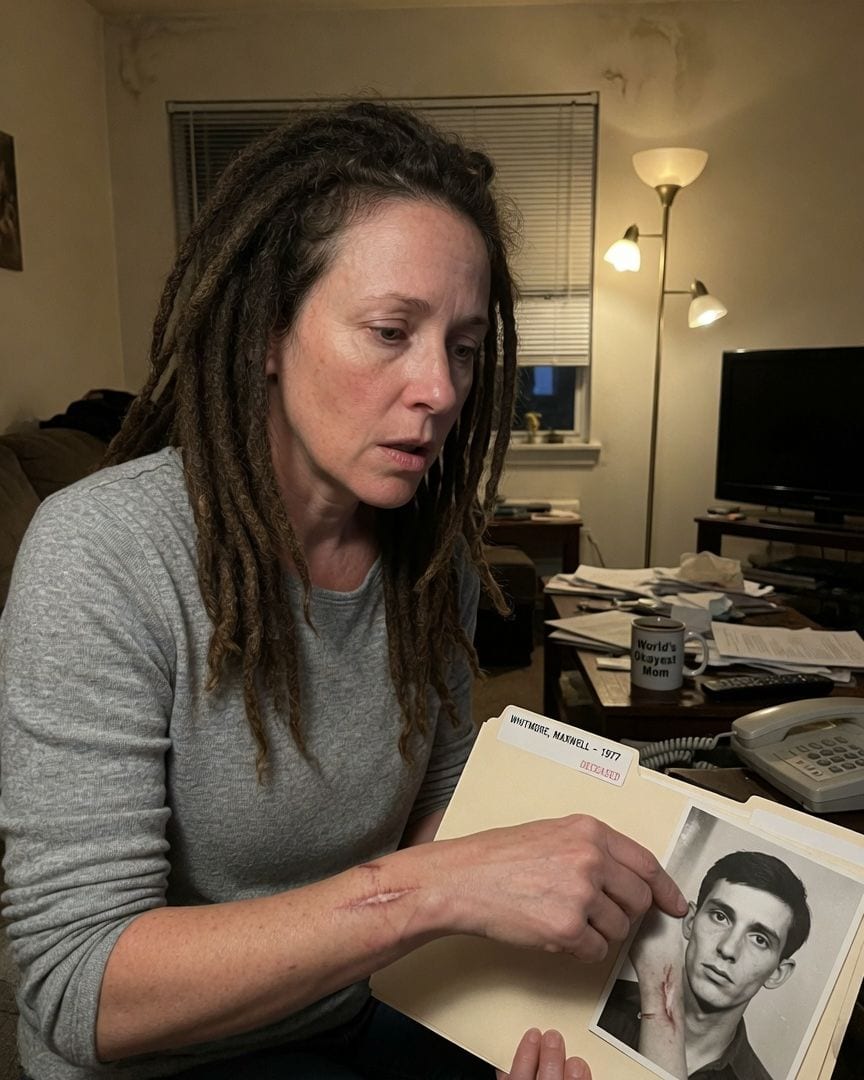
My fingerprints perfectly match a dead man's. He died in prison in 1980, but the bureau insists our hands are identical.
My distant cousin's arrest led to a routine fingerprint check, but the results were anything but normal. A bureau examiner confirmed my prints were identical to an inmate who died in custody decades ago. Then I saw his mugshot: the faint scar on his wrist was the exact same as my own unique birthmark.
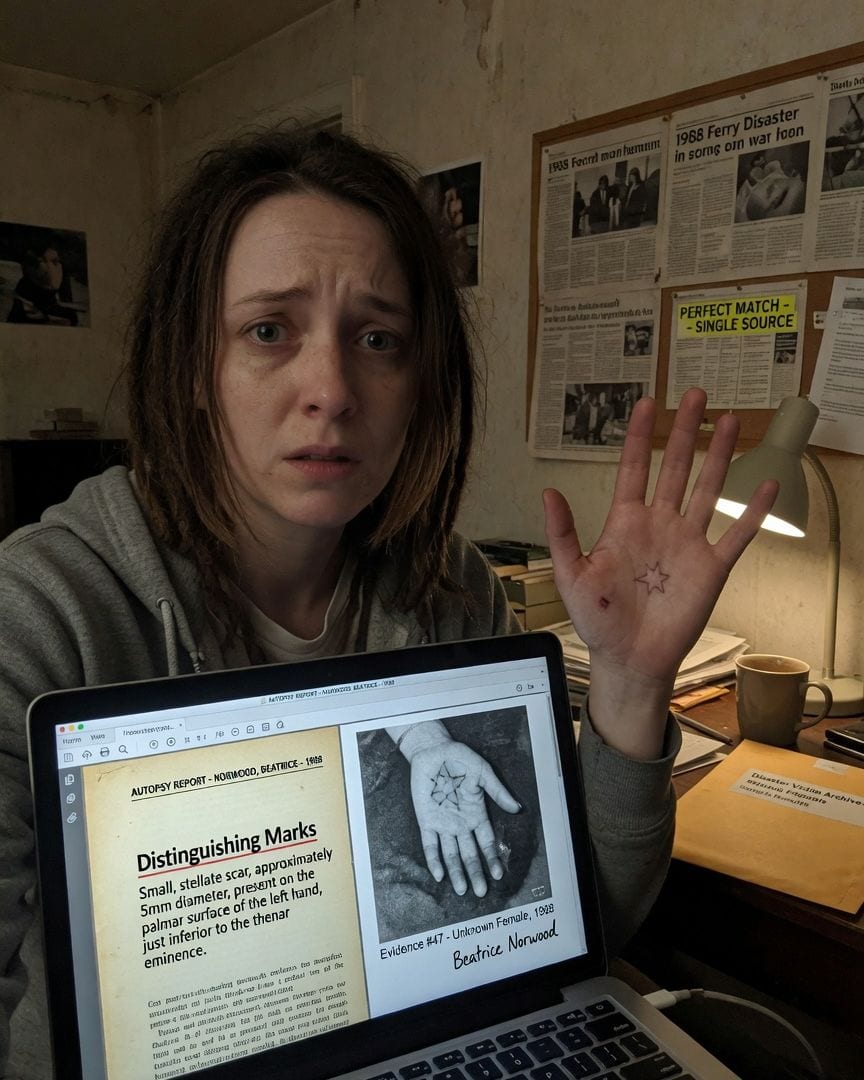
My own DNA matches a body pulled from a ferry wreck in 1988. I was born three years after it drowned.
I was born in 1991, living my quiet life, when my DNA profile returned an impossible match. It was a perfect match to an unclaimed victim from a 1988 ferry sinking, someone who died three years before I was even born. Then, a grainy photo revealed my unique star-shaped birthmark on her hand.
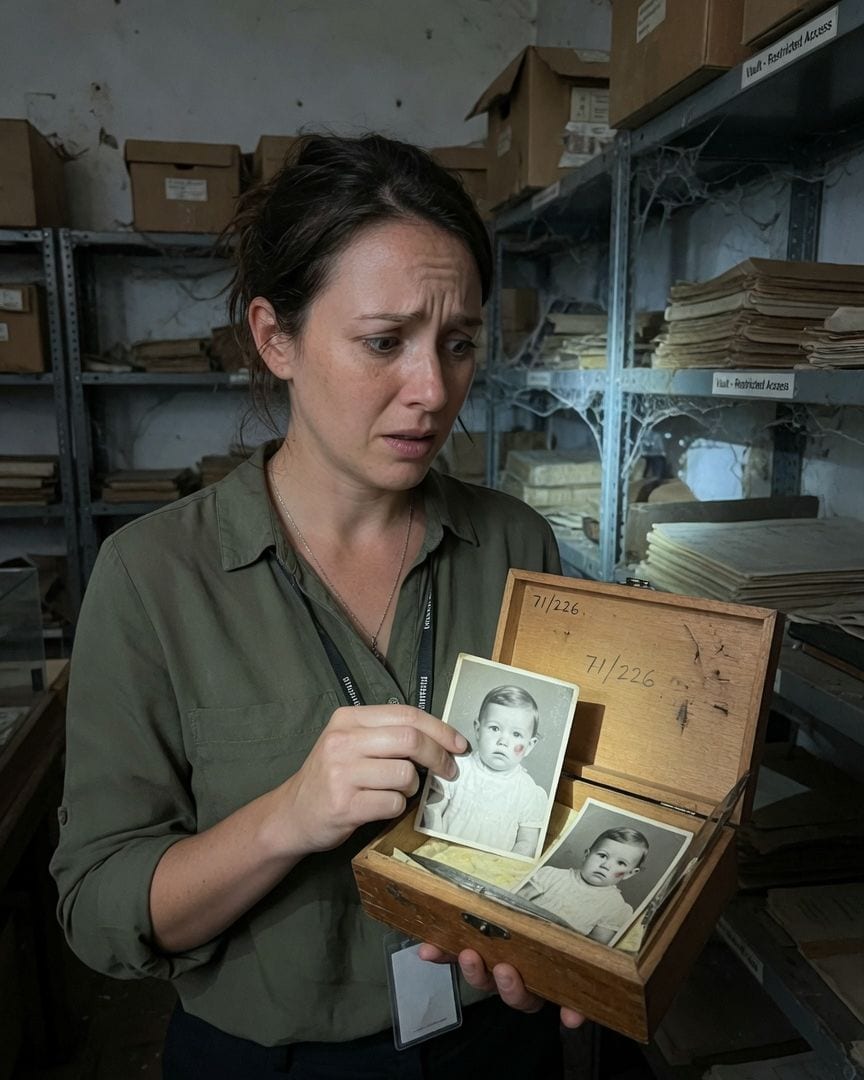
The christening gown in my museum names my own family on a blacked-out donor card. It's the fourth to carry that number since 1919 — and the date it comes back is already typed in.
Cataloguing an antique christening gown, I found its museum card listed a future "return" date, and then uncovered an old box in the vault. Inside, a 1961 photograph of a child bore a birthmark identical to my own, taken at my street address, and chillingly marked "Returned."
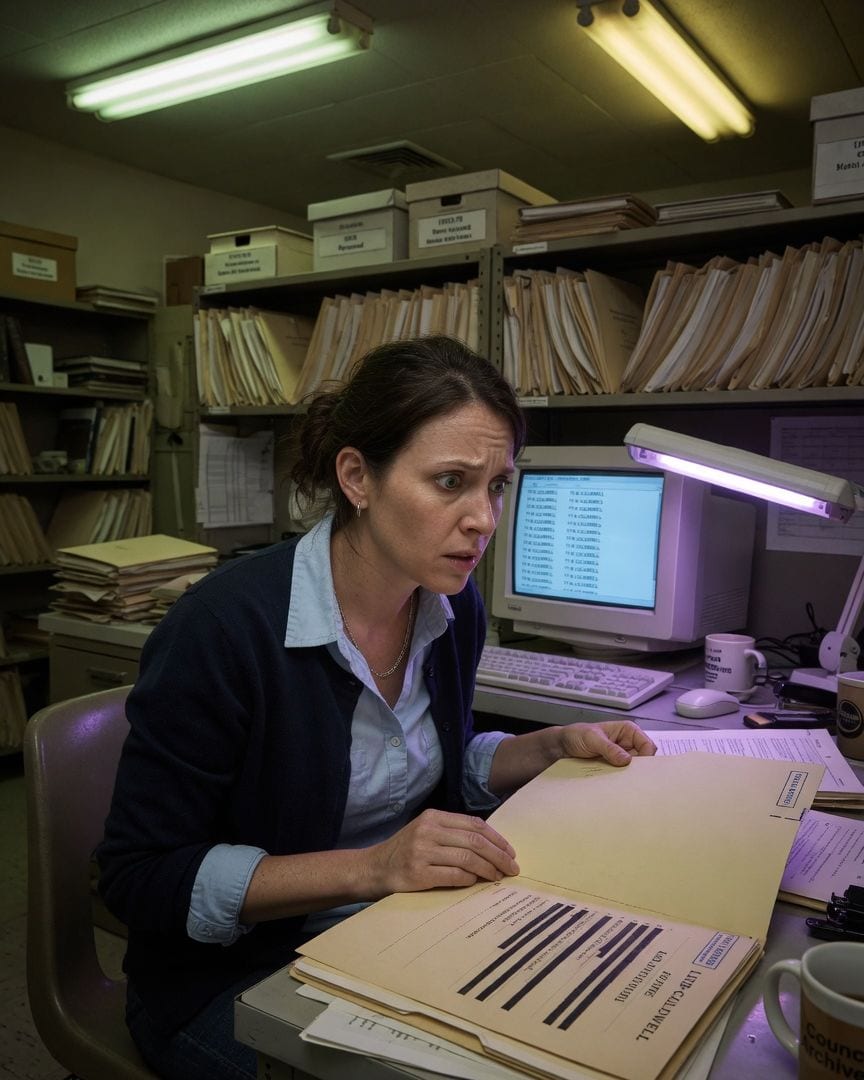
My employer's security file holds a vetting report on me dated nine years before I ever applied. It has my full name and my parents' address — with only one line, the source who referred me, blacked out.
Working a routine data audit, I pull my own security file. The issue date is nine years before I even applied for the job. Then, hidden within an old archive file, I find my current address etched under a blacked-out line.
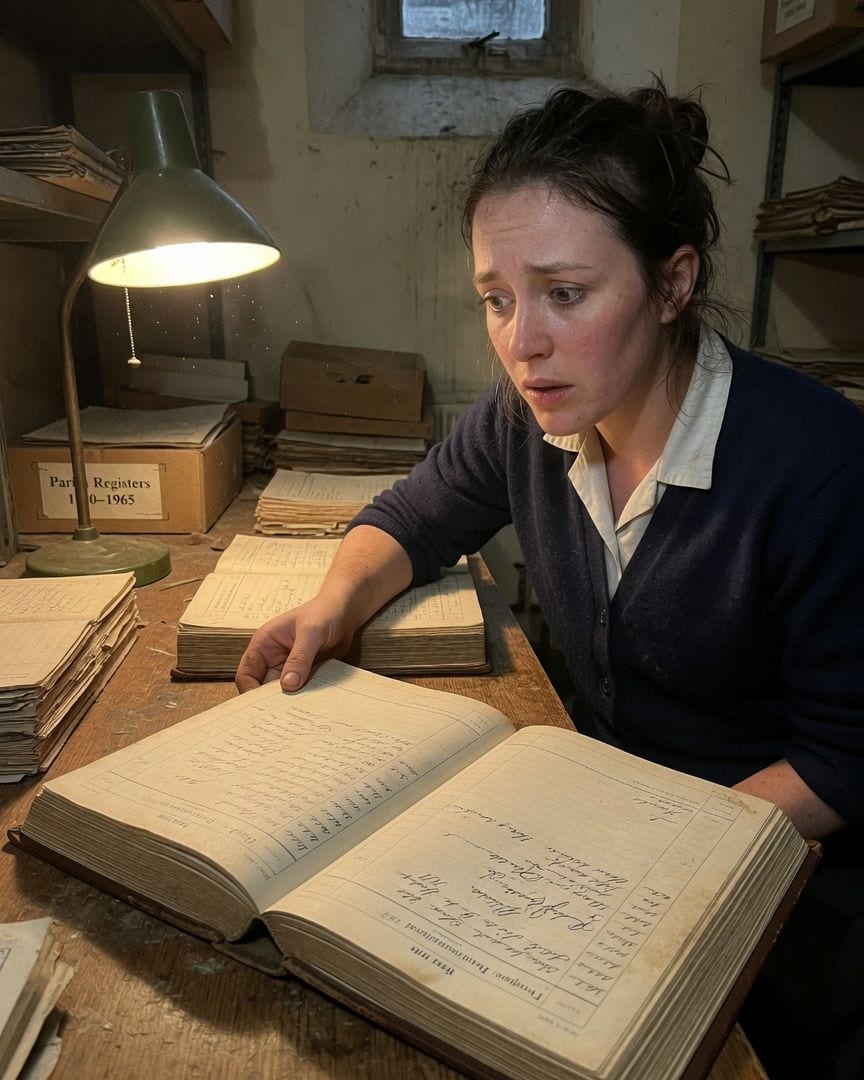
My signature appeared on a baptism record from 1957. Decades before I drew my first breath.
I was reviewing my parents' marriage certificate for a citizenship application, a simple formality. But my gaze snagged on a witness signature: my own distinctive handwriting, dated six years before I was born.
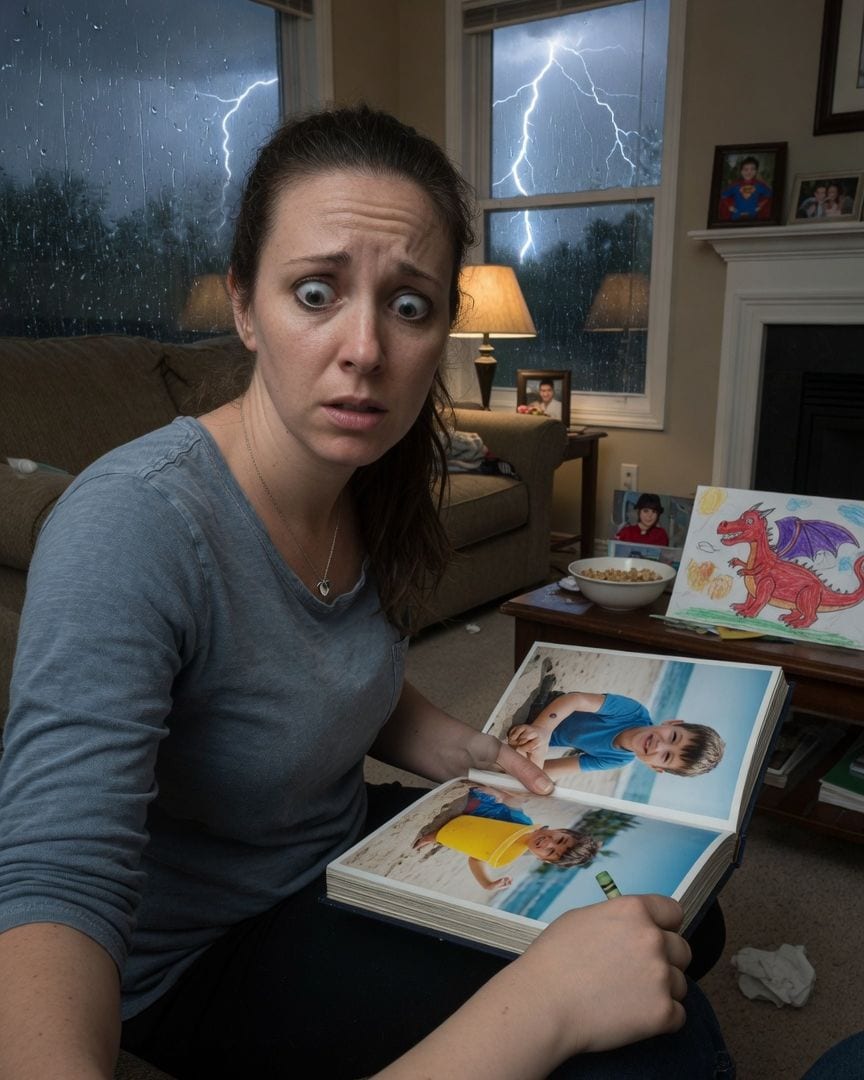
My son's star-shaped birthmark is gone from his wrist. Photos prove it was there just last summer.
My son Nathaniel returned home after being missing for a day and a night, bringing immense relief. But his strange calm during a violent thunderstorm and a new way of eating breakfast unsettled me. The true dread hit when I touched his left wrist: his distinctive star-shaped birthmark, always there since birth, was utterly gone.