My dumbwaiter opens itself with warm food inside — set on a doily embroidered with the 1930 owner's initials. I live alone.
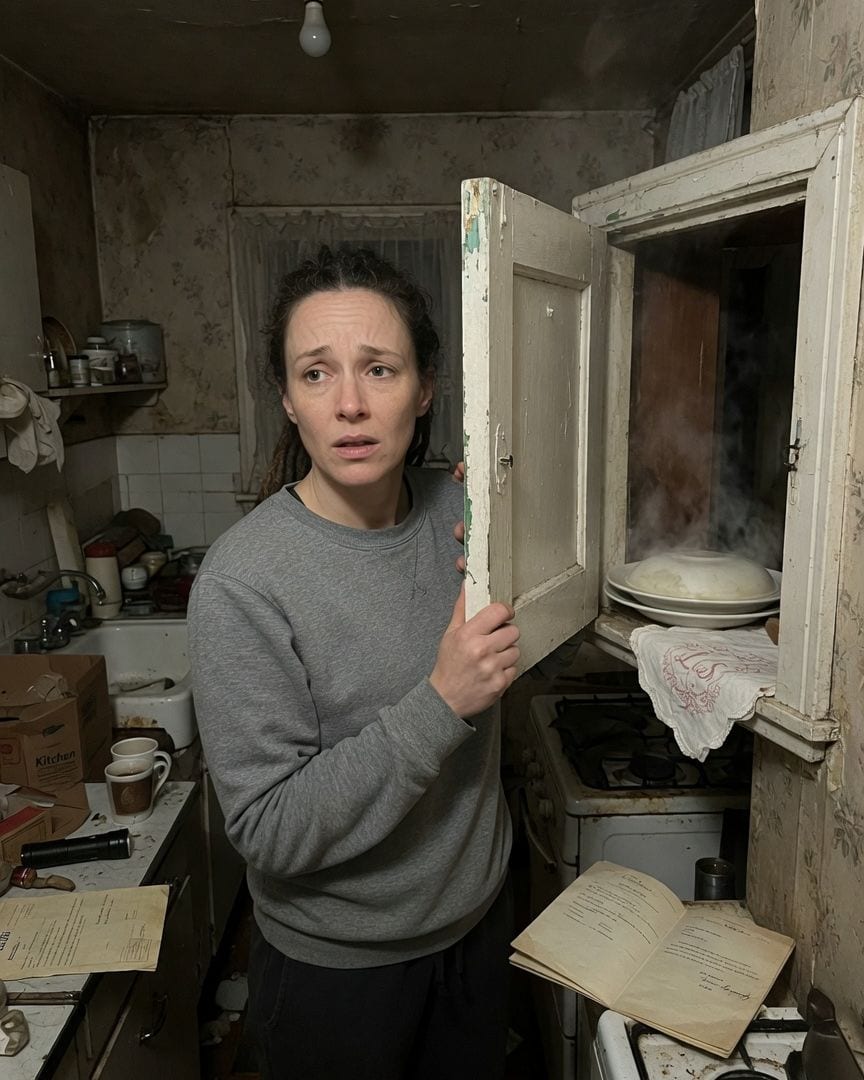
I’d just moved into the house, my inherited piece of history.
It was old, built in the early 20th century, with all the quirks you’d expect: creaky floors, a draft that cut through the kitchen even with the windows shut, and a dumbwaiter.
The dumbwaiter was in the old kitchen, a small wooden door painted over with decades of white gloss, connecting to the room directly above, which was now my bedroom. I hadn’t touched it.
It was just part of the décor, a relic.
But three times now, I’d found it open. The first time, I came downstairs for coffee and saw the small door ajar, light spilling from the shaft. Inside, on the dusty shelf, sat a covered ceramic plate.
It was warm to the touch, and beneath it, a small linen doily, hand-embroidered with delicate, faded initials: ‘L.S.’ The smell of mutton and boiled potatoes still hung in the air, thick and comforting.
I’d stared at it for a long minute, my mind scrambling for an explanation. A draft? The house settling? I lived alone. The doors were locked. There was no one else here.
I’d checked the deed later, tucked away in my study drawer, purely out of a bizarre curiosity. The name on the 1930 deed was Laura Sinclair. ‘L.S.’
I’d laughed it off, told myself it was some weird fluke of old houses, probably an animal, though I’d found no droppings or signs of entry. I threw the food out. The second time, it was a chicken stew.
Still warm, the doily present. The third time, just last week, it had been roast beef, still steaming faintly, a rich aroma filling the hall as if it had just been placed there, moments ago.
My hands shook as I closed the dumbwaiter door. It was heavy, stiff with paint, not something that just drifted open.
The next day, the unease had sharpened into a cold, insistent prickle. I pushed the dumbwaiter door again, testing it. It stayed firmly shut, a silent, stubborn rectangle of wood. Too heavy to simply swing open.
I’d thought about a prank, but I was isolated here, and no one knew I’d moved in beyond family. Besides, who would bother with warm meals? It wasn't funny.
I pulled out the old 1930 deed again, the name Laura Sinclair staring back at me. ‘L.S.’ was undeniable.
As I walked through the house, I started noticing other small things, details I'd dismissed as 'old house charm.' A faint, lingering smell of pipe tobacco in the den, though I’ve never smoked a day in my life.
A worn path in the carpet by the upstairs window in my bedroom, as if someone had stood there for years, looking out. This particular window overlooked an overgrown patch of garden, all weeds and scraggly bushes.
One afternoon, while wiping dust from the pane, my hand froze. For a split second, the garden outside wasn't overgrown.
It was neatly tended, a small, decorative pond glinting in the sun, reflecting a figure in a broad-brimmed hat tending roses. The colours were muted, almost sepia, like an old photograph.
Then, it shimmered, a ripple across the glass, and returned to its present, wild state.
The ‘Door Onto The Wrong Year,’ as I would later call it, had opened for the first time, and I knew, with a certainty that chilled me to the bone, that something was profoundly wrong.
Driven by a strange compulsion, I began searching for any trace of Laura Sinclair Galloway, the woman on the deed. I started in the attic, a dusty, cobwebbed space I’d barely touched.
Behind a loose floorboard in an old trunk, I found it: a small, leather-bound photo album, its pages brittle with age.
The first few pictures showed a young Laura, smiling, then aging, always in this house, identifiable by the distinctive window frames and fireplace. I flipped carefully to a page near the middle, the paper crackling.
There, in faded sepia, was Laura. She was younger, her face etched with a quiet, expectant sorrow, standing in the very kitchen. She was placing a covered plate into the dumbwaiter, the same doily visible beneath it.
The date '1937' was scrawled on the back in elegant script. Beside her, half-cropped from the frame, was a tall, shadowy figure.
I instinctively knew it was Daniel, his hand resting on the dumbwaiter's frame, looking not at Laura, but directly out, as if caught in the act of leaving.
The photo album became my primary obsession. I spent hours poring over the images, tracing the lines of Laura’s life. Daniel Galloway appeared in several early photos, a handsome man with kind eyes, always by Laura’s side.
They looked happy, frozen smiles from a forgotten summer. But then, abruptly, he vanished from the pictures. After 1937, it was just Laura, her expression growing increasingly melancholic, often near the dumbwaiter, sometimes with a plate in her hands.
The routine was clearly established, a silent, daily ritual documented in brittle paper.
I visited the local library, a quiet, musty place, and spent days poring over microfiche archives of old newspapers and property records. I found her. Laura Sinclair Galloway owned the house until her death in the late 1960s, a widow.
No mention of a Daniel. It was like he’d been erased.
Back home, the 'Door Onto The Wrong Year' in my bedroom became more active. I would catch glimpses of the garden from 1937, now clearer, more detailed. The decorative pond, the neat rows of roses.
I saw Daniel Galloway himself, once, standing by a rose bush, looking towards the house, a faint, troubled expression on his face. He checked his wrist, as if for a watch.
The vision lasted longer this time, almost a full minute, before shimmering away, leaving behind the overgrown, present-day mess. The dumbwaiter continued its silent ritual, opening with warm food, though the frequency increased.
It was no longer three times a week; it was almost every other day, always around meal times, a constant, unsettling presence in the quiet house.
My investigation wasn't going unnoticed. Old Conrad Sutton, 78, a neighbor who’d lived in the area his whole life, started appearing more frequently.
He’d be pruning his hedges when I left for the library, or watering his lawn when I returned, his movements slow but his gaze sharp.
One afternoon, as I was getting out of my car, fumbling with my keys, Conrad ambled over, his faded blue eyes fixed on the house.
‘That old house,’ he began, his voice raspy, a dry leaf caught in his throat. ‘It likes its routines. Some things, they just keep on going, don’t they?’
I felt a prickle of unease, a cold sensation sliding down my spine. ‘What do you mean, Conrad?’
He just chuckled, a dry, reedy sound, and nodded towards my kitchen wall, where the dumbwaiter was. ‘Laura, God rest her soul, she was a creature of habit.
Especially after…’ He trailed off, his gaze drifting over the side of the house, towards where I knew the dumbwaiter shaft ran. He shook his head slowly. ‘You shouldn’t go digging too deep, missy. Some things are best left buried.’
The conversation ended abruptly when Conrad spotted a 'weed' in his own garden – a perfectly ordinary dandelion – and shuffled away, leaving me standing in the driveway, chilled by his vague warnings.
That night, I woke to a soft thud from downstairs, not a loud crash, but a dull, heavy knock that resonated through the floorboards. I crept down, heart pounding a frantic rhythm against my ribs.
The dumbwaiter door was open, an empty plate inside, but this time, the scent was different. Not food, but something metallic, faint and acrid, like old pennies left too long in damp earth.
It clung to the air, making my stomach clench. As I stood there, frozen, the ‘Door Onto The Wrong Year’ in my bedroom, visible through the archway, flickered.
It showed a blur of frantic movement in the old garden, too fast to properly discern, before settling back into the stagnant present.
Unsettled by Conrad’s cryptic warning and that disturbing metallic scent, I decided to press him for more. I found him on his porch swing the next morning, rocking slowly, a newspaper spread across his lap.
‘Conrad,’ I began, trying to sound casual, but my voice was tight. ‘You mentioned Laura Sinclair Galloway yesterday. You knew her?’
Conrad sighed, a long, wheezing sound, and looked out at the quiet street. ‘Knew her well enough. Used to run errands for her ma as a boy. She was a good woman. Sad, though.’
‘Sad how?’ I pushed, my hands twisting in my pockets.
‘After her husband, Daniel, vanished,’ Conrad said, his voice softer, almost a whisper. ‘It broke her. He just… disappeared one night in '37. Never a trace. She kept the house exactly as it was, kept to her schedule.
Always setting a place for him, you know? Always hoping.’
I felt a chill, colder than any draft. The pieces of the puzzle began to click into place, falling with a terrible, inevitable logic. The warm food, the doily, the routine captured in the photos.
It was Laura’s unending vigil, imprinted on the very fabric of the house. ‘The dumbwaiter?’ I whispered.
Conrad nodded slowly. ‘Aye. She’d send down his dinner every night, right on time. Said he’d be hungry when he came back. Kept it up for years, even when everyone knew he wasn't coming.’ He shook his head again.
‘Poor woman. Died an old lady still waiting, they say.’
‘But… why did he vanish?’ I asked, the words barely a breath.
Conrad’s gaze grew distant. ‘Nobody ever knew. Police searched, but… nothing. Just gone. The talk was always a little strange. Some said he just up and left. Others… well, others said the house took him.’
He looked directly at me then, his old eyes surprisingly sharp. ‘And you, missy, you’re digging at something the house might not like to let go of.’
Conrad's words echoed in my mind: ‘The house took him.’ It was a chilling thought, but it made a terrible kind of sense with all the recurrences, the persistent food, the visions.
It wasn't just Laura's grief; it was something about Daniel's disappearance itself. I returned to the library, my hands shaking as I navigated the microfiche machine. This time, I searched specifically for 'Daniel Galloway disappearance 1937'.
It took hours, the grainy pages blurring together, but I finally found it: a small, faded article from the local gazette, dated November 1937.
The headline was stark, almost brutal: 'Local Man Vanishes From Home – Daniel Galloway Missing Since October 1937.' My own surname. Staring back from seventy years ago.
A shiver ran through me, colder than the draft from the window of the library.
The article, brief and matter-of-fact, mentioned a small, peculiar detail about the search: 'Neighbors reported a strange, persistent humming sound emanating from the Galloway property on the night of his disappearance, traced to no obvious source.'
The police report, referenced in the article, stated that despite an extensive search, no body was ever found, and the case was closed without resolution. It listed Daniel's full name: Daniel Arthur Galloway.
My blood ran cold, a glacial spike in my veins. Daniel Arthur Galloway. My great-uncle. Laura Sinclair Galloway had been my great-aunt.
The house wasn't just replaying a stranger's grief; it was replaying a dark, unsolved mystery from my own family's past, and the 'humming' hinted at something far more sinister than a simple disappearance.
The revelation that Daniel Galloway was my great-uncle shattered any last vestiges of my detachment. This wasn't just a haunted house; it was a family tomb, a scar in time.
I remembered my grandmother, Daniel’s sister, speaking vaguely of a long-lost brother, a 'family tragedy' no one talked about, a silence that now felt heavy with unspoken horrors. The house wasn't just remembering Laura's waiting; it was remembering Daniel's vanishing.
The humming sound, the metallic smell, the glimpses through the 'Door Onto The Wrong Year'—it all clicked, every impossible detail snapping into place. The house hadn't just 'took' Daniel; it had absorbed the event, a perpetual echo, replaying it.
I rushed to the window in my bedroom.
The 'Door Onto The Wrong Year' shimmered, then solidified. It was late afternoon in 1937. The garden was pristine, vibrant with the colours of autumn, no longer overgrown.
Daniel Galloway stood by the rose bushes, looking anxious, checking his pocket watch. He glanced toward the house, then back at the bushes, as if waiting for someone.
The humming sound, low and resonant, vibrated through the glass, making my teeth ache. Suddenly, a section of the rose bush, near the old stone wall, seemed to ripple, distort, like heat haze above asphalt.
Daniel took a step closer, curious, reaching out a hand. As he did, the distortion expanded, a silent, gaping maw in the air itself, pulling at the leaves.
Daniel stumbled, caught off balance, a silent gasp on his face, and then, with a terrifying, impossible speed, he was gone, swallowed by the shimmering void.
The humming intensified to a deafening roar that shook the entire room, then abruptly ceased, leaving a ringing silence in its wake. The garden returned to its overgrown present, and the window was just a window.
The dumbwaiter, the warm meals, Laura's endless waiting—it wasn't for his return. It was for a moment that could never be undone.
I backed away from the window, trembling, my legs weak. The house wasn't just a memory; it was a trap, a temporal scar. Daniel hadn't left; he'd been consumed, eaten by a distortion in time.
And Laura, my great-aunt, had spent her entire life feeding an echo, a routine for a man lost to something unimaginable. I knew, with absolute certainty, that I couldn't stay.
The house was a hungry thing, perpetually replaying its meal, its loss, and I was just another transient occupant. I had to break the cycle, or at least escape it.
I grabbed my phone, snapping quick, shaky photos of the dumbwaiter, the doily, the 1937 deed, the newspaper clipping. Proof, however unbelievable. Then, I found a crowbar in the garage, a rusty, heavy thing.
With a desperate surge of adrenaline, I returned to the kitchen and pried open the painted-shut dumbwaiter door, wrenching it free of decades of paint and rust. It groaned, a raw, grating sound.
Inside, the shaft was dark, smelling of dust and old wood. I didn't see a void, only the mundane interior, but I felt it, a cold, hungry draw that made my skin crawl.
I took the doily, the one with 'L.S.' embroidered on it, and carefully placed it back on the shelf inside the dumbwaiter, then closed the door as tightly as I could.
Not with paint, but with a heavy chain and a padlock I’d found in a forgotten drawer. It was a futile gesture, I knew, but it was all I could do.
I packed a single bag, not bothering with anything sentimental. The house felt like it was watching me, the hum a faint vibration in the floorboards, a quiet purr of expectation.
As I walked out the front door, I spared one last glance at the 'Door Onto The Wrong Year'. It was just a window, reflecting the setting sun, ordinary and inert.
I knew I was getting out, but the knowledge, the images, the chilling truth of my great-uncle's disappearance, would haunt me forever.
I drove until the house was a distant memory in my rearview mirror, a dark smudge against the horizon. I never went back.
The house was put on the market and sold quickly, at a loss, to an investor who planned to renovate.
I gave the few photos and documents to a local historical society, anonymously, hoping someone, someday, might connect the dots I couldn't quite explain.
My family, when I tentatively tried to broach the subject of Daniel, dismissed it as old folklore, a sad story best forgotten.
The cost of my escape was the quiet, constant hum of dread I now carried, a knowledge no one would ever believe.
Months later, I was settled in a small apartment, far from the old house. I still checked local news for any mention of the property, but found nothing.
One morning, a small, unexpected package arrived in the mail, unmarked, no return address. Inside, carefully folded, was an old, ornate doily, hand-embroidered with the initials 'L.S.' I stared at it, my fingers tracing the familiar stitching. It was impossible.
I had chained the dumbwaiter shut. I had left it all behind.
I put the doily down, a faint, metallic scent rising from the linen, and wondered if the house simply remembered how to send its messages, no matter the distance. The doorbell rang again, a soft chime, persistent. I didn't answer.
It wasn't for her. It was for Daniel.
If this one got to you
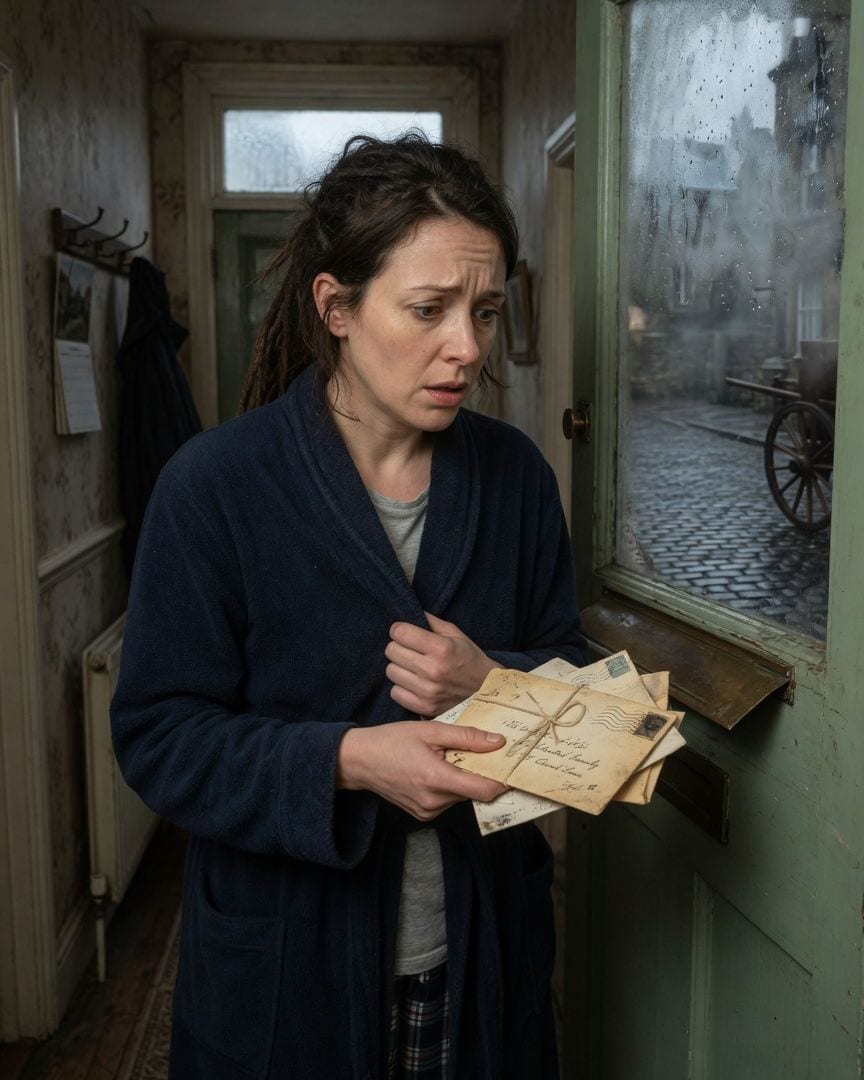
Seventy years ago, a hidden journal recorded my door opening to the wrong street and receiving Lockwood post.
I'd only recently moved into my inherited house, a quiet place on the edge of town. One grey morning, a distinct clatter from the front door's post flap caught my attention. Reaching down, I expected my gravel path, but instead, the flap showed a dark, cobbled street that wasn't mine. A bundle of warm, old letters, addressed to 'The Lockwood Family,' slid through, before the vision flickered and was gone.
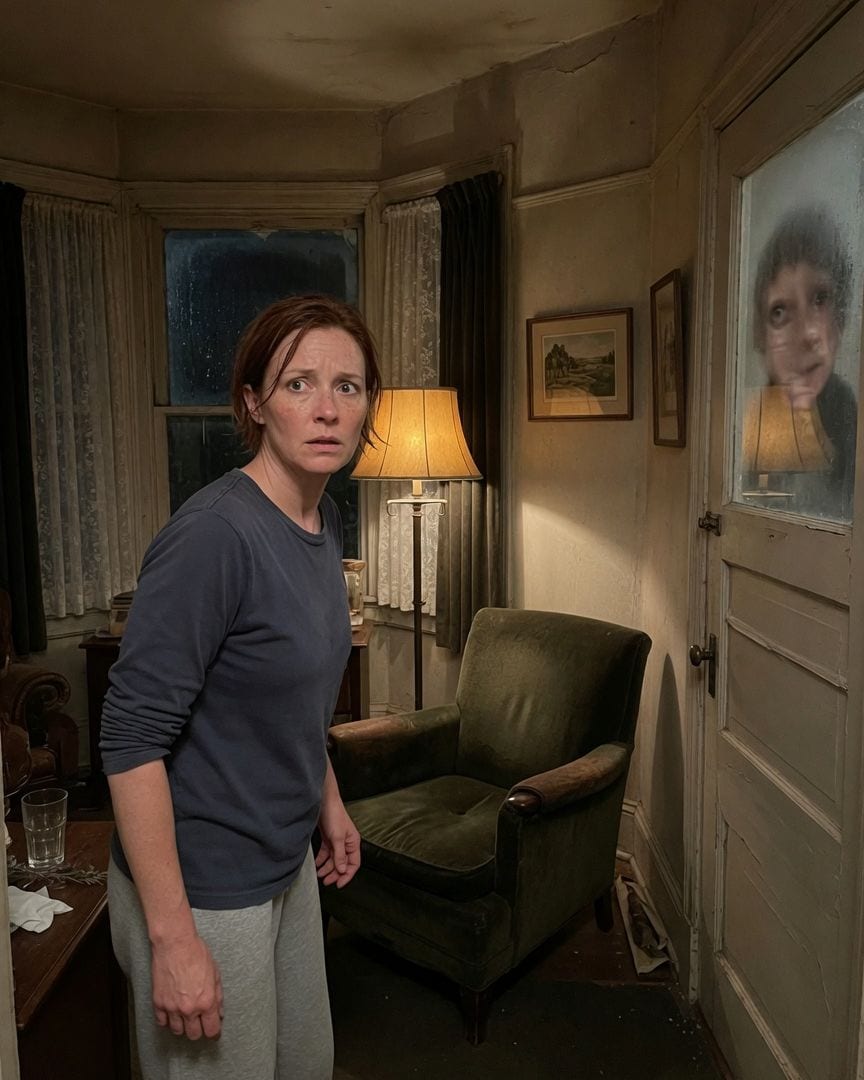
The armchair by the bay window was warm last Tuesday at 9pm. I’ve never sat in it, and the cushion was still settling from a weight that wasn't mine.
I bought this old house for quiet, and most days it's exactly what I needed. But there’s an antique armchair in the living room, deep green velvet, with a permanent hollow from years of use. I’ve never sat in it, yet last Tuesday, I found it radiating a distinct warmth, the cushion slowly settling as if someone had just left.
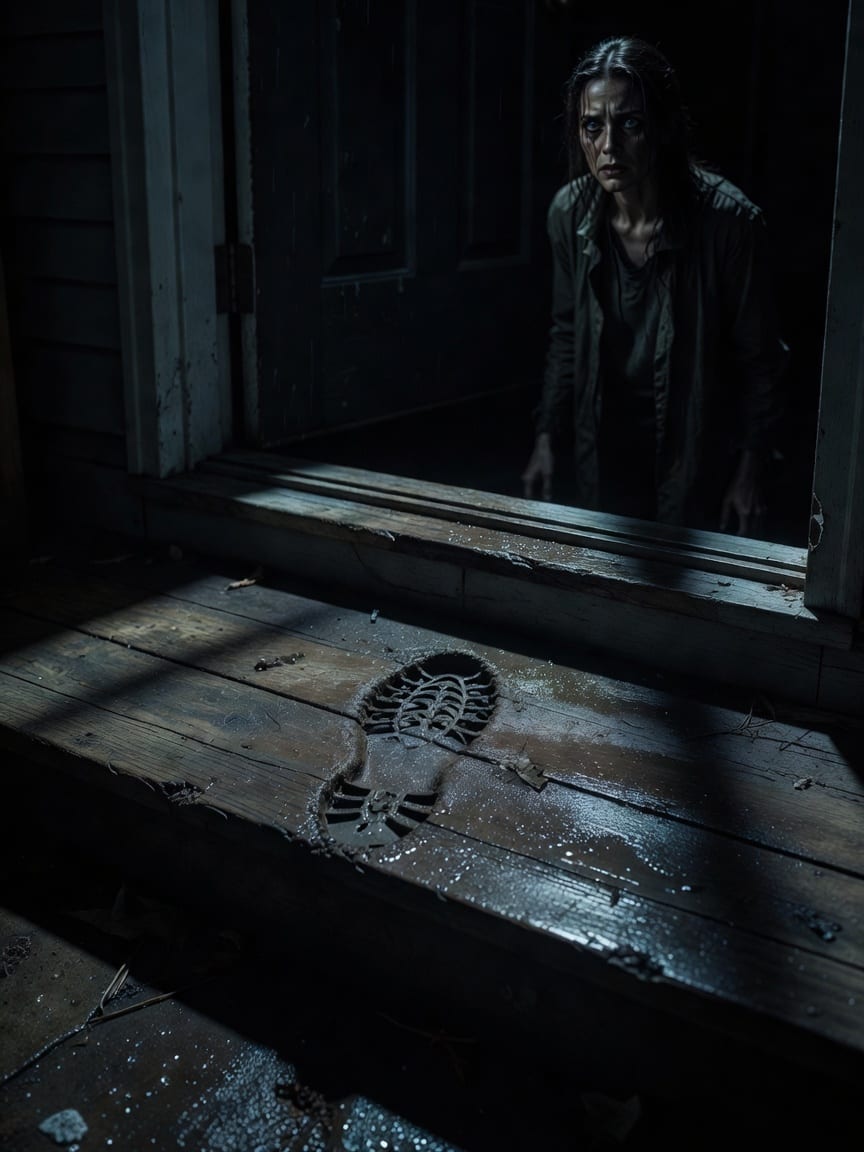
My landlord's only rule: never let the outside tap run after sundown. Last week it dripped. This morning, wet bootprints ringed the back step from the tap to my door, all the same size. The tap was off.
We'd just settled into Waterside House, with its strange landlord rule about the outside tap. After the washer broke, I found perfect, wet bootprints leading from the tap to our back door, but the tap was cranked completely off, tighter than I could manage.
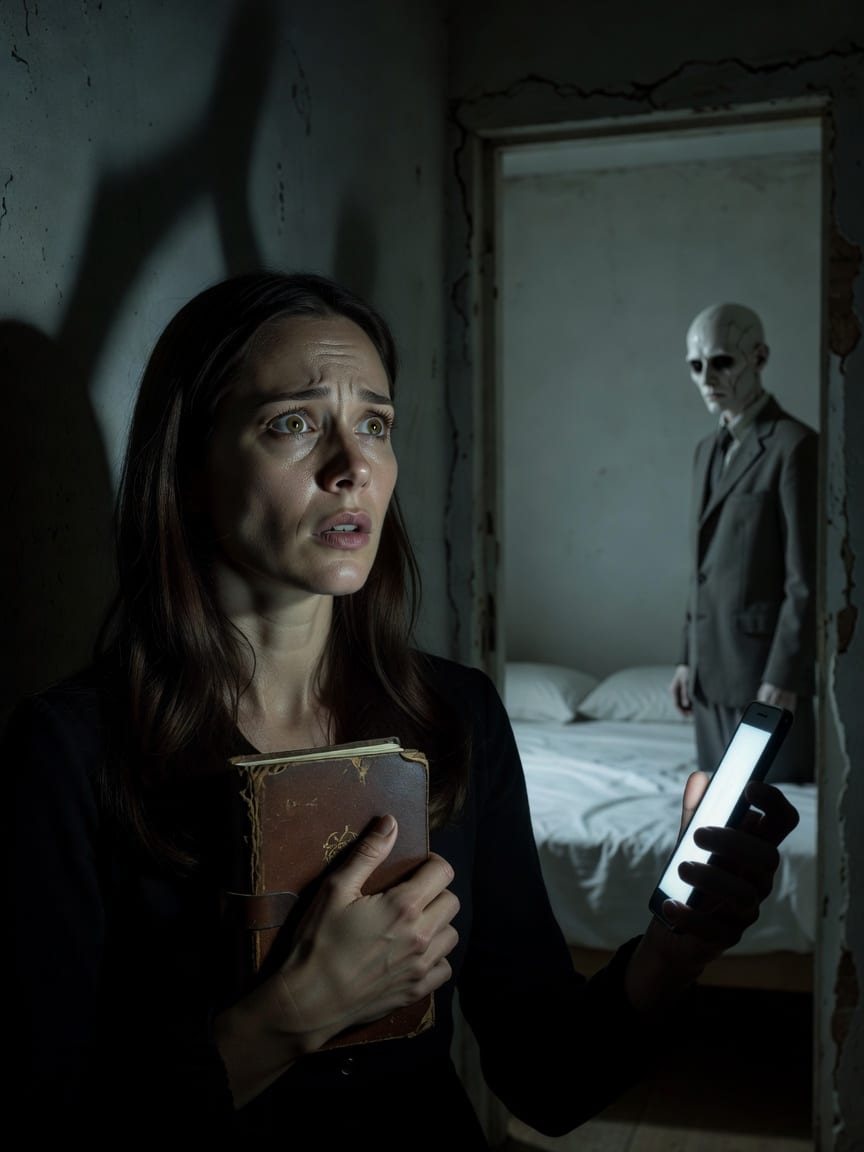
Behind a plastered-over doorway, I found a room. Papered, carpeted, and furnished with a made bed, sealed for decades. The air was dead still, but the bed wasn't dusty. My council tax bill only lists five rooms.
I'm Claire, an architect, meticulously planning my new Victorian terrace renovation. But when I uncovered a hidden room behind a wall, everything I knew about time and decay shattered. The bed was perfectly made, the air still, yet there was no dust, only an unnerving cold.
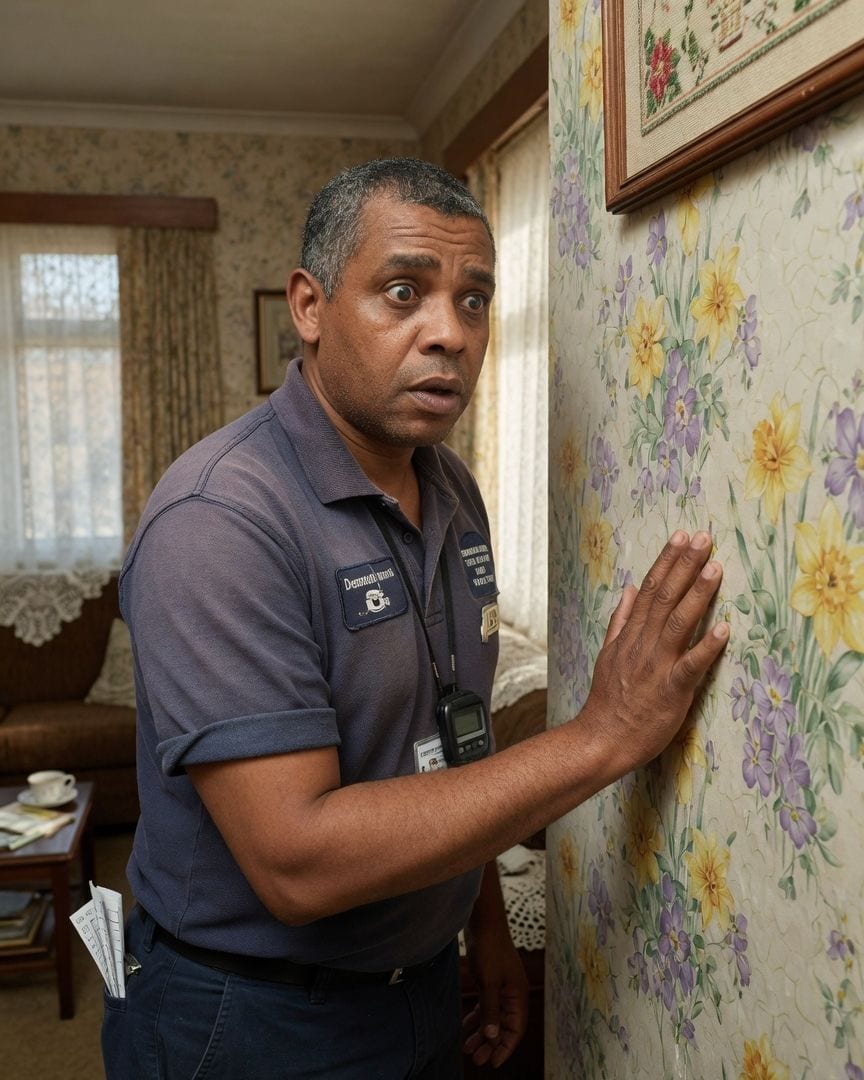
I read the water meters on this street, and this month number 30 grew a second one in pavement that was solid last month — its pipe runs back under a front door I cannot find.
I'm Desmond Drummond, a city water meter reader, used to the predictable rhythm of my fifteen-year route. But this month, Mrs. Crane's house on Elm Street showed a second meter reading. It led to a new meter pointed at a blank brick wall, and later, to a hidden door behind her living room wallpaper where no door should exist.
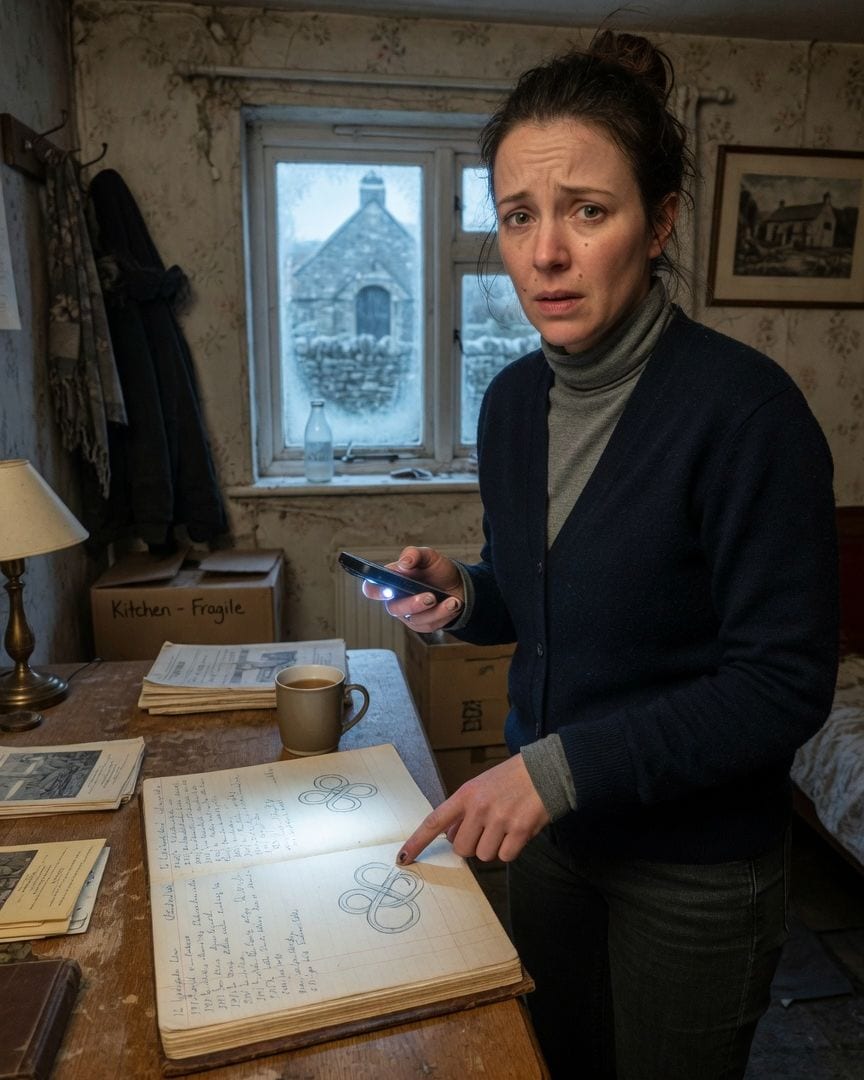
Milk appears daily by my lychgate. The dairy closed in '79. My address is handwritten into their old delivery book, starting the day we moved in.
Moving to Blackwood Creek, I loved the quaint charm, especially the unexpected morning milk delivery to my lychgate. But when I mentioned it to Eleanor at the village shop, her smile froze. She told me Willow Creek Dairy closed decades ago, in '79.