A government records reviewer found a Cold War file marked 'DECEASED – 1951.' It showed the man badged into the building this morning, then transferred by his own supervisor.
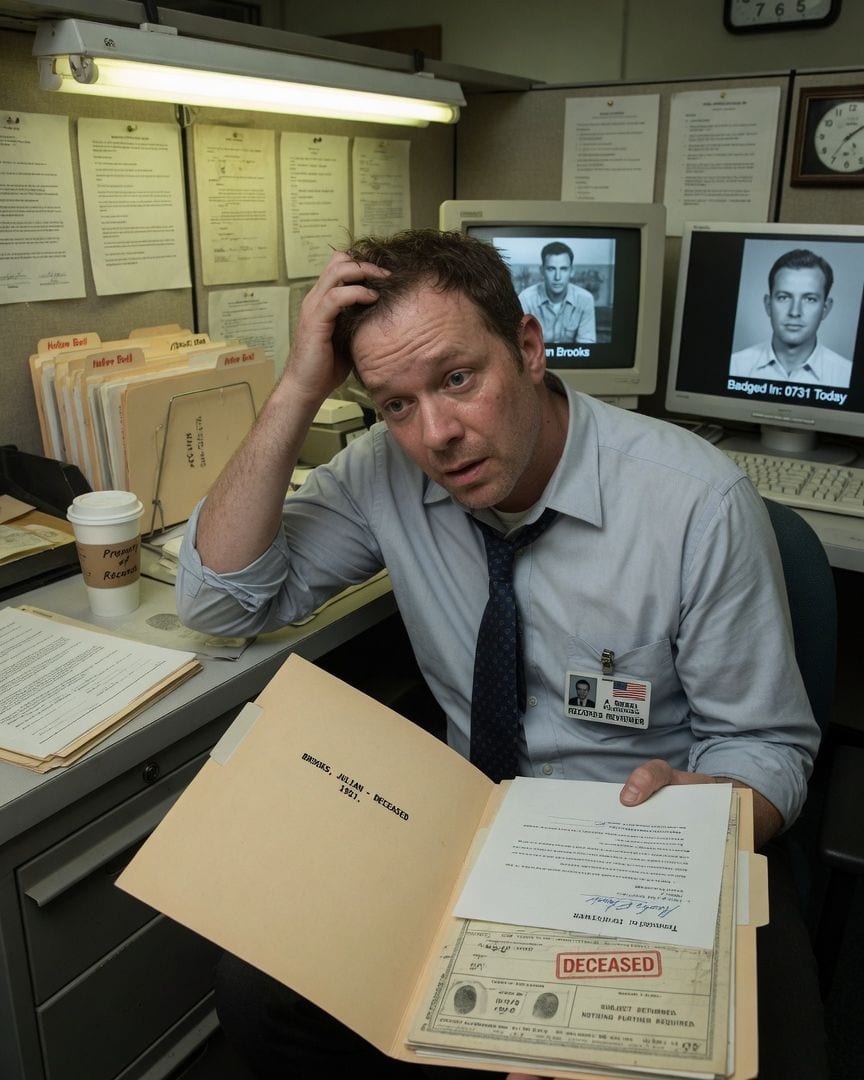
Anton Skeel, 45, a government records reviewer, sat under the drone of fluorescent lights, cleaning out the declassification referral queue. His office, a cubicle farm smelling of stale coffee and ozone, offered little in the way of excitement.
He prided himself on his meticulousness, a trait that made the 'Hollow Bell' folder a particular affront. The folder, slim and marked 'RESTRICTED,' contained a single, chilling sentence: 'SUBJECT RETURNED. NOTHING FURTHER REQUIRED.'
Attached was a fingerprint card, dated 1958, for a Julian Brooks, a man officially reported dead in 1951. Out of a cynical urge to prove a bureaucratic error, Skeel ran the prints.
The system returned an immediate match to an active government employee, currently badged into the building at 0731 that very morning. Skeel pulled up the active employee's file.
The photograph was a stranger, a bland-faced man in his late sixties, bearing no resemblance to the grainy 1951 service photo of Julian Brooks. The discrepancy hung in the air, a quiet violation of every rule Skeel lived by.
Skeel, unable to let the contradiction go, requested Julian Brooks’ original personnel file. It arrived on his desk an hour later, a thin manila folder bearing the official stamp: 'DECEASED – 1951.'
He thumbed through the early pages: service records, commendations, then the death certificate. All perfectly in order. He ran his finger over the crisp, official seals, noting the precise dates. Everything confirmed Brooks’ documented existence and abrupt end.
But as he neared the back, the paper felt different, newer, a subtle shift in texture that his meticulous fingers recognized instantly.
The last few pages, tacked onto the file's original bulk, documented Brooks’ life from the late 1950s through the late 1980s: requisitions for office supplies, annual performance reviews praising his 'consistent dedication,' even a promotion to Section Chief in 1972.
Each entry was in a consistent, neat official hand, stamped with various departmental seals, just like the earlier records. Skeel initially tried to rationalize it – a misfile, a duplicate, a clerical error in an old, forgotten department.
But the dates were sequential, following directly from the 1951 death certificate; the details were specific, referencing projects and colleagues; the handwriting, though neat, had a slight, unwavering tilt. This wasn't a mistake.
This was a file, marked 'deceased,' that had simply kept writing.
On the very last page of Brooks’ 'deceased' file, Skeel found a transfer order dated 1990. It moved Julian Brooks from 'Records Management' to 'Special Projects Division' – a department located just two floors above Skeel's own, within this very building.
His breath hitched. The signature on the transfer order, in a neat, familiar hand, was that of Monica Barlow, his own supervisor, from five years ago.
Skeel’s gaze darted from the meticulous signature on the transfer order to the bland, stranger’s face in the active employee file, then back to the bold, red 'DECEASED' stamp on Brooks' original folder.
The fluorescent hum of the office suddenly felt deafening, a low, persistent thrum against the bone of his jaw.
Skeel approached Monica Barlow, 58, cautiously. He held up the transfer order, mentioning the discrepancy with Brooks' death date, carefully avoiding any mention of the 'Hollow Bell' file.
She glanced at the document without truly looking, her gaze already drifting to her monitor.
She brushed it off with a practiced ease, attributing it to 'legacy system errors' and 'archival confusion,' advising him to simply close the Hollow Bell referral.
'Old files get messy, Anton,' she said, her voice even, without a trace of concern. 'It’s a headache, not a mystery. Move on.' Her dismissiveness, the almost too-smooth explanation, only fueled his suspicion.
The air in her office, usually cool and crisp, felt oddly still, heavy with unspoken things. Skeel spent the next days digging, circumventing official channels.
He found fragmented, obscure references in old internal directives: 'records reconciliation,' 'subject re-integration protocols,' 'dormant asset activation.' The terms were clinical, devoid of human context, but they echoed the 'SUBJECT RETURNED' phrase, haunting him.
He remembered a name from a forgotten departmental anecdote, Reginald Crane, 69, a retired archivist known for his encyclopedic knowledge of the department's forgotten corners.
Crane was a ghost in the system, but Skeel found a personal email in an ancient employee directory. Crane’s reply was terse but intrigued, agreeing to meet off-site. 'Hollow Bell,' Crane’s email read, 'was always more than a rumor.
It was a… principle. Not quite declassified, not quite active. Some called it 'the ledger.'' Skeel knew he was on to something far deeper than a clerical error.
The digging did not go unnoticed. Skeel began to feel a subtle shift in the office atmosphere. It wasn't overt; no one spoke to him differently, but there was a new stillness.
His computer login attempts for restricted 'Hollow Bell' indices were met with 'Access Denied - System Administrator Override' messages, appearing instantly, almost pre-emptively.
He noticed a man in a nondescript dark suit, always alone, occasionally passing his cubicle, his gaze lingering a fraction too long, not quite meeting Skeel’s eyes but definitely aimed in his direction.
The man had a perfectly unremarkable face, a blandness that made him almost disappear until Skeel noticed the pattern. One morning, Skeel found an anonymous, untraceable email in his inbox, its subject line blank.
The body contained a single, chilling sentence: 'Some files are best left closed, Skeel. For your own sake.' The dread tightened its grip, knotting in his stomach.
The bright fluorescent lights suddenly seemed to press down on him, revealing too much. He started taking different routes to and from his car, checking his rearview mirror more often.
He felt a phantom weight of observation on his back, a constant, low pressure. The once-familiar hum of the building now felt like a low, watchful growl, a living entity aware of his every move, ready to react.
He was no longer just investigating; he was being observed, assessed, and perhaps, cataloged.
Skeel met Reginald Crane at a quiet, out-of-the-way diner, the kind with checkered floors and weak coffee that tasted faintly of burnt sugar. Crane, initially hesitant, grew more open after a shared meal and a second cup of coffee.
He nursed his mug, his eyes darting to the windows as if expecting someone. 'Hollow Bell,' Crane began, his voice low, almost a whisper against the clatter of plates, 'isn't a project, Anton. It’s a function. A process.
Imagine a person, a valuable asset, who becomes… lost. Compromised. Maybe they defect, maybe they're rendered unstable, maybe they simply vanish without a trace. But their official presence, their 'file,' is still required.
The system can’t tolerate a void, a missing piece in the grand tapestry of bureaucracy.' He leaned forward, his elbows on the Formica table, his gaze intense. 'Hollow Bell is how that void is filled.
The original subject, the real person, is gone. Truly gone. They are archived, accounted for, their active status revoked. But the file continues. And something else… inhabits it. A placeholder, a proxy.'
Skeel thought of Julian Brooks, dead in 1951, yet officially promoted in 1972, his file meticulously detailing a life he could not have lived. 'The entries,' Skeel prompted, his voice barely audible, 'the ones after his death?
The performance reviews, the promotions?' Crane nodded slowly, his eyes distant. 'Those are the records of the 'returned' subject. A proxy. The institution needs its paperwork to be unbroken, immaculate. The file is the real person, in a way.
The returned subject simply… maintains it. They exist to keep the file current, to make sure there are no gaps, no inconvenient absences in the official record.'
He explained that the 'return' isn't always a perfect copy, hence the 'stranger' photo in Brooks' active file. 'They're not meant to be identical to the original. They’re meant to be functional. To keep the ledger balanced.
To keep the file writing. The name, the ID number, the payroll – that's what matters. The face? Secondary.' A chill ran through Skeel, colder than the diner's air conditioning.
The meticulous bureaucratic order he cherished had just revealed itself as a monstrous, living thing.
Crane suddenly froze, his eyes widening, fixed on something over Skeel’s shoulder. His face went pale, the color draining away, leaving him looking frail and utterly terrified.
'You shouldn't have dug this deep, Anton,' he whispered, his voice thin with fear, barely a breath. 'They move fast when they’re exposed.' Skeel turned, his heart hammering against his ribs, a sickening lurch in his gut.
A man in a dark suit, the same blank-faced man from his office who had been lingering by his cubicle, stood a few tables away, holding a small, black device.
He wasn't looking at them, or even at Crane, but directly at Skeel, his gaze flat and unblinking.
Crane, with a frantic urgency that belied his age, fumbled under the table and shoved a folded, yellowing piece of paper across to Skeel. 'Take this. Go. Now!' Skeel snatched it, his fingers brushing Crane’s cold, trembling hand.
It was a faded printout of an internal memo, marked 'Hollow Bell Protocol - Reconciliation Directive.' His eyes darted to a section near the bottom, illuminated by the harsh diner lights: 'Subject Awaiting Return.'
Under 'Current Designate,' Skeel saw his own name, Anton Skeel, and his employee ID number. The date on the memo was today’s date. The man in the suit, utterly impassive, began to walk toward their table.
Skeel bolted from the diner, the memo clutched tight in his hand, the flimsy paper feeling like a branding iron. The truth, stark and terrifying, detonated in his mind, shattering his rational world into a million shards.
'Hollow Bell' wasn't just about replacing others; it was about filing them, erasing their original existence and replacing it with a bureaucratic construct, a living shadow. The institution didn't kill; it assimilated.
It consumed lives and spit out proxies, meticulously maintaining the paper trail, the seamless illusion of continuity. The file was the real entity, the true identity.
The 'returned' subject, like the stranger in Julian Brooks' file, was merely a living proxy, kept 'active' by the ceaseless, meticulous paperwork.
The original Julian Brooks was gone, his life subsumed into the archives of 'Hollow Bell,' his death merely a reclassification event. The phrase 'SUBJECT RETURNED.
NOTHING FURTHER REQUIRED' now screamed its meaning, a cold, clinical declaration: the original subject was permanently filed, their life account settled, and the replacement was now the official, active presence.
The institution was a vast, patient machine of perpetual, bureaucratic replacement, and Skeel, in his meticulous search for order, had become the next entry in its ledger.
He wasn't just investigating a system; he was now a part of its inventory, designated for 'reconciliation.'
Skeel raced back to the government building, desperate to access his files, to delete his designation, to find some way to prove his own existence, his original self.
He threw open the heavy glass doors, panting, the cold night air doing little to calm the frantic beat of his heart. But his security badge, when he swiped it at the main entrance, glowed red: 'ACCESS REVOKED.'
He tried his departmental door, then his cubicle. All denied. The internal monitors, usually displaying departmental announcements, now showed his employee ID with a flashing 'INACTIVE' status. He turned, the cold dread turning to a creeping numbness.
The blank-faced man from the diner, now accompanied by two others in identical dark suits, was waiting in his section. They hadn't chased him; they had simply been there.
Monica Barlow stood with them, her face utterly devoid of the dismissive annoyance he was used to, replaced by an unsettling, calm neutrality. She held a new, pristine 'Hollow Bell' folder, its tab unmarked.
'Anton,' she said, her voice flat, emotionless, 'you’ve been flagged for reconciliation. It’s for the good of the system. For the continuity of the record. You made too much noise.'
Skeel tried to argue, to hold up the memo, to articulate the monstrous truth, but his words felt like static, unheard, unparsed by their impassive faces. He was not being confronted; he was being processed.
He felt a hand on each arm, firm but not violent, not even particularly strong. He was led away, walking calmly through the silent rows of cubicles, the fluorescent lights reflecting off the polished floor like a sheet of ice.
As they passed Monica's desk, he saw it: beneath a small stack of incoming referrals, a tabbed file, crisp and new. Its label read: 'SKEEL, ANTON.'
The referral queue for Anton Skeel’s section was cleared by the end of the week. Monica Barlow signed off on the last batch, her neat signature a familiar flourish.
A new reviewer, Marco Lambert, 32, was assigned to Skeel’s desk, his onboarding paperwork already processed and filed. He began sifting through the routine referrals, the mundane work of a government bureaucrat.
The 'Hollow Bell' folder for Julian Brooks was marked 'Closed - Subject Active,' and filed away in a secure, climate-controlled archive, its contents now fully reconciled.
The hum of the government building continued, undisturbed, the paper flowing, the records growing, the system maintaining its perfect, unbroken continuity.
One afternoon, a few months later, Marco Lambert found a misplaced fingerprint card tucked into a desk drawer, forgotten from a previous purge. It was old, yellowed, from the 1950s.
Out of curiosity, a flicker of something that might have been a memory, he ran it through the system. It came back with a match to an active government employee, current, badged into the building at 0731 that very morning.
The photograph on the file was a stranger, a bland-faced man in his mid-forties. Marco smiled, a faint, wrong little smile that didn't quite reach his eyes, a strange echo of something he couldn't place. 'Is that so?'
he murmured, a question without an answer.
If this one got to you
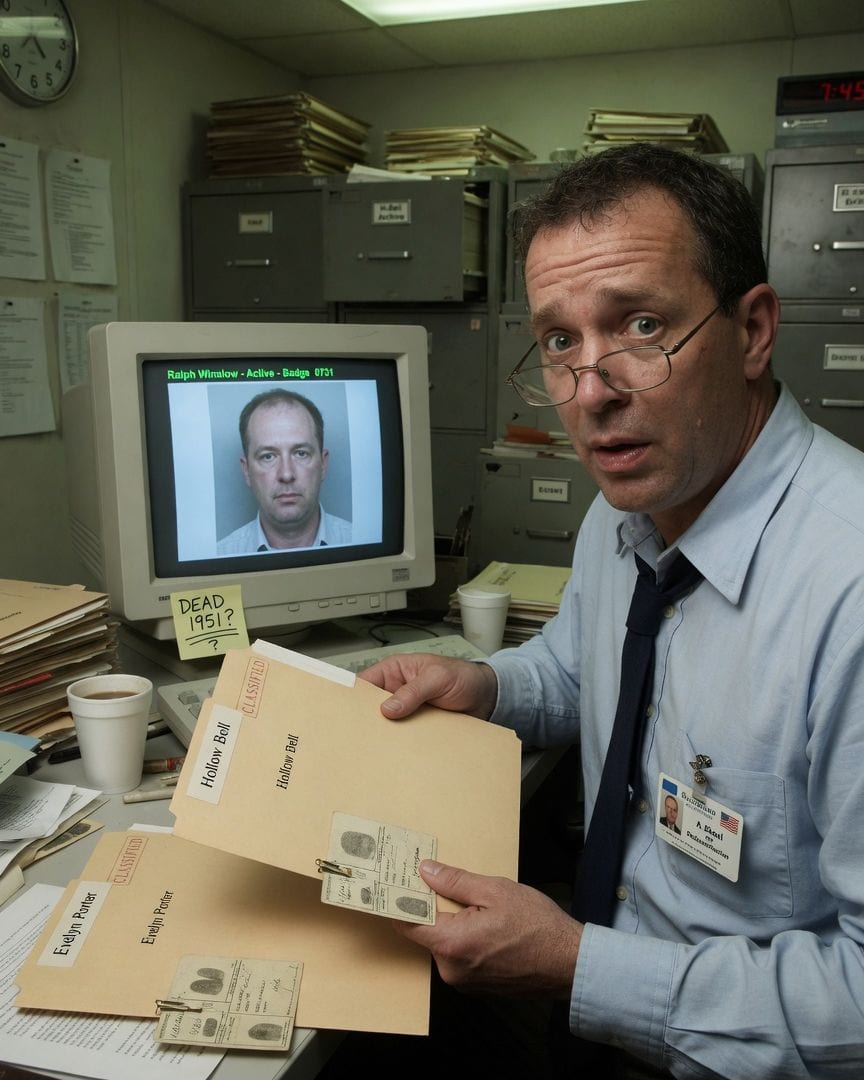
A Cold War declassification reviewer finds a man reported dead in 1951 just badged into his building.
Anton Skeel, a declassification reviewer, hoped his tedious work on old Cold War files would finally lead to an early retirement. He stared at a folder for 'Hollow Bell' containing a fingerprint card from 1958 for a man named Ralph Winslow, who was reported dead in 1951. Out of professional pique, Skeel ran the prints, only to find Ralph Winslow currently employed and badged into the building that very morning. The employee photo, however, was a complete stranger, attached to a file that insisted the man was both seven years dead and decades active. Now, a second impossible file has surfaced, revealing another 'returned subject' reported lost at sea, whose photo also belongs to a stranger.
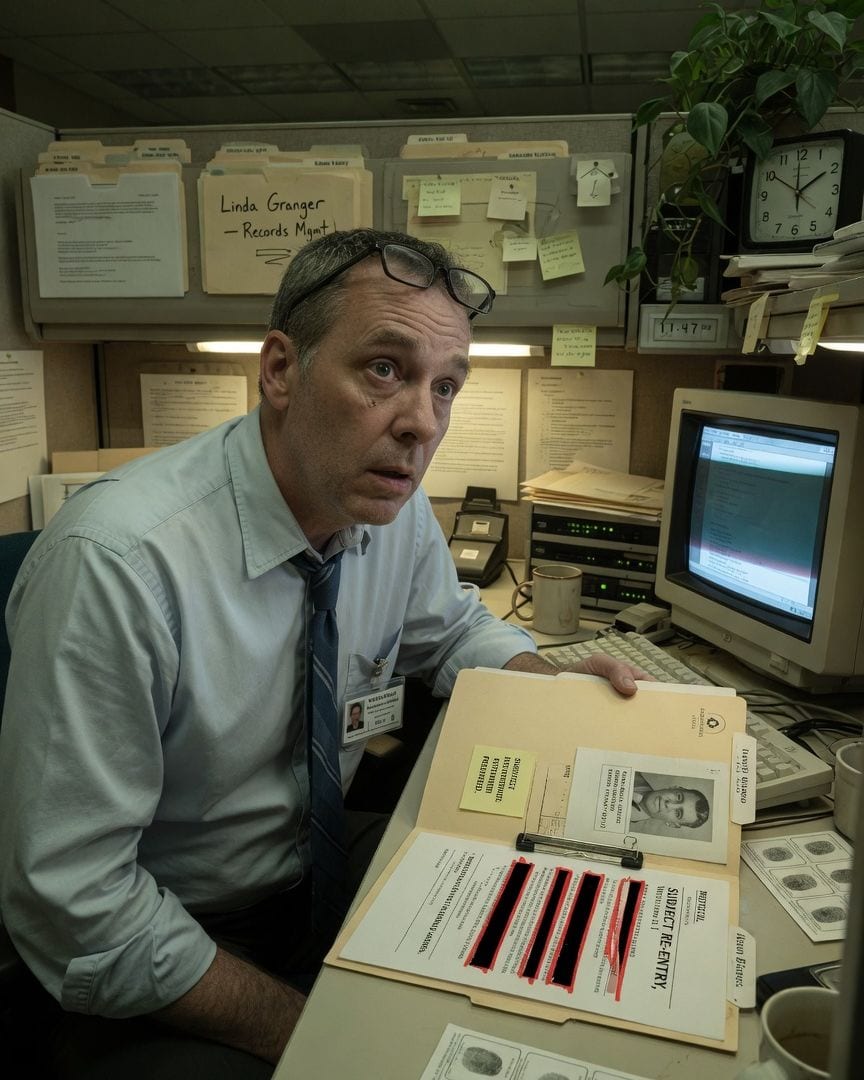
A declassification agent processed old Cold War files. A man reported dead in 1951 had 1958 fingerprints matching an employee badged into the building that morning.
Anton Skeel, a declassification agent nearing two decades of service, meticulously processed the endless backlog of Cold War secrets. His cubicle hummed with the ghosts of forgotten files, but one 'Hollow Bell' folder held a particularly glaring anomaly. It contained a 1958 fingerprint card for Henry Bishop, a man officially reported dead in 1951. When Anton fed the print into the active database, it matched Carl Romano, an employee badged into the building that very morning. A cold certainty settled over him: this wasn't an error, but a system designed for such impossible discrepancies.
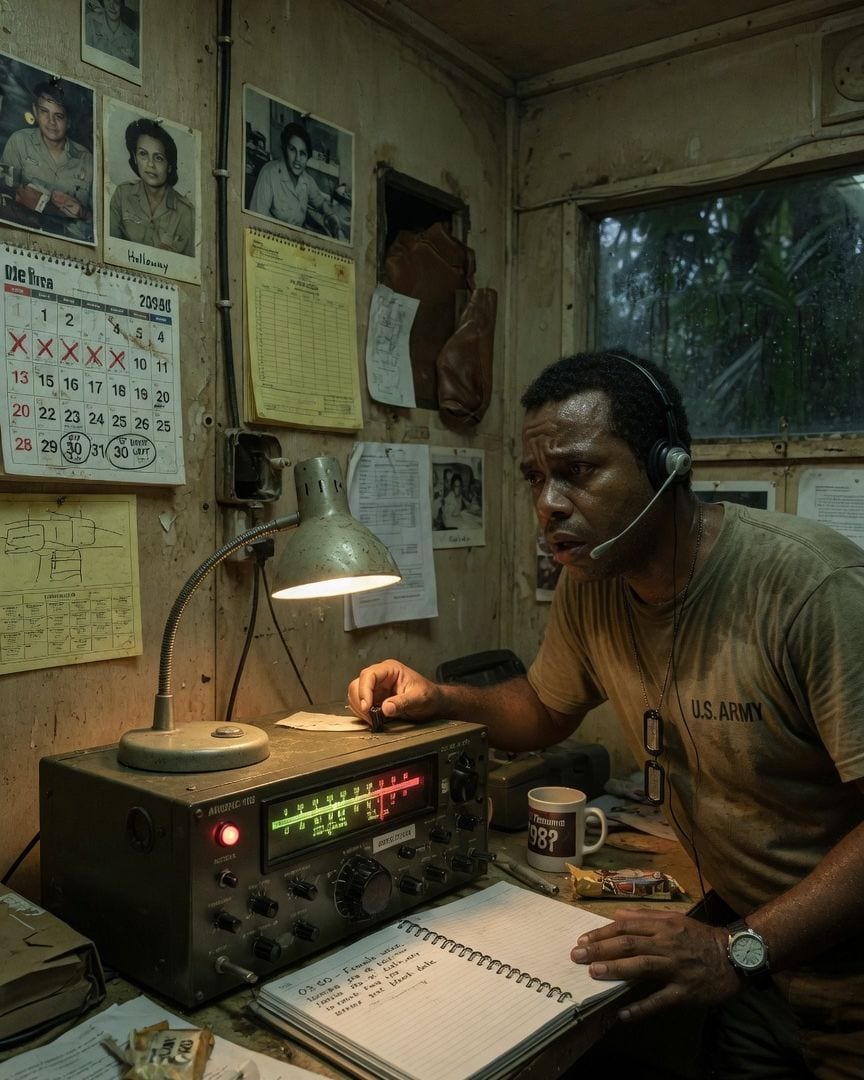
Three months from his tour ending, a sergeant's Cold War radio lists his name with a blank 'ceased answering' date. A hidden logbook warns: 'It knows my name.'
Sergeant Kevin Brooks was three months from finishing his year-long tour at a remote Panamanian jungle station. He meticulously marked each passing day, eager to escape the humid nights and unseen blossoms pressing against the comms shack walls. But at 0300, his old radio crackled to life with a woman's calm voice, listing names of past operators who 'ceased answering.' Then the voice spoke his own name, leaving a chilling blank space where his date should have been. What grim roll call had Sergeant Brooks stumbled upon?
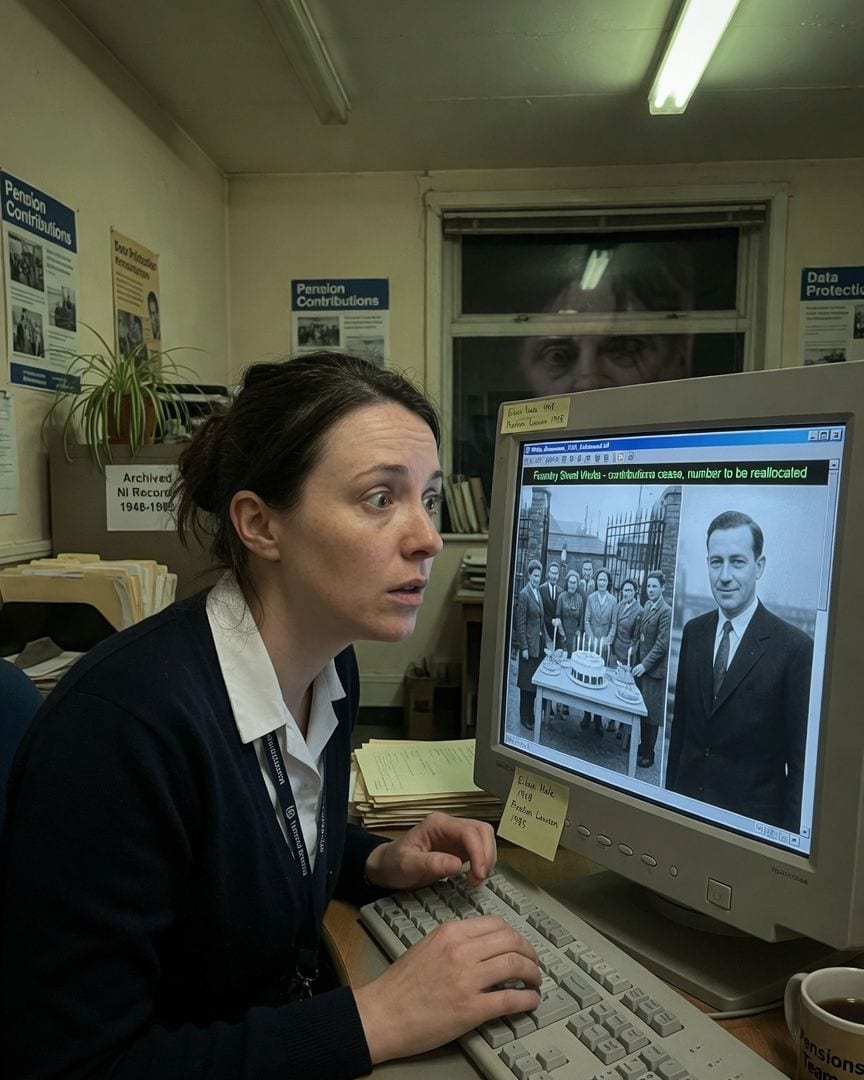
My National Insurance number has been used by four people since 1948. Each one worked at the same Foundry Street works, and none ever drew a pension.
I was just sorting out my new National Insurance number, a routine task I expected to take minutes. But the clerk found it had been used four times since 1948. Even stranger, all four previous holders worked at the defunct Foundry Street Works and never drew a penny of pension.
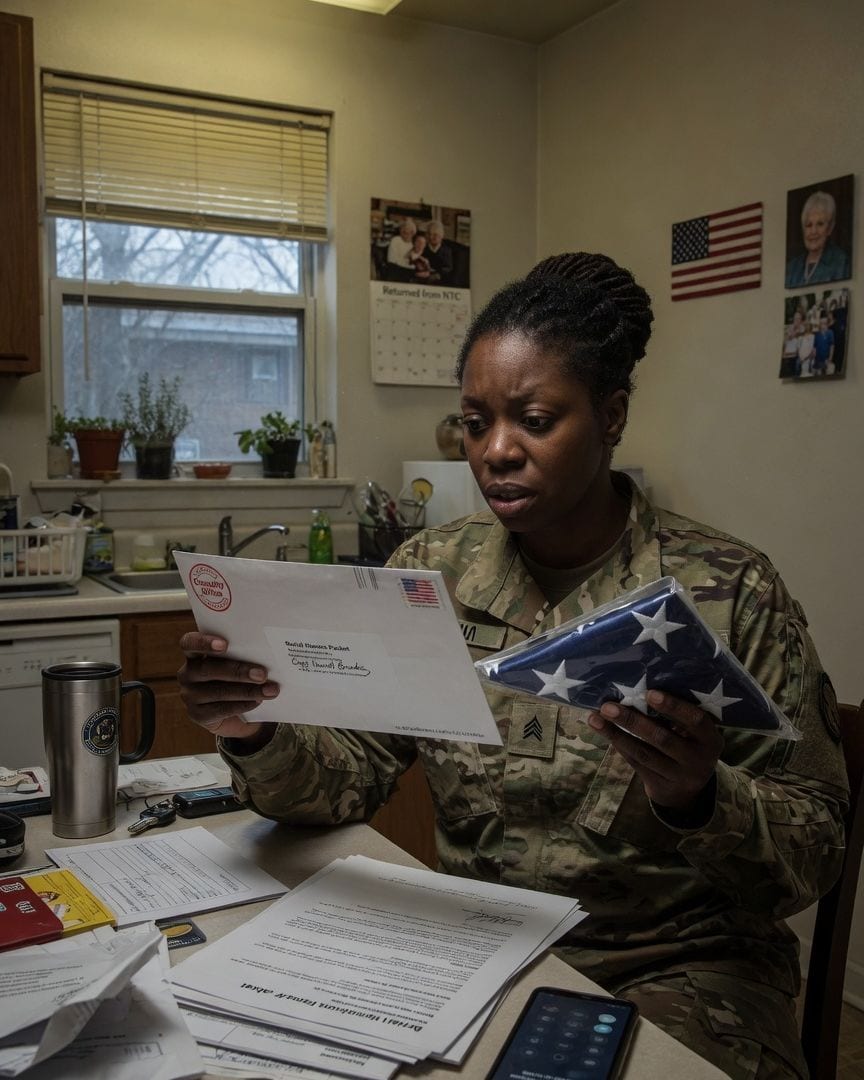
A Sergeant finds her own complete burial packet, dated for the coming spring, then finds a stack of identical ones for others.
Sergeant First Class Bree Alcott returned from a grueling training exercise, looking forward to peace, but found her kitchen table piled with mail, one official package heavy with dread. Inside was her own complete burial-honors packet, every detail filled, from Arlington plot to her grandmother’s chosen hymn, all dated for a specific day in the coming spring. The casualty office dismissed it as a 'glitch,' but Bree found a cryptic code leading to a decommissioned desert station and a stack of identical packets for other soldiers. What meticulous hand had prepared these packets, and why was Bree Alcott’s name on a list for a future she shouldn't have known?
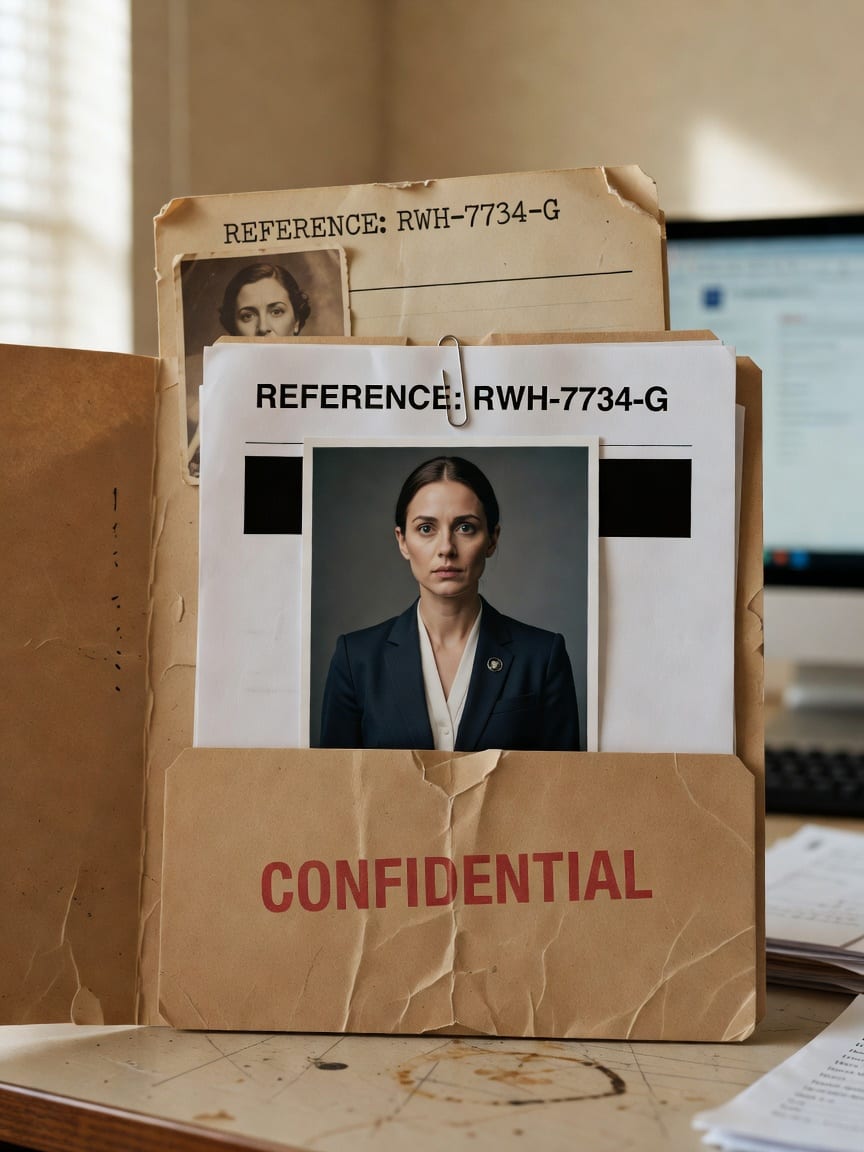
My security file was opened nine years before I was born. Its note said: 'subject not to be briefed'.
Auditing company digital records was routine until I pulled up my own personnel file. It clearly showed a 'Date Opened' nine years before I was born, yet bore my exact name and reference number. Below, an assessor's note from that impossible year mentioned a 'previous holder' and ordered the 'subject not to be briefed,' sparking a cold thrum in my chest.