A Sergeant finds her own complete burial packet, dated for the coming spring, then finds a stack of identical ones for others.
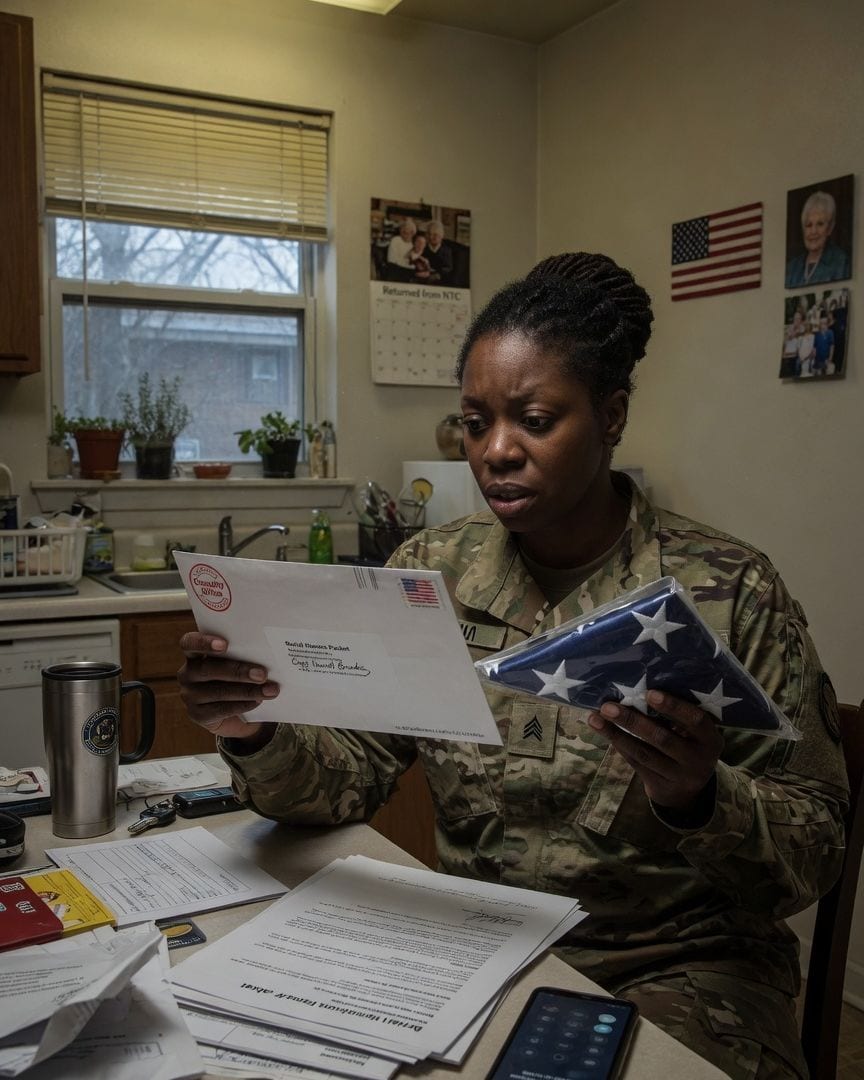
Sergeant First Class Bree Alcott sat at her kitchen table, a stack of mail before her. The late autumn light, already thin, struggled to cut through the window.
She had just returned from a long-haul training exercise, and the accumulated envelopes felt heavy in her hands. One large, official package, thick and emblazoned with the casualty office seal from her Georgia post, stood out.
She tore it open with a practiced ease.
Inside, neatly organized, was her own burial-honors packet. A pre-folded flag, its crisp folds perfect, lay nestled against a set of documents.
There was a designated plot number for Arlington National Cemetery, notification details for her next of kin – her sister, then her elderly grandmother – and even the hymn her grandmother had chosen years ago for just such an event: "Amazing Grace," scribbled in a familiar, shaky hand on a printed order of service.
Bree read through it twice, her rational mind struggling to process the sheer, impossible completeness of it all. Every blank was filled, every detail accounted for. It was too perfect.
Then the date registered, printed at the top of the first page: a specific day in the coming spring, months away.
And it was already signed, the firm, looping script of Captain Daniel Brooks, the officer who would render the honors. A cold certainty settled in her stomach.
This wasn't a mistake; it was too final, too meticulous for a simple administrative error. Her eyes returned to the bottom of the last page, where a faint, almost invisible string of letters and numbers was printed.
It looked like a serial number, or perhaps a coded reference, a detail she couldn’t unsee.
Bree called the casualty office, her voice carefully level, despite the tremor she felt deep inside. A young private answered, polite but clearly overwhelmed by the midday rush. Bree explained the packet, the future date, her name.
The private, checking the system, found no record of sending such a packet to her. "Sergeant First Class Alcott," the private insisted, "you're active duty, healthy. There's nothing here." Bree pressed, mentioning Captain Brooks' signature, the specific date.
The private, flustered, asked her to hold. Minutes later, a supervisor picked up, their voice smoother, but with an underlying tension. After a prolonged silence, the supervisor dismissed it as a "system glitch," a "clerical error" that occasionally happened.
She advised Bree to shred the document and forget about it. Bree detected a forced calm in the supervisor’s tone, a dismissal that felt too practiced, too rehearsed. The phone felt cold against her ear.
Unconvinced, Bree used her access to internal military records, a privilege of her rank and long service.
She looked up Captain Brooks, finding his assignment to a remote, rarely accessed records archive on the base's periphery, a forgotten building near the old motor pool. His file mentioned no other active duties.
Then she began to cross-reference the cryptic code from her packet with old, obscure military call signs, something that had always fascinated her. It led her down a rabbit hole of obsolete terminology and forgotten outposts.
After hours of searching, the alphanumeric string finally matched a single entry: "Whisper Delta," a radio relay station officially decommissioned decades ago, nestled in a desolate stretch of the Nevada desert.
Bree knew of Whisper Delta, or at least its legend.
It was a place the military swore was derelict, yet still, she'd heard whispers, it maintained a minimal, off-the-books skeleton crew for 'maintenance,' a persistent rumor that clung to the edges of official discourse.
Driven by a cold certainty that had nothing to do with logic, Bree made her way to the remote records archive the next morning. The building was a relic, its brick facade faded, windows thick with grime.
Captain Brooks' office was small, crammed with metal filing cabinets. It was empty. The air hung still and heavy, smelling of dust and old paper.
On his desk, partially obscured by a stack of mundane forms like leave requests and supply manifests, Bree saw a stack of large, official envelopes, identical in size, paper stock, and official seal to the one she had received.
Her heart pounded a frantic rhythm against her ribs, a drumbeat in the oppressive silence of the room. She glanced around, half-expecting someone to appear, but the only sound was the distant hum of the building's ancient HVAC system.
She reached out, her fingers trembling slightly, and carefully nudged the top envelope with a finger. It slid slightly, just enough to reveal the name printed clearly on its surface: Sergeant Franklin Bishop.
Below the name, the date for his burial honors was clearly visible: a spring day, three years ago.
Bree left the archive as quickly as she could, her mind reeling, but not before she surreptitiously photographed the stack of envelopes with her phone. The images were grainy, taken in haste, but undeniable.
Back in her own office, the fluorescent lights humming overhead seemed to mock her, casting the cold certainty of her discovery in stark relief.
She spent the next several days pulling old service records, cross-referencing names from the envelopes she'd glimpsed in Brooks' office. She found Sergeant Bishop's file first.
Then, digging deeper, she found two other names, glimpsed only as partial labels on the other envelopes, which she now recognized from her mental catalog.
A chilling pattern quickly solidified. Every name she could link to one of these packets – Bishop, and the others – was officially listed as 'missing in action' or 'unaccounted for' after a deployment to the Whisper Delta station.
No bodies, no definitive cause of death, just a blank space where a soldier should have been. The records showed these packets were consistently generated before their disappearance, sometimes months in advance, eerily similar to her own.
The 'system glitch' explanation, the casual dismissal from the casualty office supervisor, crumbled into dust, scattering like ashes.
Bree realized Whisper Delta wasn't just decommissioned; it was a black hole for soldiers, a place where personnel were routinely erased, their fates pre-written, their military lives meticulously, administratively ended before they even arrived.
Bree's increasingly pointed inquiries about Whisper Delta began to draw unwanted attention.
Officially, it remained a low-priority maintenance detail, a footnote in the vast bureaucracy, but her questions were met with unusual resistance and vague answers from everyone she spoke to, from logistics to records.
A few days later, she was called into her commanding officer's office. Major Vera Hayes, Bree's CO, was a formidable woman, but today she was calm, almost paternal, her expression softened but her gaze sharp.
She warned Bree against 'digging where she shouldn't,' implying that some matters were best left undisturbed. She mentioned, almost casually, that Captain Brooks had 'expressed concern' about Bree's activities, about her 'fixation' on an abandoned post.
A cold chill, sharp and precise, snaked down Bree's spine. She felt like a fly caught in a web, and the spider had just tightened a strand.
Later that evening, the chill lingered. She returned to her own office, the silence profound. The door, which she distinctly remembered locking, was slightly ajar, a sliver of darkness visible at the seam. Her breath hitched.
Nothing appeared to be taken or disturbed; her papers were exactly where she’d left them, her computer still off.
But her desk calendar, previously unmarked, now had a single, stark red circle around the exact date marked for her upcoming spring burial.
There was no note, no message, just the silent, undeniable symbol, a vivid splash of crimson against the white paper.
The small, framed photo of her and her sister on her desk seemed to lean forward, as if straining to see the circle. Bree realized, with a sickening lurch, that someone was watching her. They knew what she’d found.
And they knew what was coming.
Bree confronted Captain Brooks at the archive the next morning. The printout of the red-circled calendar date, clutched tight in her hand, felt like a burning coal.
He looked up as she entered, his expression unreadable, a flicker of something she couldn't quite decipher in his eyes. He was initially evasive, deflecting her questions with bureaucratic jargon and a placid smile that didn't reach his eyes.
But under Bree's relentless, quiet pressure, her voice low and steady despite the tremor in her hands, his composure began to crack, subtly at first, like a hairline fracture in glass.
He finally admitted, with an unsettling, flat calm, that the packets were 'standard procedure' for Whisper Delta assignments. The words hung in the air, heavy and devoid of emotion.
He explained, without inflection, that Whisper Delta was a 'containment zone' for an unexplained phenomenon, something they didn’t understand, something they couldn’t stop. Personnel assigned there, he continued, were expected to be 'lost to the system.'
The packets, he said, were a way to manage the administrative fallout, a pre-emptive measure to ensure families received honors and benefits despite no body ever being recovered.
He described it, almost clinically, as an 'accounting error' that the courtesy copies sometimes went out prematurely, a minor glitch in a necessary system.
He then pulled out a thick, unmarked binder from a locked drawer, its covers scarred and worn. He opened it to reveal hundreds of similar packets, meticulously filed, spanning decades.
The source of the wrongness, he confirmed, was Whisper Delta itself, a place where soldiers simply vanished. The system, he implied, was designed to account for its victims, to manage the aftermath, not to stop the phenomenon.
The fluorescent lights in the archive seemed to dim as he spoke, casting longer shadows across the rows of silent files.
He added, almost as an afterthought, his voice barely audible above the hum of the old server rack in the corner, that 'some people are just more susceptible' to the anomaly.
Bree felt a rising tide of horror, cold and absolute, but she forced herself to remain rational, to keep her voice steady. "Why me?" she asked, the words feeling foreign in her own mouth. "Why did I receive a packet?
Why is my name on the list?" Brooks turned to a secure terminal on his desk, its screen a dark, unlit rectangle.
He tapped away at the keyboard with practiced efficiency, his fingers moving across the keys with a strange, detached grace.
On the screen, a roster for an unscheduled, 'temporary duty' rotation to Whisper Delta flashed into view. The stark white text on a black background seemed to leap out at Bree, burning itself into her vision.
Her name, Sergeant First Class Bree Alcott, was at the very top, highlighted in an unforgiving, pulsing red. Beside it, the date: the coming spring—the exact, horrifying date printed on her burial packet.
She had never been officially notified of this assignment; it wasn't in any of her official orders, not in any system she had access to, not in any file she could pull.
The realization hit her like a physical blow, a sudden, sharp impact to her chest: the system didn't just predict her death; it assigned her to the very place where it happens.
Brooks looked at her with an unsettling, almost pitying calm, his eyes devoid of any real emotion, like polished stones. The room itself seemed to hold its breath.
"It seems," he said quietly, his voice barely a whisper, "you were always on the list."
Bree reeled from the revelation, the cold certainty of her predetermined fate. Her breath hitched in her throat. Brooks, still impassive, elaborated.
The phenomenon at Whisper Delta, he explained, 'selects' personnel based on criteria they didn't fully understand, but it had always been tied to specific rotations, a predictable pattern over decades. It wasn't random.
The military's grim solution, unable to stop or even comprehend the anomaly, was to create a 'shadow system' that quietly assigned these selected individuals to Whisper Delta, knowing they wouldn't return.
Then, it pre-processed their casualty files to manage the administrative and public relations fallout. To maintain order, to keep the families calm, to avoid panic.
He navigated the terminal, pulling up a secured log of 'Whisper Delta assignments' — a chilling list spanning back to the 1970s, names scrolling endlessly. Each name was followed by the stark notation: 'status: unaccounted for.'
The coded reference on her packet, he explained, wasn't a call sign, but a unique identifier for each 'selected' soldier, a tracking number in a system designed for erasure.
The 'anomaly' itself, he stressed, left no physical trace, no bodies, no evidence, just an empty space where a person once was.
Her burial packet, he confirmed, wasn't a mistake; it was her official notice, routed through an unofficial, pre-emptive channel.
Bree refused to accept her fate, her mind racing for an escape, for any loophole, any way out. She demanded to know how to stop it, how to avoid the assignment, her voice raw.
Brooks, unwavering in his calm, stated there was no stopping it; once 'selected,' the assignment became unavoidable, irreversible.
He offered her a stark choice: accept the deployment and vanish quietly, a statistic in a hidden ledger, or go AWOL, becoming a fugitive, her military career and life utterly destroyed, hunted and disgraced.
He assured her that even if she tried to expose it, the system would dismiss her as delusional, her claims buried under layers of classified denials and official stonewalling.
The truth, he implied, was too inconvenient, too impossible for the world to hear.
Desperate, Bree realized she had to get out, but she needed proof that would survive, proof beyond her frantic testimony.
While Brooks was momentarily distracted, his attention drawn to a physical file he was retrieving from a cabinet behind his desk, Bree covertly activated her phone's camera.
Her fingers moved with a surge of adrenaline, capturing the screen displaying her name on the Whisper Delta roster and the decades-long log of 'unaccounted for' personnel.
She angled the phone quickly, trying to get as much detail as possible in the grainy, clandestine recording.
Then, with a practiced subtlety honed over years of military procedure, she also managed to grab a physical copy of one of the older, identical burial packets from his binder, tucking it away where he wouldn't immediately notice it, a tangible piece of the horrifying truth.
The old paper felt fragile, yet dense with unspoken history, in her hand.
Bree Alcott went AWOL. She shed her uniform, abandoned her life, and disappeared into the civilian world, a ghost in plain sight.
Her military records were quickly flagged, a manhunt initiated, but she stayed ahead of it, a phantom herself, melting into the vast anonymity of American cities. Captain Brooks filed a terse report about 'unauthorized data exfiltration' and 'missing classified documents.'
The Whisper Delta assignment for SFC Alcott remained on the shadow roster, eventually marked 'unaccounted for' on the date of her intended deployment. The anomaly at Whisper Delta continued, its silent selections undisturbed, its hidden hunger unsated.
Years passed. Bree lived under an assumed name, constantly looking over her shoulder, every shadow a potential threat, every official vehicle a possible snare. She traveled light, moved frequently, her life a mosaic of temporary jobs and rented rooms.
The proof she carried—the grainy phone recording, the old, faded burial packet—was her only anchor to the truth, and her heaviest burden.
It lay hidden in a waterproof pouch, a constant reminder of the world she’d fled, and the one that still sought her. She knew, with a chilling certainty, that no one would ever believe it.
The military system simply closed ranks, just as Brooks said it would, the shadow protocol continuing its silent work, processing the vanished.
She often dreamed of the remote, windswept silence of Whisper Delta, and of the names on that endless, growing roster of the unaccounted for.
She knew, in her bones, that the system had simply accounted for her in a different way.
If this one got to you
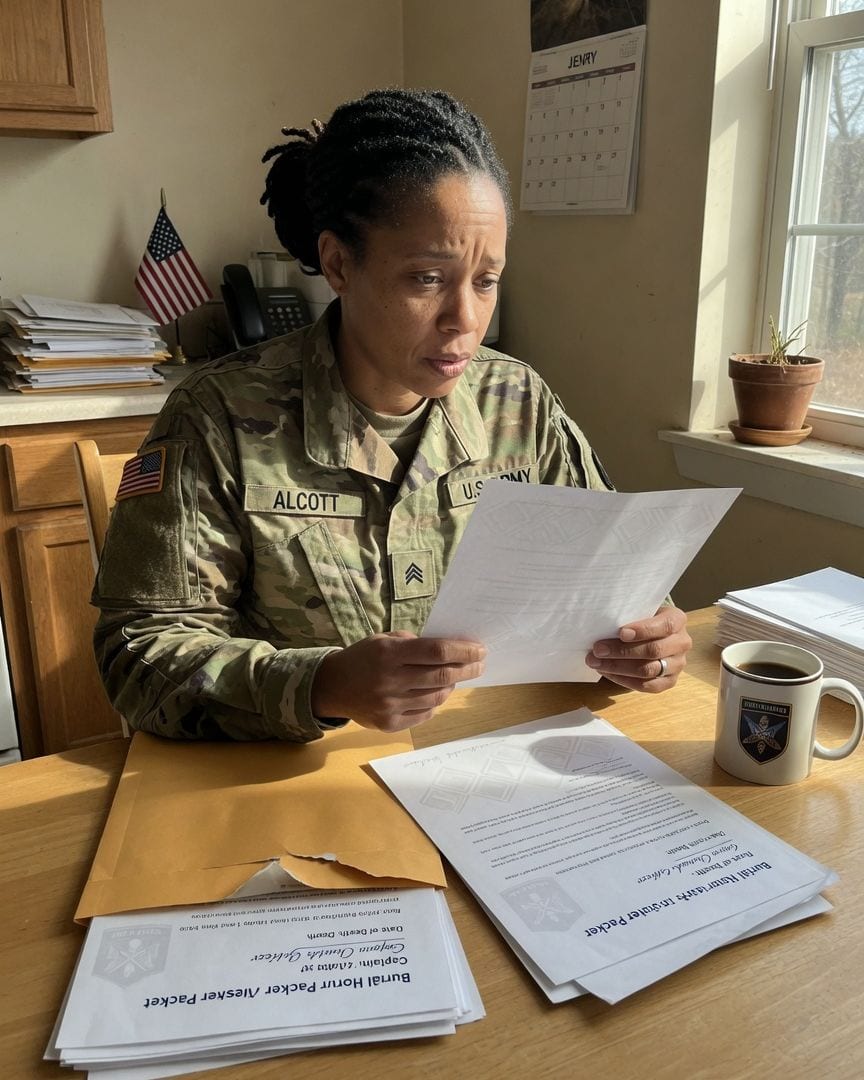
Sergeant First Class Bree Alcott found her own completed burial packet, signed with a confident flourish. It stated her death date was April 17th, next spring, but she was very much alive.
Sergeant First Class Bree Alcott, 38, found her own completed burial honors packet on her kitchen table one quiet autumn morning. It was signed, sealed, and dated for April 17th, next spring, despite her being very much alive. When she took the impossible paperwork to the Fort Claiborne Casualty Affairs office, the staff sergeant there denied any record, even as he traced a faint, archaic watermark on the document. Later, deep in the post's archives, Bree uncovered other packets for soldiers long missing, all bearing the same unsettling watermark and future-dated signature, their 'death' dates now long past – until she found one for tomorrow.
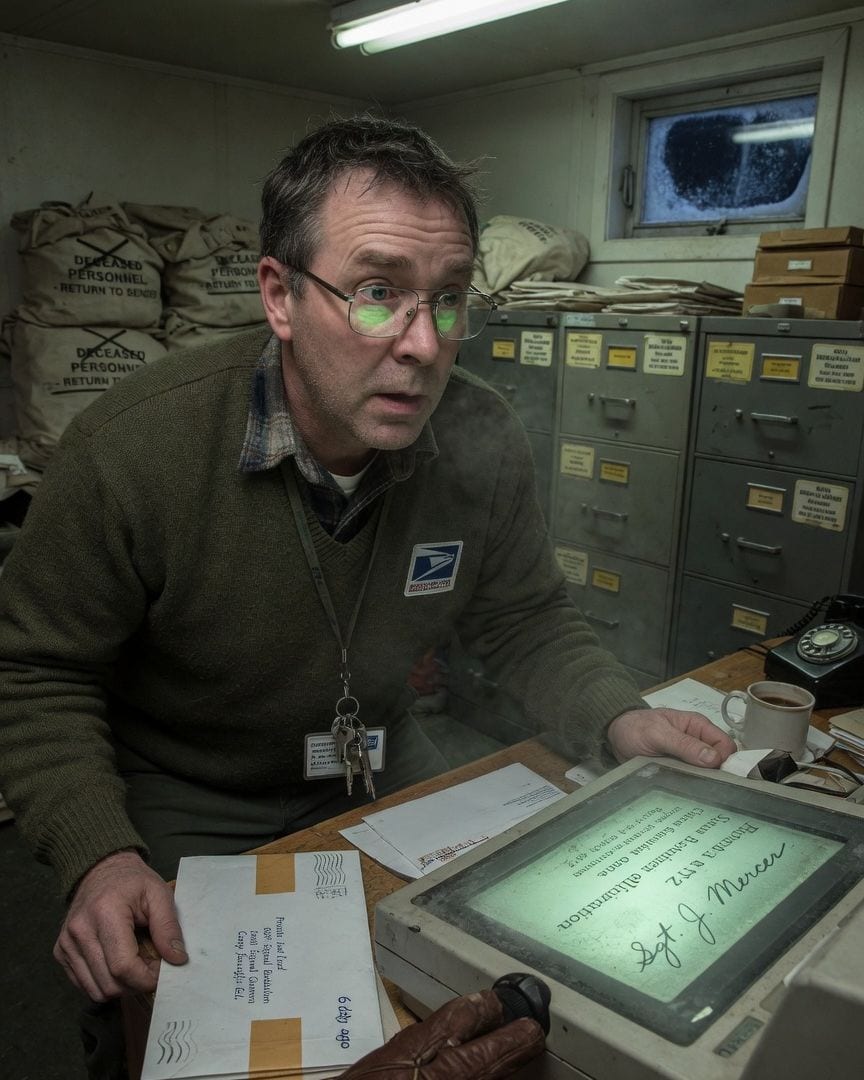
A postmaster at a Cold War Alaskan outpost still received mail for soldiers declared dead in 1969. Then he found their base was active three years later.
Postmaster Rowan Ashcroft had spent two decades watching the weekly mail plane land at Camp Bidwell Annex, a lonely outpost in the bitter Alaskan wind. His methodical mind, accustomed to order, was jolted when the latest mail sack contained forty-three letters for men officially declared dead in 1969. Each envelope, postmarked within days, was addressed to a soldier who wasn't coming back, and Rowan found one already opened and neatly resealed. Driven by duty, he began to sift through declassified Army archives, only to uncover a chilling maintenance log entry for the camp's equipment, dated three years after the base was officially shuttered. What was still happening at Camp Bidwell?
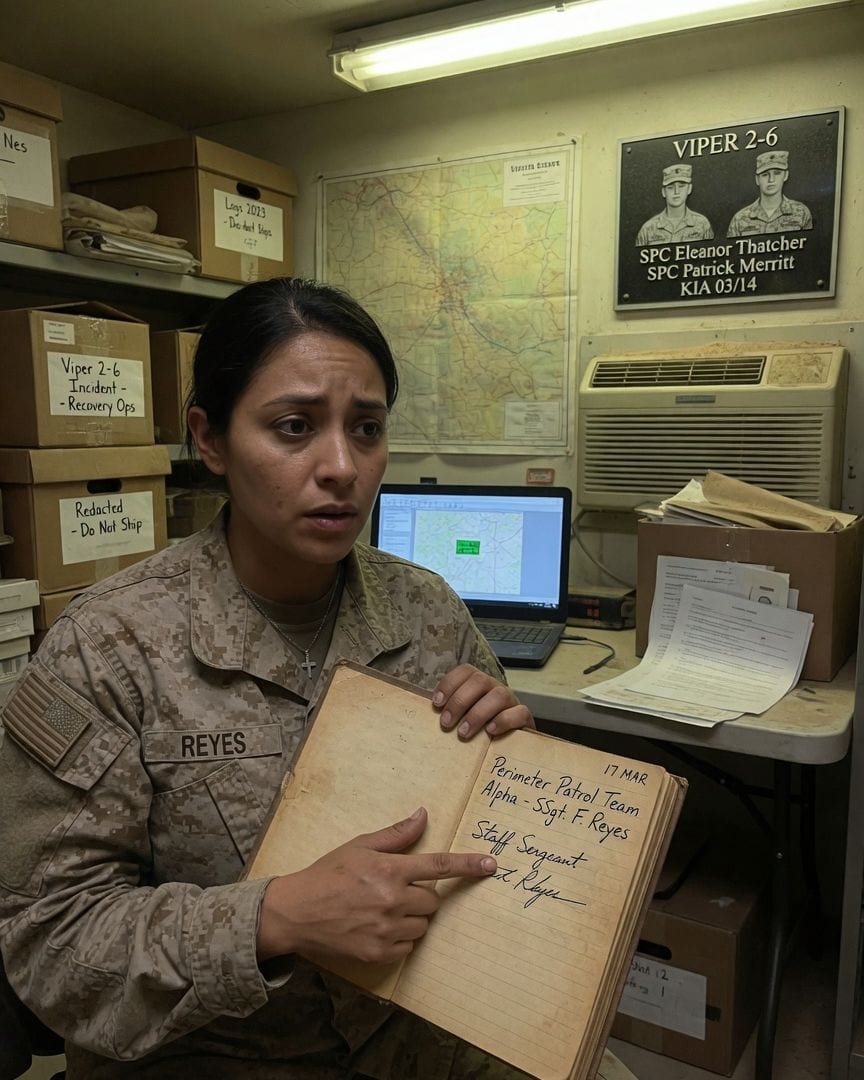
A Staff Sergeant, three weeks from transfer, finds her own signature in a logbook for a patrol she never made.
Staff Sergeant Fiona Reyes counted down her last three weeks at the high desert outpost, the fluorescent hum of the TOC a constant companion amidst the dust and old equipment. Her tired eyes scanned the digital map when an impossible icon, 'Viper 2-6' – a vehicle and crew lost last year – blinked alive, reporting its position and crawling steadily toward the base. Despite commanders dismissing it as a system ghost, Reyes meticulously searched dusty archives, finding strange log entries of phantom contacts and radio chatter, all dismissed as malfunctions. But the true chill came when she unearthed a field logbook from the recovery efforts, revealing her own undeniable signature on a perimeter patrol dated last year, a patrol she knew, with every fiber of her being, she had never made.
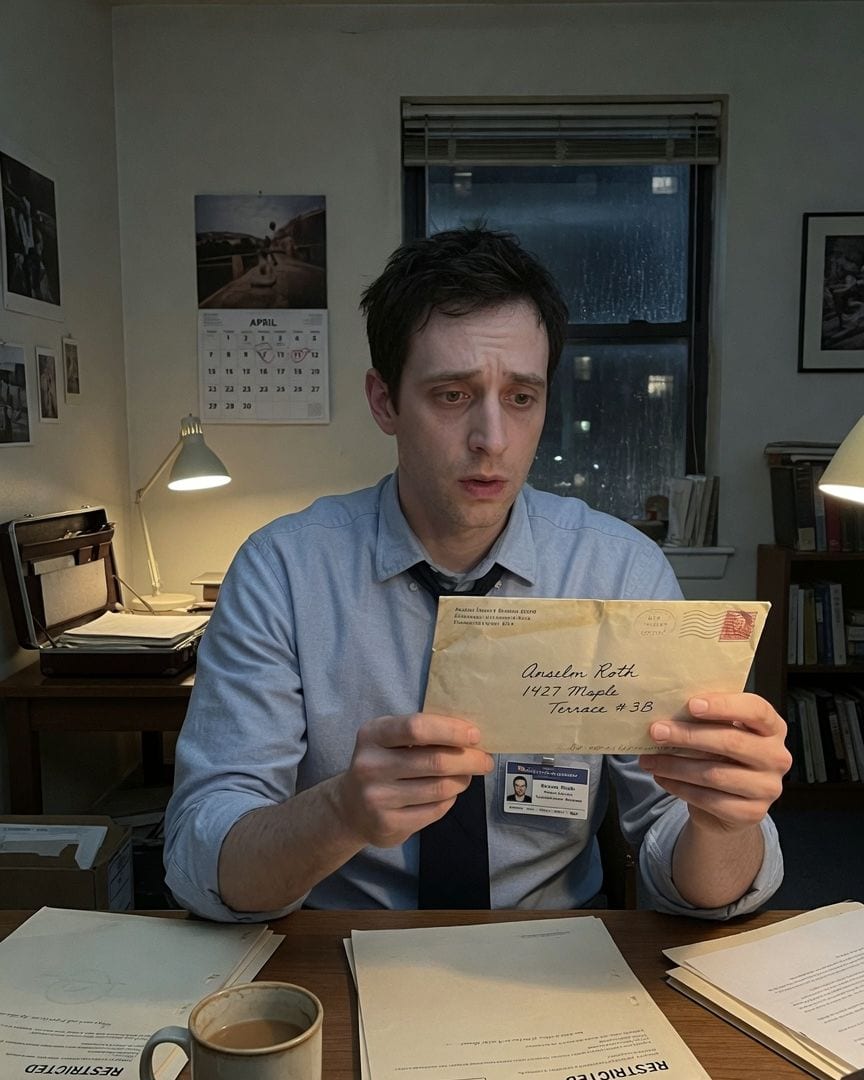
A Cold War declassification reviewer finds his dead grandmother's letter, postmarked 1974, addressed to him years before he was born, and radiating heat.
Declassification reviewer Anselm Roth meticulously sorted through a Cold War-era file on impossible disappearances at the National Archives, a routine 'thirty-year clock' review in 2014. Among the countless records of vanished ships and military units, he found an unscheduled addendum: a thick, sealed envelope addressed to him in his dead grandmother Eleanor Vance’s unmistakable hand. The postmark read 1974, years before he was born, and the paper itself was faintly, inexplicably warm against his fingers, defying every archival principle. Later, a photograph inside revealed his grandmother in an unknown uniform with a stark warning: 'They file us, Anselm. Don't let them finish.' This wasn't just a record of the lost; it was still active.
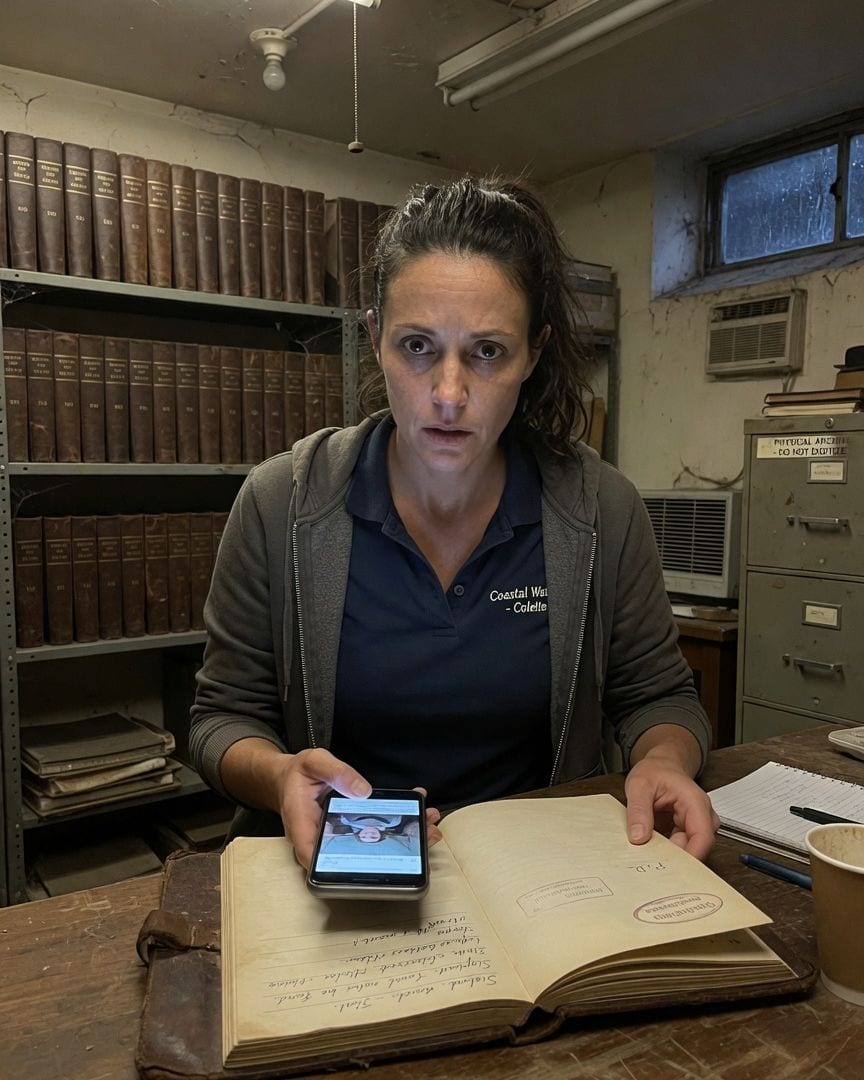
My coastguard log noted Sighting 9 again tonight, a light where no vessel showed. The old logs carry Sighting 9 off Skerry Point at 3:14am every tenth year since 1954, always 'nothing found,' always 'send no boat.'
On my watchtower night shift, the radar screen glowed green and the ocean was quiet. Then, a familiar light appeared off Skerry Point, exactly on cue, just as it had every tenth year for decades. But digging deeper, I found a hidden stamp in an old logbook: 'Operation Skerry. Status: Complete.' It left me with a chilling sense of finality.
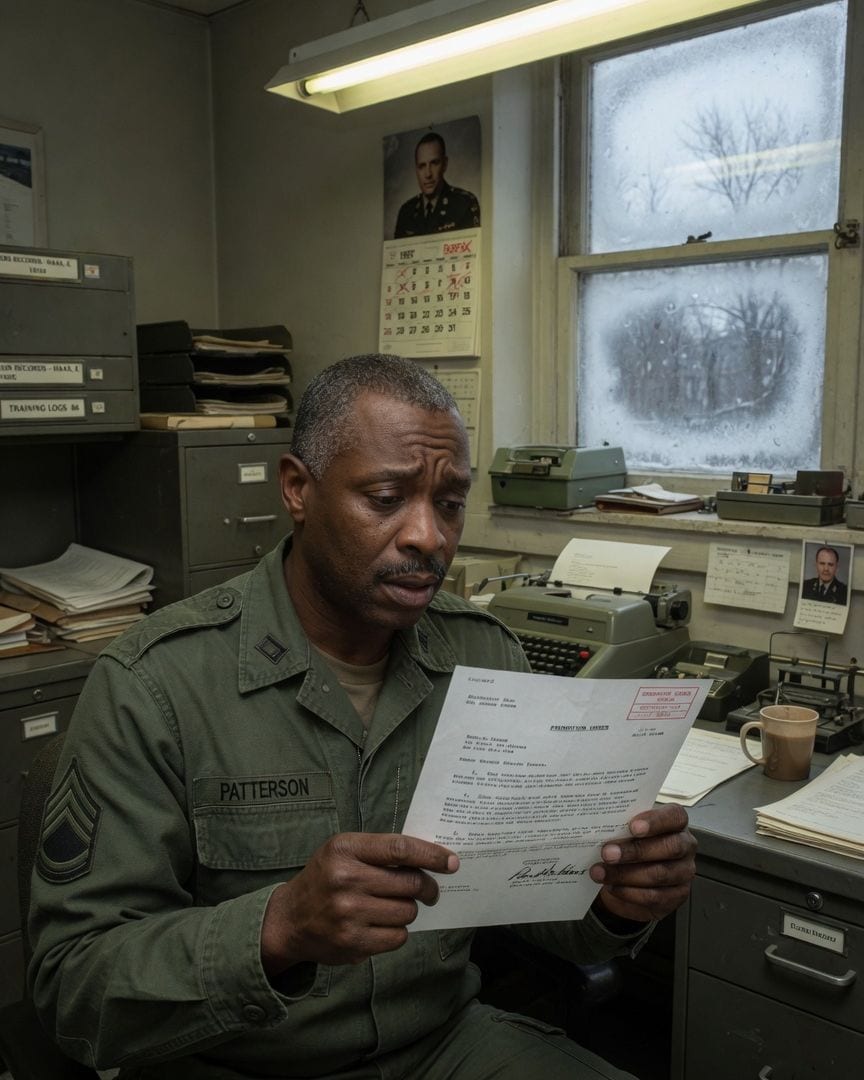
Staff Sergeant Felix Patterson held a promotion order for a young corporal, signed by a Cold War colonel dead for a full year.
Staff Sergeant Felix Patterson felt the German winter chill as he stood in the base admin office, holding Corporal Erich Haas’s promotion order. The young clerk, Private Davenport, wrung her hands, confirming the impossible: Colonel Fairfax’s signature was genuine, despite the colonel having been dead for a full year. A deep, cold dread settled in Felix’s gut, making the office air feel heavy and silent around him. He spent days scrutinizing Haas’s service record, soon uncovering a training certificate also bearing the deceased colonel’s signature, dated months after his death. This was no mere bureaucratic slip; these meticulously clean documents were fundamentally, impossibly wrong.