Staff Sergeant Felix Patterson held a promotion order for a young corporal, signed by a Cold War colonel dead for a full year.
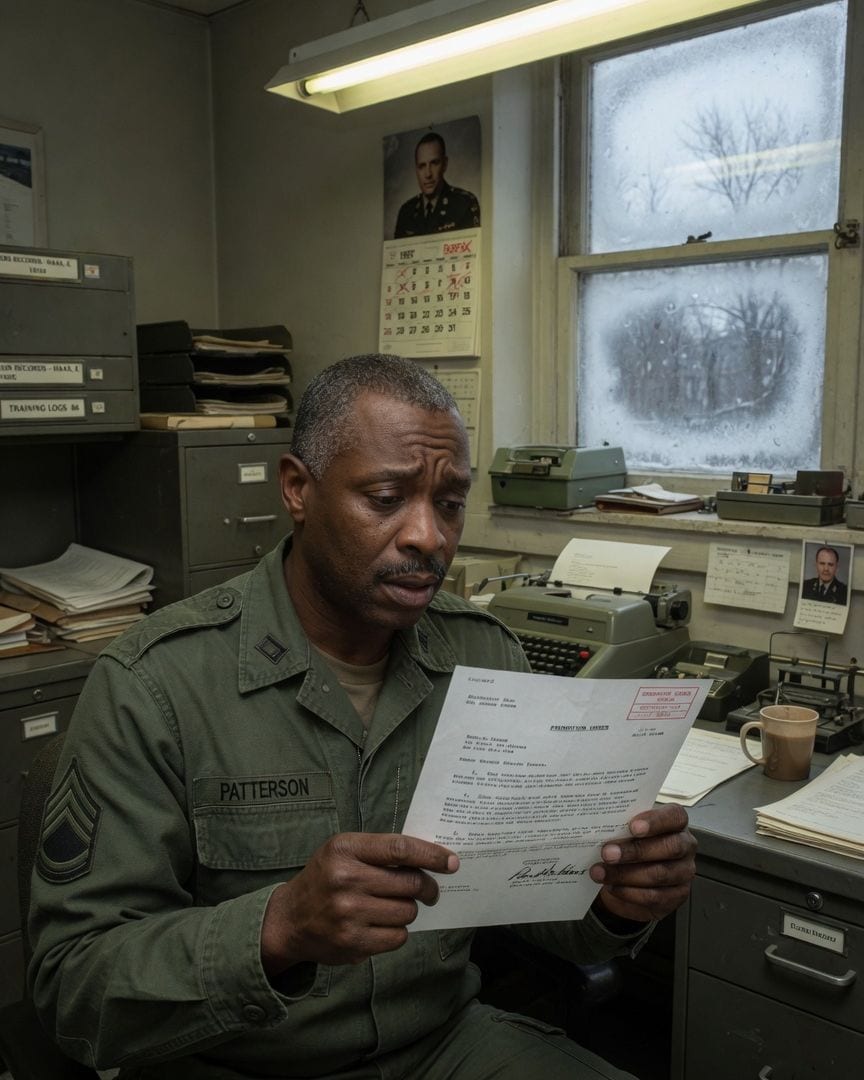
Staff Sergeant Felix Patterson stood in the base admin office, the chill of the German winter seeping through the old windows. He held Corporal Erich Haas’s promotion order to sergeant, dated November 1986.
The clerk, a young Private named Davenport, wrung her hands.
“It’s impossible, Staff Sergeant. But the control number… it traces clean. Every digit, every code, perfectly within regs.” Her voice was a thin, anxious whisper. “And Colonel Fairfax’s signature is on it.”
Felix felt a deep, cold dread settle in his gut. Colonel Fairfax had rotated home last year, in December 1985, and died of a heart attack shortly after. A full year dead.
Yet here was his signature, looping and precise, on an official document processed just weeks ago. The order was real, the signature genuine, but the facts were wrong, fundamentally, impossibly wrong.
He turned the crisp paper over in his hands, as if expecting the anomaly to reveal itself on the reverse. The paper was standard issue. The ink, however, seemed to absorb the light, a black deeper than it should be.
The office air, usually buzzing with the mundane hum of typewriters and idle chatter, felt heavy, silent around him, as if holding its breath.
Felix, trying to reconcile the impossible order, sought out Corporal Haas in his barracks later that day. Haas, a fresh-faced young man barely twenty-one, was entirely unaware of the anomaly, beaming about his upcoming promotion.
He spoke excitedly of the transfer that would accompany it, a posting he hadn't yet been told the details of, but which he was sure would be a great opportunity. Felix offered a terse congratulations, his mind already racing.
He spent the next few days digging through Haas’s official service record, looking for any error, any misfiling that could explain the order. He knew the system, knew its bureaucratic quirks, its occasional slips.
This, however, felt like something else entirely.
He poured over training logs, commendations, and medical records, each page rustling softly under his scrutiny in the quiet archives. The smell of old paper and dust filled his nostrils.
Every detail of Haas’s career seemed meticulously normal, almost aggressively so, until he found it: a certificate for an advanced tactical communications course, tucked neatly into the training section. The certificate was signed by Colonel Fairfax.
The date, embossed slightly, read January 1986. Felix stared at the date, his breath catching in his throat. Fairfax had been dead for a month by then.
And Haas had never attended that course; Felix knew the training cycle for that specific comms unit, and Haas had been deployed elsewhere, on a routine supply convoy through the Fulda Gap, when the course was run.
Felix had even pulled Haas’s leave requests from that period, confirming his location. The official paperwork swore it was real, a clean, authenticated record of Haas’s attendance, but Felix knew it was a lie. A solid, undeniable, documented lie.
Unnerved by the discovery, Felix tracked down the defunct communications unit where the supposed course took place.
The building was slated for demolition, its windows boarded, most offices emptied of equipment, leaving behind only the faint, metallic scent of disused electronics and despair.
In the back, tucked away behind a row of empty server racks, he found a storage room, locked with a heavy, rusted chain. The metal groaned as he picked the lock, its resistance unsettling in the sudden quiet.
He pushed open the creaking door to a room thick with dust and the cloying smell of mildew.
Inside, on a sagging shelf, sat a stack of identical training certificates, yellowing at the edges, all bearing Colonel Fairfax’s signature, all dated post-mortem, for soldiers Felix knew were long gone or dead.
Beneath them, he found another promotion order, identical in its impossible details to Haas’s, for a Sergeant Grace Norwood, a soldier he knew vanished without a trace years ago. Felix’s heart thudded against his ribs. This was no clerical error.
This was something else entirely.
Felix began to quietly investigate the names on the impossible certificates and orders he'd found in the dusty storage room. He used his network, making discreet calls to old units, checking archived manifests, cross-referencing death certificates with official transfer orders.
He worked late into the nights, the glow of his desk lamp the only illumination in his empty office, fueled by weak, stale coffee.
A chilling pattern emerged: every soldier on these lists – not just the dead or the vanished, but also those officially discharged – had either disappeared without explanation, died under unusually obscure circumstances, or simply faded from official records in a way that defied the usual meticulous military accounting.
Often, their official 'disappearance' or 'discharge' had followed soon after receiving such an 'order' or certificate, sometimes by only a few weeks.
The official explanations were always tidy – honorably discharged, transferred to an unspecified unit, deceased in an unfortunate training accident – but the timelines never quite aligned with the dates on Fairfax's post-mortem paperwork.
Felix noted a recurring, faint, embossed insignia on the corner of these false documents. It wasn't a standard military seal or crest. It was a stylized, almost organic symbol, intricate and unsettling, subtly marking each page like a hidden brand.
He ran his thumb over it, feeling the slight raise in the paper, a cold, specific imprint.
Felix’s quiet inquiries did not go unnoticed. He was called into Sergeant Major Roland Merritt’s office, a man known for his institutional memory and unnervingly calm demeanor.
Merritt, a fifty-year-old NCO with eyes that seemed to have seen everything and judged none of it, offered Felix a cup of lukewarm coffee, its steam barely visible in the cool office air.
The room itself felt old, settled into its foundations, as if it had absorbed decades of hushed conversations and unspoken truths.
“Patterson,” Merritt said, his voice a low rumble, devoid of any discernible emotion, “you’re asking questions the system doesn’t like. Some things, son, are best left undisturbed. You keep digging, you might find something that digs back.”
Merritt’s placid expression was more terrifying than any direct threat. He simply watched Felix, his gaze unwavering, as if observing a curious but ultimately doomed insect. The silence stretched, thick and suffocating.
Later that day, back in his own office, Felix found his own service record file, which he hadn't touched in months, had been pulled from the archives and re-shelved.
A fresh, crisp date-stamp on the cover indicated it had been handled just hours ago, by an unknown ID. He felt a prickle on his neck, a cold unease spreading down his spine. He was being watched.
The room, which he had considered his sanctuary, suddenly felt like a trap.
Felix confronted Merritt the very next morning, the impossible orders and certificates spread across the Sergeant Major’s immaculately organized desk. The faint, embossed insignia on each document seemed to glint under the fluorescent light, mocking their supposed official origin.
“This isn’t a clerical error, Sergeant Major. This is a pattern. And Colonel Fairfax is signing them from the grave.” Felix’s voice was tight, strained with the effort of keeping it level.
Merritt sighed, a long, weary sound that seemed to pull the air from the room. He reached for his coffee, taking a slow sip. “You’re a good NCO, Patterson. Too good.”
He leaned back in his chair, his gaze distant, fixed on a point far beyond Felix, as if looking through the office wall itself. “These aren’t errors. They’re… claims. A different kind of accounting.”
Merritt rose slowly, walked to a heavy, locked oak drawer set into the wall, and retrieved a thick, leather-bound ledger. Its cover was worn smooth with age, the corners scuffed, but the brass clasp gleamed.
Its pages, when he opened it, were thick, yellowed, filled with elegant, faded script. It was a formal hand, flowing and consistent, spanning what looked like generations. “This system is older than the modern military, son. Older than this base.
It marks individuals. Fairfax, like others before him, became a signer after his own claim.” Merritt’s finger, gnarled with age, traced a line in the ledger.
There, decades ago, was Colonel Fairfax’s name, complete with rank and date of birth, and next to it, the strange embossed symbol – the exact same one Felix had found on the 'impossible' documents.
“I myself received a similar ‘transfer order’ years ago,” Merritt continued, his voice softer now, almost a confession. “Never materialized, officially. But I’m in the ledger. Always on watch, waiting.”
He tapped a spot on a much earlier page, and Felix could just make out Merritt’s own name, dated over thirty years prior, again accompanied by the unsettling mark.
The implications of Merritt’s confession washed over Felix, chilling him to the bone. This wasn't a secret, some covert operation. It was an unspoken, accepted horror, a shadow system running parallel, and perhaps deeper, than anything official.
Felix, reeling, demanded to see the full ledger. Merritt hesitated, his eyes lingering on Felix’s face, as if weighing a heavy decision. Then, with another weary sigh, he slowly opened the ancient book, its ancient leather creaking mournfully.
Felix leaned over the desk, his hands clammy, scanning the dense, faded entries. Names, dates, the familiar military ranks, and next to many, that unsettling embossed symbol, repeating like a silent, terrible motif.
He saw names of soldiers he knew, some long dead, some just… gone, their official records ending abruptly or with vague, unsatisfying notes.
His eyes darted across the pages, searching for a pattern, a logic, anything to make sense of the monstrous coherence. His mind raced, desperate to find an exception, a flaw in the dreadful mosaic.
Then, halfway down a page, in neat, elegant script, his breath hitched. He saw it. Unmistakable. His own name. Staff Sergeant Felix Patterson, 28. Next to it, a date in the near future, just a few weeks away.
And the same symbol, subtly pressed into the paper, cold and stark. He was already accounted for.
Felix gripped the edge of Merritt’s desk, the ledger open before him, his name a stark, terrifying anchor on the yellowed page. “What does this mean, Sergeant Major? What is this date?”
His voice was barely a whisper, ragged with suppressed terror.
Merritt’s eyes, ancient and resigned, met his. There was no pity, no comfort, only the vast, calm acceptance of a man long past fighting. “It means you’ve been marked, Patterson. Like Haas. Like Fairfax.
These ‘promotions’ and ‘transfers’ are just the system’s way of notifying you. Some accept the claim, become part of it, like Fairfax, signing new orders. They join the ‘accountants,’ the administrators of this shadow.
Others resist, like me, and find themselves trapped, forever on a different kind of watch, waiting.” He explained that Haas’s early promotion wasn’t a mistake, but a precise countdown, the official order a mere echo of the real one.
The faint insignia, 'the mark,' was the undeniable sign of their claim.
He described how those who accepted often disappeared, sometimes physically, sometimes more subtly, their presence a hollow echo of who they once were, their names living on only in the ledger as 'signers,' their true fate sealed.
The pattern snapped into place for Felix, a horrifying, coherent truth that had been hiding in plain sight for decades, woven into the very fabric of the institution he served. The cold dread solidified into a chilling certainty.
Felix, now understanding the full, terrifying implication of his own name in the ledger, felt a cold despair wash over him. He tried to warn Haas, cornering the young corporal by the barracks’ mailboxes.
But the young man was already packing, cheerful about his 'early transfer' to a new, classified unit, talking animatedly about the specialized training. Haas genuinely believed the impossible order, oblivious to the dread that clung to Felix.
Desperate, Felix went to his commanding officer, a pragmatic captain known for his no-nonsense approach. He tried to explain the shadow system, the ledger, the dead colonel’s signatures, the disappearing soldiers.
His CO listened patiently, his face a mask of polite concern, then suggested Felix was under extreme stress and recommended immediate stress leave.
Felix, seeing the futility, the way his words seemed to dissipate into thin air before they could land, returned to Merritt, demanding to know how to fight it, how to escape his own impending 'claim.'
Merritt just shook his head, his face impassive. “You can’t. It's simply… accounting.”
In a final, frantic act of defiance, Felix tried to destroy the ledger, to tear out the page with his name, to erase the mark.
But the old leather felt like stone beneath his trembling fingers, the pages unyielding, the ink unsmudged. It was impossible.
Back in his barracks, packing his meager personal effects for his impending transfer, he found a new set of promotion orders on his bunk, crisp and pristine, folded neatly. It was for Sergeant Patterson, effective tomorrow.
And signed, unmistakably, by Colonel Fairfax.
Staff Sergeant Felix Patterson’s bunk was found empty the next morning. His personal effects were gone, save for a single, pristine promotion order to Staff Sergeant, effective that day, signed by Colonel Fairfax, left conspicuously on his neatly made bed.
His official record showed a successful, if sudden, transfer to a highly specialized, classified unit, its location undisclosed. No one questioned it.
Sergeant Major Roland Merritt sat in his office, sipping his usual lukewarm coffee. He glanced at the empty desk that had been Staff Sergeant Patterson’s. The base commander walked by, pausing at the door.
“Good to see Patterson got that transfer, Sergeant Major. Sharp NCO.” Merritt merely nodded, a faint, knowing smile playing on his lips.
He turned back to his desk, where a fresh stack of blank promotion orders sat, waiting to be processed.
He merely nodded, a faint, knowing smile playing on his lips.
If this one got to you
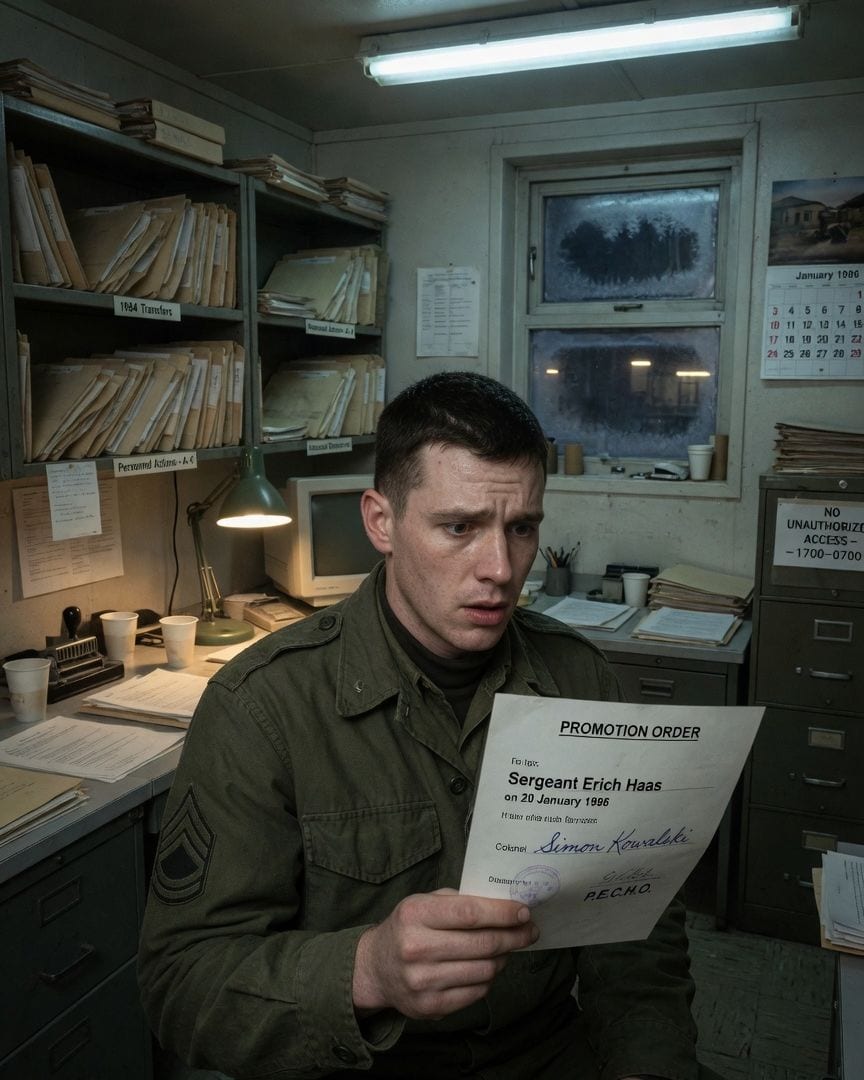
A corporal's promotion order arrived today, signed by a Cold War colonel who died last month. The system still says it's real.
Corporal Erich Haas suddenly found himself promoted to Sergeant, a full month before his board was even scheduled. The promotion order, dated January 20, 1986, bore the unmistakable signature of Colonel Simon Kowalski, a man who had died the previous December. Despite this impossible truth, the military's irrefutable system confirmed the order's absolute validity. Records administration staff could only show Haas a duplicate, stamped with a mysterious, smudged 'P.E.C.H.O.' code. Driven by a growing dread, Haas later unearthed another historical discrepancy: a promotion order for a soldier signed by a general who had died a year before the document's date.
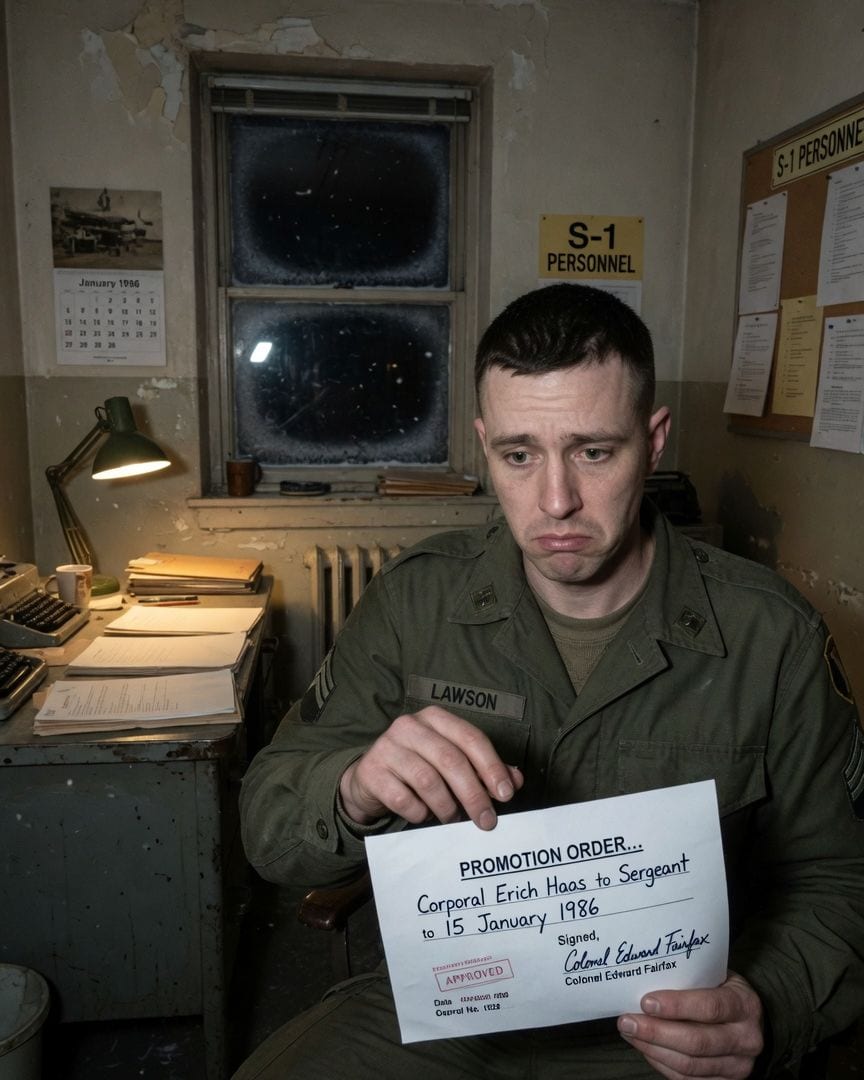
A German garrison NCO finds a promotion order signed by a Cold War Colonel who died last December. The document is impeccably valid, but the promoted corporal knows nothing.
Staff Sergeant Julian Lawson, a meticulous NCO in a cold German garrison, found his routine shattered by a new batch of promotion orders. Among them, a promotion for Corporal Erich Haas to sergeant bore an impossible date and the impeccable signature of Colonel Edward Fairfax, a man who had died last December. Despite the document's official validity, Julian's checks revealed no trace of the promotion in any real-world record. When Julian confronted him, Haas himself knew nothing of it, his eyes holding a vacant, unreadable flicker as he looked at the dead Colonel's signature and his phantom new rank.
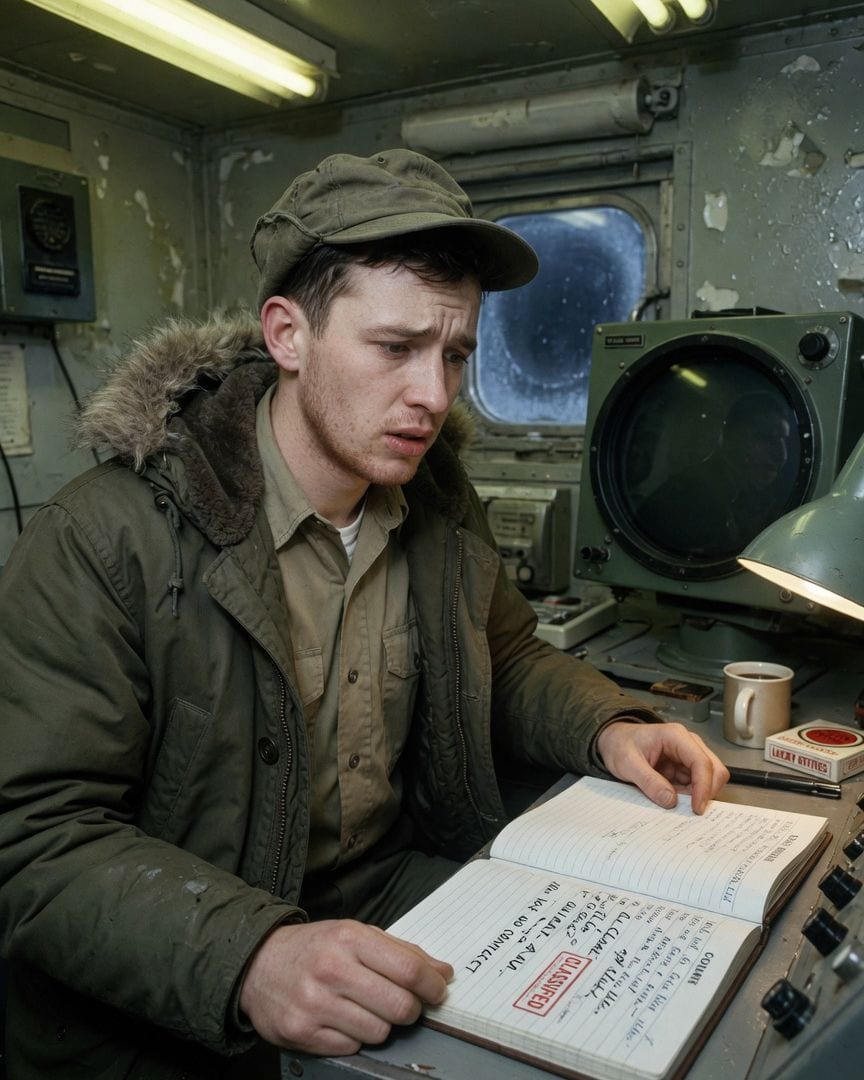
A Cold War airman logs an impossible radar contact on his last sweep. But his official logbook entry is stamped 'CLASSIFIED' and then contradicted by a hastily scrawled 'ALL CLEAR' dated moments before it.
Airman Ordway Vance, 22, manned the radar dome at Site Pellin in the biting North Atlantic dark of January 1962, running the last calibration sweep before its decommissioning. His scope picked up a faint, impossible return, growing closer with each pass, though the ocean remained empty to the eye. When Vance detailed the contact in his official logbook, a 'CLASSIFIED' stamp appeared, followed by a hastily scrawled 'ALL CLEAR' dated moments before his own entry, contradicting his every word. Commander Hartley dismissed it as equipment malfunction, but Vance sensed a chilling, official erasure behind the lie. He soon found a locked cabinet marked 'SITE PELLIN ANOMALIES,' hinting at a deeper truth buried within the base's final days.
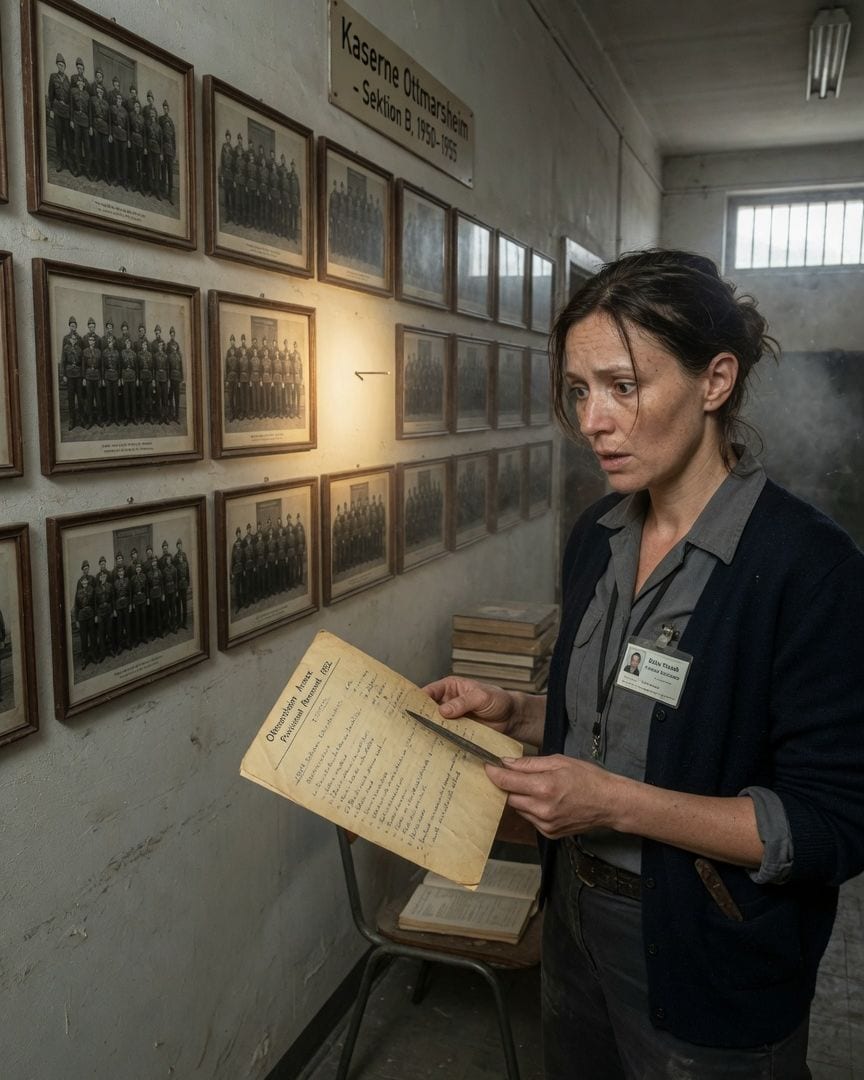
At a Cold War kaserne days from demolition, inventory clerk Delia Straub found a missing photo frame for a unit that never existed. Every soldier on the wall stared directly at its empty space.
Inventory clerk Delia Straub had eleven days to log every item at Kaserne Ottmarsheim before demolition crews arrived, turning history into rubble. Amid the dusty halls, she found a stark anomaly: a missing photo frame for the 604th Ordnance Detachment, a unit never officially stationed at the base. What made the empty space chilling was that every soldier in the surrounding photographs was looking not at the camera, but directly into that void. Delia's search for answers unearthed an unofficial manifest listing the 604th, with names of men officially declared killed in action years before. Who were these phantom soldiers, and why did their impossible record persist?
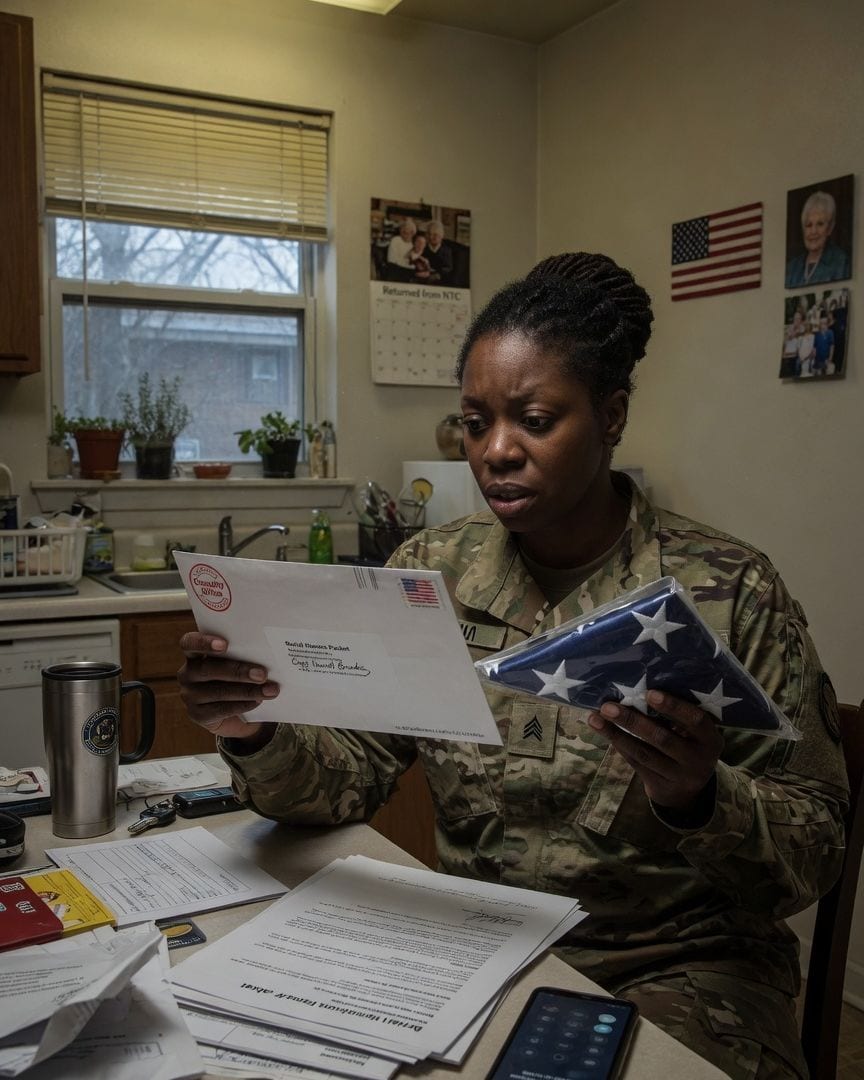
A Sergeant finds her own complete burial packet, dated for the coming spring, then finds a stack of identical ones for others.
Sergeant First Class Bree Alcott returned from a grueling training exercise, looking forward to peace, but found her kitchen table piled with mail, one official package heavy with dread. Inside was her own complete burial-honors packet, every detail filled, from Arlington plot to her grandmother’s chosen hymn, all dated for a specific day in the coming spring. The casualty office dismissed it as a 'glitch,' but Bree found a cryptic code leading to a decommissioned desert station and a stack of identical packets for other soldiers. What meticulous hand had prepared these packets, and why was Bree Alcott’s name on a list for a future she shouldn't have known?
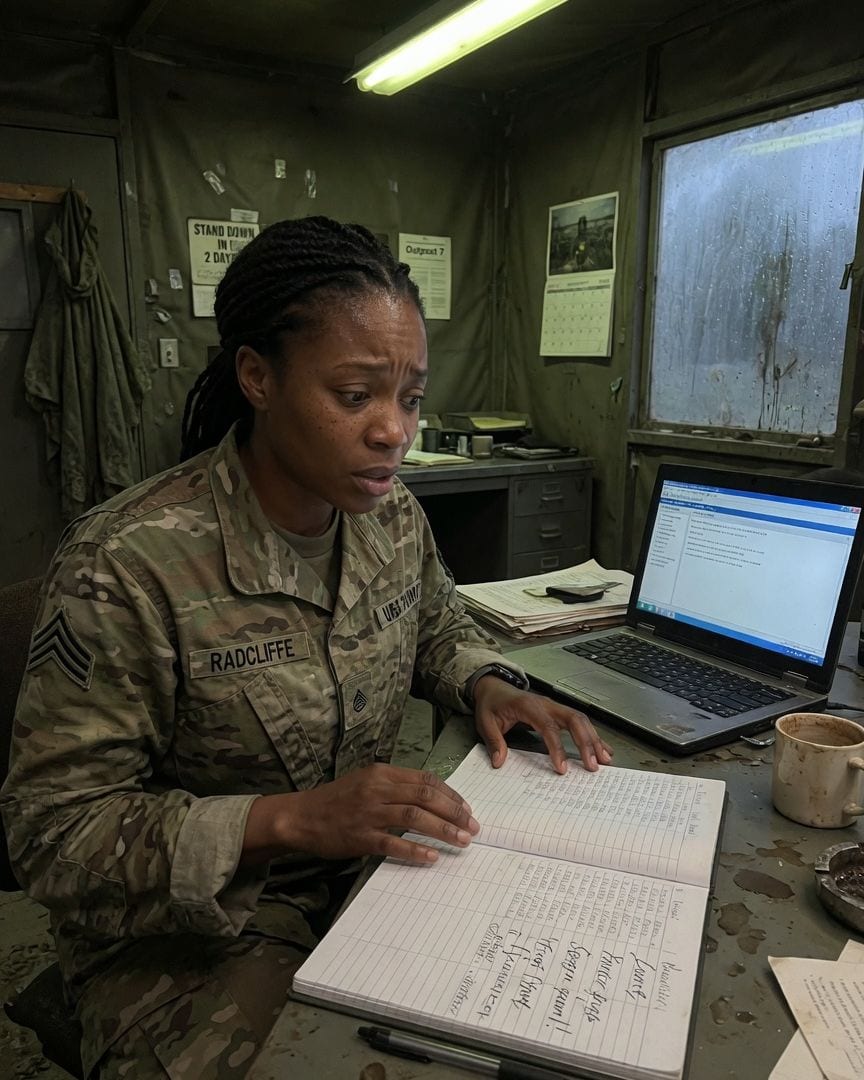
Two days before Outpost 7 closed, Staff Sergeant Radcliffe's roll call counted 42 men, but 43 voices answered.
Two days before Outpost 7 was set to stand down for good, Company First Sergeant Nora Radcliffe conducted her morning roll call. For three years, she had known all forty-two faces and voices by heart, but in the damp dawn air, a forty-third voice answered to a name not on her list. Back in her office, she found that same impossible name, 'Everett Lawson,' added to the official duty log in her own unmistakable handwriting. As the fluorescent lights hummed, her search of the digital personnel system revealed a skeletal record for Lawson, complete with a basic training certificate signed by her training officer—who had retired a decade before the certificate's date. What impossible truth had Nora stumbled upon as her outpost prepared to close?