A Staff Sergeant, three weeks from transfer, finds her own signature in a logbook for a patrol she never made.
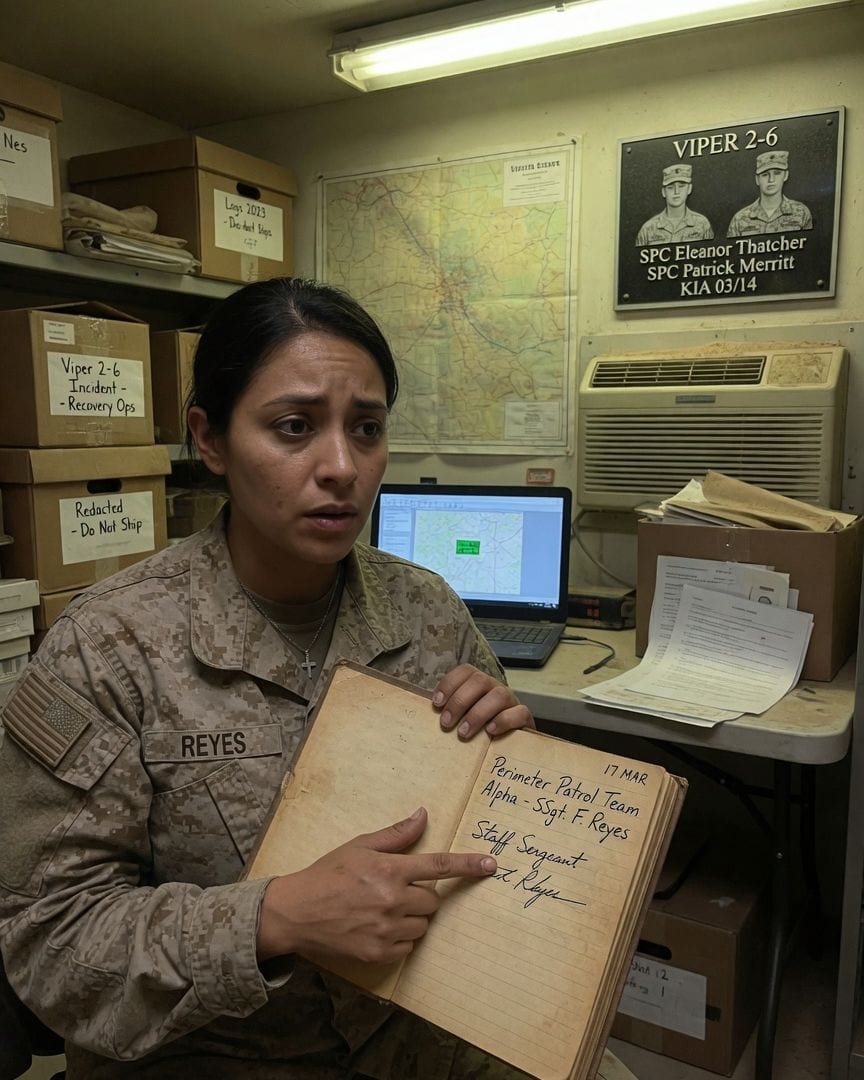
The fluorescent hum of the Tactical Operations Center (TOC) was the only constant for Staff Sergeant Fiona Reyes, three weeks from her transfer.
Her eyes, tired from another twelve-hour shift, scanned the digital map of the high desert, tracking friendly patrols.
The air conditioning unit behind her whirred, barely stirring the dust on the memorial plaque for 'Viper 2-6,' the vehicle and crew lost last year, Eleanor Thatcher and Patrick Merritt, faces frozen in solemn black-and-white.
Then, a new icon blinked onto the screen. 'Viper 2-6.' It wasn't a glitch. The system registered it as a friendly track, reporting current position, fuel status, and ammunition count, all in perfect, flat-standard format.
Reyes queried the call sign, and the automated response came back instantly, 'Viper 2-6, all systems nominal, proceeding to waypoint Charlie.' The icon, a small green square, crawled steadily across the map toward the outpost.
She called out to Specialist Carver, 'Carver, confirm that contact. Is that a new asset?' Carver, barely twenty-two, blinked at the screen, then at the plaque, his face blanching.
Not one radar station, not a single picket line along the phantom vehicle's reported path, had registered its passage.
The silence in the TOC thickened, broken only by the hum of the machines and the steady, impossible crawl of the green square.
Major Robert Whitfield, the outpost commander, dismissed it as a 'system ghost,' a residual signal from the wreck. 'We're drawing down, Reyes. Old equipment, old wiring. Get a tech to sweep the net.' Reyes, however, couldn't shake the chill.
The reported position was too precise, the query response too crisp. She spent her next shift meticulously cross-referencing old logs, trying to find a record of similar anomalies.
The outpost's archives, dusty and half-packed for the drawdown, were a labyrinth of forgotten paperwork. Sergeant First Class Kevin Oakley, a grizzled veteran serving as the unofficial base historian, gave her a sympathetic nod.
'Things get… misplaced in a transfer, Staff Sergeant. Or forgotten.' He pointed her to a stack of boxes marked 'Viper 2-6 Incident - Recovery Ops.'
Inside, beneath stacks of maintenance reports and redacted incident summaries, she found it: a heavy, canvas-bound unit logbook, its pages brittle with age, dating from the initial recovery efforts a year ago.
It wasn't an official, printed log; this was a field book, filled with hurried, cramped handwriting. The first entries detailed the grim search, the recovery of scattered debris, the lack of bodies.
Then, further in, she found a series of peculiar entries: 'Unexplained radio chatter, 'Viper 2-6' call sign heard on open channel, dismissed as interference.' 'Phantom contact on perimeter radar, no visual confirmation.' Each dismissed with a note about 'equipment malfunction.'
Reyes felt a knot tighten in her stomach. These weren't isolated incidents. These were patterns. She flipped to a page dated three days after the official loss of Viper 2-6.
There, listed under 'Perimeter Patrol Team Alpha,' was a name: 'SSgt. F. Reyes.' Her own name. And next to it, a signature, an undeniable match for her own, even the distinct slant of the 'F'.
Reyes stared at the logbook, her finger tracing the 'SSgt. F. Reyes' entry. The date was clear: March 17th. The handwriting, a perfect mimicry of her own, right down to the familiar loop of the 'S' in Staff Sergeant.
But March 17th, last year, had been her sister’s wedding. She had been hundreds of miles away, on authorized leave, celebrating, not patrolling the high desert perimeter.
The book, old and dry, felt impossibly cold in her hand, a solid, undeniable record of a lie.
A record bearing her own name, her own signature, for a patrol she knew, with every fiber of her being, she had never made.
The fluorescent lights of the archive hummed, reflecting off the page, making the impossible entry seem to shimmer, mocking her certainty.
The next morning, Reyes confronted Major Whitfield with the logbook. He scoffed, 'A prank, Staff Sergeant. A junior officer with too much time on his hands. Or maybe a forged signature.' He ordered the logbook sealed and dismissed her concerns.
But Reyes was a soldier of systems and records; a forged signature in an official (if informal) record was a breakdown of accountability, not a prank. She spent her off-duty hours digging deeper.
She found her leave request from the previous year, officially approved and signed, confirming her absence on March 17th. Then, she sought out Sergeant First Class Oakley again.
Oakley, sensing her resolve, admitted the logbook was his own, kept unofficially when he was a young PFC tasked with 'special observations' decades ago. 'I was told to document everything, then to forget it,' he said, his voice low.
'But some things… they stick.' He remembered strange occurrences around the base, old stories of equipment that went missing and then 'reappeared' on manifests, only to vanish again.
He showed her a faded map, not of the base, but of the surrounding terrain, marked with cryptic symbols and dates. 'It's not just Viper 2-6, Staff Sergeant. It's the ground itself.'
Reyes, now fully committed, requested access to the base's digital archive of personnel records for the last year. She wanted to see if any other 'absent' personnel had appeared on duty rosters. Whitfield, annoyed, approved it, confident she'd find nothing.
She spent days sifting through old manifests, cross-referencing names with leave reports and medical logs. The system was airtight.
Except for one anomaly: a single, unassigned entry on a duty roster from last year, for a 'Recovery Patrol Echo-7,' on March 17th. No names listed, just a blank space where four names should have been.
But the entry was signed off by a 'SSgt. J. Thatcher.' The same surname as PFC Eleanor Thatcher, the deceased crew member of Viper 2-6. A chill prickled Reyes's scalp.
It wasn't just her name in the logbook; it was a pattern of missing names, and impossible names, all tied to the same date.
Reyes's late-night archive visits didn't go unnoticed. One evening, as she was poring over digitized service records, the lights in the archive flickered, then died, plunging her into darkness. The emergency lights clicked on seconds later, casting long, shifting shadows.
She felt a presence behind her. Spinning around, she saw only empty shelves. But a single file drawer, previously locked, now stood ajar, its contents spilling slightly.
On top lay a printed memo, dated weeks ago, addressed to Major Whitfield: 'Re: SSgt. F. Reyes – Excessive Access Requests – Monitor Activity.' The memo was signed by a 'Col. B. Radcliffe, Special Investigations.'
Reyes felt a jolt of ice in her stomach. They knew she was digging. The next day, Major Whitfield called her into his office. His demeanor was colder, his eyes harder. 'Staff Sergeant, your transfer is being re-evaluated.
These… investigations… are disruptive. I suggest you focus on your duties.' He handed her a revised duty roster: she was assigned to solitary night shifts in the TOC, with Specialist Carver reassigned. Isolation.
That night, alone in the TOC, the digital map displayed the 'Viper 2-6' track again. This time, it wasn't moving. It was stationary, directly over the coordinates of the burned-out vehicle's original wreck site.
And as Reyes watched, a new data field flickered on next to its icon: 'Status: Awaiting orders.' Her comms console beeped. An incoming message, encrypted. Reyes hesitated, then opened it.
The message was short, plain text: 'Some records are best left undisturbed. – K.O.' Oakley. He was warning her. Or was he part of it? The air in the TOC grew heavy, the hum of the machines suddenly oppressive.
She was being watched, not just by her superiors, but by the system itself, the very thing she was trying to understand.
Desperate for answers, Reyes sought out Oakley again, cornering him in the mess hall during a quiet hour. 'You sent that message,' she stated, her voice low. Oakley looked around nervously, then nodded. 'Some things… they’re too old, too deep.
You don’t dig them up.' Reyes pressed him. 'My name is in a logbook for a patrol I never made. It’s on a duty roster that doesn't exist. What is this?' Oakley sighed, running a hand over his grizzled face.
'The site, Staff Sergeant. This ground. It has an echo. A memory.' He explained that for decades, certain 'lost' assets, especially those whose physical remains were never fully recovered, would occasionally 're-manifest' in the system. 'Not physically, not usually.
But their digital signatures, their last known status reports… they flicker back online. It’s like the system tries to complete a broken circuit.'
He described how, when he was a young PFC, he was part of a covert unit tasked with monitoring these 'ghost signals' at specific 'active' sites, including this one.
'My logbook was my attempt to make sense of it, before they told me to stop.' He revealed that the 'SSgt.
J. Thatcher' on the unassigned duty roster was Eleanor Thatcher's father, a former NCO who had served at this very outpost decades ago, and who had experienced similar phantom contacts during his own tour.
'The anomaly… it connects to those who were here, those who lost something here.'
The digital track of Viper 2-6 wasn't just a random error; it was the system’s attempt to account for the unaccountable, drawing on the last known data, even pulling in names of those connected to the loss, or those who, like Reyes, were involved in the attempt to account for it.
The 'Viper 2-6' track on the map, stationary over its wreck site, now made terrifying sense: it was an echo, waiting for orders, a digital ghost trapped in a system designed for perfect coherence.
The system wasn't malfunctioning; it was operating perfectly, but on impossible data. 'They’ve been managing it for decades,' Oakley whispered. 'Not solving it. Managing it. Hiding it.'
He then revealed the true scope of the cover-up: 'There's an official After-Action Report for Viper 2-6. Buried. It'll show you how deep it goes. It'll show you how they brought you in, without you even knowing.'
He offered to help her access it, but warned her, 'Once you see it, you can't unsee it. And you'll be part of it, too.'
With Oakley's help, Reyes gained access to a restricted terminal, bypassing Whitfield's oversight. She navigated through layers of encrypted files, her heart pounding. Finally, she located the 'Viper 2-6 Incident After-Action Report – CLASSIFIED.'
The digital file loaded, a dense document filled with technical jargon and official stamps. She scrolled past the operational summaries, the casualty assessments, the equipment failure analyses. Then, she found it: a detailed manifest of the initial recovery team.
Her breath hitched. There, among the names of the actual recovery personnel, was 'SSgt. F. Reyes.' And beside it, a digitally scanned image of her own service record signature, clear and unmistakable. The date was March 17th, last year.
The same date from Oakley's logbook. The same date she was at her sister's wedding. Her own name, in her own hand, swearing she was there.
A chill, deeper than the desert night, settled in her bones: the system didn't just record a ghost; it recorded her as one of its witnesses, or perhaps, as one of its participants.
The anomaly had reached out, touched her life, and pulled her into its impossible, official record. She was no longer just an observer; she was implicated, accounted for in a reality that wasn't hers.
The screen flickered, and a faint, green icon of 'Viper 2-6' appeared in the corner of the report, stationary, watching.
Oakley stood beside Reyes, watching the screen as she zoomed in on her signature. 'They don't just log the ghosts, Staff Sergeant,' he said, his voice grim. 'They log the attempts to explain them.
And the attempts to cover them up.' He explained that after the initial anomalies surrounding 'Viper 2-6' became too persistent, a decision was made at a higher, classified level to 'normalize' the phantom data within the official record.
This involved creating 'placeholder' entries, even fabricating participation from personnel who were, like Reyes, tangentially connected to the event or the site. 'Your deployment to this outpost, your previous training in digital systems... you were a convenient name,' Oakley explained.
'They needed to account for the unaccountable, and sometimes, the easiest way is to spread the anomaly's effects across existing, verifiable personnel.'
He then used his access to unlock a deeper layer of the archive, revealing decades of similar reports from other 'active' sites.
Each report detailed phantom contacts, impossible manifests, and the quiet, bureaucratic efforts to integrate these anomalies into official military records. There were files on 'Project ECHO,' established in the 1970s, specifically to monitor and 'contain' these digital manifestations.
The horror wasn't a malfunction; it was a systemic, decades-long effort to reconcile an impossible truth with the military's absolute demand for accountability.
The 'Viper 2-6' track still blinked in the corner of the screen, now joined by dozens of other, older call signs, all stationary, all 'awaiting orders.'
They weren't just ghosts; they were meticulously documented, classified, and maintained ghosts, living in the very heart of the system designed to make them impossible.
The next morning, Reyes found Major Whitfield waiting for her in the TOC, his face stony. 'Staff Sergeant Reyes,' he began, 'your transfer has been approved. Effective immediately. You're to report to Joint Base Lewis-McChord by 0800 tomorrow.'
It was her transfer, but the abruptness, the lack of ceremony, felt like an expulsion. Reyes knew it wasn't a reward. She looked at Whitfield, then at the empty chair where Specialist Carver usually sat, then at the memorial plaque.
'What about Viper 2-6, sir?' she asked, her voice steady. Whitfield's eyes hardened. 'That incident is closed, Staff Sergeant. All personnel accounted for.' 'No, sir,' Reyes replied, 'they're not. Some of them are still reporting in.'
Whitfield stared at her, a muscle twitching in his jaw. 'You have your orders, Staff Sergeant.' Reyes understood. She could push, but she would be pushing against a wall of institutional silence and decades of established protocol.
This wasn't a wrongness that could be fixed, only managed. She gathered her personal effects, the weight of the hidden knowledge pressing down on her.
As she walked past the memorial plaque for the last time, she glanced at the names: Eleanor Thatcher, Patrick Merritt. And in her mind, she saw her own name, etched into an impossible record, a ghost in the machine.
She was getting out, but she was not escaping the truth. The system had accounted for her, just as it had accounted for the ghosts. It knew. And now, so did she.
The transfer was not a clean break; it was a re-assignment, a quiet reassimilation into a world that carried its own impossible, unacknowledged truths.
The dread was not in what was happening, but in what had always been happening, unseen, codified, and managed.
Reyes completed her transfer to Joint Base Lewis-McChord. The new assignment was mundane, a desk job, exactly what she had wanted. She saw no phantom tracks, heard no impossible signals.
Major Whitfield's outpost continued its drawdown, eventually becoming a skeleton crew before being slated for full closure. Sergeant First Class Oakley quietly retired a few months later, his knowledge buried with him.
The official records remained pristine, the truth of Project ECHO locked away in secure archives, accessible only to a select few.
The system, designed for ultimate accountability, had simply absorbed the anomaly, integrated it, and continued to operate, perfectly, with its secret. Reyes, however, carried the weight of what she knew.
Every manifest, every duty log, every official report now held a faint, unsettling shimmer of doubt. She saw the threads of the impossible woven into the fabric of the real, and she could never unsee it.
Years later, Fiona Reyes, now a civilian working in logistics, found herself automatically double-checking every manifest, every inventory report, a habit she couldn't break.
The military had moved on, the outpost a forgotten speck in the desert, but the knowledge lingered.
One quiet evening, browsing an online forum for retired service members, she stumbled upon an old, grainy photograph posted by an anonymous user: a blurred image of a digital map display, a green icon labeled 'Viper 2-6' stationary over a desert landscape, its data fields reporting 'Status: Awaiting orders.'
There were only a few comments. One read simply: 'Some things never truly go offline.' Another, posted just last week, asked: 'Anyone else ever see a ghost track on an old net? I thought it was just me.'
Reyes closed her laptop, the glow of the screen reflecting in her eyes. The system was still running, still accounting. And the ghosts were still waiting.
She knew, with a certainty that chilled her to the bone, that the system always finds a way to account for everything, even the impossible.
Across the country, in a quiet, suburban home, Fiona Reyes sat staring at her reflection in the dark screen, a faint, almost imperceptible smile playing on her lips. She always accounted for everything now.
If this one got to you
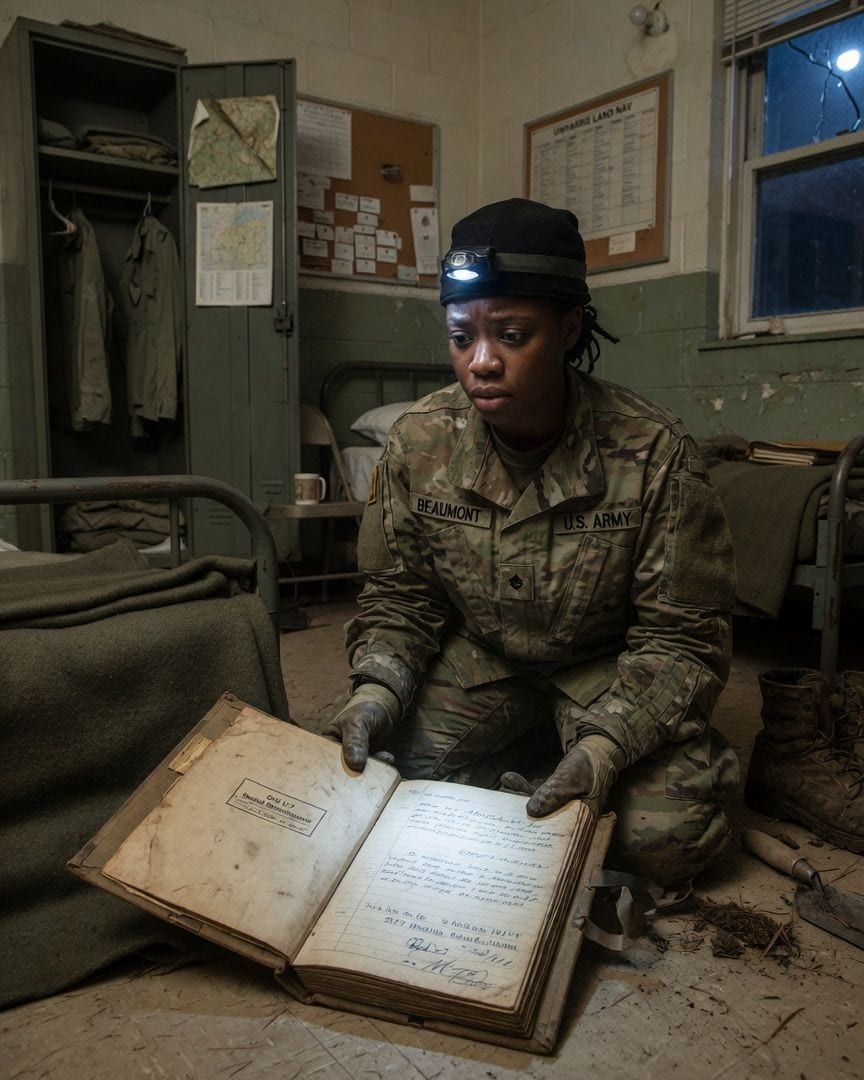
A burn barrel's impossible heat led a lieutenant to a hidden logbook, holding her own signature on a patrol she never took.
Second Lieutenant Monica Beaumont, bone-tired after a land-navigation course, logged an unexpected compound in the Uwharrie backcountry. Her cadre officer, Captain Russo, insisted she'd invented it, marking her record. The next morning, leading her platoon back to the coordinates, the compound was gone, but they found fresh post holes, cold fire pits, and a burn barrel still radiating an impossible heat. Unable to shake the uncanny feeling, Lieutenant Beaumont returned alone that night and unearthed a heavily corroded metal box. Inside, a canvas-bound logbook detailed decades of activity at a site that didn't exist, until she found an entry from eighteen months prior: her own signature on a night watch she was hundreds of miles away from.
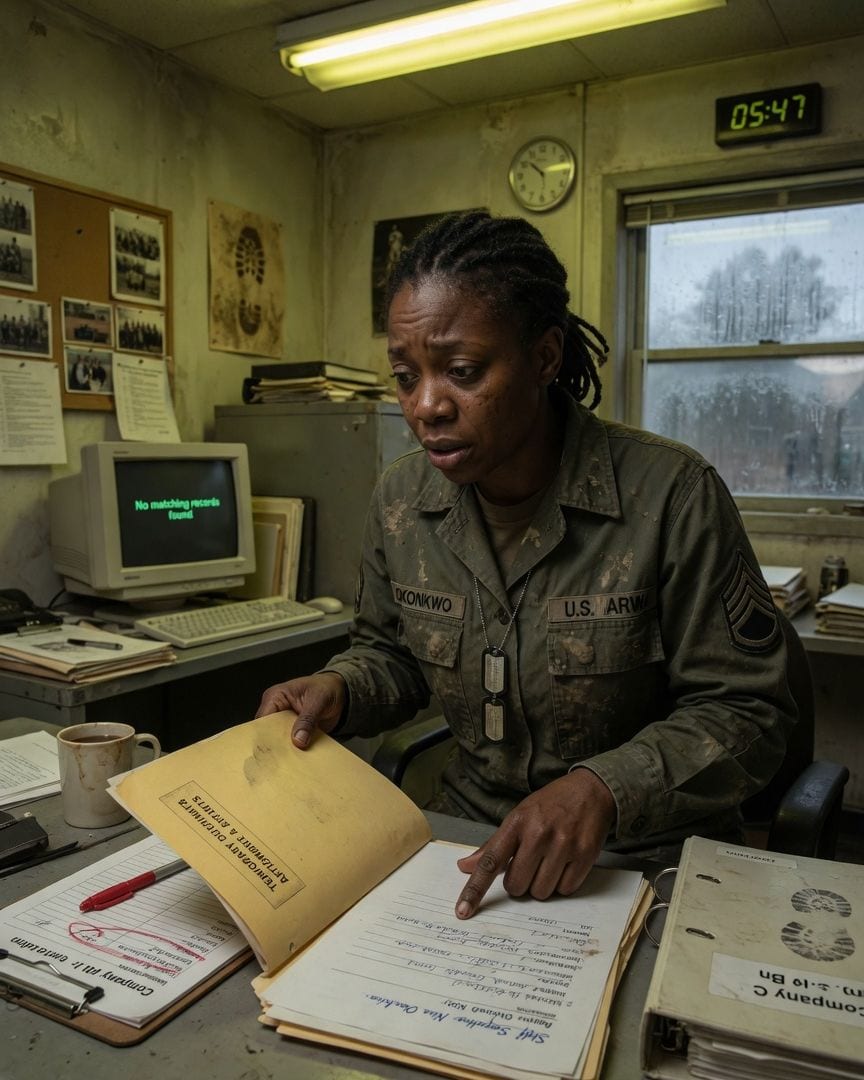
Two days before her company’s final stand-down, Staff Sergeant Nina Okonkwo heard a 43rd voice answer roll call. She found his file with her own impossible signature.
Two days before Outpost Alpha’s final stand-down, Staff Sergeant Nina Okonkwo stood in the gray dawn, her boots sinking into mud churned to a greasy paste. She called out forty-two names, each met with a solid, verifiable "Here, Staff Sergeant!" But then, a distinct forty-third voice answered to a name not on her list. A cold knot tightened in Nina’s stomach; her internal clock screamed wrongness as she swept her gaze over the weary, silent ranks. Later, digging through forgotten files, she found a full service record for Private Thomas Merritt – complete with her own impossible signature approving his deployment. How could she have signed off on a ghost?
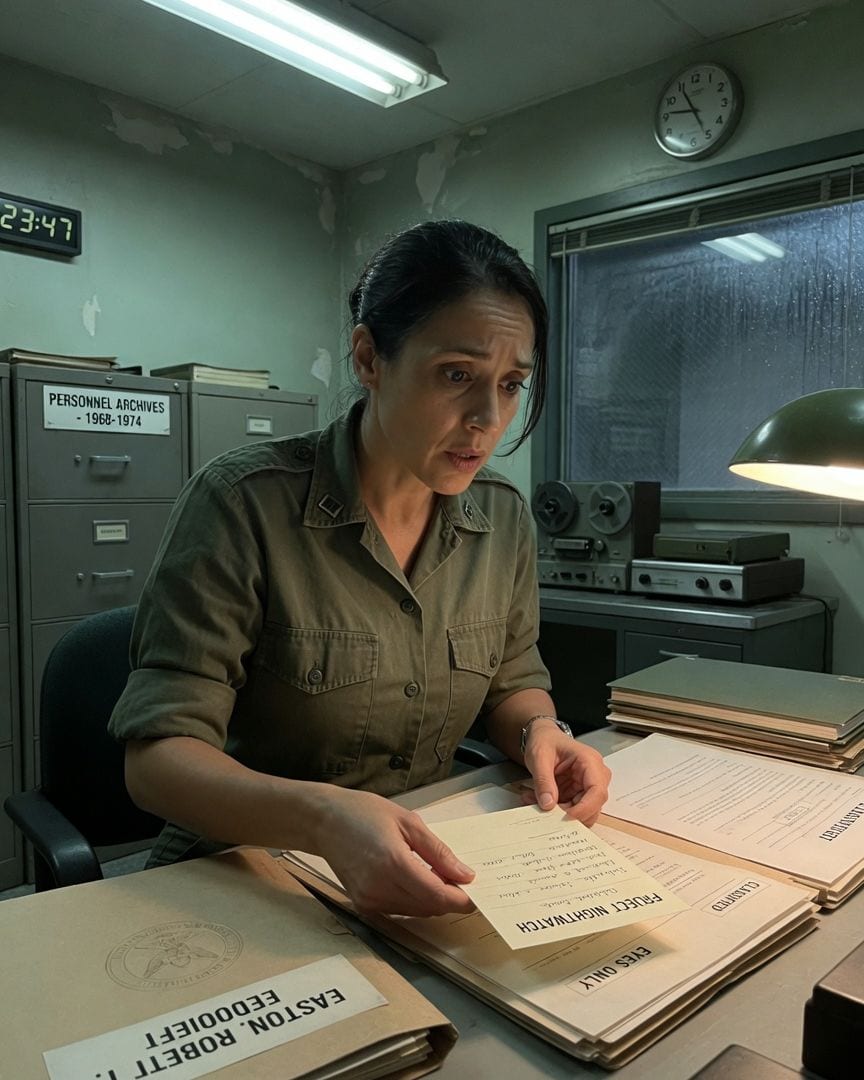
A Cold War tower controller logs an object vanish from radar, then hears the pilot scream it’s filling his windscreen. Her own name, 'Bardolph, Ines', now marked 'Observed' in a secret file.
Captain Ines Bardolph, a tower controller, was counting down the months until her transfer to Langley and the decommissioning of her base, hoping to leave behind the unsettling incidents of her final posting. But one night, her radar scope showed an impossible blip, solid and unwavering, 40 miles north of the Danube, only to vanish in less than a second, leaving a pilot screaming in terror. Despite the clear evidence, the official report blamed "atmospheric inversions," while the terrified pilot received a glowing review and promotion, his file meticulously scrubbed of any anomaly. As Captain Bardolph reviewed the pilot's pristine record, she found a hidden slip of paper, revealing a chilling truth: 'Subject: Bardolph, Ines. Status: Observed.' Was she merely an observer of the impossible, or was she now part of something far more sinister?
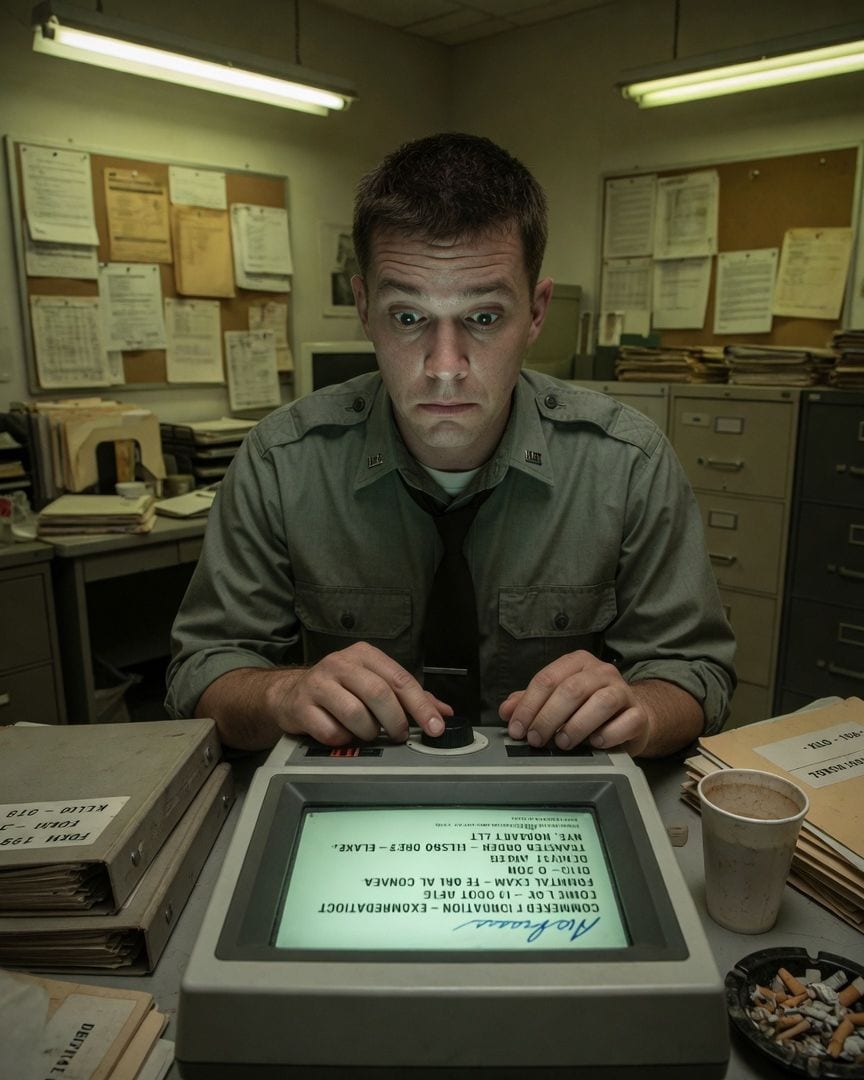
A missile commander watched his ten nuclear silos go dark. His own service record shows his signature on a future he's never lived.
Second Lieutenant Hobart Nye, a missile commander in Wyoming, had his quiet 0247 watch shattered by a security report: a massive, silent black triangle hovered over Launch Facility Kilo, casting a perfect shadow. Hobart watched his console's fault panel light up, signaling all ten nuclear missiles going dark in an impossible silence, followed by eleven minutes his security team could not remember. Official logs called it a "radio malfunction," but Hobart found a requisition for invisible-tracking sensors, signed by a base commander who was supposed to be off-base. The final, chilling discovery came when his own service record showed new entries—a dental check-up, a transfer to Alaska—all dated for a future he never lived, complete with his perfectly replicated signature.
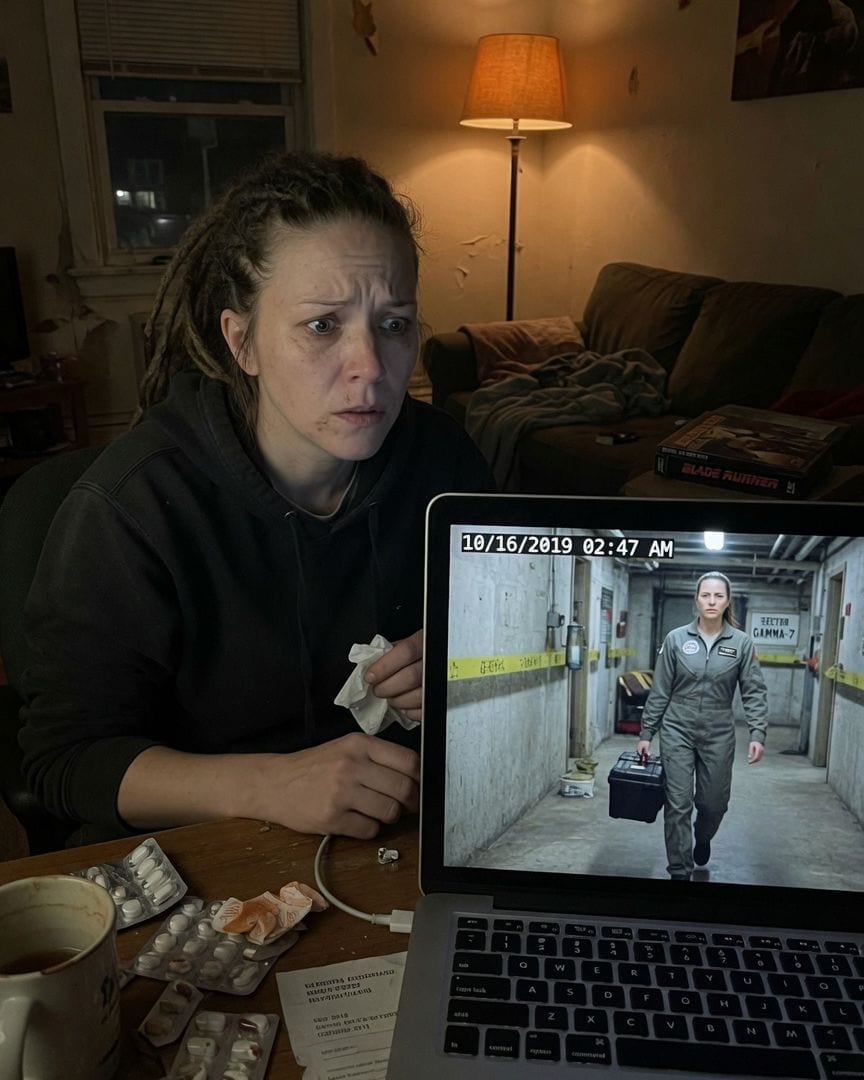
My timesheets show me working night shifts in a town I never lived in. The signatures are mine. The pay went to an account that isn't.
An old employer sent me timesheets from five years ago, detailing night shifts I supposedly worked at a depot 80 miles away. But I knew I was home recovering from surgery that entire week, nowhere near the industrial town. Then a security photo arrived, showing my face in an unfamiliar uniform, working a shift that wasn't quite me.
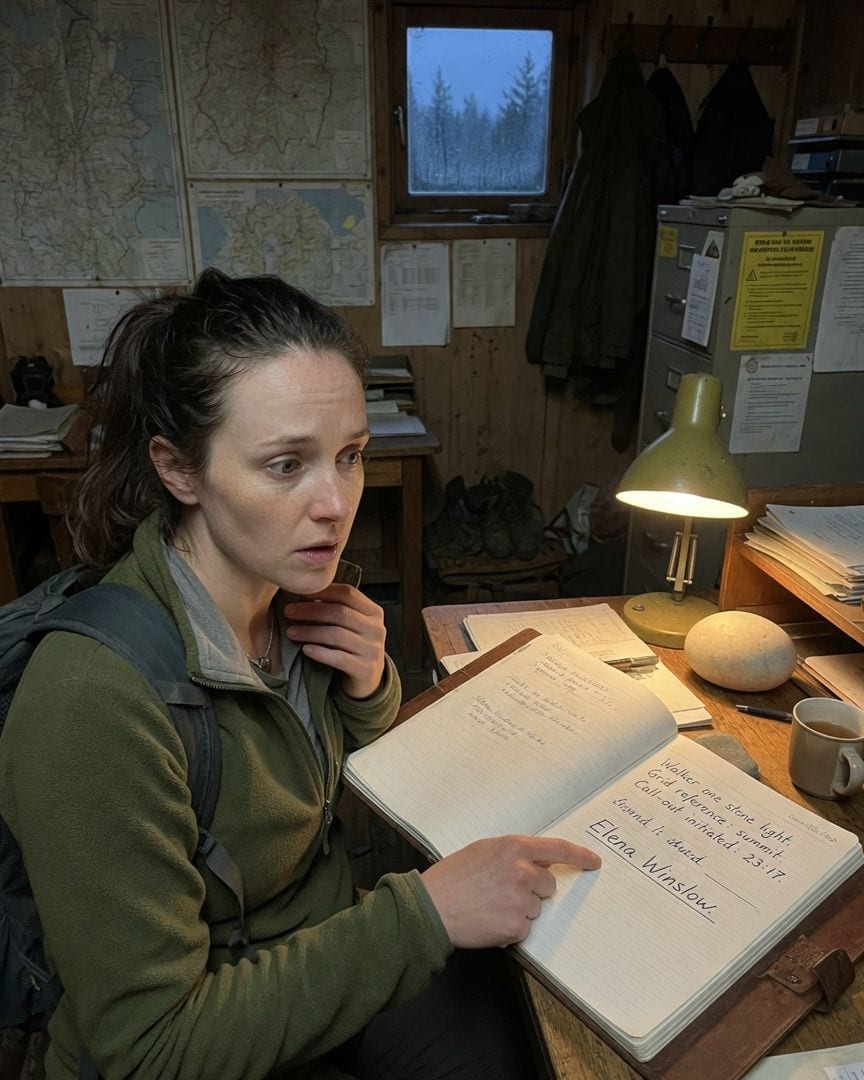
My pocketed mountain stone meant a rescue logbook recorded a call-out that night for me — a shout that never went out.
After an exhilarating climb on Cadair, I took a small, smooth white stone from the summit cairn, despite a warden's warning. Back at the station, a logbook entry shocked me: my name, dated last night, for a rescue call with an impossible detail: 'Walker one stone light'.