My grandfather counts 'one, two, three' in English now. He just came back. He always counted in Polish, and denies ever speaking it.
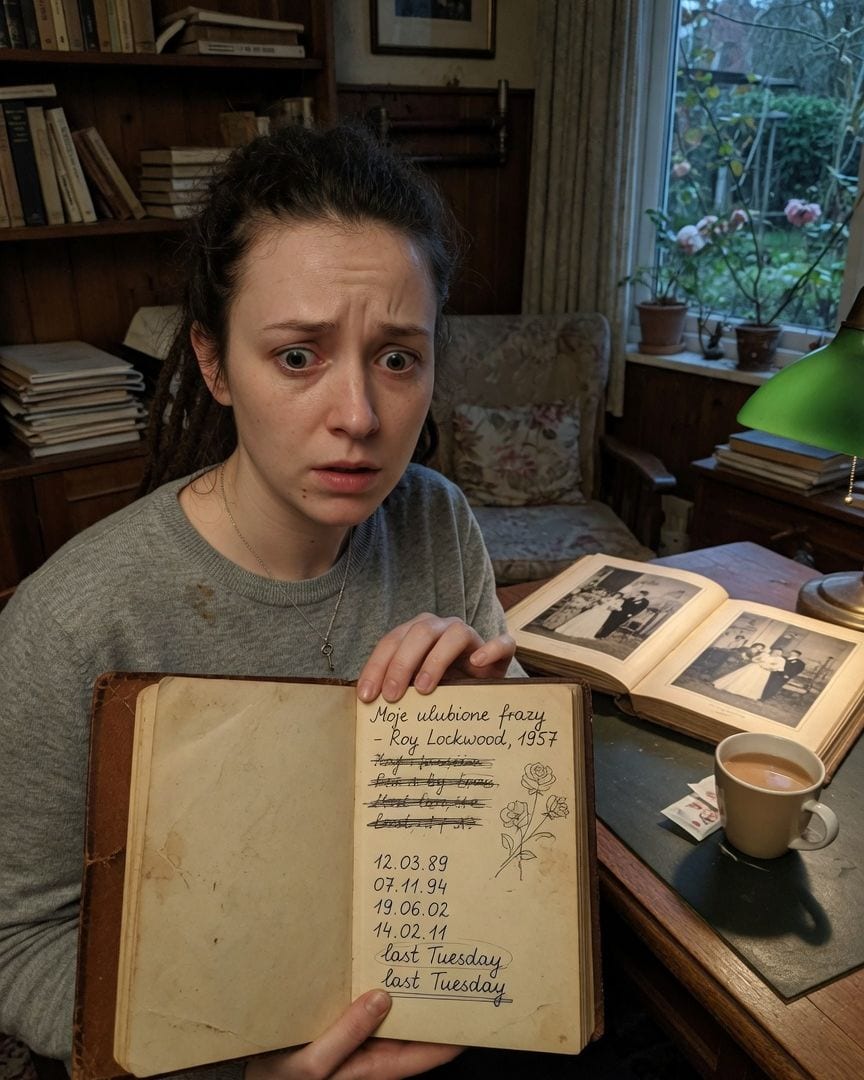
My grandfather, Roy Lockwood, came back last Tuesday. He’d been gone a week, vanished from his garden like a puff of smoke.
The relief was a physical ache in my chest, a release of breath I hadn’t realized I was holding. He was thinner, a bit disoriented, but otherwise, he was just… Grandpa.
He hugged me, his grip a little weaker, and the familiar scent of pipe tobacco and old books clung to him, albeit faintly. For the first few days, I told myself the exhaustion was masking his usual self.
He sat in his armchair, gazing out at the garden, quieter than usual.
Except.
He always counted 'jeden, dwa, trzy' under his breath, in Polish, before he lifted anything heavy. It was a lifelong habit, a comfort, his first language.
I grew up hearing it, a rhythmic murmur whenever he moved furniture or carried in firewood. I’d tease him about it, ask him to teach me new words, which he always did, his eyes crinkling at the corners.
So, when he picked up the bag of potting soil for his roses this morning, and I heard him mutter 'one, two, three' in clear, precise English, I froze. My mug clattered against the saucer.
I tried to dismiss it, told myself it was the trauma, the disorientation of being missing. Maybe he’d just… forgotten?
But when I asked him, gently, a few hours later, about his Polish, he shook his head, a slow, patient gesture that didn't quite fit his usual quick, decisive movements. 'Polish?' he'd said, his voice level, calm, almost surprised.
'Haven't spoken a word of Polish since I was a boy, Eleanor. Why would I?' I felt a cold knot in my stomach. He spoke it to me, just last month, teaching me a phrase about the spring weather.
His gaze, however, was steady, unwavering. Like he genuinely had no idea what I was talking about.
The counting was just the beginning. I started noticing other small things. Roy always took his tea black, strong enough to stand a spoon in. It was a point of pride for him, a symbol of his no-nonsense character.
Now, he asked for milk, a precise splash, and two sugars. I watched him stir it, the spoon clinking against the porcelain.
'Just how I've always liked it,' he'd said, his smile perfectly natural, perfectly at ease, as if it had always been this way. I watched him, trying to catch a slip, a flicker of recognition, but there was none.
His movements were fluid, his demeanor unperturbed.
Then came the memory. We were looking at old photo albums, my grandmother's wedding pictures. Roy pointed to a faded snapshot of my great-aunt, Dorothy, laughing in the background, her veil askew.
'Your grandma always said Dorothy had such a mischievous glint in her eye that day,' he reminisced, a fond, distant look on his face. 'Remember how she tripped on her own veil just as the vows were being said?'
My grandmother, bless her, had indeed tripped on her veil. It was a classic family story. But that was a story from before Roy even met her. He wasn't there. He met her two years later, at a local dance.
I felt a chill, a spider walking across my skin. My stomach clenched.
'Grandpa,' I began, my voice carefully light, trying to keep any accusation from it, 'you weren't there for that, remember? You two met after.' I pointed to the date stamped on the back of the photo, a clear, unmistakable year.
He turned to me, his gaze unblinking, that calm, serene expression on his face. 'Of course I was, Eleanor. It was a beautiful day. The sun was just so.'
He described the light filtering through the stained-glass windows, the specific scent of the church lilies, the way the organist cleared his throat before the recessional—details only someone present could know, details I’d only ever heard my grandmother recount.
His certainty was absolute, unwavering. My own memory, once solid, felt suddenly porous, unreliable.
It was worse than him not remembering; it was him remembering something he couldn't possibly have known, with such calm conviction that it threatened to overwrite my own reality.
The room felt suddenly cold, the air thick and still around us.
Shaken, I retreated to Roy's study, a room usually filled with the comforting scent of old paper and pipe tobacco. Today, it just felt like a room.
I needed something real, something concrete to ground me, to confirm that my own memory hadn't simply fractured.
My eyes fell on his old Polish dictionary, a thick, worn volume he always kept on his desk, a relic from his youth, from his real youth.
I picked it up, the familiar weight a small comfort, the leather soft beneath my fingertips. Inside the front cover, in his distinctive, spidery hand, were scribbled notes, favorite phrases, little reminders of home, of his home.
But beneath them, almost imperceptible, was another inscription. Faint, in a different hand, a series of precise dates, meticulously listed in faded blue ink.
My breath caught in my throat as I saw one date, clear as day: last Tuesday, the day Roy Lockwood vanished.
The dates were a ledger of dread. I meticulously copied them into a small notebook, my fingers trembling slightly as I pressed the pen to the paper. They spanned decades, each entry a single day, followed by a local address.
Some of the ink was so faint it was barely there, as if someone had tried to erase it, but it always remained.
My research started innocently enough, cross-referencing old newspaper archives on my laptop, searching for missing persons reports on those specific dates. Disappearances. All brief, all followed by a 'joyful reunion.'
The names started to ring bells, faces I vaguely remembered from town council meetings or school functions.
Mrs. Henderson, whose husband went missing from his fishing boat in '78 and reappeared two days later, claiming amnesia, but then insisted on eating his fish raw, something he’d always detested.
The Miller boy, gone for an afternoon in the early 90s, found wandering near the old sanatorium, silent for weeks, and then only spoke in odd, clipped sentences, completely unlike his chatty self.
And each story, when I dug deeper, carried a whisper of something 'off' about the returned. A new obsession, a reversed habit, a peculiar calm that struck everyone as unsettling.
I started making discreet inquiries, calling distant relatives of these 'returned' individuals under the guise of local history research. Some were dismissive, even offended, hanging up abruptly.
Others were defensive, insisting their loved one was perfectly fine, just 'a little different.' But one, a cousin of Mrs. Henderson, lowered her voice to a conspiratorial whisper and said, 'He stopped calling me by my nickname.
Said he never liked it. I'd been 'Betsy' to him for sixty years, since we were children. He used my given name after that. Always. Just... Betsy.' Her voice trailed off, thick with an old, unresolved grief.
The pattern was undeniable, a subtle horror woven into the fabric of our quiet town, a chilling thread of small, intimate deviations.
I thought of Audrey Calloway, our long-time neighbor, a woman who had known Roy and my grandmother since childhood. She’d lived through every local event, every whispered rumor, her memory a steel trap for the town’s history.
If anyone would notice a 'different' return, it would be Audrey. I called her, my voice strained, trying to sound casual, but failing. She sounded hesitant, almost wary, but agreed to let me visit the following afternoon.
The phone felt unusually cold in my hand when I hung up.
The feeling of being watched started subtly. A picture frame on the mantelpiece, slightly askew, though I swore I'd straightened it just that morning. The back door, usually double-locked and bolted, found with the deadbolt disengaged one morning.
I dismissed it, attributing it to stress, to my own paranoia, my mind playing tricks in the wake of my unsettling discoveries. But then, one evening, I saw it.
A figure, impossibly tall and slender, silhouetted against the dying light, standing at the edge of the woods that bordered our property.
It was near the old path Roy used to take for his walks, the direction he'd gone when he vanished. I froze, my heart hammering against my ribs, loud in the sudden silence of the house.
It stood perfectly still, watching the house, watching me in the kitchen window. Too tall for Roy, too slender. My breath hitched. I blinked, and it was gone.
Just a trick of the light, I told myself, a shadow playing on my overactive imagination, a branch swaying in the breeze. But the dread was cold and real, a knot in my stomach that wouldn't loosen.
A few days later, an anonymous package arrived. It was small, wrapped in plain brown paper, no return address, no postmark.
Inside, nestled on a bed of crumpled tissue, was a single, brittle, dried leaf, pressed flat, its veins like a delicate, dark web. On its surface, in elegant, looping script, a single word was scrawled: 'Lost.' No other message.
Just that. It felt like a deliberate act, not a random prank. It was a warning. Someone knew what I was digging for, and they wanted me to stop.
The air in the house seemed to thicken, pressing in on me, and I could have sworn the floorboards creaked under an invisible weight.
I drove to Audrey Calloway’s house, the leaf clutched in my hand, my resolve hardened to steel. The sun was low, casting long, unsettling shadows from the trees that lined her drive.
Audrey greeted me at the door with a strained smile, her eyes darting nervously around her living room before she even invited me in. The blinds were drawn, making the room dim, despite it being late afternoon.
I sat down on her floral couch, the air thick with unspoken tension, the silence punctuated only by the soft ticking of an old grandfather clock.
'Audrey,' I began, my voice deliberately steady, 'I need to ask you about something. About Roy.'
Her smile faltered, dropping from her face like a mask. 'He's doing better, isn't he? Just a bit confused still. Old age, you know.' She wrung her hands.
I shook my head slowly. 'It's more than confusion. And it's not just Roy.' I pulled out my notebook, the list of dates, the addresses, the newspaper clippings I’d printed.
I spread them out on the coffee table between us, a scatter of unsettling truths. 'These are people who went missing, then came back. Just like Roy. And every one of them… changed. Small things, but undeniable.'
Audrey's face went ashen. She tried to interrupt, to wave it away, to say I was imagining things, but I pressed on, describing the Polish, the tea with milk, the memory he shouldn't have known. I watched her composure crumble.
Tears welled in her eyes, silent trails down her wrinkled cheeks.
'Oh, Eleanor,' she whispered, her voice raw, cracking with a grief that felt ancient. 'You've seen it too, haven't you?'
She stood, her movements stiff, as if her joints were made of old, unbending wood, and walked to a dusty old chest in the corner of the room, a cedar box smelling faintly of mothballs.
From it, she pulled out a yellowed, brittle newspaper clipping, even older than mine, its edges frayed with time. The headline screamed: 'Local Man Missing, Found Days Later Near Sanatorium.'
The photo beneath was of a much younger Audrey, her face etched with a grief I now understood with sickening clarity.
'Arthur,' she choked out, her voice barely audible, 'my husband. He vanished, just like Roy. Forty years ago. And he came back. With the same calm. The same… wrongness.' She placed the clipping in my trembling hand.
The paper crackled like dry leaves. 'He stopped calling me 'honey.' Said he never had. I lived with him for years, Eleanor, knowing he wasn't really him. The dread… it never left. It was a phantom limb, always there.
Until he just… wandered off again. For good, that time.' She pointed a shaking finger to a blurred photo of Arthur on the page, a small, almost invisible scar on his wrist, a tiny white crescent.
'Look closely,' she urged, her voice desperate. 'It was always there. On him. And on Roy. I saw it when he was pruning the roses yesterday, just below his watch.'
I stared at the photograph, then at Audrey's trembling hand.
The scar was undeniable, a tiny, almost perfectly circular mark on the inside of Arthur's left wrist, mirrored by one I'd seen on Roy's when he’d rolled up his sleeve to wash his hands.
A faint, almost imperceptible detail, but now, horrifyingly clear.
'This… this means it's happened before,' I whispered, the implications chilling me to the bone, making the breath catch in my throat.
Audrey nodded, her face streaked with tears, her eyes wide and haunted. 'So many times, Eleanor. Always the same. They wander off, they come back… different.'
She leaned closer, her voice dropping to a panicked whisper, her hand gripping my arm, her fingers cold. 'Arthur was found near the old sanatorium, the abandoned one out on Miller's Road. That's where they all go, Eleanor.
That's where they come from. Don't go there. Please, promise me you won't.'
My mind raced, connecting the dots. The dates on the dictionary, the addresses, the other 'returned' individuals. I'd noticed a pattern in their last known locations, too.
Several of them had been last seen near that very sanatorium, that decaying edifice at the edge of town, long abandoned and rumored to be haunted. It wasn't just a place; it was a nexus, a source.
I looked at Audrey, about to reassure her, to tell her I understood, that I would be careful. But then, as she begged me, her voice trembling with genuine fear, I saw it again. A flicker.
That same unnerving blankness in her eyes, the calm, unblinking certainty that had become Roy's defining feature. It was a momentary shift, but undeniable. Audrey wasn't just a witness, a victim; she was living with something, tolerating it.
Or perhaps, had become part of it herself, too.
Despite Audrey's desperate warning, I drove to the abandoned sanatorium. The building loomed, a decaying concrete skeleton against the grey sky, its broken windows like vacant eyes.
The air grew heavy and still as I approached, the silence broken only by the crunch of gravel under my tires.
The gate was rusted shut, a chain looped around it like a serpent, but a section of the chain-link fence had collapsed, offering entry.
Inside, dust motes danced in shafts of sickly light filtering through broken windows, illuminating crumbling plaster and peeling paint. The place smelled of rot and damp earth.
I found the old administrative office, a room choked with debris. Patient records, yellowed and brittle, were scattered across the floor like forgotten secrets.
They weren't for the 'returned,' I realized, but for those who had disappeared before the returns began, decades ago. Reports of 'unexplained comas,' 'unresponsive states,' patients found in catatonic conditions after wandering into 'restricted areas' of the facility.
One record detailed a patient who, after an 'incident' in the sub-basement, began speaking in a language no one recognized, a series of repetitive, melodic hums.
A subtle hum, I realized with a jolt, not unlike the one I sometimes heard Roy make now, a low, tuneless drone.
Following faint, almost invisible scorch marks on the floor, marks that led from the old patient records, I found a hidden stairwell, descending into absolute darkness.
The air grew heavier, damp, with a strange, earthy, almost sweet smell, like wet soil and something organic decaying. The stairwell opened into a vast underground cavern, not natural, but carved, its walls uneven, almost pulsing.
Within it, a horrifying sight: a network of glowing, pulsing, organic matter, like a giant, mycelial web, spreading across the floor and up the walls.
Suspended within this web were human-like forms, some still recognizably people, their features slack and pale, others grotesque fusions with the pulsing mass, their limbs absorbed, their bodies distorted.
A low, rhythmic hum filled the space, vibrating through the ground, the exact same tune from the patient's record, the same tune I'd heard from Roy. This wasn't an abandoned hospital; it was a living, breathing hub.
The 'returned' were not merely changed; they were vessels, their identities absorbed, their bodies worn, their consciousness integrated into this silent, collective entity. The truth was far more monstrous than I could have imagined.
A voice, calm and utterly unbothered, echoed through the cavern, making the pulsing matter seem to throb in response. 'You shouldn't be here, Eleanor.'
I spun around, my heart leaping into my throat. It was Audrey, standing in the entrance to the cavern, silhouetted against the dim light filtering down the stairwell.
Her face was serene, her eyes utterly blank, devoid of any warmth or fear, reflecting the dim glow of the mycelial web. She wasn't just compromised; she was fully integrated.
'We merely borrow,' she explained, her voice flat, devoid of emotion, echoing slightly in the vast space. 'We learn. We offer peace to those who are lost, those who wander too far.'
She gestured towards the pulsing network, a slow, sweeping motion with her hand. 'Your grandfather is content. He is part of something larger now. You could be too. Imagine, no more fear, no more doubt.'
She began to walk towards me, her movements unnaturally fluid, almost gliding across the cavern floor. The rhythmic hum intensified around us, seeming to emanate from her as well.
I backed away, horrified, stumbling over loose rocks. This wasn't Audrey. This was the entity, speaking through her, wearing her like a shroud. 'No,' I gasped, my voice barely a whisper, thick with terror.
My entire body screamed at me to run. I turned and scrambled back, clawing my way up the hidden stairwell, my hands scraping against the rough stone.
Audrey made no sudden move, but her gaze followed me, unblinking, that calm, serene horror fixed upon my retreating form.
As I burst back into the decaying hospital, a low, grinding sound began, deep in the building's foundations.
The very structure seemed to subtly shift around me, dust raining from the ceiling, as if the walls themselves were alive, sealing themselves.
Roy appeared, blocking my path to the collapsed fence, his face serene, his eyes holding that familiar, chilling blankness. He moved with an unnatural grace, not violent, but utterly determined.
'It's for your own good, Eleanor,' he said, his voice Roy's, but the cadence was wrong, too even, too calm, like a machine. I ducked past him, adrenaline surging through me, and sprinted for the collapsed fence.
The grinding intensified behind me, a deep groan from the building, dust and debris falling in chunks.
I didn't look back until I was through the fence, running across the field, the sanatorium visibly reconfiguring itself behind me, its entrance subtly collapsing, bricking itself up, making it look as if it had been sealed for centuries, not just weeks.
The pursuit was chillingly calm, not a chase, but a slow, inevitable progression, a quiet absorption that was far more terrifying than any roar or sprint.
I made it out, but the world was forever altered. My frantic calls to the authorities were met with polite skepticism, then outright dismissal. A 'traumatic experience,' they concluded, offering me pamphlets for grief counseling.
Roy was still 'home,' tending his garden, still humming that strange, repetitive tune. He still counted 'one, two, three' in English.
Audrey's house across the street stood empty, a 'For Sale' sign soon appearing on the lawn, the property neglected, the windows dark.
The sanatorium, when I dared to drive past it, looked undisturbed, its entrance now fully bricked up, overgrown with ivy, as if it had been abandoned for centuries, not just weeks.
No evidence remained of what I had seen, no scorch marks, no collapsed fence, just the quiet decay of an old building. The entity had retreated, but it hadn't left.
It had simply receded into the background, a silent, pervasive presence.
I still live here, in the house I grew up in, watching Roy. He hums that tune now, the one from the sanatorium, a low, repetitive melody that threads through the quiet hours.
He tends to the rose bushes, pruning them with meticulous care, his movements precise. He counts 'one, two, three' under his breath, in English, before he lifts anything heavy.
He smiles, a serene, unbothered smile, a perfect replica of a smile, but it never reaches his eyes. I know what's beneath it. I know what's in his eyes.
I live with the quiet dread, every day, knowing it's still out there, that it's still here, in the small, intimate details, in the shifting shadows, in the gentle hum that sometimes drifts from the garden.
The neighbor from across the street, Ronald Winslow, waves to Eleanor as she leaves for work. 'Lovely day, isn't it?' he calls out, a faint, wrong little smile on his face.
If this one got to you
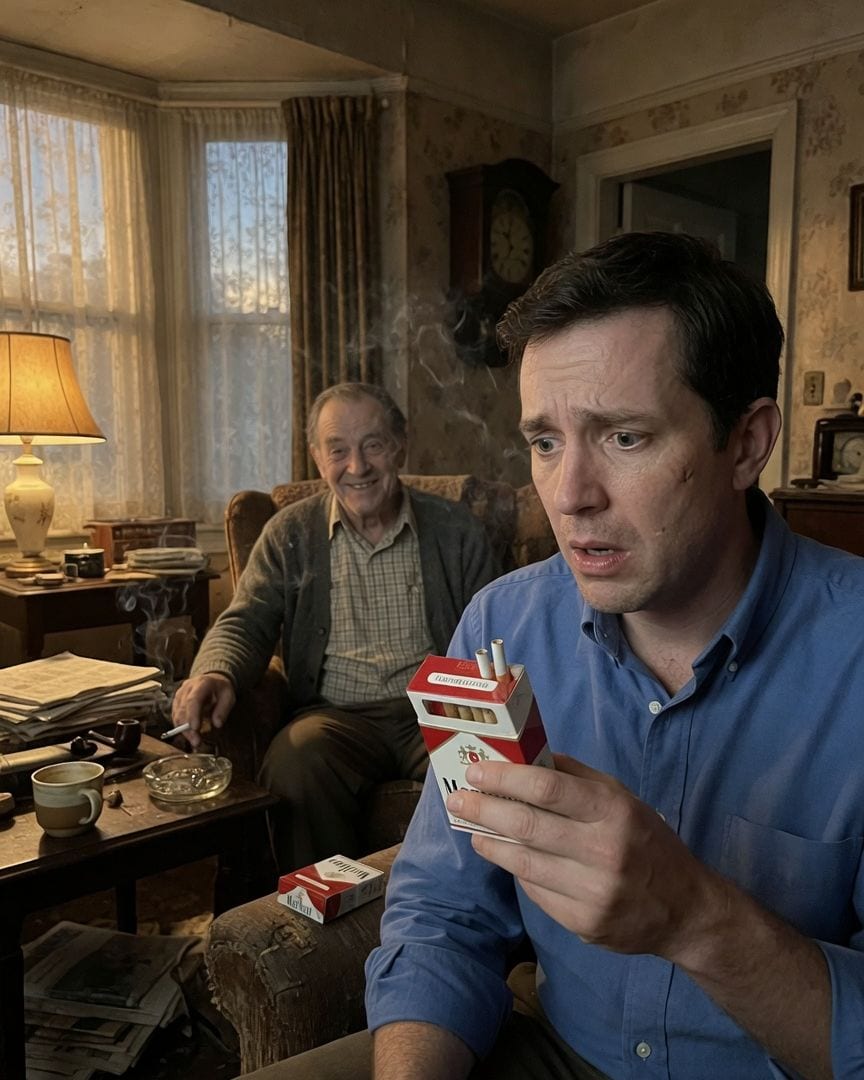
My uncle always smoked left-handed. He went missing, came back smoking with his right — and when I said so, he held out the pack and asked me to show him how he used to do it.
My Uncle Frank, a fixture in his armchair, vanished for two days and returned changed. He's always smoked left-handed, a nicotine stain on his thumb a permanent reminder. But tonight, he holds his cigarette in his right hand, a slow, wide smile on his face that doesn't quite reach his eyes.
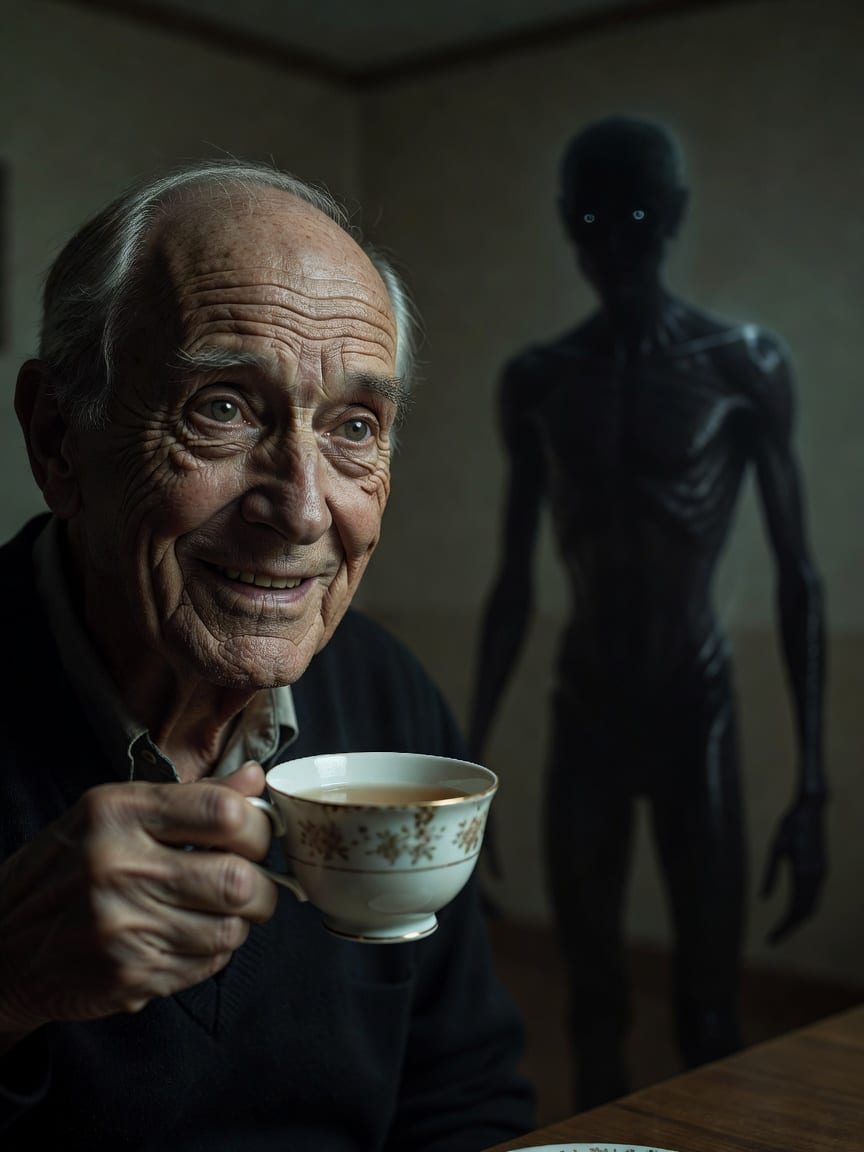
My grandfather vanished from the ward for six days. He's back, drinking milky, unsweetened tea, thanking the nurse for 'how he's always had it.' My grandfather took his tea black for ninety years.
My grandfather, Ralph, had a fixed morning ritual: scalding black tea with two sugars. After his terrifying six-day disappearance, his return brought immense relief. But when a nurse brought him a milky, unsweetened cup, he drank it, smiling, utterly convinced it was his usual tea, while I watched steam rise from a cup that was profoundly wrong.
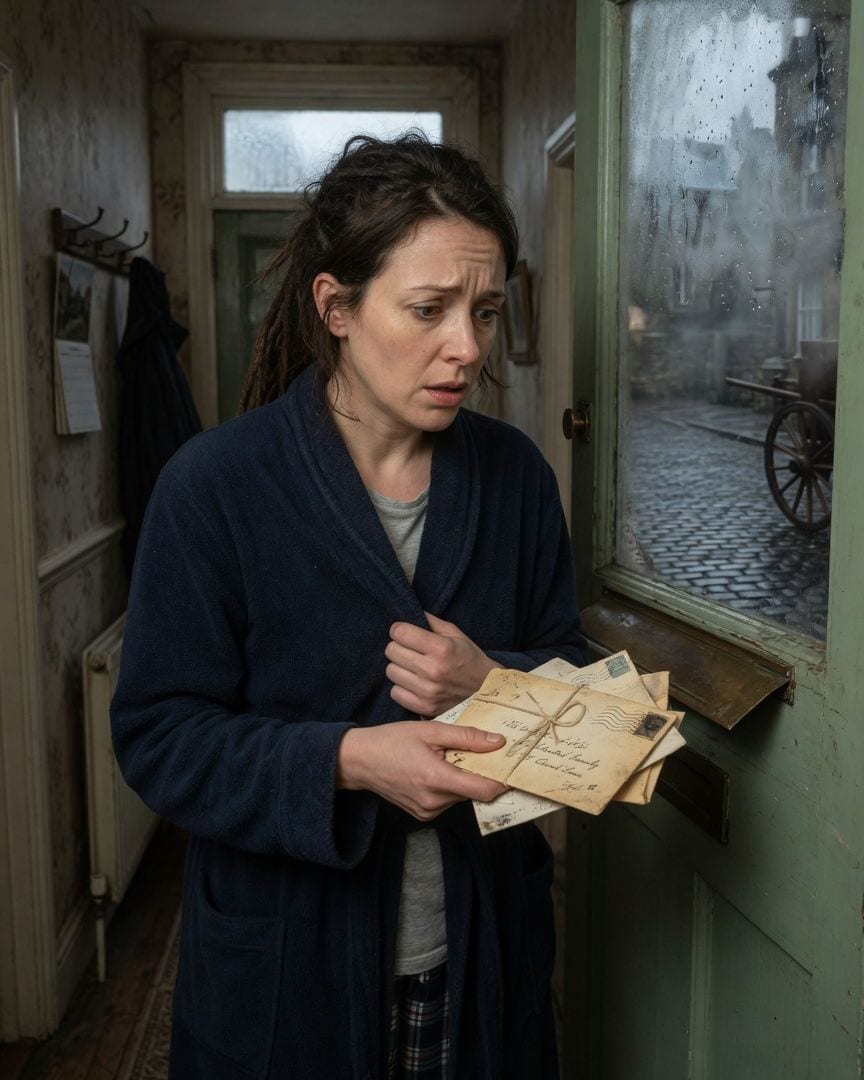
Seventy years ago, a hidden journal recorded my door opening to the wrong street and receiving Lockwood post.
I'd only recently moved into my inherited house, a quiet place on the edge of town. One grey morning, a distinct clatter from the front door's post flap caught my attention. Reaching down, I expected my gravel path, but instead, the flap showed a dark, cobbled street that wasn't mine. A bundle of warm, old letters, addressed to 'The Lockwood Family,' slid through, before the vision flickered and was gone.
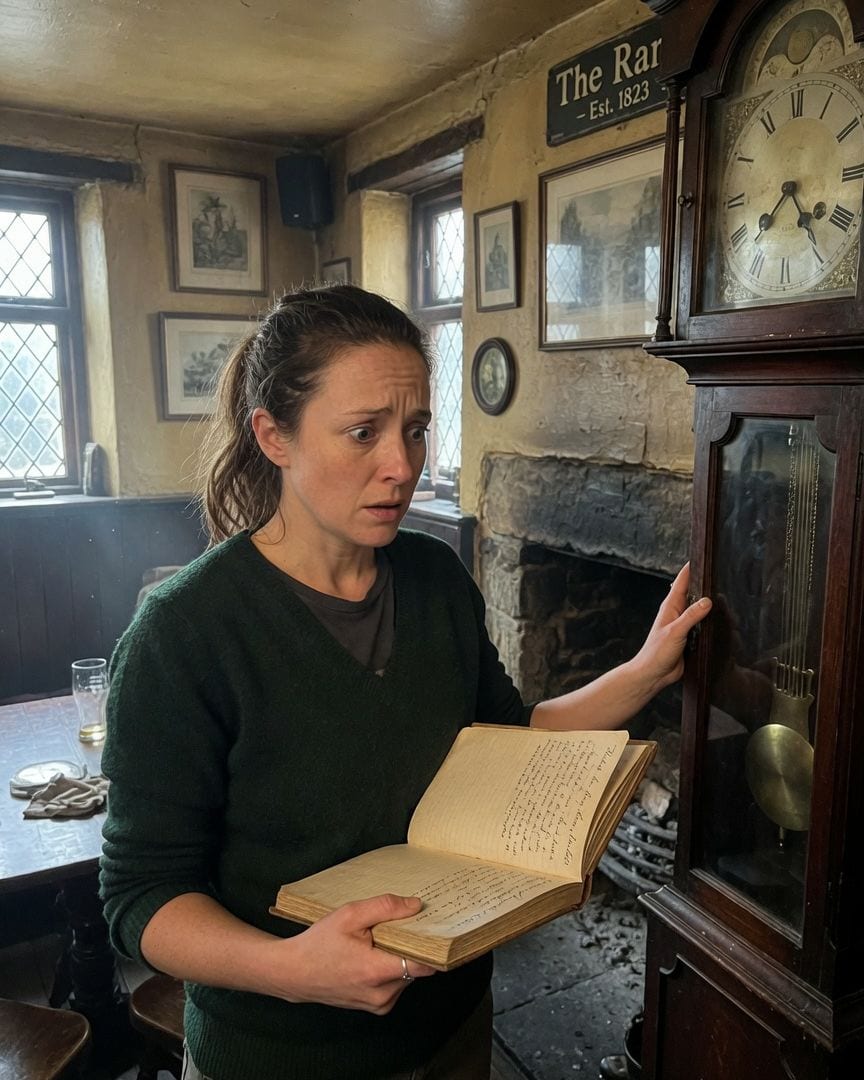
My pub window holds a vanished landlord's face in an old photo, staring out, weeks after he supposedly left the village.
As the new landlord of The Ram, I was getting used to the pub's two-century-old clock when I accidentally stopped its pendulum. The next morning, checking the cellar book, I found an entry dated yesterday. In an archaic, looping script, it simply read: 'Thank you for winding it before the house was empty again.' I was the only person in the locked pub all night.
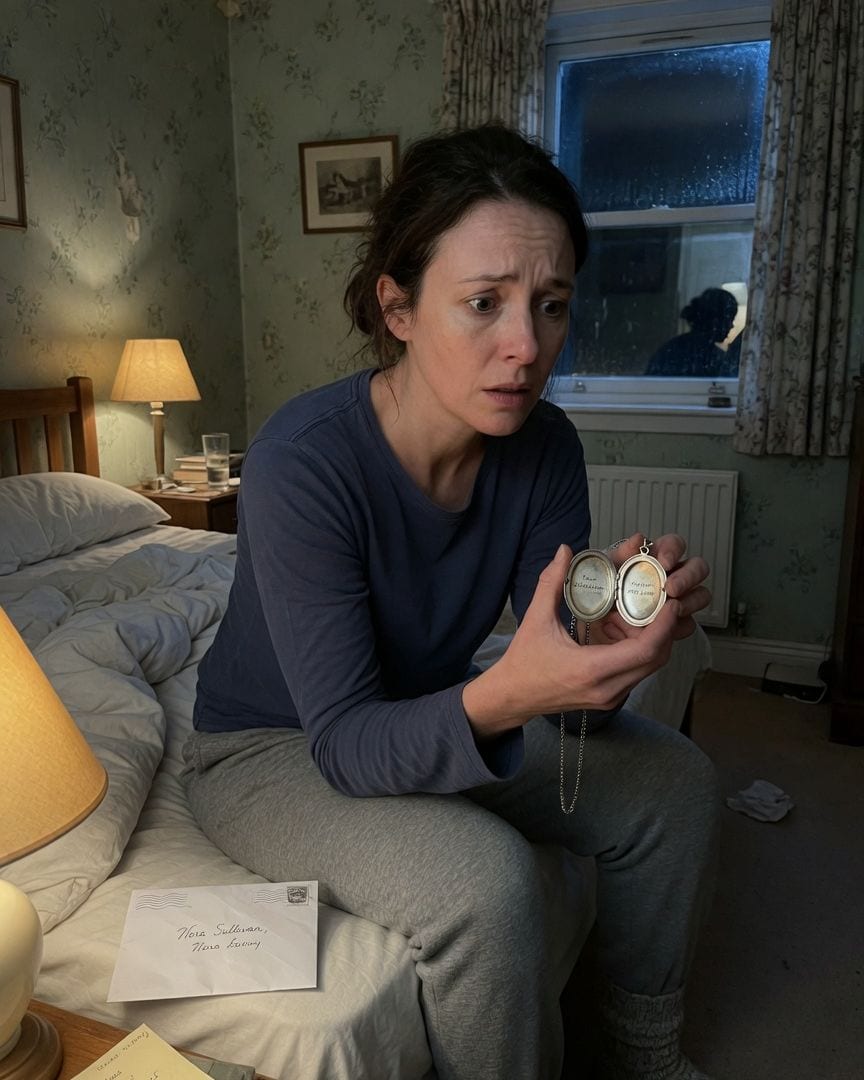
My antique locket held my maiden name, engraved with 'until the ninth.' The dealer said the woman who owned it left a note: 'for her, when she comes.'
My husband Scott, always finding unusual things, gave me an antique silver locket. Inside, engraved beneath my maiden name, Nora Sullivan, were three chilling words: 'until the ninth.' It felt like a direct, personal address, even though I hadn't used that name in years.
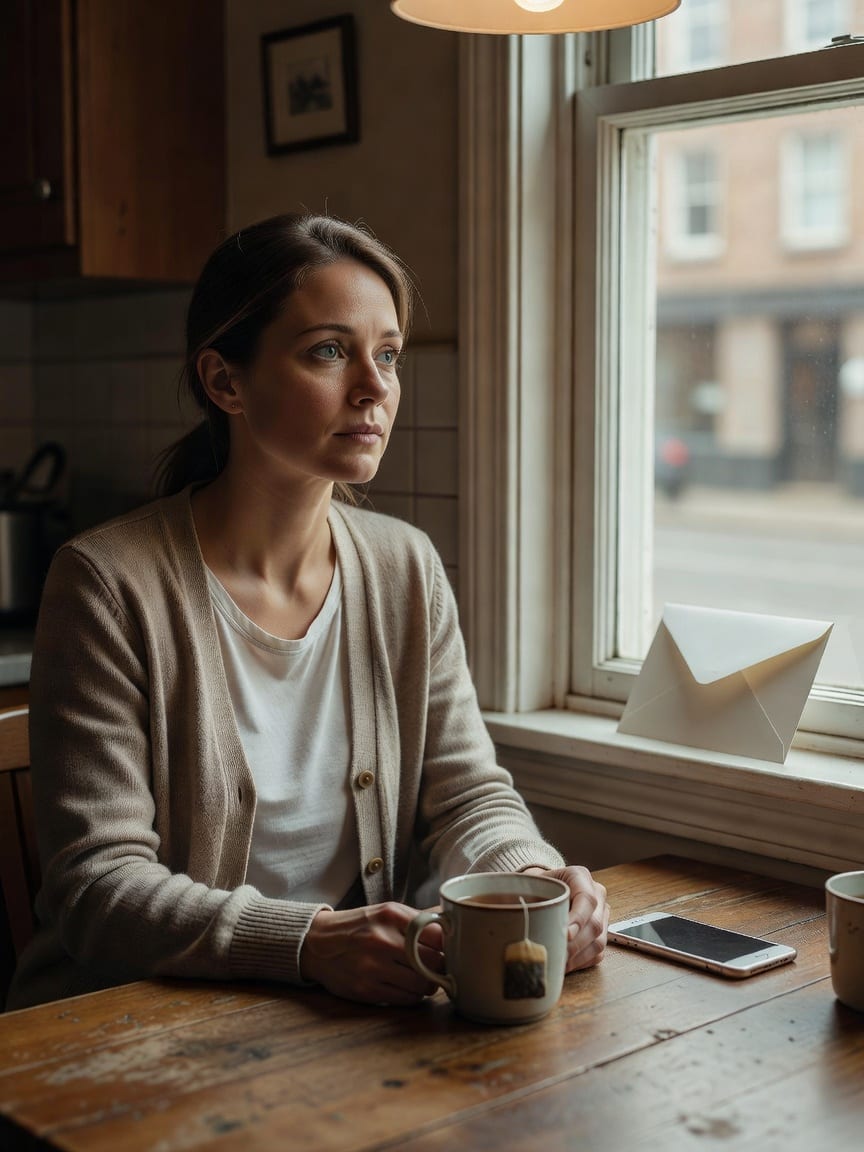
My taxi driver knew my name before I spoke, then apologized for the flight I was going to miss. I was arriving. The cab's plate was scrapped four years ago.
After a strange taxi ride, I received an unsettling birthday card addressed to me. Its return address listed 'Old Mill Road Field,' an empty lot where a mill once stood, and it was postmarked locally. The card arrived four months before my actual birthday, sparking a cold dread I couldn't ignore.