My grandfather's old milk ledger shows Account 30 reissued to the same house every ten years since 1930. Different names, same number. The last entry, unpaid, is dated this spring.
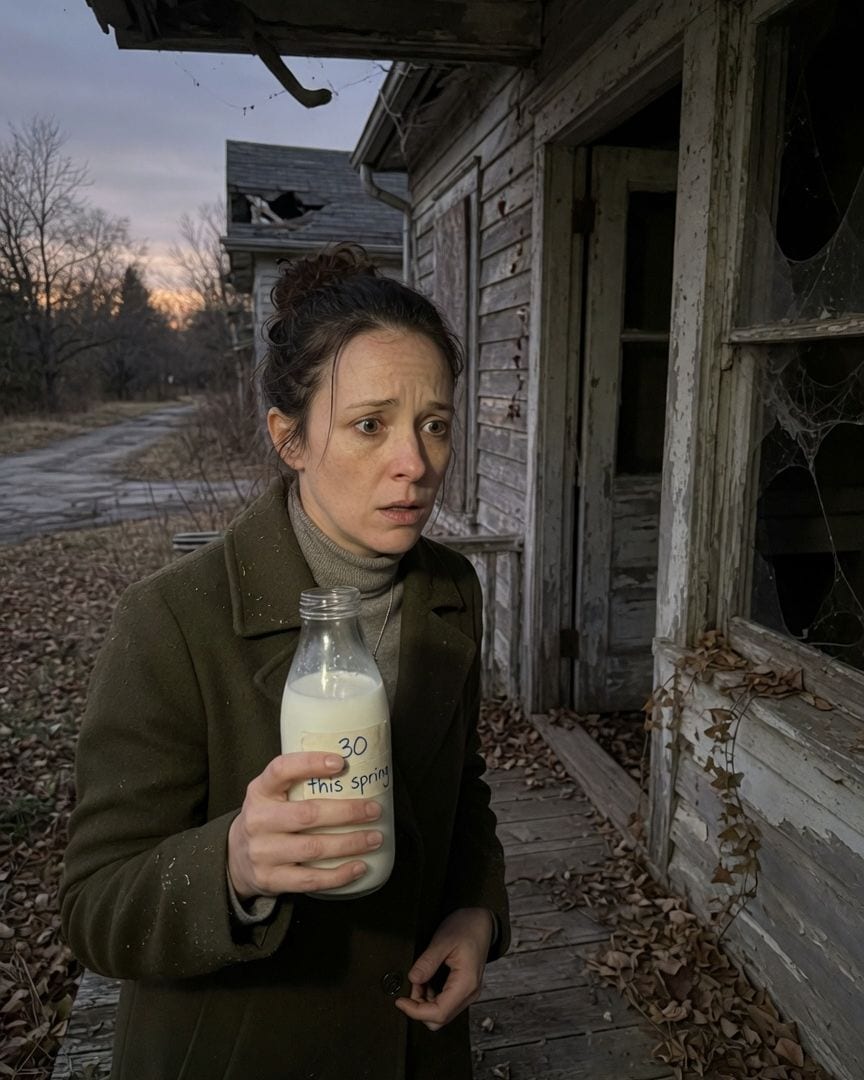
I remember the day I found it. Late autumn, the light already thin and grey by three o’clock. I was up in Howard’s dusty loft, sifting through boxes of what my mother called "useless sentimental junk" after he passed.
Most of it was exactly that: yellowed newspapers, rusty tools, old fishing lures. Then I found the ledger, tucked away under a pile of moth-eaten blankets. It was heavy, leather-bound, its cover worn smooth by decades of handling.
Howard had been a milkman his whole life, proud of his round. I’d seen him balance a pint on his head more times than I could count.
I’m an archivist at the local historical society, so the ledger appealed to my professional curiosity. I brushed off the dust and opened it, flipping past pages filled with neat, looping script. Names, addresses, payment dates. Most were routine.
Until Account 30. It was for the "end house on Foldyard Lane." The first entry was from 1930. Below the name, in Howard’s familiar hand, it read: "stopped taking milk, gone, keep the book open." Nothing unusual there. People moved.
But then I saw it again. And again. Every ten years, like clockwork: 1940, 1950, 1960. The name changed each time – a different family, a different signature – but the account number and the address remained the same.
And always, that exact phrase: "stopped taking milk, gone, keep the book open." It was a quirk, I decided, a local oddity.
Maybe Howard had been sentimental about that specific house, or it was an inside joke I wasn't privy to. But the pattern was undeniable. Right up to 2020.
Then, the final entry, scrawled in a bolder hand, less steady than the others. It was dated "this spring." And it just said: "unpaid." No 'stopped taking milk,' no 'gone.' Just that single, stark word. Unpaid.
The Foldyard Lane end house wasn’t far from where I lived. Just a fifteen-minute drive, past the old millpond and the last stretch of woods. That Tuesday, after work, the 'unpaid' entry gnawing at me, I drove out there.
The house was exactly as I remembered it from childhood, only worse. A crumbling, overgrown shell, nestled at the very end of the lane where the tarmac gave way to a dirt track.
Windows were boarded, thick cobwebs draped over the frames like tattered curtains. One corner of the roof had caved in, leaving a gaping wound to the sky. It looked utterly abandoned, clearly for decades. Decades.
I parked by the roadside and walked up the weed-choked path. The front door sagged on one hinge, the paint long peeled away. Rusting gutters hung loose. No one had lived here for a very long time.
I tried to rationalize the ledger entry again: Howard was old, maybe he’d been confused. Or it was a bad joke, a prank someone played on him. But my grandfather was meticulous, even in his later years.
The thought didn't sit right.
I stepped onto the warped, splintered porch, the wood groaning softly under my weight. Dust lay thick everywhere, a fine, grey blanket over dead leaves and the husks of insects. And then I saw it.
Nestled against the rotting sill of the front door, half-hidden by a curl of dry ivy. A single, pristine, old-fashioned glass milk bottle. It was sealed. The glass gleamed, almost impossibly clean against the decay.
A paper label, slightly damp at the edges but otherwise crisp, bore a crudely scratched ‘30’. Below that, in careful script, was a date: 'this spring.'
It was utterly out of place. A stark, impossible contradiction to the surrounding decay. The entire porch was a monument to neglect, yet here was this bottle, fresh, untouched. No other signs of recent habitation.
No footprints in the dust, no cleared path. Nothing. Just this one bottle. I reached down, my fingers brushing against the cold glass. It was real. I picked it up, feeling its solid weight. The cool, smooth surface.
The crisp label. I even rattled it gently; liquid sloshed inside.
My mind raced. I checked local tenancy records online right there on my phone, leaning against a rotting porch post. Nothing. The house was officially vacant, condemned even.
No records of anyone living here, let alone ordering milk, this year or any recent year.
I held the inexplicably fresh milk bottle, its label screaming 'this spring' against the backdrop of the long-dead house. My skin felt clammy.
A faint, almost imperceptible tremor ran through the glass in my hand, a subtle vibration that quickly faded.
I tried to convince myself it was just the wind, or my own nerves, but the bottle felt impossibly cold, colder than the late afternoon air. The slosh of the milk inside was too solid, too present.
As I turned to leave, my foot scuffed something on the ground. A glint of dull silver. It was a small, tarnished disc, no bigger than my thumbnail, half-buried in the dust. I bent down.
On its surface, almost entirely worn away, I could just make out the faint etching of a stylized ‘30’. It must have fallen from the bottle, somehow. I pocketed it, the cold metal a shock against my palm.
My mind reeled. The silence of the lane suddenly felt oppressive, heavy, as if the air itself was holding its breath.
Back at the historical society, the ledger sat open on my desk, a physical anchor for a growing unease. I needed to find a logical explanation.
I started meticulously cross-referencing the names from my grandfather's ledger with every local record I could access: census data, parish registers, old town council minutes.
The 'different names signing each time' for Account 30, the ones Howard had marked 'gone, keep the book open,' started to coalesce into a disturbing pattern. It wasn't random families moving in and out of a derelict house.
Many of the surnames reappeared, generation after generation, always linked to specific, long-standing local families. Not only that, but I noticed a disproportionate number of these families had held minor, administrative roles within the old parish council: clerks, treasurers, councilors.
It wasn't a series of tenants. It looked like a closed circle.
The more I dug, the less sense it made, and the more a cold certainty began to settle in my gut. I remembered Nina Porter, a retired clerk who’d worked for the parish council for decades.
She had a reputation for knowing everything about the town’s quiet history, the kind of woman who remembered whose grandmother knew whose great-aunt.
I made an appointment, hoping for anecdotal context, some local folklore that might explain away the ledger’s strangeness.
Nina, a sharp-eyed woman of seventy-eight with hair pulled back in a neat bun, greeted me with a friendly smile and a cup of lukewarm tea in her tiny, overstuffed cottage.
We chatted for a while about the historical society’s latest acquisitions, the price of local housing. Then I mentioned Foldyard Lane. Her smile faltered.
When I brought up 'Account 30' from Howard's ledger, she became visibly guarded, her hands tightening around her teacup.
"Oh, that old place," she said, her voice a little too light. "Just an old superstition, dearie. A folly of the past, you know. Howard was a bit of a character, wasn't he? Always had his little ways."
But her eyes, though, they betrayed a deeper knowledge, a flicker of something close to fear that she quickly tried to mask.
"But the entries are so regular, every ten years," I pressed, trying to keep my voice even. "And that phrase, 'gone, keep the book open.' It’s so specific."
Nina stiffened, her lips thinning to a pale line. She looked past me, out the window at her overgrown garden. "Some things," she said, her voice barely a whisper, "are best left alone, dearie. The old ways had their reasons."
She wouldn't meet my gaze, her hands now openly fidgeting with her teacup, clinking it against the saucer. The air in the small room seemed to thicken, suddenly heavy and cold.
I started to feel it, then. Not a specific thing, not a sound or a shadow, but a low-level hum of wrongness that permeated my everyday life.
At the historical society, I found my research materials subtly rearranged on my desk. Not enough to suggest a break-in, just... different. The ledger was open to Account 30, a page I was sure I’d closed.
I told myself I was tired, distracted. But it happened again.
At home, small things began to accumulate. My garden gate, which I meticulously closed every evening, was found ajar twice in a week.
A faint scuff mark appeared on my back door, near the lock, like someone had tried to force it.
One evening, after I’d worked late, I saw a dark sedan parked down my street for longer than usual, its engine off, its windows tinted.
The feeling of being watched, of being known, became palpable, a constant prickle on my skin.
Then, walking out of the historical society building one evening, I saw Nina Porter. She was standing across the street, silhouetted under a lamppost, her figure stiff and unmoving. She didn't wave or call out.
She just watched me get into my car. Her posture was unsettlingly still. I started the engine, pulling away, glancing in my rearview mirror. She was still there, a silent, unsettling sentinel, a dark figure against the streetlights.
The next day, a small, typewritten note was slipped under my office door, tucked halfway under the mat. My name wasn't on it. It simply read: "The milk is for the house. Not for you to drink."
The words, so mundane, yet so specific to the bottle I’d found, made my blood run cold. Someone knew. Not just about the bottle, but about my unspoken curiosity. Someone was watching me. And they were sending a warning.
I drove straight to Nina Porter’s cottage, the anonymous note clutched in my hand. Her door was slightly ajar. I pushed it open. She was sitting at her kitchen table, staring blankly at a cold teacup.
When she saw me, her composure finally broke. Her face, already pale, seemed to drain of what little colour it had left. She looked from my face to the note, then back again, her eyes wide with fear.
"I warned you," she whispered, her voice trembling. "I told you to leave it alone."
She stood slowly, her movements stiff, and guided me into a back room of her small cottage, a cramped space filled with shelves of old books and family photos.
From beneath a dusty, faded rug, she pulled out a locked wooden chest. Its iron clasps were rusted, but the wood itself felt solid, ancient.
"My family," Nina began, her voice barely audible, "we’ve always been… involved. Generations. It’s not a superstition, Eleanor. The Foldyard Lane house, it’s a place of… recurrence. Something resides there, cyclically. It needs… sustenance.
The milk was a simple offering, a way to keep it dormant, to ensure it returned quietly, on schedule."
She explained that the 'different names signing' in Howard's ledger were not random tenants, but generations of designated 'stewards' from specific local families, including her own, tasked by the old parish council to manage the 'account.'
She pulled a small, tarnished brass key from a chain around her neck, unlocking the chest with a soft click.
"The 'gone, keep the book open' meant it was in its resting phase," she continued, her eyes fixed on the chest, "but always expected back. It was a covenant, Eleanor. A pact, of sorts. To keep the peace."
She lifted out a smaller, leather-bound book, distinct from my grandfather's ledger, its cover blank. "The parish council," she said, her voice regaining a touch of its former sharpness, "they maintained a separate, highly confidential set of records.
Detailing the 'Stewardship' of Foldyard Lane. Hidden away, in a sealed section of the old municipal archives."
She looked at me then, her gaze weary, filled with a deep, crushing resignation. "My family was the last to hold the key to that section," she said, tapping the small book.
"But no one has gone near it since the late nineties. No one dared. Until now. That unpaid entry in your grandfather's book… that means the cycle is broken.
It means it's hungry, and there's no steward to keep it quiet." She pushed the small, blank-covered ledger into my hands. "It's all in here. Everything."
Armed with Nina's confession and the hidden key, I gained access to the sealed section of the old municipal archives the very next morning.
The air was thick with the smell of dust and forgotten paper, a dry, tomb-like chill permeating the vault. Light barely penetrated the gloom. I found the section Nina described, a heavy steel door marked 'Council Records - Restricted.'
The old brass key slid into the lock smoothly. With a heavy clang, it opened.
Inside, stacks of boxes lined shelves.
It took me nearly an hour to find it: a small, heavy ledger, bound in dark, unmarked leather, identical to the one Nina had given me, but titled simply 'Foldyard Lane Stewardship' on its spine in faint, gold lettering.
My hands trembled as I opened it.
Inside, pages were filled with neat, spidery script, detailing names and dates, each entry marked with a symbol I recognized instantly from the tarnished silver disc I’d found on the porch: a stylized '30.'
The surnames matched those from my grandfather's ledger, confirming Nina's story down to the last, terrifying detail. My town's history, the one I had devoted my career to preserving, now snapped into focus through a horrifying new lens.
It wasn’t just a few families. It was dozens, across generations.
I flipped through decades of entries, my breath catching in my throat with each page. Names I knew from gravestones, from street names, from old town hall plaques. All part of this. All 'stewards.'
And then, I reached the final page. The ink, surprisingly, was still startlingly fresh. It detailed the 'Spring 2024' entry. My breath hitched.
The name listed as the next designated 'Steward' was not a placeholder, not a distant relative, not a random individual.
It was my own. 'Vance, Eleanor.'
The name 'Vance, Eleanor' seared itself into my mind. It was a brand, a designation I never asked for, yet one that had been waiting for me for generations.
I found further documents tucked within the Foldyard Lane Stewardship ledger: ancient, hand-drawn diagrams of the Foldyard Lane house, so old the parchment cracked as I carefully unfolded them.
They showed a hidden chamber beneath the foundations, accessible only through a cleverly disguised well shaft in the kitchen.
The diagrams, dated centuries ago, depicted a complex, organic-looking root system or stone formation within this chamber, with conduits leading to the surface, labeled explicitly as 'nourishment channels.'
The milk wasn't just an offering; it was a basic nutrient, funneled directly to this 'core.' The term 'sustenance' from Nina now echoed in my head, stripped of its euphemism.
The 'unpaid' entry in my grandfather's ledger, and the 'Steward: Vance, Eleanor' in the council's, now made horrific, undeniable sense. The previous steward had failed, or perhaps died, leaving the entity without its designated caretaker.
And the entity, now unmanaged and potentially starving, had called for a new steward. Me.
My family, the Vance family, had been quietly groomed for this role for generations, unknown to us, or perhaps, unknown to me. And now, it was my turn.
The artifact that couldn’t exist, this ancient, detailed blueprint of a hidden, biological mechanism within a seemingly ordinary house, was undeniably real. Its details were shockingly precise, still relevant after all this time.
Every question, every impossible detail, now clicked into place, forming a terrifyingly coherent whole. The dread was no longer an unexplained anomaly; it was a terrifying, personal inheritance.
Driven by a horrifying sense of inevitability, a desperate need to see it for myself, I returned to the Foldyard Lane house. The late afternoon sun cast long, skeletal shadows across the overgrown yard. The air already felt heavy, charged.
Using the instructions from the ancient diagram, I found the cleverly concealed well shaft in the derelict kitchen floor. It was covered by a thick slab of wood, long since disguised by layers of dirt and fallen plaster.
I pried it open with a rusty crowbar I found in the shed.
A damp, earthy scent rose from the black opening, a smell like wet soil and something else, something metallic and faintly sweet. I lowered myself into the darkness, a flashlight beam dancing ahead of me.
At the bottom, a hidden chamber opened, wider than I expected. It wasn’t a monster’s lair, not in the way I’d imagined, but a cool, damp space dominated by a massive, pulsing, root-like formation.
A network of fibrous growths, thick as my arm in places, spread across the floor and up the walls, seeming to throb with a slow, rhythmic beat, like a giant, subterranean heart.
The pristine milk bottle I found earlier, the one dated 'this spring,' was nestled in a small indentation at the base of the roots. It was half-empty, its contents slowly wicking into the dark, thirsty mass.
The mechanism was working, but clearly not enough. As I watched, a low, resonant hum emanated from the roots, growing in intensity, vibrating through the stone floor beneath my feet. I could feel it in my teeth, a bone-deep thrum.
A fine mist, smelling faintly of ozone and something sickly sweet, began to rise from the pulsing core, swirling in the beam of my flashlight.
The 'unpaid' entry wasn't just about milk; it was about the failure of a steward to maintain the delicate balance. The entity was stirring, demanding more than just milk now.
As the thrumming intensified, a faint, metallic clicking sound echoed from deep within the roots, like something slowly, deliberately, awakening. The air grew colder, heavy with its silent expectation.
I scrambled out of the chamber, my hands scraped raw, sealing the well shaft behind me with what felt like desperate finality. I never reported what I found. How could I?
The Foldyard Lane house remained derelict, a crumbling testament to abandonment, but I knew its secret pulse continued beneath the rotting floorboards, a quiet, insistent rhythm unheard by anyone else.
The old municipal archives were quietly re-sealed by an unknown authority a few weeks later, the 'Stewardship' ledger presumably remaining within. Nina Porter disappeared from town a few weeks after that, leaving no forwarding address.
The knowledge I carried was a heavy, invisible burden, a chilling understanding of the quiet, ancient mechanisms that underpin my ordinary world.
Life resumed its normal pace, a flimsy veneer over a terrifying truth. I continued my work at the historical society, meticulously cataloging the mundane, but my focus was often elsewhere.
I found myself subconsciously tracking the calendar, counting out the years, anticipating the next 'tenth year.' The memory of the pulsing roots, the metallic clicking, never truly faded.
I never returned to Foldyard Lane, but I never stopped thinking about it either. Sometimes, I find myself leaving an extra pint on my own doorstep, just in case.
If this one got to you
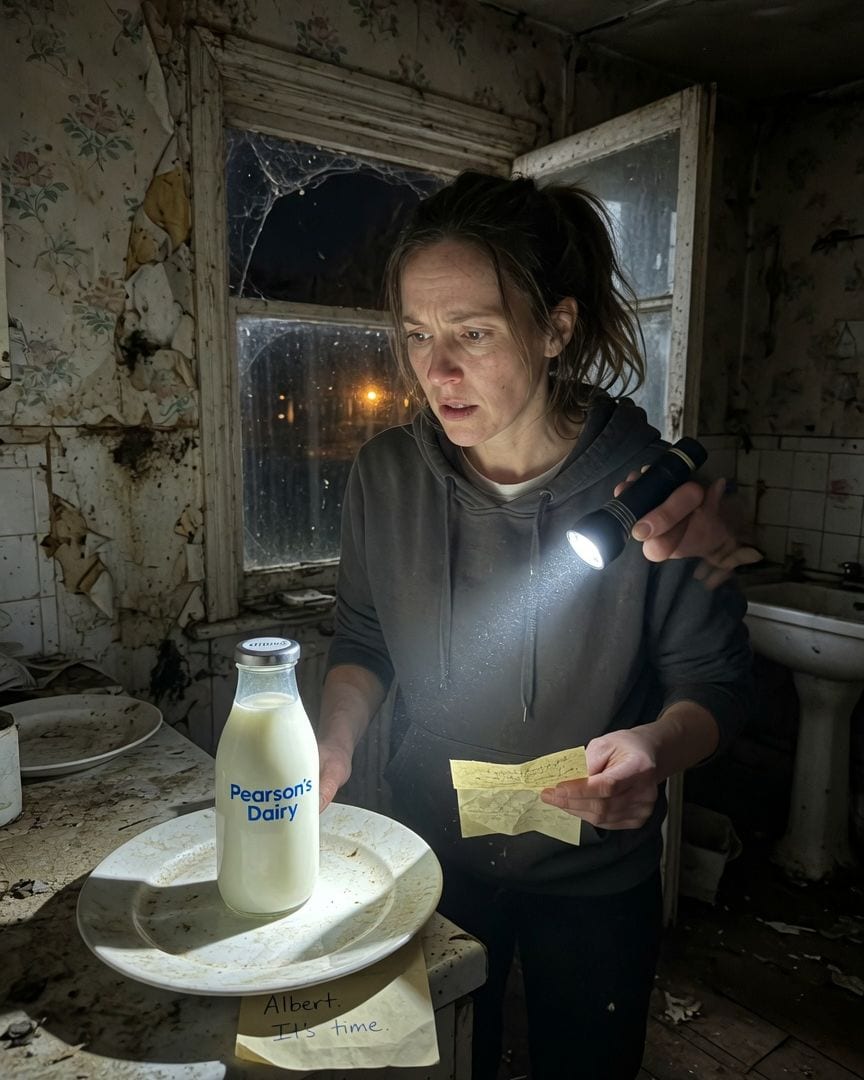
My milk float wakes me at 4:10 AM, delivering to the empty house three doors down. Pearson's Dairy closed in 1988.
I moved to Oakhaven for quiet, but every morning a vintage milk float delivers to the empty house three doors down. Locals say the house has been vacant for years. Yet, a fresh bottle, bearing today's date and the label of Pearson's Dairy—a company officially closed since 1988—appears daily on its porch.
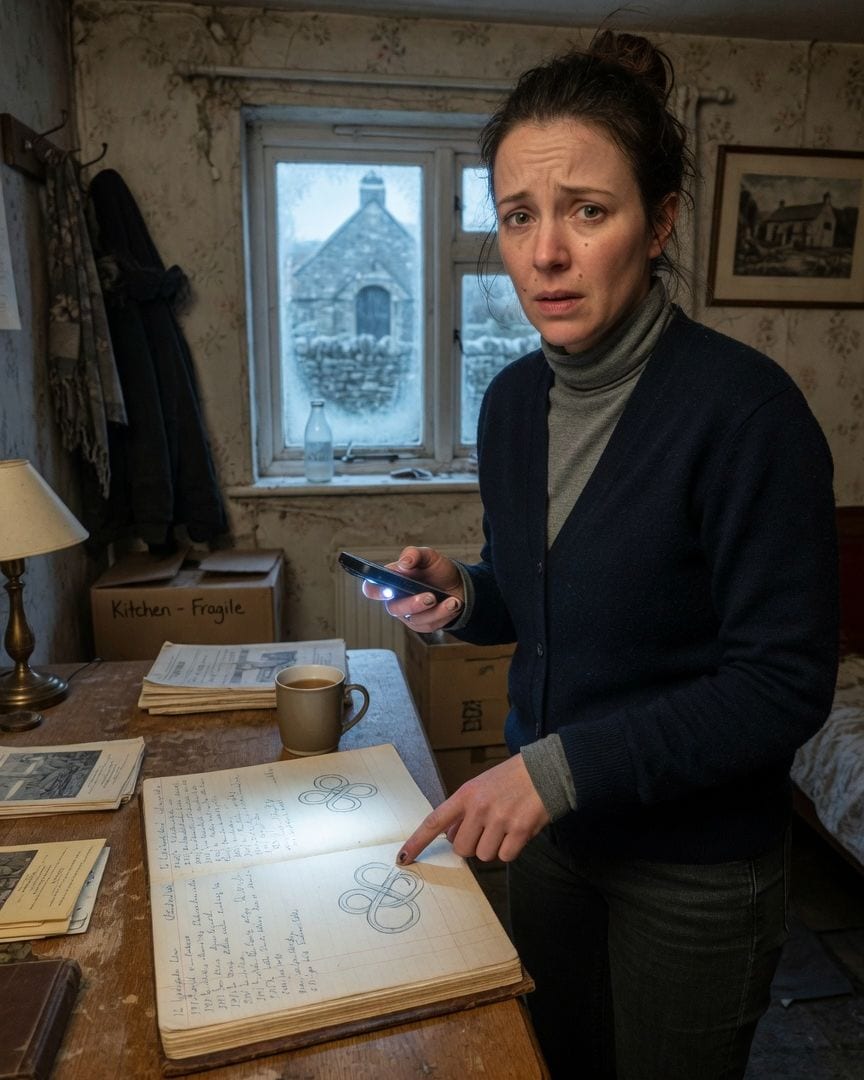
Milk appears daily by my lychgate. The dairy closed in '79. My address is handwritten into their old delivery book, starting the day we moved in.
Moving to Blackwood Creek, I loved the quaint charm, especially the unexpected morning milk delivery to my lychgate. But when I mentioned it to Eleanor at the village shop, her smile froze. She told me Willow Creek Dairy closed decades ago, in '79.
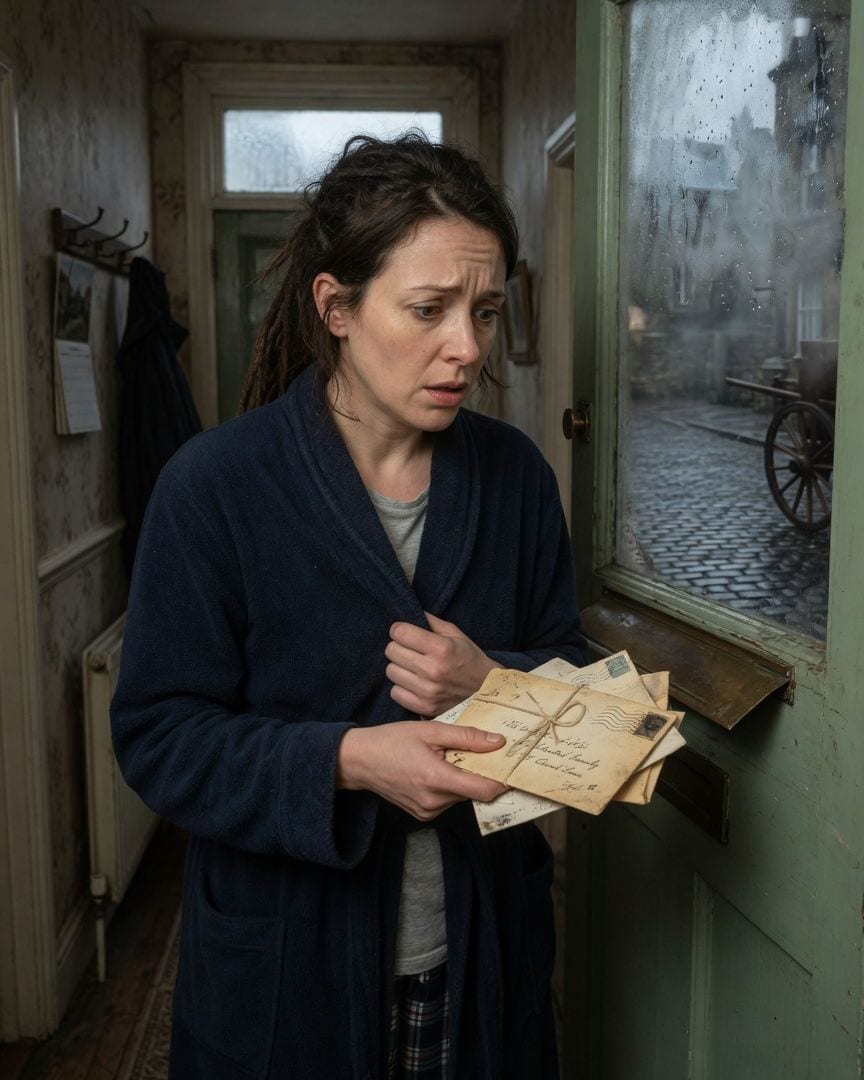
Seventy years ago, a hidden journal recorded my door opening to the wrong street and receiving Lockwood post.
I'd only recently moved into my inherited house, a quiet place on the edge of town. One grey morning, a distinct clatter from the front door's post flap caught my attention. Reaching down, I expected my gravel path, but instead, the flap showed a dark, cobbled street that wasn't mine. A bundle of warm, old letters, addressed to 'The Lockwood Family,' slid through, before the vision flickered and was gone.
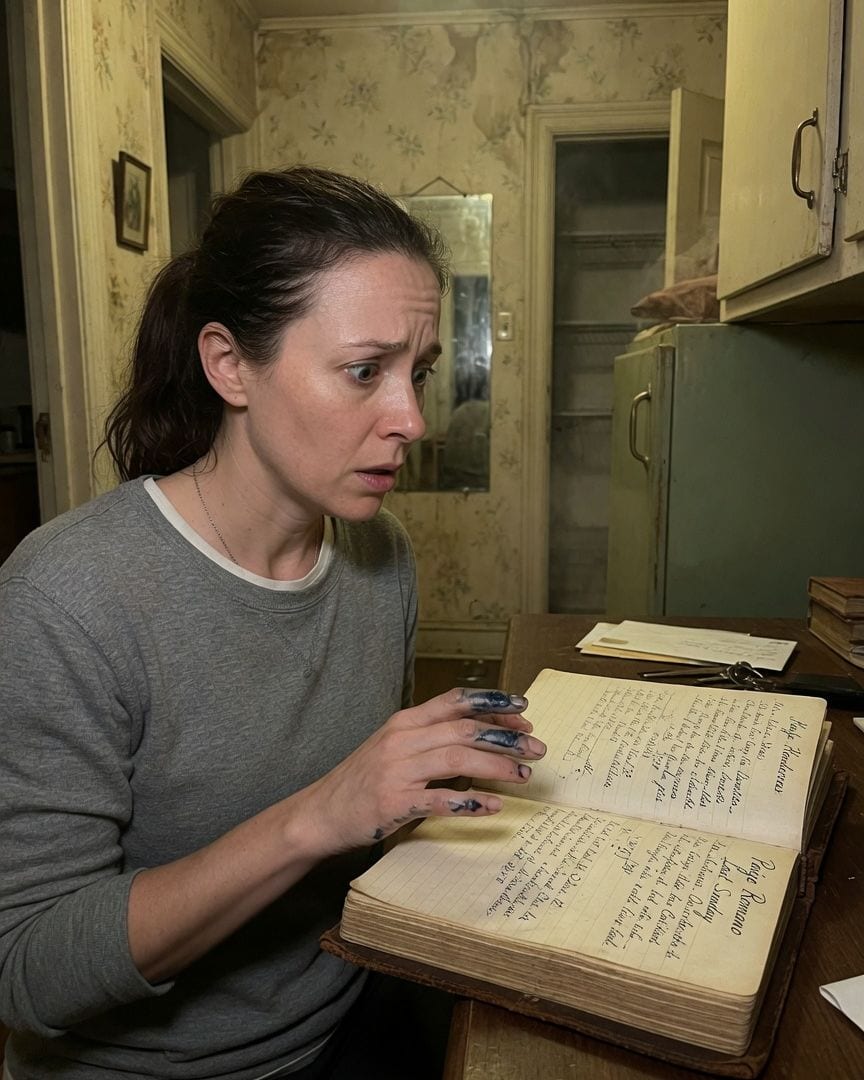
My visitors' book records guests who arrive in the future. Last Sunday, my own name appeared at the bottom, the ink still wet.
I bought an old house last March, complete with a dusty, leather-bound visitors' book. It seemed a charming relic, until I found new entries appearing, dated months into the future, the ink still wet. Then, my own name, Paige Romano, appeared, dated 'Last Sunday,' with a bead of ink shimmering at the 'R'.
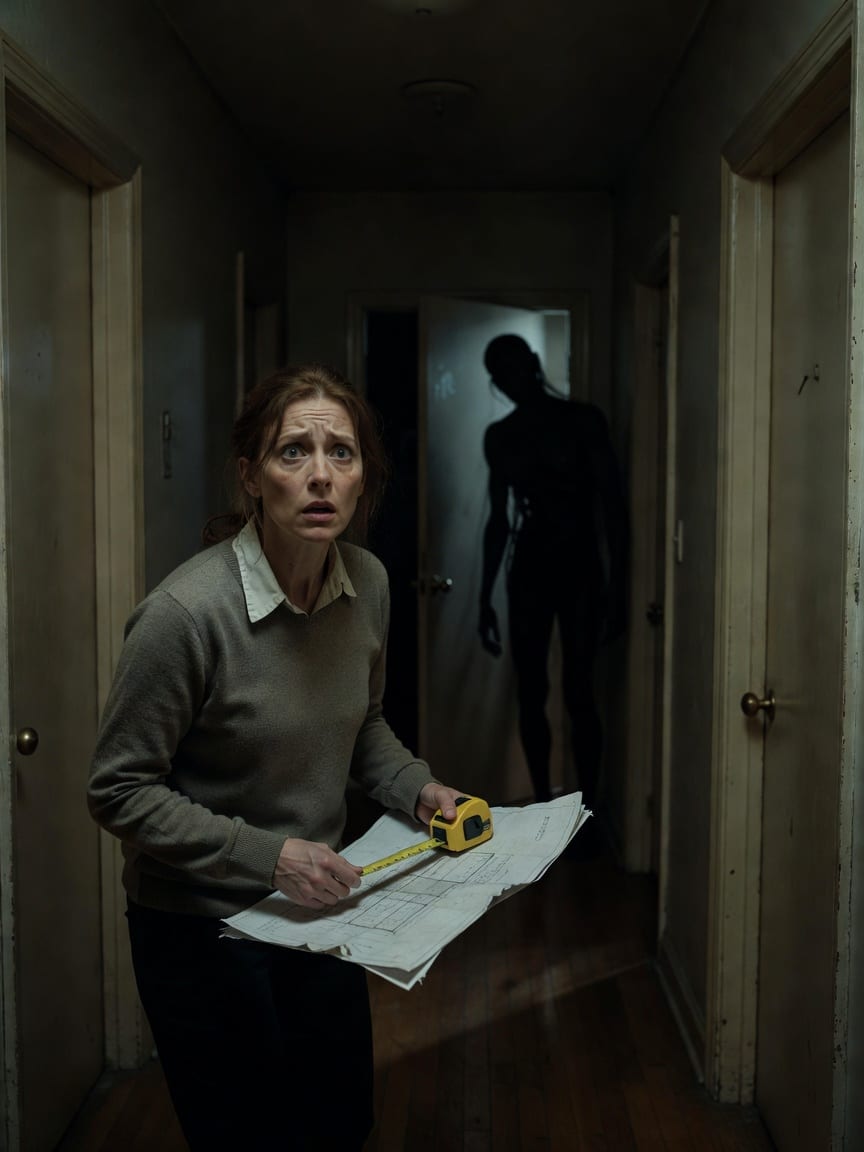
My front door has a dented gate and a dead hydrangea. I walked past it six times, trying to reach the corner shop just a hundred yards away. The pavement kept bringing me back to my own porch, and the shop's light never moved.
My morning started like any other, a quick walk to the corner shop from my home at Number 14, Elm Terrace. But after walking what felt like two minutes, I found myself back at my own front door, the shop no closer. I tried six times, faster and slower, but my street kept compressing, refusing to let me leave.
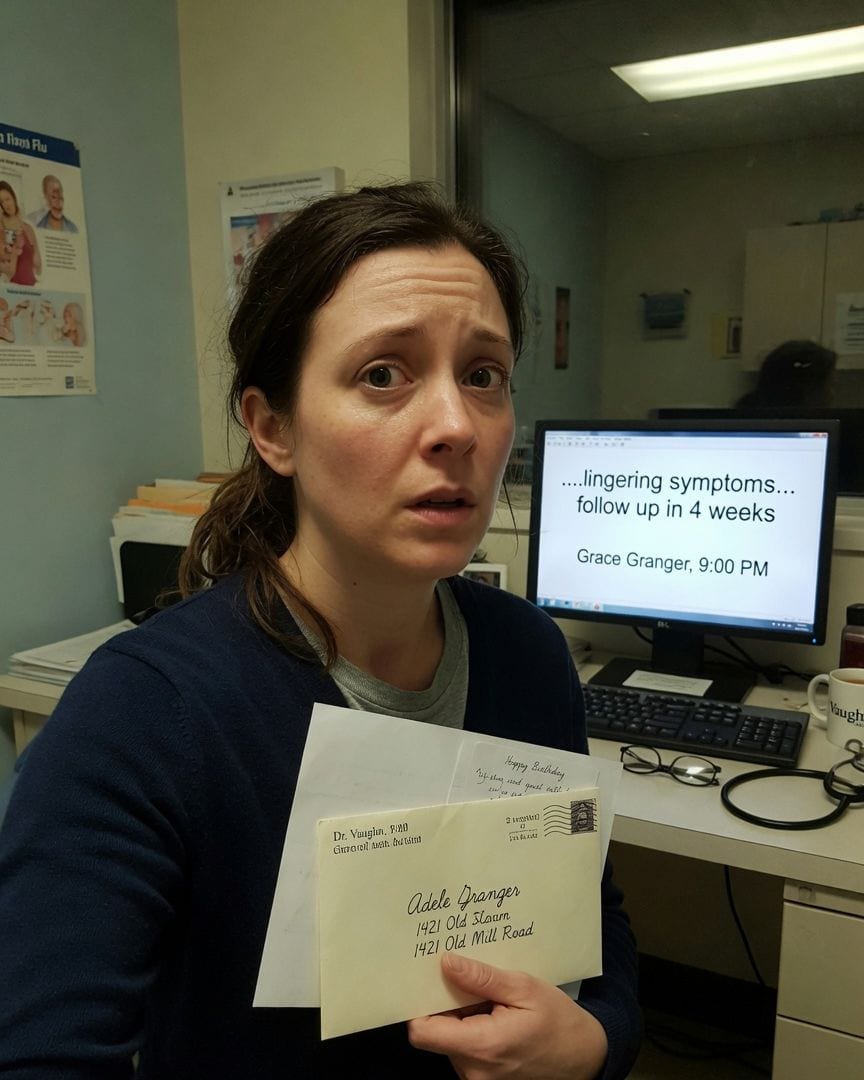
Mid-appointment about my cough, my doctor told me to call my estranged sister tonight — a sister I'd never mentioned to him. The note on his screen ended with her name and a time.
My doctor dismissed my cough as a lingering virus, but then he said something impossible: "You should call your sister tonight." I hadn't spoken to Grace in years, and I'd never mentioned her to him. When I saw her name on his screen with a specific time, a cold dread began to claw at me.