My grey coat stood at my neighbor's door at 11:52am, taking in a package. I was in Lisbon that entire week.
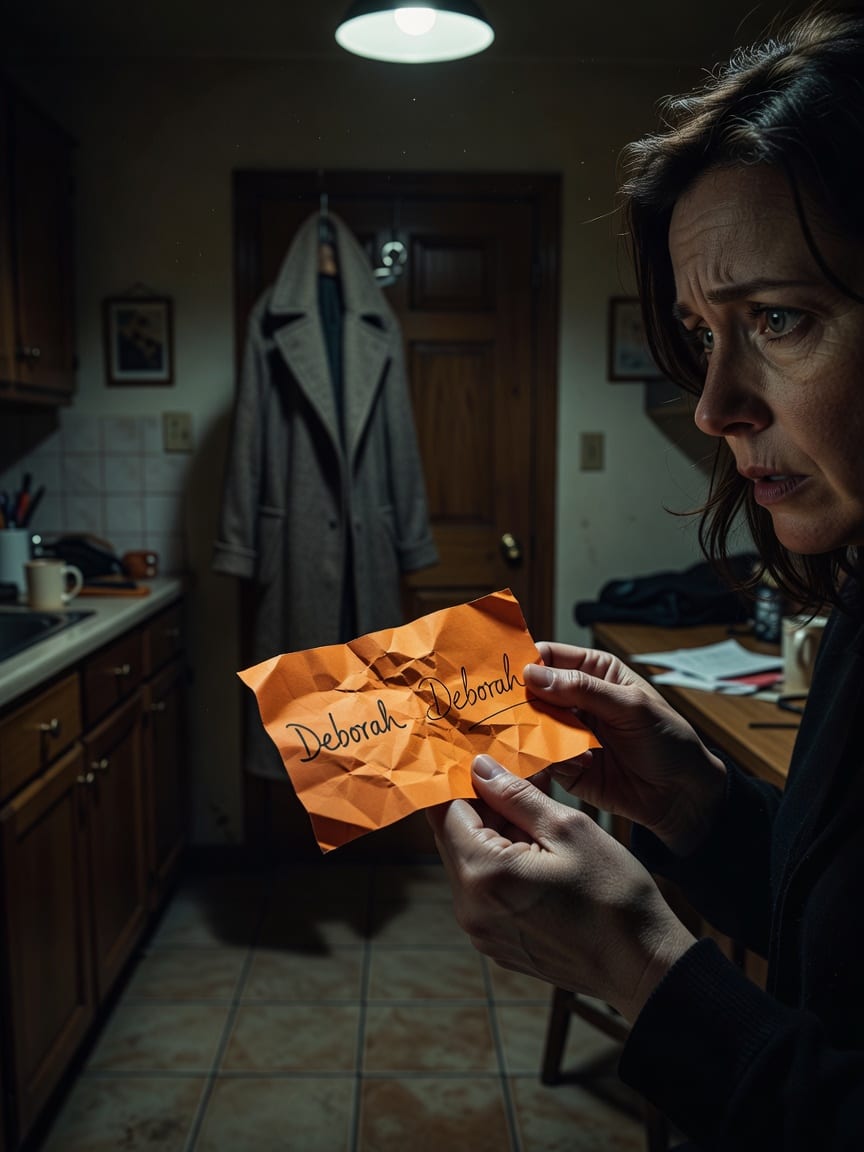
I stood in my kitchen, the small, orange delivery card a stark square in my hand. Linda Patterson, my neighbor, had pressed it on me just minutes ago, her face flushed with thanks. "So glad you were home, Deb.
Saved me a trip to the post office!" she’d chirped, already turning to water her hydrangeas. Saved her. But not me.
My eyes snagged on the date: May 14th, 11:52 AM. And there, below the parcel details, was my signature. My own name, in my own hand, unmistakable.
The familiar loop of the 'D', the sharp angle on the 'R', the small, confident flick at the end. Except on May 14th, at 11:52 AM, I was in Lisbon, Portugal, sipping espresso by the Tagus River.
My passport, with its fresh stamps, was still tucked in my carry-on. Museum tickets, too. The world around me felt suddenly, subtly, off-kilter, like a familiar tune played a quarter-tone flat.
Linda had even mentioned the grey coat. "You looked so serious, Deb, in that grey coat," she’d said. The grey coat I owned.
The one hanging in my hall closet, right behind the door, precisely where I'd left it when I flew out. It hadn't been packed. It hadn't been worn. A cold knot started to form in my stomach.
My first impulse was to find a mundane explanation. A mistake. A mix-up. I called the courier company, my voice tighter than I wanted it to be. Carl Ford, the driver, sounded tired but polite.
He confirmed his handheld device logged the signature at Linda’s address, 11:52 AM, May 14th. "I remember it clear as day, ma'am," he’d insisted. "Lady in a grey coat, brown hair like yours. Signed right here."
He’d even described the way ‘I’ held the stylus. The digital record, emailed to me within minutes, was identical to the physical card. My signature.
I checked my bank statements: a coffee in a small Alfama cafe at 9:03 AM GMT, a taxi to Lisbon Airport at 1:45 PM GMT for my flight home.
My phone’s location history, usually a mess of blue dots and lines, showed a solid, unbroken path from Lisbon Airport to my hotel, then later to the departure gate. No jumps. No gaps. The records were clear.
My neighbor was clear. The courier was clear. They all insisted on a truth that I knew was impossible.
I walked to my hall closet, my steps heavy on the old floorboards. The grey coat hung there, still. Its wool felt cool under my fingers. It smelled faintly of lavender, from the sachet I kept in the pocket. Untouched.
The dread, a cold knot, tightened with each confirmation of the impossible. A low hum seemed to fill the room, a vibration that wasn't there a moment ago, making the ceramic figures on the mantelpiece subtly shiver.
A week later, a library overdue notice arrived in the mail. It was for a book on local history, "Elmwood's Forgotten Founders," a book I had never seen, never checked out.
It was from the Elmwood branch—a town thirty miles away I hadn't visited in years. The due date was May 16th. And there, on the digital check-out slip printed at the bottom, was my name, signed.
The small, familiar loops and flourishes of my signature were undeniable, exactly as they appeared on the courier card.
I stared at the address of the branch, the small, green logo of the library, knowing I was visiting my sister in Vermont that entire weekend, miles from Elmwood, miles from Lisbon. This wasn't a mistake. This was a pattern.
Propelled by a chilling sense of purpose, I sought out a handwriting expert. Dr. Philip Whitaker was a precise man with silver-rimmed glasses, his office filled with calligraphic charts and magnifying lamps.
He examined the parcel card and the library slip under a bright halogen light, comparing them to several samples of my actual signature I’d provided.
He worked in silence for a long time, his brow furrowed, then finally pushed back from his desk.
"These are unequivocally your signatures, Ms. Radcliffe," he stated, his voice quiet but firm. "The pressure, the slant, the unique flourishes – they are all consistent with your known hand. Statistically, it's a near-perfect match."
He tried to offer explanations: a forgotten moment, a subconscious action, a deep-seated sleepwalking habit.
But I calmly countered each one with the unassailable facts of my alibis – my bank records, my passport stamps, my phone’s location data, Linda’s eyewitness account.
Dr. Whitaker, visibly unnerved, eventually conceded, "It’s… baffling, truly. If your alibis are as solid as you say, then what you have here is… an impossibility."
The air in his office, usually crisp with the scent of paper and ink, suddenly felt thick, heavy with unspoken questions.
I wasn’t looking for an explanation anymore. I was looking for more impossibilities. I began searching for other anomalies.
I found a parking ticket issued in a neighboring town, Northwood, on a Tuesday afternoon I was demonstrably at a conference in the city, an event verifiable by a digital badge scan and multiple colleagues.
The ticket, issued for an expired meter, had my signature on the back, acknowledging receipt. Then, a small donation recorded at a local charity, “Hearts for Hounds,” a charity I’d never heard of.
The donation slip bore my signature, dated a Saturday I was home with a terrible flu, confirmed by my doctor’s visit record.
Each new impossible record was like a new thread, pulling me deeper into a web of uncanny wrongness. The pattern across dates and names was forming: small, insignificant events, but undeniably tied to me.
It wasn't just my signature; it was my name, my presence, documented in places I couldn't have been.
My persistent inquiries started to draw attention. My attempts to access the digital archives of the Elmwood library for a third time resulted in my account being mysteriously locked.
A casual comment from a clerk at the Hearts for Hounds charity, "You've been asking a lot of questions about old records, haven't you, Ms. Radcliffe?", sent a shiver down my spine.
Her smile was too wide, her eyes too still.
One afternoon, while reviewing microfiches of old town council meeting minutes at the local historical society, I noticed a man. He was slightly older, with thinning grey hair and piercing blue eyes, watching me from across the room.
He wasn't subtle. When I looked up, he didn't avert his gaze, simply held it, a faint, unsettling smile playing on his lips. The quiet rustle of the microfiche reader seemed to amplify the silence between us.
The air around him felt colder, as if he carried a pocket of winter in the warm room.
Days later, I saw him again. He was in the public records wing downtown, sitting behind a desk labeled "Senior Archivist." A small, tarnished brass nameplate read: "Hans Crane – National Records Bureau."
He looked up as I walked past, and that same unsettling smile touched his lips. He approached me, his movements fluid and unnervingly calm.
"Some records are best left undisturbed, Ms. Radcliffe," he said, his voice quiet, almost detached. "For everyone's peace of mind." He offered no threat, just an unbothered, knowing warning. The words hung in the air, heavy and solid.
Then he simply walked away, leaving me feeling profoundly exposed, the hunter now hunted. The fluorescent hum of the archives seemed to intensify, pressing down on me.
Driven by Hans Crane’s quiet warning, I intensified my research into the National Records Bureau.
I started with dusty academic journals and obscure historical reports, uncovering hints of 'special administrative designations' and 'unforeseen logistical requirements' dating back to the mid-20th century. These were vague, bureaucratic phrases, but they resonated with a subtle dread.
During one late night visit to the NRB’s public archives, I found Hans Crane still working. The vast reading room was empty except for us. The fluorescent lights buzzed, casting long, stark shadows.
I cornered him near a wall of ancient filing cabinets.
"What do you know about these… substitutions?" I demanded, my voice barely a whisper, holding up a printout of my impossible records – the parcel card, the library notice, the parking ticket. The paper trembled slightly in my hand.
Hans Crane sighed, a deep, weary sound that seemed too human for the cold composure he usually wore. He straightened a stack of faded folders on his desk. "It's a delicate matter, Ms. Radcliffe.
The Bureau has, for a long time, held a unique mandate. To ensure… continuity. To prevent disruptions to the public record." He paused, his blue eyes unwavering, fixed on mine. "Sometimes, certain individuals are… indisposed.
Or unavailable for a required action. A signature, a delivery, a public appearance. The record, however, must be maintained. For the integrity of the system."
The room grew colder, despite the lack of a draft. I felt a prickle on my skin. "Are you saying you create doubles? People who look like us, sign like us?"
The words felt absurd as I said them, yet they were forming a terrifying coherence.
Hans Crane gave a faint, almost imperceptible nod. "We ensure the record is complete. The details, the appearance, the actions… they are meticulously replicated. It’s a matter of state security, in a way. Keeping the gears turning."
His voice was devoid of judgment or malice, just a simple statement of fact.
My grey coat. My signature. Linda’s eyewitness account. Carl Ford’s certainty. It all snapped into chilling focus. It wasn't a glitch. It wasn't an isolated incident. It was a system. A vast, quiet, terrifying system.
The air in the archives felt suddenly thin, hard to breathe.
Reeling from Crane's admission, I knew I needed tangible proof. Not just fragmented records and a cryptic archivist. I remembered seeing Crane use a small, tarnished brass key to access a restricted section of the archives earlier that day.
Under the guise of needing an obscure property deed from a different era, I managed to distract a junior clerk long enough to slip into the restricted section myself.
The air was colder, heavier here, thick with the scent of aged paper and something else—stagnant, metallic. The old wooden floorboards groaned under my feet.
I found a row of steel cabinets, older than the rest, tucked behind a heavy velvet curtain. One of them had a small, tarnished brass keyhole, matching the one Crane had used.
With trembling hands, I tried a key I'd found on an old, forgotten keychain in the public-access desk drawer – a long shot, a desperate measure. It was for a broom closet, but the size felt right.
I pushed it in. It clicked.
Inside, resting on a bare shelf, I found a single, heavy, leather-bound ledger, distinct from the public records. It felt ancient, cold to the touch. Its pages were filled with neat, spidery script in a language of codes and dates.
It was an internal archive, I realized, for something meant to stay hidden.
My finger traced a line, the ink faded but legible: '05/14/XX – Radcliffe, D. – Parcel Intercept – D.U. 7.2.3 – Status: Complete.' My heart hammered against my ribs.
Below it, another entry: '05/16/XX – Radcliffe, D. – Document Retrieval – Elmwood Branch – D.U. 7.2.3 – Status: Complete.' And then another, and another, bearing different names, different dates, stretching back decades, each with the same cold 'D.U.' designation.
Radcliffe, D. Not just me. Many others. This wasn't a solution to my problem. It was a vast, terrifying machine.
The heavy ledger seemed to pulse with a low, silent hum against the pads of my fingers, like a living thing.
I frantically photographed pages of the ledger with my phone, the flash barely illuminating the archaic script, each click a tiny act of rebellion. The 'D.U.' stood for 'Designation Unit.'
Each entry outlined a 'Replication Event' – a specific task, a date, and the 'primary subject' whose identity had been temporarily borrowed. The pattern across dates and names was undeniable, stretching back over sixty years, long before I was born.
I saw entries for minor local officials, for absent jurors, for witnesses needed at multiple locations. The purpose, as Hans Crane had hinted, was continuity.
The National Records Bureau, a seemingly benign government institution, had, for decades, operated a clandestine program of 'proxy' deployment to maintain the illusion of an unbroken, perfectly documented society.
The grey coat, the perfect signature, Linda's certainty – these were not anomalies but features of a perfectly engineered, temporary replacement. The terror was in the system’s quiet efficiency, its sheer, terrifying ordinariness.
It wasn't malice; it was bureaucratic perfection, at any cost. The NRB's own records, in black and white, laid it all bare. The silence of the restricted archive felt less like peace and more like a shroud.
Armed with the photographic evidence, I confronted Hans Crane again, this time in his desolate office, the ledger images glaring from my phone screen. The overhead light flickered, making shadows dance.
"This," I said, placing my phone on his desk, displaying the ledger pages, "is your continuity? Impersonating people? For a parcel?"
Crane didn't flinch. He leaned back in his worn leather chair, his composure unbroken. "It is necessary, Ms. Radcliffe. The alternative is chaos. Gaps in the record. Legal inconsistencies. The public cannot know the fragility of their own documented existence."
His voice was low, reasoned, utterly devoid of emotion. He was a caretaker, not a villain.
He explained that the 'Designation Units' were not conscious, but complex, ephemeral constructs, perfect mimics for a specific, limited task. He spoke of the program's inception during a post-war era of severe personnel shortages, when maintaining bureaucratic order was paramount.
It had simply… continued. A self-perpetuating system.
I tried to imagine going public, but the sheer scale, the lack of a clear 'villain,' the mundane nature of the 'crimes' – a signed parcel, an overdue library book, a parking ticket – made it feel impossible.
Who would believe me against the weight of official records, against the calm assurance of a man like Hans Crane?
Who would believe an invisible government program had swapped me out for a few minutes for a book or a package? The very absurdity of it was its perfect camouflage.
I could feel the system, vast and silent, closing around me, not with violence, but with an insurmountable, quiet authority. It didn’t threaten to hurt me.
It threatened to erase my sanity, to make me doubt my own memories, my own presence. My escape would not be from physical danger, but from the all-consuming, maddening truth.
The air in his office, always cool, seemed to press in, making it hard to breathe.
I returned to my life, but it was not the same life. I shredded my library card. I canceled my subscription to the local charity.
Every signature I saw, every casual confirmation of identity, sent a jolt of anxiety through me. The grey coat hung in my closet, a silent monument to the day my world tilted.
I knew the system was still out there, quietly ensuring continuity, deploying its Designation Units for countless minor, impossible tasks. The National Records Bureau continued its work, undisturbed, its secret ledger safely locked away, its guardians unbothered.
I survived, but a piece of her, the part that trusted simple reality, was gone forever. My world had fractured into a 'real' one and a 'recorded' one, and they rarely aligned.
Sometimes, when I'm alone, Deborah catches herself watching her own reflection too long in shop windows, wondering if the person staring back is truly the only one. She checks her location history on her phone multiple times a day.
She eyes every courier delivery, every official form, with a cold, knowing dread. Her neighbor, Linda, still mentions the day Deborah took in her parcel, always adding, "You looked so serious in that grey coat, barely said a word."
Deborah just offers a faint, distant smile, knowing the truth is worse than the question. The records will always insist.
If this one got to you
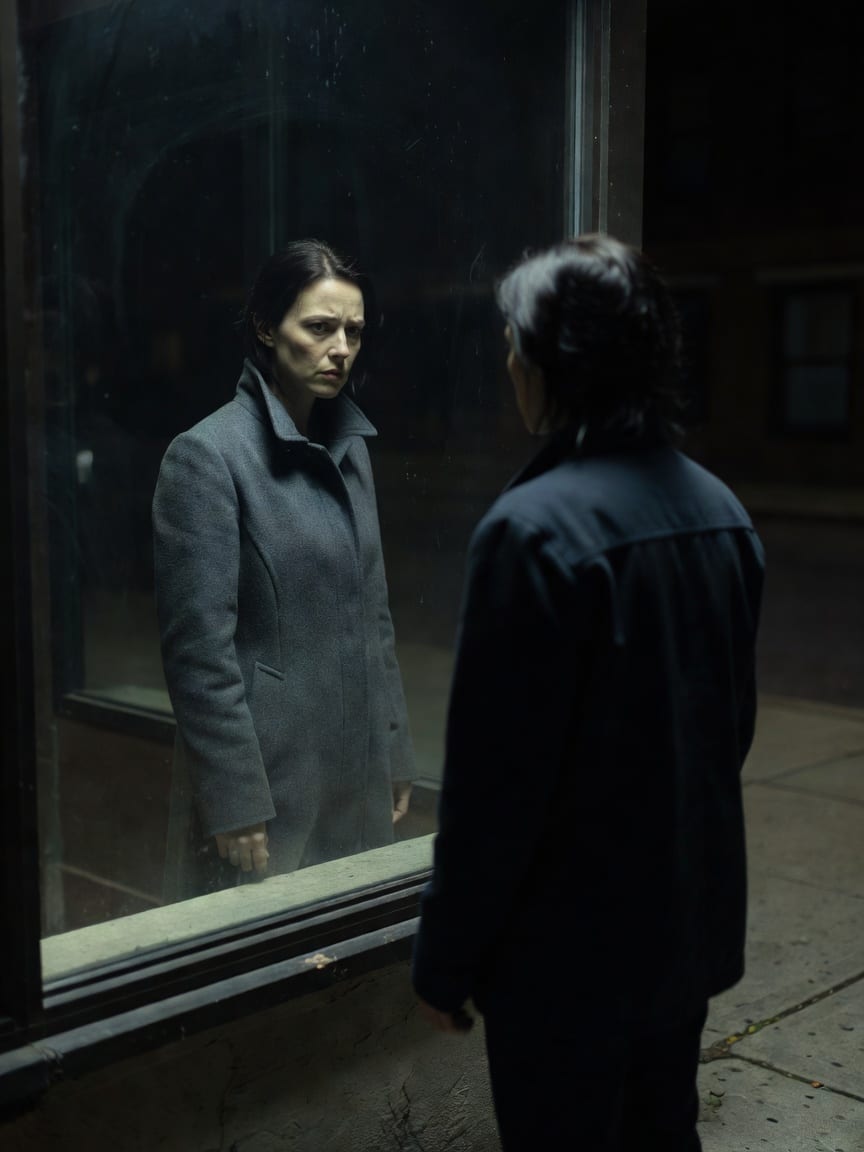
My neighbor saw me take her parcel, wearing my grey coat, at 11:52 AM. I was in Lisbon that whole week.
Returning from Lisbon, I was met by my neighbor Elena, who insisted I'd signed for a parcel last week. She even said I was wearing my grey wool coat. But my coat was still packed in my suitcase, and I was thousands of miles away, checking into my Lisbon hotel at that exact time.
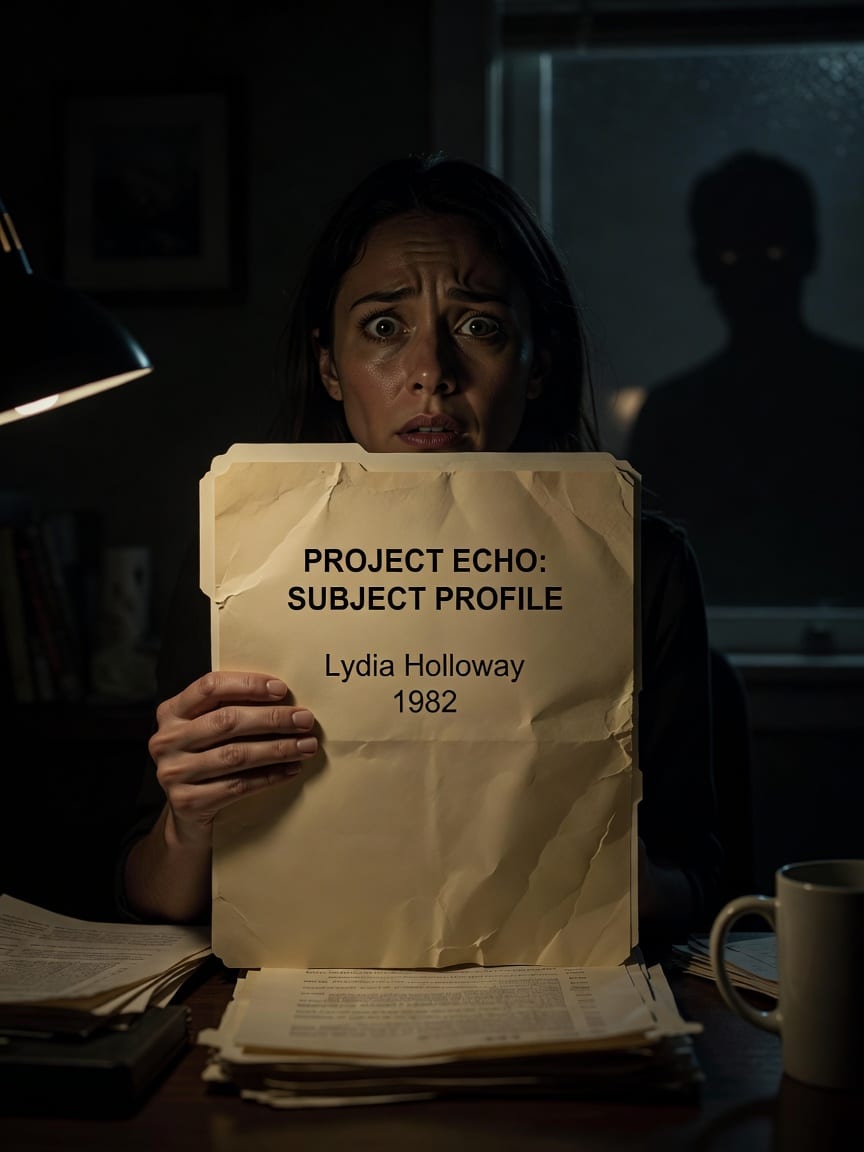
My own signature is on a Baltimore police report for a hit-and-run I never witnessed. The officer remembers my university sweatshirt.
I was settling into a quiet Tuesday evening when Baltimore PD called, asking about a witness statement I supposedly gave. They described my faded green university sweatshirt, seen at a hit-and-run last Friday. But my sweatshirt was in my dresser, and I was home in Seattle.
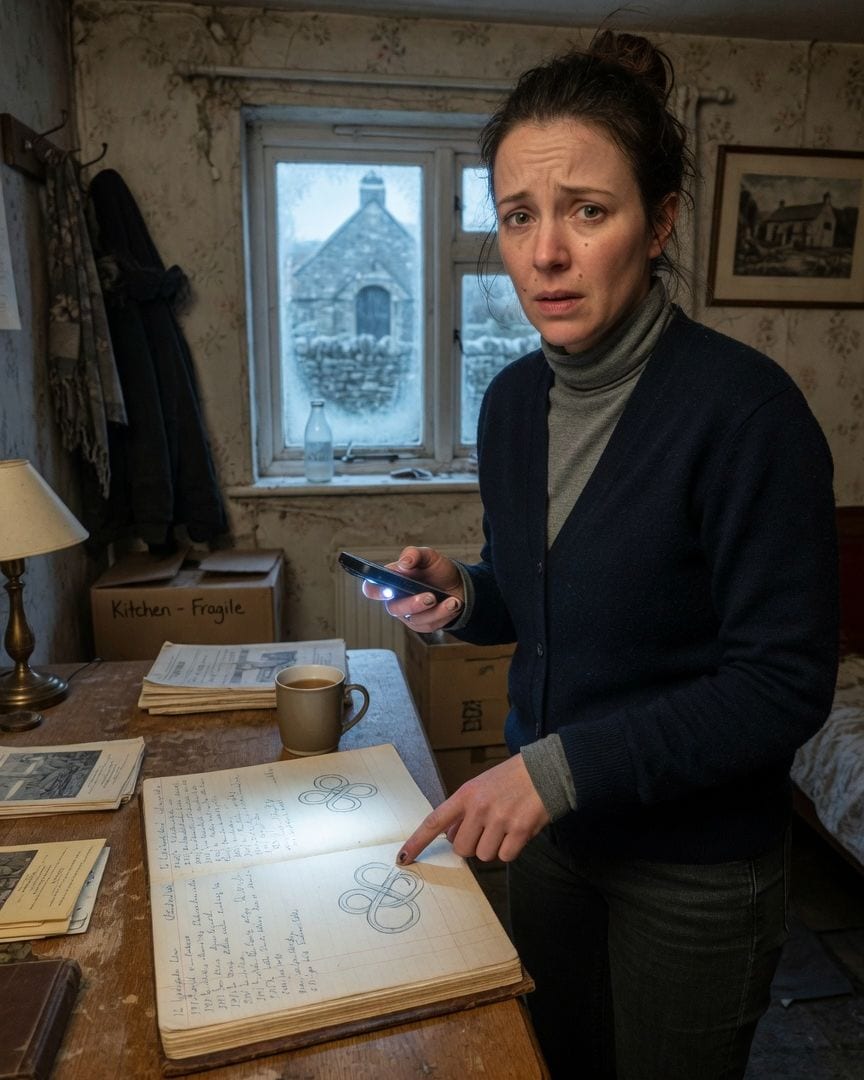
Milk appears daily by my lychgate. The dairy closed in '79. My address is handwritten into their old delivery book, starting the day we moved in.
Moving to Blackwood Creek, I loved the quaint charm, especially the unexpected morning milk delivery to my lychgate. But when I mentioned it to Eleanor at the village shop, her smile froze. She told me Willow Creek Dairy closed decades ago, in '79.
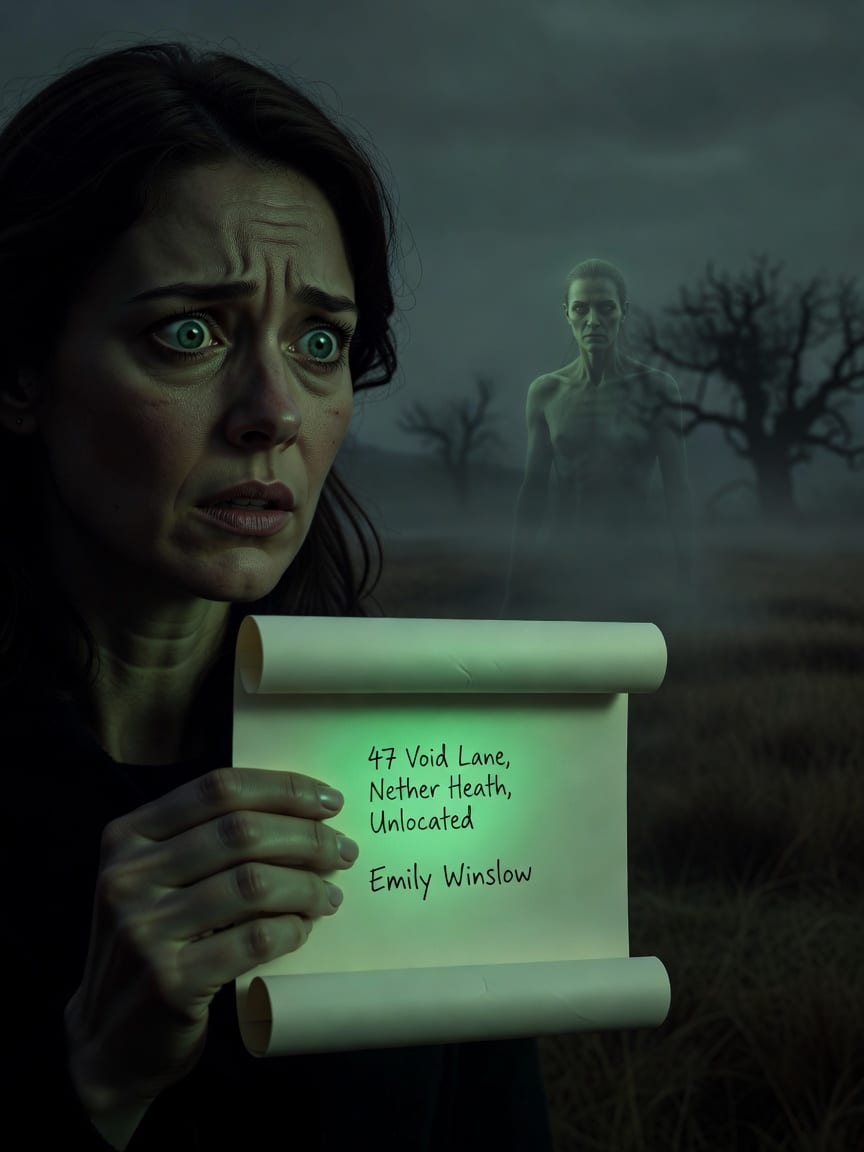
My change-of-address card arrived today. It said I'd moved to a house I'd never seen, on a street that didn't exist. And it was signed with my own hand, a month from now.
A crisp, cream-colored card on my kitchen counter informed me I'd moved to 42 Willow Creek Lane, an address that didn't exist. The signature was my name, Emily Winslow, a chillingly precise ghost of my own handwriting. But then I found an old 1947 ledger, listing 42 Willow Creek Lane and a signature identical to the one on my card.
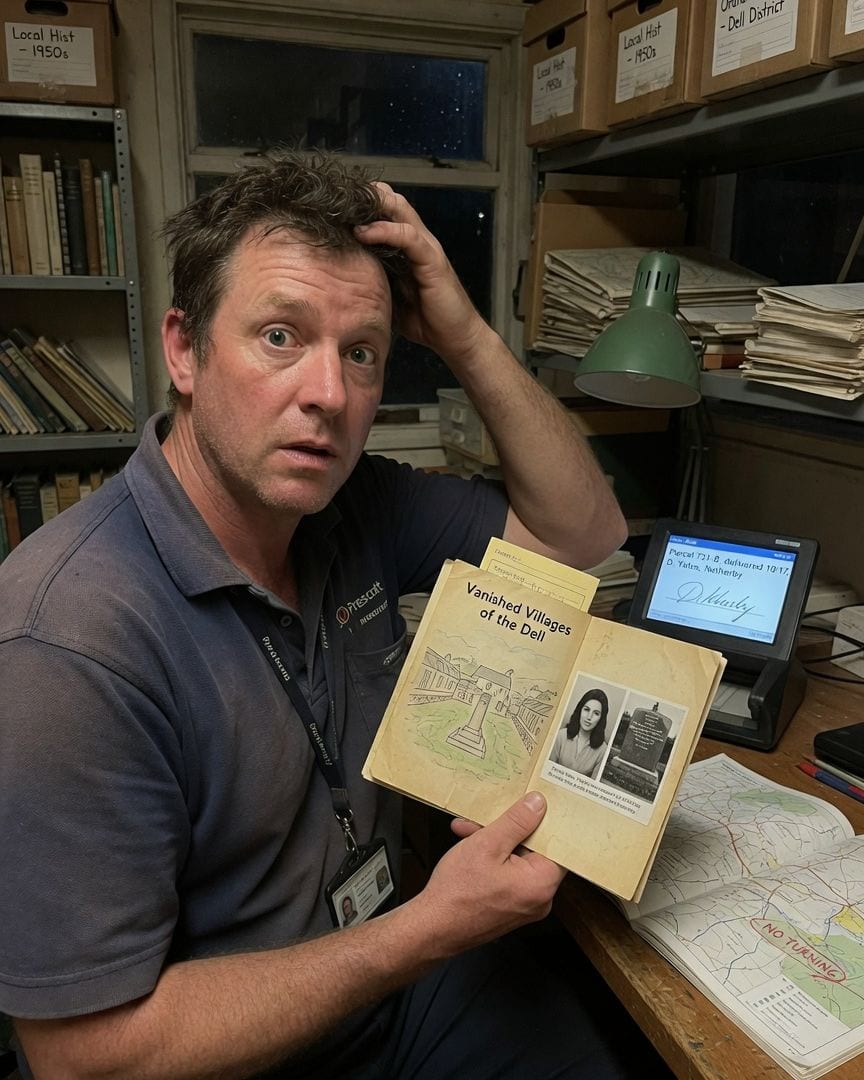
A village signed for my parcel last October, but Netherby isn't on any map. I've driven the lane; there's only farmland.
As a parcel delivery driver, Roy Prescott’s job is usually mundane, but a recent delivery to a village called Netherby now haunts him. The next day, the village vanished from his satnav and maps, leaving only farmland. Yet, his internal system held undeniable proof: a scanned signature from Daphne Yates, the woman who signed for the package, now appears in a 1957 village photo, looking exactly the same.
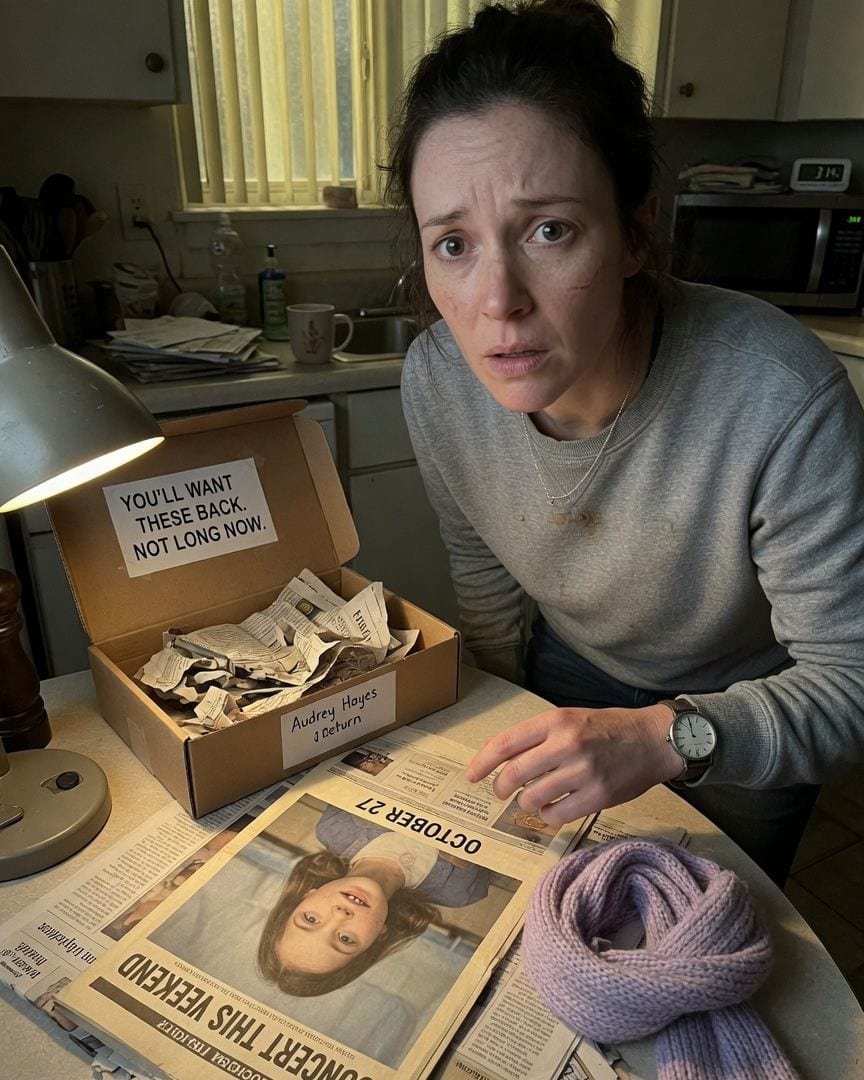
A box turned up with my name and no sender. Inside was a watch I lost years ago, still ticking and set right — wrapped in newspaper dated two weeks from now.
A plain brown box appeared on my step, containing my long-lost personal items. Among them, my grandmother's ticking watch and a newspaper dated two weeks in the future. But a historical ledger then revealed my name and these exact items, listed in 1965.