A village signed for my parcel last October, but Netherby isn't on any map. I've driven the lane; there's only farmland.
It started last October. I told my wife, Lily, about it over dinner last night, though I think she still half-believes I’m losing it.
I’m Roy Prescott, 42, a parcel delivery driver, and frankly, my job is mundane enough that strange things just don’t happen. Not usually. But last autumn, I made a routine delivery to a place called Netherby.
I remember it clearly: a small village green, well-kept, with a pub on one side, its sign faded to illegibility, and a granite war memorial standing proud in the centre. The air had a damp, earthy smell, even for October.
A woman came out, perhaps 25, dark hair, wearing a simple cardigan, a faint smile on her face. Her name was Daphne Yates.
She signed for the parcel, a small hardback book, with a careful, almost calligraphic hand on my scanner. It was quick, unremarkable. Just another package delivered.
But the next day, back at the depot, when I went to log the delivery into the system, the postcode I’d typed in, the one I remembered so clearly, routed to nothing. Just open farmland.
I figured I’d made a mistake, maybe missed a turn. I drove that same lane three times over the next week, the one the satnav swore was the address for 'Netherby,' but there was no turning, no village.
Just a stretch of empty, ordinary fields. Yet, my handheld scanner held the proof, plain as day: Daphne Yates’s signature, dated and timed, marking the parcel as delivered.
The discrepancy gnawed at me. I’m not one for ghost stories or tall tales. I deal in concrete facts: addresses, parcel IDs, timestamps. The next morning at the depot, the first thing I did was corner Everett Galloway.
Everett’s 68, a veteran driver, been on these routes longer than I’ve been alive. If anyone knew about a forgotten hamlet, it’d be him.
I laid out the facts, half-expecting a knowing chuckle, a story about some old hermit, or a new housing development I’d missed.
Everett, though, just frowned, his forehead wrinkling into a roadmap of concern as he squinted at the digital map on his own terminal. "Netherby? Never heard of it, Roy. Postcode's definitely farmland. Always has been, far as I know."
I insisted, my voice tight. "But I was there, Everett. The green, the pub, the war memorial. It was real."
He just shook his head, suggested it was a GPS glitch, a mapping error, or maybe I’d simply misremembered the name, conflated it with another. But I knew what I’d seen.
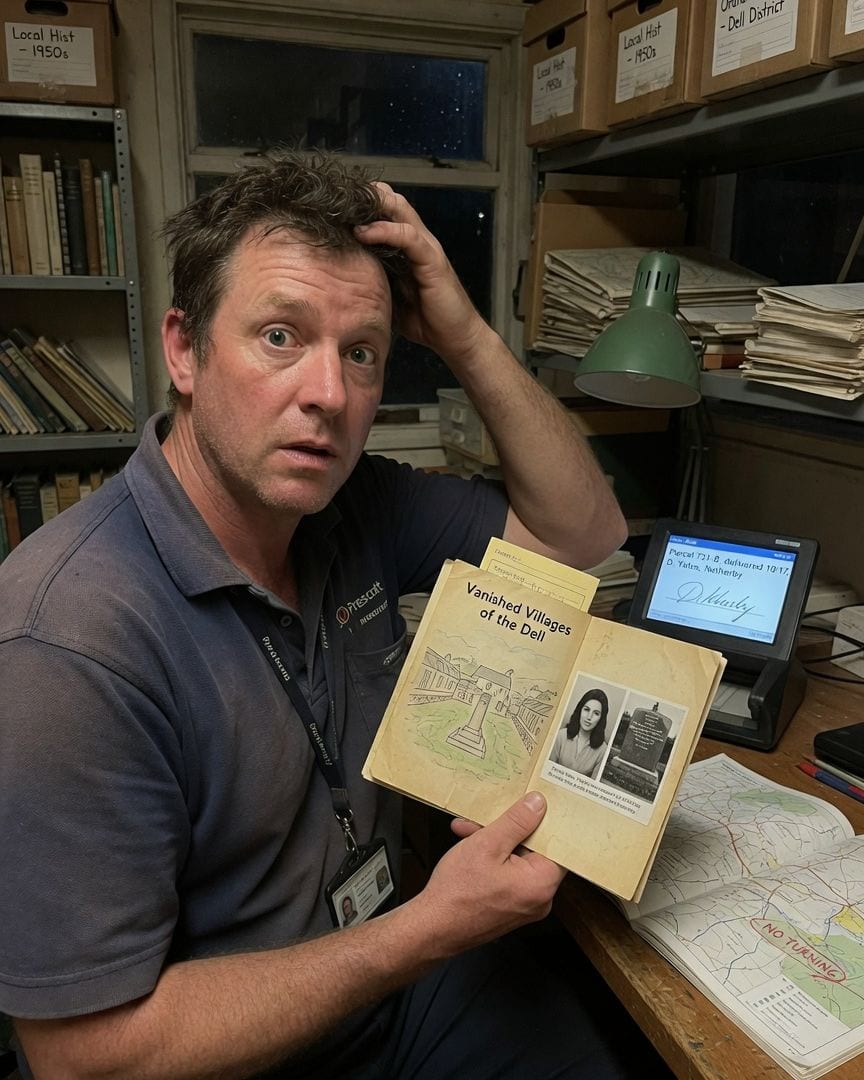
I used my employee credentials, pulled up the internal parcel tracking system. Typed in the exact delivery ID. There it was: 'Parcel 731-B, delivered 10/17, recipient D. Yates, Netherby.'
The scanned signature, elegant and precise, was undeniable, a ghost on the screen. I even called the customer who'd sent the book, a publisher in London. They confirmed the address as 'Netherby, as listed in the old directory.'
The publisher chuckled, said the book was an obscure local history, probably for a collector. A chill that had nothing to do with the depot’s air conditioning started to spread through me. The mundane explanations were failing, one by one.
I decided to visit the local library after my shift, to check some physical maps, something beyond the digital system that seemed to be actively erasing a place I’d stood in.
I sat in the local library’s dusty archives, the air thick with the smell of old paper and quiet.
My fingers brushed against brittle, yellowed spines until I found it: a slim pamphlet, "Vanished Villages of the Dell," published in 1957. My heart hammered against my ribs.
I carefully turned the fragile pages, the paper crackling like dry leaves, until I reached a section describing 'Netherby,' complete with a hand-drawn sketch of the village green. The pub. The war memorial.
It was all there, exactly as I’d seen it. Beneath the drawing, a faded, black-and-white photograph. A woman stood by the granite war memorial, her face clear, her expression calm, a slight smile playing on her lips.
The caption read: 'Daphne Yates, a long-time resident of Netherby.' She looked no older than she did last October.
I returned to the depot with the pamphlet, my hand trembling slightly as I laid it on Everett’s desk. He’d been leaning back, sipping lukewarm coffee, but his usual gruff demeanor vanished the moment he saw the picture.
His brow furrowed so deep I thought it might stay that way. He recognized the pamphlet, a local curiosity, but dismissed the photograph as a coincidence, a common name. "People move on, Roy. Villages get abandoned. Happens all the time."
I shook my head, my voice tighter than I meant it to be. "But not like this, Everett. Not to disappear without a trace, and not with the same person looking exactly the same over sixty years. That’s Daphne Yates.
The woman who signed for my parcel." Everett just shook his head again, looking troubled, and walked away, mumbling something about a run he needed to do. Undeterred, I dug deeper into the library’s archives.
I found mentions of a 'Daphne Yates' in old census records for the area, consistently listed as a resident of 'Netherby Hamlet,' but the entries always ended abruptly, with no forwarding address or death certificate, simply 'removed' or 'disappeared.'
It was like she, and the village, had just... faded.
The local historical society offered little more, only vague references to Netherby as a 'lost village' with a reputation for being 'hard to find,' often appearing on maps only to vanish in subsequent editions, as if maps themselves struggled to hold onto its existence.
I even stumbled upon an obscure local folk tale about 'the folding road,' a lane that would occasionally lead travelers into places that shouldn't be, only to return them to where they started, disoriented and sometimes missing time.
The tale mentioned that these places often required a 'toll' to manifest, a 'connection' from the outside world. The word 'toll' stuck with me, making me think of my delivery, my parcel, my connection.
As I continued my research, I began to notice things.
My internal depot access logs, which I checked religiously now, showed unusual activity—my login used late at night, accessing old delivery manifests, specifically those from the 1950s and 70s, not by me. I changed my password twice.
Still, the phantom logins persisted. Then I received an anonymous, untraceable email: "Some roads are best left untraveled. Some places, uncounted." The message was short, chillingly specific, as if someone knew exactly what I was looking into.
On my routes, I felt eyes on me.
A car, an old, dark sedan, seemed to shadow me for a few miles on the country roads, appearing in my rearview mirror just as I was about to dismiss the feeling, then vanishing when I tried to get a closer look.
I dismissed it as paranoia, the stress of this whole thing, but the feeling persisted, a cold prickle on the back of my neck.
One afternoon, back at the depot, I found Everett waiting for me, leaning against my van, the metal creaking faintly as he shifted his weight. His face was uncharacteristically grim, devoid of its usual world-weary humour.
"Roy, you need to stop. Whatever you're looking for, it's not worth it. There are things... some things are better left alone." His voice was low, urgent, almost a plea.
The usual depot clamour seemed to recede around us, leaving a pocket of tense silence. "My family has lived here for generations. We know a thing or two about what gets lost in these hills. Just drop it."
I tried to ask what he meant, but Everett just shook his head, his gaze darting around the busy depot as if afraid of being overheard.
The conversation ended there, but the warning hung heavy in the air, confirming my growing dread: someone knew exactly what I was uncovering, and they wanted me to stop.
I couldn’t drop it. Everett’s warning only fueled my determination. I cornered him again that evening, after hours, in the deserted depot office. The fluorescent lights hummed, making the silence feel heavy. "What did your family 'know,' Everett?
What did you mean, 'things get lost'?" Everett sighed, running a hand over his face. He looked utterly exhausted, defeated. "My father… he was a driver for this depot too, back in the seventies."
Everett paused, looking at me with a haunted expression. "He had an experience, just like yours. A delivery to Netherby. A woman named Daphne Yates." I felt a jolt, a cold shock. My breath caught in my throat. "What happened?"
Everett hesitated, then walked to a locked filing cabinet in the corner, fumbling with a small, tarnished key. He pulled out a worn, leather-bound ledger, its pages yellowed with age and thin as onion skin. "This is… a family record.
Kept by the men in my family who drove these routes. A warning, really." He opened it to a page detailing an entry from 1975. The ink was faded, but perfectly legible. I leaned closer, my eyes scanning the page.
It listed a parcel delivery, the date, the driver’s name: 'Thomas Galloway,' Everett’s father. And below it, the recipient: 'D. Yates, Netherby.' The signature was unmistakably the same elegant, careful hand I had seen on my scanner.
The exact same curves, the perfect loop of the 'Y', the precise dot of the 'i'. "This village… it appears. And disappears. On a cycle," Everett whispered, his voice barely audible, like a secret he was finally unburdening.
"And each time it appears, there's a delivery. A specific kind of delivery, usually something small, a book, a trinket. A connection. And the signature is always the same. She’s always there."
I thought of the hardback local history book I’d delivered. The puzzle pieces clicked with a terrifying precision. The missing village, the unchanging woman, the recurring deliveries—it wasn't a glitch, it was a pattern. A cycle. A haunted recurrence.
And I had just walked right into it.
Everett, his face pale and drawn, turned the final page of the family ledger. The paper crackled like dry bone.
It detailed his own father's last delivery to Netherby in 1975, the parcel ID, the date, and below it, Daphne Yates’s familiar, elegant signature. My breath hitched.
It was identical, not just similar, but perfectly, chillingly the same as the one on my scanner from last October.
Below that final delivery entry, a single, stark line scrawled in his grandfather’s shaky hand, the ink faded but still sickeningly legible: "He never came back from the last one. He just… became part of it."
I stared at the words, a cold dread seeping into my bones, a kind of paralysis. My own delivery, the hardback book, the careful hand. I had just completed a cycle.
I felt a profound, chilling clarity then. The deliveries weren't just triggers; they were offerings, vital connections that sustained Netherby's precarious existence.
The parcel, a seemingly innocuous hardback book, was a tether, a filament of the outside world woven into its impossible fabric.
Daphne Yates wasn't merely a resident; she was the constant, the anchor, perhaps an entity that manifested with the fold, her signature a ritualistic act binding the delivery and, by extension, the driver, to Netherby's cycle.
The impossible geometry was Netherby's true nature, a place that slipped between realities, appearing and disappearing, sustained by these periodic intrusions from the outside world. It all clicked: the postcode routing to farmland was its default 'state' when not manifest.
The exact layout appearing in maps decades apart confirmed its recurring, physical reality. I realized that the "lost" drivers, like Everett's father, hadn't simply disappeared into thin air.
They had become part of Netherby, absorbed into its impossible geometry, perhaps becoming the next 'Daphne' or the next 'Everett's father' in a new manifestation, serving to perpetuate the cycle.
The book I delivered, a local history, now felt profoundly ironic – I had delivered a piece of history to a place that consumed it, a piece that would forever bind me.
I looked at my own delivery record again, the precise coordinates, the time stamp, the elegant signature. I was now bound. The dread wasn't in a monster to be fought, but in the elegant, inescapable logic of it all.
The village wasn't on the map because it wasn't always there. It was a wound in space, a tear in reality, and I had just provided the bandage, sealing myself to it.
I knew there was no escape, no undoing. I drove my delivery route the next day, the familiar lanes now imbued with a sinister new meaning. The rolling hills seemed to swell and recede with an unseen breath.
I felt an invisible pull, a subtle disorientation, a sense that the world was stretching, thinning, like an old photograph warping in the sun. I found myself driving towards the lane that led to the farmland, Netherby's phantom location.
I knew the village wouldn't be there; it wasn't its time, not yet. But I felt compelled, drawn by an unseen thread. The dread wasn't about a monster to fight; it was the dawning, inescapable realization of my own fate.
I pulled over, looking out at the empty fields, the same fields that now held the memory of a village, a signature, and my own lost future.
The wind whipped past the windows, carrying the scent of damp earth and something else, something metallic and cold, like static. I tried to imagine smashing my scanner, erasing the digital record, but I knew it was futile.
The record was in the system, immutable, a ghost in the machine that wouldn't die. More importantly, the connection was in him. I had seen it, entered it, delivered to it. I was now part of its mechanism.
I was a new thread in the tapestry of its recurrence. I couldn't fight geometry. I couldn't fight a pattern that predated me, a cycle that would continue long after.
I could only understand it, and the knowing was the ending. I wasn't going to vanish, not overtly. I was just going to be... folded.
My own reality subtly warped, aligned with Netherby's impossible logic, my perception attuned to its secret rhythm.
I started the van again, my hands steady on the wheel, but my gaze was distant, fixed on a horizon that seemed to shimmer with an unseen, impossible architecture.
I continued my delivery routes. The days blurred into a familiar pattern of roads and parcels, but something was irrevocably altered within me. I saw the world differently now, as if a thin, almost imperceptible veil had been drawn back.
I’d catch glimpses of things that weren't quite right: a fence post leaning at an impossible angle in an open field, a distant tree line that seemed to shift and ripple like heat haze, a fleeting shimmer in the air where two fields met, a faint outline of geometry that shouldn't exist.
He never spoke of Netherby again, not even to Everett, who watched him with a sad, knowing gaze, a silent acknowledgment passing between them.
The parcel, the book, the signature – they were all locked in the system, a digital ghost of a place that refused to be forgotten, a testament to its impossible existence.
I was simply left knowing, carrying the weight of an impossible truth that had quietly, completely, undone him.
I finished my route, drove home, and parked the van in the driveway. The familiar house felt both comforting and alien, its solid walls a fragile shield against the flexible world I now perceived.
I walked inside, the scent of Lily's cooking filling the air – roast chicken, comforting, real. She looked up from the stove, her smile warm, unburdened. "Rough day, hon?"
I nodded, placing my keys on the hall table, the small jingle echoing too loudly in the quiet space.
I sat at the kitchen island, staring at the wall, seeing not the wallpaper, but a faint, almost imperceptible shimmer at the edge of my vision, a flicker of geometry that wasn't quite right, a momentary folding of light.
I felt a quiet, knowing smile touch my lips. I was home. I was safe, in a way that no longer made sense.
But the world had changed, and so had I. I knew a secret that the maps couldn't hold, a truth that folded space and time, and I was now a living part of its quiet, terrifying mechanism.
I was simply another thread in the impossible weave, waiting for the next pull. I would never look at a road the same way again, or trust the solid ground beneath my feet.
I was a witness, and now, a participant. I was the one who knew. Lily found him staring at the kitchen wall, a faint, almost imperceptible shimmer at the edge of his vision. "Roy?" she asked.
He turned, a quiet, knowing smile on his face. "The geometry of the world, I now knew, was far more flexible than I’d ever imagined."
If this one got to you
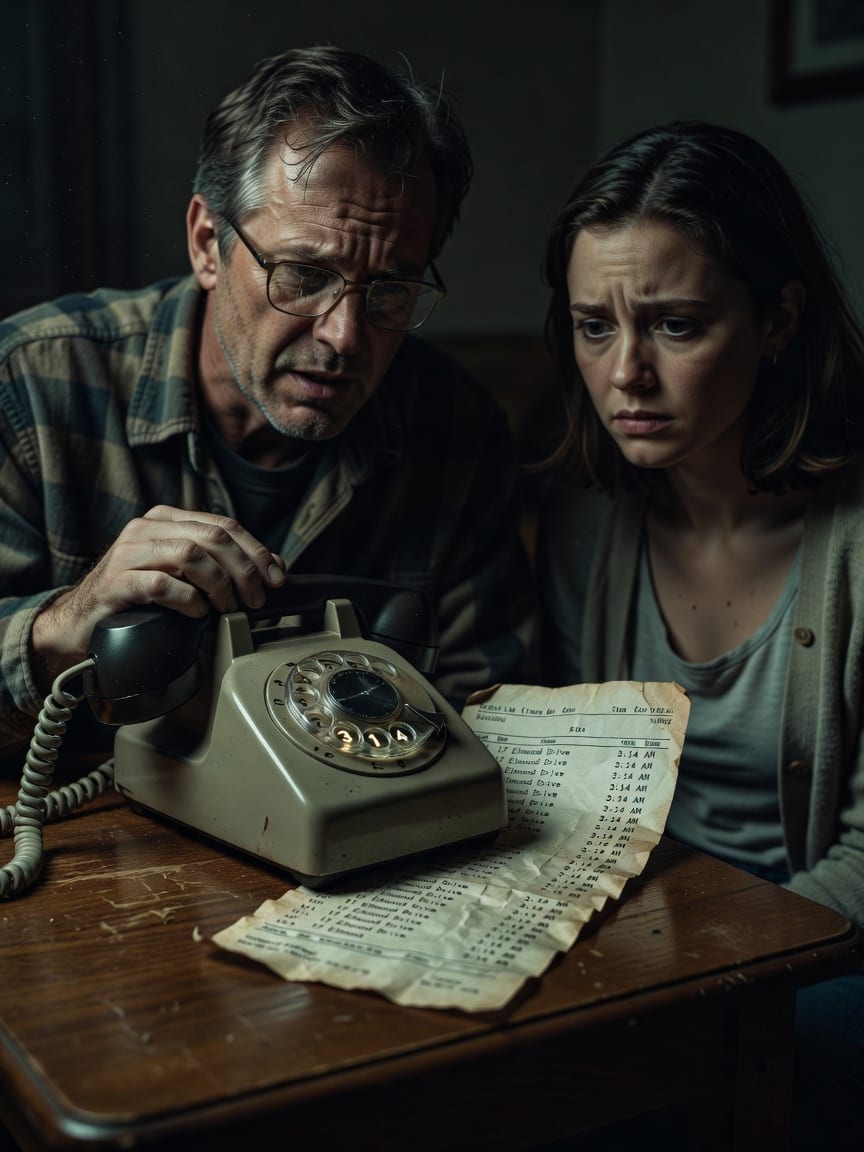
My phone bill itemised forty calls from my number to a house demolished in 1990. Each call at 3:14 AM, lasting eleven minutes. The bill arrived postmarked from a flattened building.
I expected the usual mobile bill, but my landline statement listed forty calls from my number to '17 Elmwood Drive.' That address was for a house torn down in 1990, a vacant lot I remembered from childhood. The phone company insisted the calls were legitimate, leaving me profoundly unsettled by the impossible charges.
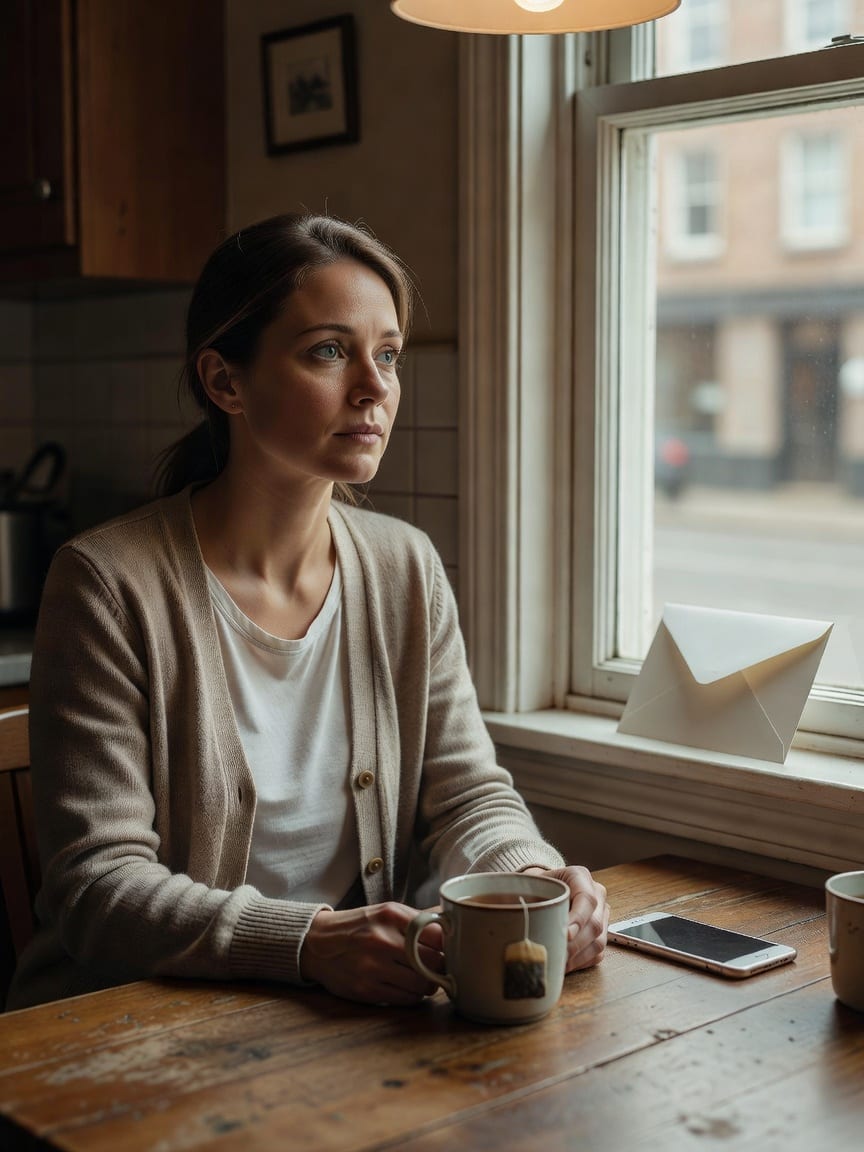
My taxi driver knew my name before I spoke, then apologized for the flight I was going to miss. I was arriving. The cab's plate was scrapped four years ago.
After a strange taxi ride, I received an unsettling birthday card addressed to me. Its return address listed 'Old Mill Road Field,' an empty lot where a mill once stood, and it was postmarked locally. The card arrived four months before my actual birthday, sparking a cold dread I couldn't ignore.
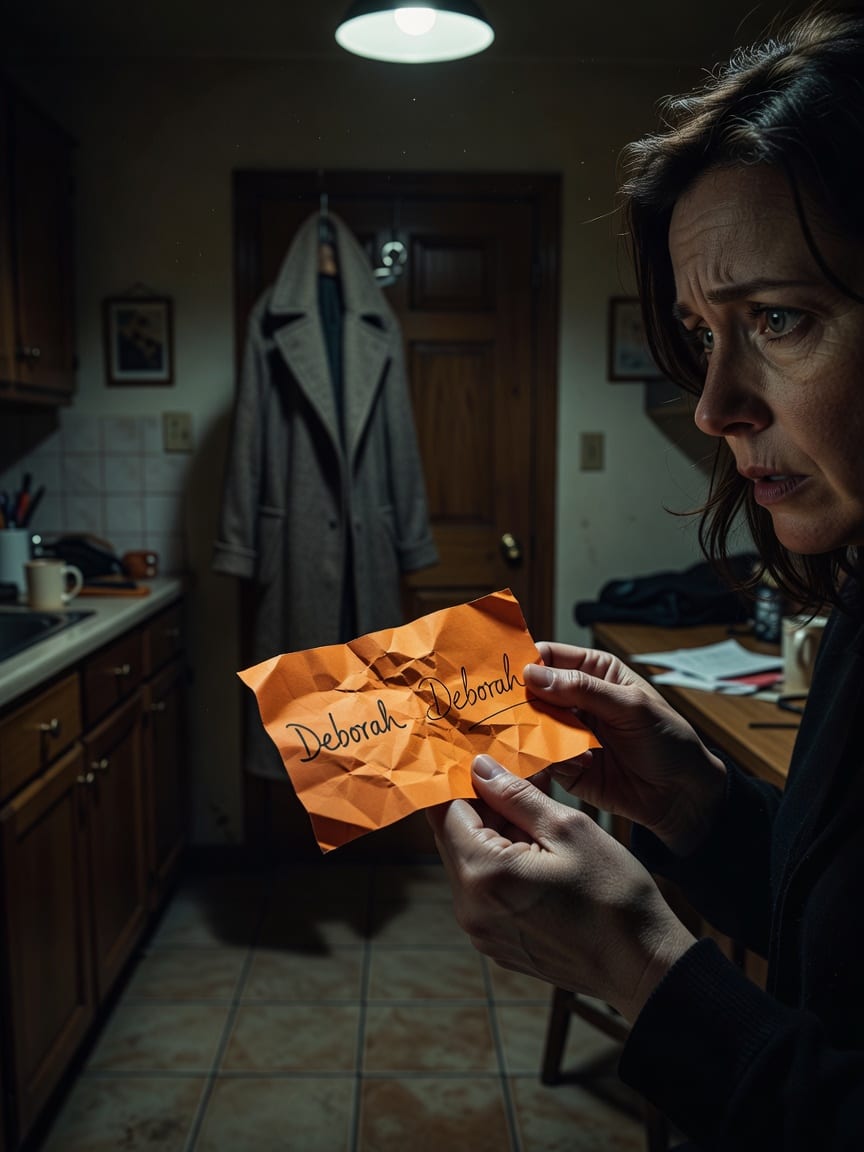
My grey coat stood at my neighbor's door at 11:52am, taking in a package. I was in Lisbon that entire week.
My neighbor, Linda, handed me a delivery card, thanking me for saving her a trip. But the date on the card showed my signature, for a parcel I'd never received. On that exact day and time, I was sipping espresso in Lisbon, thousands of miles away. My grey coat, which Linda recalled me wearing, hung untouched in my closet.
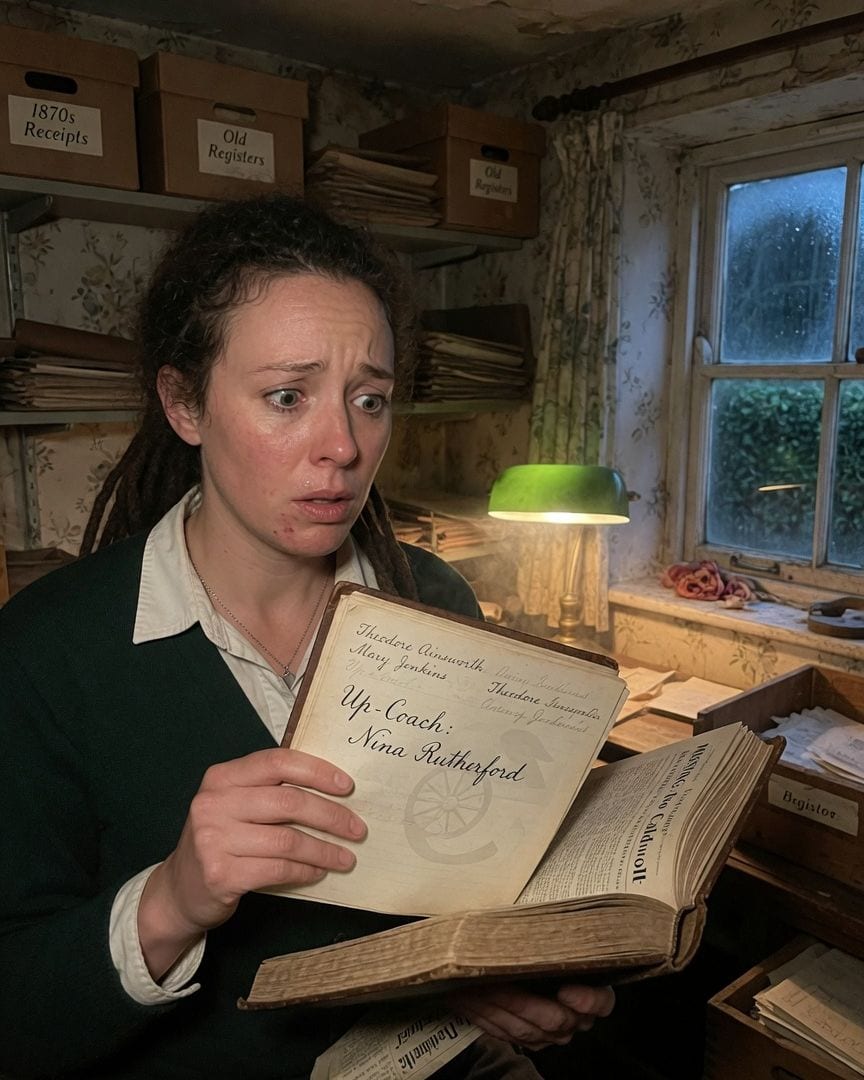
The old inn's arrivals book logs a vanished girl's name. She disappeared two months ago, but the ledger says she checked in last week.
As the new owner of The Angel Inn, I cherished its ancient history. But one evening, while tidying the old arrivals book, I found a chilling entry: Nina Rutherford, a local girl who vanished two months ago, was logged as checking in last week.
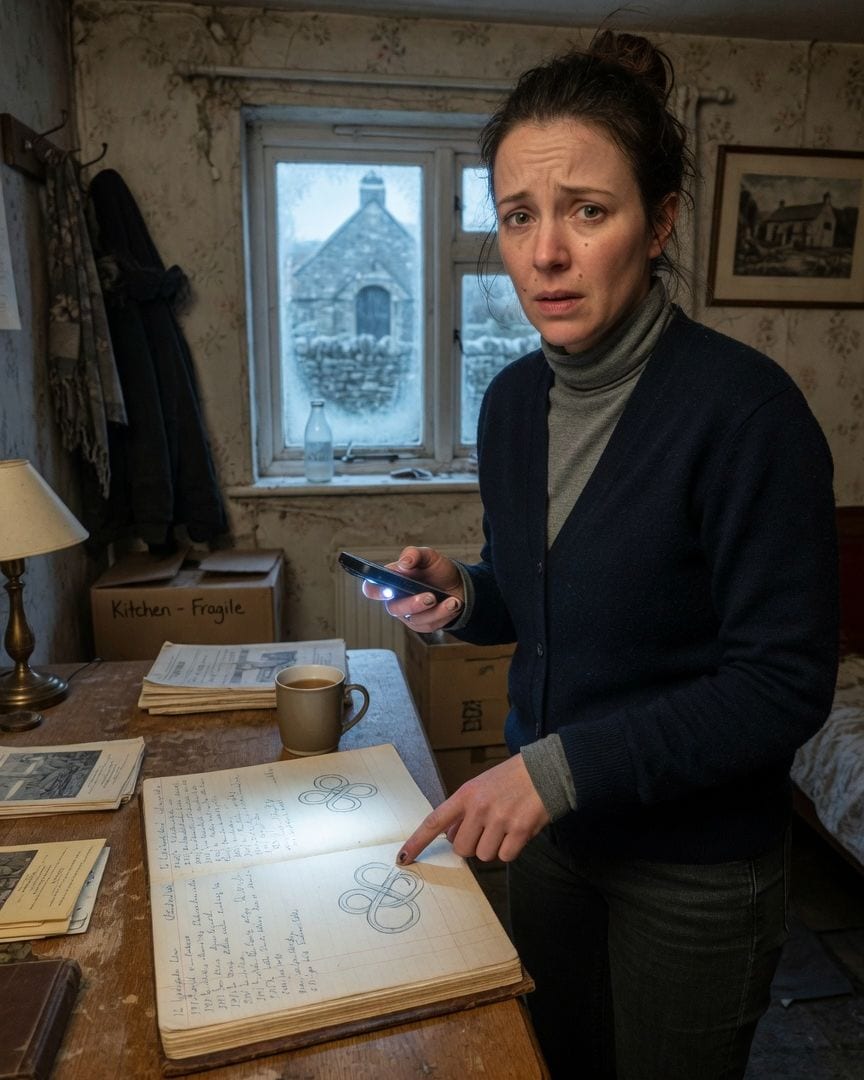
Milk appears daily by my lychgate. The dairy closed in '79. My address is handwritten into their old delivery book, starting the day we moved in.
Moving to Blackwood Creek, I loved the quaint charm, especially the unexpected morning milk delivery to my lychgate. But when I mentioned it to Eleanor at the village shop, her smile froze. She told me Willow Creek Dairy closed decades ago, in '79.
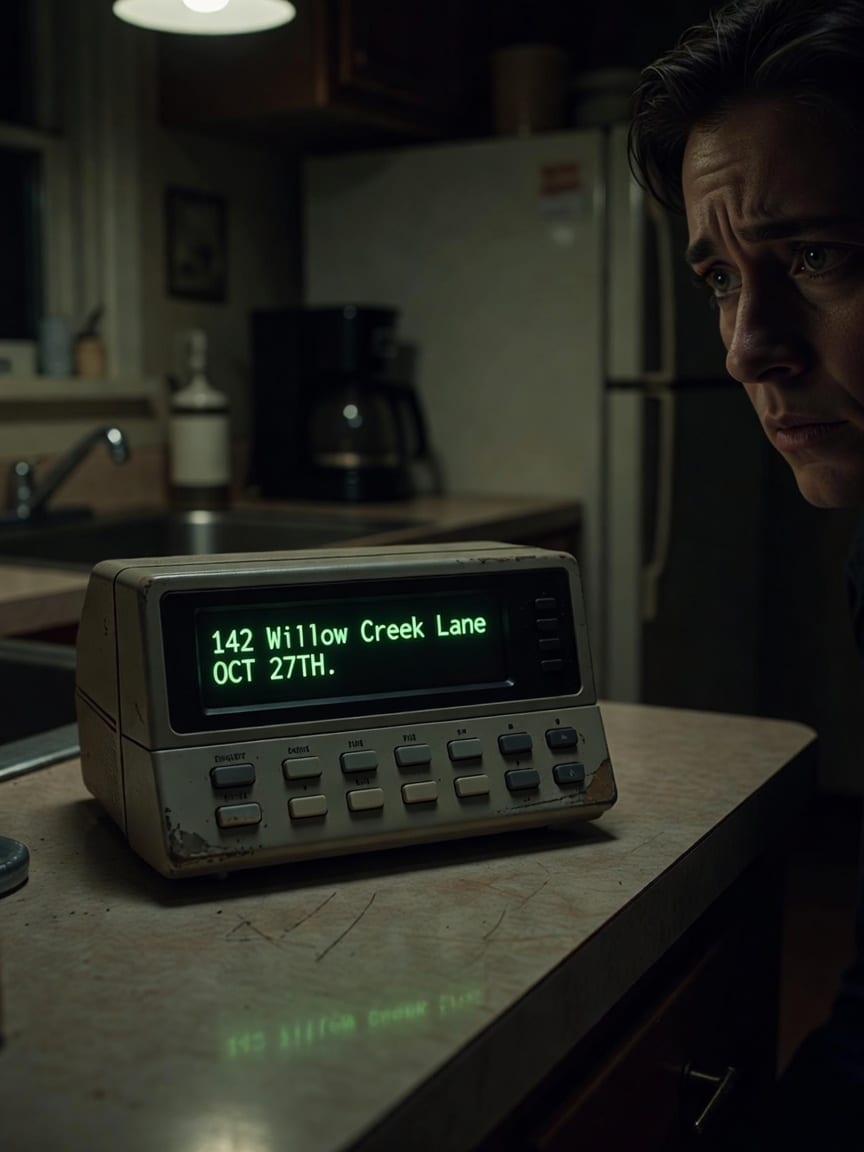
My radio scanner picked up a channel at 2 AM reading local addresses. Mine was on it, dated tomorrow.
I was tracking a storm on my old weather radio when a synthesized voice cut through the static. It began reading local street addresses, then my own: 142 Willow Creek Lane. But the date it gave for my address was tomorrow.