Tomorrow's gale was already written in the skipper's logbook — in his dead father's handwriting. His father drowned off that boat in 1969, and I'd whistled aboard.
The fishing boat cut through the calm morning water, a rhythmic thrum that was almost a lullaby. I'm Vera Lawson, new to the coastal town, and even newer to deckhand work, but I liked the simplicity of it.
Humming along to the engine, I found myself idly whistling as I hauled the heavy lobster pots, the sound bright and clear over the lapping waves. The skipper, Henry Brooks, froze at the sound.
His weathered face drained of color, turning a pasty gray I’d never seen before. He slammed a hand on the rail, the sharp crack echoing over the engine, making me jump.
'Never whistle on my boat,' he said, his voice a low, dangerous growl, completely unlike his usual quiet demeanor. 'It whistles up a wind.'
I thought it was just a superstition, a cranky old seaman’s rule. But later that night, the barometer dropped off the scale.
The needle was practically glued to the bottom, yet the air outside was heavy and still, not a breath of wind, the sky a flat, unbroken black. Henry sat at the galley table, staring at his logbook.
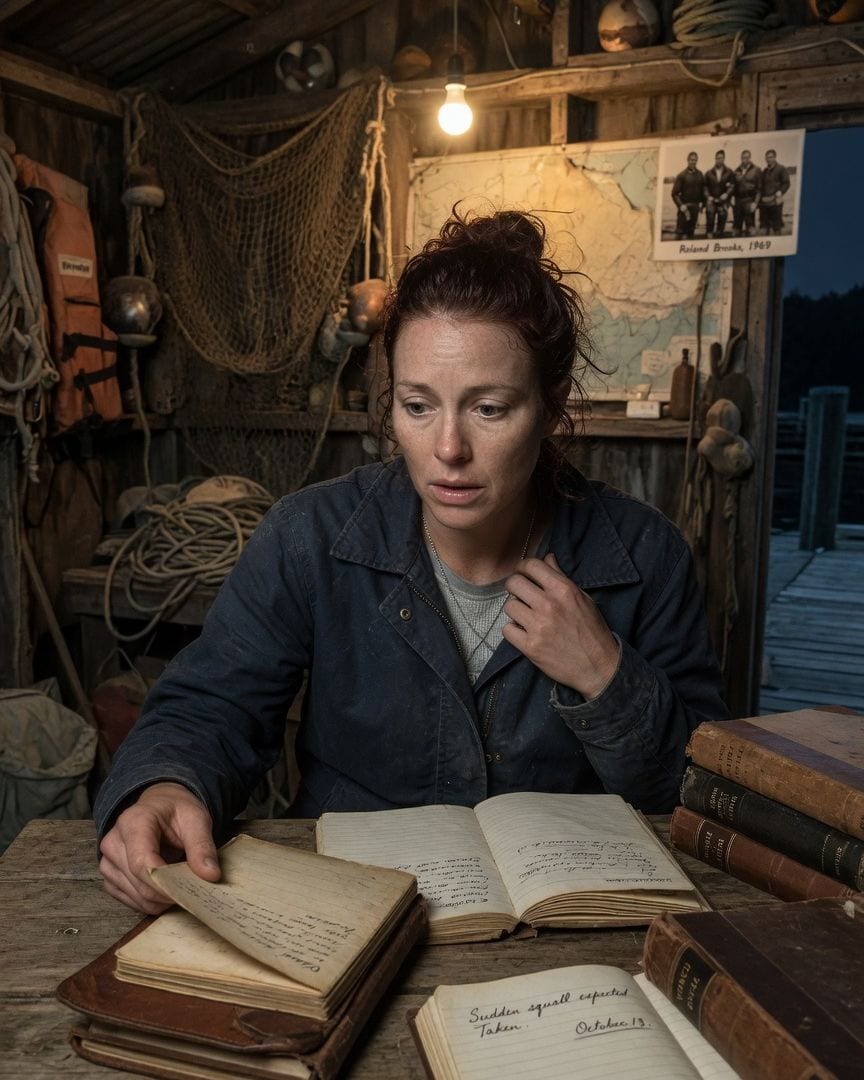
I was curious, so I glanced over his shoulder. In the margin, for tomorrow's date, already written in a faded, looping script, was 'Gale Warning. Heavy Seas.' Below it, scrawled in the same hand, 'Payment Due.' My stomach clenched.
I’d seen Henry’s father’s old photos in the cabin. The handwriting was unmistakably that of Roland Brooks, who had drowned off this very boat in 1969.
I tried to rationalize it. An old seaman's superstition, perhaps, passed down through generations. Henry was a man of routines, maybe he’d simply copied an old entry, a grim family joke.
But the specific date, a full day before any actual weather system had even begun to form, and the phrase 'Payment Due' – it clung to me, a cold burr under my skin.
I cautiously asked Henry about his father's logbook the next morning, trying to sound casual. He just grunted, turning his back to me. 'Some things are best left alone.' His evasiveness only fueled my unease.
It wasn't just a superstition if he refused to talk about it. It felt like a secret.
The next afternoon, while Henry was ashore, buying supplies for the next run, I found myself drawn to the small, salt-weathered shed at the back of the dock, where spare gear and old equipment were stored.
It smelled of canvas, old oil, and the faint, sweet decay of dried seaweed.
Tucked away on a high shelf, beneath a tangle of fishing nets, I found not just one, but a stack of similar logbooks, bound in worn leather, all clearly decades old.
Each bore a different family name on its spine – Vance, Sterling, Merritt. I pulled one down, the Vance book, its pages brittle, smelling intensely of brine and age. Flipping through, my breath hitched.
In marginalia, beside entries detailing unexpected storms and sudden fogs, were similar cryptic phrases: 'Balance required,' 'The sea claims its own,' and dates that seemed to predict disaster, written in hands long gone, much older than Roland Brooks’.
This wasn't just Henry's quirk, or his family's grim joke; it was a pattern. A deep, unsettling pattern that stretched back generations.
I carefully opened the Vance book, its pages a uniform yellowed with time. My finger traced an entry from 1937, predicting a sudden, violent squall. Next to it, in spidery ink, was the single, chilling word: 'Taken.'
I remembered seeing the Vance name on the weathered granite monument down by the harbor, commemorating those lost at sea. My fingers trembled as I walked over, my eyes scanning the inscriptions.
There it was: 'Joseph Vance, Lost at Sea, October 14, 1937.' The date in the logbook matched the monument exactly, a full day before the recorded squall that had supposedly claimed him.
The sea hadn't just claimed Joseph Vance; his fate had been written, predicted, and documented, long before it happened.
The matching dates between the old Vance logbook and the monument chilled me to the bone. This wasn't superstition; it was a record. A precise, horrifying record.
I spent the next few days poring over the other antique logbooks, the smell of salt and old paper clinging to my clothes. I meticulously noted dates, names, and the cryptic marginalia.
I found similar connections to other names on the monument: 'Elias Sterling, 1952, Heavy Fog, Due,' 'Beatrice Merritt, 1981, Unexpected Current, Accepted.'
Each entry, each name, seemed to foreshadow a quiet disappearance or a drowning, always noted with a terse, almost accounting-like phrase. The pattern was too precise, too repetitive to be coincidence.
No string of random accidents could be so neatly documented, so chillingly pre-ordained.
I needed more. The town’s small historical society seemed the logical next step. It was housed in a converted lighthouse keeper’s cottage, a charming, whitewashed building with a rotating lantern that still cast its beam across the harbor at night.
The place was run by Dorothy Muller, a woman with keen eyes and a quiet, knowing air. I requested access to old maritime records, town registers, anything that might shed light on the fishing community’s history.
Dorothy, without batting an eye, pointed me to a dusty corner filled with archived documents. The air in that corner felt noticeably cooler than the rest of the room, somehow thicker.
I spent hours cross-referencing names and dates from the logbooks with old newspaper clippings and death certificates. I found reports of 'unexplained disappearances' and 'freak accidents at sea' that coincided perfectly with the logbook entries, often with no bodies recovered.
The official explanations were always mundane—a rogue wave, a slip on a wet deck, a sudden squall—but the dates in the logbooks told a different, chilling story. A pre-written narrative of loss the town had quietly accepted for generations.
As I delved deeper into the archives, a prickle of unease started to grow. I noticed Dorothy Muller's presence.
She was always there, calmly shelving books, or tending to a pot of tea that seemed to perpetually steam on a small hot plate, but her gaze would occasionally drift towards my table, lingering for a moment too long.
It wasn't hostile, just… observant. One afternoon, I was comparing an entry in an ancient port authority manifest – a ship lost without a trace in 1898 – with a cryptic notation in one of the earliest logbooks I’d found.
The manifest simply stated "Vessel: Seawitch, Master: Thaddeus Cole. Failed to return. Last seen off Black Point." The logbook had "Cole, Thaddeus. 1898. Fog took him. Due." Dorothy approached my table, ostensibly to offer a fresh cup of tea.
The clinking of the ceramic cup against its saucer seemed amplified in the quiet room. 'You're very interested in the old sea stories, aren't you, dear?'
Dorothy's voice was soft, barely above a whisper, but her eyes, the color of sea-weathered slate, held an unnerving depth. 'Some of them, well, they're more than just stories, you know. Especially the ones about what the sea asks for.'
I felt a prickle of alarm, like a cold finger tracing my spine. 'What do you mean?' I asked, trying to keep my voice even, rational.
Dorothy just smiled, a small, sad curve of her lips that didn't quite reach her eyes. 'Our town has always had a certain… understanding with the waters. A way of keeping the balance.
Some rules are there for a reason, not just for old wives' tales.' She paused, her gaze fixed on the open manifest, then flicked to the logbook. 'And sometimes, when a rule is broken, the balance shifts.
The sea always collects its due, Vera. It always has.' The implication hung heavy in the air between us, thicker than the dust motes dancing in the shaft of sunlight from the high window.
It was a quiet warning that Dorothy knew exactly what I was uncovering, and that my own actions, my unwitting whistling, had perhaps already tipped the scales.
The tea, when I finally sipped it, was lukewarm and tasted faintly of brine.
I couldn't shake Dorothy's words. The 'understanding,' the 'balance,' the sea 'collecting its due.' It all pointed to something far more organized and terrifying than mere folklore. It felt like a system. I decided to confront Dorothy directly.
I found her tidying a shelf of local histories, her movements precise and unhurried. 'Mrs. Muller,' I began, my voice a little steadier than I felt, 'I've been looking at these old logbooks, and the town records.
The dates, the names… they match. People lost at sea, always after an 'unexplained' event, always with a prior entry in a logbook. What is this 'understanding'?'
Dorothy turned, her expression unperturbed, as if she’d been expecting this conversation for days, years even. 'Sit down, dear. You've been asking the right questions, for someone new to our ways.'
She gestured to a worn armchair upholstered in faded velvet. The fabric felt strangely cold beneath my hand. 'Our town, since its founding, has lived by the sea. And the sea, it has a temper.
But it also has a memory. Long ago, our ancestors made an agreement. A way to ensure our harvests, to protect our harbor from the worst of its moods.'
I leaned forward, my heart pounding, a cold tremor running through me despite the stillness of the room. 'An agreement? With what?'
Dorothy picked up a smooth, sea-worn stone from her desk, turning it in her fingers, its surface gleaming faintly. 'With the deep. It asks for certain things, in exchange for its bounty, its calm. And there are rules.
Strict rules, to keep the balance. Whistling on a boat, for example, is a direct call. It’s a challenge. And when you challenge the deep, it responds. It demands a payment.'
The air in the room seemed to press in on me, suddenly heavy. I thought of Henry’s logbook, Roland’s entry, the gale that hadn't come. 'So, Roland Brooks…?'
Dorothy nodded slowly, her gaze still fixed on the stone. 'Roland knew the rules. He broke one. And he knew the cost. His entry wasn't a prediction of a storm; it was an acceptance of his payment.
The logbooks aren't just weather records, Vera. They are the ledger of our pact, a history of debts and payments, kept by the families for generations. They are how we manage what we've agreed to.'
The earlier clues clicked into place with horrifying clarity: Henry's quiet acceptance, the cryptic notations, the 'freak accidents'—all part of a meticulously maintained, terrible system. The quiet resignation of the townspeople, the absence of real surprise at unexpected deaths.
This wasn't just a story; it was their operating principle.
The weight of Dorothy's revelation pressed down on me, making it hard to breathe. This wasn't just a story; it was the town's operating principle, a living, terrifying contract. 'And what about my whistling?'
I asked, my voice barely a whisper, thin and reedy in the sudden silence. 'What does the deep ask for now that I've broken the rule?'
Dorothy's gaze softened, a hint of genuine pity in her eyes, though her voice remained steady. 'The deep doesn't forget, dear. And it doesn't forgive. It simply waits for its payment.'
She then rose, walked to a locked, reinforced cabinet, its wood dark and ancient, retrieving an even older, massive ledger than any I had seen. The cabinet door groaned, a low, metallic sound, as if in protest.
Its cover was dark, almost black leather, scarred and ancient, smelling not of paper but of something mineral, like wet rock. 'This is the true record,' Dorothy said, laying it gently on the table. 'The Ledger of the Deep.'
Its pages were thick, parchment-like, filled with ornate, archaic script and strange symbols, some of which looked like they’d been drawn with dried blood. My eyes scanned the recent entries, a cold dread seeping into my bones.
There, on a page dated just weeks ago, was a small, crudely drawn symbol that looked disturbingly like a boat.
Next to it, not a name, but a single, distinct mark I recognized as my own: a faint swirl I'd doodled on a notepad once, an unconscious habit.
Below it, a series of blank lines stretched down the page, waiting to be filled. The air in the archive grew heavy, cold, as if the ledger itself had sucked the warmth from the room.
It wasn't just a ledger of past payments; it was a current, active balance sheet, and my name, or the mark that represented me, had been entered.
My blood ran cold. The symbol, my mark, the blank lines stretching like a waiting void. 'What does this mean?' I gasped, pointing a trembling finger at the page. 'This isn't just about me, is it? It's about… a payment.'
Dorothy sighed, her calm demeanor finally showing a flicker of weariness, a profound sorrow in her eyes. 'It means the deep has been summoned. It means a debt is owed. And it means the cycle is about to turn again.'
She flipped through the ancient ledger, the heavy pages rustling like dry leaves, pointing to similar entries from decades, even centuries past.
Each entry had the symbol of a boat, sometimes a crude figure, a name, and then blank lines, later filled in. 'Every time the rule is broken, the deep demands a balance. Sometimes it's a calm, sometimes a bounty.
But for a direct summons, like whistling, it's always a life. A life from the community, one tied to the sea, to maintain the pact.
The names you saw on the monument, in the old logbooks – they were all payments. Roland Brooks was a payment. The cycle ensures the town's survival, at a terrible cost.'
I saw the pattern now, horribly clear: the 'whistled winds' were a trigger, and the 'payments' were the town's grim, generational sacrifice.
The ledger wasn't just a record; it was a prophecy, a contract, meticulously managed by the town's quiet keepers, like Dorothy. 'And the blank lines?' I asked, my voice barely audible, a fragile thread in the oppressive silence.
Dorothy looked at me, her eyes heavy. 'They are for the name of the one who will pay. The one the deep will claim next. Your whistling, Vera, didn't just summon a wind. It summoned a debt.
And the deep will collect.'
A cold certainty settled over me, heavier than any anchor. My actions, my innocent transgression, had put someone else's life on the line.
I raced back to the docks, the ledger's ominous blank lines burned into my mind, each one a silent scream. Henry Brooks was preparing his boat for an evening run, his usual stoic self, checking ropes and organizing gear.
The late afternoon sun cast long shadows across the pier. 'Henry!' I cried, my voice hoarse, ragged with fear. 'You have to listen to me! The whistling, the logbooks, it's real! My whistling… it's put someone in danger!'
Henry turned slowly, his eyes meeting mine. Not with surprise, not with confusion, but with a deep, weary understanding, as if he'd known this moment was coming for years. 'I know, Vera,' he said, his voice quiet, flat.
'I knew what would happen when I heard you. My father knew too, in '69. It's the way of things here.'
I stared at him, horrified, a sickening wave of despair washing over me. 'But you can't just accept it! We have to do something! We can stop it!'
Henry simply shook his head, his gaze fixed on the horizon, where the sun was beginning to dip, painting the clouds in bruised purples and grays. 'There is nothing to be done. The deep has been called.
The payment is due. It has always been this way.' As if on cue, a sudden, unnatural gust of wind swept through the harbor, rattling the rigging of every boat, making the pilings groan.
Yet the flags on the shore were still, the leaves on the trees barely stirred. The air grew heavy, smelling of salt and something cold, ancient, like a tomb opened beneath the waves.
A low, mournful sound, like a distant moan or a foghorn from another world, emanated from the sea, growing louder, closer. Henry looked out at the water, a profound sadness in his eyes, but also a quiet resignation.
'It's time,' he murmured, and with a final, lingering look at me, a look that held generations of quiet sorrow, he stepped onto his boat and cast off, heading straight out into the churning, darkening waters.
The small vessel was swallowed by the rapidly rising waves, the 'whistled wind' turning into a sudden, violent squall that appeared from nowhere, even as the rest of the sky remained unnaturally calm.
I knew, with sickening certainty, that Henry Brooks was the payment for my unwitting transgression.
The storm, as sudden as it appeared, vanished just as quickly, leaving behind a tranquil but empty sea. The waves returned to their gentle lapping, the air once again still, but now carrying a faint, mournful chill.
Henry Brooks' boat was never found. The town mourned him quietly, a solemn, almost ritualistic grief. There were no frantic searches, no bewildered questions about the freak weather. Just a quiet acceptance that settled over everything like a heavy shroud.
The old logbooks continued to be kept by the remaining fishing families, their pages ready for the next entry.
The monument by the harbor gained another name, etched beside those of his father and generations before him, a grim tally mark. The rhythm of the town, dependent on the sea, resumed its careful, ancient pace, undisturbed.
I stayed in the town. I couldn't leave. The knowledge I carried was too heavy, too deeply ingrained, like the salt in the very air.
I saw the careful glances, the quiet nods among the older families, a shared understanding that now, chillingly, included me.
I sometimes helped Henry's widow, Bonnie, with the nets, my hands moving mechanically, my mind replaying the sight of Henry sailing into the unnatural gale, his last, resigned glance.
The sea, once a symbol of freedom and livelihood, was now a vast, hungry presence, always listening, always waiting.
I learned to read the subtle shifts in the wind, the quiet changes in the tide, not as mere weather patterns, but as murmurs from the deep.
I knew the rules now, the terrible cost of breaking them, and the even more terrible cost of keeping the balance. I would never whistle again, not even a hum.
I still hear the wind, even when the air is still, and I know exactly what it's asking for.
If this one got to you
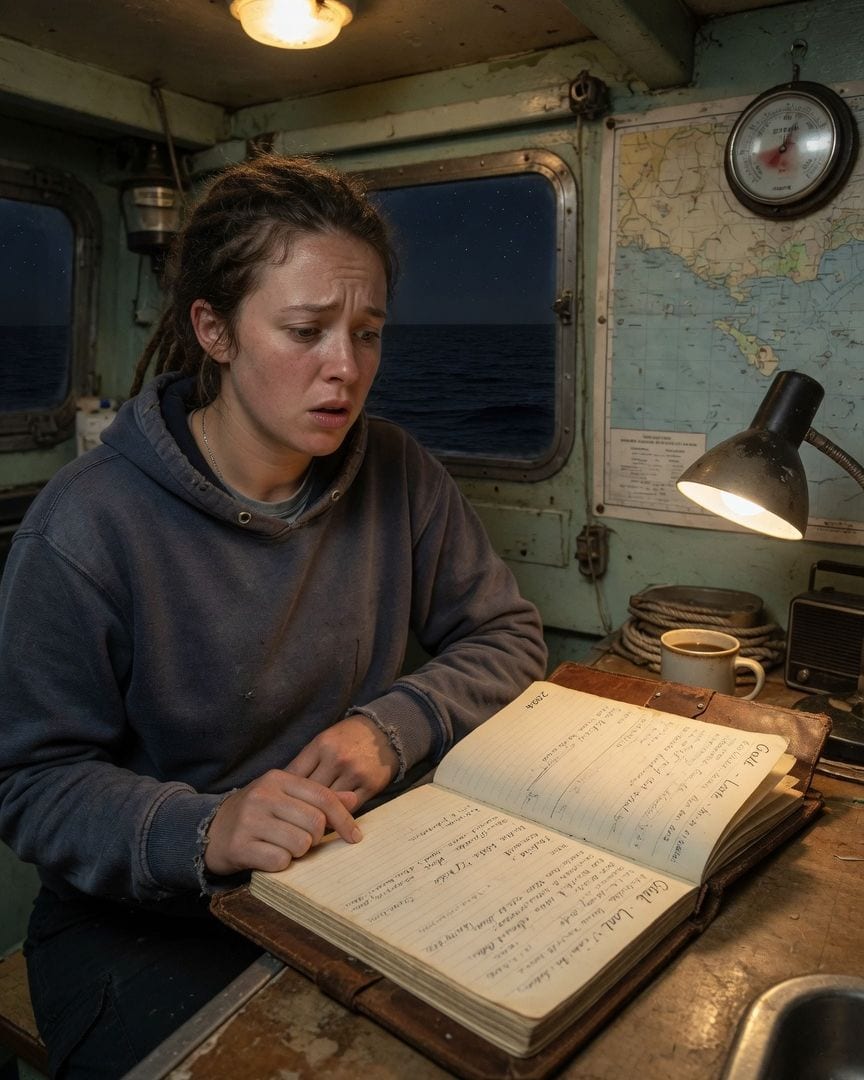
My skipper's logbook showed tomorrow's gale already written, in his dead father's hand, from 1969. I whistled on deck.
Working as a deckhand on the Skerry, I accidentally whistled, breaking a quiet rule Benjamin the skipper had given me. Later, I found the ship's logbook open to today's date, with an entry reading 'Gale - Loss' and the year '1969,' written in Benjamin's long-dead father's hand. He drowned off this very boat in 1969.
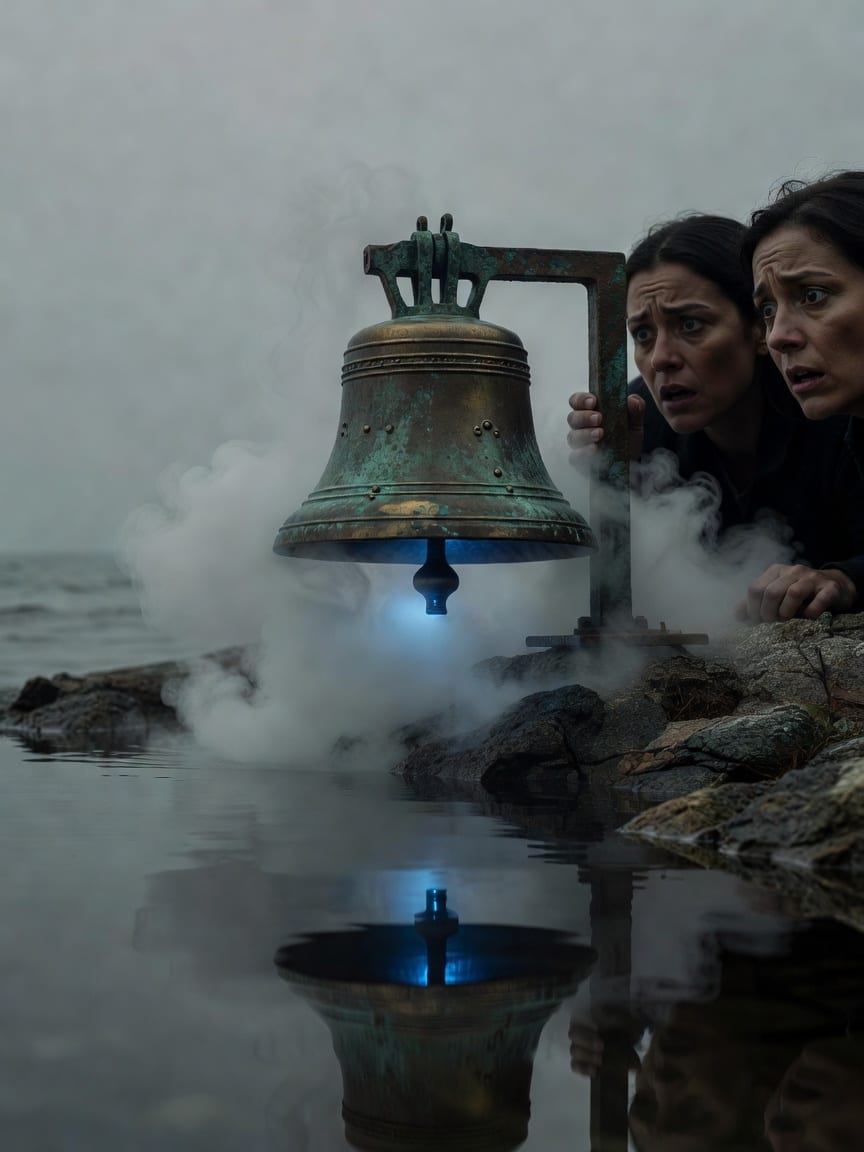
The fog bell on the point rings itself on still nights. The framed log at the yacht club lists eleven calm evenings it rang – each entry beside a boat that never came home.
Moving to a quiet coastal town, I found myself drawn to an old logbook at the yacht club. It recorded the fog bell ringing on flat-calm nights, each instance tied to a boat that simply vanished. Then, I found my own boat's name, 'The Osprey,' penciled at the bottom, marked with an unfinished, cryptic symbol.
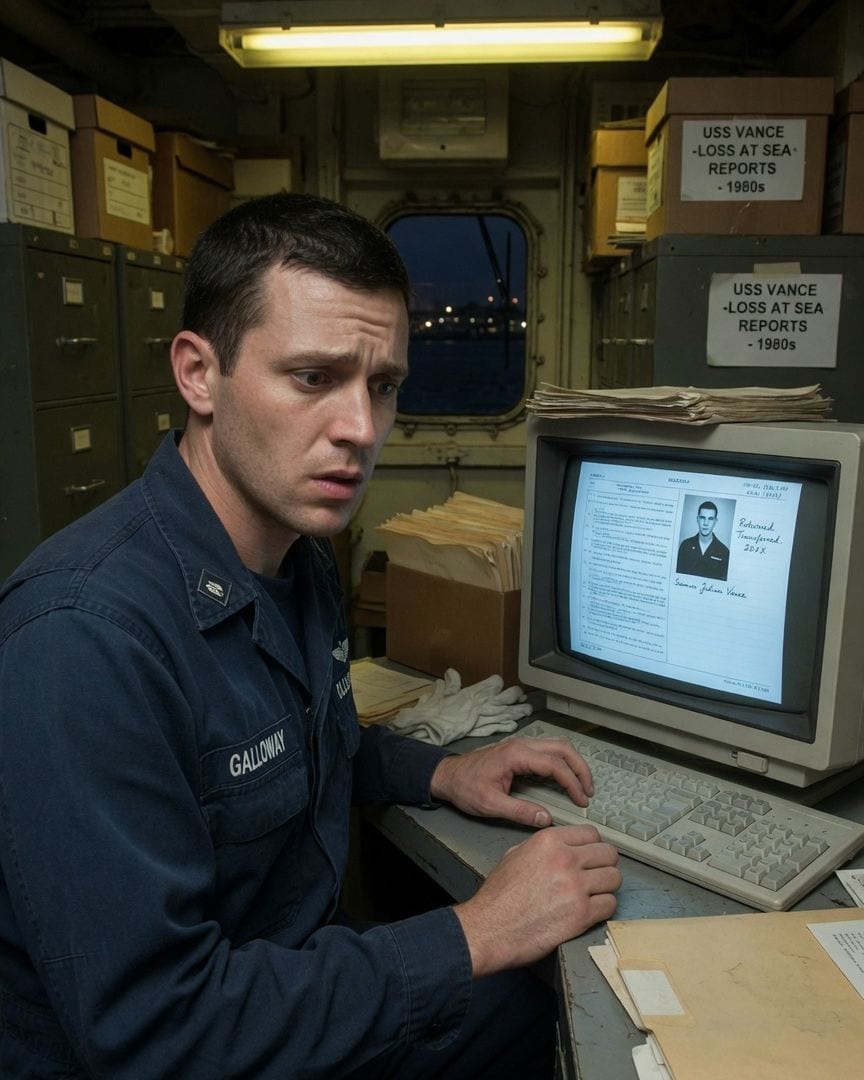
Petty Officer Galloway logged a sailor onto his ship. The man died at sea 40 years ago.
Petty Officer Joel Galloway scanned a sailor's ID on the USS Vance quarterdeck. The man's name, 'Seaman Julian Vance,' and his out-of-date uniform pricked at Galloway's memory. Later, the ship's berthing count came back one over, with an extra entry in the system but no physical body.
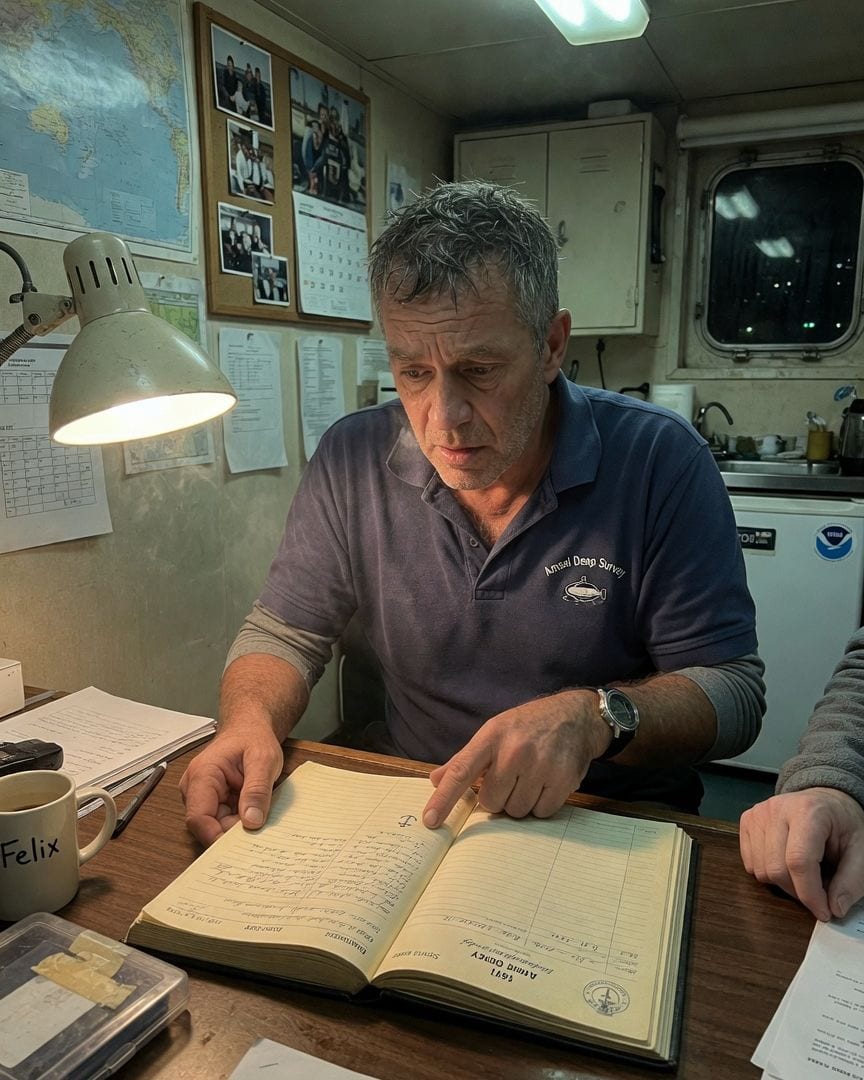
On his final deep-sea survey, a submersible pilot watches a 32-year-old Cold War wreck's rudder shift two degrees.
Deep-sea surveyor Hugo Amsel embarked on his final major dive, anticipating a quiet retirement after decades exploring the crushing pressures of the deep. His submersible's lights cut through the murky green, revealing the *Wynn Portal*, a sealer vanished in 1991, eerily preserved with unnervingly clear windows, free of any marine growth. Then, the inexplicable: the wreck's rudder angle indicator, softly lit, twitched two degrees further to starboard. Later, inside the wheelhouse, Hugo found the ship's official logbook, its final entry dated three days *after* the vessel's recorded disappearance, hundreds of miles north. How could a ship vanish, only to log a journey days later, from a place it never reached?
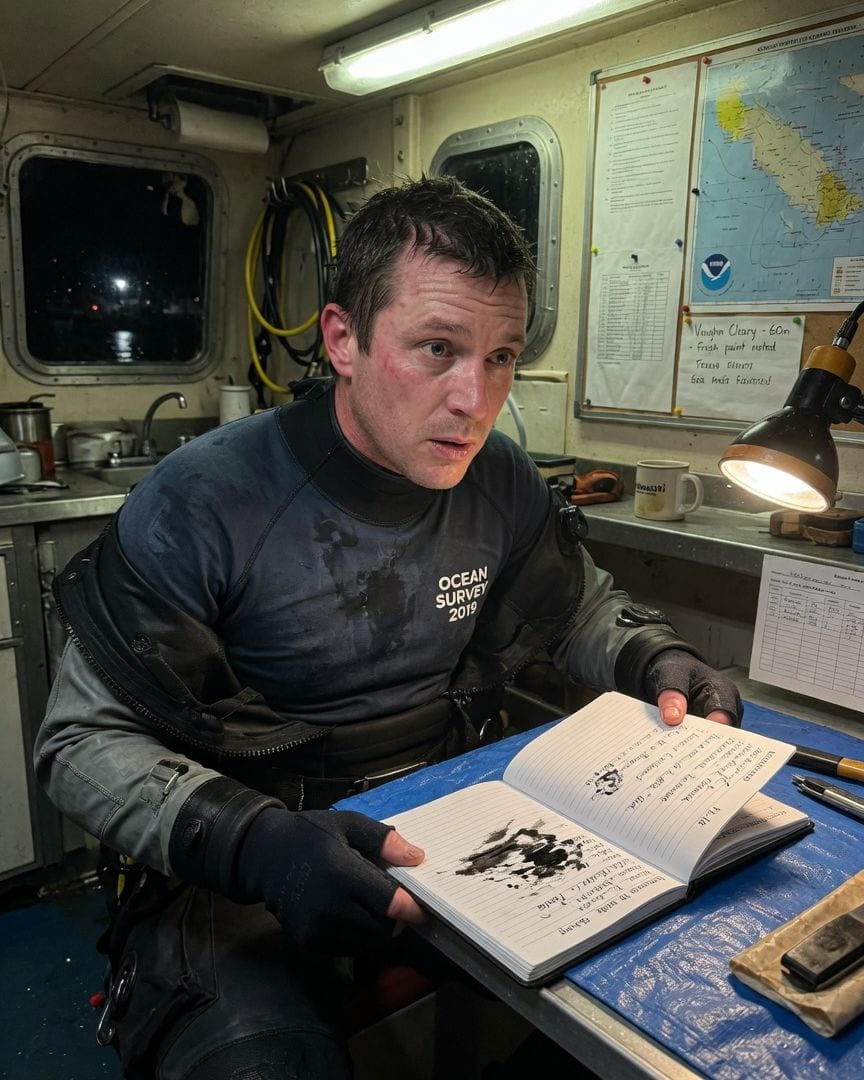
A deep-sea diver finds fresh paint on a sunken ship’s hull. It’s his dead grandfather’s distinct hand.
Deep-sea diver Teague Orrin knew the ocean's cold, indifferent blackness intimately as he descended sixty meters to the transport ship Vaughn Cleary. He was there to uncover the mystery surrounding his grandfather, Howard, pulled from her crew list days before she sailed, never speaking of it again. Teague's light swept the hull, revealing impossibly bright, fresh white paint over marine growth, bearing his dead grandfather's distinct hand. Dismissing skepticism, he returned to the wreck, discovering a miraculously intact captain's quarters and a bolted-down safe. Inside, a logbook awaited, its pages remarkably preserved, holding entries that continued *after* the ship was lost, with today's date still wet on the ink.
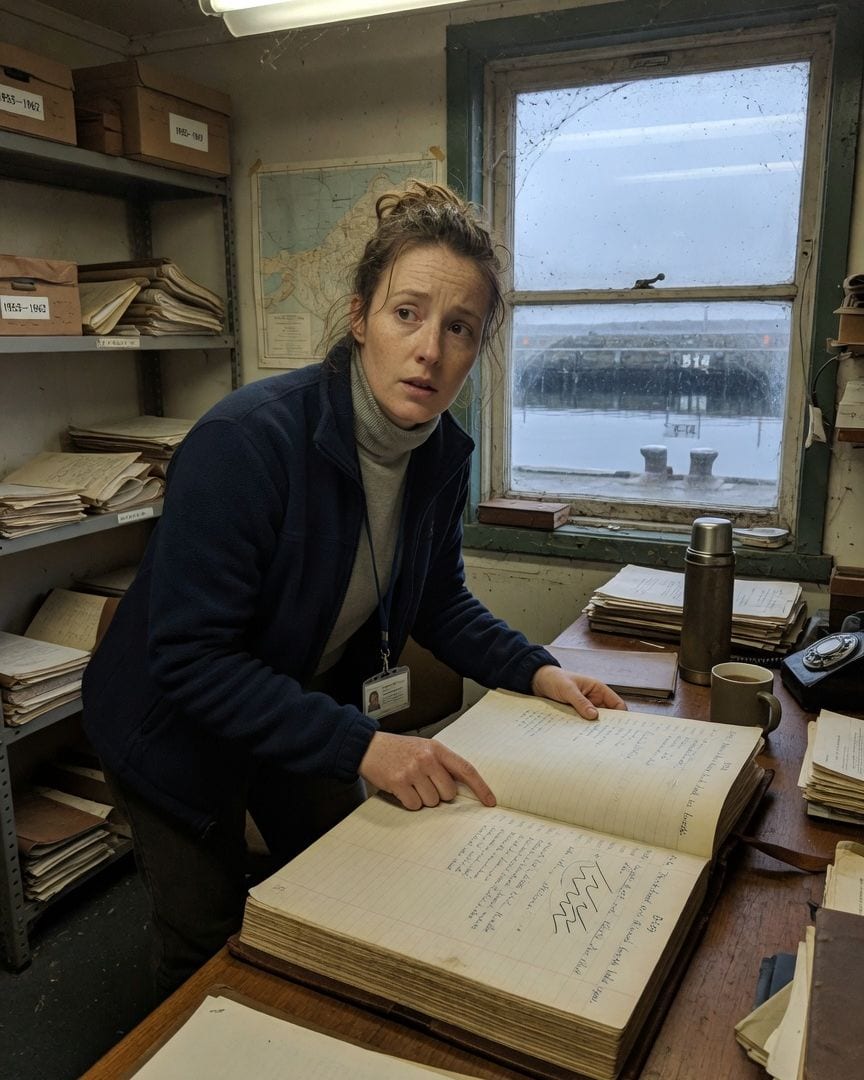
My harbour ledger shows Berth 14 let to a trawler every few years, but it's always empty. Each entry reads 'not returned to sea, berth held open'.
My job as Harbour Master's Assistant is managing the berth ledger, tracking every vessel. But Berth 14 holds a strange paradox: my book says it's let, yet it's always empty. Each entry for that berth closes with the same cryptic note – 'not returned to sea, berth held open' – a pattern stretching back to 1955.