The hill behind Starcross village is scorched black every seven years. No fire brigade ever logs a call.
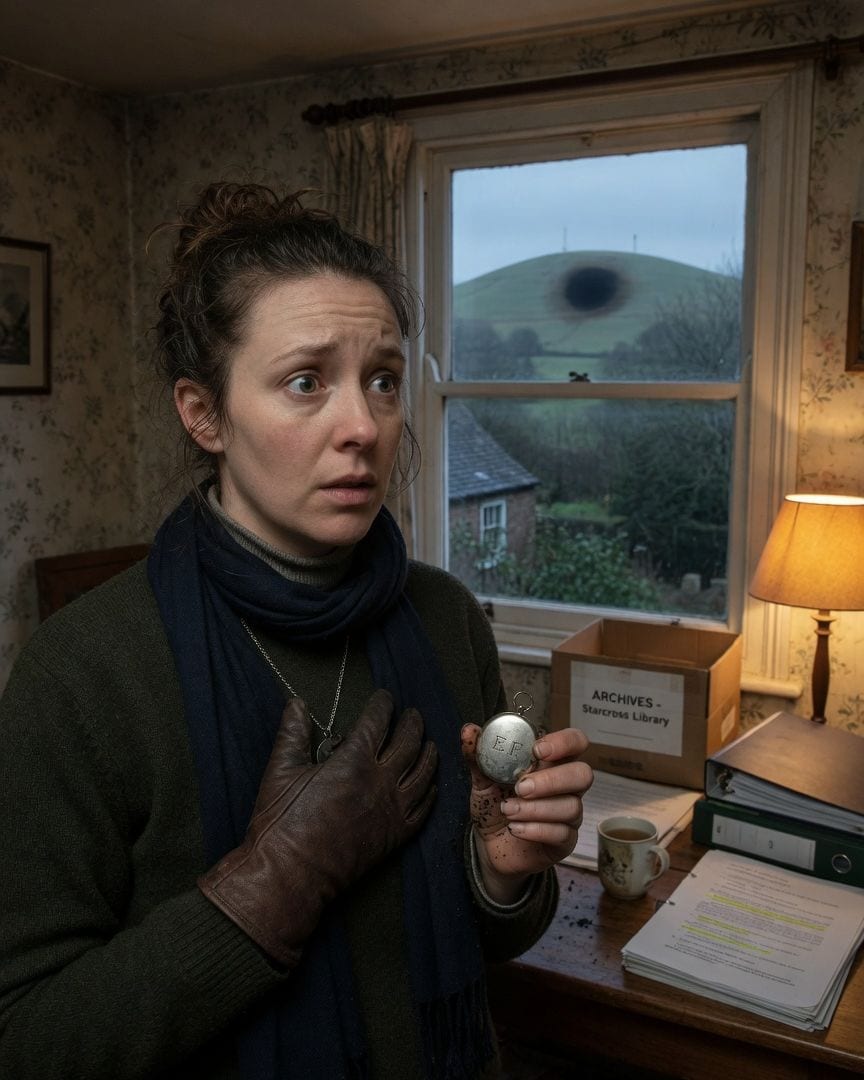
The first thing I noticed when I moved to Starcross, even before I’d properly unpacked, was the hill. Beacon Hill, everyone called it.
A prominent, rounded hump of land behind the village, visible from my cottage window on Elm Street, especially in the mornings when the mist hadn’t quite cleared.
It should have been green, even in late autumn, but there was a distinct patch near its summit that was utterly, uniformly black. Not a patch of shadow, but actual scorch. Like a permanent scar.
I asked around, naturally. "Oh, that's just where the beacon is lit," old Mr. Henderson from next door told me, his eyes crinkling. "For coronations, you know. Important events." It seemed a reasonable enough explanation, if a little quaint.
But the scorch mark was too… precise. Not the spread of a wildfire, nor the patchy burn of an accidental camp bonfire. This was a deep, unyielding blackness, a perfect circle.
And coronations, as I recalled, weren't exactly a seven-year occurrence.
A quiet wrongness settled in. My background in archival research, years spent sifting through public records, meant I wasn't content to let a contradiction lie.
The Starcross Parish Council minutes were publicly available, tucked away in dusty binders at the library. I found them easily enough. And there it was, an entry every seven years, without fail: "Motion to light the beacon as agreed. Unanimous."
Always unanimous. Always agreed. No mention of a coronation. Just… as agreed.
Then the fire brigade logs. I called the regional office, then the smaller, local station. They were helpful enough. "Beacon Hill, you say? No, ma'am, no calls for a fire on Beacon Hill in the last fifty years.
Not a single one. Why, is there one now?" I hung up, the receiver heavy in my hand. No calls. No fire. But the hill was scorched. Black. Every seven years.
A deep, quiet hum of unease began in my chest.
The contradiction gnawed at me. I couldn't shake the image of that perfectly circular black mark against the fading autumn green. A week later, compelled by something I couldn't quite name, I decided to hike up Beacon Hill myself.
The air was crisp, carrying the scent of damp earth and distant woodsmoke, but as I ascended, that familiar smell gave way to something else: a faint, acrid tang, metallic and cold, almost like old, burnt wiring, despite the open air.
Up close, the scorch mark was even more unsettling. It wasn't ash and charcoal you’d expect from a wood fire. The earth itself was charred, a deep, unnatural blackness that felt strangely smooth under my boots.
I bent down, running my gloved hand over the blackened soil. It wasn't powdery or gritty; it felt almost glassy, like obsidian, yet still undeniably soil. It was ancient, clearly, but there were sections where the black seemed… newer. Fresher.
A thin layer, almost a veneer, over the older burn. How could something be ancient and fresh at the same time?
I tried to tell myself it was just erosion, or the way the soil settled, but the thought didn't stick. It didn't feel right.
As I explored the edges of the circular burn, my fingers brushed against something cold and solid, half-buried in the strange, smooth ash. Curiosity overriding caution, I knelt and dug it out.
It was small, no bigger than my thumb, and tarnished dark, but unmistakably silver. A locket. Ornate, with delicate scrolling patterns I could just make out beneath the grime.
On its back, faintly, almost worn away, were two etched letters: 'E.F.'
I turned it over in my palm. It felt impossibly old, yet too well-preserved for something that had supposedly lain buried in the elements, especially in a recurring burn site. A lost trinket, perhaps? A hiker, a child?
But what were the odds of finding it here, precisely here, in this impossible scorch mark that should never have existed? My gut clenched. The image of those Parish Council minutes, the empty fire logs, flashed in my mind.
This locket, cold and heavy in my hand, suddenly felt like a thread, waiting to be pulled. And I had a terrible feeling about where it might lead.
I took the locket to the small police station in the next town over, hoping to avoid any local gossip.
The officer behind the counter, a man with tired eyes named Sergeant Miller, looked at it, then at me, then back at the locket. He picked it up with a slow, deliberate movement, turning it over in his calloused fingers.
His brow furrowed as his gaze landed on the faint 'E.F.'
"Well, I'll be," he murmured, more to himself than to me. He sighed, a strange, heavy sound, like air escaping a deflating balloon. "This… this looks like Eileen Fairfax's. Little Eileen. Disappeared decades ago. Almost forty-two years now, I reckon."
He looked at me, his eyes holding a depth of sorrow I hadn't expected. "Officially, she drowned in the lake. A tragic accident, they said. Her locket was never found."
I stood there, my hand still outstretched, as if expecting him to return it. But he just held it, staring at the tarnished silver. Eileen Fairfax. A child. Vanished decades ago.
Forty-two years ago… that would place her disappearance squarely in one of the seven-year beacon cycles. One of the 'agreed' lightings.
And her locket, presumed lost to the lake, had been found not in water, but buried in the impossibly scorched earth of Beacon Hill. The cold dread spread through me, numbing my fingers.
This locket, clutched in Sergeant Miller's hand, screamed a story far different from any I had heard.
The police offered no further investigation, citing the official ruling, the passage of time, and the general vagueness of 'old local rumours.' I wasn’t surprised, but the dismissal only sharpened my resolve. I had to know.
The next morning, I walked to the Starcross village library, its stone façade worn smooth by centuries of weather.
Deborah Sullivan, the librarian, a woman in her fifties with spectacles perched on her nose and a seemingly encyclopedic knowledge of local gossip, greeted me with her usual warm, if slightly fluttery, smile.
"Christine, dear! Another book for your new cottage?"
"Just doing a bit of local history research, Deborah," I said, trying to keep my voice light. "I was wondering if you knew anything more about Eileen Fairfax? I stumbled across a mention of her disappearance."
Deborah's smile faltered, replaced by a sudden, uncharacteristic stiffness. Her gaze darted past my shoulder, then back to me, avoiding my eyes. "Eileen? Oh, a terrible tragedy, dear. So sad. The poor little thing, drowned in the lake, wasn't it?
Such a young age. We don't speak of it much, out of respect for her family, you understand." She began tidying a stack of newspapers that were already perfectly aligned, her hands moving with a nervous energy.
The subject, it seemed, was closed.
I let it drop for the moment, but later, I delved into the library’s microfilm archives, poring over old local newspapers. I cross-referenced the seven-year beacon cycle dates, marking them meticulously. And the patterns emerged.
Vague reports of other disappearances, always around the same time as a 'beacon event,' though never explicitly linked. A farmer's boy, 'lost to the marshes.' A visiting artist, 'presumed to have moved on.'
A young woman, 'tragic accident on the old hiking trail.' The language was always soft, euphemistic, devoid of detail or follow-up. No police investigations, no public appeals, just a quiet, almost imperceptible deletion from the community.
A hushed silence that stretched back generations.
While reviewing an old binder of Parish Council records from the early 1900s, I heard a cultured cough behind me. "Fascinating, isn't it, the rich tapestry of our village's past?"
It was Oscar Caldwell, a distinguished-looking man in his early seventies, known for his impeccably tailored tweed jackets and his deep roots in Starcross. He smiled pleasantly, his eyes crinkling at the corners, but something in their depth felt… flat.
Untouched. "Researching a book, are we, my dear?"
"Just curious about the local history," I replied, feeling a sudden chill, despite his warmth. "I was looking into the beacon and some of the older village tales."
He chuckled softly. "Ah, the beacon. A quaint tradition. But I assure you, dear Christine, Starcross has many more charming histories to uncover. Perhaps you'd find our founding families, or the old mill, more… enriching?
These old tales can be rather dry, don't you think?" His calm deflection felt less like politeness and more like an unspoken directive. A warning, perhaps.
A few days later, I returned to the library, hoping to re-examine some of the parish council minutes I’d previously accessed. The ones with the cryptic "light the beacon as agreed" entries.
Deborah Sullivan met me at the door, her usual fluttery demeanor replaced by an uncharacteristic stiffness.
"Oh, Christine," she said, her voice thin, avoiding my eye. "Everything you were looking at has been… tidied away. Someone thought it best to reorganize the older records. For easier access, you know."
Her hands wrung themselves together, betraying her forced composure. Easier access? I felt a prickle of acute unease. They had been perfectly organized already.
Later that evening, as I walked the quiet lanes back to my cottage on Elm Street, a chill wind whistling past my ears, I noticed it.
A car, parked a little too long on a deserted stretch of road, its engine off, lights dark. Oscar Caldwell’s sedan. As I drew level, he turned his head slowly.
He gave a slight, almost imperceptible nod, a thin smile playing on his lips. His expression was unreadable, but the message was clear. I was being watched.
The next morning, I found it. A small, creamy note, folded precisely, tucked under my front door. No envelope, no name. Just a single, elegant script: "Some stories are best left unread, dear. Starcross has its ways."
The polite warning was clear, and the threat, chillingly, was implied. My heart hammered against my ribs. They knew what I was doing.
The fete was supposed to be a distraction, a way for the village to pretend everything was normal. But for me, it was a target. I spotted Greg Jennings, a long-serving Parish Council member, manning a stall for homemade jams.
He was a portly man with a perpetually anxious expression, precisely the type who might crack under pressure. I approached him, the silver locket tucked into my palm.
"Mr. Jennings," I said, my voice low, "I need to talk to you. About Eileen Fairfax. And the beacon." I laid the locket on his trestle table, the tarnished silver stark against the cheerful gingham cloth.
Then I cited the discrepancies: the council minutes, the fire logs, the hushed disappearances.
He stammered, his face flushing crimson. "Now, look here, Christine, I don't know what you're talking about. Eileen was a tragic accident. The beacon, well, that's just a tradition. Village pride."
He tried to dismiss me, waving a hand, but his eyes kept darting to the locket, then back to my steady gaze. My persistence, combined with the cold, undeniable weight of the evidence, finally cracked his composure. His breath hitched.
"Alright, alright," he whispered, wiping a bead of sweat from his brow. "Just… not here." He looked around nervously. "Meet me at the old town hall. Back room. Ten minutes. Don't tell anyone."
Ten minutes later, I found him in a dusty back room of the old town hall, surrounded by stacks of forgotten ledgers. He pulled out a heavy, leather-bound book, distinct from the official minutes, its cover devoid of title.
His hands trembled as he opened it.
"It's not about lighting the beacon, Christine," he whispered, his voice strained, barely audible over the hum of the old building. "It's about the agreement." He pointed to a section titled 'Annual Presentments.'
Beneath the public 'vote to light the beacon as agreed' entry, each seven years, was a corresponding, carefully coded entry. Not about a fire. But about a person. A name, or a description.
"We don't light it," Greg confessed, his eyes wide and haunted, darting around the room as if expecting to be overheard. "It lights itself. It's a signal. From the lake. And every seven years, it demands… a reckoning. A payment.
If it isn't sated, it takes more. We just… manage it. Make sure it's only one. The 'Coronation' is a story to keep outsiders from asking too many questions. To keep the truth hidden."
The earlier clues snapped into sickening focus: the perfectly scorched hill, not by fire, but by something else. The empty fire logs. The 'Coronation' story, a flimsy lie. The hushed disappearances, now terrifyingly explained. It was never about a fire.
It was about a sacrifice. A grim, generations-old pact.
Greg Jennings, trembling, pointed to the last few pages of the hidden ledger. His finger traced the familiar seven-year cycle, the subtle codes beneath each 'agreement' entry: 'Stranger, lost at crossing,' 'Loner, path to the north,' 'Outsider, river bend.'
He explained how the town, for generations, had quietly identified individuals who could be 'presented' to the lake's presence, minimizing disruption to the established families. A grim, efficient system of self-preservation.
A chill seeped into my bones, colder than the autumn air.
My gaze, drawn by a terrible magnetism, drifted to the final entry, the one for the upcoming cycle, just five years away. It wasn't a name, but a description, eerily specific. My breath caught in my throat.
'Newcomer, Elm Street, East-facing window.'
The ledger fell from my numb fingers, clattering on the dusty floorboards. The chilling implication echoed in the silent room, a cold, empty sound. My own house. My own window. It wasn't just a pattern. It was a prophecy.
And I was the next entry.
I found Oscar Caldwell at the village common, watching children play, his tweed jacket impeccable even on a blustery afternoon. I didn't need to explain.
The moment he saw me, the tremor in my hands, the haunted look in my eyes, he knew. He simply nodded, a slow, grave movement, and led me to a secluded bench beneath an ancient oak tree.
He listened calmly as I spoke, my voice a ragged whisper, recounting Greg’s confession, the ledger, my own name written in that terrible code. His eyes, though sad, betrayed no surprise.
"The beacon is merely a marker, Christine," he explained, his voice low and steady, a counterpoint to my frantic heart. "A natural phenomenon, tied to the lake's deeper currents, or perhaps something beneath it.
When it appears, the presence comes ashore." He paused, looking out at the shimmering surface of the lake in the distance. "It's not malevolent, not in the way you understand it. It simply… takes.
And if it isn't sated with one, it takes many."
He recounted the history, generations of Starcross residents learning to anticipate the cycle, to manage the 'presentment.'
The 'Coronation' story, he confirmed, was invented by their ancestors, centuries ago, to provide a mundane explanation for the beacon's appearance and the subsequent, carefully orchestrated disappearances. Eileen Fairfax, he revealed, was an 'unfortunate accident.'
An attempt to save her failed, and the presence, unsated, took two others that cycle: the fisherman who tried to pull her from the water, and the small child who watched from the shore.
The 'agreement' in the minutes wasn't a vote to light a fire; it was the community reaffirming its grim pact, ensuring the town's survival.
Every clue, every hushed word, every scorched patch on the hill, now coalesced into a horrifying, coherent truth. A truth so absolute, it felt like a physical weight pressing down on me.
I tried to argue, to appeal to his humanity, to whatever sliver of decency might remain in a man who calmly explained such horrors. My voice was hoarse.
I spoke of exposure, of bringing the outside world's justice down on Starcross.
Oscar merely shook his head, a faint, sad smile on his lips. "You don't understand, child. This isn't justice. This is survival. The town has agreed. For generations.
There is no 'outside world' that can comprehend this, let alone stop it. They would call us mad. And then, when the presence came, unchecked, they would be taken too. All of them.
As it almost happened, before the agreement was made." He looked at me, his gaze unblinking. "Your initial inquiries, your persistence, your digging… it marked you. Not as a rebel, Christine. But as a suitable 'candidate' for the next cycle.
You were seen. You were noted."
The words hit me like physical blows. There was no argument, no appeal. Just the cold, hard logic of centuries of desperation. The futility of fighting a community so deeply entrenched in its grim pact was suffocating.
The 'agreement' was absolute, a silent, unyielding force. I was not being hunted. I had been selected. There was no escape, no undoing. Only the chilling certainty of what awaited me.
My hands, which had so eagerly dug for the truth, now felt heavy, useless.
I remain in Starcross. My inquiries, of course, have ceased. The locket of Eileen Fairfax was quietly returned to the Parish archives, no longer a piece of evidence, but a relic, another token of a forgotten truth.
The town continues its placid existence, its residents maintaining their collective, too-smooth agreement.
Now, when I walk through the village, I see the knowing glances, the subtle shifts in conversation that fall silent when I approach, the quiet watchfulness in the eyes of my neighbors.
I am simply another member of the community, now privy to its terrible secret, waiting for the cycle to turn. The dread has given way to a profound, unsettling acceptance.
Five years later, the days shorten, and the air grows cold. The date of the next beacon 'lighting' approaches. I sit by my east-facing window on Elm Street, watching the twilight deepen over the silent village.
I know the scorch marks will appear on the hill, just as they always have. I know the lake will stir. And I know, with a chilling clarity, that the town has made its agreement. My agreement now, too.
The dread isn't in what will happen, but in the quiet, absolute certainty of it. The wind rustles through the dry leaves outside, carrying a faint, distant scent of ash. I feel a profound, terrible calm.
The next cycle is upon us. And Starcross will be safe.
If this one got to you
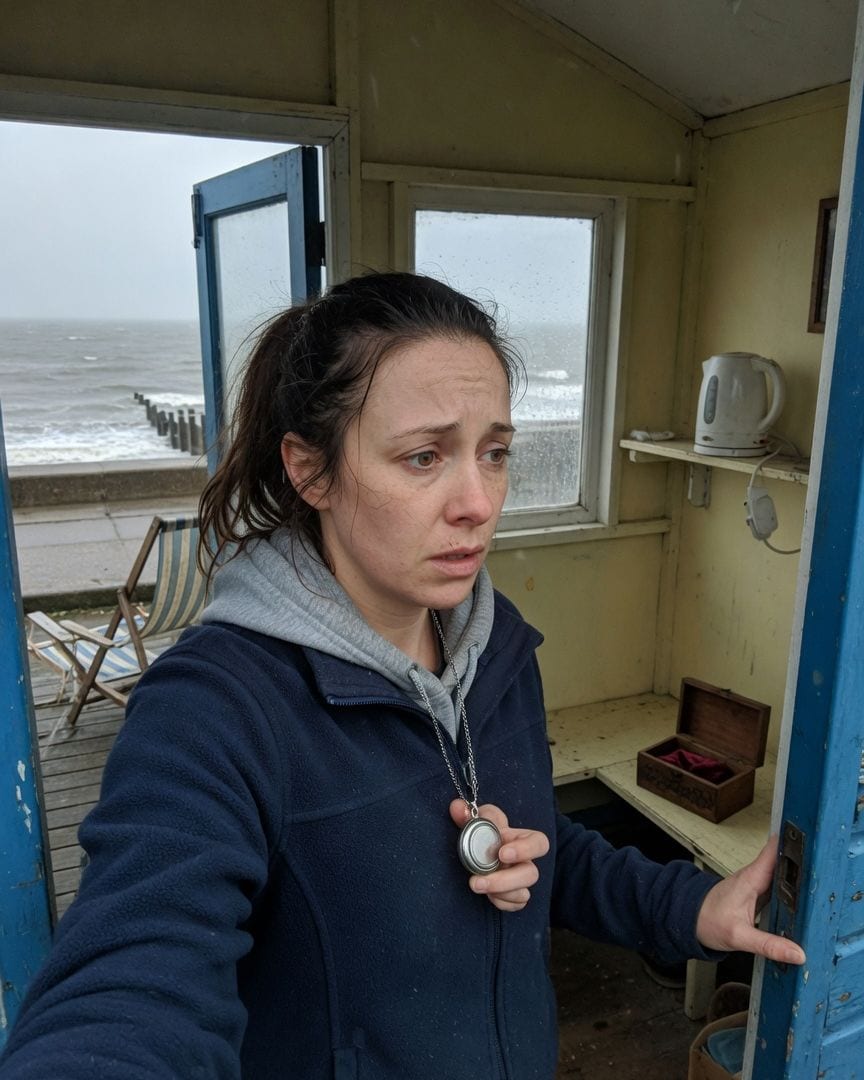
My beach huts run 1 to 60. On Sunday, past 60, was a Hut 61, weathered, with a kettle warm inside, and no record of it ever existing.
I've managed the sixty beach huts on the promenade for five years, knowing every detail. But one Sunday, a new one appeared: Hut 61. Inside, the air was warm and a kettle still steaming, as if someone had just stepped away, yet my booking book holds no record of it.
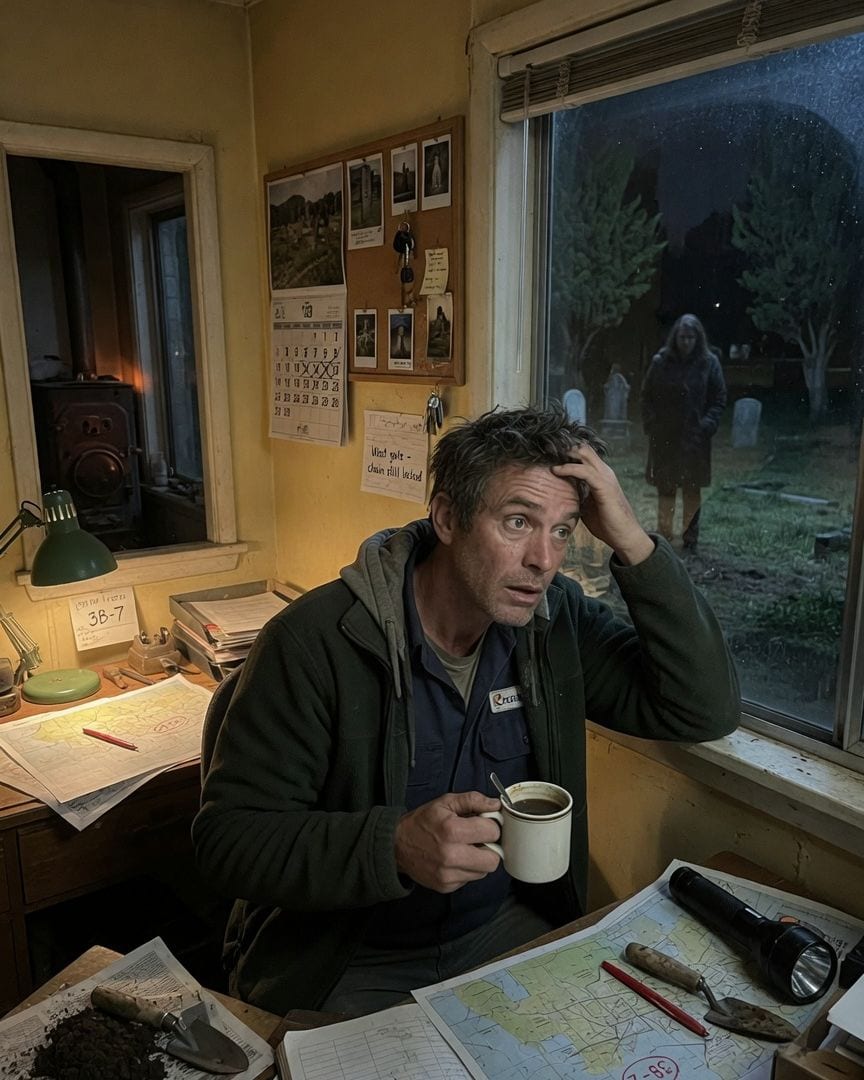
My cemetery lodge overlooks a woman visiting an empty grave near 3 AM most nights. The west gate she uses has been chained shut since autumn, its lock untouched.
As the cemetery's night caretaker, I'm used to the quiet hum of the lodge. But for three weeks, a woman has appeared nightly at plot 3B-7, a silent mourner in the deep night. What chills me is how she leaves: walking straight through the west gate that's been chained and padlocked shut for eight months.
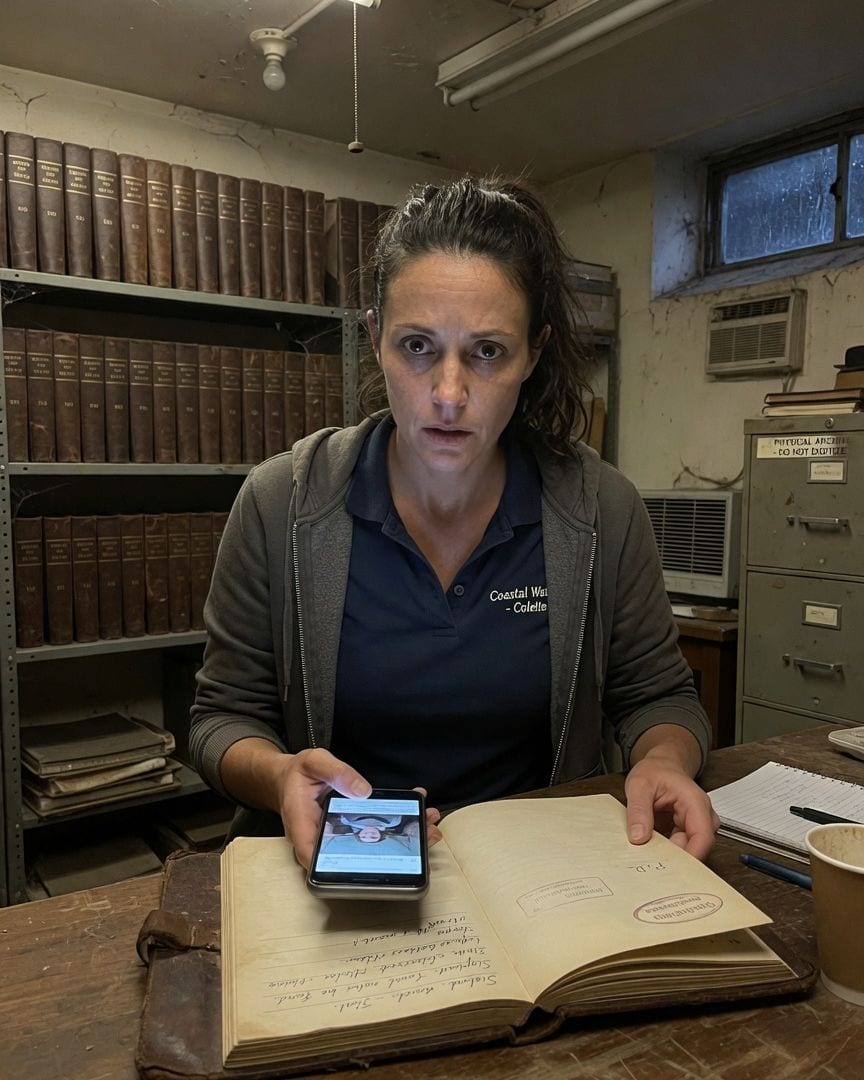
My coastguard log noted Sighting 9 again tonight, a light where no vessel showed. The old logs carry Sighting 9 off Skerry Point at 3:14am every tenth year since 1954, always 'nothing found,' always 'send no boat.'
On my watchtower night shift, the radar screen glowed green and the ocean was quiet. Then, a familiar light appeared off Skerry Point, exactly on cue, just as it had every tenth year for decades. But digging deeper, I found a hidden stamp in an old logbook: 'Operation Skerry. Status: Complete.' It left me with a chilling sense of finality.
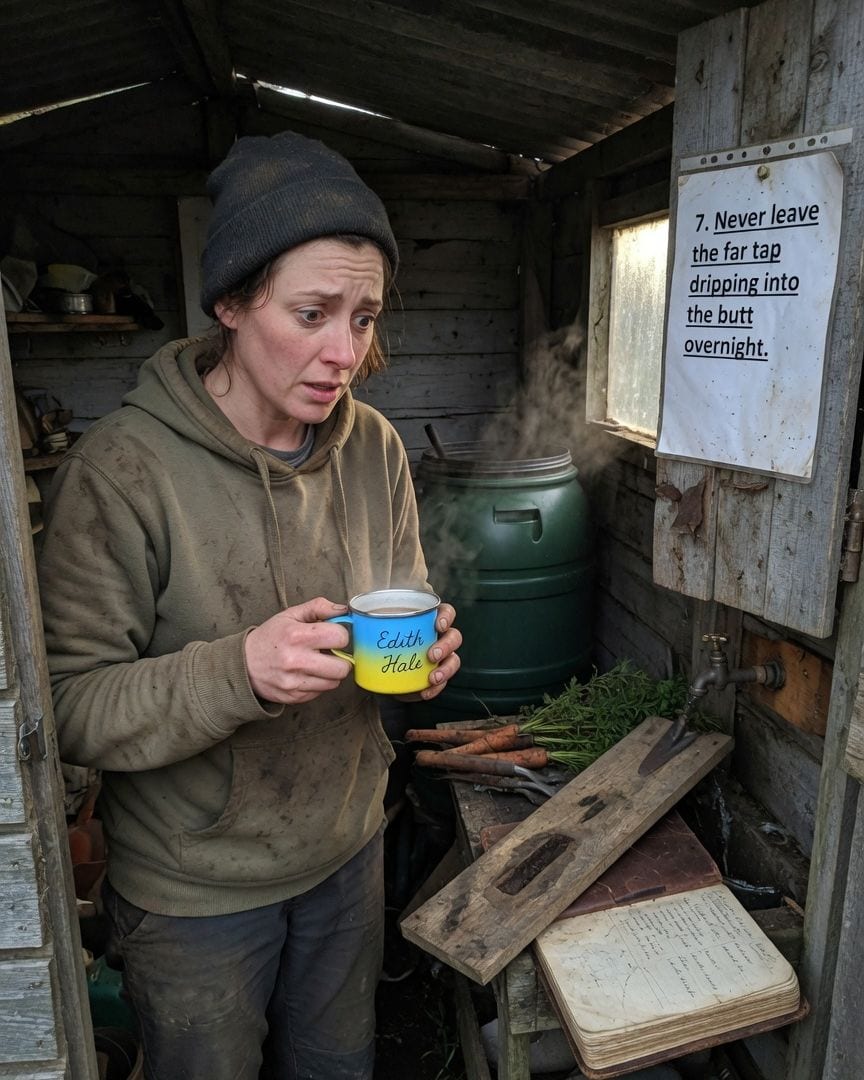
The one night I left the tap dripping, my allotment water butt was full to the brim and warm to the touch — with a child's unrusted tin cup floating on top.
Moving to Blackwood, I hoped my allotment would be a fresh start. But the shed's rulebook warned, 'Never leave the far tap dripping.' One morning, my water butt was full and steaming, an unnerving warmth rising from it. Inside, a child's tin cup floated, unrusted, etched with the name 'Edith Hale'.
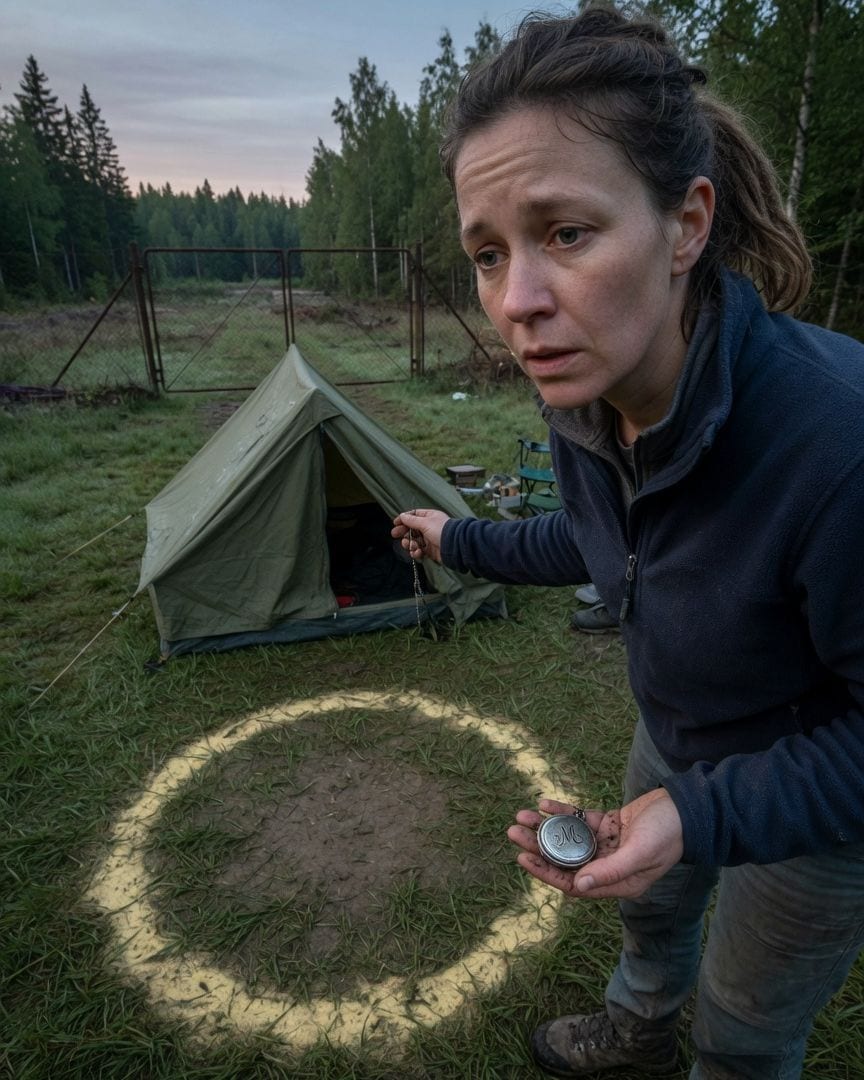
My tent left a flattened ring in the grass, but an older one was already there, worn into the turf, exactly tent-sized, for thirty years.
As the new camp host, I ignored the warden's odd rule about pitching my tent on a particular flat spot. That night, something enormous walked in slow, methodical circles around my tent. The next morning, I found a deeply worn, old ring in the earth beneath my tent, and later, a tarnished silver locket buried there.
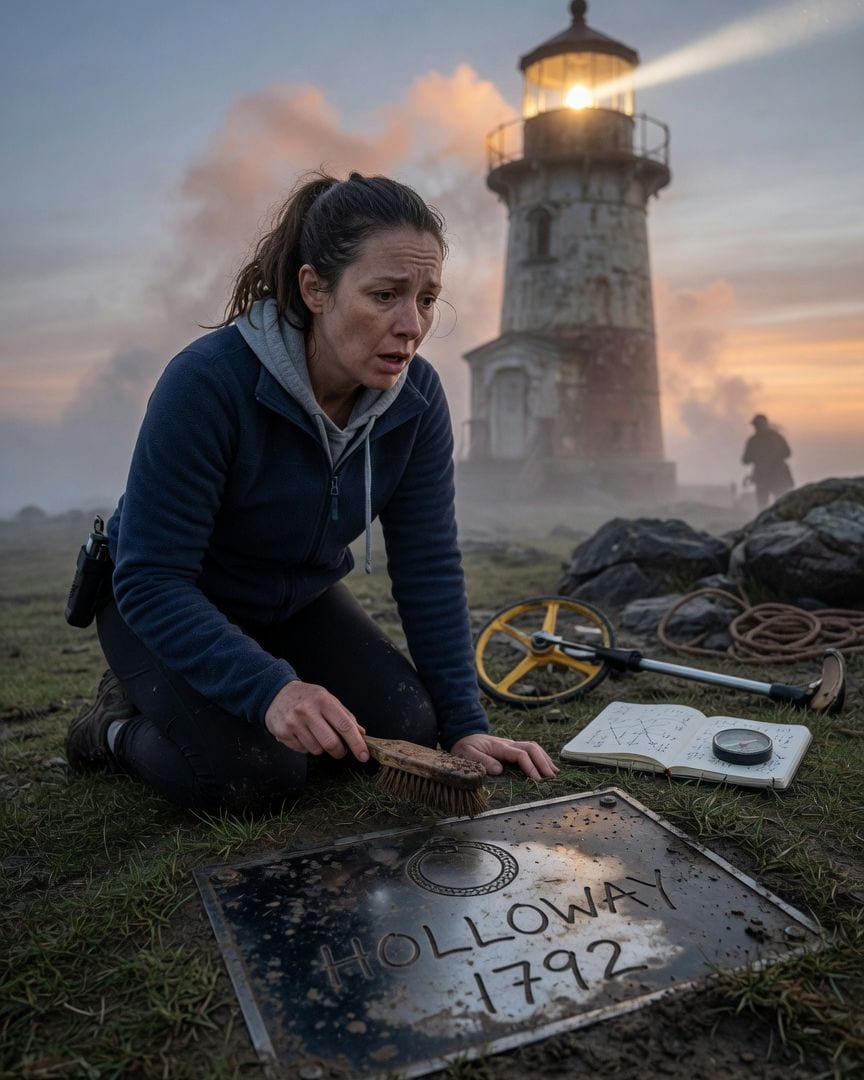
My coastal path just kept curving me back to the lighthouse. Nine miles walked, the same fisherman coiling rope, but I never left.
My morning ritual is a brisk walk along the coastal path. But last Tuesday, after what felt like an hour, I found myself back at the lighthouse, having walked miles to nowhere. My step-counter read 4.5 miles, yet the same fisherman was still coiling the same rope right where I started.