A hospital is billing me for a two-night stay in Cleveland — with my insurance, my wristband scans, and a discharge form in my own signature. I spent that whole week home alone, and I've never been admitted anywhere.
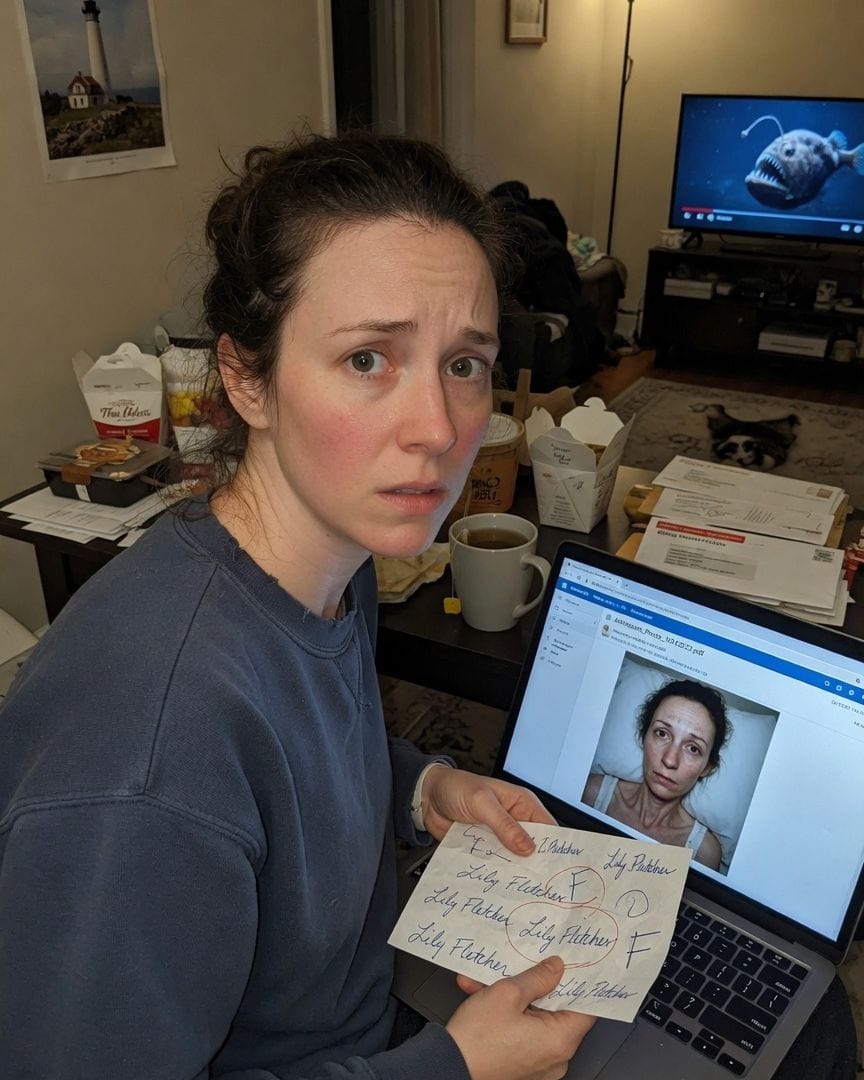
The first bill arrived in my inbox, a stark white rectangle against the usual stream of junk. Cleveland General Hospital. Unpaid balance: $8,700. For a two-night stay. Under my name, Lily Fletcher, and my insurance.
I stared at it, then at my calendar. The dates listed – October 12th to 14th – were a week I’d spent entirely at home, alone, catching up on old movies.
I hadn't been to Cleveland in my life, let alone admitted to a hospital. My initial reaction was annoyance, then a creeping disbelief. This had to be a mistake, a scam.
I called the billing office, polite but firm, explaining the obvious error. The woman on the other end, Karen Underwood, was equally polite, but unyielding. "Ms. Fletcher, we have your full admission paperwork here.
Your date of birth, your policy number, a wristband barcode scanned at every medication round…" She recited my details with unsettling accuracy. "We even have a discharge summary, signed by you, agreeing to follow-up."
She offered to email the complete file. The dread was a cold knot in my stomach. The world, or at least this record, was insisting something happened that simply didn't.
The email arrived moments later, a PDF attachment packed with medical jargon and official-looking stamps. I opened it, my heart hammering. Every page confirmed Karen’s claims. My full name, address, and contact details were correct. My insurance information was precise.
There were vitals, medication logs, and nursing notes detailing a routine recovery from a minor, unspecified procedure. The discharge summary, dated October 14th, was particularly chilling. It outlined post-care instructions and, at the bottom, a signature. It was unmistakably mine.
The looping 'L' of Lily, the sharp 'F' of Fletcher. I’d signed that exact way since high school, a habit I’d picked up from my grandmother. I pulled out a pen and a piece of scrap paper.
I wrote my name, then again, and again, trying to mimic the signature on the document. It was identical. The pressure, the slant, the specific flourish on the 'r'—all there. But I hadn't written it.
Not that week, not in Cleveland, not in any hospital bed. I had been home, watching a documentary about deep-sea creatures, ordering takeout. My mind reeled, searching for any rational explanation. Identity theft?
But why a fake hospital stay, complete with my insurance? Why not credit cards, or a loan? And how could a thief replicate my signature with such uncanny perfection, not just a passable imitation, but mine?
The thought was a cold, alien presence in my quiet living room. This wasn't just a billing error. This was… impossible.
I called Karen Underwood back, my voice tighter now, the initial politeness gone. I demanded to know how this was possible, how my signature could be on a document I’d never seen.
She put me on hold, then returned with a clipped, professional tone. "Ms. Fletcher, we have an admission photograph on file. It's standard procedure." She offered to email it to me. My fingers trembled as I clicked the attachment.
The image loaded slowly, pixel by pixel. It was me. My face, unmistakably. But gaunt, disoriented, framed by a stark white hospital pillow. A plastic wristband was visible on my left arm.
The photo’s timestamp confirmed the date of the Cleveland admission. My eyes were wide, vacant. I zoomed in, my finger tracing the faint, almost imperceptible scar just above the eyebrow – a scar I have never had.
The scar, or lack thereof, offered a sliver of hope. This wasn't me. But the face was. The contradiction gnawed at me. I spent the next few days deep-diving online, starting with 'Cleveland General Hospital' and 'phantom patient records.'
The results were sparse at first, mostly news articles about billing errors or insurance fraud. But then, buried in a niche forum for medical records professionals, I found a thread. 'Unexplained Patient Inserts.'
It detailed anecdotal accounts of medical records appearing in hospital systems with no corresponding patient. The details were vague, often dismissed as glitches, but the pattern was chillingly familiar.
One user mentioned 'specific doctors' names appearing repeatedly on these phantom discharge summaries. I cross-referenced the doctor listed on my discharge summary: Dr. Russell Abbott. He was a real doctor, a highly respected general practitioner in Ohio.
I found his clinic’s website, then his professional profiles. No mention of Cleveland General, a large urban hospital, only a smaller, private practice in a suburb of Cincinnati, hours away from Cleveland.
This was another piece of the puzzle that didn't fit. I decided to contact him, but not before digging deeper into the online rabbit hole.
I found a few scattered blog posts, personal accounts mirroring my own – bank statements showing purchases in towns they’d never been, car registrations in their name for vehicles they didn’t own, even a library card issued in a different state.
The common thread was always a record, an official entry, insisting on a reality that defied the actual experience. I started compiling these instances, a growing dossier of impossible facts, a pattern forming from the scattered wrongness.
My online research intensified. I started using VPNs and burner emails, a paranoia I couldn’t shake settling in.
I posted a query, carefully anonymized, on one of the forums I’d found, asking if anyone had traced the 'phantom inserts' to a specific doctor. Within hours, a new message landed in my inbox.
It was from an unknown sender, just a single line: "Cleveland was only the beginning, Lily Fletcher. Stop looking." My blood ran cold.
The message wasn’t a generic warning; it used my name, and it referenced the specific event I was investigating. Someone was watching. Someone knew what I was doing.
I deleted the post, cleared my browser history, and unplugged my router, feeling a profound, unsettling vulnerability in my own space. The next morning, a small, unmarked package was left on my doorstep.
Inside, nestled in crinkled tissue paper, was a single, used hospital wristband. It was identical to the one in the admission photo, complete with a barcode and the faded outline of a patient ID.
There was no note, no sender's address. Just the unnerving implication that whoever was doing this could reach me, directly, without leaving a trace. The hunt had turned. I was no longer just investigating; I was being observed.
I arranged a discreet meeting with Dr. Russell Abbott at a neutral coffee shop, far from his practice. He was a tired-looking man, his eyes framed by deep lines, but his demeanor was initially dismissive.
"Ms. Fletcher, I assure you, I have no record of treating a Lily Fletcher at Cleveland General. My practice is in Cincinnati." I placed the discharge summary on the table between us, pushing it gently towards him.
His eyes widened slightly as he saw his own signature, clear and confident. He picked it up, turning it over, his brow furrowed. "This… this is impossible." He looked at me, a flicker of fear in his eyes.
"I've never seen this document before." I pointed to the signature again. "It’s yours, Dr. Abbott. And my name is on it. For a hospital I’ve never been to, a stay I never had."
He swallowed hard, looking around the coffee shop as if expecting to be overheard. "There's… a program," he whispered, his voice barely audible. "It’s not supposed to be discussed.
Certain patient records, complete with fabricated details, are periodically 'inserted' into various hospital systems. We, the staff, are quietly instructed to process them. Sign the discharge summaries, update the logs. No questions asked."
He admitted he’d signed many such documents over the years, under veiled threats of 'career repercussions' if he didn't comply. He didn't know who was behind it, or why, only that it happened, and it was widespread.
"Your name, Ms. Fletcher, is one of hundreds I’ve seen. They’re called… 'ghost patients'." The term hung in the air, chilling me to the bone.
Every impossible detail clicked into place: the perfect signature, the photo that was me but not me, the online reports of 'phantom inserts.' It wasn't a glitch. It was a system. And I was caught in its gears.
Dr. Abbott, visibly shaken, reached into his briefcase and pulled out a small, encrypted USB drive. "I… I started keeping my own record. Just in case. A partial ledger of the names, the dates, the institutions.
I think you need to see this, Ms. Fletcher." He handed it to me, his hand trembling slightly. Back in the safety of my apartment, I plugged the drive into my secured laptop.
It required a passphrase, which Dr. Abbott had scrawled on a napkin. The file opened, revealing a spreadsheet. Thousands of entries. Names, dates, types of 'service,' locations. A dizzying, terrifying list of fabricated lives.
I scrolled, my heart pounding, searching for my own name amidst the endless data. I found it. "Lily Fletcher." Next to it, "Cleveland General, 2-night stay." My breath hitched. Below it, another line: "Oakwood Dental, cleaning & extraction, 08/14/2018."
And then, "Brighton Elementary, transfer enrollment, 09/01/2004." The ledger contained a dozen entries for her, stretching back almost two decades.
The ledger unfurled a tapestry of a false life, woven meticulously into the fabric of reality. This wasn't just about a single hospital stay; it was about the systematic construction of a parallel identity, a 'record-life' for me.
Each entry corresponded to a mundane, institutional record that would establish presence or activity: a school enrollment in a different state, a dental procedure, a library card application, a change of address with the DMV, even a single-day membership at a gym.
The 'proxies,' as Dr. Abbott had called them, were not doppelgangers that replaced me, but ephemeral presences that generated records. They existed just long enough to create a data point, a verifiable interaction with an official system, then vanished.
The purpose was terrifyingly clear: to build a robust, documented, yet entirely false, secondary identity. Not for identity theft in the traditional sense, but for something far more insidious.
These ghost records created a network of untraceable digital footprints that could be activated or harvested at will. Or perhaps, these records were the 'life' itself, a harvesting of data points to create a digital ghost that could be controlled.
The names on the ledger were all ordinary people, like me, their lives being quietly duplicated, their identities fractured across countless institutional databases.
The Cleveland incident was merely the first time my real life had brushed against this shadow existence, making me aware of the parasitic presence that had been feeding on my identity for years.
Armed with Dr. Abbott's ledger and my own terrifying experiences, I tried to go to the authorities. The police, the FBI, even a few investigative journalists. Each encounter was a variation of the same dismissive skepticism.
They saw an elaborate fraud, a mental break, or a conspiracy theory too vast to comprehend. The evidence, while compelling to me, was too diffuse, too 'impossible' for official channels.
The system was too deeply embedded, too diffuse to fight conventionally. I realized I was on my own. I couldn't stop it from within; I had to expose it from the outside. I became a ghost in my own life.
I abandoned my apartment, emptied my bank accounts, and severed all ties with my old identity. I bought burner phones, learned about encrypted networks, and created anonymous online profiles.
I started uploading fragments of the ledger, my own story, and the experiences of others I'd found online, hoping to find more people like me.
I became a digital whisper, constantly on the move, changing locations, never staying in one place for long. It was a terrifying existence, a life of perpetual paranoia, but I couldn't stop.
Every time I thought about giving up, the image of that scar above my proxy's eye, the vacant stare in its face, drove me forward.
The fight wasn't against a person, but against a pattern, a sprawling, invisible architecture of lies.
I was exposing it, one anonymous upload at a time, hoping to create enough noise, enough proof, that others would finally see the cracks in their own realities.
I was making it stop, not by bringing down a single entity, but by making it visible, by sowing doubt into the very fabric of the records it relied on.
The cost was everything, but the alternative was to let my identity, and countless others, be consumed.
My old life was gone, a phantom itself. My apartment eventually leased to someone else, my job filled, my friends left with unanswered calls and growing concern.
I lived off-grid, a digital nomad, fueled by caffeine and the relentless pursuit of truth. My anonymous online posts, initially met with silence, slowly began to gain traction. Other fragmented reports, once dismissed as individual oddities, started to coalesce.
A bank statement discrepancy here, an inexplicable toll charge there. The scattered whispers began to form a chorus, revealing the vast, intricate network of phantom identities that crisscrossed the globe.
The full scope of it was staggering, far beyond what Dr. Abbott's partial ledger had hinted at.
I sat in a bustling, anonymous café in a city I’d never visited before, nursing a lukewarm coffee.
On the small screen of my burner phone, a news alert flashed: “Major Credit Agency Reports Unprecedented Data Breach: Millions of ‘Inactive’ Accounts Compromised.” The accompanying graphic showed a scrolling list of names. My finger paused, then zoomed in.
Halfway down the list, a name stood out, stark and familiar: Curtis Drummond. It was one of the names from Dr. Abbott’s ledger, a phantom patient from a decade ago.
I sighed, a weary breath that carried the weight of a thousand ghost lives. I opened my laptop, the screen reflecting my own tired, resolute face.
The fight was just beginning, and I was just one name on a very long list.
If this one got to you
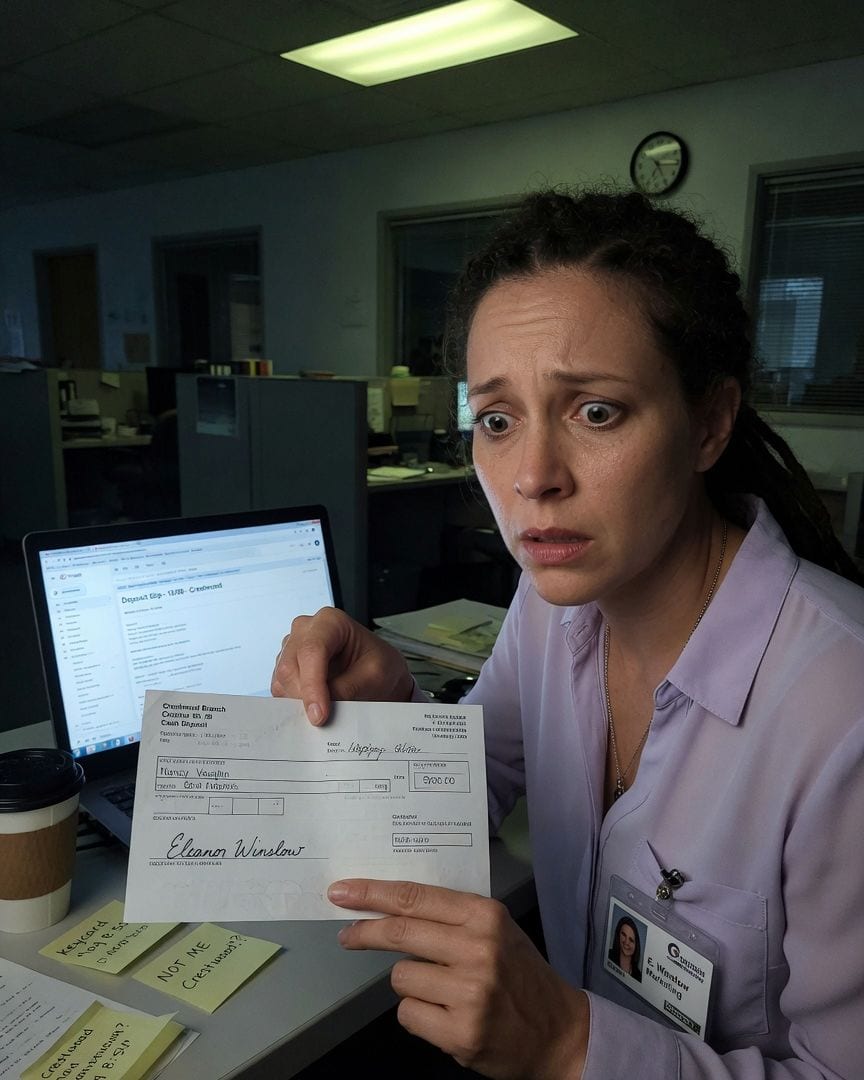
My bank statement shows a $900 cash deposit made in a town I've never set foot in, at 10:40 AM on a workday. I was at my desk, badged in. Two more landed since.
My bank statement showed a $900 cash deposit from a town I'd never visited, 150 miles away. I was at my desk, logged into work, all three times. But the scanned deposit slip arrived, clear as day, showing my own flawless signature.
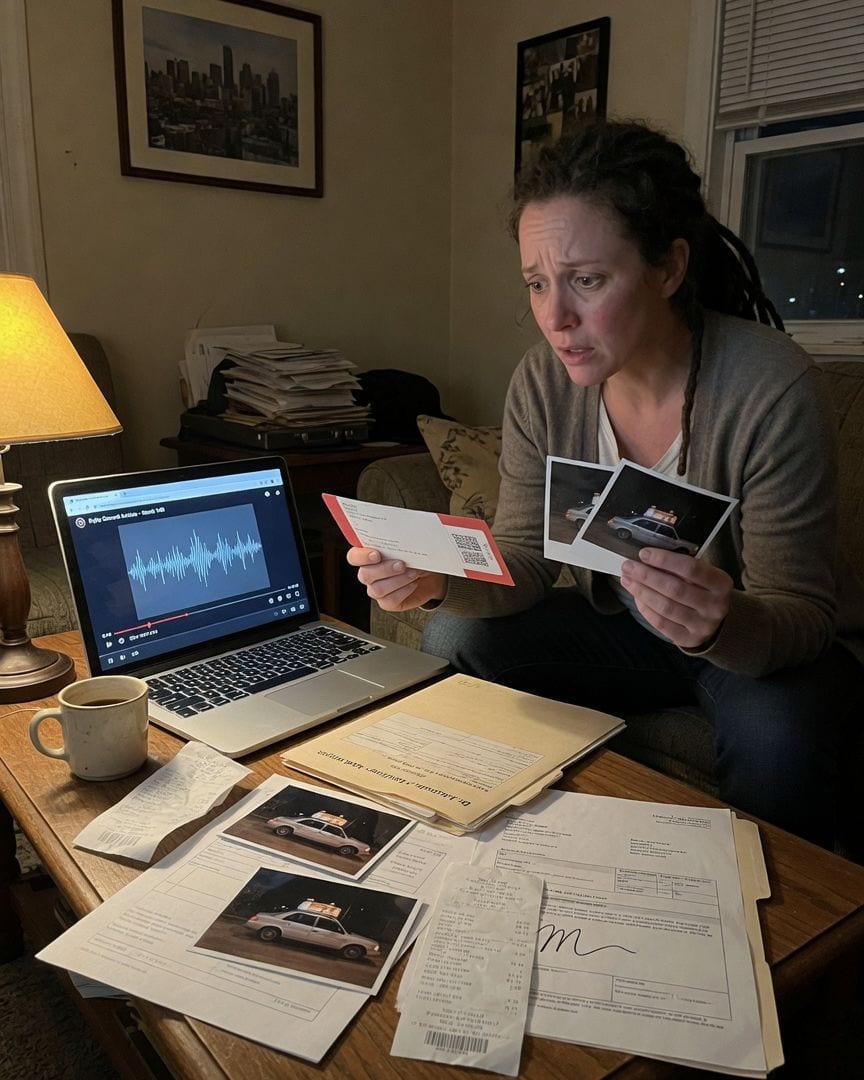
My car ran a red light at 9:41 PM in a town I've never been. The photos show my exact plate, my roof rack. I was speaking at city council, across the state.
A red-light camera ticket arrived for my car, timestamped for a downtown intersection I'd never driven through. But I knew, with chilling certainty, that I was three hundred miles away, speaking at a city council meeting at that exact moment.
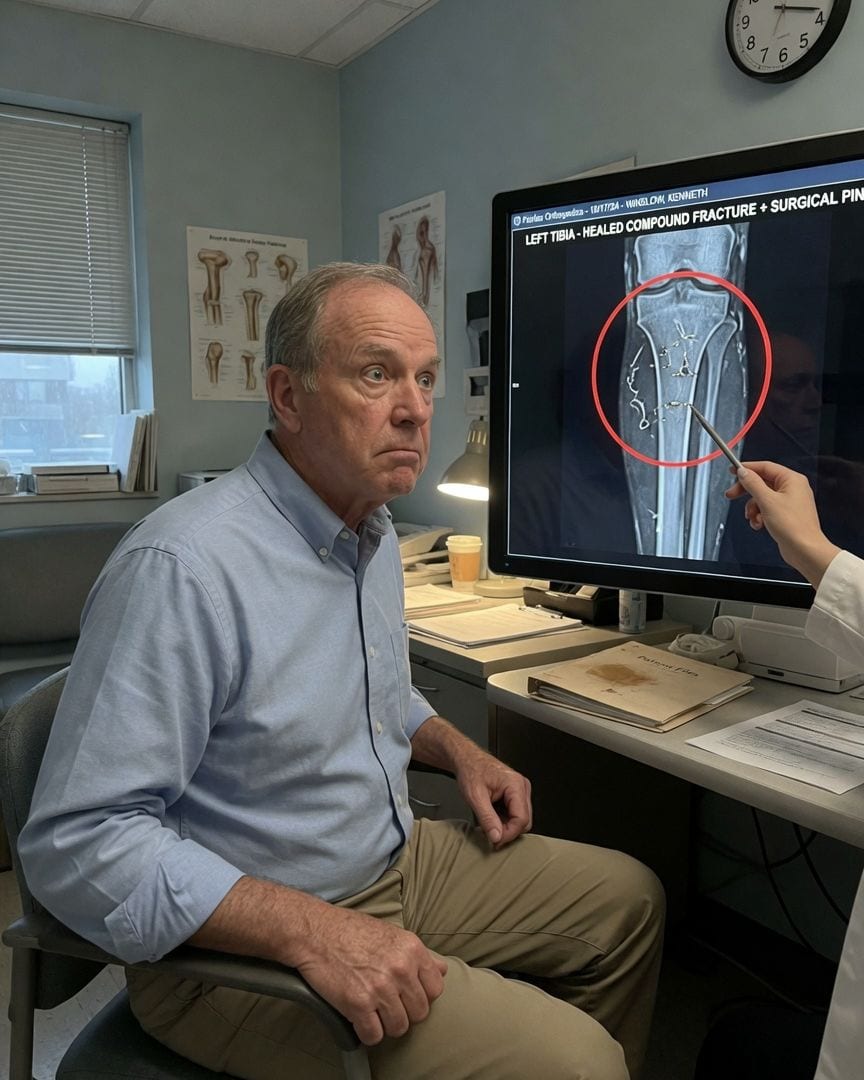
My MRI shows a severe, decades-old fracture in my left tibia with surgical pins. I have no memory of it.
I went to the gym to try their new palm scanner, expecting a quick registration. Instead, the machine insisted my living hand matched an existing profile. The screen flashed the name 'MULLER, GIDEON' with a D.O.D. of 2004 and a photo of a man I'd never seen. My own palm print was linked to a ghost.
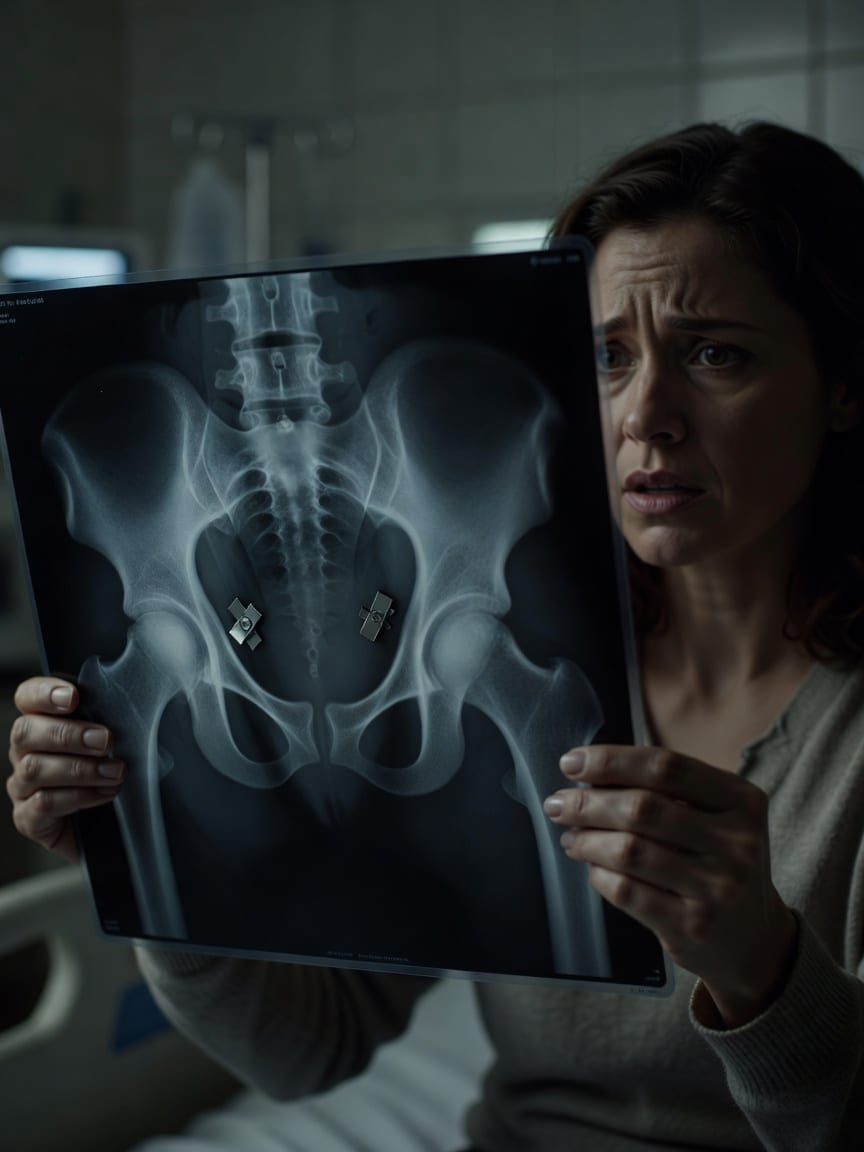
My X-ray shows sterilisation clips on my tubes. I've never had surgery, and I have no scar.
A routine X-ray for a hip injury turned chilling when my gynecologist pointed to two small clips on my fallopian tubes. She called it a standard tubal ligation, but I know I've never had surgery. My memory is completely blank, yet the X-ray is undeniably mine, dated yesterday.
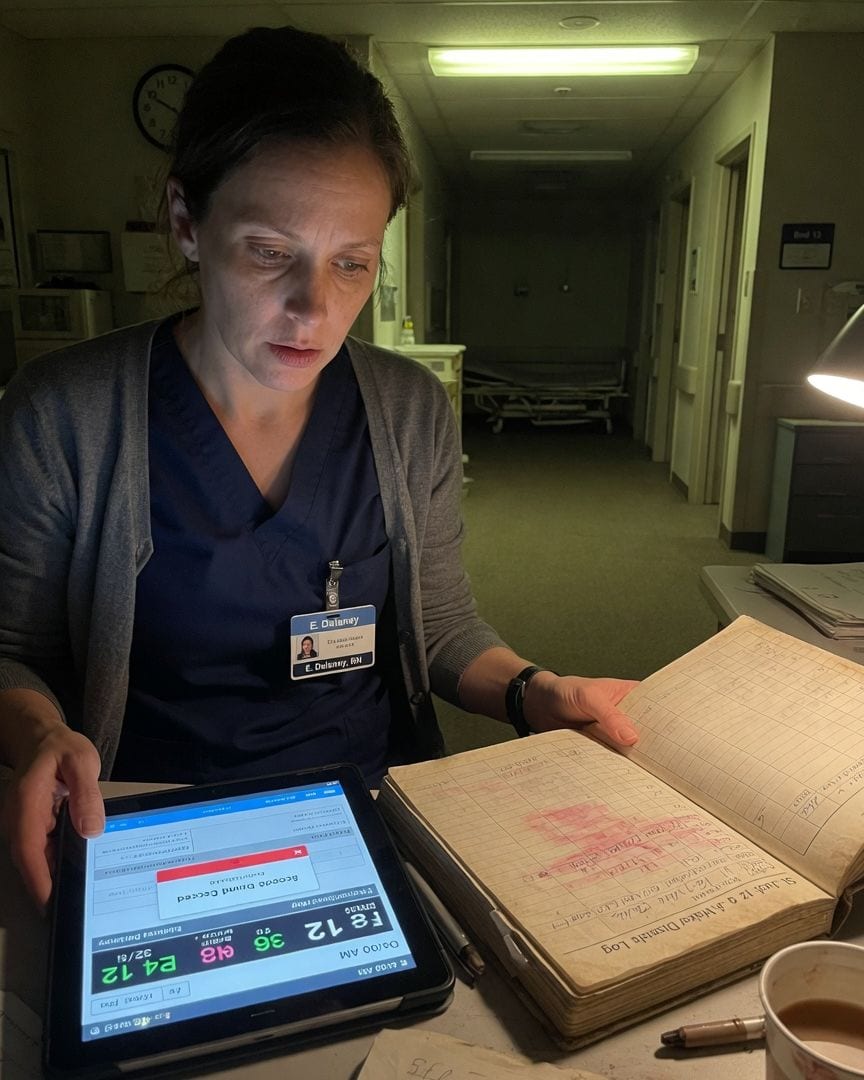
My empty ward's bed 12 had fresh vitals charted. The system says I entered them.
Working my usual night shift at St. Jude's, I pulled up the monitor system to log patient vitals for Ward 12. My thumb paused at Bed 12, where a full set of readings was already timestamped and logged under *my* ID. But Bed 12 was utterly stripped and empty; it had been discharged days ago.
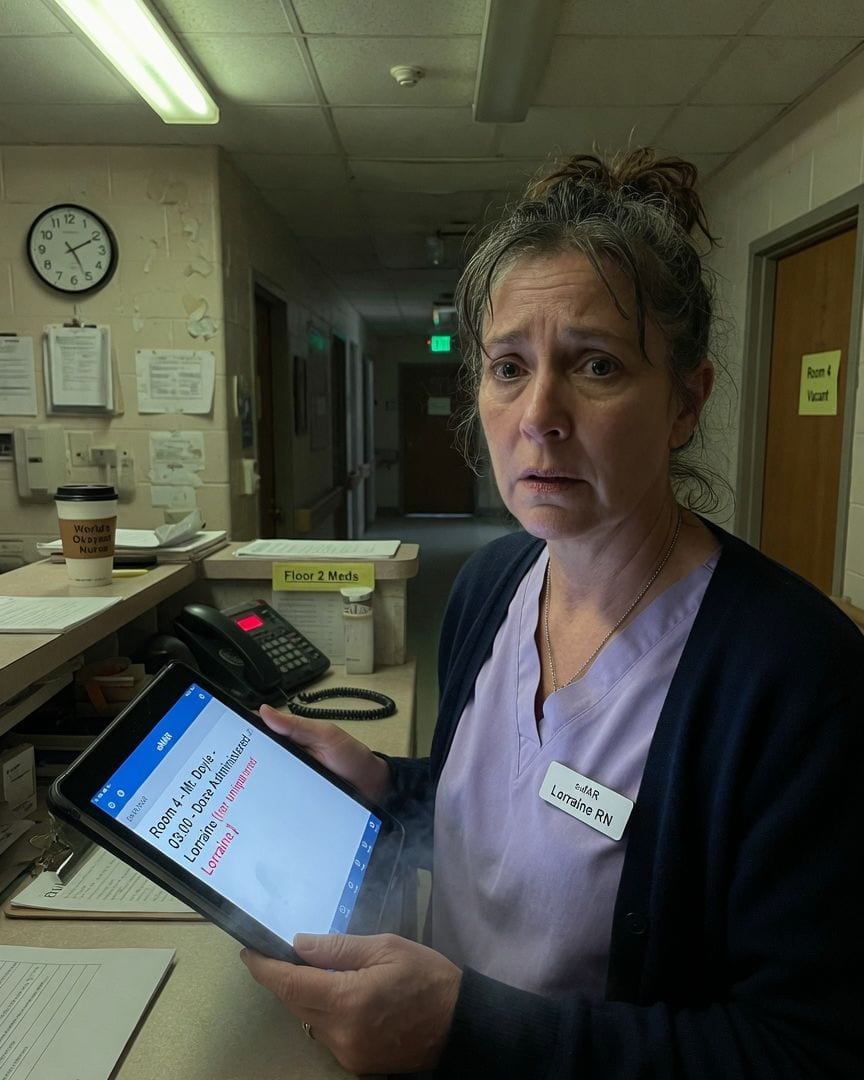
The care home tablet logged a 3am dose in Room 4, signed with my PIN — but Room 4 has been empty since Mr. Doyle died on Sunday, and I have no memory of giving it.
Working a quiet night shift at Elmwood, I double-checked patient records before clocking out. That's when I saw an impossible entry on the eMAR: my signature, administering medication to Mr. Doyle in Room 4 at 3 AM. Mr. Doyle had passed away yesterday, and his room was officially vacant, cleared, and locked.