My login started a 'Patient Release Protocol' I'd never heard of for Unit 212-A.
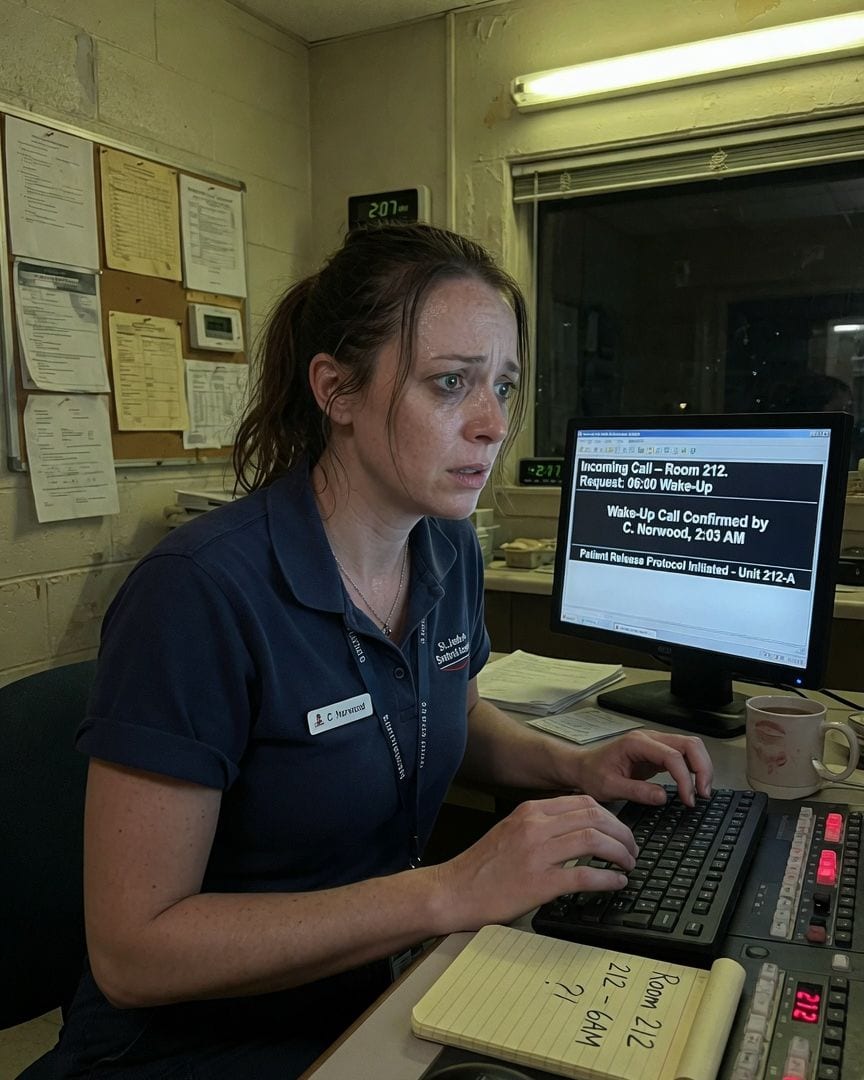
The usual hum of the night shift at St. Jude's was almost a lullaby.
I’d been on the switchboard for six years, and the 2 AM hour was usually the quietest, just the occasional emergency call or a nurse asking for a patient transfer. But tonight, it was different.
At precisely 2:00 AM, the small red light for Room 212 blinked on my console, sharp and insistent. The phone in my ear buzzed softly as I picked up the line.
“Switchboard,” I said, my voice quiet in the dim room.
A tired, raspy voice, definitely male, crackled through the receiver. “Could I get a 6 AM wake-up call, please?”
“Of course, sir. Room 212, 6 AM. Got it.” I scribbled a quick note on my pad and then went to tap it into the digital system, a routine so ingrained it was almost muscle memory.
But as I brought up the bed board, my fingers paused mid-air over the keyboard. Room 212 wasn’t there. Or rather, it was, but listed as ‘Closed for Refurbishment – Stripped’. I scrolled through the internal notes. Empty for months.
The line, according to a note timestamped weeks ago, was supposed to have been physically disconnected by Henry Fletcher himself. No active phone line. No patient.
I frowned, a cold knot forming in my stomach. I called Henry, the hospital engineer, even though it was the middle of the night. He answered, groggy and irritated.
“Henry, it’s Chloe. Sorry, but… Room 212 just called for a wake-up. Is that line back online?”
A frustrated sigh. “No way, Chloe. I pulled that line myself. Weeks ago. Physically disconnected it from the main frame. There’s no phone in there, much less a working one. It’s stripped bare, not even a bed.”
He suggested a crossed wire, a glitch in the old system, something he’d check in the morning. But I knew our system too well.
A crossed wire would cause static, maybe even a wrong number, but not a clear, tired voice asking for a wake-up call.
The red light for 212, though, was still faintly glowing on my board, a small, impossible beacon in the quiet of the night.
The next night, the feeling hadn’t left me. That prickle of wrongness was still there, a low hum beneath my skin. Henry had called me that afternoon, sounding apologetic. He’d checked the wiring, run diagnostics. Nothing.
“Ghost in the machine, I guess, Chloe,” he’d said, a forced laugh in his voice. “System’s getting old.” I didn’t believe it for a second.
As soon as my shift started, I pulled up the detailed call log for the previous night. I knew the timestamp precisely: 2:00 AM. There it was, plain as day: 'Incoming Call – Room 212. Request: 06:00 Wake-Up'.
My finger hovered over the entry. And beneath it, a second line, staring back at me, a cold splash of water in the quiet office: 'Wake-Up Call Confirmed by C. Norwood, 2:03 AM'.
My blood ran cold. C. Norwood. My initials. My login. I was the only one on duty.
I tried to rationalize it. Maybe I had been half-asleep, operating on pure muscle memory? But no. I distinctly remembered the jolt of alarm, the confusion of the disconnected room, the conversation with Henry.
I remembered not confirming anything, only scrambling to figure out how a dead line could make a call. I certainly hadn't typed in a confirmation. My hand hadn’t touched the keyboard after the initial query.
I checked the audit trail for my login, searching for any other activity around that time. No other keystrokes, no other log entries.
Just that one, chilling confirmation, a ghost in my own digital footprint, a lie attributed directly to me.
The dread was a cold, hard knot in my stomach, the kind that whispered, you did something you didn’t do, and you don’t know how. I clicked the 'refresh' button, as if that would erase it, but the entry remained, mocking me with my own name.
The fluorescent lights hummed above me, casting long, silent shadows that felt a little too thick in the room.
Unable to sleep, the following day I drove back to the hospital, the unease gnawing at me. My admin access was a key to a world of records, a digital labyrinth I hoped would hold an answer.
I navigated to the hospital archives, deep into the obscure corners of the call log system.
I pulled up that specific entry again, the one from 2:03 AM under my login, and zoomed into the metadata, digging past the surface data, looking for anything hidden.
Buried beneath the 'Wake-Up Call Confirmed' line, I found a secondary, coded entry. It was also under my login. Timestamped 2:05 AM. It read: 'Patient Release Protocol Initiated – Unit 212-A'.
The words made no sense. 'Patient Release Protocol'? And 'Unit 212-A'? I’d never heard of it. Not in all my years here. My fingers hovered over the keyboard, paralyzed by a new, colder fear.
The screen glowed, reflecting my wide, horrified eyes, a silent testament to an action I knew I never performed.
The next few days were a blur of restless nights and obsessive research. 'Unit 212-A' became an unwelcome resident in my mind. I tried to be discreet.
I approached Rosemary Jennings, a day shift nurse with decades of experience in the hospital, during a quiet moment in the breakroom.
"Rosemary," I began, trying to sound casual, "have you ever heard of a 'Unit A' or 'Annex A' in the hospital? Maybe something from way back?"
Rosemary looked at me blankly, stirring her coffee. "Annex A? No, honey. We've got East Wing, West Wing, Maternity, Psych… never heard of an Annex A. Why, you looking for a forgotten storage closet?" She laughed, dismissive.
I didn't laugh back.
Undeterred, I delved into the hospital's oldest digital archives, bypassing the usual patient and staff records. I found myself sifting through digitized schematics and floor plans, cross-referencing keywords like 'Annex' and 'Restricted'.
It took hours, but eventually, in a sub-folder labeled 'Historical Site Plans' – buried deep, as if intentionally obscured – I found them. Obscure, faded blueprints from the 1950s.
And there it was, sketched in a dusty, almost forgotten corner of the map: 'Annex A'.
It was located in a sub-basement beneath the old wing, directly below where Room 212 would eventually be built. The area was conspicuously marked: 'Restricted Access – Containment'.
Containment. The word vibrated in my brain. What could a hospital need to contain?
Driven by a desperate, gnawing need for answers, I located the physical archive room.
It was a place few people knew about, a forgotten space deep in the hospital's oldest section, behind the rarely used laundry chutes, smelling of dust and forgotten things.
The air was thick and cold, even colder than the usual hospital chill. Amidst cobwebbed shelves crammed with ancient medical texts and patient ledgers, my eyes landed on a heavy, leather-bound book, its pages brittle with age.
The spine, barely legible in the dim light, read: 'Annex A Transfers – 1957-Present'.
My breath hitched. This was it. I carefully opened it, the old leather groaning in protest.
Page after page, in neat, consistent handwriting that spanned decades, detailed 'transfers' and 'releases' from 'Unit 212-A' and other numbered 'Annex' units – 212-B, 213-A, 213-B.
Always on specific dates, always around 2 AM, and always, horrifyingly, followed by a cryptic 'Night Operator Confirmed' entry. The pattern was unmistakable, undeniable.
As I poured over the ledger, the silence of the archive room felt heavy, almost breathable, pressing in on me. The dust motes danced in the sliver of light from the single bare bulb, like tiny, agitated spirits.
I felt a prickle on the back of my neck, a distinct, unsettling sense of being watched. I glanced around, seeing only shadows stretching away from the towering shelves. The air, already cold, seemed to drop a few degrees more.
My eyes fell back to the ledger, open to a page detailing a 'Unit 212-A release' from exactly twenty years ago. Next to the ledger, on a small, dusty table I hadn't noticed before, sat a fresh coffee cup.
It was still faintly warm, a wisp of steam rising from its rim. I hadn't brought one in. I hadn’t seen anyone. A cold dread, sharper than anything I’d felt yet, gripped me.
From deeper within the old wing, near where the blueprints showed 'Annex A' to be, a faint, rhythmic thump-drag sound echoed. It sounded like something heavy being moved, slowly, deliberately.
The sound grew slightly louder, closer, then faded, only to resume. I froze, my heart hammering against my ribs.
A moment later, Preston Hartley, the hospital's facilities manager, emerged from a maintenance tunnel near the archive room. He was wiping his hands on a rag, his work uniform smudged with grease.
He looked at me, his expression unnervingly calm, almost knowing. His eyes, usually sharp with a friendly glint, were flat, devoid of surprise.
“Lost, Chloe?” he asked, his voice soft, but it cut through the oppressive silence like a knife.
He didn't ask what I was doing there, didn't question why I was in a restricted archive room with a decades-old ledger spread open. Just 'lost,' as if he expected me to be there, expected me to be looking.
A small, chilling smile played at the corner of his lips.
That night, a few days later, I found Preston in the deserted sub-basement. The air was damp and smelled faintly of rust and something else, something I couldn't place.
He was checking a series of heavy, bolted doors, his flashlight beam sweeping across the grimy concrete. The doors were exactly where the old blueprints had marked 'Annex A'. My voice trembled, but I forced it steady.
"Preston, what is 'Unit 212-A'?"
He turned slowly, his face unreadable in the weak overhead light, a thin film of dust clinging to his work vest. He didn't seem surprised to see me.
I held up the printouts I'd brought: the digital log entries, my own 'confirmation' from weeks ago, and a photocopy of a page from the old ledger detailing a 'release' from 'Unit 212-A'. "And these 'transfers'… what are they?"
Preston sighed, a long, weary sound that echoed in the cavernous space. He didn't deny anything. He didn't even try to lie.
"It's a containment chamber, Chloe," he said, his voice flat, devoid of emotion, as if he were discussing a leaky pipe. "For certain… residents."
He gestured vaguely at the heavy, bolted doors that lined the corridor, a gesture that encompassed everything the blueprints had called 'Annex A'.
"The calls from 212 aren't for a wake-up," he continued, his gaze steady on mine. "They're a signal. A protocol. Someone needs to confirm it, to initiate the 'release'." He spoke of the process with a detached, almost academic tone.
"This schedule has been maintained for generations, Chloe. It's just the night shift. Some things need to be kept on schedule. Other operators understood. They learned to just… do their part."
He spoke of the previous night operators, not with malice, but with a profound, almost resigned weariness. As if discussing a necessary, if unpleasant, chore that had fallen to him for far too long.
His calm explanation, the way he accepted this horrifying truth as mundane, chilled me to the bone. The wrongness wasn't a glitch, a crossed wire, or a ghost in the machine.
It was a system, and I was already, unknowingly, a part of it. The cold dread solidified into something far heavier, far more permanent.
Shaken, I retreated to my office, the weight of Preston's words pressing down on me like a physical burden. My hands shook slightly as I re-examined the old ledger, the worn leather cool beneath my fingers.
The pattern was horrifyingly clear now, not just calls from 212, but other 'Annex' units, always followed by a night operator's confirmation, then a 'release'. It was a morbid, generations-long calendar of sacrifice.
I focused on the names of the operators who had made these entries. Beside many, there were cryptic notes, scrawled in various hands, some faded, some darker: 'Transferred', 'Retired – sudden', 'Left without notice'.
My heart hammered as I researched some of the names on an old hospital database, cross-referencing dates, trying to find anything that would explain away the ledger's grim truth. The records were sparse, unsettlingly so.
Many had indeed vanished from their lives, their trails going cold. Others had been institutionalized for 'stress-related issues' or 'nervous breakdowns', their careers abruptly ended.
Then, my eyes landed on a specific page, a more recent one. There, amidst the faded entries, I saw my own name, 'C. Norwood', typed in neat, contemporary font, next to a 'Unit 212-A Release – Confirmed' entry.
The date was just a few weeks prior – the night of the phantom call. My own forced confirmation.
And below it, a blank line. It lay waiting, stark against the yellowed paper, for a new entry.
Below that, another line, with a date for next month. And beneath that date, the faint, almost erased outline of my own name again.
It was as if someone had written it, then tried to rub it out, but the impression remained, a phantom of what was to come. The pattern wasn't just historical; it was ongoing, a living, breathing schedule.
And I was caught in it, marked. The ledger seemed to pulse faintly in the dim office light, a slow, silent heartbeat.
Preston found me in the switchboard room later that night, still staring at the blank line in the ledger, the faint impression of my name like a brand. He didn't need to ask what I was looking at.
He just stood there, a quiet, almost sorrowful presence.
"It's not just a holding facility, Chloe," he began, his voice devoid of emotion, a flat declaration of unthinkable truth. "It's… a symbiotic relationship. These 'residents' in Annex A, they need to be fed. The 'wake-up call' is their hunger.
The 'release protocol' isn't about letting them go. It's about feeding them. And the night operator's confirmation… that's the transfer. A transfer of energy, of life force."
A cold dread spread through my veins, freezing me to the core. My throat was dry. "The previous operators," I whispered, the words barely audible. "They didn't vanish, did they? Or retire?"
Preston shook his head slowly. "They became part of the system. Their essence sustains the Annex. It keeps the hospital running, in more ways than one."
His gaze was steady, unwavering, as if he were explaining a fundamental law of physics.
He explained that he was the 'caretaker', a generations-long legacy, ensuring the 'schedule' was maintained, passing the burden from one night operator to the next when the time was right. "You initiated the protocol, Chloe.
That first confirmation, the 'release' entry… it marked you. You're part of the schedule now. It's too late to back out."
The air in the room grew heavy, almost viscous, the quiet hum of the electronics replaced by a deep, resonant thrum that seemed to come from the floor beneath my feet.
Horrified, I tried to bolt, to run, to escape the crushing weight of his words and the impossible truth they revealed.
But Preston, despite his age, moved with an unnerving swiftness, blocking the main exit door with a quiet, efficient motion. "There's no escape, Chloe," he said, his voice calm, almost sympathetic, as if delivering a difficult but necessary diagnosis.
"You've already confirmed the first transfer. The Annex knows you now. You're on the schedule."
He didn't grab me, didn't threaten me, but merely stood in my path, an immovable, quiet force. He calmly gestured towards a rarely used service elevator, its cage door slightly ajar, casting a rectangle of deeper shadow against the wall.
It was marked for the deepest sub-basement. The rhythmic thump-drag sound I'd heard in the archive room was no longer faint; it was a deep, resonant thrumming, vibrating through the floor, through my very bones.
Preston opened the cage door fully. A cold, metallic smell wafted up from the shaft, along with a deeper, indescribable scent of something ancient and hungry, something that scraped at the edges of my comprehension.
He motioned me in, a faint, sad smile on his face, a look of profound, eternal weariness. "It's time for your shift, Chloe."
I stumbled backwards, my mind screaming. In the dimness at the bottom of the shaft, where the thrumming originated, I saw a vast, dark shape shift, its surface slick and impossibly large.
For a fleeting, horrifying moment, I thought I saw a single, immense eye open in the gloom, fixing on me, a slow, ancient blink.
Chloe Norwood was 'no longer with us,' according to the official hospital memo, citing 'personal reasons.' A new night operator, Eric Rutherford, age 28, was quickly hired.
The hospital continued its quiet hum, a steady thrum that seemed to emanate from its very foundations.
Preston Hartley, the facilities manager, continued his rounds, his demeanor as serene and unbothered as ever, occasionally casting a glance at the new night operator from across the bustling corridors.
Eric Rutherford sat at the hospital switchboard, adjusting his headset. The digital clock on his screen ticked over to 2:00 AM. The light for Room 212 blinked, and the phone in his ear buzzed softly.
A tired, raspy voice asked for a 6 AM wake-up call. Eric confirmed it, a routine he'd quickly picked up during his first few weeks.
He then opened the digital log, a small part of the system he was still getting used to. An entry, 'Unit 212-A Release – Confirmed by E. Rutherford,' appeared under his login, timestamped 2:03 AM.
He stared at it, a faint frown creasing his brow. Then he shrugged it off, assuming it was some automated system he hadn't been told about during training. He had a long shift ahead.
The hospital’s night shift continued, a quiet hum of unseen machinery beneath the building. Sometimes, the new night operators would notice strange entries in the logs, phantom calls, odd timestamps, but they always learned to ignore them.
"Just part of the job," Preston would say, walking past the switchboard. "Some things need to be kept on schedule."
If this one got to you
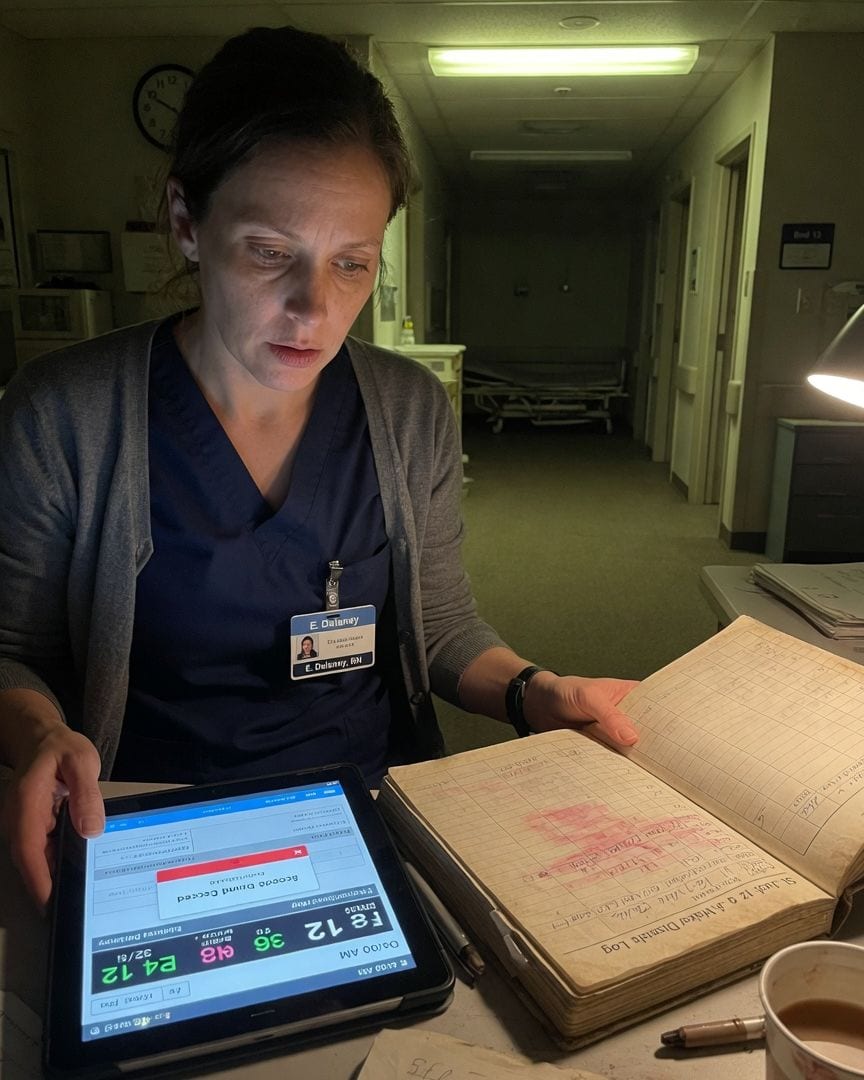
My empty ward's bed 12 had fresh vitals charted. The system says I entered them.
Working my usual night shift at St. Jude's, I pulled up the monitor system to log patient vitals for Ward 12. My thumb paused at Bed 12, where a full set of readings was already timestamped and logged under *my* ID. But Bed 12 was utterly stripped and empty; it had been discharged days ago.
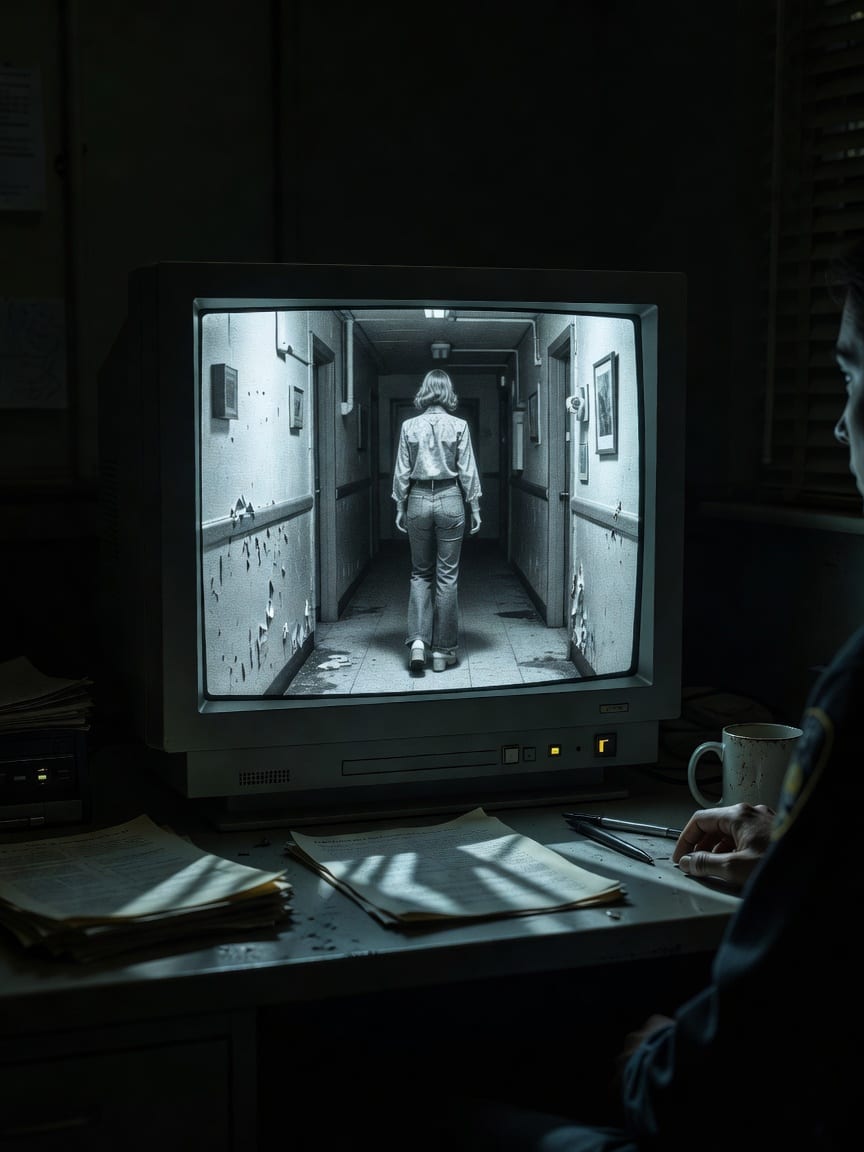
My intercom buzzed at 3 AM, a voice asking to step out for air. The station manager insists no one works the newsroom overnight, and no Cheryl is on payroll.
My shifts as the night security guard at WMVX are usually quiet, the TV station a tomb from 11 PM to 6 AM. But a late-night intercom call from a woman named Cheryl, who my manager says doesn't exist, was unsettling enough. The next night, my digital security log showed a new entry for 'Producer Cheryl Hartley'—a line I never typed, with details I couldn't have known.
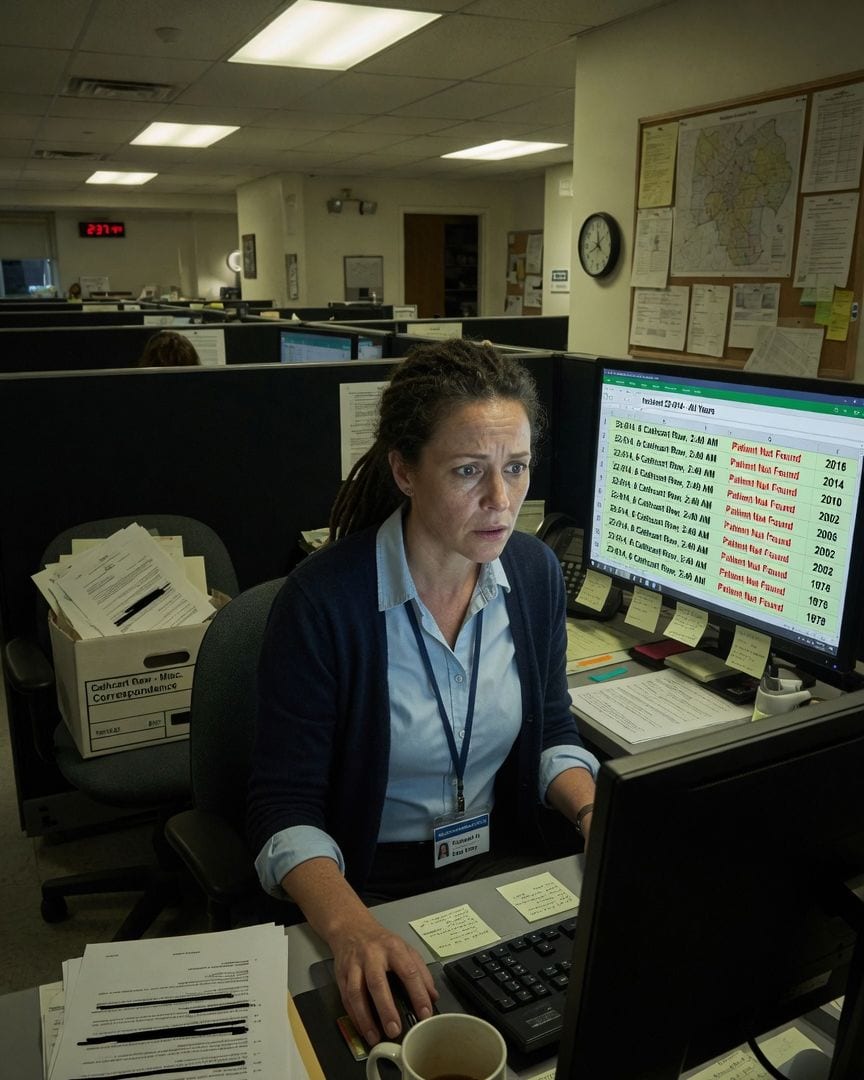
My computer log shows the same 2:40 AM call to Cathcart Row, every four years since 1978, always closed 'patient not found'.
Working data entry for the County Ambulance Trust, I found a routine incident logged as 'Patient Not Found.' But digging deeper, I discovered the exact same phantom call had repeated every four years for over forty years, always at the same address, always at 2:40 AM. Then I found a heavily redacted memo linking it to my own street.
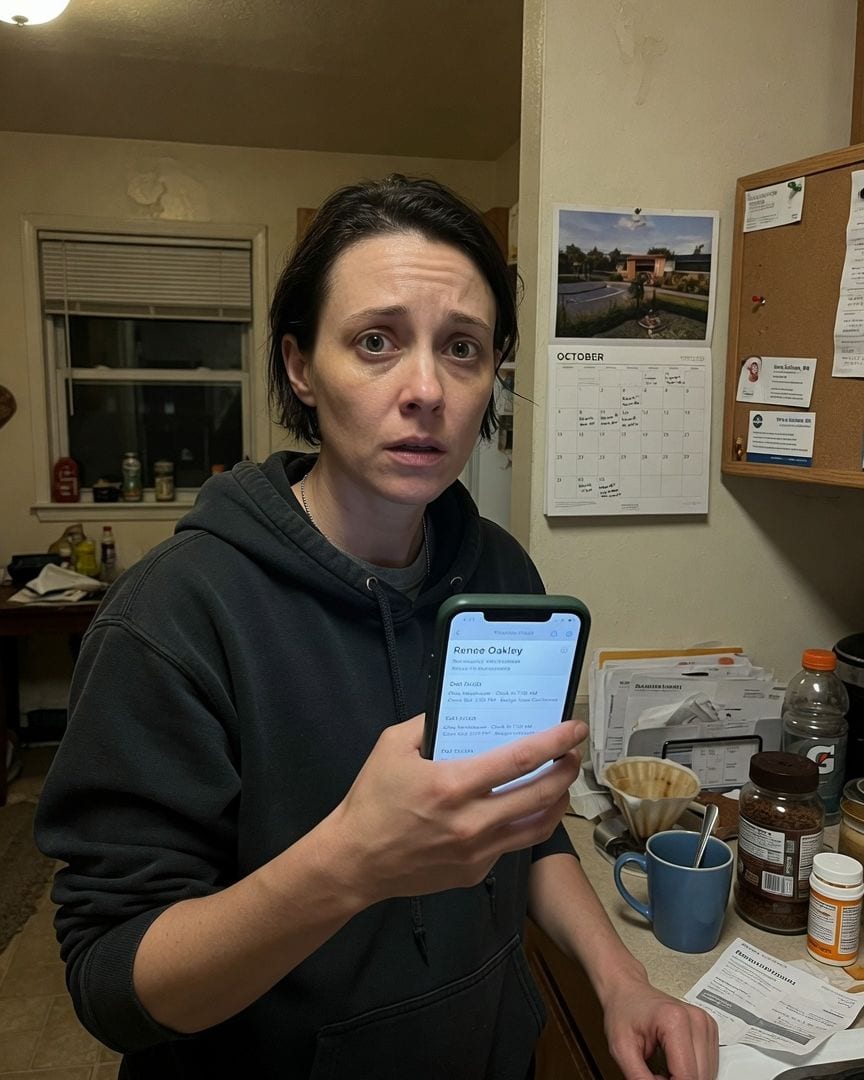
My company clock-in system says I worked full shifts in Ohio all last week. I was on medical leave in Florida, under a nurse's care.
Back home from medical leave, my payroll deposit was unexpectedly high. I checked my timesheet, only to find it logged me working full 40-hour shifts at the Ohio warehouse. But I was hundreds of miles away in Florida, confined to a sickbed under a nurse's care. Then my manager called: security footage confirmed I entered the warehouse.
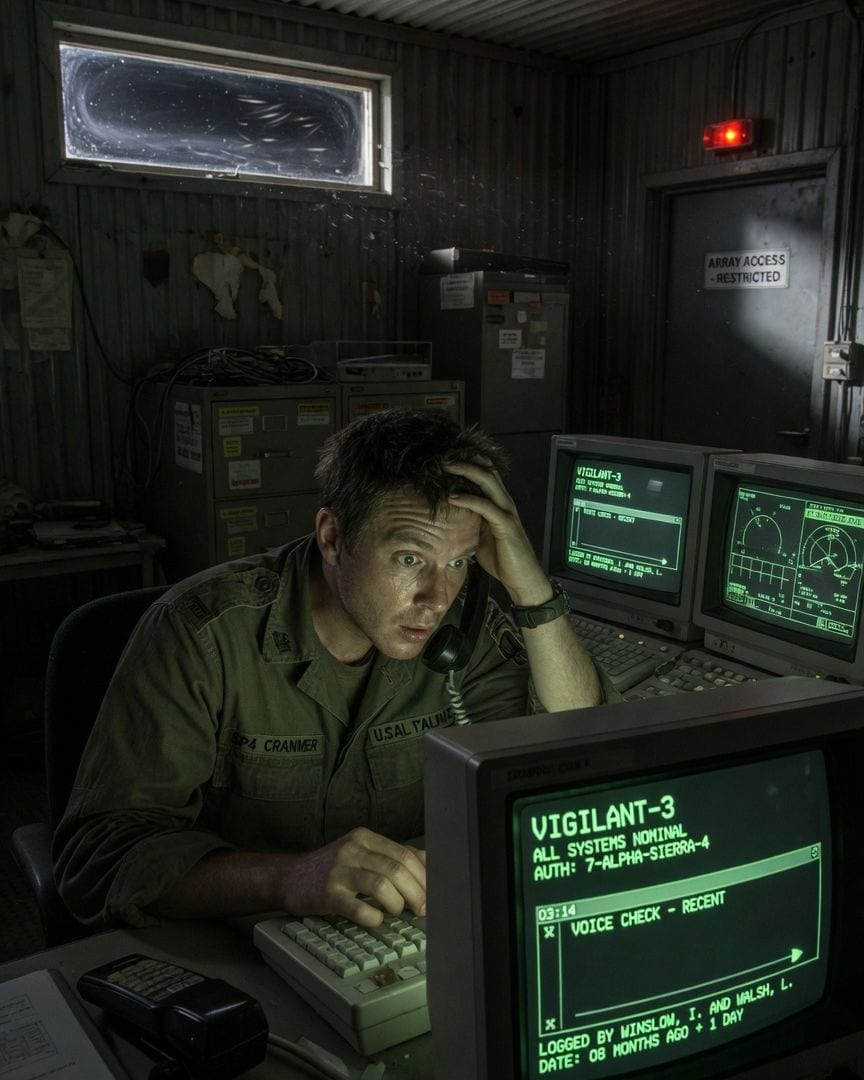
Specialist Cranmer’s console logs a voice from a station destroyed eight months ago. Its dead operators ask, 'Did anyone ever find out what happened to us?'
Specialist Arthur Cranmer endured another lonely overnight watch at Radar Site 4, the wind howling outside his isolated Anatolian post. At 0314, a routine comms check brought a chilling response from Vigilant-3, a station that had burned down, killing its two operators eight months prior. Cranmer's commanding officer dismissed it as a glitch, but the radar specialist knew better. He accessed classified logs, uncovering eight months of regular 'all systems nominal' check-ins from the destroyed station, authenticated by the dead operators. He then found his own recent call, logged by the same two k*lled personnel, followed by their haunting question: 'Did anyone ever find out what happened to us?'
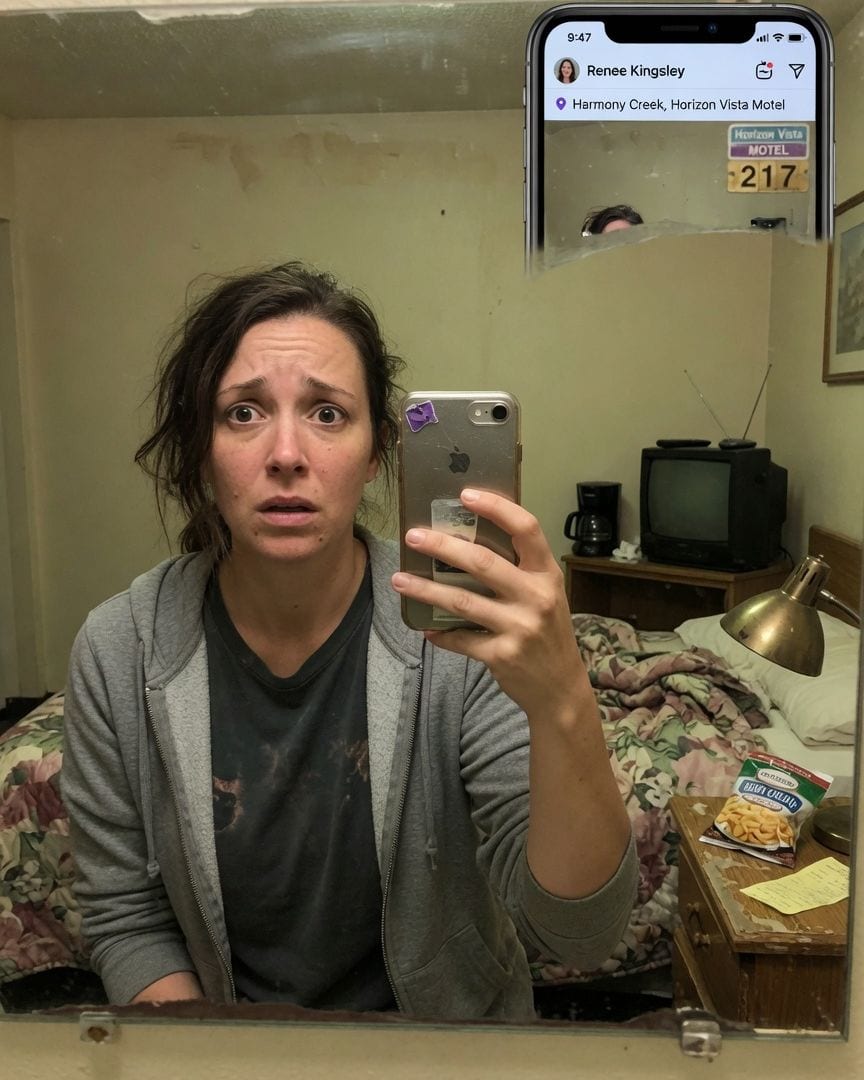
My apartment door opened and closed at 1:20 AM last Thursday, then my digital keycard checked into a motel six hours away, all while I slept.
My Tuesday morning began like any other, until I opened my phone's photo app. Instead of hike pictures, I found forty new photos: a motel room in Harmony Creek, six hours northeast. The last image was a mirror selfie of *my* face, holding *my* phone, but I was asleep in my bed the entire time.