My company clock-in system says I worked full shifts in Ohio all last week. I was on medical leave in Florida, under a nurse's care.
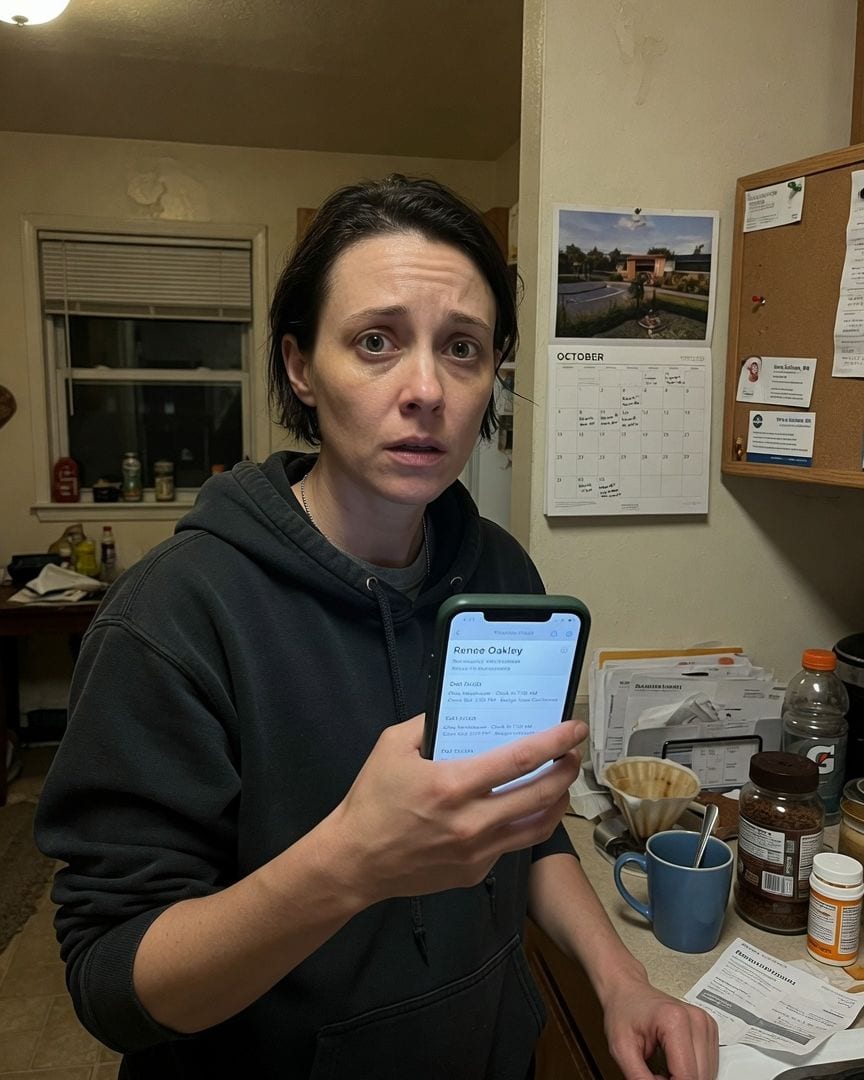
The notification popped up on my phone just as I was making coffee: "Payroll deposit complete." Back home from Florida, still feeling the lingering fatigue of my recovery, I opened the banking app. The balance was… higher than I expected.
Significantly higher. Not just my regular salary, but an extra chunk, easily two hundred dollars more than it should have been. A bonus? Not in this economy, not for me.
My first thought was a clerical error, a pleasant mistake that would eventually be corrected. But something about it bothered me. I logged into the company's online portal, navigating to the timesheet section.
The stark white screen loaded, displaying my name, my employee ID. My eyes scanned the entries for the previous week, October 9th through 16th – the exact period I was on medical leave in Florida.
A cold dread began to prickle my skin. There it was. Not just my regular two days of paid sick leave, but full 40-hour shifts, logged daily. October 12th: clocked in at 7:00 AM, clocked out at 3:00 PM.
October 14th: 8:00 AM to 4:00 PM. Every single entry was tied to the Ohio warehouse, a facility I hadn't set foot in for years, hundreds of miles north of where I’d been.
I scrolled down, looking for a disclaimer, a note, anything to explain it away. Nothing. Just my name, Renee Oakley, the Ohio location, and the impossible hours.
My mind raced back to Florida, to the humid air and the quiet drone of the IV pump. Nurse Vera Sullivan, a calm, competent woman, had been with me almost constantly.
Her detailed medical logs, meticulous as they were, confirmed every visit, every dose of medication. My body had been confined to a bed, weak and recovering, yet the system insisted I was clocking in and out, working full shifts.
The timesheet seemed to glow, a digital lie asserting a physical impossibility.
I immediately called my manager, Joel Bryant. He picked up on the third ring, his voice brisk. "Renee, glad you're back. Feeling better?"
"Joel, I'm okay, but something's wrong," I said, trying to keep my voice even. "My payroll is off. Way off. It says I worked full shifts in Ohio last week."
There was a pause. "Ohio? That's… odd. Must be a payroll glitch. Happens sometimes with the automated system. I'll flag it." Joel sounded dismissive, the kind of easy shrug a manager makes when confronted with a minor administrative inconvenience.
"It's not just payroll, Joel. It's my timesheet. It shows me clocking in and out, specific times, October 12th and 14th. I was in Florida. I was on medical leave. Under a nurse's care."
I pushed, a growing sense of unease coiling in my stomach. "Nurse Sullivan has meticulously kept medical logs. She's got records of every single IV drip, every medication, every time she checked my vitals.
There's no way I could have been in Ohio."
His tone shifted, a hint of annoyance replacing the dismissiveness. "Renee, I'm sure it's a system error. These old programs can be finicky. I'll put in a ticket with IT. They'll correct your timesheet and adjust payroll."
"But it's not just a system error if it's logging badge scans, Joel. The timesheet states 'badge scan confirmed.' That implies physical presence."
Joel sighed. "Look, I'll chase it. Give me a couple of hours."
A couple of hours later, my phone rang. It was Joel. His voice, usually so composed, was now tinged with genuine bewilderment. He didn't sound annoyed anymore; he sounded rattled.
"Renee," he said, and my breath caught. "I… I just got off the phone with IT. They checked the raw data. It’s not a glitch. The system shows a badge scan. A legitimate, confirmed badge scan.
And… this is the part I don't understand, they cross-referenced it with security footage from the Ohio warehouse. It… it confirms you entering the warehouse."
The words hung in the air, cold and solid. It wasn't just data. It wasn't just a record. It was a physical presence. The "glitch" was becoming something far more tangible, far more terrifying than a misplaced decimal point.
Moments later, my phone buzzed with an email. It was from Joel. Subject: "Fwd: Ohio Warehouse Access Log." Attached was a single, grainy security footage still.
It was pixelated, blurry around the edges, but there was no mistaking the figure. Her familiar navy blue jacket, the one I’d bought last winter. The way her hair, short and dark, caught the fluorescent light just above the entrance.
Even the slight, almost imperceptible hitch in her gait, a remnant of an old ankle injury. It was unmistakably Renee Oakley.
The image was dated: October 12th. The time-stamp below it read 7:00 AM. Precisely matching the impossible clock-in on my timesheet.
The very day Nurse Sullivan had administered my IV drip and brought me a bowl of lukewarm soup in my Florida sickbed.
I stared at the screen, my own face staring back at me, entering a building I haven't set foot in for years, a building I was physically incapable of approaching.
My own body, healthy and strong, but performing actions I knew I hadn't taken. The dread wasn't just a prickle now; it was a sickening, icy grip around my heart.
My rational mind churned, trying to find an escape hatch, a mundane explanation for what I was seeing. An impersonator? A new, sophisticated deepfake technology?
I scoured news sites for stories of corporate identity theft, warehouse infiltrations, anything that might align with this impossible footage. Nothing. No headlines about someone else named Renee Oakley with my exact build and my exact navy jacket.
Joel, shaken by the footage, still leaned towards a high-tech prank or an elaborate hack, though even he admitted the precision was unnerving. "The badge ID, the facial recognition match... it's too clean for a simple break-in, Renee."
I called Nurse Sullivan, whose number was now burned into my memory. "Vera," I said, trying to keep my voice light. "You remember October 12th, right?"
There was a moment of confusion. "Of course, dear. That was your worst day, wasn't it? The antibiotics really hit you hard. I remember you were dozing off during my check-ins. We talked about that silly reality show you like."
She re-confirmed her detailed medical logs, recalling specific conversations and treatments from the very morning I was supposedly striding into the Ohio warehouse. Her voice, calm and reassuring, only deepened the chasm between the impossible record and my undeniable reality.
Finding no credible online accounts of similar corporate impersonations, no complex hacks that could replicate a person down to their gait and uniform, I pressed Joel for more information about the "system" that recorded me.
"Joel, what exactly is this clock-in system? It can't be off-the-shelf if it's doing… whatever this is."
He hesitated. "It's… well, it's old. Really old. Proprietary, been with the company since before my time. It's almost a relic, to be honest.
Most departments use newer, cloud-based stuff, but the Ohio warehouse, being our oldest and largest, still runs on it. Very few people even know how to maintain it. There's a small, secretive team – we call them the 'legacy' department.
They're fiercely protective of it."
"Who's in charge?" I asked, a new, colder kind of unease settling over me. This wasn't just a glitch or a hack; it was a system with a guardian.
"Raymond Doyle," Joel said, his voice dropping slightly. "He's the lead technician. Been with the company for forty years, practically built the thing. Good luck getting anything out of him, though. He treats that system like his own child."
I tried to contact Raymond Doyle. My calls to the 'legacy department' extension went straight to voicemail, a curt, automated message stating he was unavailable. My emails, polite and persistent, were ignored.
Days turned into a week, and a new kind of pressure began to build around me.
I started noticing things. The security camera in my office building's lobby seemed to track me a beat too long as I walked past.
In the break room, colleagues I barely knew offered odd, lingering glances, then quickly looked away when I met their eyes. Was I imagining it? Was the stress making me paranoid?
I tried to shake it off, but the feeling persisted, a constant, low hum beneath the surface of my day.
One afternoon, an anonymous email landed in my inbox. No sender, no subject, just a single, chilling line:
'Stop digging. Some records are best left alone.'
The message was untraceable. I tried to reply, to forward it to IT, but the email bounced, leaving no digital trace of its origin. The dread I'd felt after seeing the photo solidified into a cold, hard fear.
I was no longer just an investigator. I had been noticed. Someone knew exactly what I'd found, and they wanted me to stop.
The walls of my ordinary corporate life suddenly felt very thin, and the shadows in the office seemed to hold more than just dust.
I confronted Joel with the anonymous email, my hands shaking slightly as I pushed my phone across his desk. He read the single line, and his face, usually so composed, went pale.
The last vestiges of his "system glitch" theory crumbled. He was genuinely alarmed now.
"Renee," he said, his voice barely a whisper, "this… this isn't right. I'm sorry. I shouldn't have dismissed you." He ran a hand through his thinning hair.
"The truth is, the company has had a string of… unexplained incidents over the decades. Always quietly dismissed, never fully investigated.
Missing inventory that reappears, unlogged work hours, even a few employees who reported seeing 'themselves' in the Ohio warehouse when they were out sick. Raymond Doyle always... resolved them. He's fiercely protective of that old system, almost obsessively so."
He leaned forward, his eyes wide. "He's the one who knew."
Now fully committed, and clearly scared, Joel used his executive access to delve deeper into the system's archives.
We sat in his office, the blinds drawn against the afternoon sun, the only sound the low hum of his computer and the frantic clicking of his mouse. After twenty minutes of navigating archaic interfaces and obscure directories, he stopped.
"Oh, no," he breathed. He clicked a few more times, pulling up a document. "Renee, look at this."
He held up a printout, a physical maintenance request form from the Ohio warehouse. It was dated October 14th – two days after the impossible clock-in, still squarely within my medical leave.
The form detailed a specific repair for a hydraulic press in Section B-7, an area I wouldn't even know how to locate. And at the bottom, signed off as completed, was a name: 'R. Oakley.'
Joel’s hand trembled slightly as he held it out. "This… this looks like your signature, Renee."
The "glitch" explanation died a final, brutal death. This wasn't just a digital entry or a grainy image. This was a tangible, physical act.
A piece of paper, thick and slightly yellowed with age, signed by my own hand, from a place I never was.
I stared at the looping 'R. Oakley,' the familiar flourishes, the undeniable tilt of the 'y' where it joined the 'l'. It was my signature. The security footage hadn't been a trick of light or a clever impersonation.
It had been me. Or something wearing my face, using my hand, walking my walk.
I took the maintenance request form to Lars Larsen, a renowned handwriting expert. His office was quiet, filled with the scent of old paper and ozone. Lars was a precise man with thick spectacles and a perpetually serious expression.
He laid the document on a clean white mat, illuminated by a high-intensity lamp, and meticulously examined it.
He then asked for samples of my known signature. I signed my name repeatedly on a blank sheet, trying to replicate my natural hand, the one that had signed countless contracts and grocery receipts over the years.
After what felt like a tense hour, Lars finally looked up, pushing his spectacles higher on his nose. His voice was hushed, almost reverent. "No forgery, Ms. Oakley. No mimicry. This is genuinely your handwriting.
The pressure points, the unique flourishes… unmistakably yours."
He pointed to a minute tremor in the final 'y' of 'Oakley' on the maintenance form, a subtle, almost invisible waver that was replicated in my sample. "See here? This slight deviation? It's a consistent neurological quirk, unique to you.
A forger would struggle to reproduce it, or overdo it. This… this is natural."
My blood ran cold. It wasn’t just that someone was there, masquerading as me. It was that I was there, physically, leaving my own distinct mark, a mark that even an expert couldn't distinguish from my own.
The implications were terrifying, pushing past mere identity theft into something profoundly unsettling. If my hand could be there, signing a document, what else of me could be?
As Lars continued to explain the impossibility of such a precise forgery, pointing out other minute details, I noticed a faint, almost imperceptible watermark on the aged paper. It was a symbol I'd seen before, but couldn't place at first.
A small, stylized 'O' intertwined with a clock gear. Then it clicked. I remembered Raymond Doyle's small, cluttered office, filled with similar old papers, the symbol embossed on a dusty, oversized ledger peeking out from a shelf behind his desk.
I clutched the signed maintenance form, now sealed in a clear evidence bag, and confronted Raymond Doyle in his small, cluttered office. The air was thick with the scent of old paper and something metallic, like stale electricity.
He sat behind a massive wooden desk, a lamp illuminating a stack of schematics.
He barely looked up from them, merely gesturing to an antique ledger on his desk, its worn leather cover bearing the same stylized 'O' and gear watermark I’d seen on the maintenance form.
"You're here about the discrepancies, I assume," he said, his voice low and measured, completely unbothered. He didn't ask how I got the form. He simply knew.
I slid the bag across his desk. "My signature, Mr. Doyle. On a form I couldn't have signed. In a place I couldn't have been. And the security footage confirms it. What is this system?"
Raymond finally looked up, his gaze calm, almost weary. "The 'legacy system,' as Joel calls it. It's not just a clock-in, Renee. It's an archaic, experimental 'temporal resonance' system. Developed in the company's earliest days."
He paused, observing my reaction. "Its purpose? To optimize workforce presence. When an employee is absent but their presence is required, especially during unexpected leaves or emergencies, the system creates a temporary, physical 'proxy' or 'echo.'
A faint, transient copy drawn from the employee's 'record' within the system."
I felt the blood drain from my face. "A proxy? What does that even mean?"
"It means," he continued, as if discussing a weather report, "that this echo is imbued with enough physical substance to perform simple, necessary tasks. To scan a badge. To be seen on camera.
To perform basic maintenance, and yes, even to sign documents with your authentic handwriting. It's… an extension of your recorded self."
He gently pushed the antique ledger towards me. Its pages were thick, yellowed parchment. He opened it to a random page.
There, among fading copperplate script, were entries from the 1970s, signatures of employees I didn't recognize, alongside dates that clearly contradicted their known work schedules. A chilling pattern of impossible presences, stretching back decades.
The dread wasn’t just fear; it was in the cold, corporate logic of it all, a silent, efficient horror lurking beneath the company's very foundation.
I was horrified. "This is insane, Mr. Doyle! This is unethical! It's a violation! It needs to be shut down immediately." My voice was rising, but Raymond remained calm, his expression unchanged.
"It's too integral, Renee," he stated, his voice devoid of emotion. "Too delicate to dismantle. It's part of the company's founding principles. We pioneered this technology, crude as it seems now.
The proxies are ephemeral, yes, but their actions are real. They 'return' to the system, their tasks and records absorbed. It maintains continuity. Efficiency is paramount, Ms. Oakley."
He leaned back, his eyes narrowing slightly. "And those who try to interfere… sometimes find their own 'records' becoming... complicated."
I tried to leave, to push past him, but Raymond subtly shifted, blocking my path to the door. His gaze was unwavering, steady as granite.
"You're part of the system now, Renee," he said, a faint, unsettling smile playing on his lips. "You always were. You just didn't know it."
He offered a chilling choice, the words barely audible in the quiet room: "Accept it and continue your work, as so many others have done before you. Or become a 'problem' for the system."
My mind raced, understanding the implication. If I fought, if I went public, I risked becoming another impossible entry. My own identity overwritten, my 'record' altered, perhaps erased. I appealed to ethics, to humanity, but Raymond simply shook his head.
"Efficiency is paramount."
He reached over and turned the ancient ledger to another page, one dated decades before I was born. My eyes fixed on a specific entry, almost hidden amongst the copperplate.
There, undeniably hers, but utterly impossible, was my exact signature, 'R. Oakley.'
The ordinary explanation died for good, replaced by a profound, unshakeable terror.
I returned to my desk. I didn't tell Joel what Raymond had revealed; the words felt too impossible, too chilling to articulate, even to myself. A strange, quiet detachment settled over me.
The impossible payroll entries for me stopped, but I occasionally overheard whispers about other 'glitches' in different departments, small, easily dismissed anomalies that now felt like vast, gaping chasms in reality.
When I saw Raymond Doyle in the halls, he always offered a small, knowing nod, a silent acknowledgment of our shared, terrible secret.
The dread was no longer a jolt of fear but a cold, heavy weight, a constant hum beneath the surface of my ordinary life. It was just how things were.
I sit at my desk, typing, the rhythmic click of the keyboard a dull backdrop to the quiet hum in my mind.
I find myself occasionally staring at my own hand as I sign documents, a faint unease settling over the familiar loops and flourishes of my name.
It feels… connected now, to something unseen, something vast and ancient that claims ownership of even my most intimate gestures.
One afternoon, Joel approaches my desk, a worried frown etched on his face. "Renee," he begins, his voice low, "I just checked the new hires. A new 'R. Oakley' started in the Ohio warehouse last week.
Says they've been with the company for years, but I've never seen them."
Renee simply offers a faint, distant smile. 'Is that so?'
The silence in the office stretched, broken only by the distant hum of the server room. Joel watched Renee return to her screen, her smile lingering, faintly wrong, as if it belonged to someone else.
He had asked a simple question, and received an answer that was no answer at all. Renee simply offers a faint, distant smile. 'Is that so?'
If this one got to you
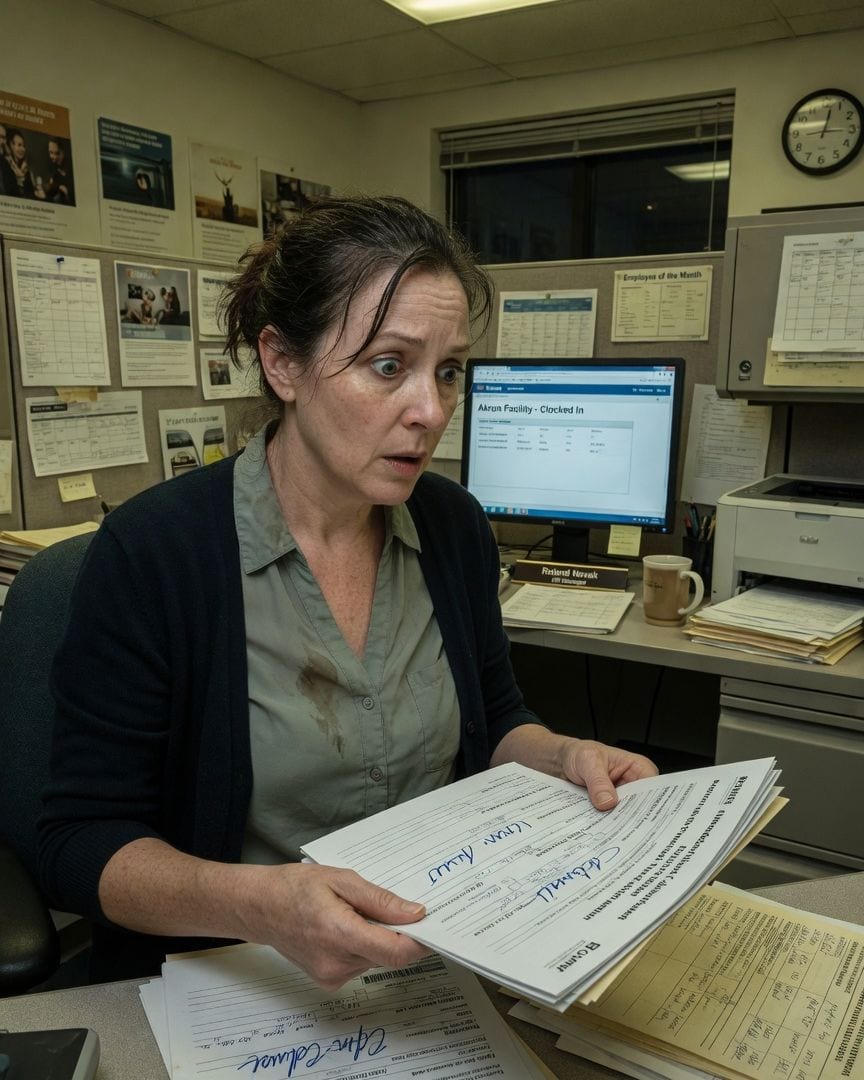
My bank account shows full pay for shifts I never worked in Ohio. I was on medical leave in Florida, signed off by a nurse.
My payroll statement showed a full week of work at the OmniCorp warehouse in Ohio, a thousand miles from my Florida home. I was on medical leave, confined to bed, with signed forms from my nurse to prove it. Yet, the work logs showed my own handwritten signature on a hazardous materials delivery, dated for one of those impossible shifts.
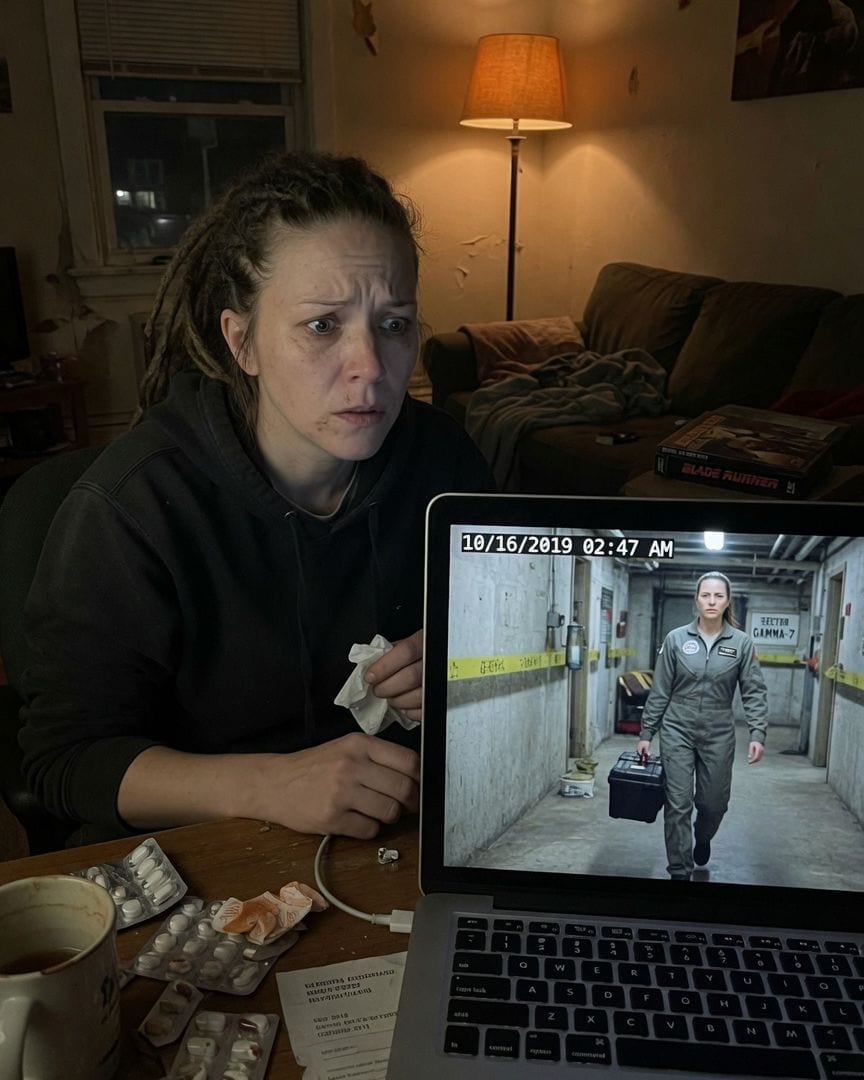
My timesheets show me working night shifts in a town I never lived in. The signatures are mine. The pay went to an account that isn't.
An old employer sent me timesheets from five years ago, detailing night shifts I supposedly worked at a depot 80 miles away. But I knew I was home recovering from surgery that entire week, nowhere near the industrial town. Then a security photo arrived, showing my face in an unfamiliar uniform, working a shift that wasn't quite me.
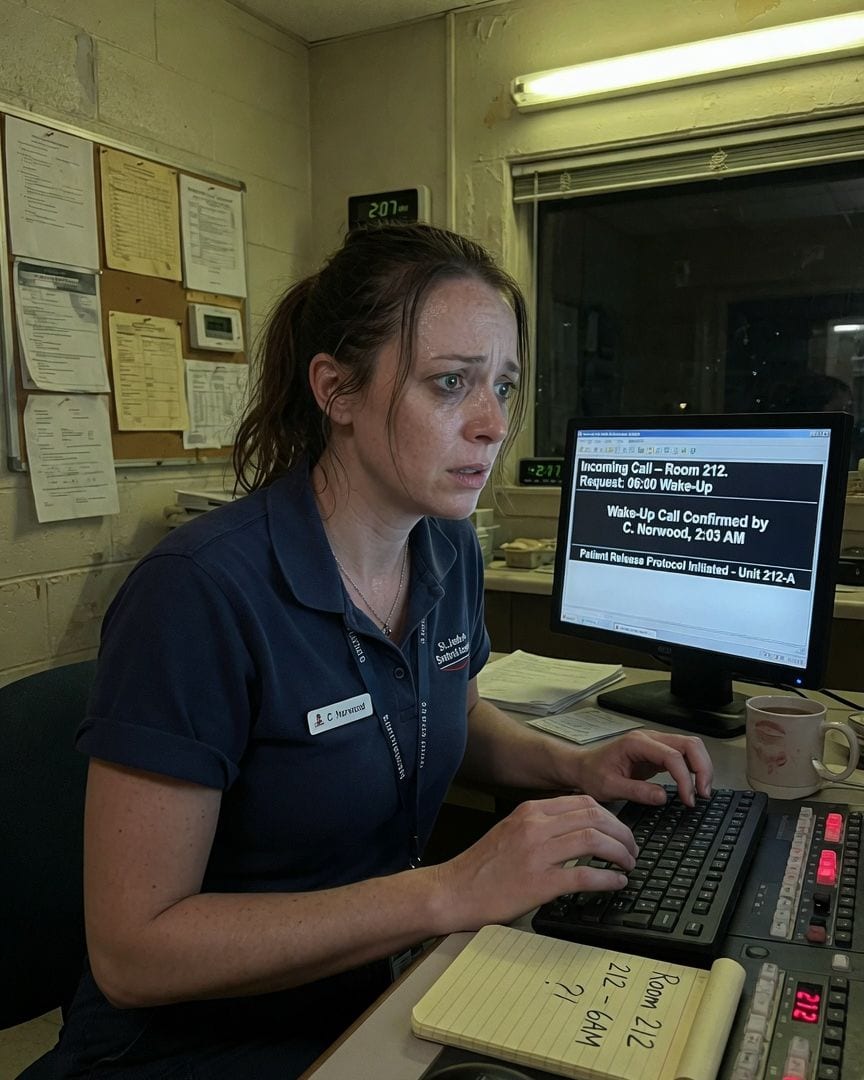
My login started a 'Patient Release Protocol' I'd never heard of for Unit 212-A.
Working the quiet night shift switchboard at St. Jude's, I took a routine wake-up call from Room 212. But the system showed Room 212 had been stripped bare and its phone line disconnected for months. Then, my own login showed I had confirmed the impossible call.
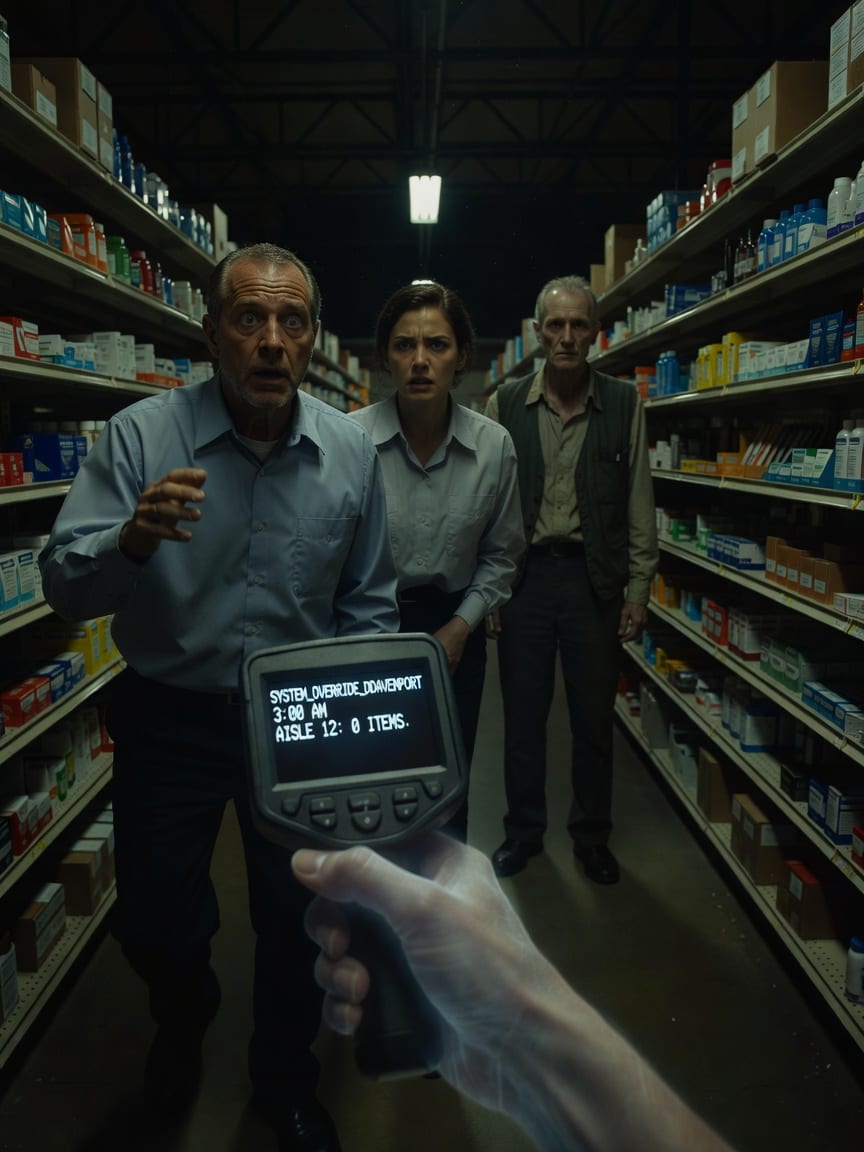
I get pick counts from Louis in Aisle 12 every night. But no Louis works here. That aisle hasn't been touched in months.
My night shift in the vast pharmacy warehouse involves the usual routine of scanning and logging, often punctuated by calls from Louis in Aisle 12. I've grown accustomed to his phantom pick counts, a consistent presence in the quiet hum. But when my floor lead pulls me aside, he reveals the unsettling truth: Louis hasn't been employed here for decades.
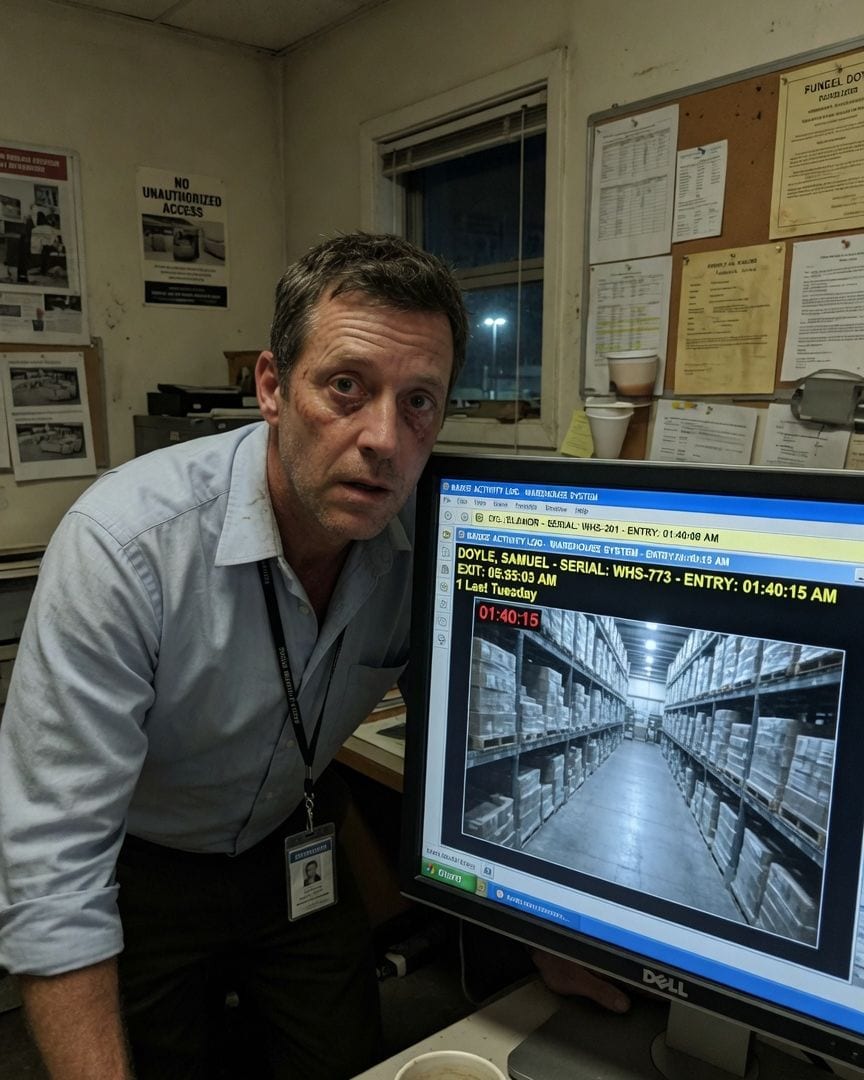
My dead colleague's badge, deactivated weeks ago, logged an entry at 1:40 AM last Tuesday. Then I found another from 1978, with the same impossible times.
My monitor showed a shocking entry: Samuel Doyle, dead and buried three weeks ago, had just logged into the warehouse. His badge was deactivated the day of his funeral, yet the system recorded his precise entry and exit, even though security footage showed the aisles were utterly empty.
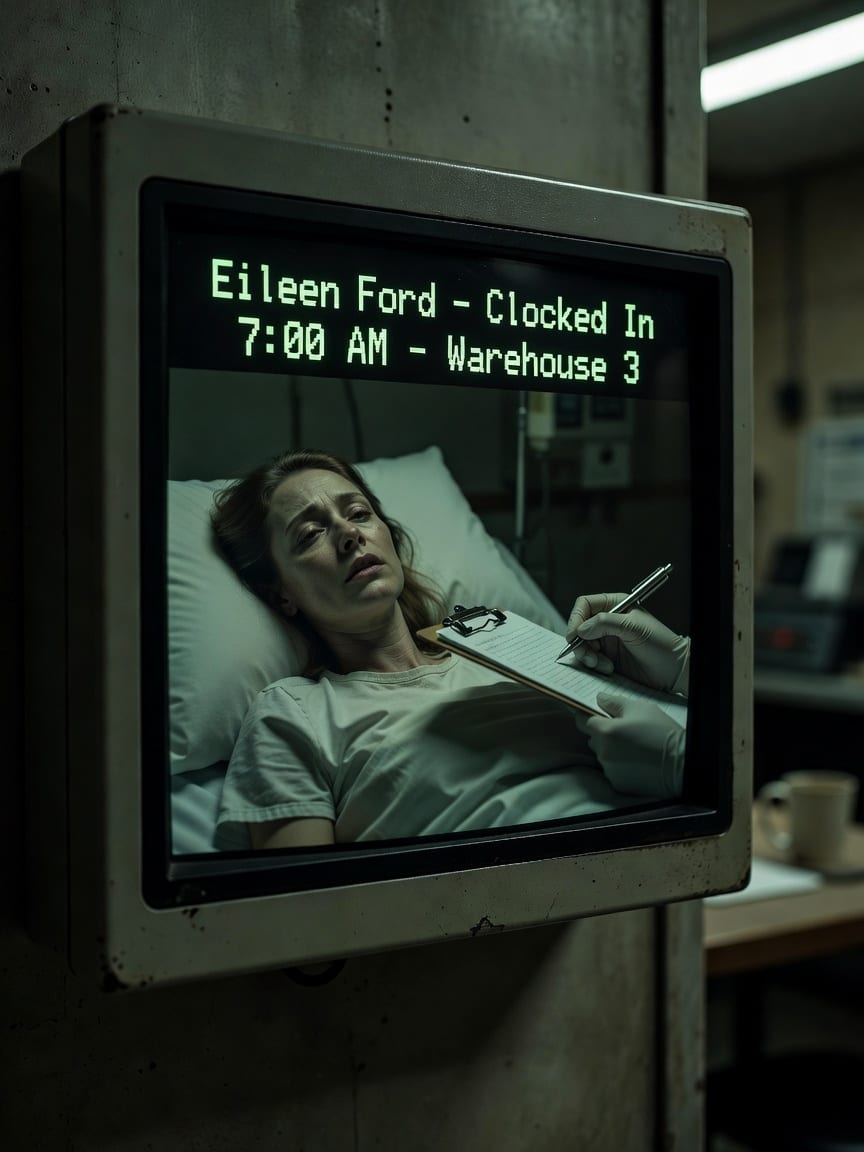
My clock-in card says I worked full shifts in Ohio all week. I was on medical leave in Florida, signed out by a nurse.
After two weeks recovering in a Florida hospital bed, my paycheck arrived significantly too high. My digital payslip claimed I’d worked full shifts at the company's Ohio warehouse every single day of my medical leave, hundreds of miles away. The system even showed my badge scans and supervisor's sign-off for work I simply could not have done.