I get pick counts from Louis in Aisle 12 every night. But no Louis works here. That aisle hasn't been touched in months.
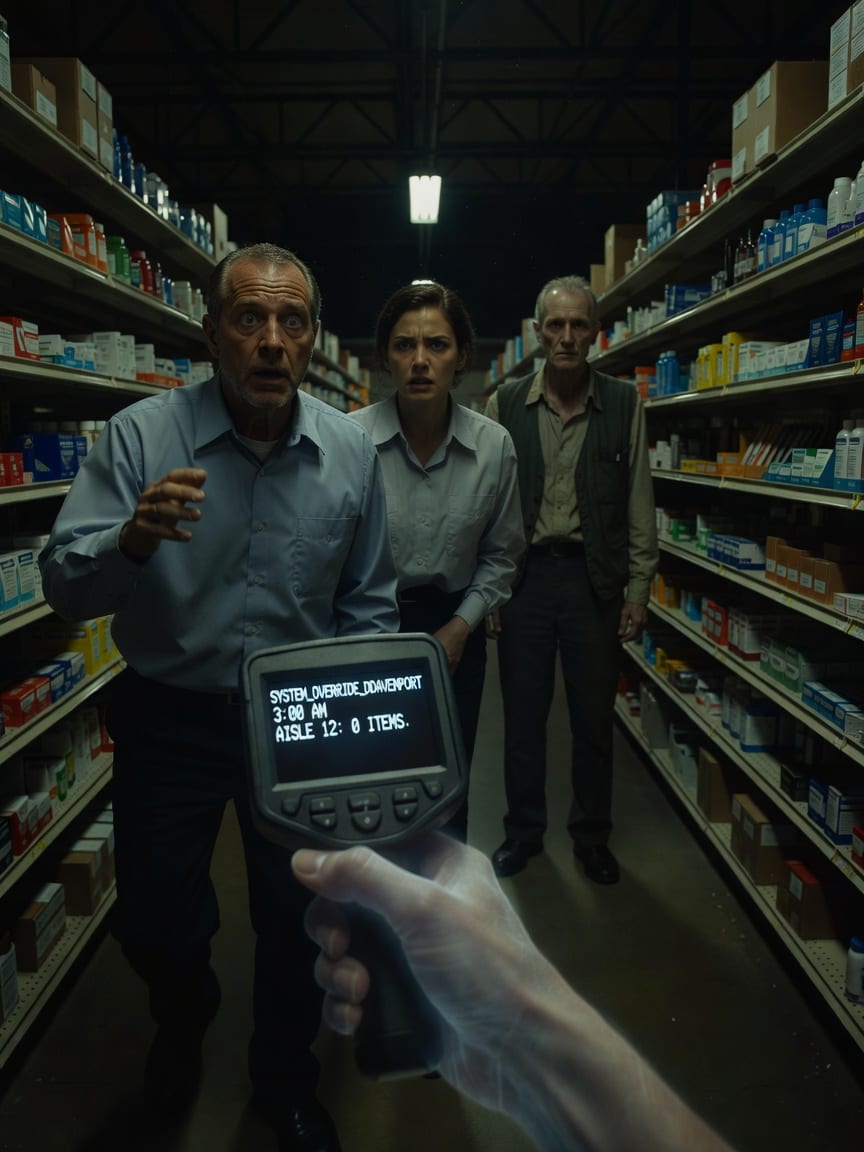
The hum of the warehouse never really stopped, not even at 3 AM. It just softened, a low thrum through the concrete floor that I'd come to think of as company.
My night shift in inventory was usually a quiet grind, scanning, moving, logging. Alone, mostly, in my section of the vast pharmacy warehouse. It was 3 AM, right on schedule, when my radio crackled. "Deborah, Louis in Aisle 12.
Got that pick count for you. Three boxes of Heparin, two cases of Hydrocortisone cream. Over." The voice was clear, a little gravelly, exactly as I remembered it from a hundred other nights. "Copy that, Louis. Three Heparin, two Hydrocortisone.
Thanks. Over." I clicked my mic off, already keying the numbers into my handheld. Another night, another phantom pick from Aisle 12. Louis. Always Louis. I barely registered it anymore.
Later, on my break, Gary Fletcher, the floor lead, pulled up a chair across from me in the break room. His face was usually a roadmap of weary jokes, but tonight it was grim, lined with something else. "Hey, Deb.
Got a problem." He didn't waste time. "System flagged a shrinkage variance. Small, but consistent." He slid a tablet across the table, showing me a radio log. My headset ID was listed, active in my section.
Then he scrolled to badge-in records. Mine, of course. Then he stopped, tapping the screen. "Your section, Aisle 12. See this pick entry? 3:00 AM last night, same as the night before." He looked at me, his eyes dead serious.
"We haven't picked anything from Aisle 12 in months. It's low-demand, specialty stuff. And," he leaned in, his voice dropping, "no Louis is employed here, Deborah. Not for decades." The warehouse hum felt suddenly louder, closer, like it was listening.
Still reeling from Gary's words, I walked back to my terminal. My hands felt cold, even under the warm glow of the monitor. I pulled up my own radio log.
There it was, plain as day: "3:00 AM, Incoming call from 'Louis', Aisle 12, Pick Count." My reply was right below it. Normal. But then I looked at the activity log, a deeper dive into system entries.
And that's when the real cold set in. An entry stared back at me: my own badge ID, DDAVENPORT, timestamped 3:01 AM. Location: Aisle 12. Activity: Pick Count, three Heparin, two Hydrocortisone. The exact items Louis had just radioed.
I knew, with absolute, stone-cold certainty, that at 3:01 AM, I was physically in Aisle 4, scanning a pallet of surgical masks. Not Aisle 12. Not even close. My mind scrambled, trying to find a rational explanation. A system glitch?
A delayed upload? Had someone used my scanner? No, that was impossible, they were badge-locked. I pulled out my handheld scanner and checked my personal badge-in history. Nothing for Aisle 12 in the last week.
My own personal record didn't lie. Driven by a mounting, sickening unease, I grabbed a flashlight and started walking. Aisle 12 was a long haul, tucked away in the back. The air grew colder as I got closer.
I rounded the corner, shining my light down the cavernous space. Dust motes danced in the beam. The shelves were undisturbed, coated in a fine, grey film.
No recent tire tracks from a picker, no dropped labels, no stray plastic wrap. It was utterly still, completely untouched, a tomb of forgotten pharmaceuticals. Nothing had moved here in months.
Back at my station, the fluorescent lights above felt too bright, too clinical. I navigated the system, pulling up the detailed activity log, specifically for my badge ID. I scrolled, my heart a dull thud against my ribs.
There it was again, bold as hell: DDAVENPORT, 3:01 AM, Aisle 12, with the exact phantom pick count Louis had just radioed. I stared at the screen, then at my own hands, which had been nowhere near Aisle 12.
I was never there. But the record said I was. And then, scrolling further, my breath caught. Another entry, two nights ago, same time, same aisle, same ghost pick count… also under my ID.
My throat tightened, a silent gasp in the unnatural quiet of the warehouse.
For the next few nights, I was consumed. Sleep felt like a distant luxury. Every radio crackle, every shadow, set my teeth on edge. I meticulously cross-referenced system logs.
The phantom entries under my ID continued, always between 3:00 and 4:00 AM, always for Aisle 12, always for the same low-demand items. It was like a clockwork ghost.
I began searching older logs, finding similar phantom entries stretching back months, consistently linked to my ID and Aisle 12. My own damned ghost shift.
Desperate to catch it, to prove to myself I wasn’t losing my mind, I positioned myself discreetly near Aisle 12 one night, just before 3 AM.
I killed my lights, stood in the shadows between two towering racks, my radio headset on, scanning the empty aisle. The silence was heavy, broken only by the distant hum of the ventilation. Nothing moved. No sounds echoed.
My breath hitched in my chest. Then, precisely at 3:00 AM, my radio crackled. Louis's voice, clear as day, "Deborah, Louis in Aisle 12. Three Heparin, two Hydrocortisone. Over." My stomach dropped. Immediately, I checked my handheld.
My ID was logged into Aisle 12 at 3:01 AM. It was happening. Without my physical presence. Later that week, I tried a new angle. I subtly asked Gary about past employees, bringing up Louis. He squinted, thinking. "Louis Fontaine?
Yeah, name sounds familiar. Retired, oh, over two decades ago. Inventory worker. Passed away a few years after that, I think." He couldn't place him in Aisle 12 specifically, just "in inventory." The pieces weren't fitting, they were twisting.
My search expanded, deeper into the warehouse's vast system logs, beyond just my own ID. I unearthed other peculiar entries, not just 'Louis.'
I found phantom pick counts attributed to other names: 'Marianne,' a softer, less distinct voice that drifted in and out of the older logs, and 'Damien,' a low, almost guttural mumble I’d never heard on my radio.
These entries, too, were always for rarely used aisles, always between 3:00 and 4:00 AM. A digital graveyard of workers.
I was deep within the labyrinthine archived system, cross-referencing ancient protocols, pulling up reports from before I even started here, when my headset suddenly crackled. It was Gary.
His voice was calm, but carried an underlying tension that made the hairs on my arms stand up. "Deborah, what are you doing in the legacy system archives? You know only level 4 clearance can access that.
I just got an automated alert." My fingers froze on the keyboard, my heart leaping into my throat. Damn it. I quickly closed the windows, feigning nonchalance. "Just running some routine checks, Gary.
Thought I saw a discrepancy with some old inventory codes for Aisle 12, figured I’d see if it was a historical issue." Gary paused, the silence stretching. The overhead lights seemed to flicker, just for a second. "Right.
Well, stick to your assigned sections. Those old systems are… finicky." The message was chillingly clear: someone, or something, was watching my every move. And it wasn’t Gary.
Armed with Gary’s veiled warning, I knew I couldn't keep digging in the shadows. A direct approach, even if it meant lying, felt safer. I headed to HR, fabricating a story about researching old training modules for a new hire.
I found Annika Pennington, the HR lead, a no-nonsense woman with sharp eyes. "Annika," I started, trying to sound casual, "I was looking at some old inventory protocols, and a few names came up in the system logs. Louis Fontaine?
And a Marianne?" Annika nodded slowly. "Louis Fontaine, yes. Retired decades ago, long before your time. Passed away a few years later, actually. Good worker." My blood ran cold, but I kept my face neutral.
For 'Marianne,' Annika frowned, tapping her chin. "We had a Marianne Bryant in dispatch, but she left over 25 years ago. Not inventory." I pressed, "Any other Mariannes? Or anyone whose name might sound similar in inventory?
From, say, the 80s or 90s?" Annika pulled up an old digital archive of pre-current system employee records. Her fingers flew across the keyboard. Her eyes landed on a name, then widened slightly. "Ah, here. Marianne Forsythe.
Inventory clerk, '85 to '98. She was part of a pilot program for automated inventory logging. We used to call them 'ghost shifts' because they ran overnight with minimal human oversight, just system checks."
Annika leaned back, a faint, almost nostalgic smile playing on her lips. "The idea was to have the system do the preliminary picks, then human staff would verify. Good concept for its time."
She explained that the 'ghost shift' system was phased out with newer technology, but the names were hard-coded into certain protocols. "We just decommissioned the protocols, Deborah, never fully purged the names from the core system.
It was easier that way, apparently, than risking a system wide database corruption. Legacy code, you know how it is." A cold, heavy dread washed over me, pressing in from all sides. The names. The precise times.
The specific, rarely accessed aisles. It all snapped into place with a horrifying clarity. It wasn't a person. It was the system, still running its old, forgotten routines, calling out names that no longer existed.
I returned to my terminal, Annika's words echoing in my ears, making the hum of the warehouse sound like a low moan. I now understood the 'ghost shift' protocol.
I pulled up the most ancient system logs I could find, filtering by references to these decommissioned 'ghost shift' functions. And there they were.
Entry after entry for Louis Fontaine, Marianne Forsythe, and Damien Sullivan, all timestamped in the early hours, making phantom pick counts for specific aisles.
It was a digital graveyard of forgotten routines, running silently in the background of our everyday work. But then I saw something else, something that made my blood run cold and clamped an icy hand around my gut.
An entry from last night: 3:00 AM, Aisle 12, with the exact same phantom pick count I’d been tracking. Only this time, the entry was logged under SYSTEM_OVERRIDE_DDAVENPORT. It wasn't just using my ID for a pick.
It was explicitly stating it's an override using my name. My actual name, not just an anonymous badge number. And then, below it, another override, from two nights ago, 3:00 AM, Aisle 12, SYSTEM_OVERRIDE_DDAVENPORT.
The screen glowed, my name a stark white against the dark background. The system wasn't just mimicking me; it was asserting its control, using my identity as a proxy for its own spectral, unkillable routine.
I stared at my own name, now an active part of the ghost shift, my own identity consumed by the night.
The terrifying scope of the truth detonated in my mind. It wasn't just a bug, not a simple glitch.
The original 'ghost shift' system wasn't merely decommissioned; it was deeply integrated as a failsafe, a dormant subroutine within the warehouse's core inventory management. A ghost in the machine, hard-coded into the very fabric of our operations.
When certain specific conditions were met—a low stock threshold on rarely-accessed items, or a subtle system hiccup that triggered a legacy command—it reactivated. It called upon the names of its original operators, Louis, Marianne, Damien, expecting a response.
When it found none, when those employees were long gone, it defaulted to the active night supervisor's credentials, creating the SYSTEM_OVERRIDE_DDAVENPORT entries. My entries.
The 'shrinkage variance' wasn't a theft; it was a phantom economy, the system updating inventory based on non-existent picks, moving virtual items while nothing physically changed. A pointless, endless task.
I understood now why Gary received an alert when I accessed the legacy systems; it wasn't Gary watching me, but the warehouse's own operating system, flagging an intrusion into its deepest, most hidden functions.
The system itself was haunted by its past, an unkillable digital specter running its own forgotten routines. And I was now its unwilling accomplice.
The climax wasn't a chase or a fight; it was a desperate attempt to make the unmakeable truth understood. I meticulously compiled a report, documenting every phantom entry, the SYSTEM_OVERRIDE_DDAVENPORT logs, and Annika's confirmation of the 'ghost shift' protocols.
It took me three nights of sleepless work. I presented it to Gary, whose initial skepticism slowly gave way to a pale, unnerved silence as he reviewed the evidence.
He sat there, staring at the screen, sweat beading on his forehead. He tried to dismiss it as a complex, unprecedented bug, an IT issue. "We'll just get IT to patch it, Deb. Delete those old protocols."
But I pointed to the specific language in the old memos I'd dug up: "system will self-correct using available active credentials if ghost shift personnel are unresponsive." Gary, visibly rattled, called IT.
I sat there, listening to his hushed conversations, the frantic key-tapping on the other end of the line. After an hour, IT called back. Their lead technician, a guy named Marcus, spoke to me directly, his voice tight.
They confirmed the existence of the dormant protocol, an obscure piece of code they believed was inert. But then came the kicker. "It's too deeply embedded, Deborah," Marcus explained, his voice tinny in my headset.
"Too critical to other operational functions to simply 'fix' or delete. We try to purge the 'ghosts,' as you called them, we risk destabilizing the entire inventory system. Millions in product. It's woven into everything."
They could only monitor it, try to mitigate its effects, hope it didn't escalate. The truth landed with a heavy, finality: the system was effectively haunted, and it could not be undone.
I was left knowing that every night, the warehouse operated on two sets of rules—one for the living, and one for the digital dead.
I continue my night shifts. The radio calls from 'Louis' and 'Marianne' still come, though perhaps a little less frequently, a little fainter, like distant echoes.
The SYSTEM_OVERRIDE_DDAVENPORT entries still appear in the logs, now marked by IT as a 'known, unresolvable legacy system anomaly.'
Gary and the IT department have seemingly accepted it as an unavoidable eccentricity of the warehouse, a price of doing business with old tech.
No one else seems particularly bothered, or perhaps they've simply learned to ignore the quiet hum of the unexplainable that runs beneath the surface of their ordinary work.
Sometimes I catch myself listening, not for my own radio, but for the faint, crackling voices from the empty aisles, the echoes of names long gone. The system continues its phantom work, its digital ghosts completing their endless, unneeded tasks.
And I am now, irrevocably, a part of its routine, a proxy for its spectral will. I know I can't fight it, can't even truly explain it to anyone who hasn't stared into the heart of the logs.
I just work my shift, alongside the living and the dead. I watch the screens, I hear the whispers, and I log the picks under my name.
One morning, Gary Fletcher found a note on his desk. It was from Deborah, a printout of the latest SYSTEM_OVERRIDE_DDAVENPORT entry, dated 3:00 AM, Aisle 12. Attached was a single sticky note: 'They're still here.'
If this one got to you
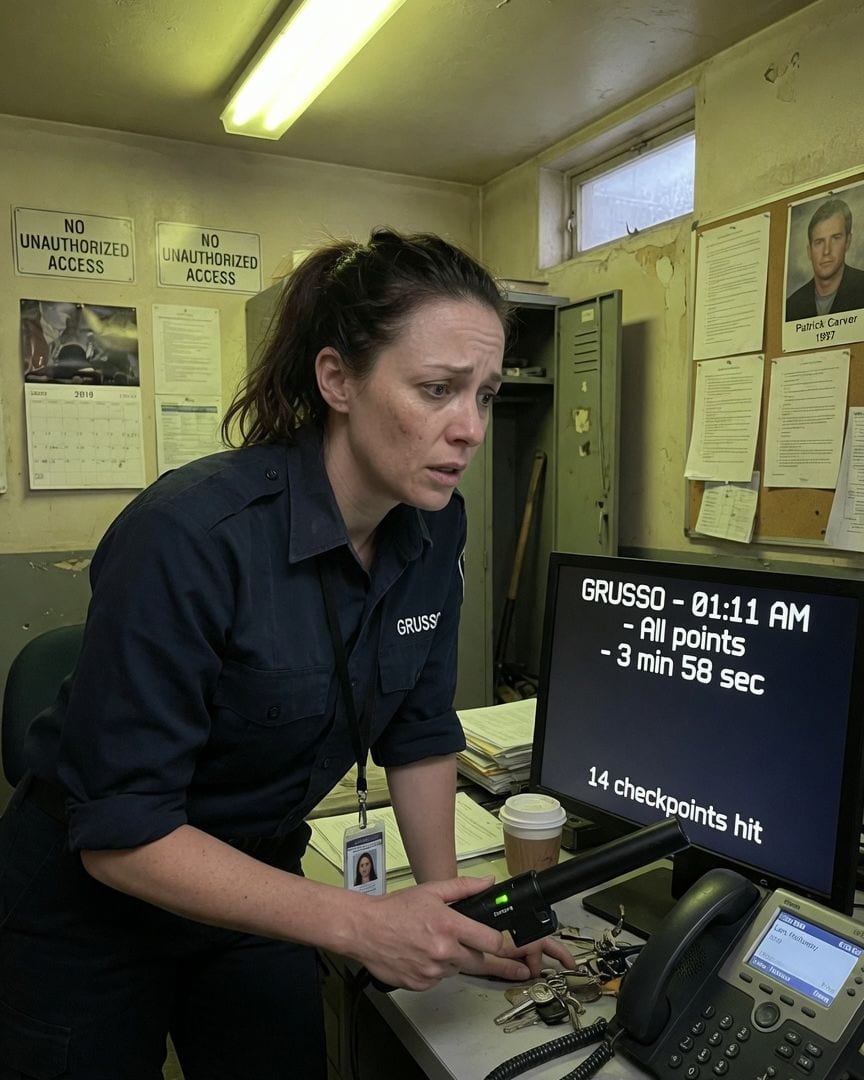
My security wand logged a full round at 1:11 AM in under four minutes. It was in the charger. Every tap is logged as mine.
Finishing my night shift, all I wanted was to get home. But the dock readout screen showed my security wand logged a full patrol at 1:11 AM, completed in just under four minutes. I knew my wand had been charging right beside the monitor the entire time, yet the log, under my ID, confirmed the impossible.
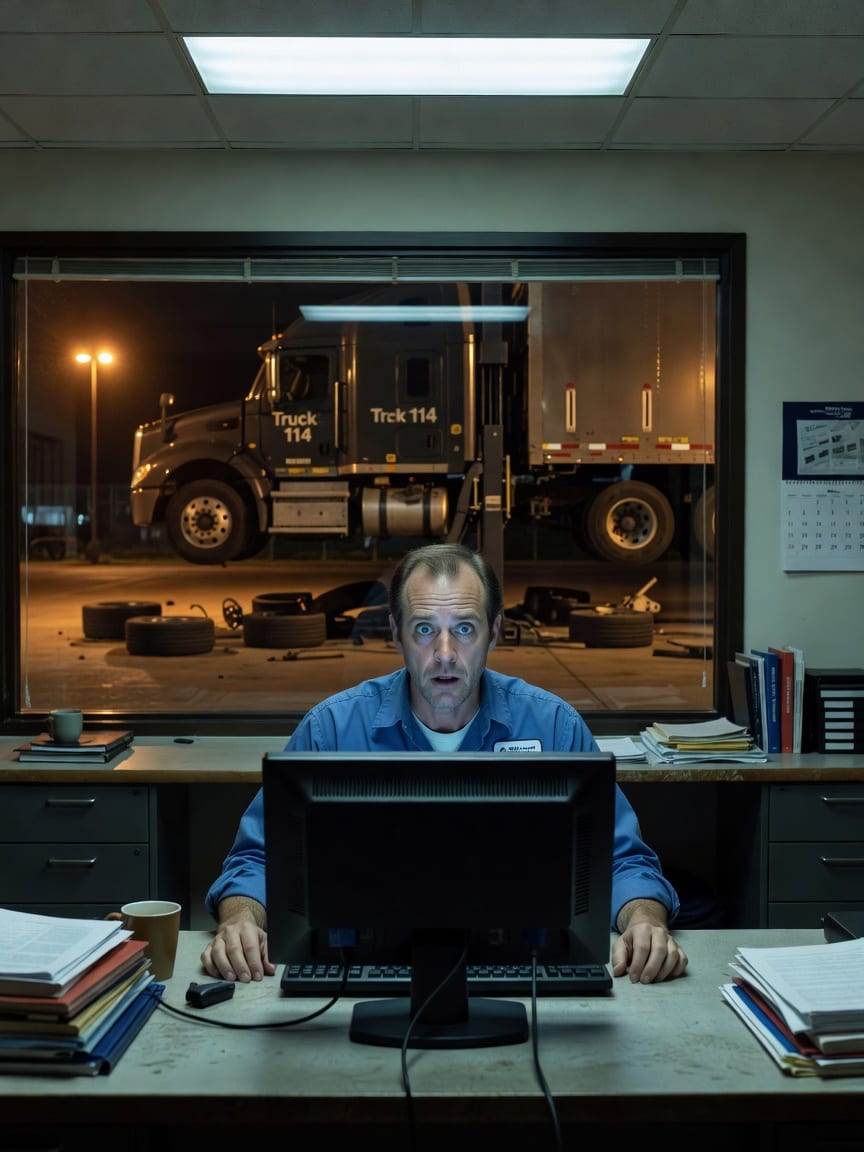
Truck 114 left the yard last night, CAD says. It burned forty miles of fuel. But my truck 114 was up on the lift, no wheels, all shift.
It was another quiet Wednesday overnight in the dispatch office until the CAD system pinged. My screen blared, showing Truck 114 logged outbound for forty miles and back, burning forty gallons of fuel. But I knew that very truck was immobile, suspended on a lift in Bay 4 with its drive wheels removed.
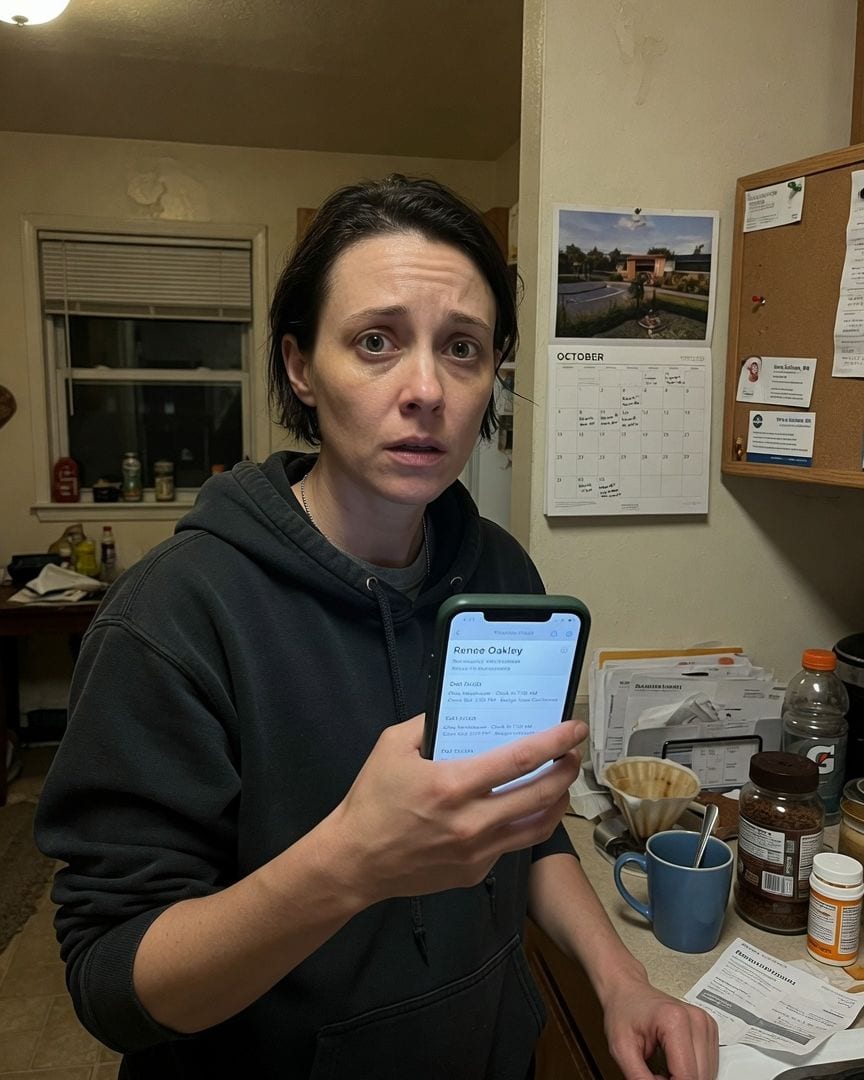
My company clock-in system says I worked full shifts in Ohio all last week. I was on medical leave in Florida, under a nurse's care.
Back home from medical leave, my payroll deposit was unexpectedly high. I checked my timesheet, only to find it logged me working full 40-hour shifts at the Ohio warehouse. But I was hundreds of miles away in Florida, confined to a sickbed under a nurse's care. Then my manager called: security footage confirmed I entered the warehouse.
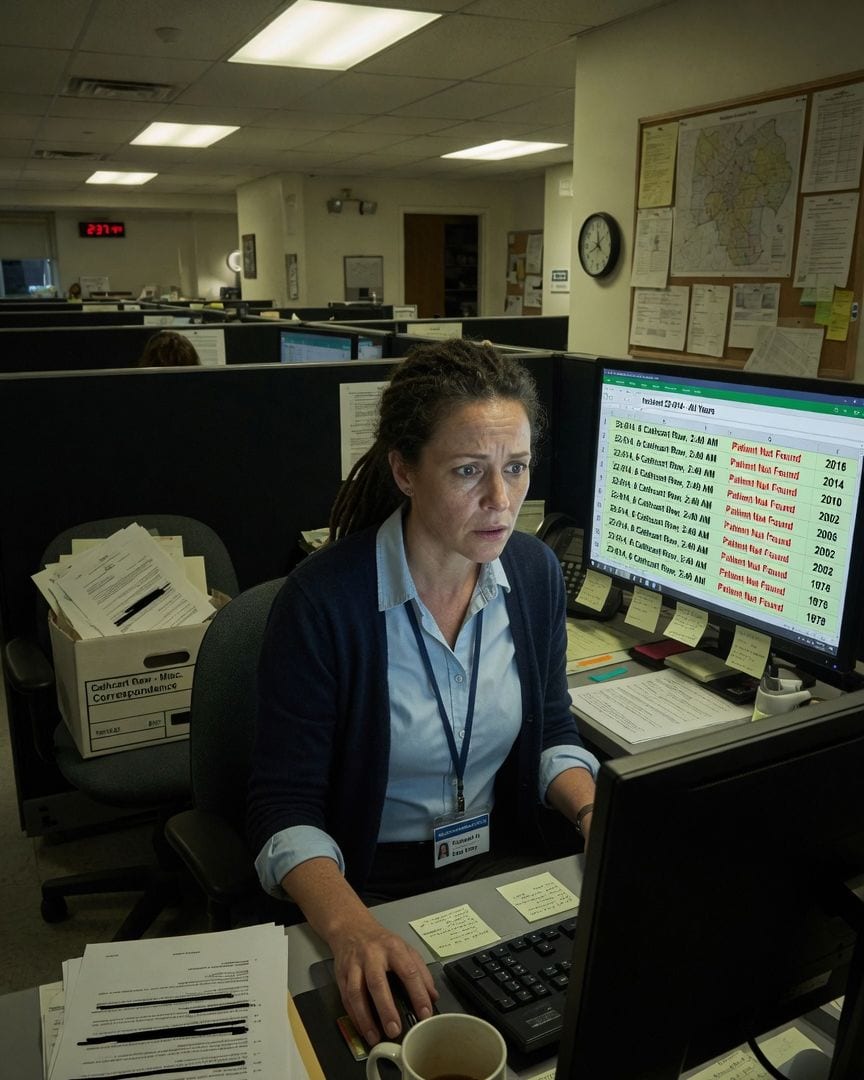
My computer log shows the same 2:40 AM call to Cathcart Row, every four years since 1978, always closed 'patient not found'.
Working data entry for the County Ambulance Trust, I found a routine incident logged as 'Patient Not Found.' But digging deeper, I discovered the exact same phantom call had repeated every four years for over forty years, always at the same address, always at 2:40 AM. Then I found a heavily redacted memo linking it to my own street.
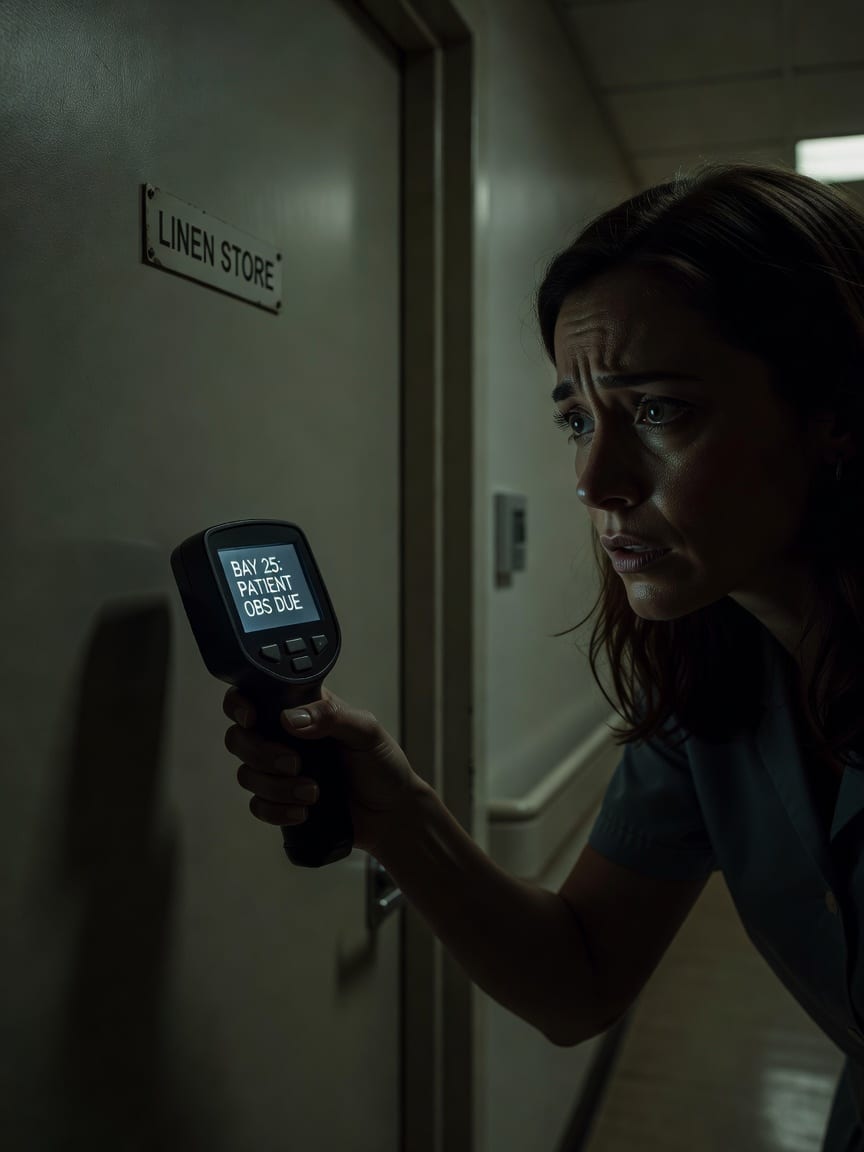
My hospital scanner demands patient care in Bay 25. Bay 25 is a locked linen closet.
I'm a pragmatic nurse, used to my hospital's quiet night shifts. But for a fortnight, my scanner has logged phantom patients in 'Bay 25' — a room that's just a linen closet. Then, tucked away, I found an old patient ID bracelet, faded but clear: 'Bay 25.'
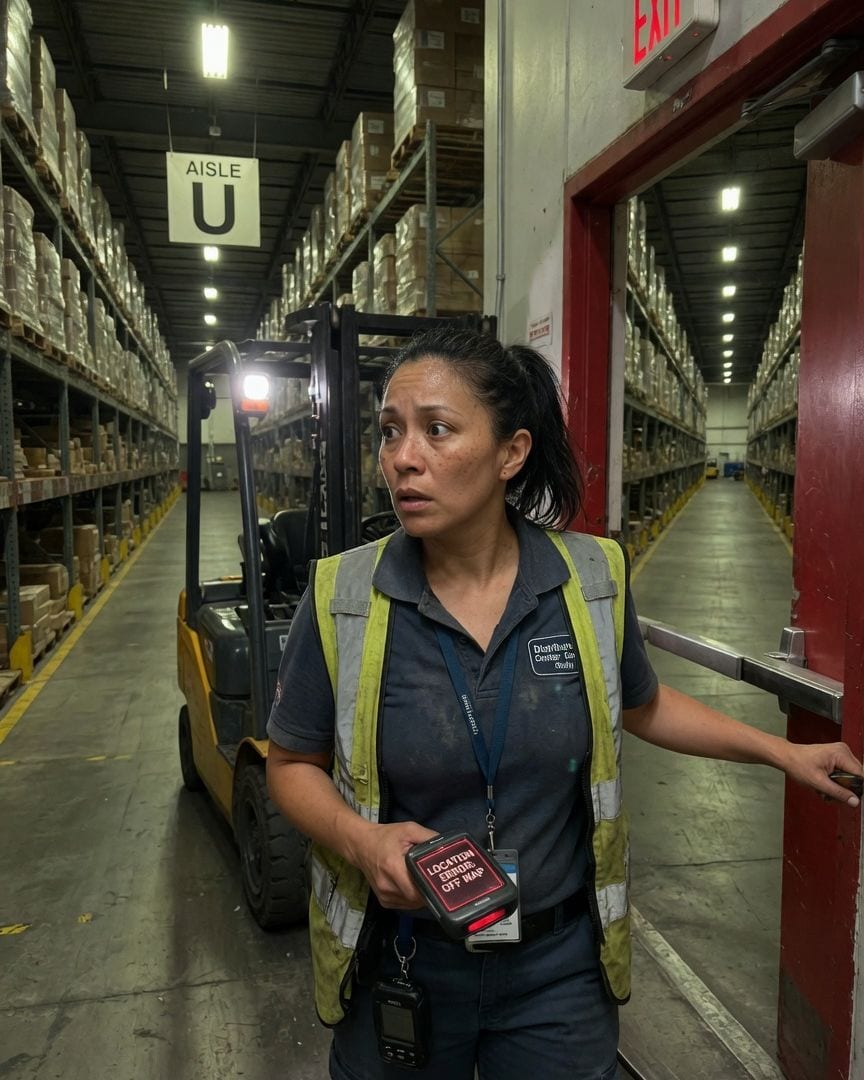
My warehouse has twenty aisles, A to T. My forklift turned past T and found Aisle U, full of packages for orders that don't exist in our system.
Five years I'd driven these aisles at the distribution center, enough to navigate them blind. Tonight, consolidating pallets was a mundane task. But turning past Aisle T, my headlights found Aisle U – a section that shouldn't exist in our blueprints or system. My forklift's scanner screamed 'LOCATION ERROR: OFF MAP'.