My warehouse has twenty aisles, A to T. My forklift turned past T and found Aisle U, full of packages for orders that don't exist in our system.
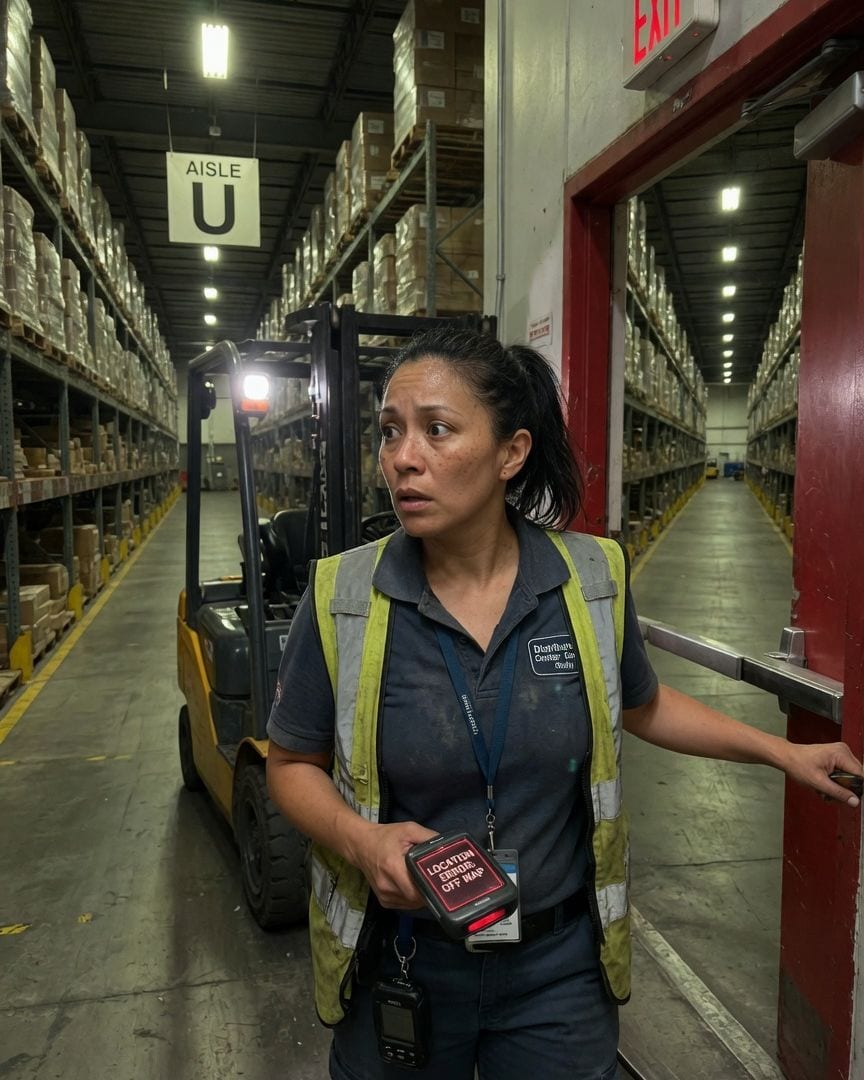
The familiar hum of my forklift was a steady rhythm in the late-night quiet of the distribution center. Five years I’d driven these aisles, enough to navigate them blind.
A to T, twenty of them, each bay numbered, every yellow line on the concrete floor a clear boundary. Tonight I was on a late rotation, mostly consolidating pallets, a mundane task I knew by heart.
I made the turn past Aisle T, expecting the solid end wall, the loading bay beyond it, the edge of the world I knew. My headlights cut through the gloom, reaching further than they should have.
They illuminated steel racks, towering up into the pale fluorescent glow. Another aisle. Identical to the others, same heavy-duty shelving, same yellow safety lines painted on the floor.
But this wasn't right. This wasn't the wall. This was… Aisle U.
My internal scanner, mounted on the dashboard, blinked red. A harsh, persistent light. 'LOCATION ERROR: OFF MAP,' it screamed in silent text. I blinked, then looked from the screen to the physical marker hanging from the ceiling.
A white sign, black letters: U. It shouldn't exist. There was no Aisle U. Not in our blueprints, not in our system.
I drove a few feet further, the tires crunching lightly on the clean concrete. The pallets stacked here bore familiar shrink-wrap, the same style we used for everything. But the labels. I leaned out, squinting at one, then another.
The barcodes looked right, the numbering format. But the order numbers, the destinations listed – they weren't in my manifest. They weren't in the system at all.
My heart started a slow, heavy thrum against my ribs, an out-of-sync beat in the silent warehouse.
I tried to rationalize it. A mislabel, maybe? Someone had put up the wrong letter. Or a temporary overflow section, slapped together by an unannounced night crew?
But the 'OFF MAP' alert on my forklift’s scanner persisted, refusing to be dismissed. It was a digital lie, stark and unblinking, against the very real steel racking stretching out before me.
I fumbled for the radio, pulled the headset over my ears. "Adam? You there?" Adam Lawson was on the other side of the facility, probably doing his own routine rounds.
His voice crackled, distorted, cutting out before he could finish his name. "…static…Emily…you breaking up…" I tried again, but it was just white noise.
The warehouse, usually buzzing with the faint hum of distant machinery or the occasional clang of a dropped pallet, was unnervingly quiet here.
The air felt colder, too, a damp, metallic tang I didn't recognize, like old copper and damp concrete.
I decided to investigate. Maybe if I could get to the other end of this impossible aisle, I’d find a proper sign, a foreman, someone who could explain the clerical error.
I drove slowly, the forklift’s low rumbling engine a lonely sound. I pulled up beside a stack of pallets, picked one at random, and ran my scanner over the barcode on its side. 'BX-774-ALPHA.'
I cross-referenced it with my handheld terminal. Nothing. 'ITEM NOT FOUND.' I tried another, a different format, different numbers. Same result. They were valid barcode structures, every digit in place, but utterly absent from the company's inventory.
Not a single entry. My rational mind insisted. This had to be a new, unannounced product line, or a mistake in the database. It had to be.
Then I saw it. At the far end of the aisle, maybe two hundred feet down, a fire exit door. Painted bright, emergency red. It was a proper, standard fire exit, with the push-bar and the 'EXIT' sign above it.
That was it. I’d use it. I’d step out into the known world of the loading bay, feel the night air, confirm my location. Prove this was just some strange, temporary annex that hadn’t been logged yet.
I parked my forklift, the engine still running, casting long, wavering shadows down the length of the mysterious aisle. The scanner still pulsed red, 'LOCATION ERROR.' I ignored it.
I walked quickly to the fire exit door, my boots echoing unnaturally loud on the concrete. I pushed the crash bar. It opened with a quiet hiss of hydraulics, smooth and silent.
Instead of the familiar concrete of the loading dock, or the cool rush of the night air, I saw more racking. Identical. Stretching into the distance under the same pale fluorescent lights.
Another stretch of Aisle U. The same strange barcodes on the beams. I could hear it then, faint but unmistakable, the distant beep of my own forklift's reversing alarm.
It was echoing from what should be the 'other side' of the building, yet it sounded as if it was coming from right around the corner, from the aisle I had just left.
I backed away from the fire exit, my breath misting in the cold, still air of Aisle U. The loop. It was a loop. I’d opened the door to get out, and instead I’d stepped further in.
My own forklift, just around a corner that didn’t make any sense. My mind raced, trying to find a rational explanation. A trick of the light? An echo? Maybe a mirror on the other side?
No, the racking was too deep, the space too vast for a simple reflection.
I forced myself to retrace my steps, to confirm every detail. I counted the racking bays, searching for a seam, a break, anything to explain the impossible geometry. Nothing. It was all seamless, identical.
The further I walked, the more disoriented I became, the warehouse feeling like a hall of mirrors, but made of concrete and steel.
Eventually, I found my way back to the opening I’d driven through, the transition feeling like stepping through an invisible membrane, from one kind of air to another, though I couldn't say how.
The next day, I pulled Adam aside during our lunch break. He was halfway through a sandwich, listening to some podcast.
I showed him the screenshots from my phone: the 'OFF MAP' error, the picture of the 'Aisle U' marker, a close-up of the unlisted barcode.
He just laughed it off, suggested I was tired, saw things, maybe some prank from the night shift. "You know how Mark is," he said, "always messing with people."
But I persisted. "Adam, I was in it. It’s real. My forklift said I was off the map, but it was right there." He eventually agreed to check the official digital site map from his terminal.
We spent a good ten minutes scrolling through it. Nothing. No Aisle U. A to T, just like always. The screen, however, flickered once, briefly, almost imperceptibly, just as we hovered over the area where I'd been.
I decided to try historical building plans. Our intranet had an archive. I spent another hour digging, pulling up schematics for the 'North Distribution Wing'—the section where Aisle U should technically be. The files for that specific wing were corrupted.
Displayed only blank blueprints or a persistent 'ERROR 404: FILE NOT FOUND' message. It was almost too neat.
Finally, I escalated it to Reginald Kingsley. Our Operations Manager. He's been here for twenty years, runs the place like clockwork, never flustered.
I laid out everything: the scanner error, the phantom aisle, the fire exit that looped, the unlisted barcodes, the corrupted files. Reginald listened patiently, his hands clasped on his desk, his expression unreadable. Not skeptical, not concerned, just… neutral.
"Ah, yes," he said finally, his voice calm, "Aisle U. An old one." He dismissed it as a "system glitch" and "an old software bug" that sometimes misreports locations.
"The GPS system struggles to reconcile the coordinates of that particular section with the official map, Emily. Causes intermittent 'ghost' readings and system errors. We suppress them, usually."
He promised to "look into it," but his eyes, a pale, unnervingly still blue, held a peculiar blankness that unsettled me more than his words reassured me.
It wasn't the look of a manager who was dismissing an employee; it was the look of a man who already knew.
I didn't believe Reginald. His calm dismissal felt too practiced, too rehearsed. A 'ghost reading'? A 'system glitch'? My gut told me he was holding something back, something significant.
I started coming in early, staying late, trying to catch Aisle U in the daylight, to prove its existence to myself again, away from the eerie quiet of the late shift. But it was never there.
The end wall was always just the end wall, solid concrete, exactly where it should be. The warehouse refused to cooperate with my search.
One evening, I was quietly reviewing old inventory logs on a terminal in an unused office, tucked away behind a stack of disused filing cabinets.
The lights flickered then, a brief dip in the fluorescents, making the old metal shelves seem to breathe in the gloom. I dismissed it as old wiring, the building was built in '72, after all.
But then, a notification pinged on the screen: 'ACCESS DENIED: UNAUTHORIZED DATA QUERY.' I hadn't queried anything. A moment later, the screen went black, then rebooted, slowly pulling up the login screen.
I felt a prickle on the back of my neck.
I caught a fleeting glimpse of Reginald Kingsley's silhouette passing the frosted glass of the office door. He didn't stop, didn't acknowledge me, didn't even slow his pace.
But the timing was too perfect, too immediate after the 'ACCESS DENIED' message. It was a warning, silent and cold.
Later that week, during another night shift, I deliberately drove my forklift towards the spot where Aisle U should reappear. I wasn't just checking; I was inviting it.
As I approached where Aisle T ended, my scanner flashed 'LOCATION ERROR' again, a welcome red pulse. But this time, the internal radio, which had been silent for hours, crackled.
A low, distorted voice, barely a whisper, cut through the static. "Some places are best left alone, Caldwell." It was clipped, metallic, almost like Reginald's voice, but warped, stretched thin by static, like a message from a bad connection.
I slammed on the brakes, my heart suddenly pounding, a frantic drum in the silent warehouse. My forklift shuddered to a halt. The voice didn't repeat. The static cleared. The silence returned, heavier than before.
I looked up, scanning the dark, empty aisles. At the very end of the main aisle, perhaps two hundred feet away, just barely visible in the weak overhead lights, Reginald Kingsley was standing.
He had a clipboard in his hand, his expression entirely neutral, unreadable even from that distance. He gave a slight, almost imperceptible nod, then turned and walked away, disappearing into the shadows of the warehouse.
Spooked but determined, I redoubled my efforts. The voice, the silent warning from Reginald, the impossible loop—it all confirmed my suspicions. He knew. And whatever 'it' was, it wasn't a glitch.
I remembered an old, decommissioned server room in the basement. Rumor had it, it held legacy data, ancient backups no one bothered to migrate.
Armed with a master key I'd 'borrowed' from a maintenance cart—a small, heavy brass key, surprisingly easy to pocket—I slipped down there late one night.
The air in the basement was thick with dust and the cloying smell of ozone and old electronics. The server room itself was a relic, filled with humming, outdated machinery, blinkered by a thousand tiny, dusty lights.
After an hour of digging through old backup drives, terminals caked in grime, and forgotten tape libraries, I stumbled upon a directory labeled 'Project Chimera_Legacy.' My fingers, slick with sweat and dust, hesitated before clicking it open.
Inside, among thousands of encrypted files I couldn't access, I found one unencrypted spreadsheet: 'Inventory_AisleU_Master.xls.'
My hands trembled as I opened it. The document was dated 1998, far older than any current system.
It listed product codes, quantities, and storage locations—all within 'Aisle U.' Many of the barcodes I'd scanned earlier, 'BX-774-ALPHA' among them, were there, marked 'status: active.' This was it. Proof. Concrete, digital proof.
My pulse quickened, a frantic drumming against my ears.
As I scrolled through the endless rows of data, I noticed a separate tab: 'Shift_Logs_AisleU.' I clicked it, my breath catching in my throat. It was a roster of employees, their shifts, and tasks performed within the impossible aisle.
I recognized names of long-retired employees, ghosts from the company's past. Then, my eyes widened, focusing on a single line item, highlighted by the spreadsheet's default formatting:
'Caldwell, E. 23:00-07:00. Aisle U Stock Rotation. 10/14/2019.'
I froze. My own name. That date. It was two years before I even applied for this job, let alone started. I checked my own employment records on my phone, my memory.
I was working a completely different job in a different city then. A completely different life. The spreadsheet was real. The aisle was real. And somehow, I'd been a part of it, long before I even knew it existed.
The 'system glitch' Reginald spoke of, the 'old software bug'—it was all a lie.
The chill I felt in Aisle U wasn't just cold air; it was the touch of something profoundly wrong, something that reached across time and pulled me into its orbit.
I stared at the glowing screen of the old laptop, the unearthed manifest open, highlighting my own name next to a shift entry: 'Caldwell, E. 23:00-07:00. Aisle U Stock Rotation. 10/14/2019.'
My hand trembled as I realized the date was two years before I even started working at the facility.
I scrolled further, frantically, my vision blurring with dread. There were more entries. Scattered across different years, sometimes months apart, sometimes weeks. All with my name. All for 'Aisle U.' It wasn't just a phantom record, a single error.
It was a recurring pattern. A history I didn’t remember.
Then I heard it. A faint click, distinct even over the whirring of the old servers. It was the server room door, slowly opening behind me. The stale, recycled air in the small room stirred.
A shadow fell across the screen, obscuring my name and the impossible date. I didn't turn, couldn't. The soft, measured footsteps approached, stopping directly behind me. The quiet hum of the old servers was suddenly deafening.
Reginald Kingsley stood behind me, his presence calm, almost serene. "Looking for something, Emily?" he asked, his voice devoid of anger, only a detached curiosity. My heart hammered against my ribs, a trapped bird. I finally turned.
Reginald's gaze was fixed on the screen, on my name, on the impossible date. He gestured to it. "The Chimera files. I knew it was only a matter of time before someone curious enough found them."
He explained, without prompting, that the distribution center wasn't just built on any ground. It was built in 1972 over a geological anomaly, a "thin spot" in reality that caused spatial and temporal distortions.
Aisle U wasn't just an extra aisle; it was a recurring pocket dimension, a geometric fold that cycled in and out of phase with our reality, sometimes daily, sometimes weekly.
The company, years ago, discovered its existence and, instead of shutting down, began to exploit it. "Off-book" inventory—contraband, sensitive materials, items for black market deals—could be stored and moved with no official record, utterly untraceable in the main systems.
The 'LOCATION ERROR' on my forklift, the looping fire exit that fed back into itself, the barcodes not in the main system—it all clicked into place. Every impossible detail. It was all consistent, he said. Always had been.
He revealed that the shifts assigned to 'Emily Caldwell' in the old manifest were not an error. "The anomaly calls certain individuals," Reginald said, his gaze unnervingly steady. "Those with a certain... affinity. You've been here before, Emily.
Not physically, not entirely, but your presence, your echo has. It’s a recurring pattern. You're part of its cycle now, whether you remember it or not. I've seen my own name in those logs, years before I became manager.
We all have, eventually, if we stay long enough and look close enough."
He wasn't threatening me; he was simply stating a fact, a truth he lived with every day, a truth that had already claimed a part of me I hadn't even known existed.
"So, what now?" I asked, my voice surprisingly steady, the initial shock giving way to a cold, frightening resolve. Reginald smiled, a faint, unsettling curve of his lips. "Now, you have a choice.
You can forget what you've seen, dismiss it as a hallucination, a data error. Go back to your usual shifts, your normal life." His smile didn't waver. "Or you can accept it. And become part of the solution."
He explained that maintaining the secrecy of Aisle U was a delicate balance. Any disruption, any public exposure, could cause the anomaly to destabilize, potentially consuming parts of the warehouse, or worse, spreading beyond the property lines.
He needed people who understood, who could navigate its quirks, who wouldn't panic when the laws of physics bent.
He offered me a new, "special assignment"—a role in managing the "unlisted inventory" of Aisle U, ensuring its cycles remained stable, its contents unseen by the unsuspecting world.
He described it not as a threat, but as a necessary duty, almost a sacred trust. He was talking about black market deals, about exploitation, but his tone was that of an administrator explaining a complex logistical problem.
I felt a profound chill, realizing the full weight of his calm acceptance, his utter lack of moral conflict. He wasn't evil; he was simply an administrator of the impossible, a quiet custodian of an insidious secret.
I couldn't unsee it, couldn't un-know it. I couldn't go back to my old life pretending Aisle U didn't exist, knowing what I knew. The weight of the truth pressed down on me, heavier than any pallet I'd ever lifted.
I looked at Reginald, his unflinching stare. I made my decision. "I want to see the current inventory," I said, my voice low, firm. "The real inventory. And I want to know every exit from Aisle U. Every single one."
Emily Caldwell still drives a forklift at the distribution center. Her shifts are now different, often irregular, sometimes requiring her to work alone in the quiet hours.
Adam notices her changed demeanor, the new, distant look in her eyes, but she offers no explanation, just a vague shrug. The 'LOCATION ERROR' on her forklift's scanner still flashes occasionally, but she no longer reports it.
She knows where it leads, and she simply turns the corner.
The warehouse continues its operations, oblivious to the impossible geometry folded within its walls. Reginald Kingsley remains the calm, unbothered Operations Manager, his secret now shared, his burden lightened by another who understands.
Emily has learned the specific, counter-intuitive pathways in and out of Aisle U, the subtle shifts in its layout, the precise moments it becomes accessible or retreats. She is part of the system now, a quiet guardian of the impossible.
Sometimes, on her way to Aisle U, she catches her reflection in the polished steel of a rack, and for a fleeting second, she sees not her own face, but a faint, older version, tired and knowing, a ghost of a self from a shift she never remembered working.
She has survived, but a part of her has been irrevocably claimed by the place that isn't on the map.
The dread isn't that it's going to happen again; it's that it always has been happening, and she is now an active participant in its quiet, impossible continuation.
She measures, she counts, she ensures the numbers refuse to add up for anyone else. The quiet hum of the warehouse is her lullaby, and the impossible geometry is her new home.
She knows the truth, and the calm is the worst part.
If this one got to you
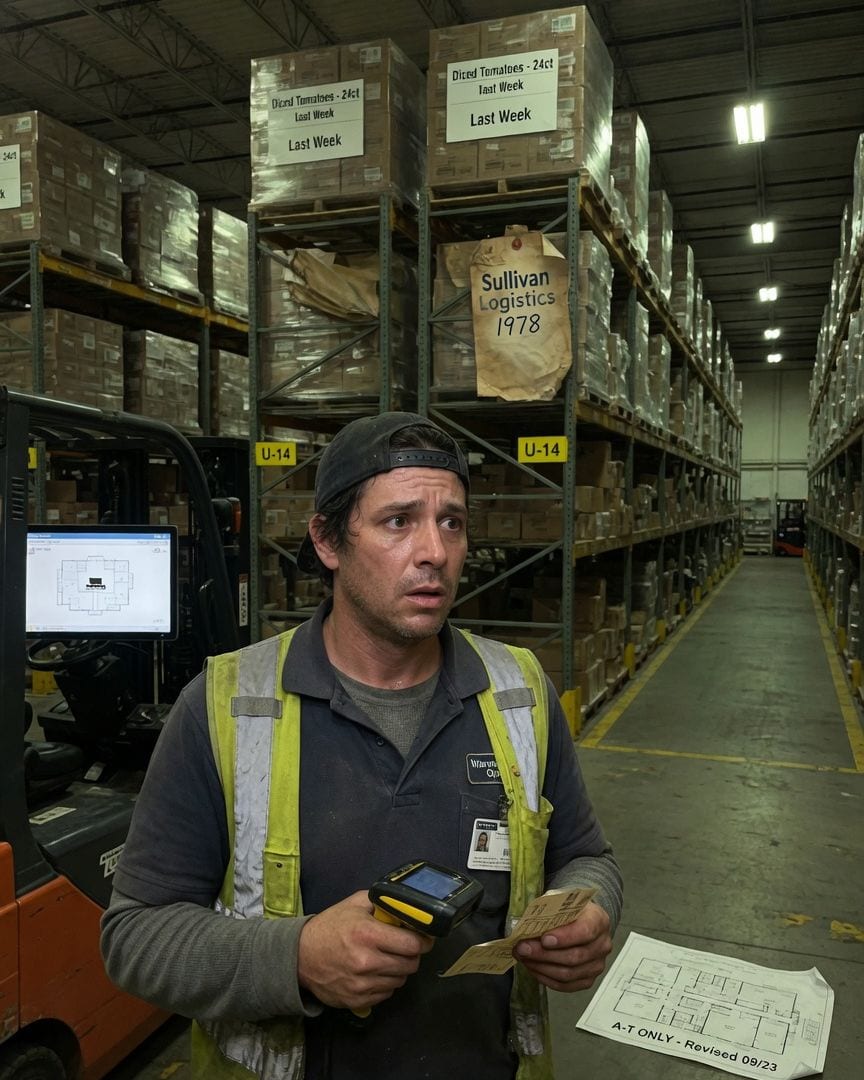
My warehouse floor has an extra aisle past the end wall. Aisle U, full of pallets for orders no one ever placed. My forklift’s GPS says I’m off the map.
On my usual night shift route, driving the forklift through the familiar warehouse aisles, I rounded a corner and found something new. Aisle U. It shouldn't exist; the building's official blueprints only go up to Aisle T. But there it was, stretching out into the dim lights, a solid, tangible section of building that wasn't on any map.
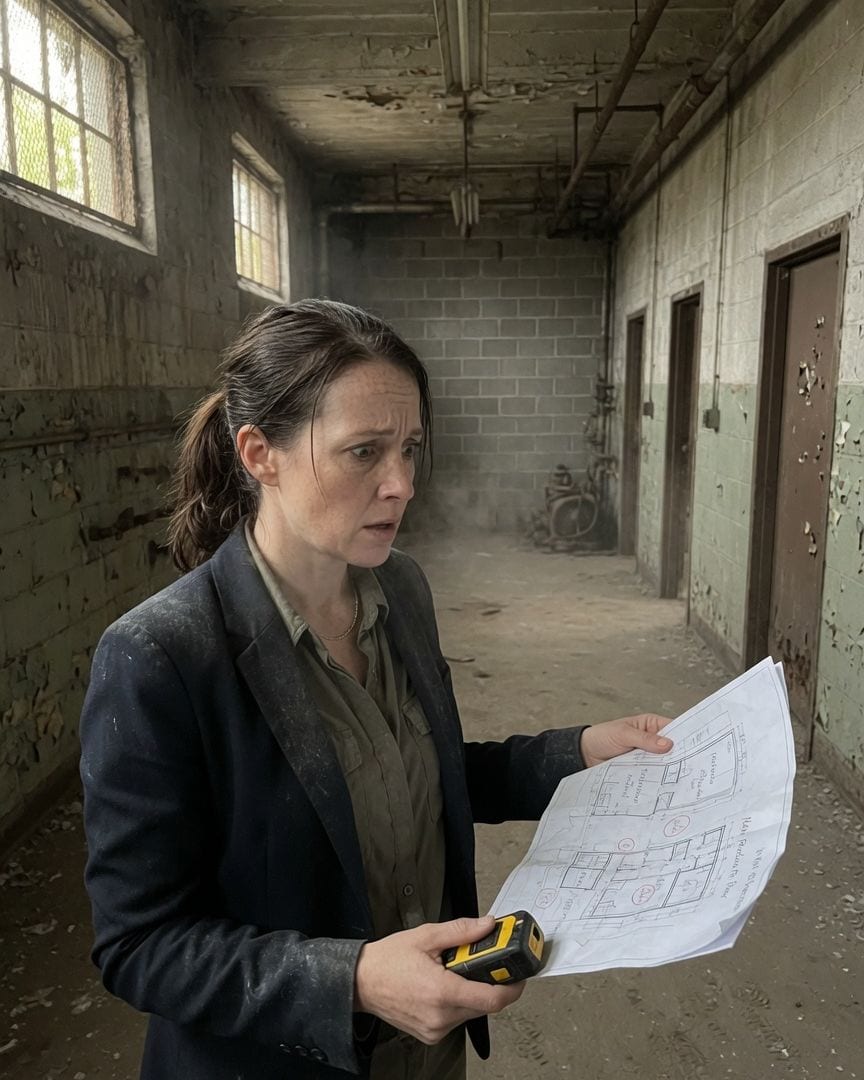
One room is missing from this factory floor. My blueprints show four, but I only found three doors.
Intrigued by an abandoned industrial complex, I secured its old blueprints and entered the cold, silent building. Pacing a long corridor, I meticulously counted doors, comparing them to the detailed plan. The blueprint clearly showed four distinct rooms, but the corridor's length, and my own count, revealed only three doors.
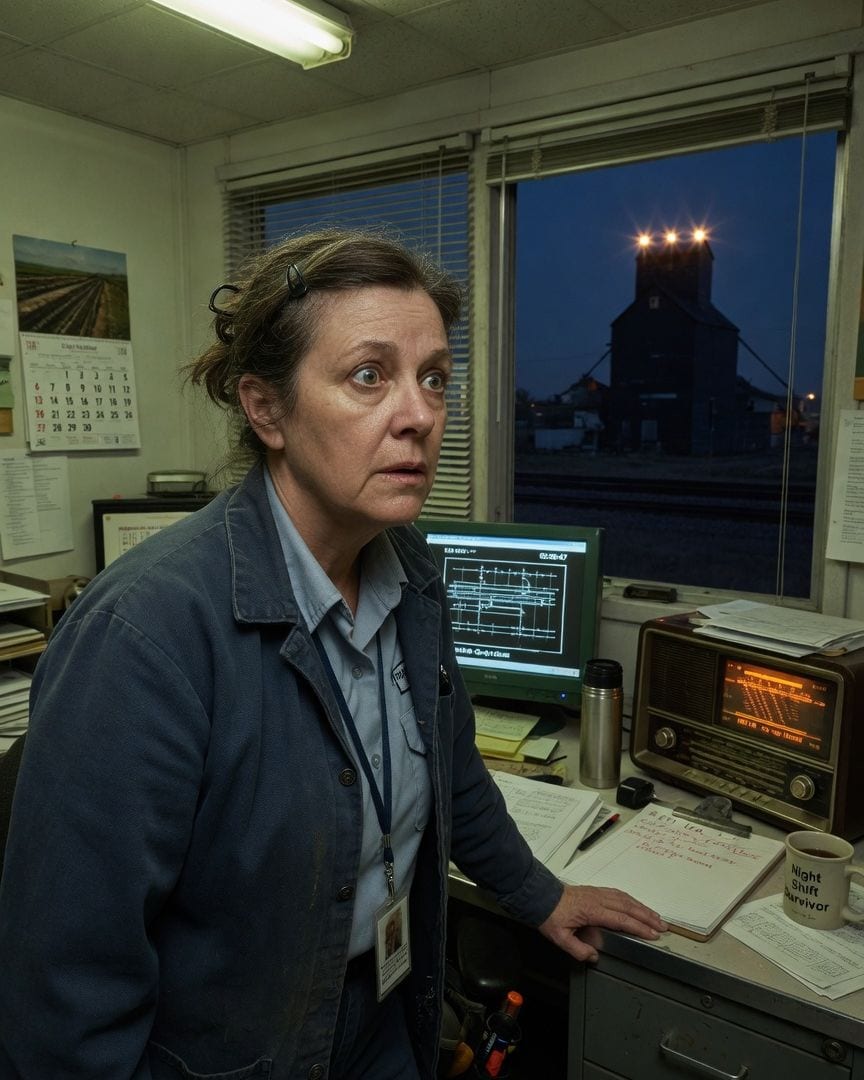
The grain tower light flashed three times at 2 AM, signaling me clear. The bulb was removed six years ago.
Every night, I work the lonely shift at the transport hub. For fifteen years, an old grain elevator, automated and unpowered with its light bulb physically removed, still flashes a 'Clear' signal across the tracks at 2 AM. Recently, the impossible flashes have grown sharper, stirring a deep unease from a place that should be completely silent.
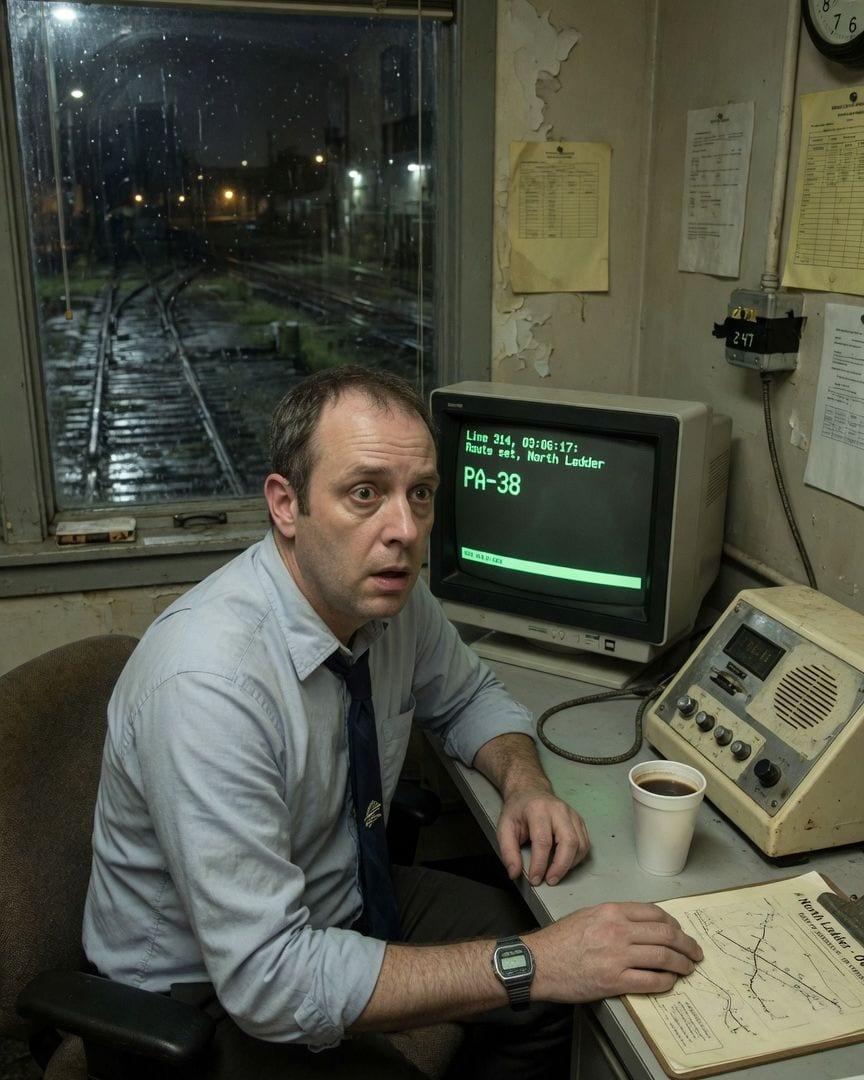
The log says my lever set a route at 3:06 AM through a track that's been shut for repair work — and the circuits show something moved down it. I never touched that lever; I sat there still.
I, Preston Abbott, a night dispatcher, was running a routine signal log check when I saw my code had set a route. It was for the North Ladder, a track decommissioned twenty years ago and physically impassable. Then, the yard's old, physically severed intercom system crackled to life, whispering a specific routing instruction for that very track.
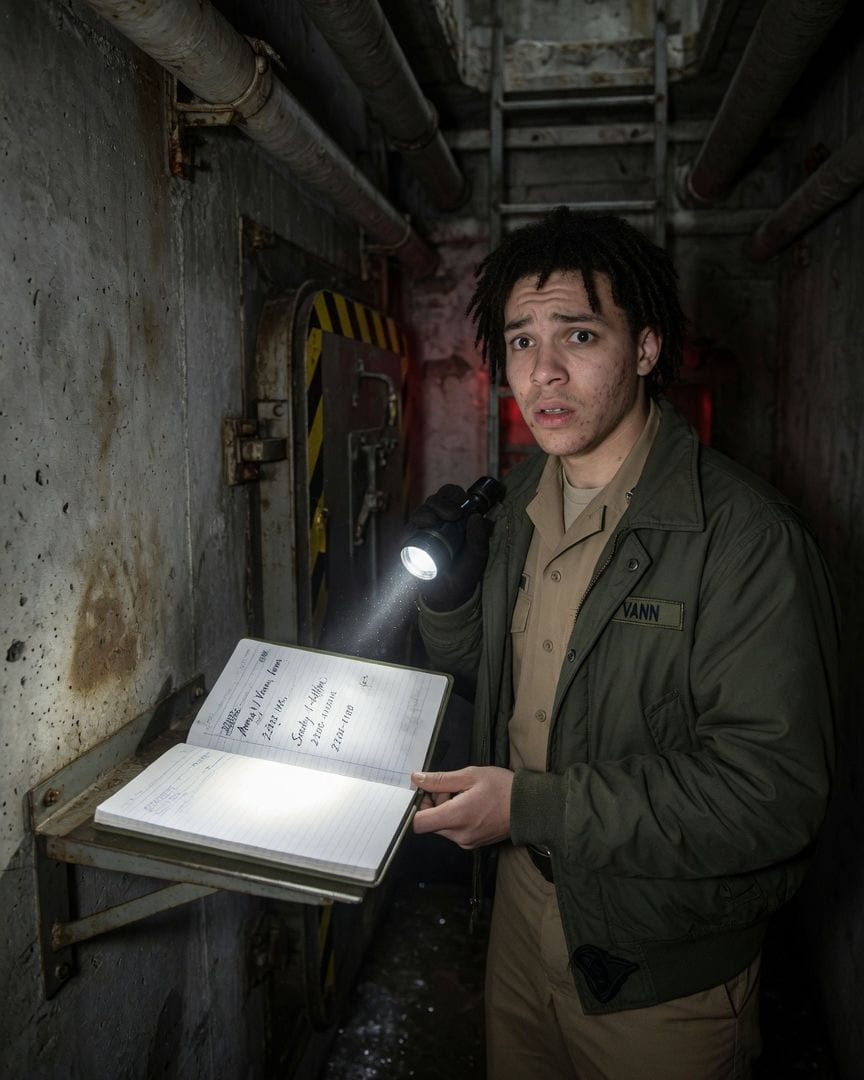
On his last patrol, Airman Vann sees a Cold War silo hatch light up from *inside*—it was welded shut a decade ago.
Airman Vincent Vann was on his last patrol across a vast, desolate Cold War missile field in the Dakotas, the cold, starless sky mirroring the emptiness of the landscape before his transfer. His routine check of eight hardened silo caps was shattered when a red fault light pulsed on Silo 4’s access panel, signaling an impossible breach from *inside* a hatch sealed for a decade. As more silos lit up, ignoring base orders, Vann found the hatch unlocked from within and descended into the dark shaft, where he discovered a pristine logbook bearing his own signature next to a chilling entry from a non-existent sentry, dated for *that very night*. Now, a steady *thump* echoed from deeper within the sealed concrete, leaving the Airman desperate for an explanation that simply wasn't there.
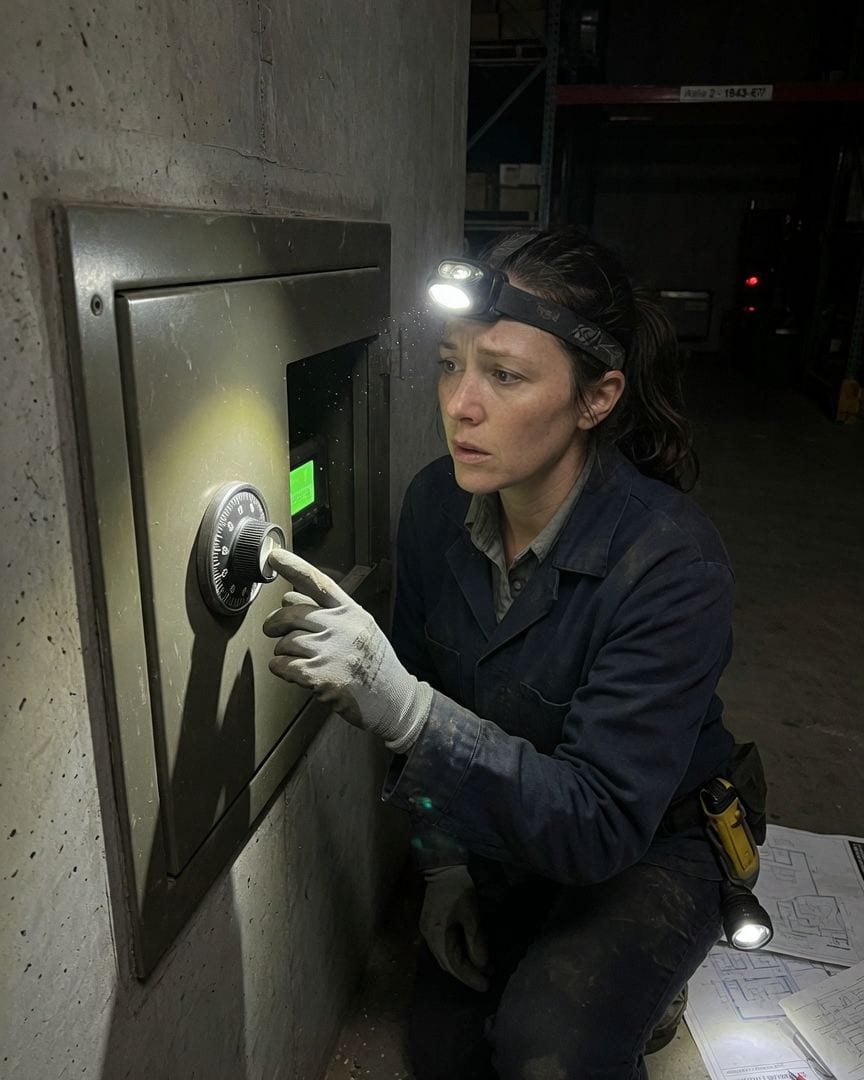
A meticulous records clerk finished her final inventory in a Cold War depot, then found a steel door not on any blueprint, worn smooth by decades of use, opening to an office with a log updated just hours ago.
Merit Lachance moved through the echoing darkness of Building 9, her headlamp cutting a lonely circle through dust motes. The depot’s oldest section was losing power, leaving her to finish her mandated shelf-read for the impending decommissioning. Every blueprint showed Building 9 as a single, vast room, so when her light fell on a waist-high, solid steel door set flush into the wall, her mind reeled. Its combination dial was worn smooth from decades of constant use, an impossible contradiction to the building’s known history. After meticulously working the dial, the heavy door shifted inward, revealing a dust-free, actively maintained office space with a terminal log updated just hours ago.