My lost orange cap is in my hand. Yet a photo shows *me* wearing its twin, two thousand miles away.
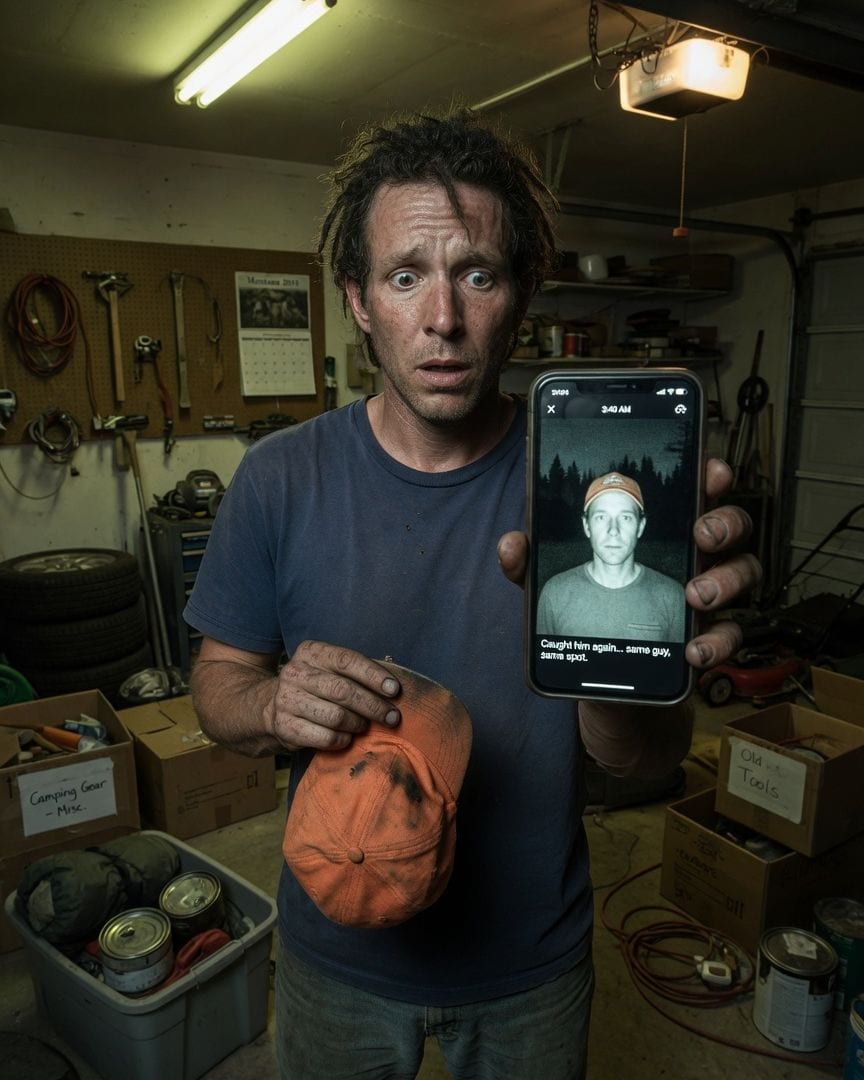
The text message arrived just after midnight, a photo from Vincent, my brother-in-law, who runs motion cameras on his hunting land in rural Montana. It showed a man standing at the treeline, looking straight into the lens.
He wore a faded orange cap. It was me. My face, my posture, even the slight tilt of my head. 'Caught him again,' Vincent’s message read. '3:40 AM, like clockwork.' I stared at the timestamp. 3:40 AM on the 5th.
I was asleep in my bed in Ohio, two thousand miles away. A cold knot formed in my stomach.
Vincent followed up with another text: 'This is the fourth night running, same guy, same spot. You sure you didn't fly out here without telling us?' My breath hitched.
The cap he mentioned, that orange baseball cap, was one I'd lost last year, somewhere in my own garage.
But the face in the photo, caught in the harsh infrared light, was unmistakably mine, a vacant, unsettling stillness in the eyes. It couldn't be me, yet it was. The world felt suddenly, profoundly wrong.
My initial thoughts were a prank. Vincent was a good man, steady, but maybe he’d found my old cap and was messing with me. It was a flimsy thought, even to me. He wasn't the type for elaborate gags.
I texted him back, a casual 'Haha, very funny, where'd you find my cap?' His reply came quickly, 'What are you talking about? That's your cap, isn't it? You left it here last time you visited.'
My last visit to Montana was two years ago. I knew for a fact I hadn't left that specific cap there. I remembered losing it last fall while cleaning out the garage, probably knocked it off a shelf. But where?
I started tearing through my garage, a place usually reserved for organized chaos. Boxes were pulled out, old camping gear scattered, tools shifted.
I was looking for a specific, faded orange baseball cap with a small stain on the brim, the one I’d worn for years. My hands grew grimy, my frustration mounting.
Every box I emptied, every shelf I cleared, yielded nothing but dust and forgotten memories. The idea of a prank began to feel less likely, replaced by a growing, sickening certainty that something far stranger was at play.
If the cap was in Montana, how could it also be here? And if it wasn't my cap, why did it look exactly like mine, on a man who looked exactly like me? The garage light hummed, casting long shadows.
My phone buzzed again with another photo from Vincent, timestamped for the previous night. The same figure, same spot. The cap. I had to find mine.
Deep in a forgotten corner, behind a stack of old tires, I spotted a dusty plastic tote, labeled 'Camping Gear - Misc.' I hadn't touched it in years. My heart hammered.
I dragged it out, the plastic scraping against the concrete. Inside, under a rolled-up sleeping bag and a rusty mess kit, was a familiar splash of orange. I pulled it out.
It was faded, sweat-stained, and had the exact small, dark smudge on the brim where I’d once touched it with greasy hands. My orange cap. The very one I’d lost last year.
I held it in my hand, the worn fabric warm from my grip. Then I looked at the photo on my phone again. The figure at the treeline in Montana, wearing an identical cap, looking directly into the lens.
My cap was here. In my hand. The one in the photo couldn't be. But it was. They were identical. Two caps. Two me's. My mind refused to bridge the gap.
I called Vincent, my voice tight, explaining I had the cap. I described it, the stain, the fade. He was silent for a long moment. 'Edward, that's impossible. I saw the cap on the guy. It was yours.
It's still there.' He insisted the figure in the photos was undeniably me, down to my specific gait. My wife, Vanessa, listened quietly as I recounted the impossible discovery.
She suggested I was overtired, seeing things, but the tremor in my voice must have convinced her. 'You have to go there, Edward,' she said, her brow furrowed with concern. 'You have to see it for yourself.'
The next day, I booked a flight to Montana. I couldn't shake the feeling of profound unease. While waiting for my flight, I started researching Vincent's land. It was mostly untouched wilderness, part of a larger, sparsely populated valley.
I found old local news clippings, digitized from microfiche, detailing strange 'sightings' or 'ghost stories' from the area, often dismissed as folklore or misidentification.
One particularly caught my eye: an article from the 1970s about 'phantom hikers' near the 'Whispering Fault,' a geological feature I hadn’t heard of.
The article mentioned a local historian, Joel Vance, who had written a small book on local legends. A quick search yielded a contact number for the local historical society. I left a message, my heart thudding.
The mundane explanations had failed. I was chasing a phantom, and I needed to know what it was.
Two days later, I was in Montana. Vincent met me at the small airport, looking grim. 'Another one last night,' he said, handing me his phone. The same photo, same time, same unsettling stare.
We drove straight to the hunting land. It was vast, quiet, surrounded by dense pines and a chill that seemed to seep into my bones.
Vincent showed me the motion camera, strapped to a thick pine near a narrow game trail. It was pointed directly at the treeline, where the ground sloped down into a thicket. 'Right there,' he pointed, 'that's where he always stands.'
As I stood at the spot, an inexplicable cold swept over me, raising goosebumps despite the mild afternoon sun. It felt like being watched, a palpable pressure on my back. I turned, scanning the silent woods, but saw nothing.
Vincent pulled the memory card from the camera. 'Want to see?' he asked, his voice low. We drove back to his cabin and reviewed the footage. Frame after frame of deer, elk, and then, inevitably, the figure.
On one clip, from two nights prior, just seconds before the 'me' appeared, I noticed a subtle distortion in the background, a brief, shimmering heat haze that rippled through the air, almost imperceptible against the dense forest.
It was like a mirage, lasting only a fraction of a second, then gone. And then, the figure. My own face, staring out of the dark woods. The air in the cabin suddenly felt too thick.
I rewound the clip, played it again, pausing on the flicker. It was there. A silent, visual crack in reality, a tiny window into whatever produced this impossible image.
The next morning, I met Joel Vance at the small, cluttered historical society office. He was a man with kind eyes and a quiet intensity.
I laid out my story, showing him the photos, the proof of my cap in Ohio. Joel listened, his expression unreadable, occasionally nodding. 'Local legends,' he finally said, his voice soft. 'The valley has plenty of them.
People see what they want to see in the shadows.' I pushed back, showing him the flicker on the camera footage, the undeniable proof of the cap. 'This isn't just folklore, Mr. Vance. This is happening.'
Joel sighed, a long, weary sound. 'You're not the first to come looking, Edward. Not the first to insist on what can't be explained.' He rose and went to a heavy, oak cabinet, pulling out a thick, leather-bound ledger.
The pages were yellowed, filled with meticulous, looping script. 'My great-grandfather started this,' Joel explained, opening it carefully. 'A record of the unusual. He called them 'Echoes'.' He turned to an entry from the late 1800s.
It described 'shadow figures' seen at the edge of the woods on a specific property, always at night, always mimicking someone known to the land.
'The Rutherford land,' Joel clarified, 'your brother-in-law's property, it sits directly over what we call the Whispering Fault. A rare convergence of quartz deposits and subterranean springs. Locals have believed for centuries it's a place where the veil thins.'
He pointed to a specific passage, describing 'the likeness of Mr. Sterling, the then-owner, seen at the treeline for three successive nights, wearing his hunting cap.' The very same treeline, the same pattern of recurrence.
Joel's finger then traced a line to an entry from 1903, detailing the appearance of 'the man in the red cap,' a perfect likeness of the then-owner, caught on an early daguerreotype. My blood ran cold. The cap. The man.
The treeline. It was all there, recorded, impossible.
Joel pulled a small, leather-bound album from the cabinet, its cover worn smooth with age. He opened it carefully, revealing faded, sepia photographs.
The first showed a stern-faced Edwardian gentleman in a dark suit, standing at the familiar treeline, a primitive camera tripod visible nearby. He wore a distinct red cap, looking directly into the lens.
'That's the 1903 owner, Mr. Ellison,' Joel murmured. 'The man in the red cap.' Below it, another, even older photo, from 1878. A woman in a dark bonnet, her face a blur, also at the treeline, facing the camera.
Then Joel turned the page. My breath caught. It wasn’t a photograph, but a meticulously rendered pencil drawing, dated 1841. It depicted a man in homespun tunic, standing by the very same treeline, his face clear, distinct.
The caption beneath it, in fine, elegant script, read: 'The likeness of Quentin, our eldest son, who had traveled west and not returned, seen at the edge of the wood, the 17th day of August, 1841.'
I stared at the drawing, a name from my own family history, a distant relative of Joel, a man who had vanished westward and never returned.
The figure in the drawing, the woman in the photo, the man in the red cap… and then the man in the orange cap. My face, my posture. It wasn’t just me. It never was.
The phenomenon was ancient, recurring, and had been mirroring people connected to this land for centuries.
Joel closed the album, his gaze distant. 'The Echoes,' he said, 'they're drawn from those who have spent significant time on the land, or have strong emotional ties to it. They're not malevolent, Edward.
Not spirits, not ghosts in the traditional sense. Just reflections. A natural, unsettling property of this particular place.' He explained that the 'Whispering Fault' was believed to resonate with residual psychic energy, a kind of temporal imprint.
Personal items, like my orange cap, or the red cap of Mr. Ellison, acted as anchors, drawing out the Echoes. My connection to the land through Vincent, my own past visits there, had been enough.
The motion camera, with its constant activation and focus on that specific spot, had merely provided a stable, repeated anchor for 'my' Echo to manifest. 'They're harmless,' Joel insisted, 'if unsettling.
But they can become more frequent, more distinct, if continually observed, or 'fed' attention.' The shimmer I’d seen in the camera footage, the cold spot, it was the land itself, briefly 'thinning the veil,' manifesting a perfect, visual facsimile.
Every clue, every impossible photo, every historical record, clicked into place. The horror wasn't in some malevolent entity, but in the sheer, indifferent coherence of it all. The land remembered. The land repeated.
I knew what I had to do. I couldn't stop the Echoes, not truly. But I could stop my Echo. I returned to the land with Vincent, not with a rifle, but with a purpose.
He watched, puzzled, as I approached the treeline. The air was heavy, the usual chill present.
I took the orange cap I’d found in my garage, the real one, and placed it carefully on a low branch at the exact spot where the Echo always appeared. A decoy. A new anchor.
Then, I set up a new motion camera, pointing it not at the treeline, but directly into an empty, unassuming field, away from the Echo's usual haunt.
I disabled its motion sensor, set it to record continuously, but without any triggers. 'No more attention,' I told Vincent, 'no more focus on that spot.' He nodded, though I could see the skepticism in his eyes.
We waited. As 3:40 AM approached, the cold deepened. I felt the familiar prickle of being watched, the subtle shift in the air.
At the treeline, a faint shimmer began, a barely-there outline of a familiar figure coalescing in the gloom. I didn't look directly at it. I focused on my new camera, disabling its power completely.
The shimmer at the treeline flickered, hesitated, then slowly dissipated, like smoke dissolving into the night. The cold lifted. The pressure eased. I hadn't destroyed anything, just withdrawn the constant observation, the focus that drew it out.
My Echo was no longer being 'fed.' It was a hollow victory, but a victory nonetheless.
I returned to Ohio, leaving the land and its unsettling truths to Vincent. I didn't tell Vanessa the full, intricate horror of it all, only that I'd 'resolved the camera issue' and that Vincent understood.
The photos from Montana stopped arriving. Life slowly, painstakingly, returned to a semblance of normal. The orange cap remained on the branch at the treeline, a silent sentinel. The new camera, unpowered and pointed at an empty field, gathered dust.
The immediate threat, the personal wrongness, had ceased. But the knowledge, the deep, unsettling understanding of the land's ancient, indifferent mimicry, stayed with me. It was a scar on my perception of reality, invisible but ever-present.
Months later, a small, unassuming package arrived. It was from Joel Vance. Inside, nestled amongst tissue paper, was a worn copy of his local history book. Tucked into its pages was a new, faded photograph.
It was an old family portrait from the 1930s, taken on the same Montana land, a group of stern-faced ancestors gathered on a porch.
In the background, at the very edge of the frame, partially obscured by a thick pine, was a faint, familiar silhouette. A man in an orange cap, looking directly at the camera, a subtle, unsettling stillness in his posture.
Edward placed the book carefully back on the shelf, his hand lingering on the spine. He knows it wasn't just him. It never was.
If this one got to you
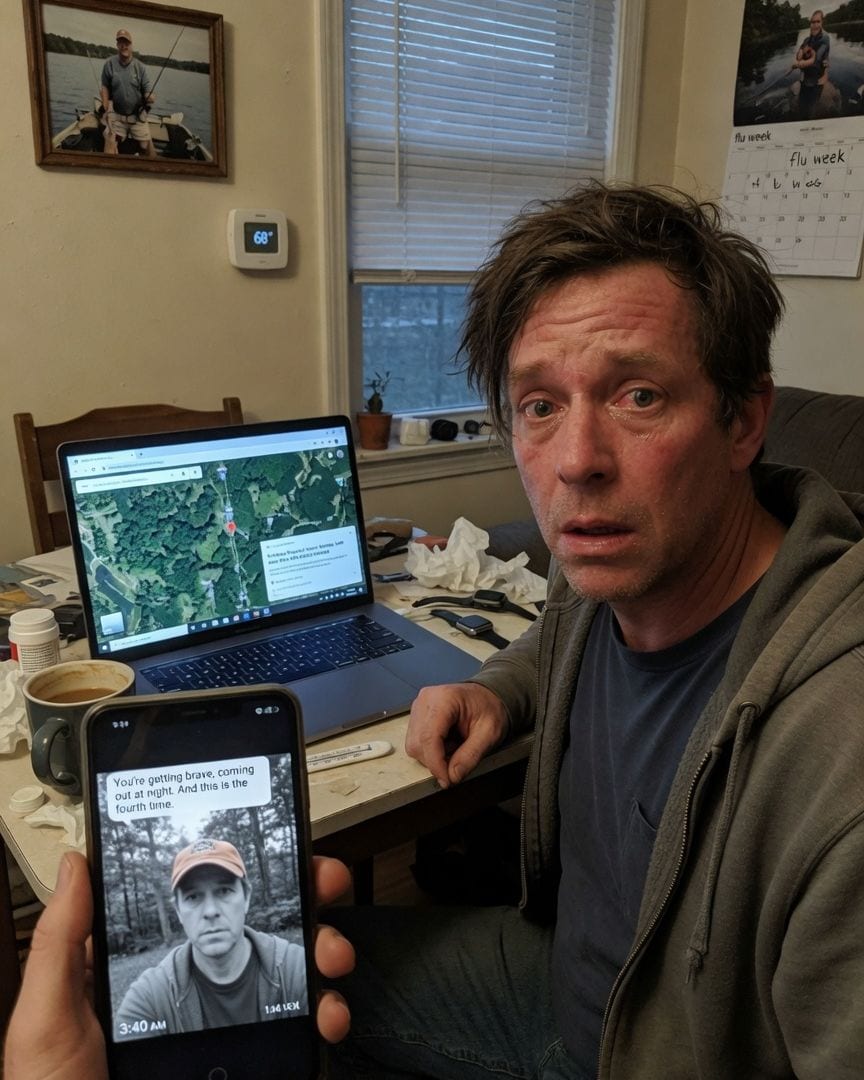
My brother-in-law's camera caught my face in Montana at 3:40 AM. I was asleep in Ohio, but it's the exact orange cap I lost, and he's seen me there four nights running.
I was just making coffee when my brother-in-law sent a photo from his Montana hunting land. It showed my face, wearing my lost baseball cap, timestamped 3:40 AM. I was home in Ohio, sick in bed, and hadn't been to Montana in years. And this was the fourth time.
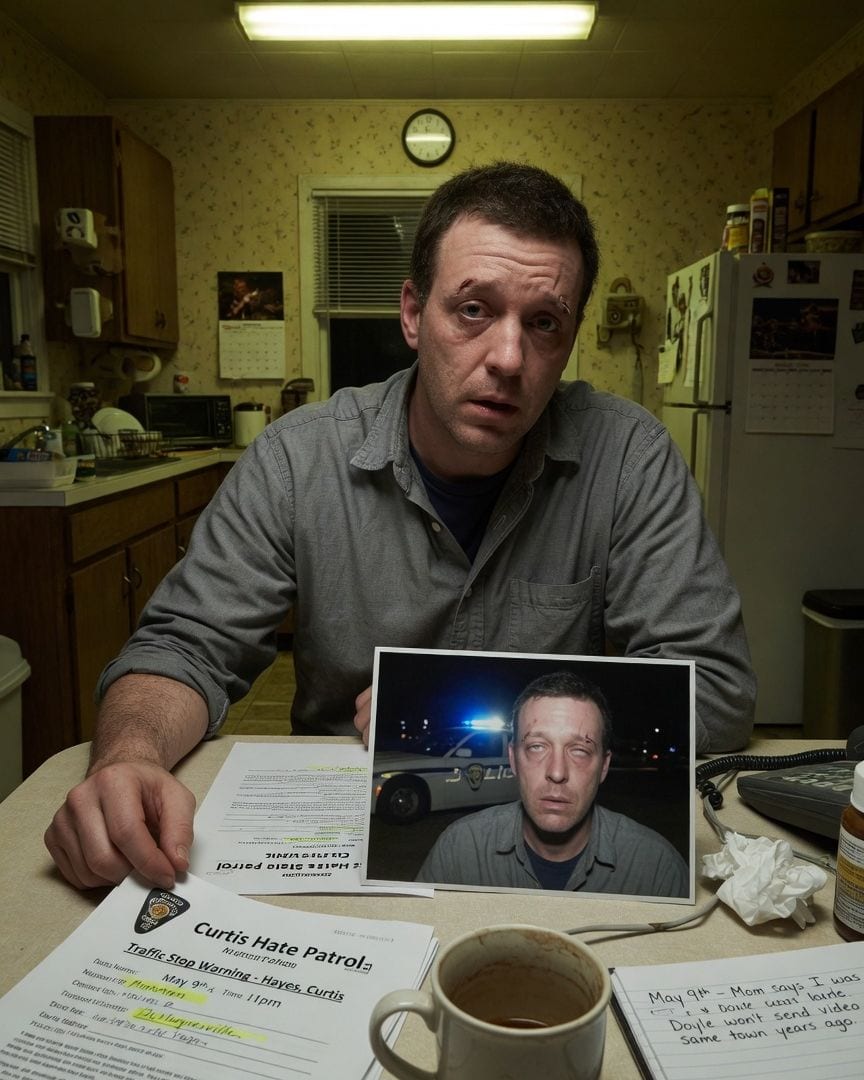
My face stared back from a bodycam video, in a town I've never been. He answered to my name.
I received an email from the Ohio State Patrol for a traffic stop I never made, 200 miles away on May 9th. My mother confirmed I was home that night, asleep on the sofa. When the police finally sent a bodycam photo of the driver, it was my face and scar, but the eyes were flat, distant, and utterly devoid of warmth.
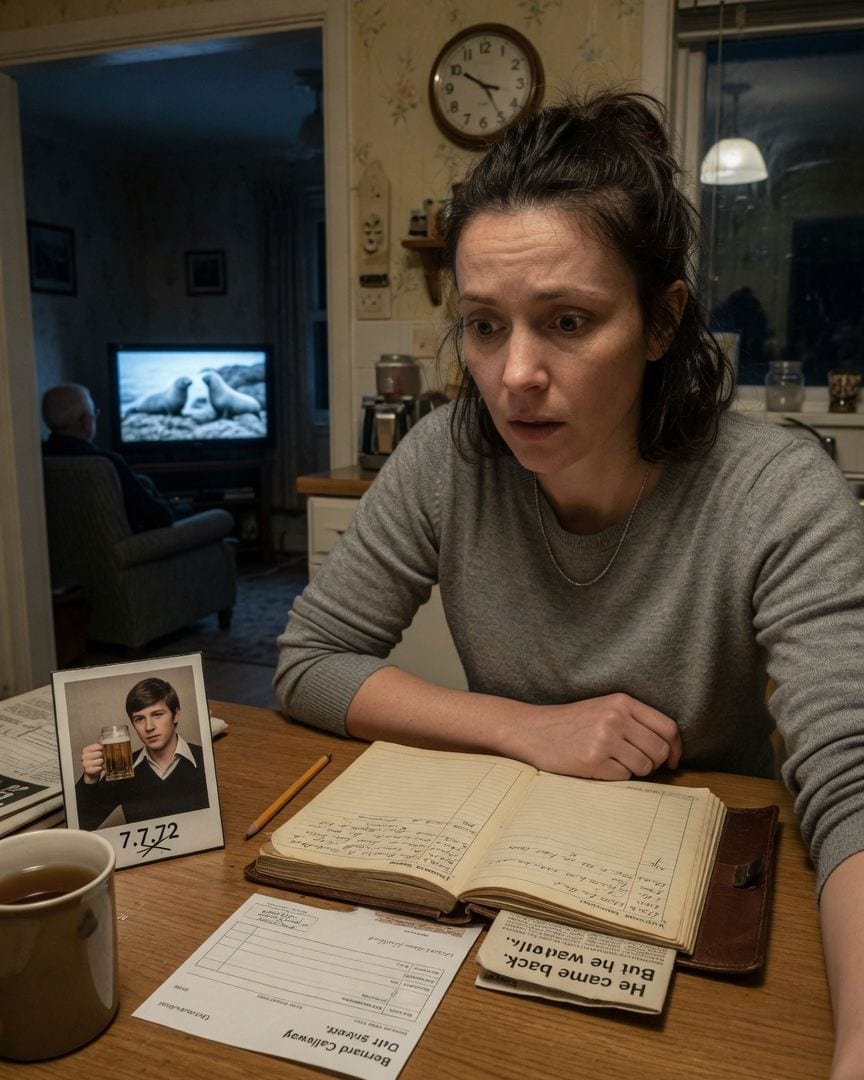
My father's bank slip had uncrossed '7's. He swore he never had that habit.
My father, Bernard, returned three months ago, a miracle after being presumed lost at sea. But a bank statement revealed a disturbing detail: the '7's in his signature were uncrossed. For decades, he'd meticulously crossed every '7', yet now he denied ever having the habit.
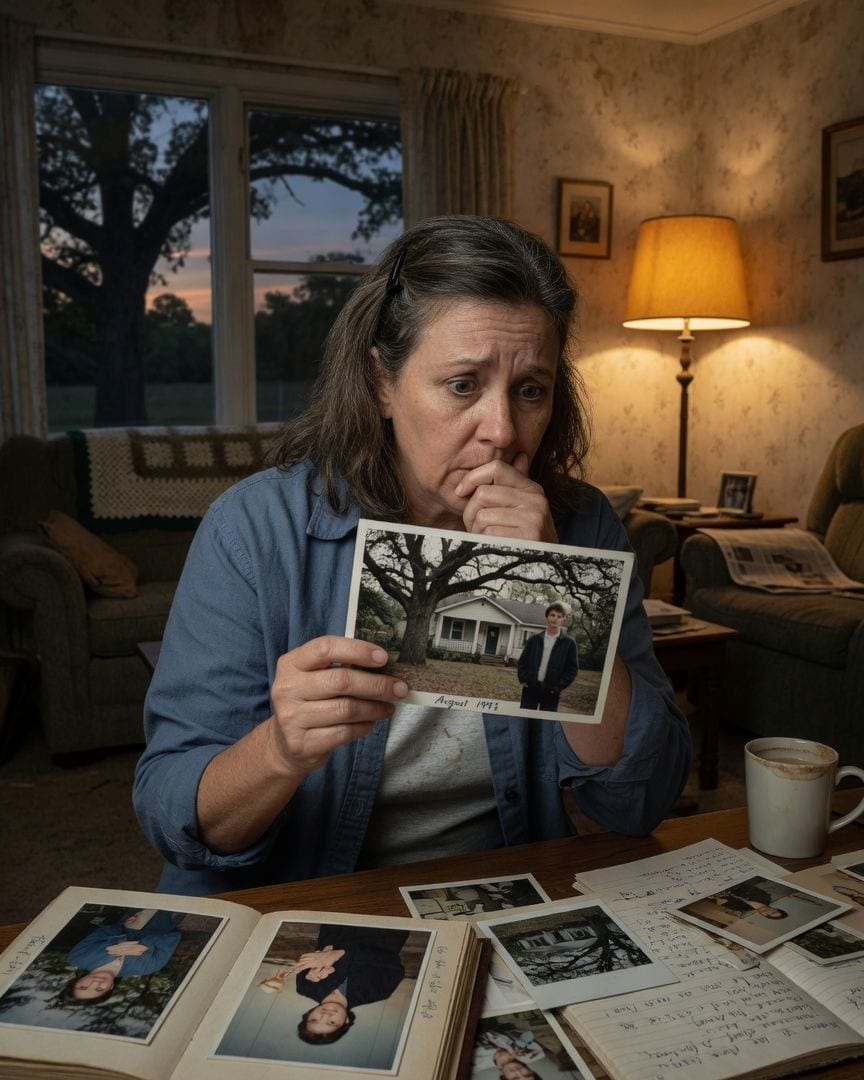
My brother remembers carrying me home after I broke my arm. He was already gone two years when it happened.
After thirty-two years, my brother Joel returned, bringing a relief that felt physical after decades of quiet absence. But when he recounted carrying me home after I broke my arm, a memory I held dear, the warmth in my chest curdled cold. He was twenty years old then, two years gone already, and my mother had carried me.
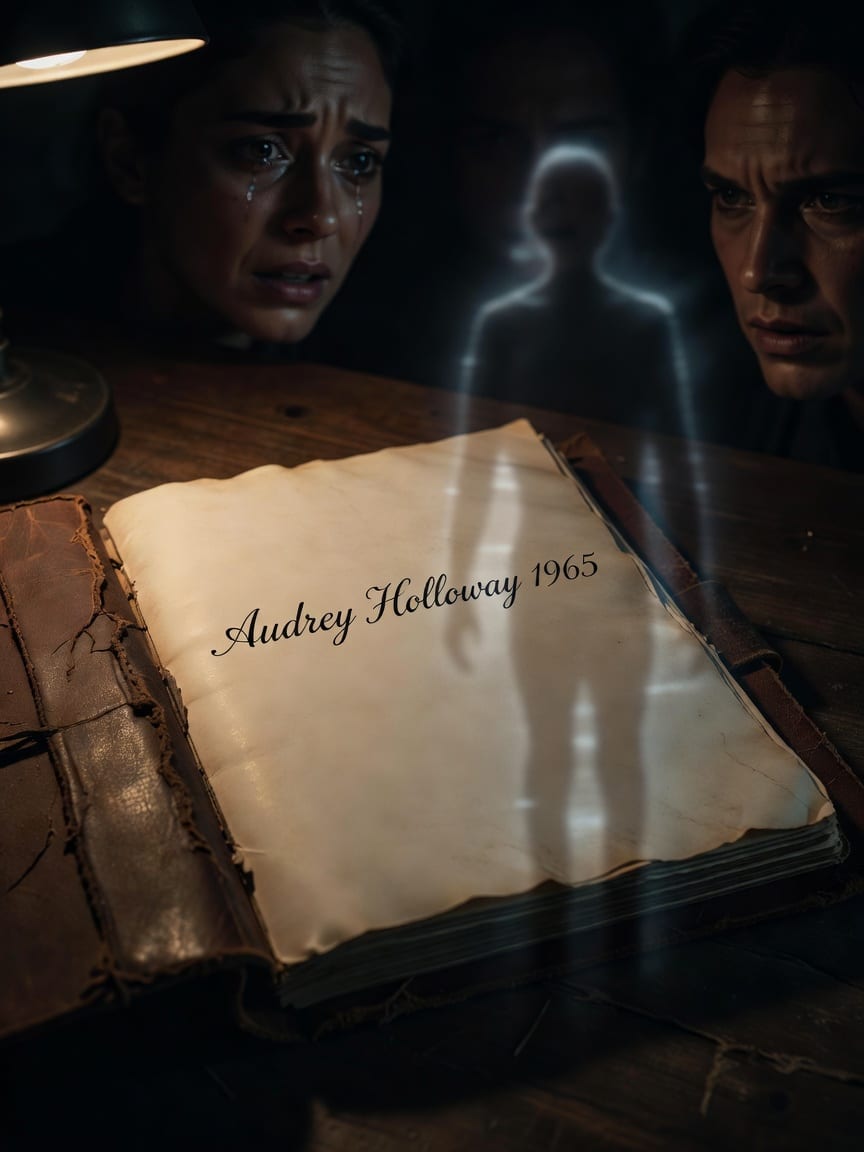
My own baby clothes arrived. Each tiny collar bore my name, embroidered in new thread. My mother swore she gave them away decades ago. The delivery note read: 'you'll need these again.'
A plain parcel arrived on my doorstep, containing my own baby clothes, freshly laundered and smelling faintly of lavender. My mother insisted she gave every piece away decades ago. But on the collar of a small white dress, my full name was newly stitched in an elegant script.
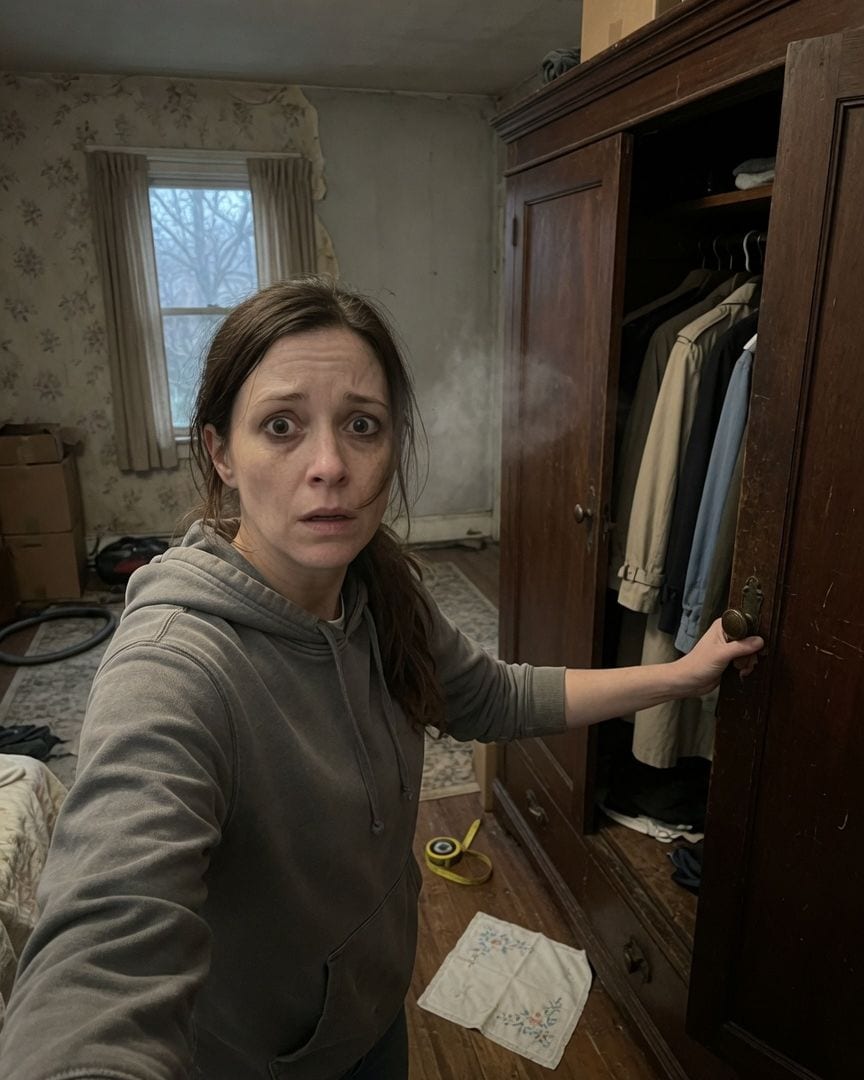
My wardrobe opened onto a made bed and a window full of orchard. It smelled of apples. I shut it and opened it again on my own coats. The wardrobe is eleven inches deep.
Moving into my great-aunt's old house, I discovered a built-in wardrobe that was surprisingly shallow. One grey afternoon, it opened not to my clothes, but to a sunlit apple orchard, filled with the sharp scent of ripe fruit. Later, a small, old-fashioned handkerchief from that impossible room materialized on my bedroom floor, undeniable proof of what I had seen.