My mail carrier delivers polling cards to Nine Acre Field. It floods, they say. The tithe map shows nine family plots there.
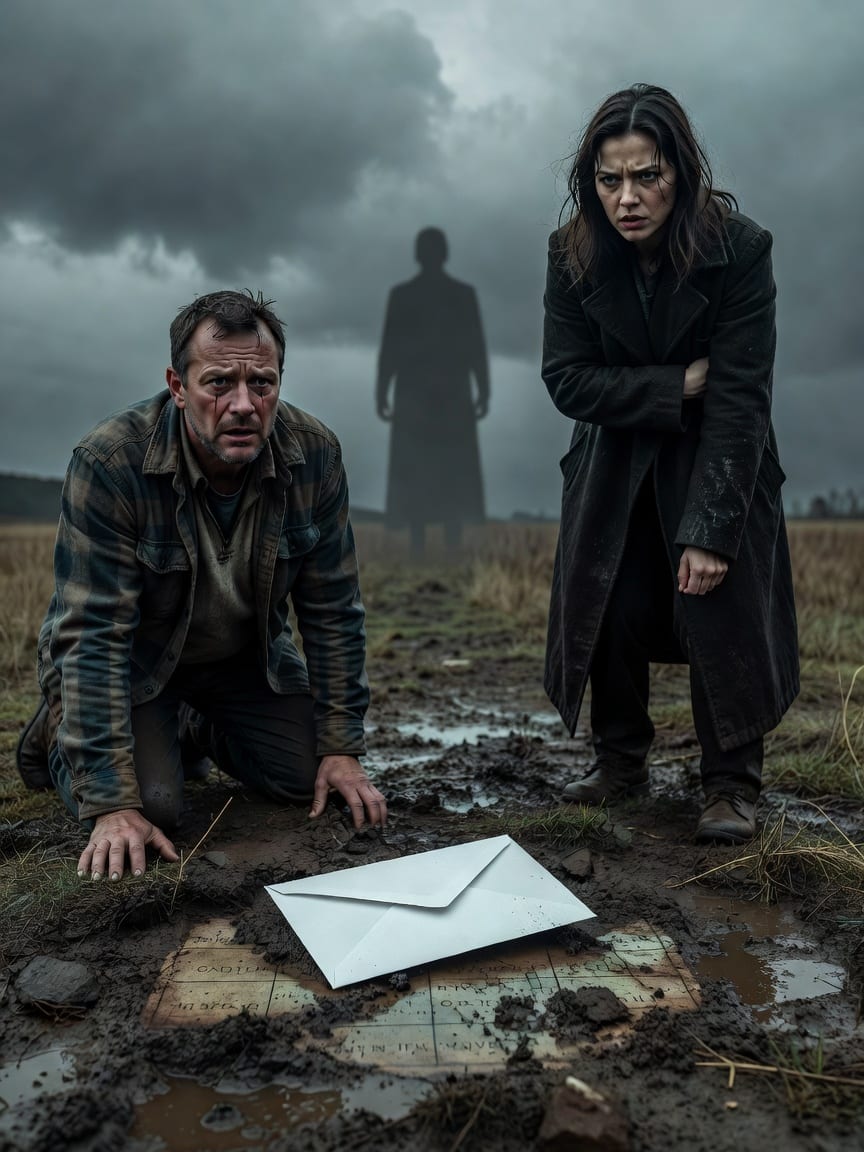
I remember the day I flagged it. I’d just started as the county archivist, drowning in dusty electoral rolls from the last twenty years. The job was usually quiet, methodical. Then the name 'Nine Acre Field' kept popping up.
It wasn't a street, not a village, just a wide, empty expanse outside town, bordered by a single, winding dirt track I’d driven past a hundred times. Yet, here were nine distinct addresses listed, all for Nine Acre.
Polling cards, utility notices, all sent there. Every year.
It had to be an error, some archaic administrative ghost from a past census that never quite cleared itself. That was my first thought. I even asked Arthur Mitchell, a long-time council member, about it during my lunch break.
He was a man of impeccably pressed shirts and a too-smooth smile. "Oh, Nine Acre?" he'd said, his voice just a shade too easy. "That old thing. It floods, you see. Been that way for generations.
Best to just leave it be, really. Always has been."
I heard the same line from Mrs. Henderson at the post office when I mentioned the curious addresses, and from the librarian when I asked for local history maps.
"It floods, don't walk it," they'd say, almost identically, their eyes distant. My brain, trained to find facts and patterns, tried to rationalize it. Flooding. Maybe the houses washed away, and the records never caught up.
But the current year’s polling cards were still being mailed out. And the ground there didn't look marshy, not in the dry summer months.
The wrongness of it lodged itself in my mind, a quiet hum beneath the surface of my otherwise ordinary days. It wouldn't let me go.
Driven by a professional curiosity that refused to be dismissed, I dug deeper into the archives. I spent my evenings poring over brittle, yellowed documents. Eventually, I unearthed a faded tithe map from the late 1800s.
It was beautiful, a hand-drawn marvel, and it clearly delineated Nine Acre Field into nine distinct, small enclosures. Each one meticulously labeled with a family surname: Beaumont, Holloway, Montgomery, and then, impossibly, Ellison. My own surname.
The map confirmed it: these weren't errors. They were once real plots. I cross-referenced with old property deeds. They hadn't been built on for generations, no foundations, no ruins, nothing in the modern records.
Yet the deeds still listed descendants of those original families as owners, and the electoral roll, sitting open on my desk, confirmed their 'residence' at those same impossible addresses. It made no sense.
One sunny afternoon, unable to ignore the persistent itch in my brain, I ignored the vague warnings and drove out. I walked the perimeter of Nine Acre Field.
The ground was surprisingly firm underfoot, not marshy or soft as 'floods' would suggest.
The tall grass swayed in the breeze, wild flowers dotted the edges, but there was no trace of old foundations, no crumbling walls, nothing to explain the phantom addresses. Just vast, unsettling emptiness.
The air itself felt heavy, thick, almost like static. It hummed with unspoken history. I tried to imagine homes here, families living on these plots, but the emptiness was too profound, too absolute.
The rational explanation—old ruins covered by time—failed me completely.
Frustrated, I turned to leave the field, the sun beginning to dip below the distant treeline, painting the clouds in bruised purples and oranges. My foot snagged on something partially buried in the soil. I looked down.
It wasn't a common fieldstone, but a single, rough-hewn standing stone, grey with lichen, rising perhaps a foot from the ground. It seemed to mark nothing, signify nothing in particular.
But beneath it, almost entirely concealed by a patch of resilient moss, I spotted a sharp, clean corner of paper.
Curious, a prickle of unease crawling up my spine, I knelt, carefully pulling back the moss. What I uncovered was not old, not faded. It was a current-year property tax bill, perfectly preserved, addressed to 'Vivian Beaumont, Nine Acre, Holloway.'
The paper was crisp, the ink sharp, as if it had been delivered yesterday, despite being buried in the damp soil of an empty field. It confirmed someone was officially 'living' here, but it was impossible.
My fingers trembled as I held it, the paper surprisingly warm against my skin.
The tax bill for Vivian Beaumont burned a hole in my pocket, a constant, physical reminder of the impossible. The next morning, I researched Vivian Beaumont in every town record I could access.
Her name appeared on recent electoral rolls, census data, even a local library card application from last year. But there was no current address or contact information beyond 'Nine Acre.' No phone, no forwarding address, just that impossible location.
I tried to find a living Vivian Beaumont. My inquiries eventually led me to Sylvia Beaumont, a distant cousin who ran the local bakery.
Sylvia, a woman usually quick with a smile and a gossip, grew quiet when I mentioned Vivian. She offered only platitudes about Vivian having 'moved away' and 'keeping to herself,' her eyes darting nervously towards the back of her shop.
"Vivian was always a bit of a wanderer," she’d said, wiping down a spotless counter. "Never liked to stay put." But her voice was strained, too light.
I pressed Arthur Mitchell again, cornering him in the council offices. I showed him the pristine tax bill. He took it, his smooth smile tightening into a thin line.
He dismissed it as a 'clerical error,' a 'quirk of the old system' that sometimes flagged dormant addresses. But his tone was tighter than before, a subtle tension I hadn't noticed until now.
He handed it back quickly, as if it scorched his fingers. "Nothing to worry about, Laura. Just a little administrative cleanup needed."
Deeply unsettled, I checked land records one more time, cross-referencing everything. The parcels within Nine Acre were still technically owned by the Beaumont, Holloway, and other named families, but they were all uniformly listed as 'undeveloped agricultural land.'
No structures, no current residents. Yet the tax bill, with its crisp paper and recent date, was undeniable. The 'flooding' story was a lie. This wasn't just an administrative error; the town wasn't ignoring an old anomaly.
They were actively maintaining a deception. The sheer effort of it, the quiet consensus among the locals, was what truly chilled me.
My persistent questions about Nine Acre started to draw attention. Sylvia Beaumont, who had been outwardly friendly, now avoided eye contact. If I entered the bakery, she’d suddenly be busy with a distant customer or disappear into the back room.
Arthur Mitchell, meanwhile, started to 'casually' appear at the archives. One afternoon, he offered me a coffee, then launched into a rambling warning about 'old legends and how some things are best left undisturbed.'
His gaze was fixed, unwavering, on my face, and I felt a prickle of genuine unease. The air in the usually quiet archives seemed to thicken around us.
I started noticing things. Familiar faces, locals I’d only vaguely registered before, lingering a little too long outside my apartment window, or driving slowly past my house. It felt like being watched.
The hair on the back of my neck prickled constantly. One evening, returning to my car after a late shift, I found something tucked under my windshield wiper. It wasn’t a flyer or an advertisement.
It was a small, crudely drawn map, rendered in shaky pencil lines.
It depicted the Nine Acre field, but a single, stark 'X' was marked not over the field itself, but precisely over the location of my own house, just on the edge of what the tithe map called the old Beaumont enclosure.
The message was clear: I wasn't just investigating a historical oddity; I was stepping on dangerous ground. Someone knew exactly what I’d found, and what I was looking for. The danger was no longer abstract, a curious record anomaly.
It was personal, a cold knot tightening in my stomach, a knot that felt like it had been there for days, slowly growing.
Unnerved and desperately seeking an explanation that wasn't a lie, I sought out Eleanor Donovan. She was the town's oldest resident, proprietor of a dusty antique shop crammed with forgotten treasures.
Eleanor was known for her quiet knowledge of local history, unburdened by the usual evasions or polite discomfort.
I found her behind a counter piled high with faded postcards, a magnifying glass poised over a delicate brooch.
I laid out my evidence: the pristine tax bill for Vivian Beaumont, the faded tithe map delineating the nine plots, and finally, the crudely drawn map with the 'X' over my own house.
Eleanor, surprisingly calm, set down the brooch and picked up the tax bill, turning it over in her gnarled fingers. She then took a slow sip of tea from a chipped mug, her gaze unreadable.
"Nine Acre," she said, her voice raspy with age, "isn't just a field, dear. It's… a boundary. The 'flooding' is a euphemism, a story we tell to keep the curious away. It's a place that takes."
My heart hammered. "Takes what? Who?" I demanded, the words raw.
Eleanor met my gaze, her eyes surprisingly sharp. "It takes one from the named families, every cycle. For generations. The town… we manage it. We keep the records straight, send the mail. We keep the properties 'active' on paper.
It appeases it, you see. Keeps the balance. Keeps it contained to Nine Acre, and to the lines associated with it." She described it with a chilling detachment, as if discussing crop rotation or a local bylaw.
"Vivian Beaumont was last year's turn. Her family's enclosure was due. It took her in 2023."
A wave of nausea washed over me, sickening and cold. The 'clerical errors,' the nervous 'moving away,' the uniform, rehearsed answers – it all snapped into sickening focus.
The town wasn't just covering up a disappearance; they were actively facilitating a ritual, a horrifying, generations-old sacrifice. The dread deepened, the sheer, terrible coherence making it undeniable. The tax bill wasn't an error; it was a token, an offering.
The carefully maintained electoral roll, a ledger of the living, was also a roster of the dead, or worse, the claimed.
The air in the shop, thick with the scent of old paper and dust, suddenly felt like it was pressing in on me.
Eleanor, sensing my horror, stood and walked to a tall, glass-fronted cabinet that hummed with unseen age. From within, she carefully retrieved an ancient, leather-bound ledger, its pages brittle and yellowed, its spine cracked.
"This," she said, placing it gently on the counter, "is the real record."
She opened it to a page filled with neat, spidery handwriting. It listed names, dates, and terse, chilling entries like 'Nine Acre. Consumed.' or 'Nine Acre. Due.' The dates were cyclical, a chillingly regular rhythm every two decades, almost exactly.
Eleanor's finger, thin and veined, glided down a column. "Vivian Beaumont," she murmured, her voice flat, "Taken. Cycle 2023." I saw the name, the date, the cold finality of it.
My mind raced, connecting the dots of the town's quiet conspiracy, the generations of placid complicity. I thought I understood the full horror, the depth of the town's secret.
But then, Eleanor's finger moved up two more entries, to an older, almost illegible script. "Ellison," she read, her voice still flat, "Taken. Cycle 1983."
My own surname. My breath hitched, a cold, impossible dread blooming in my chest and spreading through my veins.
The ledger wasn't just a record of others; it was a family tree of victims, and my own name was etched into its past.
Eleanor Donovan closed the ancient ledger with a soft, final thud. "Your family, the Ellisons, were among the first here, dear. One of the original nine.
Their enclosure was right where your new house stands now, on the boundary of what became the field. You didn't just move to Holloway, you moved home."
I stared at her, a sickening understanding dawning, chilling me to the bone. My new home, the quiet little bungalow I'd bought with its small garden, was literally on the 'Ellison' plot from the tithe map.
My own blood had settled on the very edge of the thing that took people.
Eleanor continued, her voice unnervingly calm. "The field takes from its own. It's not malicious, not exactly. It simply… demands. It's an ancient thing, a presence, tied to those original family lines that enclosed it.
And if a marked name, especially one that hasn't been in the cycle for a while, returns, and settles on an old plot… it flags them.
The mail, the records, it’s all to keep the presence appeased, to show 'residence' even if they're gone. It keeps the cycle orderly.
But when someone breaks the rule, when they poke and prod, especially one of the marked… it changes the balance. It awakens a sharper interest."
A profound, chilling coherence slammed into me. Every vague warning, every evasive glance, every 'too-smooth' answer from Arthur, the 'X' on the crudely drawn map over my house – it all clicked into place with horrifying precision.
I hadn't just moved to a new town; I had moved onto a stage, unknowingly taking my place in a generations-old, horrific play. The cycle was due. The Ellison name had lain dormant for two cycles, forty years.
And I, an Ellison living on an Ellison plot, was the next act.
I stumbled out of Eleanor's shop, the setting sun casting long, ominous shadows down the narrow street. The air itself felt colder, charged with an unseen presence that hummed around me like a hive of disturbed bees.
My mind was screaming. The cycle was not just 'due,' it was now. I sprinted to my car, fumbling with the keys, my hands shaking so hard I could barely unlock the door. Get out. Escape.
Leave the town, leave the field, escape the terrifying coherence of it all.
As I pulled away from Eleanor's shop, tires squealing on the cobblestones, I saw them. Arthur Mitchell, Sylvia Beaumont, and a handful of other locals. They were not chasing me, not overtly hostile.
They simply stood, a silent tableau in the middle of the town square, blocking my exit from the main road. Their faces were calm, almost regretful, lit by the fading light.
"Laura," Arthur called, his voice carrying clearly, resonating with an unnerving placidity. "You can't just leave. You're part of it now. You have to understand the balance."
Sylvia stepped forward, her hands clasped, a strange, pleading look in her eyes. "It's for the good of us all. To keep it contained."
I didn't stop. I swerved sharply, the old car rocking violently, narrowly avoiding them as I careened onto the main road.
I sped down, past the last houses, past the 'Welcome to Holloway' sign, my heart hammering against my ribs, a wild bird trapped in a cage.
But my easiest escape route to the highway, the one I took every day, was blocked. A massive oak, freshly felled, lay across the road, its branches a tangled mess. It had to have just happened.
I had to take the old road, the one that skirted Nine Acre Field. In the encroaching darkness, the field was a vast, black expanse, formless and hungry.
As I raced past, tires spitting gravel, I heard it: a faint, impossible chorus of whispers, names carried on the wind – 'Vivian… Holloway… Montgomery… Ellison…' The whispers seemed to pull at me, beckoning, a thin, cold thread weaving into my mind.
I pressed the accelerator to the floor, the roar of my engine momentarily drowning out the phantom voices, until the town lights were a distant, fading glow in my rearview mirror.
I had escaped, but the whispers, and the knowledge, were burned into my mind.
I drove for twelve hours straight, ending up in a nameless city far away, surrounded by towering buildings and the anonymity of a million strangers.
I tried to report what I'd found – the tax bill, the ledger, the town's complicity.
The local police listened politely, their expressions varying from pity to thinly veiled disbelief, then dismissed it as a deluded tale, finding no evidence of wrongdoing in the quiet town of Holloway.
All records were perfectly in order, every 'missing' person accounted for as having 'moved away.' My old house in Holloway was listed for sale again within weeks, snapped up by a young couple looking for a fresh start.
The town remained untouched, its secret intact, its placid surface undisturbed. I, however, was irrevocably changed.
Now, I live hundreds of miles away, in an apartment overlooking a bustling city street.
I keep the faded tithe map, a copy of the electoral roll, and a photograph of the single standing stone from Nine Acre Field tucked away in a locked box.
Sometimes, late at night, a cold dread settles over me, and I find myself compulsively checking online news from Holloway, searching for any anomaly, any mention of a 'flood,' a 'disappearance.' There is never anything.
The town continues its quiet existence, its secret carefully guarded. I know the cycle continues, unseen, unheard, and that somewhere, another family name is due.
The whispers still echo in my memory, a constant reminder of the truth no one will ever believe. Her own name, an Ellison, is no longer a simple identifier; it is a warning.
If this one got to you
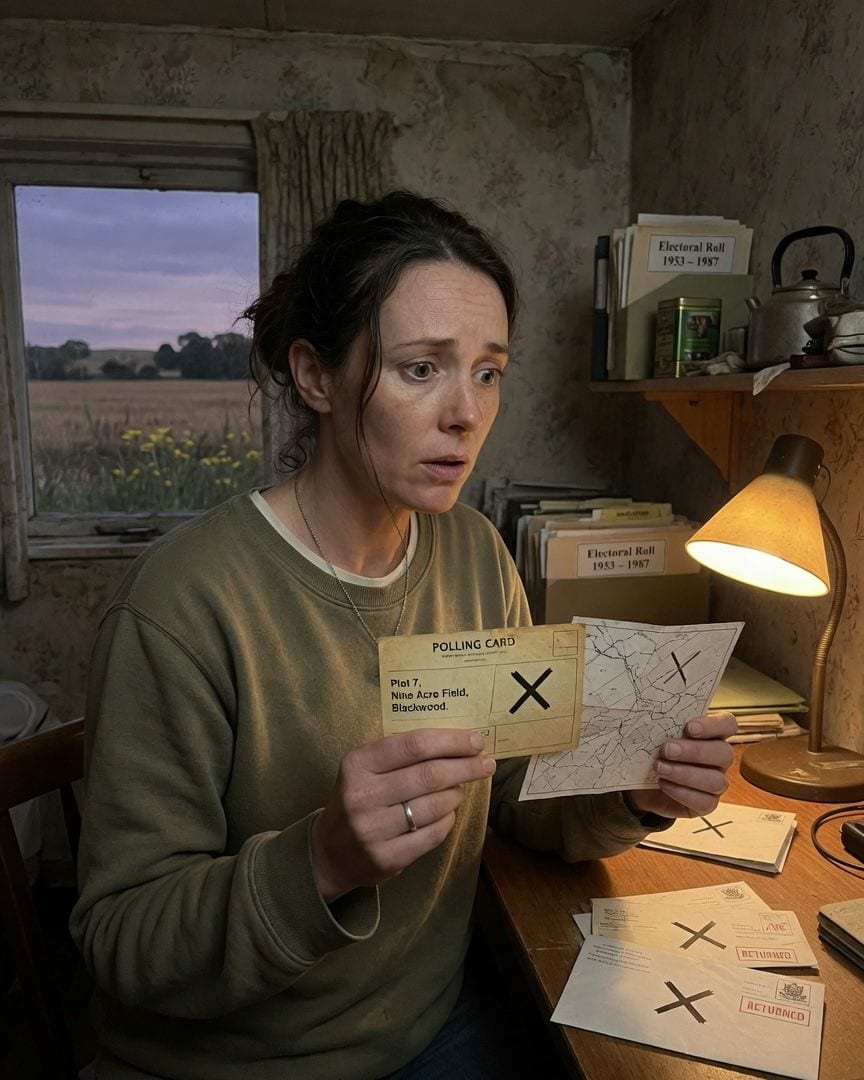
The postman still delivers polling cards to nine plots in a field where no one lives — nine families a county map names, though everyone warns the ground floods and can't be walked.
I moved to Blackwood, seeking quiet, and quickly learned about Nine Acre field, a place locals warned always flooded. Yet, it was always bone dry. My postman, Marcus, however, regularly delivered official polling cards to nine specific plots within that empty field. I later found some of these very cards returned, not as 'undeliverable,' but marked with a chilling, hand-drawn 'X'.
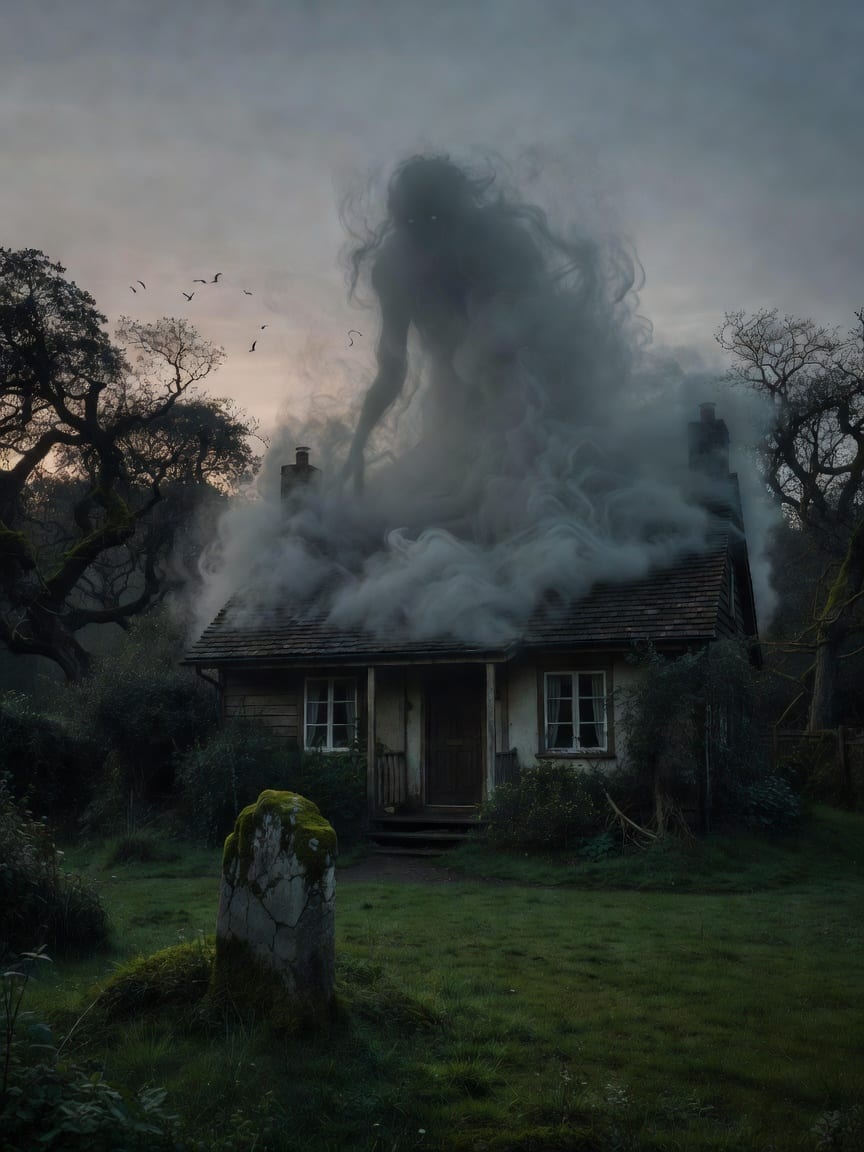
My cottage is now outside the parish, says the vicar. I moved one boundary stone into my ditch, and now I'm outside the line.
I loved my new cottage, with its sprawling garden and ancient oak. But after I moved an old, mossy stone at the edge of my property, Vicar Vance arrived with grave news: my cottage was now outside the parish line, and he could no longer keep me 'on the right side.'
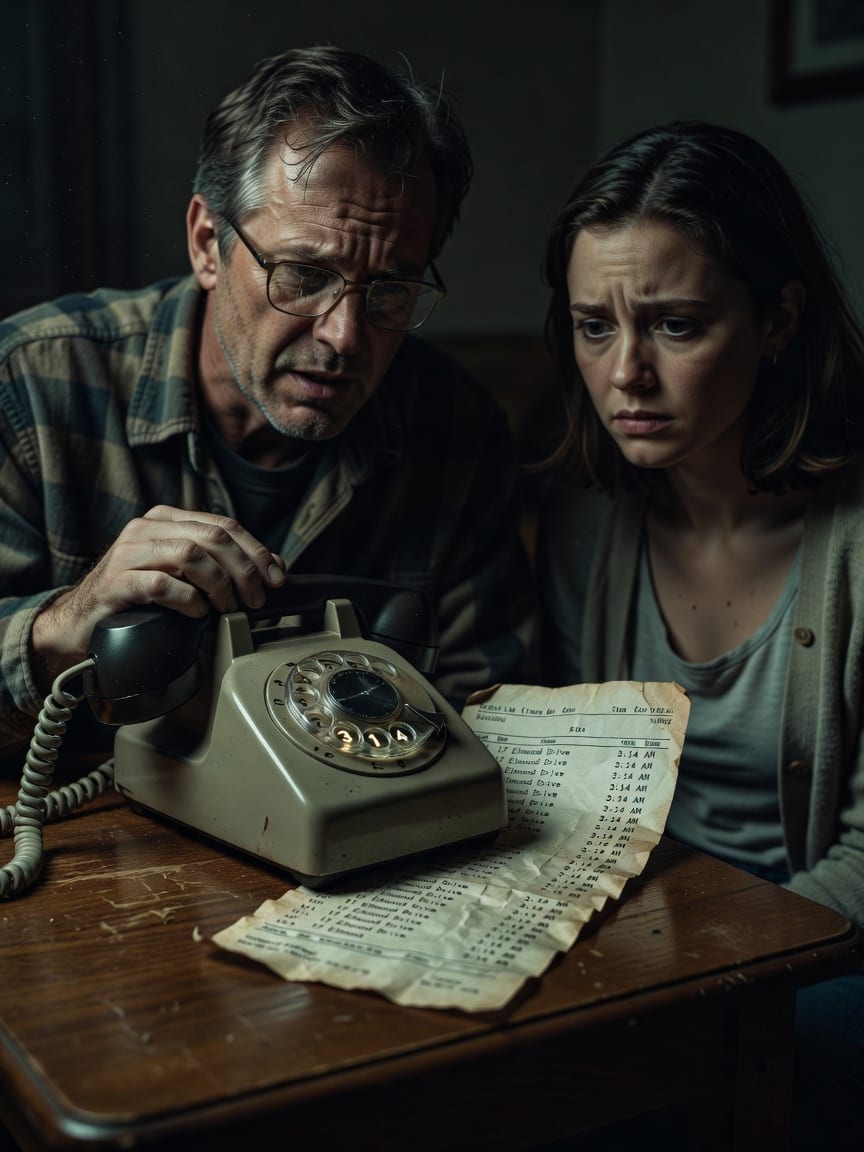
My phone bill itemised forty calls from my number to a house demolished in 1990. Each call at 3:14 AM, lasting eleven minutes. The bill arrived postmarked from a flattened building.
I expected the usual mobile bill, but my landline statement listed forty calls from my number to '17 Elmwood Drive.' That address was for a house torn down in 1990, a vacant lot I remembered from childhood. The phone company insisted the calls were legitimate, leaving me profoundly unsettled by the impossible charges.
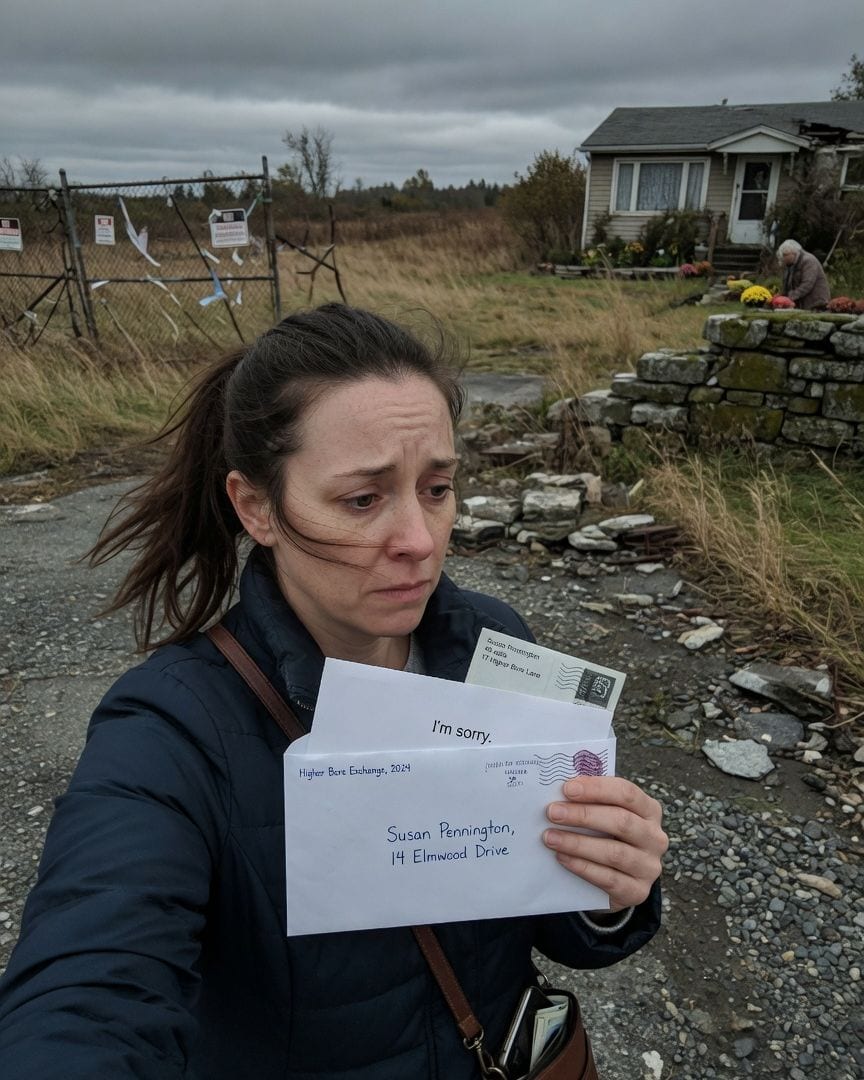
My phone bill listed forty calls made at 3:14 AM to a house demolished in 1990. The paper bill came from a flattened building. My name is on it.
I stared at my phone bill, my morning coffee forgotten. It detailed forty calls, each at 3:14 AM, to an address I knew was a vacant lot where a house had stood decades ago. But the real dread began when I saw the bill's return address: a telephone exchange flattened years before.
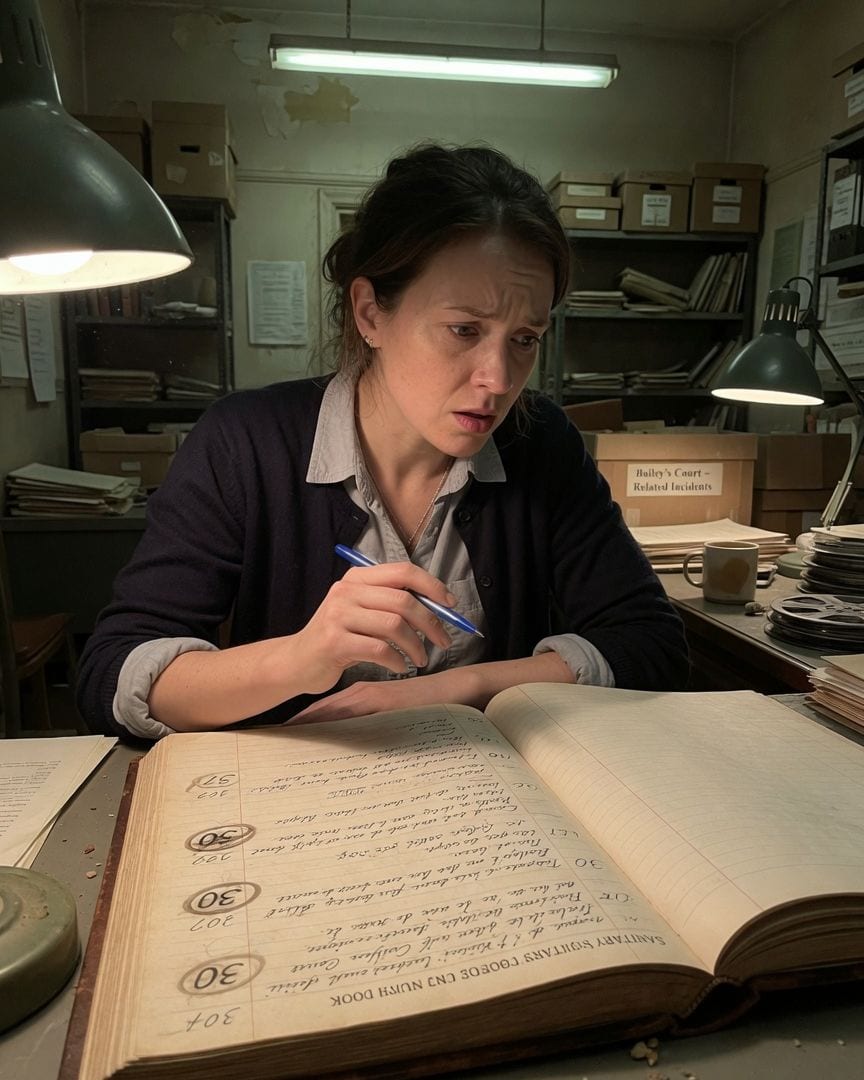
Entry 30 in the old records was re-inked for decades, always the same 'foul drain,' same order: 'do not act.' Then I found it on my street.
My job as a transcriber is usually tedious, but then I found Entry 30. The same complaint, a foul drain, logged for decades, was always re-inked with a chilling instruction: 'nuisance as before, enter it, do not act.' Then I found the same entry again, this time for my own street.
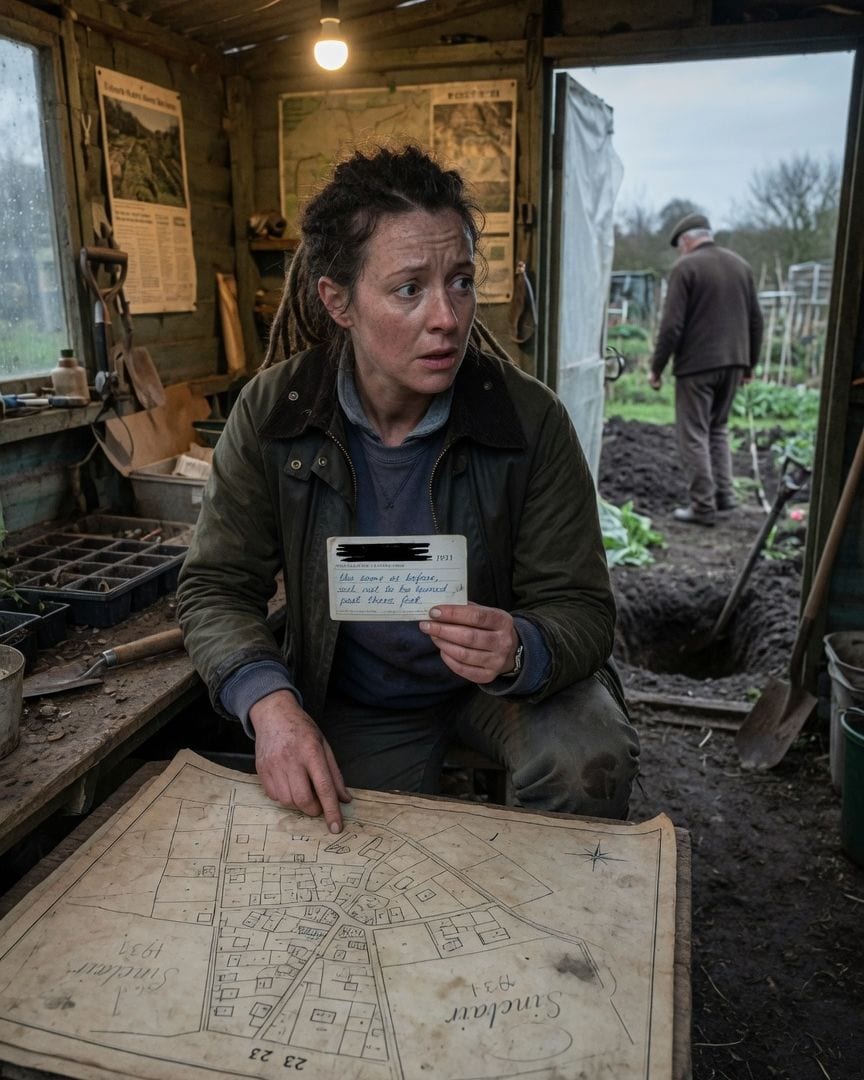
My allotment plot’s tenancy card has a redacted name from 1931. Under it, someone wrote 'the same as before, soil not to be turned past three feet,' and my dead grandfather signed it too.
My new allotment Plot 23 felt unnaturally still, the soil unusually dense and cool. The tenancy card warned 'soil not to be turned past three feet,' but my spade hit something hard and unyielding at that depth: a compacted, petrified layer that felt deliberately laid, a barrier.