My allotment plot’s tenancy card has a redacted name from 1931. Under it, someone wrote 'the same as before, soil not to be turned past three feet,' and my dead grandfather signed it too.
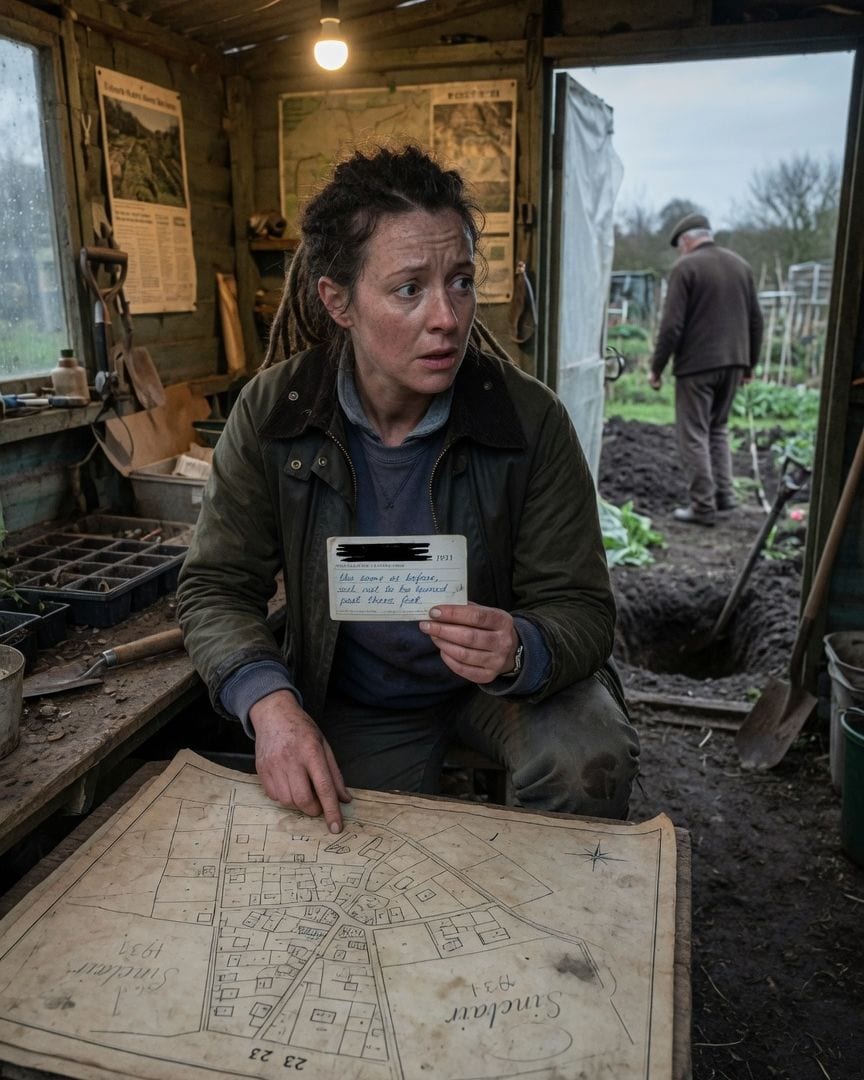
The raw spring wind whipped around me as I stood in my newly acquired allotment Plot 23. The air felt unnaturally still, almost heavy, despite the breeze.
Beneath my sturdy boots, the soil was a deep, almost purplish black, unusually dense and cool, even for early spring. It felt inert, somehow dead.
I held the parish tenancy card, a thin, laminated rectangle, the official proof of my new responsibility. My grandfather, Arthur Sinclair, had been the last holder, a fact I'd only learned when I signed the paperwork.
My eyes snagged on the earliest entry, dated 1931: a name completely obliterated by a thick, dark marker.
Below the redaction, in faded blue ink, someone had scrawled a peculiar instruction: 'the same as before, soil not to be turned past three feet.'
Every line after, including my grandfather’s, bore a neat, almost identical signature next to that chilling, handwritten clause. The card felt cold in my hand, utterly out of place for something meant to represent a patch of earth.
What had been 'before'? And why the specific, almost ritualistic, depth restriction?
The clause gnawed at me. I returned to Plot 23 the next day, armed with a heavy-duty spade. I needed to know what lay beneath three feet. The initial digging was easy, the topsoil yielding.
But precisely at the three-foot mark, the earth became stubbornly resistant, almost solid. My spade struck something hard and unyielding, not rock, but a compacted, almost petrified layer of soil that refused to break.
It felt less like natural compaction and more like something deliberately laid, a barrier.
My elderly neighbour, Dean Carver, who had held Plot 24 for decades, shuffled over. His movements were slow and deliberate. He looked perpetually tired, his eyes a little vacant, his once-sharp features softened by a constant, low-level lethargy.
I wiped sweat from my brow and asked him about the 'three feet' rule. Dean blinked slowly, his gaze unfocused on my spade. 'Always been that way,' he mumbled, his voice flat, devoid of inflection. 'Keeps the… the ground honest.
Don't want to upset the balance.'
I pressed him. 'What balance? What happens if you dig deeper?' Dean just shrugged, a slow, weary gesture. 'Nothing good, dear. Nothing good at all.'
He turned, his shoulders slumped, and shuffled back to his own plot, leaving me with the unsettling feeling that he was either hiding a profound truth or simply too weary to articulate it.
The mundane explanation – old rules, tradition – felt thin, almost transparent against the stubborn resistance of the soil and Dean's peculiar exhaustion. The plot seemed to hum with a low, inaudible frequency, a silent wrongness I couldn't dismiss.
The mystery of the clause and Dean’s strange lethargy propelled me to the local parish archives. I spent days, sifting through dusty land deeds, old allotment registers, and council minutes.
The air was thick with the smell of old paper and forgotten bureaucracy.
Finally, tucked away in a brittle box of miscellaneous documents, I unearthed an oversized, parchment-like land registry map, dated 1931 – the exact year of the redacted entry. My finger traced the neat squares of the allotment plots, clearly labelled.
Plot 23 was there, but my gaze drifted to Plot 22, directly adjacent. There, written in a faded, elegant script, almost erased but still legible beneath a faint smudge, was a name: 'Sinclair.' Below it, the same year, 1931.
A cold dread settled over me, a physical tightening in my chest. My grandfather Arthur had held Plot 23. But a Sinclair, dated 1931, on the plot next door?
I crouched over the old map, my finger tracing the faint 'Sinclair' next to Plot 22. The ink was barely there, but unmistakable.
I glanced back at my plot 23 tenancy card, then at the map, the two 'Sinclair' entries echoing across the decades, a cold knot forming in my stomach.
The discovery of the 1931 'Sinclair' entry transformed my unease into a focused, chilling hunt. I returned to the parish office, specifically seeking out Linda Beaumont, the quiet, observant clerk who had initially handled my allotment paperwork.
I laid the old map on Linda's desk.
Linda, a woman in her late sixties with steel-grey hair pulled into a severe bun, examined it without a hint of surprise, though a faint, almost imperceptible shift in her expression suggested recognition.
'Ah, yes,' she said, her voice soft, measured. 'The original allocations. Families often took plots side-by-side back then, for convenience.'
I pressed her. 'But the clause, 'soil not to be turned past three feet,' it dates back to 1931 too. What does it truly mean? It's not just about drainage, is it?'
Linda offered a vague explanation about ancient chalk seams and agricultural best practices, but her eyes flickered to a locked oak cabinet behind her desk, a fleeting glance that I didn't miss.
Back at my allotment, I noticed Dean Carver's decline was accelerating. He was leaving his tools out in the rain, forgetting where he’d put his watering can, and his plot was growing wild, choked with weeds.
He seemed to have lost all interest in his lifelong hobby. His answers to my questions became even more fragmented, his eyes more distant.
I started documenting his decline, noting the parallels to my own grandfather's later years, which had been marked by a similar, unexplained lethargy and profound forgetfulness.
I returned to the archives, now looking for anything – old newspaper clippings, parish meeting minutes, medical reports – that might link 'Sinclair' and 'allotments' to unusual incidents in the 1930s, or any peculiar parish expenditures related to the site's upkeep.
The official records remained frustratingly opaque, full of benign, bureaucratic explanations that felt increasingly insufficient. The dread was no longer abstract; it was personal, and it was growing.
My digging intensified. I spent my evenings cross-referencing names from the old tenancy cards with local birth and death records, searching for patterns, for anomalies.
My days were consumed by the archives, poring over parish maintenance logs for the allotment site.
I unearthed a series of quarterly reports from the 1950s and 60s, detailing 'sub-surface soil stabilization' and 'depth integrity checks' for specific plots, including 23 and 22.
The reports, signed by various parish officials, became increasingly detailed, almost obsessive, with one name, 'M. Lockwood,' appearing consistently, making meticulous notes about 'containment protocols.' The language was clinical, but the underlying concern was palpable.
One evening, as I cycled home from the archives, the late autumn light fading, I noticed an old, dark sedan, nondescript and out of place, parked a few streets behind my house.
It was gone when I looked again, but the unsettling feeling persisted, a prickle on the back of my neck. The next morning, a small, unmarked envelope was tucked under my front door.
Inside was a single, photocopied page from an internal parish memo, dated 1968. It read: 'Re: Plot 23 – Sinclair. Recommend continued monitoring. Avoid direct confrontation. The established protocol must be maintained. The less awareness, the better the management.'
There was no sender, no return address, just the stark, typewritten words. The message was clear, chillingly so: someone knew exactly what I was digging for, and they were watching my every move.
The dread had turned from an intellectual puzzle into a very real, personal threat. I was no longer just an investigator; I was a subject of observation.
Armed with the anonymous memo and the chilling certainty of being watched, I returned to Linda Beaumont's office, bypassing polite requests for appointments. I found Linda meticulously sorting a stack of old baptismal records.
I slid the memo across Linda's polished wooden desk. Linda picked it up, her composure finally cracking. A flicker of something old, weary, and deeply resigned crossed her face. 'Where did you get this?'
she asked, her voice barely a whisper, her eyes fixed on mine.
I didn't relent. I explained everything: my grandfather's connection, Dean Carver's rapid decline, the redacted lines, the strange soil, the 'Sinclair' on the 1931 map. I demanded answers.
Linda sighed, a long, deep exhalation that seemed to carry decades of unspoken burdens. 'It’s… not a secret, exactly, Miss Sinclair. More of a… a continuous management situation.' She leaned forward, her voice dropping to a confidential tone.
She explained that in the early 1930s, during the initial clearing of the allotment site, something was disturbed beneath Plot 23. Not a monster, not a ghost, but a unique geological anomaly.
'It draws things out,' Linda said, gesturing vaguely with a gloved hand. 'Vitality. Focus. The will to… resist. To question.'
She described how early tenants, including the original Sinclair family on Plot 22, began exhibiting profound lethargy, memory loss, and a strange, serene disinterest in their own lives. The parish, rather than abandoning the valuable site, chose to contain it.
They found that the 'effects' were subtle enough to be manageable, perhaps even beneficial in discouraging dissent or over-inquisitiveness in the local populace.
The three-foot rule, the 'stabilization' reports – all were part of this containment protocol, designed to limit the anomaly's reach. The redacted name on the tenancy card?
That was the first known victim whose mental decline became too obvious to ignore. The 'Sinclair' on the 1931 map was the family who first experienced the full, raw effects.
I thought of my grandfather’s quiet decline, Dean Carver’s increasingly vacant eyes, the strange, dead feel of my plot’s soil.
It all clicked into place, a horrifyingly rational, bureaucratic nightmare, a system designed not to fight an evil, but to harness a wrongness.
I felt a sickening understanding bloom in my chest. The institution, my trusted parish, had known all along, not just about the anomaly, but about its insidious effects on generations of people.
Linda, seeing my horror, nodded slowly, her expression a mix of resignation and quiet conviction. 'It’s been my family's duty to oversee these records for generations, ever since my grandmother took over from M. Lockwood.'
She stood, her movements deliberate, and walked to a heavy, locked oak cabinet in the corner of her office – the very one I had noticed earlier, the one Linda had glanced at.
From a hidden pocket in her cardigan, Linda produced a small, ornate brass key. The key turned in the lock with a soft, almost reverent click.
Linda pulled open the cabinet door, revealing not more files, but a single, heavy, leather-bound ledger, distinct from any official parish record.
Its cover was unadorned, save for a faint, almost invisible symbol etched into the leather – a looping, endless knot. Linda turned, her face unreadable, and placed a gloved hand on the heavy, leather-bound ledger.
Her eyes met mine, holding my gaze with an unnerving steadiness. 'Some things, Miss Sinclair,' she said, her voice barely above a whisper, 'aren't just filed away. They're… managed.'
She slowly opened the ledger, the pages thick and yellowed, to a specific page.
There, written in a precise, looping hand, was my own name, clear and unmistakable, next to a date from years ago, followed by a cryptic notation that meant nothing to me, but felt like a cold, personal condemnation.
Linda Beaumont’s finger, still gloved, traced my name in the ledger, then moved to the cryptic notation: 'Cycle 7, Disposition: Inquisitive. Recommend observation for integration.'
She explained, her voice flat and devoid of emotion, that the anomaly wasn't just contained; it was subtly 'harvested.' The extracted vitality, the fading of memory and ambition, wasn’t wasted.
It maintained a peculiar, almost static equilibrium in the parish itself – a quiet, compliant population, less prone to questioning authority, more easily managed.
The 'Sinclair' from 1931, the original family on Plot 22, had been 'Cycle 1,' the first recorded family to fully succumb, their plot’s energy drained, leaving them listless and eventually moved on without protest.
My grandfather, Arthur, had been 'Cycle 5,' his later years marked by a similar, quiet fading that had once been dismissed as natural aging.
The ledger detailed not just plot holders, but patterns of behavior, 'tendencies' that emerged in those most affected – initial lethargy, then profound forgetfulness, followed by a final, serene disinterest in the world around them.
Linda's family, the Beaumonts, had been the quiet administrators for generations, passing down the ledger and the chilling knowledge of how to 'manage' these cycles.
The 'same as before' clause was a grim, bureaucratic acknowledgement of the recurring pattern of decline and replacement.
Every planted clue clicked into place with horrifying precision: the dead soil, Dean Carver's fading mind, the redacted names, the quiet bureaucracy, the unnerving calm of Linda herself. It wasn’t a random horror; it was a deeply coherent, long-standing system.
I was not merely an observer; I was now irrevocably part of the record, a new entry in a chilling, ongoing experiment.
I stared at my name in the ledger, the word 'Inquisitive' burning into my mind like a brand. I demanded to know what 'integration' meant, my voice trembling with a mixture of fear and defiance.
Linda closed the heavy ledger with a soft thud, her gaze unwavering, her expression utterly calm. 'It means,' she said, her voice a low murmur, 'that the cycle completes. You become part of the quietude. You forget the questions.
You find… peace.' I tried to argue, to rally my thoughts, to articulate the outrage bubbling within me.
But even as I spoke, a strange lassitude began to creep into my limbs, a faint buzzing behind my eyes, a dull pressure at my temples.
The air in the small, dusty room felt heavy, thick with something I could almost taste, like old earth and forgotten dreams. I thought of Dean Carver, his vacant eyes, the way my grandfather had simply faded away.
I remembered the faces in the old photographs, subtly altered by a creeping contentment. 'I won't,' I whispered, but the words felt hollow, distant, as if they belonged to someone else.
Linda offered me a small, porcelain cup of steaming tea, its aroma sweet and floral. 'It helps the transition,' she said, her voice calm, devoid of malice or judgment.
I pushed the cup away, but the effort felt immense, almost not worth it. The fight drained from me, replaced by a profound, unsettling calm. I saw the futility, the sheer, entrenched history of it all.
There was no monster to fight, no evil to expose, just a quiet, institutionalized wrongness that had been operating for nearly a century, weaving itself into the very fabric of the parish, an accepted truth. I couldn't undo it.
I could barely even feel the outrage anymore. The knowing was the ending, and the knowing was a hollow, echoing ache, slowly filling me.
I eventually left the parish office. The ledger’s contents echoed in my mind, but with a strange, dull resonance. I didn't return to my allotment plot; the thought no longer held any appeal.
The heavy-duty spade I'd used to try and dig past three feet remained propped against the shed, slowly rusting, forgotten.
Dean Carver's plot continued to grow wild, and he was eventually moved into a care home, his family citing 'age-related decline' and a 'peaceful acceptance.' The dark sedan I had seen never reappeared.
The small, anonymous memo I’d received was lost somewhere in my files, its urgency now a distant memory.
The world moved on, oblivious to the quiet management happening beneath its feet, a subtle hum of contented forgetfulness settling over the parish, a calm that felt strangely familiar.
Months later, I find myself staring out my kitchen window, watching the steady, autumnal rain fall. The burning urgency that had once driven me, the frantic need for answers, has faded to a dull, almost imperceptible ember.
I remember the redacted line, the 'three feet' clause, my grandfather's name, the heavy ledger, Linda Beaumont's quiet, knowing eyes. I remember the full truth, but it no longer feels like a horror, or even a tragedy. It simply is.
It’s a fact, as immutable as the rain, or the turning of the seasons, or the dark soil beneath the allotments. A deep, pervasive calm has settled over me, a quiet acceptance that feels both profound and utterly alien.
I make a cup of tea, carefully adding milk and two sugars, exactly as Linda had offered that day in the office. I sip it slowly, the warmth spreading through me, a gentle, soothing balm.
Eleanor Sinclair’s Facebook account, once active with posts about her allotment and research, went silent after October.
Her last public post was a blurry photo of a dark, heavy spade leaning against a shed, its blade still caked with a peculiar dark soil.
A single comment appeared weeks later beneath it, from an anonymous account: 'The soil is always honest, isn't it?'
If this one got to you
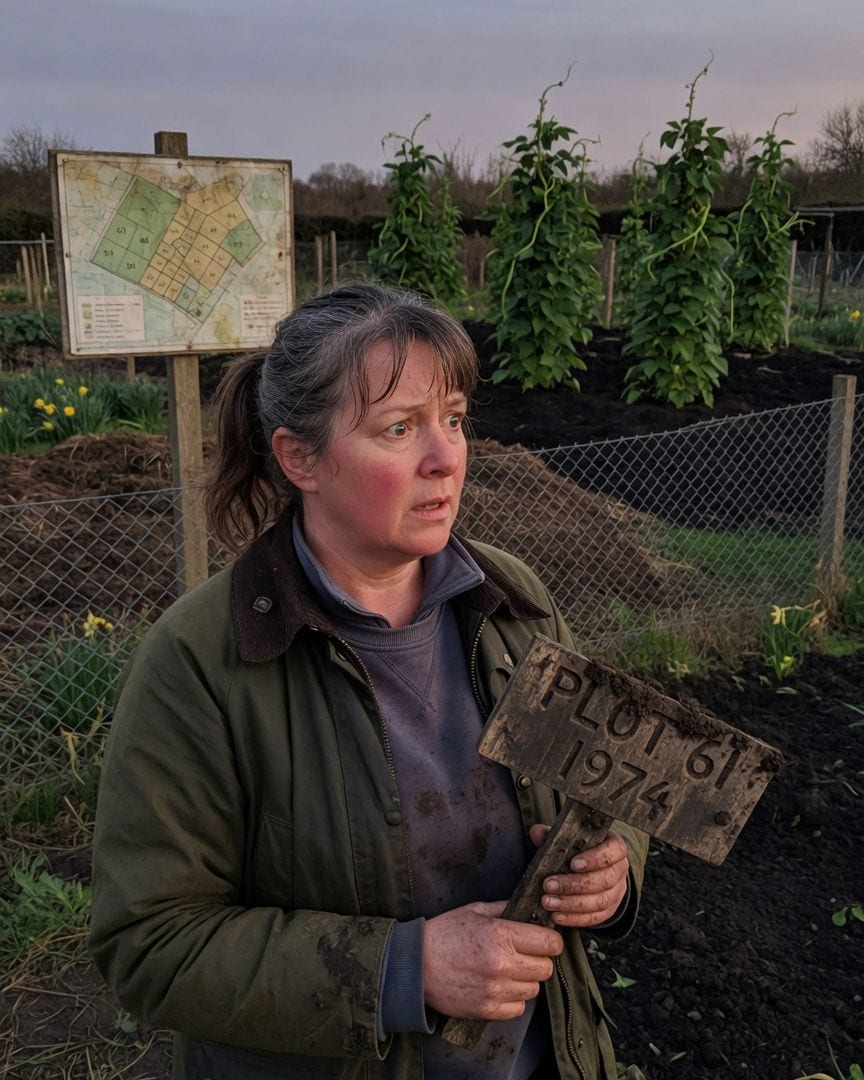
My allotment map only shows 60 plots. But past the fence, a Plot 61 just appeared, fully dug and planted. The committee has no record, and its beans are months ahead.
My boots crunched on the gravel path towards my allotment, a twenty-year routine. But this morning, beyond the boundary fence where only weeds should be, a perfectly tilled plot lay, its runner beans already a foot high. The official map ran only to 60, yet this was undeniably Plot 61, with a weathered wooden marker carved '1974'.
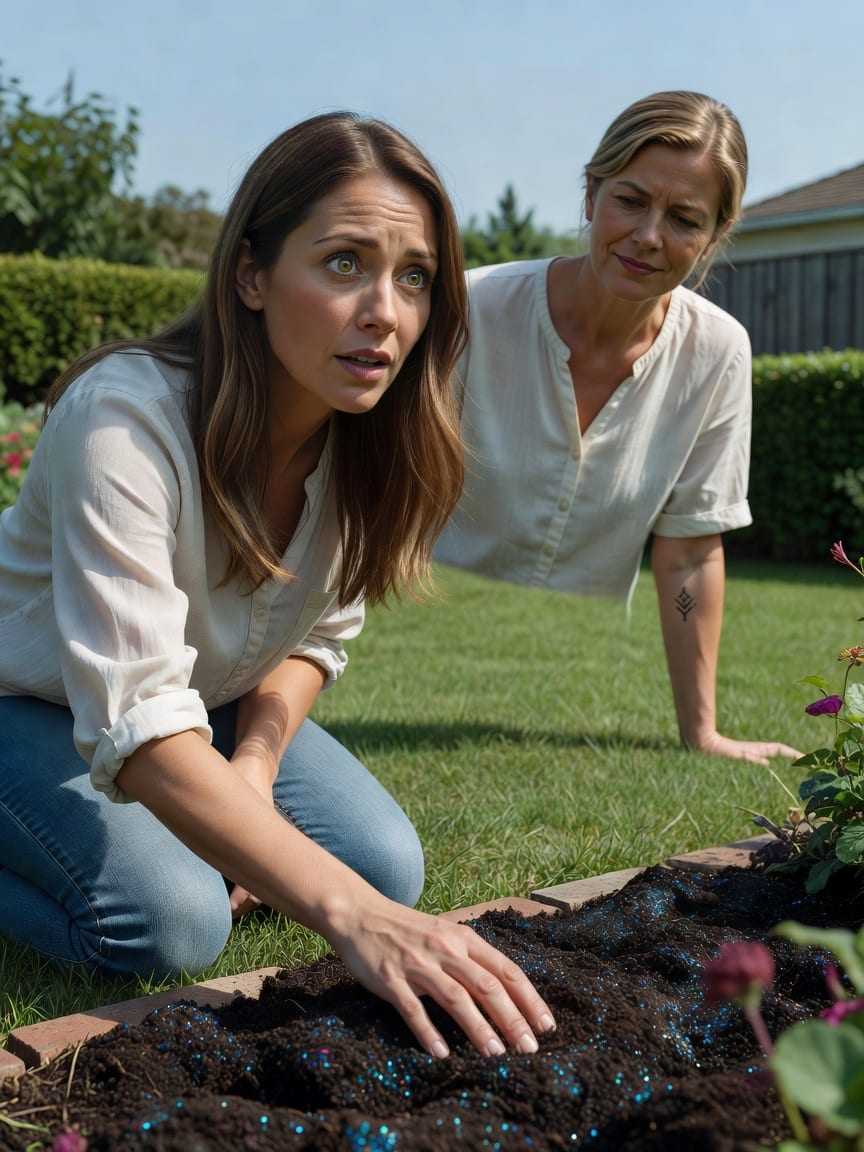
My family's grave 44 on the council map is marked "reused" from 1908. The sexton's old ledger confirms: "no new stone, no notice to kin." We never arranged it.
I always thought Grave 44 was solid ground, our family plot for generations. But a council map showed a sexton's note: 'grave 44 — reused under the standing arrangement, no new stone, no notice to kin.' Now, I've found an archive record for Plot 44, buried in 1905 under a completely different name.
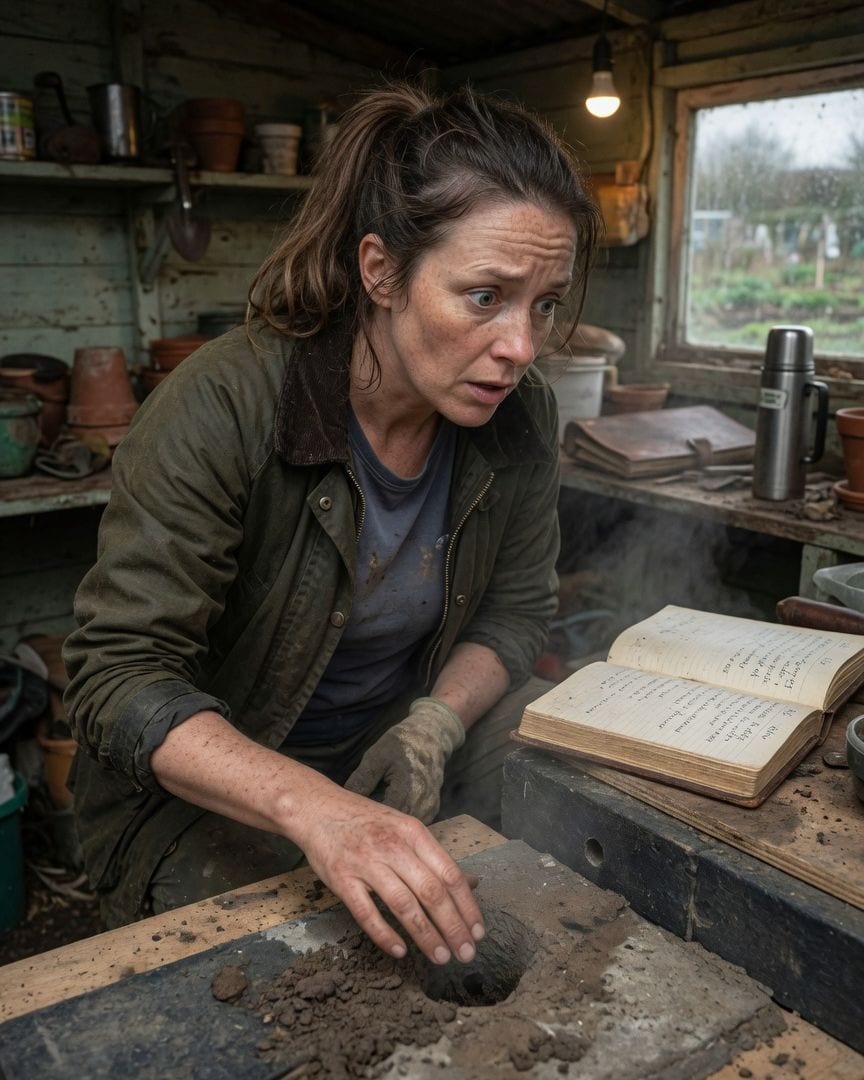
Every gardener who's held allotment plot 26 gave it up after a single season, each one leaving the same note behind: never dig the ground below two feet.
Newly single at 38, I hoped Plot 26 at Weir Field Allotments would be a fresh start. But the committee’s rent book held a strange, decades-old rule: 'ground not to be dug below two feet.' Ignoring the warnings, I dug anyway, only to find a perfectly smooth concrete slab with a tiny hole—and a distinct, unnatural cold breath rising from it.
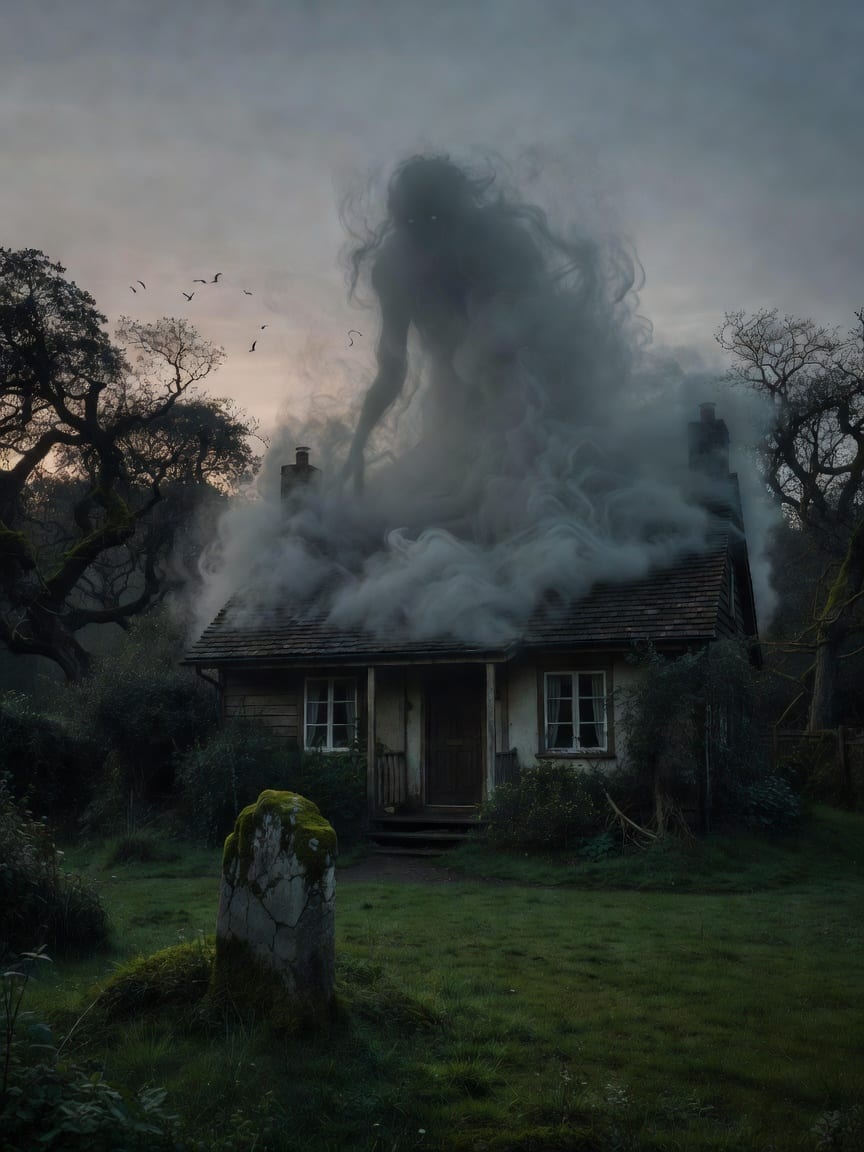
My cottage is now outside the parish, says the vicar. I moved one boundary stone into my ditch, and now I'm outside the line.
I loved my new cottage, with its sprawling garden and ancient oak. But after I moved an old, mossy stone at the edge of my property, Vicar Vance arrived with grave news: my cottage was now outside the parish line, and he could no longer keep me 'on the right side.'
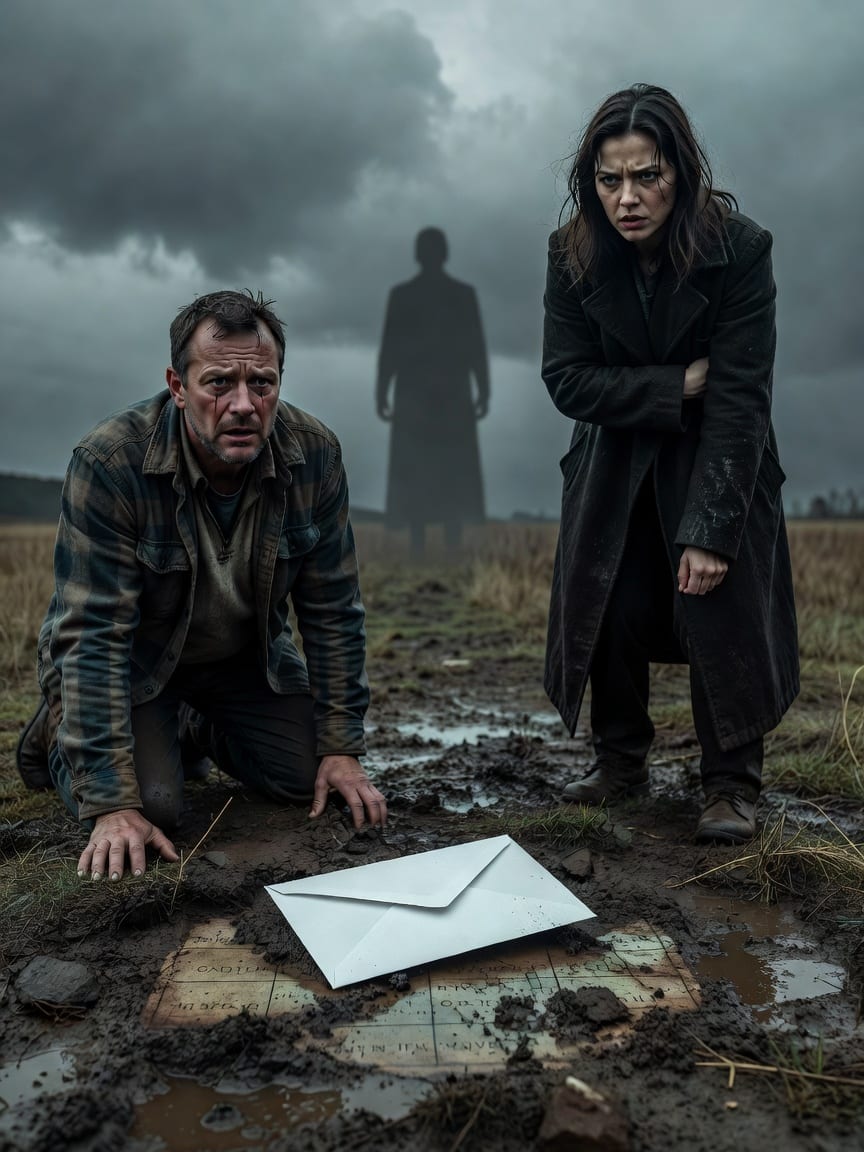
My mail carrier delivers polling cards to Nine Acre Field. It floods, they say. The tithe map shows nine family plots there.
As the new county archivist, I was used to quiet days poring over dusty records. But then I found an empty field, Nine Acre, was receiving current-year polling cards and utility notices for nine distinct addresses. When I investigated, I unearthed a perfectly crisp, current-year tax bill, buried in its soil, surprisingly warm against my fingers.
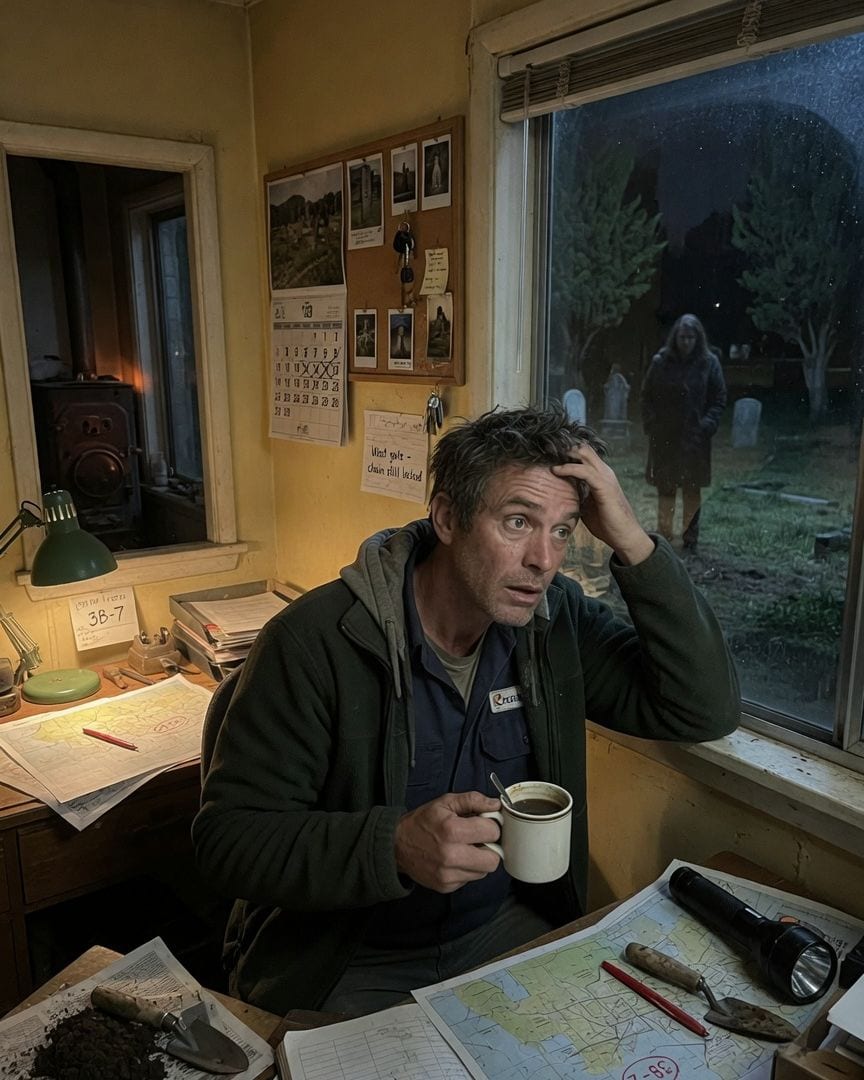
My cemetery lodge overlooks a woman visiting an empty grave near 3 AM most nights. The west gate she uses has been chained shut since autumn, its lock untouched.
As the cemetery's night caretaker, I'm used to the quiet hum of the lodge. But for three weeks, a woman has appeared nightly at plot 3B-7, a silent mourner in the deep night. What chills me is how she leaves: walking straight through the west gate that's been chained and padlocked shut for eight months.